
Tag Archives: mental slavery

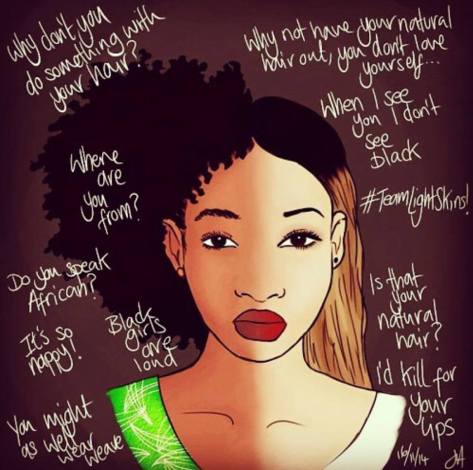
The Brown Girl Dilemma: Self-Hatred, Lookism, Lightism, and Mental Slavery.

This artwork is the property of its respective owner. No copyright infringement intended.

The experience of brown-skinned girls and women is marked by complex social pressures that extend beyond race. Within and outside of Black and Brown communities, colorism—the preferential treatment of lighter skin over darker shades—intersects with lookism and internalized societal standards to create what can be described as mental slavery. These pressures shape self-perception, relationships, and social mobility, resulting in a lived experience where one’s skin tone and features dictate perceived worth.

Self-Hatred and Internalized Bias

Self-hatred among brown girls is often fueled by societal messaging that favors Eurocentric beauty ideals. Media, peer comparison, and historical legacies of oppression contribute to an internalized hierarchy of value. Psychologists describe this as internalized oppression, where victims unconsciously adopt the prejudices of the dominant culture (Welsing, 1991). Brown-skinned girls may feel inferior to lighter-skinned peers, impacting self-esteem, academic performance, and social confidence.

Lookism: Appearance as a Social Currency

Lookism—the preference for certain physical traits—intensifies color-based biases. Studies show that facial symmetry, lighter skin, and straight hair are often socially rewarded in professional and social contexts (Etcoff, 1999). Brown girls may experience disadvantage not because of talent or character, but because their appearance fails to align with prevailing beauty standards. This reinforces a system where self-worth is externally validated, creating pressure to modify appearance through cosmetics, hair treatments, or even skin-lightening products.

Lightism and Color Hierarchy

Lightism, a subset of colorism, privileges lighter skin within communities of color. Historically rooted in colonial hierarchies and slavery, light skin was associated with proximity to power, wealth, and status. Brown girls are thus positioned in a spectrum of desirability, often excluded from leadership opportunities, romantic preference, and cultural representation. The Bible reminds believers that value is spiritual and moral rather than physical: “But the Lord said unto Samuel, Look not on his countenance, or on the height of his stature; because I have refused him: for the Lord seeth not as man seeth; for man looketh on the outward appearance, but the Lord looketh on the heart” (1 Samuel 16:7, KJV).

Mental Slavery and Cultural Conditioning

Mental slavery refers to the internalized belief that worth and success are determined by adherence to dominant cultural norms. Brown girls often face a dual pressure: conforming to Eurocentric standards while navigating systemic racism and community bias. This can manifest as low self-confidence, anxiety, and even estrangement from one’s cultural identity. The psychological effects are profound, limiting aspirations and perpetuating cycles of inequality.

Strategies for Healing and Empowerment

  • Awareness: Recognizing internalized bias and societal pressures is the first step toward liberation.
  • Community Support: Engaging with affirming networks that celebrate brown and dark-skinned beauty reinforces self-worth.
  • Media Representation: Advocating for diverse representation in media, fashion, and leadership provides visible role models.
  • Faith and Spiritual Practice: For believers, grounding identity in God’s perspective restores confidence and counters external value systems (Psalm 139:14, KJV).

The Brown Girl Empowerment Toolkit

1. Affirmations and Self-Worth

Daily affirmations help counter internalized oppression:

  • “I am fearfully and wonderfully made” (Psalm 139:14, KJV).
  • “My worth is not determined by the color of my skin but by the character of my heart” (1 Samuel 16:7, KJV).
  • “I celebrate my melanin, my heritage, and my uniqueness.”

2. Media Literacy and Representation

  • Follow media that celebrates brown and dark-skinned beauty.
  • Support creators and public figures who challenge colorism.
  • Critically analyze mainstream media to understand subtle messages about beauty and desirability.

3. Community and Mentorship

  • Join groups or online communities focused on celebrating brown beauty.
  • Seek mentors—especially brown women leaders, entrepreneurs, and creatives—to model confidence and success.
  • Share experiences with peers to build solidarity and resilience.

4. Cultural Pride and Identity

  • Study African, Caribbean, or South Asian heritage to reinforce pride in skin, hair, and cultural features.
  • Celebrate traditional hairstyles, clothing, and art as expressions of identity.
  • Engage in cultural events to counteract Eurocentric standards.

5. Faith and Spiritual Grounding

  • Use prayer, meditation, and scripture to anchor identity beyond societal approval.
  • Daily prayer of self-acceptance and guidance.
  • Study verses affirming God’s value of the heart over appearance (1 Samuel 16:7, KJV).

6. Psychological Tools

  • Journaling: Document experiences of discrimination, self-reflection, and victories.
  • Cognitive Restructuring: Replace negative thoughts with positive affirmations.
  • Therapy: Seek mental health support familiar with colorism and racial trauma.

7. Practical Beauty Strategies

  • Embrace natural hair and skin tones; avoid unnecessary bleaching or alteration.
  • Use makeup, hair, or fashion as self-expression rather than approval-seeking.
  • Celebrate diverse skin tones in personal branding, social media, and public presence.

8. Role Models

  • Priyanka Chopra: Advocates for dusky beauty and challenges colorism in Bollywood.
  • Rashida Strober: Activist emphasizing self-love and black beauty standards.
  • Chimamanda Ngozi Adichie: Author promoting African identity and resisting Western beauty norms.

9. Action Steps

  1. Daily affirmation practice (5 minutes).
  2. Limit exposure to media promoting harmful beauty standards.
  3. Join or form support networks to discuss colorism openly.
  4. Highlight cultural pride in social media or community activities.
  5. Engage in mentorship to guide younger girls in building self-confidence.

Conclusion

The Brown Girl Dilemma—self-hatred, lookism, lightism, and mental slavery—is a multifaceted issue with deep historical and cultural roots. Addressing it requires societal change, psychological support, and personal empowerment. By understanding the origins of color bias, rejecting internalized oppression, and embracing cultural and spiritual identity, brown girls can reclaim their value, beauty, and power.


References

Biblical References (KJV)

  • 1 Samuel 16:7
  • Psalm 139:14

Secondary Sources
Welsing, F. C. (1991). The Isis Papers: The Keys to the Colors. Third World Press.
Etcoff, N. (1999). Survival of the Prettiest: The Science of Beauty. Doubleday.
Hunter, M. L. (2007). The Persistent Problem of Colorism: Skin Tone, Status, and Inequality. Sociology Compass, 1(1), 237–254.
Clark, R., & Clark, K. (1947). Racial Identification and Preference in Negro Children. Journal of Negro Education, 16(3), 169–176.

Dilemma: Mental Slavery

Understanding, Overcoming, and Renewing the Mind.

Photo by Ketut Subiyanto on Pexels.com

Mental slavery refers to the psychological condition in which individuals internalize beliefs of inferiority, limitation, or subservience imposed by external systems of oppression. Unlike physical slavery, which confines the body, mental slavery confines the mind, influencing behavior, self-worth, and worldview. It perpetuates cycles of disempowerment, even long after the end of legal slavery. Psychologists describe mental slavery as a form of internalized oppression, where the oppressed adopt the value system of the oppressor (Welsing, 1991). Biblically, this is akin to captivity of the mind: “And be not conformed to this world: but be ye transformed by the renewing of your mind, that ye may prove what is that good, and acceptable, and perfect, will of God” (Romans 12:2, KJV).

Origins of Mental Slavery

Mental slavery originated during the transatlantic slave trade, where Africans were forcibly removed from their homelands and subjected to dehumanization, brutality, and cultural erasure. Enslavers imposed narratives of inferiority, instilling in enslaved people the belief that they were subhuman, incapable of self-determination, and dependent on their oppressors. This psychological conditioning was reinforced through generations via systemic oppression, segregation, and institutionalized racism.

Impact on Ancestors

Our ancestors endured extreme physical, emotional, and psychological trauma. They were denied education, cultural expression, family integrity, and autonomy. Beyond physical exploitation, slavery instilled fear, dependency, and internalized inferiority, affecting generational mindset. Even in freedom, descendants inherit remnants of these beliefs, manifesting as self-doubt, colorism, and acceptance of societal hierarchies that devalue Black life.

Psychological Impact Today

Mental slavery continues to affect Black communities through low self-esteem, internalized racism, identity conflicts, and susceptibility to societal conditioning. Psychologists observe that it contributes to cycles of poverty, educational disparities, and social marginalization. The mental burden often results in anxiety, depression, and diminished motivation, creating barriers to realizing full potential (Hunter, 2007).

Understanding Mental Slavery Through the Bible

The KJV Bible provides principles for overcoming mental slavery by emphasizing spiritual freedom and mind renewal. Jesus declared: “If the Son therefore shall make you free, ye shall be free indeed” (John 8:36, KJV). Freedom begins in the mind, aligning thoughts and beliefs with God’s truth rather than the lies imposed by oppression. Scripture repeatedly emphasizes that the mind and heart are central to liberation (Romans 12:2; 2 Corinthians 10:5, KJV).

Renewing the Mind

Renewal of the mind involves rejecting false narratives, embracing God’s Word, and cultivating a spiritual, moral, and intellectual identity rooted in truth. Daily practices include prayer, meditation on Scripture, affirmations, education, and exposure to empowering narratives. “Casting down imaginations, and every high thing that exalteth itself against the knowledge of God, and bringing into captivity every thought to the obedience of Christ” (2 Corinthians 10:5, KJV). Renewal requires discipline, community, and conscious effort.

Overcoming Mental Slavery

Overcoming mental slavery entails both individual and collective strategies:

  • Education: Learning history, culture, and personal heritage restores identity and pride.
  • Therapy & Counseling: Addressing generational trauma and internalized beliefs.
  • Faith & Spiritual Practice: Grounding identity in God’s truth rather than societal lies.
  • Community & Mentorship: Engaging with supportive networks that model empowerment and resilience.

Mental Slavery Healing Guide: Breaking Generational Mind Chains


1. Daily Affirmations and Spiritual Alignment

  • “If the Son therefore shall make you free, ye shall be free indeed” (John 8:36, KJV).
  • “I reject every lie of inferiority and embrace my God-given worth.”
  • “My mind is renewed by God’s Word, not the world’s standards” (Romans 12:2, KJV).

Practice: Repeat affirmations morning and evening, or write them in a journal. Pair with prayer to internalize truth.


2. Scripture Meditation and Mind Renewal

  • Meditate on verses that affirm identity, freedom, and power in Christ:
    • 2 Corinthians 10:5: “Casting down imaginations, and every high thing that exalteth itself against the knowledge of God.”
    • Romans 12:2: Emphasizes transformation through mind renewal.
  • Visualize each thought and belief aligning with God’s truth rather than oppressive narratives.

3. Education and Historical Awareness

  • Study the history of slavery, colonialism, and colorism to understand the roots of mental slavery.
  • Read biographies of Black leaders, scholars, and revolutionaries who resisted oppression.
  • Teaching history accurately restores pride, identity, and resilience.

4. Psychological Tools

  • Journaling: Record experiences of internalized bias and victories over negative thoughts.
  • Cognitive Restructuring: Identify and challenge thoughts of inferiority, replacing them with affirming truths.
  • Therapy or Counseling: Seek professionals trained in racial trauma, intergenerational oppression, and self-esteem issues.

5. Faith-Based Practices

  • Daily prayer for clarity, courage, and mental freedom.
  • Fasting and extended prayer sessions can strengthen spiritual discipline and focus.
  • Attend Bible study groups that emphasize spiritual empowerment and mental renewal.

6. Community and Mentorship

  • Surround yourself with mentors and peers who embody empowerment and pride in Black identity.
  • Participate in community programs that focus on leadership, entrepreneurship, and cultural affirmation.
  • Engage in dialogue about mental slavery to normalize experiences and foster collective healing.

7. Cultural Affirmation and Personal Expression

  • Celebrate natural hair, skin, and features; avoid conforming to Eurocentric standards for approval.
  • Explore cultural arts, music, and literature to strengthen identity and counter societal conditioning.
  • Represent Black beauty, achievement, and intellect publicly to inspire others.

8. Action Steps for Daily Freedom

  1. Begin each day with Scripture, prayer, and affirmations.
  2. Educate yourself on history and cultural identity.
  3. Practice cognitive and emotional strategies to reject internalized oppression.
  4. Engage in faith communities and mentorship programs.
  5. Express identity authentically through personal appearance, creativity, and leadership.

Conclusion

Mental slavery is a profound, generational challenge, rooted in the dehumanization of our ancestors and perpetuated by societal systems. Its psychological impact is pervasive, influencing identity, self-perception, and social outcomes. However, the KJV Bible provides a framework for liberation through the renewal of the mind, spiritual alignment, and embracing God-given worth. By understanding its origins, acknowledging its effects, and actively pursuing mental and spiritual freedom, Black individuals and communities can break the chains of mental slavery and reclaim empowerment, dignity, and purpose.


References

Biblical References (KJV)

  • Romans 12:2
  • 2 Corinthians 10:5
  • John 8:36

Psychology & Sociology References

  • Welsing, F. C. (1991). The Isis Papers: The Keys to the Colors. Third World Press.
  • Hunter, M. L. (2007). The Persistent Problem of Colorism: Skin Tone, Status, and Inequality. Sociology Compass, 1(1), 237–254.
  • Clark, R., & Clark, K. (1947). Racial Identification and Preference in Negro Children. Journal of Negro Education, 16(3), 169–176.