Tag Archives: mental-health

The Brown Girl Mirror: Reflecting Beyond Skin Tone. #thebrowngirldilemma

Photo by Jumos Imagery on Pexels.com

For Brown girls, the mirror often reflects more than mere physical appearance—it becomes a site where identity, culture, and societal bias converge. From childhood, many experience implicit and explicit messages that equate beauty, success, and value with lighter skin and Eurocentric features. These pressures can distort self-perception, creating internalized bias, low self-esteem, and a sense of invisibility. Reflecting beyond skin tone requires reframing identity, affirming cultural heritage, and cultivating resilience in the face of persistent colorism (Hunter, 2007).

Media representation significantly shapes how Brown girls see themselves. Television, film, fashion, and social media often privilege lighter-skinned women, marginalizing darker complexions and culturally distinct features. Celebrities like Yara Shahidi, Salli Richardson, and Mari Morrow illustrate the social preference for lighter skin, while Lupita Nyong’o, Issa Rae, and Kenya Moore challenge these norms by embracing melanin-rich beauty. Exposure to authentic representation reinforces self-worth and validates features historically underrepresented, allowing Brown girls to see the full spectrum of beauty as attainable and admirable (Byrd & Tharps, 2014).

Education and mentorship act as mirrors of potential rather than skin tone. Programs such as Black Girls CODE, Girls Who Code, and culturally responsive leadership initiatives provide tangible tools for academic, creative, and professional growth. Mentorship offers guidance, modeling resilience and achievement while validating identity beyond societal preference. By engaging in spaces where talent, intellect, and character are valued over complexion, Brown girls internalize a sense of worth that extends beyond visual aesthetics (Banks, 2015).

Cultural affirmation strengthens this reframing. Celebrating African and diasporic history, art, and heritage provides context for identity and instills pride in natural features, hair textures, and skin tone. Community programs, workshops, and storytelling sessions allow Brown girls to explore their ancestry, express creativity, and reclaim narratives that colonialism and colorism historically undermined. Such practices cultivate internal confidence and counteract negative social messaging (Hunter, 2007).

The psychological dimension of reflecting beyond skin tone is critical. Social comparison theory explains how exposure to biased societal standards can erode self-esteem, but conscious self-reflection, journaling, and affirmations help Brown girls develop resilience. Recognizing intrinsic value, talents, and unique contributions allows them to define beauty and success on personal and culturally affirming terms rather than external validation (Festinger, 1954; Fardouly et al., 2015).

Faith offers a transformative perspective in navigating these challenges. Proverbs 31:30 (KJV) emphasizes, “Favour is deceitful, and beauty is vain: but a woman that feareth the LORD, she shall be praised.” Spiritual grounding encourages Brown girls to measure self-worth by character, virtue, and divine purpose rather than societal metrics. Faith-based reflection provides a mirror for the soul, fostering enduring confidence and resilience that transcend external judgment.

Practical strategies complement spiritual and cultural reflection. Embracing personal style, skincare, natural hair, wellness routines, and creative expression empowers Brown girls to celebrate their bodies while reinforcing self-love. These actions serve as outward affirmations of pride in heritage and identity, integrating aesthetics with authenticity, self-respect, and personal agency.

In conclusion, the Brown girl mirror extends beyond skin tone to reflect identity, resilience, talent, and spirituality. By engaging media critically, participating in mentorship and educational programs, celebrating cultural heritage, and grounding self-worth in faith, Brown girls can navigate colorism and societal bias while cultivating holistic self-esteem. Reflecting beyond skin tone allows them to claim agency, embrace authentic beauty, and inspire future generations to define value and radiance on their own terms.


References

Banks, J. A. (2015). Cultural diversity and education: Foundations, curriculum, and teaching. Routledge.

Byrd, A. D., & Tharps, L. L. (2014). Hair Story: Untangling the Roots of Black Hair in America. St. Martin’s Press.

Fardouly, J., Diedrichs, P. C., Vartanian, L. R., & Halliwell, E. (2015). Social comparisons on social media: The impact of Facebook on young women’s body image concerns and mood. Body Image, 13, 38–45.

Festinger, L. (1954). A theory of social comparison processes. Human Relations, 7(2), 117–140.

Hunter, M. (2007). The persistent problem of colorism: Skin tone, status, and inequality. Sociology Compass, 1(1), 237–254.

The Aesthetics of Manhood: Redefining Male Beauty in a Changing World

This photograph is the property of its respective owner. No copyright infringement intended.

In today’s evolving society, the concept of male beauty is undergoing a profound transformation. The traditional standards that once confined masculinity to stoicism, strength, and physical dominance are now being challenged by broader, more inclusive interpretations. The aesthetics of manhood are no longer limited to muscle and might—they now encompass vulnerability, intellect, emotional expression, and cultural authenticity.

Historically, male beauty was measured through physical power and ruggedness. In ancient Greece and Rome, statues of warriors and athletes represented the ideal male form—strong, symmetrical, and disciplined. The male body symbolized order and control, reflecting societal values of dominance and reason. However, these classical ideals excluded diverse expressions of masculinity, especially those from non-Western cultures that viewed beauty through community, spirit, and moral integrity (Bordo, 1999).

In African traditions, beauty in men has long been associated with wisdom, dignity, and spiritual strength. Among the Yoruba, for instance, the concept of iwa pele (good character) was considered more beautiful than mere physical appearance. Similarly, in ancient Kemet (Egypt), male beauty was symbolized by balance—between the body, mind, and soul. These ancestral philosophies remind us that beauty is not just seen; it is lived, embodied, and spiritually aligned (Asante, 2000).

The modern era, shaped by colonialism and Western media, disrupted these holistic views. Eurocentric standards elevated certain physical traits—light skin, straight hair, narrow noses—as superior, marginalizing men of African descent and redefining attractiveness through whiteness. The media portrayed Black men as hypermasculine or dangerous, stripping them of softness and sensitivity. This distortion created a false binary between strength and beauty (hooks, 2004).

Today, a cultural rebirth is reclaiming the aesthetics of Black manhood. The modern Black man is redefining beauty through authenticity—embracing his natural hair, his melanin, his heritage, and his emotions. Public figures like Idris Elba, Regé-Jean Page, and Chadwick Boseman have become global icons not merely because of their looks but because they embody elegance, confidence, and grace grounded in cultural pride.

Fashion has also become a vehicle for redefining masculinity. Once considered effeminate, self-expression through style now represents power and individuality. From tailored suits to traditional African attire, men are reclaiming the right to adorn themselves without judgment. The black corduroy suit, for instance—timeless, textured, and dignified—evokes a man grounded in intellect and self-respect, exuding quiet power rather than overt aggression.

Social media has democratized beauty, allowing diverse images of manhood to flourish. Influencers, models, and thinkers challenge the old norms by presenting vulnerability as strength and intellect as attraction. The male gaze is no longer just about how men look at women—it’s about how men perceive themselves. Self-love and self-definition are becoming acts of resistance against a society that once denied men the right to feel (Gill, 2008).

The aesthetics of manhood also intersect with mental health. For centuries, men were taught to hide pain and equate emotion with weakness. Today, redefining beauty includes emotional transparency—the courage to cry, to heal, to grow. This shift honors the humanity of men, not just their physicality. It teaches that inner peace radiates outward as a form of beauty.

In the world of art and photography, representations of male beauty are expanding. Portraits of Black men in fine suits, natural light, or ancestral settings highlight a sacred duality: strength intertwined with serenity. These images humanize the Black male body, reclaiming it from stereotypes of violence and hypersexualization. Beauty becomes political—a declaration of worth and wholeness.

Moreover, the redefinition of male beauty challenges capitalism’s grip on self-image. The beauty industry, long targeted toward women, now markets grooming, skincare, and fashion to men. While this opens new expressions, it also risks commodifying masculinity. The true aesthetics of manhood should arise from authenticity, not consumerism.

Education and media literacy are crucial in shaping new ideals. Young boys must be taught that their value extends beyond appearance or aggression. They must learn that empathy, faith, and integrity are beautiful traits. The aesthetics of manhood, when rooted in moral excellence, contribute to healthier relationships and stronger communities.

Faith and spirituality play an essential role as well. The biblical model of manhood—courage balanced with compassion—reminds us that beauty is divine when aligned with purpose. Scriptures like Proverbs 20:29 (“The glory of young men is their strength: and the beauty of old men is the gray head”) affirm that beauty evolves with age, wisdom, and moral refinement.

Culturally, we are witnessing a renaissance of manhood through art, film, and literature. Black filmmakers and writers depict complex male characters who cry, love, and lead with purpose. From the dignity of T’Challa in Black Panther to the introspection of Colman Domingo’s roles, beauty is reimagined as multifaceted and deeply human.

The aesthetics of manhood are also shifting across gender and sexuality lines. Men who defy conventional masculinity—whether through fashion, identity, or expression—expand the conversation. Their courage dismantles toxic ideals and allows a richer, more inclusive understanding of male beauty to emerge (Connell, 2005).

Intergenerational dialogue is vital in this redefinition. Elders must teach young men that beauty is not vanity but virtue. Meanwhile, younger generations must model new versions of manhood that blend tradition with transformation. Together, they can create a balanced vision where manhood is not confined by fear or dominance but liberated through authenticity.

The dilemma remains: society still pressures men to conform to outdated ideals of toughness. Yet, a new paradigm is rising—one that celebrates quiet strength, cultural pride, and spiritual wholeness. The true aesthetics of manhood are not found in perfection but in purpose, not in control but in connection.

Ultimately, redefining male beauty is about healing. It is about freeing men from centuries of repression and allowing them to see themselves as reflections of divine artistry. Every wrinkle, scar, and gray hair tells a story of endurance. Every expression of gentleness and courage reveals the image of God within.

The world is learning that beauty and masculinity are not opposites—they are allies in the making of a complete man. As this understanding deepens, society will no longer fear men who are beautiful in spirit, intellect, and soul. The aesthetics of manhood, then, become a universal call to redefine what it means to be human.


References

Asante, M. K. (2000). The African Philosophy of African Culture: Toward a Theory of Communication. Routledge.
Bordo, S. (1999). The Male Body: A New Look at Men in Public and in Private. Farrar, Straus and Giroux.
Connell, R. W. (2005). Masculinities (2nd ed.). University of California Press.
Gill, R. (2008). Empowerment/Sexism: Figuring Female Sexual Agency in Contemporary Advertising. Feminism & Psychology, 18(1), 35–60.
hooks, b. (2004). We Real Cool: Black Men and Masculinity. Routledge.

Narcissism Series: The Mask of Narcissism: Spotting False Love

Narcissism is more than self-love; it is an exaggerated self-focus that can harm relationships, families, and communities. It is a spiritual, emotional, and psychological imbalance that masks true intentions. The Bible warns against pride and deceit, reminding believers to discern character and motive (1 John 2:16).

Understanding Narcissism

Narcissism is characterized by self-centeredness, a craving for admiration, and a lack of empathy. While some may display charm or generosity, these behaviors often serve to manipulate or control rather than to genuinely love.

False Love Defined

False love is conditional and transactional. Narcissistic individuals may express affection when it benefits them but withdraw care when it doesn’t. True love, by contrast, seeks the good of the other without self-interest (1 Corinthians 13:4-7).

The Spiritual Dimension

Narcissism often masks a void in the soul. Spiritual emptiness, pride, or rejection of God’s will may drive the desire for constant validation. Scripture warns, “Pride goeth before destruction, and an haughty spirit before a fall” (Proverbs 16:18).

Signs of Narcissistic Behavior

  • Excessive focus on self
  • Inability to empathize
  • Need for constant admiration
  • Manipulative tendencies
  • Blame-shifting

Recognizing these signs helps believers guard their hearts.

Charm as a Mask

Narcissists often wear a mask of charm, success, or attractiveness to conceal true intentions. Psalm 101:5 reminds us to discern evil even when it appears appealing: “Whoso privily slandereth his neighbour, him will I cut off…”

Manipulation and Control

Manipulation may appear as persuasion or guidance but often serves to control decisions, isolate loved ones, or maintain superiority. Awareness of this dynamic is crucial for healthy boundaries.

Gaslighting and Emotional Abuse

Narcissists frequently distort reality to maintain power, causing confusion, self-doubt, and spiritual fatigue. Believers must anchor themselves in truth and Scripture to resist deception (John 8:32 – “And ye shall know the truth, and the truth shall make you free”).

The Role of Pride

Pride fuels narcissism. Romans 12:3 warns, “For I say, through the grace given unto me, to every man that is among you, not to think of himself more highly than he ought to think…” Pride blinds individuals to God’s perspective and disrupts relational harmony.

Impact on Relationships

Narcissism damages trust, intimacy, and emotional safety. Friends, partners, or family members may feel used, unworthy, or constantly scrutinized, leaving lasting emotional scars.

Spiritual Discernment

Believers are called to discern character through prayer, observation, and scriptural guidance. Proverbs 14:15 reminds us, “The simple believeth every word: but the prudent man looketh well to his going.”

Boundaries as Protection

Setting boundaries protects emotional and spiritual well-being. Boundaries define acceptable behavior, prevent exploitation, and demonstrate self-respect aligned with God’s will.

Walking Away is Sometimes Necessary

When manipulation or abuse persists, leaving the relationship may be the most godly action. Psalm 34:18 assures, “The Lord is nigh unto them that are of a broken heart; and saveth such as be of a contrite spirit.”

Healing from Narcissistic Abuse

Healing requires time, prayer, and reflection. Journaling, counseling, and fellowship with supportive believers can restore emotional and spiritual health.

Prayer as a Weapon

Prayer empowers believers to resist manipulation, seek clarity, and receive divine protection. Philippians 4:6 encourages, “Be careful for nothing; but in every thing by prayer and supplication with thanksgiving let your requests be made known unto God.”

Discernment in Dating and Marriage

Narcissistic behavior often appears in dating or marital contexts. Testing character through consistent observation, family feedback, and alignment with biblical principles is essential before commitment.

Teaching Others

Educating friends and family about narcissism fosters community awareness. By sharing knowledge, believers help others avoid deception and maintain spiritually healthy relationships.

Spiritual Reflection and Growth

Experiencing narcissism can catalyze personal growth. Recognizing one’s own boundaries, values, and reliance on God strengthens resilience and spiritual maturity.

The Role of Forgiveness

Forgiveness does not equate to condoning abuse. Matthew 6:14-15 teaches believers to forgive for personal spiritual freedom while maintaining healthy boundaries and accountability.

10 Tips to Spot and Protect Yourself from Narcissists – Faith-Based Guidance

1. Listen to Your Spirit

God often warns us through intuition and conviction. If someone consistently leaves you uneasy or drained, pay attention (Proverbs 3:6 – “In all thy ways acknowledge him, and he shall direct thy paths”).

2. Watch for Excessive Self-Focus

Narcissists prioritize themselves above others. True love and respect are selfless (1 Corinthians 13:4 – “Charity suffereth long, and is kind; charity envieth not…”).

3. Notice Lack of Empathy

A person who cannot feel or respond to your pain may be spiritually and emotionally misaligned. Proverbs 21:13 reminds us that ignoring others’ needs brings spiritual emptiness.

4. Recognize Manipulation Tactics

Gaslighting, guilt-tripping, or controlling behaviors are signs of narcissism. Anchor yourself in truth (John 8:32 – “And ye shall know the truth, and the truth shall make you free”).

5. Identify Flattery That Feels Conditional

Narcissists often give praise only to gain control or validation. True love builds, it does not manipulate (1 John 2:16 – “The pride of life is not of the Father…”).

6. Set Healthy Boundaries

Establish limits for emotional, spiritual, and physical well-being. Proverbs 4:23 – “Keep thy heart with all diligence; for out of it are the issues of life.” Boundaries protect your soul.

7. Observe Consistency Over Time

Charm can be a mask. Watch for patterns of selfishness, deceit, or disrespect. Psalm 101:5 teaches vigilance against hidden evil.

8. Prioritize Prayer and Discernment

Seek God’s guidance before committing emotionally or spiritually to anyone. James 1:5 – “If any of you lack wisdom, let him ask of God, that giveth to all men liberally…”

9. Protect Your Heart Emotionally and Spiritually

Avoid codependency or sacrificing your values. Romans 12:2 – “Be not conformed to this world: but be ye transformed by the renewing of your mind.” Align relationships with God’s truth.

10. Know When to Walk Away

Sometimes, the most godly action is to remove yourself from toxic influence. Psalm 34:18 – “The Lord is nigh unto them that are of a broken heart…” Trust God to heal and guide you.

Conclusion

Narcissism hides behind charm, charisma, and false love, but it can be discerned through spiritual vigilance, prayer, and scriptural wisdom. Believers are called to guard their hearts, uphold boundaries, and trust God to guide relationships toward truth, love, and integrity (1 Corinthians 13:4-7; Proverbs 4:23). Your voice, faith, and discernment are tools to navigate and overcome deception while walking in God’s purpose.


References (KJV Bible)

  • 1 John 2:16 – “For all that is in the world, the lust of the flesh, and the lust of the eyes, and the pride of life, is not of the Father, but is of the world.”
  • 1 Corinthians 13:4-7 – The characteristics of true love.
  • Proverbs 16:18 – “Pride goeth before destruction, and an haughty spirit before a fall.”
  • Psalm 101:5 – On discerning hidden evil.
  • John 8:32 – “And ye shall know the truth, and the truth shall make you free.”
  • Romans 12:3 – Warning against self-exaltation.
  • Proverbs 14:15 – “The simple believeth every word: but the prudent man looketh well to his going.”
  • Psalm 34:18 – God’s nearness to the brokenhearted.
  • Philippians 4:6 – Prayer as a spiritual practice.
  • Matthew 6:14-15 – Teaching on forgiveness.
  • Proverbs 4:23 – “Keep thy heart with all diligence; for out of it are the issues of life.”

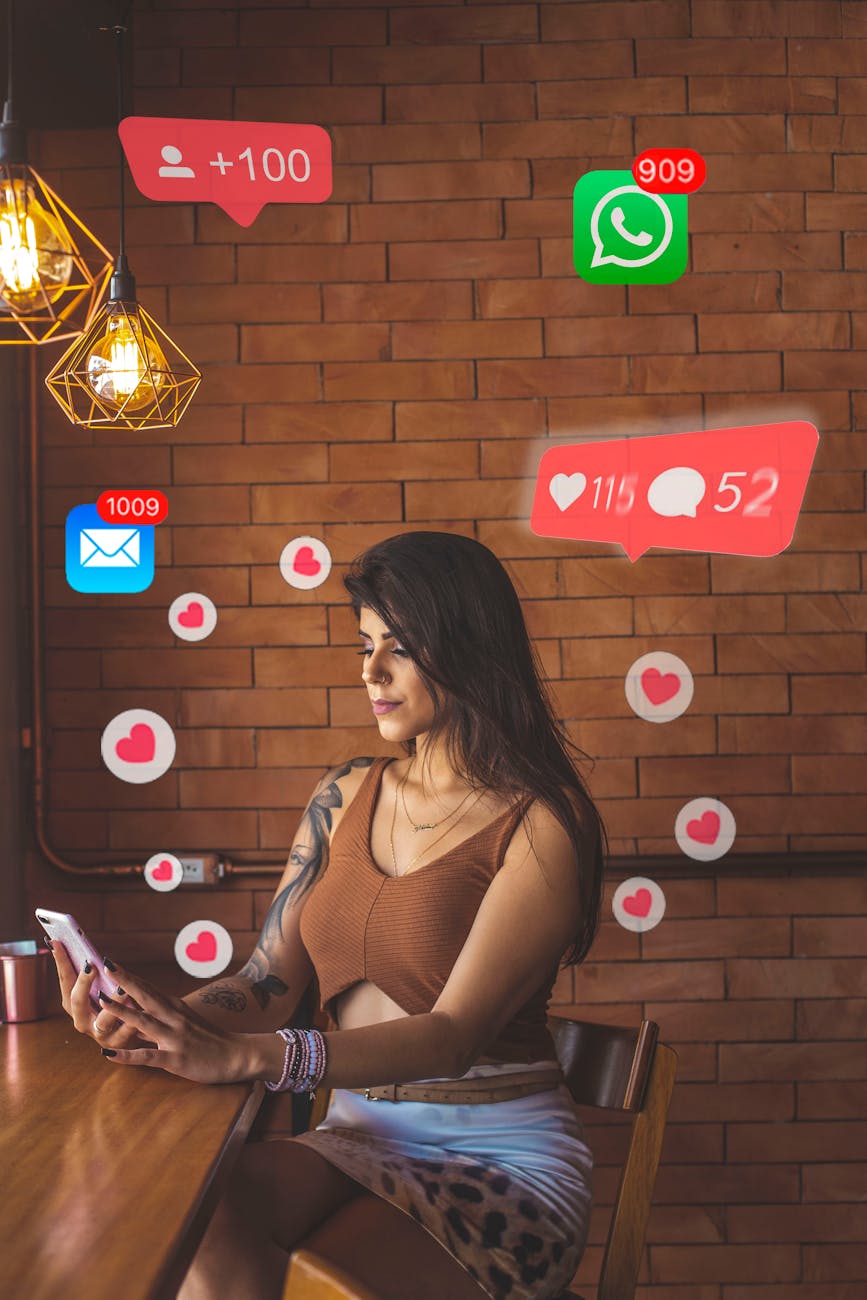
Brain Rot: The Lure of Social Media

Photo by Dalila Dalprat on Pexels.com

Social media stands as one of the most powerful forces shaping modern consciousness. While it promises connection, entertainment, and information, it simultaneously erodes attention, distorts self-perception, and rewires the mind. The phrase “brain rot” captures this slow psychological decay—a cultural and neurological drifting toward distraction, comparison, and overstimulation (Alter, 2017). In a world where digital platforms govern attention, the brain becomes a battlefield.

Algorithms engineer compulsion, not connection. Platforms optimize for engagement, not mental well-being, feeding the mind constant stimulation that disrupts cognitive rest cycles (Foerde & Shohamy, 2020). Where previous generations sought answers through study and silence, today many seek stimulation through endless scroll.

Attention—the currency of consciousness—is now fractured. Continuous scrolling conditions the mind to crave novelty at the expense of depth (Carr, 2020). A long-form book becomes unbearable, silence becomes uncomfortable, and thought becomes fragmented. The result is an inability to remain still, focus deeply, or engage meaningfully in sustained learning.

Attention decay is not a failure of willpower; it is engineered. Platforms deploy behavioral design mechanisms—intermittent rewards, infinite scroll, push notifications—to keep users locked in feedback loops (Eyal, 2014). The brain, wired for dopamine reward cycles, responds instinctively. Every like, share, and notification becomes a small high.

This dopamine loop leads to repeated checking, searching, and refreshing. Research shows similar neural activation patterns between social media engagement and substance addiction (Andreassen et al., 2017). The mind becomes dependent on micro-stimuli, weakened in its ability to seek fulfillment offline. The quiet life feels empty without digital applause.

Beyond neurology, the lure of social media is emotional. It offers validation. Affirmation. Belonging. Yet behind the screen lies comparison, envy, and insecurity. Curated lives produce distorted standards—beauty that is filtered, success that is exaggerated, happiness that is staged (Chou & Edge, 2012). The heart grows restless chasing illusions.

Identity becomes performance. Value becomes measured by visibility. The self becomes a brand. The digital mirror shapes self-worth as individuals seek approval from audiences rather than from purpose, community, or faith (Twenge, 2017). What once came from inner conviction now comes from metrics: likes, followers, views.

Vulnerability deepens among youth. Studies show rising anxiety, depression, and social disorientation among adolescents linked to heavy social media use (Keles et al., 2020). With developing brains still forming executive function and emotional regulation, the digital trap becomes generational.

Social comparison intensifies colorism, beauty bias, and racial insecurity online. Eurocentric filters and algorithmic biases elevate certain features and diminish others, reinforcing internalized hierarchy (Noble, 2018). In Black communities especially, social media creates pressure to conform to narrow aesthetics while erasing complexity and heritage.

The spiritual dimension of brain rot is profound. Constant distraction dulls discernment. The mind becomes reactive instead of reflective. Scripture warns, “Be still, and know that I am God” (Psalm 46:10, KJV). But digital culture abandons stillness. When the soul loses silence, it loses clarity.

Social media also impacts memory and learning. Outsourcing thought to devices weakens retrieval processes and deep storage of information (Storm & Stone, 2015). Minds no longer remember; they rely on searching. Knowledge becomes external. Wisdom becomes scarce.

Community fractures into digital tribes. Echo chambers amplify anger, misinformation, and division. Outrage becomes a resource to harvest, not a reaction to injustice (Sunstein, 2017). Brain rot is not only forgetting truth; it is learning to love noise.

Yet social media is not inherently destructive—it reflects usage. It can teach, inform, uplift, and empower movements for justice. Digital mobilization has amplified marginalized voices, documented abuses, and preserved history erased from mainstream narratives (Tufekci, 2017). The danger lies not in the tool, but in the unexamined dependency.

Restoration requires discipline. Boundaries guard the mind. Intentional consumption, designated offline time, and mindful use reclaim mental sovereignty (Newport, 2019). Digital sabbaths cultivate peace. Silence strengthens the inner voice.

Parents, educators, and leaders must teach digital literacy. Children must learn that value is not algorithm-assigned but divinely inherent. Minds must rediscover books, prayer, reflection, and community—not merely screens.

Prioritizing presence heals. Eye-to-eye conversation, physical touch, shared experiences, and real-world learning nourish cognitive development and emotional well-being. No emoji replaces human intimacy.

Ultimately, brain rot is a symptom of spiritual and cultural drift. When the mind serves distraction instead of purpose, decay follows. But when the mind seeks truth, discipline, and meaning, it flourishes. As Scripture reminds, “Set your affection on things above, not on things on the earth” (Colossians 3:2, KJV).

To reclaim the brain is to reclaim sovereignty, identity, and destiny. It is to choose depth over distraction and wisdom over noise. The battle for the mind is the battle for the future.

The cure begins with awareness, continues with discipline, and ends in liberation. The brain can be rewired. Focus can be restored. Thought can deepen again. We simply must choose clarity over chaos.

The lure of social media is strong—but the power of a disciplined mind is stronger.


References

Alter, A. (2017). Irresistible: The rise of addictive technology and the business of keeping us hooked. Penguin Press.
Andreassen, C. S., et al. (2017). The relationship between addictive use of social media and video games and symptoms of psychiatric disorders. Psychological Reports, 120(4).
Carr, N. (2020). The shallows: What the Internet is doing to our brains. W. W. Norton.
Chou, H., & Edge, N. (2012). “They are happier and having better lives than I am”: Facebook use and depression. Cyberpsychology, Behavior, and Social Networking, 15(2).
Eyal, N. (2014). Hooked: How to build habit-forming products. Portfolio.
Foerde, K., & Shohamy, D. (2020). Neuroscience of habit learning. Neurobiology of Learning and Memory, 169.
Keles, B., et al. (2020). A systematic review of social media and depression among adolescents. Clinical Child and Family Psychology Review, 23(4).
Noble, S. U. (2018). Algorithms of oppression: How search engines reinforce racism. NYU Press.
Newport, C. (2019). Digital minimalism: Choosing a focused life in a noisy world. Portfolio.
Storm, B. C., & Stone, S. M. (2015). Saving-enhanced memory. Psychological Science, 26(2).
Sunstein, C. R. (2017). #Republic: Divided democracy in the age of social media. Princeton University Press.
Tufekci, Z. (2017). Twitter and tear gas: The power and fragility of networked protest. Yale University Press.
Twenge, J. (2017). iGen. Atria Books.

The Psychology of Shade: Healing Colorism from Within.

Photo by Godisable Jacob on Pexels.com

Colorism is not merely a sociological phenomenon; it is a psychological wound. It is a trauma imprinted on the collective consciousness of the African diaspora, rooted in the violent histories of slavery, colonialism, and Eurocentric beauty hierarchies. While society reinforces these hierarchies externally, they take deeper residence in the human mind, shaping identity, relational dynamics, self-worth, and community cohesion. Healing colorism requires more than awareness; it demands internal restoration, cultural re-education, and spiritual renewal.

Colorism functions as an internalized system of valuation, assigning worth based on proximity to whiteness. According to Hunter (2007), colorism privileges lighter-skinned individuals socially, economically, and romantically, creating a tiered hierarchy among people of African descent. This internal stratification produces shame, insecurity, and self-doubt in darker-skinned individuals while simultaneously burdening lighter-skinned individuals with distorted expectations and identity conflicts. It is oppression turned inward and projected outward.

Psychologically, colorism creates cognitive dissonance — the tension between knowing one’s inherent worth and navigating a world that denies it. Young Black children often develop color-based biases as early as kindergarten, internalizing societal cues that equate lightness with beauty and goodness (Wilder, 2015). These early messages distort developing self-concepts and can manifest in adulthood as anxiety, depression, or body image struggles.

This emotional burden becomes spiritual when one recognizes that humanity is made in the image of God (Genesis 1:27, KJV). To despise one’s God-given hue is to unconsciously question divine intention. The biblical text affirms the beauty of melanated skin — Solomon describes his beloved as “black and comely” (Song of Solomon 1:5, KJV). Yet centuries of Western theology weaponized whiteness as purity, a manipulation that severed many from sacred self-recognition. True healing requires reclaiming a divine understanding of Blackness.

Community fractures deepen the wound. Colorism teaches competition instead of kinship, suspicion instead of solidarity. Dark-skinned women are stereotyped as aggressive or undesirable, while light-skinned women are hypersexualized and envied — both flattened into caricatures. Dark-skinned men are exoticized or deemed threatening, while light-skinned men face challenges asserting masculinity within cultural narratives. No shade escapes psychological consequence; all suffer under the illusion of hierarchy.

Healing begins with acknowledgment. Naming colorism disrupts invisibility. It invites self-reflection: Where have we internalized bias? How do we treat our brothers and sisters? How do we speak to ourselves? Through introspection, one confronts social conditioning and replaces it with truth — every shade holds beauty, dignity, and purpose.

Education plays a critical role. Schools, churches, media creators, and parents must actively counter color-based stereotypes. Children especially benefit from representation that celebrates the full spectrum of Black skin tones. Affirmation builds resilience against societal messages and cultivates pride in one’s natural image.

Therapeutic intervention is equally necessary. Mental health frameworks, particularly those grounded in Afrocentric psychology, offer tools for healing self-esteem wounds and navigating racialized experiences (Akbar, 2004). Therapy becomes not a sign of weakness, but a form of liberation — reclaiming one’s narrative from oppression’s lies.

Community healing circles and culturally rooted dialogue can restore connection. When individuals confess insecurities, biases, or wounds, vulnerability births compassion. In shared testimony, the illusion of isolation dissolves. Love becomes the antidote to generational distortion. Healing is communal, not individual.

Faith also serves as a healing anchor. Scripture proclaims that humans are “fearfully and wonderfully made” (Psalm 139:14, KJV). Divine affirmation dismantles color-based inferiority. Spiritual identity supersedes beauty hierarchies, grounding worth in God’s image, not societal constructs. For many, prayer, meditation, and ancestral reverence restore emotional balance.

Cultural reclamation is vital. From the rich mahogany of Nubian royalty to the bronze beauty of ancient Israelites, history affirms dark-skinned excellence long erased by colonial lenses. Relearning and teaching this truth repairs psychological fractures and reawakens pride in African aesthetics.

Healing colorism also demands accountability — calling out harmful jokes, media portrayals, dating biases, and generational comments. Silence sustains oppression; courageous resistance loosens its grip. Every moment we challenge shade-based discrimination, we affirm collective dignity.

Finally, healing is an act of love. Love for oneself, love for one’s people, love for one’s heritage. Love dismantles shame and renews identity. Love sees beauty not as a hierarchy, but a divine spectrum.

Colorism was inherited; healing must be chosen. To heal colorism from within is to reclaim spiritual truth, psychological freedom, and cultural pride. It is a journey of returning to self — the self untainted by Western gaze, anchored in divine design, affirmed through history, and celebrated within community. As we heal, we restore not just image, but soul.


References

Akbar, N. (2004). Know thyself. Mind Productions.

Hunter, M. (2007). The persistent problem of colorism: Skin tone, status, and inequality. Sociology Compass, 1(1), 237–254.

Wilder, J. (2015). Color stories: Black women and colorism in the 21st century. Praeger.

Holy Bible, King James Version.
Genesis 1:27; Song of Solomon 1:5; Psalm 139:14.

Narcissism Series: Smear Campaign

Photo by Anna Shvets on Pexels.com

Narcissistic relationships often begin with charm, admiration, and an intoxicating sense of connection—but they usually end in confusion, betrayal, and emotional devastation. One of the most destructive tools a narcissist employs after—or even during—a relationship is the smear campaign. This insidious strategy involves spreading lies, half-truths, and distorted narratives about the target to family, friends, or the community, often painting themselves as the victim. To understand the psychology behind why narcissists engage in smear campaigns and why they seem to hate the very people they once claimed to love, it is essential to unpack the core of narcissistic pathology through psychological, emotional, and spiritual lenses.


The Anatomy of a Smear Campaign

A smear campaign serves as a defensive mechanism. It allows the narcissist to preserve their fragile self-image by discrediting the target before the truth about their abuse can surface. As research by Campbell and Miller (2011) in The Handbook of Narcissism and Narcissistic Personality Disorder explains, narcissists possess a “grandiose yet fragile self” that relies on external validation. When the victim withdraws, exposes them, or no longer supplies admiration (known as narcissistic supply), the narcissist feels existentially threatened. The smear campaign becomes both revenge and self-preservation—a way to rewrite the narrative so that the narcissist remains the hero and the target becomes the villain.


Love, Hatred, and Envy: The Emotional Paradox

The narcissist’s hatred toward the person they “love” is paradoxical yet psychologically consistent. Their “love” is not genuine affection but possession—an extension of self. When the loved one asserts independence or contradicts the narcissist’s false self-image, the narcissist feels humiliated. Kernberg (1975) noted in Borderline Conditions and Pathological Narcissism that such individuals experience love and hate as polarized extremes, unable to integrate both emotions. Thus, the very person they once idealized becomes an object of scorn and envy once they threaten the narcissist’s fragile ego.

The narcissist’s hatred also stems from envy—a deep resentment toward the target’s positive qualities, empathy, authenticity, and resilience. These are traits the narcissist lacks internally but craves externally. When those traits no longer serve them, hatred replaces admiration.


The Projection of Inner Corruption

Psychologically, narcissists operate through projection—a defense mechanism by which they attribute their own flaws, fears, and guilt to others (Freud, 1911). When they feel shame, they accuse their target of being “crazy,” “manipulative,” or “abusive.” By projecting their darkness onto the victim, they temporarily rid themselves of internal guilt. This projection fuels the smear campaign, as the narcissist recruits others into believing their false narrative, known as narcissistic triangulation.


Control and Punishment

Smear campaigns are not just about image—they are about control. Narcissists despise losing control over the people they once dominated. When a target leaves or exposes them, the narcissist views it as rebellion. Their hatred manifests in punishment: ruining reputations, sabotaging relationships, or spreading rumors. As Vaknin (2003) explains in Malignant Self Love: Narcissism Revisited, “The narcissist must destroy those who expose his fragility. To him, it is self-defense.”


The Biblical Lens: Love Perverted

From a spiritual perspective, the narcissist’s hatred reflects the corruption of love described in 2 Timothy 3:2-5 (KJV):

“For men shall be lovers of their own selves, covetous, boasters, proud, blasphemers… without natural affection, trucebreakers, false accusers, incontinent, fierce, despisers of those that are good.”

The narcissist’s “love” is counterfeit—rooted not in selfless giving but in idolatry of self. Once that false love can no longer feed their ego, it mutates into contempt. Their hatred mirrors Cain’s jealousy of Abel (Genesis 4:5-8), as the narcissist despises the reflection of goodness and authenticity in their target’s spirit.


The Cycle of Idealization, Devaluation, and Discard

This pattern—idealize, devalue, discard—lies at the heart of narcissistic abuse. At first, the narcissist mirrors the victim’s values, dreams, and personality to create a deep emotional bond (idealization). Once they sense emotional dependency, they begin to devalue their partner through subtle criticisms and emotional neglect. Finally, they discard the target abruptly and start the smear campaign, ensuring that when the target finally speaks, their credibility has already been destroyed.


The False Self vs. True Self

According to Kohut’s Self Psychology (1971), narcissists construct a “false self” to protect against feelings of emptiness and inadequacy. The people they “love” become props reinforcing this illusion. When the target no longer sustains the false self, the narcissist perceives it as betrayal. The hatred that follows is not truly for the person, but for the mirror that stopped reflecting their idealized image.


Healing and Liberation for the Victim

Understanding the smear campaign as psychological warfare helps victims depersonalize the attack. Recognizing that the narcissist’s hatred is a reflection of their own self-loathing—not the target’s worth—restores clarity. Survivors must resist the urge to defend themselves publicly or retaliate; silence and integrity often speak louder than rebuttals. As Romans 12:19 (KJV) reminds us,

“Vengeance is mine; I will repay, saith the Lord.”

Healing comes through spiritual discernment, self-compassion, and emotional boundaries. In the end, the narcissist’s lies cannot stand against truth forever.


Conclusion

Narcissists hate the people they claim to love because genuine love exposes their deepest weakness: their inability to love themselves healthily. Their smear campaigns are desperate attempts to rewrite reality, maintain control, and mask internal shame. The hatred they project is merely the echo of their self-condemnation. To understand this is to reclaim one’s peace—and to break free from the cycle of illusion, manipulation, and emotional slavery.


References

  • Campbell, W. K., & Miller, J. D. (2011). The Handbook of Narcissism and Narcissistic Personality Disorder: Theoretical Approaches, Empirical Findings, and Treatments. John Wiley & Sons.
  • Freud, S. (1911). Psycho-Analytic Notes upon an Autobiographical Account of a Case of Paranoia (Dementia Paranoides). The Standard Edition of the Complete Psychological Works of Sigmund Freud.
  • Kernberg, O. F. (1975). Borderline Conditions and Pathological Narcissism. Jason Aronson.
  • Kohut, H. (1971). The Analysis of the Self: A Systematic Approach to the Psychoanalytic Treatment of Narcissistic Personality Disorders. University of Chicago Press.
  • Vaknin, S. (2003). Malignant Self Love: Narcissism Revisited. Narcissus Publications.
  • The Holy Bible, King James Version.

Judged by the Flesh: The Hidden Cost of Lookism.

In a world that increasingly prioritizes aesthetics, lookism—discrimination based on physical appearance—has emerged as a subtle yet powerful social ill. Unlike overt forms of prejudice, lookism operates quietly, influencing hiring practices, social interactions, and access to opportunities. Society often equates attractiveness with competence, likability, and even moral character, creating systemic advantages for those deemed “good-looking” and profound disadvantages for those who do not meet conventional beauty standards (Langlois et al., 2000).

The roots of lookism are both cultural and biological. Evolutionary psychology suggests humans have historically relied on physical cues to assess health, fertility, and social dominance. Yet, while some preference for symmetry or health markers may have biological origins, contemporary standards are deeply cultural, shaped by media, fashion, and globalized beauty ideals. This creates a hierarchy where certain facial features, body types, and skin tones are valorized, while others are marginalized.

Research consistently shows that physical appearance influences professional outcomes. Attractive individuals are more likely to be hired, earn higher salaries, and receive positive performance evaluations, regardless of skill or experience. This phenomenon, sometimes called “beauty premium,” highlights the insidious economic consequences of lookism. Those who fall outside idealized beauty norms experience not only diminished opportunities but also the psychological burden of feeling undervalued or invisible (Hamermesh & Biddle, 1994).

Lookism intersects with race, gender, and class, compounding disadvantage. For example, women of color often face both racialized and beauty-based discrimination, navigating a society that celebrates Eurocentric features as ideal. Black women, in particular, contend with colorism, hair politics, and features historically stigmatized, intensifying the harm of lookism within their communities and society at large.

Social media has intensified lookism by elevating curated images and digital standards of beauty. Platforms like Instagram and TikTok prioritize visual appeal, rewarding those with aesthetically pleasing appearances while marginalizing others. This “algorithmic bias” perpetuates unrealistic beauty ideals, fostering low self-esteem, body dysmorphia, and a relentless comparison culture (Fardouly et al., 2015).

Lookism also operates in interpersonal relationships. Attractive individuals often receive more attention, affection, and social favor, while those deemed less attractive are frequently dismissed, underestimated, or socially excluded. This bias extends beyond conscious prejudice; implicit cognition studies reveal that humans subconsciously associate beauty with positive traits such as intelligence, morality, and sociability (Dion et al., 1972).

Educational environments are not immune. Teachers may unknowingly favor attractive students, granting them more attention, encouragement, or leniency. This early bias can shape self-perception and academic outcomes, reinforcing societal inequities and perpetuating cycles of privilege and marginalization (Ritts et al., 1992).

The psychological toll of lookism is significant. Individuals who are judged harshly for their appearance are at increased risk of depression, anxiety, and social withdrawal. Persistent exposure to appearance-based discrimination erodes self-worth and fosters internalized bias, where individuals adopt society’s negative judgments as personal truths. These effects are particularly acute during adolescence, when identity and self-esteem are most malleable.

Lookism’s influence extends to healthcare. Research demonstrates that patients perceived as attractive are more likely to receive attentive care, quicker diagnoses, and greater empathy from healthcare providers, whereas those considered unattractive may experience neglect or misdiagnosis. Such disparities reflect the deep, often unconscious, ways physical appearance shapes life outcomes (Hamermesh & Biddle, 1994).

Media representation reinforces lookism through selective portrayal. Television, film, and advertising disproportionately feature individuals who conform to narrow standards of beauty, marginalizing diverse bodies, skin tones, and facial features. These representations not only validate societal bias but also communicate implicit messages about worth, desirability, and success.

Even in romantic relationships, lookism exerts influence. Cultural narratives and dating algorithms often prioritize conventional attractiveness, reinforcing the notion that beauty is synonymous with value. This commodification of physical appearance can overshadow qualities like character, intellect, and emotional compatibility, perpetuating superficial standards of partnership.

Workplace lookism has legal and ethical implications. Although anti-discrimination laws protect against race, gender, and age biases, physical appearance is not universally protected, leaving “appearance discrimination” largely unchecked. Employees who deviate from conventional attractiveness norms face subtle penalties—missed promotions, social exclusion, or biased performance evaluations.

Despite its pervasive nature, interventions against lookism are possible. Awareness campaigns, diversity initiatives, and inclusive media representation can challenge ingrained perceptions of beauty. Organizations that prioritize skill, character, and diversity over appearance foster equitable opportunities and reduce the hidden costs of aesthetic bias.

Cultural critique also plays a role in mitigating lookism. Scholars and activists have highlighted the intersectionality of appearance-based bias with race, gender, and socioeconomic status, emphasizing the need to dismantle systems that equate beauty with virtue or competence. These critiques encourage society to value individuals holistically rather than superficially.

Psychological resilience can counteract the personal effects of lookism. Encouraging self-compassion, emphasizing skill development, and cultivating communities that value diverse appearances help mitigate the internalization of appearance-based discrimination. Programs that celebrate body positivity and aesthetic diversity have shown positive effects on self-esteem and mental health outcomes.

Historically, beauty standards have been mutable, illustrating that what is considered attractive is socially constructed rather than inherent. Renaissance, Victorian, and modern ideals vary dramatically, underscoring the arbitrary nature of lookism and the potential for cultural change. Understanding this fluidity empowers individuals to question and resist oppressive aesthetic norms.

Social media literacy is increasingly critical. Users must recognize curated imagery, filters, and digital enhancements as non-representative of reality. Educating young people on the mechanics of social media influence can reduce the internalization of unattainable beauty ideals and mitigate the mental health consequences of lookism.

It is also essential to address intra-community lookism, such as colorism or hair politics, which reinforce discriminatory hierarchies within marginalized groups. These forms of appearance-based bias perpetuate inequality and hinder collective empowerment, demonstrating that the effects of lookism are both broad and intimate.

Finally, combating lookism requires systemic change alongside personal resilience. Policies promoting inclusion, media representation of diverse appearances, and education that challenges aesthetic hierarchies are crucial for reducing the hidden costs of judging by the flesh. Without intentional action, society risks perpetuating inequities that undermine social cohesion, self-worth, and justice.

In conclusion, lookism is a pervasive, often invisible form of discrimination that shapes opportunities, relationships, and self-perception. Recognizing its impact and implementing cultural, institutional, and individual interventions are essential steps toward a more equitable society. As society becomes increasingly conscious of bias in all forms, addressing lookism is critical for cultivating justice, dignity, and authentic human value.

References

  • Dion, K., Berscheid, E., & Walster, E. (1972). What is beautiful is good. Journal of Personality and Social Psychology, 24(3), 285–290.
  • Fardouly, J., Diedrichs, P. C., Vartanian, L. R., & Halliwell, E. (2015). Social comparisons on social media: The impact of Facebook on young women’s body image concerns and mood. Body Image, 13, 38–45.
  • Hamermesh, D. S., & Biddle, J. E. (1994). Beauty and the labor market. American Economic Review, 84(5), 1174–1194.
  • Langlois, J. H., Kalakanis, L., Rubenstein, A. J., Larson, A., Hallam, M., & Smoot, M. (2000). Maxims or myths of beauty? A meta-analytic and theoretical review. Psychological Bulletin, 126(3), 390–423.
  • Ritts, V., Patterson, M., & Tubbs, M. (1992). Expectations, impressions, and judgments of physically attractive students: A review. Review of Educational Research, 62(4), 413–426.

Narcissism Series: Energy Vampires

Photo by Andrea Piacquadio on Pexels.com

Energy vampires are not fictional monsters — they are real people who drain your mental, emotional, and spiritual energy. They may be found in families, workplaces, friendships, and even church communities. These individuals thrive on constant attention, drama, and emotional reactions, leaving others feeling exhausted and discouraged. The Christian’s challenge is to balance compassion with wisdom — to love as Christ commands, yet guard the heart and protect peace.

The Psychology Behind Energy Vampires

1. Emotional Dysregulation

Energy vampires often struggle with managing their own emotions. They may have poor coping skills, which causes them to offload their stress, anger, or sadness onto others. This constant emotional dumping creates a cycle where they temporarily feel better — but you feel drained.

  • Psychology connection: This behavior is linked to emotional dysregulation, often seen in people with untreated anxiety, depression, or personality disorders.
  • Biblical connection: “Cast thy burden upon the Lord, and he shall sustain thee” (Psalm 55:22, KJV) — those who do not give their burdens to God often put them on other people.

2. Narcissistic Traits

Some energy vampires display narcissistic tendencies — craving attention, admiration, and control. They drain others by constantly talking about themselves, belittling others, or creating drama to stay the center of focus.

  • Psychology connection: Narcissistic Personality Disorder (NPD) is marked by entitlement, lack of empathy, and manipulation (APA, 2022).
  • Biblical connection: “This know also, that in the last days perilous times shall come. For men shall be lovers of their own selves…” (2 Timothy 3:1–2, KJV).

3. Codependency

Some energy vampires are not malicious but codependent — they feel incomplete or unsafe unless they are constantly connected to others. This leads to clinginess, over-reliance on your emotional support, and resentment when you set limits.

  • Psychology connection: Codependency is a learned behavior often formed in dysfunctional families, where a person’s worth is tied to “fixing” or rescuing others.
  • Biblical connection: “Cursed be the man that trusteth in man, and maketh flesh his arm…” (Jeremiah 17:5, KJV).

4. Chronic Negativity Bias

Energy vampires often have a negative worldview. They may complain excessively, gossip, or focus only on problems. This triggers your brain’s natural empathy response — but eventually leaves you emotionally exhausted.

  • Psychology connection: Research shows negativity bias makes negative events feel more significant and attention-grabbing than positive ones (Rozin & Royzman, 2001).
  • Biblical connection: “Do all things without murmurings and disputings” (Philippians 2:14, KJV).

5. Drama Addiction

Some people are addicted to emotional chaos. Conflict gives them a rush of adrenaline, so they unconsciously create drama to feel alive. They may pick fights, exaggerate situations, or stir gossip just to keep the emotional energy flowing.

  • Psychology connection: This can be linked to high cortisol/adrenaline cycles that train the brain to crave stress, similar to an addiction pattern.
  • Biblical connection: “Blessed are the peacemakers: for they shall be called the children of God” (Matthew 5:9, KJV).

6. Lack of Self-Awareness

Many energy vampires simply do not realize the impact they have on others. They may not be evil — just unaware that their constant venting, complaining, or emotional dependence drains the people around them.

  • Psychology connection: This relates to low emotional intelligence (EQ), which makes it hard for them to empathize with how their actions affect others.
  • Biblical connection: “The simple believeth every word: but the prudent man looketh well to his going” (Proverbs 14:15, KJV).

7. Projection & Emotional Dumping

Energy vampires often project their unresolved pain onto others. If they feel angry, they try to make you angry. If they feel fearful, they want you to worry too. They transfer their emotional state onto you to feel temporary relief.

  • Psychology connection: This is a classic defense mechanism — projection — where a person attributes their feelings to someone else.
  • Biblical connection: “The wicked are like the troubled sea, when it cannot rest” (Isaiah 57:20, KJV).

8. Secondary Gain

Some people unconsciously benefit from staying “needy” — they get attention, sympathy, or control over others. This is called secondary gain. It reinforces their draining behavior because it rewards them with emotional fuel.

  • Psychology connection: Secondary gain is often discussed in behavioral psychology as reinforcement for maladaptive patterns.
  • Biblical connection: “The soul of the sluggard desireth, and hath nothing: but the soul of the diligent shall be made fat” (Proverbs 13:4, KJV).

9. Unhealed Trauma

Many energy vampires carry childhood wounds or past hurts that were never processed. They may unconsciously seek others to fill the void, becoming overly demanding or emotionally draining.

  • Psychology connection: Trauma can create attachment wounds, leading to anxious attachment styles or emotional dependency.
  • Biblical connection: “He healeth the broken in heart, and bindeth up their wounds” (Psalm 147:3, KJV).

10. Spiritual Warfare

Some draining interactions go beyond psychology — they are spiritual battles. Energy vampires can be used as tools of distraction to keep you off your purpose and away from God’s peace.

  • Psychology & Bible link: While psychology explains behaviors, the Bible reminds us that “we wrestle not against flesh and blood” (Ephesians 6:12, KJV).

Understanding Energy Vampires
In psychology, “energy vampires” are often classified as individuals with high-conflict personalities, narcissistic traits, or codependent tendencies (Brown, 2021). They may not intend harm, but their behavior leaves others feeling depleted. Scripture cautions us about these draining interactions: “Be not deceived: evil communications corrupt good manners” (1 Corinthians 15:33, KJV).

The Emotional Toll
Research shows that toxic relationships increase stress hormones such as cortisol, leading to anxiety, burnout, and even weakened immune function (Kiecolt-Glaser & Newton, 2001). Proverbs 22:24–25 warns: “Make no friendship with an angry man… lest thou learn his ways, and get a snare to thy soul.” The emotional and spiritual cost of tolerating constant negativity is high.

The Dilemma of Compassion vs. Self-Protection
Christians sometimes feel guilty when distancing themselves from draining people. But Jesus set boundaries — He withdrew from crowds (Luke 5:16), said “no” to premature exposure (John 7:8), and rebuked Peter when Peter spoke contrary to His mission (Matthew 16:23). Love does not mean enabling toxic patterns (Cloud & Townsend, 2017).

Category 1: The Perpetual Victim
This energy vampire lives in a constant state of crisis and resists taking responsibility. They seek sympathy but reject solutions. Galatians 6:5 reminds us that “every man shall bear his own burden.” Continually rescuing them may enable their victim mindset.

Strategy for the Perpetual Victim
Offer compassion but redirect toward action: “What steps can you take to change this?” If they refuse to take responsibility, create space and avoid being their emotional dumping ground.

Category 2: The Narcissist
Narcissistic energy vampires crave admiration, attention, and control (Campbell & Miller, 2011). They may use gaslighting, criticism, or love-bombing to keep others dependent on them. Scripture warns that pride precedes destruction (Proverbs 16:18).

Strategy for the Narcissist
Stay calm, factual, and avoid feeding their need for drama. Set firm boundaries and refuse to be manipulated. Jesus’ words are instructive: “Give not that which is holy unto the dogs” (Matthew 7:6), meaning do not give your emotional energy to those who trample it.

Category 3: The Drama Creator
These individuals thrive on conflict, gossip, and emotional chaos. Research links chronic gossip and drama-seeking behavior to low self-regulation and high neuroticism (Ellwardt et al., 2012). Proverbs 6:19 lists “he that soweth discord among brethren” as one of the things the Lord hates.

Strategy for the Drama Creator
Do not fuel the fire. Refuse to participate in gossip or arguments. Proverbs 26:20 states, “Where no wood is, there the fire goeth out.” Your refusal to engage ends the cycle.

Category 4: The Controller/Manipulator
This type uses guilt, passive-aggressiveness, or even Scripture-twisting to control others. This is a subtle form of emotional abuse, which can have lasting psychological effects (Forward & Frazier, 2018). Galatians 5:1 reminds believers to stand firm in liberty.

Strategy for the Controller/Manipulator
Be direct and concise: “No, I cannot do that.” Avoid lengthy explanations, which give them room to argue. Jesus taught: “Let your communication be, Yea, yea; Nay, nay” (Matthew 5:37).

Category 5: The Chronically Negative Person
Pessimistic energy vampires focus on problems rather than solutions. Their negativity can trigger emotional contagion — the phenomenon where moods spread through social interaction (Hatfield, Cacioppo, & Rapson, 1994). Philippians 2:14 tells believers to do all things without murmuring or disputing.

Strategy for the Negative Person
Redirect to gratitude or solutions. If the conversation continues to be negative, exit respectfully. Your mental and spiritual atmosphere must remain protected.

Recognizing the Signs You Are Being Drained
Symptoms of energy drain include tension headaches, irritability, dread before contact, and guilt after setting boundaries. These signs reveal that a relationship is taking more than it is giving — a red flag for emotional stewardship.

Guarding Your Spiritual Energy
Prayer, fasting, and time in the Word recharge your spirit. Ephesians 6:10 commands: “Be strong in the Lord, and in the power of his might.” Spiritual disciplines act as armor, protecting your mind from manipulation and emotional depletion.

Using Silence as Your Shield
Psychologists recommend the “gray rock technique” — remaining emotionally neutral to discourage toxic engagement (Shahida, 2020). Proverbs 17:27 affirms, “He that hath knowledge spareth his words.” Quietness frustrates manipulators.

Healthy Detachment
Detachment allows you to care for someone without being consumed by their chaos. Jesus loved the multitudes yet frequently withdrew to pray (Luke 5:16). Healthy detachment helps you stay tuned to God’s voice rather than drowning in others’ emotional demands.

Choosing Distance When Necessary
Romans 16:17 advises believers to “mark them… and avoid them” when people persist in divisive or harmful behavior. Distance may be temporary or permanent, depending on the situation, but it is sometimes the only way to preserve mental and spiritual health.

Healing After Emotional Drain
Psalm 23:3 promises, “He restoreth my soul.” Healing involves rest, prayer, journaling, therapy, and surrounding yourself with healthy, life-giving relationships that build you up instead of draining you.

How to Stay Clear of Energy Vampires

  1. Discern Early – Pay attention to how you feel after interacting with someone. If you consistently feel drained, anxious, or resentful, that’s a warning sign. (1 Corinthians 15:33)
  2. Set Firm Boundaries – Politely but clearly limit your time and emotional availability. Example: “I can’t talk right now, let’s connect later.”
  3. Use the Power of “No” – Learn to say no without guilt or long explanations. (Matthew 5:37 – Let your yea be yea; and your nay, nay)
  4. Limit Access to Your Energy – You don’t have to answer every call, text, or message right away. Protect your emotional bandwidth.
  5. Avoid Oversharing – Keep some things private. Energy vampires may use your personal information against you later. (Proverbs 13:3 – He that keepeth his mouth keepeth his life)
  6. Stay Calm & Neutral – Don’t feed their drama. Use short, calm, factual responses (the “gray rock technique”).
  7. Redirect the Conversation – Shift focus from gossip, negativity, or complaining to solutions or positive topics.
  8. Physically Step Away – If the conversation turns toxic, excuse yourself. Sometimes a simple “I have to go now” is enough.
  9. Pray Before & After Interaction – Ask God for discernment and protection of your peace. (Philippians 4:7 – The peace of God shall keep your hearts and minds)
  10. Surround Yourself with Positive People – Build relationships with those who uplift, encourage, and sharpen you spiritually. (Proverbs 27:17 – Iron sharpeneth iron)
  11. Maintain Emotional Detachment – Care about them but don’t carry their emotional baggage as your own.
  12. Guard Your Time – Schedule conversations and visits so you remain in control of your energy, not at their mercy.
  13. Watch for Manipulation – Don’t allow guilt, flattery, or fear to force you into actions that compromise your well-being.
  14. Fast From Toxic Interaction – Take intentional breaks from draining relationships to recharge spiritually.
  15. Seek Wise Counsel – Talk to a pastor, mentor, or counselor if you struggle with cutting ties or setting limits.
  16. Stay Rooted in Scripture – Fill your mind with the Word so you can respond with wisdom instead of emotion. (Proverbs 4:23 – Keep thy heart with all diligence)
  17. Let Go of the Need to Fix Them – You are not their savior; point them to Christ but do not sacrifice your mental health to change them.
  18. Prioritize Self-Care – Rest, worship, and do things that bring you joy to refill what was drained.
  19. Walk Away When Necessary – If someone refuses to respect boundaries, create distance. (Romans 16:17 – Mark them… and avoid them)
  20. Trust God With the Relationship – Pray for their healing and deliverance, but trust God to work in their life without sacrificing your peace.

Conclusion: Loving Without Losing Yourself
Energy vampires are a reality every believer will face. The goal is not to hate them but to set godly boundaries that honor both God and yourself. Compassion without wisdom leads to burnout. When you stay anchored in Christ, guard your heart, and use discernment, you can love others without losing yourself.


References

  • Brown, J. (2021). Toxic people: Strategies for dealing with difficult personalities. HarperCollins.
  • Campbell, W. K., & Miller, J. D. (2011). The handbook of narcissism and narcissistic personality disorder. Wiley.
  • Cloud, H., & Townsend, J. (2017). Boundaries: When to say yes, how to say no to take control of your life. Zondervan.
  • Ellwardt, L., Labianca, G. J., & Wittek, R. (2012). Who are the objects of positive and negative gossip at work? Social Networks, 34(2), 193–205.
  • Figley, C. R. (2017). Compassion fatigue: Psychotherapists’ chronic lack of self-care. Journal of Clinical Psychology, 58(11), 1433–1441.
  • Forward, S., & Frazier, C. (2018). Emotional blackmail: When the people in your life use fear, obligation, and guilt to manipulate you. Harper.
  • Hatfield, E., Cacioppo, J. T., & Rapson, R. L. (1994). Emotional contagion. Cambridge University Press.
  • Kiecolt-Glaser, J. K., & Newton, T. L. (2001). Marriage and health: His and hers. Psychological Bulletin, 127(4), 472–503.
  • Shahida, S. (2020). The highly sensitive person’s guide to dealing with toxic people. New Harbinger.

Psychological and Emotional Depths of Racism, Colorism, and Lookism.

Photo by Ali Drabo on Pexels.com

Racism, colorism, and lookism represent a triad of psychological violence that shapes human experience, distorting both identity and emotional well-being. These constructs intertwine to create hierarchies of worth rooted in superficial attributes—skin color, facial symmetry, and physical appearance—while leaving lasting scars on the psyche of those marginalized by them. Their effects extend far beyond social exclusion; they penetrate the self-concept, dismantling the foundations of self-esteem and belonging.

Racism is not merely an external act of discrimination—it is an internalized poison that teaches individuals to view themselves through the eyes of their oppressors. When a person of African descent absorbs racist messages about inferiority or hyper-visibility, a split occurs between their authentic self and their socially imposed identity. This psychological rupture, described by W.E.B. Du Bois (1903) as “double consciousness,” forces Black individuals to exist between two conflicting perceptions: who they truly are and how they are seen.

Colorism deepens this fracture by introducing an internal hierarchy within racial groups, privileging lighter skin as more beautiful, intelligent, or desirable. Rooted in colonial history, colorism functions as an inherited trauma that reinforces Eurocentric standards of worth. Studies have shown that darker-skinned individuals face harsher judgments in employment, education, and romantic desirability (Hunter, 2007). This creates an invisible caste system within the same racial identity, perpetuating cycles of low self-esteem and division.

The emotional consequences of colorism are profound, particularly for women. Dark-skinned women are often depicted as less feminine or less worthy of love, a stereotype perpetuated by media and societal norms. The absence of representation or the presence of negative portrayals leads to what psychologists term “internalized colorism”—a form of self-loathing or constant comparison to lighter peers. This condition manifests in depression, anxiety, and body dysmorphia, echoing generations of colonial degradation.

Men, too, are not immune to this system of valuation. In a world where light skin and European features are exalted, darker-skinned men are frequently stereotyped as aggressive or undesirable unless they attain wealth or fame. This conditional acceptance feeds into what scholars call “compensatory masculinity,” where self-worth becomes tied to external achievements rather than intrinsic identity (Majors & Billson, 1992). The psychological toll is heavy, fostering performance-based validation instead of authentic self-acceptance.

Lookism—the discrimination based on physical appearance—intersects with both racism and colorism, reinforcing social hierarchies of attractiveness that favor Eurocentric beauty ideals. The psychological effects of lookism can be as damaging as racial prejudice, leading to social anxiety, isolation, and chronic insecurity. Individuals who deviate from mainstream beauty standards often develop what psychologists refer to as “appearance-based self-worth,” where self-esteem fluctuates based on perceived attractiveness.

Racism, colorism, and lookism collectively weaponize the human gaze. The eyes of others become a source of judgment and trauma, transforming the act of being seen into an emotional burden. Frantz Fanon (1952) described this phenomenon in Black Skin, White Masks, recounting how the colonial gaze reduces the Black body to an object of otherness. Such dehumanization fractures the self, replacing the joy of identity with the anxiety of perception.

The family, often a place of refuge, can also become the site where these hierarchies are reinforced. Generations of internalized color preference lead parents to praise lighter children or to discourage darker-skinned ones from embracing their natural features. This subtle form of intra-racial discrimination plants seeds of insecurity early in life. Over time, these messages crystallize into adult self-doubt and relational struggles, perpetuating a cycle of self-denial.

In the context of love and relationships, colorism and lookism operate as silent dictators of desirability. Studies show that both men and women subconsciously associate lighter skin and Eurocentric features with higher social status and compatibility (Maddox & Gray, 2002). For darker individuals, this creates a psychological dilemma—wanting to be loved authentically yet fearing rejection for something immutable.

The emotional depth of these issues cannot be understood without addressing media influence. Hollywood, fashion, and advertising have historically upheld narrow definitions of beauty, centering whiteness as the ideal. Even when diversity is celebrated, it is often curated within acceptable limits—favoring lighter tones, looser curls, and symmetrical features. This reinforces the narrative that true beauty requires proximity to whiteness.

Social media, though often praised for democratizing visibility, has amplified lookism. Platforms that reward filtered perfection encourage constant comparison and digital self-surveillance. The curated self replaces the authentic self, and validation becomes addictive. For Black and brown users, the algorithm often mirrors historical biases—prioritizing lighter-skinned influencers or Eurocentric aesthetics.

Psychologically, this environment breeds what some researchers term “mirror trauma”—a form of emotional distress that arises from seeing distorted versions of oneself reflected in culture and technology. The self becomes fragmented between the reality of one’s body and the idealized digital fantasy that gains approval. Over time, this can lead to emotional numbness, perfectionism, and identity confusion.

The intersection of racism, colorism, and lookism also shapes social mobility. Those who visually conform to beauty norms often experience what sociologists call “aesthetic privilege.” This unearned advantage affects job opportunities, income levels, and even criminal sentencing outcomes. Studies reveal that lighter-skinned Black individuals are more likely to receive lenient treatment in the justice system (Viglione, 2018). Beauty thus becomes currency—a silent economy of worth rooted in colonial logic.

In educational settings, these biases shape teacher expectations and peer interactions. Research indicates that darker-skinned students are disciplined more harshly and perceived as less capable, even when their performance matches that of their lighter peers. These early experiences internalize inferiority, breeding self-doubt and academic disengagement (Hannon et al., 2013).

From a psychological standpoint, the internalization of beauty hierarchies functions as a form of self-surveillance—a mental colonization where individuals police their own features. This creates what bell hooks (1992) described as “aesthetic trauma,” where Black individuals struggle to see themselves as beautiful outside of white validation. Healing from this requires unlearning centuries of visual propaganda.

Spiritually, the damage runs deeper still. Many who grow up under the shadow of colorism question their divine worth. They subconsciously associate lighter skin with purity or godliness, reflecting how colonial religion once depicted holiness through whiteness. Reclaiming one’s spiritual identity, therefore, becomes an act of resistance—seeing oneself as made in the image of the Creator, not the colonizer.

Healing from these intertwined oppressions requires collective re-education. Communities must confront how they perpetuate colorist and lookist narratives through jokes, preferences, or casting choices. Recognizing these patterns allows for intentional change, transforming inherited bias into self-awareness.

Therapeutically, interventions must address both the individual and societal dimensions of appearance-based trauma. Cognitive-behavioral therapy can help reframe distorted beliefs about worth, while cultural therapy reconnects individuals to ancestral pride and historical truth. For many, embracing natural hair, melanin, or cultural fashion becomes a symbolic act of psychological liberation.

Emotionally, the journey toward self-acceptance involves mourning—grieving the years lost to self-hate, rejection, or invisibility. This grief process allows for rebirth, where identity is no longer contingent upon comparison but rooted in divine and cultural truth.

Art, literature, and music serve as tools of resistance. From Nina Simone’s defiant “To Be Young, Gifted and Black” to contemporary movements like #MelaninMagic, creative expression reclaims narrative control. These acts remind the world—and the self—that beauty is not a European export but a human inheritance.

The emotional healing of colorism and lookism requires a mirror reimagined—not one that distorts but one that reflects truth. Each shade, each feature, carries ancestral memory and divine intention. When individuals learn to see themselves as sacred art, the gaze of oppression loses power.

Ultimately, the psychological liberation from racism, colorism, and lookism is both personal and collective. It demands that we dismantle the systems that define beauty as hierarchy and worth as appearance. True freedom begins not when others affirm us, but when we affirm ourselves beyond their gaze.

References

Du Bois, W. E. B. (1903). The souls of Black folk. Chicago: A.C. McClurg.

Fanon, F. (1952). Black skin, white masks. Grove Press.

Hannon, L., Defina, R., & Bruch, S. (2013). The relationship between skin tone and school suspension for African Americans. Race and Social Problems, 5(4), 281–295.

hooks, b. (1992). Black looks: Race and representation. South End Press.

Hunter, M. (2007). The persistent problem of colorism: Skin tone, status, and inequality. Sociology Compass, 1(1), 237–254.

Majors, R., & Billson, J. M. (1992). Cool pose: The dilemmas of Black manhood in America. Lexington Books.

Maddox, K. B., & Gray, S. A. (2002). Cognitive representations of Black Americans: Reexploring the role of skin tone. Personality and Social Psychology Bulletin, 28(2), 250–259.

Viglione, J. (2018). The impact of skin tone on the criminal justice process. Race and Justice, 8(2), 175–200.


The Ripple Effect of Kindness

Photo by Timur Weber on Pexels.com

Kindness is among the most profound forces in human existence—a quiet yet transformative power capable of healing wounds, building bridges, and restoring hope. Its impact extends far beyond the immediate act; like ripples on water, one gesture of compassion can influence countless others. In a society increasingly marked by division, isolation, and hostility, kindness serves as both a moral compass and a social remedy. The ripple effect of kindness reminds us that small acts can create monumental change.

Psychologically, kindness nurtures both giver and receiver. Neuroscientific research has shown that acts of generosity activate the brain’s reward centers, releasing oxytocin and dopamine, which enhance happiness and lower stress (Post, 2011). This biological reward system suggests that humans are inherently wired for empathy. Each act of kindness reinforces neural pathways that promote prosocial behavior, creating a self-sustaining cycle of emotional well-being.

Sociologically, kindness functions as social glue. Communities that practice compassion experience lower levels of violence and higher levels of trust and cooperation. When individuals choose kindness in interpersonal interactions—whether in workplaces, schools, or neighborhoods—they establish cultural norms rooted in respect rather than rivalry. Kindness, therefore, becomes a form of social capital, enriching collective humanity.

Historically, acts of kindness have altered the course of nations and movements. During the Civil Rights era, nonviolent resistance embodied kindness as a radical strategy. Dr. Martin Luther King Jr. understood that love and compassion were not signs of weakness but revolutionary tools for dismantling hate. This moral courage inspired empathy across racial and ideological divides, proving that kindness could be both gentle and powerful.

Biblically, kindness is a divine mandate rather than a mere virtue. Ephesians 4:32 instructs, “And be ye kind one to another, tenderhearted, forgiving one another, even as God for Christ’s sake hath forgiven you” (KJV). This scripture connects kindness to forgiveness—a sacred act that mirrors divine mercy. In this sense, kindness transcends emotion; it becomes an expression of spiritual alignment and moral maturity.

Emotionally, kindness acts as a balm for trauma. People who have suffered loss, rejection, or injustice often find restoration through the unexpected compassion of others. This exchange of empathy has a therapeutic effect, fostering resilience and belonging. A kind word or gesture can interrupt cycles of despair, reminding others that they are seen, valued, and loved.

Economically and organizationally, kindness enhances productivity and innovation. Research in organizational psychology shows that companies that cultivate empathy and gratitude among employees experience higher engagement, lower turnover, and greater creativity (Cameron, 2013). Kind leadership is not sentimental—it is strategic. Environments that prioritize emotional intelligence become incubators for sustainable success.

In education, the ripple effect of kindness transforms learning environments. Students exposed to compassionate teachers and peers demonstrate higher academic performance and emotional intelligence. Programs like “Random Acts of Kindness” in schools teach empathy as a skill, showing young people that their actions can improve the emotional climate of their classrooms. These lessons often extend into adulthood, shaping future leaders and citizens.

Culturally, kindness has become a countercultural act in an age of self-interest and digital hostility. Social media, while connecting billions, has also fostered environments of comparison and cruelty. Yet, online movements that celebrate kindness—such as campaigns for community aid, mental health support, and anti-bullying—demonstrate that compassion can thrive even in digital spaces. When kindness goes viral, it becomes contagious.

Theologically, kindness reflects divine character. God’s mercy toward humanity models how humans should treat one another—with grace, patience, and humility. The Hebrew concept of chesed, meaning steadfast love or lovingkindness, underscores the covenantal nature of compassion. It implies faithfulness in love, even when it is undeserved. True kindness, then, requires endurance and integrity.

In family life, kindness strengthens the bonds between generations. Children who grow up witnessing compassion in action internalize empathy as a core value. Spouses who practice forgiveness and gentleness nurture homes of peace rather than contention. The ripple effect within families becomes a living legacy, as kindness multiplies through every relationship it touches.

Within the realm of mental health, kindness acts as a natural antidepressant. Studies show that individuals who engage in consistent acts of kindness experience reduced anxiety and depression (Layous et al., 2012). Helping others shifts focus from self-centered rumination to outward purpose, cultivating gratitude and meaning. In this way, kindness functions as medicine for both mind and soul.

Globally, kindness has the power to transcend borders and bridge cultural divides. Humanitarian efforts, relief organizations, and grassroots movements are all manifestations of collective compassion. Whether through providing food, shelter, or education, each act contributes to global solidarity. Kindness becomes a universal language—one understood by every heart regardless of nationality or creed.

Spiritually, kindness is the seed of revival. It draws people toward light, restoring faith in goodness and humanity. In an often dark and cynical world, a single act of compassion can spark hope in countless hearts. This is the divine mathematics of kindness: what is given multiplies infinitely.

Even within justice movements, kindness is not passive—it is revolutionary. It challenges systems of exploitation by centering humanity over profit and power. To respond to oppression with compassion does not mean surrendering, but rather choosing moral superiority over vengeance. Such kindness becomes the ultimate expression of strength.

Philosophically, kindness reminds humanity of its interconnectedness. No act exists in isolation. The kindness shown to one stranger may inspire that stranger to comfort another, creating an endless chain reaction. The ripple may begin small, but it can reach unseen shores—proving that goodness, once released, never truly dies.

In literature and art, kindness is often depicted as a quiet heroism. From the selflessness of characters like Harper Lee’s Atticus Finch to the redemptive mercy found in Victor Hugo’s Les Misérables, kindness emerges as the thread that redeems humanity. These narratives remind us that beauty and goodness are intertwined—that to be kind is to be fully human.

In the context of community building, kindness restores trust where systems have failed. Neighborhoods with strong social ties—where people check on one another and share resources—experience lower crime and greater well-being. The ripple of one caring neighbor can transform an entire block, showing how collective empathy rebuilds society from the ground up.

Ultimately, the ripple effect of kindness reveals that we are all interconnected agents of change. Every compassionate act, no matter how small, contributes to a greater wave of healing. The world does not transform through grand gestures alone, but through consistent everyday love—the kind word, the helping hand, the forgiving heart.

In conclusion, kindness is not weakness; it is wisdom. It possesses the quiet strength to repair what anger has broken and to illuminate what hatred has darkened. Each act of compassion—each ripple—reminds humanity of its sacred duty: to love and be loved. The true power of kindness lies not in how far it reaches, but in how deeply it touches.


References

Cameron, K. S. (2013). Positive leadership: Strategies for extraordinary performance. Berrett-Koehler Publishers.

Layous, K., Nelson, S. K., Oberle, E., Schonert-Reichl, K. A., & Lyubomirsky, S. (2012). Kindness counts: Prompting prosocial behavior in preadolescents boosts peer acceptance and well-being. PLoS ONE, 7(12), e51380. https://doi.org/10.1371/journal.pone.0051380

Post, S. G. (2011). The hidden gifts of helping: How the power of giving, compassion, and hope can get us through hard times. Jossey-Bass.

The Holy Bible, King James Version. (n.d.). Ephesians 4:32. King James Bible Online. https://www.kingjamesbibleonline.org

King Jr., M. L. (1963). Strength to love. Harper & Row.

Hugo, V. (1862). Les Misérables. A. Lacroix, Verboeckhoven & Cie.