Tag Archives: mental-health

Can Men and Women be Friends?

The question of whether men and women can maintain genuine friendship has long been debated. It is an age-old question that spans psychology, culture, and theology. Many argue that cross-gender friendships are natural, while others believe that attraction and desire inevitably complicate such relationships. The Bible provides guidance on relational boundaries, intentions, and purity, offering wisdom for those navigating these connections (Proverbs 4:23; 1 Thessalonians 4:3–5).

Friendship, at its core, is built on trust, mutual respect, and shared interests. Men and women can certainly bond over common goals, hobbies, or spiritual pursuits. Scripture emphasizes the value of fellowship, accountability, and companionship: “Iron sharpeneth iron; so a man sharpeneth the countenance of his friend” (Proverbs 27:17, KJV). However, cross-gender friendships introduce unique challenges, primarily due to potential physical or emotional attraction.

Physical attraction can blur the lines between platonic friendship and romantic interest. Even if both parties initially intend to remain friends, feelings may develop over time. Matthew 5:28 warns against lustful thoughts: “Whosoever looketh on a woman to lust after her hath committed adultery with her already in his heart” (KJV). Awareness of attraction is vital in maintaining healthy boundaries.

Secretly wanting each other is perhaps the most common complication in male-female friendships. One or both parties may desire a romantic relationship without openly expressing it, creating tension, miscommunication, and potential emotional harm. Honesty about intentions is critical to prevent deception and maintain integrity.

Boundaries are essential for any friendship, but they are particularly important in cross-gender relationships. Boundaries may include limiting alone time, avoiding sexually suggestive conversations, and maintaining respectful physical distance. Scripture underscores the importance of guarding the heart: “Keep thy heart with all diligence; for out of it are the issues of life” (Proverbs 4:23, KJV).

Many men believe it is possible to be friends with a woman, but opinions vary. Some acknowledge the risk of developing romantic feelings, while others claim friendship can remain purely platonic if both parties are disciplined and transparent. Understanding personal limitations and desires is crucial.

Telling your friend up front about your intentions is an important act of integrity. If a man or woman enters a friendship hoping for a future romantic relationship, honesty prevents false expectations, heartbreak, and sinful compromise. Clear communication also fosters mutual respect and avoids emotional manipulation.

Physical attraction is a natural human response and does not automatically negate friendship. However, unchecked attraction can lead to temptation, inappropriate intimacy, or fornication, which Scripture condemns (1 Corinthians 6:18). Acknowledging attraction while committing to boundaries allows friendships to thrive without sin.

Cultural norms influence perceptions of male-female friendships. In some societies, such friendships are accepted and encouraged, while in others, suspicion and gossip create pressure to avoid cross-gender connections. Christians are called to walk in wisdom: “Be ye wise as serpents, and harmless as doves” (Matthew 10:16, KJV).

Age and life stage also play a role. Young adults and those entering romantic maturity may struggle more with boundaries due to hormonal and emotional development. Older adults with established relational wisdom may navigate cross-gender friendships more successfully, particularly within mentorship or professional contexts.

Some psychological research suggests that men often view female friendships differently than women do. Men may be more likely to recognize physical attraction as a risk factor, while women may prioritize emotional intimacy. Awareness of these differences is crucial to managing expectations and maintaining boundaries.

Friendships that involve married or committed individuals require additional vigilance. Even seemingly innocent interactions can lead to temptation or inappropriate emotional attachment. Scripture warns against adultery in thought and action: “Marriage is honourable in all, and the bed undefiled” (Hebrews 13:4, KJV). Boundaries should be reinforced in these contexts.

Men and women can engage in group activities, church ministries, and professional collaborations as safe ways to maintain cross-gender friendships. Group settings reduce opportunities for private temptation and provide accountability. Ecclesiastes 4:9–10 emphasizes the strength found in companionship, which can exist without sexual or romantic involvement.

Platonic friendship requires intentionality. Both parties must regularly evaluate motivations and ensure that emotional energy is not disproportionately invested in attraction or romantic longing. Prayer, accountability partners, and spiritual mentorship can help maintain perspective and holiness.

Friendship can also be spiritually enriching. Cross-gender friendships can provide diverse insights, encouragement, and perspectives that same-gender friendships may not offer. Proverbs 27:9 teaches that sweet counsel is valuable: “Ointment and perfume rejoice the heart: so doth the sweetness of a man’s friend by hearty counsel” (KJV).

Emotional closeness is a double-edged sword. While intimacy is essential in meaningful friendships, excessive emotional dependency may unintentionally create romantic tension. Emotional boundaries, such as avoiding venting about romantic dissatisfaction or excessive personal disclosure, help maintain clarity and purity.

Some argue that men and women cannot be truly friends because attraction will inevitably interfere. Others counter that with prayer, accountability, and godly intentions, platonic friendship is achievable. This debate is ongoing, but biblical guidance emphasizes caution, self-control, and wisdom above all.

Online friendships introduce additional complications. The lack of physical accountability may increase temptation to flirt or pursue intimacy outside of marriage. Christians must be vigilant about their intentions and interactions in virtual spaces as well.

Ultimately, whether men and women can be friends depends on self-awareness, spiritual maturity, and commitment to biblical principles. Friendship is possible if boundaries are honored, attraction is acknowledged but controlled, and intentions remain transparent. Relationships should honor God and avoid leading to sin.

In conclusion, men and women can be friends, but such friendships require deliberate spiritual and emotional discipline. Honesty, accountability, and proper boundaries are essential. Awareness of attraction, intentions, and potential risks allows friendships to be enriching, holy, and godly. Proverbs 3:5–6 reminds believers to trust God in relational matters: “Trust in the Lord with all thine heart; and lean not unto thine own understanding. In all thy ways acknowledge him, and he shall direct thy paths” (KJV).


References

Proverbs 4:23; 27:17; 3:5–6
Matthew 5:28; 10:16
1 Thessalonians 4:3–5
Hebrews 13:4
Ecclesiastes 4:9–10
Psychology research on cross-gender friendships: Fehr, B. (1996). Friendship processes. Sage Publications.
Tannen, D. (1990). You Just Don’t Understand: Women and Men in Conversation. Ballantine Books.


Beauty Series: The Worship of Physical Beauty #physicalbeauty

A man once told me that if he were not a man of God, he would worship me because of my physical beauty. What he likely intended as a compliment revealed something far deeper and more troubling—the ease with which admiration can slip into idolatry. His words exposed how modern culture elevates physical beauty beyond appreciation, transforming it into an object of reverence, desire, and spiritual misplacement.

The worship of physical beauty is not new, but it has intensified in an age driven by images, screens, and constant comparison. Beauty is no longer simply noticed; it is exalted. Bodies and faces are elevated to near-divine status, treated as sources of meaning, validation, and power rather than temporary attributes of human life.

When beauty becomes worshiped, it assumes a role reserved for God. Scripture warns against idolatry precisely because it displaces the Creator with the created. Physical beauty, when elevated above character, wisdom, and moral grounding, becomes a false god—demanding attention, sacrifice, and loyalty.

This worship is reinforced by social systems. Media, advertising, and entertainment industries monetize beauty by attaching worth, success, and desirability to physical appearance. The more beautiful the image, the greater its economic and social value. As a result, beauty becomes currency rather than a trait.

Psychologically, beauty worship shapes identity. Those deemed attractive are conditioned to understand themselves through the gaze of others. Research on objectification demonstrates that constant visual evaluation leads individuals to internalize an observer’s perspective, fragmenting the self into body parts rather than a whole person.

For women, especially, beauty worship carries moral contradiction. A beautiful woman is praised for her appearance, yet punished for the attention it attracts. She is admired publicly and judged privately, desired but distrusted, elevated yet reduced. This double bind creates emotional strain and self-surveillance.

Men are not immune to beauty worship, though it manifests differently. Masculine beauty is increasingly commodified, tied to status, sexual prowess, and dominance. The pressure to embody idealized physiques contributes to insecurity, steroid use, and body dysmorphia among men.

Spiritually, beauty worship distorts relationships. When admiration replaces reverence for God, attraction becomes entitlement. The beautiful are no longer seen as neighbors or equals but as objects to possess, conquer, or idolize. This dynamic erodes mutual respect and spiritual clarity.

The biblical narrative consistently resists this elevation of appearance. Scripture reminds readers that God does not see as humans see, for people look on the outward appearance, but the Lord looks on the heart. This principle directly confronts cultures that assign worth visually.

Beauty worship also fuels comparison and envy. Social media intensifies this process by presenting curated perfection as reality. Studies show that repeated exposure to idealized images increases dissatisfaction, depression, and anxiety, even among those who meet beauty standards.

The idolization of beauty is ultimately fragile. Physical attractiveness is temporary, vulnerable to age, illness, and time. When identity is built upon appearance, inevitable change becomes crisis. Fear of losing beauty often results in cosmetic obsession and psychological distress.

Those who are worshiped for beauty often experience isolation. Being admired does not equate to being known. Praise centered on appearance can silence deeper aspects of identity, discouraging vulnerability and reducing relational intimacy.

Faith traditions challenge beauty worship by redirecting attention toward inner transformation. Humility, discipline, and wisdom are presented as enduring virtues. In this framework, beauty is acknowledged but subordinated to righteousness and character.

The statement “I would worship you” reveals how easily admiration can cross into spiritual disorder. Worship involves surrender, devotion, and ultimate value. When these are directed toward a human body, both the admirer and the admired are harmed.

For the one being worshiped, such attention creates pressure to maintain an image rather than live freely. Beauty becomes obligation. The individual is no longer allowed to age, fail, or be ordinary without perceived loss of value.

Beauty worship also obscures accountability. Attractive individuals are often excused or condemned disproportionately based on appearance rather than behavior. This distortion undermines justice and moral clarity.

Healing requires dismantling beauty’s false divinity. Psychological research emphasizes grounding identity in values, purpose, and relationships rather than external validation. Spiritually, this means re-centering worship where it belongs.

Beauty itself is not sinful; worshiping it is. Appreciation honors creation, but worship replaces God. The distinction lies in whether beauty points beyond itself or demands reverence.

When beauty is properly ordered, it becomes an expression rather than an idol. It can be enjoyed without control, admired without possession, and recognized without exaltation.

The burden of beauty worship reveals a cultural hunger for meaning. In the absence of spiritual grounding, appearance becomes a substitute salvation. Yet it cannot sustain the soul.

True freedom emerges when beauty is dethroned and humanity restored. In that liberation, the beautiful are no longer worshiped, and the worshipers are no longer lost—both are returned to their rightful place as human beings, not gods.

References

Fredrickson, B. L., & Roberts, T. A. (1997). Objectification theory: Toward understanding women’s lived experiences and mental health risks. Psychology of Women Quarterly, 21(2), 173–206.

Eagly, A. H., Ashmore, R. D., Makhijani, M. G., & Longo, L. C. (1991). What is beautiful is good, but… A meta-analytic review of research on the physical attractiveness stereotype. Psychological Bulletin, 110(1), 109–128.

Langlois, J. H., Kalakanis, L., Rubenstein, A. J., Larson, A., Hallam, M., & Smoot, M. (2000). Maxims or myths of beauty? A meta-analytic and theoretical review. Psychological Bulletin, 126(3), 390–423.

Calogero, R. M., Tantleff-Dunn, S., & Thompson, J. K. (2011). Self-objectification in women: Causes, consequences, and counteractions. American Psychological Association.

Twenge, J. M., & Campbell, W. K. (2009). The narcissism epidemic: Living in the age of entitlement. Free Press.

Hunter, M. (2007). The persistent problem of colorism: Skin tone, status, and inequality. Sociology Compass, 1(1), 237–254.

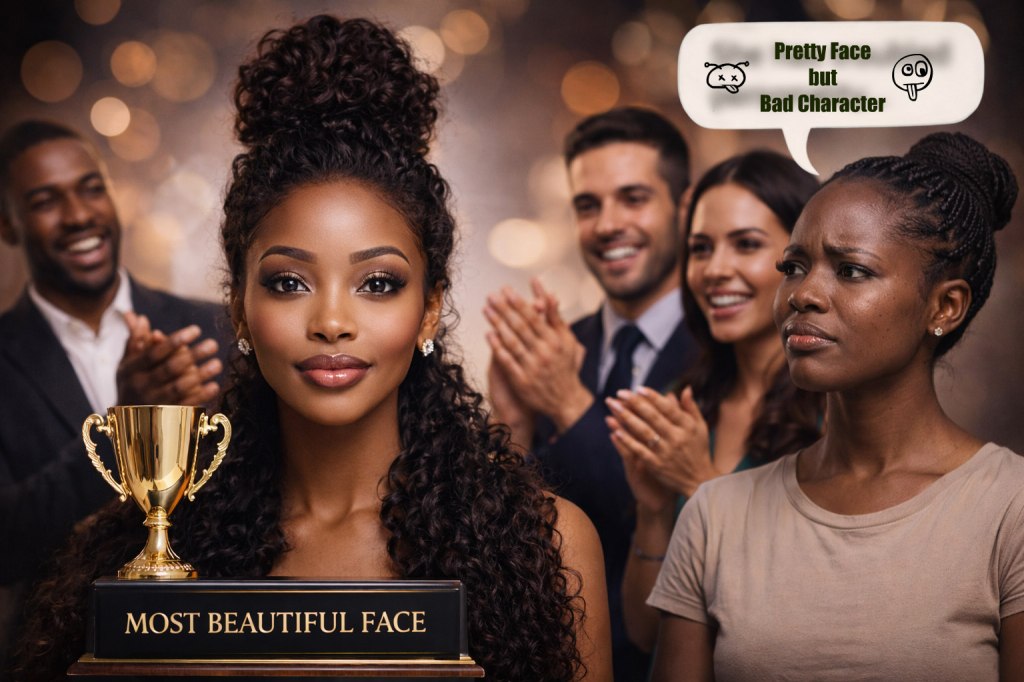
When the World Rewards the Face, Not the Character.

Modern society repeatedly demonstrates a troubling inversion of values: appearance is rewarded more consistently than integrity, charisma more than conscience, and beauty more than moral substance. This imbalance is not accidental but structural, reinforced through psychology, media, economics, and social conditioning. When the world rewards the face instead of the character, it reshapes how people define success, worth, and even goodness itself.

From early childhood, individuals learn that attractiveness carries social advantages. Attractive children are often perceived as smarter, kinder, and more capable by teachers and peers, receiving more encouragement and leniency. These early rewards create cumulative advantages that follow individuals into adulthood, long before character has a chance to speak for itself.

Psychological research identifies this phenomenon as the “halo effect,” where one positive trait—such as physical attractiveness—spills over into unrelated judgments about morality, intelligence, and trustworthiness. As a result, beauty becomes mistaken for virtue, and ethical credibility is quietly assigned based on appearance rather than conduct.

In professional spaces, this bias manifests in hiring, promotion, and compensation. Attractive individuals are more likely to be hired, earn higher wages, and receive favorable performance evaluations. Success is then framed as merit-based, obscuring the role appearance played in tilting opportunity. Character becomes secondary to presentation.

Justice systems are not immune. Studies consistently show that attractive defendants receive lighter sentences, are perceived as less dangerous, and are more likely to be believed. Conversely, those deemed unattractive or threatening—often racialized—face harsher punishment. Justice, while symbolically blind, is socially sighted.

Social media has amplified this imbalance by transforming visibility into currency. Algorithms reward faces that conform to dominant beauty norms, granting them influence, credibility, and economic opportunity. Moral authority increasingly follows aesthetic appeal, allowing those who look “right” to speak louder than those who act right.

This distortion is especially harmful to marginalized communities. Within Black communities, colorism compounds appearance bias, granting lighter skin and Eurocentric features greater social grace and moral assumption. Darker-skinned individuals are more likely to be scrutinized, distrusted, or required to prove their worth through exceptional behavior.

Character, by contrast, develops quietly. Integrity, empathy, discipline, and accountability do not photograph well. They do not go viral. In a culture driven by optics, character work often goes unnoticed, undervalued, and unrewarded, despite being essential to communal health.

The moral danger lies not only in rewarding beauty but in punishing those without it. When people learn that goodness does not protect them from exclusion or harm, cynicism grows. Ethical behavior begins to feel impractical in a world that prizes surface over substance.

This value inversion shapes desire as well. Romantic and social choices are influenced by perceived status attached to appearance. People with “beautiful” partners gain social validation, while those who choose character over aesthetics may be subtly devalued. Love itself becomes performative.

The long-term cost is cultural hollowness. Societies that reward faces over character cultivate leaders skilled in performance rather than principle. Charm replaces accountability, and image management substitutes for moral responsibility.

Undoing this distortion requires conscious resistance. Institutions must interrogate bias, media must expand representations of worth, and individuals must question their reflexive judgments. Character must be relearned as a visible form of beauty, even if it does not immediately gratify the eye.

Ultimately, a just society cannot survive on appearance alone. Faces age, trends fade, and filters fail. Character endures. When the world learns again to reward integrity over image, beauty will return to its rightful place—as adornment, not authority.

References

Eagly, A. H., Ashmore, R. D., Makhijani, M. G., & Longo, L. C. (1991). What is beautiful is good, but… A meta-analytic review of research on the physical attractiveness stereotype. Psychological Bulletin, 110(1), 109–128.

Hamermesh, D. S. (2011). Beauty pays: Why attractive people are more successful. Princeton University Press.

Hunter, M. (2007). The persistent problem of colorism: Skin tone, status, and inequality. Sociology Compass, 1(1), 237–254.

Langlois, J. H., Kalakanis, L., Rubenstein, A. J., Larson, A., Hallam, M., & Smoot, M. (2000). Maxims or myths of beauty? A meta-analytic and theoretical review. Psychological Bulletin, 126(3), 390–423.

Stewart, J. E. (1980). Defendant’s attractiveness as a factor in the outcome of criminal trials. Journal of Applied Social Psychology, 10(4), 348–361.

Zebrowitz, L. A. (2017). First impressions from faces. Oxford University Press.

Zuboff, S. (2019). The age of surveillance capitalism. PublicAffairs.

Narcissism Series: The Ego-Strutting Narcissist

The ego-strutting narcissist is a figure both celebrated and condemned in modern culture. This personality type thrives on admiration, visibility, and perceived superiority, often mistaking attention for love and dominance for worth. While narcissism exists on a spectrum, the ego-strutting narcissist represents a pronounced expression in which the self becomes a public performance rather than an integrated, grounded identity.

Psychologically, narcissism is rooted in an unstable self-concept. Contrary to the myth of unshakable confidence, the narcissist’s ego is fragile and dependent on constant external validation. The strutting behavior—boasting, grandstanding, and self-promotion—serves as a compensatory strategy to regulate self-esteem and avoid confronting inner inadequacy.

Early psychoanalytic theory framed narcissism as a fixation on the self, while later theorists expanded the concept into developmental and pathological forms. Contemporary psychology distinguishes healthy self-regard from narcissistic traits marked by entitlement, lack of empathy, and interpersonal exploitation. The ego-strutting narcissist exemplifies the latter, transforming everyday interactions into opportunities for self-aggrandizement.

Grandiose narcissism is most closely associated with ego-strutting behavior. It is characterized by arrogance, dominance, and an exaggerated sense of importance. Individuals with these traits often believe rules apply to others but not to themselves, reinforcing a worldview in which superiority is assumed rather than earned.

Modern culture provides fertile ground for ego-strutting narcissism. Capitalist and celebrity-driven systems equate worth with productivity, beauty, wealth, and visibility. In such environments, the performance of confidence is often rewarded more than integrity, blurring the boundary between ambition and pathological self-absorption.

Social media has intensified this phenomenon by monetizing attention. Platforms organized around likes, followers, and engagement metrics incentivize exhibitionism and constant self-display. For the ego-strutting narcissist, identity becomes a carefully curated brand rather than an authentic self.

Interpersonally, the narcissist’s relationships are typically transactional. Others are valued primarily as sources of admiration, validation, or utility. When these needs are not met, the narcissist may respond with withdrawal, devaluation, or rage, exposing the fragility beneath the inflated ego.

A defining feature of ego-strutting narcissism is an empathy deficit. While such individuals may understand emotions intellectually, they struggle to emotionally resonate with others’ experiences. This impairment enables manipulation and emotional harm without guilt, as preserving the grandiose self remains the priority.

In professional and leadership contexts, ego-strutting narcissists can initially appear effective. Their confidence, charisma, and assertiveness may inspire followers. Over time, however, their intolerance of dissent, need for praise, and tendency to appropriate credit often erode trust and destabilize institutions.

Developmentally, narcissistic traits are frequently linked to early relational wounds. Conditional love, inconsistent caregiving, neglect, or excessive praise without emotional attunement can disrupt healthy ego formation. The adult narcissist may thus reenact a lifelong struggle for validation and security.

From a theological perspective, ego-strutting narcissism parallels longstanding warnings against pride. Biblical texts repeatedly caution against self-exaltation, portraying humility as wisdom and pride as a precursor to moral and spiritual collapse.

Scripture frames unchecked pride as a form of idolatry, in which the self replaces God as the ultimate authority. Within this framework, the narcissist’s resistance to correction reflects a deeper spiritual disorder rooted in self-worship rather than accountability.

Aesthetic hierarchies further reinforce narcissistic behavior. Beauty, charisma, and physical dominance often function as social currency. Psychological research on the halo effect demonstrates how perceived attractiveness and confidence can distort judgment, allowing narcissistic traits to be rewarded rather than challenged.

Race, gender, and historical context complicate expressions of narcissism. In marginalized communities, ego-strutting may operate as a defensive response to systemic devaluation. While this context offers an explanation, it does not negate the interpersonal harm caused by narcissistic behavior.

When ego-strutting becomes normalized, collective well-being deteriorates. Communities centered on self-promotion struggle to sustain empathy, cooperation, and shared purpose. Narcissism fractures social bonds by prioritizing image over substance.

Clinically, narcissistic personality disorder is notably resistant to treatment. Many individuals do not seek therapy voluntarily, as doing so requires confronting shame beneath the grandiose facade. Meaningful change demands sustained self-reflection and accountability.

For those in relationship with ego-strutting narcissists, education and boundaries are essential. Understanding narcissistic dynamics helps individuals resist gaslighting, self-blame, and emotional erosion, restoring clarity where manipulation thrives.

Cultural healing requires redefining success beyond dominance and visibility. Psychological and spiritual traditions alike emphasize humility, service, and relational responsibility as foundations for genuine fulfillment rather than fragile self-esteem.

The antidote to ego-strutting narcissism is not self-negation but grounded self-knowledge. Identity rooted in purpose, service, and accountability produces resilience and stability, freeing individuals from the constant need for applause.

Ultimately, the ego-strutting narcissist functions as a mirror reflecting societal values. Their excesses reveal cultures that reward spectacle over substance. Confronting narcissism, both individual and collective, invites a return to humility, depth, and a vision of worth that does not depend on constant admiration.


References

American Psychiatric Association. (2022). Diagnostic and statistical manual of mental disorders (5th ed., text rev.).

Campbell, W. K., & Miller, J. D. (2011). The handbook of narcissism and narcissistic personality disorder. Wiley.

Freud, S. (1914/1957). On narcissism: An introduction. In The standard edition of the complete psychological works of Sigmund Freud (Vol. 14). Hogarth Press.

Kernberg, O. F. (1975). Borderline conditions and pathological narcissism. Jason Aronson.

Kohut, H. (1971). The analysis of the self. International Universities Press.

Twenge, J. M., & Campbell, W. K. (2009). The narcissism epidemic: Living in the age of entitlement. Free Press.

Vazire, S., & Funder, D. C. (2006). Impulsivity and the self-defeating behavior of narcissists. Personality and Social Psychology Review, 10(2), 154–165.

Bible. King James Version. (1611/1769).

The Violence of Beauty Standards

Beauty standards are often framed as harmless preferences or cultural aesthetics, yet their impact is anything but benign. They operate as a quiet, normalized form of violence—psychological, social, economic, and spiritual—imposed upon bodies that fall outside narrowly defined ideals. This violence is subtle enough to evade accountability and powerful enough to shape life outcomes, self-worth, and social hierarchies across generations.

The violence of beauty standards begins with definition. When a dominant culture determines which features are worthy of admiration and which are to be tolerated or erased, it establishes a hierarchy of human value. These hierarchies do not emerge organically; they are historically constructed through colonialism, slavery, class stratification, and racialized power relations that elevate proximity to whiteness, youth, thinness, and Eurocentric features.

For Black communities in particular, beauty standards have functioned as an extension of racial domination. During slavery and colonial rule, physical features were used to classify, rank, and commodify African-descended people. Lighter skin, straighter hair, and narrower features were rewarded with marginal privileges, while darker skin and African phenotypes were associated with labor, disposability, and dehumanization.

This legacy persists through colorism, a system in which skin tone operates as a social currency within and beyond racial groups. Colorism is not merely a preference; it is an internalized enforcement mechanism that reproduces racial hierarchy without the need for overt racism. Its violence lies in how it fractures communal bonds and assigns worth based on phenotype rather than character or humanity.

Beauty standards also enact violence through psychological harm. Repeated exposure to exclusionary ideals fosters chronic self-surveillance, body dissatisfaction, anxiety, and depression. Individuals learn to scrutinize their faces, hair, weight, and aging as problems to be fixed rather than natural expressions of life. This internalized gaze becomes a form of self-policing that mirrors external oppression.

The economic violence of beauty standards is equally profound. Entire industries profit from manufactured insecurity, extracting billions of dollars through skin-lightening products, cosmetic surgery, anti-aging treatments, and hair alteration. Those who can afford to approximate beauty ideals gain social and professional advantages, while those who cannot are penalized in employment, dating, media representation, and social mobility.

Gender intensifies this violence. Women and girls are disproportionately subjected to aesthetic regulation, with their value often tethered to attractiveness rather than intellect, integrity, or contribution. From childhood, girls are conditioned to equate beauty with worth, learning that visibility and validation are contingent upon meeting external standards that shift with trends yet remain rooted in patriarchal control.

Men are not immune to the violence of beauty standards, though it manifests differently. Rigid ideals of masculinity—height, muscularity, stoicism, dominance—discipline male bodies and emotions, discouraging vulnerability and self-acceptance. Men who deviate from these ideals face ridicule, emasculation, and social exclusion, revealing beauty standards as tools of behavioral conformity.

Media functions as a primary weapon in the enforcement of beauty norms. Through film, advertising, social media, and fashion, a narrow range of bodies and faces is repeatedly elevated as aspirational. Algorithmic amplification further entrenches these ideals, rewarding certain looks with visibility while rendering others invisible or stereotyped.

The violence intensifies in the digital age, where beauty standards are no longer distant images but interactive currencies. Likes, follows, and monetization transform appearance into measurable social capital. This quantification of beauty deepens comparison, fuels self-objectification, and accelerates the commodification of the self.

Beauty standards also operate as moral judgments. Attractive bodies are frequently associated with goodness, discipline, intelligence, and virtue, while those deemed unattractive are implicitly linked to laziness, moral failure, or incompetence. This phenomenon, often described as the halo effect, embeds aesthetic bias into decision-making processes that shape education, employment, and criminal justice outcomes.

The violence of beauty standards extends into spiritual dimensions. When individuals are taught to despise the bodies they inhabit, a rupture forms between self and creation. For faith traditions that affirm humanity as divinely made, beauty hierarchies function as theological distortions, subtly contradicting teachings about inherent worth and sacred design.

Historically marginalized bodies carry the heaviest burden of this violence. Disabled bodies, fat bodies, aging bodies, dark-skinned bodies, and gender-nonconforming bodies are treated as deviations rather than variations of human existence. The insistence on correction or concealment communicates that some lives are less deserving of comfort, desire, and dignity.

Resistance to beauty standards is often dismissed as oversensitivity or lack of self-esteem, yet such resistance is deeply political. To reject imposed ideals is to challenge systems that rely on comparison, insecurity, and consumption. It is an act of reclaiming agency over one’s body and narrative.

Cultural movements that celebrate diverse forms of beauty offer important counter-narratives, but they are not immune to co-optation. Inclusion is frequently aestheticized without dismantling underlying power structures, resulting in superficial diversity that leaves hierarchies intact. True liberation requires structural change, not symbolic representation alone.

Education plays a crucial role in disrupting the violence of beauty standards. Critical media literacy, historical context, and conversations about embodiment can equip individuals to recognize how ideals are constructed and whose interests they serve. Awareness does not erase harm, but it weakens its authority.

Healing from beauty-based violence is both personal and collective. Individually, it involves unlearning internalized contempt and cultivating self-regard beyond appearance. Collectively, it requires building communities that affirm worth independent of aesthetics and challenge discriminatory practices in institutions and media.

The language we use around beauty matters. Compliments, critiques, and casual comments can reinforce or resist harmful norms. Shifting language toward appreciation of character, creativity, resilience, and wisdom helps decenter appearance as the primary measure of value.

Ultimately, the violence of beauty standards lies in their ability to disguise domination as desire. They persuade individuals to participate in their own marginalization, to chase approval at the cost of peace, and to mistake conformity for empowerment. Naming this violence is the first step toward dismantling it.

A more just vision of beauty does not require the abandonment of aesthetics, but their reorientation. Beauty can be expansive, contextual, and humane when divorced from hierarchy and exclusion. In reclaiming beauty from violence, society moves closer to affirming the full dignity of every body.

References

Bordo, S. (2003). Unbearable weight: Feminism, Western culture, and the body. University of California Press.

Collins, P. H. (2004). Black sexual politics: African Americans, gender, and the new racism. Routledge.

Crenshaw, K. (1991). Mapping the margins: Intersectionality, identity politics, and violence against women of color. Stanford Law Review, 43(6), 1241–1299.

Dion, K., Berscheid, E., & Walster, E. (1972). What is beautiful is good. Journal of Personality and Social Psychology, 24(3), 285–290.

Hunter, M. (2007). The persistent problem of colorism: Skin tone, status, and inequality. Sociology Compass, 1(1), 237–254.

hooks, b. (1992). Black looks: Race and representation. South End Press.

Kaw, E. (1993). Medicalization of racial features: Asian American women and cosmetic surgery. Medical Anthropology Quarterly, 7(1), 74–89.

Wolf, N. (1991). The beauty myth: How images of beauty are used against women. HarperCollins.

Girl Talk Series: The Types of Men you will Encounter in the Dating Process.

Ladies, wisdom calls for discernment, especially when it comes to the men you allow access to your heart, body, and future. The Bible repeatedly warns that relationships shape destiny, character, and spiritual health. Paying attention to the patterns, fruit, and spirit of the man around you is not judgmental—it is biblical self-preservation.

Modern dating, as practiced today, is a relatively new social construct and often lacks biblical structure or accountability. Scripture emphasizes intention, covenant, and purpose rather than emotional experimentation. Without discernment, many women find themselves emotionally depleted by men who were never meant to lead, love, or commit.

Among all the men you may encounter, the rarest is the needle in the haystack—the Godly man. He is uncommon not because God stopped making him, but because discipline, obedience, and integrity are costly. This man embodies godly wisdom not only in his speech but also in his consistent actions.

The Godly man loves as Christ loves the church, sacrificially and responsibly. He understands authority and submission in a biblical sense, meaning he leads with humility and strength, not control. “Husbands, love your wives, even as Christ also loved the church, and gave himself for it” (Ephesians 5:25, KJV).

He is understanding yet firm, compassionate yet principled. His godliness is internal before it is external; his faith is not performative but transformative. Like David, he is a man after God’s own heart, striving daily to align his will with the Most High (1 Samuel 13:14, KJV).

This man is intentional. He does not waste time, emotions, or bodies. He keeps himself for marriage, honors boundaries, and values covenant over convenience. “Marriage is honourable in all, and the bed undefiled” (Hebrews 13:4, KJV).

He is also a provider—financially, spiritually, emotionally, and mentally. Scripture states plainly, “If any provide not for his own… he hath denied the faith” (1 Timothy 5:8, KJV). However, this type of man requires something equally rare: a Godly woman prepared to recognize, respect, and walk alongside him.

The most common man encountered in dating culture today is the narcissist. He is charming, confident, and initially intoxicating. He enters your life with love-bombing, excessive compliments, and intense attention designed to create emotional dependency.

Over time, the narcissist reveals his true nature. He is unfaithful, manipulative, and emotionally abusive. He gaslights, deflects responsibility, and slowly erodes a woman’s confidence while feeding his ego. Scripture warns of men who are “lovers of their own selves” (2 Timothy 3:2, KJV).

Another man many women meet is the wanderer. He is polite, respectful, and seemingly kind, but emotionally unavailable. He enjoys your presence without offering direction, vision, or commitment. Though not overtly harmful, his indecision leads to disappointment.

The wanderer disappears when accountability or depth is required. He lacks clarity about you and about himself. “Where there is no vision, the people perish” (Proverbs 29:18, KJV). A man without vision cannot lead a relationship.

The showboat is another dangerous type. He lies about his status, character, intentions, or accomplishments. You are constantly confused because his words and actions never align. Deception is his default language.

Scripture is clear about such men: “A lying tongue hateth those that are afflicted by it” (Proverbs 26:28, KJV). With the showboat, you never truly know who you are dealing with because authenticity is absent.

The religious man presents himself as spiritually impressive. He quotes Scripture fluently, knows religious language, and appears holy on the surface. Yet his life does not reflect obedience, humility, or transformation.

He has information about God but no intimacy with Him. Christ warned of those who “say, Lord, Lord” yet do not do the will of the Father (Matthew 7:21, KJV). Appearance without fruit is spiritual deception.

The whoremonger or fornicator is openly driven by lust. His conversations are sexual, his focus is your body, and his intentions are carnal. He pressures boundaries and treats intimacy as entertainment rather than a covenant.

Scripture speaks sternly on this behavior, declaring that the fornicator sins against his own body (1 Corinthians 6:18, KJV). A man enslaved to lust cannot offer faithful love or spiritual leadership.

Closely related is the non-provider. He lacks ambition, responsibility, and accountability. He avoids work, neglects family obligations, and prioritizes pleasure over purpose. This man drains rather than builds.

The Bible does not romanticize laziness. “He that is slothful in his work is brother to him that is a great waster” (Proverbs 18:9, KJV). A man unwilling to labor cannot sustain a household or honor a woman.

Discernment requires prayer, not desperation. Women are encouraged to seek God before seeking companionship. “In all thy ways acknowledge him, and he shall direct thy paths” (Proverbs 3:6, KJV). Prayer sharpens perception.

Fasting is also a powerful tool for clarity. Biblically, fasting humbles the soul and heightens spiritual sensitivity. It helps strip away emotional attachment and reveals the truth that feelings may obscure (Isaiah 58:6, KJV).

Pay attention to patterns, not promises. Fruit reveals character over time. “Ye shall know them by their fruits” (Matthew 7:16, KJV). Consistency matters more than charm.

Guard your heart diligently, for relationships influence purpose and peace. “Keep thy heart with all diligence; for out of it are the issues of life” (Proverbs 4:23, KJV). Wisdom protects future joy.

Ultimately, the goal is not simply to avoid bad men, but to become a woman anchored in God, capable of discernment and discipline. When aligned with the Most High, confusion decreases and clarity increases.

The Godly Man (The Needle in the Haystack)

Who he is
He is authentic, consistent, and intentional. His godliness is internal before it is external. His actions align with Scripture, not just his words. He honors boundaries, keeps himself for marriage, leads with humility, and loves as Christ loves the church. He provides, plans, and pursues with clarity and purpose.

How to recognize him
He is patient, not rushed. He is consistent over time. He prays without performing. He shows discipline in finances, sexuality, and speech. His leadership feels safe, not forced.

How to position yourself for him
Become a Godly woman yourself. Develop prayer discipline, obedience, emotional maturity, and self-respect. This man is not attracted to chaos or compromise. Two cannot walk together unless they agree.


The Narcissist (The Most Common)

Who he is
He is self-centered, manipulative, and emotionally dangerous. He love-bombs early, gives excessive compliments, and moves too fast emotionally. Over time, he becomes critical, dismissive, unfaithful, and mentally draining. He gaslights, deflects blame, and lacks accountability.

How to recognize him
He talks mostly about himself. He rushes intimacy. He avoids responsibility. He makes you question your reality. He has a pattern of broken relationships where everyone else is “the problem.”

How to avoid him
Do not be impressed by charm. Watch how he handles correction and disappointment. Set boundaries early and observe his reaction. Narcissists reveal themselves when they cannot control you.


The Wanderer (Nice but Unavailable)

Who he is
He is polite, respectful, and pleasant, but emotionally absent. He enjoys your presence without offering vision, direction, or commitment. He drifts in and out of your life and disappears when depth is required.

How to recognize him
He avoids defining the relationship. He makes no future plans with you. He is inconsistent in communication. He keeps you emotionally close but relationally distant.

How to avoid him
Ask direct questions early. Require clarity. If he avoids commitment, believe him. Do not invest emotionally where there is no vision.


The Showboat (The Liar and Pretender)

Who he is
He exaggerates or lies about who he is, what he has, and what he intends. His words and actions never align. You feel confused more than secure because authenticity is missing.

How to recognize him
His stories change. He avoids transparency. He performs rather than connects. He resists accountability and hates being questioned.

How to avoid him
Slow everything down. Verify consistency over time. Ask questions and observe behavior. Truth does not fear time or scrutiny.


The Religious Man (Form Without Fruit)

Who he is
He knows Scripture but does not live it. He presents as holy but lacks integrity behind closed doors. His faith is performative, not transformative.

How to recognize him
He quotes Scripture but disrespects boundaries. He talks about God but lacks humility, repentance, or discipline. His private life contradicts his public image.

How to avoid him
Watch his fruit, not his vocabulary. Observe how he treats people when no one is watching. True godliness produces consistent character.


The Whoremonger / Fornicator

Who he is
He is ruled by lust. His conversations are sexual, his focus is your body, and his intentions are physical rather than covenantal. He has a reputation for sleeping around and cannot commit.

How to recognize him
He pushes sexual boundaries early. He constantly sexualizes conversations. He pressures you to compromise. He speaks loosely about past partners.

How to avoid him
Establish firm boundaries immediately. Refuse sexual conversation outside of marriage. Lust-driven men remove themselves when denied access.


The Non-Provider (The Lazy Man)

Who he is
He avoids responsibility. He lacks ambition, discipline, and direction. He does not work consistently and neglects leadership in his life and household.

How to recognize him
He has excuses instead of progress. He avoids work. He lacks goals. He expects others to carry his weight.

How to avoid him
Pay attention to his work ethic. Do not confuse potential with effort. A man unwilling to provide cannot sustain a future.


Final Wisdom for Avoidance

Pray before you attach. Fast when emotions cloud judgment. Watch patterns, not promises. Set boundaries early and keep them. Do not ignore red flags for loneliness. Discernment is protection, not fear.

When you are anchored in God, emotionally disciplined, and clear in your standards, the wrong men lose access—and the right man recognizes you without confusion.

God is not the author of chaos or emotional torment. His design for relationships reflects order, love, and truth. Trust Him to reveal what is hidden and remove what is harmful.

The right man will not require you to abandon your convictions, compromise your body, or question your worth. He will complement your walk with God, not compete with it. When you know who you are in Christ, you recognize who does not belong.


References (KJV)

The Holy Bible, King James Version.
1 Samuel 13:14
Proverbs 3:6; Proverbs 4:23; Proverbs 18:9; Proverbs 26:28; Proverbs 29:18
Isaiah 58:6
Matthew 7:16, 21
1 Corinthians 6:18
Ephesians 5:25
1 Timothy 5:8
Hebrews 13:4

Beautyism and the Inheritance of Colonial Aesthetics.

Beauty, often perceived as an individual trait, is deeply social, political, and historically constructed. “Beautyism” refers to the systemic privileging of individuals who conform to dominant aesthetic standards, and the inheritance of colonial aesthetics highlights how these standards are racialized, gendered, and embedded in structures of power. For communities of color, particularly Black and brown populations, these standards are not neutral; they are a legacy of colonialism, slavery, and European dominance, which continue to shape perceptions of worth, social mobility, and cultural acceptance.

Colonial powers imposed Eurocentric standards of beauty on colonized populations, privileging light skin, straight hair, narrow noses, and European facial features. As Fanon (1967) argues, these imposed ideals created internalized hierarchies of appearance, teaching oppressed populations to equate proximity to European aesthetics with social value, intelligence, and morality. Over generations, these beauty norms became cultural inheritance, producing what is now widely referred to as colorism—a preference for lighter skin and Eurocentric features within communities of color (Hunter, 2007).

Colorism manifests in multiple ways: social visibility, economic opportunity, media representation, and interpersonal desirability. Light-skinned individuals frequently receive more favorable treatment in employment, education, and romantic contexts, reflecting the lingering impact of colonial aesthetics (Anderson, Grunert, Katz, & Lovascio, 2010; Hamermesh, 2011). Conversely, darker-skinned individuals, despite possessing features celebrated in ancestral or cultural contexts, often face marginalization, invisibility, and devaluation, highlighting how colonial beauty norms persist as systemic bias.

Hair has been one of the most conspicuous battlegrounds of colonial influence. European standards historically stigmatized curly, coily, or wooly hair textures, pressuring Black women and men to straighten or chemically alter their hair to fit “acceptable” ideals (Banks, 2000). Such practices extend beyond aesthetics—they reinforce internalized notions of inferiority and perpetuate the belief that natural features are undesirable. Resistance to these pressures, such as embracing natural hair and protective styling, has become an act of cultural reclamation and defiance against inherited colonial aesthetics.

Facial features and skin tone remain central to the perpetuation of beautyism. Big eyes, full lips, broad noses, and melanin-rich skin, historically undervalued under colonial influence, are increasingly celebrated in movements reclaiming Black and brown beauty (Craig, 2002). These movements challenge the internalized notion that beauty is synonymous with European features, insisting that aesthetic value is culturally situated and historically contingent.

Media representation plays a crucial role in reinforcing or challenging beautyism. For decades, Eurocentric standards dominated television, film, and advertising, marginalizing Black and brown bodies. Contemporary efforts to highlight diverse skin tones, natural hair textures, and a variety of facial features counteract these historical biases, providing visibility and affirming that inherited colonial aesthetics are neither universal nor inherently desirable (Rhode, 2010).

Psychologically, the inheritance of colonial aesthetics contributes to internalized bias and self-perception challenges. Individuals who deviate from Eurocentric ideals may experience diminished self-esteem, feelings of inadequacy, and a constant pressure to conform (Eagly, Ashmore, Makhijani, & Longo, 1991). Conversely, embracing features that align with ancestral or culturally grounded standards fosters self-confidence, pride, and cultural continuity.

Beautyism also intersects with gender. Women, particularly in Black and brown communities, are disproportionately affected by the pressure to conform to colonial aesthetics. Their features, hair textures, and skin tones are policed in professional, social, and romantic contexts. Men, though often less scrutinized in terms of aesthetics, are still influenced by preferences for lighter skin and Eurocentric traits, reflecting broader societal biases (Langlois et al., 2000).

Colorism and beautyism are not merely personal issues; they are structural. The inheritance of colonial aesthetics influences hiring practices, media representation, and social networking opportunities, reinforcing systems of inequality. Recognition of this legacy is essential to dismantling discriminatory practices and cultivating inclusive standards of beauty that honor diversity, ancestry, and cultural heritage (Hunter & Davis, 1992).

Resistance and reclamation are central to the contemporary response to beautyism. Movements such as natural hair advocacy, Afrocentric beauty campaigns, and media platforms centering melanin-rich aesthetics demonstrate that beauty is culturally constructed and that inherited colonial standards can be challenged. By embracing diverse features—full lips, broad noses, textured hair, and rich skin tones—communities affirm identity, resilience, and historical continuity.

The spiritual dimension of beauty further contextualizes resistance. Biblical principles remind us that worth is not measured by external appearance but by character, virtue, and alignment with divine purpose (1 Samuel 16:7). Celebrating ancestral aesthetics aligns with this principle, affirming that beauty, when rooted in heritage and authenticity, reflects God’s design rather than imposed societal preference.

Education is pivotal in addressing beautyism. Teaching the historical origins of Eurocentric aesthetics, colorism, and colonial beauty standards empowers individuals to recognize internalized biases and make informed choices regarding self-perception, presentation, and cultural alignment. Cultural literacy fosters pride in ancestral features and counters centuries of devaluation.

Economically, beautyism affects access to opportunities. Hamermesh (2011) notes that perceptions of attractiveness influence hiring, wages, and promotion. Since colonial aesthetics continue to inform societal standards, individuals whose appearance aligns with Eurocentric norms often enjoy systemic advantages, while those embracing ancestral features may face barriers. Recognizing and challenging this inequity is a critical step toward social justice.

The inheritance of colonial aesthetics also impacts interpersonal relationships. Preferences for lighter skin and European features shape dating dynamics, friendship hierarchies, and social inclusion, often privileging proximity to Eurocentric ideals. Such dynamics reflect broader societal biases rather than objective measures of attractiveness or compatibility.

By redefining beauty standards to honor ancestral traits, communities challenge entrenched hierarchies. Features once devalued under colonial influence—full lips, broad noses, textured hair, and melanin-rich skin—are now celebrated, affirming identity, pride, and historical continuity. This reclamation disrupts beautyism and repositions cultural aesthetics as a source of empowerment rather than limitation.

Media, fashion, and entertainment industries play a transformative role by presenting diverse representations of Black and brown beauty. Featuring a range of skin tones, natural hair textures, and varied facial features shifts public perception, challenges internalized biases, and promotes equitable valuation of appearance.

Ultimately, beautyism and the inheritance of colonial aesthetics illustrate how historical oppression continues to shape contemporary standards of appearance. Recognizing this legacy is crucial for personal empowerment, cultural reclamation, and societal equity. By embracing diverse features and ancestral aesthetics, communities resist Eurocentric dominance and affirm the dignity, worth, and beauty inherent in melanin-rich bodies.

In conclusion, understanding beautyism requires acknowledging the colonial origins of aesthetic hierarchies and their ongoing impact on perception, opportunity, and self-worth. Reclaiming ancestral beauty—through features, hair, and skin tone—resists the internalization of colonial standards, celebrates diversity, and affirms cultural pride. True beauty emerges not from conformity to inherited Eurocentric ideals but from embracing the richness, history, and authenticity of Black and brown aesthetics.


References

Anderson, T. L., Grunert, C., Katz, A., & Lovascio, S. (2010). Aesthetic capital: A research review on beauty perks and penalties. Sociology Compass, 4(8), 564–575. https://doi.org/10.1111/j.1751-9020.2010.00312.x

Banks, I. (2000). Hair matters: Beauty, power, and Black women’s consciousness. New York University Press.

Bourdieu, P. (1986). The forms of capital. In J. Richardson (Ed.), Handbook of theory and research for the sociology of education (pp. 241–258). Greenwood Press.

Craig, M. L. (2002). Ain’t I a beauty queen? Black women, beauty, and the politics of race. Oxford University Press.

Eagly, A. H., Ashmore, R. D., Makhijani, M. G., & Longo, L. C. (1991). What is beautiful is good, but… A meta-analytic review. Psychological Bulletin, 110(1), 109–128.

Fanon, F. (1967). Black skin, white masks. Grove Press.

Feingold, A. (1992). Good-looking people are not what we think. Psychological Bulletin, 111(2), 304–341.

Hamermesh, D. S. (2011). Beauty pays: Why attractive people are more successful. Princeton University Press.

Hunter, M. (2007). The persistent problem of colorism: Skin tone, status, and inequality. Sociology Compass, 1(1), 237–254. https://doi.org/10.1111/j.1751-9020.2007.00006.x

Hunter, M., & Davis, A. (1992). Colorism: A new perspective. Cultural Diversity and Mental Health, 4(2), 25–35.

Langlois, J. H., et al. (2000). Maxims or myths of beauty? Psychological Bulletin, 126(3), 390–423.

Rhode, D. L. (2010). The beauty bias: The injustice of appearance in life and law. Oxford University Press.

Wilson, T. D. (2002). Strangers to ourselves: Discovering the adaptive unconscious. Harvard University Press.

Gafney, W. (2017). Womanist midrash: A reintroduction to the women of the Torah and the Throne. Westminster John Knox Press.

Beauty Sins

Beauty, while not inherently sinful, becomes destructive when it is misused, idolized, or weaponized. “Beauty sins” refer to the moral, psychological, and social distortions that arise when physical appearance is elevated above character, humility, and righteousness. These sins are not limited to those considered attractive; they are produced by cultures that reward appearance over integrity and encourage self-worship rather than self-governance.

One of the primary beauty sins is pride. When beauty becomes the foundation of identity, it fosters superiority, entitlement, and disdain for others. Scripture warns that pride precedes destruction, yet beauty-based pride often goes unnoticed because it is socially rewarded rather than corrected.

Another beauty sin is partiality—the way people treat others based on appearance. Favoring the attractive while dismissing or devaluing those deemed unattractive reinforces injustice and cruelty. Psychological research confirms that beauty bias influences hiring, education, and even legal outcomes, creating systemic inequality rooted in aesthetics.

Vanity is closely related to pride. Excessive preoccupation with appearance consumes time, resources, and mental energy, often at the expense of spiritual growth, empathy, and purpose. Vanity turns the mirror into an altar, requiring constant sacrifice to maintain approval.

Idolatry occurs when beauty becomes a source of worth, security, or power. In this state, beauty replaces God, morality, or truth as the ultimate reference point. The fear of losing beauty often leads to anxiety, desperation, and moral compromise.

Plastic surgery, while sometimes medically necessary or personally justified, can become a beauty sin when driven by self-hatred, social pressure, or obsession. Research links excessive cosmetic procedures to body dysmorphic disorder and chronic dissatisfaction, revealing that altering the body rarely heals the soul.

Another beauty sin is manipulation—using appearance to lure men for money, status, or access. When beauty becomes a transactional tool, relationships are reduced to exchange rather than connection. This dynamic dehumanizes both parties and reinforces exploitative gender norms.

Narcissism thrives in beauty-centered cultures. When admiration becomes addictive, individuals may develop grandiose self-importance, lack empathy, and require constant validation. Studies link social media-driven beauty performance to increased narcissistic traits and decreased relational depth.

Objectification is both a sin committed and endured. Treating oneself or others as objects for visual consumption strips people of dignity. Self-objectification, in particular, leads individuals to police their bodies rather than develop their minds, ethics, or gifts.

Deception is another beauty sin. Filters, false presentation, and performative perfection create illusions that distort reality. While presentation is natural, deliberate misrepresentation fosters insecurity and mistrust, particularly in romantic and social relationships.

Envy and comparison flourish where beauty is ranked. Constant measurement against others breeds resentment, competition, and self-loathing. Social comparison theory shows that repeated exposure to idealized images increases depression and dissatisfaction.

Beauty sins also affect how people are treated. Attractive individuals may be excused for harmful behavior, while unattractive individuals are punished more harshly. This moral distortion undermines justice and accountability.

The commodification of beauty turns the body into a product. Likes, followers, brand deals, and sexual capital monetize appearance, encouraging people to market themselves rather than cultivate substance. This economic system profits from insecurity.

Overcoming beauty sins begins with reordering values. Grounding identity in character, faith, intellect, and service weakens beauty’s false authority. Psychological research consistently shows that purpose-driven identity promotes greater well-being than appearance-based self-worth.

Humility is essential. Recognizing beauty as temporary and unearned disrupts pride. Aging, illness, and time reveal the fragility of appearance, reminding individuals that dignity must rest on deeper foundations.

Self-discipline counters vanity. Limiting mirror-checking, social media consumption, and comparison behaviors reduces obsession. Developing skills, knowledge, and spiritual practices shifts focus from display to development.

Integrity in relationships is another remedy. Refusing to use beauty as leverage fosters authentic connection. Relationships rooted in honesty, mutual respect, and shared values endure longer and heal deeper.

Accountability matters. Trusted community, faith leaders, or mental health professionals can help confront unhealthy patterns such as narcissism, cosmetic addiction, or manipulation before they harden into identity.

Compassion dismantles beauty bias. Treating all people with dignity regardless of appearance challenges societal hierarchies and restores moral clarity. This practice humanizes both the giver and the receiver.

Finally, beauty must be properly ordered, not erased. Beauty can be enjoyed without being worshiped, appreciated without being exploited. When beauty becomes expression rather than identity, it loses its power to enslave.

True freedom comes when people are valued for who they are, not how they look. Overcoming beauty sins is not about rejecting beauty, but about reclaiming humanity in a culture that too often confuses appearance with worth.

References

Fredrickson, B. L., & Roberts, T. A. (1997). Objectification theory: Toward understanding women’s lived experiences and mental health risks. Psychology of Women Quarterly, 21(2), 173–206.

Eagly, A. H., Ashmore, R. D., Makhijani, M. G., & Longo, L. C. (1991). What is beautiful is good, but… A meta-analytic review of research on the physical attractiveness stereotype. Psychological Bulletin, 110(1), 109–128.

Calogero, R. M., Tantleff-Dunn, S., & Thompson, J. K. (2011). Self-objectification in women: Causes, consequences, and counteractions. American Psychological Association.

Twenge, J. M., & Campbell, W. K. (2009). The narcissism epidemic: Living in the age of entitlement. Free Press.

American Psychiatric Association. (2013). Diagnostic and statistical manual of mental disorders (5th ed.).

Hunter, M. (2007). The persistent problem of colorism: Skin tone, status, and inequality. Sociology Compass, 1(1), 237–254.

Lookism: Man Looketh on the Outward Appearance, but the LORD Looketh on the Heart

Lookism is the societal bias that judges people primarily by their physical appearance. It elevates those deemed conventionally attractive while marginalizing those who do not fit narrowly defined standards. While human perception often values symmetry, skin tone, body shape, or facial features, scripture reminds us that God’s measure of worth differs fundamentally: He examines the heart (1 Samuel 16:7).

The Psychology of Lookism

Human beings make rapid judgments based on appearance, often within seconds. These evaluations affect social interactions, opportunities, and perceptions of competence. Research shows that attractive individuals receive preferential treatment in education, employment, and social settings, a phenomenon known as the “halo effect” (Langlois et al., 2000).

Cultural Standards of Beauty

Lookism is culturally constructed. Different societies prioritize different physical traits, and media perpetuates narrow ideals, often favoring Eurocentric features or lighter skin tones. These standards are fluid and historically contingent, not universal indicators of worth or beauty.

Facial Harmony and Symmetry

Scientific studies reveal that perceived attractiveness is strongly linked to facial harmony and symmetry, not merely skin tone or superficial features (Rhodes, 2006). Symmetry signals health and genetic fitness, which influences human attraction across cultures.

The Eye of the Beholder

Attraction is subjective. What one person finds beautiful, another may not. This variability emphasizes that societal biases are not absolute truths but reflect collective preferences shaped by media, culture, and personal experience.

Consequences of Lookism

The prioritization of appearance can lead to discrimination, low self-esteem, and social exclusion. Those outside conventional beauty standards often experience prejudice, while attractive individuals are granted unearned advantages. Lookism perpetuates inequality and undermines the intrinsic value of all humans.

Skin Tone and Colorism

Within lookism, colorism—a bias favoring lighter skin—is pervasive. However, light skin does not guarantee attractiveness, just as dark skin is not inherently less beautiful. True beauty is determined by proportional features, expression, and presence, not melanin content (Hunter, 2007).

Inner Beauty vs. Outer Appearance

While human culture emphasizes outward appearance, scripture highlights the primacy of the heart. God values character, kindness, and integrity over superficial traits. True attractiveness incorporates moral and spiritual qualities alongside physical features.

Biblical Perspective

1 Samuel 16:7 instructs, “Man looketh on the outward appearance, but the LORD looketh on the heart.” This passage underscores that divine judgment prioritizes intentions, character, and spiritual alignment over physical attributes.

Lookism and Gender

Lookism affects both men and women but manifests differently. Women often face heightened scrutiny of body shape, facial features, and youthfulness, while men may experience bias based on muscularity, height, or facial symmetry. Faith calls both genders to focus on godly character rather than societal validation.

The Media’s Role

Advertising, film, and social media amplify lookism by promoting idealized, often unattainable images. Filters, photo editing, and selective representation reinforce unrealistic standards, distorting perceptions of beauty.

Impact on Self-Esteem

Repeated exposure to biased standards fosters insecurity, comparison, and self-rejection. Individuals may equate their worth with appearance, neglecting their spiritual, emotional, and moral development.

Resisting Lookism

Awareness is the first step to resisting lookism. By understanding the cultural and psychological mechanisms behind appearance bias, individuals can cultivate self-acceptance and celebrate diverse forms of beauty.

Faith-Based Resistance

Prayer, scripture meditation, and community support help believers resist societal pressures. By anchoring self-worth in God’s assessment rather than public opinion, one can live confidently without succumbing to superficial standards.

Redefining Beauty

True beauty transcends symmetry, facial features, or skin tone. It encompasses kindness, wisdom, humility, and spiritual alignment. Lookism is a human construct, but divine beauty is timeless and inclusive.

Role Modeling and Mentorship

Mentors and role models who exemplify godly character and confidence help counteract the effects of lookism, especially for younger generations navigating social pressures.

Encouraging Diversity

Celebrating diverse appearances—different skin tones, body types, and facial features—challenges societal biases and reflects the richness of God’s creation.

Lookism and Society

Addressing lookism requires collective effort. Education, media representation, and conscious social practices can shift cultural norms to value character and capability over superficial appearance.

Personal Reflection and Growth

Believers are called to self-reflection, assessing whether they have internalized lookist biases. Recognizing the heart as the true measure fosters humility, gratitude, and equitable treatment of others.

Conclusion

Lookism privileges the outward and often misjudges intrinsic worth. Scripture reminds us that God’s perception is rooted in the heart. By embracing this perspective, individuals can resist societal pressure, celebrate authentic beauty, and cultivate moral and spiritual excellence, reflecting divine priorities in a world obsessed with appearances.


References

Narcissism Series: Workplace

Recognizing Toxic Leadership

Photo by fauxels on Pexels.com

Workplaces are meant to be spaces of collaboration, growth, and mutual respect. However, when narcissistic leaders dominate, these environments become breeding grounds for stress, manipulation, and fear. Narcissistic leaders often prioritize self-interest, control, and admiration over the well-being of their employees, undermining productivity and morale. Understanding how narcissism manifests in the workplace is essential for both employees and organizations.

Defining Workplace Narcissism

Workplace narcissism is characterized by leaders who display arrogance, entitlement, and a lack of empathy. These leaders manipulate, exploit, and often take credit for others’ work to reinforce their self-image. Narcissistic behavior in leadership can harm employees psychologically and emotionally, creating a toxic work culture.

The Traits of Narcissistic Leaders

Common traits include: excessive need for admiration, overconfidence, defensiveness, inability to accept criticism, and disregard for others’ contributions. They may micromanage, belittle employees, and make unilateral decisions to maintain control.

Psychological Impact on Employees

Employees under narcissistic leadership often experience anxiety, depression, burnout, and reduced job satisfaction. Trauma from chronic manipulation can lead to diminished self-esteem and impaired decision-making, impacting both professional and personal life.

Tactics Used by Narcissistic Leaders

Tactics include gaslighting, triangulation, favoritism, public humiliation, and setting unrealistic expectations. These behaviors create fear-based compliance rather than genuine motivation, eroding trust and cohesion within teams.

Gaslighting in the Workplace

Gaslighting occurs when leaders manipulate employees into questioning their own perceptions, memory, or judgment. This can cause confusion, self-doubt, and decreased productivity, while increasing the leader’s control over the narrative.

Triangulation Among Employees

Narcissistic leaders often pit employees against each other, creating rivalry and competition. By fostering tension, the leader maintains a central position of power and distracts from their own shortcomings or mistakes.

The Role of Favoritism

Favoritism reinforces the narcissist’s authority and divides employees. Selected individuals receive praise, promotions, or privileges, while others are marginalized. This dynamic undermines team morale and fuels resentment.

Recognizing Red Flags Early

Signs include lack of transparency, excessive self-promotion, blame-shifting, and inconsistent policies. Early recognition allows employees to protect themselves and seek support before emotional harm accumulates.

Biblical Perspective on Toxic Leadership

The Bible warns about leaders who are unjust or self-serving. Proverbs 29:2 (KJV) states, “When the righteous are in authority, the people rejoice: but when the wicked beareth rule, the people mourn.” Narcissistic leaders exemplify the dangers of selfish leadership that prioritizes pride over justice.

Impact on Workplace Culture

Toxic leadership creates a culture of fear, compliance, and secrecy. Employees may hide mistakes, avoid collaboration, and disengage, leading to reduced innovation, efficiency, and overall organizational health.

Dealing with Narcissistic Leaders

Employees must maintain professionalism while setting clear boundaries. Documenting interactions, limiting personal disclosures, and seeking support from HR or mentors can help protect emotional and professional well-being.

Therapeutic and Organizational Support

Counseling can help employees process workplace trauma and build resilience. Organizations should provide training on toxic leadership, establish reporting mechanisms, and enforce accountability to protect staff from abuse.

The Role of Emotional Intelligence

Developing emotional intelligence allows employees to navigate narcissistic leadership effectively. Recognizing manipulation, regulating emotions, and maintaining objectivity reduce vulnerability to psychological abuse.

Self-Care and Mental Health

Prioritizing mental health is critical. Practices such as mindfulness, exercise, therapy, and spiritual grounding help mitigate the stress caused by toxic leadership. Proverbs 17:22 (KJV) reminds us, “A merry heart doeth good like a medicine,” highlighting the importance of emotional well-being.

Exiting a Toxic Workplace

When boundaries and interventions fail, leaving the environment may be necessary. Career transitions should be planned strategically to ensure financial stability and emotional safety.

Educating Employees About Narcissism

Awareness is a powerful tool. Training employees to recognize narcissistic traits, manipulation tactics, and the effects of trauma bonding empowers them to make informed decisions and advocate for themselves.

Building Supportive Networks

Cultivating professional support networks provides validation, guidance, and protection. Trusted mentors, colleagues, and peer groups offer a buffer against the isolating tactics of narcissistic leaders.

Long-Term Healing and Professional Growth

Recovering from exposure to narcissistic leadership involves reflection, therapy, and rebuilding confidence. Employees can learn to establish healthier boundaries and seek environments that value collaboration, empathy, and integrity.

Conclusion

Narcissistic leaders inflict psychological, emotional, and organizational damage. Recognizing toxic behaviors, establishing boundaries, seeking support, and leaning on biblical wisdom are essential strategies for maintaining mental health and professional growth. By understanding these dynamics, individuals and organizations can foster workplaces rooted in respect, fairness, and accountability.


References

  • Määttä, M., & Uusiautti, S. (2020). Psychological manipulation and emotional abuse in narcissistic relationships. Journal of Human Behavior in the Social Environment, 30(4), 409–422.
  • Campbell, W. K., & Miller, J. D. (2011). The Handbook of Narcissism and Narcissistic Personality Disorder. Wiley.
  • King James Bible (1769). Authorized Version.
  • Forward, S. (1997). Emotional Blackmail: When the People in Your Life Use Fear, Obligation, and Guilt to Manipulate You. HarperCollins.
  • Carnes, P. (2019). Betrayal Bond: Breaking Free of Exploitive Relationships. Health Communications Inc.