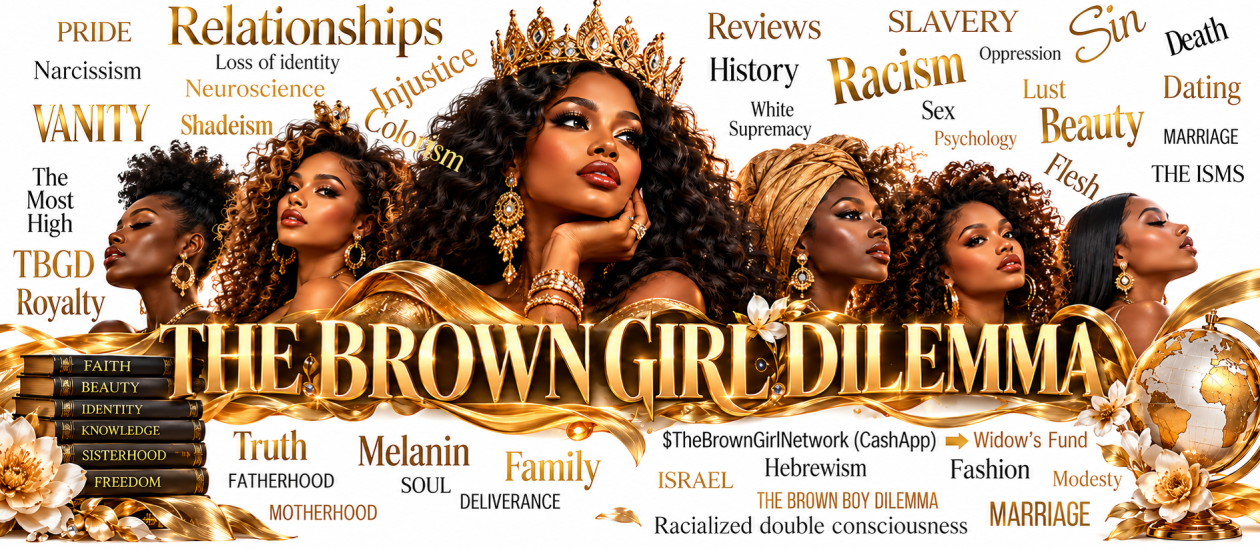


Black hair is heritage. Black hair is artistry. Black hair is science. And Black hair is beautiful.

An examination of the science, history, artistry, politics, and global perception of Black hair.

Black hair is far more than a physical characteristic; it is a remarkable expression of human diversity, cultural heritage, identity, and beauty. Across generations, Black hair has communicated ancestry, creativity, social belonging, personal expression, and resistance to cultural expectations. From tightly coiled strands to loose curls, waves, and everything in between, Black hair represents an extraordinary range of textures and appearances. Its beauty cannot be confined to one hairstyle, curl pattern, length, or standard of presentation. To understand Black hair is to explore biology, anthropology, history, sociology, cosmetology, and the psychology of beauty.


Human hair is composed primarily of keratin, a structural protein produced by specialized cells within the hair follicle. The shape, curvature, diameter, and growth characteristics of hair are influenced by multiple genetic and biological factors. Hair follicles produce fibers that may emerge straight, wavy, curly, or tightly coiled. Black populations demonstrate considerable variation in these characteristics, reflecting the extensive genetic diversity of African-descended communities. Hair texture is not determined by a single gene, nor does one curl pattern represent the entirety of Black hair. Research into hair morphology demonstrates that differences in follicle structure and hair-shaft geometry contribute to the diverse appearances of human hair (Franbourg et al., 2003).

Black hair encompasses a broad spectrum of textures. Some individuals have loose waves, others have defined curls, and many have tightly coiled or zigzag-shaped strands. Hair may also contain multiple textures on the same head. One section may be relatively loose while another is considerably tighter. The popular hair typing system, which categorizes textures from Type 1 through Type 4, can provide a general vocabulary for discussing curl patterns, particularly Types 3 and 4. However, this system is not a scientific measurement of hair health, beauty, or quality. It also does not fully account for density, strand thickness, porosity, or shrinkage. No texture should be regarded as superior to another. Every natural pattern deserves appreciation and appropriate care.

The Afro occupies a particularly important place in Black cultural history. Its rounded silhouette became an internationally recognized expression of Black identity, cultural pride, and political consciousness during the twentieth century, particularly throughout the Black Power and civil rights movements. Yet the Afro existed long before its modern political symbolism. African communities have historically developed elaborate hairstyles that communicated social status, age, regional identity, spiritual beliefs, and cultural affiliation. The Afro’s significance extends beyond fashion because it challenged beauty standards that had historically privileged European hair textures. Wearing natural hair became, for many, an affirmation that Black beauty did not require alteration to deserve respect.

The hot comb has a significant place in the history of Black hairstyling. Before modern electric styling appliances became widely available, metal pressing combs were heated over stoves or other heat sources and carefully passed through the hair to temporarily straighten it. This technique became especially prominent in Black households and beauty salons during the nineteenth and twentieth centuries. The pressing comb was not simply an instrument of hairstyling; it represented an entire tradition of domestic knowledge, beauty entrepreneurship, and cultural craftsmanship. Women developed techniques for sectioning, stretching, pressing, and maintaining hair. For many families, the experience of having one’s hair pressed was also a familiar ritual shared between mothers, daughters, grandmothers, and sisters.
One cannot adequately discuss Black hair history without recognizing Madam C. J. Walker. Born Sarah Breedlove, Walker became a pioneering entrepreneur whose hair-care business created economic opportunities for Black women during an era of racial and gender discrimination. Her enterprise included hair preparations, training, and a network of sales agents and beauty professionals. Walker’s success demonstrated that Black women could become influential business owners and leaders in an industry that mainstream society frequently overlooked. Her legacy is particularly significant because she helped establish a foundation for Black beauty entrepreneurship. Her story also illustrates the distinction between celebrating Black hair and recognizing the economic institutions that have developed around its care and styling.

Shrinkage is one of the defining characteristics of tightly curled and coiled hair. It occurs when hair contracts into its natural curl pattern after exposure to moisture or changes in environmental conditions. A person may have hair that reaches well below the shoulders when stretched but appears considerably shorter in its natural state. Shrinkage is not necessarily an indication of damage, poor growth, or unhealthy hair. It is a natural expression of the hair’s geometry and elasticity. Understanding shrinkage helps individuals establish realistic expectations about length retention and styling. It also challenges the misconception that longer-looking hair is automatically healthier or more beautiful than shorter-looking hair.

Proper Black hair care begins with understanding the individual characteristics of one’s hair and scalp. Because tightly curled hair can be more susceptible to dryness and breakage, many people benefit from gentle cleansing, conditioning, careful detangling, and protective styling practices. The natural curvature of the hair shaft can make it more difficult for sebum produced by the scalp to travel along the entire strand. Consequently, moisture retention is an important consideration. However, moisturizing does not mean applying every available oil, cream, or treatment. Hair products should be selected according to individual needs, and excessive product buildup should be avoided. Healthy hair care is not determined by the price of a product but by whether the regimen supports the condition of the scalp and hair.

The scalp is living skin and requires attention just as the skin on the face and body does. Healthy hair-care practices should include regular cleansing, appropriate conditioning, and attention to itching, inflammation, flaking, tenderness, or unusual hair loss. Protective styles should not be installed so tightly that they cause persistent discomfort or place excessive tension on the follicles. Repeated traction can contribute to traction alopecia, a form of hair loss associated with prolonged pulling on the hair. Individuals experiencing persistent scalp problems or unexplained thinning should consider consulting a qualified dermatologist. A beautiful hairstyle should never come at the expense of scalp health.
The hot comb remains an important styling instrument, but heat must be approached carefully. Excessive temperatures, repeated pressing, and improper technique can weaken the hair shaft, contribute to breakage, and alter natural curl patterns. Thermal damage may become particularly apparent when previously coiled hair no longer returns to its original texture after washing. Heat protectants can reduce some forms of styling damage, although they cannot eliminate the risks associated with excessive heat. Hair should be completely dry before many thermal straightening techniques are performed, and the temperature should be appropriate for the hair’s condition. The objective should be to achieve the desired style while preserving the integrity of the hair.


Braids, cornrows, twists, locs, and other traditional hairstyles represent centuries of cultural knowledge and artistic expression. These styles can provide convenience, reduce daily manipulation, and offer opportunities for creative self-expression. However, the term protective style should not be interpreted to mean that every braided or twisted hairstyle automatically protects the hair. Excessive tension, prolonged wear, inadequate cleansing, and heavy extensions can create problems. Successful protective styling requires attention to installation, maintenance, and removal. Locs, in particular, represent a distinctive way of allowing hair to develop and mature into an interconnected structure. Their significance may be personal, spiritual, cultural, or aesthetic, depending on the individual.
For centuries, Black hair has been evaluated through beauty standards that frequently favored European hair characteristics. Straight hair was often presented as more professional, desirable, or socially acceptable, while tightly coiled textures were subjected to negative stereotypes. These attitudes were not simply matters of personal preference; they reflected broader systems of racial hierarchy and cultural exclusion. In workplaces, educational institutions, and public settings, Black individuals have sometimes faced discrimination because of hairstyles associated with their natural hair. Such experiences demonstrate how seemingly ordinary grooming expectations can become instruments of social inequality. Black hair should not have to conform to another culture’s standards to be considered appropriate, respectable, or beautiful.
The perception of Black hairstyles has particularly important implications in professional environments. For generations, some Black employees and students have been pressured to straighten their hair or avoid certain natural styles to satisfy expectations of conventional appearance. These expectations can create an unequal burden because hairstyles that are ordinary expressions of Black identity may be interpreted as unconventional or inappropriate. The CROWN Act movement emerged in response to discrimination based on hair texture and protective hairstyles. Several jurisdictions in the United States have enacted legal protections addressing this issue, although the scope of protection varies by jurisdiction. The larger principle is that professionalism should be evaluated through competence, conduct, qualifications, and performance rather than racialized assumptions about hair.

Black hair also exists within complicated conversations about colorism and texturism. In certain communities, lighter complexions and looser curl patterns have historically received preferential treatment because of inherited racial hierarchies and proximity to European beauty standards. These attitudes can influence self-esteem, dating preferences, media representation, and perceptions of attractiveness. However, there is no biological or aesthetic justification for ranking one Black hair texture above another. A woman with tightly coiled hair is not less beautiful than a woman with loose curls, and a man with a short natural hairstyle is not less distinguished than one with flowing locs. Beauty is not a competition between textures. It is an appreciation of the diversity that exists within Black humanity.

Film, television, advertising, music, and fashion have played influential roles in shaping public attitudes toward Black hair. For many years, mainstream media frequently presented a narrow representation of Black beauty, leaving natural textures underrepresented. Over time, however, Black artists, entertainers, models, entrepreneurs, and cultural leaders have expanded the visual language of beauty. Natural hairstyles, locs, braids, Afros, and elaborate protective styles increasingly appear in fashion editorials and popular entertainment. Representation matters because repeated images influence what audiences consider familiar, desirable, and socially acceptable. When Black children see people who resemble them celebrated in diverse hairstyles, they receive an important message: their natural appearance belongs in the public imagination.
Black hair scholarship should not focus exclusively on women. Black men also possess a wide variety of hair textures, styling traditions, and grooming preferences. Afros, waves, fades, twists, braids, curls, and locs contribute to the diversity of Black masculine presentation. Hair grooming has cultural and personal significance, and a man’s hairstyle can reflect his individuality, creativity, profession, and sense of identity. The popularity of barbershops within Black communities also illustrates the social importance of hair care. These establishments have historically served as spaces for conversation, mentorship, entrepreneurship, and community connection. Black men’s hair deserves the same thoughtful appreciation afforded to women’s hairstyles.

The Black hair-care industry represents a significant economic and entrepreneurial landscape. It includes independent hairstylists, barbers, braiders, manufacturers, beauty supply stores, product developers, salon owners, educators, and distributors. Black consumers have historically supported a range of businesses designed to address hair-care needs that mainstream markets often neglected. Yet the industry also raises questions about product transparency, chemical safety, affordability, and access to accurate information. Consumers deserve products supported by responsible manufacturing practices and clear ingredient labeling. Supporting Black-owned businesses can strengthen entrepreneurship and economic development, while scientific evaluation remains essential regardless of who manufactures a product. Cultural pride and consumer education should work together.
Chemical relaxers and other texture-altering treatments have long been part of the history of Black hair care. These products can permanently change the structure of the treated hair, allowing it to appear straighter. However, chemical processing requires careful consideration because improperly applied products, overlapping treatments, and excessive processing can damage hair and irritate the scalp. Research has also examined possible associations between certain hair products and health outcomes. The National Institutes of Health has reported findings from the Sister Study concerning associations between some hair-product exposures and uterine cancer risk, although observational research does not establish that a particular product caused an individual’s disease (Chang et al., 2022). Consumers should have access to balanced information and the freedom to make informed decisions without shame or judgment.
The natural hair movement represents more than a change in styling preferences. For many individuals, it has become an opportunity to reconsider inherited beauty standards, rediscover personal identity, and embrace their natural appearance. Going natural can involve learning about one’s curl pattern, experimenting with products, developing new styling techniques, and becoming comfortable with shrinkage and texture. It can also involve navigating family opinions, workplace expectations, and social pressures. Importantly, embracing natural hair should not become another restrictive standard. Black women and men should be free to wear their hair natural, straightened, braided, twisted, locked, short, or long. Authentic self-expression includes the freedom to choose.

Black hair is a magnificent subject of scientific inquiry, cultural scholarship, historical preservation, and artistic appreciation. Its textures tell a story of human biological diversity, while its hairstyles reveal generations of creativity, resilience, craftsmanship, and cultural continuity. From the heated pressing combs of earlier generations to contemporary natural-hair innovations, Black communities have continuously developed ways to care for and celebrate their crowns. The world must move beyond the assumption that Black hair requires explanation, correction, or approval. Its beauty is not conditional upon straightness, length, manageability, or conformity. Whether coiled tightly, flowing freely, shaped into an Afro, gathered into braids, or cultivated into locs, Black hair deserves dignity and respect. It is not merely something growing from the scalp; it is part of a much larger human story.
References
Chang, C. J., O’Brien, K. M., Keil, A. P., Gaston, S. A., Jackson, C. L., Sandler, D. P., & White, A. J. (2022). Use of straighteners and other hair products and incident uterine cancer. Journal of the National Cancer Institute, 114(12), 1636–1645. https://doi.org/10.1093/jnci/djac165
Franbourg, A., Hallegot, P., Baltenneck, F., Toutain, C., & Leroy, F. (2003). Current research on ethnic hair. Journal of the American Academy of Dermatology, 48(6 Suppl.), S115–S119. https://doi.org/10.1067/mjd.2003.277
Gill, T. (2010). Beauty shop politics: African American women’s activism in the beauty industry. University of Illinois Press.
Johnson, T. (2001). Good hair: For colored girls who’ve considered weaving and wishing. Simon & Schuster.
Mercer, K. (1987). Black hair/style politics. New Formations, 3, 33–54.
Rooks, N. M. (1996). Hair raising: Beauty, culture, and African American women. Rutgers University Press.
Thompson, C. (2009). Black women, beauty, and hair as a matter of being. Women’s Studies, 38(8), 831–856.
Final scholarly observation: Black hair should be studied not as a problem requiring correction, but as a remarkable expression of human variation. Its biology deserves scientific understanding, its history deserves preservation, its cultural significance deserves recognition, and its beauty deserves celebration.