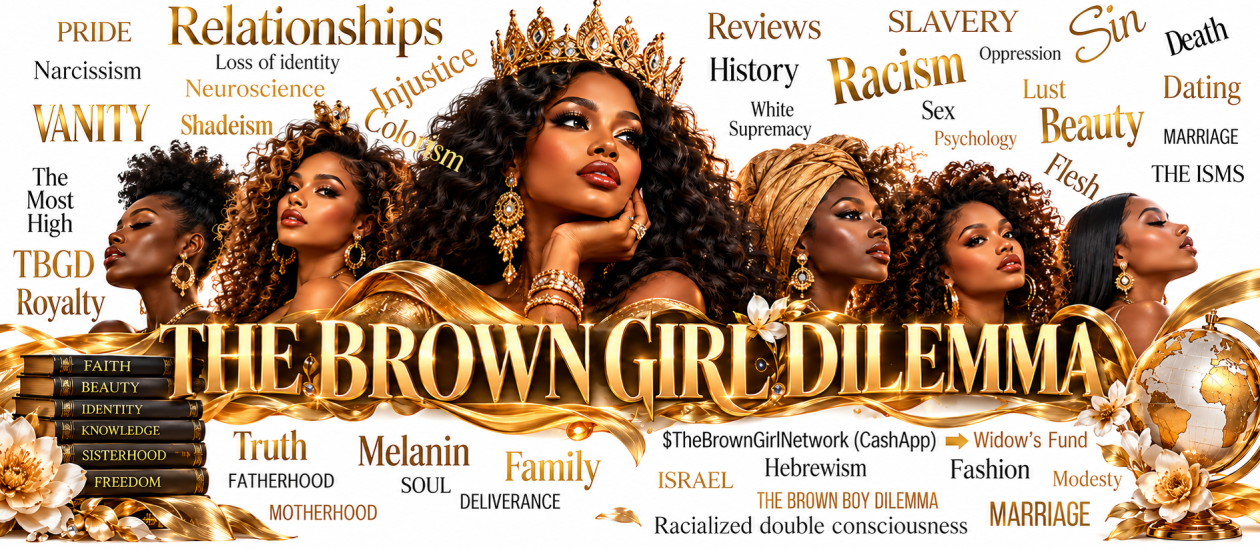

The Different Levels, Dimensions, and Expressions of Black Beauty

Black beauty is not a singular aesthetic, nor can it be confined to one complexion, facial structure, hair texture, or culturally constructed standard of attractiveness. It is an expansive spectrum of physical characteristics, aesthetic expressions, and individual distinctions that deserve recognition in their entirety. From the deepest ebony complexions to the lightest honey-brown tones, from delicate facial features to strikingly sculpted bone structures, Black beauty encompasses an extraordinary range of appearances. Its diversity is not an exception to beauty; it is one of its defining characteristics.

The words cute, pretty, beautiful, and gorgeous are frequently used interchangeably, yet they can communicate different dimensions of aesthetic appreciation. Pretty often describes a pleasing, delicate, charming, or harmonious appearance. It may be associated with softness, sweetness, proportion, and an approachable visual appeal. A pretty face might possess gentle features, expressive eyes, a lovely smile, and an overall appearance that immediately attracts positive attention. Pretty is not an inferior classification of beauty; it represents its own distinctive aesthetic expression.
Cute represents a distinctive dimension of attractiveness characterized by charm, sweetness, youthful expression, and endearing physical features. A cute woman may possess a delightful smile, expressive eyes, rounded cheeks, dimples, a petite facial structure, or an animated personality that makes her especially appealing. Cuteness does not necessarily depend on conventional facial symmetry or dramatic features. Rather, it often emerges through a combination of facial expressions, proportions, warmth, and individual charm.

Black beauty encompasses an extraordinary range of cuteness. From adorable dimples and captivating smiles to beautiful round eyes, soft facial contours, and naturally expressive features, Black women can embody an aesthetic that is simultaneously charming and memorable. Cute does not mean less attractive, less sophisticated, or less beautiful. It is simply a different expression of physical appeal. A woman can be cute without being conventionally pretty, pretty without being gorgeous, or possess all these qualities simultaneously.
Cuteness also demonstrates that attractiveness is not exclusively associated with maturity, glamour, dramatic facial features, or an imposing physical presence. Sometimes beauty is found in a playful smile, a charming expression, delicate features, or an appearance that immediately inspires affection. The appeal of cuteness is often associated with positive emotional responses and perceptions of warmth and approachability.
Ultimately, cute, pretty, beautiful, and gorgeous represent four expressive dimensions through which Black beauty can be appreciated. None is inherently superior to another. Each describes a different aesthetic impression, and all four can coexist in the same individual.
The four expressions of Black beauty:
- Cute: Charming, adorable, delightful, and endearing.
- Pretty: Pleasant, graceful, delicate, and attractive.
- Beautiful: Harmonious, captivating, distinctive, and aesthetically pleasing.
- Gorgeous: Striking, radiant, exceptionally attractive, and commanding in visual presence.
And perhaps the most important point: A Black woman does not have to fit into just one category. She can be cute, pretty, beautiful, and gorgeous all at once. ❤️

Beautiful often conveys a deeper and more comprehensive appreciation of physical appearance. Beauty may emerge through facial harmony, symmetry, distinctive features, complexion, expressive eyes, and the relationship between individual characteristics. A beautiful woman may possess a face that is memorable without necessarily conforming to conventional standards. Her attractiveness might be found in her cheekbones, the shape of her eyes, the definition of her jawline, the fullness of her lips, or the distinctive proportions that make her appearance recognizable.
Gorgeous frequently communicates an especially striking level of visual impact. It describes an appearance that commands attention through exceptional elegance, radiance, facial definition, or an impressive combination of features. Gorgeousness may be associated with dramatic eyes, high cheekbones, luminous skin, luxurious hair, and an overall presentation that creates an immediate impression. Nevertheless, gorgeousness is not an objectively measurable biological category. It is an expressive description of particularly compelling attractiveness.
One of the most extraordinary dimensions of Black beauty is complexion diversity. Black women and men possess an extensive range of skin tones, including deep ebony, blue-black, dark chocolate, espresso, mahogany, chestnut, caramel, bronze, golden brown, honey, and lighter shades of brown. These complexions reflect the remarkable variation in human pigmentation. Melanin contributes to the coloration of skin, hair, and eyes, while genetic ancestry and individual variation influence the combinations of physical characteristics that appear across populations.

Dark-skinned Black women possess an extraordinary range of aesthetic characteristics that deserve celebration without qualification or comparison. Deeply pigmented skin can create beautiful visual contrasts with clothing, jewelry, makeup, and natural lighting. Ebony and dark chocolate complexions can appear particularly striking alongside gold, ivory, emerald, royal blue, and rich jewel tones. The historical marginalization of darker skin through colorism has never been a legitimate measure of its attractiveness. Dark skin is not a deviation from beauty; it is an integral and magnificent expression of Black beauty.

Medium-brown complexions offer another dimension of visual diversity. Mahogany, chestnut, cinnamon, bronze, and warm chocolate tones may display different undertones, including golden, red, neutral, and olive influences. These distinctions can affect how skin interacts with sunlight, photography, cosmetics, and clothing colors. Two individuals with similar overall complexion levels may have distinctly different undertones and facial characteristics, demonstrating why complexion alone cannot define someone’s appearance.

Light-brown and honey-toned complexions also represent an important part of the Black aesthetic spectrum. Golden-brown, caramel, and lighter brown skin tones may be accompanied by a wide variety of eye shapes, nose structures, lip formations, and hair textures. However, these complexions should never be positioned above darker skin in a hierarchy of attractiveness. Colorism has historically encouraged precisely that misconception. The appreciation of one complexion should never require the devaluation of another.
Facial architecture contributes significantly to the individuality of Black beauty. The human face contains numerous anatomical features, including the forehead, orbital region, nose, cheekbones, lips, chin, jawline, and facial soft tissue. Their proportions and relationships create the distinctive appearance of each individual. Some faces are characterized by prominent cheekbones, while others possess softer midfacial contours, rounded cheeks, angular jawlines, or delicately tapered chins. There is no single facial architecture that represents the entirety of Black attractiveness.
The eyes are among the most expressive components of facial beauty. Almond-shaped, round, hooded, deep-set, upturned, and downturned eyes each contribute a different visual character. Eye spacing, eyelid structure, brow shape, and the relationship between the eyes and surrounding facial features influence overall facial harmony. Dark brown eyes, amber-brown eyes, and other naturally occurring eye colors further contribute to individual variation. The beauty of the eyes is not simply their shape but also their capacity to communicate emotion, personality, and expression.

Nose diversity is another essential aspect of Black facial aesthetics. Black individuals possess a broad range of nasal structures, including narrow, broad, rounded, straight, convex, and softly contoured noses. Nasal width, bridge height, tip projection, and nostril shape vary considerably among individuals. Historically, Eurocentric beauty standards have disproportionately privileged certain nasal structures, creating unnecessary pressure to alter naturally occurring features. A more inclusive understanding of beauty recognizes that facial distinction is not a defect requiring correction.
Lips contribute another remarkable dimension to Black beauty. Full, medium, narrow, heart-shaped, and distinctly contoured lips are all represented throughout Black populations. The cupid’s bow, lip proportions, natural pigmentation, and relationship between the lips and other facial features create individual character. Full lips have become particularly celebrated in contemporary beauty culture, but their appreciation should not reduce Black attractiveness to a single feature. Every facial characteristic deserves consideration within the individuality of the entire face.
Hair is one of the most culturally significant and visually diverse dimensions of Black beauty. Natural hair encompasses an extraordinary range of curl patterns, from loose waves and curls to tightly coiled and densely textured strands. Hair density, strand diameter, porosity, length, and growth patterns differ considerably. Afros, twist-outs, locs, braids, cornrows, silk presses, natural curls, and protective styles demonstrate the versatility of Black hair. Its beauty is expressed through both its natural structure and the creativity with which individuals choose to wear it.
The silhouette and overall physical presentation also contribute to conventional perceptions of attractiveness. Black individuals represent a wide range of body types, including slender, athletic, curvaceous, muscular, petite, tall, and fuller figures. There is no singular Black body type. Contemporary media has sometimes narrowed Black femininity to exaggerated curves or particular proportions, but such representations cannot encompass the diversity of Black women. Beauty should never be conditional upon achieving a prescribed body measurement or silhouette.

Facial symmetry is frequently discussed in scientific investigations of human attractiveness. Researchers have examined bilateral symmetry, facial proportions, averageness, and the relationship between facial features and perceived attractiveness. Symmetry can contribute to perceptions of facial harmony, but it is not an absolute requirement for beauty. Many striking faces possess asymmetries that contribute to their individuality and memorability. Furthermore, attractiveness is influenced by cultural expectations, familiarity, personal preferences, and social experiences. No mathematical formula can completely explain the complexity of human beauty.
The distinction between conventional beauty and distinctive beauty deserves particular attention. Conventional attractiveness often reflects characteristics that are widely promoted through fashion, entertainment, advertising, and popular culture. Distinctive beauty, however, may emerge from features that are unusual, memorable, or difficult to categorize. A woman may possess an unconventional facial structure, an unusually expressive gaze, or a combination of characteristics that makes her appearance exceptional. Her beauty does not require conformity to a standardized aesthetic template.
There is also an important difference between physical beauty and personal presentation. Grooming, clothing, posture, makeup, fragrance, and individual style can enhance the way a person expresses their appearance. Elegant fashion may emphasize facial structure, while carefully selected colors can complement complexion and undertones. A sophisticated hairstyle can frame the face, and appropriate lighting can reveal the natural characteristics of skin and facial features. These elements do not manufacture beauty; they provide additional opportunities for its expression.

Black beauty has an extensive historical and cultural legacy. African civilizations, artistic traditions, sculpture, textiles, hairstyles, jewelry, and ceremonial adornments have long communicated aesthetic sophistication. Across the African diaspora, beauty has also been expressed through fashion, music, photography, literature, and performance. The contributions of Black artists, designers, photographers, models, and cultural innovators have challenged narrow representations of attractiveness and expanded the visual vocabulary through which Black people are appreciated.
The entertainment and fashion industries have played a complicated role in shaping perceptions of Black attractiveness. Figures such as Dorothy Dandridge, Lena Horne, Diahann Carroll, Beverly Johnson, Naomi Campbell, Halle Berry, Lupita Nyong’o, and Vanessa Williams have demonstrated different expressions of Black elegance and visual appeal. Their appearances cannot be reduced to one complexion, facial structure, or beauty category. Their cultural visibility illustrates the importance of representation and the recognition that Black beauty exists across generations and aesthetic traditions.
Colorism remains one of the most significant obstacles to an equitable appreciation of Black beauty. It involves the preferential treatment of lighter skin over darker skin, often reinforced through historical racism, colonialism, media representation, and social conditioning. Its consequences extend beyond individual preferences into social opportunities, cultural visibility, and the psychological experiences of those subjected to complexion-based discrimination. Challenging colorism requires more than celebrating selected individuals; it requires rejecting the assumption that proximity to whiteness determines attractiveness, desirability, or human worth.
Ultimately, pretty, beautiful, and gorgeous should not become rigid classifications through which Black people are ranked against one another. These words describe different impressions and expressions of attractiveness, not scientifically established levels of human value. A woman with delicate features may be considered pretty, another with remarkable facial harmony may be described as beautiful, and another with an exceptionally striking presence may be called gorgeous. Yet one individual can embody all three descriptions. Beauty is multidimensional, subjective, and deeply influenced by the observer.
Black beauty deserves to be appreciated without limitation, apology, or hierarchy. Its magnificence is found in the diversity of complexions, facial structures, hair textures, body types, and individual characteristics that distinguish one person from another. The deepest ebony, richest mahogany, warmest caramel, and lightest honey-brown complexions belong to the same expansive spectrum of human beauty. Pretty is beautiful, beautiful is gorgeous, and gorgeousness has no single complexion, measurement, or prescribed appearance. The true celebration of Black beauty begins when every shade, feature, and expression is permitted to exist without being compared, diminished, or placed beneath another.
References
Allen, T. D. (2012). The color complex: The politics of skin color among African Americans. Journal of Black Studies, 43(1), 3–21.
Coetzee, V., Greeff, J. M., Stephen, I. D., & Perrett, D. I. (2014). Cross-cultural agreement in facial attractiveness preferences: The role of ethnicity and gender. PLOS ONE, 9(7), e99629.
Davis, F. J. (1991). Who is black? One nation’s definition. Pennsylvania State University Press.
Fanon, F. (1952). Black skin, white masks. Éditions du Seuil.
Hall, R. E. (1995). The bleaching syndrome: Light skin and dark skin in the African American community. Greenwood Press.
Harris, M. (1964). Patterns of race in the Americas. Walker and Company.
Hunter, M. (2005). Race, gender, and the politics of skin tone. Routledge.
Jones, T. (2000). Shades of brown: The law of skin color. Duke Law Journal, 49(6), 1487–1557.
Kephart, N. C. (1967). The structure of facial attractiveness. American Journal of Sociology, 72(5), 515–526.
Maddox, K. B. (2004). Perspectives on racial phenotypicality bias. Personality and Social Psychology Review, 8(4), 383–401.
Mercer, K. (1994). Welcome to the jungle: New positions in Black cultural studies. Routledge.
Walker, A. (1983). In search of our mothers’ gardens: Womanist prose. Harcourt Brace Jovanovich.
Wade, T. J. (2000). Evolutionary theory and self-perception: Sex differences in body-esteem predictors of self-perceived physical and sexual attractiveness and self-esteem. International Journal of Psychology, 35(1), 36–45.
Wade, T. J., & Bielitz, S. (2005). The effects of sex and racial group membership on perceptions of attractiveness. Sex Roles, 52, 107–118.
Weitz, R. (2001). The politics of women’s bodies: Sexuality, appearance, and behavior. Oxford University Press.
For additional scholarly depth, these sources are particularly relevant to the essay’s discussion of complexion, hair, facial characteristics, and culturally influenced beauty standards:
– Frisby, C. M. (2006). “Shades of beauty”: Examining the relationship of skin color to perceptions of physical attractiveness. Facial Plastic Surgery, 22(3), 175–179. https://doi.org/10.1055/s-2006-950174
– Hunter, M. (2007). The persistent problem of colorism: Skin tone, status, and inequality. Sociology Compass, 1(1), 237–254. https://doi.org/10.1111/j.1751-9020.2007.00006.x
– Parmer, T., Arnold, M. S., Natt, T., & Janson, C. (2004). Physical attractiveness as a process of internalized oppression and multigenerational transmission in African American families. The Family Journal, 12(3). https://doi.org/10.1177/1066480704264931
– Tate, S. A. (2007). Black beauty: Shade, hair and anti-racist aesthetics. Ethnic and Racial Studies, 30(2), 300–319. https://doi.org/10.1080/01419870601143992
– Coetzee, V., Greeff, J. M., Stephen, I. D., & Perrett, D. I. (2014). Cross-cultural agreement in facial attractiveness preferences: The role of ethnicity and gender. PLOS ONE, 9(7), e99629. https://doi.org/10.1371/journal.pone.0099629
Aronoff, J., Woike, B. A., & Hyman, L. M. (1992). Which are the stimuli in facial displays of anger and happiness? Configurational bases of emotion recognition. Journal of Personality and Social Psychology, 62(6), 1050–1066.
Borgi, M., Cogliati-Dezza, I., Brelsford, V., Meints, K., & Cirulli, F. (2014). Baby schema in human and animal faces induces cuteness perception and gaze allocation in children. Frontiers in Psychology, 5, 411. https://doi.org/10.3389/fpsyg.2014.00411
Glocker, M. L., Langleben, D. D., Ruparel, K., Loughead, J. W., Gur, R. C., & Sachser, N. (2009). Baby schema modulates the brain reward system in nulliparous women. Proceedings of the National Academy of Sciences, 106(22), 9115–9119. https://doi.org/10.1073/pnas.0811620106
Jones, D. (1996). An evolutionary perspective on physical attractiveness. Evolutionary Anthropology, 5(3), 97–109.
Langlois, J. H., Kalakanis, L., Rubenstein, A. J., Larson, A., Hallam, M., & Smoot, M. (2000). Maxims or myths of beauty? A meta-analytic and theoretical review. Psychological Bulletin, 126(3), 390–423. https://doi.org/10.1037/0033-2909.126.3.390
Rhodes, G. (2006). The evolutionary psychology of facial beauty. Annual Review of Psychology, 57, 199–226. https://doi.org/10.1146/annurev.psych.57.102904.190208
Little, A. C., Jones, B. C., & DeBruine, L. M. (2011). Facial attractiveness: Evolutionary based research. Philosophical Transactions of the Royal Society B: Biological Sciences, 366(1571), 1638–1659. https://doi.org/10.1098/rstb.2010.0404
Discover more from THE BROWN GIRL DILEMMA
Subscribe to get the latest posts sent to your email.