Tag Archives: Lightism

The Politics of Lightism in the Black Community: Power, Perception, and the Legacy of Color Hierarchies.

Lightism, often referred to as colorism, is a deeply embedded social hierarchy within the Black community that privileges lighter skin tones over darker ones. While racism operates externally, colorism functions internally, shaping perceptions of beauty, worth, and social mobility. This phenomenon is not accidental but is rooted in historical systems of oppression that date back to slavery and colonialism.

The origins of lightism can be traced to the institution of slavery in the United States, where lighter-skinned enslaved individuals—often the mixed-race children of enslaved Black women and white slave owners—were sometimes given preferential treatment. They were more likely to work in the house rather than the fields, creating a visible hierarchy tied to proximity to whiteness. This early distinction laid the groundwork for enduring social divisions within the Black community.

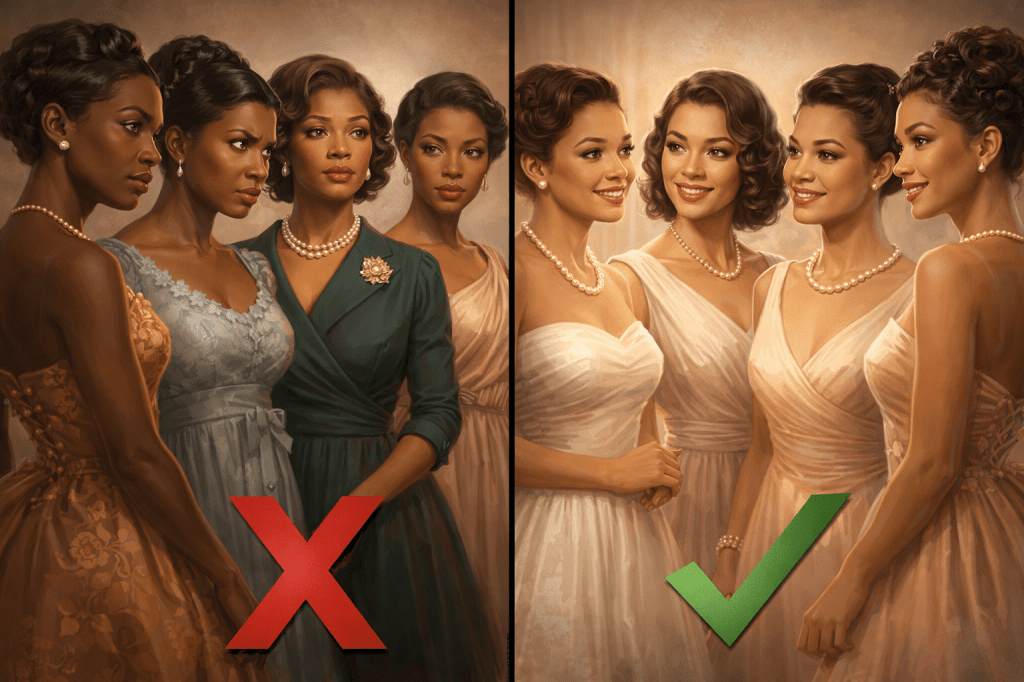
During the post-slavery era, these divisions were reinforced through social institutions such as the “paper bag test,” which informally determined access to certain social clubs, churches, and educational opportunities. Individuals whose skin tone was lighter than a brown paper bag were often granted entry, while darker-skinned individuals were excluded. This practice institutionalized color-based discrimination within Black spaces themselves.

Lightism has also been perpetuated through media representation, where lighter-skinned Black individuals are more frequently depicted as desirable, successful, or socially acceptable. Film, television, and advertising industries have historically favored Eurocentric features, reinforcing the notion that beauty is aligned with proximity to whiteness. This has had lasting psychological effects on both light- and dark-skinned individuals.

Scholars such as Alice Walker have been instrumental in bringing attention to colorism. Walker is credited with popularizing the term “colorism,” defining it as prejudicial or preferential treatment of same-race people based solely on their skin color. Her work illuminated how internalized racism manifests within marginalized communities.

Psychologically, lightism can contribute to issues of self-esteem, identity conflict, and internalized inferiority among darker-skinned individuals. Studies have shown that darker-skinned Black women, in particular, often face compounded discrimination based on both race and skin tone, affecting their opportunities in employment, relationships, and media visibility.

Conversely, lighter-skinned individuals may experience unearned privilege within the community, though this privilege is often complicated by questions of identity and authenticity. This dynamic creates tension and division, as individuals navigate a system that simultaneously elevates and scrutinizes them.

The politics of lightism extend into economic outcomes as well. Research indicates that lighter-skinned individuals, on average, earn higher incomes and receive more educational and professional opportunities than their darker-skinned counterparts. These disparities mirror broader systemic inequalities while also reflecting intra-community biases.

In the realm of beauty and fashion, lightism has historically dictated standards that marginalize darker skin tones. From foundation shades to magazine covers, the underrepresentation of dark-skinned beauty has reinforced narrow definitions of attractiveness. However, recent movements have begun to challenge these norms, advocating for greater inclusivity.

Social media has played a dual role in the conversation around lightism. On one hand, it has amplified harmful stereotypes and colorist rhetoric; on the other, it has provided a platform for dark-skinned voices to reclaim narratives of beauty and empowerment. Hashtags and digital activism have become tools for resistance and awareness.

The legacy of colonialism also plays a significant role in shaping global perceptions of skin color. In many parts of the world, lighter skin is associated with wealth, education, and modernity, while darker skin is unfairly linked to poverty and labor. These associations are remnants of colonial power structures that continue to influence contemporary societies.

Religious and cultural narratives have sometimes been misinterpreted to justify color hierarchies, further entrenching lightism within communities. These interpretations often distort historical and biblical contexts, contributing to harmful ideologies that equate lightness with purity and darkness with inferiority.

Education is a critical tool in dismantling lightism. By teaching accurate histories of slavery, colonialism, and racial formation, individuals can better understand the origins of color-based bias. Awareness fosters critical thinking and challenges internalized beliefs that perpetuate division.

Representation matters deeply in shifting perceptions. The increased visibility of dark-skinned actors, models, and public figures has begun to redefine beauty standards and challenge longstanding biases. This cultural shift is essential in promoting equity and self-acceptance.

Community dialogue is equally important. Open conversations about colorism allow individuals to share experiences, confront biases, and build solidarity. These discussions can be uncomfortable but are necessary for collective healing and growth.

The intersection of gender and colorism reveals that Black women are disproportionately affected by lightism. Beauty standards, dating preferences, and professional opportunities often place darker-skinned women at a disadvantage, highlighting the need for intersectional analysis.

Resistance to lightism can be seen in movements that celebrate melanin-rich skin and African features. Campaigns, art, and literature have emerged to affirm the beauty and value of darker skin, countering centuries of negative messaging.

Ultimately, the politics of lightism are about power—who holds it, who is denied it, and how it is maintained. Challenging this system requires both individual introspection and collective action to dismantle deeply ingrained biases.

The journey toward equity within the Black community involves recognizing and addressing the harm caused by colorism. It calls for a redefinition of beauty, value, and identity that is not based on proximity to whiteness but rooted in authenticity and diversity.

By confronting lightism, the Black community can move toward greater unity and empowerment, honoring the full spectrum of its beauty and strength. This work is not only social but deeply psychological and cultural, requiring sustained commitment across generations.

References

Hunter, M. (2007). The persistent problem of colorism: Skin tone, status, and inequality. Sociology Compass, 1(1), 237–254. https://doi.org/10.1111/j.1751-9020.2007.00006.x

Keith, V. M., & Herring, C. (1991). Skin tone and stratification in the Black community. American Journal of Sociology, 97(3), 760–778.

Walker, A. (1983). In Search of Our Mothers’ Gardens: Womanist Prose. Harcourt Brace Jovanovich.

Wilder, J. (2015). Color Stories: Black Women and Colorism in the 21st Century. Temple University Press.
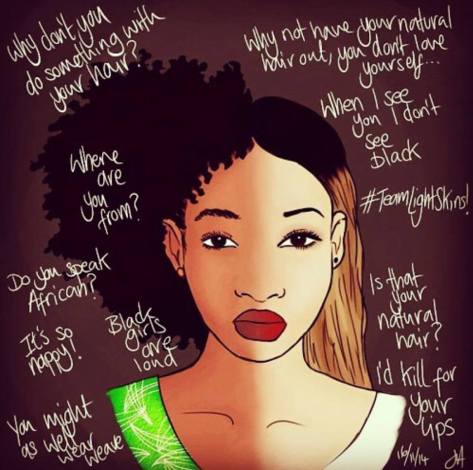
The Brown Girl Dilemma: Self-Hatred, Lookism, Lightism, and Mental Slavery.

This artwork is the property of its respective owner. No copyright infringement intended.

The experience of brown-skinned girls and women is marked by complex social pressures that extend beyond race. Within and outside of Black and Brown communities, colorism—the preferential treatment of lighter skin over darker shades—intersects with lookism and internalized societal standards to create what can be described as mental slavery. These pressures shape self-perception, relationships, and social mobility, resulting in a lived experience where one’s skin tone and features dictate perceived worth.

Self-Hatred and Internalized Bias

Self-hatred among brown girls is often fueled by societal messaging that favors Eurocentric beauty ideals. Media, peer comparison, and historical legacies of oppression contribute to an internalized hierarchy of value. Psychologists describe this as internalized oppression, where victims unconsciously adopt the prejudices of the dominant culture (Welsing, 1991). Brown-skinned girls may feel inferior to lighter-skinned peers, impacting self-esteem, academic performance, and social confidence.

Lookism: Appearance as a Social Currency

Lookism—the preference for certain physical traits—intensifies color-based biases. Studies show that facial symmetry, lighter skin, and straight hair are often socially rewarded in professional and social contexts (Etcoff, 1999). Brown girls may experience disadvantage not because of talent or character, but because their appearance fails to align with prevailing beauty standards. This reinforces a system where self-worth is externally validated, creating pressure to modify appearance through cosmetics, hair treatments, or even skin-lightening products.

Lightism and Color Hierarchy

Lightism, a subset of colorism, privileges lighter skin within communities of color. Historically rooted in colonial hierarchies and slavery, light skin was associated with proximity to power, wealth, and status. Brown girls are thus positioned in a spectrum of desirability, often excluded from leadership opportunities, romantic preference, and cultural representation. The Bible reminds believers that value is spiritual and moral rather than physical: “But the Lord said unto Samuel, Look not on his countenance, or on the height of his stature; because I have refused him: for the Lord seeth not as man seeth; for man looketh on the outward appearance, but the Lord looketh on the heart” (1 Samuel 16:7, KJV).

Mental Slavery and Cultural Conditioning

Mental slavery refers to the internalized belief that worth and success are determined by adherence to dominant cultural norms. Brown girls often face a dual pressure: conforming to Eurocentric standards while navigating systemic racism and community bias. This can manifest as low self-confidence, anxiety, and even estrangement from one’s cultural identity. The psychological effects are profound, limiting aspirations and perpetuating cycles of inequality.

Strategies for Healing and Empowerment

  • Awareness: Recognizing internalized bias and societal pressures is the first step toward liberation.
  • Community Support: Engaging with affirming networks that celebrate brown and dark-skinned beauty reinforces self-worth.
  • Media Representation: Advocating for diverse representation in media, fashion, and leadership provides visible role models.
  • Faith and Spiritual Practice: For believers, grounding identity in God’s perspective restores confidence and counters external value systems (Psalm 139:14, KJV).

The Brown Girl Empowerment Toolkit

1. Affirmations and Self-Worth

Daily affirmations help counter internalized oppression:

  • “I am fearfully and wonderfully made” (Psalm 139:14, KJV).
  • “My worth is not determined by the color of my skin but by the character of my heart” (1 Samuel 16:7, KJV).
  • “I celebrate my melanin, my heritage, and my uniqueness.”

2. Media Literacy and Representation

  • Follow media that celebrates brown and dark-skinned beauty.
  • Support creators and public figures who challenge colorism.
  • Critically analyze mainstream media to understand subtle messages about beauty and desirability.

3. Community and Mentorship

  • Join groups or online communities focused on celebrating brown beauty.
  • Seek mentors—especially brown women leaders, entrepreneurs, and creatives—to model confidence and success.
  • Share experiences with peers to build solidarity and resilience.

4. Cultural Pride and Identity

  • Study African, Caribbean, or South Asian heritage to reinforce pride in skin, hair, and cultural features.
  • Celebrate traditional hairstyles, clothing, and art as expressions of identity.
  • Engage in cultural events to counteract Eurocentric standards.

5. Faith and Spiritual Grounding

  • Use prayer, meditation, and scripture to anchor identity beyond societal approval.
  • Daily prayer of self-acceptance and guidance.
  • Study verses affirming God’s value of the heart over appearance (1 Samuel 16:7, KJV).

6. Psychological Tools

  • Journaling: Document experiences of discrimination, self-reflection, and victories.
  • Cognitive Restructuring: Replace negative thoughts with positive affirmations.
  • Therapy: Seek mental health support familiar with colorism and racial trauma.

7. Practical Beauty Strategies

  • Embrace natural hair and skin tones; avoid unnecessary bleaching or alteration.
  • Use makeup, hair, or fashion as self-expression rather than approval-seeking.
  • Celebrate diverse skin tones in personal branding, social media, and public presence.

8. Role Models

  • Priyanka Chopra: Advocates for dusky beauty and challenges colorism in Bollywood.
  • Rashida Strober: Activist emphasizing self-love and black beauty standards.
  • Chimamanda Ngozi Adichie: Author promoting African identity and resisting Western beauty norms.

9. Action Steps

  1. Daily affirmation practice (5 minutes).
  2. Limit exposure to media promoting harmful beauty standards.
  3. Join or form support networks to discuss colorism openly.
  4. Highlight cultural pride in social media or community activities.
  5. Engage in mentorship to guide younger girls in building self-confidence.

Conclusion

The Brown Girl Dilemma—self-hatred, lookism, lightism, and mental slavery—is a multifaceted issue with deep historical and cultural roots. Addressing it requires societal change, psychological support, and personal empowerment. By understanding the origins of color bias, rejecting internalized oppression, and embracing cultural and spiritual identity, brown girls can reclaim their value, beauty, and power.


References

Biblical References (KJV)

  • 1 Samuel 16:7
  • Psalm 139:14

Secondary Sources
Welsing, F. C. (1991). The Isis Papers: The Keys to the Colors. Third World Press.
Etcoff, N. (1999). Survival of the Prettiest: The Science of Beauty. Doubleday.
Hunter, M. L. (2007). The Persistent Problem of Colorism: Skin Tone, Status, and Inequality. Sociology Compass, 1(1), 237–254.
Clark, R., & Clark, K. (1947). Racial Identification and Preference in Negro Children. Journal of Negro Education, 16(3), 169–176.

“Brown paper bag” descendants: lighter influencers prioritized.

Photo by Mikhail Nilov on Pexels.com

The term “brown paper bag test” historically described a colorist practice in which lighter-skinned Black individuals, often those whose skin matched or was lighter than a brown paper bag, were given preferential treatment in social clubs, schools, and employment (Harris, 2015). This arbitrary test codified a hierarchy within the Black community, creating generational legacies that continue to influence perceptions of beauty, social mobility, and cultural capital.

  • Legacy Influence: Descendants of lighter-skinned families historically benefited from better education, access to resources, and visibility, creating a systemic advantage that persists today.
  • Media & Representation: Lighter-skinned influencers—celebrities, social media personalities, and public figures—receive more exposure, sponsorships, and opportunities, echoing the historical privileging of “brown paper bag” individuals (Russell, Wilson, & Hall, 2016).

Biblical and Spiritual Lens

Colorist favoritism reflects the human tendency to judge by appearance rather than moral or spiritual worth. Scripture condemns such superficial evaluation:

  • James 2:1 (KJV): “My brethren, have not the faith of our Lord Jesus Christ, the Lord of glory, with respect of persons.”
  • Genesis 1:27 (KJV): Affirms all humans are created in God’s image, regardless of skin tone, countering social hierarchies based on complexion.
  • Wisdom of Solomon 14:12 (Apocrypha): Warns against corrupting judgment with superficial valuation, applicable to both historical colorism and modern influencer culture.

Contemporary Implications

1. Social Media and Influencers

  • Lighter-skinned influencers dominate Instagram, TikTok, and YouTube, shaping beauty standards and consumer behavior.
  • Algorithms reinforce this bias, prioritizing images and videos that fit Eurocentric beauty ideals, creating a digital reflection of historical colorism.

2. Hollywood and African Cinema

  • Casting decisions often favor lighter-skinned actors for lead roles, award campaigns, and international appeal, mirroring the same hierarchy established in the brown paper bag era.
  • This perpetuates the notion that lighter-skinned descendants are more “marketable,” sidelining equally talented darker-skinned performers.

3. Socioeconomic Outcomes

  • The visibility and prioritization of lighter influencers correlate with wealth accumulation, sponsorship deals, and global recognition, reinforcing generational privilege tied to skin tone.

Visual & Conceptual Integration

  • Imagine the Digital Plantation visual, now layered with a “brown paper bag” motif hovering over lighter-skinned influencers, subtly glowing.
  • Darker-skinned individuals are positioned in semi-shadow or behind algorithmic overlays, symbolizing systemic bias, underrepresentation, and the persistence of historic privilege.

References

  • Harris, A. P. (2015). Skin tone stratification and social inequality: Historical and contemporary perspectives. Oxford University Press.
  • Hunter, M. (2007). The persistent problem of colorism: Skin tone, status, and inequality. Sociology Compass, 1(1), 237–254.
  • Russell, K., Wilson, M., & Hall, R. (2016). The color complex: The politics of skin color in a new millennium. Anchor Books.

Lightism: The Elevation of Light Skin and Its Impact on the Black Community.

Lightism, commonly referred to as colorism, is the systemic privileging of lighter skin within the Black community. Unlike racism, which operates across racial lines, colorism functions within the racial group, placing value on lighter pigmentation while devaluing darker skin tones. It manifests socially, economically, and psychologically, shaping perceptions of beauty, intelligence, and status.

Historically, light skin became esteemed due to colonialism and slavery. Enslaved Africans with lighter skin, often mixed-race offspring of enslaved women and European men, were sometimes granted preferential treatment, such as domestic roles instead of field labor. This hierarchy created a social precedent in which lighter skin was associated with proximity to power and privilege.

The legacy of slavery and colonialism established a generational hierarchy within the Black community. Light-skinned individuals were sometimes allowed greater access to education, resources, or social mobility. Over time, these historical inequities translated into cultural norms that valorize lighter skin.

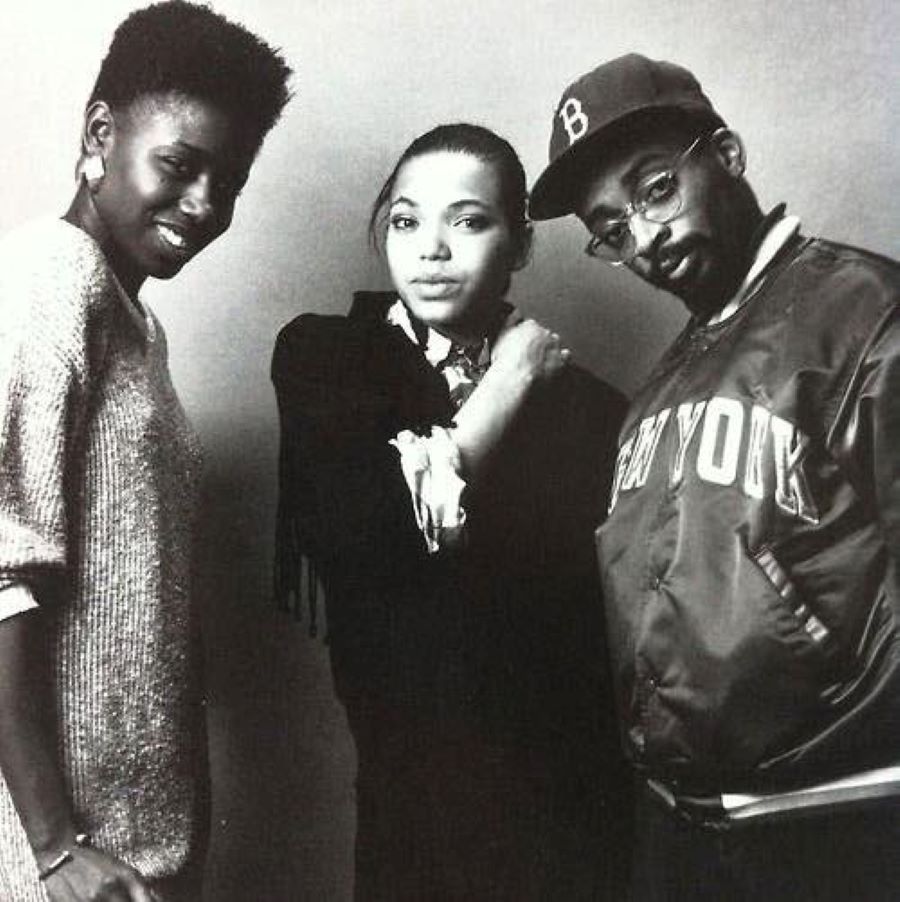
Spike Lee’s film School Daze (1988) explores this phenomenon vividly. Set on a historically Black college campus, the film depicts a divide between light-skinned and dark-skinned students, highlighting intra-racial prejudice, social fragmentation, and internalized oppression. The narrative exposes how colorism affects relationships, self-esteem, and group solidarity.

The message of School Daze is multifaceted. It critiques the ways Black people internalize societal beauty standards, encouraging audiences to recognize and resist internalized lightism. By portraying conflict between “pretty girls” with lighter skin and darker-skinned counterparts, Lee emphasizes the psychological and cultural damage of color-based favoritism.

Social psychology suggests that colorism impacts dating preferences, career opportunities, and media representation. Studies indicate that lighter-skinned Black women often receive more positive attention from peers and employers, perpetuating societal biases and reinforcing the notion that light skin equates to desirability or social capital.

Within the Black male dating paradigm, preferences often reflect internalized colorist ideals. While personal preference varies, research shows a disproportionate attraction to light-skinned women, influenced by media portrayal, historical conditioning, and societal messaging (Hunter, 2011). This preference affects self-perception and romantic dynamics within the community.

Skin-Lightening and Lightismlorism in the Black Community

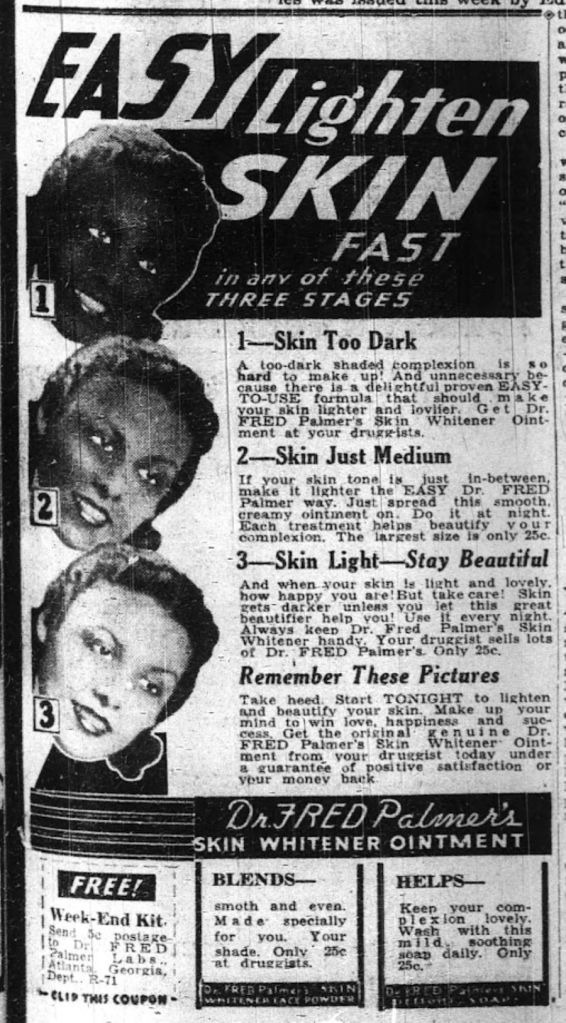
Skin-lightening, also called skin bleaching, is the practice of using chemical products, creams, or procedures to reduce melanin in the skin. Within the Black community, it often reflects internalized lightism: the belief that lighter skin confers beauty, social status, or economic advantage. Psychologically, this practice is linked to low self-esteem, internalized racism, and social pressure (Hunter, 2011).

Celebrities and ordinary individuals alike have historically felt pressure to conform to lighter-skinned beauty ideals. Skin-lightening can temporarily change appearance but does not address the underlying social and cultural biases. It is also associated with health risks, including skin irritation, scarring, and long-term systemic effects from chemical exposure.

Biblically, true beauty is not skin-deep. Psalm 139:14 (KJV) states: “I will praise thee; for I am fearfully and wonderfully made: marvellous are thy works; and that my soul knoweth right well.” This reinforces that self-worth and beauty come from God’s design, not pigmentation.

Celebrities have long commented on light vs. dark skin tensions. Lena Horne, an iconic performer, spoke openly about the privileges she experienced as a lighter-skinned Black woman and the societal biases she observed against darker-skinned peers. Horne’s reflections highlight the complex interplay of skin tone, opportunity, and discrimination within the Black community.

Vanessa L. Williams and Halle Berry, both light-skinned women who achieved international fame, have also discussed colorism. Berry acknowledged the rarity of dark-skinned lead actresses in Hollywood, while Williams spoke on the pressures to conform to Eurocentric beauty standards, revealing a tension between personal pride and societal expectation.

Lightism Companion Table

CategoryExample / IndividualImpact / PracticePsychological EffectCultural / Media Reference
Celebrity CommentaryLena HorneDiscussed privileges as light-skinned; highlighted colorism against darker peersAwareness, advocacy for darker-skinned equalityInterviews, autobiographies
Celebrity CommentaryHalle BerryAcknowledged rarity of dark-skinned actresses; faced pressure to conform to Eurocentric beautyIdentity negotiation, professional pressurePublic interviews, award speeches
Celebrity CommentaryVanessa L. WilliamsExperienced both acclaim and bias; criticized Hollywood’s narrow beauty standardsStress, advocacy for diversityInterviews, memoirs
Media PortrayalSchool Daze (Spike Lee)Light-skinned vs dark-skinned students; social division on campusLow self-esteem, rivalry, internalized bias1988 film
Historical InfluenceColonial / Slavery EraLighter-skinned enslaved individuals often favoredInternalized hierarchy within the Black communityHall, 2010; Hunter, 2011
Skin-Lightening PracticesGeneral populationChemical creams, cosmetic proceduresTemporary perceived social advantage, long-term self-esteem issues, health risksHunter, 2011; Joseph, 2019
Dating PreferencesBlack men / studiesHigher attraction to light-skinned women in some surveysReinforces color-based desirability hierarchyHunter, 2011; Joseph, 2019
Social HierarchiesWorkplace / mediaLighter skin receives more visibility and opportunityJob access, promotion disparity, perceived intelligenceHall, 2010; Encyclopedia of African-American Society, 2005
Psychological EffectsAdolescents & adultsInternalized colorismDepression, self-consciousness, peer rivalryJoseph, 2019; Hunter, 2011
Counter-MovementNatural hair & melanin prideCelebrates darker skin tones and natural beautySelf-acceptance, cultural prideSocial media campaigns, cultural movements

Light-skinned Black women have offered varied perspectives. Some recognize the privileges light skin confers but advocate for solidarity and consciousness-raising around colorism. Others admit to internalizing societal messages, reflecting the pervasive nature of beauty hierarchies and the difficulty of transcending ingrained biases.

Media and pop culture amplify lightism by consistently favoring lighter-skinned Black actors, models, and singers. This visibility reinforces perceptions of desirability tied to pigmentation, marginalizing darker-skinned individuals and perpetuating social inequities in representation.

Colorism also intersects with economics. Studies indicate that lighter-skinned individuals often earn higher wages and experience more upward mobility than their darker-skinned peers, a phenomenon documented in both the U.S. and globally (Hall, 2010). This reinforces lightism as a systemic issue beyond personal preference.

School Daze illustrates that colorism also affects mental health. Characters experience insecurity, rivalry, and alienation due to skin tone, reflecting real-life experiences where darker-skinned Black individuals internalize negative societal messaging, leading to depression, low self-esteem, or identity conflict.

Psychologically, colorism reinforces intra-racial hierarchies, which can fracture community cohesion. When lighter skin is idealized, it creates an implicit standard of value, marginalizing those who do not conform and perpetuating shame for darker-skinned members.

Biblically, all humans are created in the image of God (Genesis 1:27, KJV). This principle underscores the spiritual equality of all individuals, countering societal messages that link worth to pigmentation. Scriptures remind believers that true beauty is rooted in righteousness and character, not skin tone (1 Samuel 16:7, KJV).

Racism and colorism together compound disadvantage. While racism targets Black people from outside the community, colorism enforces internal stratification, creating layers of oppression that influence education, relationships, and self-perception.

Historically, colorism shaped Hollywood and entertainment industries. Darker-skinned actors were often cast in villainous or subservient roles, while light-skinned performers received leading roles, reinforcing social hierarchies through media narratives.

School Daze also addresses economic implications. Lighter-skinned characters are depicted as more socially and professionally favored, reflecting real-world dynamics where pigmentation can affect employment, income, and status within Black institutions.

Black men’s stated preferences for lighter-skinned women are influenced by media, history, and internalized oppression, but there is also a counter-narrative of embracing darker beauty. Movements like the natural hair movement and campaigns celebrating melanin-rich skin attempt to challenge these biases and uplift all shades of Black beauty.

In conclusion, lightism is a complex cultural, psychological, and historical phenomenon. Its effects permeate self-esteem, interpersonal relationships, media representation, and economic opportunity within the Black community. Addressing colorism requires conscious reflection, cultural awareness, and a return to biblical and ethical principles that affirm the worth of all individuals, regardless of skin tone.


References

References

  • Hall, R. E. (2010). The Melanin Millennium: Skin Color as 21st Century International Discourse.
  • Hunter, M. (2011). Buying Racial Capital: Skin-bleaching and Cosmetic Surgery in a Globalized World.
  • Lee, S. (Director). (1988). School Daze [Film]. Columbia Pictures.
  • Encyclopedia of African-American Society. (2005). Colorism in the Black Community. Sage Publications.
  • The Holy Bible, King James Version. Genesis 1:27; 1 Samuel 16:7; James 2:1–4.
  • Joseph, A. (2019). Black Beauty Standards and Colorism in America. Journal of African-American Studies, 23(4), 456–472.
  • Hall, R., & Hunter, M. (2009). Skin Tone, Identity, and Social Stratification in African-American Communities.
  • The Holy Bible, King James Version. Genesis 1:27; 1 Samuel 16:7; James 2:1–4; Psalm 139:14.
  • Tate, S. (2009). Black Beauty: Aesthetics, Colorism, and Identity in African-American Culture. University Press of Mississippi.
  • Russell-Cole, K., Wilson, M., & Hall, R. (2013). The Color Complex: The Politics of Skin Color in a New Millennium. Anchor Books.
  • Namey, E. (2018). The Psychological Impacts of Colorism on Black Youth. Journal of Multicultural Counseling and Development, 46(3), 180–192.

Dilemma: Lightism and Shadeism: The Intra-Racial Color Hierarchy and Its Impact on the Black Experience.

Photo by Adefemi Adedoyin on Pexels.com

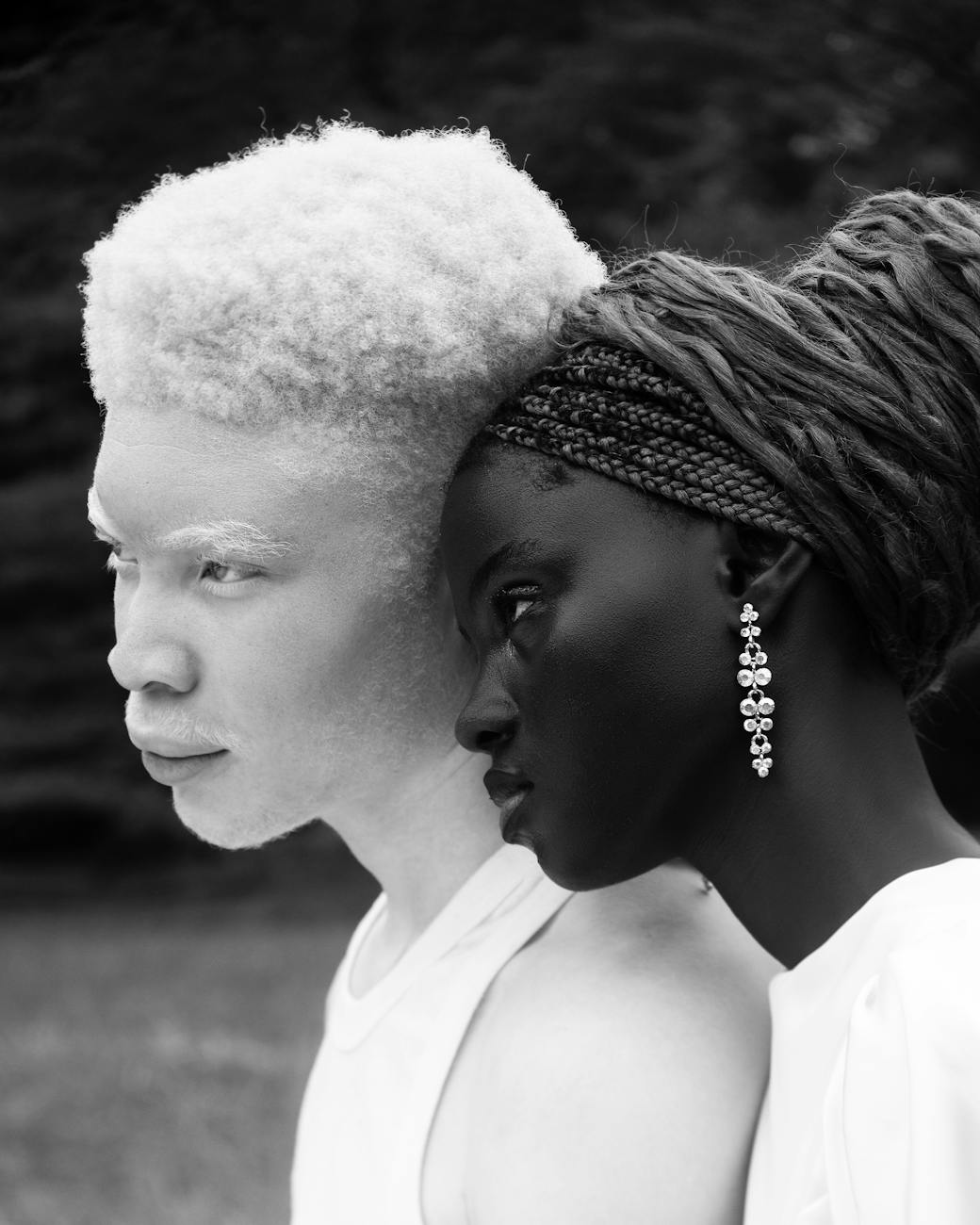
Lightism and shadeism are two interrelated forms of intra-racial discrimination that privilege lighter skin tones over darker complexions within communities of color, particularly in the African diaspora. While racism is externally imposed by systemic white supremacy, lightism and shadeism are internalized hierarchies that reflect colonial legacies and Eurocentric beauty standards. These ideologies affect not only personal identity and self-worth but also professional advancement, media representation, and spiritual narratives. This essay explores the definitions and consequences of lightism and shadeism, their specific impact on the Black community, Hollywood, and the workforce, as well as the lived experiences of two Black actresses. It further examines the “Brown Girl Dilemma” and draws upon biblical insights, particularly from the King James Version of the Bible, to explain the historical mistreatment of Black people.


Defining Lightism and Shadeism

Lightism refers to the preferential treatment of individuals with lighter skin tones, especially within the same racial or ethnic group. It is a manifestation of colonial ideology, deeply rooted in the systemic privileging of whiteness (Hunter, 2007). Shadeism, a term often used interchangeably with colorism, specifically denotes discrimination based on the darkness or lightness of one’s skin within a racial group. While both terms are often synonymous, “lightism” implies an aspirational tilt toward whiteness, whereas “shadeism” emphasizes the gradient of privilege or marginalization based on skin tone.

These ideologies are not mere aesthetic preferences; they are tools of social stratification that reinforce European standards of beauty, intelligence, and civility, ultimately dividing Black communities internally (Russell, Wilson, & Hall, 1992).


The Impact on the Black Community, Hollywood, and the Workforce

In the Black community, shadeism contributes to a deeply entrenched psychological struggle—light-skinned individuals may experience privilege and acceptance, while dark-skinned individuals often face rejection, hypersexualization, and dehumanization. These dynamics sow seeds of division, low self-esteem, and generational trauma (Wilder, 2010).

In Hollywood, lightism and shadeism are visibly apparent. Lighter-skinned Black actors and actresses have historically received more prominent roles, romantic leads, and endorsement deals. Dark-skinned actors, especially women, are often relegated to stereotypical roles or excluded entirely. The casting of biracial or lighter-complexioned actresses to portray historically dark-skinned figures—such as Nina Simone—demonstrates how this bias distorts cultural memory and representation.

In the workforce, these biases translate to employment discrimination. Research has shown that lighter-skinned African Americans are more likely to be hired, earn higher salaries, and attain leadership positions than their darker-skinned counterparts—even when qualifications are equal (Goldsmith, Hamilton, & Darity, 2007). This disparity stems from the perception that lighter skin aligns more closely with white norms, which are often unconsciously upheld in hiring practices and workplace culture.


Actresses and the Reality of Shadeism

Two actresses who personify the lived reality of shadeism are Viola Davis and Zendaya.

Viola Davis, a dark-skinned, classically trained actress, has spoken openly about how her complexion limited her roles in Hollywood. Despite her immense talent, she was frequently cast in roles that emphasized suffering or servitude. In an interview with The New York Times, Davis remarked: “If I wanted to play the role of a romantic lead or a beautiful woman, I would need to be 10 to 15 shades lighter” (Dargis, 2016). Her Emmy-winning performance in How to Get Away with Murder was groundbreaking not only for its complexity but because it gave a dark-skinned woman a leading role traditionally denied to her.

Zendaya, who identifies as biracial, has acknowledged her privilege as a lighter-skinned Black woman. She once stated, “As a light-skinned Black woman, it’s important that I use my privilege and platform to show you how much beauty there is in the African-American community” (Essence, 2018). While her success is undeniable, Zendaya’s visibility also raises critical questions about how often Hollywood defaults to lighter-skinned actors to represent the full spectrum of Black identity.


The Brown Girl Dilemma

The Brown Girl Dilemma is the psychological and emotional conflict faced by darker-skinned Black women navigating societal and intra-racial rejection. This dilemma often includes feelings of invisibility, self-doubt, and the need to overcompensate for perceived deficits in beauty or femininity. It reflects not only internalized racism but also systemic barriers that silence and marginalize darker-skinned women in media, education, and relationships (Jones, 2000).


Spiritual Dimensions: The Biblical Explanation

From a Hebraic-Israelite perspective, many Black scholars and faith-based researchers argue that the mistreatment of Black people is not only social but spiritual. According to the King James Bible, the curses outlined in Deuteronomy 28—including captivity, degradation, and economic disenfranchisement—are often interpreted as prophetic indicators of the identity and suffering of the true children of Israel.

“The stranger that is within thee shall get up above thee very high; and thou shalt come down very low” (Deuteronomy 28:43, KJV).
“Thy sons and thy daughters shall be given unto another people, and thine eyes shall look, and fail with longing for them all the day long” (Deuteronomy 28:32, KJV).

This theological lens asserts that Black people are experiencing divine chastisement for their ancestors’ disobedience and idolatry. However, this same scripture also promises restoration and healing if obedience to divine law is restored.


Quotes and Testimonies

  • Malcolm X once said, “Who taught you to hate the color of your skin? Who taught you to hate the texture of your hair?”—an indictment of internalized racism and lightism.
  • Lupita Nyong’o, an Oscar-winning actress, stated: “I grew up thinking light skin was more beautiful… until I saw a dark-skinned model who looked like me. Representation matters.” (Black Women in Hollywood, 2014)

How Can the Black Community Overcome Lightism and Shadeism?

  1. Reeducation: Promote historical and cultural education that affirms African aesthetics and dismantles Eurocentric beauty ideals.
  2. Representation: Amplify diverse Black voices in media, literature, and film to normalize and celebrate all shades of Blackness.
  3. Theological Reconnection: Re-examine spiritual identity through a biblical lens that acknowledges both past transgressions and future redemption.
  4. Collective Healing: Foster intergenerational dialogue and healing spaces to address trauma related to colorism.
  5. Policy and Practice: Implement anti-colorism awareness in hiring practices, school curriculums, and workplace diversity training.

Conclusion

Lightism and shadeism remain pervasive and insidious forms of discrimination within the Black community, reinforced by colonialism, capitalism, and cultural amnesia. The experiences of actresses like Viola Davis and Zendaya highlight how these hierarchies operate even among the most visible. By confronting the “Brown Girl Dilemma,” revisiting the biblical roots of oppression, and reclaiming identity through faith, education, and solidarity, Black people can transcend these barriers. True liberation begins when all shades of Blackness are affirmed, valued, and celebrated—spiritually, socially, and systemically.


References

  • Dargis, M. (2016). Viola Davis on How Hollywood Shuts Out Women of Color. The New York Times.
  • Essence. (2018). Zendaya on Using Her Light-Skin Privilege to Speak Up for Her Community.
  • Goldsmith, A. H., Hamilton, D., & Darity Jr., W. (2007). From dark to light: Skin color and wages among African-Americans. Journal of Human Resources, 42(4), 701–738.
  • Hunter, M. (2007). The Persistent Problem of Colorism: Skin Tone, Status, and Inequality. Sociology Compass, 1(1), 237–254.
  • Jones, T. (2000). Shades of Brown: The Law of Skin Color. Duke Law Journal.
  • Russell, K., Wilson, M., & Hall, R. (1992). The Color Complex: The Politics of Skin Color Among African Americans. Anchor.
  • Wilder, J. (2010). Revisiting “Color Names and Color Notions”: A Contemporary Examination of the Language and Attitudes of Skin Color among Young Black Women. Journal of Black Studies, 41(1), 184–206.
  • The Holy Bible, King James Version (KJV), Deuteronomy 28.