Black women in leadership occupy a unique position in corporate America, balancing professional responsibilities with societal expectations and systemic challenges. Their presence in executive roles is still disproportionately low, yet their impact is profound, influencing organizational culture, decision-making, and diversity initiatives. Understanding the nuances of effective leadership for Black women requires examining both personal development and structural navigation.
Effective leadership begins with self-awareness. Understanding one’s strengths, weaknesses, and leadership style allows Black women to lead authentically. Emotional intelligence, including the ability to empathize, communicate effectively, and manage interpersonal dynamics, is a cornerstone of effective leadership. Self-aware leaders inspire trust, credibility, and loyalty among colleagues and teams.
Mentorship and sponsorship are critical tools for advancement. Black women leaders benefit from relationships with mentors who provide guidance, feedback, and strategic advice. Sponsorship, in contrast, involves advocates who actively promote career growth and visibility within the organization. Building these networks creates pathways for recognition, promotion, and professional influence.
Strategic vision is another essential component. Leaders must articulate clear goals, communicate expectations, and inspire their teams to execute strategies effectively. Black women leaders who demonstrate clarity of vision often create alignment across departments, foster collaboration, and drive organizational success. This requires both analytical acumen and the ability to translate complex strategies into actionable initiatives.
Resilience is particularly important for Black women navigating corporate environments that may be implicitly or explicitly biased. Developing mental toughness, stress management skills, and adaptive coping strategies allows leaders to persevere despite obstacles. Resilient leaders model composure under pressure and create organizational cultures that value problem-solving and growth mindset approaches.
Communication skills are indispensable. Leaders must be able to present ideas persuasively, negotiate effectively, and manage conflict constructively. Public speaking, active listening, and storytelling are tools that enable Black women leaders to convey their vision, inspire teams, and advocate for themselves and others in executive spaces.
Cultural competence strengthens leadership efficacy. Black women leaders often serve as bridges across diverse teams, translating experiences and perspectives in ways that enhance inclusion. Understanding systemic inequities, microaggressions, and organizational dynamics enables leaders to create environments where diverse employees feel valued and empowered to contribute meaningfully.
Time management and delegation are practical strategies that elevate leadership effectiveness. Leaders who prioritize tasks, delegate responsibilities appropriately, and focus on high-impact activities maximize productivity while preventing burnout. This is especially critical for Black women who may face disproportionate scrutiny and pressure to excel continuously.
Confidence balanced with humility is another hallmark of effective leadership. Black women must advocate for themselves while maintaining openness to feedback and collaboration. Demonstrating confidence encourages respect and authority, while humility ensures approachability and fosters a team-oriented culture.
Decision-making skills are essential. Leaders must analyze complex data, anticipate potential outcomes, and make informed choices. Integrating input from diverse stakeholders while remaining decisive ensures that leadership decisions are strategic, ethical, and aligned with organizational goals.
Professional branding and visibility cannot be overlooked. Black women leaders must actively showcase their accomplishments, engage in professional networks, and maintain a presence in high-profile projects. Visibility not only enhances career advancement but also positions leaders as role models for aspiring professionals.
Continuous learning is vital in dynamic corporate landscapes. Engaging in professional development, leadership programs, and executive education helps Black women stay abreast of industry trends, technological innovations, and best practices. Lifelong learning enhances credibility, adaptability, and overall leadership impact.
Advocacy for equity and inclusion is integral. Black women leaders often champion policies and initiatives that create equitable opportunities for employees across racial, gender, and socioeconomic lines. Their leadership influences organizational culture and sets a precedent for accountability in diversity and inclusion efforts.
Networking beyond the organization amplifies influence. Participation in professional associations, conferences, and thought leadership initiatives creates access to resources, knowledge, and collaborative opportunities. Expanding networks strengthens leadership presence and facilitates the exchange of innovative ideas.
Ultimately, effective leadership for Black women requires a holistic approach: blending personal development, strategic vision, resilience, communication, cultural competence, and advocacy. By leveraging these skills and strategies, Black women can navigate corporate America successfully, break barriers, and leave lasting legacies that inspire future generations.
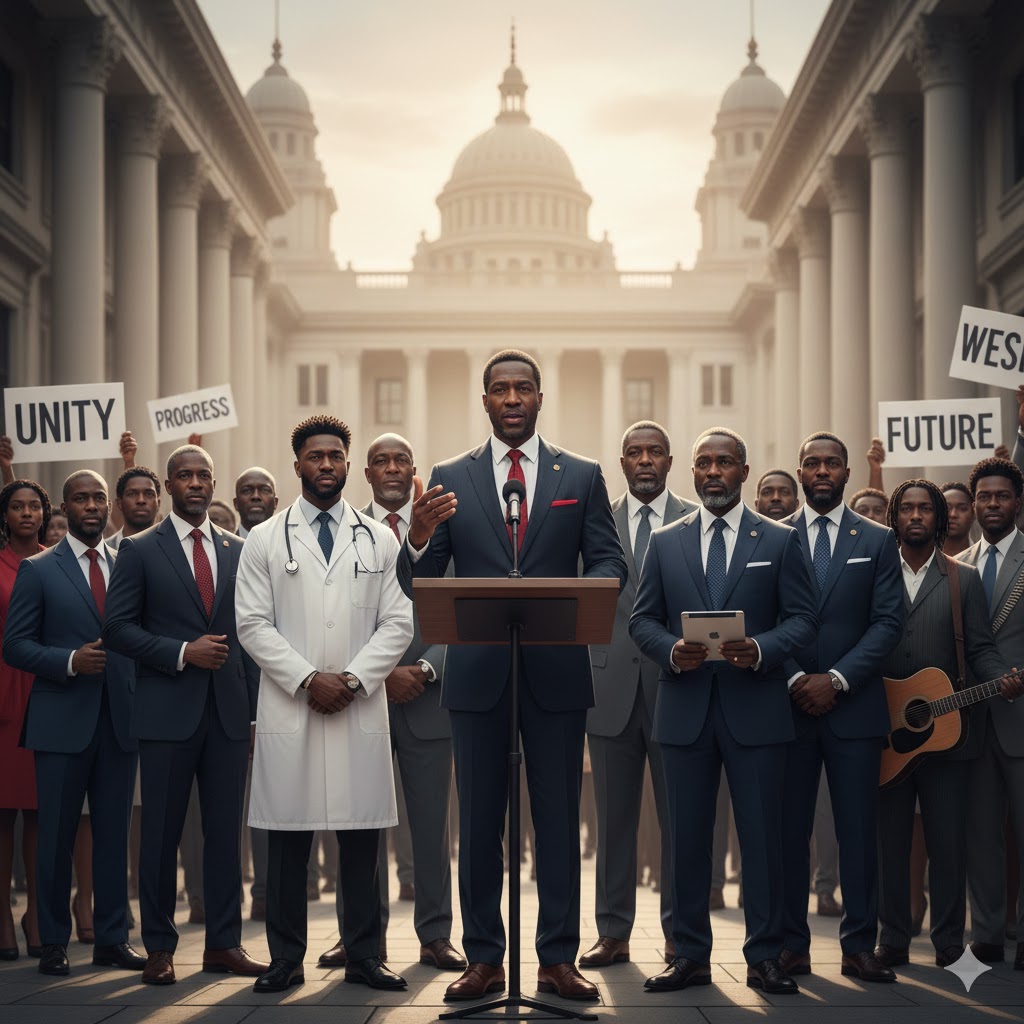
The world is entering a new era shaped by voices, visions, and values radically different from those that dominated previous generations. The phrase “Leaders of the New School” captures an emerging movement—not simply of age, but of mindset. These leaders represent a shift in consciousness, prioritizing justice, innovation, empathy, and authenticity in ways the old systems could not sustain.
The new school leader is defined not by traditional hierarchy but by influence, integrity, and impact. Leadership is no longer reserved for those with titles, degrees, or institutional approval. Today, it emerges from lived experience, digital presence, community organization, and an unwavering refusal to accept inherited inequities.
A significant hallmark of new school leadership is transparency. While old structures thrived on secrecy, guarded personas, and carefully crafted facades, modern leaders understand that vulnerability builds trust. Authenticity has become currency, and honesty has become the foundation for influence.
Technology plays a central role in this shift. Digital platforms have democratized leadership, allowing individuals once excluded from power—Black youth, women, activists, creators, and visionaries—to influence global conversations. A single voice can now spark movements, educate millions, or challenge injustice with unprecedented reach.
Leaders of the new school also value collaboration over competition. They reject the scarcity mindset that once pitted marginalized groups against each other. Instead, they embrace collective advancement, recognizing that progress is strongest when shared. Community-centered leadership is the new standard.
This new wave of leaders prioritizes mental wellness. They understand that burnout, generational trauma, and emotional suppression sabotage long-term impact. They advocate for therapy, self-care, rest, and spiritual grounding as essential components of sustainable leadership. Wholeness is no longer a luxury; it is a requirement.
Leaders of the new school challenge outdated systems with bold creativity. They imagine solutions beyond the constraints of tradition. Whether in business, education, activism, or faith, they innovate without fear—disrupting norms that have long harmed marginalized communities.
Empathy fuels their leadership. Rather than demanding people hide their struggles, modern leaders create environments where humanity is honored. They value emotional intelligence as much as technical skill, understanding that connection drives transformation.
These leaders also embrace cultural pride. Black leaders in particular carry the legacy of ancestors who fought, created, resisted, and rebuilt. Their leadership honors this lineage while forging new paths forward with confidence and strategic vision. Culture becomes both compass and catalyst.
Faith, for many new school leaders, remains a guiding light. But unlike rigid institutional models, their spirituality is expansive, personal, and justice-driven. They integrate biblical principles with social responsibility, advocating for compassion, liberation, and community healing.
In the realm of activism, new school leaders are fearless. They confront racism, colorism, injustice, and inequality with clarity and conviction. Their leadership is rooted in truth-telling, even when uncomfortable. They understand that silence sustains oppression.
Economically, leaders of the new school redefine success. They prioritize financial literacy, generational wealth, entrepreneurship, and collaborative economics. They resist exploitative systems and champion development that empowers entire communities, not just individuals.
Education is also being reimagined. New leaders challenge outdated curricula and advocate for teachings that reflect identity, history, and real-world relevance. They push for representation, equity, and critical thinking as foundational elements of modern learning.
These leaders recognize the power of storytelling. They wield narrative as a tool for healing, inspiration, and cultural correction. Through books, music, film, digital media, and public speaking, they reclaim space previously dominated by distorted perspectives.
The new school leader is comfortable evolving. They understand that leadership is not static but dynamic. They grow, adapt, and continuously refine themselves—embracing humility over ego. Their leadership is fluid, responsive, and rooted in lifelong learning.
In community spaces, new school leaders create safety. They foster environments where people feel seen, valued, and empowered. They use their platforms to uplift others, not overshadow them. Influence becomes a responsibility, not a pedestal.
These leaders also maintain global awareness. They connect struggles across borders—recognizing that freedom, justice, and dignity are universal pursuits. Their approach is intersectional, holistic, and informed by a global consciousness.
Perhaps the greatest strength of leaders in this new era is their courage. They are unafraid to defy tradition, confront injustice, or imagine alternatives. Their boldness is not arrogance but conviction—a refusal to settle for systems that no longer serve humanity.
Ultimately, “Leaders of the New School” reflects a new paradigm of purpose-driven leadership rooted in authenticity, justice, and empowerment. These leaders inherit the wisdom of the past while shaping the promise of the future. They are the bridge between yesterday’s struggles and tomorrow’s possibilities.
The world is shifting because of them. And as these leaders rise—creative, conscious, and courageous—they redefine what leadership looks like for generations to come.
References
Brown, B. (2018). Dare to lead: Brave work. Tough conversations. Whole hearts. Random House.
hooks, b. (2000). All about love: New visions. William Morrow.
Kendi, I. X. (2019). How to be an antiracist. One World.
Noble, S. U. (2018). Algorithms of oppression: How search engines reinforce racism. NYU Press.
Pew Research Center. (2022). Gen Z and the shifting landscape of leadership and activism.
Sinek, S. (2009). Start with why: How great leaders inspire everyone to take action. Penguin.
Twenge, J. M. (2017). iGen: Why today’s super-connected kids are growing up less rebellious, more tolerant—and completely unprepared for adulthood. Atria Books.
West, C. (2004). Democracy matters: Winning the fight against imperialism. Penguin Books.
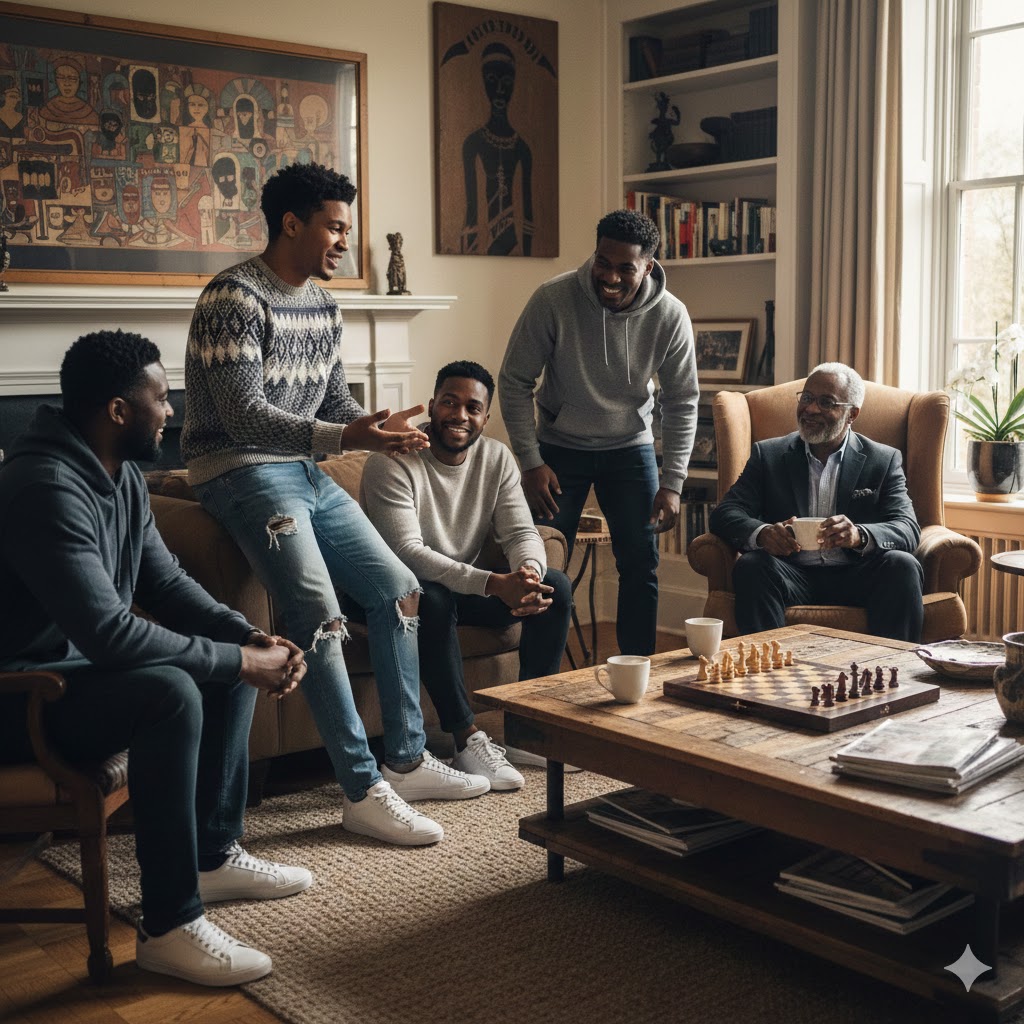
Modern men are increasingly becoming islands—connected by technology yet disconnected emotionally, spiritually, and socially. The phrase “Islands of Men” captures a deep truth about masculine loneliness in the digital era, and how many men turn to online spaces in search of brotherhood, guidance, and identity. As society shifts and family structures fracture, these digital shores become places where men seek belonging, meaning, and leadership.
Loneliness among men has reached historic levels. Studies show that contemporary men report fewer friendships, fewer intimate bonds, and less emotional support than previous generations. The cultural expectation that men remain stoic and self-sufficient often prevents them from forming meaningful connections. As a result, many men drift through adulthood without a consistent community.
The digital world becomes a substitute for real-life brotherhood. Forums, livestreams, and manosphere communities provide men a place to voice their frustrations, their fears, and their longing for guidance. While some of these spaces can promote emotional honesty, many others reinforce isolation by encouraging competition, cynicism, or ideological extremism.
Leadership is central to the male search for belonging. Historically, men derived identity from mentorship, apprenticeship, and communal rites of passage. Today, these traditional forms have eroded. Without stable mentors, many men turn to online personalities for direction. This shift has profound implications, as influencers often prioritize entertainment and monetization over genuine leadership.
The loneliness men experience is not just social—it is also spiritual. Scripture teaches that “it is not good that the man should be alone” (Genesis 2:18), highlighting both relational and communal design. Yet modern men often carry silent burdens with no spiritual accountability. For many, the search for brotherhood becomes a search for identity in a world that offers conflicting messages about masculinity.
Digital brotherhood can mimic the structure of community but often lacks its substance. Men bond over shared frustrations—about relationships, society, or the economy—yet remain emotionally isolated. They find connection without intimacy, conversation without healing. This paradox deepens their loneliness rather than alleviating it.
Men seek guidance on how to lead, but leadership without character becomes dangerous. Many online spaces teach leadership as dominance rather than service. True leadership requires humility, accountability, and emotional awareness—traits that digital communities often undervalue.
The crisis of male loneliness is tied to the absence of father figures and mentors. Generational wounds perpetuate cycles of emotional detachment. Without strong relational models, many men learn to suppress vulnerability. Digital communities often reinforce this suppression instead of addressing it.
In real-life communities, men once learned leadership by observing fathers, uncles, pastors, and elders. Now, the most influential male voices come from screens instead of households. This shift disconnects leadership from lived experience and turns masculinity into performance rather than practice.
Economically, men face pressures that amplify their sense of isolation. Job instability, financial insecurity, and societal expectations can make men feel inadequate. Digital brotherhood often reinforces survivalist mindsets instead of nurturing hope and collaboration.
Emotionally, men carry unspoken trauma. Many have never been given permission to grieve, to fear, or to doubt openly. Without emotional outlets, these feelings turn into frustration or apathy. Digital spaces allow anonymity, but anonymity rarely fosters genuine healing.
Relationships intensify men’s loneliness. Romantic rejection, marital stress, or divorce can leave men more isolated than women due to weaker social support systems. Instead of seeking counsel, many retreat into digital echo chambers that validate bitterness rather than growth.
Men long for legacy, yet legacy requires community. A man cannot build generational impact alone. He needs brotherhood, elders, younger men to mentor, and a purpose greater than his own survival. Digital isolation undermines this pursuit by convincing men that independence is strength.
Spiritually, men need accountability that digital communities cannot provide. Growth requires people who know one’s struggles, habits, and flaws—not anonymous usernames. Biblical brotherhood involves correction, compassion, and shared purpose. This cannot be replicated through algorithms.
Men also seek belonging through achievements—career success, wealth, physical strength—but these do not replace brotherhood. Achievements impress others but do not heal loneliness. Brotherhood offers what success cannot: connection, validation, and shared mission.
The search for brotherhood online is ultimately a search for meaning. Men yearn for battles worth fighting, relationships worth maintaining, and identities grounded in more than external validation. The manosphere often promises quick answers, but meaning requires depth, discipline, and authentic community.
A healthier form of digital brotherhood is possible—one based on emotional literacy, mentorship, accountability, and spiritual grounding. Some communities encourage men to heal their trauma, develop resilience, and walk in integrity. These spaces model a better masculinity rooted not in dominance but in character.
Real brotherhood must eventually move beyond screens. Men need in-person connection—shared meals, honest conversations, activities, and spiritual support. Brotherhood flourishes when men stand shoulder-to-shoulder with those they trust, not when they scroll through curated identities.
Ultimately, the islands of men can become bridges if men rediscover what it means to build community. Leadership grows in connection, not isolation. Loneliness fades when men learn to be vulnerable, supportive, and accountable. And the digital search for brotherhood can become a pathway to real-life transformation when guided by truth, wisdom, and love.
References
Brooks, D. (2020). The crisis of male loneliness in modern society. Journal of Social Psychology, 162(4), 415–428.
Connell, R. W. (2005). Masculinities (2nd ed.). University of California Press.
Ging, D. (2019). Alphas, betas, and incels: The manosphere as a transnational online masculinity ecosystem. Men and Masculinities, 22(4), 638–657.
Mahalik, J. R., & Rochlen, A. (2019). Men, loneliness, and digital communities: A psychological exploration. American Journal of Men’s Health, 13(1), 1–12.
Way, N. (2011). Deep secrets: Boys’ friendships and the crisis of connection. Harvard University Press.
Wilcox, W. B., & Kline, K. (2021). Father absence, male identity, and digital belonging. Journal of Family Studies, 27(3), 345–361.
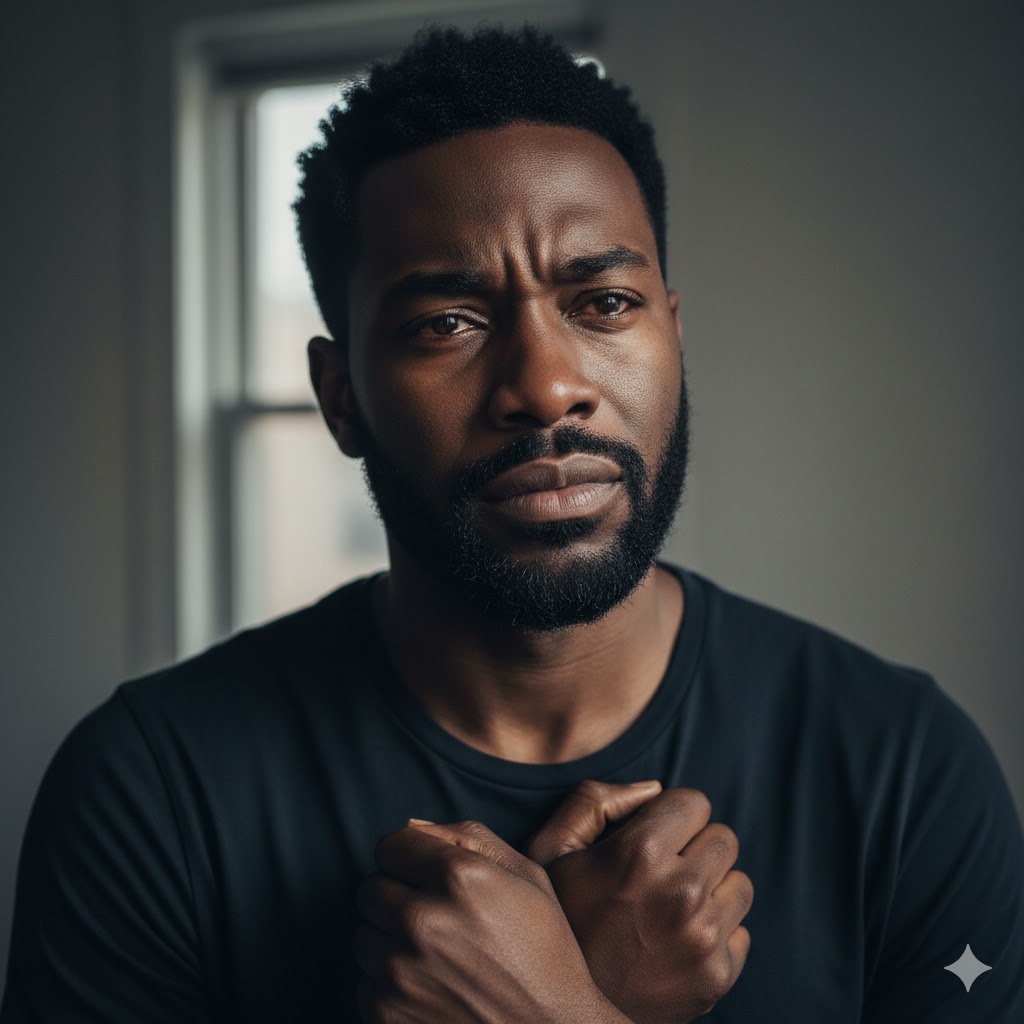
From boyhood, society places a heavy expectation on males: be strong, be tough, be unshakeable. These early lessons become the foundation of a culture that praises male resilience while quietly punishing male vulnerability. The cost of this expectation is profound, shaping men’s emotional lives in ways that often go unseen.
Many boys are taught to “man up” before they even understand what emotions are. Crying, expressing fear, or asking for help are discouraged, replaced by messages that equate emotional expression with weakness (Pollack, 1998).
As these boys grow, they internalize the belief that silence is noble and vulnerability is shameful. Emotional restraint becomes a performance, and the world applauds them for pretending everything is fine.
Men often receive admiration for enduring pain without complaint. But beneath that admiration lies a dangerous expectation: strength is measured by how well a man hides his suffering. This perception leads to emotional suppression rather than emotional resilience (Addis & Mahalik, 2003).
The social script of masculinity teaches men to prioritize stoicism, turning emotional expression into a forbidden language. Over time, many lose the ability to articulate their inner world, leading to frustration, misunderstanding, and broken relationships.
Workplaces reinforce this silence. Men who admit stress or mental fatigue fear being seen as weak or incapable. Professional culture rewards those who suffer quietly and penalizes those who reveal human limitations (Mahalik et al., 2003).
Romantic relationships reveal another dimension of this silent burden. Many men desperately want emotional intimacy but fear rejection or ridicule if they open up. This creates a painful paradox: they crave connection but have been conditioned to avoid the vulnerability that makes connection possible.
Friendships among men are often limited by unspoken rules—jokes, competition, and surface conversation are acceptable, but deeper emotional sharing is discouraged. This results in profound isolation masked by casual companionship (Way, 2011).
Mental health is one of the greatest casualties of this silence. Men are statistically less likely to seek therapy, less likely to share their struggles, and more likely to suffer from untreated depression and anxiety (Addis & Mahalik, 2003).
Society encourages women to express emotion and discourages men from doing the same, creating an emotional double standard. The result is that men appear emotionally distant, not because they lack feeling, but because they have never been given permission to feel freely.
Cultural narratives often depict men as protectors and problem-solvers, roles that leave little room for emotional need. When men do express vulnerability, they may feel they are failing in their masculine responsibilities (Connell, 2005).
Media representations reinforce the expectation that “real men” absorb pain without complaint. Heroes in movies and television rarely cry, rarely seek help, and rarely acknowledge internal battles. These depictions shape how society views male strength.
Yet, beneath the surface, many men suffer from emotional numbness. The habit of suppressing feelings becomes so ingrained that some men struggle to identify their emotions at all, a phenomenon psychologists call “alexithymia.”
This emotional suppression affects men’s physical health as well. Research links chronic stress, unresolved trauma, and unexpressed emotion to heart disease, high blood pressure, and shorter life expectancy (Courtenay, 2000).
The pressure to remain strong at all times can lead some men to cope through harmful behaviors—substance abuse, aggression, or withdrawal. These behaviors are not signs of innate toxicity but of emotional exhaustion.
The cost of silence extends to fatherhood. Many fathers want to be emotionally present but were never taught how. When they attempt to bond or express softness, they may feel they are betraying the expectation of strength they were raised with.
Healing begins when men recognize that vulnerability is not the opposite of strength but a deeper expression of it. Admitting pain, fear, or uncertainty requires courage, not weakness.
Communities must also play a role by creating safe spaces for men to share, heal, and redefine masculinity in ways that honor emotional humanity. When men feel supported in vulnerability, they are more willing to step into wholeness.
Ultimately, society must reconsider its definition of strength. True strength is not silence. It is honesty. It is self-awareness. It is the willingness to confront pain rather than bury it.
When men are free to express their struggles without judgment, they reclaim parts of themselves that silence once stole. And in that reclamation, they discover that the strongest thing a man can be is fully human.
References
Addis, M. E., & Mahalik, J. R. (2003). Men, masculinity, and the contexts of help seeking. American Psychologist, 58(1), 5–14.
Connell, R. W. (2005). Masculinities (2nd ed.). University of California Press.
Courtenay, W. (2000). Constructions of masculinity and their influence on men’s well-being: A theory of gender and health. Social Science & Medicine, 50(10), 1385–1401.
Mahalik, J. R., Good, G. E., & Englar-Carlson, M. (2003). Masculinity scripts and men’s health. American Journal of Men’s Health, 2(2), 82–92.
Pollack, W. (1998). Real boys: Rescuing our sons from the myths of boyhood. Henry Holt.
Way, N. (2011). Deep secrets: Boys’ friendships and the crisis of connection. Harvard University Press.
In a world increasingly shaken by moral confusion, fractured homes, and shifting social roles, the concept of manhood has often been distorted, diminished, or dismissed. Yet Scripture remains steadfast, offering a blueprint for the creation of a man — not merely by culture’s standards, but by God’s divine design. True male leadership is not defined by dominance or ego, but by responsibility, humility, discipline, and love rooted in righteousness. God did not create man to be passive or self-serving; He established him as steward, protector, cultivator, and spiritual head of his household.
From the beginning, God formed man from the dust and breathed life into him (Genesis 2:7, KJV), signifying sacred purpose and divine authority. Adam was given responsibility before he was given companionship — a profound message that purpose precedes partnership. A man must know who he is in God before he can lead others. This blueprint establishes foundational priorities: identity in Christ comes before influence, responsibility before relationship, and spiritual strength before social status.
Biblical leadership begins with obedience to God. Scripture declares, “The steps of a good man are ordered by the Lord” (Psalm 37:23, KJV). A God-led man does not rely solely on emotion, opinion, or worldly ambition; he follows the divine path. The modern man is often pulled between pride and pressure, but the biblical man rests in the assurance of God’s direction. Leadership without submission to God becomes tyranny or chaos; leadership rooted in God becomes stability and blessing.
A righteous man embraces discipline. Proverbs tells us, “He that ruleth his spirit is better than he that taketh a city” (Proverbs 16:32, KJV). Strength is not defined merely by physical power but by mastery of one’s impulses. The world praises dominance; Scripture honors self-control. Godly leadership demands emotional maturity, patience, and the ability to respond, not merely react.
Humility is another cornerstone. Jesus Himself, the model of divine masculinity, washed His disciples’ feet, demonstrating that true leadership serves (John 13:14-15). The world’s model of manhood often demands recognition; God’s model demands service. A man after God’s heart leads through compassion, not coercion, understanding that authority without love becomes abuse, but authority with love becomes protection and guidance.
Men are called to be providers and protectors — not merely financially, but spiritually. A father and husband must be a covering, an intercessor, and a teacher of righteousness in his home. As Scripture commands, “Husbands, love your wives, even as Christ also loved the church” (Ephesians 5:25, KJV). This love is sacrificial, steadfast, and nurturing. It means leading by example, praying over one’s family, and cultivating a home grounded in honor and holiness.
Biblical manhood requires courage. Joshua was charged, “Be strong and of a good courage” (Joshua 1:9, KJV). A man does not shrink from responsibility when challenges arise; he stands firm in faith. This courage is not arrogance, but trust in God’s power beyond human strength. Modern society often pressures men to hide weakness, but Scripture teaches them to surrender weakness to God, where it becomes strength made perfect.
A true man cultivates legacy. He builds not only wealth or achievements, but character and generational faith. Scripture instructs men to train their children in the ways of the Lord (Deuteronomy 6:6-7). His life becomes a testimony that shapes the destiny of his lineage. Leadership, then, is not momentary; it echoes through generations.
The making of a man is a divine process. It is not fashioned by culture, ego, or material gain, but molded through prayer, discipline, obedience, and love. To be a man according to God’s blueprint is to walk in authority without arrogance, humility without weakness, strength without harshness, and love without limitation.
In a time when manhood is misunderstood and masculinity is often criticized, God calls men back to the foundation — to stand as kings, priests, warriors, and servants in His kingdom. The true measure of a man is not in his power over others, but in his surrender to God.
When a man aligns with God’s blueprint, families are strengthened, communities prosper, and societies heal. The world does not simply need more males; it needs more men — men who walk in purpose, honor, integrity, and divine authority. As Scripture affirms, “Watch ye, stand fast in the faith, quit you like men, be strong” (1 Corinthians 16:13, KJV). This is God’s call. This is the making of a man.
Reclaiming Biblical Manhood: Leadership, Provision, and the Crisis in the Black Family.
Born into shadows, marked by scars, His crown forgotten beneath the stars. Yet strength still lingers in his frame, A chosen son, called by God’s name.
The “Brown Boy Dilemma” captures the complexity of Black men’s struggles in a world that criminalizes their bodies, questions their worth, and fractures their identities. At its root, the dilemma is spiritual. The Bible declares, “My people are destroyed for lack of knowledge” (Hosea 4:6, KJV). Separated from the Most High through sin and forgetfulness of His commandments, the sons of the diaspora wander without the stability that divine order provides. Deuteronomy 28 outlines the curses that have followed disobedience—captivity, broken homes, violence, and oppression. Reconnection with the Creator is the first step in addressing the dilemma.
Historically, slavery dismantled the image of Black men. Enslavement emasculated them before their families, reduced them to property, and instilled a legacy of generational trauma. Even after emancipation, Jim Crow laws and systemic racism continued to suppress their advancement. As Du Bois (1903/1994) described, the “double consciousness” of Black life forces the Brown Boy to see himself both through his own eyes and through the eyes of a hostile society. This fractured identity still reverberates in the psyches of young men today.
The family structure remains central to the dilemma. Many Black boys grow up fatherless due to incarceration, systemic violence, or abandonment. Without fathers to model godly manhood, young men often turn to peers, media, or gangs for definitions of masculinity. The absence of fathers is not merely personal—it is systemic. The mass incarceration crisis disproportionately removes Black men from households, leaving children without guidance. Yet scripture teaches, “Fathers, provoke not your children to wrath: but bring them up in the nurture and admonition of the Lord” (Ephesians 6:4, KJV). Restoring family order is essential for healing the dilemma.
The Brown Boy is criminalized early. Research shows Black boys are suspended or expelled three times more often than white peers and are more likely to be referred to law enforcement in school (USDOE, 2022). Police brutality has claimed the lives of Tamir Rice, Michael Brown, and countless others, reminding young Black men that their innocence is fragile. To be born Black and male in America is to inherit suspicion before one speaks or acts. The dilemma is survival under perpetual surveillance.
Hypermasculinity adds another layer of difficulty. Black men are stereotyped as hypersexual, aggressive, and emotionally detached. Some internalize these stereotypes, believing manhood requires dominance, conquest, or violence. bell hooks (2004) argued that this “patriarchal masculinity” is destructive to both men and women, limiting the full humanity of Black men. The dilemma lies in resisting caricatures while rediscovering healthy, spiritual masculinity.
Economic inequality worsens the crisis. According to the Bureau of Labor Statistics (2023), Black men earn significantly less than white men across nearly all professions. Joblessness, underemployment, and wage gaps limit their ability to provide for families, creating feelings of emasculation. Many turn to informal or illicit economies to survive, perpetuating cycles of poverty and incarceration. Economic disempowerment remains one of the greatest barriers to stability for Black men.
Health disparities add to the weight. Black men face higher rates of hypertension, diabetes, stroke, and shorter life expectancy than any other male group in the U.S. (CDC, 2023). Mental health challenges are also prevalent, yet stigma prevents many from seeking therapy. The constant stress of racism and systemic exclusion contributes to what Geronimus (1992) calls “weathering”—premature aging caused by chronic stress. “Know ye not that ye are the temple of God, and that the Spirit of God dwelleth in you?” (1 Corinthians 3:16, KJV) calls Black men to honor their health as part of their spiritual stewardship.
Colorism shapes the Brown Boy’s experience as well. Darker-skinned men are often portrayed as dangerous or thuggish, while lighter-skinned men may be deemed more attractive or socially acceptable. These biases influence relationships, job opportunities, and media representation. Although colorism impacts Black women more overtly, it still burdens Black men with distorted images of desirability and worth.
Media portrayals reinforce these dilemmas. From the “gangster” to the “deadbeat dad,” Hollywood rarely depicts Black men as vulnerable, intellectual, or nurturing. Instead, harmful archetypes dominate. Such narratives rob boys of broader models for manhood and encourage the internalization of falsehoods. Collins (2000) refers to these as “controlling images,” designed to sustain systemic oppression.
The dilemma extends to relationships. Many Black men feel societal pressure to provide yet lack opportunities, leading to tension in partnerships. Some reject Black women altogether, pursuing interracial relationships as a form of social mobility. Others perpetuate misogyny, failing to uplift women as partners. The result is fractured intimacy within the Black community. But biblically, manhood requires sacrifice and love: “Husbands, love your wives, even as Christ also loved the church, and gave himself for it” (Ephesians 5:25, KJV).
Education presents both hope and hardship. Black boys are disproportionately placed in special education, disciplined unfairly, and told they cannot succeed (USDOE, 2022). Yet when nurtured, they excel. Historically Black Colleges and Universities (HBCUs) and mentorship programs prove that with investment and support, Brown Boys rise. The dilemma lies not in potential but in systemic neglect.
Violence haunts their lives. Homicide remains the leading cause of death for Black men ages 15–34 (CDC, 2023). Many live in communities plagued by poverty and gun violence. At the same time, they are disproportionately incarcerated for nonviolent crimes, feeding the prison-industrial complex. The Brown Boy’s dilemma is that danger comes from both within his community and from the system that governs him.
Psychologically, the weight of stereotypes and exclusion fosters identity crises, low self-esteem, and cycles of despair. Yet therapy, mentorship, and spiritual renewal provide avenues for healing. “Be strong and of a good courage, fear not, nor be afraid of them: for the Lord thy God, he it is that doth go with thee” (Deuteronomy 31:6, KJV) reminds Black men that courage is not in conformity but in faith.
🌹 The Brown Girl Dilemma vs. The Brown Boy Dilemma 💪
Theme
Brown Girl Dilemma
Brown Boy Dilemma
Spiritual Identity
Women are exploited sexually, divided by colorism, and burdened as caretakers.
Same disconnection; loss of spiritual leadership; struggles with manhood outside biblical order.
Slavery’s Legacy
Disconnected from God through sin and oppression, struggles with worth and obedience to His commandments.
Single mothers bear heavy loads, absentee fathers; imbalance in relationships.
Family Structure
Single mothers bear heavy loads, absentee fathers, imbalance in relationships.
Fatherlessness creates cycles; incarceration removes men from homes; lack of role models.
Racism & Systemic Oppression
Sexism + racism (double bind); overlooked in justice movements.
Criminalized early; school-to-prison pipeline; hyper-policed and surveilled.
Colorism
Lighter-skinned women are often favored in beauty standards; darker-skinned women are devalued.
Lighter-skinned women are often favored in beauty standards; darker-skinned women devalued.
Beauty Standards / Masculinity
Eurocentric beauty ideals label Black women “ugly” or “less attractive.”
Stereotypes of hypermasculinity, aggression, and oversexualization.
Economic Struggles
Wage gap: Black women earn ~63¢ per white man’s $1; underrepresentation in leadership roles.
Higher unemployment, wage gaps, fewer economic opportunities, and struggles with provider expectations.
Health Disparities
High rates of heart disease, cancer, diabetes, STDs, and psychological “weathering.”
Burdened with 50/50 relationships, men are seen as “lazy” or unfaithful, undervalued.
Media Stereotypes
“Angry Black woman,” “welfare queen,” hypersexualized Jezebel, unfeminine.
Collective solidarity (ending division between men and women).
💪💪💪💪💪💪💪
Lead her like Abraham.
Provide for her like David.
Take comfort in her like Isaac.
Fight for her love like Jacob.
Care for her like Boaz.
Love her like the Savior.”
This poetic charge reflects a timeless standard—rooted in Scripture—for how men are called to lead, provide, and love. Yet in contemporary American society, and particularly within the Black community, this divine model of manhood has been largely distorted, deconstructed, and, in many cases, dismantled.
Across various parts of the world—such as regions in Africa, India, and the Middle East—divorce rates remain comparatively low. One contributing factor is the intergenerational investment in marital success, where family members take active roles in holding both husband and wife accountable. Marriage is not seen as a temporary arrangement based on personal convenience, but a covenant guided by collective responsibility and cultural honor.
In contrast, within the United States, marriage is often viewed through a transactional lens. The “50/50” mentality—”I’ll get mine, so you bring yours”—has replaced sacrificial unity with conditional reciprocity. The rise of individualism, accelerated by the feminist movement and post-industrial economic shifts, has complicated gender roles. Many women, shaped by the rhetoric of independence (“I don’t need a man”), often find themselves unequally paired with men who lack education, guidance, or any model of responsible manhood. The result is a cultural and spiritual vacuum where few know what true headship or provision looks like.
Biblically, the role of a man is clear. Before the creation of Eve, Adam had assignments—he was called to work, to tend the Garden, to name the animals, and to walk with God (Genesis 2:15-20). Adam was a provider, a steward, and a priest. This divine order remains relevant today: a man is expected to care for his household with integrity, diligence, and presence. As Paul wrote, “But if any provide not for his own, and especially for those of his own house, he hath denied the faith, and is worse than an infidel” (1 Timothy 5:8, KJV). Provision is not solely financial—it is emotional, spiritual, and moral.
Yet the breakdown of the Black family has made this ideal increasingly rare. According to the U.S. Census Bureau (2023), approximately 72% of Black children are born to unmarried mothers, and many are raised in homes where the father is absent. This crisis cannot be understood apart from the sociopolitical and spiritual shifts of the past half-century. The civil rights era, though marked by progress, gave way to a cultural rebellion in the 1960s and 1970s—marked by the sexual revolution, radical feminism, and economic policies that incentivized fatherless homes. The result has been generational instability.
The mass incarceration of Black men has further devastated families. The Bureau of Justice Statistics (2020) reported that 1 in 3 Black men will face incarceration during their lifetime. Many of these men are removed from homes before they have a chance to be husbands, fathers, or providers. Others succumb to a culture of hypersexuality, pornography, and promiscuity—choosing lust over legacy. This leads to a pattern of abandonment: a man lies with a woman, leaves her with child, and is nowhere to be found when the baby is born. This leaves mothers vulnerable, children broken, and the cycle continues.
In such environments, daughters are often taught distorted ideals about love and worth, mirroring the instability they see at home. Sons grow up learning that masculinity is measured by sexual conquest rather than commitment. Without fathers present, they are more likely to become emotionally stunted, effeminate, or irresponsible. The emotional and behavioral fallout is enormous. Children from fatherless homes are statistically more likely to struggle academically, experience poverty, commit crimes, and suffer from mental health issues (U.S. Department of Health and Human Services, 2019).
The restoration of the family must begin with the restoration of the man. A provider is more than a paycheck—he is a stabilizer, protector, and spiritual leader. He models righteousness, discipline, and love. According to the late Black theologian and civil rights activist Howard Thurman,
“A man cannot be at home in the world if he is not at home in himself.” The absence of strong male role models—both in the home and the community—has created a vacuum of identity and direction. Without mentors, many young Black men drift into chaos.
The biblical model remains our compass. Abraham led his family by faith. David, despite his flaws, was a warrior king who provided and repented. Isaac found comfort in Rebekah after the death of his mother (Genesis 24:67). Jacob labored 14 years to win the love of Rachel. Boaz honored and protected Ruth. Christ, the ultimate model, gave His life for His bride.
The call to modern men, particularly Black men, is to reclaim these roles—not through domination, but through humility, purpose, and divine alignment. The restoration of our communities depends on it. If the foundation is destroyed, what can the righteous do (Psalm 11:3)? The answer: rebuild it—one man, one home, one truth at a time. Solutions require both biblical restoration and psychological intervention. Spiritually, men must return to the commandments of God, rejecting sin and reclaiming leadership rooted in love and service. Psychologically, therapy, brotherhood, and affirming healthy masculinity are essential. Communities must rebuild mentorship systems that guide boys into maturity with dignity and discipline.
The Brown Boy Dilemma is real, but it is not final. Reconnection to the Creator, restoration of families, community unity, and collective healing can transform the dilemma into destiny. Black men, as sons of the Most High, are called to rise beyond stereotypes, reclaim their crowns, and embody the strength, wisdom, and compassion they were created for. In doing so, the Brown Boy Dilemma becomes not a curse, but a testimony of triumph.
References:
U.S. Census Bureau. (2023). Living Arrangements of Children Under 18 Years Old: 1960 to Present.
Bureau of Justice Statistics. (2020). Prisoners in 2020. U.S. Department of Justice.
U.S. Department of Health and Human Services. (2019). Father Absence and Its Impact on Child Well-being.
The Holy Bible, King James Version. 1 Timothy 5:8; Genesis 2:15–20; Psalm 11:3.
Thurman, H. (1984). Meditations of the Heart. Beacon Press.
Bureau of Labor Statistics. (2023). Employment status by race and gender.
Centers for Disease Control and Prevention. (2023). Health disparities among Black men.
Collins, P. H. (2000). Black feminist thought: Knowledge, consciousness, and the politics of empowerment. Routledge.
Du Bois, W. E. B. (1994). The souls of Black folk. Dover. (Original work published 1903).
Geronimus, A. T. (1992). The weathering hypothesis. Ethnicity & Disease, 2(3), 207–221.
hooks, b. (2004). The will to change: Men, masculinity, and love. Washington Square Press.
U.S. Department of Education. (2022). Discipline disparities in schools.
Where faith, history, and truth illuminate the Black experience.



 THE BROWN GIRL DILEMMA