Tag Archives: leader

✨ Built to Lead: The Spiritual Anatomy of a Godly Man ✨

A godly man is not merely born—he is shaped, chiseled, tested, and consecrated through a lifelong process of spiritual refinement. Leadership for him is not a title but a calling, a divine architecture woven into his character by God. Scripture affirms, “The steps of a good man are ordered by the Lord” (Psalm 37:23, KJV), revealing that true spiritual manhood is guided rather than self-defined.

The anatomy of a godly man begins with inner order. Before he can influence the world around him, he must first govern the world within. His spiritual discipline—prayer, obedience, and humility—becomes the framework that stabilizes his leadership. He understands that authority without alignment produces chaos.

Central to his design is moral integrity. A godly man lives transparently before God and honorably before people. His character is not situational but consistent, rooted in truth. Proverbs declares, “The integrity of the upright shall guide them” (Proverbs 11:3, KJV). His moral compass is not negotiable.

A godly man also embodies courage, not the absence of fear but the presence of conviction. His strength flows from the assurance that God stands with him. Like Joshua, he is commanded, “Be strong and of a good courage” (Joshua 1:9, KJV), for leadership requires spiritual bravery.

Within him lies a servant’s heart. He recognizes that biblical leadership is inseparable from service. Christ Himself taught, “He that is greatest among you shall be your servant” (Matthew 23:11, KJV). A godly man leads by lifting others, not by elevating himself.

Another essential component is wisdom. Not just intellectual ability, but divine direction. He seeks God’s insight above public opinion. James promises, “If any of you lack wisdom, let him ask of God… and it shall be given him” (James 1:5, KJV). Wisdom is his compass in a world of noise.

His anatomy includes emotional mastery. He feels deeply yet responds righteously. He refuses to let anger, ego, or insecurity govern his behavior. Proverbs warns, “He that hath no rule over his own spirit is like a city that is broken down” (Proverbs 25:28, KJV). Emotional discipline is a mark of his maturity.

The godly man is purpose-driven. He understands that his life is not random; it is intentional. He seeks to fulfill God’s assignment rather than chase worldly validation. Paul wrote, “This one thing I do…” (Philippians 3:13, KJV), revealing singular focus as a leader’s strength.

He is marked by faithfulness—to God, to his responsibilities, and to those entrusted to him. Reliability is his language. In a world of inconsistency, he stands as evidence that honor still exists.

A godly man is also endowed with vision. He sees beyond the natural into what is possible through God. Like Habakkuk, he writes the vision and walks in expectation (Habakkuk 2:2–3, KJV). Vision fuels his leadership and guides his decisions.

His spiritual anatomy includes discipline. He understands that leadership requires structure. Prayer becomes his anchor, study his nourishment, and obedience his strength. Discipline forms the muscles of his spiritual endurance.

A godly man practices accountability. He does not walk alone. He welcomes correction because he knows it prevents destruction. Proverbs teaches, “Iron sharpeneth iron” (Proverbs 27:17, KJV). Growth requires guidance.

He is defined by compassion. Strength is not cruelty; authority is not harshness. His heart remains tender enough to feel and strong enough to help. Compassion fuels his service.

His anatomy includes self-sacrifice. A godly man understands that love costs, leadership costs, and purpose costs. He follows Christ’s model of laying down His life for others (John 15:13, KJV). Sacrifice is not weakness—it is spiritual nobility.

He is a man of righteous authority. He leads his home with gentleness, firmness, and wisdom. He creates safety, structure, and spiritual covering. His presence brings order; his decisions bring stability.

A godly man values legacy. He builds beyond himself, investing in generations to come. His leadership is not temporary but eternal. Proverbs declares, “A good man leaveth an inheritance to his children’s children” (Proverbs 13:22, KJV). Legacy is the echo of his leadership.

The anatomy of a godly man also includes humility. He understands that leadership without humility becomes tyranny. Christ taught that greatness begins at the feet of service. Humility protects him from pride’s deception.

He demonstrates endurance. When adversity rises, he stands. When storms come, he endures. His resilience is spiritual, not fleshly. Paul’s words guide him: “Having done all, to stand” (Ephesians 6:13, KJV). Endurance is proof of spiritual maturity.

A godly man walks in love—the highest of all virtues. Love governs his leadership, purifies his intentions, and shapes his actions. Without love, leadership becomes empty performance. Love makes him safe, strong, and trustworthy.

Ultimately, the spiritual anatomy of a godly man is a divine masterpiece—crafted by the Holy Spirit, strengthened through trials, and refined through obedience. He is built to lead not by the world’s standards but by God’s blueprint. He is both a warrior and a servant, a protector and a nurturer, a visionary and a man of unwavering faith.

A godly man stands as evidence that God still raises leaders who carry heaven’s character on earth. His life becomes a testimony, a covering, and a legacy. He is built to lead because he is built by God.


📚 References

American Psychological Association. (2020). Publication manual of the American Psychological Association (7th ed.). APA.

Cloud, H., & Townsend, J. (2001). Boundaries: When to say yes, how to say no. Zondervan.

Eldredge, J. (2001). Wild at heart: Discovering the secret of a man’s soul. Thomas Nelson.

Evans, T. (2012). Kingdom man: Every man’s destiny, every woman’s dream. Tyndale House.

Keller, T. (2013). Every good endeavor: Connecting your work to God’s work. Dutton.

Lewis, C. S. (1952). Mere Christianity. HarperCollins.

Wilkins, M., & Moreland, J. P. (Eds.). (2010). Jesus in an age of controversy. Zondervan.

Wright, N. T. (2012). After you believe: Why Christian character matters. HarperOne.

Let Him Lead: Restoring God’s Order in the Home.

Photo by Ron Lach on Pexels.com

In today’s society, the structure and dynamics of the family unit are under constant scrutiny and challenge. Yet, the timeless truths found in Scripture offer clarity and guidance for restoring God’s intended order in the home. A household functions best when leadership, responsibility, and protection are entrusted according to God’s design.

The Bible presents the man as the spiritual head of the household, called to lead with wisdom, humility, and strength. Ephesians 5:23 reminds us, “For the husband is the head of the wife, even as Christ is the head of the church: and he is the saviour of the body.” This leadership is not about domination but about sacrificial care, direction, and guidance.

Leadership in the home begins with provision. A godly man is called to provide for his family, ensuring that their physical and spiritual needs are met. 1 Timothy 5:8 warns, “But if any provide not for his own, and specially for those of his own house, he hath denied the faith, and is worse than an infidel.” Provision is a sign of love, responsibility, and honor toward one’s household.

Beyond material provision, protection is central to a man’s role. He is entrusted with safeguarding his family from harm, both physical and spiritual. Genesis 15:1 declares, “Fear not, Abram: I am thy shield, and thy exceeding great reward.” Just as God shields His people, a man must act as a protector, ensuring the safety and well-being of those under his care.

Wisdom is another cornerstone of leadership. Proverbs 4:7 teaches, “Wisdom is the principal thing; therefore get wisdom: and with all thy getting get understanding.” A man who leads with discernment nurtures an environment where decisions are guided by God’s truth rather than fleeting desires or worldly pressures.

A godly husband also exemplifies humility and servant leadership. Christ Himself set the example, washing His disciples’ feet and prioritizing others’ needs above His own (John 13:14-15). Leadership in the home is thus not about asserting power but about modeling Christlike love and selflessness.

Prayer and spiritual guidance form the foundation of a man’s leadership. Joshua 24:15 instructs, “But as for me and my house, we will serve the LORD.” By anchoring the household in faith, the man ensures that God’s principles shape every aspect of life, from moral choices to daily routines.

Communication is vital in nurturing respect and unity. Proverbs 25:11 reminds us, “A word fitly spoken is like apples of gold in pictures of silver.” A man who communicates with clarity, patience, and kindness fosters trust and mutual understanding in his home.

The role of discipline cannot be overlooked. A father and husband is called to guide with love, setting boundaries and teaching accountability. Proverbs 22:6 advises, “Train up a child in the way he should go: and when he is old, he will not depart from it.” Discipline, rooted in instruction and correction, ensures the development of character and responsibility.

A man’s character impacts the entire household. Integrity, honesty, and consistency are essential traits for those who lead. Psalm 112:1 declares, “Blessed is the man that feareth the LORD, that delighteth greatly in his commandments.” A home led by a man of principle reflects God’s order and inspires confidence in every family member.

Financial stewardship is another critical responsibility. A man must manage resources wisely, avoiding debt and cultivating provision through diligence. Luke 16:11 states, “If therefore ye have not been faithful in the unrighteous mammon, who will commit to your trust the true riches?” Wise management of resources protects the family and allows for godly generosity.

Encouragement and affirmation are tools of leadership often underestimated. Ephesians 4:29 instructs, “Let no corrupt communication proceed out of your mouth, but that which is good to the use of edifying, that it may minister grace unto the hearers.” A man who uplifts, supports, and acknowledges his family fosters emotional security and confidence.

Faithfulness in marriage is a visible testimony of God’s covenant. Malachi 2:15 emphasizes, “And did not he make one? Yet had he the residue of the spirit. And wherefore one? That he might seek a godly seed.” A man’s commitment to his wife models fidelity, honoring God and preserving family integrity.

Leading by example is perhaps the most influential form of leadership. 1 Corinthians 11:1 exhorts, “Be ye followers of me, even as I also am of Christ.” Children and spouses watch and imitate the attitudes, actions, and values of the head of the home, making personal conduct central to effective leadership.

Faithful men cultivate an atmosphere of love and unity. Colossians 3:14 instructs, “And above all these things put on charity, which is the bond of perfectness.” Love binds the family together, ensuring that respect, patience, and grace are consistently exercised.

Responsibility extends beyond the home into the community. A godly man serves as a witness to others, demonstrating godly leadership, moral courage, and integrity. Micah 6:8 emphasizes, “He hath shewed thee, O man, what is good; and what doth the LORD require of thee, but to do justly, and to love mercy, and to walk humbly with thy God?”

Teaching and guiding spiritual growth is central to leadership. Deuteronomy 6:6-7 encourages, “And these words, which I command thee this day, shall be in thine heart: And thou shalt teach them diligently unto thy children.” Spiritual instruction ensures the family grows rooted in God’s truth.

Sacrificial love underscores every aspect of godly leadership. Ephesians 5:25 commands, “Husbands, love your wives, even as Christ also loved the church, and gave himself for it.” Leadership requires placing the needs of others above personal comfort or ambition.

Accountability and counsel are vital for sustaining leadership. Proverbs 11:14 advises, “Where no counsel is, the people fall: but in the multitude of counsellors there is safety.” A man seeking guidance from God and godly mentors strengthens his capacity to lead faithfully.

Restoring God’s order in the home is ultimately about reflecting divine principles in everyday life. When men embrace their role as providers, protectors, teachers, and spiritual leaders, households flourish in love, peace, and purpose.

By aligning with Scripture, embracing responsibility, and modeling Christlike leadership, men can guide their families toward God’s vision for home life. Psalm 127:1 declares, “Except the LORD build the house, they labour in vain that build it.” Leadership anchored in God’s wisdom ensures that the home is a sanctuary of blessing, growth, and divine order.

MARCUS GARVEY: The Prophet of Pan-African Power and Black Dignity

Few figures in the annals of Black history have left as indelible a mark as Marcus Mosiah Garvey. A towering icon of Pan-Africanism, Garvey was a visionary whose mission to uplift, unify, and empower people of African descent reverberates even today. Born on August 17, 1887, in St. Ann’s Bay, Jamaica, Garvey would go on to found the Universal Negro Improvement Association and African Communities League (UNIA-ACL), sparking one of the most significant global movements for Black self-reliance, racial pride, and economic empowerment.


🔥 A Visionary Born to Liberate

Garvey grew up in a modest household in colonial Jamaica, the youngest of eleven children. His father, a stonemason with a vast personal library, inspired Marcus to become a voracious reader and thinker. By age 14, Garvey had become a printer’s apprentice and began observing the economic and racial disparities around him. His travels to Central America, the Caribbean, and Europe would further shape his pan-African ideology as he witnessed the shared oppression of Black people across the globe.

In 1914, he founded the UNIA-ACL in Jamaica, but it was in the United States—specifically Harlem, New York—where the movement flourished. By the early 1920s, Garvey had amassed over six million followers worldwide. His message was simple yet profound: Black people must unite, reclaim their African heritage, and build institutions that reflect their greatness.


🏴 The Black Star Line and Economic Empowerment

Central to Garvey’s mission was the concept of Black economic autonomy. He established the Black Star Line, a shipping company meant to facilitate trade and transport between Africa and the African diaspora. He also launched businesses such as the Negro Factories Corporation to provide jobs and foster financial independence for Black communities.

A people without the knowledge of their past history, origin and culture is like a tree without roots,” Garvey famously declared, urging African descendants to rediscover their identities and reclaim their destinies.

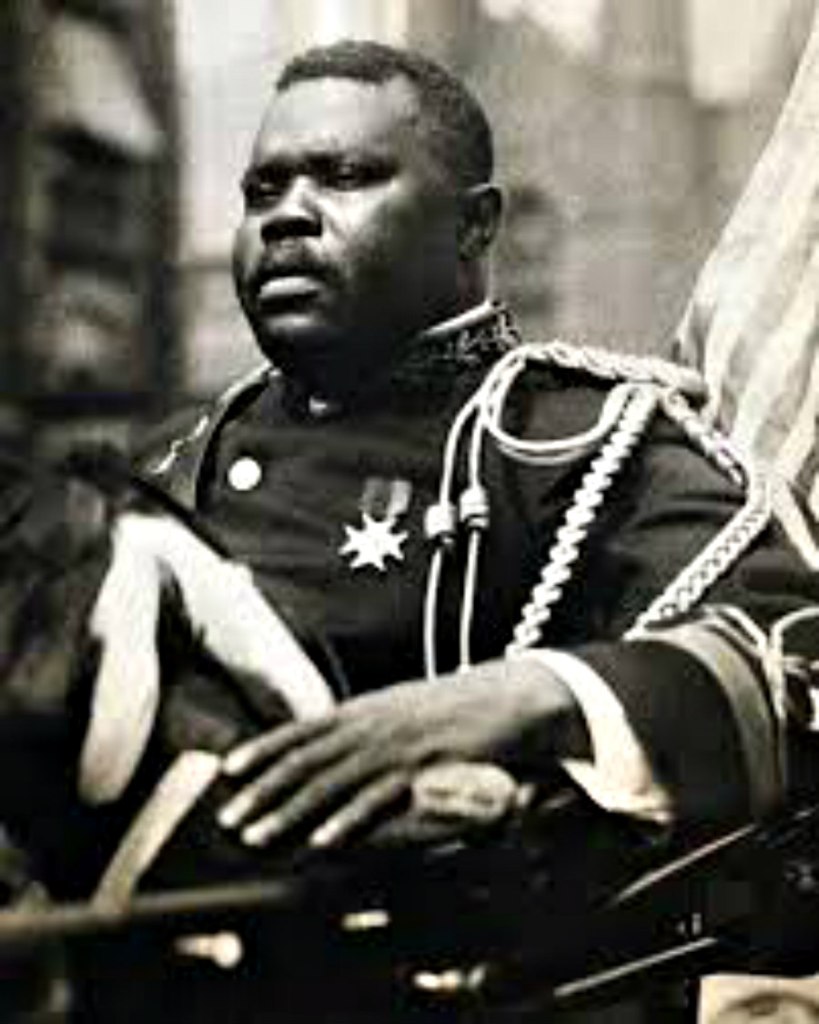
Garvey’s work was revolutionary. He preached Black pride when doing so was dangerous. He wore regal military uniforms, orchestrated mass parades, and encouraged Black people to see themselves as kings and queens descended from African royalty. His newspaper, The Negro World, served as a platform for Black consciousness and Pan-African politics across the diaspora.


💔 Resistance, Persecution, and Imprisonment

Despite the enormous popularity of his movement, Garvey faced fierce resistance. White institutions and governments viewed his ideology as a direct threat to colonial and capitalist systems. In America, J. Edgar Hoover and the FBI targeted him, eventually convicting Garvey on dubious charges of mail fraud in 1923. He was sentenced to five years in prison and later deported to Jamaica in 1927.

Even within the Black community, Garvey faced criticism, particularly from integrationists like W.E.B. Du Bois, who disagreed with Garvey’s separatist approach. Nevertheless, Garvey never wavered in his conviction that Black people needed their own institutions, economy, and land.


❤️ Family Life and Later Years

In 1919, Garvey married Amy Jacques, a dedicated activist and editor who continued his legacy after his death. Together they had two sons. Amy was instrumental in editing and publishing The Philosophy and Opinions of Marcus Garvey, a text that preserves his speeches and writings for future generations.

Garvey passed away on June 10, 1940, in London, largely forgotten by the mainstream world but revered by millions. Decades later, his legacy would experience a powerful revival. Leaders such as Kwame Nkrumah of Ghana, Malcolm X, and Dr. Martin Luther King Jr. cited Garvey as an inspiration.


🌍 The Legacy of a Liberator

Garvey’s teachings still echo in modern movements like Afrocentrism, Black Lives Matter, and reparations advocacy. The Rastafarian movement, born in Jamaica, regards Garvey as a prophet who foretold the rise of an African messiah. His philosophy of Black self-determination continues to influence Pan-Africanists and Afro-descendant communities across the world.

From his 1921 address, Garvey thundered:

“We are going to emancipate ourselves from mental slavery because whilst others might free the body, none but ourselves can free the mind.”
(Garvey, 1983, p. 76)

He was clear in his message: Black people are not inferior, lost, or broken—they are the builders of civilizations.

“Look for me in the whirlwind or the storm, look for me all around you, for with God’s grace, I shall come back with countless millions of Black men and women who have died in America and the West Indies and Africa to aid you in the fight for liberty, freedom and life.” (Garvey, 1983)


🗣️ Words from Those Who Knew Him

Author and activist Amy Jacques Garvey, his wife, wrote:

“Marcus Garvey was a man ahead of his time—visionary, prophetic, relentless. He believed that if Black people knew who they were, they would rise to rule the world.”


🧭 Final Reflections

Garvey’s influence remains undeniable. His ideas laid the foundation for nearly every major Black liberation movement of the 20th and 21st centuries. He did not live to see Africa freed from colonial rule, or African Americans gain civil rights, but his vision made those victories possible. His spirit lives on in every call for justice, every Pan-African flag waved, and every young Black child taught that their heritage is royal.


📚 References

Garvey, M. (1983). Selected Writings and Speeches of Marcus Garvey (B. Martin, Ed.). Dover Publications.
Lewis, R. (1987). Marcus Garvey: Anti-Colonial Champion. Africa World Press.
Martin, T. (1976). Race First: The Ideological and Organizational Struggles of Marcus Garvey and the Universal Negro Improvement Association. Greenwood Press.
Jacques-Garvey, A. (1963). Garvey and Garveyism. Collier Books.
Hill, R. A. (1983). The Marcus Garvey and Universal Negro Improvement Association Papers. University of California Press.