
The Politics of Policing Black Identity
Angela Davis
“I had been looking at pictures of women who were free, and they were wearing their hair the way it grows out of their heads.”
(Davis, A. Y., Women, Race & Class, 1981)
Chimamanda Ngozi Adichie
“Hair is political. Hair is personal. Hair is identity.”
(Adichie, C. N., Americanah, 2013)
Bell Hooks
“Straightening our hair is one of the many ways we try to erase the reality of our Blackness.”
(Hooks, b., Black Looks: Race and Representation, 1992)
Lupita Nyong’o
“What I learned is that when the world tells you you’re not enough, you don’t have to believe it.”
(Nyong’o, L., Sulwe, 2019)“Black hair is not a trend, a problem, or a phase—it is a living archive of survival, resistance, and ancestral memory.”
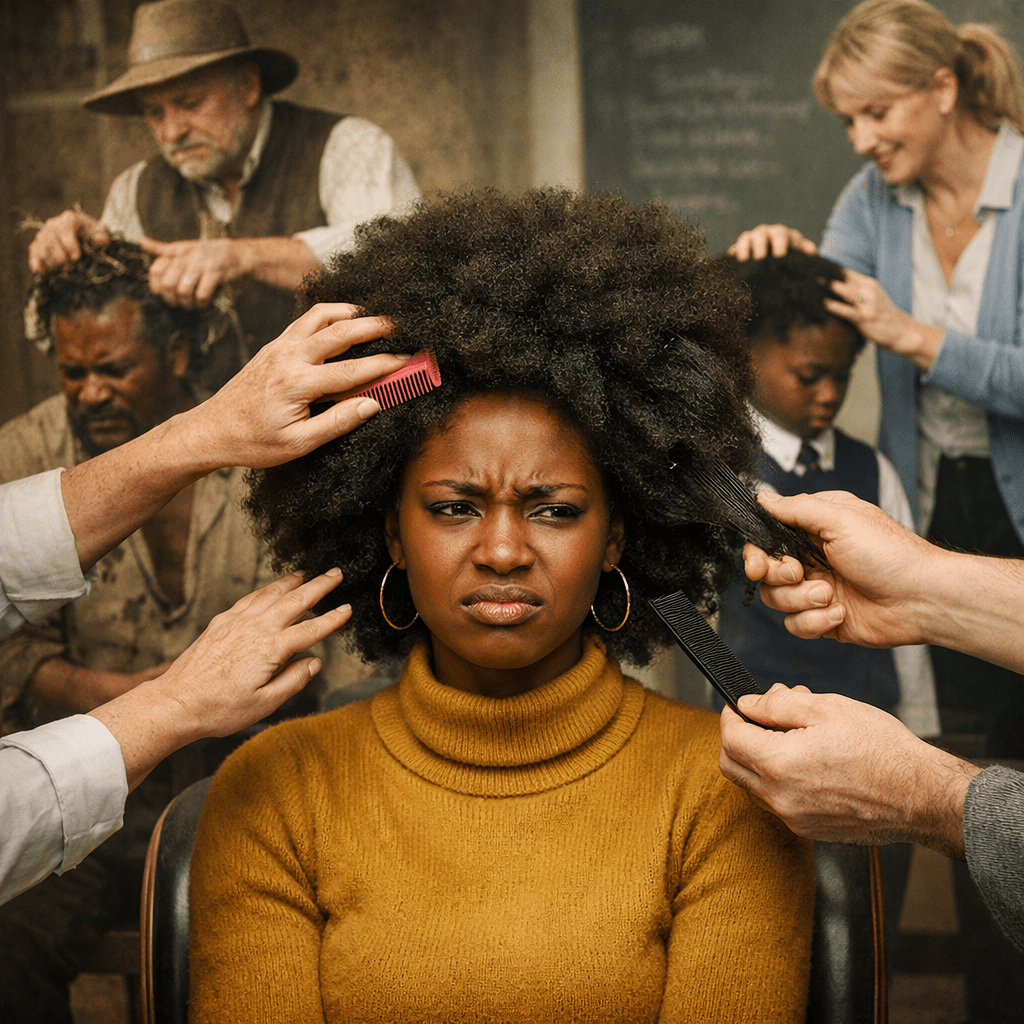
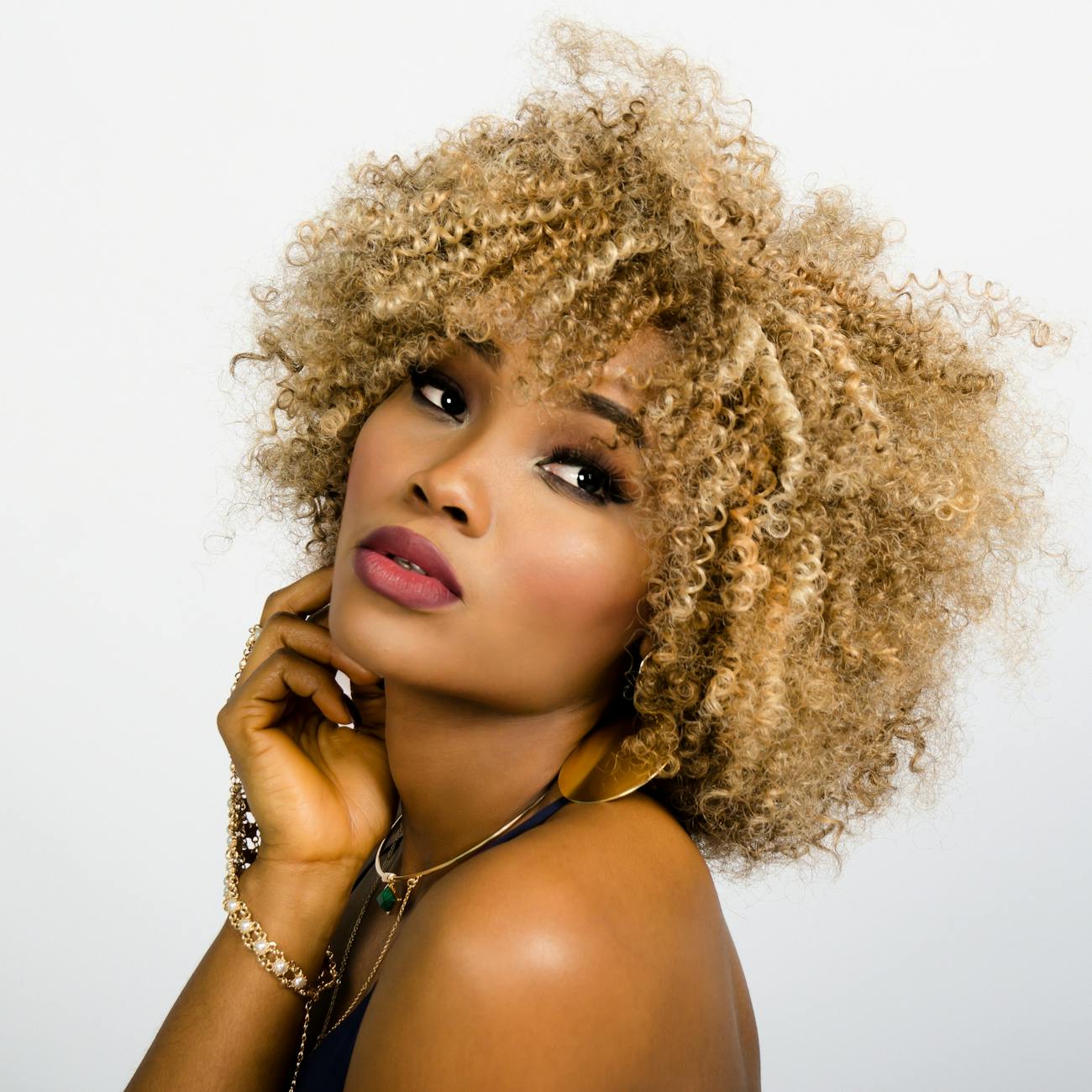
Black hair discrimination remains one of the most visible and normalized forms of racial bias in modern society. From classrooms to corporate offices, Black hair is disproportionately scrutinized, regulated, and punished under the guise of “professionalism,” “neatness,” or “dress code policies.” These standards are not neutral; they are rooted in Eurocentric ideals that define straight, loose, and non-textured hair as the default measure of beauty and respectability. As a result, Black people are often forced to alter their natural hair to gain acceptance, employment, or basic dignity.
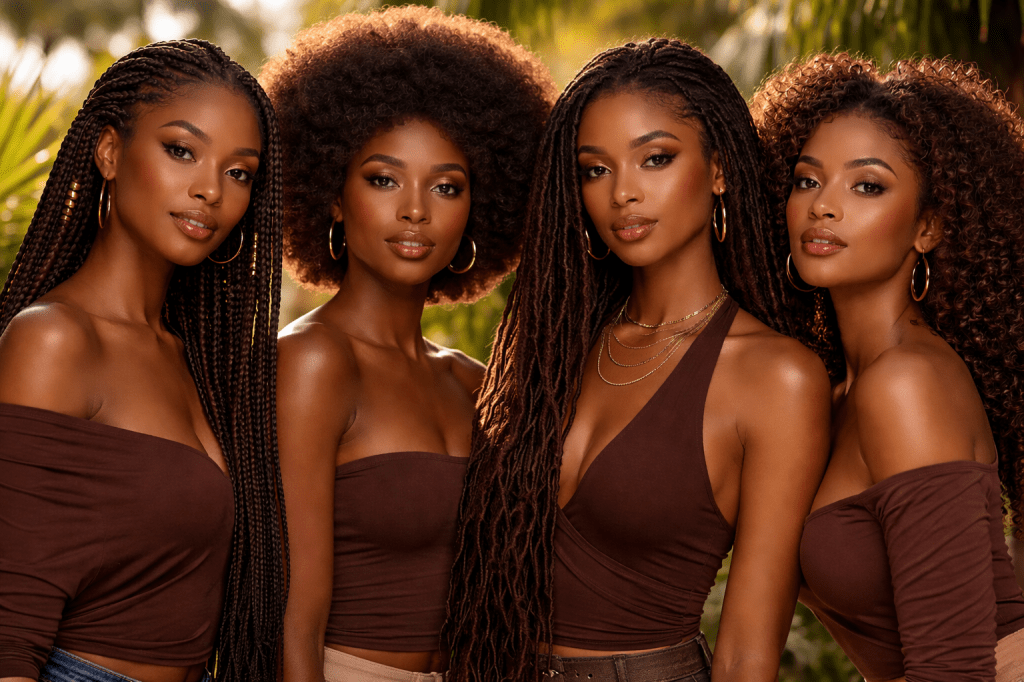
In schools, Black children are suspended, sent home, or humiliated for wearing braids, locs, Afros, twists, or even natural curls. These disciplinary practices communicate a dangerous message: that Black identity itself is disruptive and unacceptable. When a child’s natural hair becomes grounds for punishment, the educational system participates in psychological harm that can shape self-esteem and identity formation for life. The classroom becomes not a place of learning, but a site of racial conditioning.
In the workplace, similar patterns persist. Black professionals are routinely told their hair is “unprofessional,” “distracting,” or “unkept,” even when it is clean, styled, and culturally appropriate. This forces many to chemically straighten their hair, wear wigs, or suppress their natural texture in order to be perceived as competent. Such pressures reveal how deeply white norms are embedded in institutional culture, where assimilation is often required for survival.
The hatred toward Black hair did not originate in modern offices or schools—it was cultivated during slavery. Enslaved Africans were stripped of their cultural grooming practices and taught to associate straight hair with proximity to whiteness and social advantage. Field laborers, who often had tightly coiled hair, were deemed inferior, while those with looser textures were privileged within the plantation hierarchy. Hair became a racial marker used to rank human worth.
This legacy did not disappear after emancipation. It evolved into colorism and texture discrimination, where straighter hair is still associated with beauty, intelligence, and professionalism, while kinky or coiled hair is labeled “nappy,” “bad,” or “ugly.” These terms, passed down through generations, reflect internalized racism—a psychological inheritance from white supremacy that continues to shape how Black people see themselves.
One of the most painful aspects of Black hair discrimination is that it is often reinforced within Black families themselves. Many Black parents, conditioned by their own experiences of rejection and survival, teach their children that their natural hair is something to be fixed, relaxed, or hidden. Phrases like “your hair is too nappy” or “you need a perm” are not harmless—they transmit shame and self-rejection at the most formative stages of identity.
This internalization is not accidental; it is a direct result of systemic oppression. When society consistently rewards whiteness and penalizes Blackness, marginalized communities may adopt those standards as coping mechanisms. However, survival strategies should not become permanent ideologies. Black parents must wake up to the reality that teaching children to hate their natural features only perpetuates the same system that devalues them.
White supremacy plays a central role in Black hair discrimination because it establishes whiteness as the universal standard of normality. Under this system, anything outside of European phenotypes is constructed as deviant, exotic, or inferior. Hair texture becomes political, not because Black people made it so, but because racism made Black bodies sites of control.
The concept of “professionalism” itself is racially coded. There is no scientific or moral basis for associating straight hair with competence or intelligence. These associations are cultural myths that developed within colonial and capitalist systems that centered white identity as the model citizen. Black hair challenges these myths simply by existing in its natural state.
Black hair has also been criminalized. From police stops to courtroom bias, Afro-textured hair has been associated with deviance and threat. Studies show that Black people with natural hairstyles are more likely to be perceived as aggressive, untrustworthy, or less intelligent, even when all other factors are controlled. This demonstrates how aesthetic bias becomes a mechanism of social exclusion.
The rise of movements like the Natural Hair Movement and the passing of the CROWN Act represent resistance against these injustices. These efforts aim to legally protect individuals from discrimination based on hair texture and style. However, legal reform alone cannot dismantle deeply ingrained psychological and cultural beliefs. Laws can change policies, but they cannot instantly heal internalized self-hatred.
True liberation requires a cultural shift in how Black beauty is defined and taught. Black hair must be reframed not as a problem to manage, but as a sacred inheritance—genetically rich, biologically diverse, and historically powerful. The same coils once mocked were used to map escape routes during slavery, braid seeds for survival, and encode communal identity.
Education plays a crucial role in this transformation. Schools must incorporate Black history and African aesthetics into curricula, not as side notes, but as central narratives. When children learn that their features have historical meaning and cultural value, they are less likely to internalize racist hierarchies imposed by society.
Media representation is equally important. For decades, Black beauty was only celebrated when it approximated whiteness—light skin, straight hair, narrow features. Today, although representation has expanded, Eurocentric beauty standards still dominate advertising, film, and fashion industries. The normalization of natural Black hair must move beyond trends and become structural.
The policing of Black hair is ultimately about control. It is about who gets to define beauty, respectability, and humanity. When institutions regulate how Black people wear their hair, they are not managing aesthetics—they are managing identity. Hair becomes a battlefield where cultural memory confronts colonial ideology.
Psychologically, hair discrimination contributes to identity fragmentation. Black individuals are often forced to perform different versions of themselves depending on context—natural at home, altered at work, cautious in public. This constant self-monitoring produces emotional fatigue and reinforces the idea that authenticity is unsafe.
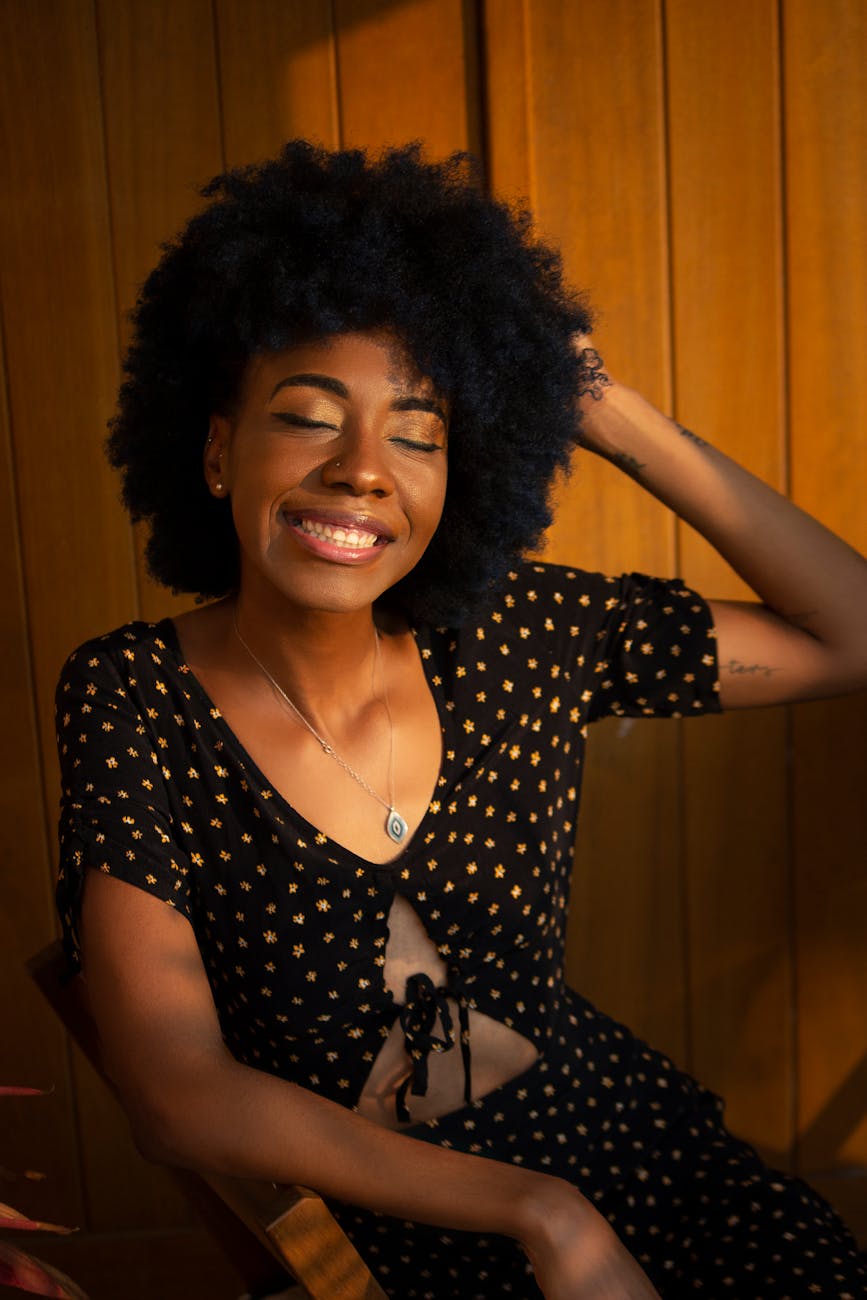
Black parents, educators, and leaders have a responsibility to disrupt this cycle. Teaching children that their hair is “good” exactly as it grows is not a trivial affirmation—it is a radical act of resistance. It challenges centuries of propaganda designed to disconnect Black people from their bodies and ancestry.
Healing from hair discrimination requires both structural and spiritual work. Structurally, institutions must dismantle biased policies. Spiritually and psychologically, Black communities must unlearn the lie that proximity to whiteness equals worth. The reclamation of Black hair is inseparable from the reclamation of Black identity.
Black hair is not unprofessional, unclean, or undesirable. It is African. It is genetic. It is historical. It is political because oppression made it so. And until society confronts the racial logic behind its beauty standards, Black hair will continue to be policed—not because it is wrong, but because it refuses to conform to a system built on white supremacy.
Ultimately, the hatred of Black hair reflects a deeper hatred of Black existence. To love Black hair fully is to reject the entire hierarchy that ranks human value by proximity to Europe. In that sense, every Afro worn freely, every loc grown proudly, and every child taught to love their coils is an act of cultural revolution.
References
Banks, I. (2000). Hair matters: Beauty, power, and Black women’s consciousness. New York, NY: New York University Press.
Byrd, A. D., & Tharps, L. L. (2014). Hair story: Untangling the roots of Black hair in America. New York, NY: St. Martin’s Press.
Collins, P. H. (2004). Black sexual politics: African Americans, gender, and the new racism. New York, NY: Routledge.
Crenshaw, K. (1991). Mapping the margins: Intersectionality, identity politics, and violence against women of color. Stanford Law Review, 43(6), 1241–1299.
Johnson, T. R., & Bankhead, T. (2014). Hair it is: Examining the experiences of Black women with natural hair. Open Journal of Social Sciences, 2(1), 86–100.
Rooks, N. (1996). Hair raising: Beauty, culture, and African American women. New Brunswick, NJ: Rutgers University Press.
Rosette, A. S., & Dumas, T. L. (2007). The hair dilemma: Conformity versus authenticity. Journal of Applied Psychology, 92(6), 1601–1616.
Tate, S. A. (2009). Black beauty: Aesthetics, stylization, politics. Farnham, UK: Ashgate.
The CROWN Act. (2019). Creating a Respectful and Open World for Natural Hair. U.S. legislation on hair discrimination.
 THE BROWN GIRL DILEMMA