
Tag Archives: joseph

Dilemma: Brother Against Brother

The crisis of “brother against brother” has become one of the most painful and complex truths within the Black community. It reflects a deep wound shaped by centuries of trauma, broken family structures, systemic oppression, and internalized self-hatred. Black men—once kings, protectors, innovators, and spiritual pillars of ancient civilizations—now often find themselves positioned as enemies to one another. Instead of building together, many are trapped in cycles of competition, conflict, and destruction. This tragedy is not born from nature but from historical engineering, social influence, and unresolved generational pain.

The issue of Black men killing other Black men continues to devastate families and communities across America. Although crime exists in every racial group, the concentrated violence within predominantly Black neighborhoods stems from systemic disenfranchisement, redlining, poverty, and the deliberate flooding of drugs and guns into urban communities. When resources are scarce and hope feels distant, men begin to see one another not as brothers but as threats. What should be unity becomes rivalry. What should be communal responsibility becomes survival warfare shaped by external design.

Gang culture emerged partly from these conditions. Although some early gangs were formed for protection, many evolved into organizations that perpetuate cycles of retaliation and territorial conflict. The desire to belong—to claim identity, power, or respect—becomes distorted into violence. Instead of competing against the systems that oppress them, young Black men too often compete against each other, losing years of potential to incarceration, injury, or death. This is not a moral failing but the outcome of generational instability and targeted neglect.

The internal conflict is not only physical but also psychological. The media often magnifies images of Black men as hyper-aggressive, criminal, or emotionally unavailable. These portrayals condition society and Black men themselves to see each other through a lens of suspicion rather than solidarity. The result is mistrust, emotional distance, and the belief that vulnerability is weakness. Without emotional literacy or safe spaces for healing, anger becomes the language many men know best.

Adding to this, modern culture pressures Black men to “one-up” each other—financially, socially, and sometimes violently. Masculinity becomes defined by domination rather than compassion, competition rather than collaboration. Whether through bravado, materialism, or street credibility, envy, worth is measured by comparison rather than character. This competitive mindset fractures relationships, weakens unity, and fuels an environment where brotherhood struggles to thrive.

Another layer of this crisis lies in the public rhetoric of some Black male celebrities and influencers who speak harshly against Black women. Instead of uplifting their sisters, they often demean them publicly, reinforcing stereotypes birthed during slavery when Black families were torn apart. This divisive speech harms the community by creating gender wars—brother against sister—and diverting attention from the real systems that undermine Black families. When Black men publicly dishonor Black women, it fractures the very foundation of the community.

Many of these behaviors stem from unresolved trauma. Generations of Black men have carried burdens of discrimination, economic instability, police brutality, and lack of emotional support. Without healthy mentorship or mental health access, pain can easily transform into aggression. Hurt men hurt other men. The cycle continues because healing is rarely prioritized or taught, especially in spaces where survival takes precedence over self-reflection.

There is also the crisis of absent or strained fatherhood, not by choice but because of mass incarceration, economic challenges, and systemic separation of Black families. When young boys do not see healthy examples of love, leadership, and conflict resolution, they mimic what they are exposed to—chaos, hyper-masculinity, or antisocial behavior. Brotherhood cannot flourish when foundational guidance is interrupted.

Educational inequality contributes as well. Underfunded schools, low expectations, and lack of representation limit opportunities for young Black men. When society signals that success is unattainable, alternative paths—often dangerous ones—become appealing. The lack of academic and vocational support creates breeding grounds for conflict, resentment, and hopelessness.

Music and entertainment industries also play a role. While many Black artists use music for storytelling and healing, corporations often elevate content that glorifies violence, rivalry, and disrespect. Young men absorb these messages and normalize them, believing that masculinity is proven through aggression. This corporate exploitation of Black male identity fuels division and devalues life itself.

Moreover, societal institutions consistently pit Black men against one another. Whether through limited job opportunities, biased criminal justice systems, or exploitative sports industries, the message is clear: only one can win. Only one can succeed. Only one can shine. This scarcity mindset erodes unity and fosters envy.

Yet, despite these challenges, many Black men are actively choosing a different path. Across the country, mentors, pastors, coaches, and community leaders are working to restore brotherhood. Programs focused on emotional intelligence, conflict resolution, and empowerment are helping young men unlearn destructive patterns. Healing spaces are emerging where men can be vulnerable without shame, reclaim their identity, and reconnect with each other.

Black men are also reshaping the narrative by celebrating one another’s success instead of competing. Social media movements like #BlackMenSmile and #BlackBoyJoy highlight the beauty, softness, brilliance, and strength of Black manhood beyond stereotypes. These images promote unity and challenge the belief that Black men must perform masculinity through violence or domination.

Reconciliation between Black men and Black women is also essential. Brotherhood cannot thrive when the relationship with Black women is fractured. Both sides must heal the wounds caused by patriarchy, colorism, and internalized racism. True healing requires accountability, empathy, and partnership—not blame.

Spiritual restoration remains a critical component. Many Black men are returning to faith, prayer, and community fellowship as grounding forces. Scripture emphasizes unity: “Behold, how good and how pleasant it is for brethren to dwell together in unity!” (Psalm 133:1, KJV). Reconnecting with God and identity helps to break cycles of destruction and renew purpose.

Additionally, economic empowerment is strengthening brotherhood. Entrepreneurship, cooperative economics, and financial literacy programs are teaching Black men to build together rather than tear each other down. Shared success creates shared loyalty.

Healing also requires emotional honesty. Black men must confront their pain—grief, abandonment, rejection, societal pressure—rather than hiding behind aggression. Vulnerability is not weakness but liberation. When men heal individually, they strengthen the collective.

To end the epidemic of “brother against brother,” society must address the systemic roots while Black men commit to rebuilding each other with accountability and love. The future of Black families, culture, and generations depends on restored unity, emotional healing, and community transformation. Brotherhood can rise again when men recognize that their brothers are not their enemies but their reflections.

References

Alexander, M. (2010). The new Jim Crow: Mass incarceration in the age of colorblindness. The New Press.
Anderson, E. (1999). Code of the street: Decency, violence, and the moral life of the inner city. W.W. Norton.
hooks, b. (2004). We real cool: Black men and masculinity. Routledge.
Majors, R., & Billson, J. (1992). Cool pose: The dilemmas of Black manhood in America. Simon & Schuster.
Staples, R. (1982). Black masculinity. Black Scholar Press.
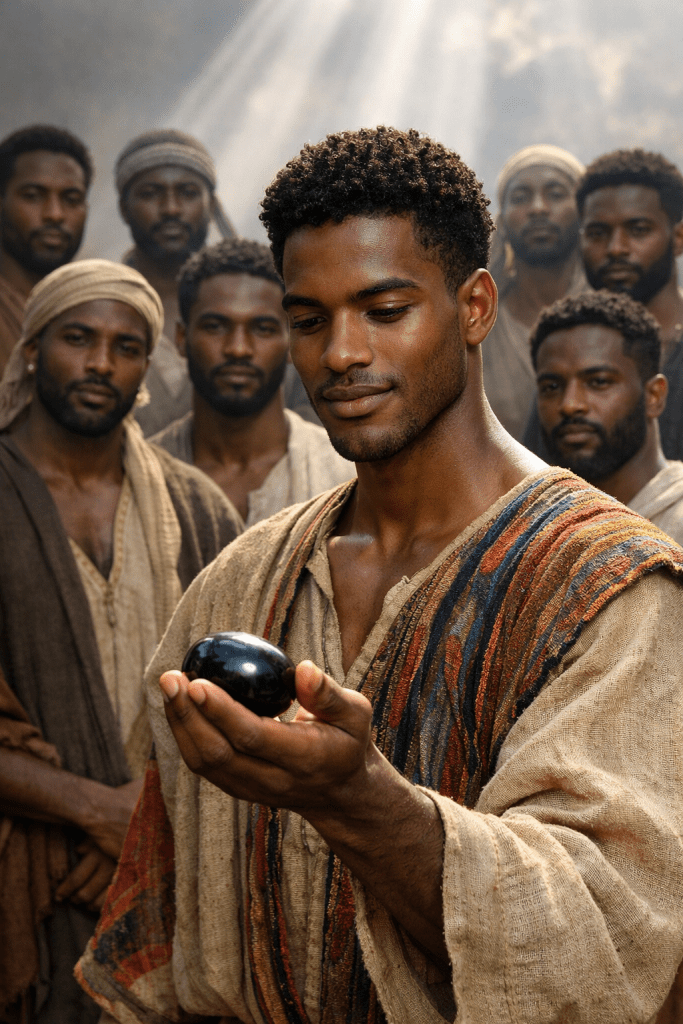

The Onyx Stone: A Family Affair — Joseph and His Brothers.

Onyx, dark as the midnight sky yet polished with hidden light,
a stone of mystery shaped by time and pressure,
a gem that carries both beauty and burden,
whispering of destinies forged through suffering,
and of souls refined in the fire of betrayal.

Onyx holds deep symbolic meaning in the biblical tradition, representing endurance, spiritual depth, and divine remembrance. In Scripture, onyx is one of the stones set in the high priest’s breastplate, engraved with the names of the tribes of Israel, signifying that each tribe was carried before God in sacred memory.

Joseph, the eleventh son of Jacob and the firstborn of Rachel, stands as one of the most compelling figures among the twelve tribes of Israel. His life narrative is not merely historical but theological, illustrating divine providence, generational conflict, and the mystery of chosenness within a fractured family system.

According to rabbinic and later symbolic traditions, Joseph is associated with the onyx stone, reflecting both his dark trials and radiant destiny. Onyx becomes a metaphor for Joseph’s life—polished through suffering, yet ultimately exalted through divine purpose.

Joseph’s story begins with favor, as he is given the coat of many colors by his father, a garment symbolizing distinction, authority, and emotional preference. This visible sign of love ignites jealousy among his brothers, sowing the seeds of betrayal long before the act itself unfolds.

The dreams Joseph receives intensify this conflict. In his visions, the sun, moon, and stars bow before him, along with sheaves of grain belonging to his brothers. These dreams are not merely youthful imagination but prophetic revelations that foreshadow his future role as a ruler and preserver of life.

Yet divine insight does not shield Joseph from human cruelty. His brothers, consumed by envy, conspire against him, stripping him of his garment and casting him into a pit before selling him to Midianite traders for silver, effectively turning family into traffickers and blood into profit.

This act of betrayal reflects one of the Bible’s deepest moral tensions: how God’s purpose often unfolds through human sin. Joseph is innocent, yet he becomes the vessel through which divine redemption will later flow, revealing the paradox of suffering as preparation.

Joseph’s descent into Egypt marks the beginning of his transformation. Though enslaved, he maintains integrity, resisting moral compromise even when falsely accused and imprisoned. His righteousness becomes a quiet rebellion against despair.

In prison, Joseph’s gift of dream interpretation resurfaces, proving that divine calling cannot be silenced by circumstance. His spiritual insight becomes the very instrument that elevates him from prisoner to prince.

Pharaoh’s dreams of famine and abundance position Joseph as a savior figure, entrusted with authority over Egypt’s economy. He rises not by lineage but by wisdom, embodying the principle that divine favor transcends social status.

Joseph’s beauty is also noted in Scripture, described as fair in form and appearance, making him both desired and tested. His physical attractiveness parallels his spiritual calling, showing how outward beauty can coexist with inner discipline.

When famine strikes, Joseph’s brothers unknowingly come before him in search of food, fulfilling the very dreams they once mocked. Their bowing becomes not an act of submission to a man, but to the divine orchestration behind his life.

Joseph’s emotional response reveals the complexity of forgiveness. He weeps privately, torn between memory and mercy, justice and compassion. His power is not in revenge, but in restraint.

The moment of reconciliation becomes one of the Bible’s most profound theological revelations. Joseph declares that what his brothers meant for evil, God intended for good, reframing trauma as testimony.

This declaration does not erase the pain of betrayal but redeems it. Joseph becomes the preserver of the family that once sought his destruction, turning the wound into a wellspring of survival.

Onyx, in this context, becomes more than a gemstone; it is a symbol of Joseph himself—darkened by suffering, refined by pressure, and set in divine memory as part of Israel’s eternal identity.

The family affair of Joseph is not merely about sibling rivalry but about generational inheritance, divine election, and moral responsibility. His story challenges the illusion of fairness and exposes the deeper logic of providence.

Joseph’s life reveals that destiny is not destroyed by betrayal, but often activated by it. The pit becomes the passageway, the prison becomes the platform, and the wound becomes the witness.

Through Joseph, the tribe associated with onyx emerges as a testament to spiritual endurance. He becomes a living stone in the architecture of Israel’s story, bearing both the scars of rejection and the seal of divine favor.

Onyx thus stands as a sacred metaphor for Joseph’s journey, reminding readers that God often engraves glory upon the darkest surfaces, and that what is polished by suffering may one day shine in sovereignty.


References
The Holy Bible, King James Version. (2017). Hendrickson Publishers. (Original work published 1611).
Exodus 28:9–12, 28:20 (KJV).
Genesis 37–50 (KJV).
Alter, R. (2018). The Hebrew Bible: A translation with commentary. W. W. Norton & Company.
Sarna, N. M. (1989). Genesis: The traditional Hebrew text with the new JPS translation. Jewish Publication Society.
Brown, F., Driver, S. R., & Briggs, C. A. (2001). The Brown-Driver-Briggs Hebrew and English lexicon. Hendrickson.

The Bible Series: “”Joseph”” The Faithful Dreamer and His Eternal Legacy.

This photograph is the property of its respective owner. No copyright infringement intended.

Joseph, the eleventh son of Jacob, was born to Rachel, Jacob’s beloved wife, and immediately marked as a child of promise (Genesis 30:22–24, KJV). From his earliest years, he demonstrated a spirit favored by God and recognized by his father, who bestowed upon him the coat of many colors, a garment symbolizing both love and divine favor (Genesis 37:3, KJV). Yet this symbol of distinction also stirred deep envy among his brothers, planting seeds of rivalry that would shape Joseph’s early trials.

Each of the twelve sons of Jacob, founders of Israel’s tribes, had a corresponding precious stone on the High Priest’s breastplate, representing God’s covenant with them. Joseph’s stone was onyx, described in Exodus 28:20: “And the fourth row a beryl, and an onyx, and a jasper: they shall be set in gold in their inclosings” (KJV). Onyx symbolizes resilience, layered strength, and divine protection, foreshadowing Joseph’s ability to endure hardship while preserving his faith and integrity. The stone’s complex beauty reflects his life: layered with trials yet polished by God’s providence.

Joseph’s early life was defined by extraordinary dreams, foretelling that he would rise above his family: “Behold, I have dreamed a dream more; and, behold, the sun and the moon and the eleven stars made obeisance to me” (Genesis 37:9, KJV). These dreams fueled his brothers’ jealousy, motivating them to betray him. They initially plotted to kill him, but ultimately sold him into slavery to Midianite traders, demonstrating the destructive power of envy (Genesis 37:18–28, KJV).

Sold to Potiphar, an officer of Pharaoh, Joseph’s character quickly distinguished him. Despite being a foreigner and a slave, he found favor in Potiphar’s sight, “and the Lord was with Joseph, and he was a prosperous man” (Genesis 39:2, KJV). Joseph’s diligence and faithfulness exemplify how God’s presence can elevate and sustain His servants even in adversity.

Potiphar’s wife tested Joseph’s moral integrity, attempting to seduce him. Joseph resisted, declaring, “How then can I do this great wickedness, and sin against God?” (Genesis 39:9, KJV). His refusal highlights the principle that consecration is not only about obedience but also about protecting the sanctity of the body and the soul from defilement.

False accusations led to Joseph’s imprisonment, yet even there God’s favor remained. “But the Lord was with Joseph, and shewed him mercy, and gave him favour in the sight of the keeper of the prison” (Genesis 39:21–23, KJV). Joseph’s life demonstrates that God’s providence can operate through trials, shaping character, wisdom, and resilience.

Joseph’s God-given gift of dream interpretation became central to his rise. He accurately interpreted the dreams of Pharaoh’s servants in prison (Genesis 40:8, KJV), and later Pharaoh’s troubling dreams of seven years of plenty followed by seven years of famine (Genesis 41:15–32, KJV). This prophetic insight elevated him to second-in-command over Egypt, entrusted with the nation’s resources during a time of impending crisis.

His administration during the famine revealed extraordinary wisdom, foresight, and humility. “Thou shalt be over my house, and according unto thy word shall all my people be ruled” (Genesis 41:40, KJV). Joseph’s leadership saved Egypt and positioned him to fulfill God’s covenant promises to his family, demonstrating that consecrated service benefits both the individual and God’s broader plan.

The famine brought Joseph’s brothers to Egypt seeking sustenance. Initially unrecognized, Joseph tested their hearts to discern repentance (Genesis 42–44, KJV). His careful discernment, mercy, and wisdom underscore the spiritual maturity cultivated through suffering.

Ultimately, Joseph revealed his identity, saying, “I am Joseph; doth my father yet live?” (Genesis 45:3, KJV). His forgiveness reconciled his family, turning their envy and betrayal into instruments of divine providence. Joseph exemplified how God can transform human malice into salvation and blessing.

Joseph’s personal gifts—wisdom, discernment, humility, and prophetic insight—were manifestations of God’s Spirit (Genesis 41:16, KJV). These gifts allowed him to preserve nations, restore his family, and serve as a model of faithfulness. His consecrated life demonstrates that spiritual gifts function best when aligned with obedience and trust in God.

His marriage to Asenath and the birth of Ephraim and Manasseh ensured his lineage and the continuation of God’s covenant through his descendants (Genesis 41:45; 41:50–52, KJV). The tribes of Ephraim and Manasseh inherited prominence in Israel, reflecting the enduring blessing of Joseph’s faithfulness and the symbolic double portion often associated with the firstborn.

Joseph’s onyx stone reflects his layered resilience. Like the stone, his life endured pressures of betrayal, slavery, and false accusation, emerging strengthened and polished. Onyx symbolizes moral fortitude, protection, and divine favor, qualities that Joseph embodied throughout his trials.

The tribes of Ephraim and Manasseh illustrate Joseph’s enduring legacy. Ephraim, often a leading tribe, and Manasseh, settled east of the Jordan, both carried forward Joseph’s influence, demonstrating how God multiplies the faithfulness of one servant into blessings for generations.

Spiritually, Joseph’s life reveals the principle of refinement through adversity. God used suffering to cultivate patience, wisdom, and discernment in him. His faithfulness in small matters, like serving in Potiphar’s house and prison, prepared him for enormous responsibilities, showing that consecration is a process shaped by trials.

Forgiveness and reconciliation were central to Joseph’s legacy. By forgiving his brothers, he preserved covenantal unity, demonstrating that divine leadership is rooted not only in authority but in mercy and relational wisdom (Genesis 50:17, KJV).

Joseph’s prophetic dreams, from youth through adulthood, symbolized God’s sovereign plan. While initially misunderstood and resented, these dreams guided him toward his destiny, revealing that God’s guidance often unfolds gradually and through trials (Genesis 37:5–11, KJV).

The onyx stone, embedded in the High Priest’s breastplate, represents the visible presence of God’s covenant, mirrored in Joseph’s life as a conduit of divine providence. Just as the stone endures layers of pressure and emerges brilliant, Joseph’s integrity and faithfulness shone through adversity, blessing nations and securing his family’s survival.

Joseph’s trials and triumphs exemplify God’s providential care. Romans 8:28 parallels his story: “And we know that all things work together for good to them that love God, to them who are the called according to his purpose” (KJV). Every betrayal and hardship in Joseph’s life served a higher purpose, demonstrating God’s sovereignty.

In conclusion, Joseph’s life, marked by divine favor, prophetic insight, moral integrity, and leadership, serves as a model of faithfulness and consecration. His onyx stone symbolizes resilience, divine protection, and layered beauty revealed through trials. Through his sons, Ephraim and Manasseh, his legacy endured, blessing Israel for generations. Joseph exemplifies how God transforms adversity into purpose, and how consecrated obedience produces enduring spiritual fruit.

The Bible Series: Joseph’s Journey – Integrity in the Face of Temptation.

Joseph, son of Jacob, is one of the most remarkable figures in the Old Testament, celebrated for his steadfast integrity, unwavering faith, and divine insight. His life illustrates the intersection of human vulnerability and God’s providence, revealing how integrity can sustain one through trials, temptation, and betrayal. Joseph’s journey begins in Canaan, as the favored son of Jacob, where his early dreams of prominence foreshadowed a destiny shaped by divine orchestration (Genesis 37:3-11, KJV).

The beauty of Joseph, as described in Scripture, was not merely physical. Genesis 39:6 (KJV) notes that “the LORD blessed the Egyptian’s house for Joseph’s sake; and the blessing of the LORD was upon all that he had in the house, and in the field.” His countenance, demeanor, and charisma reflected a harmony of spiritual favor and personal presence. This external attractiveness was intertwined with moral and spiritual virtues, making him admired by those around him while simultaneously inciting envy.

Joseph’s beauty and favored status with his father generated jealousy among his brothers. Their resentment led to betrayal: Joseph was sold into slavery, stripped of familial protection, and sent to Egypt (Genesis 37:28, KJV). From the outset, Joseph’s life demonstrates a paradox familiar to many of God’s faithful: blessings can attract both opportunity and opposition. His response to betrayal set the tone for the integrity that would define his journey.

In Egypt, Joseph’s initial trials were compounded by Potiphar’s household. Despite being a slave in a foreign land, he quickly distinguished himself through diligence, wisdom, and reliability (Genesis 39:4, KJV). His integrity was evident in his work ethic and his ability to maintain trust, establishing his reputation for righteousness. Joseph’s commitment to ethical conduct, even in servitude, exemplifies the principle that integrity is not situational but rooted in character.

The pivotal test of Joseph’s moral fortitude came through temptation. Potiphar’s wife attempted to seduce him repeatedly, but Joseph steadfastly resisted, declaring, “How then can I do this great wickedness, and sin against God?” (Genesis 39:9, KJV). This declaration highlights the inseparable link between faith and moral action. Joseph’s refusal was not merely a personal decision; it was an affirmation of his loyalty to God above human desire.

Joseph’s rejection of sin had immediate consequences. Falsely accused, he was imprisoned despite his innocence (Genesis 39:20, KJV). Yet even in confinement, Joseph’s integrity and divine favor were evident. He quickly gained the trust of the prison keeper and earned responsibility over all inmates, demonstrating that virtuous character transcends circumstance (Genesis 39:22-23, KJV).

The narrative of Joseph illustrates a recurrent biblical theme: integrity often carries cost but yields long-term reward. While betrayal and false accusation caused temporary suffering, these challenges positioned Joseph for greater divine purpose. The testing of his character cultivated patience, wisdom, and humility—qualities necessary for leadership in the broader trajectory of God’s plan (Genesis 41:39-41, KJV).

Joseph’s gift of interpreting dreams was another arena in which integrity intersected with divine favor. When he accurately interpreted the dreams of Pharaoh’s cupbearer and baker, his insight reflected spiritual discernment and reliance on God rather than self-interest (Genesis 40:8, KJV). His interpretations were not for personal gain but a faithful service to God, a hallmark of his unwavering moral compass.

The story emphasizes the theme of providence. Although Joseph’s brothers acted out of malice, God’s hand was evident in every event, preparing Joseph for leadership over Egypt and the preservation of Israel during famine (Genesis 50:20, KJV). Joseph’s integrity, patience, and moral clarity enabled him to serve effectively, demonstrating that ethical steadfastness aligns with divine destiny.

In the broader context of temptation, Joseph’s life is instructive for understanding the relationship between desire, discipline, and divine alignment. Resisting immediate gratification or ethical compromise often requires foresight, trust, and moral courage. Joseph’s ability to maintain integrity in the face of repeated provocations exemplifies a spiritual principle that transcends historical and cultural context.

Joseph’s life also illustrates the interplay between humility and influence. Despite his elevated position, he consistently attributed success to God rather than personal skill or cunning (Genesis 41:16, KJV). Integrity in leadership, as Joseph demonstrates, involves recognizing one’s dependence on divine guidance while exercising authority responsibly.

His relationship with his brothers later reveals the transformative power of integrity. Rather than seeking revenge, Joseph extended forgiveness and provision during famine (Genesis 45:4-11, KJV). His ability to maintain righteousness while exercising authority shows how moral character enhances leadership, fostering reconciliation and social restoration.

Joseph’s stewardship in Egypt demonstrates the practical application of integrity. He managed resources wisely, planned for future scarcity, and implemented equitable policies to sustain a nation (Genesis 41:46-57, KJV). Integrity, in Joseph’s example, is not passive virtue but active diligence and wise governance.

Temptation recurs in Joseph’s story beyond sexual advances, extending to political and social pressures. He navigated complex relationships with Pharaoh, Egyptian officials, and foreign emissaries, maintaining ethical discernment while fulfilling divine purpose. Joseph’s life illustrates that integrity requires consistency across all spheres of life, not just in moments of overt moral challenge.

Theological reflections on Joseph highlight that integrity is integrally linked to trust in God. His unwavering faith and ethical conduct in the midst of hardship align with Psalm 112:1-3 (KJV), which praises the man who fears the Lord, highlighting the blessings of righteousness, security, and influence. Joseph embodies the principle that personal integrity attracts divine favor and societal trust.

Joseph’s narrative also underscores the redemptive potential of suffering. His trials, though painful, shaped character, fortified patience, and deepened reliance on God (Romans 5:3-5, KJV). Integrity in adversity does not prevent trials but transforms them into instruments of spiritual and practical preparation.

Joseph’s capacity for foresight, mercy, and resourcefulness reflects the holistic nature of integrity. He combined ethical steadfastness with practical wisdom, demonstrating that moral character is both internal and relational—affecting not only oneself but entire communities.

The beauty of Joseph is reflected in the congruence of his physical presence, moral character, and spiritual alignment. He was handsome in appearance, attractive in demeanor, and noble in spirit (Genesis 39:6, KJV). This holistic beauty symbolizes the harmony between divine favor, human virtue, and natural gifts—a reflection of God’s grace in shaping character and presence simultaneously.

Ultimately, Joseph’s journey teaches that integrity is not situational; it is a lifelong practice rooted in God-centered values. It involves courage to resist temptation, patience through trials, wisdom in leadership, and humility before God. His life affirms that divine purpose is inseparable from ethical consistency, and that steadfastness in virtue enables both personal fulfillment and communal restoration.

Joseph’s story serves as a model for believers navigating moral challenges today. His journey reminds us that temptation is inevitable, suffering may be unjust, and yet, with faith and integrity, one can fulfill God’s calling. The alignment of character, courage, and divine guidance creates a life that not only endures trials but also shapes history for generations.

The Life of Joseph:

  • Joseph born to Rachel; favored son; given a coat of many colors
  • Include a small icon of a colorful coat

Dreams of Prominence (Genesis 37:5-11) – Green

  • Joseph shares dreams of leadership; brothers’ jealousy begins
  • Icon: Sun, moon, and stars representing dreams

Betrayal by Brothers (Genesis 37:18-28) – Red

  • Brothers sell Joseph into slavery; deception
  • Icon: Hands exchanging silver coins

Potiphar’s House / First Temptation (Genesis 39:1-12) – Red

  • Joseph excels as a slave; resisted Potiphar’s wife
  • Icon: House with a warning symbol

Imprisonment (Genesis 39:19-23) – Red

  • Falsely accused and imprisoned, retains integrity
  • Icon: Prison bars

Cupbearer and Baker Dreams (Genesis 40:1-23) – Green

  • Joseph interprets dreams in prison; God’s gift revealed
  • Icon: Scroll or dream bubble

Pharaoh’s Dreams & Promotion (Genesis 41:1-41) – Green

  • Interprets Pharaoh’s dreams; appointed ruler of Egypt
  • Icon: Egyptian crown

Famine Management (Genesis 41:46-57) – Blue

  • Implements food storage plan; demonstrates wisdom and integrity
  • Icon: Grain or storehouse

Reunion with Brothers (Genesis 42:1-38; 45:1-15) – Blue

  • Forgives brothers; provides for family; maintains righteousness
  • Icon: Handshake or olive branch

Jacob’s Family Settles in Egypt (Genesis 46:1-34) – Blue

  • Entire family preserved; God’s plan fulfilled
  • Icon: Tent or family group

Joseph’s Death and Legacy (Genesis 50:22-26) – Green

  • Maintains faith until death; prophetic blessing for Israel
  • Icon: Tomb or folded hands

Through his life, Joseph illustrates the timeless principle that God’s providence operates in concert with human integrity. By faithfully maintaining righteousness, resisting temptation, and trusting divine timing, one embodies the essence of spiritual calling, reflecting both the beauty of virtue and the power of God’s design.


References

The Holy Bible, King James Version.

Childs, B. S. (2001). Introduction to the Old Testament as Scripture. Fortress Press.

Hamilton, V. P. (1990). The Book of Genesis, Chapters 18–50. Eerdmans.

Sailhamer, J. H. (1992). Genesis: The Expositor’s Bible Commentary. Zondervan.

Motyer, J. A. (2008). The Message of Genesis 1–11. InterVarsity Press.

Kitchen, K. A. (2003). On the Reliability of the Old Testament. Eerdmans.