Tag Archives: jesus

The Types of People God Tells You to Avoid

Photo by ELEVATE on Pexels.com

The Bible is clear that not everyone in our path is meant to walk with us. God, in His divine wisdom, warns His people to discern spirits, test character, and guard the heart from those who corrupt the soul. Throughout Scripture, we are taught that evil communication corrupts good manners (1 Corinthians 15:33, KJV). Not every friendly face carries a pure heart, and not every smiling word is born of truth. The company we keep has spiritual consequences; it can either lead us closer to God or drag us into sin and confusion.

List of the People God Tells You to Avoid

The wolf in sheep’s clothing

The gossiper

The mocker/scorner

The envious

The sexually impure

The faithless

The unbelieverThe divisive

The greedy/materialistic

The compromiser

The unrepentant

The habitual sinner

The narcissist

The proud

The deceitful/manipulative

The negative/cynical

The spiritually lazy

The truth-rejector

Among the most dangerous people to avoid are the wolves in sheep’s clothing. These individuals appear righteous on the surface but are inwardly destructive. Jesus warned, “Beware of false prophets, which come to you in sheep’s clothing, but inwardly they are ravening wolves” (Matthew 7:15, KJV). They preach love but sow division; they claim holiness but seek power. Such people mimic godliness to gain trust, only to manipulate and devour the unsuspecting. The true believer must watch for the fruit of their actions, not just the beauty of their words.

The wolf in sheep’s clothing can only remain hidden for a season. At first, they appear gentle, humble, and sincere, but their fruit reveals otherwise. Their presence often brings confusion, division, and exhaustion rather than peace. Jesus warned His disciples in Matthew 10:16 (KJV), “Be ye therefore wise as serpents, and harmless as doves.” Discernment requires both love and vigilance. The wolf flatters to gain access, then uses emotional manipulation to devour the faith of others. The believer must test every spirit by the Word of God (1 John 4:1, KJV).

The gossiper is another spirit to avoid. Gossip is a sin that destroys reputations and unity within the body of Christ. Proverbs 20:19 (KJV) says, “He that goeth about as a talebearer revealeth secrets: therefore meddle not with him that flattereth with his lips.” Gossipers thrive on drama and confusion; they plant seeds of discord and separate friends. God hates this behavior because it reflects the serpent’s deceit in Eden — subtle, seductive, and divisive.

The gossiper’s presence can be detected by the atmosphere they create. Gossipers drain joy and stir suspicion. They thrive on secrets and half-truths. Proverbs 26:20 (KJV) says, “Where no wood is, there the fire goeth out: so where there is no talebearer, the strife ceaseth.” To discern a gossiper, observe who they talk about and whether their words build or destroy. True believers speak life, not slander.

Then there are the mockers — those who scoff at holiness and ridicule righteousness. Scripture warns, “A scorner loveth not one that reproveth him: neither will he go unto the wise” (Proverbs 15:12, KJV). Mockers belittle godly counsel and exalt their own arrogance. They despise correction and find joy in tearing down others. Psalm 1:1 tells us, “Blessed is the man that walketh not in the counsel of the ungodly, nor standeth in the way of sinners, nor sitteth in the seat of the scornful.” Avoiding mockers is essential to preserving spiritual peace.

Mockers and scorners often disguise ridicule as humor. They make light of holiness, treat sin as a joke, and resist godly correction. Their words pierce like arrows. Proverbs 9:8 (KJV) advises, “Reprove not a scorner, lest he hate thee: rebuke a wise man, and he will love thee.” The mocker will not respond to correction with humility but with defensiveness and contempt. Spiritual wisdom is wasted on those who refuse to listen.

Envious people are also spiritually toxic. Envy rots the soul and breeds resentment against the blessings of others. Proverbs 14:30 (KJV) declares, “A sound heart is the life of the flesh: but envy the rottenness of the bones.” Those consumed by envy cannot rejoice when others prosper; instead, they harbor bitterness that leads to betrayal. The spirit of envy caused Cain to murder Abel, Saul to pursue David, and the Pharisees to crucify Jesus.

The envious can be recognized by their inability to celebrate others sincerely. They subtly compete, criticize, or diminish blessings they wish were their own. James 3:16 (KJV) warns, “For where envying and strife is, there is confusion and every evil work.” The spirit of envy leads to division, manipulation, and even betrayal. A discerning believer will keep a distance from those whose admiration turns quickly into resentment.

Sexual impurity is another warning Scripture emphasizes strongly. The sexually immoral are not to be entertained or emulated. 1 Corinthians 6:18 (KJV) says, “Flee fornication. Every sin that a man doeth is without the body; but he that committeth fornication sinneth against his own body.” God calls His people to holiness, not lust. Those who indulge in sexual sin lead others into bondage and distance them from spiritual intimacy with the Father.

The sexually impure may appear charming and confident, but their intentions are carnal, not spiritual. They tempt others away from holiness by normalizing sin. Proverbs 5:3-4 (KJV) describes this clearly: “For the lips of a strange woman drop as a honeycomb, and her mouth is smoother than oil: but her end is bitter as wormwood.” The sexually immoral person may not always act openly; they often test boundaries through flirtation or suggestive talk. The discerning believer must flee such situations immediately.

We are also warned to stay away from the faithless — those who doubt, mock, or dismiss the power of God. Hebrews 11:6 (KJV) teaches, “But without faith it is impossible to please him.” The faithless drain spiritual energy and sow seeds of doubt in others. When surrounded by disbelief, even the strongest faith can weaken. Just as Jesus removed the unbelievers from Jairus’s house before performing the miracle (Mark 5:40), we too must remove faithless influences from our lives.

The faithless can be detected by their constant doubt, fear, and negativity regarding God’s promises. While compassion is necessary, walking too closely with them can drain faith. When the ten spies doubted God’s promise in Numbers 13, their disbelief infected the entire camp. Only Joshua and Caleb stood firm in faith. The lesson is clear: unbelief spreads. Surround yourself with believers who strengthen your faith, not diminish it.

The unbeliever in God is another category of separation. 2 Corinthians 6:14 (KJV) commands, “Be ye not unequally yoked together with unbelievers: for what fellowship hath righteousness with unrighteousness?” Spiritual compatibility matters deeply to God. Walking in close fellowship with unbelievers can compromise conviction, weaken prayer life, and hinder spiritual growth. We are called to love them but not to live under their influence.

Unbelievers in God’s truth will often challenge or mock your convictions. While we are called to witness to them, we must not be yoked to them. Amos 3:3 (KJV) asks, “Can two walk together, except they be agreed?” A close relationship with someone who rejects God’s authority can lead to compromise. Love them, pray for them, but do not follow their ways.

Divisive people are a cancer to any community. Paul warned in Romans 16:17 (KJV), “Mark them which cause divisions and offences contrary to the doctrine which ye have learned; and avoid them.” The divisive thrive on argument, rebellion, and strife. They seek to separate what God has joined together—whether in church, family, or fellowship. God values unity, and division is a sign of demonic interference.

The divisive spirit is often cloaked in false righteousness. Such individuals use Scripture to justify rebellion, creating confusion within the body of Christ. Titus 3:10 (KJV) instructs, “A man that is a heretic after the first and second admonition reject.” Division rarely begins loudly; it starts subtly — with whispers, suggestions, and complaints. A spiritually discerning person watches for those who constantly stir conflict rather than build peace.

The greedy, or materialistic, must also be avoided. Luke 12:15 (KJV) says, “Take heed, and beware of covetousness: for a man’s life consisteth not in the abundance of the things which he possesseth.” Greed turns the heart from God toward possessions. It blinds the eyes of compassion and creates idolatry of wealth. Those enslaved by materialism prioritize gain over godliness, making them dangerous companions for spiritual growth.

The greedy or materialistic person can be discerned by their obsession with possessions and status. Their joy depends on wealth, not God. 1 Timothy 6:10 (KJV) declares, “For the love of money is the root of all evil.” Greed leads to compromise and corruption, often causing people to betray values for gain. The believer must guard against this influence, remembering that “a man’s life consisteth not in the abundance of the things which he possesseth” (Luke 12:15, KJV).

The compromiser is another soul to avoid. These individuals twist the truth for convenience, refusing to take a stand for righteousness. Revelation 3:16 (KJV) warns against lukewarmness, saying, “Because thou art lukewarm, and neither cold nor hot, I will spue thee out of my mouth.” Compromisers blur the lines between holiness and sin, turning moral conviction into cultural adaptation. God calls His people to stand firm, not to bend under worldly pressure.

The compromiser is subtle because they often appear loving and “open-minded.” Yet, in their desire to avoid conflict, they sacrifice truth. Revelation 3:15-16 (KJV) speaks of the lukewarm believer whom God rejects. True discernment recognizes that tolerance of sin is not compassion—it is spiritual deception. A compromiser will always justify sin rather than confront it.

The unrepentant carry hearts hardened by pride. Proverbs 29:1 (KJV) warns, “He, that being often reproved hardeneth his neck, shall suddenly be destroyed, and that without remedy.” Those who refuse correction live under spiritual blindness. To walk closely with the unrepentant is to risk dulling one’s own conviction and losing sensitivity to the Spirit.

The unrepentant and the habitual sinner can be recognized by their lack of conviction. They repeat the same sins with no remorse or desire to change. Proverbs 28:13 (KJV) says, “He that covereth his sins shall not prosper: but whoso confesseth and forsaketh them shall have mercy.” The discerning believer understands that repentance produces fruit, not excuses. Those who live unrepentant lives are rejecting God’s grace.

Habitual sinners also fall into this category. While all humans sin and fall short, the habitual sinner willfully continues in sin without remorse or change. 1 John 3:8 (KJV) declares, “He that committeth sin is of the devil.” The believer must separate from those who celebrate rebellion, lest their example becomes normalized in the heart of the faithful.

The narcissist embodies self-worship — the very opposite of humility and servitude that Christ modeled. 2 Timothy 3:2 (KJV) describes the last days, saying, “For men shall be lovers of their own selves, covetous, boasters, proud, blasphemers.” The narcissist’s obsession with self blinds them to the needs of others and the authority of God. Fellowship with such people often leads to spiritual exhaustion and manipulation.

The narcissist reveals themselves through pride, manipulation, and self-centeredness. They crave admiration but show no empathy. Their speech often exalts self rather than God. 2 Timothy 3:2-5 (KJV) describes them perfectly: “Lovers of their own selves, covetous, boasters, proud…having a form of godliness, but denying the power thereof: from such turn away.” Discernment identifies narcissism not by confidence, but by control. They drain rather than uplift.

Pride itself is one of the greatest dangers to spiritual health. Proverbs 16:18 (KJV) warns, “Pride goeth before destruction, and an haughty spirit before a fall.” Pride led Lucifer to rebel against God and caused Saul to lose his anointing. The proud refuse to submit to correction, making them resistant to divine wisdom. God cannot dwell where pride reigns.

Pride itself is the root of nearly every spiritual downfall. Lucifer’s rebellion began with pride, as Isaiah 14:12-15 (KJV) reveals. A prideful person refuses correction, boasts in their own wisdom, and resists humility. The discerning spirit identifies pride by its inability to say “I was wrong.” Proverbs 16:18 (KJV) declares, “Pride goeth before destruction.”

The manipulative and deceitful are also to be avoided. Psalm 101:7 (KJV) says, “He that worketh deceit shall not dwell within my house: he that telleth lies shall not tarry in my sight.” Deception corrupts the purity of relationships and mocks God’s truth. Those who constantly twist facts or manipulate emotions cannot walk in spiritual integrity.

The deceitful and manipulative reveal themselves through inconsistency. They twist truth to protect their image and use charm as a weapon. Psalm 55:21 (KJV) says, “The words of his mouth were smoother than butter, but war was in his heart.” Their tone and timing often expose their intent. Discernment comes when one listens with the spirit, not just the ears.

Even those who sow constant negativity can hinder a believer’s growth. Philippians 4:8 (KJV) reminds us to think on what is true, pure, and lovely. A pessimistic or cynical spirit can drain joy and erode faith. Guarding the mind from toxic influence is as crucial as guarding the heart.

The negative and cynical drain faith from any environment. Philippians 4:8 (KJV) urges believers to dwell on things pure, lovely, and of good report. Those who constantly complain or doubt God’s promises reveal a lack of gratitude. Their pessimism clouds their perspective. To walk in peace, the believer must guard against spirits of complaint and despair.

The spiritually lazy and lukewarm also belong to the list. Proverbs 13:4 (KJV) states, “The soul of the sluggard desireth, and hath nothing: but the soul of the diligent shall be made fat.” Those unwilling to grow in faith can hinder others from growing as well. God expects diligence in prayer, service, and obedience—not complacency.

The spiritually lazy can be seen in those who rarely pray, study the Word, or seek God’s presence. They are easily distracted and quick to justify inaction. Proverbs 6:9 (KJV) warns, “How long wilt thou sleep, O sluggard? When wilt thou arise out of thy sleep?” Spiritual sloth weakens discernment, leaving believers open to deception. Fellowship with the slothful often results in stagnation.

Those who reject truth must be avoided. Titus 3:10 (KJV) says, “A man that is a heretic after the first and second admonition reject.” When someone repeatedly rejects correction, truth, and conviction, God instructs believers to walk away. Continuing to fellowship with them only invites spiritual confusion and emotional damage.

The spiritually lazy can be seen in those who rarely pray, study the Word, or seek God’s presence. They are easily distracted and quick to justify inaction. Proverbs 6:9 (KJV) warns, “How long wilt thou sleep, O sluggard? When wilt thou arise out of thy sleep?” Spiritual sloth weakens discernment, leaving believers open to deception. Fellowship with the slothful often results in stagnation.

Those who reject truth entirely are perhaps the most dangerous. When confronted with correction, they respond with hostility or denial. 2 Thessalonians 2:10-11 (KJV) warns of those who “received not the love of the truth.” Their rejection of truth invites spiritual blindness. After several warnings, believers are instructed to let them go and trust God to deal with their hearts.

Discernment is not about suspicion, but protection. God equips His people to recognize patterns that oppose His Word. The Holy Spirit reveals what human perception cannot. As 1 John 4:1 (KJV) teaches, “Beloved, believe not every spirit, but try the spirits whether they are of God.” Discernment keeps the believer holy, alert, and safe from spiritual predators.

God calls His people to holiness and separation. “Wherefore come out from among them, and be ye separate, saith the Lord” (2 Corinthians 6:17, KJV). Avoiding these personalities does not mean living in fear but walking in wisdom. When you walk in discernment, no wolf can deceive you, no gossip can trap you, and no prideful heart can poison your peace.

In the end, separation is not about hatred but holiness. God calls His people to be set apart—to walk in purity, discernment, and obedience. Avoiding such individuals is an act of spiritual preservation, not judgment. “Wherefore come out from among them, and be ye separate, saith the Lord” (2 Corinthians 6:17, KJV). The path of righteousness requires discernment, and obedience to God’s word is the ultimate protection from corruption and deception.


References (KJV Bible):
1 Corinthians 15:33; Matthew 7:15; Proverbs 20:19; Proverbs 15:12; Psalm 1:1; Proverbs 14:30; 1 Corinthians 6:18; Hebrews 11:6; Mark 5:40; 2 Corinthians 6:14; Romans 16:17; Luke 12:15; Revelation 3:16; Proverbs 29:1; 1 John 3:8; 2 Timothy 3:2; Proverbs 16:18; Psalm 101:7; Philippians 4:8; Proverbs 13:4; Titus 3:10; 2 Corinthians 6:17.


Giving to Widows and the Vulnerable in the Bible.

Photo by Pavel Danilyuk on Pexels.com

Caring for widows and the vulnerable is a hallmark of biblical righteousness. The Scriptures consistently elevate the protection and provision of widows as evidence of a faithful relationship with God. In James 1:27 (KJV), it is written: “Pure religion and undefiled before God and the Father is this, To visit the fatherless and widows in their affliction…” This commandment situates social responsibility at the center of spiritual life, reflecting God’s character as a defender of the marginalized.

$thebrowngirlnetwork (CashApp)

1. God’s Heart for Widows
The Bible emphasizes that God Himself is a protector of widows. Psalm 68:5 (KJV) declares, “A father of the fatherless, and a judge of the widows, is God in his holy habitation.” Caring for widows aligns believers with divine justice and mercy, reflecting His compassion in human relationships.

2. Historical Vulnerability of Widows
In ancient Israel, widows were among the most vulnerable due to economic dependence on male relatives. Losing a husband often meant losing property, social status, and protection. God’s law directly addressed this structural inequality, requiring society to provide for widows’ sustenance (Deuteronomy 14:29, KJV).

3. Old Testament Instructions
Exodus 22:22–24 (KJV) warns: “Ye shall not afflict any widow, or fatherless child…” The law positioned widows under divine protection, signaling that oppression of the vulnerable equates to affronting God Himself. This instruction establishes a moral and legal precedent for social responsibility.

4. The Role of Charity in Provision
The Mosaic system included mechanisms for widows to receive aid through tithes and gleaning. Leviticus 19:9–10 (KJV) instructed that harvests leave portions for the stranger, the fatherless, and the widow, ensuring access to basic needs. Charitable provision was thus institutionalized, blending compassion with practical justice.

5. Ruth: A Case Study in Biblical Giving
Ruth, a Moabite widow, exemplifies how God’s people were called to provide opportunity. Boaz allowed her to glean in his fields (Ruth 2:2–3, KJV), demonstrating that giving extends beyond charity to include empowerment and access to resources.

6. Differentiating “Widows Indeed”
Paul differentiates between widows who are truly alone and those with family support (1 Timothy 5:3–4, KJV). This distinction ensures that aid is prioritized for those in greatest need, reflecting a structured approach to social welfare in the early church.

7. Qualifications for Church Support
1 Timothy 5:9–10 (KJV) lists criteria for widows receiving church support: reputability, devotion, hospitality, and moral integrity. Support was conditional, emphasizing accountability and encouraging widows to maintain dignity and faithfulness.

The Bible places extraordinary emphasis on caring for those who are powerless, including widows, orphans, and the economically vulnerable. This care is not optional; it reflects divine justice and mirrors the character of God. James 1:27 (KJV) states, “Pure religion and undefiled before God and the Father is this, To visit the fatherless and widows in their affliction, and to keep himself unspotted from the world.” True faith manifests in action, particularly in defending those who cannot defend themselves.

God as Protector of the Vulnerable
Throughout Scripture, God is depicted as the defender of the fatherless and widows. Psalm 10:14 (KJV) notes, “Thou hast seen it; for thou beholdest mischief and spite, to requite it with thy hand: the poor committeth himself unto thee; thou art the helper of the fatherless.” God’s care sets the standard for human responsibility.

The Vulnerability of the Fatherless
Orphans in biblical times were often left without property rights or social support. Deuteronomy 14:29 (KJV) integrates the fatherless into God’s tithe system, ensuring access to sustenance and community support, illustrating a model of structural protection.

8. The Principle of Justice
Providing for widows is not merely charitable—it is a matter of justice. Deuteronomy 27:19 (KJV) curses those who deny justice to the widow, demonstrating the moral gravity of neglect. Justice is thus inseparable from piety.

9. Psychological Effects of Neglect
Neglecting widows perpetuates trauma, anxiety, and social isolation. Psychological research confirms that social support significantly impacts mental health, particularly among individuals facing economic and emotional vulnerability (Taylor, 2011). Caring for widows mitigates these harms, producing both spiritual and emotional restoration.

10. Spiritual Significance of Giving
Giving to widows aligns the believer with God’s heart. Proverbs 19:17 (KJV) states, “He that hath pity upon the poor lendeth unto the LORD; and that which he hath given will he pay him again.” Spiritually, aid becomes an act of worship and trust in God’s provision.

11. Generosity as Kingdom Investment
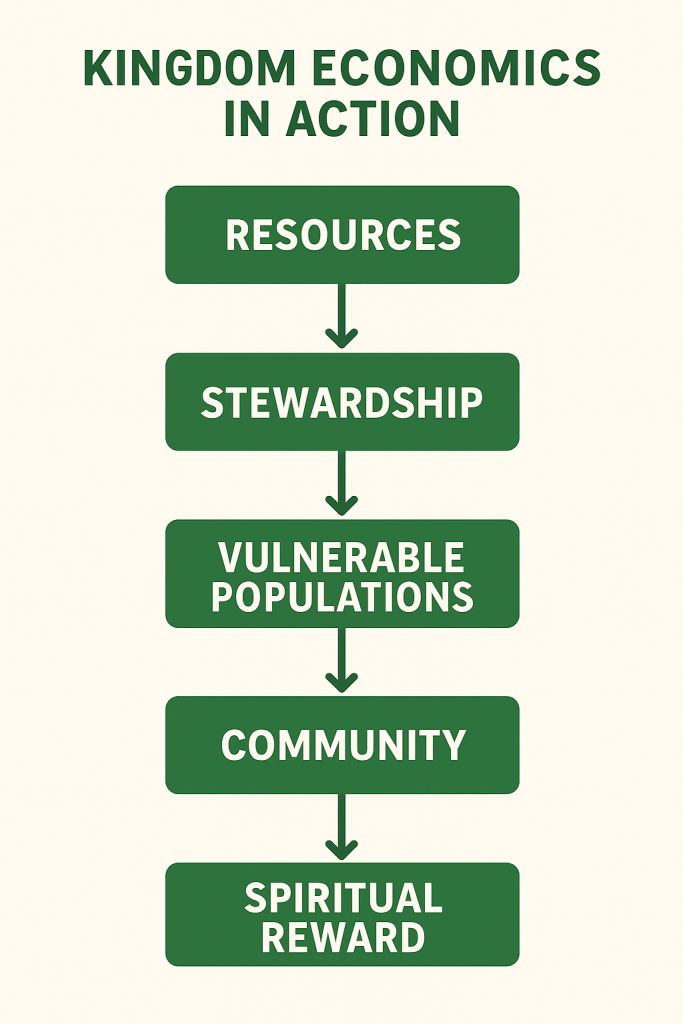
Kingdom wealth is measured not by accumulation but by generosity. Supporting widows represents an investment in God’s economy, yielding eternal dividends. Luke 6:38 (KJV) underscores this principle: “Give, and it shall be given unto you…”

12. Avoiding Exploitation
Giving to widows requires discernment. The early church emphasized the importance of character and integrity, ensuring that support did not enable idleness but reinforced responsibility (1 Timothy 5:5, KJV). This reflects both wisdom and ethical stewardship.

13. The Role of Community
Caring for widows is not solely individual but communal. Acts 6:1–6 (KJV) records the appointment of deacons to ensure fair distribution of aid, demonstrating organized communal responsibility for the vulnerable.

14. Social Implications of Provision
Supporting widows strengthens society by addressing systemic inequality. When communities uphold the dignity of the vulnerable, social cohesion, trust, and stability are reinforced. Conversely, neglect perpetuates cycles of poverty and marginalization.

15. Giving Beyond Finances
Provision can include emotional support, spiritual mentorship, and practical aid, not only money. Visiting, praying with, and advocating for widows embodies the full spectrum of biblical compassion.

16. Widowhood and Spiritual Authority
Widows in the Bible often wielded influence through faith, prayer, and wisdom. Supporting them thus enhances the spiritual fabric of the community, recognizing their potential contributions beyond material need.

17. Psychological Benefits for the Giver
Generosity toward widows cultivates humility, empathy, and purpose. Studies in positive psychology show that altruistic giving improves well-being, life satisfaction, and social connectedness (Lyubomirsky et al., 2005). Biblical giving is therefore mutually restorative.

18. Modern Application
Today, believers can support widows through structured programs, direct assistance, mentorship, and advocacy. Churches often facilitate stipends, food assistance, and housing support. Kingdom giving emphasizes dignity and empowerment, not dependence or charity alone.

19. Integration of Faith and Action
True religion, according to James 1:27 (KJV), involves both belief and action. Giving to widows demonstrates practical faith, integrating spiritual commitment with ethical responsibility. Faith without works is incomplete.

20. Conclusion
Biblical instruction on giving to widows underscores God’s care for the marginalized, the moral obligation of the community, and the spiritual benefits of generosity. Whether through financial support, empowerment, or advocacy, giving to widows reflects the heart of God, strengthens communities, and cultivates personal virtue. As Proverbs 31:8–9 (KJV) exhorts, believers must “open thy mouth for the dumb in the cause of all such as are appointed to destruction,” including widows, fulfilling God’s law of justice and mercy. Supporting the fatherless and vulnerable is a divine mandate that reflects God’s heart, strengthens communities, and nurtures both giver and receiver. True religion integrates faith, justice, and compassion, ensuring that no widow or orphan is neglected. By providing material, emotional, and spiritual support, believers live out Kingdom economics and social justice principles, fulfilling God’s command to love and protect the vulnerable in every generation.


References

  • The Holy Bible, King James Version.
  • Lyubomirsky, S., Sheldon, K. M., & Schkade, D. (2005). Pursuing happiness: The architecture of sustainable change. Review of General Psychology, 9(2), 111–131.
  • Taylor, S. E. (2011). Social support: A review. In H. S. Friedman (Ed.), The Oxford handbook of health psychology (pp. 189–214). Oxford University Press.
  • Lyubomirsky, S., Sheldon, K. M., & Schkade, D. (2005). Pursuing happiness: The architecture of sustainable change. Review of General Psychology, 9(2), 111–131.
  • Shonkoff, J. P., et al. (2012). The lifelong effects of early childhood adversity and toxic stress. Pediatrics, 129(1), e232–e246.

How physical beauty is misleading?

Photo by Daryl Johnson on Pexels.com

Physical beauty, though often celebrated as a gift, has proven to be one of the most deceptive forms of power in human history. Society’s fixation on external appearance has created a hierarchy that equates attractiveness with moral worth, intelligence, and capability. However, this illusion blinds individuals to the deeper truths of human character. The ancient philosopher Plato warned of this in Phaedrus, teaching that beauty can inspire virtue or lead to moral corruption depending on how it is perceived and pursued (Plato, trans. 2002).

The tendency to overvalue beauty, known as the “halo effect,” has been extensively documented in psychology. According to Dion, Berscheid, and Walster (1972), physically attractive individuals are often presumed to possess positive personality traits such as kindness and honesty, even without evidence. This cognitive bias influences hiring practices, romantic relationships, and social trust. Yet such assumptions often collapse when beauty is separated from integrity.

Historically, beauty has also been weaponized as a form of manipulation and deception. In biblical narratives, figures such as Delilah and Jezebel used physical allure to sway powerful men and alter political outcomes (Judges 16:4–22; 1 Kings 21). These stories serve as moral parables that external attraction, when divorced from righteousness, can lead to destruction. The same is true in modern times, where seductive appearances are often exploited in advertising, media, and politics.

The media plays a significant role in sustaining the illusion of beauty as truth. From Hollywood films to social media influencers, appearance has become a currency of influence. Naomi Wolf (1991) argued in The Beauty Myth that beauty functions as a political weapon, maintaining control over women by convincing them that worth is conditional upon youth and physical perfection. This has created a generation of individuals chasing illusions, mistaking image for identity.

Furthermore, beauty can foster narcissism and moral decay when it becomes an idol of self-worship. The apostle Paul warned of those who are “lovers of their own selves” and “boasters” (2 Timothy 3:2, KJV), suggesting that an obsession with outward perfection reflects spiritual emptiness. Modern psychology echoes this sentiment, linking excessive concern with appearance to narcissistic personality traits (Campbell & Foster, 2007).

Physical beauty also distorts social justice by granting unearned privilege. Attractive individuals often receive lighter criminal sentences, better job opportunities, and greater trust from others—a phenomenon known as “lookism” (Hamermesh & Biddle, 1994). Such bias reflects the moral blindness of a culture that values aesthetics over ethics.

In relationships, physical attraction can cloud discernment. Proverbs 31:30 (KJV) reminds us that “favour is deceitful, and beauty is vain: but a woman that feareth the Lord, she shall be praised.” True beauty lies in moral and spiritual substance, not fleeting physical form. Yet many pursue partners based on appearance alone, only to find that emotional instability or selfishness ruins what seemed ideal.

The allure of beauty also conceals the pain of those who possess it. Attractive people often face objectification and unrealistic expectations. Many celebrities have spoken of feeling trapped by their looks, treated as commodities rather than human beings. Marilyn Monroe, one of the most celebrated beauties of the 20th century, famously lamented that people saw her as a fantasy, not as a person (Banner, 2011).

Moreover, beauty can isolate rather than empower. Those perceived as beautiful are often distrusted by peers of the same gender, or envied to the point of social exclusion (Cash, 1990). Thus, the privilege of attractiveness can paradoxically create loneliness, as one becomes a projection of others’ desires rather than a participant in genuine connection.

In spiritual contexts, beauty is meant to reflect divine harmony rather than human vanity. The book of Psalms declares that the Lord “shall beautify the meek with salvation” (Psalm 149:4, KJV), signifying that true beauty emerges from humility and godliness. Yet modern society reverses this order—worshipping the creation rather than the Creator (Romans 1:25). This inversion leads to moral disorientation and loss of sacred identity.

The deception of beauty is also evident in global culture, where Eurocentric ideals dominate aesthetic standards. Colonial history promoted light skin, straight hair, and Euro-featured symmetry as the universal symbols of attractiveness, marginalizing non-European identities (Hunter, 2007). Such conditioning distorts self-worth among people of color, perpetuating colorism and internalized racism.

Furthermore, beauty’s deception extends to consumerism. The cosmetic and fashion industries profit billions annually by selling insecurity. Advertising convinces individuals that happiness is attainable through external modification—whether through plastic surgery, designer brands, or digital filters. This creates a perpetual cycle of dissatisfaction (Tiggemann & Slater, 2014).

Theologically, physical beauty without moral grounding is likened to a “whited sepulchre,” appearing clean outside but full of corruption within (Matthew 23:27, KJV). This biblical metaphor captures the essence of aesthetic deception—beauty that conceals moral decay. When a culture prioritizes appearance over virtue, it inevitably declines in spiritual discernment.

Beauty’s ephemeral nature also makes it unreliable. Time, illness, and circumstance inevitably alter physical form. Ecclesiastes 3:11 teaches that God “hath made every thing beautiful in his time,” implying that beauty is transient and contextual, not absolute. To anchor one’s identity in the temporal body is to build on sand rather than stone.

Even in art and literature, beauty has been both muse and menace. The story of Dorian Gray in Oscar Wilde’s novel symbolizes the soul’s corruption beneath a flawless exterior. Wilde’s allegory exposes the danger of elevating beauty over morality—a warning still relevant in an age dominated by filtered perfection.

Scientific studies have shown that the brain’s pleasure centers respond to symmetry and proportionality (Rhodes, 2006), yet these biological preferences can be manipulated by media saturation. What begins as an instinctive appreciation for order can evolve into obsession when culture defines beauty narrowly.

The moral cost of this deception is profound. When society rewards appearance over virtue, character formation is neglected. The result is a generation trained to curate images rather than cultivate inner values. The Prophet Samuel’s declaration still stands true: “Man looketh on the outward appearance, but the Lord looketh on the heart” (1 Samuel 16:7, KJV).

In conclusion, physical beauty, though alluring, is a fragile and misleading measure of worth. Its seduction lies in its ability to disguise emptiness with charm. True wisdom requires seeing beyond the surface—to discern substance beneath shine, integrity behind image, and divinity within imperfection. When humanity learns to value inner virtue over external allure, it will finally see beauty as it was meant to be: a reflection of the soul, not a deception of the flesh.


References

Banner, L. W. (2011). Marilyn: The Passion and the Paradox. Bloomsbury.
Campbell, W. K., & Foster, C. A. (2007). The narcissism epidemic: Living in the age of entitlement. Psychological Inquiry, 18(3), 197–215.
Cash, T. F. (1990). The psychology of physical appearance: Aesthetics, attributes, and images. Body Image Research, 9(2), 51–80.
Dion, K., Berscheid, E., & Walster, E. (1972). What is beautiful is good. Journal of Personality and Social Psychology, 24(3), 285–290.
Hamermesh, D. S., & Biddle, J. E. (1994). Beauty and the labor market. American Economic Review, 84(5), 1174–1194.
Hunter, M. (2007). The persistent problem of colorism: Skin tone, status, and inequality. Sociology Compass, 1(1), 237–254.
Plato. (2002). Phaedrus (C. J. Rowe, Trans.). Penguin Classics.
Rhodes, G. (2006). The evolutionary psychology of facial beauty. Annual Review of Psychology, 57, 199–226.
Tiggemann, M., & Slater, A. (2014). NetGirls: The Internet, Facebook, and body image concern in adolescent girls. International Journal of Eating Disorders, 47(6), 630–643.
Wolf, N. (1991). The Beauty Myth: How Images of Beauty Are Used Against Women. HarperCollins.

Kingdom Wealth: God’s Blueprint for Prosperity and Purpose.

The concept of wealth within the biblical framework transcends material accumulation and economic prosperity. True kingdom wealth is rooted in stewardship, divine purpose, and service to others rather than self-indulgence or exploitation. The Most High’s design for wealth has always been redemptive, restorative, and righteous. As Deuteronomy 8:18 (KJV) declares, “But thou shalt remember the LORD thy God: for it is he that giveth thee power to get wealth, that he may establish his covenant.”

In contrast to the materialism and capitalism that dominate worldly systems, biblical prosperity is covenantal—it exists to advance the will of God, care for the poor, and sustain the community. Wealth in the Kingdom is a trust, not a trophy. It is never meant to enslave the believer’s heart but to empower righteous influence.

The Psychology of Wealth and Purpose

From a psychological perspective, wealth tends to magnify the moral and emotional state of its possessor. Materialism often leads to a distorted self-concept, where identity becomes tied to possessions (Kasser, 2016). In contrast, individuals guided by intrinsic values—such as compassion, stewardship, and purpose—display greater emotional stability and fulfillment. Scripture reinforces this truth in Luke 12:15 (KJV): “A man’s life consisteth not in the abundance of the things which he possesseth.”

The Kingdom mindset therefore shifts the believer’s focus from acquisition to assignment. This transformation represents a renewal of the mind (Romans 12:2), where wealth becomes an instrument of righteousness. Kingdom wealth serves people, not pride.

Stewardship vs. Ownership

In biblical theology, humans are not owners but stewards of God’s resources. Psalm 24:1 (KJV) affirms, “The earth is the LORD’s, and the fulness thereof.” Every possession—whether land, talent, or intellect—belongs ultimately to God. This truth humbles the heart and neutralizes greed. Psychologically, stewardship fosters gratitude, accountability, and ethical decision-making, countering the ego-driven impulses of capitalism.

Wealth as a Test of Character

Wealth reveals what is hidden in the heart. Proverbs 11:28 (KJV) warns, “He that trusteth in his riches shall fall.” The psychology of power and wealth often exposes deeper insecurities, leading to overcompensation through control, consumption, or social dominance. In God’s Kingdom, however, power is authenticated through service (Mark 10:44). The greatest test of prosperity is whether one remains humble and generous amid abundance.

The Kingdom Economy

Unlike the capitalist model based on competition and scarcity, the Kingdom economy is grounded in abundance and cooperation. In Acts 4:34–35 (KJV), the early church practiced communal distribution: “Neither was there any among them that lacked.” Their model demonstrates divine equity, where prosperity is shared, not hoarded. Kingdom economics thus aligns with divine justice, prioritizing human need over greed.

Wealth and Responsibility

The Bible consistently associates wealth with moral responsibility. In 1 Timothy 6:17–18 (KJV), Paul instructs, “Charge them that are rich… that they be rich in good works, ready to distribute, willing to communicate.” The accumulation of wealth without generosity invites judgment (James 5:1–3). From a psychological lens, generosity enhances well-being, while greed fuels anxiety and social isolation (Layous et al., 2012).

The Devil’s Counterfeit Kingdom

When Satan offered Jesus “all the kingdoms of the world” in Matthew 4:8–9 (KJV), he was not lying about possessing them temporarily. The “kingdoms” represent systems—political, economic, religious, and cultural—governed by pride, corruption, and idolatry. These include Babylon (economic greed), Rome (military power), Egypt (enslavement and control), and Sodom (pleasure and moral decay). Each symbolizes a facet of worldly dominion designed to draw humanity away from divine authority.

Who Truly Holds Power?

While earthly rulers boast of influence, Scripture affirms that all true power belongs to God. Psalm 62:11 (KJV) states, “Power belongeth unto God.” The devil’s power is temporal and deceptive, operating through fear, manipulation, and vanity. The believer’s power, by contrast, flows from righteousness, truth, and the indwelling Spirit of God (Acts 1:8).

The Ethics of Giving and Receiving

Biblical wealth ethics emphasize balance—both giving and receiving in alignment with God’s will. Proverbs 3:9–10 (KJV) encourages, “Honour the LORD with thy substance… so shall thy barns be filled with plenty.” Giving is not loss but investment into eternal purpose. Psychologically, altruistic giving correlates with increased happiness and self-worth (Post, 2005).

God’s Heart for Widows

The Bible repeatedly emphasizes that widows are among the most vulnerable members of society. In ancient Israel, widows often lacked financial support because they were dependent on their husbands. God commands His people to care for them, reflecting His justice and mercy:

  • Deuteronomy 10:18 (KJV):“He doth execute the judgment of the fatherless and widow, and loveth the stranger, in giving him food and raiment.”
    • God Himself is described as a defender and provider for widows. Helping widows aligns us with His character.
  • Psalm 68:5 (KJV):“A father of the fatherless, and a judge of the widows, is God in his holy habitation.”
    • God identifies as the protector of widows, showing that caring for them is an extension of worshiping Him.

2. Old Testament Instructions

In the Mosaic Law, caring for widows was often tied to practical provision, especially through gleaning, charity, and justice:

  • Exodus 22:22–24 (KJV):“Ye shall not afflict any widow, or fatherless child. If thou afflict them in any wise, and they cry at all unto me, I will surely hear their cry.”
    • Oppressing a widow was equated with oppressing God Himself. The law ensured widows were protected, not exploited.
  • Deuteronomy 14:29 (KJV): The tithe and offerings were to be shared with “the stranger, the fatherless, and the widow.”
    • God’s economic system included widows as beneficiaries, ensuring they could survive even if they lacked a male provider.
  • Ruth 2:2–3 (KJV): Ruth, a widow, was allowed to glean in Boaz’s field.
    • This illustrates practical giving: providing access to resources and opportunity, not only handouts.

3. New Testament Principles

In the New Testament, the church formalized support for widows as part of spiritual and social responsibility:

  • 1 Timothy 5:3–4 (KJV):“Honour widows that are widows indeed. But if any widow have children or nephews, let them learn first to shew piety at home, and to requite their parents: for that is good and acceptable before God.”
    • The apostle Paul distinguishes between widows who are truly alone and those with family. Giving is primarily for those who lack other support.
  • 1 Timothy 5:9–10 (KJV): Paul outlines qualifications for widows who receive support from the church. They must be reputable, have a good testimony, and show hospitality.
    • This shows that giving to widows was not indiscriminate; it was intended to support godly women in need.
  • James 1:27 (KJV):“Pure religion and undefiled before God and the Father is this, To visit the fatherless and widows in their affliction, and to keep himself unspotted from the world.”
    • Caring for widows is a central marker of true, undefiled religion.

4. Psychological and Spiritual Effects of Giving to Widows

Psychologically, giving to widows combats societal neglect, reduces fear and isolation, and reinforces dignity. It fosters empathy and gratitude, while breaking selfishness in the giver.

Spiritually, giving reflects God’s heart, cultivates generosity, and aligns the giver with kingdom principles of justice, mercy, and righteousness (Proverbs 19:17). It is both a blessing for the widow and a spiritual investment for the giver.


5. Modern Application

In contemporary practice, giving to widows can take many forms:

  1. Financial Support – Direct gifts, stipends, or assistance with bills.
  2. Community Assistance – Helping with groceries, housing, or medical needs.
  3. Spiritual Encouragement – Visiting, praying with, and mentoring widows.
  4. Opportunity Creation – Providing jobs, training, or means of self-sufficiency.

The principle remains the same: widows who lack other support are to be cared for as a reflection of God’s love.


Summary:
Giving to widows in the Bible is both a command and a blessing. It demonstrates godliness (James 1:27), honors God’s heart (Deut. 10:18), and is part of a believer’s duty to the vulnerable. True giving is intentional, respectful, and empowering, not merely a formality or charity.

Capitalism vs. Kingdom Commerce

Capitalism thrives on competition, but the Kingdom thrives on cooperation. The capitalist mindset promotes profit even at the expense of people, while the Kingdom system promotes productivity that blesses the community. Proverbs 16:8 (KJV) declares, “Better is a little with righteousness than great revenues without right.” Kingdom wealth prioritizes justice and sustainability over short-term gain.

Materialism and the Empty Self

Materialism offers a false sense of security and identity. The psychological phenomenon known as the “empty self” (Cushman, 1990) describes modern individuals who fill emotional voids with consumerism. This aligns with Ecclesiastes 5:10 (KJV): “He that loveth silver shall not be satisfied with silver.” The more we pursue things, the less fulfilled we become.

The Role of Contentment

Contentment anchors the believer against covetousness. Philippians 4:11 (KJV) declares, “I have learned, in whatsoever state I am, therewith to be content.” Contentment is not complacency but spiritual stability—the confidence that God is the source of all provision. Psychologically, contentment reduces envy and fosters peace of mind.

Economic Justice and the Poor

The Bible commands economic justice. Proverbs 19:17 (KJV) promises, “He that hath pity upon the poor lendeth unto the LORD.” Neglecting the poor is a spiritual offense (Ezekiel 16:49). Capitalist societies often ignore systemic poverty, perpetuating inequality through unjust systems. Kingdom wealth, by contrast, redistributes blessings to uplift others.

Wealth and Worship

Money is morally neutral—it becomes holy or corrupt depending on intent. Jesus warned in Matthew 6:24 (KJV): “Ye cannot serve God and mammon.” Worshipping wealth enslaves the soul, while surrendering it sanctifies our stewardship. Kingdom-minded believers see every dollar as an opportunity to manifest God’s glory through impact.

The Transformation of Power

In worldly terms, power controls others. In the Kingdom, power serves others. Jesus redefined authority in John 13 when He washed His disciples’ feet. Kingdom power is exercised through humility, self-discipline, and obedience. True power is never domination—it is transformation.

The Psychological Trap of Greed

Greed is both spiritual and psychological bondage. It originates from fear of lack and manifests as insatiable craving. Research links greed to increased depression and moral disengagement (Seuntjens et al., 2015). Spiritually, greed is idolatry (Colossians 3:5). The cure is gratitude—a posture that restores perspective and peace.

Restoring the Divine Order of Wealth

God designed wealth to sustain creation and bless humanity. When believers align finances with faith, they reverse the curse of exploitation. Malachi 3:10 (KJV) highlights the principle of tithing as a covenant of trust and reciprocity. Obedience in giving opens spiritual and material abundance.

Cultural Power and Influence

The “kingdoms of this world” include cultural dominance—media, education, and entertainment. These systems shape thought, normalize sin, and influence behavior. Kingdom citizens are called to engage culture without conforming to it (Romans 12:2). Influence should lead to illumination, not imitation.

Reclaiming Dominion

When Christ rose from the grave, He declared, “All power is given unto me in heaven and in earth” (Matthew 28:18, KJV). This statement reclaimed humanity’s lost dominion. The believer’s authority, therefore, is not in possessions but in position—being seated with Christ in heavenly places (Ephesians 2:6).

Wealth and the End Times

Revelation 18 depicts Babylon’s economic collapse, symbolizing the fall of corrupt world systems. Those who trusted in materialism mourned, but the saints rejoiced because divine justice prevailed. This eschatological vision warns believers not to build eternal hope on temporary wealth.

Power Reimagined Through Service

Jesus taught that leadership in the Kingdom is servant-centered (Matthew 20:26–28). This redefines greatness as the ability to lift others rather than exalt oneself. The psychology of servant leadership demonstrates higher emotional intelligence and resilience (Greenleaf, 2002).

The Eternal Value of Generosity

Generosity is a heavenly investment that yields eternal dividends. Matthew 6:20 (KJV) instructs, “Lay up for yourselves treasures in heaven.” Acts of giving create legacy, spiritual growth, and divine favor. The more one gives, the more one reflects the image of the Giver.

Conclusion

Kingdom wealth is not defined by possessions but by purpose. It aligns prosperity with righteousness, power with service, and influence with integrity. Materialism, capitalism, and the worldly pursuit of power lead to spiritual poverty, while Kingdom stewardship produces eternal fruit. True wealth is measured not by what one owns but by what one gives. In the end, all power, all glory, and all wealth belong to the Most High, who alone reigns forever.


References (KJV & Academic):

  • The Holy Bible, King James Version.
  • Cushman, P. (1990). Why the self is empty: Toward a historically situated psychology. American Psychologist, 45(5), 599–611.
  • Kasser, T. (2016). Materialistic values and goals. Annual Review of Psychology, 67, 489–514.
  • Layous, K., et al. (2012). The benefits of prosocial spending. Journal of Positive Psychology, 7(5), 377–389.
  • Post, S. (2005). Altruism, happiness, and health: It’s good to be good. International Journal of Behavioral Medicine, 12(2), 66–77.
  • Seuntjens, T. G., et al. (2015). Greed: A motivational and social comparison perspective. Personality and Individual Differences, 74, 153–158.
  • Greenleaf, R. K. (2002). Servant leadership: A journey into the nature of legitimate power and greatness. Paulist Press.

The Dark Fascination with Death: Understanding Necromancy and Necrophilia Through Biblical and Psychological Lenses.

Photo by cottonbro studio on Pexels.com

Throughout human history, death has evoked both fear and fascination. While most cultures honor the dead with reverence, some have crossed moral and spiritual boundaries by attempting to communicate with or even engage intimately with the dead. This essay explores two disturbing yet historically significant phenomena—necromancy (communication with the dead) and necrophilia (sexual attraction to corpses)—from both a biblical and psychological standpoint.

In the Bible, necromancy is strictly forbidden. Deuteronomy 18:10–12 (KJV) declares, “There shall not be found among you any one that maketh his son or his daughter to pass through the fire, or that useth divination, or an observer of times, or an enchanter, or a witch, or a charmer, or a consulter with familiar spirits, or a wizard, or a necromancer.” Such practices were considered abominations before God because they defiled the purity of spiritual worship and invited demonic deception.

The most famous biblical account of necromancy occurs in 1 Samuel 28, where King Saul, desperate for guidance, consults the Witch of Endor to summon the spirit of the prophet Samuel. Although the spirit appeared and rebuked Saul, this act marked Saul’s spiritual downfall. His decision to seek the dead rather than God demonstrated how fear, desperation, and disobedience lead to spiritual corruption.

Necromancy, at its core, is a rebellion against divine order. It attempts to bridge a boundary that God has firmly set: the separation between the living and the dead. Ecclesiastes 9:5 (KJV) teaches, “For the living know that they shall die: but the dead know not any thing.” Seeking wisdom or comfort from the dead implies mistrust in God’s sovereignty and a reliance on forbidden spiritual sources.

In the ancient world, necromancy was not uncommon. Egyptian priests, Babylonian magicians, and Greco-Roman mystics practiced rituals to speak with the dead or use corpses in spiritual ceremonies. Archaeological evidence from Mesopotamia and Egypt reveals tomb inscriptions and magical texts invoking spirits for divination. These ancient forms of necromancy often merged with ancestor worship and early occultism.

From a psychological perspective, necromancy can be seen as a manifestation of unresolved grief or obsession with control. Carl Jung interpreted such fascination with death as a projection of humanity’s shadow—the repressed part of the psyche that seeks power through forbidden means. This aligns with Romans 1:21–23 (KJV), which describes how humans, “professing themselves to be wise,” became vain and turned to idolatry and corruption.

Necrophilia, though distinct from necromancy, shares similar spiritual and psychological roots in death obsession and moral decay. It represents a severe deviation from natural affection and empathy. Psychologically, necrophilia is classified as a paraphilia—a disorder involving intense sexual attraction to corpses (American Psychiatric Association, 2013). It reflects an inability to form healthy relationships, often rooted in control, dominance, or fear of rejection.

In biblical terms, necrophilia parallels the corruption described in Romans 1:26–27, where individuals “changed the natural use into that which is against nature.” The act defies both morality and biology, reflecting a complete breakdown of conscience and spiritual discernment. It exemplifies the result of a reprobate mind—a mind devoid of divine guidance and moral restraint.

Historical accounts show that necrophilia has appeared in various eras and societies. Ancient Egyptian embalming practices, where priests prepared royal corpses, sometimes included violations of the deceased. In medieval Europe, grave robbers and certain occult sects used corpses in rituals claiming to harness death’s power. These acts often combined sexual perversion with spiritual deception.

The modern fascination with death persists in subtle forms through pop culture, horror films, and gothic subcultures. Television shows romanticizing vampires or communicating with spirits normalize necromantic ideas. Psychologically, repeated exposure desensitizes the public to death’s sacredness. Spirit boards, séances, and “ghost-hunting” entertainment echo ancient necromantic rituals, blurring moral and spiritual boundaries.

Biblically, such practices are spiritual contamination. Isaiah 8:19 (KJV) warns, “And when they shall say unto you, Seek unto them that have familiar spirits, and unto wizards that peep, and that mutter: should not a people seek unto their God?” This verse rebukes the human tendency to seek the supernatural through forbidden means rather than trusting the Creator.

The allure of necromancy lies in the human desire for control over the unknown. People often turn to it out of grief, curiosity, or power hunger. Yet, Scripture reminds believers that death belongs to God alone: “It is appointed unto men once to die, but after this the judgment” (Hebrews 9:27, KJV). Attempting to manipulate or communicate beyond that divine order opens the soul to deception.

From a clinical psychology viewpoint, necromantic or necrophilic tendencies often arise from trauma, loss, or deep-seated fear of abandonment. Freud associated such behavior with Thanatos, the death drive—a subconscious compulsion toward destruction or reunion with the dead. It is an extreme manifestation of emotional stagnation and moral disorder.

Spiritually, necromancy and necrophilia mirror the broader human rebellion against God. Both represent attempts to redefine life and death outside divine authority. In doing so, individuals open themselves to unclean influences. Ephesians 5:11 (KJV) instructs, “Have no fellowship with the unfruitful works of darkness, but rather reprove them.”

Throughout church history, necromancy was considered a major form of witchcraft. Early Christian theologians like Augustine and Tertullian condemned all attempts to summon the dead as demonic illusions. They taught that any spirit appearing in such rituals was not the deceased but an impersonating demon meant to deceive the living.

The Bible repeatedly connects necromancy with judgment. King Manasseh practiced it and “wrought much wickedness in the sight of the Lord” (2 Kings 21:6, KJV), leading to Judah’s eventual downfall. Similarly, necromantic practices among the Canaanites led God to command Israel to destroy their altars and idols (Deuteronomy 12:2–3).

Modern forms of necromancy include spiritism, channeling, and ancestor veneration when conducted outside of biblical faith. These practices may appear innocent or comforting but carry spiritual risk. They shift the focus from God’s Word to unseen forces that can manipulate emotions and beliefs.

Even literature and media glamorize necromantic powers through characters like witches, mediums, and “dark magicians.” While often fictional, they desensitize society to the gravity of death and spiritual deception. The fascination with the “undead” reflects humanity’s denial of mortality and desire to transcend divine boundaries through artificial means.

Psychologically, necrophilic attraction symbolizes the death of empathy and moral conscience. Individuals exhibiting such behaviors often display antisocial traits, lack of remorse, and detachment from reality (Holmes, 1998). Spiritually, it parallels the “living dead” described in Ephesians 2:1 (KJV): “And you hath he quickened, who were dead in trespasses and sins.”

Ultimately, both necromancy and necrophilia signify humanity’s corruption when detached from divine truth. They expose the spiritual void that arises when God is removed from the understanding of life and death. Only faith in Christ offers redemption from such darkness, as He declares in John 11:25 (KJV), “I am the resurrection, and the life.”

The fascination with death is not new, but its persistence reveals humanity’s ongoing struggle with mortality and sin. Rather than seeking forbidden contact with the dead, believers are called to honor the sanctity of life and trust in God’s control over death and the afterlife.

In conclusion, necromancy and necrophilia, though distinct, share a spiritual root of rebellion and moral decay. Both attempt to merge life and death in ways that pervert divine order. The Bible warns against these practices not only for moral reasons but to protect the soul from deception. As Ephesians 6:12 (KJV) reminds, “For we wrestle not against flesh and blood, but against principalities, against powers, against the rulers of the darkness of this world.” The only true safeguard against such darkness is the light of God’s Word and the renewing of the mind through Christ.


References

  • American Psychiatric Association. (2013). Diagnostic and Statistical Manual of Mental Disorders (5th ed.). Washington, DC.
  • Freud, S. (1920). Beyond the Pleasure Principle. London: International Psychoanalytic Press.
  • Holmes, R. M. (1998). Sex Crimes: Patterns and Behavior. SAGE Publications.
  • Jung, C. G. (1959). Aion: Researches into the Phenomenology of the Self. Princeton University Press.
  • The Holy Bible, King James Version (KJV).
  • Tertullian, Q. S. F. (197 CE). On the Soul.
  • Augustine of Hippo. (426 CE). City of God.

Let God’s Will Be Done in Your Life

Photo by Nothing Ahead on Pexels.com

Introduction

To submit to the will of God is to align one’s life with divine purpose and wisdom. The KJV Bible emphasizes that God’s plans are perfect, even when human understanding is limited: “For my thoughts are not your thoughts, neither are your ways my ways, saith the Lord” (Isaiah 55:8). Letting His will be done requires trust, humility, and surrender, knowing that God’s design is ultimately for our good.


2. Trusting God’s Plan

Trust is the foundation of surrender. Proverbs 3:5–6 exhorts: “Trust in the LORD with all thine heart; and lean not unto thine own understanding. In all thy ways acknowledge him, and he shall direct thy paths.” Human desire often conflicts with divine intention, but yielding to God ensures guidance beyond our limited perception.


3. Patience in the Process

God’s timing differs from human timing. Ecclesiastes 3:1 reminds us: “To everything there is a season, and a time to every purpose under the heaven.” Letting His will be done requires patience, understanding that delays or detours may serve a higher purpose, shaping character and faith.


4. Surrendering Personal Desires

Surrender is not passive but an active choice to prioritize God’s will over self-interest. Jesus prayed in Gethsemane: “O my Father, if it be possible, let this cup pass from me: nevertheless not as I will, but as thou wilt” (Matthew 26:39). True spiritual maturity involves embracing God’s plan even when it diverges from personal preferences.


5. Obedience as Evidence of Faith

Obedience demonstrates trust in God’s sovereignty. James 1:22 instructs: “But be ye doers of the word, and not hearers only, deceiving your own selves.” Faith without action is incomplete; yielding to God’s will is expressed through daily choices aligned with His Word.


6. Letting Go of Control

Human beings naturally desire control over circumstances, yet God calls for relinquishment. Psalm 37:5 declares: “Commit thy way unto the LORD; trust also in him; and he shall bring it to pass.” By releasing control, believers allow God to orchestrate outcomes that surpass human imagination.


7. Spiritual Growth Through Trials

Challenges and trials often reveal God’s will. Romans 8:28 assures: “And we know that all things work together for good to them that love God, to them who are the called according to his purpose.” Embracing God’s will during hardships strengthens faith, perseverance, and reliance on His promises.


8. Prayer as a Means of Alignment

Prayer is a vital channel for understanding and accepting God’s will. Jesus taught: “After this manner therefore pray ye: Our Father which art in heaven, Hallowed be thy name. Thy kingdom come. Thy will be done in earth, as it is in heaven” (Matthew 6:9–10). Through consistent prayer, believers cultivate discernment and inner peace.


9. The Blessings of Submission

Submission to God brings spiritual fulfillment. Psalm 40:8 proclaims: “I delight to do thy will, O my God: yea, thy law is within my heart.” When the believer aligns life with divine purpose, blessings manifest in guidance, peace, and strengthened relationship with God.


10. Conclusion

Letting God’s will be done is a lifelong journey of faith, obedience, and trust. By surrendering desires, embracing patience, and practicing continual prayer, believers align with God’s perfect plan. As Philippians 2:13 reminds us: “For it is God which worketh in you both to will and to do of his good pleasure.” True peace and purpose arise when one yields fully to His will.

Don’t Give Up: The Power of Prayer.

Prayer is the lifeline of a believer, the direct channel of communication with God. It is through prayer that one expresses faith, seeks guidance, and finds comfort in times of distress. The Bible encourages persistent prayer, assuring believers that God hears and responds to those who earnestly seek Him. As stated in 1 Thessalonians 5:17, “Pray without ceasing,” which reminds us that prayer should be an ongoing, steadfast practice, not a mere occasional act.

Many believers face moments when the weight of life feels unbearable. In these moments, prayer becomes a refuge, providing peace beyond human understanding. Philippians 4:6-7 exhorts, “Be careful for nothing; but in every thing by prayer and supplication with thanksgiving let your requests be made known unto God. And the peace of God, which passeth all understanding, shall keep your hearts and minds through Christ Jesus.” Here, prayer is not only a plea for help but also a conduit for divine tranquility.

Prayer is powerful because it aligns our will with God’s will. Often, humans desire immediate solutions or worldly comforts, but prayer refocuses our hearts on divine purpose. Jesus taught in Matthew 6:10, “Thy kingdom come, Thy will be done in earth, as it is in heaven.” By praying in alignment with God’s plan, we invite His guidance into our decisions and actions, ensuring that our paths are blessed and purposeful.

Persistence in prayer demonstrates faith. Luke 18:1 recounts Jesus teaching a parable of a widow who continually sought justice from an unjust judge. Jesus concludes, “And shall not God avenge his own elect, which cry day and night unto him, though he bear long with them?” Persistent prayer is a testimony of trust in God’s timing, reinforcing that He works for the benefit of those who wait on Him.

Prayer is also a weapon against spiritual adversity. Ephesians 6:18 instructs believers, “Praying always with all prayer and supplication in the Spirit, and watching thereunto with all perseverance and supplication for all saints.” In the face of trials, prayer fortifies the soul against fear, doubt, and temptation. It is a shield that strengthens believers to stand firm in faith despite worldly opposition.

Many biblical figures illustrate the power of prayer in transforming circumstances. Daniel, in captivity, prayed fervently three times a day (Daniel 6:10). Despite facing the threat of the lions’ den, his steadfast prayer invoked God’s protection, demonstrating that unwavering faith in prayer can produce miraculous deliverance even in dire situations.

Prayer fosters intimacy with God. Through it, believers share their innermost thoughts, fears, and desires, cultivating a relationship rooted in trust and love. Psalm 145:18 affirms, “The LORD is nigh unto all them that call upon him, to all that call upon him in truth.” This nearness is not merely physical but relational, creating a profound spiritual connection that empowers, sustains, and consoles.

The effectiveness of prayer is not measured by immediate answers but by the transformation it brings within the believer. Romans 12:12 advises, “Rejoicing in hope; patient in tribulation; continuing instant in prayer.” Even when solutions seem delayed, prayer shapes patience, hope, and endurance, molding character in alignment with God’s divine purposes.

Prayer is a source of guidance in confusion. When facing difficult decisions, believers often turn to prayer for clarity and direction. Proverbs 3:5-6 instructs, “Trust in the LORD with all thine heart; and lean not unto thine own understanding. In all thy ways acknowledge him, and he shall direct thy paths.” Through prayer, we receive divine wisdom that transcends human reasoning.

The power of communal prayer is significant. When believers unite in prayer, the spiritual impact is amplified. Matthew 18:19-20 assures, “Again I say unto you, That if two of you shall agree on earth as touching any thing that they shall ask, it shall be done for them of my Father which is in heaven. For where two or three are gathered together in my name, there am I in the midst of them.” Corporate prayer strengthens faith, unity, and spiritual resolve.

Prayer also acts as a medium for gratitude. By thanking God for His blessings, believers cultivate a heart of appreciation and humility. 1 Thessalonians 5:18 instructs, “In every thing give thanks: for this is the will of God in Christ Jesus concerning you.” Gratitude in prayer nurtures spiritual resilience and invites more of God’s favor into one’s life.

Suffering often prompts the most fervent prayers. Job’s unwavering dialogue with God amidst profound loss exemplifies this truth. Job 1:21 declares, “The LORD gave, and the LORD hath taken away; blessed be the name of the LORD.” Even in grief, prayer sustains hope and reinforces trust in God’s sovereignty.

Prayer is a balm for anxiety and fear. When overwhelmed by life’s uncertainties, believers find solace in casting their burdens on God. 1 Peter 5:7 encourages, “Casting all your care upon him; for he careth for you.” Through prayer, anxiety is transformed into trust, and fear gives way to divine assurance.

Intercessory prayer demonstrates love and compassion. By praying for others, believers participate in God’s work of mercy. James 5:16 states, “The effectual fervent prayer of a righteous man availeth much.” Intercession extends God’s grace to those in need, reflecting Christ’s heart of care and concern.

Prayer is also an exercise in spiritual discipline. Regular devotion shapes the believer’s mind, aligning thoughts, emotions, and actions with godliness. Acts 1:14 highlights the early church, “These all continued with one accord in prayer and supplication, with the women, and Mary the mother of Jesus, and with his brethren.” Consistent prayer fosters unity and spiritual strength.

Through prayer, believers experience deliverance from temptation. Jesus’ instruction in Matthew 26:41 emphasizes, “Watch and pray, that ye enter not into temptation: the spirit indeed is willing, but the flesh is weak.” Prayer equips the believer to resist sin and maintain spiritual integrity amidst challenges.

Even unanswered prayers carry lessons. They teach patience, deepen faith, and cultivate reliance on God’s wisdom. Isaiah 55:8-9 reminds, “For my thoughts are not your thoughts, neither are your ways my ways, saith the LORD. For as the heavens are higher than the earth, so are my ways higher than your ways, and my thoughts than your thoughts.” Persistence in prayer nurtures trust in God’s perfect plan.

Prayer encourages humility. By acknowledging dependence on God, believers confront pride and self-sufficiency. Psalm 34:17 asserts, “The righteous cry, and the LORD heareth, and delivereth them out of all their troubles.” Humility through prayer positions the believer to receive divine intervention.

Prayer transcends circumstance. Whether in joy or sorrow, abundance or lack, believers are called to maintain a life of prayer. Nehemiah 1:4 demonstrates, “And it came to pass, when I heard these words, that I sat down and wept, and mourned certain days, and fasted, and prayed before the God of heaven.” Prayer is the constant companion through every season of life.

Finally, prayer is the ultimate expression of hope. It affirms that God is present, active, and listening. Romans 8:26 teaches, “Likewise the Spirit also helpeth our infirmities: for we know not what we should pray for as we ought: but the Spirit itself maketh intercession for us with groanings which cannot be uttered.” Even when words fail, prayer bridges the gap between human weakness and divine strength.

In conclusion, prayer is the believer’s anchor, shield, and source of strength. It transforms hearts, shapes character, and opens the door for God’s miraculous intervention. By not giving up, by praying without ceasing, believers experience the power of prayer, a power that moves mountains, comforts the weary, and fulfills God’s will in lives devoted to Him. Persistent prayer is not only a spiritual duty but a lifeline, a testament to faith, and a declaration that no matter the circumstance, one should never give up.

Biblical References (KJV)

  • Bible. (2000). The Holy Bible: King James Version. Thomas Nelson.
  • Matthew 7:7–8 – Asking, seeking, knocking in prayer.
  • Philippians 4:6–7 – Prayer and supplication with thanksgiving.
  • James 5:16 – The effectual fervent prayer of a righteous man availeth much.
  • 1 Thessalonians 5:17 – Pray without ceasing.
  • Luke 18:1–8 – Parable of the persistent widow.
  • Mark 11:24 – Believing in what we pray for.
  • Psalm 34:17 – The Lord hears the righteous when they cry.
  • Jeremiah 33:3 – Call unto Me, and I will answer thee.
  • Romans 12:12 – Continuing instant in prayer.

Scholarly & Theological References

  • Alexander, T. D. (2017). Prayer in the Bible: A theological and pastoral approach. Grand Rapids, MI: Baker Academic.
  • Foster, R. J. (1992). Celebration of discipline: The path to spiritual growth. San Francisco, CA: HarperSanFrancisco.
  • Packer, J. I. (2001). Knowing God. Downers Grove, IL: InterVarsity Press.
  • Blackaby, H., & Blackaby, R. (2001). Spiritual leadership: Moving people on to God’s agenda. Nashville, TN: B&H Publishing.
  • Grudem, W. (1994). Systematic theology: An introduction to biblical doctrine. Grand Rapids, MI: Inter-Varsity Press. (See chapters on prayer and providence.)

Spiritual Pride and Arrogance: The Silent Sin That Separates Man from God.

Photo by magapls . on Pexels.com

Spiritual pride and arrogance are among the most deceptive and destructive sins in the life of a believer. Unlike visible transgressions such as adultery or theft, this sin disguises itself as righteousness. It creeps into the heart of a person who believes they are walking in close fellowship with God, whispering lies of superiority and holiness. This inward corruption often takes root in those who have achieved spiritual maturity or influence, convincing them that their understanding or obedience elevates them above others. It is a silent cancer of the soul that blinds the believer to their own need for humility and grace.

The danger of spiritual pride lies in its subtlety. A person may begin with sincere devotion, fasting, praying, and studying scripture daily, yet unknowingly begin to exalt themselves in their mind. They may start to measure others’ faith by their own standards and assume that their relationship with God is deeper, purer, or more enlightened. In that deception, their heart slowly hardens, and humility—one of the greatest signs of true godliness—begins to fade. As Proverbs 16:18 (KJV) warns, “Pride goeth before destruction, and a haughty spirit before a fall.”

This sin is especially dangerous because it disguises itself as holiness. A spiritually proud person may think, “I am not like other Christians; I fast more, I pray more, I know more Scripture.” These are the very thoughts that separate them from the essence of Christ’s teaching, which is love, meekness, and servanthood. Even the most devoted believers are not exempt from this temptation. The closer one walks with God, the greater the temptation becomes to believe that closeness is earned rather than given by grace.

In the Gospels, Jesus repeatedly warned against such attitudes. The Pharisees are the ultimate biblical example of spiritual arrogance. They knew the Law, they prayed publicly, and they boasted in their knowledge of Scripture. Yet Jesus declared in Matthew 23:27 (KJV), “Woe unto you, scribes and Pharisees, hypocrites! for ye are like unto whited sepulchres, which indeed appear beautiful outward, but are within full of dead men’s bones.” Their pride blinded them from recognizing the very Messiah they had long awaited.

King Uzziah’s story provides a sobering example of how spiritual pride can destroy even the most anointed lives. Uzziah began as a godly king who sought the Lord, and as long as he did so, God caused him to prosper. But as his fame grew, his heart was lifted up in pride. He entered the temple to burn incense, a duty reserved for the priests, defying the sacred order of God. When the priests confronted him, his anger flared, and leprosy broke out on his forehead as judgment from the Lord (2 Chronicles 26:16–21, KJV). Uzziah’s downfall was not due to sexual sin or greed—it was pride.

This story illustrates how pride can lead even the righteous to overstep divine boundaries. Uzziah’s heart shifted from dependence to dominance; he mistook God’s favor for personal greatness. In the end, he was isolated, living as a leper until his death—a tragic picture of how pride isolates the soul from God and community.

Another often-overlooked example of spiritual pride appears in the apocryphal narrative of Eleazar ben Simon, a Jewish zealot leader during the siege of Jerusalem. Although not a canonical figure, his spirit reflects the same arrogance seen throughout Scripture. Eleazar, convinced of his divine favor, led rebellions that contributed to the fall of his people. He believed his zeal for purity made him holier than others, yet his pride blinded him to the cost of his actions. Like many today, he mistook his self-righteousness for God’s righteousness, leading to ruin.

The danger of pride lies not only in its ability to deceive but in its resistance to correction. A proud spirit rarely listens, even to the voice of God. Proverbs 11:2 (KJV) declares, “When pride cometh, then cometh shame: but with the lowly is wisdom.” A person walking in humility can be corrected, guided, and renewed; but a proud soul resists repentance, seeing themselves as already righteous.

Even Lucifer’s fall originated from spiritual pride. Isaiah 14:13–15 (KJV) records his heart’s arrogance: “For thou hast said in thine heart, I will ascend into heaven, I will exalt my throne above the stars of God.” His desire to be equal with God led to his eternal separation from divine presence. Thus, pride was the first sin ever committed, setting the precedent for all rebellion.

Pride also distorts one’s view of others. A spiritually arrogant person begins to judge rather than intercede. Instead of seeing others through the eyes of grace, they see them through a lens of spiritual hierarchy. They may secretly think, “If only others were as faithful as I am.” This judgmental mindset hardens the heart and creates division within the body of Christ, which directly opposes the spirit of unity and love that God commands (Ephesians 4:2–3, KJV).

The thoughts of a spiritually proud person are often self-elevating and comparative. They compare their devotion, purity, and obedience to others, feeling superior in their perceived closeness to God. This internal dialogue sounds spiritual but is rooted in the flesh. The devil uses these thoughts to distance the believer from grace, for as James 4:6 (KJV) says, “God resisteth the proud, but giveth grace unto the humble.”

Spiritual pride is far more dangerous than sexual sin because it blinds the soul to its need for repentance. A fornicator may know they are sinning, but a spiritually proud person believes they are righteous while actively rebelling against God in heart. This blindness makes pride a greater barrier to salvation than many outward sins. Jesus said in Luke 18:9–14 that the humble tax collector, who beat his chest and cried for mercy, was justified before God, while the self-righteous Pharisee, who boasted of his holiness, was not.

Many believers fall into this trap after spiritual breakthroughs. When one begins to receive revelations, prophetic gifts, or leadership roles, the temptation arises to think that their spirituality is unique or superior. Yet these gifts are not signs of personal greatness but of divine grace. Pride turns gifts into idols, making the believer worship their spiritual status rather than the Giver.

The Apostle Paul is a model of humility amidst great revelation. Despite his spiritual authority, he confessed in 2 Corinthians 12:7 (KJV) that a “thorn in the flesh” was given to him to keep him humble. He understood that without divine restraint, he could easily fall into pride. This admission demonstrates that even the holiest must guard their hearts from arrogance.

Another danger of spiritual pride is its impact on worship. When pride fills the heart, worship becomes performance. The focus shifts from glorifying God to displaying spiritual power or eloquence. True worship, however, flows from brokenness and humility, as seen in Psalm 51:17 (KJV): “The sacrifices of God are a broken spirit: a broken and a contrite heart, O God, thou wilt not despise.”

Pride also disrupts prayer. The self-righteous pray not to commune with God but to be seen or validated. Jesus condemned this in Matthew 6:5 (KJV): “And when thou prayest, thou shalt not be as the hypocrites are… for they love to pray standing in the synagogues… that they may be seen of men.” Prayer rooted in pride is noise to heaven, but prayer rooted in humility reaches the throne of grace.

Spiritual arrogance may even manifest in acts of service. A person may serve faithfully in ministry, but if their motive is recognition, their service becomes self-exaltation. True humility serves quietly, knowing that the only reward worth receiving comes from God alone (Matthew 6:1–4, KJV).

The greatest defense against spiritual pride is continual self-examination and repentance. 2 Corinthians 13:5 (KJV) instructs, “Examine yourselves, whether ye be in the faith.” The humble heart continually checks its motives and acknowledges its dependence on God’s mercy.

Even holy people like Moses, Elijah, and Peter had moments where pride tempted them to act independently of God. Peter, confident in his loyalty, declared that he would never deny Christ, but his pride led him into weakness. Yet through repentance, Peter was restored, showing that humility is the gateway to restoration.

Pride robs believers of intimacy with God. The Lord draws near to the humble but distances Himself from those who exalt themselves. Isaiah 57:15 (KJV) declares that God dwells “with him also that is of a contrite and humble spirit.” Humility invites God’s presence; pride drives it away.

In the end, spiritual pride destroys ministries, relationships, and souls. It blinds the eyes, deafens the ears, and hardens the heart. It can turn a prophet into a Pharisee, a teacher into a tyrant, and a believer into a stumbling block.

To overcome this sin, one must daily surrender to God, remembering that all righteousness comes through Christ alone. The more one beholds His holiness, the more they see their own need for mercy. True spirituality is not about being above others but serving others in love and humility, as Christ did when He washed His disciples’ feet (John 13:14–15, KJV).

Ultimately, spiritual pride is the devil’s masterpiece—a counterfeit of holiness. It convinces people that they are walking with God while they are walking in self-exaltation. The only antidote is a heart of repentance, gratitude, and surrender. For only when the believer humbles themselves under the mighty hand of God will He lift them up in due time (1 Peter 5:6, KJV).

References
Holy Bible, King James Version (KJV).
2 Chronicles 26:16–21; Isaiah 14:13–15; Matthew 6:5; Matthew 23:27; Luke 18:9–14; Proverbs 11:2; Proverbs 16:18; Ephesians 4:2–3; James 4:6; 2 Corinthians 12:7; 2 Corinthians 13:5; Psalm 51:17; Isaiah 57:15; John 13:14–15; 1 Peter 5:6.

The Pride of Life — A Subtle Sin with a Loud Spirit.

Photo by RDNE Stock project on Pexels.com

The phrase “the pride of life” comes directly from 1 John 2:16 (KJV): “For all that is in the world, the lust of the flesh, and the lust of the eyes, and the pride of life, is not of the Father, but is of the world.” It is one of the three great temptations that pull humanity away from God—lust of the flesh, lust of the eyes, and pride of life. Among these, pride is often the most deceptive because it disguises itself as confidence, ambition, or self-worth, but underneath lies rebellion and self-exaltation.

The pride of life is the desire to be admired, praised, and elevated above others. It is the spirit that says, “I don’t need God; I can do it myself.” This sin began long before humanity was created—it started in Heaven when Lucifer, a beautiful angel, became proud of his splendor. Isaiah 14:12–15 (KJV) records his fall: “For thou hast said in thine heart, I will ascend into heaven, I will exalt my throne above the stars of God.” Pride turned an angel into Satan, showing that self-glorification always leads to destruction.

In the Garden of Eden, the pride of life was the final hook that ensnared Eve. Genesis 3:6 (KJV) says, “And when the woman saw that the tree was good for food, and that it was pleasant to the eyes, and a tree to be desired to make one wise…”—she took of the fruit. Eve was deceived into thinking she could become like God. That desire to be wise without submission to divine authority was the pride of life in its purest form.

The pride of life manifests today in many forms—career obsession, social media validation, luxury worship, or even spiritual arrogance. People often chase recognition more than righteousness. Yet, Proverbs 16:18 (KJV) warns, “Pride goeth before destruction, and an haughty spirit before a fall.” Pride blinds us to our need for grace and keeps us from true humility before God.

King Nebuchadnezzar is one of the clearest biblical examples of the pride of life. In Daniel 4:30, he boasted, “Is not this great Babylon, that I have built… by the might of my power, and for the honour of my majesty?” God humbled him instantly, causing him to live like an animal until he recognized that Heaven rules. His pride turned into humiliation, teaching us that glory belongs to God alone.

Another example is King Uzziah. According to 2 Chronicles 26:16 (KJV), “But when he was strong, his heart was lifted up to his destruction.” God struck him with leprosy for overstepping his role and trying to burn incense like a priest. When success leads to arrogance, pride poisons purpose.

Even among the disciples, the pride of life tried to creep in. They argued about who would be the greatest in the Kingdom (Luke 22:24). Jesus corrected them, saying that true greatness comes from humility and service: “He that is greatest among you shall be your servant” (Matthew 23:11, KJV). Pride seeks to be served, but love seeks to serve.

The pride of life also disguises itself as self-righteousness. The Pharisee in Luke 18:11 thanked God that he was “not as other men are,” boasting of his fasting and tithing. Meanwhile, the humble tax collector beat his chest, asking for mercy. Jesus declared the humble man justified. Pride builds walls; humility opens heaven’s doors.

Satan even tried to tempt Jesus with the pride of life. In Matthew 4:6–10, he told Christ to throw Himself down from the temple and prove His divinity. But Jesus refused, replying, “Thou shalt not tempt the Lord thy God.” The pride of life thrives on performance and self-proving, but Jesus modeled surrender and trust instead.

In today’s world, the pride of life fuels celebrity culture, materialism, and comparison. People measure value by status, appearance, or possessions. Yet, 1 Timothy 6:7 reminds us, “For we brought nothing into this world, and it is certain we can carry nothing out.” Pride builds kingdoms on sand; humility builds eternity on the Rock.

Social media amplifies the pride of life. Many post to impress rather than to inspire, competing for likes instead of seeking the Lord’s approval. But Galatians 6:3 (KJV) cautions, “For if a man think himself to be something, when he is nothing, he deceiveth himself.” Pride is spiritual deception—it inflates the ego while starving the soul.

The pride of life often enters through success. When God blesses us, we must guard our hearts lest we begin to think we earned it by our own strength. Deuteronomy 8:17–18 warns, “And thou say in thine heart, My power and the might of mine hand hath gotten me this wealth. But thou shalt remember the Lord thy God.” Every gift we have is grace, not self-made glory.

Pride also destroys relationships. It keeps people from apologizing, forgiving, or listening. Proverbs 13:10 says, “Only by pride cometh contention.” Most conflicts, whether in marriages, friendships, or churches, stem from stubborn pride that refuses to yield. True unity requires humility.

The pride of life can also invade ministries. When leaders crave attention or titles more than servanthood, they mirror Lucifer rather than Christ. Jesus washed the disciples’ feet to demonstrate that greatness in the Kingdom is found in humility, not hierarchy (John 13:14–15).

Pride robs people of teachability. When someone thinks they already know everything, they stop growing. Proverbs 11:2 (KJV) declares, “When pride cometh, then cometh shame: but with the lowly is wisdom.” Wisdom only dwells with the humble. Pride closes the ears to correction, making downfall inevitable.

King Herod in Acts 12:21–23 gives another sobering example. When people shouted that his speech was “the voice of a god, and not of a man,” he accepted their praise. Immediately, an angel struck him dead because he gave not glory to God. Pride literally kills when left unchecked.

The pride of life is not always loud—it can be quiet, masked as independence or self-sufficiency. But dependence on God is the essence of true strength. James 4:6 declares, “God resisteth the proud, but giveth grace unto the humble.” The higher you go, the lower you must bow.

The Fall of the Proud: When God Humbles the Mighty

There is something sobering about how swiftly God can humble those who exalt themselves. Pride is not just an attitude—it’s a spiritual disease that blinds the heart. The Most High takes pride seriously because it challenges His sovereignty. Proverbs 16:18 (KJV) declares, “Pride goeth before destruction, and an haughty spirit before a fall.” Every downfall—whether of nations, leaders, or individuals—can often be traced back to pride. God resists the proud because pride resists God.

From Genesis to Revelation, the Bible gives countless examples of the proud being brought low. The first and most infamous was Lucifer himself, the once-beautiful angel who tried to elevate his throne above God. Isaiah 14:12–15 records his arrogance: “I will ascend into heaven… I will be like the Most High.” That declaration of independence cost him everything. He was cast down from Heaven, stripped of glory, and doomed to eternal defeat. Pride literally turned light into darkness.

Nebuchadnezzar, king of Babylon, was another who learned the hard way that pride has consequences. He looked over his empire and boasted, “Is not this great Babylon, that I have built by the might of my power?” (Daniel 4:30, KJV). Immediately, God struck him with insanity. He lived like an animal until he acknowledged that Heaven rules. Once he humbled himself, his reason returned, proving that restoration follows repentance.

Pharaoh of Egypt is another tragic example. Despite witnessing God’s power through ten plagues, his heart hardened with pride. He declared, “Who is the Lord, that I should obey his voice?” (Exodus 5:2, KJV). His arrogance led to national devastation and the drowning of his army in the Red Sea. Pride makes men deaf to warnings until destruction swallows them whole.

King Saul also fell victim to pride. Once humble and chosen by God, he later disobeyed divine instruction and erected a monument in his own honor (1 Samuel 15:12). When confronted, he blamed others instead of repenting. God rejected him as king, and David—a humble shepherd—took his place. Saul’s story shows how pride forfeits destiny.

Another sobering figure is King Herod Agrippa. In Acts 12:21–23, when people shouted, “It is the voice of a god, and not of a man,” he received their praise instead of giving glory to God. Instantly, he was struck dead and eaten by worms. Pride not only steals God’s glory—it invites His judgment.

Even the mighty Haman in the book of Esther fell because of pride. His obsession with power and recognition led him to plot against Mordecai and the Jews. But the very gallows he built for another man became his own end (Esther 7:10). The proud always dig graves for others that end up burying themselves.

In the New Testament, the rich young ruler illustrates a quieter form of pride—the kind that refuses to let go of possessions and status. When Jesus told him to sell what he had and follow Him, he walked away sorrowful (Mark 10:22). His pride in wealth kept him from eternal treasure.

The Pharisees, too, embodied spiritual pride. They loved the best seats and public recognition but missed the Messiah standing before them. Jesus called them “whitewashed tombs” (Matthew 23:27, KJV), beautiful on the outside but corrupt within. Pride in religion is the most dangerous kind because it masquerades as righteousness.

In contrast, those who humbled themselves before God found favor and elevation. Moses was called “very meek, above all the men which were upon the face of the earth” (Numbers 12:3). Because of his humility, God used him to deliver an entire nation. Humility draws divine partnership, while pride breeds isolation.

David, too, understood the importance of humility. When confronted by the prophet Nathan for his sin with Bathsheba, he didn’t make excuses; he repented with tears (Psalm 51). His humility restored him, showing that even after failure, a broken and contrite heart God will not despise (Psalm 51:17).

Even powerful empires fell to pride. Babylon, Greece, and Rome—all rose in glory but collapsed in arrogance. History repeats the same lesson: when a nation forgets God and glorifies self, downfall is inevitable. Psalm 9:17 reminds us, “The wicked shall be turned into hell, and all the nations that forget God.”

Modern examples reflect the same truth. Many celebrities, leaders, and influencers rise quickly through pride but fall just as fast. Scandals, addictions, or public humiliation often follow arrogance and moral compromise. God will never share His glory with man (Isaiah 42:8).

Even in relationships, pride destroys what love builds. When neither person is willing to apologize or forgive, unity breaks. Pride says, “I’m right,” while humility says, “Let’s heal.” God can restore anything—except what pride refuses to surrender.

Spiritually, pride hinders prayer. Luke 18:14 (KJV) says, “Every one that exalteth himself shall be abased; and he that humbleth himself shall be exalted.” A proud person cannot kneel sincerely before God. True worship begins when pride ends.

Satan still uses pride as his primary weapon. He tempts people to glorify themselves instead of God, offering temporary power in exchange for eternal peace. Yet Jesus said in Matthew 23:12, “Whosoever shall exalt himself shall be abased; and he that shall humble himself shall be exalted.” The path upward begins by going downward in humility.

The fall of the proud is never sudden—it’s progressive. It begins with small compromises, unrepentant moments, and silent arrogance. By the time the fall comes, the heart has long drifted from God. That’s why Proverbs 4:23 commands us to “keep thy heart with all diligence; for out of it are the issues of life.”

God doesn’t humble the proud to destroy them but to save them. His discipline is mercy in disguise. Nebuchadnezzar was restored once he acknowledged God’s sovereignty. The same grace is available today. James 4:10 says, “Humble yourselves in the sight of the Lord, and he shall lift you up.”

In the end, every proud heart must bow—either by choice or by consequence. Philippians 2:10–11 declares that “at the name of Jesus every knee should bow.” Those who humble themselves now will be lifted up later. Those who refuse will be broken by the weight of their own pride.

Let us therefore walk in humility, remembering that everything we have, we owe to God. As Jeremiah 9:23–24 (KJV) declares, “Let not the wise man glory in his wisdom, neither let the mighty man glory in his might… but let him that glorieth glory in this, that he understandeth and knoweth me.” The fall of the proud is certain, but the rise of the humble is eternal.

To overcome the pride of life, one must cultivate humility through prayer, fasting, and service. Philippians 2:3–5 calls believers to esteem others better than themselves and to let the mind of Christ—marked by humility—dwell in them. Christ humbled Himself unto death, and God exalted Him in due time.

In the end, the pride of life is a thief—it steals glory from God and peace from man. But humility restores alignment. As 1 Peter 5:6 teaches, “Humble yourselves therefore under the mighty hand of God, that he may exalt you in due time.” God promotes those who stay low before Him.

The cure for pride is worship. Every time we lift our hands to heaven and declare, “To God be the glory,” we dethrone self and enthrone the Savior. When life becomes about His purpose and not our platform, pride loses its grip. The proud seek attention, but the humble seek anointing.


References (KJV):

  • 1 John 2:16
  • Isaiah 14:12–15
  • Genesis 3:6
  • Proverbs 16:18
  • Daniel 4:30–37
  • 2 Chronicles 26:16
  • Luke 22:24; Matthew 23:11
  • Luke 18:11–14
  • Matthew 4:6–10
  • 1 Timothy 6:7
  • Galatians 6:3
  • Deuteronomy 8:17–18
  • Proverbs 13:10; Proverbs 11:2
  • John 13:14–15
  • Acts 12:21–23
  • James 4:6
  • Philippians 2:3–5
  • 1 Peter 5:6
  • Proverbs 16:18
  • Isaiah 14:12–15
  • Daniel 4:30–37
  • Exodus 5:2; Exodus 14:28
  • 1 Samuel 15:12–26
  • Esther 7:10
  • Mark 10:17–22
  • Matthew 23:27
  • Numbers 12:3
  • Psalm 51:1–17
  • Psalm 9:17
  • Isaiah 42:8
  • Luke 18:14
  • Matthew 23:12
  • Proverbs 4:23
  • James 4:10
  • Philippians 2:10–11
  • Jeremiah 9:23–24

SEX and the Consecrated Body: Sexual Sin and the Sacredness of Flesh.

The human body was created by God as a vessel of His glory and a temple for His Spirit. Scripture declares, “Know ye not that your body is the temple of the Holy Ghost which is in you… and ye are not your own? For ye are bought with a price: therefore glorify God in your body, and in your spirit, which are God’s” (1 Corinthians 6:19–20, KJV). To consecrate the body means to set it apart for holiness, purity, and reverence before God. When people engage in sexual sin, they profane that which was meant to be sacred. The body is not common clay; it is divine workmanship, and as such, it must be treated with the dignity of consecration.

Sexual Addictions (behavioral/psychological patterns)

These often involve compulsive or unhealthy behaviors related to sex, where the person feels little control despite negative consequences:

  • Pornography addiction – compulsive viewing of explicit material.
  • Masturbation addiction – compulsive self-stimulation beyond healthy moderation.
  • Compulsive promiscuity – seeking out multiple sexual partners to satisfy urges.
  • Sexual fantasy obsession – constant preoccupation with sexual thoughts.
  • Phone sex / cybersex addiction – compulsive engagement in online or phone-based sexual activity.
  • Exhibitionism – compulsive need to expose oneself for arousal.
  • Voyeurism – compulsively watching others without their consent.
  • Fetishism / object-focused addiction – being controlled by specific sexual fetishes.
  • Adultery/affairs driven by compulsion – repeatedly cheating despite emotional or spiritual consequences.
  • Prostitution / transactional sex – compulsive engagement in sex-for-money or exchange dynamics.

Sexual Sins (Biblical / KJV perspective)

The Bible names sexual immorality as sin when it goes against God’s design for marriage, purity, and holiness. Some include:

  • Fornication – sex outside of marriage (1 Corinthians 6:18).
  • Adultery – sex with someone other than one’s spouse (Exodus 20:14).
  • Homosexual acts – condemned in Leviticus 18:22, Romans 1:26–27.
  • Lustful thoughts / looking with lust – Matthew 5:28 says lust is adultery in the heart.
  • Incest – forbidden in Leviticus 18:6–18.
  • Bestiality – condemned in Leviticus 18:23.
  • Prostitution (whoredom / harlotry) – Proverbs 6:26; 1 Corinthians 6:15–16.
  • Orgies / chambering and wantonness – Romans 13:13.
  • Rape / sexual violence – condemned in Deuteronomy 22:25–27.
  • Self-idolatry of the body / sexual pride – Romans 1:24.

Key KJV Scriptures

  • “Flee fornication. Every sin that a man doeth is without the body; but he that committeth fornication sinneth against his own body.” (1 Corinthians 6:18)
  • “Thou shalt not commit adultery.” (Exodus 20:14)
  • “Marriage is honourable in all, and the bed undefiled: but whoremongers and adulterers God will judge.” (Hebrews 13:4)
  • “But I say unto you, That whosoever looketh on a woman to lust after her hath committed adultery with her already in his heart.” (Matthew 5:28)
  • “For this is the will of God, even your sanctification, that ye should abstain from fornication.” (1 Thessalonians 4:3)

⚖️ From a psychological standpoint, sexual addiction is often driven by dopamine reward loops in the brain, where sex or pornography is used as an escape from stress, loneliness, or trauma.

📖 From a biblical standpoint, sexual sins are not only harmful to the body but also to the soul, separating one from God’s holiness.

Fornication remains one of the most pervasive sexual sins, defiling the sanctity of marriage before it is even entered. The Apostle Paul warned, “Flee fornication. Every sin that a man doeth is without the body; but he that committeth fornication sinneth against his own body” (1 Corinthians 6:18, KJV). Fornication involves engaging in sexual activity outside of the covenant of marriage, reducing something holy into something transactional or recreational. Modern culture normalizes fornication under the guise of freedom and self-expression, but the truth remains that it entangles the soul and breaks down the spiritual fabric of holiness.

Adultery is another devastating corruption of consecrated flesh. The seventh commandment is clear: “Thou shalt not commit adultery” (Exodus 20:14, KJV). Adultery not only violates the covenant between husband and wife but also desecrates the sacred covenant between humanity and God. When a spouse betrays the vow of fidelity, trust is shattered, families are divided, and generations often suffer the ripple effects. The sacred body becomes a vessel of betrayal rather than a testimony of God’s covenantal love.

Masturbation, though not explicitly mentioned in the Bible, falls into the broader category of lust and self-idolatry. It often stems from unbridled imagination and indulgence in lustful thoughts, both of which Scripture warns against. Christ said, “But I say unto you, That whosoever looketh on a woman to lust after her hath committed adultery with her already in his heart” (Matthew 5:28, KJV). Masturbation trains the body and mind to crave satisfaction outside God’s design for intimacy within marriage, creating cycles of guilt, shame, and spiritual disconnection.

Bestiality is condemned with strong language in Scripture as one of the abominations of pagan nations. “Neither shalt thou lie with any beast to defile thyself therewith” (Leviticus 18:23, KJV). Such acts strip the human body of its dignity and degrade God’s design for sexuality. The body was created to reflect the image of God, not to be mingled with creatures. This perversion reveals the depths of depravity that humanity can sink into when separated from the sanctifying Spirit of God.

Incest is another perversion that Scripture repeatedly prohibits. The Lord warned Israel, “None of you shall approach to any that is near of kin to him, to uncover their nakedness: I am the Lord” (Leviticus 18:6, KJV). Incest distorts the natural boundaries established by God within families, leading to trauma, confusion, and shame. Families are designed to protect, nurture, and reflect God’s order—not to serve as arenas for forbidden desire. To violate those boundaries is to sin against the very structure of God’s creation.

Homosexual behavior is explicitly condemned in Scripture as contrary to God’s design for sexual intimacy, which He ordained to occur within the covenant of marriage between a man and a woman. Leviticus 18:22 declares, “Thou shalt not lie with mankind, as with womankind: it is abomination” (KJV), and Romans 1:26–27 further describes such acts as “against nature” and a consequence of turning away from God. From a biblical perspective, engaging in homosexual acts is considered sinful because it violates the created order and the sacred purpose of human sexuality, which is intended for procreation, intimacy, and covenantal fidelity. While the Bible calls all people to repentance and offers forgiveness through Christ (1 Corinthians 6:9–11), it maintains that sexual activity outside of God’s ordained boundaries—including homosexual behavior—is disobedience that distorts the sanctity of the body, which is a temple of the Holy Spirit. The call for believers is not to condone sin but to pursue holiness, consecrating their bodies to God and living in alignment with His commandments.

Pornography addiction is a modern plague that enslaves millions. While the Bible does not mention pornography explicitly, it condemns lust, idolatry, and whoredom—patterns that pornography perpetuates. Jesus’ words are piercing: “Whosoever looketh on a woman to lust after her hath committed adultery with her already in his heart” (Matthew 5:28, KJV). Pornography corrupts the imagination, fuels unrealistic expectations, and distorts the sacredness of sex. It replaces genuine intimacy with artificial fantasy, leaving the heart empty and bound in secrecy.

Sexual addiction is broader than pornography, manifesting as an uncontrollable compulsion for sexual encounters, imagery, or stimulation. This enslavement is a form of bondage, robbing individuals of peace and purity. Romans 6:16 reminds us, “Know ye not, that to whom ye yield yourselves servants to obey, his servants ye are to whom ye obey?” (KJV). Sexual addiction enslaves the will to sin, turning the body from a consecrated vessel into a slave of lust. Deliverance is possible, but it requires surrender to God and the renewing power of His Spirit.

Lustful thoughts, though they may appear hidden, are fully visible before God. They are the seeds from which many visible sexual sins grow. James wrote, “But every man is tempted, when he is drawn away of his own lust, and enticed. Then when lust hath conceived, it bringeth forth sin: and sin, when it is finished, bringeth forth death” (James 1:14–15, KJV). To consecrate the body is not only to avoid sinful acts but also to guard the mind and heart against lustful imaginations that corrupt purity.

The consecrated body demands not only abstinence from sinful acts but also intentional dedication to holiness. Romans 12:1 commands believers to present their bodies as “a living sacrifice, holy, acceptable unto God, which is your reasonable service” (KJV). This sacrificial offering requires self-discipline, prayer, and the pursuit of righteousness. Every act of obedience purifies the vessel, making it more fit for the indwelling presence of God.

Fornication may appear pleasurable for a season, but its fruit is bitterness. The consequences include broken relationships, unwanted pregnancies, sexually transmitted diseases, and spiritual distance from God. Hebrews 13:4 declares, “Marriage is honourable in all, and the bed undefiled: but whoremongers and adulterers God will judge” (KJV). Sexual union was meant to be holy within marriage, not trivialized outside of it.

Adultery destroys the sacred covenant of marriage, which is symbolic of Christ’s relationship with the Church. The prophet Malachi records God’s disdain for marital betrayal: “For the Lord, the God of Israel, saith that he hateth putting away” (Malachi 2:16, KJV). To break one’s marital vow through adultery is to misrepresent the covenantal love that God intended marriage to display to the world. The consecrated body cannot thrive in such deception.

Masturbation may appear harmless, but it often becomes a gateway to further sexual sin. It reinforces a habit of self-gratification that prioritizes pleasure over purity. Philippians 4:8 exhorts believers to fix their minds on things that are true, pure, and lovely, not on fantasies that corrupt the imagination. The consecrated body is called to discipline desires rather than indulge them unchecked.

Bestiality is not merely a physical sin; it is a spiritual corruption that severs one’s alignment with the Creator. Such acts reflect the moral decline of nations that rejected God’s laws. Leviticus 20:15 warns, “And if a man lie with a beast, he shall surely be put to death: and ye shall slay the beast” (KJV). This severity underscores the utter abomination of this act before God.

Incest carries multigenerational consequences, leaving scars on both victims and communities. It destroys trust within the family unit, leading to cycles of silence and shame. By prohibiting incest, God established safeguards to preserve the sanctity of family bonds. The consecrated body must honor these divine boundaries, recognizing that God’s laws are given for protection as well as holiness.

Pornography addiction robs the consecrated body of focus and vitality. Instead of being a temple of the Holy Ghost, the body becomes a theater for sinful images. The psalmist prayed, “I will set no wicked thing before mine eyes” (Psalm 101:3, KJV). This resolve to guard the eyes reminds us that consecration involves intentional choices to avoid images that pollute the soul.

Sexual addiction brings despair, shame, and secrecy. Yet Christ offers freedom: “If the Son therefore shall make you free, ye shall be free indeed” (John 8:36, KJV). Addiction is bondage, but consecration restores liberty. Healing requires confession, accountability, and the renewing work of the Holy Spirit, who sanctifies the believer’s body.

Lustful thoughts can be resisted by renewing the mind with God’s Word. Romans 12:2 urges, “Be not conformed to this world: but be ye transformed by the renewing of your mind” (KJV). The consecrated body does not yield to the impulses of lust but instead meditates on Scripture, prayer, and worship. By replacing lustful thoughts with holy ones, believers guard the sacredness of their flesh.

The consecrated body is a witness to the world. In an age where sexual sin is glorified, living in purity is a radical testimony of God’s transforming power. Believers who consecrate their bodies demonstrate that holiness is possible, even in a corrupt society. Their lives shine as lights in darkness, drawing others toward God’s standard of sanctity.

Fornication and adultery are not only sins against one’s body but also sins against God’s holiness. Joseph, when tempted by Potiphar’s wife, declared, “How then can I do this great wickedness, and sin against God?” (Genesis 39:9, KJV). His refusal shows that consecration requires both physical restraint and spiritual conviction. To resist temptation is to honor God with the body.

Masturbation and pornography often isolate individuals, leaving them consumed with guilt and shame. Yet God offers restoration. Psalm 51:10 is the prayer of the penitent: “Create in me a clean heart, O God; and renew a right spirit within me” (KJV). The consecrated body seeks cleansing, knowing that God is faithful to forgive and restore.

Bestiality and incest reveal how far sin can warp human desires. Both sins distort the image of God and bring communities under judgment. When Israel tolerated such abominations, God warned that the land itself would “spue you out also” (Leviticus 18:28, KJV). This shows that sexual sin has not only personal but also communal consequences. The consecrated body resists such corruption to preserve holiness within the community of faith.

Sexual addiction thrives in secrecy, but consecration thrives in accountability. James 5:16 encourages confession: “Confess your faults one to another, and pray one for another, that ye may be healed” (KJV). Healing from sexual sin often requires trusted fellowship and prayer, reminding believers that consecration is not lived out in isolation but in community.

Lustful thoughts can be quenched by walking in the Spirit. Galatians 5:16 declares, “This I say then, Walk in the Spirit, and ye shall not fulfil the lust of the flesh” (KJV). The consecrated body is surrendered daily to the Spirit’s guidance, learning to discipline desires and align them with God’s will. The battle for consecration is won by yielding moment by moment to the Spirit’s power.

The sacredness of flesh lies not in its physicality alone but in its divine purpose. Humanity was created in the image of God (Genesis 1:27, KJV), and to profane the body is to dishonor the Creator. The consecrated body reflects divine beauty and dignity, resisting corruption and striving for holiness.

Sexual sin diminishes the soul, but consecration restores the body to its original glory. Through repentance, renewal, and sanctification, believers reclaim their identity as temples of God. Paul’s exhortation in 1 Thessalonians 4:3 is timeless: “For this is the will of God, even your sanctification, that ye should abstain from fornication” (KJV). Consecration is not merely an option but the will of God for every believer.

Steps to Break Free from Sexual Sin

Recognize and Acknowledge the Sin
The first step is honesty before God. Denial allows sin to remain hidden, but confession brings it to light.
📖 “He that covereth his sins shall not prosper: but whoso confesseth and forsaketh them shall have mercy.” (Proverbs 28:13, KJV)

Repent and Turn Away
Repentance is more than sorrow—it is a deliberate turning away from sin and toward God.
📖 “Repent ye therefore, and be converted, that your sins may be blotted out.” (Acts 3:19, KJV)

Surrender to Christ’s Lordship
We cannot defeat sin in our own strength. Freedom comes through yielding to Jesus Christ as Lord.
📖 “If the Son therefore shall make you free, ye shall be free indeed.” (John 8:36, KJV)

Guard the Mind and Heart
Most sexual sin begins in the imagination. Guarding the eyes and thoughts is essential.
📖 “I will set no wicked thing before mine eyes.” (Psalm 101:3, KJV)
📖 “Keep thy heart with all diligence; for out of it are the issues of life.” (Proverbs 4:23, KJV)

Renew the Mind with Scripture
Replace lustful thoughts with God’s Word, filling the mind with truth and purity.
📖 “And be not conformed to this world: but be ye transformed by the renewing of your mind.” (Romans 12:2, KJV)
📖 “Wherewithal shall a young man cleanse his way? by taking heed thereto according to thy word.” (Psalm 119:9, KJV)

Pray and Fast for Deliverance
Persistent prayer and fasting strengthen the spirit and weaken the flesh.
📖 “Watch and pray, that ye enter not into temptation: the spirit indeed is willing, but the flesh is weak.” (Matthew 26:41, KJV)

Seek Accountability and Fellowship
Isolation keeps sin alive; accountability helps break its power. Trusted believers can provide prayer, encouragement, and correction.
📖 “Confess your faults one to another, and pray one for another, that ye may be healed.” (James 5:16, KJV)

Avoid Triggers and Remove Temptations
Practical steps include avoiding explicit media, cutting off unhealthy relationships, and replacing old habits with righteous ones.
📖 “Make not provision for the flesh, to fulfil the lusts thereof.” (Romans 13:14, KJV)

Walk in the Spirit Daily
Victory over sexual sin requires walking in the Spirit and not feeding the flesh.
📖 “This I say then, Walk in the Spirit, and ye shall not fulfil the lust of the flesh.” (Galatians 5:16, KJV)

Remember Your Identity in Christ
You are not defined by past sin, but by your new identity as a child of God.
📖 “Therefore if any man be in Christ, he is a new creature: old things are passed away; behold, all things are become new.” (2 Corinthians 5:17, KJV)

In conclusion, the consecrated body is a holy vessel, set apart for divine purposes. Fornication, adultery, masturbation, bestiality, incest, pornography, sexual addiction, and lustful thoughts all desecrate the temple of God. Yet Christ offers redemption, cleansing, and renewal. Through prayer, Scripture, accountability, and surrender, believers can live in the sacredness of flesh, glorifying God with their bodies. As Paul declared, “For ye are bought with a price: therefore glorify God in your body, and in your spirit, which are God’s” (1 Corinthians 6:20, KJV).

Biblical References (KJV)

  • Proverbs 28:13 – “He that covereth his sins shall not prosper: but whoso confesseth and forsaketh them shall have mercy.”
  • Acts 3:19 – “Repent ye therefore, and be converted, that your sins may be blotted out.”
  • John 8:36 – “If the Son therefore shall make you free, ye shall be free indeed.”
  • Psalm 101:3 – “I will set no wicked thing before mine eyes.”
  • Proverbs 4:23 – “Keep thy heart with all diligence; for out of it are the issues of life.”
  • Romans 12:2 – “And be not conformed to this world: but be ye transformed by the renewing of your mind.”
  • Psalm 119:9 – “Wherewithal shall a young man cleanse his way? by taking heed thereto according to thy word.”
  • Matthew 26:41 – “Watch and pray, that ye enter not into temptation: the spirit indeed is willing, but the flesh is weak.”
  • James 5:16 – “Confess your faults one to another, and pray one for another, that ye may be healed.”
  • Romans 13:14 – “Make not provision for the flesh, to fulfil the lusts thereof.”
  • Galatians 5:16 – “This I say then, Walk in the Spirit, and ye shall not fulfil the lust of the flesh.”
  • 2 Corinthians 5:17 – “Therefore if any man be in Christ, he is a new creature: old things are passed away; behold, all things are become new.”

Scholarly / Psychological References

  • Carnes, P. (2001). Out of the Shadows: Understanding Sexual Addiction. Center City, MN: Hazelden.
  • Delmonico, D. L., & Carnes, P. (1999). Pornography Addiction: A Treatable Disease. Sexual Addiction & Compulsivity, 6(1), 1–28.
  • Grant, J. E., Potenza, M. N., & Weinstein, A. (2010). Sexual Addiction: Conceptualization, Assessment, and Treatment. Psychiatric Clinics of North America, 33(4), 701–717.
  • Worthington, E. L., Jr., & Scherer, M. (2004). Forgiveness Is an Emotion-Focused Coping Strategy That Can Reduce Health Risks and Promote Health Resilience: Theory, Review, and Hypotheses. Review of General Psychology, 8(3), 213–229.
  • McDowell, J. (2010). Right from Wrong: Biblical Ethics for Modern Life. Nashville, TN: Thomas Nelson.