Tag Archives: israelites

The Marriage Series: Unity

Unity is the cornerstone of any enduring marriage. It is the invisible thread that binds two hearts, minds, and souls into one covenant before God. “Therefore shall a man leave his father and his mother, and shall cleave unto his wife: and they shall be one flesh” (Genesis 2:24, KJV). This union is not merely physical; it is spiritual, emotional, and relational. Unity in marriage reflects the divine pattern of God’s own relationship with His people—a partnership built on love, trust, and obedience.

True marital unity begins with shared faith. When both husband and wife are committed to God, their relationship has a foundation that cannot be shaken by worldly trials. Ecclesiastes 4:12 (KJV) declares, “A threefold cord is not quickly broken,” illustrating that a marriage bound by God is strengthened beyond human capability. Couples who seek God first in their marriage experience alignment of values, priorities, and vision.

Communication is a key pillar of unity. The ability to speak truth in love, to listen with empathy, and to resolve conflict respectfully prevents division. Ephesians 4:2–3 (KJV) instructs, “With all lowliness and meekness, with longsuffering, forbearing one another in love; Endeavouring to keep the unity of the Spirit in the bond of peace.” Unity thrives when couples prioritize understanding over winning, compassion over pride, and patience over impatience.

Unity also requires forgiveness. No marriage is without mistakes or misunderstandings. Harboring resentment or refusing to forgive fractures the bond between husband and wife. Colossians 3:13 (KJV) exhorts, “Forbearing one another, and forgiving one another, if any man have a quarrel against any: even as Christ forgave you, so also do ye.” Couples who practice forgiveness reflect the grace of God in their union, strengthening their emotional and spiritual connection.

Shared purpose enhances unity. When a husband and wife pursue common goals—whether raising children, building a household, serving God, or engaging in community—they move together rather than apart. Amos 3:3 (KJV) asks, “Can two walk together, except they be agreed?” Agreement on purpose fosters cooperation, reduces conflict, and unites hearts in both vision and action.

Physical intimacy is another vital aspect of unity. While sex is a beautiful gift from God, its deeper significance is the expression of one-flesh unity. 1 Corinthians 7:3–4 (KJV) reminds couples that marital intimacy is mutual, sacrificial, and affirming of trust and oneness. It is not merely pleasure, but a covenantal expression of love, reinforcing emotional and spiritual closeness.

Unity demands humility from both partners. Ego, pride, and stubbornness are barriers to marital harmony. Philippians 2:3–4 (KJV) instructs, “Let nothing be done through strife or vainglory; but in lowliness of mind let each esteem other better than themselves. Look not every man on his own things, but every man also on the things of others.” Couples who prioritize their spouse’s needs cultivate a marriage that thrives on mutual respect and sacrificial love.

Financial stewardship impacts unity as well. Money disagreements are a leading cause of marital tension, yet unity requires collaboration, transparency, and shared vision in managing resources. Proverbs 21:5 (KJV) advises, “The thoughts of the diligent tend only to plenteousness; but of every one that is hasty only to want.” When couples plan, budget, and make financial decisions together, they reinforce trust and unity.

Spiritual unity is expressed in prayer and worship. Couples who pray together invite God into the center of their marriage, creating a shield against division. Matthew 18:20 (KJV) promises, “For where two or three are gathered together in my name, there am I in the midst of them.” Shared spiritual disciplines foster intimacy, alignment, and divine guidance.

Conflict is inevitable, but unity determines how it is navigated. Constructive conflict resolution requires listening, humility, and compromise. James 1:19 (KJV) instructs, “Wherefore, my beloved brethren, let every man be swift to hear, slow to speak, slow to wrath.” Couples who resolve disputes with grace protect their marriage from fracture and deepen trust.

Unity also embraces individuality within togetherness. While a husband and wife are one, God created each with distinct gifts, personalities, and callings. Supporting each other’s growth while maintaining shared purpose allows both partners to flourish without compromising unity. 1 Peter 4:10 (KJV) reminds believers to use gifts to serve one another faithfully, which strengthens relational bonds.

Service and selflessness reinforce unity. Marriage is not only a partnership of personal comfort but also a covenant of mutual sacrifice. Ephesians 5:25 (KJV) commands, “Husbands, love your wives, even as Christ also loved the church, and gave himself for it.” Mutual service—through acts of kindness, encouragement, and support—cultivates a bond that is resilient and unshakeable.

Unity is tested in adversity. Life brings trials, loss, sickness, and external pressures. A couple united in faith and purpose stands resilient, trusting God together. Romans 8:28 (KJV) assures, “And we know that all things work together for good to them that love God, to them who are the called according to his purpose.” Shared faith in adversity strengthens emotional and spiritual cohesion.

Forging unity requires intentionality. It is not automatic; couples must prioritize shared devotion, open communication, and alignment in values. Proverbs 24:3–4 (KJV) states, “Through wisdom is an house builded; and by understanding it is established: And by knowledge shall the chambers be filled with all precious and pleasant riches.” Unity is the foundation upon which a blessed home is built.

Unity is reflected in vision for family. When both partners agree on child-rearing, discipline, and spiritual nurture, the household becomes a reflection of divine order. Deuteronomy 6:6–7 (KJV) emphasizes teaching God’s Word to children, highlighting the importance of aligned parental guidance in cultivating a household of faith.

Forging unity also includes shared cultural and moral values. Couples who agree on ethics, traditions, and lifestyle choices minimize friction and cultivate harmony. Amos 3:3 (KJV) is again instructive: alignment enables couples to “walk together” without compromise on essential principles.

Unity is strengthened by mutual respect. A marriage thrives when both partners honor each other’s opinions, contributions, and individuality. 1 Corinthians 13:4–7 (KJV) defines love as patient, kind, and enduring—qualities that form the backbone of unity. Respect is the expression of love in action.

Joy and celebration nurture unity. Couples who share laughter, gratitude, and accomplishments create positive memories that reinforce emotional bonds. Ecclesiastes 3:12–13 (KJV) notes the blessing of rejoicing and enjoying life together, reminding couples that unity thrives not only in struggle but in shared joy.

Finally, unity in marriage reflects the divine relationship between Christ and the Church. Ephesians 5:31–32 (KJV) connects marital unity with spiritual mystery, revealing that oneness in marriage is a testimony to God’s eternal plan. A united marriage demonstrates to the world the power of covenant love, faithfulness, and divine purpose.

In conclusion, unity in marriage is multifaceted—spiritual, emotional, relational, and practical. It requires faith, humility, forgiveness, communication, and shared purpose. A couple who pursues unity intentionally embodies God’s design for marriage, creating a bond that is strong, resilient, and glorifying to Him. True unity is not the absence of challenge, but the presence of God in every trial, decision, and celebration.


KJV Bible References

  • Genesis 2:24, KJV
  • Ecclesiastes 4:12, KJV
  • Ephesians 4:2–3; 5:25, 31–32, KJV
  • Colossians 3:13, KJV
  • Amos 3:3, KJV
  • 1 Corinthians 7:3–4; 13:4–7, KJV
  • 1 Peter 4:10, KJV
  • Romans 8:28, KJV
  • Deuteronomy 6:6–7, KJV
  • Matthew 18:20, KJV
  • Proverbs 24:3–4, KJV

Biblical Order of the Family

From the beginning of creation, the Most High established divine order in the family as a reflection of His heavenly structure. The family is not merely a social construct—it is a sacred covenant designed to manifest the image of God in the earth. According to Scripture, the divine hierarchy is clear: “But I would have you know, that the head of every man is Christ; and the head of the woman is the man; and the head of Christ is God” (1 Corinthians 11:3, KJV). This is the biblical order of the family—God, Christ, Husband, Wife, and then Children.

Christ stands as the head of the entire family structure because He is the mediator between God and humanity. “For there is one God, and one mediator between God and men, the man Christ Jesus” (1 Timothy 2:5, KJV). His example of sacrificial love, leadership, and righteousness becomes the standard for every husband and father. Through Christ’s covering, the family walks in divine favor and protection.

The husband is called to lead the family under the authority of Christ. He is both protector and provider, priest and prophet of his household. His leadership is not tyranny, but love expressed through service and responsibility. “For the husband is the head of the wife, even as Christ is the head of the church” (Ephesians 5:23, KJV). True headship mirrors Christ’s leadership—sacrificial, wise, and faithful.

The husband’s duty is to protect his home from both spiritual and physical harm. He must guard the hearts and minds of his wife and children through prayer, discernment, and obedience to the Word. Just as Christ shields His church, so must a husband shield his family from ungodly influences. “Husbands, love your wives, even as Christ also loved the church, and gave himself for it” (Ephesians 5:25, KJV).

Provision is another sacred responsibility of the husband. He must ensure his family’s needs are met and that his household lacks nothing necessary for godly living. Scripture warns, “But if any provide not for his own, and specially for those of his own house, he hath denied the faith, and is worse than an infidel” (1 Timothy 5:8, KJV). Provision is not only material—it is also spiritual and emotional.

The husband is also called to lead with wisdom. He must seek divine counsel and govern his household according to biblical principles. A man’s authority is rooted in his submission to Christ. When he walks in righteousness, his leadership brings peace, order, and prosperity. “The steps of a good man are ordered by the Lord” (Psalm 37:23, KJV).

The wife, under this divine order, is the heart of the home. She is called to comfort, teach, and nurture her family with grace and wisdom. “Every wise woman buildeth her house: but the foolish plucketh it down with her hands” (Proverbs 14:1, KJV). Her role complements her husband’s leadership, creating balance and harmony in the home.

The wife’s role is not inferior—it is sacred. She represents the church, the bride of Christ. Her submission is not servitude but alignment with divine order. “Wives, submit yourselves unto your own husbands, as unto the Lord” (Ephesians 5:22, KJV). In doing so, she honors God and strengthens the unity of her family.

The virtuous woman of Proverbs 31 stands as the model of biblical womanhood. She is strong, industrious, wise, and nurturing. “She openeth her mouth with wisdom; and in her tongue is the law of kindness” (Proverbs 31:26, KJV). Her faith anchors her household, her kindness strengthens relationships, and her diligence ensures prosperity.

As nurturer, the wife shapes the emotional and spiritual atmosphere of the home. Her compassion comforts, her words heal, and her prayers intercede. Her strength is gentle but unbreakable. “She looketh well to the ways of her household, and eateth not the bread of idleness” (Proverbs 31:27, KJV). The family thrives under her care and faithfulness.

The children, in this divine structure, are the fruit of the union between husband and wife. They are a heritage from the Lord and must be raised according to His laws. “Lo, children are an heritage of the Lord: and the fruit of the womb is his reward” (Psalm 127:3, KJV). Parents have the sacred duty to train their children in righteousness.

Fathers are commanded to instruct their children with patience and love. “And, ye fathers, provoke not your children to wrath: but bring them up in the nurture and admonition of the Lord” (Ephesians 6:4, KJV). The father’s teaching grounds children in truth, while the mother’s love nurtures their emotional and spiritual development. Together, they shape the next generation.

Children are called to honor and obey their parents as an act of obedience to God. “Children, obey your parents in the Lord: for this is right. Honour thy father and mother; which is the first commandment with promise” (Ephesians 6:1–2, KJV). Obedience brings blessing, long life, and favor. The home flourishes when order is respected and love governs each relationship.

Love is the binding force that holds the family together. Without love, authority becomes oppression, and submission becomes resentment. Love ensures that every role functions with grace and humility. “Let all your things be done with charity” (1 Corinthians 16:14, KJV). The family’s strength lies not in power, but in unity through love.

The biblical family thrives when prayer is its foundation. A praying husband covers his wife and children; a praying wife strengthens her husband; praying children carry on the legacy of faith. “The effectual fervent prayer of a righteous man availeth much” (James 5:16, KJV). Prayer builds spiritual walls around the family that no enemy can breach.

Discipline and instruction are also vital in the biblical home. “Train up a child in the way he should go: and when he is old, he will not depart from it” (Proverbs 22:6, KJV). Discipline guided by love produces respect, order, and wisdom. It teaches children accountability and prepares them to lead their own homes in righteousness.

The biblical order of the family reflects the order of heaven itself. When Christ leads the man, the man leads the home, the woman supports in love, and the children obey with joy, the household becomes a mirror of divine harmony. It is a small kingdom under God’s ultimate reign.

In this divine design, no role is more important than another; each complements the other. The husband’s strength balances the wife’s wisdom. The wife’s nurture balances the husband’s leadership. The children’s obedience completes the circle of love. Together they form a spiritual ecosystem grounded in God’s Word.

When families align with biblical order, blessings flow. Peace reigns, love abounds, and righteousness endures from generation to generation. “Except the Lord build the house, they labour in vain that build it” (Psalm 127:1, KJV). The family built upon God’s foundation will withstand every storm.

Thus, the biblical family is more than a household—it is a living testimony of God’s design for humanity. Christ-centered, husband-led, wife-supported, and child-honoring—this is the order that reflects heaven on earth. When this order is embraced, families not only survive—they thrive, becoming beacons of faith, love, and divine purpose.

References
Holy Bible, King James Version.
1 Corinthians 11:3; 1 Timothy 2:5; Ephesians 5:22–25; 1 Timothy 5:8; Psalm 37:23; Proverbs 14:1; Proverbs 31:26–27; Psalm 127:1,3; Ephesians 6:1–4; 1 Corinthians 16:14; James 5:16; Proverbs 22:6.

The Callings of the Chosen

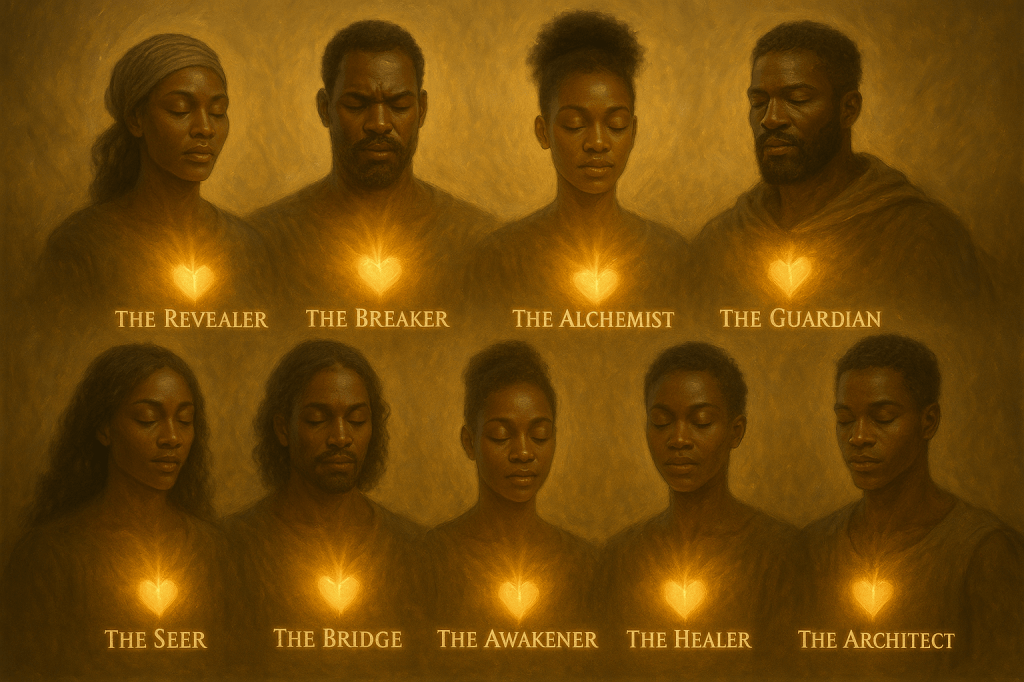
In every generation, the Most High appoints vessels for divine purpose, shaping them for assignments that transcend time, culture, and earthly understanding. Scripture affirms that purpose precedes existence, declaring, “Before I formed thee in the belly I knew thee” (Jeremiah 1:5, KJV). This sacred foreknowledge reveals that spiritual callings are not random; they are crafted by the sovereignty of God for the restoration of His people and the advancement of His Kingdom.

The Revealer is appointed to unveil truth hidden beneath deception, spiritual blindness, and worldly confusion. Like Daniel, who interpreted dreams and decoded mysteries, revealers operate under heavenly wisdom and divine insight. Through revelation, they expose the schemes of darkness and illuminate the path of righteousness. “He revealeth the deep and secret things” (Daniel 2:22, KJV). Their purpose is to pull back the veil so that truth can lead souls to freedom.

The Breaker is forged for warfare, designed to dismantle generational curses, demonic cycles, and systemic oppression. The Breaker moves with authority, echoing the Messiah who “break in pieces the oppressor” (Psalm 72:4, KJV). This calling requires courage and spiritual resilience, as these individuals confront strongholds and stand boldly against principalities. They are destined to set captives free and disrupt the plans of the enemy.

The Alchemist represents transformation — the divine ability to turn suffering into strength, rejection into refinement, and trials into spiritual treasure. This calling mirrors Joseph’s journey, where tests became testimony, and hardship became preparation for destiny. The Most High turns “beauty for ashes” (Isaiah 61:3, KJV), and through the Alchemist, pain becomes purpose sanctified by heaven’s hand.

The Guardian is called to protect, intercede, and defend. Much like Nehemiah who rebuilt the walls and guarded the city, Guardians stand watch in prayer, vigilance, and faithfulness. Their spiritual armor is essential, fulfilling the mandate to “be sober, be vigilant” (1 Peter 5:8, KJV). They guard families, communities, truth, and righteousness, standing as pillars of divine protection.

The Seer walks in heightened spiritual sight, perceiving beyond the natural realm. Like Ezekiel and Elisha, Seers discern angels, divine messages, and spiritual warfare unseen by ordinary eyes. “Where there is no vision, the people perish” (Proverbs 29:18, KJV). Their prophetic sight guides nations, warns the righteous, and brings clarity where confusion seeks dominion.

The Bridge is chosen to unify — connecting generations, cultures, and spiritual realities. This calling resembles Moses, who bridged the gap between God and Israel. They reconcile and restore, standing between broken hearts and divine healing. “Blessed are the peacemakers” (Matthew 5:9, KJV). Bridges repair breaches and unite the flock for kingdom advancement.

The Awakener stirs souls from spiritual slumber, calling dry bones to rise. Like John the Baptist, they cry aloud to awaken repentance, righteousness, and identity. “Awake thou that sleepest” (Ephesians 5:14, KJV). Their voice shakes complacency and ignites revival in those chosen to walk in truth.

The Healer carries divine compassion and restorative power. Whether through laying on of hands, wise counsel, or comforting presence, they exemplify the heart of Christ who came to “heal the brokenhearted” (Luke 4:18, KJV). Healers minister to spiritual wounds, emotional scars, and physical afflictions through faith and obedience.

The Architect builds systems, structures, and visions aligned with divine order. Like Bezalel, who was filled with the Spirit to construct the tabernacle (Exodus 31:3–5, KJV), these chosen ones design strategies, ministries, and movements grounded in heavenly wisdom. Their work creates environments where God’s glory can dwell.

Each calling requires humility, obedience, and submission to the Most High. Talents and gifts are not merely abilities, but sacred tools for spiritual growth and edification. “A man’s gift maketh room for him” (Proverbs 18:16, KJV). Spiritual gifts, such as prophecy, teaching, healing, wisdom, and discernment, are manifestations of the Spirit for divine purposes (1 Corinthians 12:4–11, KJV).

Chosen vessels may experience solitude, spiritual attack, and misunderstanding because sanctification often precedes manifestation. Like David, who trained in obscurity, they learn private obedience before public anointing. Destiny requires pruning, testing, and stretching to prepare a vessel worthy of kingdom work.

Many are called, but few answer. The chosen walk a narrow path that rejects worldly applause for heavenly assignment. Their identity is anchored in God’s Word and divine purpose, not earthly titles or acclaim. To carry a spiritual calling is to live in surrender, knowing that “the gifts and calling of God are without repentance” (Romans 11:29, KJV).

When the Most High calls, He equips. Moses received Aaron, Jeremiah received divine reassurance, and the apostles received the Holy Spirit. The chosen are never left powerless; they operate in the authority bestowed by the Father. “Not by might, nor by power, but by my spirit” (Zechariah 4:6, KJV).

Divine callings manifest uniquely, yet they share core attributes — faith, perseverance, righteousness, and love. Without love, even the greatest gifts are empty (1 Corinthians 13:2, KJV). The chosen serve not for glory, but for the advancement of God’s Kingdom and the restoration of His people.

Each calling complements the others, forming a divine ecosystem within the body of believers. The Revealer needs the Guardian; the Seer needs the Architect; the Breaker needs the Healer. “For the body is not one member, but many” (1 Corinthians 12:14, KJV). Unity strengthens purpose, and collaboration magnifies impact.

Those called must cultivate spiritual discipline — prayer, fasting, study, and holy living. “Study to shew thyself approved unto God” (2 Timothy 2:15, KJV). Gifting without character leads to destruction, but gifting combined with holiness leads to divine excellence.

Chosen ones carry spiritual authority, yet remain servants first. They model Christ, who washed feet and bore the cross before wearing the crown. The journey demands humility, compassion, and unwavering trust in the Most High’s timing.

Opposition is guaranteed; purpose attracts resistance. Yet the chosen stand firm, knowing that “no weapon that is formed against thee shall prosper” (Isaiah 54:17, KJV). Trials refine the calling, sharpening discernment and deepening faith.

The Most High ordains seasons of elevation and hiddenness. Waiting is not punishment but preparation. Like Esther, Joseph, and David, the chosen discover that divine timing is perfect and purposeful.

Many experience spiritual isolation, not as abandonment, but consecration. Solitude trains the ear to hear God’s voice and the heart to rely on His strength. “Be still, and know that I am God” (Psalm 46:10, KJV).

True calling cannot be imitated or inherited; it is divinely imparted. It is recognized not by noise or titles but by fruit, obedience, and spiritual authority. “Ye shall know them by their fruits” (Matthew 7:16, KJV).

The chosen often feel unqualified, yet this humility positions them to be vessels of glory. God delights in using the unlikely, proving His power through surrendered lives. “God hath chosen the weak things of the world to confound the things which are mighty” (1 Corinthians 1:27, KJV).

As destinies unfold, chosen vessels must remember their source. They are instruments, not originators. The power, wisdom, and revelation they carry come from the Most High, not themselves. “He that glorieth, let him glory in the Lord” (1 Corinthians 1:31, KJV).

Every calling is sacred, and every chosen soul is appointed for impact. Whether seen or unseen, public or private, each assignment advances the Kingdom and restores righteousness. The chosen move is not by coincidence, but by divine design.

The Revealer, the Breaker, the Alchemist, the Guardian, the Seer, the Bridge, the Awakener, the Healer, and the Architect.

Ultimately, the callings of the chosen align with the mission to bring light, truth, justice, and healing in a world darkened by deception and sin. Their lives testify that God is still raising vessels, still speaking, and still performing wonders among His people.

And in the final measure, the chosen long to hear only one affirmation — “Well done, thou good and faithful servant” (Matthew 25:21, KJV). For that reward outweighs every sacrifice, every battle, and every tear. Their calling is eternal, and their purpose is holy.

References
Holy Bible, King James Version.
Jeremiah 1:5; Daniel 2:22; Psalm 72:4; Isaiah 61:3; 1 Peter 5:8; Proverbs 29:18; Matthew 5:9; Ephesians 5:14; Luke 4:18; Exodus 31:3–5; Proverbs 18:16; Romans 11:29; Zechariah 4:6; 1 Corinthians 12; 1 Corinthians 13:2; 1 Corinthians 12:14; 2 Timothy 2:15; Isaiah 54:17; Psalm 46:10; Matthew 7:16; 1 Corinthians 1:27; 1 Corinthians 1:31; Matthew 25:21 (KJV).

Girl Talk Series: Inner Beauty

Ladies, let’s talk heart to heart. In a world that constantly tells us our worth depends on how we look—our makeup, our clothes, our shape—the Most High reminds us of a deeper truth. Real beauty isn’t about the eyelashes, the designer labels, or the perfect selfie. It’s about the heart. Don’t let your beauty be defined by your outer appearance, because the Most High doesn’t look at what man sees; He looks upon the heart (1 Samuel 16:7, KJV). What truly captivates Him is a spirit of humility, kindness, and faith. When your heart is pure, gentle, and anchored in love for the Most High, that’s when your beauty shines the brightest. True beauty is not in your reflection—it’s in your righteousness.

In a world saturated with vanity and self-promotion, many young women are taught that their worth lies in their appearance. The length of their hair, the contour of their face, or the brand of their clothing often becomes a measure of self-esteem. Yet, the Word of God teaches a higher standard of beauty—one not defined by outer adornment, but by a gentle and meek spirit that pleases the Most High. As 1 Peter 3:3–4 (KJV) reminds us, “Whose adorning let it not be that outward adorning of plaiting the hair, and of wearing of gold, or of putting on of apparel; but let it be the hidden man of the heart.”

True beauty radiates from within, and it cannot be purchased, enhanced, or filtered. It is the quiet confidence that comes from knowing who you are in the Most High. A godly woman understands that charm is deceitful and beauty is vain, but a woman who fears the Lord shall be praised (Proverbs 31:30 KJV). Her glow comes not from highlighter or foundation, but from the light of righteousness that rests upon her countenance.

Modesty in clothing reflects humility in spirit. It does not mean neglecting self-care or beauty—it means dressing in a way that honors God and commands respect. 1 Timothy 2:9–10 (KJV) advises, “In like manner also, that women adorn themselves in modest apparel, with shamefacedness and sobriety… but (which becometh women professing godliness) with good works.” The modest woman knows her worth and does not need to reveal her body to be validated.

When a woman uses her appearance or body to manipulate others, she forfeits her dignity and power. The world may applaud seduction, but the Most High values purity and wisdom. A godly woman walks with grace, not for attention but to glorify her Creator. She understands that her body is a temple of the Holy Spirit, not a billboard for lust (1 Corinthians 6:19–20 KJV).

Kindness is one of the rarest and most captivating forms of beauty. A gentle word, a forgiving heart, and a compassionate touch leave an impression that no physical trait can surpass. The woman who treats others with respect, who uplifts instead of tearing down, embodies the love of Christ. As Proverbs 31:26 (KJV) says, “She openeth her mouth with wisdom; and in her tongue is the law of kindness.”

Meekness, often misunderstood as weakness, is in fact a strength of divine proportion. It takes tremendous power to remain humble, patient, and composed in a world that glorifies arrogance and pride. The Most High delights in the meek, for “the meek shall inherit the earth” (Matthew 5:5 KJV). A woman of meekness carries herself with quiet authority, never needing to shout her worth.

A godly personality reflects the fruit of the Spirit. She is loving, joyful, peaceful, patient, gentle, good, faithful, and self-controlled (Galatians 5:22–23 KJV). These virtues do not come from external grooming but from a heart transformed by obedience and prayer. Her presence brings calm where there is chaos and light where there is darkness.

Being “beautiful” means more than having flawless skin or a perfect smile. It means having a soul that shines with gratitude and love for the Most High. The woman who seeks His face daily finds her reflection in His Word. Her beauty deepens as her relationship with Him grows, and her heart becomes a vessel of His glory.

Many in today’s culture confuse confidence with narcissism. But confidence rooted in vanity is hollow and fragile. A narcissistic spirit thrives on admiration and dominance, while a godly spirit thrives on service and humility. True confidence flows from knowing that one is fearfully and wonderfully made (Psalm 139:14 KJV) and that her identity is secure in God’s love.

Outer beauty fades with time, but character endures forever. The woman who cultivates righteousness and integrity will still shine when her youthful glow is gone. Her laughter, wisdom, and inner peace will make her radiant even in old age. She becomes a living testimony of Proverbs 16:31 (KJV): “The hoary head is a crown of glory, if it be found in the way of righteousness.”

It is not a sin to desire beauty or to take care of one’s appearance, but it becomes dangerous when vanity consumes the soul. The woman who obsesses over perfection forgets that she was already made in divine image. She must learn to look in the mirror and see herself as the Most High does—complete, valuable, and chosen.

When you love God with all your heart, your spirit reflects His presence. That love purifies your motives, softens your speech, and strengthens your actions. Even your eyes will reveal His peace, for “the light of the body is the eye” (Matthew 6:22 KJV). The love of the Most High is the truest beauty any woman can possess.

A beautiful heart forgives, prays, and uplifts others. It does not envy another woman’s looks or achievements. It celebrates sisterhood, recognizing that all women are created uniquely for a divine purpose. A woman of inner beauty knows her value without comparing herself to anyone else.

When a woman carries herself with dignity, she teaches others how to treat her. She does not compromise her morals for attention or approval. Her quiet strength earns respect because it is rooted in righteousness, not rebellion. She knows that the Most High crowns her with honor when she walks in truth.

Inner beauty blossoms in those who spend time in God’s Word. Meditation on Scripture nurtures peace, and prayer cultivates spiritual confidence. Over time, that spiritual discipline transforms the heart, radiating outward through posture, smile, and speech. Her beauty is no longer external—it becomes divine.

A loving personality can disarm even the hardest hearts. When you are gentle and patient with others, you become a reflection of Christ’s love. A woman with inner beauty knows that every word carries power; therefore, she speaks life, not gossip or cruelty. Her words bring healing where others bring harm.

The true mark of beauty is found in how you make others feel. If people leave your presence feeling valued and uplifted, then your beauty has fulfilled its divine purpose. The godly woman uses her influence to inspire, not to intimidate; to comfort, not to compete.

In a society obsessed with appearances, the woman of God stands out because her light comes from within. Her modesty is not repression—it is revelation of her worth. Her faith is her fragrance, her kindness her adornment, and her humility her crown.

True beauty is eternal because it reflects the eternal God. A woman who lives to please Him becomes more beautiful with every act of obedience and love. Her reflection in the mirror becomes less about her features and more about His glory shining through her.

Let every daughter of Zion remember: your worth is not in your clothing, body, or popularity, but in your relationship with the Most High. Walk in modesty, speak with kindness, love without condition, and let your inner light testify of His power. For when you love God first, everything about you—inside and out—becomes beautifully divine.

References
Holy Bible, King James Version. (1611). 1 Peter 3:3–4; Proverbs 31:26, 30; 1 Timothy 2:9–10; Matthew 5:5; Galatians 5:22–23; 1 Corinthians 6:19–20; Psalm 139:14; Proverbs 16:31; Matthew 6:22.

The Royal Remnant: The Lost Tribes and the Black Biblical Lineage.

Photo by Qarim Zam on Pexels.com

The story of Black people across the globe is not merely a social or historical narrative—it is a divine chronicle written in the pages of prophecy. From the deserts of Egypt to the plantations of the Americas, the descendants of Israel have walked a path that mirrors the covenantal pattern of exile, punishment, and eventual restoration. Scripture foretells not only their scattering but also their awakening, for God never breaks His promises to His people.

The Book of Deuteronomy outlines blessings for obedience and curses for disobedience. Among these prophecies lies a haunting resemblance to the Black experience in the Americas. “And the LORD shall bring thee into Egypt again with ships, by the way whereof I spake unto thee, thou shalt see it no more again: and there ye shall be sold unto your enemies for bondmen and bondwomen, and no man shall buy you” (Deuteronomy 28:68, KJV). Egypt in this verse is symbolic of bondage, and the only people in history taken into slavery by ships are those transported during the transatlantic slave trade.

This prophecy provides the foundation for a larger spiritual revelation—that many descendants of enslaved Africans may in fact be members of the Lost Tribes of Israel. Historians, anthropologists, and theologians have begun to reexamine the migratory patterns of ancient Hebrew peoples across Africa, tracing their presence through language, ritual, and oral tradition. This is not conjecture but continuity—the living memory of a covenant people scattered yet preserved.

The Igbo, Yoruba, Ashanti, and other West African tribes bear customs and names reminiscent of ancient Israelite traditions. Among the Igbo, for instance, circumcision on the eighth day, dietary laws resembling Leviticus, and reverence for the Almighty as Chukwu echo biblical faith. (Parfitt, 2002). Similarly, the Lemba of Southern Africa have priestly oral traditions tracing their lineage to Israel and possess DNA markers linked to the ancient Kohanim priesthood (Thomas et al., 2000).

These African traditions were not mere imitations—they were continuations. Before the European slave ships arrived, West Africa was already home to thriving spiritual nations influenced by ancient Hebraic customs. The presence of Hebrew inscriptions, Star of David-like symbols, and Torah-based laws among precolonial communities suggests that remnants of Israel had long found refuge across the African continent after successive dispersions.

Following the Assyrian captivity (2 Kings 17:6), the northern tribes of Israel were scattered across regions extending into Africa. Centuries later, after the destruction of Jerusalem in 70 A.D. by Rome, historians like Josephus record that many Jews fled into Africa to escape persecution. From North Africa they migrated westward, establishing communities throughout the Sahel and beyond. (Josephus, Antiquities of the Jews, Book 12).

Thus, the enslavement of Africans in the Americas was not a random historical tragedy—it was the culmination of prophetic dispersion. The slave routes from ports such as Elmina, Ouidah, and Luanda became the corridors of divine consequence. The people carried away in chains were not merely Africans—they were a covenant people fulfilling the ancient warnings of Deuteronomy 28:64: “And the LORD shall scatter thee among all people, from the one end of the earth even unto the other…”

Within the Americas, this scattered remnant endured unspeakable suffering—lynchings, colonization, systemic racism, and cultural erasure. Yet, through it all, they retained spiritual fire. The spirituals sung in bondage were coded psalms of deliverance—“Go Down Moses,” “Swing Low, Sweet Chariot”—rooted in Israelite longing for freedom. The very identity of the enslaved became intertwined with biblical hope: that the God who delivered Israel from Egypt would again deliver His people.

This connection between Africa and Israel is not a fabrication of modern Black consciousness—it is a restoration of historical truth. Early European explorers such as Portuguese chroniclers of the 15th century noted Jewish-like customs among tribes they encountered on the West African coast. Missionaries and colonial administrators often destroyed or suppressed these practices, labeling them pagan to maintain control. Yet remnants survived in song, name, and ritual, awaiting rediscovery.

In rediscovering their divine lineage, many African Americans and people of the diaspora have found spiritual and psychological healing. Identity is power. To know that one is not cursed but chosen, not inferior but covenantal, transforms despair into destiny. As Isaiah wrote, “Yet now hear, O Jacob my servant; and Israel, whom I have chosen… Fear not: for I have redeemed thee, I have called thee by thy name; thou art mine” (Isaiah 43:1, KJV).

The world has long hidden this revelation under layers of colonial theology and racial hierarchy. Eurocentric Christianity disconnected the descendants of slaves from their biblical roots, teaching them submission rather than sovereignty. The same Bible that empowered liberation was used to justify bondage. Yet, God’s Word endures beyond manipulation—truth has a way of resurrecting itself.

Rediscovering the Black biblical lineage also redefines the meaning of salvation history. If the children of Israel were scattered among all nations, then the gathering of the lost tribes is a sign of the approaching redemption. The awakening of Black consciousness and return to the covenant represents not racial supremacy, but divine restoration. As Jeremiah declared, “For, lo, the days come, saith the LORD, that I will bring again the captivity of my people Israel and Judah” (Jeremiah 30:3, KJV).

Anthropological data further supports the idea of ancient Hebrew migration into Africa. Linguistic parallels between Hebrew and West African dialects—such as the Igbo “Elohim” (Chukwu Abiama) or Yoruba terms for covenantal purity—indicate shared ancient roots. Cultural anthropologists note that these traditions often predate European influence, suggesting transmission through ancient Semitic-African interaction (Daniels, 2019).

DNA studies, while limited and controversial, provide intriguing evidence. The Lemba’s priestly gene (the Cohen Modal Haplotype) matches that found among Jewish priests in the Middle East. Although not all African groups carry this specific marker, the presence of such genetic continuity among select tribes implies a wider Israelite dispersion than previously acknowledged (Thomas et al., 2000).

In America, the prophetic echoes of Deuteronomy 28 resonate vividly: the yoke of iron, the loss of heritage, the separation of families, the economic exploitation, and the social degradation. “Thy sons and thy daughters shall be given unto another people… and thou shalt be only oppressed and crushed alway” (Deuteronomy 28:32–33, KJV). These verses describe not an ancient myth but the lived reality of the African diaspora.

The systemic racism, Jim Crow laws, and police brutality that plague the Black community today are extensions of the same captivity spirit. Though the chains have become invisible, the system still thrives on economic inequality, mass incarceration, and cultural erasure. Yet, even in captivity, the covenant people awaken. God promised restoration to those who remember His commandments and turn back to Him. “If they shall bethink themselves… and return unto thee with all their heart” (1 Kings 8:47–48, KJV).

Spiritual reawakening among descendants of the diaspora is evidence of prophecy unfolding. Across the world, people of African descent are reclaiming Hebrew names, keeping Sabbaths, and studying Torah through a Hebraic lens. This is not rebellion against Christianity but a return to the roots of faith before it was westernized. It is a restoration of covenant identity in the light of truth.

The revelation of Black biblical lineage challenges both religion and history to tell the truth. It demands that we see Christ not as a European savior, but as a man of the people who looked like those despised by the world. “And his feet like unto fine brass, as if they burned in a furnace, and his voice as the sound of many waters” (Revelation 1:15, KJV). Representation in Scripture is not cosmetic—it is cosmic.

This knowledge must not produce arrogance but humility. If the Black race is indeed among the covenant people, then the responsibility is great. To be chosen is to be called to holiness, justice, and service. The covenant demands obedience and righteousness. The purpose of restoration is not to exalt a race but to glorify the Creator through the redeemed.

The return of the royal remnant also signifies the return of divine order. As family, faith, and morality are restored among the descendants of the diaspora, so too does the presence of God return to dwell among His people. The true revolution is not political—it is spiritual. God is raising a generation who will know Him not through tradition, but through truth.

Our ancestors sang, “We shall overcome.” That was not just hope—it was prophecy. The awakening happening today among the scattered tribes is the fulfillment of that faith. The dry bones of Ezekiel’s vision are rising. “Behold, O my people, I will open your graves, and cause you to come up out of your graves, and bring you into the land of Israel” (Ezekiel 37:12, KJV).

As this knowledge spreads, the nations tremble, for it unravels centuries of deception. The world built on lies cannot stand when the truth of divine identity rises. Black people across the diaspora are no longer ashamed—they are awakening as the royal remnant of prophecy.

In the end, this revelation is not about color but covenant. The Most High is gathering His children from every corner of the earth. Yet it begins with those who suffered most, for through their suffering, they preserved the testimony of faith. The story of the Black biblical lineage is thus the story of redemption—of a people refined through fire to reveal divine glory.

The Awakening: The Spiritual Return of the Scattered Tribes

The story of the Black diaspora is one of exile, survival, and covenantal destiny. Centuries of slavery, colonialism, and systemic oppression sought to erase identity, yet Scripture promised that the covenant people would be restored. “For, lo, the days come, saith the LORD, that I will bring again the captivity of my people Israel and Judah” (Jeremiah 30:3, KJV). The modern awakening among Black believers signals the spiritual return of the scattered tribes, fulfilling ancient prophecy in both soul and society.

The dispersion of Israel, first through Assyrian conquest and later Roman destruction, scattered the tribes across nations. Some fled into Africa, others across Asia and Europe. These movements were not mere historical happenstance but divinely ordained exile. Ezekiel 37:21–22 proclaims, “I will take the children of Israel from among the heathen… and I will make them one nation in the land” (KJV). The scattered tribes would not be lost forever—they would awaken in their time.

In the Americas, the transatlantic slave trade completed this prophetic scattering. Africans, many of whom were descendants of the Lost Tribes, were transported across the ocean under conditions that mirrored biblical bondage. Deuteronomy 28:68 foresaw this: “And the LORD shall bring thee into Egypt again with ships… and there ye shall be sold unto your enemies for bondmen and bondwomen” (KJV). The diaspora became a living testament to divine prophecy.

The modern spiritual awakening begins with recognition—acknowledgment that Black people are not outsiders in God’s plan, but heirs of covenant promise. Afrocentric biblical studies, Hebraic Israelite movements, and revivalist churches have sparked this recognition, teaching that identity is both spiritual and historical. To know oneself as part of God’s chosen lineage is to reclaim lost authority and purpose.

The awakening manifests in reclaiming religious practice that aligns with Scripture rather than colonial reinterpretation. Observance of Sabbaths, dietary laws, and biblical festivals reflects a return to covenantal roots. These practices are not antiquarian; they reconnect the scattered tribes to God’s commands and to one another across the diaspora. “Sanctify yourselves therefore, and be ye holy: for I am the LORD your God” (Leviticus 11:44, KJV).

Through worship, song, and prayer, the spirit of the people awakens. Spirituals sung by enslaved ancestors contained coded knowledge of redemption. Today, gospel, contemporary Christian music, and prophetic praise continue this tradition, echoing the covenantal identity of a people once scattered but never forsaken.

Education serves as both instrument and catalyst for this awakening. Knowledge of African kingdoms, Hebraic lineage, and diaspora history empowers believers to view themselves through God’s lens. Moses commanded, “Hear, O Israel… and thou shalt teach them diligently unto thy children” (Deuteronomy 6:4–7, KJV). Awareness of spiritual heritage restores agency and counters centuries of erasure.

The awakening is also communal. The scattered tribes are not merely individuals but a body, called to reunite in identity, purpose, and mission. Psalm 133:1 declares, “Behold, how good and how pleasant it is for brethren to dwell together in unity” (KJV). Through fellowship, mentoring, and intergenerational teaching, the covenant people begin to experience wholeness.

Prophecy also informs the socio-political aspect of awakening. Economic empowerment, civil rights, and social justice are spiritual acts when pursued in covenantal consciousness. Isaiah 1:17 exhorts, “Learn to do well; seek judgment, relieve the oppressed, judge the fatherless, plead for the widow” (KJV). Spiritual restoration is inseparable from action that restores dignity to the oppressed.

The transatlantic slave trade and centuries of oppression left psychological scars. The awakening heals these wounds by restoring memory and affirming divine identity. Jeremiah 31:16–17 promises, “I will turn their mourning into joy… they shall obtain joy and gladness” (KJV). Spiritual revival brings mental and emotional restoration to a people long traumatized.

Afrocentric scholarship validates these spiritual insights, connecting African history to biblical prophecy. The Igbo, Yoruba, Lemba, and other tribes maintain customs reminiscent of Israelite law, demonstrating continuity of faith despite displacement (Parfitt, 2002; Thomas et al., 2000). This historical awareness underpins the modern awakening.

The spiritual return also corrects religious misrepresentation. For centuries, Europeanized Christianity erased Black biblical identity. The awakening challenges these narratives, demonstrating that Christ’s ministry and covenant were never exclusively European. Revelation 1:14–15 describes Christ’s hair “like wool” and feet “as if they burned in a furnace” (KJV), affirming a reflection of the African lineage in Scripture.

Diaspora movements emphasize prophetic education. Young Black believers are being taught Hebrew language, Torah study, and historical context. This literacy fosters spiritual authority and communal cohesion. Hosea 4:6 warns, “My people are destroyed for lack of knowledge” (KJV). Knowledge of covenant identity is a shield against spiritual and social oppression.

Family and generational restoration are central to awakening. Broken families, a legacy of slavery and systemic oppression, are rebuilt when the covenant identity is embraced. Proverbs 22:6 instructs, “Train up a child in the way he should go: and when he is old, he will not depart from it” (KJV). Spiritual teaching preserves lineage not just biologically but covenantally.

The awakening embraces cultural heritage. Music, dance, and art reflecting African and Israelite traditions become vehicles for spiritual remembrance. Festivals, Sabbath gatherings, and communal meals recall biblical practices, linking the scattered tribes across continents. “And they shall teach no more every man his neighbour… but they shall all know me, from the least of them unto the greatest” (Jeremiah 31:34, KJV).

Spiritual gifts and prophetic revelation emerge in this context. Believers report visions, dreams, and callings reminiscent of biblical patterns, signaling divine confirmation of lineage. Joel 2:28–29 promises, “I will pour out my spirit upon all flesh… and your old men shall dream dreams” (KJV). The awakening is not symbolic alone; it is supernatural.

Economic and social empowerment accompany spiritual revival. As Deuteronomy 28 promises blessings for obedience, the re-engagement of Black communities in commerce, education, and governance becomes a fulfillment of divine covenant. Restoration is holistic, addressing body, mind, and spirit.

The awakening confronts systemic racism directly. Police brutality, mass incarceration, and educational inequities are challenged not only through social activism but through covenantal consciousness. Exodus 23:9 warns, “The stranger that dwelleth with you shall be unto you as one born among you, and thou shalt love him as thyself” (KJV). True restoration requires justice aligned with divine law.

Prophetic movements reconnect African Americans to continental Africa, fostering pan-African awareness. Pilgrimages, exchanges, and heritage tours cultivate identity, bridging the diaspora to ancestral lands. Acts 17:26 declares, “And hath made of one blood all nations of men” (KJV), emphasizing unity and restoration.

The awakening cultivates intergenerational leadership. Elders, pastors, and scholars mentor youth in covenant knowledge, spiritual discipline, and community responsibility. 1 Timothy 4:12 encourages, “Let no man despise thy youth; but be thou an example of the believers” (KJV). Leadership ensures the survival of covenant identity.

Healing of trauma is both spiritual and psychological. The acknowledgment of ancestral suffering, coupled with divine affirmation, restores dignity. Isaiah 61:3 promises “the garment of praise for the spirit of heaviness” (KJV). Spiritual awakening transforms grief into joy and sorrow into purpose.

Community reconciliation is central. Colorism, denominational divides, and social class fractures are addressed through covenantal teaching. Ephesians 4:3 exhorts, “Endeavouring to keep the unity of the Spirit in the bond of peace” (KJV). Restoration is collective, not merely individual.

The awakening also reclaims prophetic voice. Preachers, teachers, and leaders speak with authority rooted in covenant lineage. Their message challenges societal lies and reinforces divine destiny. Micah 6:8 instructs, “He hath shewed thee, O man, what is good; and what doth the LORD require of thee… to walk humbly with thy God” (KJV).

Faith-based activism emerges as a natural outgrowth. Communities engage in service, political advocacy, and social reform as acts of covenant obedience. Galatians 5:13 reminds, “Use not liberty for an occasion to the flesh, but by love serve one another” (KJV). Spiritual restoration and social action are inseparable.

Art, music, and literature reflect this awakening, bridging cultural memory with covenant identity. The preservation and celebration of African traditions alongside biblical practices reinforce continuity and destiny. Psalm 78:4 emphasizes, “We will not hide them from their children, shewing to the generation to come the praises of the LORD” (KJV).

The awakening is visible globally. African communities, Caribbean nations, and African American populations are engaging in spiritual revival simultaneously, demonstrating prophetic fulfillment. Isaiah 49:22 declares, “I will lift up mine hand to the nations, and set up my standard to the people” (KJV). The scattered tribes are returning.

Personal transformation accompanies communal revival. Individuals embrace covenant identity, moral responsibility, and spiritual discipline. Romans 12:2 exhorts, “Be ye transformed by the renewing of your mind” (KJV). Spiritual awakening begins internally before manifesting externally.

Prophetic fulfillment is ongoing. Modern recognition of Israelite lineage among African descendants aligns with biblical promises of restoration. Ezekiel 36:24–25 states, “I will take you from among the heathen… and sprinkle clean water upon you” (KJV). The spiritual return is literal and symbolic.

The awakening also emphasizes repentance. Spiritual restoration is contingent upon turning from falsehood and sin, embracing covenant obedience. 2 Chronicles 7:14 prescribes, *“If my people… shall humble themselves, and pray… then will I hear from heaven, and will forgive their sin, and embracing covenant obedience. 2 Chronicles 7:14 prescribes, “If my people… shall humble themselves, and pray… then will I hear from heaven, and will forgive their sin, and will heal their land” (KJV).

As the royal remnant rises, hope becomes tangible. Communities once demoralized are empowered, spiritually equipped, and historically informed. Deuteronomy 32:10 affirms, “He found him in a desert land, and in the waste howling wilderness; he led him about, he instructed him, he kept him as the apple of his eye” (KJV). God has never abandoned His people.

The awakening unites history, prophecy, and practice. African Americans and continental Africans reclaim cultural memory while embracing spiritual truth. Psalms 126:1–2 declares, “When the LORD turned again the captivity of Zion, we were like them that dream” (KJV). Dreams of restoration become reality.

The spiritual return empowers leadership, advocacy, and stewardship. Communities embrace covenant responsibility, ensuring that the royal remnant is both preserved and active. Proverbs 29:18 notes, “Where there is no vision, the people perish” (KJV). Covenant vision restores purpose.

Ultimately, the awakening is both prophetic and personal. Every believer who understands their lineage contributes to the restoration of the scattered tribes. Isaiah 11:12 declares, “He shall set up an ensign for the nations, and shall assemble the outcasts of Israel” (KJV). The scattered tribes are awakening, returning to the covenant, and fulfilling divine prophecy.

The royal remnant rises, not in vengeance but in victory. We remember who we are: a chosen generation, a royal priesthood, a holy nation. The chains of slavery have become the symbols of survival. The story is no longer about oppression but restoration. For the God of Israel has not forgotten His people.


References

  • The Holy Bible, King James Version (KJV).
  • Asante, M. K. (2003). Afrocentricity: The Theory of Social Change. African American Images.
  • Ben-Jochannan, Y. (1970). African Origins of Major Western Religions. Alkebu-Lan Books.
  • Daniels, B. (2019). Hebrew Identity in Africa: Cultural and Linguistic Evidence. Journal of Africana Studies.
  • Josephus, F. (75 CE). Antiquities of the Jews.
  • Parfitt, T. (2002). The Lost Tribes of Israel: The History of a Myth. Phoenix Press.
  • Thomas, M. G., Parfitt, T., et al. (2000). Y Chromosomes Traveling South: The Cohen Modal Haplotype and the Origins of the Lemba. American Journal of Human Genetics, 66(2), 674–686.
  • Williams, C. (1987). The Destruction of Black Civilization. Third World Press.
  • Wilkerson, I. (2020). Caste: The Origins of Our Discontents. Random House.

The Male Files: What About Purity?

Photo by Gustavo Fring on Pexels.com

Purity, as a moral and spiritual principle, has often been discussed through a gendered lens—emphasizing female chastity while neglecting the ethical and spiritual accountability of men. Historically, patriarchal societies have framed purity as a woman’s virtue, binding her worth to her sexual restraint, while men were often excused as biologically impulsive or socially dominant. The question, then, “What about purity?” redirects the conversation toward a neglected truth: men, too, are called to holiness, self-control, and covenantal integrity.

In scriptural context, purity is not gender-exclusive. The Apostle Paul instructs both men and women to “flee fornication” (1 Corinthians 6:18, KJV) and to “present your bodies a living sacrifice, holy, acceptable unto God” (Romans 12:1, KJV). Biblical purity is holistic—it encompasses the mind, body, and spirit. Yet, within contemporary culture, men are rarely encouraged to guard their hearts and desires with the same vigilance expected of women. This imbalance has cultivated generations of moral inconsistency and relational dysfunction.

Psychologically, purity represents discipline and delayed gratification—qualities directly linked to maturity and self-mastery. According to Freud’s psychoanalytic framework, unchecked desire can lead to neurosis or compulsive behavior (Freud, 1923). Similarly, modern studies on impulsivity and addiction suggest that self-restraint enhances emotional regulation and decision-making (Mischel, 2014). Thus, sexual purity, far from being a restrictive command, is a psychological safeguard against chaos.

Society’s double standard, however, praises male conquest while condemning female expression. This distortion reduces manhood to virility rather than virtue. Media glorifies hypersexual behavior, equating masculinity with dominance, while spiritual teachings often fail to challenge this narrative. The result is a crisis of identity: men raised to lead yet unequipped to govern their impulses.

Theologically, purity begins with purpose. Adam’s first assignment was not Eve—it was stewardship. He was charged with naming creation and maintaining order (Genesis 2:15-20). This divine sequence emphasizes that a man’s identity must first be rooted in obedience before partnership. Sexual purity, then, is not repression but redirection—a commitment to align desire with divine timing and covenant.

In ancient Hebrew culture, purity laws applied equally to men. Ritual cleanliness was required before temple worship (Leviticus 15), symbolizing inner sanctification. Men who defiled themselves sexually were considered unfit for sacred service. Such statutes reflect an enduring principle: leadership demands purity. A man who cannot govern his flesh cannot righteously govern a household or community.

Modern psychology parallels this scriptural truth. Research on self-regulation demonstrates that sexual discipline strengthens other life domains—academic performance, relationship satisfaction, and leadership competence (Baumeister & Tierney, 2011). The same mental muscle that resists temptation also fuels perseverance, integrity, and resilience. Thus, purity becomes not a burden, but a blueprint for success.

Cultural conditioning, however, undermines this pursuit. From adolescence, men are socialized to equate sexual experience with status. Peer groups, music, and pornography normalize promiscuity while stigmatizing abstinence. This environment fosters what psychologists term “toxic masculinity,” where emotional vulnerability and restraint are mocked as weakness. Consequently, many men internalize lust as identity rather than a temporary temptation.

Pornography, in particular, has become the modern plague of male impurity. Studies indicate that habitual consumption rewires neural pathways, reducing empathy and altering perception of women (Wilson, 2014). Spiritually, it erodes the ability to form genuine intimacy, creating a false sense of control and gratification. Jesus addressed this condition centuries ago, warning, “Whosoever looketh on a woman to lust after her hath committed adultery with her already in his heart” (Matthew 5:28, KJV). Purity begins long before physical acts—it begins in thought.

Men who pursue purity engage in spiritual warfare against both culture and self. Lust, pride, and idolatry often coexist. When men worship pleasure, they dethrone God from the seat of authority in their lives. Purity, therefore, is a covenantal act of worship. It declares that one’s body and desires belong to the Creator, not to the cravings of the flesh. This sacred restraint is the essence of biblical manhood.

The misconception that purity is only about celibacy ignores its broader meaning. True purity encompasses integrity in speech, honesty in relationships, and respect for boundaries. A man who is pure in heart cannot exploit women, manipulate emotions, or pursue selfish pleasure. His masculinity is marked by restraint and reverence, not recklessness. “Blessed are the pure in heart: for they shall see God” (Matthew 5:8, KJV). Purity clarifies vision—it allows men to see truth without distortion.

In relationships, purity establishes trust. A man who has learned to discipline his flesh before marriage is better equipped to honor his covenant after marriage. Infidelity often begins in ungoverned thought, not sudden opportunity. The same restraint practiced in singleness becomes the foundation for faithfulness in union. This is why Proverbs 4:23 admonishes, “Keep thy heart with all diligence; for out of it are the issues of life.”

The psychological dimension of purity cannot be ignored. Lust addiction, like substance abuse, triggers dopamine surges and withdrawal cycles. Neuroscientific research confirms that abstaining from compulsive sexual behavior restores neural balance and improves emotional stability (Kuhn & Gallinat, 2014). Thus, purity is both spiritual and neurobiological renewal—a rewiring of the brain toward wholeness.

Men who pursue purity often face ridicule, yet their strength lies in endurance. In a hypersexualized culture, abstinence becomes countercultural courage. It redefines strength as self-governance rather than aggression. True masculinity is not the ability to conquer many women, but to commit wholly to one. As Paul writes, “Every man should have his own wife, and every woman her own husband” (1 Corinthians 7:2, KJV). Covenant replaces conquest.

Purity also restores sacred masculinity. In biblical history, men of honor—Joseph, Daniel, and Job—demonstrated moral restraint under pressure. Joseph fled Potiphar’s wife not because he lacked desire, but because he feared God more than temptation (Genesis 39:9). His purity preserved his destiny. Likewise, modern men must discern that every moment of compromise threatens long-term calling.

Spiritually, impurity dulls discernment. Sin clouds the conscience, creating emotional numbness and spiritual apathy. When men live in habitual indulgence, they lose sensitivity to the Holy Spirit’s conviction. Purity reawakens spiritual sensitivity, restoring communion with God. Psalm 24:3-4 declares, “Who shall ascend into the hill of the Lord?… He that hath clean hands, and a pure heart.” Purity is prerequisite to spiritual elevation.

This conversation also requires compassion. Many men struggle silently with guilt, shame, and secrecy surrounding sexual sin. Healing must involve grace, accountability, and renewal. The path to purity is not perfection but progression. Confession, prayer, and brotherhood create an environment where restoration becomes possible. “Confess your faults one to another… that ye may be healed” (James 5:16, KJV).

In a broader cultural sense, the restoration of male purity could transform communities. When men lead with integrity, families thrive, women are protected, and children inherit stability. Purity births purpose—it is the moral backbone of righteous leadership. A pure man is not only faithful to his wife; he is faithful to his calling, his vision, and his God.

Ultimately, purity is not about deprivation but dominion. It empowers men to master themselves, their desires, and their destiny. It liberates them from addiction to validation and enables them to love without exploitation. The pure man becomes the pillar upon which healthy societies are built—strong, disciplined, and spiritually awake.

The male call to purity is both ancient and urgent. In a world that prizes pleasure over principle, the man who pursues holiness stands as a revolutionary. His body becomes a temple, his mind a sanctuary, his heart a throne where God reigns. The question “What about purity?” is no longer rhetorical—it is a summons. And every man who answers it restores not only himself, but the image of God within him.

References

  • The Holy Bible, King James Version (KJV)
  • Baumeister, R. F., & Tierney, J. (2011). Willpower: Rediscovering the Greatest Human Strength. Penguin Press.
  • Freud, S. (1923). The Ego and the Id. SE, 19.
  • Kuhn, S., & Gallinat, J. (2014). Brain Structure and Functional Connectivity Associated with Pornography Consumption: The Brain on Porn. JAMA Psychiatry, 71(7), 827–834.
  • Mischel, W. (2014). The Marshmallow Test: Mastering Self-Control. Little, Brown.
  • Wilson, G. (2014). Your Brain on Porn: Internet Pornography and the Emerging Science of Addiction. Commonwealth Publishing.

The Marriage Series: What Is the Divine Design for Marriage?

Marriage, in its truest and holiest form, is not a cultural invention but a divine institution created by God Himself. From the very beginning, the Word establishes marriage as a sacred covenant between man, woman, and God. Genesis 2:24 (KJV) declares, “Therefore shall a man leave his father and his mother, and shall cleave unto his wife: and they shall be one flesh.” This verse reveals the divine order—leaving, cleaving, and becoming one—symbolizing a covenantal union built on love, commitment, and divine purpose. God designed marriage to mirror His relationship with humanity, where love, leadership, and submission are not acts of dominance or weakness but reflections of divine harmony.

The husband’s role in marriage is one of leadership, protection, and sacrificial love. Scripture defines this role in Ephesians 5:25 (KJV): “Husbands, love your wives, even as Christ also loved the church, and gave himself for it.” This commandment elevates the husband’s authority to a spiritual responsibility rather than a privilege. His leadership is not to control but to cover—spiritually, emotionally, and physically. Just as Christ laid down His life for the church, the husband is called to lead through humility, service, and unwavering love.

The wife’s role complements the husband’s leadership through honor, respect, and nurturing support. Ephesians 5:22 (KJV) instructs, “Wives, submit yourselves unto your own husbands, as unto the Lord.” This submission does not imply inferiority but divine order. The word “submit” in the Greek, hupotassō, means to “align under” or “support in order.” God’s design is cooperative, not competitive. The wife is the helper, as stated in Genesis 2:18 (KJV): “I will make him an help meet for him.” Her role brings balance, wisdom, and grace to the marriage, functioning as the heart while the husband operates as the head.

God’s divine design for marriage also reflects unity and equality in purpose. Galatians 3:28 (KJV) reminds us, “For ye are all one in Christ Jesus.” While husband and wife have distinct functions, both stand equal in value before God. Their roles are not hierarchical in worth but differentiated in assignment. This divine complementarity ensures that marriage thrives on mutual respect, spiritual partnership, and divine alignment rather than worldly power dynamics.

A husband who honors his wife as God commands recognizes her as his spiritual equal and his divine gift. 1 Peter 3:7 (KJV) instructs, “Likewise, ye husbands, dwell with them according to knowledge, giving honour unto the wife, as unto the weaker vessel, and as being heirs together of the grace of life.” The phrase “weaker vessel” refers not to fragility but to delicacy—she is to be handled with care, not control. When a man truly walks in God’s order, his leadership becomes a shield of love, not a sword of dominance.

For the wife, her power lies not in competition but in her influence. A virtuous woman builds her home through wisdom and prayer. Proverbs 14:1 (KJV) declares, “Every wise woman buildeth her house: but the foolish plucketh it down with her hands.” A godly wife understands that her strength is spiritual, her voice carries weight, and her influence shapes generations. Submission, in this divine framework, becomes an act of faith and trust in God’s structure, not in man’s perfection.

The divine design of marriage requires that Christ be the foundation. Without God at the center, marriage becomes a battle of egos rather than a union of souls. Ecclesiastes 4:12 (KJV) teaches, “A threefold cord is not quickly broken.” The three strands represent husband, wife, and God—an unbreakable bond forged by divine covenant. When a couple prays together, studies Scripture together, and serves God together, their unity becomes unshakable against the storms of life.

The husband’s headship is often misunderstood as superiority, yet Scripture clarifies its meaning. Ephesians 5:23 (KJV) states, “For the husband is the head of the wife, even as Christ is the head of the church.” Headship means leadership rooted in love, not control. Just as Christ leads by serving, so must a husband lead by example—protecting, providing, and guiding with humility. The husband who abuses authority violates divine order and corrupts the covenant he was called to honor.

Likewise, a wife’s submission is not silent compliance but active partnership. In Proverbs 31, the virtuous woman is entrepreneurial, strong, and wise. Her husband trusts her judgment and praises her for her diligence. This demonstrates that biblical submission is about alignment, not suppression. She works alongside her husband to fulfill God’s purpose for their household, proving that divine marriage celebrates both strength and servanthood.

The divine design of marriage is rooted in covenant, not contract. A contract is conditional, but a covenant is eternal. Malachi 2:14 (KJV) warns against betrayal, saying, “The LORD hath been witness between thee and the wife of thy youth… yet is she thy companion, and the wife of thy covenant.” Marriage is a sacred oath before God, binding two souls in purpose and promise. When couples honor this covenant, they reflect God’s faithfulness and grace in their daily lives.

In God’s order, love must be the governing principle of marriage. 1 Corinthians 13:4–7 (KJV) beautifully describes love’s nature—patient, kind, selfless, and enduring. Without love, authority becomes tyranny, and submission becomes slavery. But with love, leadership and honor flow naturally. When both husband and wife operate from a foundation of divine love, their marriage becomes a living testimony of God’s character.

Communication also reflects the spiritual health of a marriage. James 1:19 (KJV) advises, “Let every man be swift to hear, slow to speak, slow to wrath.” A godly husband listens to his wife’s heart, not just her words, while a godly wife communicates with grace, not criticism. Mutual understanding transforms disagreement into growth, and prayer transforms tension into peace.

Another element of divine marriage is forgiveness. Ephesians 4:32 (KJV) commands, “Be ye kind one to another, tenderhearted, forgiving one another, even as God for Christ’s sake hath forgiven you.” Every covenant requires grace. Without forgiveness, offenses accumulate like spiritual toxins, suffocating love. A couple anchored in God’s grace forgives quickly and loves deeply, knowing that mercy sustains union.

Financial harmony is another dimension of biblical marriage. Proverbs 27:23 (KJV) instructs, “Be thou diligent to know the state of thy flocks, and look well to thy herds.” God calls husbands to provide and manage resources wisely, and wives to steward them with prudence. Money should be a tool for purpose, not a weapon for power. When both partners honor God with their resources, lack turns into abundance and conflict into cooperation.

Intimacy, too, is sacred in the divine design of marriage. 1 Corinthians 7:3–4 (KJV) reminds both spouses of mutual responsibility: “Let the husband render unto the wife due benevolence: and likewise also the wife unto the husband.” Marital intimacy is not carnal indulgence but spiritual union—an expression of love, respect, and covenant renewal. It symbolizes the merging of two souls, sanctified by divine blessing.

Parenthood extends this covenantal love into legacy. Psalm 127:3 (KJV) states, “Lo, children are an heritage of the LORD.” Marriage creates the foundation for godly generations, where both parents model faith, discipline, and love. The home becomes a miniature church, and the family becomes a reflection of God’s kingdom order.

When husband and wife fulfill their divine roles, they reveal Christ’s relationship with the Church. The husband represents Christ, who leads in love and sacrifice; the wife represents the Church, who follows with reverence and devotion. Together, they display divine unity. This symbolism reminds believers that marriage is not merely relational—it is spiritual.

The Virtuous Wife and the Godly Husband: A Blueprint for Covenant Love

The divine institution of marriage was designed not as a mere social contract but as a covenant — a sacred bond reflecting the eternal relationship between Christ and His Church (Ephesians 5:25–32, KJV). In today’s culture, where commitment is often fleeting and self-interest dominates, the biblical model of marriage stands as both a challenge and a calling. The virtuous wife and the godly husband are not archaic ideals; they are living blueprints for divine partnership — two souls aligned with God’s purpose, serving one another in love, respect, and spiritual harmony.

The virtuous wife, as described in Proverbs 31, embodies strength, wisdom, and faithfulness. She is not defined by submission to man but by her submission to God. Her strength flows from her fear of the Lord (Proverbs 31:30, KJV), and her value is beyond rubies. She builds her home with diligence, speaks with kindness, and nurtures with both tenderness and truth. Her beauty is not in outward adornment but in her godly character — a reflection of divine wisdom manifest in daily life.

In parallel, the godly husband mirrors the sacrificial love of Christ. Ephesians 5:25 (KJV) commands, “Husbands, love your wives, even as Christ also loved the church, and gave himself for it.” His leadership is not tyranny but stewardship — to lead, protect, and provide through humility and service. The true measure of a husband is not in dominance but in his ability to reflect Christ’s compassion, patience, and enduring love within the covenant.

The union between the virtuous wife and godly husband is not about perfection but spiritual alignment. Each fulfills a divine role: the husband leads through love, and the wife supports through wisdom. Together, they form a unified front against the adversary’s schemes, exemplifying what Ecclesiastes 4:12 (KJV) declares: “And if one prevail against him, two shall withstand him; and a threefold cord is not quickly broken.” The “threefold cord” — husband, wife, and God — symbolizes the unbreakable bond of divine partnership.

Covenant love demands accountability and intentional growth. The husband must cultivate his wife’s spirit as a gardener tends a vineyard, ensuring she blossoms in her calling. Likewise, the wife nurtures her husband’s strength through encouragement and faith, helping him rise into the fullness of his purpose. In this holy exchange, both partners are refined and perfected through the process of love.

The decline of biblical marriage in modern times stems largely from the erosion of spiritual understanding. Many have replaced divine order with personal preference, confusing lust for love and commitment for convenience. Yet, the covenant of marriage is sacred, designed to reflect the eternal unity between God and His people. When couples align with this heavenly order, they not only strengthen their union but also become living testimonies of God’s faithfulness.

A godly marriage thrives on prayer, forgiveness, and selflessness. It is not void of struggle, but it is fortified by grace. The virtuous wife prays for her husband’s covering, and the godly husband intercedes for his family’s peace. Together, they build altars of faith in their home, knowing that spiritual warfare requires unity and devotion. This sacred partnership transforms their household into a sanctuary of divine presence.

The world may celebrate independence, but marriage according to God celebrates interdependence — two becoming one flesh (Genesis 2:24, KJV). In this divine mystery, individuality is not erased but perfected. The man finds strength in his wife’s counsel, and the woman finds safety in her husband’s love. Their union becomes a reflection of heaven’s order on earth, radiating divine purpose and peace.

When husband and wife honor their covenant, they model Christ’s unbreakable love to the next generation. Their children witness stability, reverence, and faith in action. The virtuous wife’s example teaches sons how to respect women and daughters how to value themselves; the godly husband’s example teaches them both what true love and leadership look like. Thus, the family becomes a seed of divine restoration in a world that desperately needs it.

The virtuous wife and the godly husband are not separate entities but one spirit in divine harmony. Their marriage becomes a living ministry — a covenant built not on emotion but on eternal truth. As the Apostle Paul wrote, “Let all things be done with charity” (1 Corinthians 16:14, KJV). Through love rooted in God’s Word, they manifest covenant love — a love that endures storms, transcends time, and mirrors the glory of the Creator who joined them together.

Satan attacks marriage because it mirrors divine order. Broken homes weaken the reflection of God’s covenant. Therefore, couples must guard their union with prayer, purity, and persistence. The Word commands, “What therefore God hath joined together, let not man put asunder” (Mark 10:9, KJV). Every marriage under God’s design becomes a fortress against spiritual decay.

Ultimately, the divine design of marriage is not about power—it is about purpose. It teaches love through service, unity through humility, and holiness through covenant. When husband and wife walk in their God-given roles, they transform their union into a ministry that glorifies the Creator who authored it.

References (KJV Bible)

  • Genesis 2:18, 24
  • Proverbs 14:1
  • Proverbs 18:22
  • Ecclesiastes 4:12
  • Ephesians 5:22–25
  • 1 Peter 3:7
  • Galatians 3:28
  • Malachi 2:14
  • 1 Corinthians 7:3–4
  • 1 Corinthians 13:4–7
  • James 1:19
  • Ephesians 4:32
  • Proverbs 27:23
  • Psalm 127:3
  • Mark 10:9
  • Proverbs 31:10–31
  • Ephesians 5:22–33
  • Ecclesiastes 4:12
  • Genesis 2:24
  • 1 Corinthians 16:14
  • Colossians 3:18–19
  • 1 Peter 3:1–7
  • Proverbs 14:1
  • Malachi 2:14–16
  • Matthew 19:6

Chronicles of Black People

A Scholarly and Biblical Reflection

The story of Black people is a story of survival, resilience, and faith. It is a narrative that begins long before the transatlantic slave trade, rooted in the ancient civilizations of Africa. From the Nile Valley kingdoms to the bustling empires of West Africa, Black history is marked by contributions to science, governance, art, and spirituality. The chronicles of Black people must be told with both historical precision and spiritual reverence, for this is not merely a sociological story but a testament to God’s providence.

The Dispersion of the Israelites: From Jerusalem to Africa to the Americas

The destruction of Jerusalem in 70 AD marked a decisive turning point in the history of the descendants of Abraham, Isaac, and Jacob. The city’s fall under the Roman general Titus was catastrophic, shattering the center of Jewish religious and cultural life. The event is well documented by the first-century historian Flavius Josephus in The Wars of the Jews, where he recounts the siege, famine, and mass slaughter that befell the city. Over a million Jews perished, and tens of thousands were taken captive and sold into slavery across the Roman Empire.

Jesus had foretold this tragedy decades earlier. In Luke 21:20–24 (KJV), He warned: “And when ye shall see Jerusalem compassed with armies, then know that the desolation thereof is nigh… and they shall fall by the edge of the sword, and shall be led away captive into all nations.” This prophecy described both the violent fall of Jerusalem and the global scattering of the Hebrew people.

While some captives were sold into Roman markets and forced into gladiatorial games, others fled southward to escape the bloodshed. Historical and anthropological evidence suggests that many of these refugees crossed into Egypt and migrated further into the African interior, seeking refuge in areas beyond Roman control. This migration connected them to pre-existing Jewish communities in Africa, some of which dated back to the Babylonian exile (Ben-Jochannan, 1974).

Egypt became one of the first major destinations for fleeing Israelites. It was geographically close, and Egypt already had a significant Jewish population dating back to the time of Jeremiah (Jeremiah 43:7, KJV). From there, many continued their journey into regions like Nubia, Ethiopia, and eventually West Africa. This southward migration is critical to understanding the later presence of Hebrew communities in West and Central Africa by the time of European colonization.

Scholars of African history have traced the presence of Israelite-descended tribes among groups such as the Yoruba, Igbo, and Ashanti, noting parallels in circumcision practices, dietary laws, and names of God similar to Hebrew (Williams, 1930). Oral traditions among the Igbo, for instance, claim descent from “Eri,” a name associated with a son of Gad, one of the twelve tribes of Israel (1 Chronicles 7:7, KJV).

Deuteronomy 28:64 (KJV) foretold that disobedience to God’s covenant would result in scattering “from the one end of the earth even unto the other.” This scattering, or diaspora, became visible not only in the Middle East but across Africa. By the late medieval period, sizable populations of Israelite-descended people were living along the West African coast — precisely the regions where the transatlantic slave trade would later strike the hardest.

The transatlantic slave trade, beginning in the 15th century, represented the fulfillment of another sobering prophecy: Deuteronomy 28:68 (KJV): “And the LORD shall bring thee into Egypt again with ships… and there ye shall be sold unto your enemies for bondmen and bondwomen, and no man shall buy you.” The reference to ships is striking because the original enslavement in Egypt required no sea voyage. This indicated a new, future captivity involving maritime transport — which history now recognizes as the Middle Passage.

The Middle Passage was one of the most brutal chapters in human history. Africans — including descendants of those Israelite migrants — were shackled, crammed into ships, and subjected to horrific conditions. Mortality rates were staggering. Yet even in this, biblical prophecy was echoed: “Thy sons and thy daughters shall be given unto another people, and thine eyes shall look, and fail with longing for them all the day long” (Deuteronomy 28:32, KJV).

Once in the Americas, enslaved Africans were stripped of language, culture, and names. The erasure of identity fulfilled Psalm 83:4 (KJV): “They have said, Come, and let us cut them off from being a nation; that the name of Israel may be no more in remembrance.” The loss of cultural memory was intentional, designed to sever the people from their heritage and prevent rebellion.

Despite the oppression, faith survived. Many Africans retained fragments of Hebrew traditions, which fused with Christianity under enslavement. Spirituals like “Go Down, Moses” reflected the enslaved people’s identification with Israel in Egypt and their hope for divine deliverance.

Modern genetics has added another layer to this chronicle. Y-DNA haplogroup E1B1A, dominant among West and Central African men, has been linked by geneticists to lineages that originated in the Levant and Northeast Africa thousands of years ago (Chiaroni et al., 2009). This genetic marker supports the idea that many African-descended people in the Americas share ancestry with ancient Hebrew populations.

Psychologically, this historical trajectory inflicted deep trauma. Dr. Joy DeGruy (2005) describes this as Post-Traumatic Slave Syndrome, noting how the legacy of slavery has shaped family structures, identity, and mental health among descendants. Yet she also highlights resilience — the capacity to endure and rebuild despite generational wounds.

Biblically, the oppression of God’s people has never been the end of their story. Prophets foretold a regathering of Israel. Isaiah 11:11–12 (KJV) declares: “And it shall come to pass in that day, that the Lord shall set his hand again the second time to recover the remnant of his people… from Egypt, and from Pathros, and from Cush.” This points to a future restoration of those scattered into Africa.

Many scholars and theologians believe that the present-day awakening of African-descended people to their Hebraic identity is part of this prophetic fulfillment. This rediscovery is not merely academic — it is spiritual, calling descendants back to covenant faithfulness.

The cultural memory of Africa also remains important. Reconnecting to African languages, music, and traditions is a form of healing. It reclaims what colonization attempted to erase and reaffirms the dignity of a people made in God’s image (Genesis 1:27, KJV).

The Black church has historically been a space where this restoration work could take place. It has served as a vessel for memory, a hub for civil rights activism, and a platform for preaching hope. The church kept alive the dream of liberation when society denied it.

Economically, the descendants of these scattered Israelites continue to face systemic inequalities. Yet building generational wealth, pursuing education, and reclaiming land ownership align with biblical principles of restoration (Leviticus 25:10, KJV).

This chronicle also has a global dimension. Descendants of the transatlantic slave trade exist not only in the United States but in Brazil, the Caribbean, Central America, and beyond. Each community preserves pieces of the ancestral puzzle that, when put together, reveal a shared heritage.

Spiritually, there is a call to return to the God of Abraham, Isaac, and Jacob — to seek Him with all the heart. Deuteronomy 30:3–4 (KJV) promises that if Israel returns, “the LORD thy God will turn thy captivity, and have compassion upon thee… and will return and gather thee from all the nations.”

The story is therefore not one of perpetual despair but of divine restoration. God has preserved a remnant through centuries of scattering and oppression. Today’s rediscovery of identity is a signpost that the prophetic timeline is moving toward completion.

In conclusion, the journey of the descendants of Abraham, Isaac, and Jacob from Jerusalem to Africa to the Americas is one of tragedy, endurance, and hope. It fulfills both biblical prophecy and historical record. The same God who allowed the scattering also promises the gathering. The chronicles of this people are not finished — they continue to unfold as a testimony of divine faithfulness.

Africa is widely regarded as the cradle of civilization. Archaeological and genetic evidence point to early human development on the African continent (Stringer, 2016). The great kingdoms of Egypt, Kush, Mali, Ghana, and Songhai demonstrate that Africa was not a passive participant in history but a leader in early advancements. The Bible itself situates Africa within the redemptive story. Egypt (Mizraim), Ethiopia (Cush), and Libya (Put) are mentioned throughout Scripture, affirming that Africa was never on the periphery of God’s plan (Genesis 10:6-7, KJV).

The Hebrew Scriptures frequently reference Cush and its people with honor. The prophet Amos asks, “Are ye not as children of the Ethiopians unto me, O children of Israel?” (Amos 9:7, KJV). This verse reminds us that Blackness was never a mark of inferiority in the biblical narrative but part of God’s diverse creation. Moses married a Cushite woman (Numbers 12:1, KJV), and when Miriam spoke against her, God punished Miriam with leprosy — a divine rebuke against prejudice.

Despite this rich heritage, the colonization of Africa disrupted cultural memory. European imperial powers divided Africa’s resources and enslaved millions of its people, initiating one of the most devastating forced migrations in history. The transatlantic slave trade ripped families apart and subjected African men, women, and children to centuries of dehumanization (Thornton, 1998). Yet even in the holds of slave ships, faith survived. Spiritual songs and oral traditions became a way to encode hope and resistance.

The Middle Passage was one of the most horrific chapters in human history. Enslaved Africans endured overcrowded, disease-ridden ships where death was common. Yet many sang songs to God, cried out for deliverance, and clung to ancestral prayers. Psalm 137:1-4 (KJV) captures this sentiment: “By the rivers of Babylon, there we sat down, yea, we wept, when we remembered Zion.” For many, Africa became their Zion — a lost homeland.

On the plantations of the Americas, Black people forged a theology of survival. They identified with Israel in Egypt, believing that God would one day send a Moses to deliver them. The spiritual “Go Down, Moses” was not merely a song but a coded declaration of faith and hope. This is the birth of the Black church — the first autonomous institution for African Americans and a cornerstone of cultural preservation and liberation theology (Raboteau, 2004).

The Black church became a center of education, community organizing, and political mobilization. It taught enslaved and freed people to read, often beginning with the Bible. It was here that enslaved Africans learned that the God of Scripture heard the cry of the oppressed (Exodus 3:7, KJV). This knowledge empowered them to resist oppression and to fight for freedom.

The Emancipation Proclamation of 1863 did not end the struggle but opened a new chapter. Reconstruction was a period of rebuilding, yet white supremacist terror sought to erase Black progress through lynchings, Jim Crow laws, and systemic disenfranchisement (Litwack, 1998). Despite this, Black people built schools, businesses, and thriving communities such as Tulsa’s Greenwood District — known as “Black Wall Street.”

The destruction of Black Wall Street in the 1921 Tulsa Massacre illustrates the lengths to which white supremacy would go to crush Black economic independence. But even after this devastation, the spirit of Black entrepreneurship persisted. The chronicles of Black people show that each time they were pushed down, they rose again.

The Harlem Renaissance of the 1920s and 1930s represented a cultural reawakening. Writers like Langston Hughes, Zora Neale Hurston, and Claude McKay celebrated Black life, art, and identity. Jazz and blues became global art forms, showcasing the genius of Black creativity. This was a time of reclaiming dignity and rewriting the narrative of Black existence.

Psychologists argue that this reclaiming of cultural pride is vital for collective healing (Cross, 1991). Internalized racism and generational trauma can only be countered by affirming the value and beauty of Black identity. This is why movements such as “Black is Beautiful” in the 1960s were so revolutionary — they directly challenged centuries of psychological conditioning that taught Black people to despise themselves.

The Civil Rights Movement of the 1950s and 1960s was a modern-day Exodus. Leaders such as Dr. Martin Luther King Jr. drew explicitly from Scripture, declaring that justice would “roll down like waters” (Amos 5:24, KJV). Rosa Parks’ quiet defiance sparked a movement that changed the course of American history. Freedom was not handed over — it was fought for with blood, sweat, and prayer.

Globally, the chronicles of Black people include the fight against apartheid in South Africa, led by Nelson Mandela and Desmond Tutu. Their vision of reconciliation reminds us that liberation is not just about political freedom but about healing the soul of a nation. This mirrors Christ’s teaching on forgiveness and peacemaking (Matthew 5:9, KJV).

Today, Black people continue to face systemic racism, police brutality, and economic inequality. Movements like Black Lives Matter have emerged as a modern prophetic voice, declaring that Black life is sacred and must be protected. These movements echo the biblical cry for justice: “Learn to do well; seek judgment, relieve the oppressed” (Isaiah 1:17, KJV).

The chronicles of Black people also celebrate contributions to science, medicine, and technology. Figures like Dr. Charles Drew (blood banking pioneer), Katherine Johnson (NASA mathematician), and George Washington Carver (agricultural innovator) remind the world that Black brilliance is boundless.

The psychological toll of oppression cannot be ignored. Intergenerational trauma affects mental health, creating cycles of poverty and pain (DeGruy, 2005). Yet faith remains a powerful coping mechanism. Prayer, church fellowship, and cultural rituals provide a framework for resilience and post-traumatic growth.

One of the most beautiful elements of the Black chronicle is the music. Spirituals, gospel, blues, hip-hop, and Afrobeats all carry a spiritual and cultural memory. These art forms express lament, hope, joy, and resistance — much like the Psalms of David. They remind us that joy is an act of defiance in the face of suffering (Psalm 30:5, KJV).

Another vital thread is the restoration of African history and genealogy. DNA testing has allowed many to trace their roots back to specific tribes and regions in Africa, reestablishing a sense of belonging. This mirrors the biblical importance of genealogy in affirming identity (Matthew 1:1-17, KJV).

Education remains a battleground. Efforts to suppress Black history in schools are attempts to silence the chronicles of Black people. But God commands His people to remember and teach future generations (Deuteronomy 6:7, KJV). Preserving history is an act of obedience and survival.

Economically, supporting Black businesses and practicing financial literacy are modern forms of resistance. Proverbs 13:22 (KJV) declares, “A good man leaveth an inheritance to his children’s children.” Building generational wealth is a way to break the cycles of systemic poverty.

Spiritually, the chronicle calls for faithfulness. It is not enough to remember the past; there must be a commitment to living in righteousness and seeking God’s kingdom (Matthew 6:33, KJV). Black people have always been a deeply spiritual people, and this must remain central to the path forward.

Ultimately, the chronicles of Black people testify to a God who sustains His children. Through slavery, segregation, and suffering, He has preserved a remnant who continue to sing, create, build, and resist. The story is not over — it is still being written by a new generation determined to walk in freedom.

The final chapter will be one of restoration. Revelation 7:9 (KJV) envisions a great multitude “of all nations, and kindreds, and people, and tongues” standing before the throne. In that day, Blackness will no longer be despised but celebrated as part of the redeemed tapestry of humanity.


References

  • Cross, W. E. (1991). Shades of Black: Diversity in African-American Identity. Temple University Press.
  • DeGruy, J. (2005). Post Traumatic Slave Syndrome: America’s Legacy of Enduring Injury and Healing. Joy DeGruy Publications.
  • Litwack, L. F. (1998). Trouble in Mind: Black Southerners in the Age of Jim Crow. Vintage.
  • Raboteau, A. J. (2004). Slave Religion: The “Invisible Institution” in the Antebellum South. Oxford University Press.
  • Stringer, C. (2016). The origin and evolution of Homo sapiens. Philosophical Transactions of the Royal Society B, 371(1698).
  • Thornton, J. (1998). Africa and Africans in the Making of the Atlantic World, 1400-1800. Cambridge University Press.
  • Ben-Jochannan, Y. A. A. (1974). Africa: Mother of Western Civilization. Alkebu-Lan Books.
  • Chiaroni, J., Underhill, P. A., & Cavalli-Sforza, L. L. (2009). Y chromosome diversity, human expansion, drift, and cultural evolution. PNAS, 106(48), 20174–20179.
  • Josephus, Flavius. (75 AD). The Wars of the Jews.
  • Williams, J. (1930). Hebrewisms of West Africa. Lushena Books.
  • The Holy Bible, King James Version.

Why Sex Before Marriage Damages Your Soul?

Photo by MART PRODUCTION on Pexels.com

Fornication is one of the most sobering topics addressed in the Word of God, and it is not just a physical act — it is a spiritual transaction. The King James Bible defines fornication as sexual immorality or unlawful sexual activity outside of the covenant of marriage. In 1 Corinthians 6:18, Paul commands, “Flee fornication. Every sin that a man doeth is without the body; but he that committeth fornication sinneth against his own body.” This verse highlights that fornication is not like other sins; it uniquely impacts the body and soul because it was never meant to be casual — it was meant to seal a covenant.

Soul ties are an invisible but powerful connection that is formed between two people when they become sexually intimate. Genesis 2:24 teaches, “Therefore shall a man leave his father and his mother, and shall cleave unto his wife: and they shall be one flesh.” This oneness is not just physical; it is emotional and spiritual. Psychology supports this truth: sexual intimacy releases oxytocin (the bonding hormone) and dopamine (the pleasure hormone), creating an emotional and neurochemical bond that can linger long after the relationship ends. When sex happens outside of God’s order, it forges a tie that binds you to someone who may not be your God-ordained spouse, causing inner conflict, guilt, and confusion.

Soul ties can affect your life by influencing your emotions, thoughts, and choices long after the sexual act has ended. People often find themselves still longing for or emotionally tied to a past sexual partner, even when they try to move on. Attachment theory explains that sexual intimacy activates deep relational attachment systems, making separation emotionally painful. These lingering attachments can sabotage future relationships and cloud discernment, leading to patterns of unhealthy relationships or comparison between partners.

Self-control, according to the Bible, is one of the fruits of the Spirit (Galatians 5:22-23). It is the God-given ability to restrain impulses, desires, and passions that would lead you into sin. In psychological terms, self-control is linked to delayed gratification, impulse regulation, and executive function in the prefrontal cortex of the brain. Practicing self-control in your sexual life is not repression — it is a form of spiritual and emotional maturity, acknowledging that your body is the temple of the Holy Ghost (1 Corinthians 6:19-20).

Our culture has made lust and casual sex into a pastime — something to be joked about, consumed, and celebrated. Movies, music, and social media glorify hookups as “empowerment” and normalize pornography as harmless entertainment. But psychology shows that frequent exposure to sexual content desensitizes the brain’s reward system, leading to higher risk behaviors and dissatisfaction with real-life intimacy. What the world calls freedom, the Bible calls bondage (Romans 6:16).

Fornication sabotages your future because it often leads to broken trust, soul wounds, unwanted pregnancies, or sexually transmitted diseases, but beyond the physical consequences, it robs you of intimacy with God. Psalm 66:18 warns, “If I regard iniquity in my heart, the Lord will not hear me.” Psychologically, unresolved guilt and shame can contribute to depression, anxiety, and avoidance of spiritual communities, further isolating a person.

Marriage is God’s covenant framework for intimacy. Hebrews 13:4 declares, “Marriage is honourable in all, and the bed undefiled: but whoremongers and adulterers God will judge.” Research confirms that married couples who wait until marriage for sex report higher levels of relationship satisfaction, trust, and stability (Busby et al., 2010). Within marriage, sex is sacred and protected — it deepens intimacy, strengthens emotional bonds, and has positive effects on mental and physical health.

Lust is a counterfeit of love. Jesus warns in Matthew 5:28, “But I say unto you, That whosoever looketh on a woman to lust after her hath committed adultery with her already in his heart.” Lust is self-centered, seeking personal gratification, while love is sacrificial and seeks the highest good of the other. Psychologists note that lust is fueled by novelty-seeking and reward circuits in the brain, which can fade quickly, leaving emptiness. Love, on the other hand, grows through trust, shared values, and commitment.

Our culture defines sex as just a physical act, a way to explore or have fun, but the Bible defines sex as a sacred union — a mystery that makes two people one flesh before God (Ephesians 5:31-32). Treating sex as common, as Ezekiel 22:26 warns against, diminishes its power and turns something holy into mere entertainment.

The soul is the eternal part of a human being — the seat of your will, emotions, and mind. Jesus asked in Mark 8:36, “For what shall it profit a man, if he shall gain the whole world, and lose his own soul?” Fornication wounds the soul because it fragments the self, scattering emotional energy and creating regret that can weigh heavily on mental health.

Fornication hurts your soul by leaving behind guilt, shame, and spiritual fragmentation. Shame researcher Brené Brown notes that shame is a deep sense of being “unworthy of love and belonging.” Many who engage in premarital sex later testify of feeling unworthy, even if they do not consciously connect their pain to past sexual experiences.

The end game for sex before marriage is often heartbreak and spiritual separation. The enemy uses sexual sin as a trap to keep people bound by cycles of guilt and secrecy. Proverbs 5:22-23 warns, “His own iniquities shall take the wicked himself, and he shall be holden with the cords of his sins.” Psychologically, this cycle of guilt often leads to repeating the behavior to temporarily numb the pain — a classic shame-addiction loop.

Chemistry, often described as an uncontrollable attraction, is partly biological — driven by dopamine and oxytocin surges when we are near someone we desire. This “chemistry high” can cloud judgment, making you overlook red flags or rush into intimacy before discerning someone’s character. Neuroscience shows that dopamine-driven attraction can feel intoxicating but may not reflect long-term compatibility.

When chemistry is mistaken for love, people often give their bodies before their hearts and minds are truly aligned with God’s plan. This can lead to soul ties with people who are not meant to stay in your life, resulting in heartbreak and regret when the relationship ends. Healing requires not just time but spiritual renewal and mental reframing of what love truly means.

It is important to remember that God does not withhold sex to punish His children, but to protect them. His design is for intimacy to flourish in a secure, lifelong covenant where both partners are committed to loving and serving one another. This safety allows trust to grow, minimizing anxiety and fear of abandonment.

Sex within marriage builds trust and unity because it is sealed with commitment. Couples who wait often report a deeper sense of satisfaction because their intimacy is paired with emotional security. When you wait until marriage, you honor God, you honor yourself, and you set a foundation of faithfulness that blesses generations after you.

The call to sexual purity is not about denying pleasure but about aligning with God’s perfect plan for your body and soul. When you surrender your sexuality to Him, you experience true freedom — freedom from shame cycles, broken attachments, and counterfeit love.

In conclusion, sex before marriage damages your soul because it disrupts the spiritual, emotional, and neurological order God established. By practicing self-control and renewing your mind (Romans 12:2), you protect your future and prepare for the gift of covenant love that reflects Christ’s love for His church (Ephesians 5:25-27).

If you have already engaged in fornication or feel tied to someone from your past, there is hope for restoration. The first step is repentance — confessing your sin to God and receiving His forgiveness (1 John 1:9). Then, pray to break ungodly soul ties, asking God to sever emotional and spiritual connections that are not from Him. Forgive yourself and the other person, release them to God, and invite the Holy Spirit to heal your heart. Fasting and prayer strengthen this process, and Christian counseling can help address psychological trauma and shame cycles. Surround yourself with a supportive faith community, and renew your mind daily with Scripture. God promises that if anyone is in Christ, they are a new creature (2 Corinthians 5:17) — meaning restoration and wholeness are possible.


References

Busby, D. M., Carroll, J. S., & Willoughby, B. J. (2010). Compatibility or restraint? The effects of sexual timing on marriage relationships. Journal of Family Psychology, 24(6), 766–774. https://doi.org/10.1037/a0021690

Brown, B. (2012). Daring greatly: How the courage to be vulnerable transforms the way we live, love, parent, and lead. Gotham Books.

The Holy Bible, King James Version. (1769/2017). Cambridge University Press.

  • 1 Corinthians 6:18
  • Genesis 2:24
  • Galatians 5:22–23
  • 1 Corinthians 6:19–20
  • Romans 6:16
  • Psalm 66:18
  • Hebrews 13:4
  • Matthew 5:28
  • Ezekiel 22:26
  • Mark 8:36
  • Proverbs 5:22–23
  • 1 John 1:9
  • Romans 12:2
  • 2 Corinthians 5:17
  • Ephesians 5:25–27

testimony.

© thebrowngirldilemma.com

“He Carried Me Through”
—A Widow’s Testimony

The day my husband died, the sky did not change—but everything in my world collapsed. His absence was louder than any noise, and the silence between breaths became unbearable. I felt as if my soul had been torn from my chest, left bleeding in the arms of memory. No one truly prepares you for the weight of grief, for the ache of an empty side of the bed, for the clothes left hanging in closets that no longer carry a future. I stared at the walls that once echoed laughter and wondered how I would face this life—this cruel and sudden emptiness—alone. I whispered into pillows and prayed through tears, trying to understand how the love of my life could be here one moment and gone the next.

The nights were the hardest. In the dark, the pain became alive. I asked the Most High why. I asked Him how. How do I live without the one who knew my heart better than anyone? How do I smile when the one I laughed with is no longer here? I carried a heaviness that made even breathing feel like a burden. Yet somewhere between my anguish and my pleading, He met me. The Most High didn’t scold me for my sorrow; He held me through it. He reminded me through Scripture that I was not abandoned. “A father to the fatherless and a defender of widows is God in his holy dwelling” (Psalm 68:5). When I thought I would fall apart, He became my strength. When the world grew silent, His Word became louder.

Over time, He began to gently mend what was broken. I saw signs of my husband’s love in little things—a favorite song, a sunset, the kindness of strangers, and in the face of our son. But I saw the hand of the Most High in everything. He reminded me of His promises, that death is not the end for the righteous, and that I would see my beloved again. He showed me purpose in my pain and gave me new breath when mine had run out. I came to know Him not just as God of the heavens, but as a very present help in trouble. He surrounded me with people who prayed when I could not, who stood when I couldn’t rise, and He gave me the courage to walk again—even if slowly, even if with tears.

Today, I live not without grief, but with grace. My sorrow has become a psalm, my mourning a ministry. I am a widow, yes—but I am also a witness. The Most High carried me through the fire, and I came out refined, not consumed. My husband’s memory lives in my spirit, and the love we shared is eternal, written in the scrolls of heaven. Though I faced the valley of the shadow of death, I feared no evil—for He was with me. His rod and staff comforted me. And I will dwell in His presence all the days of my life.

Your story has power. What you’ve been through, how you’ve overcome, and the lessons you’ve learned can be a light to someone walking through a similar struggle. By sharing your testimony, you give hope, inspire faith, and show that victory is possible. Don’t underestimate the impact your journey can have—what was once a trial for you can become a testimony for others. Speak your truth, share your experiences, and let your life be a beacon of encouragement.

thebrowngirlnetwork@gmail.com

CashApp: $thebrowngirlnetwork

Thank you for your support! ❤️ Tasha