Tag Archives: israelites

Proverbs 31 Woman

The Proverbs 31 woman is an enduring biblical archetype of strength, wisdom, and godly character. Her influence extends beyond her household into her community, reflecting the integration of faith, diligence, and compassion in everyday life. She embodies what it means to be a woman after God’s heart.

She is virtuous and capable. “Who can find a virtuous woman? for her price is far above rubies” (Proverbs 31:10, KJV). Her value is not measured by beauty alone but by integrity, wisdom, and the impact she has on those around her.

Hard work defines her character. She rises early and labors diligently to care for her household, manage resources, and contribute to her family’s well-being. “She riseth also while it is yet night, and giveth meat to her household” (Proverbs 31:15, KJV).

The Proverbs 31 woman is financially wise. She invests thoughtfully, engages in trade or business, and ensures stability and provision. “She considereth a field, and buyeth it: with the fruit of her hands she planteth a vineyard” (Proverbs 31:16, KJV).

Strength and honor are her clothing. She faces challenges with courage and confidence, embodying dignity and resilience. “Strength and honour are her clothing; and she shall rejoice in time to come” (Proverbs 31:25, KJV).

Her wisdom guides her household. She instructs her children in faith and morality, and she manages her home with discernment and order. “She openeth her mouth with wisdom; and in her tongue is the law of kindness” (Proverbs 31:26, KJV).

She is compassionate and generous. The Proverbs 31 woman extends care to the poor, the marginalized, and those in need, reflecting God’s heart through action. “She stretcheth out her hand to the poor; yea, she reacheth forth her hands to the needy” (Proverbs 31:20, KJV).

Faith anchors her life. Her trust in God shapes her decisions, her interactions, and her priorities. She fears the Lord above all else, understanding that reverence is the foundation of her strength. “The heart of her husband doth safely trust in her” (Proverbs 31:11, KJV).

She exemplifies dignity in speech. Her words uplift, guide, and encourage. She does not engage in gossip or empty talk but speaks with purpose and grace. “She openeth her mouth with wisdom; and in her tongue is the law of kindness” (Proverbs 31:26, KJV).

Time management and diligence are her allies. She balances responsibilities with precision, ensuring her household, work, and spiritual life are aligned. “She looketh well to the ways of her household, and eateth not the bread of idleness” (Proverbs 31:27, KJV).

Her beauty is both internal and external. While she takes care of her appearance, her inner strength, humility, and godliness shine brighter than jewels. “Her price is far above rubies” (Proverbs 31:10, KJV).

She earns respect from her family and community. Her consistent character, reliability, and integrity make her a role model for younger women and an anchor for her household.

Her husband benefits from her wisdom and partnership. He can trust her guidance, counsel, and judgment in managing household and financial matters. “The heart of her husband doth safely trust in her” (Proverbs 31:11, KJV).

She demonstrates courage in business and decision-making. She is proactive, discerning, and bold when investing in resources or taking steps to grow her household.

Her faith inspires joy. Even in trials, she maintains hope, laughter, and optimism, influencing her family and community positively.

She is adaptable. Life’s challenges do not overwhelm her; she adjusts strategies, manages crises, and continues forward with resilience.

The Proverbs 31 woman practices humility. Though capable and accomplished, she acknowledges God as the source of her strength and success. “She is not afraid of the snow for her household: for all her household are clothed with scarlet” (Proverbs 31:21, KJV).

She nurtures relationships. Family, friends, and community members experience her care, wisdom, and generosity. Her life demonstrates the balance between ambition and empathy.

She leaves a lasting legacy. Her children and community witness a model of virtue, strength, and faith that continues through generations. “Many daughters have done virtuously, but thou excellest them all” (Proverbs 31:29, KJV).

Ultimately, the Proverbs 31 woman embodies the ideal of godly womanhood. She is strong, compassionate, wise, and diligent, with faith guiding her every decision. Modern women can aspire to this standard, not for perfection, but to walk faithfully, serve others, and honor God in every area of life.


References

The Holy Bible, King James Version. (1769/2017). Cambridge University Press.

Collins, P. H. (2000). Black feminist thought: Knowledge, consciousness, and the politics of empowerment. Routledge.

Brown, T. N., & Taylor, S. (2019). Faith and feminine strength: Applying Proverbs 31 in contemporary life. Journal of Biblical Studies, 23(2), 145–162.

Hobbs, R. (2018). Women of virtue: Lessons from Proverbs 31. HarperCollins.

Africa’s Central Role in Biblical Prophecy

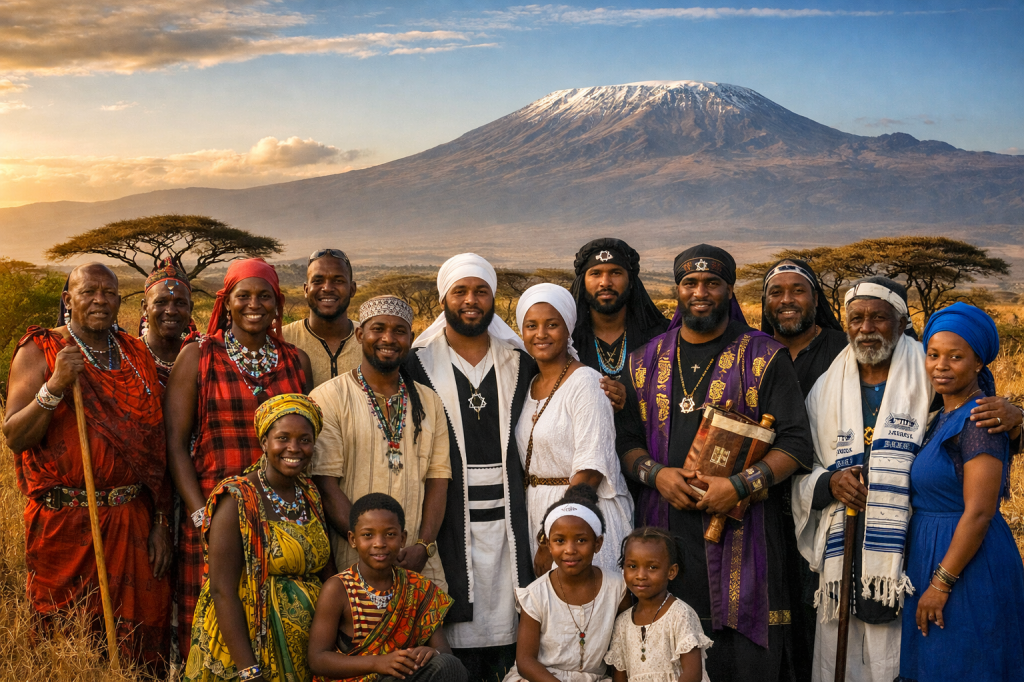
Africa holds a central and indispensable role in biblical prophecy, not as a peripheral landmass, but as a divinely positioned continent woven throughout Scripture from Genesis to Revelation. The Bible consistently presents Africa as a place of refuge, judgment, preservation, and future redemption. When read carefully through a prophetic lens, Africa emerges as a key stage upon which God’s purposes for humanity and Israel unfold.

From the earliest chapters of Genesis, Africa is present in sacred geography. The land associated with Cush, Mizraim, Put, and Ethiopia traces directly to the sons of Ham, whose descendants populated much of the African continent. Genesis records that one of the four rivers flowing from Eden, Gihon, compassed the whole land of Ethiopia, establishing Africa’s presence at the dawn of human history (Genesis 2:13, KJV). This placement signals Africa’s foundational role in God’s original creation narrative.

Africa also serves as a place of divine preservation. Egypt, located in northeast Africa, became the refuge for Joseph and later the entire family of Jacob during famine. God used Africa to sustain the covenant line through which Israel would emerge, demonstrating that African lands were instrumental in preserving the people of promise (Genesis 47:11–12, KJV).

The prophetic significance of Africa intensifies in the Exodus narrative. Egypt stands as both a place of refuge and bondage, illustrating how African territories function in God’s redemptive plan as spaces of testing, judgment, and eventual deliverance. The plagues upon Egypt were not random acts, but prophetic demonstrations of God’s supremacy over nations and false gods (Exodus 12:12, KJV).

Africa’s role extends beyond ancient Israel into messianic prophecy. The Gospel of Matthew records that Jesus Christ was taken into Egypt as a child to escape Herod’s massacre, fulfilling the prophecy, “Out of Egypt have I called my son” (Matthew 2:15, KJV). This moment affirms Africa as a protector of the Messiah and a fulfillment point of prophetic Scripture.

The prophets repeatedly reference African nations in end-time contexts. Isaiah speaks of Ethiopia as a land “shadowing with wings,” sending ambassadors by the sea, indicating geopolitical and prophetic relevance in global affairs (Isaiah 18:1–2, KJV). These passages suggest Africa’s involvement in international movements that precede divine intervention.

Psalm 68 explicitly foretells Africa’s future spiritual awakening, declaring, “Princes shall come out of Egypt; Ethiopia shall soon stretch out her hands unto God” (Psalm 68:31, KJV). This verse is widely understood as a prophetic declaration of Africa’s role in worship, restoration, and alignment with God’s kingdom purposes in the last days.

Africa also appears in prophetic judgments. Ezekiel prophesies against Egypt and its allies, including Cush and Put, demonstrating that African nations are not exempt from divine accountability (Ezekiel 30:4–5, KJV). These judgments align Africa with the broader prophetic pattern of nations being weighed according to righteousness and obedience to God.

The book of Daniel includes Africa in visions of global power shifts. The “king of the north” is said to have authority over “the precious things of Egypt,” along with the Libyans and Ethiopians following at his steps (Daniel 11:43, KJV). This prophecy places African nations within end-time geopolitical alignments.

Africa’s prophetic relevance is also seen in the spread of the gospel. Acts records the conversion of the Ethiopian eunuch, a high official who carried the message of Christ back to Africa, signaling the continent’s early and enduring connection to Christian faith (Acts 8:27–39, KJV). This event foreshadows Africa’s role in global evangelism.

The Bible repeatedly challenges Eurocentric interpretations that marginalize Africa. Scripture itself affirms Africa’s proximity to God’s redemptive acts, revealing that African lands and peoples were never spiritually distant or insignificant within biblical history or prophecy.

Africa’s suffering through colonization, enslavement, and exploitation mirrors biblical patterns of oppression followed by divine reckoning. Just as Egypt was judged for its cruelty toward Israel, Scripture warns that nations will be judged for injustice and bloodshed (Genesis 15:14, KJV). This principle reinforces Africa’s prophetic role as both witness and participant in God’s justice.

The prophetic scriptures also emphasize restoration. Isaiah foretells a time when scattered peoples will be brought back to worship the Lord from distant lands, including Africa (Isaiah 11:11, KJV). This regathering theme resonates strongly with African and diasporic histories.

Africa’s inclusion in prophecy demonstrates God’s global sovereignty. Biblical prophecy does not center exclusively on one region, but reveals a God who governs all nations, including those often overlooked or dismissed by human power structures (Acts 17:26, KJV).

The Book of Revelation depicts all nations and peoples standing before God’s throne, which necessarily includes Africa (Revelation 7:9, KJV). This vision affirms Africa’s presence in the culmination of prophetic history, not as a footnote, but as a redeemed participant in God’s eternal kingdom.

Africa’s prophetic significance also lies in its spiritual resilience. Despite centuries of trauma, African spirituality, worship, and biblical literacy remain deeply rooted, aligning with prophecies of endurance and faith under persecution (Matthew 24:13, KJV).

The repeated biblical mention of African lands underscores that prophecy is inseparable from geography. God acts in real places, among real people, and Africa consistently appears as one of those divinely appointed locations.

Understanding Africa’s role in biblical prophecy challenges distorted narratives that separate faith from Black history. Scripture affirms Africa as central to God’s plan, restoring dignity and biblical identity to African peoples worldwide.

Africa’s place in prophecy ultimately points to hope. The same God who used African lands for preservation, judgment, and refuge promises restoration, worship, and inclusion in His kingdom. This assures that Africa’s story is not marginal, but prophetic.

In the unfolding of biblical prophecy, Africa stands as a witness to God’s faithfulness across generations. From Eden to the Exodus, from the Messiah’s refuge to the final gathering of nations, Africa remains essential to the divine narrative, confirming that God’s promises encompass all lands and all peoples according to His sovereign will.

References

The Holy Bible, King James Version. (1769/2017). Cambridge University Press.

Genesis 2:13 (King James Version).

Genesis 47:11–12 (King James Version).

Exodus 12:12 (King James Version).

Genesis 15:14 (King James Version).

Psalm 68:31 (King James Version).

Isaiah 11:11 (King James Version).

Isaiah 18:1–2 (King James Version).

Ezekiel 30:4–5 (King James Version).

Daniel 11:43 (King James Version).

Matthew 2:15 (King James Version).

Matthew 24:13 (King James Version).

Acts 8:27–39 (King James Version).

Acts 17:26 (King James Version).

Revelation 7:9 (King James Version).

E1B1A: The DNA of Greatness — Tracing the Seed of Israel.

Photo by Muhammad-Taha Ibrahim on Pexels.com

The Y-DNA haplogroup E1B1A is one of the most significant genetic markers in the study of human ancestry, particularly among African populations. Its prevalence in sub-Saharan Africa, especially among West and Central Africans, points to deep historical roots that connect modern descendants to ancient African civilizations. Understanding E1B1A provides insight into the lineage often associated with the biblical Seed of Israel.

Genetic studies indicate that E1B1A likely originated in East Africa and spread westward thousands of years ago. This haplogroup is notably dominant among people of the African diaspora, particularly those whose ancestors were forcibly brought to the Americas during the transatlantic slave trade (Henn et al., 2008). Its prevalence underscores the continuity of African ancestry across continents and centuries.

From a biblical perspective, the Seed of Israel carries promises of covenant, blessing, and nationhood. Scriptures emphasize that God’s covenantal blessings were passed down through the lineages of Abraham, Isaac, and Jacob (Genesis 17:7). Genetic markers like E1B1A offer a modern framework for tracing this lineage in historical and contemporary populations.

The dispersion of E1B1A aligns with historical accounts of migration and conquest. African kingdoms such as Ghana, Mali, and Songhai housed populations with high frequencies of this haplogroup. Their social, economic, and cultural achievements demonstrate a continuity of intelligence, leadership, and resilience—qualities associated biblically with the Israelites (Deuteronomy 28:1–14).

The biblical narrative situates the Israelites as a chosen people, set apart for divine purpose. The connection of E1B1A to African populations reinforces the argument that the original Israelites were of African descent. Psalm 105:6–11 recounts God’s covenant with Abraham and his seed, highlighting the enduring lineage that extends into modern African-descended populations (KJV).

Historically, the transatlantic slave trade severed cultural and genealogical continuity, obscuring the direct lineage of African descendants in the Americas. Despite this disruption, genetic markers like E1B1A provide scientific evidence of enduring heritage and ancestral connection, affirming the biblical promise of the preservation of Israel’s seed (Jeremiah 31:35–37).

Anthropological studies of E1B1A reveal patterns of societal structure, migration, and adaptation. Populations with this haplogroup historically established powerful kingdoms, engaged in sophisticated trade networks, and developed rich cultural traditions. These accomplishments reflect the divine favor and resilience described in Deuteronomy 28:12–13.

The association between E1B1A and leadership traits is notable. Historically, men with this lineage often held positions of authority, governance, and military command. This aligns with the biblical depiction of Israelite men as leaders, judges, and warriors chosen to uphold God’s law and protect their communities (Joshua 1:6–9).

E1B1A also connects to spiritual heritage. The Israelites were entrusted with God’s laws, ethical codes, and covenantal responsibilities. The resilience of African-descended populations, despite centuries of oppression, slavery, and displacement, mirrors the biblical narrative of enduring faith and divine preservation (Psalm 105:8).

Culturally, E1B1A populations have preserved elements of African identity, including language, music, and communal structures, even across diasporic contexts. These cultural continuities serve as living testimony to the endurance of the Seed of Israel, reflecting values emphasized in biblical instruction (Exodus 12:14).

Genetics and scripture intersect in demonstrating continuity and purpose. While DNA provides biological evidence, the Bible provides spiritual and moral context, framing the lineage as not only preserved but chosen and blessed by God (Genesis 28:13–15). Together, these perspectives illuminate the depth of African heritage.

The study of E1B1A challenges Eurocentric historical narratives that have often obscured African achievements. Recognizing the genetic, cultural, and spiritual legacies of E1B1A populations restores historical truth and affirms the presence of the Israelites in Africa (Deuteronomy 28:68).

The distribution of E1B1A among diasporic populations underscores the persistence of identity despite adversity. African-descended people in the Americas, Caribbean, and Europe carry markers of ancient lineage, testifying to the survival of Israel’s seed against historical forces of erasure (Isaiah 49:15–16).

Spiritual reflection on E1B1A emphasizes responsibility and calling. Those who carry this lineage are encouraged to embody principles of justice, wisdom, and leadership, reflecting the covenantal blessings promised to Israel (Proverbs 4:7). The DNA serves not merely as inheritance but as a blueprint for purpose.

Education and awareness of genetic heritage foster empowerment. Understanding the connection between E1B1A and biblical Israel allows African-descended populations to reclaim narratives of dignity, history, and destiny, reinforcing self-worth and communal pride (Jeremiah 33:3).

Modern research on E1B1A includes advanced genetic mapping and population studies. These studies reveal migration patterns, admixture, and historical continuity, providing scientific validation for long-held ancestral knowledge and oral traditions (Henn et al., 2012).

The resilience of E1B1A populations in the face of slavery, colonialism, and systemic oppression demonstrates a living manifestation of biblical promises. Their endurance exemplifies faithfulness and divine protection, echoing Deuteronomy 31:6.

Understanding E1B1A also highlights the intersection of biology, history, and theology. DNA does not exist in isolation—it interacts with culture, belief, and community. Recognizing this interplay enriches both scientific and spiritual understanding of human identity.

Mentorship and intergenerational transmission of knowledge are vital. Passing down awareness of lineage, cultural heritage, and spiritual responsibility ensures that the lessons embedded in E1B1A continue to guide descendants of Israel (Proverbs 22:6).

In conclusion, E1B1A is more than a genetic marker; it is a testament to endurance, heritage, and divine purpose. Tracing this lineage illuminates the biblical Seed of Israel, connecting modern African-descended populations to their ancestral covenant. Recognizing and embracing this inheritance empowers individuals and communities to embody the greatness, resilience, and responsibility embedded in their DNA.


References

Henn, B. M., Botigué, L. R., Gravel, S., Wang, W., Brisbin, A., Byrnes, J. K., … & Bustamante, C. D. (2012). Genomic ancestry of North Africans supports back-to-Africa migrations. PLOS Genetics, 8(1), e1002397. https://doi.org/10.1371/journal.pgen.1002397

Henn, B. M., Cavalli-Sforza, L. L., & Feldman, M. W. (2008). The great human expansion. Proceedings of the National Academy of Sciences, 105(36), 13471–13476. https://doi.org/10.1073/pnas.0805312105

Hunter, M. (2007). The persistent problem of colorism: Skin tone, status, and inequality. Sociology Compass, 1(1), 237–254. https://doi.org/10.1111/j.1751-9020.2007.00014.x

The Holy Bible, King James Version. (n.d.). Genesis 17:7; 28:13–15; Exodus 12:14; Deuteronomy 28:1–14, 28:68, 31:6; Psalm 105:6–11; Isaiah 49:15–16; Proverbs 4:7; 22:6. King James Bible Online. https://www.kingjamesbibleonline.org

The Psychology of Melanin: Why Brown Skin is Beautiful.

This photograph is the property of its respective owner. No copyright infringement intended.

Brown skin, a living shield of light,
Absorbing sun, yet shining bright.
Ancestral stories etched in hue,
Strength enduring, ever true.

Not a mark of shame, but crown,
Royal tones from gold to brown.
Scripture whispers, “comely, fair,”
A beauty deep beyond compare.

Brown skin, in its radiant spectrum of hues, carries both a scientific brilliance and a profound cultural meaning. At its foundation lies melanin, the pigment that not only determines the complexion of human skin but also provides biological advantages, cultural identity, and psychological resilience. To understand the beauty of brown skin, one must examine the science of melanin, the psychology of color, the history of racialized beauty standards, and the spiritual affirmations that honor melanated people.

The Science of Melanin

Melanin is a natural polymer responsible for pigmentation in skin, eyes, and hair. It functions as a biological shield, absorbing ultraviolet radiation and protecting against DNA damage (Jablonski & Chaplin, 2010). Higher concentrations of melanin are associated with slower aging, reduced risk of certain skin cancers, and the famed saying, “Black don’t crack.” The resilience of melanated skin is thus not only aesthetic but deeply physiological, reinforcing health, vitality, and longevity.

Shades of Brown and Identity

Brown skin exists in a spectrum ranging from golden caramel to deep mahogany. These shades tell ancestral stories of adaptation to diverse climates and environments. The psychology of shade is crucial, as social hierarchies have historically privileged lighter tones while devaluing darker ones—a phenomenon known as colorism (Hunter, 2007). Despite this legacy, there has been a global reclaiming of darker skin tones as symbols of pride, resilience, and beauty.

Cultural and Psychological Impact

Brown skin has often been unjustly stigmatized through Eurocentric beauty ideals that elevate whiteness as the standard. Such biases have led to internalized racism and psychological harm among darker-skinned populations (Burke, 2008). Yet, psychological studies also demonstrate that affirmations of cultural identity and positive representation can restore self-esteem and foster collective pride (Cross & Vandiver, 2001). For many, embracing melanin becomes an act of resistance and self-love.

The Global Praise of Brown Skin

Across cultures, melanated beauty has long been admired. Ancient African, Indian, and Indigenous traditions revered darker complexions as markers of nobility, fertility, and divine favor. Even in literature, metaphors likening dark skin to bronze, ebony, and gold highlight its aesthetic richness. Contemporary fashion and modeling—exemplified by icons like Naomi Campbell and Adut Akech—continue this global appreciation, showcasing the elegance of brown skin on international stages.

Biblical Affirmations of Brown Skin

The King James Bible contains references that affirm the beauty of melanated people. In Song of Solomon 1:5–6, the Shulamite woman declares: “I am black, but comely”, affirming dark skin as both divine and desirable. Jeremiah 8:21 describes the suffering of a “black people” with dignity, further signifying presence and importance within sacred texts. These passages refute any notion of inferiority and ground beauty in spiritual identity.

Psychological Strength in Melanin

The psychology of brown skin transcends surface appearance—it is linked to survival, adaptability, and communal pride. Psychologists argue that beauty is not merely physical but tied to resilience and confidence (Swami & Tovée, 2004). For people of African descent, melanin embodies endurance against centuries of oppression, serving as a visible reminder of strength. In this sense, melanin is both a biological armor and a psychological crown.

The Beauty Narrative Reclaimed

Today, movements such as “Melanin Magic” and “Black is Beautiful” are reshaping narratives. Social media platforms amplify voices that celebrate brown skin in all its variations, shifting beauty hierarchies away from Eurocentrism. This reclamation of beauty is not superficial but deeply psychological, affirming identity while dismantling internalized shame.

Conclusion

Brown skin is beautiful not simply because of pigmentation, but because it represents a convergence of science, history, psychology, and spirituality. It carries biological brilliance, cultural symbolism, and ancestral resilience. To celebrate melanin is to affirm life, survival, and dignity in the face of systems that once sought to devalue it. As the Bible reminds, “I am fearfully and wonderfully made” (Psalm 139:14, KJV)—a truth that underscores why brown skin, in all its hues, remains eternally beautiful.


References

  • Burke, M. A. (2008). Colorism as racism: Garvey, Fanon, and the evolution of Black consciousness. Journal of African American Studies, 12(4), 498–515.
  • Cross, W. E., & Vandiver, B. J. (2001). Nigrescence theory and measurement. Handbook of multicultural counseling, 371–393.
  • Hunter, M. (2007). The persistent problem of colorism: Skin tone, status, and inequality. Sociology Compass, 1(1), 237–254.
  • Jablonski, N. G., & Chaplin, G. (2010). Human skin pigmentation as an adaptation to UV radiation. Proceedings of the National Academy of Sciences, 107(Supplement 2), 8962–8968.
  • Swami, V., & Tovée, M. J. (2004). The influence of body weight and shape in determining female and male physical attractiveness. Body Image, 1(2), 129–137.

The Man God Built

The man God builds is not shaped by the world but by divine purpose. He is called to reflect God’s nature through character, faith, and steadfastness. As Scripture declares, God desires a man after His own heart, one who seeks righteousness above worldly gain (Acts 13:22). This type of man recognizes that true strength is measured in obedience to God, not in personal acclaim.

A man built by God is anchored in integrity. Integrity is the framework that aligns his actions with God’s Word. Proverbs 10:9 says, “He that walketh uprightly walketh surely: but he that perverteth his ways shall be known.” The godly man’s decisions are consistent, whether seen by many or by none, for he knows that God’s eyes are upon him.

Such a man is humble, understanding that authority is stewardship, not entitlement. Humility allows him to submit to God’s guidance while leading others with wisdom and compassion. James 4:10 affirms, “Humble yourselves in the sight of the Lord, and he shall lift you up.” Humility is thus both a shield and a crown in a godly man’s life.

Faith is the foundation of his life. A man after God’s own heart walks in trust, even when circumstances appear daunting. Hebrews 11:6 reminds us, “But without faith it is impossible to please him: for he that cometh to God must believe that he is, and that he is a rewarder of them that diligently seek him.” Faith propels him to act rightly, not merely to believe passively.

The man God builds pursues wisdom above all earthly knowledge. Wisdom distinguishes the temporary from the eternal, guiding him in decision-making and leadership. Proverbs 4:7 declares, “Wisdom is the principal thing; therefore get wisdom: and with all thy getting get understanding.” In every choice, a godly man seeks God’s discernment.

Courage marks the man God constructs. He does not shrink from moral challenges or spiritual battles. Joshua 1:9 commands, “Be strong and of a good courage; be not afraid, neither be thou dismayed: for the Lord thy God is with thee whithersoever thou goest.” Courage is born of trust in God’s presence and promises.

Responsibility defines his every endeavor. A man built by God does not shirk duty but embraces accountability in family, work, and community. Luke 16:10 teaches, “He that is faithful in that which is least is faithful also in much.” Faithfulness in small matters reflects readiness for greater responsibilities.

A man after God’s own heart is prayerful, maintaining constant communion with his Creator. Prayer is the lifeline that sustains his soul and informs his actions. Philippians 4:6 exhorts, “Be careful for nothing; but in every thing by prayer and supplication with thanksgiving let your requests be made known unto God.” Through prayer, he aligns his will with God’s.

Compassion flows naturally from the man God shapes. He bears the burdens of others and acts justly, especially toward the vulnerable. Micah 6:8 instructs, “He hath shewed thee, O man, what is good; and what doth the Lord require of thee, but to do justly, and to love mercy, and to walk humbly with thy God?” Mercy strengthens his relationships and his testimony.

The man God builds practices self-control. His emotions, desires, and impulses are tempered by the Spirit. Proverbs 25:28 warns, “He that hath no rule over his own spirit is like a city that is broken down, and without walls.” Self-discipline ensures his influence is constructive, not destructive.

Vision defines his journey. A man after God’s own heart has clarity of purpose rooted in divine calling. Proverbs 29:18 affirms, “Where there is no vision, the people perish: but he that keepeth the law, happy is he.” His foresight guides his family, community, and spiritual legacy.

The godly man demonstrates resilience, standing firm amidst trials. Job exemplifies this, maintaining faith under suffering. James 1:12 reminds, “Blessed is the man that endureth temptation: for when he is tried, he shall receive the crown of life, which the Lord hath promised to them that love him.” Resilience is nurtured through unwavering trust in God.

A man God builds is honest in all dealings. Truthfulness strengthens his credibility and honors God. Proverbs 12:22 declares, “Lying lips are abomination to the Lord: but they that deal truly are his delight.” His words align with reality and righteousness.

Generosity marks his interactions. He gives willingly to meet needs, reflecting God’s providence. Acts 20:35 notes, “It is more blessed to give than to receive.” The godly man’s generosity is not performative but a reflection of divine love.

He is discerning, understanding that appearances may deceive. 1 Thessalonians 5:21 instructs, “Prove all things; hold fast that which is good.” Discernment protects him from manipulation and allows him to shepherd others wisely.

The man God shapes values family and nurtures those entrusted to him. Ephesians 5:25 commands, “Husbands, love your wives, even as Christ also loved the church, and gave himself for it.” He protects, provides, and models godly leadership in the home.

A man after God’s own heart is a servant-leader, not seeking dominance but service. Mark 10:45 reminds, “For even the Son of man came not to be ministered unto, but to minister, and to give his life a ransom for many.” Leadership is defined by humility and sacrifice.

He cultivates patience, understanding that growth is gradual and challenges are refining. Romans 5:3-4 teaches, “…we glory in tribulations also: knowing that tribulation worketh patience; And patience, experience; and experience, hope.” Patience strengthens character and faith.

A man God builds maintains purity of thought and action, avoiding moral compromise. Philippians 4:8 instructs, “Whatsoever things are true, whatsoever things are honest, whatsoever things are just…think on these things.” Purity ensures his life is a testimony of righteousness.

Finally, the man God builds lives with eternal perspective. Colossians 3:2 advises, “Set your affection on things above, not on things on the earth.” His priorities, decisions, and ambitions are aligned with God’s kingdom, leaving a legacy that honors heaven more than man.

References

Acts 13:22 – “And when he had removed him, he raised up unto them David to be their king; to whom also he gave testimony, and said, I have found David the son of Jesse, a man after mine own heart, which shall fulfil all my will.”

Proverbs 10:9 – “He that walketh uprightly walketh surely: but he that perverteth his ways shall be known.”

James 4:10 – “Humble yourselves in the sight of the Lord, and he shall lift you up.”

Hebrews 11:6 – “But without faith it is impossible to please him: for he that cometh to God must believe that he is, and that he is a rewarder of them that diligently seek him.”

Proverbs 4:7 – “Wisdom is the principal thing; therefore get wisdom: and with all thy getting get understanding.”

Joshua 1:9 – “Have not I commanded thee? Be strong and of a good courage; be not afraid, neither be thou dismayed: for the Lord thy God is with thee whithersoever thou goest.”

Luke 16:10 – “He that is faithful in that which is least is faithful also in much: and he that is unjust in the least is unjust also in much.”

Philippians 4:6 – “Be careful for nothing; but in every thing by prayer and supplication with thanksgiving let your requests be made known unto God.”

Micah 6:8 – “He hath shewed thee, O man, what is good; and what doth the Lord require of thee, but to do justly, and to love mercy, and to walk humbly with thy God?”

Proverbs 25:28 – “He that hath no rule over his own spirit is like a city that is broken down, and without walls.”

Proverbs 29:18 – “Where there is no vision, the people perish: but he that keepeth the law, happy is he.”

James 1:12 – “Blessed is the man that endureth temptation: for when he is tried, he shall receive the crown of life, which the Lord hath promised to them that love him.”

Proverbs 12:22 – “Lying lips are abomination to the Lord: but they that deal truly are his delight.”

Acts 20:35 – “I have shewed you all things, how that so labouring ye ought to support the weak, and to remember the words of the Lord Jesus, how he said, It is more blessed to give than to receive.”

1 Thessalonians 5:21 – “Prove all things; hold fast that which is good.”

Ephesians 5:25 – “Husbands, love your wives, even as Christ also loved the church, and gave himself for it.”

Mark 10:45 – “For even the Son of man came not to be ministered unto, but to minister, and to give his life a ransom for many.”

Romans 5:3-4 – “And not only so, but we glory in tribulations also: knowing that tribulation worketh patience; And patience, experience; and experience, hope.”

Philippians 4:8 – “Finally, brethren, whatsoever things are true, whatsoever things are honest, whatsoever things are just, whatsoever things are pure, whatsoever things are lovely, whatsoever things are of good report; if there be any virtue, and if there be any praise, think on these things.”

Colossians 3:2 – “Set your affection on things above, not on things on the earth.”

The Woman God Built

The woman God built is a masterpiece of divine intention, created to reflect His glory and manifest His purpose on earth. She is a woman of faith, rooted in prayer and devotion, trusting God’s timing and sovereignty. Proverbs 31:25 (KJV) says, “Strength and honour are her clothing; and she shall rejoice in time to come.” Her confidence and joy stem not from worldly recognition, but from her steadfast trust in the Lord.

She loves God with all her heart, soul, and mind, embodying the command of Matthew 22:37 (KJV): “Thou shalt love the Lord thy God with all thy heart, and with all thy soul, and with all thy mind.” Her devotion is evident in her daily choices, her priorities, and the way she cultivates her spiritual life. Prayer, worship, and meditation on the Word are her daily bread, sustaining her in times of challenge and triumph alike.

The woman God built keeps His laws and seeks to live righteously. She understands that obedience is an act of love and reverence. Deuteronomy 5:33 (KJV) teaches, “Ye shall walk in all the ways which the Lord your God hath commanded you, that ye may live, and that it may be well with you…” Her commitment to God’s statutes reflects discipline, wisdom, and a heart aligned with divine will.

She is modest in her appearance and demeanor, valuing purity and self-respect. 1 Timothy 2:9-10 (KJV) instructs, “In like manner also, that women adorn themselves in modest apparel…not with broided hair, or gold, or pearls, or costly array; But (which becometh women professing godliness) with good works.” Modesty is her crown, revealing that her worth is not determined by fashion, popularity, or fleeting trends.

Kindness flows naturally from her character. Proverbs 31:26 (KJV) declares, “She openeth her mouth with wisdom; and in her tongue is the law of kindness.” She speaks with grace, uplifts others, and extends compassion even when it is difficult. Her heart is tender toward those in need, and she actively seeks to bless others through acts of service and encouragement.

Strength is a defining characteristic of the woman God built. She is resilient in the face of trials, steadfast in adversity, and unwavering in her commitments. Joshua 1:9 (KJV) reminds her, “Have not I commanded thee? Be strong and of a good courage; be not afraid, neither be thou dismayed: for the Lord thy God is with thee whithersoever thou goest.” Her strength is both physical and spiritual, anchored in God’s presence.

She is wise, making choices guided by discernment and understanding. Proverbs 3:13-14 (KJV) teaches, “Happy is the man that findeth wisdom, and the man that getteth understanding. For the merchandise of it is better than the merchandise of silver, and the gain thereof than fine gold.” Her decisions honor God and benefit those around her, demonstrating that wisdom is both practical and godly.

Faith fuels her hope. Romans 12:12 (KJV) exhorts, “Rejoicing in hope; patient in tribulation; continuing instant in prayer.” Even in difficult seasons, she trusts God’s promises, knowing that His timing is perfect. Her faith shapes her perspective, enabling her to see opportunity in challenge and blessing in the midst of struggle.

The woman God built is a pillar of her household. Proverbs 31:27 (KJV) affirms, “She looketh well to the ways of her household, and eateth not the bread of idleness.” She manages responsibilities with diligence and care, ensuring that her family is nurtured, guided, and protected. Her home is a reflection of her values, discipline, and love.

She is generous and charitable, giving of her time, resources, and gifts to help others. Proverbs 31:20 (KJV) says, “She stretcheth out her hand to the poor; yea, she reacheth forth her hands to the needy.” Her generosity is not for recognition but stems from a heart attuned to God’s call to love and serve.

Patience defines her interactions with others. Ecclesiastes 7:8 (KJV) reminds us, “Better is the end of a thing than the beginning thereof: and the patient in spirit is better than the proud in spirit.” She responds with calm, understanding, and grace, recognizing that growth—her own and others’—requires time and nurturing.

Her character is unshakeable. Proverbs 31:30 (KJV) teaches, “Favour is deceitful, and beauty is vain: but a woman that feareth the Lord, she shall be praised.” The foundation of her life is God’s fear, guiding her moral compass and shaping her relationships, priorities, and conduct.

She is humble, acknowledging that every gift and talent is from God. James 4:6 (KJV) reminds us, “But he giveth more grace. Wherefore he saith, God resisteth the proud, but giveth grace unto the humble.” Her humility allows her to learn, grow, and uplift others without seeking personal acclaim.

A spirit of joy permeates her life. Nehemiah 8:10 (KJV) says, “The joy of the Lord is your strength.” Even amidst challenges, she finds delight in God’s presence, daily blessings, and the successes of those around her. Her joy is contagious, inspiring and uplifting those in her sphere of influence.

She is a woman of integrity, whose words and actions are consistent and reliable. Proverbs 10:9 (KJV) teaches, “He that walketh uprightly walketh surely: but he that perverteth his ways shall be known.” Her integrity builds trust, respect, and admiration, and she honors God by keeping her commitments faithfully.

She embodies self-discipline, regulating her thoughts, emotions, and actions. 1 Corinthians 9:27 (KJV) emphasizes, “But I keep under my body, and bring it into subjection: lest that by any means, when I have preached to others, I myself should be a castaway.” Discipline enables her to pursue her purpose consistently and live according to God’s standards.

The woman God built is courageous, facing challenges with faith and determination. Deuteronomy 31:6 (KJV) declares, “Be strong and of a good courage, fear not, nor be afraid of them: for the Lord thy God, he it is that doth go with thee; he will not fail thee, nor forsake thee.” Her courage inspires others and demonstrates reliance on God above all.

She is discerning in relationships, valuing those who align with her faith, values, and vision. Proverbs 13:20 (KJV) teaches, “He that walketh with wise men shall be wise: but a companion of fools shall be destroyed.” By surrounding herself with godly influences, she cultivates growth, encouragement, and mutual accountability.

She celebrates others, lifting sisters and peers with encouragement and affirmation. Romans 12:10 (KJV) exhorts, “Be kindly affectioned one to another with brotherly love; in honour preferring one another.” Her support fosters community, unity, and empowerment among women of faith.

Ultimately, the woman God built is a reflection of divine purpose, strength, and beauty. She is a testament to God’s design, blending faith, wisdom, integrity, and love. Proverbs 31:31 (KJV) concludes, “Give her of the fruit of her hands; and let her own works praise her in the gates.” Her life is a living tribute to God’s glory, inspiring generations to walk in obedience, grace, and faith.


References:

  • Holy Bible, King James Version (1611). Proverbs 31:25, 26, 27, 30, 31; Matthew 22:37; Deuteronomy 5:33, 31:6; 1 Timothy 2:9-10; Joshua 1:9; Proverbs 3:13-14; Romans 12:12; Ecclesiastes 7:8; 2 Corinthians 12:9; James 4:6; Nehemiah 8:10; 1 Corinthians 9:27; Proverbs 10:9; Romans 12:10; Titus 2:3-4.

Dilemma: 400 years later…

The arrival of the first documented Africans to the shores of what would become the United States began in 1619, initiating a 400-year historical continuum that cannot be reduced to a single era or chapter but must be read as an unfolding system of captivity and racial stratification rooted in both economic exploitation and social demonization. The transatlantic slave trade expanded across the Americas over the next two centuries, cementing a global architecture of forced labor that built Western wealth while systematically devastating African communities and fracturing family lineage. This reality fulfills the ancient warning that curses follow a disobedient and oppressed people, for scripture foretold a nation that would experience alien ruin, humiliation, and subjugation: “The stranger that is within thee shall get up above thee very high; and thou shalt come down very low” (Deuteronomy 28:43, KJV).

Slavery did not begin by accident but by law, religion, and commerce. By the mid-1600s, colonial legislatures had codified Africans and their descendants into permanent hereditary servitude, legally positioning Black bodies as property rather than persons, creating a condition where captivity could be inherited like a surname. Plantations multiplied across the Southern colonies, where cotton would later emerge as “king,” demanding labor on a scale that turned land into empire and humans into fuel. Yet the Bible condemns the very foundation of such enterprise: “He that stealeth a man, and selleth him… shall surely be put to death” (Exodus 21:16, KJV). The theft was never the land alone — it was identity, labor, movement, and posterity.

Even after the Thirteenth Amendment of 1865 formally abolished chattel slavery, its exception clause allowed a rapid pivot into criminalized bondage, birthing the era of convict leasing, where Black men were arrested on arbitrary charges, leased to corporations, and worked under conditions nearly indistinguishable from plantation labor. The cotton field remained, only relabeled. This legislative loophole reframed chains as “justice,” transforming freedom into illusion. Scripture again provides clarity: “The wicked walk on every side, when the vilest men are exalted” (Psalm 12:8, KJV). When power itself is corrupt, deliverance cannot be legal alone — it must also be spiritual.

Reconstruction offered a brief but luminous disruption of bondage. Black Americans built schools, entered political office, established land ownership, and reconnected fragments of stolen ancestry. But progress provoked terror, and by 1877, federal retreat enabled Southern states to regenerate racial hierarchy through Jim Crow laws, insulating white privilege and criminalizing Black mobility. Between 1870 and 1950, thousands of Black Americans were lynched in public acts of racial terrorism, not as random violence but as a national message: Black advancement would be met with blood. The psalmist described this spirit precisely: “They have said, Come, and let us cut them off from being a nation” (Psalm 83:4, KJV). The objective was erasure.

The Great Migration (1916–1970) relocated millions of Black families from the agricultural South to the industrial North, seeking wages rather than whipping posts, safety rather than spectacle deaths. But northern opportunity carried its own forms of apartheid: redlining maps, restricted labor unions, segregated schools, employment ceilings, and policing systems that followed Black communities like a shadow. The physical field changed, but the captivity matured into systems rather than signposts. Scripture declared the emotional condition of displaced people longing for justice and homeland: “By the rivers of Babylon, there we sat down, yea, we wept” (Psalm 137:1, KJV).

The 1960s Civil Rights Movement confronted segregation at its legal roots, demanding equal access to education, voting, housing, and public participation. Its leaders spoke like prophets disrupting empires: “Let judgment run down as waters, and righteousness as a mighty stream” (Amos 5:24, KJV). Yet many of the same state systems that resisted abolition resisted civil rights — governors blocking doors, officers turning hoses, lawmakers filibustering dignity. Progress was wrestled, never gifted.

Following civil rights legislation came a new form of containment — the War on Drugs, hyper-policing, and mass incarceration. From the 1980s onward, prisons expanded faster than schools, sentencing laws grew harsher, and policing strategies militarized, targeting Black neighborhoods with a disproportionality that mirrors an economic draft. Men descended from sharecroppers became inmates leased through labor programs inside industrial prisons. The plantation evolved into a complex, adaptable organism. As Proverbs illuminated the mechanics of inequality: “The rich ruleth over the poor” (22:7, KJV). For Black America, poverty was not incidental but intentional infrastructure.

In modern expression, hatred manifests not in auction blocks but in algorithms, policing districts, wage gaps, and judicial disparities. Hate crimes continue at alarming frequency, motivated by the same racial animus that once governed slave patrols, lynch mobs, and segregated institutions. Police brutality killings operate as extrajudicial punishments disproportionately borne by Black citizens, echoing the terror logic of the past. “They break in pieces thy people, O Lord, and afflict thine heritage” (Psalm 94:5, KJV). The cries are the same; only the arenas differ.

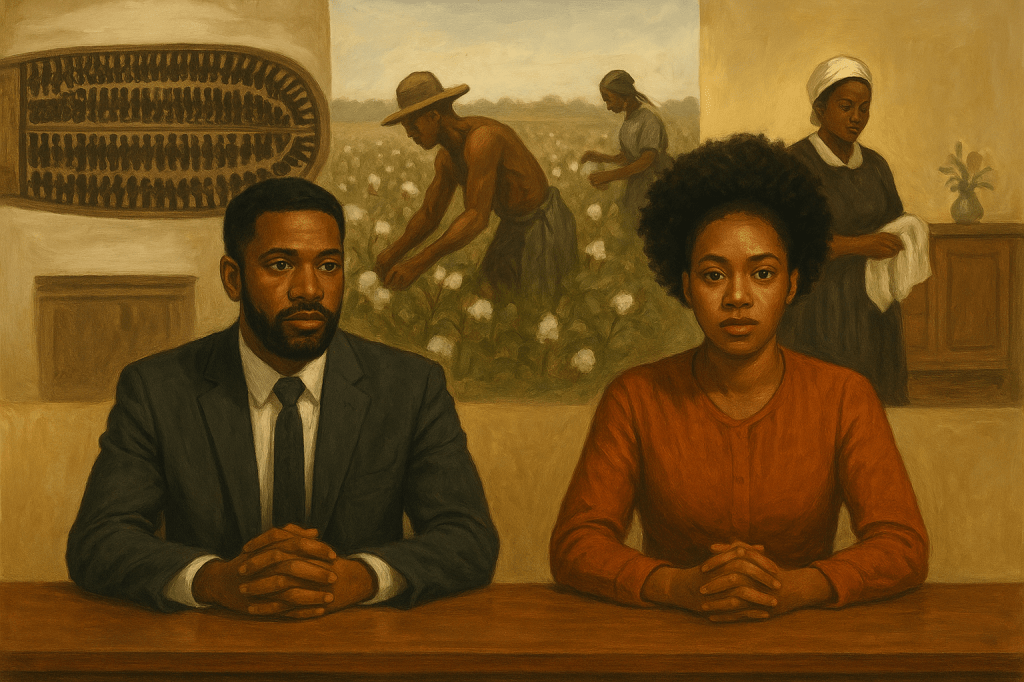
Reparations promised in 1865 through “40 acres and a mule” never materialized nationally, representing not only a breach of contract but a breach of justice. No federal reparative policy has been enacted despite centuries of documented theft, labor extraction, and structural disenfranchisement. The field and the counter today form an economic diptych — continuity rather than contrast: from unpaid cotton labor to underpaid service labor, from stolen land to inaccessible mortgages, from patrolled movement to policed existence, from literal chains to institutional ones.

The psychological captivity is often strongest. Media systems still export narratives that position Black identity as inferior, criminal, or disposable, reproducing a cognitive caste system that shapes public perception, opportunity distribution, and even self-esteem. Solomon teaches that perception becomes self-governing: “As he thinketh in his heart, so is he” (Proverbs 23:7, KJV). When a people lives under 400 years of negative mirrors, liberation must reconstruct the mind, not only the nation.

Understanding the Biblical “400-Year” Hardship Motif

In the Bible, long periods of suffering are often tied to exile, purification, oppression, and divine timing, not arbitrary catastrophe. The closest explicit reference to 400 years appears in Genesis 15:13–14 (KJV), where God tells Abram:

“Know of a surety that thy seed shall be a stranger in a land that is not theirs, and shall serve them; and they shall afflict them four hundred years; And also that nation, whom they shall serve, will I judge: and afterward shall they come out with great substance.”

This passage establishes three key principles:

  1. Suffering within foreign lands can be part of divine assignment — “a land that is not theirs.”
  2. The suffering serves a formative purpose for a chosen lineage — Abram’s seed is not destroyed, but shaped.
  3. The timeline ends with judgment of the oppressor and advancement of the oppressed — “I will judge” + “come out with great substance.”

Other biblical exiles follow similar structure, though without the number 400 attached. Israel’s bondage in Egypt, Judah’s exile into Babylon, and the scattering of tribes under imperial conquest all follow a recognizable pattern:

  • Identity is attacked
  • Oppression is used as endurance training
  • God times deliverance to align with spiritual readiness rather than political apology
  • Restoration is communal, covenantal, and spiritual before material

(Deuteronomy 30:3–5, Jeremiah 29:10–14, Psalm 126:1-3, KJV)

Thus, when people today speak of “400 years later,” they are usually drawing a parallel between African-descended suffering in America (beginning in 1619) and the Genesis 15 captivity framework, combining historical trauma with biblical typology. This is a symbolic theological claim, not a literal prophetic decree.

Du Bois (1903) noted that Black history in America has often been interpreted through a dual lens of diaspora and spiritual yearning, mirroring Hebraic exile themes. This interpretive tradition became especially strong in the African-American church and in later Afro-Hebraic movements. (Du Bois, 1903; Wilkerson, 2010)


Why 2025 Is Being Discussed as the “Cycle’s End”

The belief that “the 400-year test ends in 2025” is an example of contemporary sacred-historical reinterpretation, similar to how different generations calculated messianic or jubilee timelines in their own eras. The Bible shows that humans frequently attach chronology to hope:

  • Daniel expected restoration after 70 years because Jeremiah prophesied it (Daniel 9:2, KJV)
  • Israelites expected the Messiah based on timeline readings of prophets (Luke 3:15, KJV)
  • The Jubilee cycle (Leviticus 25) shaped conversations of liberation and return

Likewise, many Black thought movements today use 1619 → 2019/2025 as a rhetorical timeline to emphasize:

  • How long has injustice persisted
  • How delayed deliverance feels
  • How captivity keeps evolving
  • The moral debt owed to Black descendants has not been acknowledged or repaired

(Rothstein, 2017; Stevenson, 2014)

However, the Bible consistently teaches that God’s deliverance is not triggered by the clock alone, but by covenant remembrance and collective turning toward Him:

“Then ye shall call upon me, and ye shall go and pray unto me, and I will hearken unto you. And ye shall seek me, and find me, when ye shall search for me with all your heart.”
(Jeremiah 29:12-13, KJV)

This shows that spiritual awakening precedes systemic reversal in God’s economy.


What Has Changed vs. What Hasn’t

What has changed since 1619:

  • Black Americans are no longer enslaved as legal property
  • Literacy, land ownership, political office, scholarship, and cultural expression are possible
  • The Bible is now read by Black communities rather than read at them

(Woodson, 1933; Du Bois, 1903)

What has not changed at the root level :

  • Violence against Black bodies continues through hate-motivated crimes
  • Law enforcement injustice appears through disproportionate lethal force and brutality
  • No federal reparative restoration has been enacted for descendants of slavery
  • The wealth gap persists, restricting intergenerational mobility
  • Oppression remains structural, not individual alone
  • Bondage evolved from chains on bodies → chains on systems → chains on narratives → chains on economics → chains on mobility and life expectancy

(Muhammad, 2011; Rothstein, 2017; Stevenson, 2014)

Biblically, this mirrors a shift like captivity rather than the removal of it. Egypt began as physical bondage, but later exile became psychological, political, and spiritual scattering.


Yet transformation, though unfinished, remains possible. The biblical arc of exodus shows that freedom is not immediate but fought for, walked into, prayed into, and inherited by those who refuse to remain Egypt-minded. “Stand fast therefore in the liberty wherewith Christ hath made us free, and be not entangled again with the yoke of bondage” (Galatians 5:1, KJV). Black America has been made free in spirit — the labor left is to be made free in systems, policies, safety, economy, body, and legacy.

Bondage persists, but so does chosen resistance. The cotton field, the counter, the classroom, the courtroom, the wealth gap, the police district — these are the new Red Seas, new wildernesses, and new pleas for divine justice. Deliverance is still in motion. Liberation has begun, but emancipation is still the mission. And the question is no longer “Were we enslaved?” but “Why are the chains so adaptive, and where will exodus lead next?”

References

Bibb, H. (1849). Narrative of the Life and Adventures of Henry Bibb, an American Slave. Author.

Du Bois, W. E. B. (1903). The Souls of Black Folk. A. C. McClurg & Co.

Equal Justice Initiative. (2022). Lynching in America: Confronting the Legacy of Racial Terror (3rd ed.). Author.

Feagin, J. (2020). The racism: A short history (2nd ed.). Routledge.

Genovese, E. D. (1976). Roll, Jordan, Roll: The World the Slaves Made. Pantheon Books.

Higginbotham, A. L. (1978). In the Matter of Color: Race and the American Legal Process. Oxford University Press.

King James Bible. (1611). King James Version (KJV).

King, M. L., Jr. (1963). “I Have a Dream.” Speech presented at the March on Washington for Jobs and Freedom, Washington, D.C.

Muhammad, K. G. (2011). The Condemnation of Blackness: Race, Crime, and the Making of Modern Urban America. Harvard University Press.

National Archives. (2024). 13th Amendment to the U.S. Constitution: Abolition of Slavery (except as punishment for crime). U.S. Government.

Rothstein, R. (2017). The Color of Law: A Forgotten History of How Our Government Segregated America. Liveright Publishing.

Smith, S. (2016). Generations of captivity: A history of African-American slavery. Journal of Cultural History, 12(4), 45–67.

Stevenson, B. (2014). Just Mercy: A Story of Justice and Redemption. Spiegel & Grau.

Wilkerson, I. (2010). The Warmth of Other Suns: The Epic Story of America’s Great Migration. Random House.

Woodson, C. G. (1933). The Mis-Education of the Negro. Associated Publishers.

Exodus 21:16 – “He that stealeth a man, and selleth him… shall surely be put to death.”

Deuteronomy 28:37 – “Thou shalt become an astonishment, a proverb, and a byword, among all nations.”

Deuteronomy 28:43 – “The stranger that is within thee shall get up above thee very high; and thou shalt come down very low.”

Proverbs 22:7 – “The borrower is servant to the lender.”

Proverbs 23:7 – “As he thinketh in his heart, so is he.”

Psalm 12:8 – “The wicked walk on every side, when the vilest men are exalted.”

Psalm 83:4 – “Let us cut them off from being a nation.”Psalm 94:5 – “They break in pieces thy people, O Lord, and afflict thine heritage.”

Galatians 5:1 – “Stand fast therefore in the liberty wherewith Christ hath made us free, and be not entangled again with the yoke of bondage.”


The Phenomenon of Blackness

Blackness is not merely a skin color; it is a lived experience, a cultural identity, a historical journey, and a spiritual inheritance. It carries the weight of ancestry, the rhythm of heritage, and the resilience of a people who have endured centuries of oppression and still flourish.

The phenomenon of Blackness is both visible and invisible. It is seen in skin, hair, and features, but its essence is found in culture, knowledge, spirituality, and shared memory. Blackness embodies history and identity simultaneously.

Historically, Blackness has been racialized and criminalized, shaped by the transatlantic slave trade, colonialism, and systemic oppression. Yet, despite these forces, Black people have maintained a sense of collective self and cultural continuity.

Blackness is an expression of resistance. From revolts on slave ships to the civil rights movement, it has embodied the refusal to be erased. Its power lies in the persistent assertion of dignity, intellect, and humanity in the face of dehumanization.

Spiritually, Blackness has been a vehicle of survival. Enslaved Africans and their descendants transformed suffering into faith. Spirituals, hymns, and religious gatherings sustained the soul, creating a framework of hope that transcended the physical hardships of bondage.

The phenomenon of Blackness is artistic. Music, dance, literature, and visual arts have always been vessels for expression, protest, and storytelling. Jazz, blues, hip-hop, and African diasporic art forms are not merely entertainment—they are cultural testimony.

Blackness also carries a linguistic richness. From African languages adapted in the diaspora to African American Vernacular English, speech has been a tool of identity, solidarity, and resistance. Language preserves memory, encodes history, and signals belonging.

Culturally, Blackness fosters community. Families, neighborhoods, and churches have historically been sanctuaries of support and education. The collective ethos emphasizes survival, teaching, mentorship, and protection, which has enabled Black communities to flourish despite systemic obstacles.

Blackness intersects with science and genetics. Studies of Y-DNA haplogroups, such as E1B1A, trace the lineage and migrations of African peoples, revealing resilience in continuity and adaptation across continents and centuries. Biological identity reinforces cultural and historical identity.

The phenomenon of Blackness is political. Black communities have historically mobilized to secure rights, challenge oppression, and redefine narratives. Leaders like Marcus Garvey, Malcolm X, and Fannie Lou Hamer exemplify the political consciousness inherent in Black identity.

Blackness is also intellectual. Black scholars, scientists, and thinkers have made profound contributions to global knowledge. Despite educational barriers, Black intellectualism has persisted, forming a continuous legacy of inquiry, creativity, and excellence.

Colorism, within and outside of the Black community, has complicated the perception of Blackness. Shades of skin carry social meanings shaped by colonial hierarchies, but true Black identity transcends pigment, existing as an internalized consciousness of heritage and self-worth.

Blackness manifests in spirituality beyond organized religion. African spiritual traditions, rituals, and cosmologies survived the Middle Passage and influenced diasporic religious practices. These systems provided moral, ethical, and cosmological frameworks that sustained communities.

Blackness is global. From the Americas to Europe, the Caribbean, and Africa, the Black experience is interconnected. The diaspora carries shared histories of struggle, resistance, and triumph that transcend national borders.

The phenomenon of Blackness is generational. Ancestral memory, oral traditions, and historical knowledge link generations. African Americans and Africans alike draw strength from the wisdom and resilience of forebears, creating a bridge between past and future.

Blackness is also aesthetic. Beauty standards, fashion, hairstyles, and adornment reflect cultural pride and identity. These expressions communicate dignity, creativity, and self-affirmation, challenging Eurocentric ideals.

Economically, Blackness has navigated systemic barriers to achieve entrepreneurship, wealth creation, and innovation. From Black Wall Street to contemporary Black-owned businesses, economic resilience is central to the ongoing expression of Black identity.

Blackness is emotional and psychological. The legacy of trauma intersects with pride, hope, and joy. This duality—pain tempered by celebration—reflects a complex consciousness that is both historical and present, personal and collective.

The phenomenon of Blackness continues to evolve. Migration, globalization, and digital media have expanded the expression of culture, creating new avenues for cultural exchange, identity formation, and social influence. Blackness remains dynamic, resilient, and adaptive.

Ultimately, Blackness is a testament to endurance, creativity, and divine purpose. It embodies a spiritual, cultural, and historical continuum that cannot be erased. To study Blackness is to witness resilience, intelligence, artistry, and faith manifested over centuries.


References

Diop, C. A. (1989). The African origin of civilization: Myth or reality. Lawrence Hill Books.

Gates, H. L. (2011). In search of our roots: How 19 extraordinary African Americans reclaimed their past. Crown.

Graves, J. L. (2017). The emperor’s new clothes: Biological theories of race at the millennium. Rutgers University Press.

Hine, D. C., McCluskey, A. T., & McDaniel, A. (2012). The African American odyssey. Pearson.

Woodson, C. G. (2021). The mis-education of the Negro. Dover.

West, C. (2017). Race matters. Beacon Press.

The Dynasty of Two: A Hebraic Journey into Love and Covenant.

Marriage in the Hebraic understanding is more than companionship, romance, or emotional fulfillment—it is a covenant assignment, crafted by the Most High to reflect His relationship with His chosen people. When a man and woman come together under God’s order, they do not merely form a household; they establish a dynasty, a spiritual lineage built on faith, honor, and divine purpose. A dynasty is not created overnight— it is cultivated through obedience, unity, and submission to God’s will.

In the beginning, the Most High formed marriage with intention. Scripture declares, “It is not good that the man should be alone” (Genesis 2:18, KJV). From this truth came the divine union of Adam and Eve—a partnership marked by purpose, not convenience. In Hebraic thought, husband and wife are not adversaries but allies. They are two halves of a covenant equation, designed to reflect God’s glory through their oneness.

A “Dynasty of Two” begins with identity. A man must understand his role as a king, priest, and protector. A woman must know her value as a queen, nurturer, and wise counselor. Together, they mirror the relationship between Yah and Israel—order, love, responsibility, and faithfulness. “For thy Maker is thine husband” (Isaiah 54:5, KJV) reveals the covenant nature of divine love, which earthly marriage is meant to emulate.

Unity is the foundation of a dynasty. Scripture teaches, “Can two walk together, except they be agreed?” (Amos 3:3, KJV). Agreement is not uniformity; it is alignment. It requires intentional communication, shared values, mutual respect, and spiritual agreement. A dynasty cannot flourish where division reigns. A house divided will fall, but a couple united in God’s purpose will withstand every storm.

In Hebraic culture, a covenant is sealed not just in words but in deeds. Love is action. Faithfulness is action. Commitment is action. “Let us not love in word…but in deed and in truth” (1 John 3:18, KJV). A dynasty requires consistent choices—choosing forgiveness, choosing patience, choosing humility, even when emotions fluctuate.

The wife, as the crown of her husband, brings honor, dignity, and wisdom into the home. “A virtuous woman is a crown to her husband” (Proverbs 12:4, KJV). Her presence stabilizes the household. She governs with discernment, intercedes in prayer, and carries a grace that builds the spiritual climate of the home. She is not secondary—she is essential.

The husband, as the head, carries divine responsibility. Headship is not domination; it is sacrificial leadership. “The husband is the head of the wife, even as Christ is the head of the church” (Ephesians 5:23, KJV). A Hebraic man protects, provides, and shepherds. He leads by example, not by force. His love cultivates security.

A dynasty requires purity and holiness. The Most High calls His people to sanctified love. “Be ye holy; for I am holy” (1 Peter 1:16, KJV). Marriage thrives in an atmosphere where the fear of God governs actions. Couples who guard their hearts from temptation, maintain honor, and walk in righteousness build a legacy that the enemy cannot easily corrupt.

Forgiveness is a critical pillar. No union thrives without it. “Charity shall cover the multitude of sins” (1 Peter 4:8, KJV). In a dynasty of two, grace flows freely. Mistakes become lessons. Conflicts become opportunities for deeper unity. Forgiveness keeps the covenant from breaking under pressure.

Spiritual intimacy is the glue of a Hebraic marriage. Prayer, study, and worship strengthen emotional and physical connection. A couple that seeks God together invites divine presence into their home. “Except the LORD build the house, they labour in vain that build it” (Psalm 127:1, KJV). When God builds, the foundation never cracks.

Accountability protects the dynasty. Elders, mentors, and righteous community provide wisdom and guidance. The Hebraic tradition emphasizes community responsibility—marriage is not hidden but supported. Wise counsel shields couples from isolation, misunderstanding, and spiritual attack.

Generational vision is at the heart of dynasty-building. Children are a heritage and a legacy. “Children are an heritage of the LORD” (Psalm 127:3, KJV). A dynasty is not built for the present alone but for future generations—sons who will become kings and daughters who will become queens. Every decision becomes an investment in lineage.

Financial stewardship strengthens the dynasty. The Most High calls His people to order, diligence, and discipline. When couples manage resources with unity and wisdom, their dynasty becomes stable and prosperous. “Through wisdom is an house builded; and by understanding it is established” (Proverbs 24:3, KJV).

Emotional maturity is essential. Unhealed wounds sabotage unity. But the Most High promises healing. “He bindeth up their wounds” (Psalm 147:3, KJV). A dynasty thrives when both partners pursue inner wholeness, communicate with emotional intelligence, and respond with grace rather than reactivity.

Celebration strengthens love. A Hebraic marriage rejoices in each partner’s growth, achievements, and character. Honor flows freely. Kings uplift their queens. Queens exalt their kings. Joy becomes a weapon against discouragement.

Service is a covenant requirement. As Christ served, so must we. Serving one another builds humility, trust, and intimacy. “By love serve one another” (Galatians 5:13, KJV). A dynasty thrives where love is demonstrated through daily acts of kindness and care.

Boundaries protect the marriage. Royalty does not allow everyone access to their inner courts. Couples must guard their relationship from gossip, outside interference, and unhealthy influences. What God has joined together must be shielded with intentionality.

A dynasty of two is a ministry. It is a living testimony of God’s faithfulness and order. The union itself becomes an example to the community, a reflection of Christ-like love, and a source of wisdom for future generations.

Ultimately, a Hebraic marriage is a covenant rooted in divine purpose, strengthened by righteousness, and sustained by the Most High. It is not simply two people choosing each other—it is God choosing them for each other. When two become one under His hand, their love becomes eternal, powerful, and unbreakable.

This is the Dynasty of Two: a royal lineage forged through covenant, faith, unity, and unwavering devotion to the Most High. A dynasty built not by human strength but by divine design.


References (KJV):
Genesis 2:18; Isaiah 54:5; Amos 3:3; 1 John 3:18; Proverbs 12:4; Ephesians 5:23; 1 Peter 1:16; 1 Peter 4:8; Psalm 127:1; Psalm 127:3; Proverbs 24:3; Psalm 147:3; Galatians 5:13.

A Biblical View: Come Out and Be Separate.

The Bible repeatedly calls God’s people to a standard of holiness that distinguishes them from the world. In an age where conformity is celebrated, this command remains both radical and relevant. “Wherefore come out from among them, and be ye separate, saith the Lord, and touch not the unclean thing; and I will receive you” (2 Corinthians 6:17, KJV). This verse encapsulates a divine principle: separation is not about superiority, but sanctification. It is about being set apart for the purposes of God.

The Most High never intended His chosen people to blend into systems of corruption, compromise, or sin. From the days of Abraham, God has called His elect to walk a different path. Abraham was commanded to leave his country, his kin, and his father’s house to follow divine instruction (Genesis 12:1). That call was not just geographical—it was spiritual. It represented a break from idolatry, a renunciation of worldly ties that hinder divine purpose.

Throughout Scripture, holiness and separation are inseparable concepts. “Be ye holy; for I am holy” (1 Peter 1:16, KJV). Holiness literally means to be “set apart.” It is a call to moral, spiritual, and cultural distinction from the patterns of this world (Romans 12:2). When believers conform to worldly standards—whether through lust, greed, or pride—they lose their spiritual fragrance and identity. God’s people must therefore maintain purity in both conduct and conviction.

Separation is not isolation. It does not mean withdrawing from the world entirely, but rather refusing to adopt its corrupted values. Christ Himself prayed, “I pray not that thou shouldest take them out of the world, but that thou shouldest keep them from the evil” (John 17:15, KJV). The believer lives in the world, but must not become of it. Like salt in food, or light in darkness, the presence of the righteous should transform, not conform.

In every generation, the people of God have faced the temptation to compromise for acceptance. In ancient Israel, this took the form of idol worship and political alliances with pagan nations. Today, compromise appears as moral relativism, materialism, and cultural assimilation. Yet the Word of God stands unchanging: “Ye cannot drink the cup of the Lord, and the cup of devils” (1 Corinthians 10:21, KJV). The call to come out and be separate remains an act of obedience and courage.

The prophetic voice of Scripture warns against spiritual adultery—the blending of holiness with worldliness. In Revelation 18:4 (KJV), God declares concerning Babylon, “Come out of her, my people, that ye be not partakers of her sins.” Babylon symbolizes the world’s seductive systems of greed, immorality, and false religion. To remain entangled with it is to risk sharing in its judgment. Separation, therefore, is not merely preference; it is protection.

For the descendants of Israel, separation was more than a theological concept—it was a covenant identity. God chose Israel to be “a peculiar treasure unto me above all people” (Exodus 19:5, KJV). That “peculiar” status meant they were to live, worship, and govern differently. Dietary laws, festivals, and moral codes all served as visible reminders of divine distinction. In the same way, today’s believers are called to live visibly different lives marked by righteousness, humility, and truth.

Coming out and being separate also means breaking free from mental and emotional strongholds that bind the soul. Many live in spiritual Babylon—conformed to systems that enslave their minds. True liberation begins when the believer renews the mind with the Word of God (Romans 12:2). Separation begins internally before it manifests externally. A renewed mind leads to a renewed walk.

Too many have mistaken separation for arrogance. But true separation flows from love—love for God, love for truth, and love for purity. When a believer chooses holiness, it is not an act of judgment toward others, but an act of worship toward God. Holiness is the fragrance of a surrendered life. It says, “Lord, I belong to You, not to this world.”

The world often pressures believers to compromise moral standards in the name of progress or acceptance. But Scripture warns that friendship with the world is enmity with God (James 4:4). The believer cannot serve two masters. Just as light and darkness cannot coexist, neither can righteousness and wickedness share the same temple. To “come out” is to take a bold stand for truth, even when it is unpopular.

Separation often requires sacrifice. Those who walk with God must sometimes walk alone. Noah stood apart from his generation when he built the ark. Daniel refused to bow to Babylon’s idols. The three Hebrew boys chose the fiery furnace over compromise. Each act of separation brought divine favor and vindication. God always honors those who honor Him (1 Samuel 2:30).

In modern times, separation also means discerning what we consume—media, music, relationships, and ideologies. The enemy often disguises deception as entertainment or empowerment. But Scripture reminds us, “Abstain from all appearance of evil” (1 Thessalonians 5:22, KJV). Spiritual separation requires discernment, discipline, and devotion to truth.

The principle of separation even extends to the church. The body of Christ must remain distinct from the spirit of the age. When churches begin to mirror worldly culture rather than kingdom culture, they lose spiritual authority. The Church was never meant to entertain—it was meant to enlighten. It is the salt of the earth, not the sugar of society.

Separation also includes a moral refusal to participate in injustice and sin. To “come out” means to reject systems that exploit, oppress, or defile humanity. In Isaiah 52:11 (KJV), the prophet declares, “Depart ye, depart ye, go ye out from thence, touch no unclean thing.” This is both a spiritual and social command—God’s people must not join in the moral decay of the nations.

To be separate is to walk in covenant fidelity. It means guarding the temple of one’s body, mind, and soul. “Know ye not that your body is the temple of the Holy Ghost?” (1 Corinthians 6:19, KJV). A temple cannot be defiled with unholy alliances or habits. Purity attracts the presence of God, while compromise invites chaos.

This call to separation is not only individual—it is communal. The entire nation of Israel was called to be an example to the world, a “light to the Gentiles” (Isaiah 49:6, KJV). Likewise, the modern assembly of believers is called to reflect divine order, love, and integrity in a morally bankrupt world. The higher the calling, the greater the separation required.

Separation is also preparation. Before God can elevate, He must consecrate. When He separated Israel from Egypt, He was not only freeing them from bondage but preparing them for promise. Every separation from sin or ungodly influence is an invitation into greater spiritual power and clarity. God cannot bless what He has not purified.

The ultimate goal of separation is intimacy with God. “I will dwell in them, and walk in them; and I will be their God” (2 Corinthians 6:16, KJV). When we come out from the world’s corruption, we enter into divine communion. The closer we draw to Him, the more distinct we become. Separation is not about exclusion—it’s about elevation into divine presence.

Finally, “coming out and being separate” is not a one-time act, but a lifelong journey. Every day presents choices that either align us with God or pull us toward the world. The believer’s life is a continual exodus from sin toward sanctification. To walk with God requires courage, conviction, and continual cleansing through His Word.

In the end, those who separate themselves unto God will be received as His sons and daughters. “And I will be a Father unto you, and ye shall be my sons and daughters, saith the Lord Almighty” (2 Corinthians 6:18, KJV). This is the divine reward of holiness—fellowship with the Father, protection from the world, and eternal glory with Christ.


References

  • The Holy Bible, King James Version (KJV)
  • Henry, M. (1710). Commentary on the Whole Bible.
  • Tozer, A. W. (1948). The Pursuit of God.
  • Wesley, J. (1765). Sermons on Several Occasions.
  • Moody, D. L. (1899). Secret Power.