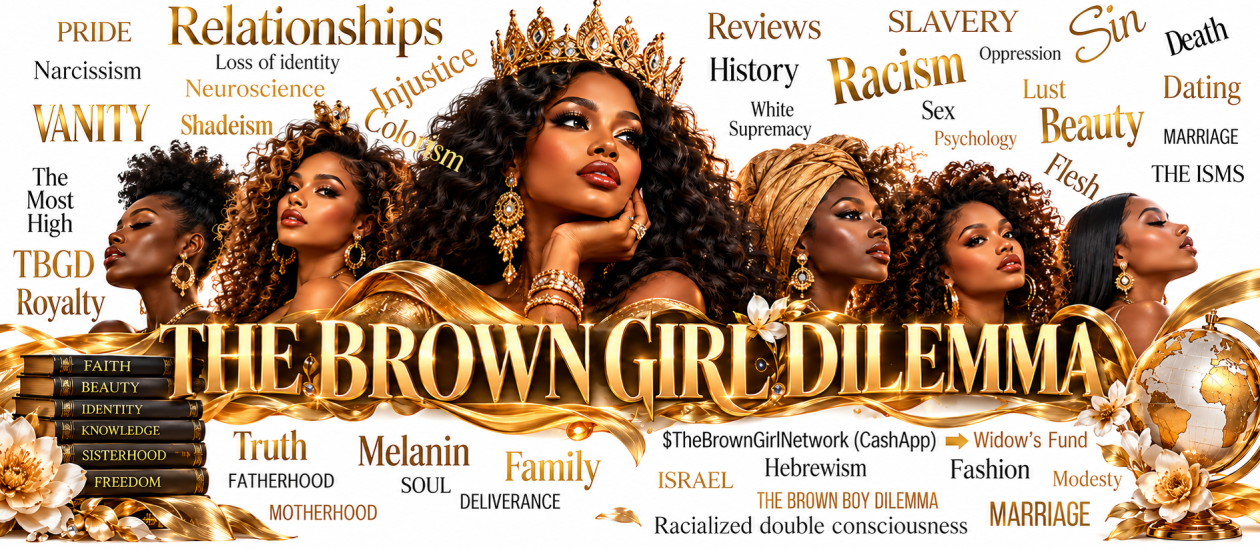

The controversy surrounding the “snow bunny” phenomenon is often less about interracial relationships and more about the public devaluation of Black women. Many Black women do not object to genuine love between consenting adults of different backgrounds. Rather, they object when Black women are portrayed as less feminine, less desirable, less cooperative, or less worthy of love than women of other races. The pain often comes from the comparison, not the relationship itself.

The phrase “snow bunny” has become a controversial term in popular culture, often used to describe white women who pursue Black men, particularly professional athletes, entertainers, or men with high social status. While the term is widespread in social media discussions, it is important to recognize that it is a stereotype rather than a description that accurately reflects all interracial relationships.
The popularity of this narrative stems from the visibility of wealthy athletes and entertainers whose personal relationships are frequently displayed in the media. Because professional sports and entertainment generate enormous wealth, the public often scrutinizes the motives of romantic partners, regardless of race.
Throughout history, relationships involving wealth and status have often attracted suspicion. Men of means have long been viewed as desirable partners because of their resources, influence, and social standing. This dynamic is not unique to any racial group and has existed across cultures and centuries.
The perception that some women pursue wealthy men for financial security is rooted in broader social and economic realities. Researchers have long noted that economic stability can influence mate selection, although attraction, compatibility, shared values, and emotional connection also play significant roles in relationship formation.
When Black athletes achieve fame and wealth, they often become symbols of success in societies that historically denied Black people access to economic opportunity. As a result, their romantic choices frequently become subjects of public debate in ways that are not applied equally to other groups.
If a man chooses a woman because of her race, that is not love. If a woman chooses a man solely because of his money, that is not love. If either person seeks validation, status, or a trophy, that is not love. Love begins when two people value one another’s character, humanity, and soul above the benefits they can provide.
Some Black women have expressed concerns that media portrayals often celebrate interracial relationships involving successful Black men while overlooking Black women. These concerns are connected to broader discussions about representation, beauty standards, and social visibility.
The roots of these tensions can be traced to slavery and segregation. During slavery in the United States, racial hierarchies were legally enforced, and relationships across racial lines were shaped by unequal power dynamics rather than genuine freedom of choice.
Historically, white womanhood occupied a unique position within American racial ideology. White women were often portrayed as symbols of purity and social status, while Black women were frequently subjected to degrading stereotypes that justified discrimination and exclusion.
These historical narratives contributed to a racialized beauty hierarchy that persisted long after slavery ended. European features and lighter skin were often elevated as societal ideals, influencing perceptions of attractiveness and desirability across multiple communities.
For some Black men growing up in societies where whiteness was associated with power, prestige, and acceptance, dating a white woman could sometimes be interpreted as a symbol of social mobility or achievement. This perception reflects larger societal messages rather than inherent truths about attraction.
The idea of a white woman as a “trophy” has been discussed by sociologists and cultural critics for decades. Such views often emerge from environments where race and status are intertwined, causing relationships to be interpreted through symbolic lenses rather than personal ones.
At the same time, many interracial couples reject these assumptions entirely. Their relationships are built on shared interests, emotional bonds, mutual respect, and genuine affection rather than status or economic gain.
Media representations frequently intensify stereotypes. Professional athletes who marry outside their race often receive disproportionate attention, leading some observers to generalize individual choices into broader narratives about race and dating.
Social media has further amplified these discussions. Viral posts, podcasts, and online debates often focus on extreme examples that attract engagement, while the vast majority of ordinary interracial relationships remain invisible.
The notion that women are “raised” to pursue wealthy Black athletes lacks sufficient evidence as a broad societal claim. While individual families may emphasize financial security in partner selection, there is no credible research demonstrating that entire racial groups are systematically trained to seek relationships with Black men for economic gain. It is possible.
Throughout history, both men and women have often considered factors beyond love when choosing a partner. Many women may be attracted to a man’s financial stability, resources, ambition, or ability to provide, while many men may place greater emphasis on physical beauty, youth, or sexual attraction. These tendencies have been discussed by psychologists, sociologists, and theologians for centuries. However, relationships built solely on wealth, appearance, or desire often struggle because lasting partnerships require deeper qualities such as character, trust, sacrifice, loyalty, and shared values.
Similarly, claims that any racial group is inherently “hunting” another are overly simplistic and risk reducing complex human relationships to racial stereotypes. Human attraction is influenced by countless social, cultural, psychological, and personal factors.
Discussions about how Black women are treated by white women must also recognize that experiences vary widely. Some Black women report encountering prejudice, exclusion, or competition influenced by racial bias, while others describe positive friendships, alliances, and mutual support across racial lines.
A more productive conversation focuses on the systems that created racial divisions rather than assigning motives to entire groups of people. Beauty standards, economic inequality, historical discrimination, and media representation all contribute to tensions that are often expressed through debates about dating and marriage.
The enduring emotional intensity surrounding these issues reflects deeper questions about identity, belonging, and recognition. For many people, discussions about interracial relationships are not merely about romance but about historical wounds, social acceptance, and collective self-worth.
Ultimately, reducing any relationship to race, money, or status alone overlooks the complexity of human connection. While history, culture, and economics shape dating patterns, every relationship exists between individuals whose motivations cannot be fully understood through stereotypes. A thoughtful examination of these issues requires historical awareness, cultural sensitivity, and a commitment to judging people by their character rather than assumptions about their race.

There are passages in the Bible where the Israelites were instructed to marry within their own people. However, the reasons given in Scripture are primarily tied to covenant faithfulness, inheritance, tribal identity, and avoiding idolatry rather than modern concepts of race.
In the Old Testament, the tribes of Israel were often encouraged to preserve their tribal inheritances. For example, in Numbers 36, the daughters of Zelophehad were instructed to marry within their father’s tribe so that the inheritance would remain within that tribe. This was about maintaining tribal land and lineage.
Likewise, in Deuteronomy 7:3–4, Israel was warned against marrying certain surrounding nations because those nations worshipped other gods and could lead Israel away from the covenant with the Most High. The concern expressed in the text is spiritual corruption and idolatry.
God’s guidance in marriage. The verse you referenced comes from Proverbs 18:22:
“Whoso findeth a wife findeth a good thing, and obtaineth favour of the LORD.” (KJV)
Many believers understand this to mean that a godly marriage is a blessing from God.
Among those who hold that the 12 Tribes of Israel still exist as a distinct covenant people today, there are differing interpretations. Some believe Israelites should marry within their own people to preserve lineage, culture, and covenant identity. Others emphasize that faithfulness to God is the primary requirement.
The New Testament shifts much of the discussion toward spiritual unity. For example, Paul the Apostle teaches believers not to be “unequally yoked” in faith (2 Corinthians 6:14). Many Christians interpret this as prioritizing shared belief and commitment to God over ethnicity.
From a biblical perspective, a strong argument can be made that God’s ideal for marriage is not merely attraction, wealth, status, or social approval, but a union rooted in righteousness, shared faith, good character, and obedience to Him. Whether one emphasizes tribal identity, covenant lineage, or spiritual compatibility, the common thread throughout Scripture is that marriage should honor God rather than be driven solely by personal desire or worldly considerations.
As for the phrase “God will lead the person,” many believers would agree that prayer, wisdom, discernment, and seeking God’s guidance are central to choosing a spouse. The biblical model consistently presents marriage as something more significant than physical attraction or social status—it is a covenant intended to reflect faithfulness, commitment, and divine purpose.
References
Bonilla-Silva, E. (2022). Racism without racists: Color-blind racism and the persistence of racial inequality in America (6th ed.). Rowman & Littlefield.
Collins, P. H. (2000). Black feminist thought: Knowledge, consciousness, and the politics of empowerment (2nd ed.). Routledge.
Feagin, J. R. (2013). The white racial frame: Centuries of racial framing and counter-framing (2nd ed.). Routledge.
hooks, b. (2000). All about love: New visions. William Morrow.
Hunter, M. (2011). Race, gender, and the politics of skin tone. Routledge.
Myrdal, G. (1944). An American dilemma: The Negro problem and modern democracy. Harper & Brothers.
West, C. M. (2008). Mammy, Jezebel, Sapphire, and their homegirls: Developing an “oppositional gaze” toward the images of Black women. In J. C. Chrisler, C. Golden, & P. D. Rozee (Eds.), Lectures on the psychology of women (4th ed.). McGraw-Hill.
Wilson, W. J. (2012). The truly disadvantaged: The inner city, the underclass, and public policy (2nd ed.). University of Chicago Press.