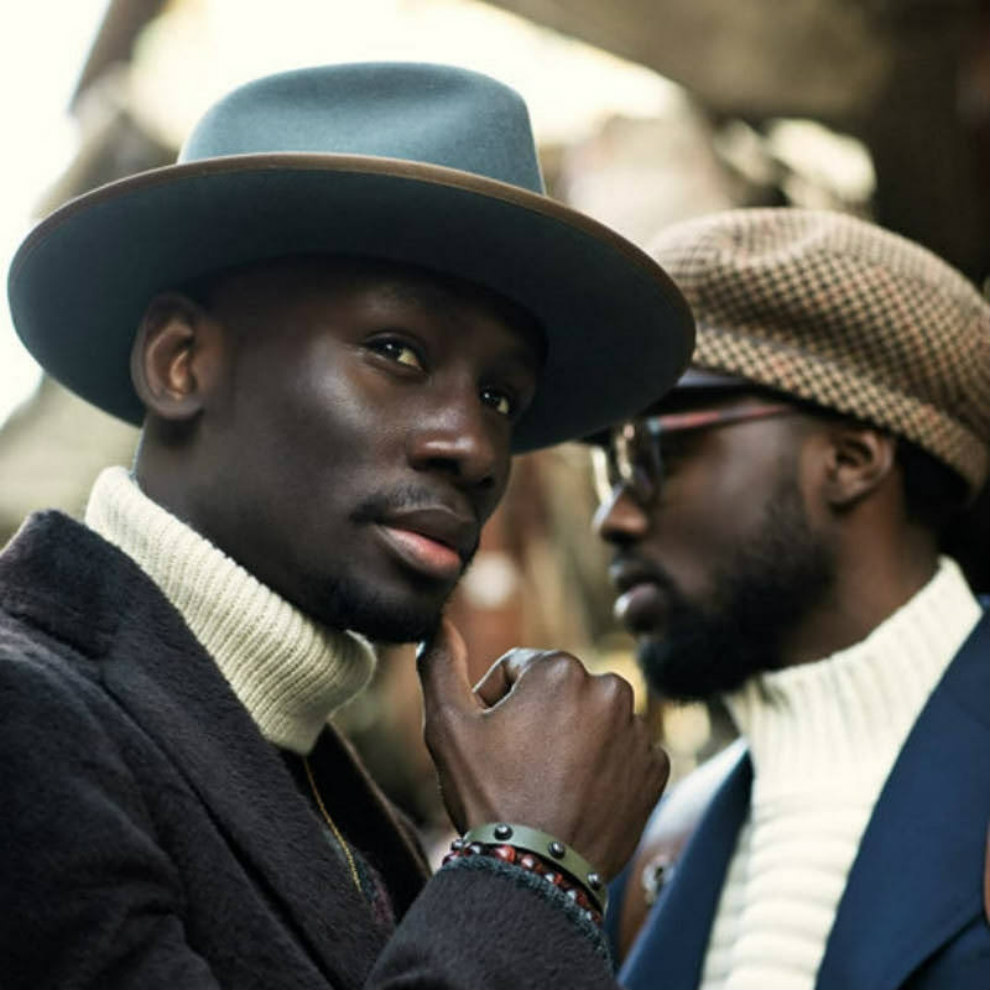
This photograph is the property of its respective owner. No infringement intended.
A heart that seeks the Lord each day, In prayer and truth, he walks His way. A husband strong, yet gentle, kind, With faith and love forever aligned.
Ladies, let me speak to you plainly: it is indeed the man who will find you, as the Bible says, “Whoso findeth a wife findeth a good thing, and obtaineth favour of the Lord” (Proverbs 18:22, KJV). We are not meant to chase men; if a man truly desires you as his wife, he will pursue you. Many men have shared that they know whether a woman is “wife material” the first time they speak with her. It is not simply beauty that keeps a man—it is Godly character, integrity, and the attributes of a true wife.
I do not prefer the term “boyfriend,” which feels high schoolish. In mature, faith-based relationships, we often progress from acquaintance or friendship toward marriage, intentional and purposeful. The question then becomes: what do we look for in a man? What traits indicate he is a suitable, Godly partner for life?
Essential Traits to Look for in a Godly Man
Godliness / Spiritual Leadership
A man who fears the Lord and prioritizes his relationship with God is essential. He should lead spiritually, praying, studying the Word, and making decisions aligned with biblical principles (Ephesians 5:25–26).
Psychology: Research shows that shared spiritual values in couples correlate with higher marital satisfaction and emotional compatibility (Mahoney et al., 2001).
Provider and Responsible
He demonstrates responsibility, ambition, and the ability to provide—not necessarily wealth, but stability and diligence. This includes financial stewardship, career commitment, and protecting the household.
Psychology: Men who are perceived as reliable and capable tend to inspire trust and security in partners, fostering relational attachment (Buss, 1989).
Emotional Maturity
A mature man manages emotions effectively, communicates well, and does not resort to anger or manipulation. He practices empathy, listens, and respects boundaries.
Psychology: Emotional intelligence (EQ) in men predicts relationship satisfaction, conflict resolution, and long-term attachment stability (Brackett et al., 2006).
Integrity and Honesty
Truthfulness in speech and action is non-negotiable. A man who demonstrates integrity builds trust and models moral character.
Psychology: Integrity is correlated with relational trust, reducing uncertainty and enhancing commitment (Rotter, 1980).
Respect for Women
He honors women, treats them as equals, and values their input. Respect is demonstrated in both private and public settings.
Psychology: Perceived respect from a partner increases satisfaction, self-esteem, and relational stability (Impett et al., 2008).
Supportive and Encouraging
A Godly man uplifts his partner, supports her personal goals, and celebrates her accomplishments. He does not belittle or compete unnecessarily.
Psychology: Supportive behavior in partners enhances well-being and fosters secure attachment (Feeney & Collins, 2015).
Self-Control and Discipline
He exhibits self-discipline in habits, finances, and sexuality, demonstrating respect for boundaries and long-term goals.
Psychology: Self-regulation predicts relational satisfaction and reduces impulsive behaviors that can harm trust (Vohs & Baumeister, 2011).
Humility and Servant-Heartedness
A man who is humble, willing to serve, and puts others before himself mirrors Christ’s example. Pride and arrogance are red flags.
Scripture:“Let nothing be done through strife or vainglory; but in lowliness of mind let each esteem other better than themselves” (Philippians 2:3, KJV).
Sense of Humor and Joy
While serious traits are important, a man who can bring joy, laugh at life, and lighten burdens is invaluable. Joy sustains relationships through challenges.
Commitment and Faithfulness
A man who is loyal, keeps promises, and is intentional about the relationship shows readiness for marriage. Infidelity is a leading cause of relational distress; faithfulness is non-negotiable.
Psychology: Commitment is a core predictor of marital satisfaction and longevity (Stanley et al., 2006).
Godly Fear and Reverence
A man who fears the Lord honors God above all else, submitting his life to His guidance (Proverbs 9:10; Psalm 111:10).
Trait in practice: He prays, reads the Word, and aligns his decisions with God’s will. Other traits listed below:
1. Spiritual & Moral Foundation
A man who fears God, has integrity, and strives to live by biblical and ethical principles (Proverbs 31:10; Ephesians 5:25).
2. Emotional Intelligence
Someone who listens well, communicates clearly, and doesn’t shut down in hard times. Emotional maturity is key to long-lasting love.
3. Leadership & Stability
Not just financially, but also in vision, decision-making, and the ability to guide a family with wisdom and patience.
4. Respect & Partnership
A man who honors your voice, values your input, and treats you as a partner, not a possession.
5. Consistency & Reliability
Words and actions align. You never have to guess where you stand with him.
6. Protective & Supportive Nature
He makes you feel safe—emotionally, spiritually, and physically—while also pushing you to grow and achieve your best.
7. Shared Purpose & Values
A man whose mission in life aligns with yours, so you’re rowing in the same direction rather than fighting against the tide.
👉 A good way to frame it is: “Does this man bring me closer to peace, closer to God, and closer to becoming the best version of myself?”
Conclusion
Women, your worth is in God, not in the approval of men. Seek a man who mirrors Christlike character, demonstrates integrity, and values partnership. Do not settle for charm or physical appearance alone; the foundation of a lasting, God-honoring relationship is built on spiritual alignment, emotional maturity, and shared values. When these traits are present, love is strengthened, and marriage thrives.
Ladies, let me speak to your heart for a moment. Too often, we as women are told to wait until the ring is on our finger to know if a man is serious, but the truth is, you can see whether a man has the heart of a husband long before the wedding day. A real husband doesn’t just show up at the altar—he reveals himself in the way he treats you, the way he honors God, and the way he carries himself in love, patience, and responsibility. If you pay attention, you’ll notice the difference between a man who only wants your body and a man who wants your future. I want to help you discern that difference so you don’t waste time on counterfeit love when God has called you to covenant love.
💍❤️💍 Discerning Covenant Love: Biblical and Psychological Signs That a Man Is Truly a Husband Before the Wedding 💍❤️💍
The search for a life partner is one of the most important journeys a woman can undertake. In today’s world of shallow relationships, performative affection, and counterfeit love, women must learn how to discern a man’s true intentions. The truth is, a man does not become a husband on the wedding day; he demonstrates the heart of a husband long before vows are exchanged. Scripture reminds us, “Whoso findeth a wife findeth a good thing, and obtaineth favour of the LORD” (Proverbs 18:22, KJV). Psychology also supports this principle: love is not merely an emotional feeling but a pattern of consistent behaviors, sacrifice, and long-term investment (Sternberg, 1986).
This article will guide women in identifying the qualities of a man who is a husband at heart—biblically, psychologically, and practically—while also exposing counterfeit traits of men who disguise lust or selfish ambition as love.
A Husband Is Known Before the Wedding
A genuine husband is not revealed by rings or ceremonies but by his character, actions, and devotion.
1. He Loves With Sacrifice, Not Lust
A man who is truly a husband does not pursue a woman merely for physical pleasure. He demonstrates self-control and values her purity, echoing Paul’s teaching: “Husbands, love your wives, even as Christ also loved the church, and gave himself for it” (Ephesians 5:25, KJV). This kind of love is sacrificial, patient, and nurturing.
2. He Provides and Protects
One of the clearest marks of a husband is his willingness to provide stability. Even before marriage, he shows generosity with his time, money, and efforts. In psychology, this aligns with attachment theory, where secure partners naturally give support and consistency (Mikulincer & Shaver, 2016).
3. He Honors and Respects You
Respect is a cornerstone of biblical manhood. A man with a husband’s heart honors a woman’s dignity and does not belittle, insult, or manipulate. Peter instructs, “Likewise, ye husbands, dwell with them according to knowledge, giving honour unto the wife, as unto the weaker vessel, and as being heirs together of the grace of life” (1 Peter 3:7, KJV).
4. He Is Emotionally Available
Emotionally unavailable men are not ready for marriage. A true husband learns his partner’s needs, listens deeply, and builds trust. Modern psychology defines this as empathic attunement, where a man can sense, validate, and respond to his partner’s emotions (Gottman & Silver, 1999).
5. He Demonstrates Commitment Early
A counterfeit man keeps a woman in confusion, offering words but not actions. A genuine husband makes his intentions clear from the beginning. He “locks it down” with exclusivity, declaring his desire for covenant without ambiguity.
Other Traits of a True Husband Before the Wedding
Consistency: He does what he says and keeps promises.
Visionary Leadership: He has direction for his life and includes you in it.
Humility: He is correctable, not prideful or controlling.
Prayer and Godliness: He seeks God and desires a spiritual foundation.
Selflessness: He prioritizes your well-being over his temporary desires.
Honest Communication: He tells the truth even when it costs him.
Protective Boundaries: He shields you from harm, rather than exposing you to it.
The Counterfeit: Signs He Is Not a Husband But a Deceiver
The Bible warns of men who appear godly but deny the power of true love. Paul cautions against those who are “lovers of pleasures more than lovers of God” (2 Timothy 3:4, KJV). Common red flags include:
He speaks of love but shows no consistent action.
He pressures you sexually outside of covenant.
He avoids conversations about the future.
He isolates you from family or community.
He borrows or exploits finances instead of giving.
He uses manipulation, guilt, or control to keep you bound.
Biblical Women and the Men Who Pursued Them
Scripture provides examples of men who showed husband qualities:
Boaz (Ruth 2–4): A man of provision, honor, and protection.
Isaac (Genesis 24): Patiently waited and prayed, receiving Rebekah with love.
Jacob (Genesis 29): Worked 14 years for Rachel, demonstrating commitment.
These examples show that true husbands are marked by sacrifice, honor, patience, and covenant love, not selfish ambition.
Conclusion: Learning to Discern Covenant Love
A husband before the wedding is revealed by his heart, his habits, and his honor toward God and women. Women must use both spiritual discernment and psychological awareness to separate genuine covenant love from counterfeit desire.
Instead of chasing empty promises, focus on observing consistency, sacrifice, and godliness. A true husband will show you long before he marries you that his love is not for your body alone but for your soul, your spirit, and your future together.
As Proverbs 31:10 reminds us: “Who can find a virtuous woman? for her price is far above rubies.” A man who is truly a husband knows your worth—and treats you accordingly.
📚 References
Gottman, J., & Silver, N. (1999). The Seven Principles for Making Marriage Work. Crown.
Mikulincer, M., & Shaver, P. R. (2016). Attachment in Adulthood: Structure, Dynamics, and Change. Guilford Press.
Sternberg, R. J. (1986). A triangular theory of love. Psychological Review, 93(2), 119–135.
Reclaiming Biblical Manhood: Leadership, Provision, and the Crisis in the Black Family.
Born into shadows, marked by scars, His crown forgotten beneath the stars. Yet strength still lingers in his frame, A chosen son, called by God’s name.
The “Brown Boy Dilemma” captures the complexity of Black men’s struggles in a world that criminalizes their bodies, questions their worth, and fractures their identities. At its root, the dilemma is spiritual. The Bible declares, “My people are destroyed for lack of knowledge” (Hosea 4:6, KJV). Separated from the Most High through sin and forgetfulness of His commandments, the sons of the diaspora wander without the stability that divine order provides. Deuteronomy 28 outlines the curses that have followed disobedience—captivity, broken homes, violence, and oppression. Reconnection with the Creator is the first step in addressing the dilemma.
Historically, slavery dismantled the image of Black men. Enslavement emasculated them before their families, reduced them to property, and instilled a legacy of generational trauma. Even after emancipation, Jim Crow laws and systemic racism continued to suppress their advancement. As Du Bois (1903/1994) described, the “double consciousness” of Black life forces the Brown Boy to see himself both through his own eyes and through the eyes of a hostile society. This fractured identity still reverberates in the psyches of young men today.
The family structure remains central to the dilemma. Many Black boys grow up fatherless due to incarceration, systemic violence, or abandonment. Without fathers to model godly manhood, young men often turn to peers, media, or gangs for definitions of masculinity. The absence of fathers is not merely personal—it is systemic. The mass incarceration crisis disproportionately removes Black men from households, leaving children without guidance. Yet scripture teaches, “Fathers, provoke not your children to wrath: but bring them up in the nurture and admonition of the Lord” (Ephesians 6:4, KJV). Restoring family order is essential for healing the dilemma.
The Brown Boy is criminalized early. Research shows Black boys are suspended or expelled three times more often than white peers and are more likely to be referred to law enforcement in school (USDOE, 2022). Police brutality has claimed the lives of Tamir Rice, Michael Brown, and countless others, reminding young Black men that their innocence is fragile. To be born Black and male in America is to inherit suspicion before one speaks or acts. The dilemma is survival under perpetual surveillance.
Hypermasculinity adds another layer of difficulty. Black men are stereotyped as hypersexual, aggressive, and emotionally detached. Some internalize these stereotypes, believing manhood requires dominance, conquest, or violence. bell hooks (2004) argued that this “patriarchal masculinity” is destructive to both men and women, limiting the full humanity of Black men. The dilemma lies in resisting caricatures while rediscovering healthy, spiritual masculinity.
Economic inequality worsens the crisis. According to the Bureau of Labor Statistics (2023), Black men earn significantly less than white men across nearly all professions. Joblessness, underemployment, and wage gaps limit their ability to provide for families, creating feelings of emasculation. Many turn to informal or illicit economies to survive, perpetuating cycles of poverty and incarceration. Economic disempowerment remains one of the greatest barriers to stability for Black men.
Health disparities add to the weight. Black men face higher rates of hypertension, diabetes, stroke, and shorter life expectancy than any other male group in the U.S. (CDC, 2023). Mental health challenges are also prevalent, yet stigma prevents many from seeking therapy. The constant stress of racism and systemic exclusion contributes to what Geronimus (1992) calls “weathering”—premature aging caused by chronic stress. “Know ye not that ye are the temple of God, and that the Spirit of God dwelleth in you?” (1 Corinthians 3:16, KJV) calls Black men to honor their health as part of their spiritual stewardship.
Colorism shapes the Brown Boy’s experience as well. Darker-skinned men are often portrayed as dangerous or thuggish, while lighter-skinned men may be deemed more attractive or socially acceptable. These biases influence relationships, job opportunities, and media representation. Although colorism impacts Black women more overtly, it still burdens Black men with distorted images of desirability and worth.
Media portrayals reinforce these dilemmas. From the “gangster” to the “deadbeat dad,” Hollywood rarely depicts Black men as vulnerable, intellectual, or nurturing. Instead, harmful archetypes dominate. Such narratives rob boys of broader models for manhood and encourage the internalization of falsehoods. Collins (2000) refers to these as “controlling images,” designed to sustain systemic oppression.
The dilemma extends to relationships. Many Black men feel societal pressure to provide yet lack opportunities, leading to tension in partnerships. Some reject Black women altogether, pursuing interracial relationships as a form of social mobility. Others perpetuate misogyny, failing to uplift women as partners. The result is fractured intimacy within the Black community. But biblically, manhood requires sacrifice and love: “Husbands, love your wives, even as Christ also loved the church, and gave himself for it” (Ephesians 5:25, KJV).
Education presents both hope and hardship. Black boys are disproportionately placed in special education, disciplined unfairly, and told they cannot succeed (USDOE, 2022). Yet when nurtured, they excel. Historically Black Colleges and Universities (HBCUs) and mentorship programs prove that with investment and support, Brown Boys rise. The dilemma lies not in potential but in systemic neglect.
Violence haunts their lives. Homicide remains the leading cause of death for Black men ages 15–34 (CDC, 2023). Many live in communities plagued by poverty and gun violence. At the same time, they are disproportionately incarcerated for nonviolent crimes, feeding the prison-industrial complex. The Brown Boy’s dilemma is that danger comes from both within his community and from the system that governs him.
Psychologically, the weight of stereotypes and exclusion fosters identity crises, low self-esteem, and cycles of despair. Yet therapy, mentorship, and spiritual renewal provide avenues for healing. “Be strong and of a good courage, fear not, nor be afraid of them: for the Lord thy God, he it is that doth go with thee” (Deuteronomy 31:6, KJV) reminds Black men that courage is not in conformity but in faith.
🌹 The Brown Girl Dilemma vs. The Brown Boy Dilemma 💪
Theme
Brown Girl Dilemma
Brown Boy Dilemma
Spiritual Identity
Women are exploited sexually, divided by colorism, and burdened as caretakers.
Same disconnection; loss of spiritual leadership; struggles with manhood outside biblical order.
Slavery’s Legacy
Disconnected from God through sin and oppression, struggles with worth and obedience to His commandments.
Single mothers bear heavy loads, absentee fathers; imbalance in relationships.
Family Structure
Single mothers bear heavy loads, absentee fathers, imbalance in relationships.
Fatherlessness creates cycles; incarceration removes men from homes; lack of role models.
Racism & Systemic Oppression
Sexism + racism (double bind); overlooked in justice movements.
Criminalized early; school-to-prison pipeline; hyper-policed and surveilled.
Colorism
Lighter-skinned women are often favored in beauty standards; darker-skinned women are devalued.
Lighter-skinned women are often favored in beauty standards; darker-skinned women devalued.
Beauty Standards / Masculinity
Eurocentric beauty ideals label Black women “ugly” or “less attractive.”
Stereotypes of hypermasculinity, aggression, and oversexualization.
Economic Struggles
Wage gap: Black women earn ~63¢ per white man’s $1; underrepresentation in leadership roles.
Higher unemployment, wage gaps, fewer economic opportunities, and struggles with provider expectations.
Health Disparities
High rates of heart disease, cancer, diabetes, STDs, and psychological “weathering.”
Burdened with 50/50 relationships, men are seen as “lazy” or unfaithful, undervalued.
Media Stereotypes
“Angry Black woman,” “welfare queen,” hypersexualized Jezebel, unfeminine.
Collective solidarity (ending division between men and women).
💪💪💪💪💪💪💪
Lead her like Abraham.
Provide for her like David.
Take comfort in her like Isaac.
Fight for her love like Jacob.
Care for her like Boaz.
Love her like the Savior.”
This poetic charge reflects a timeless standard—rooted in Scripture—for how men are called to lead, provide, and love. Yet in contemporary American society, and particularly within the Black community, this divine model of manhood has been largely distorted, deconstructed, and, in many cases, dismantled.
Across various parts of the world—such as regions in Africa, India, and the Middle East—divorce rates remain comparatively low. One contributing factor is the intergenerational investment in marital success, where family members take active roles in holding both husband and wife accountable. Marriage is not seen as a temporary arrangement based on personal convenience, but a covenant guided by collective responsibility and cultural honor.
In contrast, within the United States, marriage is often viewed through a transactional lens. The “50/50” mentality—”I’ll get mine, so you bring yours”—has replaced sacrificial unity with conditional reciprocity. The rise of individualism, accelerated by the feminist movement and post-industrial economic shifts, has complicated gender roles. Many women, shaped by the rhetoric of independence (“I don’t need a man”), often find themselves unequally paired with men who lack education, guidance, or any model of responsible manhood. The result is a cultural and spiritual vacuum where few know what true headship or provision looks like.
Biblically, the role of a man is clear. Before the creation of Eve, Adam had assignments—he was called to work, to tend the Garden, to name the animals, and to walk with God (Genesis 2:15-20). Adam was a provider, a steward, and a priest. This divine order remains relevant today: a man is expected to care for his household with integrity, diligence, and presence. As Paul wrote, “But if any provide not for his own, and especially for those of his own house, he hath denied the faith, and is worse than an infidel” (1 Timothy 5:8, KJV). Provision is not solely financial—it is emotional, spiritual, and moral.
Yet the breakdown of the Black family has made this ideal increasingly rare. According to the U.S. Census Bureau (2023), approximately 72% of Black children are born to unmarried mothers, and many are raised in homes where the father is absent. This crisis cannot be understood apart from the sociopolitical and spiritual shifts of the past half-century. The civil rights era, though marked by progress, gave way to a cultural rebellion in the 1960s and 1970s—marked by the sexual revolution, radical feminism, and economic policies that incentivized fatherless homes. The result has been generational instability.
The mass incarceration of Black men has further devastated families. The Bureau of Justice Statistics (2020) reported that 1 in 3 Black men will face incarceration during their lifetime. Many of these men are removed from homes before they have a chance to be husbands, fathers, or providers. Others succumb to a culture of hypersexuality, pornography, and promiscuity—choosing lust over legacy. This leads to a pattern of abandonment: a man lies with a woman, leaves her with child, and is nowhere to be found when the baby is born. This leaves mothers vulnerable, children broken, and the cycle continues.
In such environments, daughters are often taught distorted ideals about love and worth, mirroring the instability they see at home. Sons grow up learning that masculinity is measured by sexual conquest rather than commitment. Without fathers present, they are more likely to become emotionally stunted, effeminate, or irresponsible. The emotional and behavioral fallout is enormous. Children from fatherless homes are statistically more likely to struggle academically, experience poverty, commit crimes, and suffer from mental health issues (U.S. Department of Health and Human Services, 2019).
The restoration of the family must begin with the restoration of the man. A provider is more than a paycheck—he is a stabilizer, protector, and spiritual leader. He models righteousness, discipline, and love. According to the late Black theologian and civil rights activist Howard Thurman,
“A man cannot be at home in the world if he is not at home in himself.” The absence of strong male role models—both in the home and the community—has created a vacuum of identity and direction. Without mentors, many young Black men drift into chaos.
The biblical model remains our compass. Abraham led his family by faith. David, despite his flaws, was a warrior king who provided and repented. Isaac found comfort in Rebekah after the death of his mother (Genesis 24:67). Jacob labored 14 years to win the love of Rachel. Boaz honored and protected Ruth. Christ, the ultimate model, gave His life for His bride.
The call to modern men, particularly Black men, is to reclaim these roles—not through domination, but through humility, purpose, and divine alignment. The restoration of our communities depends on it. If the foundation is destroyed, what can the righteous do (Psalm 11:3)? The answer: rebuild it—one man, one home, one truth at a time. Solutions require both biblical restoration and psychological intervention. Spiritually, men must return to the commandments of God, rejecting sin and reclaiming leadership rooted in love and service. Psychologically, therapy, brotherhood, and affirming healthy masculinity are essential. Communities must rebuild mentorship systems that guide boys into maturity with dignity and discipline.
The Brown Boy Dilemma is real, but it is not final. Reconnection to the Creator, restoration of families, community unity, and collective healing can transform the dilemma into destiny. Black men, as sons of the Most High, are called to rise beyond stereotypes, reclaim their crowns, and embody the strength, wisdom, and compassion they were created for. In doing so, the Brown Boy Dilemma becomes not a curse, but a testimony of triumph.
References:
U.S. Census Bureau. (2023). Living Arrangements of Children Under 18 Years Old: 1960 to Present.
Bureau of Justice Statistics. (2020). Prisoners in 2020. U.S. Department of Justice.
U.S. Department of Health and Human Services. (2019). Father Absence and Its Impact on Child Well-being.
The Holy Bible, King James Version. 1 Timothy 5:8; Genesis 2:15–20; Psalm 11:3.
Thurman, H. (1984). Meditations of the Heart. Beacon Press.
Bureau of Labor Statistics. (2023). Employment status by race and gender.
Centers for Disease Control and Prevention. (2023). Health disparities among Black men.
Collins, P. H. (2000). Black feminist thought: Knowledge, consciousness, and the politics of empowerment. Routledge.
Du Bois, W. E. B. (1994). The souls of Black folk. Dover. (Original work published 1903).
Geronimus, A. T. (1992). The weathering hypothesis. Ethnicity & Disease, 2(3), 207–221.
hooks, b. (2004). The will to change: Men, masculinity, and love. Washington Square Press.
U.S. Department of Education. (2022). Discipline disparities in schools.
Where faith, history, and truth illuminate the Black experience.


 THE BROWN GIRL DILEMMA