Tag Archives: humility

The Golden Cage

Materialism is the golden cage that glitters so beautifully it blinds the eyes of the beholder. It promises freedom, comfort, and power, yet silently imprisons the soul behind the bars of greed, vanity, and endless desire. The Bible warns in 1 Timothy 6:10 (KJV), “For the love of money is the root of all evil.” It is not money itself that destroys, but the affection and obsession with it—the worship of the gift rather than the Giver. In today’s society, where material success defines worth, the heart becomes chained to things that perish, forgetting the eternal riches of God.

The love of money distorts the soul’s priorities. Many trust wealth more than the One who provides it, seeking security in numbers rather than in divine providence. Proverbs 11:28 (KJV) declares, “He that trusteth in his riches shall fall: but the righteous shall flourish as a branch.” God calls us to depend on Him, not the fleeting comfort of possessions. When man begins to believe that wealth sustains him, pride replaces humility, and faith becomes conditional upon prosperity rather than purpose.

Christ Himself warned in Matthew 6:24 (KJV), “No man can serve two masters… Ye cannot serve God and mammon.” To serve mammon—the spirit of greed and material gain—is to surrender spiritual clarity for worldly satisfaction. This battle is not about currency but allegiance. When our hearts long more for luxury than for the presence of God, we have already built our own golden cage, adorned with success but devoid of peace.

Comparison is another bar of this golden prison. In constantly measuring ourselves against others, we become trapped in envy, chasing after illusions of happiness built on possessions. Galatians 6:4–5 (KJV) reminds us, “But let every man prove his own work… for every man shall bear his own burden.” The spirit of comparison leads to covetousness, the quiet killer of gratitude.

Gratitude, once replaced by greed, transforms blessings into burdens. The heart that once thanked God for daily bread begins to demand more, forgetting that “a man’s life consisteth not in the abundance of the things which he possesseth” (Luke 12:15, KJV). The desire for “more” becomes insatiable, and soon enough, contentment feels like poverty to the one addicted to acquisition.

The story of the rich young ruler (Matthew 19:16–22) serves as a solemn reminder. He desired eternal life but was unwilling to release his wealth. His possessions had possessed him. Christ’s invitation to “sell that thou hast, and give to the poor” was not merely about money—it was about surrender. God seeks hearts free from attachment to temporary treasures.

The lovers of money are never satisfied. Ecclesiastes 5:10 (KJV) warns, “He that loveth silver shall not be satisfied with silver.” Wealth multiplies desires instead of fulfilling them. It demands maintenance, protection, and worry. True peace cannot coexist with insatiable want. The wealthy without God are often the poorest in spirit.

Between the crown and the cross lies the choice of devotion. The crown represents self-glory, while the cross represents self-sacrifice. Christ chose the cross, teaching that eternal victory comes not through possession but through surrender. The golden cage tempts us with crowns, but freedom lies in carrying the cross of humility and service.

God wants your heart, not your hoarded treasures. In Matthew 6:21 (KJV), Jesus says, “For where your treasure is, there will your heart be also.” When our treasure lies in earthly wealth, our hearts remain earthbound. But when our treasure is in heaven, our spirit soars beyond material limits.

Materialism thrives on fear—fear of lack, fear of insignificance, fear of failure. This fear drives many to hoard and save beyond reason, believing that money can buy security. Yet Proverbs 23:5 (KJV) cautions, “Wilt thou set thine eyes upon that which is not? for riches certainly make themselves wings.” Wealth is fleeting; trust in it is fragile.

Jesus addressed this fear when He said, “Take no thought for your life, what ye shall eat, or what ye shall drink” (Matthew 6:25, KJV). The obsession with “what shall we eat or what shall we wear” reveals a heart that doubts divine provision. God, who feeds the birds and clothes the lilies, surely knows how to care for His children.

Seeking God’s kingdom first is the antidote to the golden cage. “But seek ye first the kingdom of God, and his righteousness; and all these things shall be added unto you” (Matthew 6:33, KJV). When we prioritize righteousness, material needs fall into place naturally. Faith transforms fear into freedom.

Money can serve as a ministry when used wisely. The more one gives, the lighter the heart feels. Acts 20:35 (KJV) says, “It is more blessed to give than to receive.” Generosity breaks the chains of materialism and transforms wealth into worship. Money becomes a tool of blessing rather than a symbol of bondage.

To spread wealth is to reflect the nature of God, who gives abundantly and freely. The golden cage is shattered when we learn to share. 2 Corinthians 9:7 (KJV) teaches, “God loveth a cheerful giver.” Giving aligns us with divine character and reminds us that we are stewards, not owners.

Hoarding wealth leads to heaviness of soul. The more one clings to possessions, the more burdened the heart becomes. True freedom is found in release. When we give, we participate in God’s economy—a system built not on scarcity, but on trust and generosity.

The golden cage promises power but delivers isolation. It feeds pride and starves compassion. Those consumed by wealth often lose touch with empathy, believing their riches are self-earned rather than divinely permitted. James 1:17 (KJV) reminds us, “Every good gift and every perfect gift is from above.”

Greed can disguise itself as ambition. The desire to achieve becomes corrupted when it seeks self-exaltation instead of service. Ambition rooted in God glorifies Him; ambition rooted in self glorifies man. The golden cage thrives on self-centered striving.

To escape this cage, one must learn contentment. Philippians 4:11 (KJV) says, “For I have learned, in whatsoever state I am, therewith to be content.” Contentment is not complacency—it is peace in provision. It recognizes that joy is not in having more, but in trusting the One who provides enough.

When gratitude replaces greed, the soul finds rest. The pursuit of wealth no longer defines success; obedience and faith do. The heart once enslaved by gold now glows with grace.

To escape the golden cage is to rediscover simplicity and sufficiency in God. It is to realize that true riches are spiritual, not material. When you stop chasing what glitters, you find the light of Christ shining within.

References

  • Holy Bible, King James Version (KJV): Matthew 6:24, Matthew 19:16–22, Matthew 6:25–33, 1 Timothy 6:10, Luke 12:15, Proverbs 11:28, Proverbs 23:5, Ecclesiastes 5:10, Acts 20:35, Philippians 4:11, James 1:17, Galatians 6:4–5, 2 Corinthians 9:7.

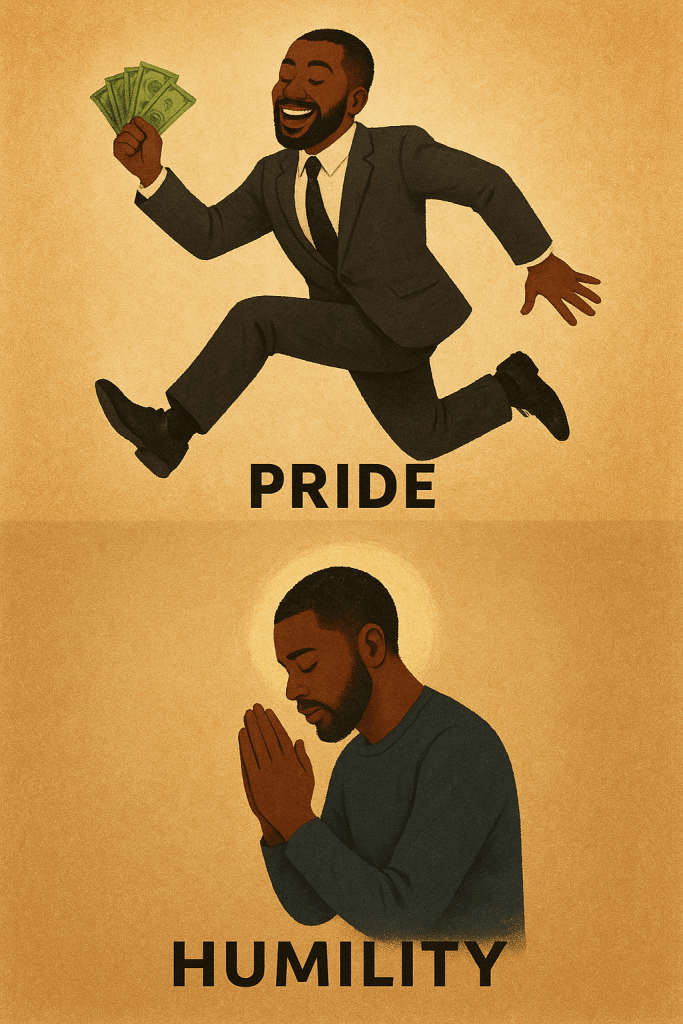
Pride or Humility?

Pride and humility represent two opposing forces in the spiritual and moral life of every believer. Pride exalts the self, while humility exalts God. The Bible often contrasts these traits to show how one leads to destruction and the other to divine favor. Pride focuses inward, seeking recognition and control, whereas humility focuses upward, seeking submission to the Most High. Understanding the nature of both helps us discern the path that aligns with righteousness and truth.

Pride, at its core, is self-exaltation. It is the elevation of one’s own will, wisdom, or worth above others—and even above God. Scripture describes pride as the root of rebellion, the seed of disobedience, and the foundation of sin. In Proverbs 16:18 (KJV), it warns, “Pride goeth before destruction, and an haughty spirit before a fall.” This verse reveals that pride precedes downfall, for it blinds a person to correction, truth, and repentance.

The origin of pride can be traced back to Satan himself. Once known as Lucifer, he was an angel of light who allowed pride to consume his heart. In Isaiah 14:12–15 (KJV), it says, “How art thou fallen from heaven, O Lucifer, son of the morning!… For thou hast said in thine heart, I will ascend into heaven, I will exalt my throne above the stars of God.” His desire to be like the Most High led to his downfall. Pride transformed a glorious being into the adversary of all righteousness.

Lucifer’s pride was rooted in self-glorification. He desired worship, power, and independence from God’s authority. This spirit of pride did not end with his fall; it entered humanity in the Garden of Eden. When Satan tempted Eve, he promised that eating the forbidden fruit would make her “as gods, knowing good and evil” (Genesis 3:5, KJV). That temptation was pride disguised as enlightenment—the same rebellion that led to Lucifer’s expulsion from heaven.

The danger of pride lies in its subtlety. It often disguises itself as confidence, ambition, or success, yet its core motive is self-centeredness. Pride closes the heart to instruction and correction. It blinds the eyes of the proud so that they no longer see their faults or need for God. In Obadiah 1:3 (KJV), it declares, “The pride of thine heart hath deceived thee.” Pride deceives the soul, leading it into false security and spiritual blindness.

Pride not only affects individuals but also nations and societies. Babylon, Egypt, and even Israel fell because of pride. In Daniel 4, King Nebuchadnezzar learned this lesson when his arrogance caused God to humble him. After losing his kingdom and living among beasts, he finally acknowledged, “Those that walk in pride he is able to abase” (Daniel 4:37, KJV). Pride brings humiliation, but humility brings restoration.

Ten Attributes of Pride

  1. Arrogance – A sense of superiority that elevates oneself above others. (Proverbs 8:13) “Pride, and arrogancy, and the evil way, and the froward mouth, do I hate.”
  2. Self-Reliance – Depending on one’s own wisdom and strength instead of trusting in God. (Proverbs 3:5–6) “Lean not unto thine own understanding.”
  3. Boastfulness – Constantly speaking of one’s achievements or abilities to gain praise. (Proverbs 27:2) “Let another man praise thee, and not thine own mouth.”
  4. Unteachableness – Refusing correction, counsel, or instruction from others. (Proverbs 13:10) “Only by pride cometh contention: but with the well advised is wisdom.”
  5. Judgmental Spirit – Looking down on others and magnifying their flaws while excusing one’s own. (Luke 18:11–12) The Pharisee who exalted himself in prayer.
  6. Desire for Recognition – Craving validation, admiration, and honor from men instead of from God. (Matthew 6:1–2) “Take heed that ye do not your alms before men, to be seen of them.”
  7. Rebellion – Resisting authority and divine instruction; refusing to submit to God’s will. (1 Samuel 15:23) “Rebellion is as the sin of witchcraft, and stubbornness is as iniquity and idolatry.”
  8. Envy and Competition – Comparing oneself to others and striving to outshine them. (Galatians 5:26) “Let us not be desirous of vain glory, provoking one another, envying one another.”
  9. Hypocrisy – Pretending righteousness while harboring pride in the heart. (Matthew 23:27) “Ye are like unto whited sepulchres… within full of hypocrisy and iniquity.”
  10. Ingratitude – Failing to acknowledge God as the source of all blessings. (Deuteronomy 8:14, 17) “Then thine heart be lifted up… and thou say in thine heart, My power and the might of mine hand hath gotten me this wealth.”

The attributes of prideful people are easy to recognize in Scripture. They are boastful, arrogant, unteachable, and often quick to judge others. They rely on their own understanding rather than God’s wisdom. Proverbs 21:4 (KJV) describes pride as a sin of the heart: “An high look, and a proud heart… is sin.” The proud speak more than they listen, seek praise rather than peace, and strive to be served rather than to serve.

In contrast, humility is the posture of submission and reverence before God. It is not weakness but strength under control. A humble person recognizes their dependence on the Creator and acknowledges that all wisdom, success, and life flow from Him. James 4:6 (KJV) reminds believers, “God resisteth the proud, but giveth grace unto the humble.” Grace is the reward of humility—it opens doors that pride closes.

The Bible gives us many examples of humble men and women who found favor with God. Moses is called “very meek, above all the men which were upon the face of the earth” (Numbers 12:3, KJV). Despite leading an entire nation, Moses never exalted himself; he depended on God for guidance. His humility allowed him to be used mightily by the Most High.

King David also exemplified humility when confronted by the prophet Nathan after his sin with Bathsheba. Rather than defending himself, David repented deeply, saying, “Create in me a clean heart, O God” (Psalm 51:10, KJV). His willingness to confess and seek forgiveness restored his relationship with the Lord. Humility brought redemption where pride would have brought destruction.

The ultimate model of humility is Yahusha HaMashiach (Jesus Christ). Philippians 2:5–8 (KJV) declares that though He was in the form of God, He “made himself of no reputation, and took upon him the form of a servant.” His humility led Him to the cross, where He laid down His life for others. True humility, therefore, is sacrificial—it seeks to serve, not to be served.

Humility produces a spirit of gratitude. The humble recognize that all blessings come from God and not from personal merit. They walk in thankfulness, not entitlement. This attitude keeps them grounded even in seasons of success. 1 Peter 5:6 (KJV) instructs, “Humble yourselves therefore under the mighty hand of God, that he may exalt you in due time.” Exaltation comes through surrender, not self-promotion.

The danger of pride is not only moral but spiritual. Pride distances a person from God’s presence. It was pride that caused Saul to lose his kingdom, while humility crowned David. Pride whispers, “I don’t need God,” but humility cries, “Without You, I can do nothing.” This distinction determines the outcome of one’s destiny.

Those who possess humility often demonstrate patience, gentleness, and compassion. They listen more than they speak and give more than they receive. Their speech is seasoned with grace, and their actions reflect love. Colossians 3:12 (KJV) encourages believers to “put on therefore… humbleness of mind, meekness, longsuffering.” These attributes reflect the very heart of the Messiah.

Humility also invites wisdom. Proverbs 11:2 (KJV) states, “When pride cometh, then cometh shame: but with the lowly is wisdom.” Pride closes the ears to instruction, but humility opens the heart to learning. Those who are humble are teachable, willing to grow, and quick to correct their wrongs. This posture of openness allows God to shape their character.

Pride, on the other hand, isolates. It separates people from community and from truth. A proud heart cannot fellowship because it always seeks to dominate. Pride makes one defensive and resentful of correction. In contrast, humility builds relationships because it values peace over ego. The humble understand that strength lies in unity and love.

Spiritually, humility is essential for prayer and repentance. The Most High does not hear the prayers of the proud-hearted, for they approach Him without reverence. 2 Chronicles 7:14 (KJV) declares, “If my people, which are called by my name, shall humble themselves, and pray… then will I hear from heaven.” Humility opens the door to divine mercy and restoration.

Ten Attributes of Humility

  1. Meekness – A gentle and patient spirit that endures without anger or pride. (Matthew 5:5) “Blessed are the meek: for they shall inherit the earth.”
  2. Teachability – A willingness to receive correction, wisdom, and instruction. (Proverbs 9:9) “Give instruction to a wise man, and he will be yet wiser.”
  3. Gratitude – Recognizing that every blessing and ability comes from God. (1 Thessalonians 5:18) “In every thing give thanks: for this is the will of God in Christ Jesus concerning you.”
  4. Dependence on God – Trusting in the Lord rather than in one’s own strength or understanding. (Proverbs 3:5–6) “Trust in the Lord with all thine heart… and he shall direct thy paths.”
  5. Repentance – A heart that quickly acknowledges sin and seeks forgiveness. (Psalm 51:17) “A broken and a contrite heart, O God, thou wilt not despise.”
  6. Servanthood – A desire to serve others rather than to be served. (Mark 10:44–45) “Whosoever of you will be the chiefest, shall be servant of all.”
  7. Obedience – Submitting to God’s will and commandments without resistance. (Philippians 2:8) “He humbled himself, and became obedient unto death, even the death of the cross.”
  8. Patience – Enduring trials, offenses, and delays without murmuring or resentment. (Ephesians 4:2) “With all lowliness and meekness, with longsuffering, forbearing one another in love.”
  9. Compassion – Showing mercy and understanding toward others, even those who do wrong. (Colossians 3:12) “Put on therefore… bowels of mercies, kindness, humbleness of mind, meekness, longsuffering.”
  10. God-Centeredness – Living to glorify God rather than self. (James 4:10) “Humble yourselves in the sight of the Lord, and he shall lift you up.”

The fruit of humility is peace. A humble spirit does not strive or compare but rests in God’s will. Pride produces envy and contention, while humility produces contentment. The humble can rejoice in others’ success because they know their worth comes from God, not human approval. This mindset frees them from jealousy and self-ambition.

In the end, pride and humility determine our spiritual trajectory. Pride leads to a fall, but humility leads to exaltation. The proud seek glory for themselves; the humble give glory to God. Micah 6:8 (KJV) summarizes this truth beautifully: “What doth the Lord require of thee, but to do justly, and to love mercy, and to walk humbly with thy God?”

Therefore, believers are called to reject pride in all its forms and to cultivate humility daily. Pride is the spirit of Satan—rebellion and self-worship—while humility is the spirit of Christ—obedience and love. Choosing humility is choosing life, for it invites grace, wisdom, and divine favor. The humble will be lifted up in due time, for God honors those who walk low before Him.


References (KJV Bible)

  • Proverbs 16:18
  • Isaiah 14:12–15
  • Genesis 3:5
  • Obadiah 1:3
  • Daniel 4:37
  • Proverbs 21:4
  • James 4:6
  • Numbers 12:3
  • Psalm 51:10
  • Philippians 2:5–8
  • 1 Peter 5:6
  • Proverbs 11:2
  • Colossians 3:12
  • 2 Chronicles 7:14
  • Micah 6:8

The Pride of Life — A Subtle Sin with a Loud Spirit.

Photo by RDNE Stock project on Pexels.com

The phrase “the pride of life” comes directly from 1 John 2:16 (KJV): “For all that is in the world, the lust of the flesh, and the lust of the eyes, and the pride of life, is not of the Father, but is of the world.” It is one of the three great temptations that pull humanity away from God—lust of the flesh, lust of the eyes, and pride of life. Among these, pride is often the most deceptive because it disguises itself as confidence, ambition, or self-worth, but underneath lies rebellion and self-exaltation.

The pride of life is the desire to be admired, praised, and elevated above others. It is the spirit that says, “I don’t need God; I can do it myself.” This sin began long before humanity was created—it started in Heaven when Lucifer, a beautiful angel, became proud of his splendor. Isaiah 14:12–15 (KJV) records his fall: “For thou hast said in thine heart, I will ascend into heaven, I will exalt my throne above the stars of God.” Pride turned an angel into Satan, showing that self-glorification always leads to destruction.

In the Garden of Eden, the pride of life was the final hook that ensnared Eve. Genesis 3:6 (KJV) says, “And when the woman saw that the tree was good for food, and that it was pleasant to the eyes, and a tree to be desired to make one wise…”—she took of the fruit. Eve was deceived into thinking she could become like God. That desire to be wise without submission to divine authority was the pride of life in its purest form.

The pride of life manifests today in many forms—career obsession, social media validation, luxury worship, or even spiritual arrogance. People often chase recognition more than righteousness. Yet, Proverbs 16:18 (KJV) warns, “Pride goeth before destruction, and an haughty spirit before a fall.” Pride blinds us to our need for grace and keeps us from true humility before God.

King Nebuchadnezzar is one of the clearest biblical examples of the pride of life. In Daniel 4:30, he boasted, “Is not this great Babylon, that I have built… by the might of my power, and for the honour of my majesty?” God humbled him instantly, causing him to live like an animal until he recognized that Heaven rules. His pride turned into humiliation, teaching us that glory belongs to God alone.

Another example is King Uzziah. According to 2 Chronicles 26:16 (KJV), “But when he was strong, his heart was lifted up to his destruction.” God struck him with leprosy for overstepping his role and trying to burn incense like a priest. When success leads to arrogance, pride poisons purpose.

Even among the disciples, the pride of life tried to creep in. They argued about who would be the greatest in the Kingdom (Luke 22:24). Jesus corrected them, saying that true greatness comes from humility and service: “He that is greatest among you shall be your servant” (Matthew 23:11, KJV). Pride seeks to be served, but love seeks to serve.

The pride of life also disguises itself as self-righteousness. The Pharisee in Luke 18:11 thanked God that he was “not as other men are,” boasting of his fasting and tithing. Meanwhile, the humble tax collector beat his chest, asking for mercy. Jesus declared the humble man justified. Pride builds walls; humility opens heaven’s doors.

Satan even tried to tempt Jesus with the pride of life. In Matthew 4:6–10, he told Christ to throw Himself down from the temple and prove His divinity. But Jesus refused, replying, “Thou shalt not tempt the Lord thy God.” The pride of life thrives on performance and self-proving, but Jesus modeled surrender and trust instead.

In today’s world, the pride of life fuels celebrity culture, materialism, and comparison. People measure value by status, appearance, or possessions. Yet, 1 Timothy 6:7 reminds us, “For we brought nothing into this world, and it is certain we can carry nothing out.” Pride builds kingdoms on sand; humility builds eternity on the Rock.

Social media amplifies the pride of life. Many post to impress rather than to inspire, competing for likes instead of seeking the Lord’s approval. But Galatians 6:3 (KJV) cautions, “For if a man think himself to be something, when he is nothing, he deceiveth himself.” Pride is spiritual deception—it inflates the ego while starving the soul.

The pride of life often enters through success. When God blesses us, we must guard our hearts lest we begin to think we earned it by our own strength. Deuteronomy 8:17–18 warns, “And thou say in thine heart, My power and the might of mine hand hath gotten me this wealth. But thou shalt remember the Lord thy God.” Every gift we have is grace, not self-made glory.

Pride also destroys relationships. It keeps people from apologizing, forgiving, or listening. Proverbs 13:10 says, “Only by pride cometh contention.” Most conflicts, whether in marriages, friendships, or churches, stem from stubborn pride that refuses to yield. True unity requires humility.

The pride of life can also invade ministries. When leaders crave attention or titles more than servanthood, they mirror Lucifer rather than Christ. Jesus washed the disciples’ feet to demonstrate that greatness in the Kingdom is found in humility, not hierarchy (John 13:14–15).

Pride robs people of teachability. When someone thinks they already know everything, they stop growing. Proverbs 11:2 (KJV) declares, “When pride cometh, then cometh shame: but with the lowly is wisdom.” Wisdom only dwells with the humble. Pride closes the ears to correction, making downfall inevitable.

King Herod in Acts 12:21–23 gives another sobering example. When people shouted that his speech was “the voice of a god, and not of a man,” he accepted their praise. Immediately, an angel struck him dead because he gave not glory to God. Pride literally kills when left unchecked.

The pride of life is not always loud—it can be quiet, masked as independence or self-sufficiency. But dependence on God is the essence of true strength. James 4:6 declares, “God resisteth the proud, but giveth grace unto the humble.” The higher you go, the lower you must bow.

The Fall of the Proud: When God Humbles the Mighty

There is something sobering about how swiftly God can humble those who exalt themselves. Pride is not just an attitude—it’s a spiritual disease that blinds the heart. The Most High takes pride seriously because it challenges His sovereignty. Proverbs 16:18 (KJV) declares, “Pride goeth before destruction, and an haughty spirit before a fall.” Every downfall—whether of nations, leaders, or individuals—can often be traced back to pride. God resists the proud because pride resists God.

From Genesis to Revelation, the Bible gives countless examples of the proud being brought low. The first and most infamous was Lucifer himself, the once-beautiful angel who tried to elevate his throne above God. Isaiah 14:12–15 records his arrogance: “I will ascend into heaven… I will be like the Most High.” That declaration of independence cost him everything. He was cast down from Heaven, stripped of glory, and doomed to eternal defeat. Pride literally turned light into darkness.

Nebuchadnezzar, king of Babylon, was another who learned the hard way that pride has consequences. He looked over his empire and boasted, “Is not this great Babylon, that I have built by the might of my power?” (Daniel 4:30, KJV). Immediately, God struck him with insanity. He lived like an animal until he acknowledged that Heaven rules. Once he humbled himself, his reason returned, proving that restoration follows repentance.

Pharaoh of Egypt is another tragic example. Despite witnessing God’s power through ten plagues, his heart hardened with pride. He declared, “Who is the Lord, that I should obey his voice?” (Exodus 5:2, KJV). His arrogance led to national devastation and the drowning of his army in the Red Sea. Pride makes men deaf to warnings until destruction swallows them whole.

King Saul also fell victim to pride. Once humble and chosen by God, he later disobeyed divine instruction and erected a monument in his own honor (1 Samuel 15:12). When confronted, he blamed others instead of repenting. God rejected him as king, and David—a humble shepherd—took his place. Saul’s story shows how pride forfeits destiny.

Another sobering figure is King Herod Agrippa. In Acts 12:21–23, when people shouted, “It is the voice of a god, and not of a man,” he received their praise instead of giving glory to God. Instantly, he was struck dead and eaten by worms. Pride not only steals God’s glory—it invites His judgment.

Even the mighty Haman in the book of Esther fell because of pride. His obsession with power and recognition led him to plot against Mordecai and the Jews. But the very gallows he built for another man became his own end (Esther 7:10). The proud always dig graves for others that end up burying themselves.

In the New Testament, the rich young ruler illustrates a quieter form of pride—the kind that refuses to let go of possessions and status. When Jesus told him to sell what he had and follow Him, he walked away sorrowful (Mark 10:22). His pride in wealth kept him from eternal treasure.

The Pharisees, too, embodied spiritual pride. They loved the best seats and public recognition but missed the Messiah standing before them. Jesus called them “whitewashed tombs” (Matthew 23:27, KJV), beautiful on the outside but corrupt within. Pride in religion is the most dangerous kind because it masquerades as righteousness.

In contrast, those who humbled themselves before God found favor and elevation. Moses was called “very meek, above all the men which were upon the face of the earth” (Numbers 12:3). Because of his humility, God used him to deliver an entire nation. Humility draws divine partnership, while pride breeds isolation.

David, too, understood the importance of humility. When confronted by the prophet Nathan for his sin with Bathsheba, he didn’t make excuses; he repented with tears (Psalm 51). His humility restored him, showing that even after failure, a broken and contrite heart God will not despise (Psalm 51:17).

Even powerful empires fell to pride. Babylon, Greece, and Rome—all rose in glory but collapsed in arrogance. History repeats the same lesson: when a nation forgets God and glorifies self, downfall is inevitable. Psalm 9:17 reminds us, “The wicked shall be turned into hell, and all the nations that forget God.”

Modern examples reflect the same truth. Many celebrities, leaders, and influencers rise quickly through pride but fall just as fast. Scandals, addictions, or public humiliation often follow arrogance and moral compromise. God will never share His glory with man (Isaiah 42:8).

Even in relationships, pride destroys what love builds. When neither person is willing to apologize or forgive, unity breaks. Pride says, “I’m right,” while humility says, “Let’s heal.” God can restore anything—except what pride refuses to surrender.

Spiritually, pride hinders prayer. Luke 18:14 (KJV) says, “Every one that exalteth himself shall be abased; and he that humbleth himself shall be exalted.” A proud person cannot kneel sincerely before God. True worship begins when pride ends.

Satan still uses pride as his primary weapon. He tempts people to glorify themselves instead of God, offering temporary power in exchange for eternal peace. Yet Jesus said in Matthew 23:12, “Whosoever shall exalt himself shall be abased; and he that shall humble himself shall be exalted.” The path upward begins by going downward in humility.

The fall of the proud is never sudden—it’s progressive. It begins with small compromises, unrepentant moments, and silent arrogance. By the time the fall comes, the heart has long drifted from God. That’s why Proverbs 4:23 commands us to “keep thy heart with all diligence; for out of it are the issues of life.”

God doesn’t humble the proud to destroy them but to save them. His discipline is mercy in disguise. Nebuchadnezzar was restored once he acknowledged God’s sovereignty. The same grace is available today. James 4:10 says, “Humble yourselves in the sight of the Lord, and he shall lift you up.”

In the end, every proud heart must bow—either by choice or by consequence. Philippians 2:10–11 declares that “at the name of Jesus every knee should bow.” Those who humble themselves now will be lifted up later. Those who refuse will be broken by the weight of their own pride.

Let us therefore walk in humility, remembering that everything we have, we owe to God. As Jeremiah 9:23–24 (KJV) declares, “Let not the wise man glory in his wisdom, neither let the mighty man glory in his might… but let him that glorieth glory in this, that he understandeth and knoweth me.” The fall of the proud is certain, but the rise of the humble is eternal.

To overcome the pride of life, one must cultivate humility through prayer, fasting, and service. Philippians 2:3–5 calls believers to esteem others better than themselves and to let the mind of Christ—marked by humility—dwell in them. Christ humbled Himself unto death, and God exalted Him in due time.

In the end, the pride of life is a thief—it steals glory from God and peace from man. But humility restores alignment. As 1 Peter 5:6 teaches, “Humble yourselves therefore under the mighty hand of God, that he may exalt you in due time.” God promotes those who stay low before Him.

The cure for pride is worship. Every time we lift our hands to heaven and declare, “To God be the glory,” we dethrone self and enthrone the Savior. When life becomes about His purpose and not our platform, pride loses its grip. The proud seek attention, but the humble seek anointing.


References (KJV):

  • 1 John 2:16
  • Isaiah 14:12–15
  • Genesis 3:6
  • Proverbs 16:18
  • Daniel 4:30–37
  • 2 Chronicles 26:16
  • Luke 22:24; Matthew 23:11
  • Luke 18:11–14
  • Matthew 4:6–10
  • 1 Timothy 6:7
  • Galatians 6:3
  • Deuteronomy 8:17–18
  • Proverbs 13:10; Proverbs 11:2
  • John 13:14–15
  • Acts 12:21–23
  • James 4:6
  • Philippians 2:3–5
  • 1 Peter 5:6
  • Proverbs 16:18
  • Isaiah 14:12–15
  • Daniel 4:30–37
  • Exodus 5:2; Exodus 14:28
  • 1 Samuel 15:12–26
  • Esther 7:10
  • Mark 10:17–22
  • Matthew 23:27
  • Numbers 12:3
  • Psalm 51:1–17
  • Psalm 9:17
  • Isaiah 42:8
  • Luke 18:14
  • Matthew 23:12
  • Proverbs 4:23
  • James 4:10
  • Philippians 2:10–11
  • Jeremiah 9:23–24