Tag Archives: history

The Tuskegee Syphilis Study – Medical exploitation of Black men.

The Tuskegee Syphilis Study stands as one of the most infamous examples of medical racism and ethical misconduct in American history. Conducted between 1932 and 1972, the study involved hundreds of Black men who were deliberately misled and denied proper medical treatment in order for government researchers to observe the natural progression of untreated syphilis. The experiment revealed how racial prejudice, scientific curiosity, and institutional power combined to exploit a vulnerable population under the guise of public health research.

The study was conducted in Tuskegee, located in Alabama, a region with a large population of poor Black sharecroppers. Researchers from the United States Public Health Service collaborated with the Tuskegee Institute (now Tuskegee University) to recruit participants. Approximately 600 Black men were enrolled in the study, including 399 men who had syphilis and 201 who did not and were used as a control group.

Participants were told that they were receiving treatment for what doctors described as “bad blood,” a vague term commonly used in the rural South to refer to various ailments such as fatigue, anemia, or infections. In reality, the men were never informed that they had syphilis, nor were they told that the purpose of the study was to observe the disease’s untreated progression over time.

During the early twentieth century, scientific racism strongly influenced American medical research. Many white physicians believed that Black people were biologically different and less sensitive to pain or disease than white populations. These racist assumptions contributed to the belief that Black bodies could be used as experimental subjects without the same ethical considerations afforded to white patients.

When the study began in 1932, treatments for syphilis were limited and often dangerous. However, by the mid-1940s, the antibiotic Penicillin had become the widely accepted and highly effective cure for syphilis. Despite this breakthrough, researchers involved in the Tuskegee study intentionally withheld the drug from participants in order to continue observing the disease’s long-term effects.

Researchers monitored the men for decades, regularly conducting blood tests, spinal taps, and physical examinations. Many of the participants believed these procedures were forms of medical care, when in reality they were part of a long-term observational experiment. The spinal taps were misleadingly described to the men as “special treatment,” even though they were primarily diagnostic procedures used for research purposes.

The consequences for the participants were devastating. Untreated syphilis can lead to severe complications, including neurological damage, blindness, heart disease, and death. Many of the men in the study suffered these outcomes while researchers documented the progression of their illness.

The harm extended beyond the individual participants. Because the men were unaware they had syphilis, many unknowingly transmitted the disease to their wives. In some cases, children were born with congenital syphilis, a condition that can cause serious developmental and health complications.

The study continued for forty years, largely hidden from public scrutiny. Government officials, medical researchers, and public health professionals were aware of the experiment, yet few questioned its ethical implications during its early decades. Institutional authority and racial bias allowed the study to persist without significant oversight.

The experiment was finally exposed in 1972 after investigative reporting by Jean Heller, a journalist for Associated Press. Her report brought national attention to the unethical nature of the study and sparked widespread public outrage.

Following the media revelations, the study was immediately terminated by federal authorities. Public condemnation came from medical professionals, civil rights organizations, and political leaders who recognized the experiment as a gross violation of human rights and medical ethics.

The scandal prompted congressional hearings and led to the establishment of new ethical guidelines for human research in the United States. In 1974, the U.S. government passed the National Research Act, which created oversight systems for studies involving human subjects.

One of the most important outcomes of the investigation was the development of the Belmont Report in 1979. This document established fundamental ethical principles for human research, including respect for persons, beneficence, and justice. These principles continue to guide modern medical research practices.

The legacy of the Tuskegee study has had a profound impact on the relationship between Black communities and the American medical establishment. The study reinforced longstanding mistrust toward healthcare institutions among African Americans, many of whom view the incident as evidence of systemic racism within the medical system.

Medical researchers and public health officials have acknowledged that the lingering effects of this mistrust contribute to disparities in healthcare access, participation in clinical trials, and attitudes toward medical treatment among Black populations.

In 1997, the U.S. government formally apologized for the study. During a ceremony at the White House, Bill Clinton issued a public apology to the surviving participants and their families, acknowledging that the government had profoundly violated their rights and dignity.

Clinton stated that the study represented a betrayal of trust and a reminder of the importance of ethical standards in medical research. The apology was widely viewed as a symbolic attempt to address the historical injustice inflicted upon the victims.

Today, the Tuskegee Syphilis Study is frequently taught in medical schools, public health programs, and ethics courses as a cautionary example of how scientific research can be corrupted by racism and institutional power.

The event also serves as a critical reminder of the need for informed consent, transparency, and respect for human dignity in medical research. These ethical standards were strengthened precisely because of the injustices exposed by the Tuskegee study.

Ultimately, the Tuskegee Syphilis Study illustrates how vulnerable populations can be exploited when prejudice, authority, and scientific ambition intersect. Its history remains a powerful lesson about the importance of ethical accountability in both medicine and public health.


References

Brandt, A. M. (1978). Racism and research: The case of the Tuskegee Syphilis Study. Hastings Center Report, 8(6), 21–29.

Centers for Disease Control and Prevention. (2023). The Tuskegee timeline. Centers for Disease Control and Prevention.

Gamble, V. N. (1997). Under the shadow of Tuskegee: African Americans and health care. American Journal of Public Health, 87(11), 1773–1778.

Jones, J. H. (1993). Bad blood: The Tuskegee syphilis experiment. New York: Free Press.

Reverby, S. M. (2009). Examining Tuskegee: The infamous syphilis study and its legacy. Chapel Hill: University of North Carolina Press.

U.S. Department of Health and Human Services. (2022). Tuskegee syphilis study archival records. Washington, DC.


The Male Files: The Spirit of David, Courage, Repentance, and Calling.

Photo by Habib Musliu on Pexels.com

The life of David stands as one of the most profound illustrations of God’s divine orchestration in the midst of human imperfection. From his humble beginnings as a shepherd in Bethlehem to his anointing as King of Israel, David’s story exemplifies courage in battle, steadfast faith, and a heart attuned to God’s calling. His journey is marked by both triumph and failure, demonstrating that divine purpose often intersects with human weakness.

David first enters biblical history in a moment of courage and faith, confronting the Philistine giant Goliath with only a sling and five smooth stones (1 Samuel 17:40, KJV). His courage was rooted not in human strength but in trust in Jehovah. This act was not merely military victory; it was symbolic of spiritual audacity. David’s reliance on God set the foundation for his lifelong recognition as a man after God’s own heart (1 Samuel 13:14, KJV).

Even as a young man, David exhibited the qualities of discernment and strategic patience. When King Saul became jealous and sought his life, David refrained from killing Saul despite opportunities, acknowledging the sovereignty of God over human affairs (1 Samuel 24:6, KJV). This restraint reveals a maturity that transcends physical bravery: a deep recognition of divine timing and justice. Courage for David was inseparable from obedience.

However, David’s story is not one of unbroken righteousness. His sin with Bathsheba, the subsequent orchestration of Uriah’s death, and the resulting confrontation by the prophet Nathan (2 Samuel 11:14-17, KJV) expose the vulnerability of even the most anointed individuals to temptation. David’s actions underscore the human propensity to succumb to desire, ambition, and fear, illustrating that spiritual calling does not eliminate moral responsibility.

Despite his grievous sins, David’s response to conviction exemplifies the centrality of repentance in God’s economy. When confronted by Nathan, David acknowledged his transgression, saying, “I have sinned against the LORD” (2 Samuel 12:13, KJV). His immediate recognition of wrongdoing and humble contrition models the transformative power of confession and the willingness to realign with God’s standards.

Repentance in David’s life is not merely emotional remorse but an active turning toward God. Psalm 51, attributed to David after the Bathsheba incident, is a vivid prayer of contrition, emphasizing the need for inner cleansing, restoration of spirit, and renewal of steadfastness in God (Psalm 51:10-12, KJV). Here, David’s heart becomes the canvas of divine grace, illustrating that repentance restores not only relationship with God but also spiritual vitality.

David’s courage was not limited to military or political arenas; it was also evident in his spiritual leadership. As king, he sought to unite the tribes of Israel, establish Jerusalem as the capital, and bring the Ark of the Covenant into the city (2 Samuel 6:12-15, KJV). These acts required boldness, vision, and the ability to inspire a nation, demonstrating that divine calling often involves risk, leadership, and unwavering faith.

The Spirit of David is marked by deep worship. His psalms, many composed during times of distress or victory, reveal a heart oriented toward God in all circumstances. Psalm 23, for instance, portrays the shepherdly care of the Lord and the security found in His guidance (Psalm 23:1-4, KJV). Even amidst personal failure and political turbulence, David’s devotion remained central to his identity and authority.

David’s life also reflects the tension between human emotion and divine mandate. He experienced grief, anger, jealousy, and fear, yet he continually sought God’s guidance through prayer and prophetic counsel. The episode of Saul’s pursuit demonstrates that even in despair, turning to God rather than acting solely on impulse exemplifies spiritual maturity (1 Samuel 26:23, KJV). Courage for David was inseparable from reliance on the Lord.

The complexity of David’s character is further seen in his family dynamics. His sons, such as Absalom and Adonijah, challenged his authority, leading to rebellion and heartbreak (2 Samuel 15:1-6; 1 Kings 1:5-10, KJV). These trials highlight the interplay of personal sin, divine purpose, and the consequences that ripple through relationships. David’s responses—grief, discernment, and prayer—reveal a blend of kingly wisdom and human vulnerability.

David’s sin with Bathsheba and Uriah also underscores the consequences of unchecked desire. God’s judgment was immediate: the death of the child born from the sin (2 Samuel 12:15, KJV). Yet, in this suffering, David’s faith deepened. He demonstrates that divine discipline, though painful, serves to redirect the heart toward repentance, righteousness, and continued service.

Even in his flaws, David’s reliance on God made him an archetype of resilience. He acknowledged his shortcomings without despair, turning adversity into worship and service. Psalm 34, a reflection on deliverance from fear and persecution, illustrates his philosophy: that fidelity to God transforms suffering into testimony (Psalm 34:1-7, KJV). David’s life exemplifies resilience through both obedience and spiritual reflection.

David’s courage was not merely martial or political; it was moral. He frequently made decisions based on justice rather than expedience. His sparing of Saul’s life, protection of Jonathan’s family, and concern for the widows and orphans under his reign reflect a heart aligned with God’s ethical standards (1 Samuel 26:9-11; 2 Samuel 21:1-3, KJV). The Spirit of David demonstrates that true courage integrates faith with righteousness.

The prophetic interaction with Nathan highlights the integration of divine accountability into leadership. David’s readiness to accept correction models a key principle: humility before God and submission to spiritual authority are essential for sustaining divine favor and moral clarity (2 Samuel 12:1-13, KJV). His acceptance of consequences demonstrates that repentance and obedience restore integrity and calling.

David’s anointing and subsequent kingship also demonstrate that divine calling often precedes perfection. God declared, “I have found David the son of Jesse, a man after mine own heart” (1 Samuel 13:14, KJV), not because David was flawless, but because of his willingness to trust, obey, and seek God’s presence. His life teaches that calling is rooted in devotion and responsiveness rather than sinless performance.

The integration of courage, repentance, and calling manifests in David’s later life. Despite family betrayal, political rebellion, and personal loss, he continued to lead Israel with a combination of wisdom, worship, and strategy (2 Samuel 18:5-15, KJV). His ability to navigate adversity with reliance on God exemplifies the holistic nature of spiritual leadership.

David’s psalms provide an enduring blueprint for confronting sin while embracing divine calling. In Psalm 32, he articulates the blessedness of confession and the relief of forgiveness (Psalm 32:1-5, KJV). The writings underscore that courage is not the absence of sin but the resolve to seek God’s mercy and guidance continually.

The life of David teaches that repentance is an ongoing process, interwoven with personal reflection, prayer, and ethical action. Sin does not negate calling, but unrepented sin impedes the fulfillment of divine purpose. David’s transparency in his struggles affirms that spiritual integrity involves honesty before God and accountability in life.

Ultimately, the Spirit of David is a testament to God’s grace, human frailty, and the redemptive power of repentance. His journey illustrates that courage in battle, moral fortitude, and responsiveness to divine calling can coexist with human imperfection. David becomes a model for believers seeking to navigate life faithfully, balancing accountability, repentance, and the pursuit of God’s purpose.

David’s legacy endures because it encompasses the full spectrum of human experience: triumph, failure, repentance, and divine favor. His life affirms that God’s calling transcends sin and that courage and obedience, when grounded in faith, empower individuals to fulfill divine destiny. In studying David, believers find both a mirror of their struggles and a guide for spiritual excellence, rooted in courage, repentance, and steadfast devotion to God.


References

The Holy Bible, King James Version.

Cone, J. H. (1970). A Black theology of liberation. Orbis Books.

Du Bois, W. E. B. (1903). The souls of Black folk. A. C. McClurg & Co.

Russell, R., & McKnight, S. (2012). King David: The life and legacy of Israel’s greatest king. Baker Academic.

Childs, B. S. (2001). Introduction to the Old Testament as scripture. Fortress Press.

Light Enough to Love, Dark Enough to Hate.

Colorism, the preferential treatment of lighter skin tones within communities of color, is a deeply rooted social phenomenon that emerged from colonialism and slavery. It reflects a hierarchy imposed by systems of white supremacy, where proximity to whiteness determined social status, safety, and opportunity. Within the Black community, this stratification produced complex psychological and social consequences that continue to shape relationships, identity, and perceptions of beauty. The phrase “light enough to love, dark enough to hate” captures the painful duality experienced by many Black women navigating these inherited hierarchies.

From the perspective of a light-skinned girl, the privileges of colorism are often subtle but unmistakable. Growing up, she may have noticed that teachers describe her as “pretty,” “approachable,” or “exotic,” labels that quietly elevate her within beauty standards shaped by Eurocentric ideals. Her lighter complexion becomes a form of social currency, though one she did not consciously seek. She may sense admiration from some and suspicion from others, realizing that her skin tone carries historical meaning beyond her own identity.

At the same time, the light-skinned girl may encounter the uneasy knowledge that her perceived advantages come at the expense of others who share her racial heritage. Compliments about her complexion may be framed in contrast to darker skin, reinforcing a hierarchy she did not create but is nonetheless implicated in. Statements such as “You’re pretty for a Black girl” or “Your skin is the perfect shade” subtly reinforce a narrative that beauty and worth are measured against proximity to whiteness.

The dark-skinned girl experiences a markedly different reality. Her childhood memories may include comments that diminish her beauty or question her desirability. She hears comparisons between her complexion and lighter peers, sometimes from strangers, sometimes from within her own community. These comments accumulate over time, shaping her self-perception and reminding her that her natural features exist within a social hierarchy she never consented to.

For the dark-skinned girl, colorism often manifests as exclusion in subtle and overt ways. In school, she may notice that lighter-skinned girls are more frequently chosen for performances, pageants, or leadership roles. In media representations, women who resemble her may appear less frequently or be cast in stereotypical roles. The cumulative effect is a quiet but persistent message: darker skin is less desirable.

Friendships between light-skinned and dark-skinned girls are often shaped by these unspoken dynamics. While genuine affection may exist, societal biases sometimes create tension or misunderstanding. The light-skinned girl may struggle to recognize the privileges associated with her complexion, while the dark-skinned girl may carry the emotional burden of comparison.

In some cases, colorism creates divisions that undermine solidarity. Dark-skinned girls may feel overshadowed by the social attention given to their lighter counterparts, while light-skinned girls may feel unfairly blamed for advantages they did not intentionally pursue. These tensions reflect the lingering effects of historical systems that deliberately fractured Black communities.

To understand the origins of colorism, one must return to the institution of slavery in the Americas. Enslaved Africans were subjected to brutal systems designed to maximize labor and control. Within this system, European enslavers frequently granted preferential treatment to enslaved individuals with lighter skin, many of whom were the mixed-race children of sexual exploitation by slaveholders.

These lighter-skinned enslaved individuals were sometimes assigned domestic roles within the slaveholder’s household, while darker-skinned individuals were forced into field labor under harsher conditions. Although both groups remained enslaved and oppressed, the distinction created a visible hierarchy based on complexion.

This division served a strategic purpose. By granting marginal privileges to lighter-skinned individuals, slaveholders reinforced internal divisions among enslaved people. The hierarchy discouraged unity and resistance by fostering competition and resentment within the enslaved population.

The trauma of these divisions did not disappear after emancipation. Instead, they evolved into social practices that continued to privilege lighter skin within Black communities. One of the most infamous manifestations of this legacy was the “brown paper bag test,” an informal practice used by certain social clubs, churches, and organizations in the late nineteenth and early twentieth centuries.

The brown paper bag test involved comparing a person’s skin tone to the color of a brown paper bag. Individuals whose complexions were darker than the bag were often excluded from certain social spaces. While not universally practiced, the test symbolized the internalization of color hierarchies rooted in slavery.

For the light-skinned girl, learning about this history can evoke feelings of discomfort and guilt. She may realize that her acceptance in certain spaces historically depended on a hierarchy that excluded others who looked like her own family members. This awareness complicates her understanding of privilege and belonging.

For the dark-skinned girl, the history of colorism confirms experiences she has long felt but struggled to articulate. The social patterns she encounters are not isolated incidents but part of a centuries-old structure of inequality. Recognizing this history can be both validating and painful.

White supremacy played a central role in constructing these hierarchies. European colonizers established racial classifications that placed whiteness at the top and Blackness at the bottom. Within this system, lighter skin among Black populations was perceived as evidence of proximity to whiteness and therefore treated as more valuable.

These beliefs were reinforced through media, education, and cultural narratives that celebrated Eurocentric features such as lighter skin, straight hair, and narrow facial structures. Over time, these standards influenced perceptions of beauty and desirability across societies shaped by colonial history.

In the United States, colorism also intersected with economic opportunity. Historically, lighter-skinned Black individuals were sometimes granted greater access to education and professional employment due to discriminatory hiring practices that favored those perceived as more “acceptable” to white institutions.

The light-skinned girl may grow up hearing relatives describe her complexion as an advantage in navigating the world. These comments may be intended as encouragement but carry implicit recognition of systemic bias. She learns that her skin tone may influence how others perceive her intelligence, professionalism, or beauty.

Meanwhile, the dark-skinned girl may receive messages encouraging her to compensate for perceived disadvantages. She may be told to work harder, dress more carefully, or present herself in ways that challenge stereotypes associated with darker skin. These expectations place additional burdens on her self-presentation.

Within friendships, these dynamics can create complicated emotional landscapes. The dark-skinned girl may feel invisible when attention consistently gravitates toward her lighter friend. The light-skinned girl may struggle with feelings of defensiveness or confusion when confronted with discussions about privilege.

Despite these tensions, many friendships endure through honest conversations and mutual empathy. When both individuals acknowledge the historical forces shaping their experiences, they can develop a deeper understanding and solidarity. These dialogues challenge the divisions that colorism was designed to create.

Media representation plays a significant role in perpetuating or dismantling colorism. Historically, film, television, and advertising have disproportionately featured lighter-skinned actresses as symbols of beauty and desirability. Darker-skinned women have often been marginalized or cast in limited roles.

However, recent decades have seen increasing recognition of the need for diverse representation. Celebrated figures such as Lupita Nyong’o have openly discussed the impact of colorism and advocated for broader definitions of beauty. Their visibility challenges longstanding biases.

The psychological effects of colorism can be profound. Studies in social psychology demonstrate that repeated exposure to negative messages about skin tone can influence self-esteem, identity formation, and interpersonal relationships. These effects can persist across generations.

For the light-skinned girl, confronting colorism may involve examining how society rewards her appearance while simultaneously objectifying it. She may struggle to separate genuine appreciation from biases rooted in historical inequality.

For the dark-skinned girl, resistance often involves reclaiming narratives about beauty and worth. Movements celebrating dark skin, natural hair, and African features have emerged as powerful cultural responses to centuries of marginalization.

Healing from colorism requires both individual reflection and structural change. Communities must confront the ways in which inherited biases influence social interactions, beauty standards, and opportunities. Education about history plays a crucial role in this process.

Friendships between women of different skin tones can become spaces of healing when grounded in honesty and compassion. By acknowledging the historical roots of colorism, individuals can dismantle the assumptions that once divided them.

Ultimately, the legacy of colorism reminds us that systems of oppression often extend beyond the boundaries of race into internal hierarchies within marginalized communities. These divisions were deliberately constructed to weaken collective resistance.

The phrase “light enough to love, dark enough to hate” encapsulates a painful contradiction within societies shaped by colonial history. Yet understanding this legacy also opens the possibility of transformation.

By rejecting color hierarchies and affirming the beauty of every shade, communities can challenge the narratives imposed by centuries of oppression. In doing so, they move toward a future where identity is no longer measured against the distorted standards of the past.


References

Hunter, M. (2007). The persistent problem of colorism: Skin tone, status, and inequality. Sociology Compass, 1(1), 237–254. https://doi.org/10.1111/j.1751-9020.2007.00006.x

Keith, V. M., & Herring, C. (1991). Skin tone and stratification in the Black community. American Journal of Sociology, 97(3), 760–778. https://doi.org/10.1086/229819

Russell, K., Wilson, M., & Hall, R. (1992). The color complex: The politics of skin color among African Americans. New York, NY: Harcourt Brace Jovanovich.

Walker, A. (1983). If the present looks like the past, what does the future look like? In search of our mothers’ gardens: Womanist prose. San Diego, CA: Harcourt Brace Jovanovich.

Wilder, J. (2015). Color stories: Black women and colorism in the 21st century. New York, NY: Routledge.

The Color Line Escape: The Black Students and Elites Who Passed Into White America.

The HBCU Students and Black Elites Who Passed as White.

In the nineteenth and early twentieth centuries, the United States operated under a rigid racial system that determined nearly every aspect of a person’s life. Laws, customs, and social practices divided society into categories of “white” and “Black,” with whiteness granting access to education, wealth, safety, and political power. Within this oppressive system, some light-skinned African Americans made the difficult decision to “pass for white,” meaning they presented themselves as white to escape racial discrimination and gain opportunities otherwise denied to them.

Passing was not merely a social choice; it was a survival strategy shaped by systemic racism. During the era of slavery and the decades that followed Reconstruction, Black Americans faced constant threats to their livelihoods and safety. Segregation laws, violence, employment discrimination, and educational barriers created a society where whiteness often meant security and opportunity. For individuals whose physical appearance allowed them to cross the color line, passing became a pathway into a different social world.

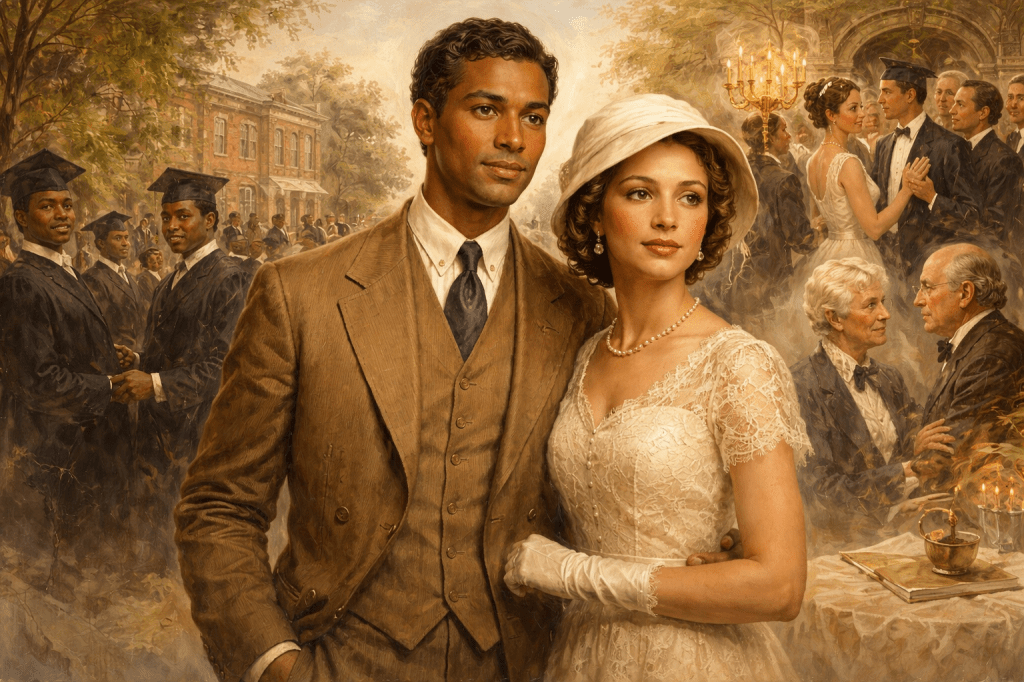
Many of the individuals who passed came from educated Black families and elite communities. Some were graduates of historically Black colleges and universities, institutions that produced a generation of highly educated African Americans despite limited resources. Schools such as Howard University, Fisk University, and Atlanta University trained teachers, doctors, lawyers, and intellectuals who sought to uplift Black communities during the late nineteenth and early twentieth centuries.

Yet even with advanced education, racial barriers remained severe. Black professionals were often barred from practicing in white hospitals, law firms, and universities. Segregation limited their clientele and opportunities, making it difficult to fully utilize their education. In this environment, some light-skinned graduates chose to cross the racial boundary in order to practice their professions freely in white society.

One of the most famous examples of passing in American history is Anatole Broyard. Broyard was born into a Creole family of mixed ancestry in New Orleans but later lived as a white man in New York. As a literary critic for The New York Times, he built a successful career while concealing his Black heritage from most colleagues and friends.

Another example is Walter Francis White, whose appearance was so light that he could pass for white. Unlike many who crossed the color line permanently, White used his appearance strategically while working for the National Association for the Advancement of Colored People (NAACP). He traveled through the South investigating lynchings by posing as a white man to gather information.

The phenomenon of passing was deeply connected to America’s complex history of racial mixing. During slavery, many enslaved women were forced into relationships with white slave owners, resulting in generations of mixed-race descendants. By the late nineteenth century, some individuals of mixed ancestry had physical features that allowed them to be perceived as white.

For many who passed, the decision involved enormous personal sacrifice. Passing required cutting ties with family members, friends, and the Black community. Maintaining the illusion of whiteness meant living with constant fear that one’s racial background might be discovered. Exposure could result in job loss, social rejection, or even violence.

Some individuals passed temporarily to obtain employment or housing, while others permanently reinvented their identities. Those who crossed the color line often relocated to new cities where their past was unknown. Large urban centers such as New York City, Chicago, and Los Angeles provided anonymity that made it easier to construct new identities.

The pressures that encouraged passing intensified during the era of Jim Crow laws. Throughout the late nineteenth and early twentieth centuries, segregation laws enforced strict racial boundaries in schools, transportation, housing, and public life. These laws institutionalized racial inequality and reinforced the social advantages associated with whiteness.

Light-skinned members of the Black elite sometimes faced complicated choices within this racial hierarchy. On one hand, many felt a strong commitment to racial solidarity and community leadership. On the other hand, the opportunities available to whites could be dramatically different from those available to even the most educated Black citizens.

Passing was therefore not always motivated by rejection of Black identity. In many cases, it reflected the brutal realities of a society structured around racial discrimination. Economic advancement, personal safety, and professional success were powerful incentives for individuals seeking stability in an uncertain environment.

Literature and film have explored the psychological complexities of passing. Novels such as Passing depict the emotional tension experienced by individuals who cross the racial boundary. These stories reveal the internal conflict between personal ambition and loyalty to one’s heritage.

Historians estimate that thousands of African Americans passed for white during the late nineteenth and early twentieth centuries. However, the exact number is impossible to determine because many individuals successfully concealed their origins and left few records documenting their decisions.

Within Black communities, reactions to passing were mixed. Some viewed it as a betrayal or abandonment of the struggle for racial equality. Others understood it as a tragic consequence of systemic racism that forced people into impossible choices.

The existence of passing also exposed the arbitrary nature of racial categories. American society often defined race according to the “one-drop rule,” meaning that even a small amount of African ancestry classified a person as Black. Yet the fact that some individuals could move between racial identities demonstrated how socially constructed these categories truly were.

Passing gradually became less common after the civil rights movement of the 1950s and 1960s. As legal segregation was dismantled and new opportunities emerged for African Americans, the incentives to permanently abandon one’s racial identity diminished.

Nevertheless, the history of passing remains an important chapter in understanding race in the United States. It reveals the extreme pressures created by a society that rewarded whiteness while marginalizing Blackness.

For the students, professionals, and elites who crossed the color line, passing represented both opportunity and loss. While it sometimes brought economic stability and professional success, it often required the painful sacrifice of family ties, cultural heritage, and community belonging.

Ultimately, the phenomenon of passing highlights the human cost of racial inequality. It illustrates how deeply racism shaped personal identity, forcing individuals to navigate a world where the boundaries of race could determine the course of an entire life.


References

Ginsberg, E. K. (1996). Passing and the Fictions of Identity. Duke University Press.

Hobbs, A. (2014). A Chosen Exile: A History of Racial Passing in American Life. Harvard University Press.

Kennedy, R. (2001). Interracial Intimacies: Sex, Marriage, Identity, and Adoption. Pantheon Books.

Larsen, N. (1929). Passing. Alfred A. Knopf.

Smithsonian National Museum of African American History and Culture. History of racial passing in America.

Hine, D. C., Hine, W. C., & Harrold, S. (2014). The African American Odyssey. Pearson Education.

Library of Congress. Historical records on race and identity in the United States.

A Shade Too Much: Surviving Prejudice on Both Sides #thebrowngirldilemma

Photo by Mikhail Nilov on Pexels.com

To be “a shade too much” is to live in a world where skin becomes a battleground. It is to experience prejudice from both sides—discrimination from the larger society for being Black and rejection from one’s own community for not fitting an unspoken standard of acceptability. This is the painful duality of existing in a society obsessed with measuring worth by skin tone.

Colorism, the preference for lighter skin over darker skin within communities of color, has its roots in slavery and colonialism. Enslaved Africans with lighter complexions were sometimes given privileges, such as working in the house rather than the fields, which created a hierarchy that persists today (Hunter, 2007). This has left many dark-skinned individuals feeling stigmatized, while lighter-skinned people are accused of being privileged, “not Black enough,” or disconnected from the struggles of the Black experience.

For a brown-skinned or light-skinned woman, this can mean enduring a lifetime of suspicion, jealousy, or accusations of arrogance. Darker-skinned women often endure microaggressions that suggest they are less feminine or attractive (Hill, 2002). Lighter-skinned women, on the other hand, are sometimes ostracized, accused of thinking they are “better” or of benefiting from color-based favoritism. Both wounds are real, and both are deep.

The pain intensifies when the rejection comes from one’s own community. Internalized racism manifests as horizontal hostility, where oppressed people turn their pain inward and against each other rather than at the system that created the hierarchy in the first place (hooks, 1992). This creates an environment where those who are already targeted by racism must also navigate intra-community competition for validation.

Psychologically, this constant negotiation of identity can lead to identity confusion and lower self-esteem. Research has found that intraracial discrimination can have similar mental health effects as external racism, contributing to anxiety, depressive symptoms, and social withdrawal (Keith et al., 2017). It can also create a hyperawareness of one’s appearance—skin tone, hair texture, and features—making self-acceptance an ongoing battle.

Men are not exempt from this dilemma. Light-skinned men may be stereotyped as weak or “soft,” while dark-skinned men are stereotyped as threatening or aggressive (Monk, 2015). These biases affect dating dynamics, employment opportunities, and how Black men are perceived by law enforcement and media. Thus, “a shade too much” becomes not just a personal issue but a sociopolitical one with life-altering consequences.

The church should have been a refuge, but historically, colorism found its way even into pews and pulpits. During slavery, some congregations separated worshippers by complexion, privileging mixed-race members over darker-skinned members (Cone, 1997). Healing must therefore include a theological reclamation: affirming that all shades are equally made in the image of God (Genesis 1:27) and equally loved by Him.

Surviving prejudice on both sides requires a strong sense of identity. This means decoupling self-worth from shade hierarchies and rejecting the false dichotomy of “too light” versus “too dark.” It means affirming, “I am enough,” whether one is honey, caramel, chocolate, or mahogany. As Psalm 139:14 reminds us, we are “fearfully and wonderfully made.”

Community healing is crucial. Honest conversations about colorism must take place in families, schools, and churches. Mothers and fathers must be careful with the language they use around children, resisting the temptation to praise or shame one shade over another. Representation matters—children must see beautiful, intelligent, successful people across the entire spectrum of Blackness.

Media also plays a role. Dark-skinned women must be cast as heroines, CEOs, and romantic leads. Light-skinned women must be portrayed without always being reduced to exotic love interests or “pretty but empty” stereotypes. Stories must reflect the complexity of Black life beyond color-based tropes.

Spiritually, healing comes from seeing oneself as God sees us. God does not measure beauty by shade but by heart (1 Samuel 16:7). The gospel dismantles hierarchies of worth and declares every person equally valuable. In Christ, there is no “less Black” or “too Black”—there is only beloved humanity.

Surviving prejudice on both sides also requires empathy. Dark-skinned women must understand the privilege lighter-skinned women may carry, while lighter-skinned women must understand the pain and systemic disadvantage darker-skinned women often endure. Solidarity grows when both acknowledge the wound yet refuse to deepen it.

To be “a shade too much” is to reclaim one’s power and refuse to shrink for the comfort of others. It is to stand proudly, saying, “My shade is not too much—it is exactly what God intended.” In this way, survival becomes victory, and the struggle becomes a testimony.

When we heal, we break the cycle for the next generation. Children grow up free to love their skin and each other. The burden of proving one’s worth fades, replaced by collective pride. Then we will no longer ask, “Am I too light?” or “Am I too dark?” Instead, we will declare together: We are enough.


References

  • Cone, J. H. (1997). God of the oppressed. Orbis Books.
  • Hill, M. (2002). Skin color and the perception of attractiveness among African Americans: Does gender make a difference? Social Psychology Quarterly, 65(1), 77–91.
  • hooks, b. (1992). Black looks: Race and representation. South End Press.
  • Hunter, M. (2007). The persistent problem of colorism: Skin tone, status, and inequality. Sociology Compass, 1(1), 237–254.
  • Keith, V. M., Lincoln, K. D., Taylor, R. J., & Jackson, J. S. (2017). Discrimination, racial identity, and psychological well-being among African Americans. Cultural Diversity and Ethnic Minority Psychology, 23(2), 165–175.
  • Monk, E. P. (2015). The cost of color: Skin color, discrimination, and health among African-Americans. American Journal of Sociology, 121(2), 396–444.

Pretty Privilege Series: The Weight of Hue — How Skin Tone Still Shapes Our Lives.

Photo by cottonbro studio on Pexels.com

Colorism continues to shape the lives of Black people across the globe, creating a hierarchy where lighter skin is often valued above darker skin. This hierarchy influences perceptions of beauty, social status, economic opportunity, and even self-worth (Hunter, 2007).

The roots of colorism are deeply historical. During slavery and colonization, lighter-skinned Africans were often given preferential treatment, assigned domestic roles, and sometimes even granted freedom, while darker-skinned Africans labored in the fields and were systematically dehumanized. These practices embedded the association of lightness with privilege (Williams, 1987).

The media has perpetuated this bias for generations. Hollywood films, advertisements, and television shows historically cast lighter-skinned Black actors in leading, romantic, and heroic roles, while darker-skinned actors were relegated to secondary or villainous roles. Such representation shapes public perception and influences the self-esteem of viewers (Bogle, 2016).

The psychological effects of colorism are profound. Darker-skinned individuals often report higher rates of depression, lower self-esteem, and feelings of inadequacy compared to their lighter-skinned peers. Internalized messages about beauty and desirability can create lifelong struggles with identity and confidence (Hill, 2002).

Colorism also affects romantic relationships. Studies indicate that lighter-skinned women and men are often preferred as partners, while darker-skinned individuals face marginalization. These biases are rooted in historical hierarchies that equate proximity to whiteness with social desirability (Wilder, 2010).

In the workplace, colorism manifests in income and promotion disparities. Research shows that darker-skinned Black men and women often earn less than their lighter-skinned counterparts, even with equivalent qualifications and experience. This shade-based wage gap highlights ongoing systemic inequities (Goldsmith, Hamilton, & Darity, 2006).

Schools are microcosms where colorism begins early. Dark-skinned children are more likely to face teasing, social exclusion, or harsher disciplinary measures. These early experiences shape their academic performance and social confidence (Monk, 2014).

Family and community attitudes play a significant role in either perpetuating or challenging colorism. Compliments that favor lighter skin, such as “You’re pretty for a dark-skinned girl,” reinforce hierarchy, while affirmations of all shades foster resilience and self-love (Russell, Wilson, & Hall, 2013).

Language and terminology also reinforce hierarchy. Terms like “high yellow,” “redbone,” and “chocolate” often carry implicit judgments. Changing this language is a necessary step in dismantling social biases and cultivating inclusive beauty standards (Charles, 2003).

Social media has become a double-edged sword. While it can perpetuate light-skinned beauty ideals, movements such as #MelaninPoppin and #DarkSkinIsBeautiful celebrate deep-skinned beauty and provide visibility to those historically marginalized. These campaigns foster community pride and affirmation.

Religious and spiritual frameworks can help counteract internalized bias. Scriptures like Song of Solomon 1:5 — “I am black, but comely” — affirm that dark skin is beautiful and worthy of celebration. Churches can encourage young women and men to see all shades as reflections of God’s design (James 2:1-4).

Media literacy programs are essential tools for combating the weight of hue. Teaching children and adults to critically evaluate film, television, and advertising helps them resist internalizing harmful colorist norms and fosters appreciation for a wider range of beauty standards.

Empowerment programs targeting youth help counteract the negative effects of colorism. Workshops, mentorship, and historical education about African ancestry instill pride in melanin-rich skin and encourage healthy self-perception (Hall, 1992).

Feminist scholars argue that colorism intersects with sexism and racism, amplifying the oppression of dark-skinned women. Addressing this intersectionality is crucial for holistic liberation and equity within the Black community (Hunter, 2007).

Representation matters not only for women but for men as well. Dark-skinned Black men face societal prejudice that can affect perceptions of attractiveness, trustworthiness, and professional capability. Affirming men of all shades helps dismantle hierarchical standards that harm the entire community.

Black fathers and male mentors have a critical role. By affirming dark-skinned daughters, nieces, and younger women in their communities, men can actively challenge societal preferences for lighter skin and foster confidence in the next generation (Harris, 2015).

Economic and professional equity initiatives are equally important. Organizations must address unconscious bias in hiring, promotions, and pay scales to ensure that darker-skinned individuals are not disadvantaged due to complexion. Equitable policies disrupt systemic inequalities rooted in colorism.

Education about the historical and cultural origins of colorism provides tools for resistance. Teaching children about African leaders, inventors, and cultural figures with dark skin fosters pride and counters centuries of negative messaging (Smedley, 1999).

Therapeutic interventions, including counseling and support groups, can help individuals address internalized colorism. Healing requires acknowledging past trauma, challenging negative beliefs, and embracing one’s natural complexion.

Breaking the shade hierarchy is a lifelong process that requires conscious effort, education, and representation. By affirming beauty across all skin tones, fostering inclusive media, and challenging biases, the Black community can reduce the weight of hue and empower future generations.


References

  • Bogle, D. (2016). Toms, Coons, Mulattoes, Mammies, and Bucks: An Interpretive History of Blacks in American Films. Bloomsbury.
  • Charles, C. (2003). Skin Bleaching, Self-Hate, and Black Identity in Jamaica. Journal of Black Studies, 33(6), 711–728.
  • Goldsmith, A., Hamilton, D., & Darity, W. (2006). Shades of Discrimination: Skin Tone and Wages. American Economic Review, 96(2), 242–245.
  • Hall, R. E. (1992). Bias Among African Americans Regarding Skin Color: Implications for Social Work Practice. Research on Social Work Practice, 2(4), 479–486.
  • Harris, A. (2015). The Influence of Fathers on the Self-Esteem of African American Daughters. Journal of Black Psychology, 41(3), 257–276.
  • Hill, M. (2002). Skin Color and the Perception of Attractiveness Among African Americans. Social Psychology Quarterly, 65(1), 77–91.
  • Hunter, M. (2007). The Persistent Problem of Colorism: Skin Tone, Status, and Inequality. Sociology Compass, 1(1), 237–254.
  • Monk, E. P. (2014). Skin Tone Stratification among Black Americans, 2001–2003. Social Forces, 92(4), 1313–1337.
  • Russell, K., Wilson, M., & Hall, R. (2013). The Color Complex: The Politics of Skin Color Among African Americans. Anchor Books.
  • Smedley, A. (1999). Race in North America: Origin and Evolution of a Worldview. Westview Press.
  • Williams, E. (1987). Capitalism and Slavery. UNC Press.
  • Wilder, J. (2010). Revisiting “Color Names and Color Notions”: A Contemporary Examination of the Language and Attitudes of Skin Color among Young Black Women. Journal of Black Studies, 41(1), 184–206.

Voices of the Americas: Black, Hispanic, Asian, Italian, and the Tapestry of Minority Sacrifice

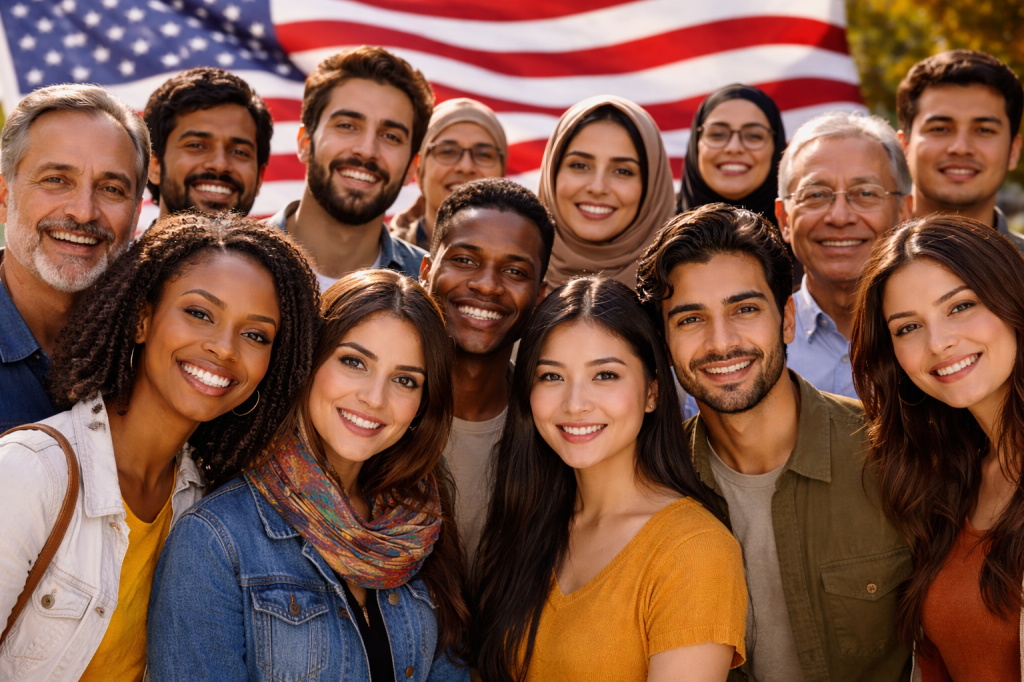
The story of the United States is inseparable from the stories of its minorities. America’s economic strength, cultural vitality, and democratic evolution were built not by a single people, but by a convergence of nations, languages, and bloodlines. From forced migration to voluntary arrival, each community has carried both hope and hardship into the American narrative.

African Americans represent one of the oldest continuous minority presences in the nation, arriving first through the transatlantic slave trade in 1619. Enslaved Africans were forcibly transported, stripped of homeland and lineage, yet they laid the agricultural and economic foundation of early America. Their labor undergirded plantation wealth and national expansion, even as their humanity was denied.

Following emancipation, Black Americans faced Reconstruction’s collapse, Jim Crow segregation, racial terror, and systemic exclusion. The Great Migration reshaped northern cities as millions sought industrial opportunity and safety. The Civil Rights Movement, led by figures such as Martin Luther King Jr., transformed American law and conscience, yet disparities in wealth, policing, and healthcare persist.

Hispanic and Latino Americans trace their roots to Spanish colonization long before the United States existed. Regions such as California, Texas, and Florida were once part of Spain and later Mexico. After the Mexican-American War, many Mexicans became Americans overnight when borders shifted rather than people moving.

Immigration from Mexico, Puerto Rico, Cuba, and Central America increased in the twentieth century due to labor demands, political instability, and economic opportunity. Programs such as the Bracero Program recruited Mexican workers during World War II. Today, Latinos face immigration debates, labor inequities, and language-based discrimination, even as they contribute profoundly to agriculture, construction, military service, and entrepreneurship.

Asian Americans arrived in significant numbers during the nineteenth century, beginning with Chinese laborers who helped build the Transcontinental Railroad. Their sacrifice was met with exclusionary policies such as the Chinese Exclusion Act of 1882. Despite this discrimination, Chinese communities established resilient cultural and economic enclaves.

Japanese immigrants faced incarceration during World War II under Executive Order 9066, despite many being American citizens. Korean, Filipino, Indian, and Vietnamese immigrants followed in later waves, often shaped by war, colonial ties, or refugee resettlement policies. Asian Americans today continue to confront stereotypes and periodic surges of xenophobia, particularly during geopolitical tensions.

Italian Americans migrated in large numbers between 1880 and 1920, fleeing poverty and political instability in southern Italy. Upon arrival, they often encountered nativist hostility and were stereotyped as criminals or anarchists. Over time, they built tight-knit communities, contributing to urban labor, cuisine, art, and public service.

Irish Americans, though now often perceived as fully integrated, endured severe discrimination during the nineteenth century. Fleeing the Great Famine, they were met with “No Irish Need Apply” sentiments. They filled industrial jobs, shaped urban political machines, and gradually ascended into mainstream civic life.

Native Americans represent the original inhabitants of the Americas and have endured forced displacement, broken treaties, and cultural suppression. The Trail of Tears and the reservation system stand as painful reminders of conquest and survival. Despite systemic marginalization, Indigenous communities preserve language, sovereignty, and cultural identity.

Arab Americans began migrating in the late nineteenth century, often from Lebanon and Syria, and later from other parts of the Middle East. Many arrived seeking economic opportunity. Post-9/11 suspicion intensified scrutiny and discrimination, yet Arab Americans remain active in business, medicine, and public service.

Caribbean Americans, including Haitian and Jamaican immigrants, have shaped music, healthcare, and entrepreneurship. Migration increased in the twentieth century due to economic and political pressures in the Caribbean basin. These communities often navigate racial identity within broader Black American experiences while maintaining distinct cultural traditions.

African immigrants, distinct from descendants of enslaved Africans, have arrived in increasing numbers since the Immigration and Nationality Act of 1965. Highly educated and entrepreneurial, they contribute to academia, healthcare, and technology sectors while adapting to America’s racial frameworks.

Filipino Americans, whose migration ties date to U.S. colonial governance of the Philippines, have long served in the U.S. Navy and healthcare professions. Their presence illustrates how imperial history shaped migration patterns.

South Asian Americans, including Indian and Pakistani immigrants, expanded significantly after 1965 immigration reforms favored skilled labor. They have made substantial contributions in medicine, engineering, and technology while navigating religious discrimination and post-9/11 scrutiny.

Latina and Asian women have played pivotal roles in garment factories, domestic labor, and nursing, often underpaid and underrecognized. Their sacrifices fueled urban economies while supporting transnational families.

Military service stands as a shared thread across minority communities. From the Buffalo Soldiers to Hispanic Medal of Honor recipients, from Japanese American units in World War II to contemporary immigrant enlistments, minority sacrifice has defended freedoms not always fully extended to them.

Today, minorities collectively face wealth gaps, educational inequities, healthcare disparities, and political polarization. Yet they also represent demographic growth, entrepreneurial dynamism, and cultural innovation. American music, cuisine, language, and art reflect their imprint.

The American experiment is thus not a singular inheritance but a chorus. Black resilience, Hispanic heritage, Asian diligence, Italian and Irish perseverance, Jewish scholarship, Indigenous endurance, Arab entrepreneurship, Caribbean rhythm, and African ambition form a mosaic rather than a monolith.

Voices of the Americas are not peripheral to the nation’s story—they are foundational. Their migrations, whether forced or chosen, their sacrifices in labor and war, and their ongoing pursuit of equity define the evolving meaning of American identity.


References

Daniels, R. (2002). Coming to America: A History of Immigration and Ethnicity in American Life. HarperCollins.

Foner, E. (2014). Give Me Liberty!: An American History. W.W. Norton.

Takaki, R. (2008). A Different Mirror: A History of Multicultural America. Back Bay Books.

The Holy Bible, King James Version (for general themes of migration and diaspora).

U.S. Census Bureau. (2023). Demographic Profile of the United States.

Covenant Echoes in the Latin World

The Latin world represents one of the most complex intersections of empire, faith, language, and covenant memory in global history. Stretching from the Iberian Peninsula to the Americas, Latin identity emerged from Roman foundations, Catholic expansion, Indigenous civilizations, African diaspora currents, and layered migrations. To understand covenant echoes in this world is to examine how sacred narratives are intertwined with conquest, colonization, and cultural survival.

The term “Latin” derives from Latium, the region surrounding ancient Rome. The expansion of the Roman Empire institutionalized the Latin language, law, and governance across Europe. After Rome’s Christianization under Constantine the Great, Christianity fused with imperial administration, creating a theological-political framework that would later shape Iberian expansion.

Spain and Portugal, inheritors of Roman Catholic identity, carried this fusion into the Age of Exploration. Under monarchs such as Isabella I of Castile and Ferdinand II of Aragon, Spain unified religiously and politically. The 1492 expulsion of Jews and Muslims from Spain marked a turning point, intertwining covenant theology with national consolidation.

The same year witnessed the voyage of Christopher Columbus, which initiated sustained European contact with the Americas. Spanish and Portuguese explorers justified expansion through missionary zeal, often framing colonization as a divine mandate. Biblical imagery of covenant and chosen mission shaped rhetoric, though practice frequently contradicted Christian ethics.

Indigenous civilizations such as the Aztec, Maya, and Inca possessed complex spiritual systems prior to European arrival. Conquest imposed Catholic structures upon these societies, yet syncretism emerged. Indigenous cosmologies blended with biblical motifs, producing unique Latin Christian expressions that endure in festivals, iconography, and communal rituals.

African covenantal memory entered the Latin world through the transatlantic slave trade. Millions of Africans were forcibly transported to Brazil, the Caribbean, and Spanish America. They carried with them spiritual traditions that merged with Catholic symbolism, giving rise to syncretic faith expressions such as Candomblé and Santería.

Theological scholarship in colonial Latin America wrestled with moral questions about Indigenous humanity. Figures like Bartolomé de las Casas argued for Indigenous rights, challenging the brutality of encomienda systems. His advocacy demonstrates early covenantal debates about justice and dignity.

The Bible itself became a contested text in the Latin world. For centuries, Catholic authority restricted vernacular translations. With Protestant missions in the nineteenth century, Spanish and Portuguese Bibles became more widely accessible, reshaping lay engagement with scripture.

Liberation theology in the twentieth century reinterpreted covenant through the lens of the oppressed. Thinkers such as Gustavo Gutiérrez framed the Exodus narrative as paradigmatic for Latin American struggles against poverty and dictatorship. Covenant became a language of social justice rather than imperial mandate.

Migration reshaped covenant echoes once more. Latin Americans migrated northward in the twentieth and twenty-first centuries, carrying Marian devotion, Pentecostal fervor, and communal Catholic traditions into the United States. Spanish-language congregations transformed urban religious landscapes.

The concept of covenant also intersects with Sephardic Jewish memory in the Iberian diaspora. Following expulsion, conversos and crypto-Jews carried fragments of Hebrew tradition into the Americas. Recent genealogical research has revived awareness of these hidden lineages in regions of Mexico and the American Southwest.

Brazil, the largest Portuguese-speaking nation, embodies covenant complexity. Its colonial society intertwined Catholic orthodoxy, African resilience, and Indigenous survival. Afro-Brazilian religious traditions illustrate how covenant identity adapts under coercion yet persists symbolically.

Political upheavals in Latin America often invoked biblical language. Revolutionary leaders employed Exodus imagery, while authoritarian regimes sometimes claimed divine sanction. Covenant rhetoric thus oscillated between liberation and control.

Language itself carries covenant echoes. Spanish and Portuguese, Romance languages rooted in Latin, preserve ecclesiastical vocabulary shaped by centuries of theological discourse. Words like alianza (covenant) reflect deep scriptural inheritance.

The relationship between the Latin world and the United States adds another layer. Economic interdependence, migration policy, and cultural exchange create ongoing dialogue. Religious networks span borders, forming transnational faith communities.

Modern Latin America faces challenges of inequality, political instability, and violence. Yet churches often function as social anchors, providing education, healthcare, and communal solidarity. Covenant in this context signifies resilience amid systemic strain.

Pentecostal growth across Latin America represents one of the most significant religious shifts of the last century. Emphasis on personal covenant with God, spiritual gifts, and communal worship reshapes Catholic-majority landscapes.

Indigenous movements increasingly reclaim precolonial spiritual identities while engaging Christian frameworks. This dual negotiation reflects a broader pattern: covenant memory in the Latin world is neither static nor singular but layered and adaptive.

Diaspora communities in North America reinterpret Latin covenant identity within multicultural contexts. Faith becomes a bridge between heritage and assimilation, preserving language and communal bonds.

Ultimately, covenant echoes in the Latin world reveal a history marked by conquest and compassion, oppression and advocacy, syncretism and reform. From Iberian monarchies to liberation theologians, from Sephardic memory to Afro-Latin spirituality, the Latin world demonstrates how sacred narratives travel, fracture, and reform across continents. Covenant here is not merely theological—it is historical, cultural, and profoundly human.


References

Brading, D. A. (1991). The First America: The Spanish Monarchy, Creole Patriots, and the Liberal State. Cambridge University Press.

Gutiérrez, G. (1973). A Theology of Liberation. Orbis Books.

Las Casas, B. de. (1992). A Short Account of the Destruction of the Indies. Penguin Classics.

Noll, M. A. (2012). The New Shape of World Christianity. IVP Academic.

Pew Research Center. (2023). Religion in Latin America.

Black History: Origin of Soul Food

Soul food is far more than a collection of dishes; it is a living historical record of resistance, survival, ingenuity, and cultural pride for African Americans (Britannica Editors, 2026). Its origins are deeply rooted in the history of slavery, the adaptation of African culinary traditions, and the remaking of limited resources into food that sustains both body and community.

The roots of soul food stretch back to the era of slavery in the Southern United States. Enslaved Africans brought with them culinary knowledge from West and Central Africa, including cooking methods and flavor profiles that would later be foundational to the cuisine (Wikipedia, 2026). These skills—shaping flavor, stewing greens, and combining ingredients into nourishing meals—were essential for sustaining life in brutal, undernourishing conditions.

During slavery, African Americans were typically given meager rations consisting of cornmeal and scraps of pork or other discarded animal parts. Slave owners kept prime cuts for themselves, leaving enslaved people with offal, bones, and less desirable cuts of meat (Wikipedia, 2026). Rather than waste, these ingredients became opportunities for creative cooking that ultimately formed the backbone of soul food.

Enslaved cooks adapted traditional West African techniques to combine these limited foodstuffs with local ingredients. They melded their ancestral knowledge with Indigenous American and European cooking methods, creating new dishes that were both resourceful and flavorful. In this way, soul food is a hybrid cuisine reflecting the intersecting histories of Africans, Native Americans, and Europeans in the South (Wikipedia, 2026).

Because of the harsh conditions on plantations, enslaved people often supplemented their diets through hunting, fishing, and gardening. Small private gardens became sources of okra, greens, and other vegetables that remained central to soul food after emancipation (Wikipedia, 2026). These foods were combined with what was available from rations or the landscape to create hearty, high‑calorie meals necessary for laboring bodies.

The term “soul food” itself didn’t emerge until the 1960s and 1970s, during the Black Power and Black Pride movements, when “soul” became a broader cultural expression of identity and resistance. During this era, African Americans began to reclaim and celebrate their culinary traditions as symbols of cultural pride rather than shame (The Soul Food Pot, 2026).

Before the term was popularized, these dishes were often called “down‑home food,” “country cooking,” or “real good cooking.” They were the meals families prepared for Sunday dinners, communal gatherings, and everyday survival (Chicago Crusader, 2026). These communicative food traditions connected generations and helped maintain cultural memory.

After emancipation and especially during the Great Migration, African Americans brought this culinary tradition north and west to urban centers. Soul food restaurants began to appear in cities with significant Black populations, transforming regional rural cooking into a national cuisine associated with African American culture (Britannica Editors, 2026).

At its core, soul food reflects adaptability in the face of oppression. Greens such as collards, mustard, and turnips became staples because these crops could be grown in small gardens and were rich in nutrients. Beans, black‑eyed peas, and okra similarly became key components of the repertoire, often stewed with smoked meat for additional flavor (Afro.com, 2026).

Dishes we now think of as quintessential soul food—gumbos, stews, and rice dishes—trace back to West African foodways. For example, gumbo is closely linked to West African stews, thickened with okra or filé powder and seasoned with local spices, reflecting the blend of cultures in the South (The DO, 2026).

Pork played a significant role because it was widely available in the antebellum South. Ham hocks, jowls, and other parts of the hog that slave owners discarded were transformed into flavor bases for greens, beans, and stews. The use of pork fat also enhanced flavor and calories in otherwise lean vegetable dishes (Wikipedia, 2026).

Fried chicken—one of the most iconic soul food dishes—exemplifies the cuisine’s blended heritage. While frying chicken was practiced in some West African cultures, the technique was reinforced in the American South by enslaved cooks and adapted alongside European frying methods. Over time, African Americans perfected the seasoning, frying style, and presentation that distinguished it as soul food (Mercer University, 2026).

Despite its cultural richness, the association of fried chicken with Black Americans has also been shaped by racist stereotyping. As soul food historian Adrian Miller notes, African Americans who sold fried chicken or cooked it under oppression were later depicted in derogatory media imagery that trafficked in harmful tropes (Eater, 2018).

This duality—celebration and stereotype—highlights how soul food occupies both pride and pain within the broader American imagination. The food that sustained families through hardship has also been used to demean the very people who created it (Eater, 2018).

While traditional soul food involved pork heavily, modern adaptations often substitute smoked turkey, chicken, or vegetarian proteins to make the cuisine healthier or to accommodate dietary restrictions without losing the essence of the dishes (AA Registry, 2026).

A traditional soul food plate without pork might include fried chicken or baked chicken, stewed collard greens seasoned with smoked turkey, black‑eyed peas, cornbread, candied yams, and okra. Each element reflects the historical journey of an ingredient—whether cultivated, foraged, or inherited from ancestral cooking traditions (Afro.com, 2026).

Soul food has endured because it is cultural memory on a plate. It functions as an edible archive of survival, community, and identity—passed down through families, celebrated at gatherings, and shared across generations as a testament to resilience (Chicago Crusader, 2026).

KFC: The History of Kentucky Fried Chicken

Kentucky Fried Chicken, commonly known as KFC, was founded by Harland David “Colonel” Sanders in 1952 in Salt Lake City, Utah, though Sanders had been cooking and selling fried chicken in Kentucky decades earlier (Wall Street Journal, 2023). His original recipe, featuring 11 secret herbs and spices, became the foundation for one of the world’s most recognized fast-food brands.

Sanders first operated a small roadside restaurant during the Great Depression, catering to travelers with fried chicken and other home-cooked Southern meals. In the 1930s and 1940s, he experimented with pressure-frying, a method that reduced cooking time while keeping chicken crispy—a key innovation that helped KFC expand nationwide.

By the 1960s, KFC began franchising aggressively, spreading across the U.S. and then internationally. Today, KFC operates in over 150 countries, with a unique global footprint where the menu is adapted to local tastes, such as spicy fried chicken in Asia, halal options in the Middle East, and rice-based sides in Latin America.

KFC’s cultural significance lies not only in its branding but also in its role in popularizing fried chicken as fast food worldwide, bridging Southern American culinary traditions with global consumption.


Fried Chicken in Asia: Origins and Popularity

Fried chicken was not invented in Asia, but certain Asian countries adopted and adapted the dish to their own culinary traditions centuries ago. For example:

  • China: Historical records suggest that frying chicken in oil has existed since the Tang dynasty (618–907 CE). Chinese cooks used light coatings of flour or starch and seasonings for fried poultry, predating widespread Western fried chicken. (Asia Society, 2020)
  • Japan: Fried chicken became popular with karaage, a Japanese cooking method where bite-sized pieces of chicken are marinated in soy sauce, ginger, and garlic, then coated lightly in starch and fried. This style was influenced by Chinese techniques but adapted to local flavors. (Japan Times, 2021)
  • Korea: Korean fried chicken, or “chikin”, emerged in the 1960s–70s and became widely popular through fried chicken chains. Unlike Western fried chicken, Korean fried chicken is often double-fried for extreme crispiness and coated with spicy or sweet sauces. It is now a staple in Korean cuisine and social culture. (Korea Herald, 2022)

In essence, while fried chicken as we know it in KFC form originates from Southern U.S. cooking traditions, many Asian countries have parallel fried chicken traditions that predate modern fast-food chains. Today, these countries have also influenced global fried chicken flavors, including the sweet, spicy, or soy-based styles now sold in KFC outlets worldwide.

Its evolution from necessity to pride underscores how African Americans reclaimed what was once a symbol of marginalization and transformed it into one of cultural affirmation. Soul food remains one of the most beloved and influential contributions African Americans have made to the broader landscape of American cuisine (Britannica Editors, 2026).


References

Afro.com. (2026). Soul food: African culture embedded in American cuisine. Retrieved from https://afro.com/soul-food-african-culture-embedded-in-american-cuisine/?utm_source=chatgpt.com

AA Registry. (2026). Soul food: A brief history. Retrieved from https://aaregistry.org/story/soul-food-a-brief-history/?utm_source=chatgpt.com

Britannica Editors. (2026). Soul food. In Encyclopedia Britannica. Retrieved from https://www.britannica.com/topic/soul-food-cuisine?utm_source=chatgpt.com

Chicago Crusader. (2026). The Black plate: Soul food’s long march to freedom. Retrieved from https://chicagocrusader.com/the-black-plate-soul-foods-long-march-to-freedom/?utm_source=chatgpt.com

Eater. (2018, October 3). Fried chicken is common ground: The history and stereotypes. Retrieved from https://www.eater.com/2018/10/3/17926424/fried-chicken-is-common-ground?utm_source=chatgpt.com

Mercer University. (2026). Southern food and African-American culinary traditions. Retrieved from https://faculty.mercer.edu/davis_da/southernfood/blog.html?utm_source=chatgpt.com

The DO. (2026). Food from the soul: A history of African-American culture and nutrition. Retrieved from https://thedo.osteopathic.org/columns/food-from-the-soul-a-history-of-african-american-culture-and-nutrition/?utm_source=chatgpt.com

The Soul Food Pot. (2026). Soul food history. Retrieved from https://thesoulfoodpot.com/soul-food-history/?utm_source=chatgpt.com

Wikipedia. (2026). Soul food. Retrieved from https://en.wikipedia.org/wiki/Soul_food?utm_source=chatgpt.com