Tag Archives: history

Ann Lowe: The Hidden Architect of Fashion with American Elegance.

Ann Lowe stands as one of the most underrecognized yet profoundly influential figures in American fashion history, a woman whose genius was stitched into some of the most iconic garments of the twentieth century. Born into a lineage shaped by both artistry and oppression, Lowe’s life and career represent a powerful intersection of race, resilience, and refined craftsmanship. Despite working during an era deeply entrenched in racial segregation, she rose to dress some of the most elite women in America, leaving behind a legacy that continues to inspire designers and historians alike.

Born in 1898 in Clayton, Alabama, Ann Lowe was the great-granddaughter of an enslaved seamstress and the daughter of a skilled dressmaker. Her family’s talent for design was cultivated under the harsh conditions of slavery, where Black women were often forced to create garments for wealthy white families. This generational inheritance of skill became Lowe’s foundation, transforming what began as forced labor into a refined art form that would later captivate high society.

Lowe’s early exposure to couture techniques came through her mother and grandmother, who designed elaborate gowns for prominent Southern families. After her mother’s death, Lowe completed an unfinished set of dresses for a governor’s wife at just sixteen years old, astonishing clients with her ability. This moment marked the beginning of her independent career, signaling a rare and extraordinary talent that would defy the limitations imposed on Black women in her time.

Determined to refine her craft, Lowe enrolled in a design school in New York, where she faced segregation even within education. She was separated from her white classmates but excelled beyond expectations, completing her program ahead of schedule. Her perseverance in the face of discrimination highlighted both her resilience and her commitment to excellence.

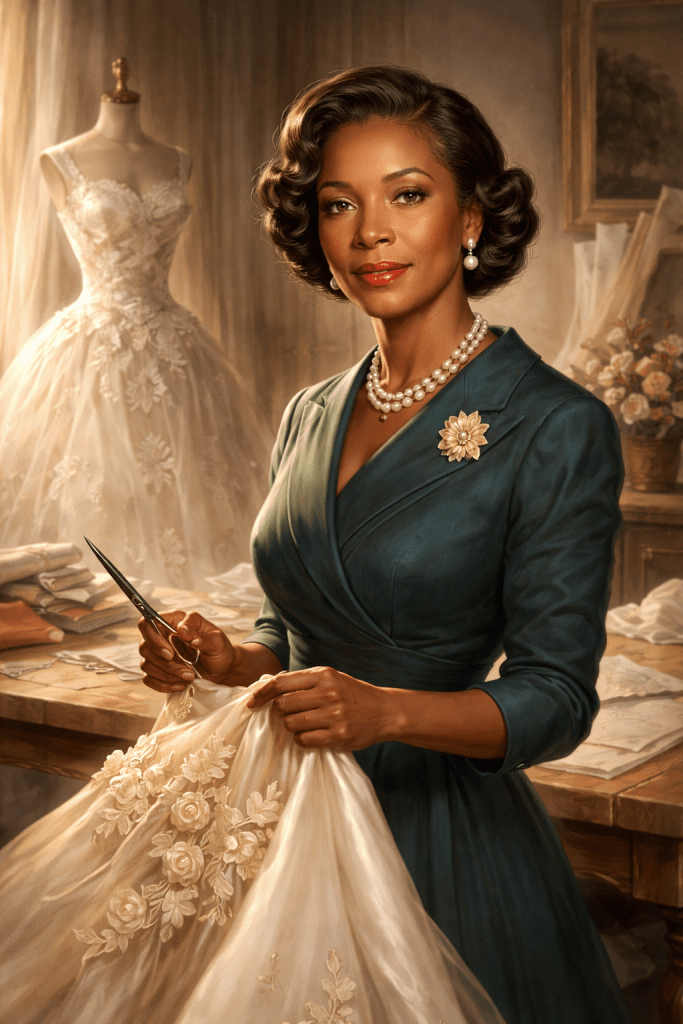
Lowe eventually established herself in New York City, where she opened her own salon. She became known for her intricate hand-sewn floral appliqués, delicate embroidery, and structured silhouettes that reflected both European couture traditions and her own distinct aesthetic. Her work was often described as ethereal, feminine, and technically masterful.

Among her elite clientele were members of America’s most prominent families, including the Rockefellers and the du Ponts. Yet, despite her high-profile clients, Lowe remained largely uncredited due to the racial dynamics of the era. Many of the women who wore her gowns received public admiration, while Lowe’s name remained hidden behind the seams.

One of the most significant moments in her career came when she was commissioned to design the wedding gown for Jacqueline Bouvier Kennedy, who would later become the wife of John F. Kennedy. This gown would become one of the most iconic bridal dresses in American history.

The dress itself was a masterpiece of ivory silk taffeta, featuring a portrait neckline, fitted bodice, and a voluminous skirt adorned with intricate folds. Lowe also designed the bridesmaids’ dresses, ensuring a cohesive and elegant visual presentation for the entire wedding party. Her attention to detail and commitment to perfection were evident in every stitch.

However, just days before the wedding, a catastrophic flood in Lowe’s studio destroyed the dresses she had painstakingly created. Without informing her client, Lowe worked tirelessly to recreate each garment in time for the ceremony, absorbing the financial loss herself. This act of dedication exemplified her professionalism and unwavering commitment to her craft.

Despite the monumental success of the wedding and the global attention it received, Lowe was not publicly credited at the time. When asked about the designer, Jacqueline Kennedy reportedly described the dress as made by “a colored dressmaker,” reflecting the racial attitudes that obscured Lowe’s recognition.

Lowe’s connection to Jacqueline Kennedy remains one of the most discussed aspects of her legacy, symbolizing both her brilliance and the systemic barriers she faced. It was not until years later that her role in creating the gown was widely acknowledged, allowing her to finally receive the recognition she deserved.

In addition to her work for high society, Lowe also designed dresses for debutantes, particularly for the annual Azalea Ball in Florida. These gowns became a rite of passage for wealthy young women, further cementing her reputation as a designer of elegance and tradition.

Lowe’s designs are now preserved in several prestigious institutions, most notably the Smithsonian Institution, where her work is recognized as a vital part of American cultural and fashion history. Her garments are also held in collections at the Metropolitan Museum of Art, ensuring that her legacy endures for future generations.

Her inclusion in these museums represents a significant shift in how her contributions are valued, transforming her from an overlooked artisan into a celebrated pioneer. These institutions acknowledge not only her technical skill but also the cultural significance of her work as a Black woman navigating a segregated industry.

Lowe’s career was not without hardship. Financial instability plagued her business, partly due to her reluctance to charge her wealthy clients what her work was truly worth. This, combined with systemic racism, limited her financial success despite her immense talent.

Nevertheless, her influence can be seen in the generations of designers who followed. Her emphasis on craftsmanship, detail, and elegance set a standard that continues to resonate within the fashion industry today. She remains a symbol of excellence achieved against overwhelming odds.

Lowe’s story also serves as a lens through which to examine the broader history of Black labor in America. From slavery to the twentieth century, Black artisans have often been the invisible architects of beauty and culture, their contributions minimized or erased. Lowe’s life challenges this narrative, demanding recognition and respect.

Her work embodies a quiet form of resistance, demonstrating that excellence can thrive even in the most restrictive conditions. Through her designs, she asserted her identity and artistry in a society that sought to marginalize both.

Today, Ann Lowe is increasingly celebrated as a trailblazer, a woman who transformed inherited skill into high art. Her story is not just one of fashion but of perseverance, dignity, and the enduring power of creativity.

In reclaiming her legacy, we honor not only Ann Lowe but also the countless unnamed Black women whose talents shaped history from behind the scenes. Her stitches, once hidden, now tell a story of brilliance that can no longer be ignored.

References

Bolton, A. (2016). Jacqueline Kennedy: The White House Years. Metropolitan Museum of Art.

Harris, A. (2018). The Hidden History of American Fashion: Rediscovering Ann Lowe. Fashion Studies Journal, 12(3), 45–62.

Smithsonian Institution. (n.d.). Ann Lowe: American Couturier. National Museum of African American History and Culture.

Vreeland, D. (1965). American Fashion and Its Designers. New York: Harper & Row.

Walker, R. (2020). Threads of Legacy: African American Dressmakers and the Politics of Recognition. Journal of American History, 107(2), 389–412.

Strength and Struggle: Examining the Social Pressures Placed on Black Women.

Black women in the United States occupy a unique social position shaped by the intersection of race, gender, and historical inequality. Their experiences are influenced by centuries of systemic discrimination, cultural expectations, and social pressures that affect economic opportunities, health outcomes, and societal perceptions. Understanding the realities facing Black women requires examining the historical and structural forces that shape their daily lives.

One of the most significant frameworks used to analyze these experiences is intersectionality, a concept introduced by legal scholar Kimberlé Crenshaw. Intersectionality explains how different forms of discrimination—particularly racism and sexism—interact simultaneously. For Black women, this means facing social barriers that cannot be fully explained by race alone or gender alone but by the combination of both.

Historically, Black women have endured unique forms of labor exploitation and social marginalization. During slavery in the United States, Black women were forced to perform both agricultural labor and domestic work while also being subjected to sexual exploitation. These conditions created enduring stereotypes that portrayed Black women as either excessively strong or morally deviant.

These stereotypes evolved into several harmful archetypes that continue to influence public perception. The “mammy,” “jezebel,” and “angry Black woman” stereotypes emerged from historical narratives that sought to justify inequality and control. These caricatures have persisted in popular culture, shaping how Black women are viewed in workplaces, media, and social institutions.

Economic inequality represents another major pressure affecting Black women. Despite high levels of labor participation, Black women frequently encounter wage disparities compared with white men, white women, and sometimes Black men. Data from the U.S. Bureau of Labor Statistics consistently demonstrates a persistent racial and gender wage gap.

The consequences of wage inequality extend beyond individual income. Lower earnings reduce opportunities for homeownership, savings, and wealth accumulation. Over time, these disparities contribute to the broader racial wealth gap observed across American society.

Education has been an area where Black women have demonstrated remarkable progress. In recent decades, Black women have become one of the fastest-growing groups earning college and advanced degrees. Despite these achievements, barriers to leadership roles and executive positions remain prevalent in many industries.

Healthcare disparities also represent a critical concern. Studies conducted by the Centers for Disease Control and Prevention show that Black women face significantly higher maternal mortality rates than women from other racial groups. These disparities have been linked to unequal access to healthcare, implicit bias among medical providers, and systemic inequalities in the healthcare system.

Mental health pressures are also significant. Many Black women report experiencing high levels of stress related to workplace discrimination, financial responsibilities, and caregiving obligations. Yet cultural expectations often encourage them to appear emotionally resilient regardless of the circumstances.

This expectation is commonly referred to as the “Strong Black Woman” trope. While resilience is often celebrated, scholars argue that the expectation of constant strength can discourage Black women from seeking emotional support or mental health care when needed.

Black feminist scholars have played a central role in analyzing these dynamics. Intellectual leaders such as Patricia Hill Collins and bell hooks have written extensively about the ways Black women resist oppression while simultaneously navigating complex social expectations.

Media representation also shapes how Black women are perceived. Historically, film and television often depicted Black women through narrow stereotypes. Although representation has improved, scholars continue to debate whether contemporary portrayals adequately reflect the diversity and complexity of Black womanhood.

Another significant pressure involves beauty standards and colorism. Western beauty ideals have historically favored lighter skin tones and European features, often marginalizing darker-skinned women. Colorism can influence opportunities in employment, media representation, and social relationships.

Black women are also deeply involved in community leadership and social activism. Throughout American history, they have organized movements advocating for civil rights, gender equality, and social justice. Their leadership has often been underrecognized despite its profound impact.

Figures such as Harriet Tubman, Ida B. Wells, and Shirley Chisholm exemplify the tradition of Black female leadership in American history. Their contributions helped reshape political and social landscapes.

Family and community responsibilities also create unique pressures. Black women frequently play central roles in caregiving, household leadership, and community support networks. These responsibilities often exist alongside professional obligations, creating additional demands on time and emotional energy.

Religious and spiritual institutions have historically provided important support systems. Churches and faith-based organizations have served as spaces where Black women could find community, leadership opportunities, and emotional resilience.

Despite these pressures, Black women have demonstrated extraordinary cultural influence. Their contributions to literature, music, fashion, and art have profoundly shaped American culture and global artistic expression.

Scholars emphasize that understanding the experiences of Black women requires recognizing both the challenges they face and the strength they demonstrate. Their resilience reflects not only personal determination but also collective strategies developed within communities to resist inequality.

Addressing the social pressures facing Black women requires policy reforms that promote economic equity, healthcare access, educational opportunity, and fair representation in leadership positions.

Ultimately, examining the experiences of Black women reveals broader truths about inequality within American society. By acknowledging these realities and addressing systemic barriers, society can move toward a more inclusive and equitable future.


References

Collins, P. H. (2000). Black feminist thought: Knowledge, consciousness, and the politics of empowerment. Routledge.

Crenshaw, K. (1989). Demarginalizing the intersection of race and sex. University of Chicago Legal Forum.

hooks, b. (1981). Ain’t I a woman: Black women and feminism. South End Press.

Jones, C. P. (2000). Levels of racism: A theoretical framework and a gardener’s tale. American Journal of Public Health.

Centers for Disease Control and Prevention. (2023). Racial and ethnic disparities in maternal health.

U.S. Bureau of Labor Statistics. (2023). Labor force statistics by race and gender.

The Weight of Two Worlds: Racism, Sexism, and the Burden Carried by Black Women.

Black women in the United States have historically navigated a complex social landscape shaped by the intersecting forces of racism and sexism. These overlapping systems of inequality have produced a unique set of challenges that influence the economic, social, and psychological realities of Black womanhood. Scholars across sociology, gender studies, and African American studies emphasize that the experiences of Black women cannot be fully understood through the lens of race alone or gender alone, but through the interaction of both.

One of the most influential frameworks for understanding this dynamic is intersectionality, a term developed by legal scholar Kimberlé Crenshaw. Intersectionality describes how different systems of oppression overlap and compound one another. For Black women, discrimination may occur simultaneously along racial and gender lines, creating experiences that differ significantly from those faced by Black men or white women.

Historically, Black women have faced social stereotypes that shape how they are perceived and treated within American society. Images such as the “mammy,” the “jezebel,” and the “angry Black woman” have long circulated within media and cultural narratives. These stereotypes not only distort public perceptions but also influence workplace dynamics, healthcare interactions, and broader social relationships.

The historical roots of these stereotypes can be traced back to the era of slavery in the United States. During slavery, Black women were often forced into labor roles while simultaneously being subjected to sexual exploitation and dehumanization. These experiences contributed to long-standing myths about Black women’s strength, sexuality, and emotional resilience that persist in modern society.

Economic inequality represents another significant challenge. Black women participate in the labor force at high rates, yet they often encounter wage disparities and occupational segregation. According to data from the U.S. Bureau of Labor Statistics, Black women on average earn less than white men, white women, and in many cases Black men, highlighting the intersection of racial and gender pay gaps.

These economic disparities have broader implications for household wealth and financial stability. Because income inequality accumulates over time, Black women frequently face greater barriers to building generational wealth through homeownership, investment, and retirement savings.

In the realm of healthcare, Black women experience notable disparities in medical outcomes. Studies from the Centers for Disease Control and Prevention indicate that Black women face significantly higher rates of maternal mortality compared with women from other racial groups in the United States. Researchers attribute these disparities to factors including unequal healthcare access, systemic bias within medical institutions, and chronic stress associated with discrimination.

Mental health is also shaped by these pressures. Many scholars discuss the cultural expectation that Black women must embody resilience and emotional strength, often referred to as the “Strong Black Woman” archetype. While strength is widely celebrated, this expectation can discourage individuals from expressing vulnerability or seeking mental health support.

Black feminist scholars have long examined these social pressures. Thinkers such as Patricia Hill Collins and bell hooks have explored how Black women develop intellectual traditions and cultural strategies to resist systems of domination while affirming their identities and experiences.

Education represents both a challenge and a space of remarkable achievement for Black women. In recent decades, Black women have become one of the fastest-growing groups earning college and graduate degrees in the United States. Despite these accomplishments, barriers to leadership positions and career advancement remain present in many professional fields.

Media representation plays a powerful role in shaping public perception. Historically, film and television have portrayed Black women through narrow character types. While representation has improved in recent decades, scholars continue to argue that media portrayals influence broader social attitudes and expectations.

Another dimension of inequality involves the criminal justice system. Black women are disproportionately affected by policing, incarceration, and legal inequities compared with women of other racial groups. These patterns reflect broader systemic disparities within the justice system.

Housing inequality also affects many Black women and their families. Historical policies such as housing discrimination and segregation contributed to patterns of residential inequality that continue to shape access to resources such as schools, healthcare facilities, and employment opportunities.

Despite these structural barriers, Black women have historically served as leaders in social justice movements. Figures such as Harriet Tubman, Ida B. Wells, and Fannie Lou Hamer played transformative roles in abolitionism, anti-lynching campaigns, and the civil rights movement.

In politics, Black women have continued to break barriers and influence national conversations about equity and representation. Their leadership has expanded discussions around voting rights, criminal justice reform, healthcare access, and economic opportunity.

Culturally, Black women have shaped American music, literature, art, and fashion. Their contributions have influenced global culture while also serving as forms of creative resistance and self-expression.

Community networks and faith institutions have also historically provided support systems for Black women navigating systemic challenges. Churches, civic organizations, and grassroots movements have played central roles in fostering solidarity and empowerment.

Scholars emphasize that understanding the experiences of Black women requires acknowledging both struggle and resilience. While structural inequalities persist, Black women have continuously demonstrated leadership, creativity, and perseverance in confronting social barriers.

Addressing the challenges facing Black women requires systemic change. Policies aimed at reducing wage inequality, improving healthcare access, strengthening educational opportunity, and addressing discrimination are essential components of achieving social equity.

Ultimately, the experiences of Black women illustrate the broader consequences of intersecting forms of inequality within society. Recognizing and addressing these complexities is crucial for building a more just and inclusive future.


References

Collins, P. H. (2000). Black feminist thought: Knowledge, consciousness, and the politics of empowerment. Routledge.

Crenshaw, K. (1989). Demarginalizing the intersection of race and sex. University of Chicago Legal Forum.

hooks, b. (1981). Ain’t I a woman: Black women and feminism. South End Press.

Jones, C. P. (2000). Levels of racism: A theoretical framework. American Journal of Public Health.

Centers for Disease Control and Prevention. (2023). Maternal health disparities in the United States.

U.S. Bureau of Labor Statistics. (2023). Labor force statistics by race and gender.

Chromatic Hierarchy: The Social Order of Skin Tone.

Chromatic hierarchy refers to a system of social stratification in which individuals are ranked or valued based on variations in skin tone. Within this framework, lighter complexions are often privileged while darker complexions are marginalized. Although the concept is closely related to colorism, chromatic hierarchy emphasizes the broader structural and historical patterns that create and sustain these inequalities. This hierarchy can exist both between racial groups and within them, shaping perceptions of beauty, intelligence, social status, and economic opportunity.

The roots of chromatic hierarchy can be traced to the historical processes of colonialism, slavery, and racial classification. European colonial powers constructed racial hierarchies that placed whiteness at the top as a symbol of civilization and superiority. These ideas were reinforced through pseudoscientific racial theories that attempted to rank human populations according to physical characteristics such as skin color, facial features, and hair texture. Over time, these ideologies became embedded in social institutions and cultural norms.

In the context of the transatlantic slave trade, chromatic hierarchy became particularly pronounced. Enslaved Africans were often categorized and treated differently depending on their complexion. Lighter-skinned individuals, many of whom were the mixed-race children of enslavers, were sometimes given different labor assignments or allowed limited privileges within plantation systems. While these distinctions did not erase the brutality of slavery, they created internal divisions that would influence later social dynamics within Black communities.

Following emancipation in the United States, chromatic hierarchy continued to shape social life. During the late nineteenth and early twentieth centuries, lighter-skinned African Americans were sometimes perceived as having greater access to education, employment, and social mobility. Elite organizations and social clubs occasionally used informal complexion tests—such as the infamous “paper bag test”—to determine who could participate in certain institutions. These practices reinforced the idea that proximity to whiteness conferred social advantage.

Chromatic hierarchy also intersected with economic opportunity. Research has shown that lighter-skinned individuals in many societies have historically received higher wages, more favorable treatment in hiring, and increased representation in leadership roles. These patterns illustrate how color-based stratification operates not only at the interpersonal level but also within broader economic systems.

The concept is deeply tied to the legacy of racial ideology in Western societies. In the United States, racial categories were constructed during slavery and codified through laws that reinforced segregation and discrimination. The association of lightness with privilege and darkness with marginalization became embedded in cultural narratives, influencing how people interpret identity and status.

Within Black communities, chromatic hierarchy has often produced complex social dynamics. While the shared experience of racial discrimination fosters solidarity, differences in complexion can still shape perceptions of beauty, desirability, and social standing. Media representation, historical social structures, and colonial legacies have contributed to these internal hierarchies.

Beauty standards provide one of the most visible examples of chromatic hierarchy. For decades, mainstream media and fashion industries have often favored lighter skin tones and Eurocentric features. This preference has influenced advertising, film casting, and beauty industries, shaping cultural perceptions of attractiveness and worth. As a result, darker-skinned individuals—particularly women—have frequently been underrepresented or stereotyped in media portrayals.

These patterns can have psychological consequences. Studies in social psychology suggest that exposure to hierarchical beauty standards can affect self-esteem, identity formation, and perceptions of belonging. When individuals repeatedly encounter messages that privilege certain physical characteristics, those messages can shape internal beliefs about value and desirability.

Education and socialization also play important roles in maintaining or challenging chromatic hierarchy. Children often learn cultural preferences regarding complexion through family conversations, media exposure, and peer interactions. These early experiences can influence how individuals perceive themselves and others throughout their lives.

The relationship between chromatic hierarchy and socioeconomic mobility has been widely studied. Sociologists have found correlations between skin tone and outcomes such as educational attainment, income, and occupational status in certain contexts. These findings suggest that the legacy of color-based stratification continues to influence opportunities in contemporary society.

At the same time, many scholars emphasize that chromatic hierarchy is not a universal or static phenomenon. Its effects vary across regions, cultures, and historical periods. In some societies, different forms of color-based stratification exist that are not directly tied to racial categories but instead relate to class or colonial history.

Within the African diaspora, discussions about chromatic hierarchy often intersect with broader conversations about identity, representation, and empowerment. Activists, artists, and scholars have increasingly called attention to the ways in which skin tone bias affects social experiences. These discussions aim to promote awareness and encourage more inclusive representations of beauty and identity.

The media has begun to reflect these conversations. In recent years, film, television, and fashion industries have made efforts to showcase a broader range of complexions and features. While progress remains uneven, these shifts illustrate how cultural institutions can influence public perceptions and challenge long-standing hierarchies.

Scholars often emphasize that dismantling chromatic hierarchy requires both cultural and structural change. Addressing bias involves examining historical narratives, expanding representation, and promoting equitable opportunities across institutions. Education and critical discussion play crucial roles in helping individuals recognize how historical systems continue to shape present realities.

Within Black communities, confronting chromatic hierarchy also involves fostering dialogue about shared history and internal diversity. Recognizing the influence of historical color-based divisions allows communities to address them with honesty and compassion, promoting solidarity rather than division.

Theological and ethical perspectives have also contributed to critiques of chromatic hierarchy. Many religious traditions emphasize the intrinsic value and dignity of every human being. From this perspective, hierarchies based on skin tone contradict moral teachings that affirm equality and justice.

Ultimately, chromatic hierarchy reflects the enduring influence of historical racial ideologies. Although societies have made progress toward greater equality, the legacy of color-based stratification continues to shape social interactions and institutional outcomes. Understanding this history is essential for recognizing how past structures influence present conditions.

By examining the origins and consequences of chromatic hierarchy, scholars and communities can better understand the complexities of identity and inequality. Awareness of these dynamics encourages a broader commitment to justice, representation, and respect for the full diversity of human experience.


References

Hunter, M. L. (2007). The persistent problem of colorism: Skin tone, status, and inequality. Sociology Compass, 1(1), 237–254.

Keith, V. M., & Herring, C. (1991). Skin tone and stratification in the Black community. American Journal of Sociology, 97(3), 760–778.

Hall, R. E. (2010). The bleaching syndrome: African Americans’ response to cultural domination vis-à-vis skin color. Journal of Black Studies, 26(2), 172–184.

Glenn, E. N. (2009). Shades of difference: Why skin color matters. Stanford University Press.

Wilder, J. (2015). Color stories: Black women and colorism in the 21st century. Temple University Press.

Russell, K., Wilson, M., & Hall, R. (1992). The color complex: The politics of skin color among African Americans. Harcourt Brace Jovanovich.

Constructed Identities: The Politics, Genetics, and Legacy of Mixed Race.

The story of mixed race is not merely a matter of biology, but a deeply layered narrative shaped by power, conquest, identity, and survival. What we call “mixed race” today emerged from historical systems that sought to divide humanity into categories, assigning value and status based on appearance. These divisions were not natural; they were constructed.

The modern conception of race was developed during the rise of European colonialism. Scholars in anthropology widely agree that race has no fixed biological basis. Instead, it was created as a social hierarchy to justify slavery, land theft, and domination over non-European peoples.

In contrast, ethnicity refers to cultural identity—shared language, customs, ancestry, and traditions. While race is often imposed externally, ethnicity is more closely tied to how people understand themselves and their heritage. The confusion between these two concepts has contributed to centuries of misunderstanding about identity.

The transatlantic slave trade marked a turning point in how race was defined and enforced. During this period, millions of Africans were forcibly transported to the Americas, where rigid racial systems were established. Within this system, people of mixed ancestry were given special classifications that both elevated and restricted them.

Many mixed-race individuals were born from deeply unequal relationships, often involving coercion or outright violence. European enslavers frequently fathered children with enslaved African women, creating a population that did not fit neatly into the binary racial categories of the time. These individuals became central to the development of complex racial hierarchies.

One of the most common terms used during slavery was Mulatto, referring to someone with one African and one European parent. The term itself reflects the dehumanizing logic of the era, as it is derived from a word historically associated with animal breeding.

Other classifications attempted to quantify ancestry with disturbing precision. A Quadroon referred to someone with one Black grandparent, while an Octoroon described someone even further removed. These labels were not casual descriptors—they determined a person’s legal rights, social status, and opportunities.

In Spanish and Portuguese colonies, an elaborate system known as the Casta System categorized individuals based on detailed mixtures of African, Indigenous, and European ancestry. Paintings from this era visually depicted these categories, reinforcing the idea that identity could be measured and ranked.

Terms like Mestizo and Zambo further illustrate how colonial societies attempted to map human diversity into rigid frameworks. Each category carried different social implications, often tied to proximity to whiteness.

In the United States, racial classification took on a particularly rigid form through the development of the One-Drop Rule. This principle erased the complexity of mixed identities by categorizing anyone with African ancestry as Black, reinforcing white supremacy and limiting social mobility.

Within plantation life, mixed-race individuals were often assigned roles that reflected their perceived proximity to whiteness. Some worked as house servants, while others labored in the fields. This distinction contributed to the development of colorism—a system that privileges lighter skin within communities of color.

Colorism has had long-lasting psychological and social effects. Lighter-skinned individuals were sometimes granted limited privileges, such as access to education or less physically demanding labor, while darker-skinned individuals faced harsher conditions. These divisions created internal hierarchies that persist today.

From a scientific perspective, however, the idea of distinct races collapses under scrutiny. Advances in Genetics reveal that all humans share approximately 99.9% of their DNA. The differences that do exist are gradual and do not align with traditional racial categories.

Mixed-race individuals are simply expressions of genetic diversity, resulting from the blending of ancestral populations over time. This process, known as admixture, is a natural part of human history. Migration, trade, and interaction have always led to the mixing of populations.

There is no single genetic marker that defines race. Traits like skin color are influenced by a small number of genes and can vary widely even within the same family. This explains why mixed-race individuals can have a broad range of appearances.

Physically, mixed-race individuals may exhibit a combination of features associated with different ancestral groups. These can include variations in skin tone, hair texture, facial structure, and eye color. However, these traits are not predictable and do not follow simple patterns.

The perception of a “mixed-race look” is largely shaped by societal expectations rather than biological reality. People often project assumptions onto individuals based on their appearance, reinforcing stereotypes about what mixed race should look like.

The psychological experience of being mixed race has often been marked by tension and contradiction. Many individuals have historically been forced to navigate multiple identities, sometimes feeling that they do not fully belong to any one group.

This sense of in-betweenness has been described as both a burden and a unique perspective. While some experience alienation, others embrace their mixed heritage as a source of strength and cultural richness.

A powerful case study can be found in the history of Creole communities in Louisiana. These communities, often composed of individuals with African, European, and sometimes Indigenous ancestry, developed distinct cultural identities that blended language, religion, and tradition.

Creoles occupied a unique social position, sometimes enjoying more rights than enslaved Africans but still facing discrimination. Their existence challenged rigid racial categories and demonstrated the fluidity of identity.

Another important case study is the Melungeon population of Appalachia. These communities, with mixed African, European, and Indigenous roots, lived on the margins of society and were often subjected to suspicion and discrimination due to their ambiguous appearance.

In the Caribbean, particularly in places like Haiti and the Dominican Republic, mixed-race populations became central to national identity. However, color hierarchies persisted, often privileging lighter skin and European features.

The legacy of mixed race is also visible in modern celebrity culture. Public figures of mixed ancestry are often celebrated for their appearance while simultaneously being subjected to scrutiny about their identity and authenticity.

Historically, mixed-race individuals have also been used symbolically in media and literature, sometimes portrayed as tragic figures caught between worlds. These narratives reflect broader societal anxieties about race and belonging.

A Construct Born of Power, Not Biology

The concept of “mixed race” cannot be understood apart from the historical invention of race itself. Race is not a biological reality but a social construct, developed largely during European colonial expansion to justify hierarchy, slavery, and domination . In contrast, ethnicity refers to shared culture, language, ancestry, and heritage—not physical traits alone.

Thus, “mixed race” is less about genetics and more about how societies have historically categorized, controlled, and stratified human beings.


The Origins of Race and Ethnicity

  • Race: A classification system based primarily on physical traits (skin color, hair texture, facial features), developed during colonialism to rank human populations.
  • Ethnicity: A cultural identity tied to shared traditions, language, ancestry, and historical experience.

The modern racial system emerged between the 16th–18th centuries alongside the transatlantic slave trade. Europeans created rigid categories (White, Black, Indigenous) and then constructed intermediate labels to classify people of mixed ancestry.


Slavery and the Creation of Mixed-Race Classes

During slavery in the Americas, mixed-race individuals were often the result of coercive relationships between European enslavers and African women . These children occupied a complex and often contradictory social position:

  • Sometimes granted limited privileges (education, lighter labor)
  • Often still enslaved and denied full humanity
  • Used as a buffer class between enslaved Africans and White elites

House Slaves vs Field Slaves

  • House slaves: Often lighter-skinned or mixed ancestry; worked inside homes; perceived as “closer” to whiteness
  • Field slaves: Typically darker-skinned; subjected to harsher labor conditions

This division reinforced colorism, a system privileging lighter skin within Black communities—a legacy that persists today.


Historical Terms for Mixed Race (and Their Meanings)

Colonial societies created dozens of terms to classify people by fractions of ancestry. These were not neutral—they were tools of control.

African + European Ancestry

  • Mulatto: One Black parent, one White parent
  • Quadroon: 1/4 African ancestry
  • Octoroon: 1/8 African ancestry
  • Griffe: 3/4 African, 1/4 European

African + Indigenous

  • Zambo: African + Indigenous ancestry

European + Indigenous

  • Mestizo: European + Indigenous ancestry

Tri-Racial or Complex Mixtures

  • Pardo: Mixed African, European, and Indigenous ancestry
  • Marabou: Haitian term for mixed African, European, and Indigenous lineage

Colonial System

  • Casta System: A hierarchical classification system in Spanish colonies assigning social status based on racial mixture

These labels were tied to legal rights, social status, and even freedom.


The “One-Drop Rule” and Racial Policing

In the United States, racial identity became even more rigid under laws like the one-drop rule, where any African ancestry classified a person as Black. This erased the complexity of mixed identity and reinforced white supremacy.


Genetics of Mixed Race: What Science Actually Says

From a biological standpoint:

  • All humans share 99.9% of their DNA
  • Genetic variation exists gradually across populations (not in rigid racial boxes)
  • Mixed-race individuals simply reflect genetic admixture—the blending of ancestral populations over time

Key points:

  • There is no gene for race
  • Traits like skin color are influenced by a small number of genes
  • Mixed ancestry often increases genetic diversity, which can be beneficial for health

Physical Features of Mixed-Race Individuals

There is no single “mixed-race look,” but some commonly observed features (depending on ancestry) include:

  • Varying skin tones (light brown to deep brown)
  • Curly, wavy, or loosely coiled hair textures
  • Facial feature blending (nose shape, lip fullness, eye shape)
  • Lighter eye colors (in some African-European mixes)

However, phenotype (appearance) is unpredictable due to genetic recombination.


The Psychological and Social “Tragedy”

The “tragedy” of mixed race is not biological—it is social and historical:

1. Identity Fragmentation

Mixed individuals have often been forced to “choose” one identity over another.

2. Rejection from Both Sides

Historically:

  • Not fully accepted by White society
  • Sometimes viewed with suspicion in Black communities

3. Colorism and Privilege

Mixed individuals have sometimes been:

  • Privileged due to proximity to whiteness
  • Simultaneously marginalized and fetishized

4. Historical Trauma

Many mixed-race lineages originate from violence, coercion, and exploitation during slavery.


Modern Language: Moving Away from Colonial Labels

Today, terms like:

  • Biracial
  • Multiracial
  • Mixed

are preferred over colonial classifications like “mulatto,” which is widely considered outdated or offensive in the United States.


Beyond Labels

Mixed race is not a biological anomaly—it is a human reality shaped by migration, empire, and survival. The tragedy lies not in the mixture, but in the systems that:

  • Created hierarchies of human value
  • Weaponized identity
  • Divided people by appearance

In truth, mixed-race people expose a deeper reality: the artificial nature of racial boundaries themselves.

The so-called “tragedy” of mixed race is not inherent to the individuals themselves but arises from the systems that have sought to define and limit them. It is a tragedy rooted in exclusion, not in identity.

In contemporary society, language around mixed race has evolved. Terms like “biracial” and “multiracial” are now commonly used, reflecting a shift toward more inclusive and self-defined identities.

Despite this progress, challenges remain. Mixed-race individuals still navigate complex social dynamics, including questions of authenticity, representation, and belonging.

At the same time, the growing visibility of multiracial identities is reshaping how society understands race. Increasingly, people are recognizing that racial categories are fluid, overlapping, and deeply interconnected.

Ultimately, the history of mixed race reveals a fundamental truth: the boundaries we draw between people are neither natural nor fixed. They are the product of human decisions, shaped by history and power.

In this sense, mixed-race individuals do not complicate the idea of race—they expose its limitations. Their existence challenges us to rethink how we define identity and to move beyond the divisions of the past.

The future of racial identity may lie not in rigid categories but in a more nuanced understanding of human diversity—one that acknowledges both our shared humanity and the richness of our differences.


References

Encyclopaedia Britannica. (2026). Mulatto.
Encyclopaedia Britannica. (2026). Race (human classification).
Pew Research Center. (2015). Multiracial in America: Proud, diverse, and growing in numbers.
Omi, M., & Winant, H. (2015). Racial Formation in the United States. Routledge.
Smedley, A., & Smedley, B. D. (2005). Race as biology is fiction, racism as a social problem is real. American Psychologist, 60(1), 16–26.
Marks, J. (2010). Ten Facts about Human Variation. In Biological Anthropology.
Nash, G. B. (1992). Forbidden Love: The Secret History of Mixed-Race America.
Davis, F. J. (2001). Who Is Black? One Nation’s Definition. Penn State Press.
Hollinger, D. A. (2003). Amalgamation and hypodescent. Journal of American History, 89(4), 1363–1390.

John Henrik Clarke: The Historian Who Restored Africa to World History.

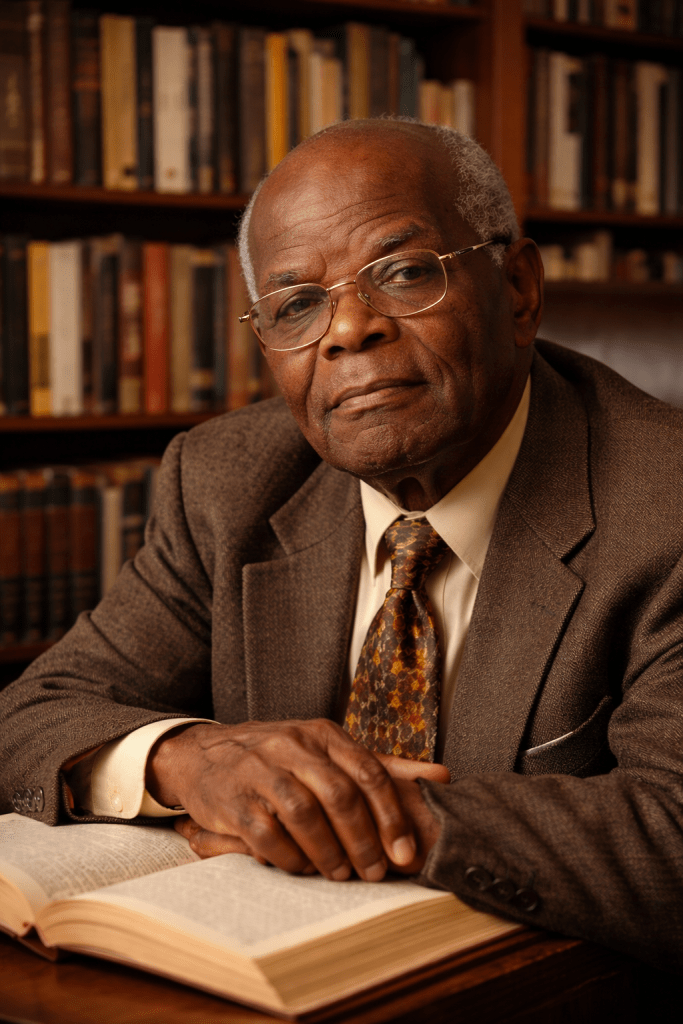
John Henrik Clarke is widely regarded as one of the most influential intellectual activists in modern Black history. A historian, educator, lecturer, and Pan-African thinker, Clarke devoted his life to correcting what he believed were distortions and omissions in Western scholarship regarding African and African-American history. Through decades of teaching, writing, and public speaking, he helped generations of Black people rediscover their historical roots and cultural identity.

Clarke was born John Henry Clark on January 1, 1915, in Union Springs, Alabama, into a family of sharecroppers. Growing up in the racially segregated South during the Jim Crow era, he witnessed firsthand the harsh realities of racism and economic hardship that shaped the lives of many African Americans during the early twentieth century. These early experiences deeply influenced his lifelong mission to understand the historical roots of oppression and to educate Black communities about their past.

Like many African Americans seeking better opportunities, Clarke migrated north during the Great Migration. As a young man, he moved to Harlem in New York City, which at the time was a vibrant center of Black intellectual, artistic, and political life. Harlem introduced Clarke to writers, activists, and scholars deeply engaged in discussions of race, identity, colonialism, and global Black liberation.

Although Clarke did not initially attend a traditional university, he became largely self-educated through extensive reading and mentorship. He studied history, philosophy, literature, and politics with a passion that would later earn him recognition as one of the most respected independent scholars of African history. His intellectual discipline demonstrated that scholarship could emerge both inside and outside formal academic institutions.

One of the individuals who inspired Clarke was the Jamaican-born Pan-African leader Marcus Garvey. Garvey’s philosophy of Black pride, self-determination, and global African unity had a profound influence on Clarke’s worldview. Garvey’s movement emphasized that people of African descent should study their history, celebrate their heritage, and build independent institutions.

Clarke was also inspired by the historian Carter G. Woodson, who founded Negro History Week, which later became Black History Month. Woodson’s work demonstrated that African-American history was worthy of serious academic study. Clarke followed in Woodson’s footsteps by expanding the study of African and diasporic history.

Another major intellectual influence on Clarke was the Senegalese scholar Cheikh Anta Diop. Diop’s research argued that ancient Egypt was fundamentally an African civilization and that African cultures played central roles in early human development. Clarke promoted Diop’s scholarship throughout the United States and helped introduce many Americans to these perspectives.

Clarke’s work centered on correcting what he believed to be Eurocentric interpretations of history. He argued that Western historical narratives often minimized Africa’s contributions to world civilization while exaggerating European influence. Clarke believed that restoring Africa’s historical role was essential for the psychological liberation of African people.

Throughout his career, Clarke emphasized that history shapes identity. He frequently explained that people who do not know their history struggle to understand their place in the world. For African Americans whose ancestry had been disrupted by slavery, historical knowledge became a tool for cultural reconstruction and empowerment.

Clarke believed that African civilizations had made significant contributions to philosophy, science, architecture, and governance long before the rise of Europe. By highlighting ancient African kingdoms and intellectual traditions, he challenged stereotypes that portrayed Africa as historically primitive or disconnected from global progress.

In the 1960s and 1970s, Clarke played a significant role in the development of Black Studies programs in American universities. At a time when many institutions had little or no coursework focused on African or African-American history, Clarke advocated for academic departments dedicated to Africana studies.

He helped establish scholarly organizations that centered African perspectives in research. One of the institutions he helped found was the African Heritage Studies Association, which was created by Black scholars who believed African history should be studied through African and diasporic intellectual frameworks.

Clarke also served as a professor at Hunter College in New York, where he taught courses on African history and the African diaspora. His lectures were widely attended and known for their passionate delivery and depth of knowledge. Many students described him as a master storyteller who could connect historical events across continents and centuries.

Beyond the classroom, Clarke was deeply committed to educating the broader community. He delivered lectures in churches, community centers, and public forums. He believed knowledge should not remain confined within universities but should reach everyday people.

Clarke’s scholarship helped many African Americans develop a stronger sense of cultural pride. By reconnecting Black communities with African history, he challenged narratives that had historically portrayed people of African descent as culturally inferior.

His work also emphasized the global nature of African history. Clarke taught that the African diaspora extended across the Americas, the Caribbean, and Europe, linking the experiences of African people across continents through shared histories of migration, slavery, and cultural resilience.

In addition to teaching, Clarke wrote numerous essays and books. Among his most influential works was African People in World History, which provided a broad overview of Africa’s historical role in global civilization. The book became widely used in Black Studies courses and community education programs.

Clarke also wrote extensively about the relationship between colonialism, slavery, and European economic development. He argued that the transatlantic slave trade and the exploitation of African resources played significant roles in the rise of Western economies.

Regarding race relations, Clarke held complex views about white people and European institutions. He often criticized systems of colonialism, racism, and imperialism that had oppressed African populations around the world. However, his critiques were primarily directed at historical systems of power rather than individual people.

Clarke believed that racism was a structural problem embedded in political and economic institutions. His writings focused on dismantling these systems through historical awareness, education, and cultural self-determination.

At the same time, Clarke maintained that true historical scholarship required honesty and critical thinking. He encouraged students to question dominant narratives and examine historical evidence carefully.

Clarke also stressed that African history should be studied within the broader context of world history. Rather than isolating Africa, he argued that African civilizations interacted with Europe, Asia, and the Middle East through trade, diplomacy, and cultural exchange.

Despite beginning his career outside traditional academic pathways, Clarke eventually received numerous honors and recognition for his scholarship. Universities awarded him honorary degrees acknowledging his contributions to the study of African history.

Clarke was also respected for his mentorship of younger scholars and activists. Many historians, writers, and educators credit Clarke with encouraging them to pursue research in African and African-diasporic history.

His influence extended beyond academia into cultural and political movements focused on Black empowerment. Clarke’s lectures often emphasized self-knowledge, cultural pride, and historical awareness as tools for liberation.

On a personal level, Clarke was married to Augusta Clarke, and together they raised children while balancing family life with his demanding career as a lecturer and writer. Despite his public role as an intellectual leader, he remained deeply committed to family and community.

Clarke continued teaching and writing well into his later years. His dedication to historical scholarship remained unwavering throughout his life. Even as new generations of scholars entered the field of Africana studies, Clarke remained a respected elder within the intellectual community.

He passed away in 1998, leaving behind a legacy that reshaped the way African history is studied and understood in the United States. Today he is remembered as one of the pioneers who helped establish Africana studies as a legitimate academic discipline.

For many scholars and students, Clarke represents the power of intellectual independence and cultural pride. His work reminds people that history is not merely a record of the past but a foundation for understanding identity and shaping the future.

Through his teaching, writing, and activism, John Henrik Clarke helped millions of people see Africa not as a footnote in world history but as one of its central chapters.


References

Clarke, J. H. (1993). African People in World History. Black Classic Press.

Clarke, J. H. (1999). Christopher Columbus and the Afrikan Holocaust: Slavery and the Rise of European Capitalism. A&B Books.

Hine, D. C., Hine, W. C., & Harrold, S. (2018). The African-American Odyssey. Pearson.

Howe, S. (1999). Afrocentrism: Mythical Pasts and Imagined Homes. Verso.

Asante, M. K. (2009). The History of Africa: The Quest for Eternal Harmony. Routledge.

Wikipedia contributors. “John Henrik Clarke.” Wikipedia, The Free Encyclopedia.

The Richmond Horror: Enslavement, and the Myth (Alleged) of the “Most Handsome Slave.”

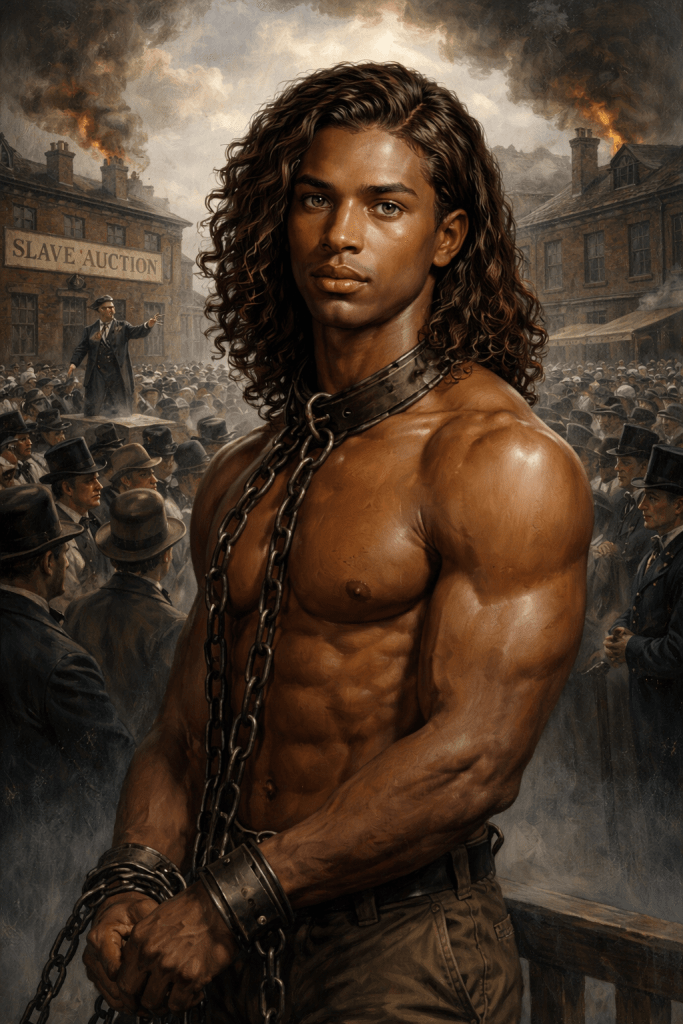
The phrase “The Richmond Horror” has circulated in various historical anecdotes and online retellings connected to the slave markets of Richmond, Virginia, during the nineteenth century. The story typically centers on an enslaved man described as extraordinarily handsome, whose appearance allegedly caused a dramatic spectacle at a slave auction. While the account is often repeated in popular storytelling, historians emphasize that the broader context of Richmond’s slave markets reveals the true horror: the commodification of human beings, where physical appearance, strength, and perceived desirability determined a person’s price and fate.

During the antebellum period, Richmond, Virginia, became one of the most significant hubs of the domestic slave trade in the United States. After the federal government banned the transatlantic slave trade in 1808, the internal trade expanded dramatically. Enslaved people were sold from Upper South states such as Virginia and Maryland to plantation regions in the Deep South, including Mississippi, Louisiana, and Alabama. Richmond’s geographic position and its transportation connections made it a central marketplace for this trade.

Within Richmond, the district known as Shockoe Bottom became infamous as a center for slave auctions, slave jails, and trading offices. Enslaved men, women, and children were held in confined quarters before being publicly sold to the highest bidder. Buyers evaluated individuals based on perceived physical attributes such as strength, youth, fertility, and sometimes physical attractiveness. The market logic of slavery reduced human bodies to commodities, assigning monetary value to traits that slaveholders believed would increase productivity or status.

Stories like the so-called Richmond Horror draw attention to the way enslaved people were objectified during these auctions. In many slave narratives and historical accounts, observers described auctions where potential buyers inspected enslaved individuals closely—checking teeth, muscles, posture, and complexion. Enslaved men who were tall, strong, and physically striking were often sold at particularly high prices because they were expected to perform intense labor or serve in visible household roles.

The legend of the “most handsome slave” describes a moment when a young man was brought to auction and stunned the crowd with his appearance. According to the story, wealthy buyers competed aggressively to purchase him, driving the price unusually high. In the narrative, the bidding war escalated into a spectacle of greed and obsession, highlighting the moral corruption embedded in the slave system. The horror, according to the story, lies in the grotesque contrast between admiration for the man’s beauty and the simultaneous willingness to treat him as property.

Although this specific anecdote is not firmly verified in archival records, it reflects a broader reality documented in historical scholarship. Slave auctions frequently turned human lives into public entertainment. Crowds gathered to watch the sale of enslaved individuals, and newspapers occasionally advertised people with descriptive language emphasizing physical traits. The emphasis on bodily features mirrored the pseudoscientific racial thinking of the nineteenth century, which attempted to categorize people based on physical appearance.

Richmond’s slave-trading infrastructure made such spectacles possible on a large scale. Traders operated offices, holding pens, and prisons where enslaved people were detained before sale. One of the most notorious facilities was Lumpkin’s Jail, sometimes called “the Devil’s Half Acre.” This compound served as a private slave jail where individuals were confined under harsh conditions while traders arranged their sale or transport to other states.

Conditions inside these slave jails were often brutal. Enslaved people were chained, crowded into small spaces, and deprived of adequate food or sanitation. Many were awaiting forced transport to plantations in the Deep South, where demand for labor was expanding alongside the growth of cotton cultivation. Richmond functioned as a staging ground for these forced migrations.

Another horror associated with the Richmond slave trade was the systematic separation of families. Parents were sold away from children, spouses from one another, and siblings from siblings. Auction blocks became sites where lifelong bonds were permanently severed in moments of financial transaction. Numerous narratives written by formerly enslaved individuals describe the emotional trauma of watching loved ones being sold to distant plantations.

The commodification of beauty within this system was not limited to men. Enslaved women were often evaluated not only for labor but also for their perceived attractiveness. This objectification exposed them to sexual exploitation and abuse by slaveholders and traders. The valuation of physical traits within the slave market thus intersected with broader systems of racial hierarchy and gendered violence.

While the exact details of the Richmond Horror story remain uncertain, its enduring presence in cultural memory reflects a deeper truth about slavery. The institution did not merely exploit labor; it transformed human beings into objects whose worth could be measured, inspected, and purchased. The fascination with the appearance of an enslaved man—combined with the eagerness to own him—captures the disturbing contradictions at the heart of the slave system.

Several enslaved people connected to the slave trade and resistance in Richmond, Virginia, are historically documented. Unlike the anonymous figure in the “Richmond Horror” legend, their names and actions appear in historical records and have become important parts of American history.


1. Gabriel Prosser

One of the most well-known enslaved men connected to Richmond was Gabriel Prosser, an enslaved blacksmith who organized a large slave rebellion in 1800. Gabriel was highly skilled and literate, which allowed him to move somewhat freely in the city and communicate with other enslaved workers.

He planned a massive uprising that would involve enslaved people from plantations surrounding Richmond. The plan was to seize weapons, capture the city, and demand freedom. Gabriel reportedly adopted the slogan “Death or Liberty.”

However, heavy rain delayed the planned revolt, and informants revealed the plot to authorities. Gabriel was captured and later executed in Richmond. Although the rebellion failed, his resistance became one of the earliest major organized revolts against American slavery.


2. Henry Box Brown

Another remarkable figure connected to Richmond was Henry Brown, later known as “Henry Box Brown.” He was an enslaved man who worked in a tobacco warehouse.

In 1849, desperate to escape slavery after his wife and children were sold away, Brown devised an extraordinary plan. With the help of abolitionist friends, he shipped himself in a wooden crate by mail from Richmond to Philadelphia. The journey took about 27 hours.

When the box was opened by abolitionists in Philadelphia, Brown reportedly stood up and began singing a hymn of freedom. His daring escape made him famous among abolitionists, and he later became a public speaker advocating against slavery.


3. John Jasper

John Jasper was born into slavery in Virginia but later became one of the most influential Black preachers of the nineteenth century.

After emancipation, Jasper founded the Sixth Mount Zion Baptist Church in Richmond, where he became a powerful orator. Thousands attended his sermons, and he became known throughout the region for his charismatic preaching and strong theological messages.

His life reflected the transition from slavery to freedom and the leadership roles many formerly enslaved people assumed in Black communities after the Civil War.


The Real Horror of Richmond

While legends like the “Richmond Horror” circulate online, the verified history of Richmond’s slave trade reveals a much deeper tragedy. The district known as Shockoe Bottom served as one of the largest slave markets in the United States. Enslaved people were imprisoned in facilities such as Lumpkin’s Jail, where traders held men, women, and children before selling them to plantations in the Deep South.

Historians estimate that hundreds of thousands of enslaved people were sold or transported through Virginia during the domestic slave trade. Families were separated, individuals were chained together in forced marches called coffles, and human beings were treated as commodities.

Today, Richmond continues to confront this past through historical research, memorialization, and preservation efforts that honor the lives of those who endured slavery and fought for freedom.

Modern historians emphasize that the true horror of Richmond lies not in a single dramatic auction but in the scale of the trade that occurred there. Historians estimate that hundreds of thousands of enslaved people were transported out of Virginia through the domestic slave trade during the nineteenth century. Richmond played a central role in that forced migration, sending countless individuals to plantations throughout the American South.

Today, scholars, archaeologists, and community activists work to preserve the historical memory of places like Shockoe Bottom. Efforts have been made to protect burial grounds, interpret historical sites, and educate the public about Richmond’s role in the domestic slave trade. These initiatives aim to ensure that the experiences of the enslaved are not erased or forgotten.

The legend of the Richmond Horror, whether literal or symbolic, ultimately reminds us of the dehumanizing nature of slavery. In a system where beauty, strength, and youth could raise the price of a human being, admiration and cruelty coexisted in the same moment. The spectacle of an auction—where a person’s body could inspire awe while simultaneously being sold—reveals the moral contradictions that defined the institution of slavery in the United States.


References

Berlin, I. (2003). Generations of captivity: A history of African-American slaves. Harvard University Press.

Campbell, E. B. (2007). Richmond’s unhealed history. Brandylane Publishers.

Fogel, R. W., & Engerman, S. L. (1995). Time on the cross: The economics of American Negro slavery. W.W. Norton & Company.

Johnson, W. (1999). Soul by soul: Life inside the antebellum slave market. Harvard University Press.

Rothman, A. (2005). Slave country: American expansion and the origins of the Deep South. Harvard University Press.

Tarter, B. (2016). The Grandees of government: The origins and persistence of undemocratic politics in Virginia. University of Virginia Press.

National Park Service. (n.d.). Shockoe Bottom and the Richmond slave trade. U.S. Department of the Interior.

Johnson, W. (1999). Soul by soul: Life inside the antebellum slave market. Harvard University Press.

Library of Virginia. (n.d.). Gabriel’s Conspiracy (1800). Retrieved from https://www.lva.virginia.gov

Library of Virginia. (n.d.). Henry “Box” Brown. Retrieved from https://www.lva.virginia.gov

National Park Service. (n.d.). Shockoe Bottom and the Richmond slave trade. U.S. Department of the Interior.

Smithsonian Institution. (2013). Lumpkin’s Jail and the slave trade in Richmond. Smithsonian Magazine.

Dilemma: Redlining

The Architecture of Racial Segregation in American Housing

Redlining refers to a discriminatory practice in which financial institutions, lenders, insurers, and government agencies systematically denied or limited access to loans, mortgages, and other financial services to residents of certain neighborhoods based on race or ethnicity. The practice disproportionately targeted Black communities and other minority populations, reinforcing residential segregation and economic inequality across the United States. Redlining became one of the most enduring structural mechanisms used to maintain racial hierarchy in housing, wealth accumulation, and urban development.

The term “redlining” originated from the literal red lines drawn on government-sponsored maps to designate neighborhoods considered risky for mortgage lending. These maps were produced by the Home Owners’ Loan Corporation during the 1930s as part of federal housing initiatives implemented during the Great Depression. Neighborhoods with large Black populations were almost automatically labeled hazardous for investment, regardless of the income or stability of the residents who lived there.

Redlining emerged during the era of sweeping federal housing reform under the Franklin D. Roosevelt administration. In 1933, the U.S. government created the Home Owners’ Loan Corporation to refinance mortgages and prevent mass foreclosures. However, the agency developed color-coded maps to guide lending decisions. Areas marked in green were considered the best investments, while areas marked in red—often where Black Americans lived—were deemed undesirable.

These classifications were further reinforced by policies associated with the Federal Housing Administration (FHA), which was established in 1934. The FHA promoted homeownership through federally insured mortgages but refused to insure loans in neighborhoods with Black residents. This meant that white families could more easily obtain mortgages and build wealth through homeownership, while Black families were largely excluded from these opportunities.

Redlining was not merely an economic practice but a social system that institutionalized racial segregation. Mortgage lenders, real estate brokers, and city planners used these maps to guide investment decisions. Even middle-class Black neighborhoods with stable property values were marked as hazardous. As a result, banks refused to provide loans to Black homeowners seeking to buy, repair, or refinance their properties.

White homeowners and real estate developers frequently benefited from redlining policies. Suburban developments constructed after World War II often included racially restrictive covenants that explicitly prohibited the sale of homes to Black buyers. Developments such as Levittown became symbols of postwar suburban prosperity for white families while simultaneously excluding Black Americans from homeownership opportunities.

Because Black families were prevented from accessing traditional mortgage financing, many were forced into exploitative housing arrangements such as contract buying. Under these arrangements, buyers paid inflated prices for homes but did not gain ownership until the entire payment was completed. Missing even a single payment could result in eviction and loss of all previously paid funds, leaving many Black families financially devastated.

Redlining also restricted Black access to suburban neighborhoods, forcing many African Americans to remain concentrated in urban centers. Cities like Chicago, Detroit, and Baltimore became emblematic of racially segregated housing patterns produced by redlining policies. These patterns shaped the demographic landscape of American cities for generations.

One of the most devastating effects of redlining was its impact on generational wealth. Homeownership is one of the primary mechanisms through which American families accumulate wealth. By denying Black families access to mortgage credit, redlining prevented them from building home equity that could be passed down to future generations.

Redlining also affected neighborhood infrastructure and public services. Communities labeled as hazardous received fewer public investments, including reduced funding for schools, parks, and transportation. Businesses were less likely to open in these areas because banks refused to provide commercial loans, leading to economic stagnation in many Black neighborhoods.

Educational inequality also emerged as a secondary consequence of redlining. Because public school funding in the United States is often tied to local property taxes, neighborhoods with declining property values—often those affected by redlining—experienced underfunded schools. This created a cycle of disadvantage that affected educational attainment among Black children.

Health disparities also correlate with historically redlined neighborhoods. Researchers have found that communities once marked as hazardous often experience higher rates of environmental pollution, limited access to healthcare facilities, and increased prevalence of chronic illnesses such as asthma and hypertension.

Although redlining was formally outlawed with the passage of the Fair Housing Act of 1968, its legacy remains deeply embedded in the American housing system. The law prohibited discrimination in housing based on race, color, religion, or national origin, yet the structural inequalities created by decades of redlining have proven difficult to dismantle.

Modern forms of housing discrimination continue to resemble redlining practices. Some lenders engage in “reverse redlining,” targeting minority communities with predatory loans and subprime mortgages. These financial products often carry higher interest rates and fees, increasing the risk of foreclosure.

Urban scholars have noted that historically redlined neighborhoods still exhibit lower property values compared to areas that were graded favorably in the 1930s. This demonstrates how past policies continue to influence contemporary economic outcomes and spatial inequality.

Redlining also shaped patterns of urban disinvestment that contributed to the decline of many American inner cities during the mid-twentieth century. As white families moved to suburbs with government-backed mortgages, tax bases in urban Black communities declined, limiting municipal resources for infrastructure and public services.

Many historians and sociologists argue that redlining represents one of the clearest examples of structural racism in American policy. Unlike individual acts of prejudice, redlining was embedded within federal institutions, banking systems, and real estate practices, making it a systemic barrier to economic equality.

In recent years, scholars and policymakers have called for reparative housing policies to address the enduring legacy of redlining. Proposals include expanded access to homeownership programs, targeted investments in historically marginalized neighborhoods, and reforms to lending practices to promote equitable access to credit.

Understanding redlining is essential for comprehending the racial wealth gap in the United States. While individual success stories exist, structural barriers created by discriminatory policies significantly shaped economic outcomes for generations of Black Americans.

Ultimately, redlining reveals how government policy, financial institutions, and social attitudes combined to produce lasting racial inequality. Its legacy continues to influence patterns of housing segregation, economic mobility, and urban development in modern American society.


References

Aaronson, D., Hartley, D., & Mazumder, B. (2017). The effects of the 1930s HOLC “redlining” maps. Federal Reserve Bank of Chicago.

Jackson, K. T. (1985). Crabgrass frontier: The suburbanization of the United States. Oxford University Press.

Massey, D. S., & Denton, N. A. (1993). American apartheid: Segregation and the making of the underclass. Harvard University Press.

Rothstein, R. (2017). The color of law: A forgotten history of how our government segregated America. Liveright Publishing.

Satter, B. (2009). Family properties: Race, real estate, and the exploitation of Black urban America. Metropolitan Books.

U.S. Department of Housing and Urban Development. (2023). History of housing discrimination and redlining in America. HUD Archives.

Urban Renewal and the Hidden Architecture of Displacement: From “Negro Removal” to Modern Segregation.

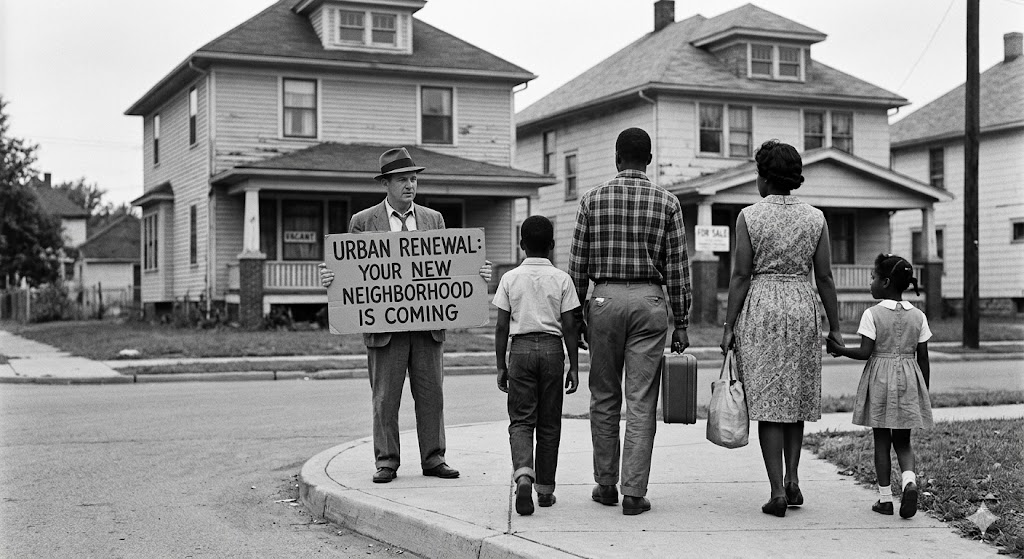
Urban renewal was a federal policy initiative in the United States during the mid-twentieth century that aimed to modernize cities by removing what officials labeled “blighted” neighborhoods and replacing them with new infrastructure, commercial developments, and highways. While the program was publicly framed as a strategy for economic progress and modernization, it disproportionately targeted Black communities. Critics, civil rights leaders, and historians began referring to the program as “Negro Removal” because of the widespread displacement of Black residents and the destruction of thriving Black neighborhoods.

Urban renewal programs were largely facilitated through the Housing Act of 1949, which provided federal funding to cities to acquire and redevelop urban land. Local governments were given authority to identify neighborhoods deemed deteriorated and to clear those areas for redevelopment projects. In practice, many of the communities targeted for demolition were predominantly Black neighborhoods with long-established social, cultural, and economic networks.

Cities such as Detroit, Atlanta, New Orleans, and St. Louis experienced significant displacement under urban renewal initiatives. Entire districts were demolished to make way for highways, sports arenas, government buildings, and private development projects. Although officials often promised that displaced residents would receive improved housing opportunities, many families were forced into overcrowded and segregated neighborhoods with limited economic resources.

One of the most famous examples of urban renewal’s destructive impact occurred in the Black community of Black Bottom neighborhood. Once a vibrant cultural and economic hub, Black Bottom was home to businesses, churches, jazz clubs, and thousands of residents. In the 1950s and 1960s, much of the neighborhood was demolished to construct freeways and urban development projects, displacing large numbers of Black families.

Urban renewal often worked in tandem with another discriminatory housing practice known as blockbusting. Blockbusting was a tactic used by real estate agents who deliberately spread fear among white homeowners by warning them that Black families were moving into their neighborhoods. Realtors suggested that property values would rapidly decline once Black residents arrived, encouraging white homeowners to sell their homes quickly—often at below-market prices.

After purchasing these homes cheaply, speculators resold them to Black families at significantly inflated prices. This practice accelerated racial turnover in neighborhoods while generating enormous profits for real estate investors. The racial panic associated with blockbusting contributed to widespread “white flight,” the migration of white residents from urban areas to suburban communities.

White flight dramatically reshaped the demographic structure of American cities. As white families moved to suburbs, they often gained access to federally backed mortgages and improved public services. Meanwhile, Black residents left behind in urban areas experienced declining tax bases, underfunded schools, and limited economic investment.

Highway construction played a major role in the displacement of Black communities during the twentieth century. Federal infrastructure programs, particularly those associated with the Federal-Aid Highway Act of 1956, funded the construction of interstate highways that frequently cut through minority neighborhoods. Planners often chose these locations because they were politically easier to acquire and faced less organized resistance.

The construction of highways destroyed thousands of homes, businesses, and community institutions within Black neighborhoods. These infrastructure projects divided communities physically and socially, making it more difficult for residents to maintain economic and cultural networks.

In cities such as Miami, Los Angeles, and Nashville, major highways were built directly through historically Black districts. These projects disrupted thriving commercial corridors and displaced thousands of residents who often received inadequate compensation for their lost property.

The consequences of these policies extended far beyond housing displacement. The destruction of Black neighborhoods also dismantled locally owned businesses, professional networks, and cultural institutions that had sustained Black economic independence.

School district zoning also reinforced segregation patterns created by housing discrimination and urban renewal. Because public school boundaries are often determined by residential neighborhoods, segregated housing patterns translated directly into segregated educational systems.

School district zoning inequality meant that children living in historically Black neighborhoods were often assigned to underfunded schools with fewer educational resources. Meanwhile, suburban districts—often populated primarily by white families—benefited from higher property tax revenues and stronger funding structures.

These educational disparities created long-term consequences for social mobility. Students attending underfunded schools frequently faced larger class sizes, fewer advanced academic programs, and limited access to college preparatory resources.

Another system that reinforced racial control following the abolition of slavery was convict leasing. Convict leasing emerged in the late nineteenth century when Southern states began leasing incarcerated individuals to private businesses for labor.

Under this system, prisoners—many of whom were Black men—were forced to work in mines, farms, railroads, and industrial operations. Historians often describe convict leasing as a form of re-enslavement because prisoners were subjected to harsh labor conditions without pay.

The convict leasing system disproportionately targeted Black men through discriminatory policing and legal practices. Minor offenses such as vagrancy or loitering were frequently used to arrest Black individuals, who were then sentenced to forced labor under leasing agreements.

Unlike traditional slavery, convict leasing allowed states to profit from incarcerated labor while avoiding the responsibility of maintaining prisoners’ welfare. Private companies that leased prisoners often subjected them to brutal conditions, leading to high rates of injury and death.

Although convict leasing formally declined in the early twentieth century, many scholars argue that elements of this system persist through modern prison labor practices and mass incarceration patterns.

The combined effects of urban renewal, blockbusting, highway construction, school zoning inequality, and convict leasing reveal how multiple systems worked together to reinforce racial inequality in American society. These policies were not isolated incidents but interconnected mechanisms that shaped housing patterns, economic opportunities, and educational access.

Understanding these historical practices helps explain the persistence of racial disparities in wealth, housing, and education today. The destruction of Black neighborhoods and the exclusion of Black families from economic opportunities contributed to the racial wealth gap that continues to exist in the United States.

Today, scholars and policymakers increasingly examine these policies as examples of structural racism embedded within public institutions. By studying these historical patterns, researchers hope to develop strategies that promote more equitable housing, education, and economic systems.

Ultimately, the history of urban renewal and related practices demonstrates how policies intended to modernize cities often produced lasting harm for marginalized communities. The legacy of these decisions continues to influence the social and economic landscape of American cities today.


References

Alexander, M. (2012). The new Jim Crow: Mass incarceration in the age of colorblindness. New York: The New Press.

Foner, E. (1988). Reconstruction: America’s unfinished revolution, 1863–1877. New York: Harper & Row.

Hirsch, A. R. (1983). Making the second ghetto: Race and housing in Chicago 1940–1960. Chicago: University of Chicago Press.

Jackson, K. T. (1985). Crabgrass frontier: The suburbanization of the United States. Oxford University Press.

Rothstein, R. (2017). The color of law: A forgotten history of how our government segregated America. Liveright Publishing.

Sugrue, T. J. (2014). The origins of the urban crisis: Race and inequality in postwar Detroit. Princeton University Press.

Blackmon, D. A. (2008). Slavery by another name: The re-enslavement of Black Americans from the Civil War to World War II. Anchor Books.

U.S. Department of Housing and Urban Development. (2023). History of housing discrimination and segregation in the United States.

Wilson, W. J. (2012). The truly disadvantaged: The inner city, the underclass, and public policy. University of Chicago Press.

Contract Selling – The Hidden Housing Exploitation of Black America

Contract selling was a predatory housing practice that targeted Black families who were excluded from traditional mortgage financing due to redlining and racial discrimination. Because banks refused to lend to Black homebuyers in many neighborhoods, African Americans were forced to purchase homes through private contracts rather than legitimate mortgages. These contracts allowed sellers to exploit Black buyers by charging inflated prices and denying them legal protections normally associated with homeownership.

This practice became widespread in cities such as Chicago, Detroit, Cleveland, and Philadelphia during the mid-twentieth century. In these urban centers, real estate investors realized that the housing restrictions imposed by redlining created a desperate market among Black families seeking stable housing. Investors capitalized on this demand by purchasing homes cheaply and reselling them to Black buyers at drastically inflated prices through installment contracts.

Unlike a traditional mortgage, contract buyers did not receive the title to the home until the full purchase price was paid. This meant that even after years of payments, the buyer technically did not own the property. If a payment was missed—even once—the seller could cancel the contract, evict the family, and keep all previous payments.

Because of these terms, contract selling created a cycle of economic exploitation. Black families paid far more for homes than their white counterparts while receiving fewer legal protections. In many cases, homes were sold for two or three times their actual market value.

The practice was closely connected to the discriminatory lending policies enforced by institutions such as the Federal Housing Administration and the Home Owners’ Loan Corporation. These agencies systematically refused to insure mortgages in Black neighborhoods, forcing African Americans into informal and often predatory housing arrangements.

White real estate speculators played a central role in this system. Many investors purchased homes in white neighborhoods after white residents fled due to racial panic—a process known as blockbusting. Once these properties were acquired cheaply, they were sold to Black families through exploitative contracts.

In cities like Chicago, historians estimate that thousands of Black families were trapped in these contracts between the 1950s and 1970s. Entire neighborhoods became sites of financial extraction where Black residents paid excessive housing costs without building equity.

One of the most tragic aspects of contract selling was the illusion of homeownership it created. Families believed they were purchasing homes and investing in their futures, yet the legal structure of the contracts ensured that wealth accumulation remained extremely difficult.

These practices also resulted in housing instability. Because contract sellers remained the legal owners, they were not obligated to maintain the properties. Repairs and maintenance were usually the responsibility of the buyer, even though the buyer did not yet legally own the home.

The economic consequences were severe. Families often spent decades paying off contracts only to lose the property if financial hardship occurred. When this happened, sellers could resell the same home repeatedly to new buyers, profiting multiple times from the same property.

The system eventually sparked organized resistance. In the late 1960s, activists in Chicago formed the Contract Buyers League, a grassroots organization that fought against predatory housing contracts. Members demanded fair prices, mortgage conversions, and legal protections.

The movement gained national attention and forced some lenders to renegotiate contracts with Black homeowners. Although not all families received justice, the activism exposed the hidden exploitation occurring within the housing market.

Contract selling also played a major role in widening the racial wealth gap in the United States. Because Black families paid inflated housing prices without building equity, they were unable to accumulate wealth in the same way white homeowners did through traditional mortgages.

Scholars argue that the wealth lost through these exploitative contracts amounts to billions of dollars in modern value. This represents generational wealth that could have been passed down through property ownership.

The system also reinforced residential segregation. Since Black families were limited to certain neighborhoods and forced into exploitative housing arrangements, economic mobility was severely restricted.

Even after the passage of the Fair Housing Act in 1968, the economic damage caused by decades of contract selling continued to affect Black communities. Many neighborhoods continue to experience lower property values and higher rates of housing instability.

Today, historians view contract selling as one of the clearest examples of how discriminatory housing policies created structural barriers to Black wealth accumulation. It demonstrates how racism within financial institutions extended beyond overt segregation into more subtle and hidden economic practices.

Understanding this history is essential for recognizing how housing inequality developed in the United States. The legacy of contract selling continues to shape the economic landscape of many Black communities.

Ultimately, contract selling represents a painful chapter in American housing history—one in which the dream of homeownership was manipulated and weaponized against those who had already been excluded from the mainstream financial system.


References

Coates, T.-N. (2014). The case for reparations. The Atlantic. https://www.theatlantic.com

Hirsch, A. R. (1983). Making the second ghetto: Race and housing in Chicago 1940–1960. Chicago: University of Chicago Press.

Jackson, K. T. (1985). Crabgrass frontier: The suburbanization of the United States. New York: Oxford University Press.

Rothstein, R. (2017). The color of law: A forgotten history of how our government segregated America. New York: Liveright Publishing.

Satter, B. (2009). Family properties: Race, real estate, and the exploitation of Black urban America. New York: Metropolitan Books.

Taylor, K.-Y. (2019). Race for profit: How banks and the real estate industry undermined Black homeownership. Chapel Hill: University of North Carolina Press.

U.S. Department of Housing and Urban Development. (2023). History of housing discrimination and redlining in America. Washington, DC: HUD Office of Policy Development and Research.

Mapping Inequality Project. (2023). Redlining in New Deal America. University of Richmond Digital Scholarship Lab.