Tag Archives: hate

Beauty Series: The Burden of Being Beautiful

Beauty has long been celebrated as a gift, yet in modern society, it often functions as a burden disguised as privilege. Those deemed beautiful are elevated, admired, and desired, but they are also scrutinized, objectified, and reduced to appearance. What is praised publicly often becomes a private weight, shaping identity, relationships, and self-worth in complex and often damaging ways.

Sociologists describe beauty as a form of social capital. Attractive individuals frequently receive preferential treatment in employment, education, and social interactions. This phenomenon, known as the “halo effect,” creates the illusion that beauty guarantees ease, while concealing the psychological costs attached to constant evaluation and expectation.

Beauty becomes a sin when it is idolized. Cultures that worship appearance teach individuals that their value is conditional, dependent on youth, symmetry, and desirability. This idolatry transforms the body into currency, forcing beautiful individuals to maintain an image rather than develop a self.

Those considered beautiful often experience a loss of agency. Their bodies are perceived as public property, inviting unsolicited attention, entitlement, and invasion of boundaries. Research on objectification shows that being constantly watched and appraised can lead to self-surveillance, anxiety, and diminished cognitive performance.

The burden of beauty also appears in relational dynamics. Attractive individuals are frequently desired but not deeply known. Assumptions about their character, intelligence, or morality replace genuine curiosity, resulting in relationships built on projection rather than truth.

Psychological studies indicate that highly attractive individuals are often stereotyped as shallow or less competent, particularly women. While beauty opens doors, it simultaneously invites suspicion and resentment, creating a paradox where advantage and disadvantage coexist.

Beauty becomes a moral accusation in societies shaped by envy. Attractive people are often blamed for the attention they did not seek and punished for privileges they did not assign themselves. This resentment manifests in social exclusion, rivalry, and character attacks.

Gender intensifies the burden. Women, especially, are socialized to understand beauty as both power and threat. A beautiful woman must manage her appearance carefully to avoid being labeled arrogant, promiscuous, or intimidating. This double bind forces constant self-policing.

Race further complicates the experience of beauty. Black beauty, in particular, has been historically exoticized, erased, or fetishized. When Black women are recognized as beautiful, it is often through Eurocentric standards, reinforcing colorism and internalized hierarchies within marginalized communities.

Media plays a central role in shaping beauty sins. Social media platforms commodify faces and bodies through likes, algorithms, and monetization. Beauty becomes performance, and visibility becomes validation, creating a cycle of comparison and insecurity even among those who benefit most from aesthetic approval.

The pressure to remain beautiful is relentless. Aging, weight changes, illness, and motherhood threaten social value in appearance-driven cultures. Studies show that fear of losing beauty contributes to anxiety, disordered eating, and cosmetic dependency.

Beauty can also silence pain. Attractive individuals are often assumed to be happy, desired, and fulfilled, making their suffering invisible or invalidated. This expectation discourages vulnerability and reinforces emotional isolation.

In professional settings, beauty can undermine credibility. Research demonstrates that attractive women in leadership roles are often taken less seriously, while attractive men may be perceived as less authoritative depending on context. Beauty becomes a liability where competence is questioned.

Faith traditions have long warned against the elevation of appearance. Scripture emphasizes that outward beauty fades, while character endures. When beauty becomes identity, it displaces virtues such as wisdom, humility, and integrity.

The burden of beauty is ultimately a spiritual one. Identity rooted in appearance is fragile, easily shaken by time and comparison. When self-worth is externalized, peace becomes impossible to sustain.

Beauty sins are not committed by individuals alone but by systems that reward appearance while neglecting humanity. Blaming the beautiful obscures the deeper injustice of cultures that commodify bodies and monetize insecurity.

Healing begins with disentangling worth from aesthetics. Psychological research consistently shows that a self-concept grounded in values, relationships, and purpose leads to greater well-being than appearance-based identity.

Reclaiming beauty requires redefining it. Beauty can be appreciated without being worshiped, admired without being exploited. This reframing allows beauty to exist as expression rather than obligation.

The burden of being beautiful reveals a paradox: what society elevates most often enslaves first. Until cultures learn to value people beyond appearance, beauty will remain both a blessing and a burden.

True liberation occurs when beauty is no longer a measure of worth but a fleeting attribute within a whole and complex human identity. Only then can beauty cease being a sin and become simply human.

References

Fredrickson, B. L., & Roberts, T. A. (1997). Objectification theory: Toward understanding women’s lived experiences and mental health risks. Psychology of Women Quarterly, 21(2), 173–206.

Eagly, A. H., Ashmore, R. D., Makhijani, M. G., & Longo, L. C. (1991). What is beautiful is good, but… A meta-analytic review of research on the physical attractiveness stereotype. Psychological Bulletin, 110(1), 109–128.

Langlois, J. H., et al. (2000). Maxims or myths of beauty? A meta-analytic and theoretical review. Psychological Bulletin, 126(3), 390–423.

Calogero, R. M., Tantleff-Dunn, S., & Thompson, J. K. (2011). Self-objectification in women: Causes, consequences, and counteractions. American Psychological Association.

Hunter, M. (2007). The persistent problem of colorism: Skin tone, status, and inequality. Sociology Compass, 1(1), 237–254.

Twenge, J. M. (2014). Generation me. Atria Books.
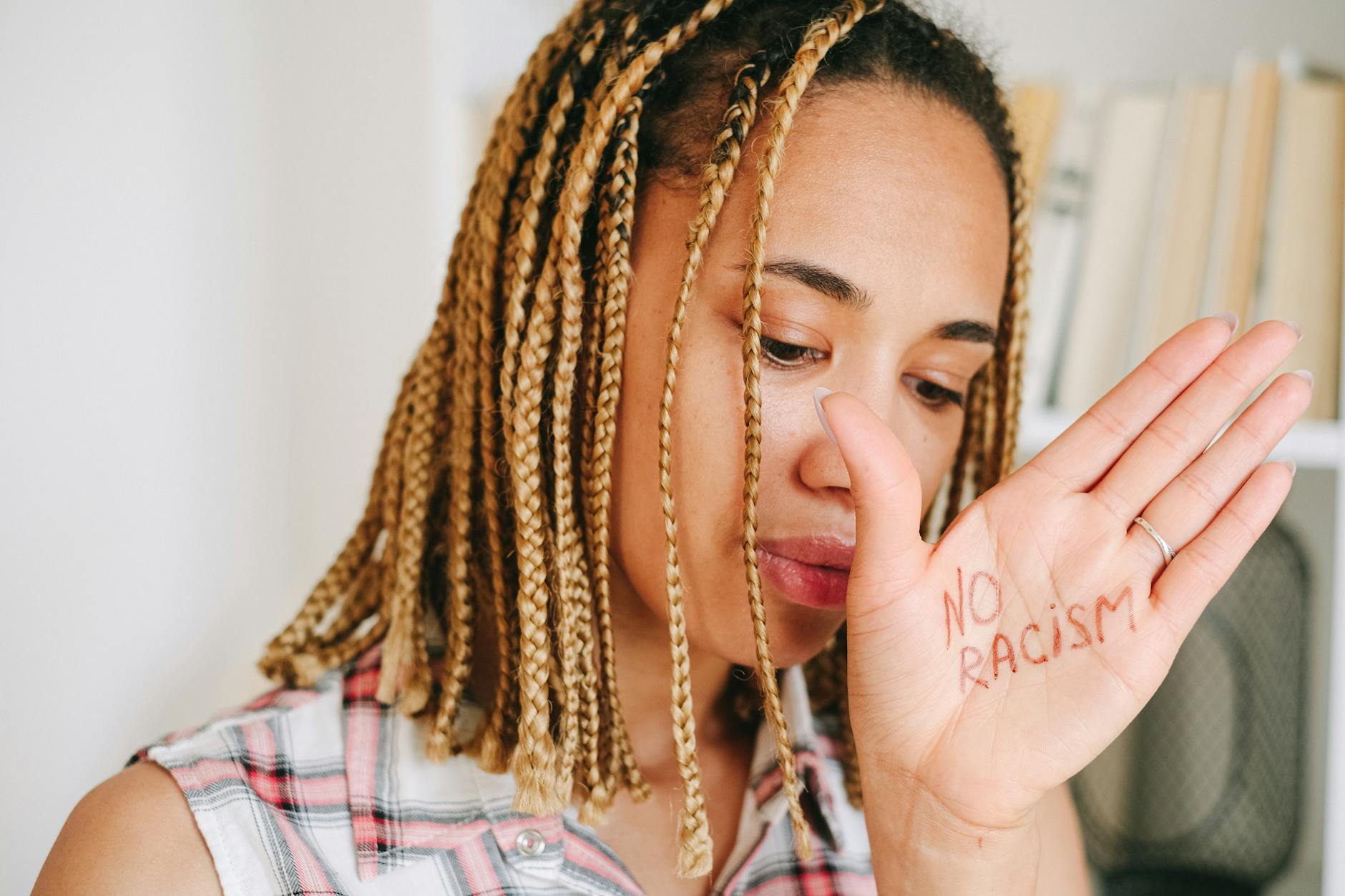
Active and Covert Racism

Photo by Ivan Samkov on Pexels.com

Racism operates in both overt and subtle forms—each reinforcing the other to sustain inequality. Active racism refers to direct, intentional acts of racial discrimination, hostility, or violence. Covert racism, by contrast, functions subtly, often hidden beneath social norms, coded language, or institutional practices that appear neutral on the surface. Both are destructive, yet covert racism can be more insidious because it disguises itself within respectability, making it harder to identify, challenge, or dismantle (Tatum, 2017).

Active racism is the most visible and aggressive form of racial prejudice. It includes explicit actions such as hate crimes, racial slurs, segregationist behavior, and overt discrimination in hiring, housing, and public accommodations. Historically, active racism was embodied in slavery, Jim Crow laws, and colonial conquest—systems that openly justified racial hierarchy through law, violence, and pseudoscience (Feagin, 2013).

The modern forms of active racism continue through white supremacist movements, racially motivated attacks, and hate speech, particularly amplified by digital media. Social platforms have become breeding grounds for racial hatred, often protected under the guise of “free speech.” These expressions remind us that active racism is not a relic but a residue—one that mutates across generations (Daniels, 2018).

Covert racism, often referred to as passive racism or subtle racism, manifests through indirect behaviors, coded language, and implicit biases that maintain racial hierarchies without overt hostility. It thrives in environments that claim to be “colorblind” yet perpetuate inequality through silence, avoidance, or denial (Bonilla-Silva, 2014).

Examples of covert racism include discriminatory hiring practices masked as “cultural fit,” biased media narratives, and educational curricula that center whiteness as the norm. It also includes everyday microaggressions—small, often unintentional comments or behaviors that communicate racial inferiority, such as questioning someone’s intelligence or assuming their success is an exception (Sue et al., 2007).

Active racists are those who consciously engage in racism. They believe in racial superiority and act upon it through deliberate harm or exclusion. Covert racists, however, may see themselves as “not racist” while unconsciously supporting racist structures through complicity or inaction. The silence of the latter allows the violence of the former to persist (DiAngelo, 2018).

In the workplace, active racism might appear as open hostility toward employees of color, whereas covert racism might appear as systematic underpromotion, exclusion from networks, or the tokenization of minority staff to showcase “diversity.” Both forms undermine trust, belonging, and professional advancement for people of color (Wingfield, 2019).

In education, active racism historically took the form of segregation and exclusion, while covert racism persists through biased testing, Eurocentric curricula, and lower expectations for Black and brown students. These hidden practices sustain inequities under the appearance of meritocracy (Ladson-Billings, 2006).

Media representation also reflects both forms. Active racism can appear in explicitly racist caricatures or storylines that demonize people of color. Covert racism, however, operates through underrepresentation, stereotypical casting, or framing white experiences as universal (hooks, 1992).

Religious institutions have often participated in both active and covert racism. Historically, theology was used to justify slavery and colonialism. Today, covert racism continues when churches remain silent on racial injustice or treat racial reconciliation as symbolic rather than systemic (Cone, 1984).

Active racism thrives on visible hostility, while covert racism thrives on the illusion of neutrality. The latter often cloaks itself in politeness, professional language, or institutional bureaucracy—making it difficult to call out without social backlash. Its quietness gives it longevity (Ahmed, 2012).

Covert racism also includes implicit bias, the unconscious associations individuals hold about race. Research shows that these biases affect how people evaluate competence, trustworthiness, or threat based on skin color—even among those who consciously reject racism (Greenwald & Krieger, 2006).

Another form of covert racism is colorblind ideology, which denies the relevance of race altogether. While it may seem egalitarian, colorblindness ignores the historical and structural realities that produce racial disparities. By refusing to see race, this ideology refuses to see racism (Bonilla-Silva, 2014).

The criminal justice system reflects both active and covert racism. Active racism is evident in racial profiling and police brutality. Covert racism is embedded in sentencing disparities, cash bail systems, and juror selection—all mechanisms that disproportionately affect people of color under a façade of neutrality (Alexander, 2010).

Healthcare also reveals this duality. Active racism once appeared in medical experimentation on enslaved Africans, such as the procedures performed by J. Marion Sims. Today, covert racism persists through the dismissal of Black patients’ pain, lack of representation in medical research, and inequitable access to treatment (Washington, 2006).

In housing and urban development, active racism took the form of redlining and racial covenants that excluded Black families from homeownership. Covert racism continues through zoning laws, lending practices, and gentrification that displace long-standing communities of color while masking discrimination behind economics (Rothstein, 2017).

Covert racism is often more dangerous than active racism because it can be denied. Those who benefit from it rarely feel responsible, allowing inequality to persist without confrontation. It hides behind policies, euphemisms, and “neutral” systems that reproduce racial stratification (Bonilla-Silva, 2014).

To combat racism effectively, both forms must be recognized and confronted. Focusing solely on overt acts ignores the deeper social structures that perpetuate racial inequality. Anti-racism demands not only condemning active hate but dismantling the silent systems that enable it (Kendi, 2019).

True racial healing begins with acknowledgment. Naming covert racism disrupts its invisibility; exposing active racism confronts its violence. Both require courage, accountability, and education. Only when both are addressed can equity move from theory to transformation.

In the end, active and covert racism function as two sides of the same coin—one loud and unapologetic, the other polite and persistent. The visible wound may scar, but the invisible one festers. Dismantling both requires a collective willingness to see, to speak, and to act against injustice in all its disguises.


References

Ahmed, S. (2012). On being included: Racism and diversity in institutional life. Duke University Press.

Alexander, M. (2010). The new Jim Crow: Mass incarceration in the age of colorblindness. The New Press.

Bonilla-Silva, E. (2014). Racism without racists: Color-blind racism and the persistence of racial inequality in America. Rowman & Littlefield.

Cone, J. H. (1984). For my people: Black theology and the Black church. Orbis Books.

Daniels, J. (2018). Cyber racism: White supremacy online and the new attack on civil rights. Rowman & Littlefield.

DiAngelo, R. (2018). White fragility: Why it’s so hard for White people to talk about racism. Beacon Press.

Feagin, J. R. (2013). Systemic racism: A theory of oppression. Routledge.

Greenwald, A. G., & Krieger, L. H. (2006). Implicit bias: Scientific foundations. California Law Review, 94(4), 945–967.

hooks, b. (1992). Black looks: Race and representation. South End Press.

Kendi, I. X. (2019). How to be an antiracist. One World.

Ladson-Billings, G. (2006). From the achievement gap to the education debt. Educational Researcher, 35(7), 3–12.

Rothstein, R. (2017). The color of law: A forgotten history of how our government segregated America. Liveright Publishing.

Sue, D. W., Capodilupo, C. M., & Holder, A. M. B. (2007). Racial microaggressions in everyday life. American Psychologist, 62(4), 271–286.

Tatum, B. D. (2017). Why are all the Black kids sitting together in the cafeteria? Basic Books.

Washington, H. A. (2006). Medical apartheid: The dark history of medical experimentation on Black Americans from colonial times to the present. Doubleday.

Wingfield, A. H. (2019). Flatlining: Race, work, and health care in the new economy. University of California Press.

Recognizing False Concepts of Love

Photo by Kamila Rodrigues on Pexels.com

Love ❤️ is one of the most powerful forces in human experience, yet it is also one of the most misunderstood. Society often distorts the true meaning of love, presenting counterfeits 💔 that leave individuals emotionally wounded and spiritually depleted. Recognizing false concepts of love is essential for maintaining healthy relationships 💞, spiritual growth 🙏, and psychological well-being 🧠. The Bible reminds us that “God is love” (1 John 4:8, KJV), establishing that real love reflects God’s character. Anything contrary to His nature is not love but deception.

💔 What is not love must first be identified to understand love correctly. Infatuation, control, abuse, and selfishness masquerade as love but fail the test of patience, kindness, and selflessness found in 1 Corinthians 13:4-7 (KJV). When a person manipulates, isolates, or demands rather than gives, this is not love but bondage. Psychology agrees 🧠 that love cannot thrive where coercion or fear 😨 is present, as love promotes safety, trust 🤝, and mutual respect (Hendrick & Hendrick, 2006).

🎭 Trickery of love often comes in the form of words without actions. Many people say “I love you” ❤️, but their behavior contradicts their statement. Love is not simply a feeling or a phrase—it is verified by actions 💪. Jesus taught, “If ye love me, keep my commandments” (John 14:15, KJV). Likewise, true love in human relationships is demonstrated through consistency, loyalty 🛡️, and care. Empty words or “love bombing” 💣 followed by neglect or abuse are signs of manipulation rather than affection.

🔥 Lust vs. Love is a confusion many face. Lust seeks to consume, while love seeks to serve 🌱. Lust is self-centered, focusing on gratification, whereas love is other-centered, seeking the highest good for the beloved. In psychology, this distinction is clear: lust is primarily a biological drive, whereas love involves emotional bonding 🫂, commitment 💍, and long-term investment (Fisher, 2016). The Bible warns against lust, teaching that it leads to sin and spiritual death ☠️ (James 1:14-15, KJV).

💔 Toxic concepts of love are prevalent in music 🎶, movies 🎬, and social media 📱. They glorify possessiveness, jealousy 😠, and unhealthy dependency as if they were signs of passion. In reality, these behaviors often lead to emotional abuse and cycles of dysfunction. Psychology categorizes these as “anxious” or “disorganized” attachment styles, which stem from unresolved trauma 💭 and lead to unstable bonds (Mikulincer & Shaver, 2019). Love is not supposed to drain a person but to nurture them 🌸.

⚠️ False ideas about love open individuals up to dangerous relationships with narcissists 😈, manipulators 🎭, and fakers 🤥. When a person believes love means enduring any treatment, they may tolerate disrespect, dishonesty, and emotional neglect. Scripture warns believers to “be not unequally yoked together with unbelievers” (2 Corinthians 6:14, KJV), which extends to aligning with people who do not embody godly love.

💪 Love is an action word. Biblical love is not passive but actively seeks to build 🏗️, protect 🛡️, and heal 🩹. The parable of the Good Samaritan (Luke 10:33-34, KJV) shows love as compassion in action—caring for the wounded, sacrificing time ⏳ and resources 💰, and demonstrating mercy. In psychological terms, love manifests through pro-social behaviors such as empathy 🫶, sacrifice, and support (Batson, 2011).

Almost always, there is a sign from true love that sets it apart from counterfeit affection. True love produces peace ☮️, not chaos. It encourages personal growth 🌱, not diminishment. It respects boundaries 🚦 and celebrates individuality. When love is genuine, it aligns with the fruits of the Spirit—love ❤️, joy 😊, peace 🕊️, longsuffering, gentleness 🤗, goodness, faith 🙌, meekness, and temperance (Galatians 5:22-23, KJV).

🔗 Soul ties significantly affect relationships, particularly those formed through sexual intimacy. The Bible teaches that “the two shall be one flesh” (Genesis 2:24, KJV), meaning that sexual union bonds individuals physically 🫀, emotionally 💭, and spiritually 🙏. When these bonds are created outside of marriage 💔, they can tether individuals to toxic partners and hinder future relationships. Psychology confirms that repeated breakups after sexual involvement can lead to emotional fragmentation 🧩 and trust issues (Lehmiller, 2018).

🚩 Toxic people in relationships drain emotional energy ⚡ and leave psychological scars. They may gaslight, manipulate, or belittle their partners, leaving them feeling confused 😵 and unworthy. Recognizing red flags early is critical. Proverbs 4:23 (KJV) advises, “Keep thy heart with all diligence; for out of it are the issues of life.” Protecting one’s emotional and spiritual health requires setting boundaries ✋ and, when necessary, walking away 🚶‍♀️ from harmful relationships.

👨‍👧 Lack of father involvement in a child’s life deeply affects their ability to give and receive love later on. Children who grow up without a nurturing father often struggle with attachment and trust issues 💔. Biblically, fathers are instructed to “bring them up in the nurture and admonition of the Lord” (Ephesians 6:4, KJV). Psychology supports this, showing that paternal absence is linked to higher rates of depression 😢, delinquency, and insecure attachment in adulthood (Allen & Daly, 2007).

💬 Lack of affirmations during childhood can distort one’s understanding of love. When children are not affirmed, they may grow up seeking validation through unhealthy relationships 💔. The Bible shows God affirming Jesus publicly: “This is my beloved Son, in whom I am well pleased” (Matthew 3:17, KJV). This affirmation was identity-shaping 🌱, just as verbal affirmation is critical in human development (Chapman, 2015).

🕊️ Love must be grounded in truth. Lies, deceit 🕸️, and half-truths erode trust and compromise the foundation of a relationship. True love “rejoiceth not in iniquity, but rejoiceth in the truth” (1 Corinthians 13:6, KJV). A love that hides, manipulates, or deceives is not love but selfishness seeking to protect its own interest.

🤍 Forgiveness is also a mark of true love, but forgiveness does not mean allowing repeated harm. The Bible calls us to forgive (Matthew 6:14-15, KJV) but also to walk in wisdom 🦉. Psychology notes that boundaries are essential for relational health—love without boundaries often leads to codependency 🔗 and burnout (Cloud & Townsend, 2016).

🌱 Healthy love encourages growth and maturity. It challenges destructive behaviors, offers accountability 📖, and helps each person become their best self. Hebrews 10:24 (KJV) exhorts believers to “provoke unto love and to good works,” indicating that real love inspires positive action.

🛠️ The world frequently tells people that love should be effortless, but love requires work 🧱 and commitment 🫂. Even in marriage 💍, the effort to communicate, forgive, and stay faithful must be intentional. Research shows that relationship satisfaction is highest when both partners actively invest ❤️ in maintaining the bond (Gottman & Silver, 2015).

🧭 Recognizing false concepts of love requires discernment. Discernment comes from aligning one’s mind with Scripture 📖 and renewing the mind (Romans 12:2, KJV). The believer must weigh every relationship and every claim of love against God’s standard of holiness and selflessness.

🪞 Psychologically, self-awareness is key to breaking cycles of toxic love. Therapy 🛋️, counseling, and introspection can help individuals identify harmful patterns and heal from past wounds 🩹. Spiritually, prayer 🙏 and seeking God’s wisdom offer clarity about who belongs in one’s life.

🎯 In conclusion, love is more than a feeling or fleeting passion. It is rooted in God’s character, expressed through consistent actions 🤲, and evidenced by its fruits 🍇. Recognizing false love protects one from heartache 💔, deception 🎭, and spiritual harm. By combining biblical truth 📖 with psychological insight 🧠, individuals can learn to give and receive love in ways that heal rather than harm.

💖 True love builds, heals, and restores. False love wounds, manipulates, and destroys. The task for every believer is to discern the difference 🔎, guard their heart 🛡️, and pursue love ❤️ that reflects God’s design—holy, patient, kind, and enduring.


References

  • Allen, S., & Daly, K. (2007). The effects of father involvement: A summary of the research evidence. Father Involvement Research Alliance.
  • Batson, C. D. (2011). Altruism in humans. Oxford University Press.
  • Chapman, G. (2015). The 5 love languages: The secret to love that lasts. Northfield Publishing.
  • Fisher, H. (2016). Anatomy of love: A natural history of mating, marriage, and why we stray. W. W. Norton & Company.
  • Gottman, J., & Silver, N. (2015). The seven principles for making marriage work. Harmony Books.
  • Hendrick, C., & Hendrick, S. (2006). Measuring respect in close relationships. Journal of Social and Personal Relationships, 23(6), 881–899.
  • Lehmiller, J. (2018). The psychology of human sexuality. Wiley-Blackwell.
  • Mikulincer, M., & Shaver, P. R. (2019). Attachment in adulthood: Structure, dynamics, and change. Guilford Press.
  • The Holy Bible, King James Version.

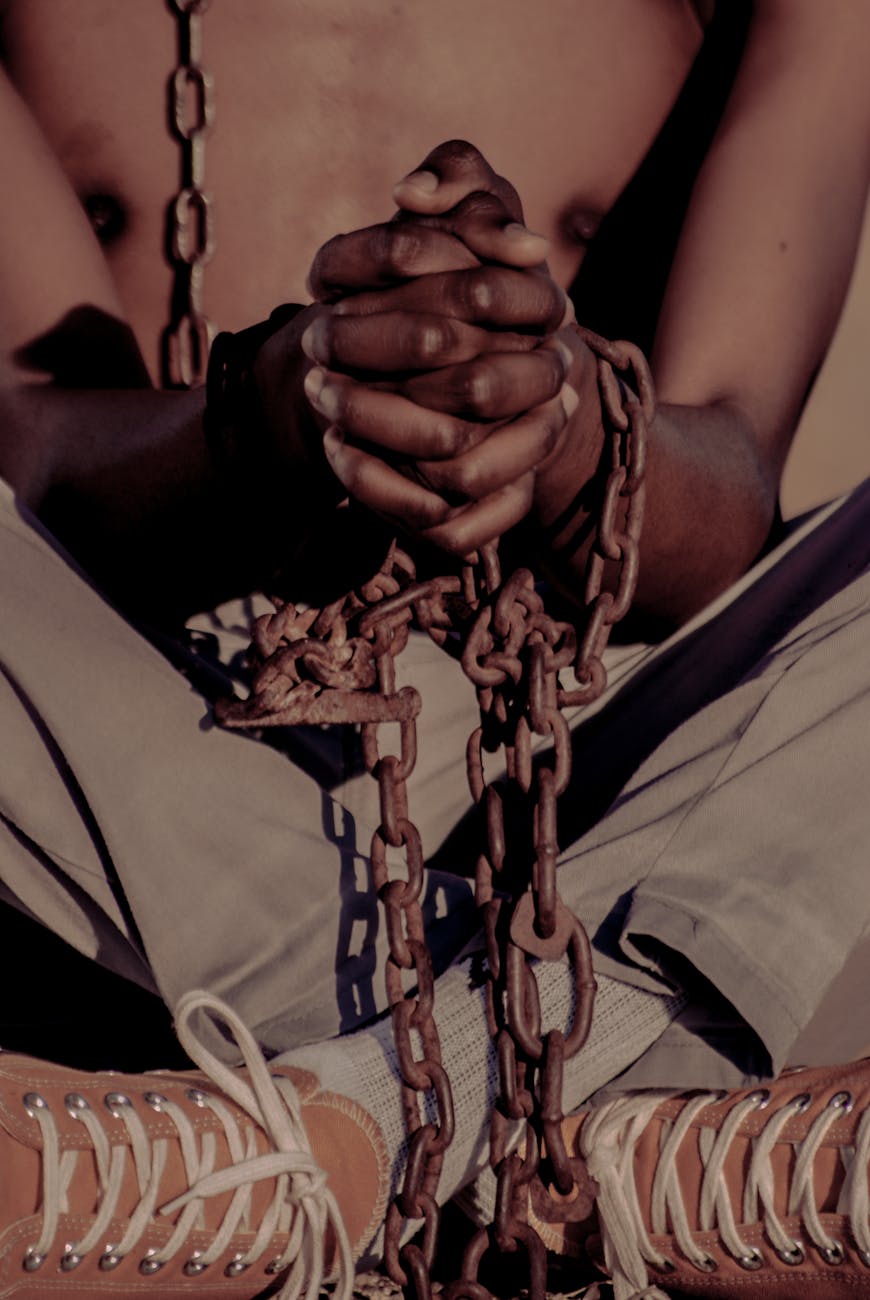
Dilemma: Slavery – Chains Across the Waters: The Transatlantic Slave Trade, Biblical Prophecy, and the Legacy of Black Enslavement

Photo by Thato Moiketsi on Pexels.com

“We Came in the Bottom of Ships”

(A Poem About Slavery)

We came in the bottom of ships, not dreams,
Chained like thunder beneath wooden beams,
Torn from kingdoms kissed by the sun,
From the drums of Dahomey, to the rivers of the Congo run.

We were Igbo, Ashanti, Hebrew, and Ewe,
Mothers of wisdom, warriors of sway,
Fathers of iron, scribes of the scroll,
Our names were gold—but they bartered our soul.

The wind was not freedom but fury and foam,
As they stacked our breath in a floating tomb.
“Amistad,” “Brookes,” and “Jesus” they sailed,
Yet Christ wept each time those hulls prevailed.

We sang in the dark where no sun reached,
We prayed in a tongue they could not breach.
Deuteronomy cried from the sacred page,
“You shall go into Egypt again”—the prophecy aged.

They whipped us at dawn, and raped through the night,
Took our children, and robbed us of sight.
Taught us to bow and forget who we were,
Yet our blood remembered—we came from the Word.

On blocks we stood like cattle and coin,
Sold by the pound, bruised in the groin.
Names lost—Tamar, Kofi, Yaira, Adebayo—
Now called Jack, or Belle, or Uncle Sam’s shadow.

We built this land—its wealth, its walls,
With cotton-picked hands and freedom’s calls.
We bled in silence, we ran, we fought,
We learned to read, though they said we could not.

They broke our backs, but not our will,
For Harriet moved by the Spirit still.
And Frederick wrote fire with a bleeding pen,
While Nat Turner rose like a lion again.

Now we dance in Juneteenth’s flame,
Remembering each forgotten name.
From chains to chants, from songs to speech,
Still reaching the freedom they dared not teach.


Closing Lines

So when you ask where our story begins,
It does not start in chains or sins—
But in a garden, in a scroll, in ancient breath—
Slavery was a shadow. But we are not death.
We are prophecy walking. We are Judah’s drum.
We are the voice that says: “Let my people come.”

.


The transatlantic slave trade remains one of the darkest stains in human history—marked by over four centuries of systemic oppression, brutality, and the forced migration of millions of African men, women, and children. Black people were enslaved in the Americas for approximately 246 years, from 1619 to 1865, and the aftershocks of this atrocity continue to reverberate in modern society. The origin, scale, and spiritual context of this historical trauma require a deep examination—of not only the ships and auction blocks but also the prophetic echoes found in Scripture, particularly Deuteronomy 28.


Origins of African Slavery: Historical and Spiritual Roots

The transatlantic slave trade began in the late 15th century, with European powers—especially Portugal, Britain, Spain, France, and the Netherlands—establishing trading posts along the western coasts of Africa. Africans were kidnapped or sold by rival tribes, many through warfare or debt bondage, and transported across the Atlantic Ocean in horrific conditions.

According to Deuteronomy 28:68 (KJV):

“And the Lord shall bring thee into Egypt again with ships, by the way whereof I spake unto thee, Thou shalt see it no more again: and there ye shall be sold unto your enemies for bondmen and bondwomen, and no man shall buy you.”

This verse is widely cited in Hebraic Israelite theology as a prophetic reference to the transatlantic slave trade, wherein descendants of the biblical Israelites—believed by many to be the so-called African Americans—would be carried in ships to a new “Egypt” (a house of bondage).


Slave Ports and African Origins

Most of the enslaved Africans came from West and Central Africa, regions that include modern-day:

  • Ghana
  • Nigeria
  • Benin
  • Senegal
  • Angola
  • Sierra Leone

The major slave embarkation points were on the Ivory Coast, Gold Coast, Slave Coast, and Bight of Biafra.

There is evidence that Shemites—descendants of Shem, one of Noah’s sons—lived in parts of Africa, particularly among Hebrew-speaking tribes such as the Igbo of Nigeria, the Akan of Ghana, and others who retained oral traditions, circumcision practices, and laws similar to ancient Israel (Hotep, 2016).


Slave Ships and Death at Sea

The names of infamous slave ships included:

  • The Brookes
  • The Henrietta Marie
  • The Jesus of Lübeck (ironically owned by Queen Elizabeth I)
  • La Amistad

Conditions aboard these ships were inhumane. Africans were shackled, stacked tightly in cargo holds with little air, and barely fed. It is estimated that at least 1.8 million of the 12.5 million enslaved Africans died during the Middle Passage (Eltis & Richardson, 2010).

The story of La Amistad (1839) stands out as one of resistance. Enslaved Mende Africans, led by Sengbe Pieh (Cinqué), rebelled against their Spanish captors. The case reached the U.S. Supreme Court, which ruled in favor of the Africans’ freedom—marking a rare legal victory for Black resistance.


Slavery in America and the World

Slavery existed globally, but the transatlantic slave trade was uniquely brutal and racialized. Other nations that held African slaves included:

  • Brazil
  • Cuba
  • The Caribbean colonies
  • Spain
  • Portugal
  • France
  • The Netherlands

In North America, enslaved people were forced into:

  • Plantation labor (cotton, sugar, tobacco)
  • Domestic service
  • Skilled crafts
  • Childbearing (as a source of wealth)

They were often sold at public slave auctions, stripped naked, examined like livestock, and renamed with European or Anglo-Christian names. Most were forced to abandon their original Hebrew names, cultural identities, and languages, such as Ewe, Igbo, Wolof, Yoruba, and Akan.


Sexual Violence and Psychological Warfare

Slavery in America was not only physical but psychological and sexual. “Buck breaking” was a barbaric method where enslaved Black men were raped or publicly humiliated to break their spirit and deter rebellion. It is hard to quantify, but tens of thousands of Black women were also raped by white slave masters, often forced to bear children who were legally still enslaved under the status of the mother (partus sequitur ventrem).


The Abolition of Slavery

Slavery in the United States was abolished in 1865 with the ratification of the 13th Amendment, pushed forward by the efforts of abolitionists like Frederick Douglass, Harriet Tubman, and William Lloyd Garrison, as well as President Abraham Lincoln‘s Emancipation Proclamation (1863).


Slave Narratives and Overcoming

One of the most famous narratives is that of Harriet Jacobs, author of Incidents in the Life of a Slave Girl, who detailed her harrowing experiences as a sexually abused enslaved woman.

Another is Frederick Douglass, who escaped slavery, taught himself to read, and became one of the greatest orators and writers in American history. His book Narrative of the Life of Frederick Douglass (1845) exposed the cruelty of slavery and helped ignite the abolitionist movement.


Modern Black Celebration and Resilience

Today, Black Americans honor their ancestors and freedom through:

  • Juneteenth (June 19th, the date when the last slaves in Texas were freed in 1865)
  • Black History Month
  • Kwanzaa
  • Passover Celebrations (among Hebrew Israelites)

Is the Condition of Black People Better Today?

While legal slavery is abolished, systemic racism, mass incarceration, police brutality, and economic disparities persist. Nevertheless, the resilience, innovation, and cultural power of Black people have reshaped nations—from political powerhouses like Barack Obama to cultural icons like Maya Angelou and Malcolm X.


Conclusion

Slavery was not merely a historical event; it was a fulfillment of biblical prophecy, a global enterprise fueled by greed and racial supremacy, and a foundational trauma in the American story. Understanding its full scope—both physically and spiritually—allows us to honor those who perished, those who resisted, and those who still rise today.


References

  • Berlin, I. (2003). Generations of Captivity: A History of African-American Slaves. Harvard University Press.
  • Deuteronomy 28:68. (n.d.). The Holy Bible, King James Version.
  • Eltis, D., & Richardson, D. (2010). Atlas of the Transatlantic Slave Trade. Yale University Press.
  • Douglass, F. (1845). Narrative of the Life of Frederick Douglass, an American Slave. Boston: Anti-Slavery Office.
  • Jacobs, H. (1861). Incidents in the Life of a Slave Girl. Boston: Thayer & Eldridge.
  • Hotep, D. (2016). The African Hebrews: Biblical Israelites in Africa. Afrikan Mind Publishing.
  • Lovejoy, P. E. (2000). Transformations in Slavery: A History of Slavery in Africa. Cambridge University Press.

Dealing with Online Hate and Colorist Comments.

Photo by Photo By: Kaboompics.com on Pexels.com

The rise of digital communication has transformed the ways people interact, creating opportunities for connection but also exposing individuals to unprecedented levels of scrutiny and hostility. For Black women and Brown women, online hate often intersects with colorism, a pervasive form of discrimination that privileges lighter skin while demeaning darker complexions. Social media platforms, while enabling self-expression and visibility, also amplify negative commentary that can affect confidence, self-esteem, and mental health. Understanding how to navigate online hate and colorist remarks is critical for personal empowerment and psychological resilience.

Understanding Online Hate and Colorism

Online hate refers to targeted harassment, bullying, or disparagement directed at individuals based on identity, appearance, or beliefs. Colorism, specifically, is a form of bias in which individuals are judged or discriminated against based on the lightness or darkness of their skin. Historically rooted in colonialism, slavery, and Eurocentric beauty standards, colorism continues to manifest in social, professional, and digital spaces. Online platforms often magnify these prejudices, as anonymity and virality allow harmful commentary to spread widely and rapidly (Hunter, 2007).

Psychological Impact

Research indicates that exposure to online hate can lead to anxiety, depression, and reduced self-esteem. For Black and Brown women, colorist remarks carry the added burden of internalized bias, where societal preferences for lighter skin are absorbed and reflected in self-perception (Williams & Lewis, 2019). Social comparison theory explains how constant exposure to idealized images online—many of which favor lighter-skinned individuals—can exacerbate feelings of inadequacy or self-doubt (Festinger, 1954). The combined impact of online hate and colorist commentary thus threatens both emotional well-being and identity affirmation.

Strategies for Resilience

Dealing with online hate requires a combination of psychological resilience, practical digital strategies, and cultural affirmation. One effective approach is curating one’s digital space: blocking, muting, or reporting abusive users can reduce exposure to harmful commentary. Another strategy is to practice critical engagement, recognizing that negative remarks often reflect the biases, insecurities, or ignorance of the commenter rather than objective truth. Developing this perspective helps preserve self-worth and prevents internalization of hate.

Affirming Identity and Cultural Pride

Countering colorist commentary involves cultivating self-acceptance and celebrating melanin-rich skin. Public figures and influencers such as Lupita Nyong’o, Adut Akech, and Rashida Strober have used social media to promote skin positivity, modeling confidence and pride in darker complexions. Affirmation of cultural identity and acknowledgment of historical resilience reinforce confidence and create psychological resistance to hate. Faith and spiritual grounding can also provide strength. Scriptures like Psalm 139:14 (KJV): “I will praise thee; for I am fearfully and wonderfully made: marvellous are thy works; and that my soul knoweth right well” offer a reminder of inherent worth beyond societal or online judgments.

Leveraging Community Support

Community support is vital in mitigating the effects of online hate. Online and offline networks—friends, family, social groups, and digital communities—can provide validation, encouragement, and strategies for coping. Engaging in spaces that celebrate diversity and reject colorist ideals allows individuals to witness alternative narratives and receive affirmation. Online movements such as #MelaninPoppin and #DarkSkinIsBeautiful exemplify how collective advocacy and visibility can combat hate while fostering pride.

Transforming Pain into Empowerment

Experiences with online hate and colorism can also be reframed as opportunities for empowerment. Advocacy, content creation, and public speaking allow Black and Brown women to challenge biases, educate others, and redefine beauty standards. By converting negative encounters into activism or artistic expression, individuals reclaim agency over their narratives, transforming experiences of hate into tools for social change.

10 Steps to Handle Online Hate and Colorist Comments

  1. Curate Your Digital Space – Use platform tools to block, mute, or report abusive accounts to minimize exposure to harmful content.
  2. Practice Critical Engagement – Recognize that online hate reflects the insecurities or biases of others, not your worth. Avoid internalizing negative comments.
  3. Affirm Your Identity – Remind yourself of your unique beauty and worth. Engage with content that celebrates melanin-rich skin, cultural heritage, and achievements.
  4. Leverage Role Models – Follow and learn from Black women influencers and public figures, such as Lupita Nyong’o, Adut Akech, and Rashida Strober, who promote confidence and self-acceptance.
  5. Engage Supportive Communities – Participate in online and offline networks that uplift Black and Brown women. Hashtags like #MelaninPoppin or #DarkSkinIsBeautiful foster solidarity and validation.
  6. Document and Reflect – Keep a journal of positive affirmations or moments of personal growth to counteract negativity. Reflection strengthens resilience over time.
  7. Practice Self-Care – Prioritize mental health through mindfulness, exercise, meditation, or counseling. Protecting emotional well-being is essential for sustaining confidence.
  8. Respond Strategically (or Not at All) – Decide whether to engage with comments. Sometimes, silence or a measured response preserves your energy better than confrontation.
  9. Educate When Possible – Transform encounters with ignorance into teachable moments by addressing misconceptions thoughtfully, when safe and productive.
  10. Transform Pain into Empowerment – Channel negative experiences into advocacy, creative projects, or community work, turning personal challenges into platforms for positive change.

Conclusion

Online hate and colorist comments pose significant psychological and social challenges for Black and Brown women, affecting self-esteem, identity, and emotional well-being. However, through strategies such as curating digital spaces, practicing critical engagement, affirming cultural identity, seeking community support, and converting negative experiences into empowerment, women can navigate these challenges with resilience and agency. Ultimately, responding to online hate requires both personal fortitude and collective affirmation, ensuring that confidence and identity remain intact despite societal and digital pressures.


References

  • Festinger, L. (1954). A theory of social comparison processes. Human Relations, 7(2), 117–140.
  • Hunter, M. (2007). The persistent problem of colorism: Skin tone, status, and inequality. Sociology Compass, 1(1), 237–254.
  • Williams, R., & Lewis, T. (2019). Colorism and self-perception among African American women: Psychological impacts and coping mechanisms. Journal of Black Psychology, 45(5), 417–439.