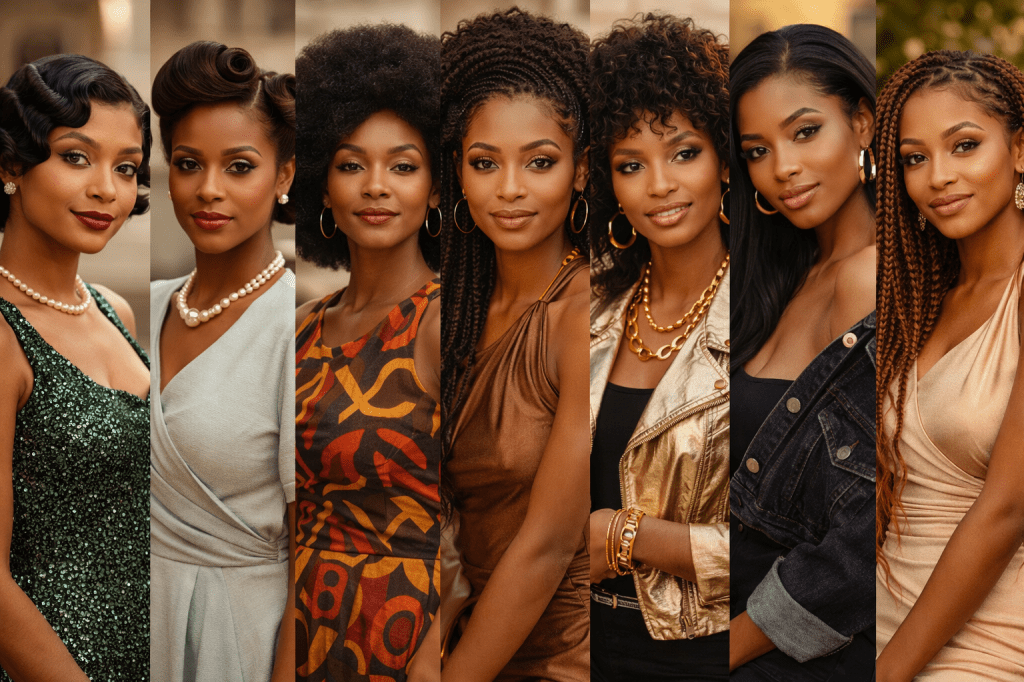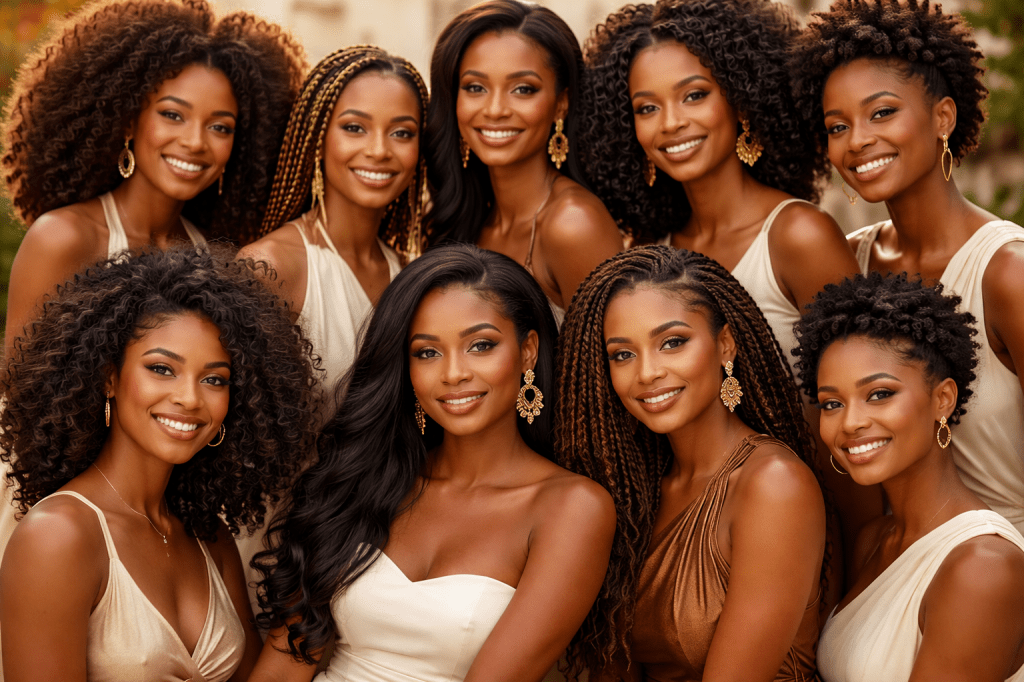
Tag Archives: hair

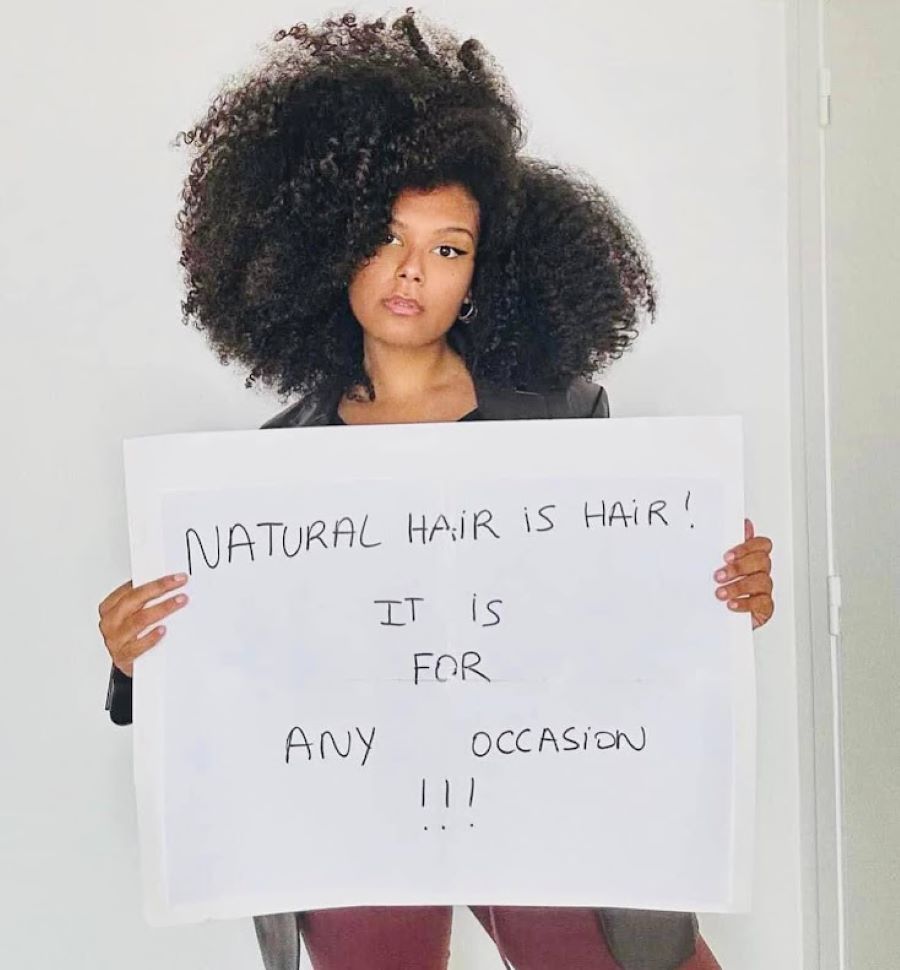
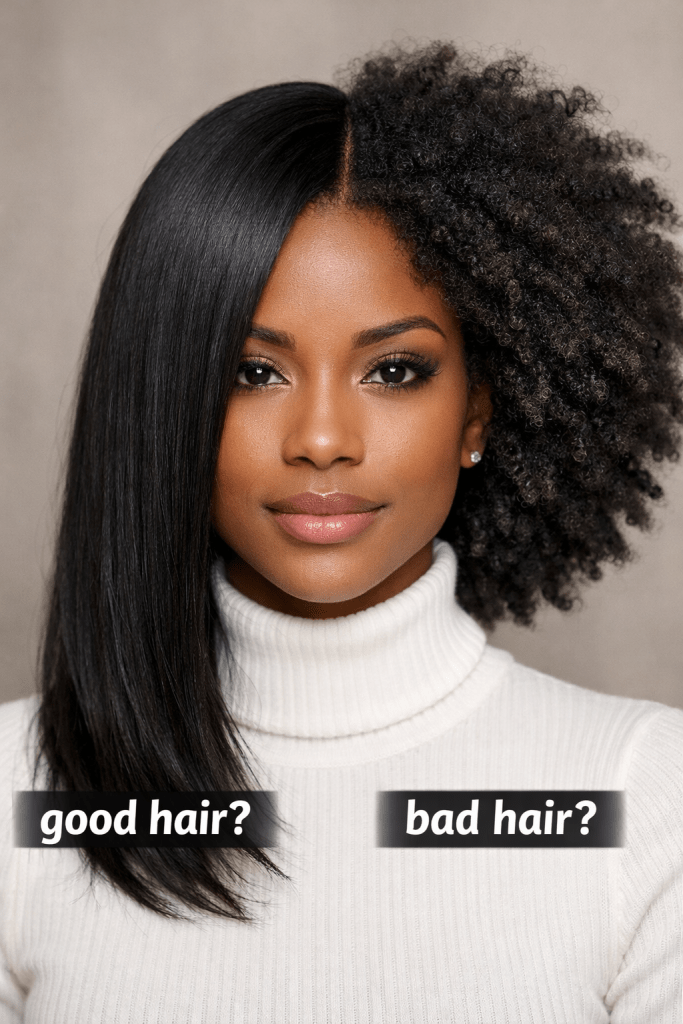
Good Hair Vs Bad Hair

The conversation around “good hair” and “bad hair” has long been a source of tension, pride, and pain within the Black community. The term “good hair” often refers to straighter, silkier textures associated with European standards of beauty, while “bad hair” is used to describe tightly coiled, kinky textures often associated with African heritage. But what does the Bible say about hair, and how can we reclaim a healthy, godly perspective?

The Bible affirms that all hair is good because it is created by God. Matthew 10:30 (KJV) declares, “But the very hairs of your head are all numbered.” This scripture shows the Most High’s care and intentionality regarding hair. There is no biblical basis for labeling one texture as superior to another. Instead, hair is seen as a natural part of God’s design, a symbol of identity, and, in many cases, a spiritual covering (1 Corinthians 11:15, KJV).
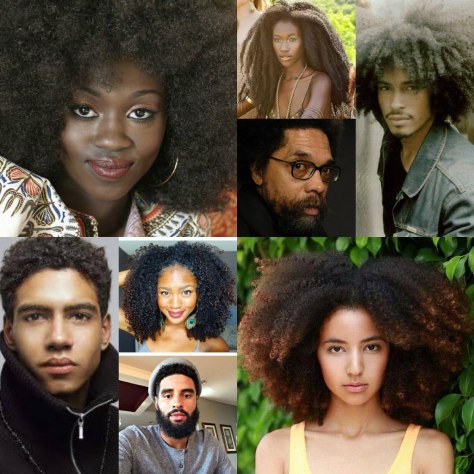
All photographs are the property of their respective owners. No copyright infringement intended.

The notion of “bad hair” largely stems from the legacy of slavery and colonialism. During slavery in America, Africans’ natural hair was often ridiculed and seen as “wild” or “unkempt” by European enslavers. This ridicule was strategic—it sought to strip enslaved Africans of pride in their natural appearance, to convince them that European features and styles were superior.

Psychologically, this produced internalized racism. Over time, many Black people began to associate straight hair with beauty, respectability, and even success. This association was reinforced in media, workplaces, and schools that penalized or banned natural hairstyles. Such systemic discrimination can lead to what scholars call “cultural trauma,” where a group learns to devalue aspects of its own identity.

The term “nappy” historically was used as a derogatory word. It mocked the tight coils and kinks of African hair, equating them with roughness or uncleanliness. The phrase “nappy-headed” became a slur that reinforced the idea that natural Black hair was undesirable. This is a psychological residue of enslavement that still impacts Black self-esteem today.

In truth, there is no such thing as “bad hair.” All hair grows according to the genetic blueprint given by God. Psalm 139:14 (KJV) reminds us, “I will praise thee; for I am fearfully and wonderfully made.” The texture, thickness, and curl pattern of one’s hair is divinely designed, not a mistake.

The love-hate relationship with hair in the Black community also reveals a longing for acceptance. Many Black people invest heavily in hair products, wigs, and chemical treatments to conform to mainstream standards. This is not just vanity—it is often a survival mechanism in a society that discriminates based on appearance.

Hollywood, advertising, and fashion industries have historically promoted Eurocentric beauty ideals, making straight hair the default standard of attractiveness. This has led to generations of Black children growing up believing that their natural hair was unprofessional or unattractive unless it was altered.

The Bible warns against adopting the world’s standard of beauty. 1 Samuel 16:7 (KJV) says, “For man looketh on the outward appearance, but the Lord looketh on the heart.” God is not concerned with whether hair is curly, straight, or coiled—He is concerned with the condition of our spirit.

Hair is also deeply symbolic in the Bible. Samson’s hair represented his covenant with God (Judges 16:17, KJV). The Nazarites were instructed not to cut their hair as a sign of consecration (Numbers 6:5, KJV). These examples remind us that hair has spiritual meaning, but no texture or style makes one holier than another.

Solutions to the “good hair” vs. “bad hair” divide must begin with education and affirmation. Parents can teach children from an early age to embrace their natural hair textures, using affirmations and showing them examples of beauty that look like them. Representation matters.

The natural hair movement has been one powerful response to centuries of hair-shaming. By wearing afros, locs, braids, and twists proudly, Black people reclaim their heritage and reject the lie that straight hair is superior. This movement echoes Romans 12:2 (KJV): “And be not conformed to this world: but be ye transformed by the renewing of your mind.”

Workplaces and schools must also be challenged. Laws like the CROWN Act, which bans hair discrimination, are steps toward justice. Discrimination against natural hair is not merely a fashion issue—it is a civil rights issue rooted in systemic racism.

Spiritually, the solution also involves repentance and deliverance from self-hatred. Generational trauma and the colonial mindset must be broken. Believers can pray for a renewed mind and ask God to restore confidence in His design.

Men must also be part of this conversation. In many cases, Black men have been conditioned to prefer straight hair on women, reinforcing Eurocentric standards. Re-educating men about the beauty and versatility of natural hair is part of community healing.

Media creators and influencers have a responsibility to showcase diverse hair textures positively. When children see actresses, news anchors, and professionals wearing natural styles proudly, it normalizes their beauty. This can shift psychological perceptions over time.

The church can play a role by teaching that hair should not be a source of pride, shame, or division. James 2:1-4 (KJV) warns against showing partiality based on outward appearance. The body of Christ should be the first place where people of all textures feel celebrated.

Healing the Next Generation

The conversation around hair identity must address its impact on children, because early experiences with hair-shaming or affirmation often shape a child’s self-image for life. Developmental psychology teaches that children form a sense of self-worth between ages 3 and 7. If a child repeatedly hears that their hair is “nappy,” “ugly,” or “unprofessional,” those words can leave a deep emotional wound that lasts into adulthood.

Hair bullying is a real issue. In many schools, Black children have been suspended or sent home for wearing braids, locs, or afros—styles that are natural and culturally significant. These incidents teach children that who they are is unacceptable unless they conform to Eurocentric beauty standards. This form of discrimination not only harms self-esteem but also creates anxiety and shame.

From a psychological standpoint, children who internalize negative messages about their hair often struggle with identity development. They may wish they looked different, leading to feelings of inadequacy. Erik Erikson’s theory of psychosocial development identifies this as an “identity vs. role confusion” stage—when children are trying to discover who they are, acceptance plays a critical role.

Biblically, this issue is critical because self-hatred contradicts God’s design. Psalm 8:5 (KJV) declares, “For thou hast made him a little lower than the angels, and hast crowned him with glory and honour.” Every child is made in God’s image (Genesis 1:27, KJV) and should be celebrated as such. Teaching children to love their hair is teaching them to love God’s creation.

Parents play the most important role in reversing the harm of “good hair vs. bad hair” conditioning. Affirmations like “Your hair is beautiful just the way God made it” can help children internalize positive messages. Taking time to gently care for and style their hair with love turns grooming into a time of bonding and affirmation.

Representation in books, toys, and media is also crucial. When children see dolls, superheroes, and princesses with afros, braids, and coils, they learn that beauty comes in many forms. Christian parents can incorporate Bible lessons on diversity and God’s intentional creation to reinforce this truth.
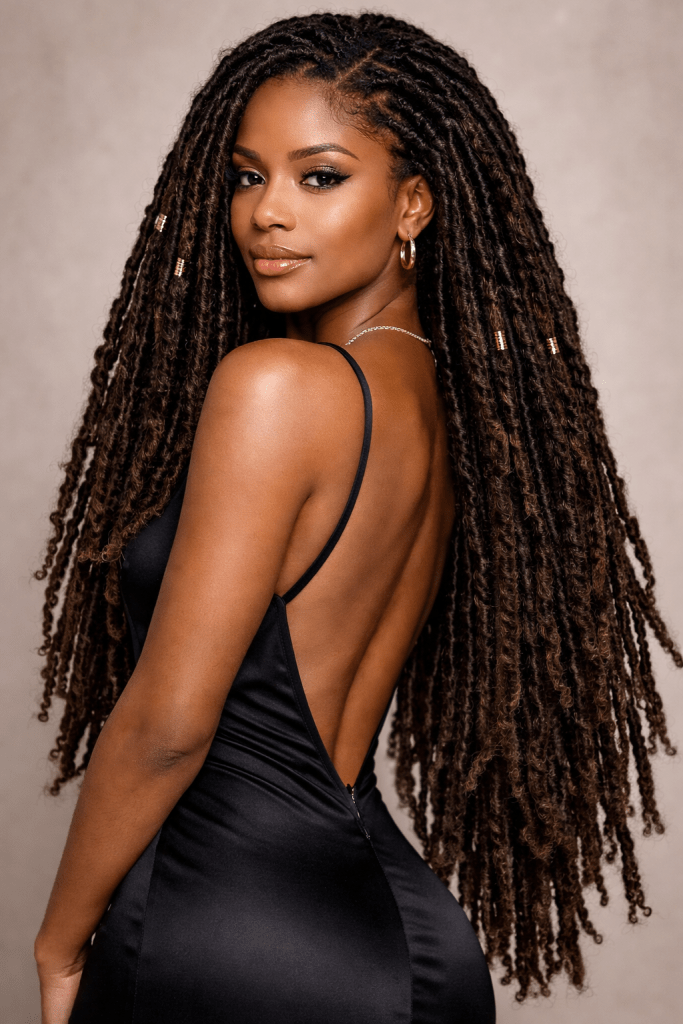
People must create spaces where natural beauty is affirmed rather than criticized. Sadly, some church cultures have pressured women and girls to straighten their hair to look “presentable” for service. Instead, churches should teach that modesty and holiness are about the heart (1 Peter 3:3-4, KJV), not about imitating European hairstyles.

Schools need cultural sensitivity training to prevent hair discrimination. The CROWN Act (Creating a Respectful and Open World for Natural Hair) is now law in several U.S. states and should be advocated for everywhere. This legislation protects children from unfair discipline or exclusion based on hair.

Psychologists recommend early intervention when children experience hair-based bullying. Parents should validate the child’s feelings, teach coping strategies, and involve teachers if necessary. Healing from these experiences prevents long-term damage to self-esteem.

Mentorship programs can also make a difference. When children see older peers or adults proudly rocking natural hair, they have role models to look up to. This helps normalize natural hair and removes the stigma.

Hair care education is another solution. Many parents and teachers simply do not know how to care for natural hair, which can lead to frustration or neglect. Workshops on proper styling, maintenance, and products empower families to care for their hair healthily.

From a community perspective, celebrating natural hair through events like hair shows, heritage days, or social media campaigns can build pride. These events allow children to see that their hair is not just normal—it is special and worth celebrating.

Men and fathers have a special responsibility to speak life into their daughters. A father who compliments his daughter’s natural hair can shield her from seeking validation from harmful sources. Proverbs 18:21 (KJV) reminds us that “death and life are in the power of the tongue.”

Mental health support is also important. If a child’s self-esteem has been deeply harmed, counseling can help them rebuild a healthy self-image. Christian counseling can integrate biblical truths with therapeutic strategies to restore confidence.

The natural hair conversation should also extend to young boys. Boys with locs or afros have been stereotyped as “unprofessional” or even “criminal.” Parents must teach their sons that their hair is not a marker of delinquency but of heritage, creativity, and pride.

Psychologically, embracing natural hair is part of decolonizing the mind. It is a way of rejecting oppressive beauty standards and embracing cultural authenticity. Romans 12:2 (KJV) calls us to “be transformed by the renewing of your mind.” Renewing the mind means unlearning lies that say Blackness must be hidden or altered to be acceptable.

Education on African history is also a solution. When children learn about ancient African civilizations—Egypt, Kush, Mali—and their rich culture, they develop pride in their heritage. This context reframes hair as part of a royal, powerful legacy rather than something to be ashamed of.

Finally, prayer and community support are vital. Families can pray over their children’s self-esteem and ask God to protect them from the spirit of rejection. James 5:16 (KJV) promises that “the effectual fervent prayer of a righteous man availeth much.” Community support groups can also provide encouragement and resources for families committed to embracing natural beauty.

In conclusion, healing the next generation from the trauma of “good hair vs. bad hair” is not just a beauty issue—it is a spiritual and cultural mission. By affirming children early, reforming schools and churches, and providing mentorship and representation, we can raise a generation that celebrates what God has given them. When we teach children that all hair is good hair, we teach them that they themselves are good—fearfully and wonderfully made.

Ultimately, the conversation about “good hair” vs. “bad hair” is about much more than hair. It is about freedom—freedom from colonial thinking, from internalized racism, and from societal pressure to conform. True freedom comes from knowing who you are in Christ and embracing every part of your God-given identity.

In conclusion, all hair is good hair. It is numbered by God, designed with purpose, and worthy of care and respect. The challenge before us is to uproot the lies of slavery, colonization, and white supremacy that taught generations of Black people to hate what God made. Only then can we walk fully in the truth that we are fearfully and wonderfully made—kinks, curls, coils, and all.
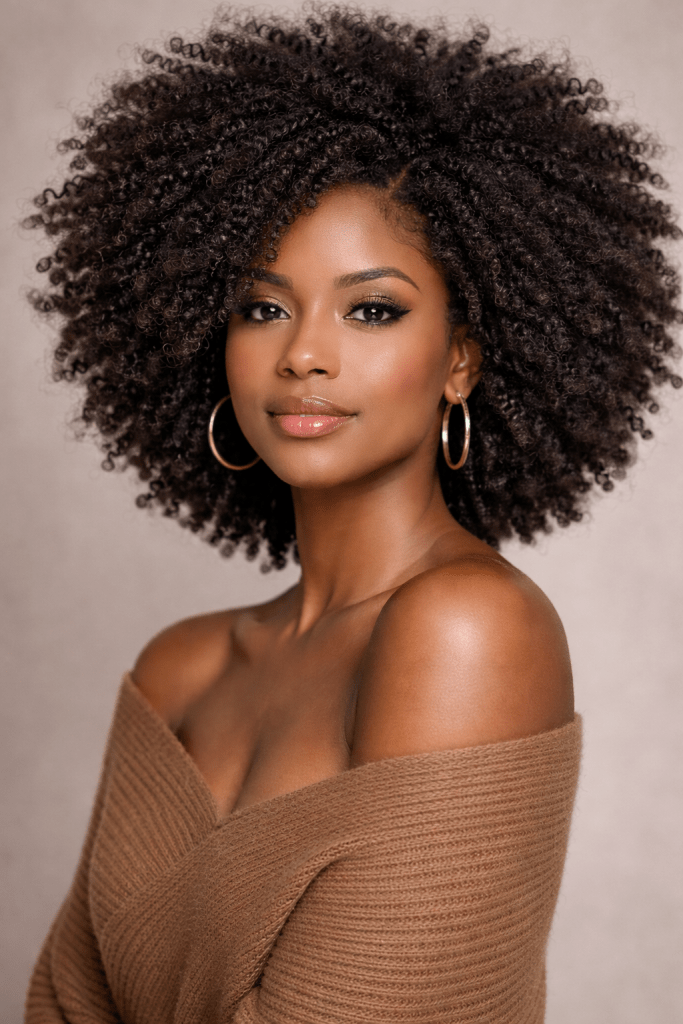
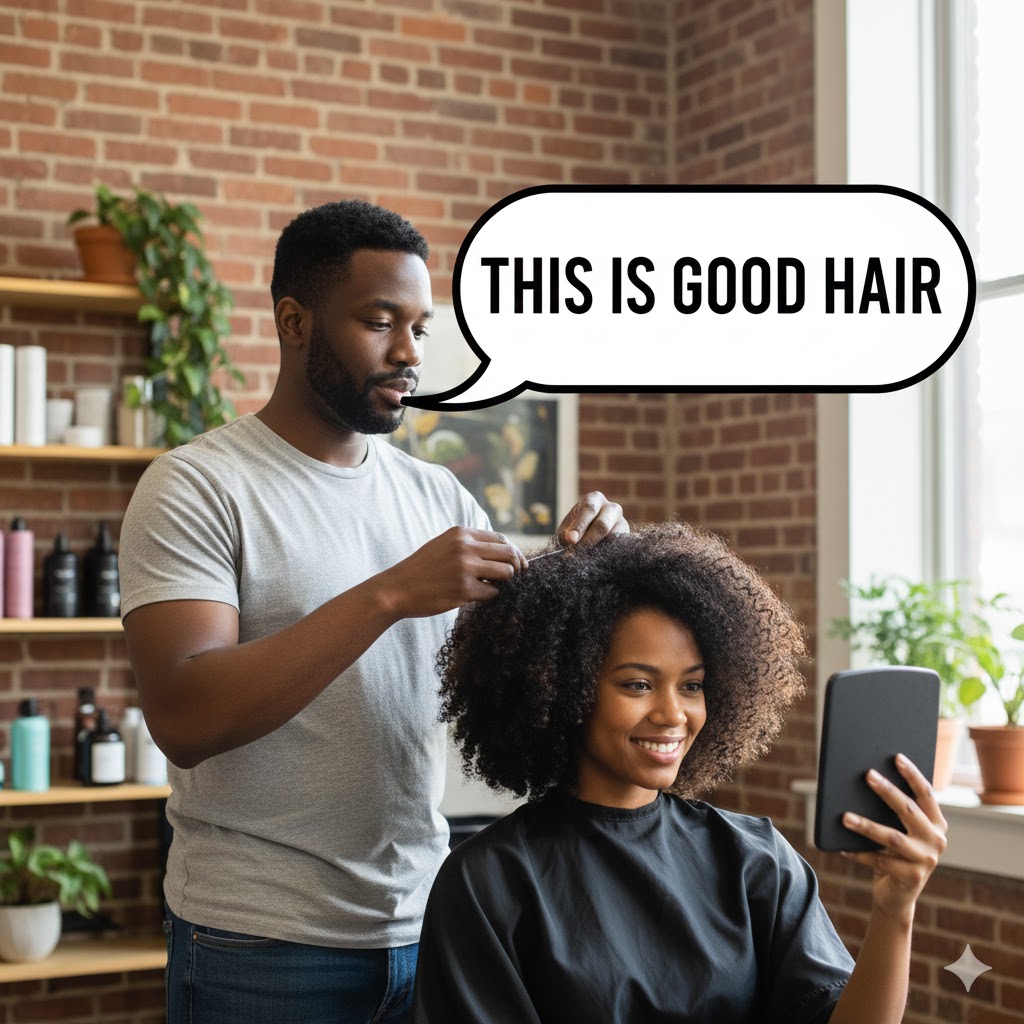
Good Hair? YES


References

  • Banks, I. (2000). Hair Matters: Beauty, Power, and Black Women’s Consciousness. NYU Press.
  • Byrd, A., & Tharps, L. (2014). Hair Story: Untangling the Roots of Black Hair in America. St. Martin’s Griffin.
  • hooks, b. (1992). Black Looks: Race and Representation. South End Press.
  • DeGruy, J. (2005). Post Traumatic Slave Syndrome. Joy DeGruy Publications.

Key KJV Scriptures: Matthew 10:30; 1 Corinthians 11:15; Psalm 139:14; 1 Samuel 16:7; Judges 16:17; Numbers 6:5; Romans 12:2; James 2:1-4.
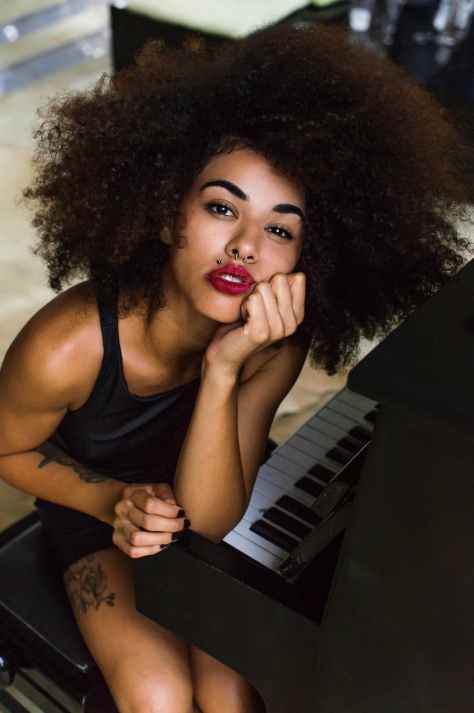
Why Don’t You Do Something With Your Hair? Hair Politics in the Black Community.

Photo by Osmar Vasques on Pexels.com

The question “Why don’t you do something with your hair?” carries weight far beyond casual conversation. It reflects the long, complicated history of hair politics within the Black community, where hair is not merely aesthetic but deeply tied to identity, culture, and social status. The question assumes that the natural hair that grows out of a Black woman’s scalp is insufficient, needing alteration to be considered beautiful or presentable. This dilemma plays out daily in salons, workplaces, and even among friends, revealing the enduring tension between assimilation and authenticity.

Hair politics in the Black community have roots that trace back to pre-colonial Africa. African hairstyles once symbolized tribe, social rank, marital status, and even spiritual beliefs (Byrd & Tharps, 2014). Intricate braids, twists, and natural textures were celebrated as markers of identity and belonging. This changed dramatically during the transatlantic slave trade. Enslaved Africans were often forced to shave their heads, stripping them of cultural identity and dignity (White & White, 1998). This dehumanizing act laid the groundwork for centuries of stigma against African hair textures.

During slavery and later segregation, Eurocentric beauty standards dominated. Straight hair was viewed as a marker of respectability and proximity to whiteness. Many Black women began straightening their hair as a means of survival, using hot combs and later chemical relaxers to fit into white society’s expectations (Rooks, 1996). This survival strategy was both empowering—opening doors to employment and social acceptance—and damaging, as it subtly communicated that natural hair was unkempt or undesirable.

This tension birthed the concept of “good hair” versus “bad hair.” “Good hair” was typically defined as straighter, looser, and more European-like, while “bad hair” referred to tightly coiled, kinky textures. This language continues to shape how Black girls grow up viewing themselves. The woman in the store who questioned another’s natural fro echoed centuries of conditioning that privileges one texture over another.

Biblically, this judgment contradicts the affirmation of divine creation. Psalm 139:14 (KJV) declares, “I will praise thee; for I am fearfully and wonderfully made: marvellous are thy works.” If God made hair textures diverse, then natural Black hair is good by design. The cultural insistence on altering hair to be acceptable reflects a deeper issue of internalized oppression rather than divine truth.

Hair also became a political statement during the Civil Rights and Black Power movements of the 1960s and 1970s. The Afro emerged as a symbol of pride, rebellion, and resistance against white supremacy. To wear one’s hair in its natural state became an act of defiance and self-acceptance. Angela Davis famously wore her iconic Afro as both a personal choice and a political statement, making natural hair synonymous with the fight for liberation (Davis, 1981).

However, as mainstream culture commodified Black style, the natural hair movement lost some of its radical edge. The emergence of weaves, wigs, and chemical relaxers in the 1980s and 1990s introduced new standards of glamour and professionalism. While these styles offered versatility and creative expression, they also reinforced the idea that natural hair was only acceptable if controlled or hidden.

Celebrities have weighed in on this hair dilemma, often sparking debate. Viola Davis removed her wig on the hit show How to Get Away With Murder in a powerful scene that revealed her natural hair, stating in interviews that she wanted to normalize textured hair on television (Dockterman, 2014). Solange Knowles has also been vocal about the politics of natural hair, penning the song “Don’t Touch My Hair” as an anthem of autonomy and identity.

On the other side, some celebrities have been criticized for perpetuating Eurocentric beauty ideals. Rapper Lil’ Kim and others who have dramatically lightened their skin and straightened their hair have been accused of reflecting the deep scars of colorism and texturism. These choices are not simply personal but political, given the influence celebrities have on shaping beauty standards.

Workplace politics also play a major role in the natural-versus-straight hair conversation. For years, natural hairstyles such as locs, braids, and twists were deemed “unprofessional” in many corporate environments. It wasn’t until the passing of laws like the CROWN Act (2019) that discrimination against natural hairstyles began to be legally challenged in several U.S. states. This shows that hair policing is not just cultural but institutional.

The debate over natural hair versus weaves or wigs is complex. On one hand, weaves allow Black women to experiment with style, color, and length without damaging their natural hair. On the other, they can become a crutch if they are used to hide self-hatred or avoid confronting the stigma against natural textures. The key issue is not the style chosen but the motivation behind it—whether it flows from freedom or from shame.

Mentally, constant scrutiny over hair can lead to stress and self-esteem issues. Black girls as young as five report feeling pressured to straighten their hair for special occasions or school pictures (Opie & Phillips, 2015). This teaches them early that their natural state is less acceptable, planting seeds of insecurity that can take years to unlearn.

Spiritually, the church can play a role in affirming natural hair. Unfortunately, some church communities have perpetuated respectability politics by favoring women with straightened hair or wigs, especially in leadership roles. This contradicts the biblical principle in 1 Peter 3:3-4 (KJV), which states that beauty should not merely be about “plaiting the hair” or outward adornment but about “the hidden man of the heart.” This verse calls believers to focus on character rather than conformity to beauty standards.

The natural hair movement of the 21st century has made significant strides in reversing stigma. Social media platforms like Instagram and YouTube have created spaces for Black women to share tips, tutorials, and encouragement for embracing natural curls and coils. This digital sisterhood has birthed a new generation of women who proudly wear their afros, twist-outs, and locs as declarations of self-love.

Nevertheless, the pressure to conform to a certain standard of natural hair perfection—“curl envy”—has emerged as a new form of hair politics. Women with looser curl patterns are often celebrated more in natural hair campaigns than those with tighter coils, revealing that even within the movement, hierarchies still exist.

The Politics, Pain, and Power of Black Hair

I was standing in line at a neighborhood store when I overheard two women talking. One wore a sleek weave, carefully laid edges, and perfectly straightened strands; the other rocked a short, natural fro. With a laugh, the first woman asked, “Girl, why don’t you do something with your hair?” The second woman smiled politely, but her face betrayed the familiar sting that so many Black women know too well. That small exchange speaks volumes about the history and politics of Black hair — a history that stretches from the villages of West Africa to the plantations of the Americas, from the barbershops and beauty salons of the Jim Crow era to the hashtags and viral videos of today.

Hair has never been just hair for Black people. In pre-colonial Africa, hair was identity. Styles communicated tribe, social status, fertility, and even spiritual meaning (Byrd & Tharps, 2014). To cut someone’s hair was to humiliate them, stripping away dignity. Enslavers understood this, which is why many Africans brought to the Americas had their heads forcibly shaved, severing a crucial connection to their homeland (White & White, 1998). This trauma planted the seed for centuries of stigma against African textures.

In America, Black hair became a site of both survival and rebellion. For many, straightening hair was a way to gain access to jobs, education, and respectability in a white-dominated society (Rooks, 1996). The hot comb, famously popularized by Madam C.J. Walker, was both a tool of empowerment and a symbol of assimilation. “My grandmother told me that straightening her hair helped her get her first job as a teacher,” said Sharon, 62, in an interview. “But she also told me she always felt like she was wearing a mask.”

The language of “good hair” versus “bad hair” emerged from these survival tactics. “Good hair” was associated with looser, straighter textures — often linked to mixed ancestry — while “bad hair” was used to describe kinky, coily textures. “I grew up in the 90s, and my aunties would sigh whenever I wore my hair natural,” said Angela, 33. “They would say, ‘We gotta do something with this nappy mess.’ It made me feel like who I was naturally was a problem to be fixed.”

Biblically, this tension challenges what Scripture teaches about God’s creation. Genesis 1:31 (KJV) declares, “And God saw every thing that he had made, and, behold, it was very good.” If every hair texture is created by God, then none can be deemed “bad.” Psalm 139:14 reminds us that we are “fearfully and wonderfully made.” To degrade natural hair is to deny the Creator’s artistry.

The Civil Rights and Black Power era redefined hair politics. The Afro became a crown of pride and a political statement. “When I wear my Afro, I am making a statement that I am Black and proud,” Angela Davis wrote (Davis, 1981). To wear one’s hair naturally was to reject assimilation and embrace African identity. This was a time when hair became activism — the body itself was a protest sign.

But as the decades passed, relaxers, weaves, and wigs became mainstream again. For some, this was a matter of convenience and creative expression. For others, it was a return to old pressures to conform. “I love my weave because I can switch up my look,” said Monique, 27, during a focus group. “But I also hate that people assume I don’t love myself when I wear it. It’s not that — I just like the versatility.”

The natural hair movement of the 2010s reignited the call for authenticity. YouTube vloggers and Instagram influencers created a renaissance of tutorials, hair care tips, and motivational content celebrating curls, coils, and kinks. Yet, even within the natural hair community, hierarchies emerged. Looser curl patterns (3A–3C) were celebrated more prominently than tightly coiled textures (4B–4C), leading to what some call “texturism” (Robinson, 2011).

Celebrities have weighed in powerfully on the conversation. Viola Davis’s decision to remove her wig on How to Get Away with Murder was more than just a TV moment — it was a cultural reset. “I wanted to humanize her,” Davis explained. “And part of that is letting her be who she really is — natural hair and all” (Dockterman, 2014). Solange Knowles, in her song “Don’t Touch My Hair,” transformed her experience of unwanted hair-policing into an anthem of bodily autonomy.

Despite these victories, discrimination remains a reality. Studies show that Black women with natural hairstyles are often rated as less professional or less competent in corporate settings (Opie & Phillips, 2015). The passage of the CROWN Act (2019) in multiple U.S. states is a step toward protecting Black hair from workplace discrimination — but the cultural bias runs deep.

The question “Why don’t you do something with your hair?” carries an assumption: that natural hair is undone, messy, or unacceptable. But natural hair is done the moment it grows from the scalp. It does not need fixing to be valid. Romans 12:2 (KJV) reminds us, “Be not conformed to this world: but be ye transformed by the renewing of your mind.” Breaking free from the belief that straight is the only acceptable form is a mental and spiritual renewal.

Healing hair trauma requires unlearning generations of internalized shame. “I had to stop calling my daughter’s hair ‘difficult,’” said Candace, 40. “Now I tell her it’s beautiful, full, and strong — just like her.” This kind of language shift is revolutionary. It teaches young girls that their hair is a source of pride, not a burden.

There is also space for freedom of choice. Some women wear wigs or relaxers not out of shame but for self-expression. The issue is not the style but the root motivation. Galatians 5:1 (KJV) declares, “Stand fast therefore in the liberty wherewith Christ hath made us free.” Freedom in Christ includes freedom from the bondage of beauty standards — whether those standards push toward assimilation or prescribe a rigid idea of “natural purity.”

The politics of hair also affect men, though they are often left out of the conversation. Dreadlocks, cornrows, and afros on Black men have been criminalized, labeled as unkempt or threatening. Celebrities like J. Cole and Bob Marley used their hair as political and spiritual statements, reminding the world that natural hair is not just style but identity.

Moving forward, education is key. Schools, churches, and community spaces must normalize the full spectrum of Black hair. Representation in media matters — children need to see characters who look like them wearing braids, locs, fros, and curls with confidence and beauty.

Ultimately, the woman in the store who questioned the natural fro was voicing a generational script — one we must now rewrite. By embracing natural hair as inherently good, by affirming every style chosen freely, and by dismantling the good-hair/bad-hair dichotomy, the Black community can heal from centuries of hair trauma.

In the end, the question is no longer “Why don’t you do something with your hair?” but “What will we do with the legacy of hair politics?” Will we pass down shame or pass down pride? Will we perpetuate Eurocentric hierarchies or celebrate the God-given diversity of our crowns? The choice is ours — and it is time to choose freedom.

Healing from hair politics requires both internal and communal work. Internally, Black women must embrace that their hair—whatever its texture—is inherently good and worthy of care. Communally, there must be a shift in language, moving away from “good hair” and “bad hair” to affirming the full spectrum of textures as beautiful.

Parents play a critical role in shaping hair identity. Teaching young girls to love their hair early on, letting them see positive representations of their texture in books, movies, and social media, helps inoculate them against the pressures they will face. Such affirmation can prevent the painful moment when a stranger or even a friend asks, “Why don’t you do something with your hair?”

In conclusion, hair politics in the Black community are both a burden and an opportunity. The burden lies in centuries of stigma and division, but the opportunity lies in reclaiming hair as a site of freedom, creativity, and identity. When a woman chooses a fro, a weave, braids, or a bald head from a place of self-love, she resists the narrative that her natural state is not enough. By rooting our worth in biblical truth and affirming the diversity of Black beauty, the Black community can end the cycle of judgment and instead celebrate the crown that God has given.


References

  • Byrd, A., & Tharps, L. (2014). Hair story: Untangling the roots of Black hair in America (2nd ed.). St. Martin’s Press.
  • Davis, A. (1981). Women, race, & class. Vintage Books.
  • Dockterman, E. (2014, October 17). Viola Davis explains why she took off her wig on How to Get Away With Murder. TIME.
  • Opie, T., & Phillips, K. W. (2015). Hair penalties: The negative influence of Afrocentric hair on ratings of Black women’s dominance and professionalism. Frontiers in Psychology, 6, 1311.
  • Rooks, N. (1996). Hair raising: Beauty, culture, and African American women. Rutgers University Press.
  • White, S., & White, G. (1998). Slave hair and African American culture in the eighteenth and nineteenth centuries. Journal of Southern History, 63(1), 45–76.

Crowns Shorn: Black Hair, Wealth, Tribal Identity, and the Economics of Enslavement in Africa and the Atlantic World

Black hair has long functioned as a cultural archive in Africa, encoding information about lineage, spirituality, marital status, age, occupation, and wealth. Across the continent, hair was never merely aesthetic; it was social language. Intricate braiding, sculptural coiffures, and the use of oils, beads, shells, gold thread, and cowries communicated rank and prosperity, situating the individual within a complex web of kinship and economy.

In many West and Central African societies, the care and styling of hair signified time, labor, and communal investment. Hairstyles that took hours or days to complete demonstrated access to leisure, skilled labor, and social networks—markers of wealth in precolonial economies where time itself was a resource. Hair thus operated as visible capital, reflecting one’s position within agrarian, mercantile, or royal systems.

Among the Yoruba, hair (irun) was closely associated with ori, the spiritual head believed to house destiny. Elaborate hairstyles accompanied rites of passage and royal ceremonies, underscoring hair’s sacred dimension. To damage or desecrate the hair was to threaten both social standing and spiritual integrity, a concept widely shared across African cosmologies.

In Wolof, Mandé, Akan, and Fulani cultures, hairstyles distinguished nobility from commoners and free people from the enslaved. Certain styles were restricted to royal households or warrior classes, while others marked griots, healers, or married women. Hair was a regulated symbol, reinforcing social order and economic hierarchy without written law.

Wealth in Africa was not only material but relational. Hairstyles often incorporated trade goods—beads from trans-Saharan routes, gold dust from Akan fields, or indigo-dyed threads—linking hair to continental and global commerce. These adornments made the head a site of economic display and interregional exchange.

Gendered meanings of hair further reflected socioeconomic status. Women’s hair often communicated fertility, marital eligibility, and household stability, while men’s hair could signify age-grade, military readiness, or priestly calling. In both cases, hair connected the body to productive and reproductive labor essential to wealth creation.

The violent rupture of the transatlantic slave trade deliberately targeted these meanings. Upon capture, African men, women, and children were often forcibly shaved. This act was not incidental hygiene; it was a calculated assault on identity, dignity, and memory. Shaving erased tribal markers, spiritual protections, and visible signs of status, rendering captives symbolically “blank.”

European slave traders justified head-shaving as a means to control lice and disease, yet the practice also facilitated commodification. Stripped of recognizable cultural signifiers, enslaved Africans were transformed into fungible labor units. The removal of hair assisted in breaking communal bonds and accelerating psychological disorientation.

On the auction block, shaved heads standardized bodies for sale. Without hairstyles to indicate nobility, skill, or ethnic origin, buyers assessed Africans primarily by age, musculature, and perceived productivity. The economics of slavery demanded depersonalization, and hair—once a ledger of social wealth—became an obstacle to profit.

The plantation regime extended this logic. Enslaved Africans were denied time, tools, and autonomy to care for their hair according to tradition. Scarcity of oils, combs, and communal grooming spaces disrupted cultural continuity. Over time, coerced neglect was weaponized as evidence of supposed African inferiority.

Colonial ideologies later pathologized African hair textures, labeling them “woolly” or “unkempt” in contrast to European norms. These racial hierarchies mapped aesthetics onto economics, positioning straight hair as “professional” and kinky hair as “primitive,” a legacy that persisted into post-emancipation labor markets.

After emancipation, hair became a site of survival. Many Black people altered or concealed natural hair to access employment and safety within white-dominated economies. Straightening practices, while often framed as assimilation, were pragmatic responses to structural exclusion rooted in slavery’s visual economy.

Despite this, African-descended communities preserved hair knowledge through oral tradition and innovation. Braiding patterns carried maps, kinship codes, and resistance strategies during enslavement, while post-slavery styles became acts of reclamation. Hair quietly remembered what history tried to erase.

In the twentieth century, Pan-Africanism and Black liberation movements explicitly reclaimed natural hair as political economy. Afros and locs rejected Eurocentric beauty standards and asserted continuity with African heritage, reframing hair as cultural wealth rather than liability.

Contemporary Africa and the diaspora continue to negotiate hair within global capitalism. The multibillion-dollar hair industry—often dominated by non-Black ownership—extracts value from Black bodies while stigmatizing natural textures. This paradox mirrors earlier patterns of exploitation, albeit in modern form.

Yet natural hair movements challenge this imbalance by re-centering African aesthetics as assets. Locally sourced shea butter, palm oil, and traditional grooming practices reconnect hair to indigenous economies and ecological knowledge, echoing precolonial systems of value.

Hair discrimination laws emerging in the United States and elsewhere acknowledge that hair-based bias is a civil rights issue, not mere preference. These policies implicitly recognize that hair has always been tied to access, labor, and economic mobility—just as it was during slavery.

Understanding the history of Black hair reveals slavery as not only a system of forced labor but of cultural theft. The shaving of African heads was an opening move in a broader project to sever people from their wealth—material, spiritual, and social.

To study Black hair is to study African political economy, cosmology, and resistance. It is a reminder that what grows from the head once carried nations, and that reclaiming it is an act of historical repair.

Today, as African and diasporic communities reassert control over their hair, they also reclaim narratives of wealth and worth long denied. In this sense, Black hair remains what it has always been: a crown, once shorn, now rising again.


References

Byrd, A. D., & Tharps, L. L. (2014). Hair story: Untangling the roots of Black hair in America. St. Martin’s Press.

Gomez, M. A. (1998). Exchanging our country marks: The transformation of African identities in the colonial and antebellum South. University of North Carolina Press.

Herskovits, M. J. (1958). The myth of the Negro past. Beacon Press.

Lovejoy, P. E. (2012). Transformations in slavery: A history of slavery in Africa (3rd ed.). Cambridge University Press. https://doi.org/10.1017/CBO9781139030116

Patton, T. O. (2006). Hey girl, am I more than my hair?: African American women and their struggles with beauty, body image, and hair. NWSA Journal, 18(2), 24–51. https://doi.org/10.2979/NWS.2006.18.2.24

Raboteau, A. J. (2004). Slave religion: The “invisible institution” in the antebellum South. Oxford University Press.

Sieber, R., & Herreman, F. (Eds.). (2000). Hair in African art and culture. Museum for African Art / Prestel.

Thornton, J. (1998). Africa and Africans in the making of the Atlantic world, 1400–1800 (2nd ed.). Cambridge University Press. https://doi.org/10.1017/CBO9780511583749

Black Beauty Through the Decades

Black beauty is not a trend, a season, or a reaction to outside validation. It is an inheritance—carried through ancestry, memory, and survival. From the earliest days of displacement and resistance, Black women have expressed beauty as a language of identity, dignity, and self-definition. Even when dominant societies attempted to erase, ridicule, or redefine Black features, Black women preserved their beauty through ritual, care, adornment, and community knowledge passed from generation to generation.

To speak of Black beauty is to speak of resilience made visible. Hair, skin, body, and style have long served as sites of both oppression and power, shaped by historical forces yet continuously reclaimed. In times when Eurocentric standards were enforced as the measure of worth, Black women transformed beauty into an act of resistance—refusing invisibility and asserting presence. Each braid, curl, wrap, and adornment carried meaning beyond aesthetics, reflecting survival, creativity, and cultural memory.

Black beauty has never been singular. It exists across a spectrum of skin tones, textures, facial features, and expressions that defy narrow definitions. It evolves across time while remaining rooted in African heritage and diasporic experience. Whether expressed through restraint or boldness, tradition or innovation, Black beauty has always reflected autonomy—the right to define oneself without permission.

In the modern era, the reclamation of Black beauty marks a profound cultural shift. What was once marginalized is now celebrated, studied, and emulated, yet its deepest meaning remains internal rather than performative. Black beauty is not merely what is seen, but what is carried—confidence forged through history, grace born of endurance, and a self-love that persists despite centuries of contradiction. It is both personal and collective, timeless and ever-renewing.

Ultimately, Black beauty is a testament. It testifies to the ability of Black women to remain radiant in the face of erasure, to create elegance from limitation, and to transform survival into art. It is not defined by approval, but by continuity—a living expression of identity that honors the past, affirms the present, and shapes the future.

All photographs are the property of their respective owners. No copyright infringement intended.

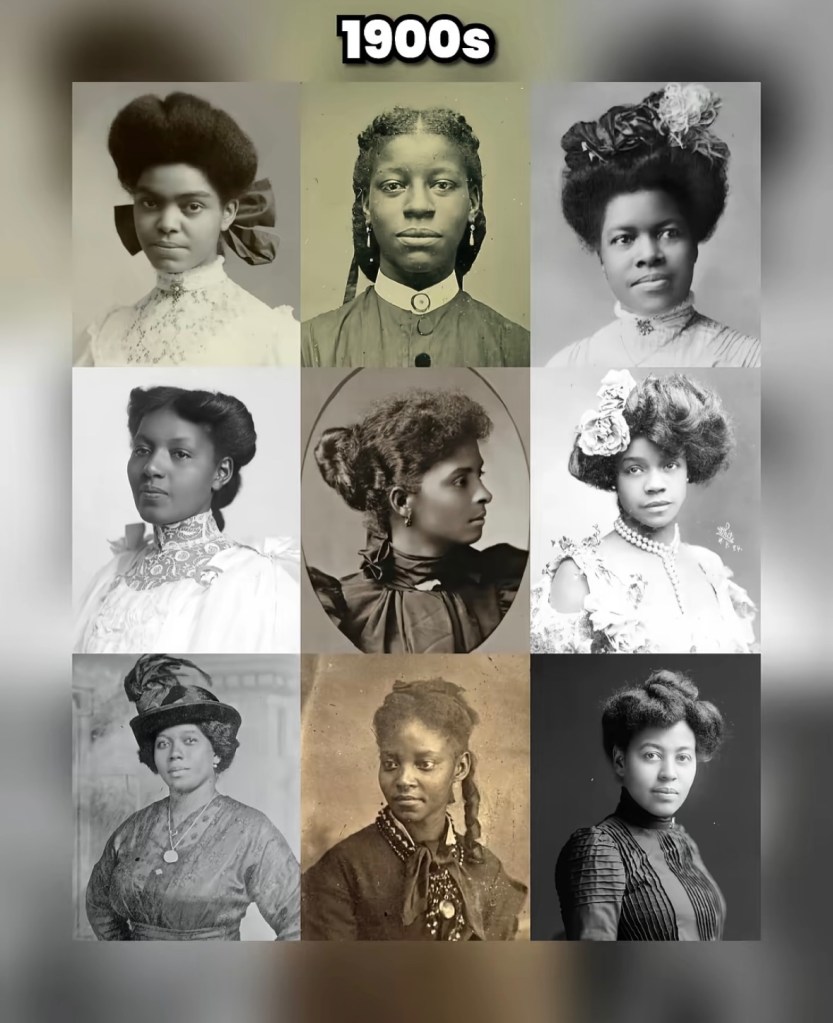
1900s1910s
At the turn of the twentieth century, Black women’s beauty was deeply shaped by resilience, modesty, and self-definition within a racially hostile society. Hairstyles were often practical and protective, including wraps, headscarves, and neatly pressed styles influenced by African traditions and Victorian norms. Despite social limitations, Black women maintained dignity through careful grooming, skin care using natural oils, and adornment that reflected pride and self-respect rather than excess.
During the 1910s, migration from rural Southern communities to urban centers began reshaping Black aesthetics. Hair was frequently styled in soft waves, buns, and pompadours, often achieved through hot combing—a controversial yet common tool of the era. Beauty culture expanded through Black-owned businesses, notably Madam C. J. Walker, who emphasized cleanliness, confidence, and economic independence rather than Eurocentric imitation.

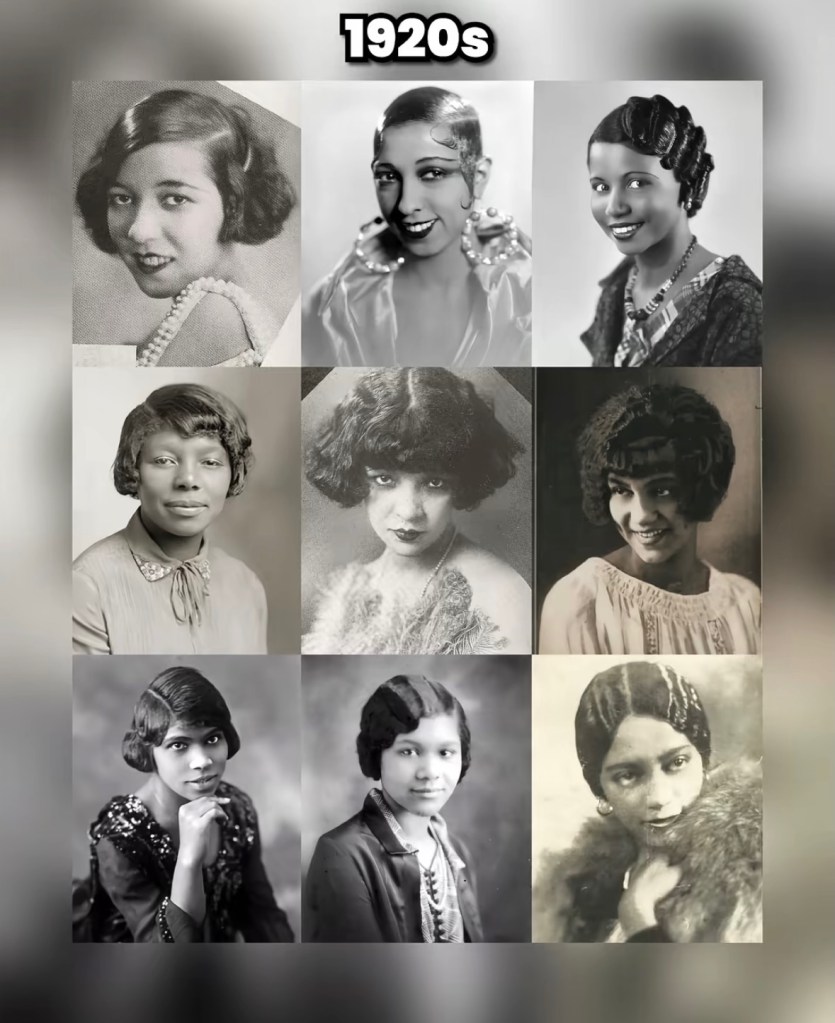
1920s
The Harlem Renaissance of the 1920s marked a cultural awakening in which Black beauty became visible, expressive, and artistic. Shorter hairstyles, finger waves, and sleek bobs emerged, paired with bold lipstick and refined fashion. Black women embodied modernity and glamour, asserting intellectual and aesthetic authority through music, literature, and visual style that celebrated sophistication and cultural pride.

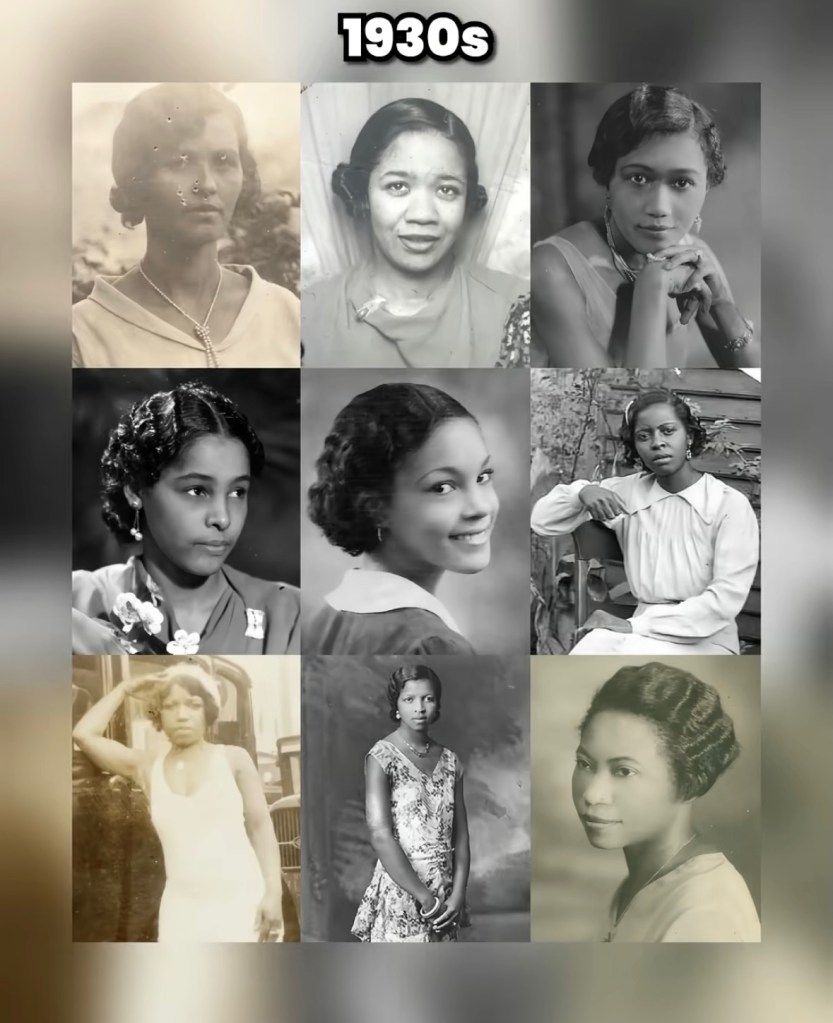
1930s
In the 1930s, amid the Great Depression, Black beauty reflected elegance under constraint. Hairstyles favored sculpted waves, rolls, and pinned curls, while makeup remained polished but understated. Beauty became an act of resistance—maintaining poise, femininity, and grace despite economic hardship. Hollywood films influenced aesthetics, though Black women adapted these styles to their own textures and features.

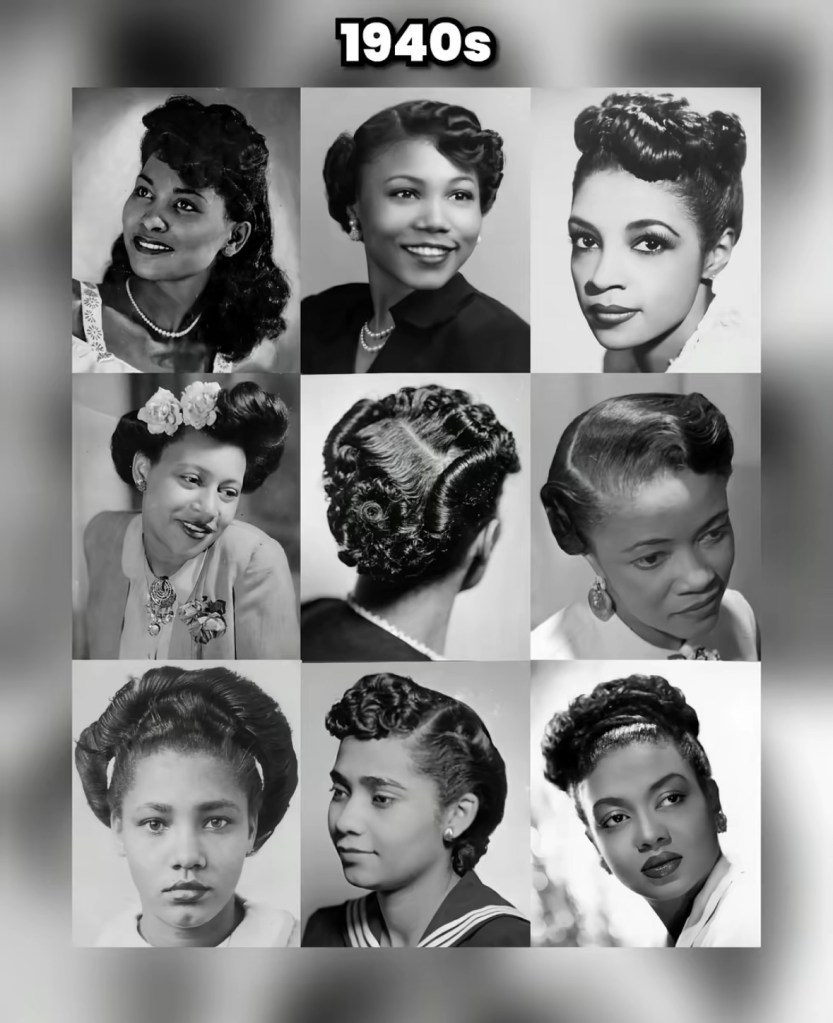
1940s
World War II reshaped Black womanhood and beauty in the 1940s as women entered industrial labor and military support roles. Hairstyles were practical yet stylish, including victory rolls, headscarves, and neatly set curls. Beauty symbolized strength and patriotism, with emphasis on clean lines, red lips, and confident posture reflecting both femininity and fortitude.

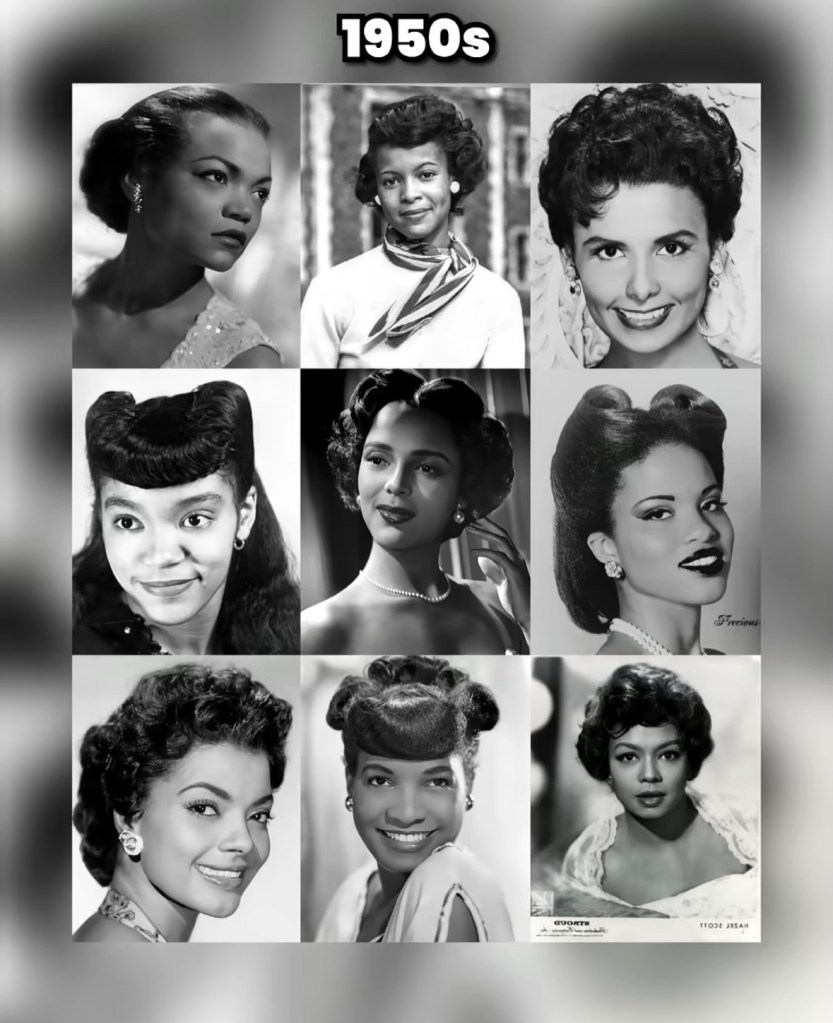
1950s
The 1950s emphasized polish, domestic elegance, and hyper-femininity. Black women wore structured dresses, gloves, and coiffed hairstyles, often straightened or softly curled. Beauty standards leaned toward refinement and respectability, particularly within Black middle-class communities, as appearance was closely tied to social mobility, morality, and dignity in a segregated society.

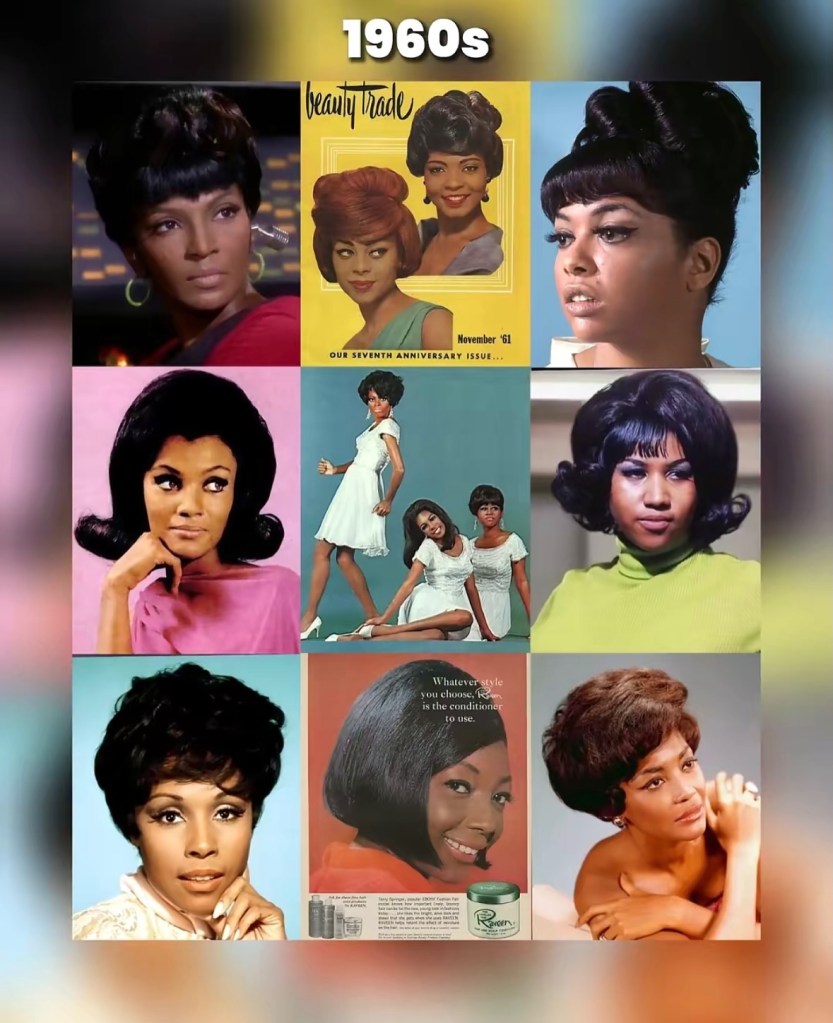
1960s
The 1960s ushered in a radical transformation as the Civil Rights and Black Power movements reframed beauty as political identity. The Afro emerged as a powerful symbol of self-acceptance and resistance, rejecting assimilationist standards. Natural hair, dark skin, and African-inspired clothing were embraced as declarations of pride, autonomy, and cultural truth.

1970s
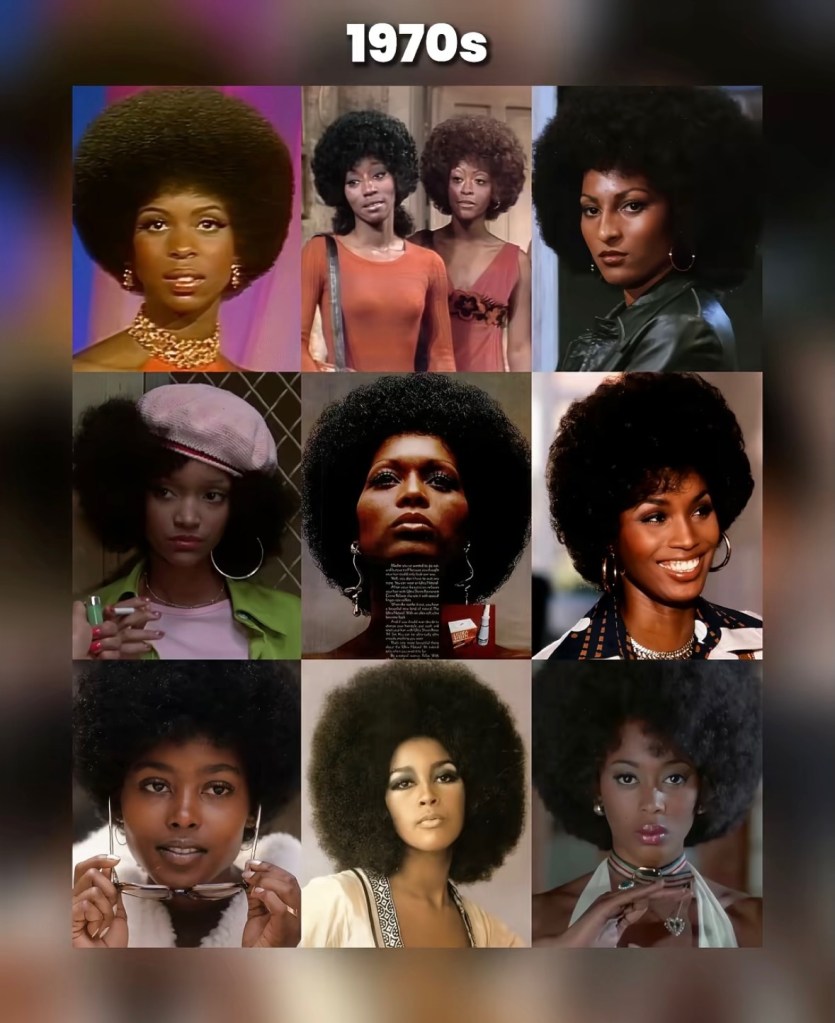
In the 1970s, Black beauty flourished in boldness, freedom, and Afrocentric expression. Large Afros, braids, cornrows, and natural textures dominated, paired with vibrant makeup and fashion. Icons like Pam Grier and Cicely Tyson embodied a confident sensuality rooted in authenticity rather than approval. Beauty became expansive, expressive, and unapologetically Black.

1980s
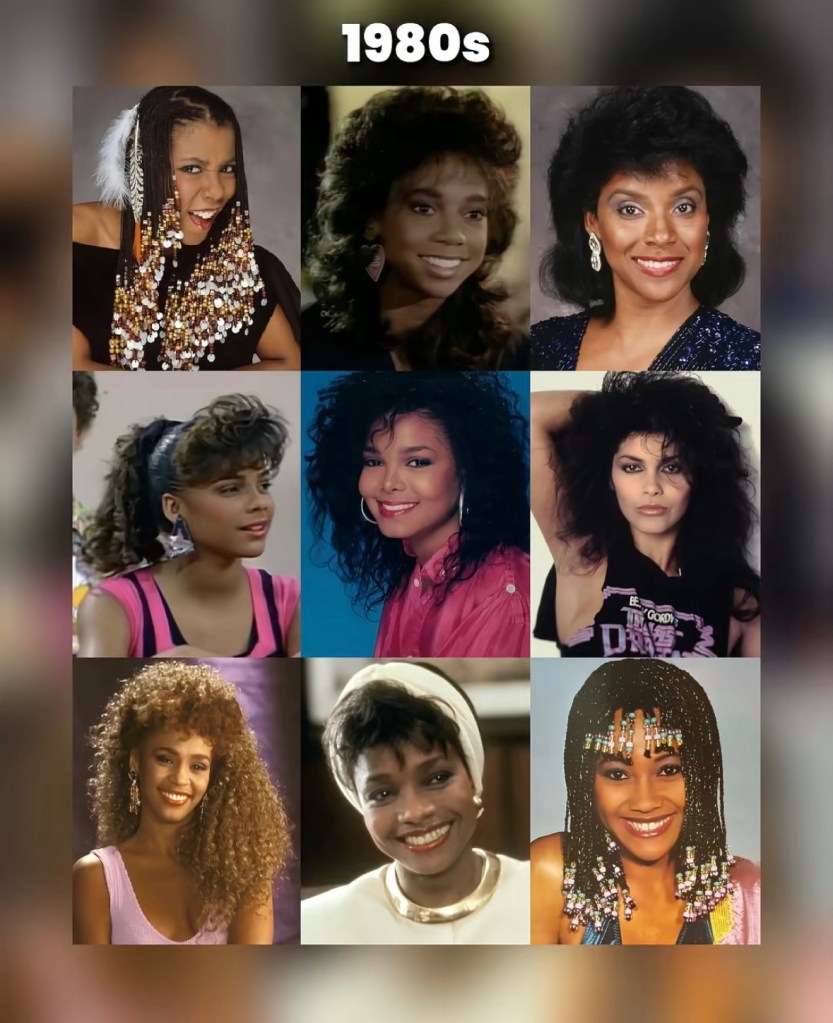
The 1980s brought excess, experimentation, and glamour. Black women embraced voluminous hairstyles, including jheri curls, blowouts, and elaborate braids. Makeup was bold, featuring strong eyes and glossy lips. Beauty aligned with success, visibility, and power, reflecting growing representation in music, television, and corporate spaces.

1990s
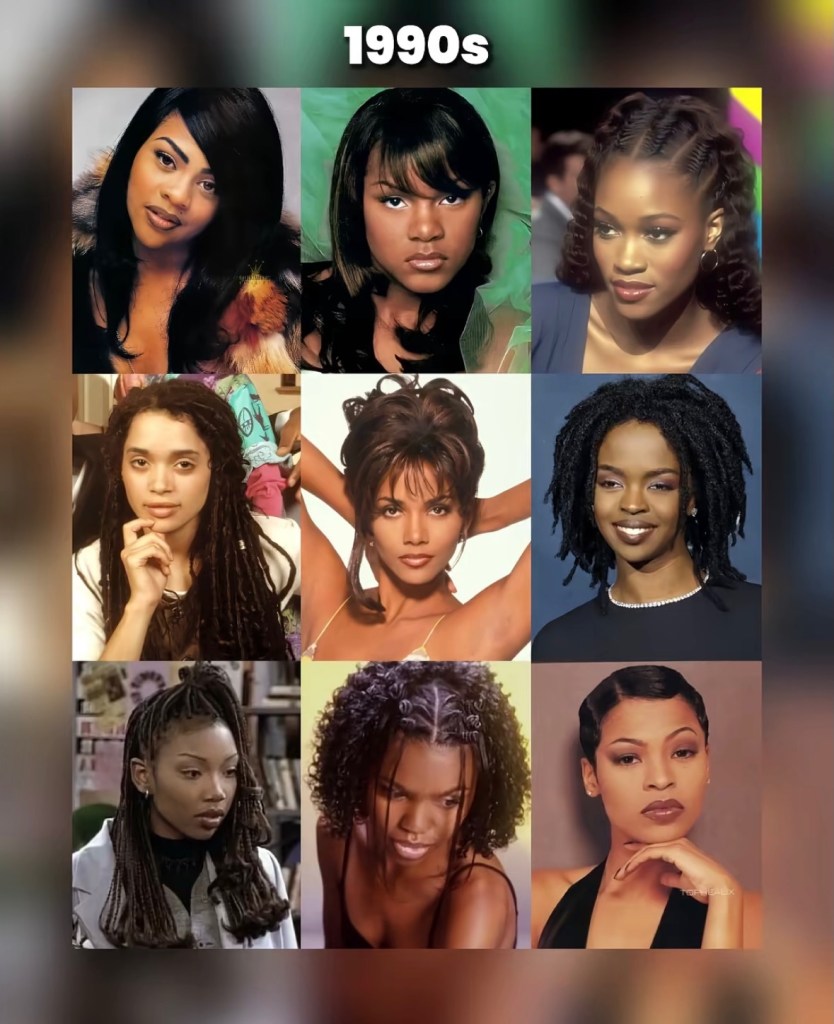
The 1990s balanced minimalism with cultural edge. Box braids, microbraids, finger waves, and sleek bobs coexisted alongside understated makeup and fashion. Black beauty icons such as Naomi Campbell and Angela Bassett represented strength, athleticism, and global elegance. Authenticity and individuality increasingly defined attractiveness.

2000s
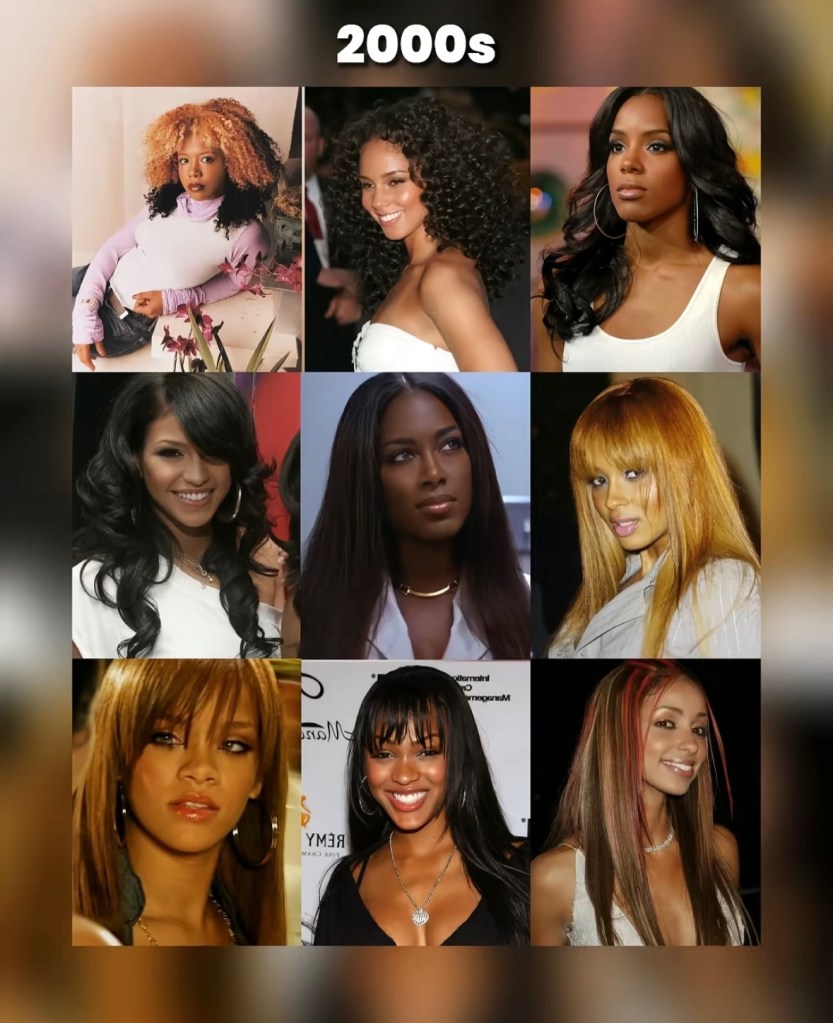
In the 2000s, Black beauty diversified across mainstream and niche aesthetics. Lace fronts, silk presses, locs, and protective styles gained popularity, alongside experimental makeup and fashion. Media visibility expanded through music videos, magazines, and early digital platforms, allowing Black women to define beauty on their own terms across multiple expressions.

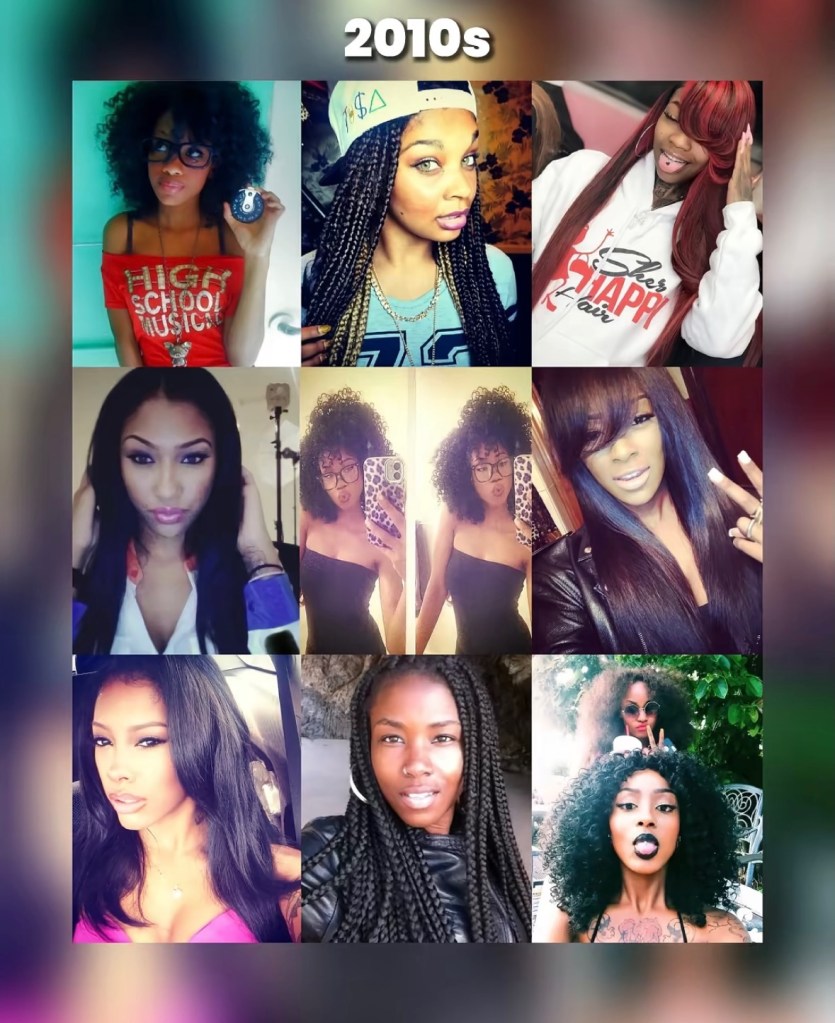
2010s
The 2010s marked a renaissance of natural hair and digital empowerment. Social media amplified Black women’s voices, celebrating coils, curls, dark skin, and wide features once marginalized. Beauty became inclusive, instructional, and affirming, with natural hair movements and makeup brands explicitly centering Black women’s needs and aesthetics.

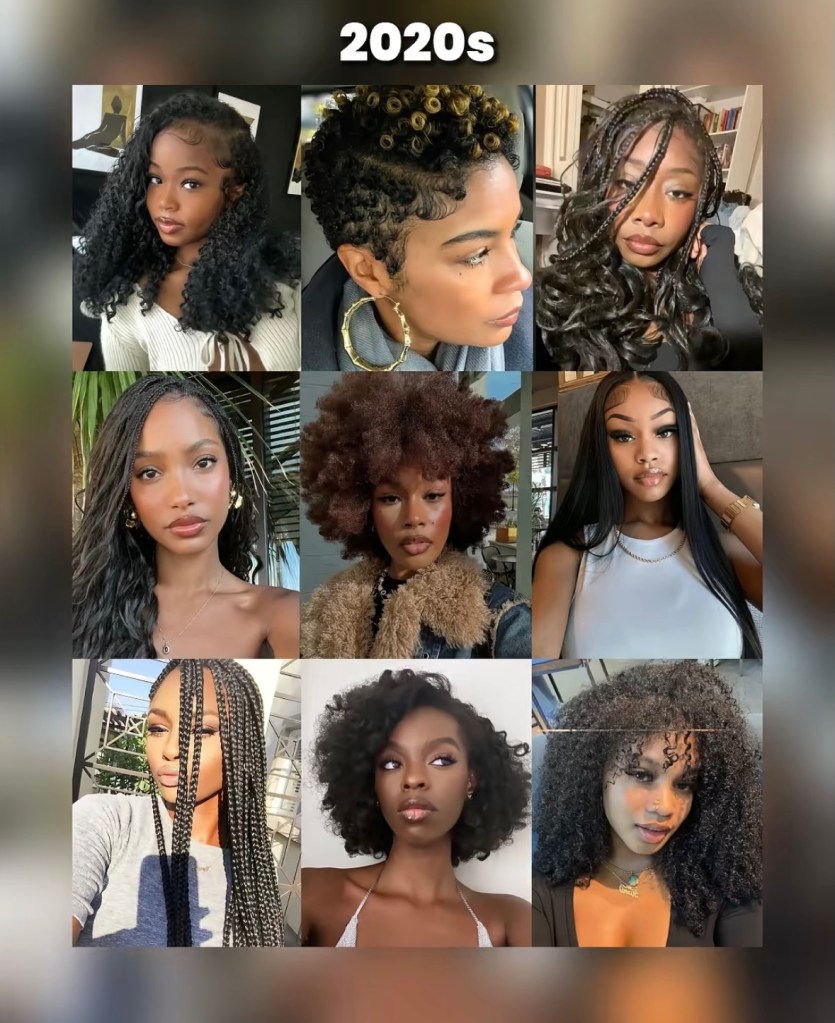
2020s
In the 2020s, Black beauty stands fully autonomous, expansive, and global. There is no single standard—locs, Afros, braids, shaved heads, bold colors, and minimalist looks coexist without hierarchy. Beauty is now framed as wellness, self-definition, and cultural inheritance. Black women lead beauty innovation, redefine luxury, and affirm that Blackness itself is timelessly beautiful.


Black beauty endures because it is rooted in truth rather than approval. It is not borrowed, diluted, or dependent on trends—it is ancestral, self-defined, and ever-evolving. Across centuries of challenge and transformation, Black beauty has remained a quiet force and a bold declaration, reflecting dignity, creativity, and spiritual strength. It is the beauty of survival refined into grace, of history carried with pride, and of identity claimed without apology. In every generation, Black beauty stands as living evidence that what was once denied has always been divine, whole, and worthy.

References

Byrd, A. D., & Tharps, L. L. (2014). Hair story: Untangling the roots of Black hair in America (2nd ed.). St. Martin’s Press.

Craig, M. L. (2002). Ain’t I a beauty queen? Black women, beauty, and the politics of race. Oxford University Press.

Hobson, J. (2005). Venus in the dark: Blackness and beauty in popular culture. Routledge.

Peiss, K. (2011). Hope in a jar: The making of America’s beauty culture. University of Pennsylvania Press.

Walker, S. B. (2007). Style and status: Selling beauty to African American women, 1920–1975. University Press of Kentucky.

Wilson, J. (2016). Black beauty: Aesthetic politics in modern African American culture. University of Illinois Press.

The Hair Diaries: The Myth of Good Hair

The idea of “good hair” is a myth rooted not in biology or beauty, but in power. Hair, in all its textures, is a natural extension of the human body, growing exactly as it was designed to grow. No strand that emerges from a healthy scalp is bad, defective, or inferior. Scripture affirms that God’s creation is intentional and good in every form (Genesis 1:31, KJV).

The “good hair versus bad hair” narrative emerged from colonialism and slavery, not from truth. European features were elevated as the standard of beauty, while African features were devalued to justify domination. Hair texture became a visible marker used to rank humanity along racial lines (Byrd & Tharps, 2014).

During slavery, hair texture was tied to social survival. Straighter hair was associated with proximity to whiteness and, in some cases, less brutal treatment. This produced a hierarchy within Black communities that persists today, even though its origin is rooted in trauma rather than preference.

Coily, kinky, and tightly curled hair was labeled “excessive” because it resisted assimilation. It could not easily conform to European grooming norms without chemical or mechanical alteration. Resistance, not inferiority, is what made this hair political.

Biologically, coily hair is a marvel of design. Its spiral structure helps protect the scalp from intense sun exposure and reduces heat absorption. These textures evolved as an adaptive strength, not a flaw (Jablonski, 2015).

Black hair also demonstrates incredible versatility. It can be braided, twisted, loc’d, coiled, stretched, sculpted, wrapped, and worn free. Few hair types carry such cultural, artistic, and functional range.

Historically, African hairstyles communicated age, marital status, tribe, spirituality, and social role. Hair was language before colonization disrupted these systems. To demean Black hair is to demean African knowledge systems (Thompson, 1983).

The hatred directed toward Black hair often reflects fear of difference rather than aesthetic judgment. What cannot be controlled is often labeled unprofessional, wild, or inappropriate. This language exposes anxiety, not truth.

The Bible does not rank hair textures. Scripture emphasizes modesty, order, and reverence—not conformity to Eurocentric appearance. God looks at the heart, not the curl pattern (1 Samuel 16:7, KJV).

Black hair has been policed in schools, workplaces, and public spaces, revealing how deeply the myth of “good hair” is institutionalized. Laws like the CROWN Act exist because natural hair was treated as a threat to order rather than a neutral human trait.

The pressure to alter Black hair has often been framed as professionalism. Yet professionalism is a social construct shaped by those in power. Hair that grows naturally from the head cannot be unprofessional by nature.

Internalized hair bias is one of the most painful legacies of colonialism. When Black children learn to dislike their own hair, it is not personal insecurity but inherited harm. Healing begins with truth-telling and affirmation.

Speaking positively about Black hair is not exclusionary; it is corrective. Affirmation restores balance where distortion has reigned. Celebrating Black hair does not diminish other hair types—it ends false hierarchy.

Coily hair teaches patience, care, and attentiveness. It thrives when treated gently and intentionally. This relationship fosters self-awareness and self-respect rather than shame.

The Bible describes God as a creator of diversity, not uniformity. If variety glorifies God in nature, it also glorifies Him in human appearance (Psalm 104:24, KJV).

The myth of “good hair” survives because it benefits systems that profit from insecurity. Entire industries were built on convincing Black people that their natural hair needed correction.

Black hair is not a trend, a rebellion, or a statement—it is a reality. Its presence does not require justification or explanation. It simply exists because God designed it to.

When Black people wear their hair freely, it is an act of self-acceptance, not defiance. Freedom should not be mistaken for aggression.

Restoring reverence for Black hair is part of restoring dignity. What was once mocked is now being reclaimed, not as fashion, but as truth.

All hair that grows from the head is good hair. Coily hair is not excessive; it is expressive. Kinky hair is not unmanageable; it is powerful. Curly hair is not a problem to solve, but a gift to honor.

The myth of good hair collapses when truth stands upright. Black hair needs no permission to exist beautifully—it already does.


References

Byrd, A. D., & Tharps, L. L. (2014). Hair story: Untangling the roots of Black hair in America. St. Martin’s Press.

Jablonski, N. G. (2015). Skin color: A natural history. University of California Press.

Thompson, R. F. (1983). Flash of the spirit: African and Afro-American art and philosophy. Vintage Books.

The Holy Bible, King James Version (Genesis 1:31; 1 Samuel 16:7; Psalm 104:24).

Hair Is the Crowning Glory

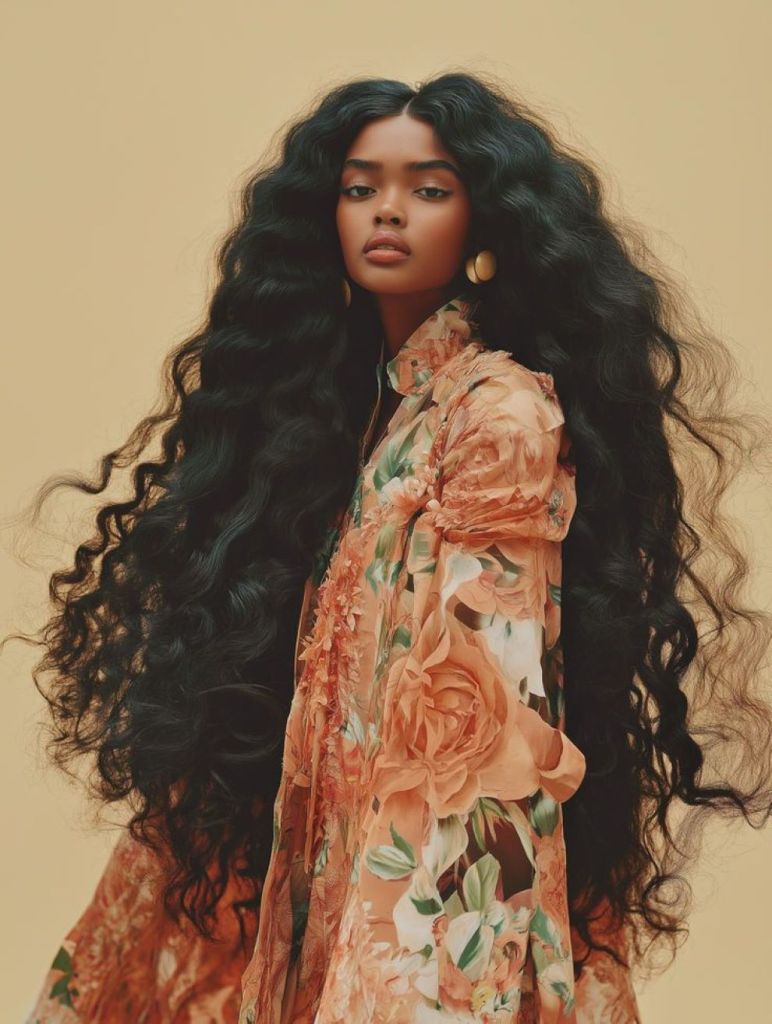
This photograph is the property of its respective owner. No copyright infringement intended.

Hair is more than adornment — it is an anointing. In every strand lies a story, in every curl, a code of creation. Scripture declares, “If a woman have long hair, it is a glory to her: for her hair is given her for a covering” (1 Corinthians 11:15, KJV). To understand the sacredness of hair is to recognize it as both physical beauty and spiritual symbolism — a divine marker of identity and inheritance.

For the Black woman, hair is history. It has been braided in kingdoms, cut in captivity, covered in faith, and celebrated in freedom. Each texture — from the tightest coil to the softest wave — bears the fingerprint of God’s artistry. It connects her not only to her ancestors but to the Creator who crowned her with distinction.

In ancient Africa, hair was language. Styles conveyed tribe, status, age, and even spiritual calling. The Yoruba, Himba, and Fulani women wore their stories on their scalps, transforming their heads into living manuscripts of identity. To touch a woman’s hair was to read her soul. In this way, hair became both heritage and halo.

The transatlantic slave trade attempted to sever that connection. Enslaved women were often forced to shave their heads, a violent act of dehumanization meant to erase tribal lineage and pride. Yet, even in bondage, hair remained a silent act of resistance — braided maps, hidden seeds, and whispered prayers wove freedom into every plait.

When Paul wrote of hair as a woman’s glory, he spoke of divine order — not vanity, but sacred symbolism. Hair represents covering, covenant, and consecration. In the Bible, Nazarites like Samson carried divine strength in their locks (Judges 16:17). The cutting of his hair symbolized the breaking of a spiritual vow. Likewise, a woman’s hair remains a visible emblem of her spiritual integrity.

The Black woman’s hair has always carried more than aesthetic meaning — it bears cultural warfare. From workplace discrimination to school dress codes, society has repeatedly tried to regulate her crown. But the CROWN Act and a rising chorus of self-love movements declare a new era: her hair is no longer a battleground but a banner of liberation.

Natural hair is not rebellion; it is revelation. It reveals the divine geometry of God’s creation — coiled like galaxies, spiraled like fingerprints, and strong enough to defy gravity. Each strand stands as a metaphor for resilience: stretched, twisted, and yet unbroken. To wear one’s natural hair is to testify, “I am fearfully and wonderfully made” (Psalm 139:14, KJV).

From wigs and weaves to locs and fros, Black hair expresses multiplicity — not confusion, but creativity. It evolves, transforms, and reinvents itself just as the woman does. Her hair is her canvas; her crown is her story. To style her hair is not vanity but ritual — a daily affirmation of worth and womanhood.

The sacred ritual of haircare connects generations. Mothers oil their daughters’ scalps with tenderness, whispering lessons of patience and pride. Grandmothers pass down recipes of shea, coconut, and castor — ancient anointing oils for modern queens. In those intimate moments, hair becomes ministry.

Hair is also prophetic. It carries spiritual resonance — the way it grows, sheds, and renews mirrors the seasons of a woman’s life. It teaches her detachment when it breaks, humility when it thins, and gratitude when it flourishes. Her crown becomes a compass of divine timing.

To cover the head, as practiced in many biblical and Hebraic traditions, is an act of reverence, not repression. It symbolizes spiritual submission, protection, and modesty. But whether covered or uncovered, sacred femininity reminds her that the glory lies not in the style, but in the spirit beneath it.

Colorism and Eurocentric beauty ideals once tried to shame the kink and celebrate the curl that conformed. Yet today, locs, afros, and braids have returned to their throne. Each twist and cornrow becomes a crown of resilience — a statement that she no longer seeks to assimilate but to ascend.

In the diaspora, hair has been both burden and beacon. It has endured burning combs, toxic relaxers, and societal rejection. Yet, like the phoenix, it rises again — embracing its natural rhythm, its divine pattern. What was once mocked is now magnified.

The theology of hair is the theology of glory. Just as Christ’s transfiguration revealed His divine nature, a woman walking in her authenticity reveals God’s creative intention. Her crown is not for decoration but for declaration: that she is chosen, set apart, and sovereign.

When she adorns her hair with beads, scarves, or oils, she is not performing — she is prophesying. Each adornment is symbolic: beads of remembrance, scarves of sanctity, oils of anointing. Her head becomes holy ground, her hair a visible altar of gratitude.

Hair connects heaven and heritage. In African cosmology, the head — ori — is the seat of destiny, the place where divine purpose dwells. To honor the hair is to honor the spiritual headship God placed upon woman — a reminder that she walks with divine covering and creative authority.

Her hair carries memory — of pain, of pride, of prayer. Each style tells of seasons survived: the big chop of new beginnings, the protective style of rest, the natural growth of self-acceptance. Through each transition, she learns that her beauty is not borrowed; it is born of God.

To despise her natural hair is to reject her divine design. But to embrace it is to walk in resurrection — a restoration of what colonialism tried to cut away. In loving her hair, she reclaims her history, her holiness, and her harmony with heaven.

Thus, hair becomes more than a crown; it becomes a covenant. It binds the woman to her lineage and to her Lord. In the sacred rhythm of braiding, washing, and wrapping, she remembers that she is a daughter of Zion — crowned with compassion, wrapped in wisdom, and radiant in glory.

For indeed, hair is not just her glory — it is her testimony. It tells the world that she has survived every storm and still stands crowned. Her head lifted, her crown intact, she becomes the living fulfillment of Scripture: “She shall give to thine head an ornament of grace: a crown of glory shall she deliver to thee” (Proverbs 4:9, KJV).


References

  • The Holy Bible, King James Version. (n.d.).
  • Byrd, A., & Tharps, L. L. (2014). Hair Story: Untangling the Roots of Black Hair in America. St. Martin’s Press.
  • hooks, b. (2000). Feminism Is for Everybody: Passionate Politics. South End Press.
  • Collins, P. H. (2000). Black Feminist Thought: Knowledge, Consciousness, and the Politics of Empowerment. Routledge.
  • Walker, A. (1983). In Search of Our Mothers’ Gardens: Womanist Prose. Harcourt.
  • Tate, S. A. (2009). Black Beauty: Aesthetics, Stylization, Politics. Ashgate.
  • Banks, I. (2000). Hair Matters: Beauty, Power, and Black Women’s Consciousness. New York University Press.

Natural Hair: Identity, Beauty, and the Power of Embracing Your Roots

This photograph is the property of its respective owner. No copyright infringement intended.

Natural hair is more than a style—it is an expression of identity, culture, and self-acceptance. For many Black women and men, natural hair represents a return to authenticity and a refusal to conform to standards that were never created with them in mind. The beauty and freedom of natural hair stretch beyond aesthetics; it is deeply spiritual, emotional, historical, and physical.

Natural hair carries tremendous benefits, starting with its health. Free from harsh chemicals, relaxers, and heat damage, natural hair can thrive in its truest state. Without chemical breakdown, the curl pattern stays strong, the strands retain elasticity, and the scalp experiences less irritation. The health benefits alone encourage many to embrace their natural texture unapologetically.

Natural hair also promotes self-love by encouraging individuals to connect with their authentic selves. It requires one to accept their God-given crown exactly as it grows. This acceptance builds confidence, identity, and pride, especially in a world where European beauty standards still dominate mainstream perceptions.

Another benefit of natural hair is its versatility. Curls, coils, kinks, locs, twist-outs, braid-outs, afros, bantu knots, silk presses—natural hair offers endless styling options. This adaptability allows creative expression and empowers individuals to showcase their personality through their look.

Beyond versatility, natural hair symbolizes heritage. It carries the stories of ancestors who braided maps into hair, used it to store seeds during the Middle Passage, and saw their identity attacked and regulated through laws. Wearing natural hair today is a reclaiming of dignity and cultural power.

Despite its value, natural hair has often been misunderstood or unaccepted in society. Many people struggle with it because they were conditioned to believe straight hair is “neat,” “professional,” or “beautiful,” while natural hair was labeled as “wild” or “unmanageable.” These beliefs are rooted in racism and Eurocentric standards that have shaped beauty norms for centuries.

Even today, some individuals do not like their natural hair because they were taught to see it as an inconvenience rather than a blessing. Internalized bias can lead people to reject their curl patterns, compare themselves to others, or feel pressure to alter their appearance. Healing this mindset requires unlearning generational narratives and embracing new ones.

Social acceptance of natural hair has improved, yet discrimination still exists. Workplaces, schools, and public spaces have historically penalized natural textures. Laws like the CROWN Act prove that acceptance is still evolving, highlighting the need for continued advocacy and education surrounding Black hair.

Though society’s acceptance fluctuates, natural hair is gaining visibility and representation. More public figures, influencers, and everyday people proudly embrace their coils, helping normalize natural textures and expand definitions of beauty. The movement encourages younger generations to grow up loving their hair.

Caring for natural hair requires patience, understanding, and consistency. It begins with moisture—water, leave-ins, oils, and butters all support hydration. Natural hair tends to be dry because the curl pattern makes it difficult for natural oils to travel down the strands. This means moisture must be intentionally added.

Protective styles also play a major role in natural hair care. Braids, twists, locs, and updos help prevent breakage, reduce manipulation, and promote growth. Protective styling paired with proper maintenance keeps natural hair healthy and strong.

Understanding your hair type—whether loose curls, tight coils, or somewhere in between—helps determine what products and methods work best. Each curl type has its own needs, and learning them builds a personalized routine that supports growth and retention.

Natural hair care also includes scalp health. A clean, moisturized scalp encourages healthy growth. Oils such as castor, peppermint, jojoba, and rosemary stimulate circulation and nourish the roots. Healthy hair begins with a healthy foundation.

Detangling is another crucial aspect. Using gentle tools, wide-tooth combs, or fingers reduces breakage. Natural hair thrives when handled with care, especially when wet or stretched to minimize tangles.

Heat usage should be kept to a minimum to preserve the curl pattern. Occasional silk presses are fine, but regular heat can cause damage or loss of curl texture. Natural hair flourishes when heat is controlled and used properly.

One essential fact about natural hair is that shrinkage is a sign of health. Shrinkage shows your curls have elasticity and bounce, which means your strands are strong. Instead of being seen as a flaw, shrinkage should be celebrated as proof of vibrancy.

Another fact is that natural hair grows at the same rate as all human hair—about half an inch per month. What affects length retention is breakage, not growth speed. When natural hair is moisturized and protected, it retains its length effortlessly.

Natural hair is deeply spiritual. For many, it represents liberation, self-discovery, and healing. It is a crown God placed on Black heads—a symbol of royalty and resilience. Embracing natural hair becomes an act of honoring oneself and honoring the Creator.

Ultimately, natural hair is beauty, culture, and power woven together. It is a reminder that Black identity is rich, divine, and unique. Embracing natural hair is not just about appearance—it is about reclaiming worth, rejecting narrow beauty standards, and walking confidently in the glory of one’s natural design. Embracing your natural hair is embracing yourself, fully and fearlessly.

References
CROWN Act resources
Psalm 139:14 (identity and creation)
Historical scholarship on Black hair and culture

Cultural Appropriation vs. Appreciation: Hair, Fashion, and Music.

Photo by Bestbe Models on Pexels.com

Cultural appropriation and appreciation are concepts that often generate debate, particularly in creative industries such as hair, fashion, and music. While cultural appreciation involves learning from, respecting, and honoring another culture, cultural appropriation occurs when elements of a marginalized culture are adopted superficially, stripped of context, or used for profit without acknowledgment. For Black communities, whose cultural contributions have historically been exploited, understanding this distinction is essential in preserving heritage, identity, and agency.

In the realm of hair, cultural appropriation has frequently manifested through the adoption of traditionally Black hairstyles—braids, dreadlocks, cornrows—by non-Black individuals without acknowledgment of the historical and social significance. These hairstyles, long stigmatized in professional and educational settings for Black individuals, are often celebrated or commodified when worn by others (Thompson, 2019). Cultural appreciation, by contrast, involves learning the history, giving credit to Black culture, and respecting the lived experiences associated with these styles.

Fashion is another domain where the lines between appropriation and appreciation are frequently blurred. Designers and brands often adopt African-inspired patterns, textiles, and traditional garments without consultation or credit to the originating communities. When cultural symbols are used solely for aesthetic or commercial gain, it constitutes appropriation; when designers collaborate with local artisans, highlight the cultural context, and share profits fairly, it reflects appreciation (Rogers, 2006). This distinction emphasizes the importance of agency and acknowledgment in cultural exchange.

Music has similarly been affected by appropriation. Black musical forms such as jazz, hip-hop, R&B, and rap have been historically adopted and commercialized by non-Black artists, sometimes erasing the contributions of the originators. Cultural appreciation, on the other hand, involves studying the roots of the genre, respecting its historical context, and supporting artists within the community (Floyd, 1995). Misappropriation in music often leads to economic exploitation and diminished recognition for Black creators.

Cultural Appropriation vs. Appreciation: Quick Guide

1. Hair

ActionAppropriationAppreciation
Wearing cornrows, dreadlocks, or bantu knotsWearing styles without understanding history; dismissing the struggles Black people face for wearing natural hairLearning about the hairstyle’s cultural roots; crediting Black originators; supporting Black-owned salons
Using productsUsing Black hair products solely for trend/fashionSupporting Black-owned hair brands and educating yourself about hair care traditions

2. Fashion

ActionAppropriationAppreciation
African prints, dashikis, or traditional garmentsWearing garments purely for aesthetics; ignoring cultural significanceCollaborating with artisans; crediting communities; giving fair compensation
Jewelry and accessoriesUsing sacred symbols as casual fashionLearning the meaning and symbolism before wearing; respecting cultural context

3. Music

ActionAppropriationAppreciation
Sampling or performing genres like hip-hop, jazz, or R&BExploiting without credit; profiting while originators remain unrecognizedStudying genre history; crediting Black artists; supporting the community financially
Performance styleAdopting cultural expressions superficiallyEngaging with the culture authentically; understanding context; collaboration with originators

4. Key Principles to Avoid Appropriation

  • Educate Yourself: Learn the history and significance of cultural elements.
  • Give Credit: Always acknowledge the originators or communities.
  • Fair Compensation: Support artists, designers, or creators financially.
  • Respect Sacred Elements: Avoid trivializing spiritual or sacred cultural items.
  • Intent Matters: Ask if your action honors or exploits the culture.

5. Spiritual Reminder

“Thou shalt not oppress a stranger: for ye know the heart of a stranger, seeing ye were strangers in the land of Egypt” (Exodus 23:9, KJV).

  • Treat all cultures with empathy, respect, and ethical consideration.

The psychological effects of cultural appropriation are significant. When elements of a marginalized culture are commodified or misrepresented, it can reinforce feelings of marginalization, invisibility, and frustration among community members. For Black women, hair appropriation is particularly impactful, as hair is intimately connected to identity, beauty, and self-expression (Thompson, 2019). The contrast between stigmatization of Black hair in professional settings and its commodification elsewhere creates cognitive dissonance and emotional stress.

Legally and commercially, the distinction between appropriation and appreciation also affects intellectual property and compensation. While cultural elements often lack copyright protection, ethical standards dictate that originating communities receive recognition and financial benefit when their cultural artifacts are utilized commercially. This principle applies to fashion collaborations, music sampling, and hairstyle commercialization.

Historically, cultural appropriation has roots in colonialism, slavery, and systemic exploitation. Dominant groups have often taken cultural elements from marginalized populations while simultaneously denying those populations agency and economic benefit. Recognizing this history is essential for distinguishing between respectful cultural exchange and harmful appropriation.

Promoting cultural appreciation involves education, respect, and intentionality. Key strategies include learning about the origins of cultural elements, acknowledging creators publicly, providing fair compensation, and engaging in dialogue with communities about proper representation. These steps help prevent exploitation and foster cross-cultural understanding.

The Bible provides principles that align with cultural respect and appreciation: “Thou shalt not oppress a stranger: for ye know the heart of a stranger, seeing ye were strangers in the land of Egypt” (Exodus 23:9, KJV). This verse emphasizes empathy, respect, and ethical treatment of others, which can be applied to cultural exchange and the avoidance of appropriation.

In conclusion, differentiating cultural appropriation from appreciation is critical in hair, fashion, and music. Appreciation involves acknowledgment, respect, and fair benefit for originators, while appropriation exploits cultural elements for profit or aesthetics without context. By educating oneself, respecting historical significance, and fostering ethical collaboration, individuals and institutions can honor marginalized cultures and contribute to equitable representation.


References

  • Floyd, S. A. (1995). The Power of Black Music: Interpreting Its History from Africa to the United States. Oxford University Press.
  • Rogers, R. A. (2006). From cultural exchange to transculturation: A review and reconceptualization of cultural appropriation. Communication Theory, 16(4), 474–503.
  • Thompson, C. (2019). Black Hair: Art, Style, and Culture. Bloomsbury Academic.
  • The Holy Bible, King James Version.

From Kinky to Crown: The Politics and Pride of Black Hair

“Black hair is beautiful, but society has often told us otherwise. It is a statement of identity, resistance, and pride.” — Dr. Ayana Byrd, author of Hair Story

“My hair is my crown, and I wear it with pride. Every curl tells a story.” — Lupita Nyong’o


Photo by TUBARONES PHOTOGRAPHY on Pexels.com

Black hair has long been a symbol of identity, heritage, and culture. The textures range from tightly coiled kinks to soft waves, each reflecting the rich diversity of African ancestry. However, the politics surrounding Black hair are deeply tied to historical and social power structures. Eurocentric standards of beauty have positioned straight hair as the “universal standard,” often marginalizing naturally textured hair. This has created a spectrum of discrimination, from overt workplace bias to subtler societal messaging about what constitutes “good” versus “bad” hair. Understanding the textures, cultural history, and politics of Black hair is essential to fostering pride, resilience, and self-acceptance within the Black community.


The Textures and Cultural Significance

Black hair textures vary widely, commonly classified into four types (1–4), with subcategories (A–C) based on curl tightness and pattern. Type 1 is straight hair, which is rare among people of African descent. Type 2 is wavy, Type 3 is curly, and Type 4 is coily/kinky, characterized by tightly packed curls. Each texture carries cultural significance: in African societies, hairstyles represented social status, tribal affiliation, and spiritual beliefs. The Bible also references hair as a sign of strength and identity; for example, Samson’s hair was a symbol of his God-given strength (Judges 16:17, KJV). These textures have been politicized in modern society, where natural hair has often been stigmatized in favor of straightened, chemically relaxed styles.


The Impact of Media and Societal Standards

Media representations reinforce the notion that straight hair is the universal standard of beauty, creating a pervasive hierarchy of hair textures. “Good hair,” often described as straight or loosely curled, is historically linked to proximity to whiteness, while kinky or coily hair has been labeled “bad” or unprofessional (Byrd & Tharps, 2001). These messages have psychological and emotional impacts, influencing self-esteem, identity formation, and social mobility. Mothers, aware of societal bias, often teach children to view their natural hair as needing taming or improvement, inadvertently perpetuating internalized bias. Celebrities and public figures like Lupita Nyong’o challenge this narrative, celebrating natural hair as a crown of heritage and a statement of self-worth.


Care, Products, and Community Perspectives

Caring for Black hair requires attention to moisture, protective styling, and gentle handling to prevent breakage. Recommended products include shea butter, coconut oil, jojoba oil, and sulfate-free shampoos and conditioners. Popular protective styles include braids, twists, locs, and cornrows. Black men have expressed diverse opinions on Black hair, ranging from appreciation of natural textures to preferences shaped by societal norms. These perspectives highlight the ongoing negotiation of identity, beauty, and social perception within the community. Scholars emphasize that reclaiming pride in natural hair fosters empowerment and combats internalized oppression (Banks, 2016).


Conclusion

Black hair is more than aesthetic; it is a political and cultural statement that reflects history, identity, and resilience. From kinky coils to loose curls, hair embodies a legacy of survival, pride, and spiritual significance. By understanding hair textures, rejecting media-imposed hierarchies, and embracing culturally affirming care practices, the Black community can reclaim the crown of natural beauty. As Lupita Nyong’o asserts, each curl tells a story, and through this recognition, Black hair can be celebrated rather than stigmatized. Embracing the politics and pride of Black hair is a step toward self-love, cultural affirmation, and generational healing.


References

  • Banks, I. (2016). Hair Matters: Beauty, Power, and Black Women’s Consciousness. NYU Press.
  • Byrd, A., & Tharps, L. (2001). Hair Story: Untangling the Roots of Black Hair in America. St. Martin’s Press.
  • Lupita Nyong’o. (2014). Personal Interview: Celebrating Natural Hair. Essence Magazine.
  • Roberts, D. (2010). Shaping Beauty, Shaping Race: African American Women and Hair Politics. Duke University Press.
  • The Holy Bible, King James Version.

TEXTURISM and Hairism: The Politics of Black Hair, Beauty Hierarchies, and Racial Identity

These photographs are the property of their respective owners.

Hair is more than an aesthetic expression; it is an emblem of identity, culture, power, and resistance. In racialized societies, however, the natural hair textures of African-descended peoples have long been devalued and stigmatized. One of the most insidious manifestations of this stigma is texturism—a form of discrimination based on hair texture that prioritizes looser, straighter, or more “manageable” hair over tightly coiled, kinkier hair. Closely linked to hairism, which broadly encompasses prejudice based on hair type and style, texturism reflects internalized racism and the lingering colonial legacies that shape beauty standards globally. This essay explores the roots, meanings, and consequences of texturism and hairism, tracing their origins through enslavement, Eurocentric aesthetics, and media representation, while also examining pathways toward hair acceptance and reclamation.


Defining Texturism and Hairism

Texturism is the preferential treatment of individuals with loosely curled or straight hair textures over those with tightly coiled or kinky hair. The term was coined by natural hair advocate Chassity Jones in the early 2010s, though the concept existed long before. Hairism, a broader term, refers to discrimination based on hair—whether through texture, length, or perceived neatness. Both terms expose a hierarchy that privileges proximity to Eurocentric beauty ideals, reflecting deeply entrenched social and racial structures.

Historically, hairism and texturism are legacies of colonialism and slavery. Enslaved Africans in the Americas were mocked and punished for their hair, which was seen as wild, untamed, or inferior to the smooth, straight hair of Europeans. Over time, this bias became internalized within Black communities, creating harmful classifications like “good hair” (straight or loosely curled) and “bad hair” (kinky or tightly coiled). These distinctions perpetuated social divisions, reinforcing white supremacist ideologies under the guise of grooming and professionalism.


Hair Texture Types and Their Racial Associations

Hair texture is commonly categorized using the Andre Walker Hair Typing System, developed by Oprah Winfrey’s stylist in the 1990s. It breaks down hair types into four major categories:

  • Type 1: Straight hair (most commonly found among East Asians and Europeans).
  • Type 2: Wavy hair
    • 2A-2C: Light waves to coarse, frizzy waves (found in some Latinx, Middle Eastern, and European populations).
  • Type 3: Curly hair
    • 3A-3C: Loose, springy curls to tight corkscrews (common among mixed-race individuals and some Black and Latinx people).
  • Type 4: Coily or kinky hair
    • 4A-4C: Soft, tight coils to densely packed Z-shaped kinks (predominantly found in people of African descent).

Type 4 hair, particularly 4B and 4C, is often mislabeled as “nappy,” “unkempt,” or “unprofessional,” despite its remarkable versatility and strength. This classification system, while useful in describing curl patterns, has also unintentionally contributed to a hierarchy in which looser curls are perceived as more attractive and acceptable than tighter coils.


“Good Hair” vs. “Bad Hair”: Origins and Impact

The phrase “good hair” emerged during the antebellum era in the United States, when lighter-skinned enslaved people with straighter hair—often the children of white slave owners—were granted preferential treatment. “Good hair” was hair that mimicked the European aesthetic: straight, smooth, and easily tamed. Conversely, “bad hair” referred to the coarser, kinkier textures of African people, which were labeled undesirable.

The legacy of these terms endures today. Black children still experience discrimination in schools for wearing their natural hair. Black professionals are pressured to straighten their hair or wear wigs and weaves to conform to Eurocentric corporate standards. The CROWN Act (Creating a Respectful and Open World for Natural Hair), first passed in California in 2019, had to be introduced precisely because hair-based discrimination remains legal in many parts of the U.S.

“I had to learn that my hair is not the problem—the world’s refusal to see my beauty is.”
—Lupita Nyong’o

“Our hair is political, spiritual, historical, and beautiful. It tells the story of who we are.”
—Dr. Yaba Blay

These quotes reflect a growing cultural movement toward reclaiming natural hair and affirming Black identity on its own terms, rather than through the gaze of whiteness.


The Origins of the Term “Nappy”

The term “nappy” is believed to have originated during slavery, used derogatorily to describe the tightly coiled hair of Africans, likening it to the coarse texture of cotton or the naps in sheep’s wool. Its use was designed to dehumanize and shame enslaved Africans, stripping their hair—and by extension, their identity—of any value or beauty. While some have sought to reclaim “nappy” as a term of empowerment, its historical weight continues to stir deep emotions and debate within Black communities.

Kinky Hair / Tightly Coiled Hair

Kinky or coily hair refers to hair textures that form tight curls or zig-zag patterns, often classified as Type 4. This hair type is rich in cultural and genetic heritage, yet is frequently misunderstood. Contrary to myths of unmanageability, kinky hair is incredibly versatile and can be styled in braids, locs, afros, twists, and bantu knots. However, due to its tendency to shrink and its fragility, it requires specific care and moisture retention.

Why is this hair type stigmatized? The answer lies in colonial aesthetics: beauty standards were built around whiteness. Kinky hair was demonized as evidence of racial inferiority and disorder—ideas perpetuated by pseudo-scientific racism. As a result, even within Black communities, looser curls or silkier textures have been idealized, creating a painful hierarchy of desirability.


Why Do Some Black People Struggle to Love Their Hair?

Centuries of anti-Blackness have conditioned many Black individuals to see their natural hair as burdensome or ugly. The media, education, and even family dynamics have reinforced these messages. Hair relaxers, hot combs, and weaves became tools of survival—ways to assimilate and escape ridicule. These practices, while empowering for some, also reflect a historical pressure to conform.

This struggle is not due to self-hate in isolation but to systemic programming. As author Chimamanda Ngozi Adichie once said:

“The problem with stereotypes is not that they are untrue, but that they are incomplete. They make one story become the only story.”

The dominant story about Black hair has been one of shame. It is time to replace that narrative with one of pride, knowledge, and celebration.


Toward Hair Liberation: Learning to Appreciate All Hair

Appreciating all hair types begins with education, representation, and liberation from Eurocentric norms. Schools and workplaces must eliminate discriminatory policies and embrace cultural diversity. Media outlets should highlight a broader spectrum of beauty. Families must unlearn generational biases and uplift natural beauty from early childhood.

Hair appreciation means understanding that no one texture is inherently better than another. Each type has unique needs, characteristics, and histories. Straight hair is not superior—just different. Looser curls are not more professional—just more familiar to a colonized eye.

When we affirm all hair textures, we affirm the humanity, dignity, and worth of all people.


Conclusion

Texturism and hairism are not simply issues of personal preference—they are extensions of colonial legacies, white supremacy, and internalized racism. They operate through language, beauty standards, school policies, and job opportunities, creating tiers of acceptance based on proximity to whiteness. But within this struggle lies opportunity: to reclaim, redefine, and rejoice in the beauty of all textures. Black hair is not “bad hair”; it is cultural memory made visible, it is resistance in every coil, it is ancestral glory written in strands. The journey to dismantle texturism begins not with hair products, but with truth—and with a collective commitment to healing.


References

Blay, Y. (2021). One Drop: Shifting the Lens on Race. Beacon Press.

Byrd, A. D., & Tharps, L. L. (2014). Hair Story: Untangling the Roots of Black Hair in America (Revised Edition). St. Martin’s Press.

Craig, M. L. (2002). Ain’t I a Beauty Queen? Black Women, Beauty, and the Politics of Race. Oxford University Press.

Hunter, M. (2011). Buying racial capital: Skin-bleaching and cosmetic surgery in a globalized world. The Journal of Pan African Studies, 4(4), 142–164.

Opie, T. (2019). The CROWN Act and the fight against hair discrimination. Harvard Business Review. Retrieved from https://hbr.org

Tate, S. A. (2007). Black beauty: Shade, hair and anti-racist aesthetics. Ethnic and Racial Studies, 30(2), 300–319. https://doi.org/10.1080/01419870601143927