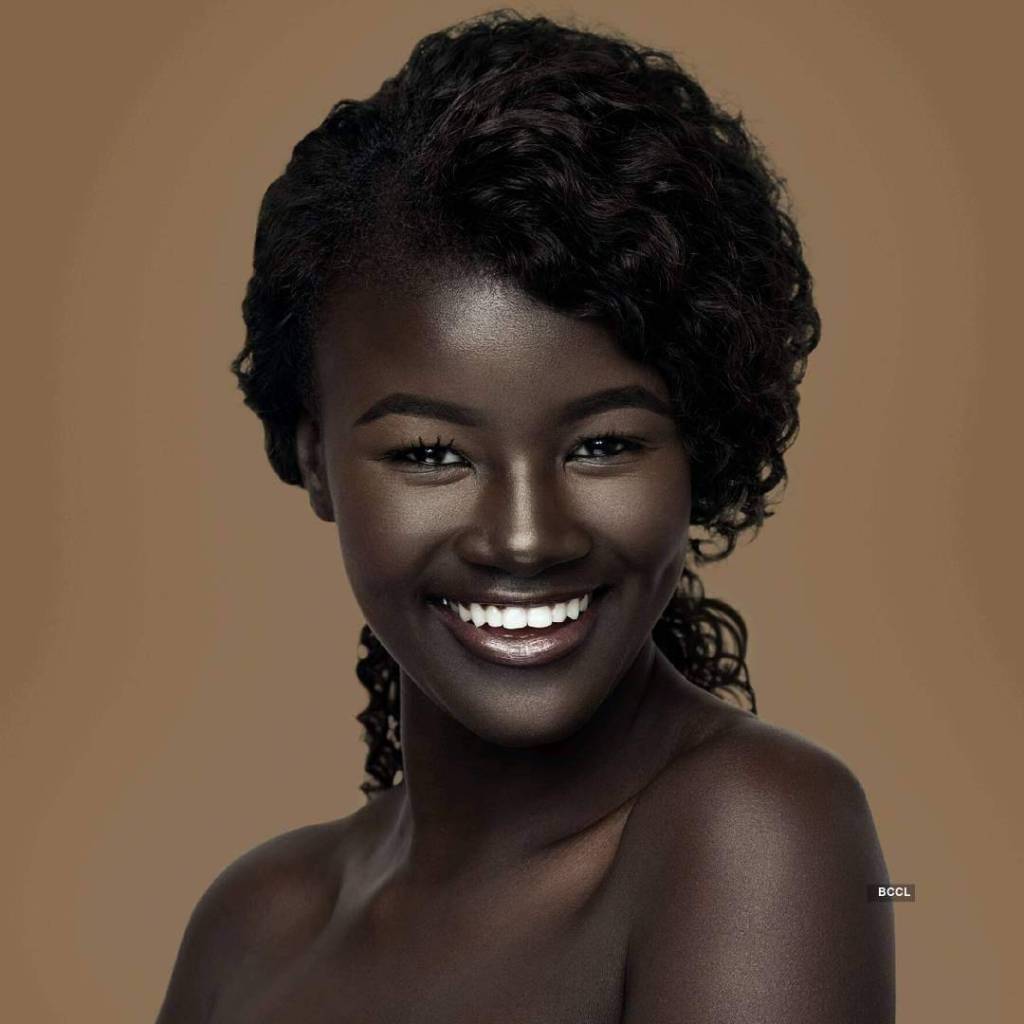
Khoudia Diop, globally known as the “Melanin Goddess,” is a Senegalese model, entrepreneur, and cultural icon celebrated for her extraordinarily deep ebony complexion and her fearless celebration of Black beauty. She has become a living symbol of power, pride, and unapologetic self-love, inspiring millions around the world to embrace dark skin in a society that has historically marginalized it.
Born and raised in Senegal, Khoudia grew up in a culture where colorism was deeply ingrained, and from a young age she faced teasing and ridicule for her dark complexion. Instead of internalizing shame, she gradually transformed those experiences into strength, choosing to view her skin as a source of identity and beauty rather than something to hide. Her journey reflects the emotional reality of many dark-skinned women across the African diaspora.
Khoudia’s entry into modeling did not come through traditional fashion pathways. She began by posting self-portraits on social media, where her striking appearance quickly went viral. Her images stood out in a digital space dominated by Eurocentric beauty standards, and soon she attracted attention from photographers, brands, and global media outlets who recognized her unique presence.
Her modeling career took off as she began working with international photographers and fashion campaigns that centered on diversity and representation. Unlike conventional models, Khoudia built her brand organically, without an agency at first, proving that authenticity and confidence could compete with industry gatekeeping. She became known not just for her looks, but for her message.
Khoudia is widely recognized for her velvety midnight complexion, high cheekbones, piercing eyes, and serene yet commanding aura. Her beauty is often described as celestial and ancestral, evoking African royalty and divine femininity. She does not conform to beauty standards—she redefines them.
Throughout her career, Khoudia has used her platform to speak openly about colorism, self-worth, and mental health, especially among young Black girls. She has stated that her mission is to normalize dark skin and to ensure that future generations grow up seeing themselves reflected positively in media and fashion.
Beyond modeling, Khoudia is also an entrepreneur. She founded a fashion and lifestyle brand focused on empowerment and inclusivity, using her business ventures to extend her message beyond imagery into tangible social impact. Her work blends beauty with activism, positioning her as a cultural leader rather than just a visual icon.
Khoudia is a wife and mother, and she has spoken about how motherhood deepened her understanding of self-love and responsibility. She often shares reflections on raising children in a world shaped by racial bias, emphasizing the importance of teaching pride, confidence, and identity from an early age.
Her milestones include global media features, international fashion campaigns, public speaking engagements, and recognition as one of the most influential dark-skinned models of the modern era. While she may not collect traditional fashion awards, her true recognition lies in her cultural impact and the millions of people who credit her for changing how they see themselves.
Khoudia Diop is an Ebony Doll because she represents the highest expression of melanated beauty—unfiltered, radiant, and spiritually powerful. She is not simply admired; she is symbolic. Her life stands as proof that Blackness does not need validation from external systems—it is already divine, complete, and worthy of reverence.
This photograph is the property of its respective owner. No copyright infringement intended.
Melanin has long been viewed through a social, aesthetic, and at times oppressive lens, yet beneath surface narratives lies profound biological, historical, and spiritual significance. Melanin is not merely pigment—it is a biochemical treasure, a molecular shield, and a marker of resilience. To speak of melanin is to enter a conversation about identity, memory, divinity, and survival.
Biologically, melanin is a natural polymer responsible for skin, hair, and eye color. It exists in eumelanin, pheomelanin, and neuromelanin forms, each with precise biological functions (Simon et al., 2009). Eumelanin produces rich brown and black hues, functioning as the body’s natural armor against ultraviolet radiation. Those richly endowed with melanin possess enhanced protection from sun damage and oxidative stress.
The molecular properties of melanin have led many scholars and thinkers to call it a biochemical jewel. It absorbs and transforms light, protects DNA, neutralizes free radicals, and supports cellular stability (Hill, 1992). It is a biological blessing—an evolutionary adaptation honed to thrive under intense sunlight. In this way, melanin becomes symbolic of ancestral endurance in equatorial regions, where ancient civilizations flourished.
Neuromelanin—found in the brain—invites deeper conversation. It is concentrated in regions associated with movement, memory, and emotional regulation (Zecca et al., 2008). The presence of melanin in neural structures has fueled scientific curiosity and cultural pride. Though still under study, neuromelanin may play a role in neurological health, stress resilience, and cognitive processes.
The historical framing of melanin diverges sharply from its biological brilliance. Colonial narratives weaponized skin tone, divorcing melanin from its scientific majesty. People with higher melanin content were cast into artificial hierarchies designed to devalue their humanity and legacy. Yet the very trait used to marginalize Black people is one of nature’s greatest evolutionary triumphs.
Melanin’s perceived mystical value predates colonial discourse. Ancient African civilizations viewed dark skin as a sign of divine power, lineage, and sacred connection to the sun. In Kemet (Egypt), the term Khem symbolized Blackness, fertility, and sacred life (Diop, 1974). To be melanated was to be spiritually potent and cosmically aligned.
Thus arises the metaphor of melanin as “the Golden Fleece.” In Greek mythology, the Golden Fleece symbolized royalty, cosmic blessing, and divine right. To liken melanin to the Golden Fleece is to reclaim the narrative—it is a crown, not a curse. This metaphor challenges societies to re-evaluate the value systems that commodified white aesthetics and vilified Black embodiment.
Spiritually, melanin carries a symbolic weight in Black consciousness movements. The Bible proclaims, “I am black, but comely” (Song of Solomon 1:5, KJV), affirming beauty and dignity in dark skin. Scripture often references dark skin in contexts of royalty, ancestral lineage, and divine intimacy. Spiritual identity and physical identity intertwine.
Social narratives around melanin continue to evolve. The reclamation of Black beauty, culture, and identity represents a collective unshackling from Eurocentric paradigms. Melanin becomes not simply a biological trait, but a cultural banner—a reminder of ancestral legacy and global influence. It is an emblem of survival in systems designed to erase it.
Psychologically, embracing melanin strengthens self-concept and mental resilience. When individuals internalize pride in their natural features—skin, hair, facial structure—they reclaim agency from colorist and racist conditioning (Banks, 2010). The mind becomes liberated when the body is no longer viewed as inferior.
Colorism remains a lingering shadow over melanin discourse. Preference for lighter skin persists globally, rooted in colonial history and social stratification. Yet the global shift toward celebrating dark skin disrupts this narrative, signaling a cultural renaissance. The body becomes a site of revolution and rebirth.
Social media contributes to this awakening. While it has perpetuated beauty hierarchies, it has also become a platform for melanated celebration. Campaigns honoring dark skin tones challenge historical erasure and elevate diverse aesthetics. Visibility becomes liberation.
Scientifically, melanin may hold future technological and medical promise. Research explores melanin’s potential in radiation shielding, bioelectronics, and regenerative medicine (Kim et al., 2019). The same pigment marginalized socially may become a key to future innovation. Such irony underscores the disconnect between perception and reality.
Economically, “melanin markets” emerge in beauty and media spaces. The world profits from Black style, culture, and features even as Black bodies fight for recognition and safety. To claim melanin’s value is to demand equity, representation, and ownership in industries enriched by Black aesthetics.
The spiritual dimension remains profound. Melanin symbolizes creation, depth, and cosmic mystery. It evokes earth, night, and universe—the fertile darkness from which life emerges. In Genesis, creation begins in darkness before light. Darkness is not absence; it is origin.
To honor melanin is not to elevate one group above another, but to correct historical lies. It is a restoration of dignity and truth. Melanin becomes metaphor, biology, legacy, and prophecy—a reminder that identity is both physical and sacred.
The Golden Fleece metaphor anchors melanin as treasure, not because others lack value, but because Blackness has been historically undervalued. To value melanin is to heal collective wounds and uplift future generations. The world flourishes when every hue is honored.
Ultimately, melanin embodies resilience and radiance. It reflects sunlight, history, struggle, and triumph. Those who carry it inherit a story of survival and sacredness. Melanin is memory written into flesh.
To know melanin is to honor the past and walk boldly into the future. It is a science, a symbol, and a song. It is the Golden Fleece—rare, royal, radiant.
References
Banks, K. H. (2010). African American college students’ experiences with racial discrimination and the role of racism socialization. Journal of Applied Social Psychology, 40(6). Diop, C. A. (1974). The African origin of civilization: Myth or reality. Lawrence Hill Books. Hill, H. Z. (1992). The function of melanin or six blind people examine an elephant. BioEssays, 14(1). Kim, Y. J., et al. (2019). Melanin’s applications in bioelectronics and medicine. Biomaterials, 214. Simon, J. D., Peles, D., & Wakamatsu, K. (2009). Current challenges in understanding melanogenesis. Pigment Cell & Melanoma Research, 22(5). Zecca, L., et al. (2008). The role of neuromelanin in neurological disorders. Journal of Neural Transmission, 115(11).
Emerging from the depths, a shimmer in the light, Brown skin gleams with stories, both ancient and bright. Each droplet a testament, each curve a song, In the tapestry of heritage, we all belong. Rich as earth, deep as night, A tapestry of ancestral light. Golden hues in sun’s embrace, A legacy etched upon the face. Strength and beauty intertwined, In every shade, a story is defined.
Glow is often used in popular culture to describe radiant, healthy skin, but behind the aesthetic appeal lies a biological marvel: melanin. Understanding how melanin functions, its impact on skin health, and its role in beauty offers both scientific insight and cultural affirmation for individuals with melanin-rich skin.
Dr. Frances Cress Welsing’s work, The Isis Papers: The Keys to the Colors, delves into the concept of the “Golden Fleece” as a metaphor for the genetic potential and beauty inherent in Black individuals.. In her writings, she emphasizes the unique and powerful attributes of Black skin, often highlighting its radiance and resilience. ResearchGate+3PBS+3Wikipedia+3
The “Golden Fleece” metaphorically represents the richness and depth of Black identity and heritage. It’s a poetic way to acknowledge the inherent beauty and strength that radiates from within, much like the glow that can be seen when light reflects off skin after emerging from water.
Melanin: Nature’s Protective Pigment
Melanin is a natural pigment responsible for skin, hair, and eye color. It is produced by specialized cells called melanocytes, which convert the amino acid tyrosine into pigment through a process called melanogenesis. Melanin serves a crucial biological function: it protects the skin from ultraviolet (UV) radiation, reducing the risk of DNA damage, premature aging, and certain types of skin cancer.
The Link Between Melanin and Skin Health
Individuals with higher melanin content have natural photoprotection, which contributes to healthier skin over time. Melanin acts as a natural sunscreen, absorbing UV rays and preventing excessive sun damage. However, proper skin care remains essential: hydration, nourishment, and protection from environmental stressors enhance the natural glow, while avoiding harsh chemicals and overexposure to sun preserves skin integrity.
Melanin and Aesthetic Glow
A radiant complexion is often associated with high melanin content because melanin-rich skin can reflect light in a warm, luminous manner. This natural radiance is enhanced by proper hydration, nutrition, and self-care practices. Beyond aesthetics, the glow symbolizes resilience and heritage, linking biological function to cultural identity.
What is Melanin?
Definition: Natural pigment responsible for skin, hair, and eye color.
Function: Protects skin from harmful UV rays and reduces DNA damage.
Visual Idea: Diagram showing melanocytes producing melanin in the skin layers.
2. Melanin and Natural Radiance
Glow Factor: Reflects light in warm, luminous tones.
Significance: Radiance signals health, vitality, and resilience.
Visual Idea: Gradient spectrum of melanin-rich skin glowing under soft light.
3. Skin Health Tips for a Natural Glow
Hydration: Drink water to maintain cellular function.
Nutrition: Eat foods rich in antioxidants, vitamins C & E, and healthy fats.
Sun Protection: Use sunscreen to prevent hyperpigmentation and UV damage.
Visual Idea: Icons representing water, fruits/veggies, sunscreen, and skincare bottles.
4. Cultural and Psychological Power
Heritage: Melanin-rich skin represents ancestral pride and identity.
Confidence: Embracing natural glow strengthens self-esteem and counters colorism.
Visual Idea: Illustration of diverse brown-skinned women celebrating their glow with affirmations.
5. Daily Affirmations for Your Glow
“My melanin is my shield and my shine.”
“My glow reflects my heritage, health, and beauty.”
“I embrace and celebrate my natural radiance every day.”
Visual Idea: Typography-based banners layered over gradient brown tones.
Cultural and Psychological Significance
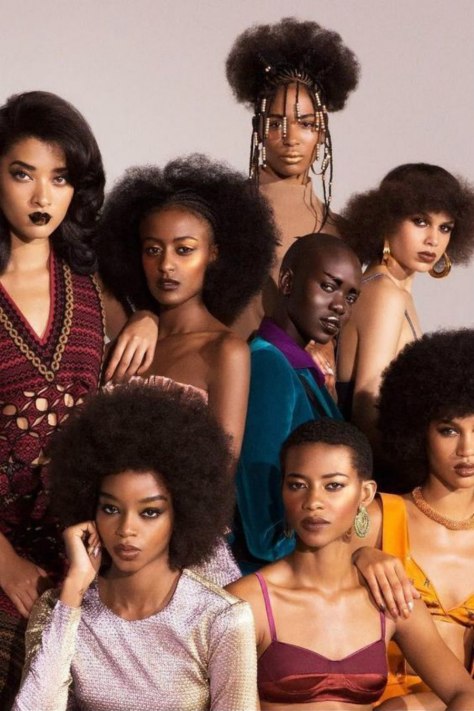
Melanin has been historically undervalued due to Eurocentric beauty standards and colorism. Embracing melanin-rich skin as beautiful and healthy fosters self-esteem, pride, and identity affirmation (Hunter, 2007). When communities celebrate melanin, glow becomes both a physical and psychological marker of confidence, resilience, and empowerment.
Practical Tips for Enhancing Your Natural Glow
Hydration: Water consumption supports cellular function and skin vitality.
Nutrition: Diets rich in antioxidants, vitamins C and E, and healthy fats promote skin radiance.
Sun Protection: Even melanin-rich skin benefits from sunscreen to prevent hyperpigmentation and UV damage.
Gentle Skin Care: Avoid harsh exfoliants and chemical treatments that disrupt natural skin balance.
Affirmation and Confidence: Embrace your natural glow as a reflection of heritage, health, and beauty.
Conclusion
Glow is more than surface-level radiance—it is the intersection of biology, health, and cultural identity. Melanin not only protects the skin but also enhances its aesthetic appeal, symbolizing resilience, heritage, and self-pride. By understanding and caring for melanin-rich skin, individuals can cultivate a natural glow that is both scientifically supported and culturally empowering. Glow is both science and culture. By understanding melanin’s protective role, practicing healthy skincare, and embracing natural beauty, your glow becomes a declaration of confidence, heritage, and empowerment.
References
Hunter, M. (2007). The Persistent Problem of Colorism: Skin Tone, Status, and Inequality. Sociology Compass, 1(1), 237–254.
Brenner, M., & Hearing, V. J. (2008). The protective role of melanin against UV damage in human skin. Photochemistry and Photobiology, 84(3), 539–549.
The Holy Bible, King James Version. (1611). Song of Solomon 1:5.
This photograph is the property of its respective owner.
Throughout history and across continents, skin tone has functioned as more than a biological trait—it has been weaponized as a social currency. Pigmentocracy, a term used to describe a social system in which status and privilege are distributed according to skin color, persists as a subtle yet powerful force that governs the lives of people of color across the globe. Rooted in colonial conquest and racial ideology, pigmentocracy maintains a stratified racial order in which lighter-skinned individuals occupy higher social positions, while those with darker skin tones are systematically marginalized. This essay explores the origins, manifestations, and consequences of pigmentocracy—especially within Black communities—and examines its relationship to colorism, media representation, social mobility, and global racial hierarchies.
“Pigmentocracy is the silent architect of racial division—a hierarchy built not just on color, but on the invisible weight of colonial trauma.” —Dr. Margaret Hunter, Sociologist
Origins and Definition of Pigmentocracy
Pigmentocracy derives from the Latin pigmentum (color) and the Greek kratos (rule or power), meaning “rule by skin color.” Though the term was popularized in the 20th century by scholars like Venezuelan sociologist Fernando Henríquez and further developed by researchers such as Dr. Edward Telles, the ideology behind pigmentocracy dates back centuries. During colonial rule in the Americas, Europe established caste systems that ranked people according to racial mixing and skin tone, with lighter, European features correlating with higher status. The Spanish casta system, for example, created over a dozen racial categories, elevating whiteness and subjugating those with darker skin.
This system became entrenched not only in law but also in psychology and economics. Slavery, apartheid, Jim Crow, and segregation all functioned on the premise that whiteness was supreme and blackness inferior. Within this structure, pigmentocracy served to divide enslaved and colonized peoples by elevating those with lighter complexions—often the result of rape or mixed heritage—as overseers, house servants, or social intermediaries. The legacy of this system continues to influence the sociopolitical landscapes of nations today.
Pigmentocracy and Colorism
Pigmentocracy is intimately linked to colorism, which refers to discrimination based on skin tone within the same racial or ethnic group. While racism targets individuals across racial categories, colorism reinforces hierarchies within those groups, granting unearned privilege to individuals who possess lighter skin or Eurocentric features. These phenomena reinforce one another: pigmentocracy creates the structure, while colorism sustains it through interpersonal and cultural bias.
In Black communities, colorism often surfaces in beauty standards, educational access, and romantic desirability. Lighter-skinned individuals may be perceived as more attractive, employable, or intelligent, while darker-skinned people face heightened criminalization, poverty, and exclusion. The consequences are both material and psychological—impacting self-worth, identity formation, and economic opportunity.
Stages of Pigmentocratic Impact
The effects of pigmentocracy unfold in four critical stages:
Colonial Codification: European colonists used skin tone to divide and rule, embedding color-based hierarchies into legal systems.
Institutional Reproduction: Post-slavery societies reinforced skin tone hierarchies through employment, education, and housing discrimination.
Cultural Internalization: Within communities of color, lighter skin becomes a subconscious standard of beauty and success.
Modern Globalization: Skin-lightening industries, Western media dominance, and globalized beauty norms continue to uphold the supremacy of light skin across continents.
Global and Cultural Examples
In the United States, sociologist Ellis Monk (2015) found that darker-skinned African Americans face greater economic disadvantage, harsher criminal sentencing, and more health disparities than their lighter-skinned peers. In Brazil, often hailed for its racial “mixing,” skin tone still dictates access to jobs, education, and social networks. India’s deeply entrenched caste system and obsession with fair skin has fueled a billion-dollar skin-lightening industry, while in the Philippines, colonial legacies have left a preference for Eurocentric beauty that permeates advertising and cinema.
Celebrities and the Visibility of Pigmentocracy
In the world of entertainment and media, pigmentocracy is glaringly apparent:
Zendaya, a light-skinned Black actress, has acknowledged the privilege her complexion affords her in casting opportunities, often referred to as “acceptable Blackness” in Hollywood.
Beyoncé, with her lighter skin and blonde hair, has become a global icon, but some critics argue her image conforms to Eurocentric standards that marginalize darker-skinned artists.
Lupita Nyong’o, a dark-skinned actress and activist, has spoken openly about being teased for her skin tone and how she did not see herself represented in media growing up.
In Latin American telenovelas, white or light-skinned actors are consistently cast in leading roles, while darker-skinned Afro-Latinos are relegated to comedic or servant parts.
These examples reflect a system that not only limits opportunities for those with darker skin but actively shapes societal ideals and expectations.
Social Mobility and Racial Hierarchy
Pigmentocracy directly influences social mobility. Lighter-skinned individuals often experience:
Greater access to higher education and employment opportunities
Increased wealth accumulation and professional advancement
Better treatment by law enforcement and healthcare providers
Meanwhile, darker-skinned individuals are frequently relegated to the lowest rungs of the social order. Research has consistently shown that employers favor lighter-skinned candidates, even when qualifications are identical (Hunter, 2007).
Globally, white Europeans occupy the top of the racial hierarchy, with groups perceived as closer to whiteness—such as light-skinned Asians or Latinos—ranking above Black, Indigenous, or dark-skinned populations. This racial ordering maintains white supremacy under the guise of color-neutral meritocracy.
The Psychological Toll and the Call for Change
The psychological toll of pigmentocracy includes internalized racism, self-hatred, and generational trauma. Many Black and Brown children grow up without seeing themselves as beautiful, worthy, or powerful. This invisibility fosters feelings of inferiority and perpetuates cycles of poverty and marginalization.
The solution lies in education, representation, and cultural reprogramming. Schools must teach the true history of colonialism and racism, including the nuances of colorism. Media must expand representation to include diverse shades and features. Communities must affirm the value of dark skin, reframe standards of beauty, and dismantle internalized bias.
Dr. Yaba Blay, a leading scholar on skin tone and identity, insists:
“Until we address the internalized white supremacy that is colorism, we will continue to see ourselves through the gaze of our oppressors.”
Conclusion
Pigmentocracy is not a relic of the past; it is a living, evolving system of inequality that continues to shape the destinies of millions. Its roots in colonialism, its entanglement with colorism, and its reach across cultures and continents make it one of the most insidious social hierarchies in modern history. Addressing this issue requires not only systemic reforms but a radical reimagining of identity, beauty, and worth. Until every shade is seen as equally human and divine, the architecture of pigmentocracy will remain intact—and its silent rule will continue to divide, diminish, and oppress.
References
Blay, Y. (2021). One Drop: Shifting the Lens on Race. Beacon Press.
Monk, E. P., Jr. (2015). The cost of color: Skin color, discrimination, and health among African-Americans. American Journal of Sociology, 121(2), 396–444. https://doi.org/10.1086/682162
Russell, K., Wilson, M., & Hall, R. E. (1992). The color complex: The politics of skin color among African Americans. Anchor Books.
Telles, E. E. (2014). Pigmentocracies: Ethnicity, race, and color in Latin America. University of North Carolina Press.
Where faith, history, and truth illuminate the Black experience.

 THE BROWN GIRL DILEMMA