Tag Archives: god

Divine Identity: Rediscovering Who We Are in God.

Photo by Tima Miroshnichenko on Pexels.com

The search for identity among Black people is not merely historical—it is deeply spiritual. Beneath centuries of oppression and distortion lies a divine truth: we are not accidents of history, but instruments of prophecy. Our existence, heritage, and resilience are written in Scripture long before slavery’s chains and colonization’s lies. Rediscovering who we are in God is both revelation and revolution, a holy awakening that reclaims what was stolen and restores what was silenced.

When God created humanity, He made no mistakes. “So God created man in his own image, in the image of God created he him; male and female created he them” (Genesis 1:27, KJV). This divine image was not limited to one hue or heritage. Yet through centuries of white supremacy, the face of God was painted pale, and His people were depicted as European. This distortion of divinity not only whitened Christ but wounded the collective soul of Black people, teaching us to worship a reflection that excluded us.

To rediscover divine identity is to strip away colonial religion and uncover covenant truth. The Bible is not a European book—it is a Middle Eastern and African text. Many of its central figures were people of color, dwelling in lands like Egypt, Ethiopia, and Canaan. Moses was mistaken for an Egyptian (Exodus 2:19). Christ Himself hid in Africa as a child (Matthew 2:13–15). Simon of Cyrene, who carried His cross, was an African man (Mark 15:21). The Scriptures themselves reveal that the story of salvation is inseparable from the African presence.

White supremacy sought to erase that truth, using false imagery to associate holiness with whiteness and sin with Blackness. This lie, repeated for centuries, fractured the spiritual self-perception of the Black race. Yet the Bible stands in defiance of such deception. “His head and his hairs were white like wool, as white as snow; and his eyes were as a flame of fire” (Revelation 1:14, KJV). The description of Christ in Revelation, with hair like wool and feet like burned brass, contradicts the Western portrayal and restores cultural truth.

For centuries, Black people were taught to see themselves as cursed descendants of Ham—a false doctrine birthed from racist misinterpretation of Genesis 9. But nowhere in Scripture does God curse Ham himself, nor his African lineage. This myth became one of the greatest theological weapons of white supremacy, used to justify slavery and colonization. The true curse, however, fell upon those who twisted God’s Word for oppression.

The rediscovery of divine identity begins with understanding that our spiritual history predates slavery. We are descendants of strength, wisdom, and divine favor. The same God who walked with Abraham and Moses also walked with us through plantations and prisons. We are not forgotten—we are chosen. “But ye are a chosen generation, a royal priesthood, an holy nation, a peculiar people” (1 Peter 2:9, KJV).

To be chosen does not mean to be superior—it means to be set apart for divine purpose. Throughout Scripture, God’s chosen people endured captivity, exile, and oppression. Their suffering was not a sign of rejection but a pathway to redemption. Likewise, the Black experience mirrors the biblical pattern of exile and restoration. Our history of enslavement and struggle bears prophetic resemblance to the children of Israel in Egypt and Babylon.

Our rediscovery must also dismantle the illusion that European Christianity holds a monopoly on truth. Long before Rome adopted the cross, African nations knew God by many names. Ethiopia embraced Christianity centuries before Europe, as recorded in Acts 8:27–39, where an Ethiopian eunuch was baptized by Philip. The first Christian nations were not white—they were African and Semitic. This truth reclaims the faith that was hijacked and used as a tool of oppression.

Spiritual amnesia among Black people has led to generational despair. Many have forgotten that they are the descendants of kings, prophets, and builders of civilizations. The world labeled us slaves, but God called us heirs. “And if children, then heirs; heirs of God, and joint-heirs with Christ” (Romans 8:17, KJV). To rediscover divine identity is to walk again in the authority of inheritance.

Racism has always targeted identity because identity shapes destiny. When a people forget who they are, they become easily controlled. But once they remember, they become unstoppable. This is why the awakening of Black consciousness—rooted in Scripture and history—is so threatening to systems of oppression. Spiritual ignorance maintains bondage; spiritual knowledge births freedom.

The church must reclaim its prophetic voice. Too often, pulpits have preached comfort rather than conviction, submission rather than liberation. True gospel truth uplifts the oppressed and rebukes the oppressor. “Learn to do well; seek judgment, relieve the oppressed, judge the fatherless, plead for the widow” (Isaiah 1:17, KJV). The rediscovery of divine identity demands a return to justice as a sacred duty.

Divine identity is not only racial—it is moral and spiritual. It calls for holiness, integrity, and righteousness. A people who rediscover their divine roots must also live as divine representatives. The world must see through us the reflection of God’s character, not just His color. For identity without virtue becomes vanity, and heritage without holiness becomes hypocrisy.

Healing from false identity also involves reclaiming beauty. The Eurocentric ideal of attractiveness has long devalued melanin, natural hair, and African features. But when God created diversity, He called it good. “And God saw every thing that he had made, and, behold, it was very good” (Genesis 1:31, KJV). To see beauty in Blackness is to see beauty in God’s own creation.

Education plays a sacred role in this awakening. When we study Scripture alongside history, we uncover the continuity between biblical truth and African legacy. We see that wisdom, science, and faith flourished in Africa long before colonial distortion. Rediscovering divine identity means returning to our intellectual and spiritual roots, understanding that knowledge and faith were never meant to be enemies.

Black unity is essential for divine restoration. Division—by colorism, denomination, or class—weakens collective power. Christ prayed, “That they all may be one” (John 17:21, KJV). Our unity is a form of resistance; it restores the divine order that racism tried to destroy. When we love one another as God loves us, we heal the fractures of history.

This rediscovery also demands repentance—from the oppressors who built systems of white supremacy, and from the oppressed who have internalized self-hate. Healing begins when truth replaces lies, and when both sides humble themselves before the Creator. “If my people, which are called by my name, shall humble themselves, and pray… then will I hear from heaven, and will forgive their sin, and will heal their land” (2 Chronicles 7:14, KJV).

To rediscover divine identity is to understand that we are not merely descendants of Africa—we are descendants of God. We are the bridge between suffering and salvation, the living evidence of divine endurance. Our story is not a tragedy; it is a testimony.

As we rise from centuries of distortion, the world will see the restoration of a people once despised but now divinely defined. We are the light the darkness could not extinguish. We are the fulfillment of prophecy—the stone that the builders rejected, becoming the cornerstone of a new era (Psalm 118:22, KJV).

Our calling now is to live in the fullness of who we are—to walk in royal humility, to lead in righteous strength, to love with divine compassion. The rediscovery of identity is not just about knowing our past; it is about shaping our future according to God’s will.

Let this be our declaration: We are not who the world says we are. We are who God says we are. We are chosen, redeemed, and restored. We are the children of the Most High, created in His image, commissioned for His glory. Our divine identity has been reclaimed, and no system, no lie, no power on earth can strip it away again.


References

  • The Holy Bible, King James Version (KJV).
  • Cone, J. H. (1970). A Black Theology of Liberation. Orbis Books.
  • Asante, M. K. (2003). Afrocentricity: The Theory of Social Change. African American Images.
  • Ben-Jochannan, Y. (1970). African Origins of Major Western Religions. Alkebu-Lan Books.
  • Williams, C. (1987). The Destruction of Black Civilization. Third World Press.
  • Wilkerson, I. (2020). Caste: The Origins of Our Discontents. Random House.
  • Du Bois, W. E. B. (1903). The Souls of Black Folk. A. C. McClurg & Co.

Dilemma: Spiritually Shell-Shocked.

Spiritual Prisoners of War.

Photo by Nicola Barts on Pexels.com

In the landscape of American history, the Black experience remains a story marked by both divine endurance and deep trauma. The spiritual and psychological wounds inflicted by systemic racism, economic disenfranchisement, police brutality, and the remnants of Jim Crow laws have created generations that are spiritually shell-shocked—alive yet aching, breathing yet broken. The dilemma lies in navigating faith amid oppression, maintaining hope in a society designed to erode it, and remembering God’s promises when the world appears to forget justice.

From slavery to segregation, the Black soul has endured centuries of assault. The spiritual shell-shock of oppression echoes through time, a collective PTSD that manifests in our communities, churches, and identities. Just as soldiers return from war carrying invisible wounds, so too do descendants of the enslaved carry inherited pain. The difference is that this war was not fought overseas—it was fought on American soil, in cotton fields, courtrooms, and city streets.

Systemic racism operates not merely as prejudice, but as a structured power that undermines entire communities. It infiltrates schools, healthcare, housing, and employment, creating barriers that cripple progress. This machinery of inequity causes spiritual fatigue—a despair that whispers, “You are less than.” Yet Scripture declares otherwise: “I will praise thee; for I am fearfully and wonderfully made” (Psalm 139:14, KJV). This biblical truth must combat societal lies.

The economics of racial inequality further deepen the wound. The wealth gap between Black and white families is not accidental but a continuation of the theft of labor, land, and opportunity. During Reconstruction, promises like “forty acres and a mule” dissolved into betrayal, leaving many freedmen impoverished and powerless. The spiritual result was disillusionment—a people free in name but bound by poverty.

This cycle of economic despair is a modern plantation, disguised as urban poverty and wage disparity. Financial oppression strips dignity and fosters hopelessness. Yet the Bible reminds us that “The borrower is servant to the lender” (Proverbs 22:7, KJV). The struggle for economic liberation, therefore, is not only political but deeply spiritual—a fight for self-determination and divine restoration.

Police brutality represents the contemporary form of public terror once embodied by lynching. The televised deaths of unarmed Black men and women mirror the postcards of hangings sent during Jim Crow. The uniform replaced the hood, but the system remains. When another Black life is unjustly taken, the community collectively grieves—not just the person, but the persistence of evil.

This trauma accumulates. Every hashtag and protest becomes another reminder of a system that sees our skin as a weapon. For many, faith becomes both refuge and rebellion. It is the cry of Psalm 13:1—“How long wilt thou forget me, O Lord? forever? how long wilt thou hide thy face from me?” This ancient lament still echoes in our streets.

Jim Crow’s ghost still walks among us, haunting courtrooms, schools, and neighborhoods. Though its laws were repealed, its logic endures—in redlining, mass incarceration, and inequitable education. The spiritual dilemma emerges when those once oppressed by the whip now face oppression by the pen and policy.

Violence—both physical and structural—has long been a tool of control. From slave patrols to modern policing, from bombed Black churches to mass shootings, violence serves as a reminder that progress is fragile. This constant threat instills a collective fear, a hypervigilance that mirrors soldiers in combat. Spiritually, it breeds exhaustion and distrust, even toward divine promises.

The community’s resilience, however, is nothing short of miraculous. The same Bible that slaveholders misused to justify bondage became the source of liberation for the enslaved. The Exodus story, with Moses leading the Israelites from Egypt, became the heartbeat of the Black spiritual imagination. “Let my people go” (Exodus 5:1, KJV) was not only a biblical command but a declaration of human dignity.

Churches became sanctuaries for both the soul and the movement. Spiritual shell-shock was met with sacred song, protest, and prayer. The Negro spirituals—“Go Down, Moses,” “Swing Low, Sweet Chariot”—carried coded messages of freedom and theological hope. These songs were both therapy and theology, merging lament with resistance.

Yet in today’s world, the faith of our ancestors collides with a modern crisis of belief. Many young Black men and women question God’s justice in the face of persistent inequality. The dilemma deepens: How does one trust a God who allows suffering? But Scripture reminds us that “The sufferings of this present time are not worthy to be compared with the glory which shall be revealed in us” (Romans 8:18, KJV).

This verse reframes pain as purpose. What we endure is not meaningless, but molding. Oppression has refined our faith, producing resilience that outlasts empires. Every attempt to destroy us has revealed God’s sustaining hand. The survival of Black faith is a miracle greater than any political reform.

Education, too, has been weaponized and redeemed. During segregation, Black excellence flourished in spite of systemic neglect. Teachers and parents instilled divine worth in children the world rejected. Today, the erosion of that moral foundation contributes to spiritual shell-shock. The mind cannot heal if it is constantly fed inferiority.

Media and pop culture compound this by distorting Black identity. The glorification of violence, hypersexuality, and materialism numbs spiritual awareness. It’s a different kind of warfare—psychological colonization. Romans 12:2 urges, “Be not conformed to this world: but be ye transformed by the renewing of your mind.” This transformation is critical for our collective healing.

The Black home once stood as a fortress of love and resilience. However, systemic pressures—from mass incarceration to economic hardship—have fractured family structures. Absentee fathers, struggling mothers, and disillusioned youth form the triad of generational pain. This fragmentation contributes to our spiritual disorientation.

Healing, therefore, must be both individual and communal. It begins with acknowledgment—confessing that we are wounded yet worthy, broken yet beloved. Psalm 34:18 assures us, “The Lord is nigh unto them that are of a broken heart; and saveth such as be of a contrite spirit.”

True liberation requires spiritual reawakening. Policy changes may improve conditions, but only divine renewal can restore identity. When people recognize that their worth is not defined by systems but by God, they reclaim the power once stripped away.

The dilemma of being spiritually shell-shocked also exposes the hypocrisy of America’s Christian conscience. The same nation that quotes Scripture to justify its actions often ignores the Bible’s call for justice: “Learn to do well; seek judgment, relieve the oppressed, judge the fatherless, plead for the widow” (Isaiah 1:17, KJV).

Economic justice is a biblical command, not a political suggestion. The prophets denounced exploitation and greed. Amos cried, “Let judgment run down as waters, and righteousness as a mighty stream” (Amos 5:24, KJV). Martin Luther King Jr. echoed this cry, linking faith with civil rights, spirituality with social action.

Racial reconciliation cannot occur without repentance. America must confront its original sins of slavery and genocide with humility, not denial. Forgiveness without truth is false peace. Healing requires both justice and grace, both accountability and compassion.

Mental health, often stigmatized in the Black community, is another battlefield. The trauma of racism manifests as depression, anxiety, and despair. Churches must evolve into spaces of both prayer and therapy, merging spiritual and psychological care. For faith without healing is fragile.

As generational trauma lingers, hope becomes revolutionary. The very act of believing in God’s goodness amid injustice defies despair. Hebrews 11:1 declares, “Now faith is the substance of things hoped for, the evidence of things not seen.” Black faith, in this sense, is radical—it believes when the world gives no reason to.

The modern civil rights struggle continues through education, protest, and policy, but it must also continue through prayer. Spiritual warfare demands spiritual weapons: truth, righteousness, and perseverance. Ephesians 6:12 reminds us that “we wrestle not against flesh and blood, but against principalities, against powers, against the rulers of the darkness of this world.”

To be spiritually shell-shocked is not to be defeated—it is to be aware of the cost of survival. It is the weariness of a people who have prayed, marched, and bled for centuries, yet still believe. That belief is the bridge between trauma and triumph.

Every generation must decide whether to remain wounded or to walk toward wholeness. Healing demands confrontation—with history, with injustice, and with ourselves. But as 2 Chronicles 7:14 promises, “If my people, which are called by my name, shall humble themselves, and pray… then will I hear from heaven, and will forgive their sin, and will heal their land.”

The Healing of the Shell: Faith After the Fire

After centuries of endurance, the Black spirit stands at a crossroads—scarred but not destroyed, wounded but still whispering songs of survival. “We are troubled on every side, yet not distressed; we are perplexed, but not in despair” (2 Corinthians 4:8, KJV). These words encapsulate the paradox of our condition: to have walked through fire and yet to still reach toward heaven. Healing the spiritual shell-shock of oppression requires not only remembrance of the pain but the reclaiming of divine purpose that outlasts it.

The shell, once a defense mechanism, is also a symbol of transformation. It represents the hardened exterior formed by centuries of struggle, the thick skin we developed to survive injustice. Yet true healing calls for the courage to shed that shell—to allow vulnerability, forgiveness, and faith to reemerge. For too long, survival has been mistaken for healing. Now, the time has come for restoration.

The first step toward healing is truth. Healing cannot occur where denial persists. The nation must confront its sins, and individuals must acknowledge their pain. As Christ said, “Ye shall know the truth, and the truth shall make you free” (John 8:32, KJV). The truth liberates both the oppressed and the oppressor, for only through confession can grace begin its work.

Healing also requires remembrance without reliving. To remember is to honor our ancestors who carried crosses not of their choosing. To relive, however, is to remain bound by yesterday’s trauma. Faith becomes the bridge between memory and freedom. It transforms lament into legacy.

Forgiveness remains one of the hardest lessons. How can a people forgive centuries of cruelty? The answer is not found in excusing evil but in freeing the heart from its grip. Christ’s command to forgive seventy times seven (Matthew 18:22, KJV) was not meant to minimize injustice, but to preserve the soul from bitterness. To forgive is to reclaim control over one’s spirit.

Economic and psychological restoration must accompany spiritual healing. Poverty is not only material but mental—a conditioned belief in lack. The renewed Black mind must recognize that abundance begins in purpose, not possessions. Deuteronomy 8:18 reminds us, “But thou shalt remember the Lord thy God: for it is he that giveth thee power to get wealth.” True wealth is wisdom, faith, and community.

Education becomes both the sword and the salve. Where ignorance once enslaved, knowledge now emancipates. Every degree earned, every book read, every child taught is an act of spiritual warfare. Hosea 4:6 warns, “My people are destroyed for lack of knowledge.” Education is not merely academic—it is divine awakening.

The Black Church, though wounded, remains a pillar of healing. It must evolve beyond emotional worship to holistic restoration—addressing mental health, family stability, and financial literacy alongside prayer. A healed church produces healed people, and healed people transform nations.

Prayer, too, takes on new meaning after the fire. No longer the desperate cry of the oppressed, it becomes the steady declaration of the redeemed. Prayer changes posture—it lifts bowed heads and strengthens weary hearts. Philippians 4:6–7 teaches, “Be careful for nothing; but in every thing by prayer and supplication with thanksgiving let your requests be made known unto God.” Gratitude after grief is evidence of divine maturity.

Generational trauma must meet generational transformation. The pain inherited from slavery, segregation, and systemic racism must end where revelation begins. When we teach our children who they are—royalty, not remnants—we disrupt the cycle. Psalm 127:3 reminds us, “Lo, children are an heritage of the Lord.” Healing, therefore, is not just for us, but for those who come after.

Black love is also a revolutionary form of healing. To love oneself in a world that taught you to hate your reflection is an act of holy defiance. To love one another, beyond pain and prejudice, restores the image of God in humanity. 1 John 4:7 declares, “Beloved, let us love one another: for love is of God.” Love becomes our new language of deliverance.

Art, music, and storytelling continue to serve as instruments of spiritual recovery. Every poem, painting, and melody created from the ashes of struggle is testimony that beauty still lives in us. The creative spirit is sacred—it mirrors the Creator’s power to bring light out of darkness.

Faith must also be paired with works. James 2:17 reminds us, “Faith, if it hath not works, is dead.” The healing of our communities requires action—voting, mentoring, organizing, and building. Spirituality must step out of the sanctuary and into the streets. Healing is faith in motion.

Black women, as the backbone of resilience, deserve rest as part of healing. Too long have they carried the dual burdens of race and gender, faith and fatigue. Their healing is essential for the restoration of families and nations. Proverbs 31 describes a virtuous woman, but she must also be valued beyond her labor—honored for her soul.

Black men, too, must rediscover their divine identity beyond trauma. They are not statistics or stereotypes, but kings in covenant with God. The healing of their minds and spirits restores balance to homes and communities. Psalm 82:6 declares, “Ye are gods; and all of you are children of the most High.” The rediscovery of this truth breaks the curse of inferiority.

Community healing requires unity. Division—by class, colorism, or creed—only prolongs our pain. Christ’s prayer in John 17:21 was for oneness: “That they all may be one; as thou, Father, art in me, and I in thee.” Healing begins when we see each other not as rivals, but as reflections.

Healing after the fire also means redefining justice. Justice is not revenge but restoration—repairing what was broken and returning what was stolen. The call for reparations is not greed but biblical righteousness. Exodus 22:1 shows that restitution follows wrongdoing. A healed people must also be a just people.

Our relationship with God deepens through suffering. Pain teaches empathy, dependence, and humility. The scars of our history become testimonies of grace. As Joseph told his brothers, “Ye thought evil against me; but God meant it unto good” (Genesis 50:20, KJV). Our collective suffering has birthed divine wisdom.

Faith after the fire demands hope beyond sight. Hebrews 10:23 declares, “Let us hold fast the profession of our faith without wavering; (for he is faithful that promised).” The promise is not that the fire will not come, but that it will refine, not consume.

Healing also requires joy. After centuries of lament, we must learn to laugh again, to celebrate victories both great and small. Psalm 30:5 promises, “Weeping may endure for a night, but joy cometh in the morning.” That morning has not yet fully come, but dawn is near.

Cultural healing emerges when we reclaim the narratives once stolen from us. The story of the African diaspora is not solely one of suffering, but of strength, innovation, and divine purpose. We are not victims of history—we are vessels of prophecy.

The healing journey is incomplete without gratitude. Gratitude acknowledges that despite everything—chains, whips, and systemic cruelty—we are still here. Gratitude is a weapon of faith. It transforms trauma into triumph, sorrow into song.

In the ashes of oppression, new seeds of purpose take root. Out of the pain of racism grows the fruit of resilience; out of exile comes excellence. The fire was never meant to destroy us—it was meant to purify us for destiny.

Each generation must decide whether to inherit pain or pursue peace. Healing is a choice, one made daily in the face of adversity. Joshua 24:15 declares, “Choose you this day whom ye will serve.” To choose healing is to choose God’s will over generational wounds.

Ultimately, the healing of the shell represents resurrection. The same God who raised Christ from the dead can revive a people once buried under oppression. Romans 8:11 promises, “He that raised up Christ from the dead shall also quicken your mortal bodies by his Spirit.” Our spirits, too, are being quickened.

The fire has passed. The smoke still lingers, but so does the song. We rise not as victims, but as visionaries. Our shells may be cracked, but light now shines through them. The healing has begun—not just for a people, but for the soul of a nation.

And when the world asks how we survived, our answer will be simple: because grace never left us. “But they that wait upon the Lord shall renew their strength; they shall mount up with wings as eagles” (Isaiah 40:31, KJV). The spiritually shell-shocked have become spiritually restored—healed after the fire, whole by faith.

That healing is the hope of the spiritually shell-shocked. Despite every injustice, we endure. Despite every wound, we rise. The dilemma of our suffering becomes the testimony of our faith: that though the world may bruise the body, it cannot break the spirit.


References

  • The Holy Bible, King James Version (KJV).
  • Alexander, M. (2010). The New Jim Crow: Mass Incarceration in the Age of Colorblindness. The New Press.
  • Du Bois, W. E. B. (1903). The Souls of Black Folk. A. C. McClurg & Co.
  • Cone, J. H. (1970). A Black Theology of Liberation. Orbis Books.
  • King Jr., M. L. (1963). Letter from Birmingham Jail.
  • Wilkerson, I. (2020). Caste: The Origins of Our Discontents. Random House.
  • West, C. (1993). Race Matters. Beacon Press.
  • Thurman, H. (1949). Jesus and the Disinherited. Abingdon Press.

Dilemma: Celebrity Worship

In the modern world, celebrity worship has evolved into a cultural phenomenon that often mirrors religious devotion. From the adoration of musical icons like Michael Jackson and Elvis Presley to the idolization of figures such as Beyoncé and Denzel Washington, society has elevated entertainers to near-divine status. This fascination exposes a deep psychological and spiritual dilemma: humanity’s innate need to worship something greater than itself, redirected toward mortal figures rather than the Creator. As Scripture warns, “Thou shalt have no other gods before me” (Exodus 20:3, KJV).

Celebrity worship taps into an ancient human instinct—the desire to admire, imitate, and find meaning through others. Psychologically, this drive originates from the human need for connection and validation. According to Horton and Wohl (1956), the concept of “parasocial relationships” explains how individuals form one-sided emotional bonds with public figures. These attachments often fill voids of loneliness or inadequacy, creating the illusion of intimacy with someone who represents perfection or success.

The rise of celebrity culture can be traced to the intersection of media, capitalism, and human psychology. The entertainment industry capitalizes on this psychological vulnerability by marketing celebrities as products of aspiration and fantasy. In essence, fans are sold the illusion that by adoring the star, they too participate in their glamour and power. As the Apostle Paul cautioned, “They changed the glory of the incorruptible God into an image made like to corruptible man” (Romans 1:23, KJV).

Michael Jackson’s global fame illustrates the height of this phenomenon. Often referred to as the “King of Pop,” Jackson’s fans displayed forms of devotion that blurred the line between admiration and worship. His death in 2009 triggered worldwide mourning akin to the passing of a religious leader. Sociologists argue that this reflects a transfer of spiritual energy from traditional religion to popular culture. The stage, once symbolic of performance, becomes a modern altar where fame replaces faith.

Elvis Presley, famously dubbed the “King of Rock and Roll,” experienced similar deification. Even decades after his death, Graceland functions as a pilgrimage site for millions. His image—reproduced endlessly on posters, candles, and memorabilia—represents a form of secular sainthood. This reflects what psychologist Raymond Cattell termed “idolized leadership,” where figures of influence become substitutes for spiritual or moral authority. Scripture warns of such misplaced adoration: “Little children, keep yourselves from idols” (1 John 5:21, KJV).

Beyoncé’s cultural influence demonstrates how celebrity worship has adapted in the digital age. Her fan base, famously called the “BeyHive,” exhibits behaviors paralleling religious devotion—defending her reputation online, memorizing her words, and attending concerts with reverence akin to worship. Critics note how her persona blends empowerment with divinity, often portraying herself in celestial imagery. The line between art and idolatry becomes dangerously thin when admiration turns to veneration.

Even actors like Denzel Washington, admired for his talent and faith-driven discipline, are not immune to idolization. While Washington himself frequently credits God for his success, audiences often elevate him to symbolic perfection—confusing his roles and virtues with divine attributes. This conflation reflects humanity’s tendency to worship the image of excellence rather than its Creator. As Jesus stated, “No man can serve two masters” (Matthew 6:24, KJV).

Psychologically, celebrity worship satisfies deep emotional and cognitive needs. The “celebrity worship syndrome,” described by McCutcheon et al. (2002), suggests that excessive admiration can lead to dependency, obsession, and delusion. Individuals begin to integrate the celebrity into their identity, blurring reality with fantasy. In such cases, worship is not merely admiration—it becomes a coping mechanism for self-esteem, loneliness, or unmet purpose.

The entertainment industry exploits this vulnerability by sustaining constant exposure through social media, interviews, and marketing. Algorithms feed audiences with curated perfection, reinforcing parasocial attachments. Psychologist Erich Fromm’s theory of “escape from freedom” posits that individuals seek to lose themselves in something greater when overwhelmed by anxiety or isolation. For many, celebrities become the modern substitute for gods—flawed but glorified beings who embody power, beauty, and control.

From a biblical perspective, celebrity worship represents a form of idolatry that endangers the soul. The Book of Exodus makes this clear: “Thou shalt not make unto thee any graven image” (Exodus 20:4, KJV). In the ancient world, idols were statues of wood and stone; today, they are screens and stages. Whether through music videos, award shows, or social media, modern culture has recreated the temple of Baal in the form of entertainment.

The moral dilemma lies not in appreciation but in obsession. God allows the admiration of human talent, yet He forbids replacing Him with it. When fans attribute salvific power to their favorite artists—believing they “saved” or “completed” them—they cross into spiritual deception. As Paul warned the Galatians, “How turn ye again to the weak and beggarly elements, whereunto ye desire again to be in bondage?” (Galatians 4:9, KJV).

Furthermore, celebrity worship reflects a crisis of identity. In a culture saturated with media, individuals define themselves by association rather than authenticity. The image of a celebrity becomes a mirror reflecting what fans wish to be—beautiful, successful, and adored. Yet such imitation breeds dissatisfaction, as comparison inevitably produces envy and inadequacy. This aligns with the biblical warning: “For where envying and strife is, there is confusion and every evil work” (James 3:16, KJV).

The phenomenon also exposes society’s spiritual hunger. As traditional faith declines, many turn to celebrities for meaning and inspiration. Concerts resemble revivals, red carpets replace temples, and award speeches echo sermons of self-worship. Psychologically, this reveals humanity’s persistent need for transcendence—an emptiness that only divine relationship can fill. Augustine’s words remain timeless: “Our hearts are restless until they find rest in Thee.”

For Christians, the challenge is to navigate admiration without idolatry. Scripture instructs believers to honor human excellence while maintaining perspective: “Cease ye from man, whose breath is in his nostrils” (Isaiah 2:22, KJV). Recognizing talent should lead to thanksgiving, not worship. True reverence belongs only to God, who grants every gift and ability.

Celebrities themselves often struggle under the weight of their own idolization. The psychological pressure of maintaining perfection leads to mental health crises, addiction, and isolation. Michael Jackson’s tragic decline exemplifies how fame, when equated with godhood, destroys the human spirit. His life became a cautionary tale—a mirror reflecting society’s unholy obsession with image and perfection.

Elvis’s death similarly revealed the emptiness of worldly adoration. Surrounded by fans who worshiped him as divine, he died lonely and medicated. The idol becomes both the object and victim of the worship it commands. As Psalm 115:8 warns, “They that make them are like unto them; so is every one that trusteth in them.”

The Church must reclaim the narrative of worship, teaching discernment in a celebrity-driven age. Believers are called to honor God through the lens of humility, not through obsession with fame. Jesus Himself rejected worldly glory, declaring, “My kingdom is not of this world” (John 18:36, KJV). When society replaces spiritual devotion with celebrity fascination, it bows to a false kingdom built on vanity and illusion.

Ultimately, the psychological roots of celebrity worship reveal humanity’s spiritual need. In seeking perfection, belonging, and hope, people look toward stars instead of the Creator of stars. This misplaced devotion perpetuates the illusion that salvation lies in fame and beauty. Yet true deliverance comes only from the One who created both.

Celebrity worship, therefore, is not simply a cultural fad—it is a spiritual crisis. It reveals the human heart’s hunger for transcendence, love, and significance. When these longings are misdirected toward entertainers, the result is emptiness. The remedy lies in realigning the object of worship: from the stage to the sanctuary, from the mortal to the eternal.


References

Fromm, E. (1941). Escape from Freedom. Farrar & Rinehart.
Horton, D., & Wohl, R. R. (1956). Mass communication and para-social interaction. Psychiatry, 19(3), 215–229.
McCutcheon, L. E., Lange, R., & Houran, J. (2002). Conceptualization and measurement of celebrity worship. British Journal of Psychology, 93(1), 67–87.
Cattell, R. B. (1950). Personality: A systematic theoretical and factual study. McGraw-Hill.
Holy Bible, King James Version. (1611). Cambridge University Press.
Augustine. (398 CE). Confessions. Translated by R.S. Pine-Coffin. Penguin Classics.
Twenge, J. M. (2013). The Narcissism Epidemic: Living in the Age of Entitlement. Free Press.
Ward, S. J. (2011). Idol worship: The psychology of celebrity worship. Journal of Media Psychology, 23(1), 15–25.

The Male Files: What About Purity?

Photo by Gustavo Fring on Pexels.com

Purity, as a moral and spiritual principle, has often been discussed through a gendered lens—emphasizing female chastity while neglecting the ethical and spiritual accountability of men. Historically, patriarchal societies have framed purity as a woman’s virtue, binding her worth to her sexual restraint, while men were often excused as biologically impulsive or socially dominant. The question, then, “What about purity?” redirects the conversation toward a neglected truth: men, too, are called to holiness, self-control, and covenantal integrity.

In scriptural context, purity is not gender-exclusive. The Apostle Paul instructs both men and women to “flee fornication” (1 Corinthians 6:18, KJV) and to “present your bodies a living sacrifice, holy, acceptable unto God” (Romans 12:1, KJV). Biblical purity is holistic—it encompasses the mind, body, and spirit. Yet, within contemporary culture, men are rarely encouraged to guard their hearts and desires with the same vigilance expected of women. This imbalance has cultivated generations of moral inconsistency and relational dysfunction.

Psychologically, purity represents discipline and delayed gratification—qualities directly linked to maturity and self-mastery. According to Freud’s psychoanalytic framework, unchecked desire can lead to neurosis or compulsive behavior (Freud, 1923). Similarly, modern studies on impulsivity and addiction suggest that self-restraint enhances emotional regulation and decision-making (Mischel, 2014). Thus, sexual purity, far from being a restrictive command, is a psychological safeguard against chaos.

Society’s double standard, however, praises male conquest while condemning female expression. This distortion reduces manhood to virility rather than virtue. Media glorifies hypersexual behavior, equating masculinity with dominance, while spiritual teachings often fail to challenge this narrative. The result is a crisis of identity: men raised to lead yet unequipped to govern their impulses.

Theologically, purity begins with purpose. Adam’s first assignment was not Eve—it was stewardship. He was charged with naming creation and maintaining order (Genesis 2:15-20). This divine sequence emphasizes that a man’s identity must first be rooted in obedience before partnership. Sexual purity, then, is not repression but redirection—a commitment to align desire with divine timing and covenant.

In ancient Hebrew culture, purity laws applied equally to men. Ritual cleanliness was required before temple worship (Leviticus 15), symbolizing inner sanctification. Men who defiled themselves sexually were considered unfit for sacred service. Such statutes reflect an enduring principle: leadership demands purity. A man who cannot govern his flesh cannot righteously govern a household or community.

Modern psychology parallels this scriptural truth. Research on self-regulation demonstrates that sexual discipline strengthens other life domains—academic performance, relationship satisfaction, and leadership competence (Baumeister & Tierney, 2011). The same mental muscle that resists temptation also fuels perseverance, integrity, and resilience. Thus, purity becomes not a burden, but a blueprint for success.

Cultural conditioning, however, undermines this pursuit. From adolescence, men are socialized to equate sexual experience with status. Peer groups, music, and pornography normalize promiscuity while stigmatizing abstinence. This environment fosters what psychologists term “toxic masculinity,” where emotional vulnerability and restraint are mocked as weakness. Consequently, many men internalize lust as identity rather than a temporary temptation.

Pornography, in particular, has become the modern plague of male impurity. Studies indicate that habitual consumption rewires neural pathways, reducing empathy and altering perception of women (Wilson, 2014). Spiritually, it erodes the ability to form genuine intimacy, creating a false sense of control and gratification. Jesus addressed this condition centuries ago, warning, “Whosoever looketh on a woman to lust after her hath committed adultery with her already in his heart” (Matthew 5:28, KJV). Purity begins long before physical acts—it begins in thought.

Men who pursue purity engage in spiritual warfare against both culture and self. Lust, pride, and idolatry often coexist. When men worship pleasure, they dethrone God from the seat of authority in their lives. Purity, therefore, is a covenantal act of worship. It declares that one’s body and desires belong to the Creator, not to the cravings of the flesh. This sacred restraint is the essence of biblical manhood.

The misconception that purity is only about celibacy ignores its broader meaning. True purity encompasses integrity in speech, honesty in relationships, and respect for boundaries. A man who is pure in heart cannot exploit women, manipulate emotions, or pursue selfish pleasure. His masculinity is marked by restraint and reverence, not recklessness. “Blessed are the pure in heart: for they shall see God” (Matthew 5:8, KJV). Purity clarifies vision—it allows men to see truth without distortion.

In relationships, purity establishes trust. A man who has learned to discipline his flesh before marriage is better equipped to honor his covenant after marriage. Infidelity often begins in ungoverned thought, not sudden opportunity. The same restraint practiced in singleness becomes the foundation for faithfulness in union. This is why Proverbs 4:23 admonishes, “Keep thy heart with all diligence; for out of it are the issues of life.”

The psychological dimension of purity cannot be ignored. Lust addiction, like substance abuse, triggers dopamine surges and withdrawal cycles. Neuroscientific research confirms that abstaining from compulsive sexual behavior restores neural balance and improves emotional stability (Kuhn & Gallinat, 2014). Thus, purity is both spiritual and neurobiological renewal—a rewiring of the brain toward wholeness.

Men who pursue purity often face ridicule, yet their strength lies in endurance. In a hypersexualized culture, abstinence becomes countercultural courage. It redefines strength as self-governance rather than aggression. True masculinity is not the ability to conquer many women, but to commit wholly to one. As Paul writes, “Every man should have his own wife, and every woman her own husband” (1 Corinthians 7:2, KJV). Covenant replaces conquest.

Purity also restores sacred masculinity. In biblical history, men of honor—Joseph, Daniel, and Job—demonstrated moral restraint under pressure. Joseph fled Potiphar’s wife not because he lacked desire, but because he feared God more than temptation (Genesis 39:9). His purity preserved his destiny. Likewise, modern men must discern that every moment of compromise threatens long-term calling.

Spiritually, impurity dulls discernment. Sin clouds the conscience, creating emotional numbness and spiritual apathy. When men live in habitual indulgence, they lose sensitivity to the Holy Spirit’s conviction. Purity reawakens spiritual sensitivity, restoring communion with God. Psalm 24:3-4 declares, “Who shall ascend into the hill of the Lord?… He that hath clean hands, and a pure heart.” Purity is prerequisite to spiritual elevation.

This conversation also requires compassion. Many men struggle silently with guilt, shame, and secrecy surrounding sexual sin. Healing must involve grace, accountability, and renewal. The path to purity is not perfection but progression. Confession, prayer, and brotherhood create an environment where restoration becomes possible. “Confess your faults one to another… that ye may be healed” (James 5:16, KJV).

In a broader cultural sense, the restoration of male purity could transform communities. When men lead with integrity, families thrive, women are protected, and children inherit stability. Purity births purpose—it is the moral backbone of righteous leadership. A pure man is not only faithful to his wife; he is faithful to his calling, his vision, and his God.

Ultimately, purity is not about deprivation but dominion. It empowers men to master themselves, their desires, and their destiny. It liberates them from addiction to validation and enables them to love without exploitation. The pure man becomes the pillar upon which healthy societies are built—strong, disciplined, and spiritually awake.

The male call to purity is both ancient and urgent. In a world that prizes pleasure over principle, the man who pursues holiness stands as a revolutionary. His body becomes a temple, his mind a sanctuary, his heart a throne where God reigns. The question “What about purity?” is no longer rhetorical—it is a summons. And every man who answers it restores not only himself, but the image of God within him.

References

  • The Holy Bible, King James Version (KJV)
  • Baumeister, R. F., & Tierney, J. (2011). Willpower: Rediscovering the Greatest Human Strength. Penguin Press.
  • Freud, S. (1923). The Ego and the Id. SE, 19.
  • Kuhn, S., & Gallinat, J. (2014). Brain Structure and Functional Connectivity Associated with Pornography Consumption: The Brain on Porn. JAMA Psychiatry, 71(7), 827–834.
  • Mischel, W. (2014). The Marshmallow Test: Mastering Self-Control. Little, Brown.
  • Wilson, G. (2014). Your Brain on Porn: Internet Pornography and the Emerging Science of Addiction. Commonwealth Publishing.

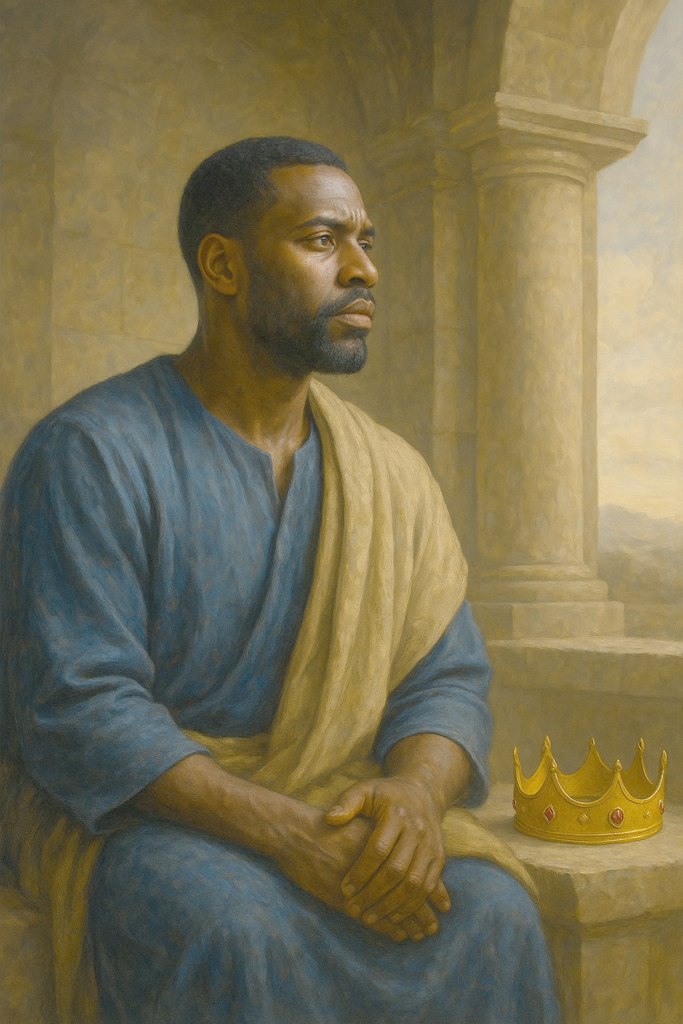
The Male Files: Kings Without Crowns: Restoring the Biblical Role of Men.

In contemporary society, the role of men has become increasingly ambiguous. The pressures of modern life, economic instability, and shifting cultural norms have left many men searching for identity and purpose. Historically, men were seen as protectors, providers, and leaders within their households and communities. Today, however, these roles are often challenged or undervalued, leaving many men feeling powerless and disconnected.

The Bible provides a clear framework for understanding masculinity and the responsibilities of men. From Adam in the Garden of Eden to the patriarchs of Israel, men were called to lead with integrity, courage, and wisdom (Genesis 2:15-17). Leadership in the biblical sense is not about domination but about stewardship: caring for family, guiding with righteousness, and serving with humility.

One of the hallmarks of biblical manhood is responsibility. Men are called to provide for their families materially, emotionally, and spiritually. This provision is not limited to finances but extends to moral guidance and protection from harm. In Proverbs 27:23-24, the importance of knowing and caring for one’s household is emphasized, reinforcing the notion that true leadership requires active engagement.

Spiritual leadership is another core aspect of biblical manhood. Men are expected to guide their households in faith, ensuring that God’s principles shape family decisions and values (Ephesians 6:4). This leadership is rooted in humility and service rather than coercion, reflecting the example of Christ as a servant-leader (Mark 10:45).

Unfortunately, societal pressures have distorted men’s understanding of their roles. The rise of materialism, instant gratification, and shifting gender norms has led many men to equate masculinity with physical strength or financial success alone. This limited view ignores the deeper responsibilities of character, integrity, and spiritual leadership.

Modern men face identity crises exacerbated by media portrayals that often celebrate selfishness, irresponsibility, or emotional detachment as markers of “manliness.” These false narratives contrast sharply with biblical principles, which emphasize self-discipline, accountability, and the pursuit of righteousness (1 Timothy 4:12).

The absence of mentorship and father figures in many communities has compounded these challenges. Without examples of godly leadership, young men struggle to internalize what it means to be responsible, compassionate, and principled. Scriptural wisdom underscores the value of generational teaching, as seen in Deuteronomy 6:6-7, which encourages fathers to guide their children consistently in God’s ways.

Restoring the biblical role of men requires intentionality. Men must embrace their responsibility to lead by example, demonstrating integrity in speech, action, and decision-making. Leadership is cultivated through discipline, prayer, and a commitment to lifelong learning, reflecting the holistic approach to manhood outlined in the Scriptures.

Emotional intelligence is a key component of modern biblical manhood. The Bible portrays men expressing grief, joy, and compassion, suggesting that emotional awareness is not a weakness but a strength (Psalm 34:18; John 11:35). Men who understand and manage their emotions can better lead their families and communities with empathy and wisdom.

Accountability is central to restoring male leadership. Biblical men were often held accountable by peers, elders, or God Himself. Men today benefit from similar structures—mentorship, community, and spiritual fellowship—to ensure their actions align with moral and spiritual principles (Proverbs 27:17).

Service is a defining trait of biblical masculinity. Jesus’ model demonstrates that leadership is inseparable from service (John 13:14-15). Men who prioritize the needs of others, particularly their families and communities, embody the essence of godly leadership. Service fosters respect, trust, and spiritual authority rather than demanding it.

Character formation begins with self-discipline. The apostle Paul frequently exhorts men to control their impulses, pursue righteousness, and cultivate perseverance (1 Corinthians 9:24-27). Discipline in thought, speech, and behavior builds credibility and moral authority—qualities essential for any man seeking to fulfill his biblical role.

Integrity is another critical aspect. Biblical men are called to be honest, reliable, and trustworthy in all areas of life (Proverbs 10:9). Integrity ensures that leadership is not merely positional but earned through consistent demonstration of values, creating a legacy of respect and influence.

Courage, both moral and physical, remains a defining element of biblical manhood. From David confronting Goliath to Daniel standing firm in the lion’s den, courage involves facing fear while upholding truth and justice (Joshua 1:9; Daniel 6:10-23). Modern men must also confront cultural and personal challenges with the same steadfastness.

Men are not intended to operate in isolation. Community involvement, fellowship, and collaboration are integral to the biblical model of manhood. Ecclesiastes 4:9-12 highlights the strength derived from unity, emphasizing that men lead best when supported and accountable to others.

A renewed focus on mentorship can transform generations. Experienced men guiding younger men in faith, character, and practical life skills restore continuity in moral and spiritual leadership. Biblical narratives, including the relationship between Elijah and Elisha, exemplify the power of such mentorship (2 Kings 2:1-15).

Resisting cultural distortion requires discernment. Men must evaluate societal norms against scriptural truth, rejecting notions of masculinity that conflict with God’s design. Critical engagement with culture ensures that men lead with principles rather than conformity to fleeting trends (Romans 12:2).

The restoration of male leadership also entails a renewed understanding of fatherhood. Fathers are called not merely to produce offspring but to nurture, instruct, and exemplify godly living (Psalm 103:13; Proverbs 20:7). Active, loving fatherhood strengthens families and communities alike.

Marriage and partnership reflect the broader call to leadership. Husbands are to love their wives sacrificially, mirroring Christ’s love for the church (Ephesians 5:25-28). Such leadership fosters mutual respect, emotional intimacy, and spiritual growth, dispelling misconceptions that male authority equates to control or dominance.

Finally, the restoration of biblical manhood is a lifelong journey. Men are called to continuous self-examination, growth, and alignment with God’s purposes. By embracing responsibility, service, integrity, and faith, men can reclaim their rightful place as leaders, protectors, and spiritual anchors—kings without crowns, yet empowered to shape families, communities, and generations (Micah 6:8).


References (APA 7th edition)

  • Holy Bible, King James Version. (2000). Thomas Nelson.
  • Deuteronomy 6:6-7.
  • Ephesians 5:25-28; 6:4.
  • Proverbs 10:9; 20:7; 27:17; 27:23-24.
  • Joshua 1:9.
  • Daniel 6:10-23.
  • John 11:35; 13:14-15.
  • Mark 10:45.
  • 1 Corinthians 9:24-27.
  • 1 Timothy 4:12.
  • Micah 6:8.
  • Ecclesiastes 4:9-12.
  • Genesis 2:15-17.
  • 2 Kings 2:1-15.
  • Romans 12:2.
  • Psalm 34:18; 103:13.

The Male Files: Built to Lead — The Spiritual Anatomy of a Godly Man.

Photo by RDNE Stock project on Pexels.com

In a world where manhood is often distorted by cultural confusion, the concept of a Godly man remains both timeless and revolutionary. To be “built to lead” is not a claim of dominance but a divine calling rooted in purpose, discipline, and integrity. The anatomy of such a man is not merely physical—it is spiritual, moral, and psychological, molded by divine principles rather than societal trends (Eldredge, 2001).

A Godly man’s leadership begins in the heart. Scripture teaches that “as he thinketh in his heart, so is he” (Proverbs 23:7, KJV). Leadership is not about external command but internal conviction. It is birthed through humility before God and strengthened through consistent alignment with divine truth. His strength flows not from ego but from surrender.

The anatomy of leadership is first spiritual. The Godly man leads by example, submitting himself to the ultimate authority—God. Like David, he may stumble, yet repentance restores his crown. His leadership is not infallible but accountable. He acknowledges weakness as the soil from which strength grows (2 Corinthians 12:9, KJV).

A Godly man’s mind is disciplined and discerning. He filters thoughts through the wisdom of Scripture, guarding against corruption and confusion. He understands that his greatest battle is not with others but within himself—between flesh and spirit (Galatians 5:17, KJV). Spiritual intelligence, not worldly cunning, defines his decision-making.

The emotional anatomy of a Godly man reveals balance. He feels deeply but governs wisely. He is not stoic nor fragile—his emotions serve purpose, not pride. Christ Himself wept (John 11:35, KJV), proving that divine strength includes compassion. Emotional maturity is a mark of true spiritual leadership.

His character serves as his armor. Honesty, patience, and faithfulness form the framework of his moral anatomy. When temptation comes, his integrity stands firm because it is anchored in the fear of the Lord, which is “the beginning of wisdom” (Proverbs 9:10, KJV). Such wisdom enables him to walk uprightly even when unseen.

The physical body, too, is a vessel of stewardship. The Godly man honors it as the temple of the Holy Spirit (1 Corinthians 6:19–20, KJV). He disciplines his body not for vanity, but for vitality—to serve his purpose with endurance. Health, strength, and self-control reflect spiritual order manifesting in physical form.

In his relationships, the Godly man exemplifies servant leadership. Like Christ washing the disciples’ feet, he leads through love, not domination (John 13:14–15, KJV). In marriage, he loves sacrificially; in friendship, he uplifts; in community, he protects. His leadership builds others rather than exalting himself.

A Godly man’s speech carries weight. His words heal, teach, and direct rather than destroy. “Death and life are in the power of the tongue” (Proverbs 18:21, KJV). Thus, his mouth becomes an instrument of life. What he declares aligns with God’s truth, shaping atmospheres and influencing destinies.

His purpose is divinely assigned, not socially constructed. Each Godly man carries a unique mantle—a divine task to fulfill within family, church, and society. Leadership is not a title he earns but a function he embodies. His confidence comes from knowing who sent him, not from who follows him.

Discipline is the skeleton of his character. Without it, even the strongest calling collapses. Prayer, fasting, study, and service sustain his spiritual frame. These habits forge endurance in seasons of testing. Like a tree rooted in living water, he thrives even when storms arise (Psalm 1:3, KJV).

Courage is the muscle of leadership. The Godly man stands for truth even when unpopular. He defends righteousness not out of pride but conviction. His courage is not reckless—it is refined by faith. He knows that fear cannot coexist with divine purpose (2 Timothy 1:7, KJV).

A Godly man’s vision extends beyond self. He builds legacy. His leadership plants seeds for generations, ensuring that those who follow him will inherit spiritual stability. Like Abraham, he fathers faith before he fathers nations (Genesis 18:19, KJV). His legacy is eternal, not material.

Wisdom is the nervous system of the Godly man—it connects thought to action. Through prayer and discernment, he receives divine instruction. He seeks counsel, studies Scripture, and listens to the Spirit. His choices reflect maturity, foresight, and an unwavering fear of God (James 1:5, KJV).

His faith is the lifeblood that flows through all aspects of his being. Without it, his spiritual anatomy cannot function. Faith empowers his leadership, fortifies his hope, and defines his destiny. It is not blind belief but active trust in divine providence (Hebrews 11:1, KJV).

The Godly man’s leadership is generative. He mentors others, multiplying what God has invested in him. Leadership that hoards is carnal; leadership that gives is divine. He trains others not to depend on him but to depend on God, ensuring the continuity of righteous influence (2 Timothy 2:2, KJV).

Temptation tests the architecture of his soul. The Godly man learns endurance through resistance. He flees immorality, avoids arrogance, and denies compromise. Each victory over sin strengthens his spiritual anatomy. His holiness is not perfection but progression toward divine likeness (Philippians 3:12–14, KJV).

The foundation of his leadership is love. Without love, authority becomes tyranny. Love tempers discipline, informs justice, and defines service. The Godly man mirrors Christ’s heart—firm yet forgiving, just yet merciful. His leadership brings light where there is confusion.

Ultimately, the anatomy of a Godly man reveals divine design. Every aspect—heart, mind, body, and spirit—works in harmony to fulfill God’s will. He is not self-made; he is Spirit-formed. Built to lead, he carries the architecture of heaven within his humanity. His leadership, then, is not performance—it is purpose incarnate.

The world needs such men: those who lead not by might, but by spiritual wisdom; who build homes, communities, and legacies upon divine truth. The Godly man stands as a living testimony that leadership, when rooted in God, restores order, peace, and purpose to the earth.


References (APA Style)

Eldredge, J. (2001). Wild at heart: Discovering the secret of a man’s soul. Thomas Nelson.
The Holy Bible, King James Version. (n.d.). Thomas Nelson.
Lewis, C. S. (1952). Mere Christianity. HarperCollins.
Piper, J. (2001). Desiring God: Meditations of a Christian hedonist. Multnomah.
Wright, N. T. (2010). After you believe: Why Christian character matters. HarperOne.
Wilkinson, B. (2000). The prayer of Jabez: Breaking through to the blessed life. Multnomah.
Voddie Baucham Jr. (2011). Family driven faith: Doing what it takes to raise sons and daughters who walk with God. Crossway.

The Types of People God Tells You to Avoid

Photo by ELEVATE on Pexels.com

The Bible is clear that not everyone in our path is meant to walk with us. God, in His divine wisdom, warns His people to discern spirits, test character, and guard the heart from those who corrupt the soul. Throughout Scripture, we are taught that evil communication corrupts good manners (1 Corinthians 15:33, KJV). Not every friendly face carries a pure heart, and not every smiling word is born of truth. The company we keep has spiritual consequences; it can either lead us closer to God or drag us into sin and confusion.

List of the People God Tells You to Avoid

The wolf in sheep’s clothing

The gossiper

The mocker/scorner

The envious

The sexually impure

The faithless

The unbelieverThe divisive

The greedy/materialistic

The compromiser

The unrepentant

The habitual sinner

The narcissist

The proud

The deceitful/manipulative

The negative/cynical

The spiritually lazy

The truth-rejector

Among the most dangerous people to avoid are the wolves in sheep’s clothing. These individuals appear righteous on the surface but are inwardly destructive. Jesus warned, “Beware of false prophets, which come to you in sheep’s clothing, but inwardly they are ravening wolves” (Matthew 7:15, KJV). They preach love but sow division; they claim holiness but seek power. Such people mimic godliness to gain trust, only to manipulate and devour the unsuspecting. The true believer must watch for the fruit of their actions, not just the beauty of their words.

The wolf in sheep’s clothing can only remain hidden for a season. At first, they appear gentle, humble, and sincere, but their fruit reveals otherwise. Their presence often brings confusion, division, and exhaustion rather than peace. Jesus warned His disciples in Matthew 10:16 (KJV), “Be ye therefore wise as serpents, and harmless as doves.” Discernment requires both love and vigilance. The wolf flatters to gain access, then uses emotional manipulation to devour the faith of others. The believer must test every spirit by the Word of God (1 John 4:1, KJV).

The gossiper is another spirit to avoid. Gossip is a sin that destroys reputations and unity within the body of Christ. Proverbs 20:19 (KJV) says, “He that goeth about as a talebearer revealeth secrets: therefore meddle not with him that flattereth with his lips.” Gossipers thrive on drama and confusion; they plant seeds of discord and separate friends. God hates this behavior because it reflects the serpent’s deceit in Eden — subtle, seductive, and divisive.

The gossiper’s presence can be detected by the atmosphere they create. Gossipers drain joy and stir suspicion. They thrive on secrets and half-truths. Proverbs 26:20 (KJV) says, “Where no wood is, there the fire goeth out: so where there is no talebearer, the strife ceaseth.” To discern a gossiper, observe who they talk about and whether their words build or destroy. True believers speak life, not slander.

Then there are the mockers — those who scoff at holiness and ridicule righteousness. Scripture warns, “A scorner loveth not one that reproveth him: neither will he go unto the wise” (Proverbs 15:12, KJV). Mockers belittle godly counsel and exalt their own arrogance. They despise correction and find joy in tearing down others. Psalm 1:1 tells us, “Blessed is the man that walketh not in the counsel of the ungodly, nor standeth in the way of sinners, nor sitteth in the seat of the scornful.” Avoiding mockers is essential to preserving spiritual peace.

Mockers and scorners often disguise ridicule as humor. They make light of holiness, treat sin as a joke, and resist godly correction. Their words pierce like arrows. Proverbs 9:8 (KJV) advises, “Reprove not a scorner, lest he hate thee: rebuke a wise man, and he will love thee.” The mocker will not respond to correction with humility but with defensiveness and contempt. Spiritual wisdom is wasted on those who refuse to listen.

Envious people are also spiritually toxic. Envy rots the soul and breeds resentment against the blessings of others. Proverbs 14:30 (KJV) declares, “A sound heart is the life of the flesh: but envy the rottenness of the bones.” Those consumed by envy cannot rejoice when others prosper; instead, they harbor bitterness that leads to betrayal. The spirit of envy caused Cain to murder Abel, Saul to pursue David, and the Pharisees to crucify Jesus.

The envious can be recognized by their inability to celebrate others sincerely. They subtly compete, criticize, or diminish blessings they wish were their own. James 3:16 (KJV) warns, “For where envying and strife is, there is confusion and every evil work.” The spirit of envy leads to division, manipulation, and even betrayal. A discerning believer will keep a distance from those whose admiration turns quickly into resentment.

Sexual impurity is another warning Scripture emphasizes strongly. The sexually immoral are not to be entertained or emulated. 1 Corinthians 6:18 (KJV) says, “Flee fornication. Every sin that a man doeth is without the body; but he that committeth fornication sinneth against his own body.” God calls His people to holiness, not lust. Those who indulge in sexual sin lead others into bondage and distance them from spiritual intimacy with the Father.

The sexually impure may appear charming and confident, but their intentions are carnal, not spiritual. They tempt others away from holiness by normalizing sin. Proverbs 5:3-4 (KJV) describes this clearly: “For the lips of a strange woman drop as a honeycomb, and her mouth is smoother than oil: but her end is bitter as wormwood.” The sexually immoral person may not always act openly; they often test boundaries through flirtation or suggestive talk. The discerning believer must flee such situations immediately.

We are also warned to stay away from the faithless — those who doubt, mock, or dismiss the power of God. Hebrews 11:6 (KJV) teaches, “But without faith it is impossible to please him.” The faithless drain spiritual energy and sow seeds of doubt in others. When surrounded by disbelief, even the strongest faith can weaken. Just as Jesus removed the unbelievers from Jairus’s house before performing the miracle (Mark 5:40), we too must remove faithless influences from our lives.

The faithless can be detected by their constant doubt, fear, and negativity regarding God’s promises. While compassion is necessary, walking too closely with them can drain faith. When the ten spies doubted God’s promise in Numbers 13, their disbelief infected the entire camp. Only Joshua and Caleb stood firm in faith. The lesson is clear: unbelief spreads. Surround yourself with believers who strengthen your faith, not diminish it.

The unbeliever in God is another category of separation. 2 Corinthians 6:14 (KJV) commands, “Be ye not unequally yoked together with unbelievers: for what fellowship hath righteousness with unrighteousness?” Spiritual compatibility matters deeply to God. Walking in close fellowship with unbelievers can compromise conviction, weaken prayer life, and hinder spiritual growth. We are called to love them but not to live under their influence.

Unbelievers in God’s truth will often challenge or mock your convictions. While we are called to witness to them, we must not be yoked to them. Amos 3:3 (KJV) asks, “Can two walk together, except they be agreed?” A close relationship with someone who rejects God’s authority can lead to compromise. Love them, pray for them, but do not follow their ways.

Divisive people are a cancer to any community. Paul warned in Romans 16:17 (KJV), “Mark them which cause divisions and offences contrary to the doctrine which ye have learned; and avoid them.” The divisive thrive on argument, rebellion, and strife. They seek to separate what God has joined together—whether in church, family, or fellowship. God values unity, and division is a sign of demonic interference.

The divisive spirit is often cloaked in false righteousness. Such individuals use Scripture to justify rebellion, creating confusion within the body of Christ. Titus 3:10 (KJV) instructs, “A man that is a heretic after the first and second admonition reject.” Division rarely begins loudly; it starts subtly — with whispers, suggestions, and complaints. A spiritually discerning person watches for those who constantly stir conflict rather than build peace.

The greedy, or materialistic, must also be avoided. Luke 12:15 (KJV) says, “Take heed, and beware of covetousness: for a man’s life consisteth not in the abundance of the things which he possesseth.” Greed turns the heart from God toward possessions. It blinds the eyes of compassion and creates idolatry of wealth. Those enslaved by materialism prioritize gain over godliness, making them dangerous companions for spiritual growth.

The greedy or materialistic person can be discerned by their obsession with possessions and status. Their joy depends on wealth, not God. 1 Timothy 6:10 (KJV) declares, “For the love of money is the root of all evil.” Greed leads to compromise and corruption, often causing people to betray values for gain. The believer must guard against this influence, remembering that “a man’s life consisteth not in the abundance of the things which he possesseth” (Luke 12:15, KJV).

The compromiser is another soul to avoid. These individuals twist the truth for convenience, refusing to take a stand for righteousness. Revelation 3:16 (KJV) warns against lukewarmness, saying, “Because thou art lukewarm, and neither cold nor hot, I will spue thee out of my mouth.” Compromisers blur the lines between holiness and sin, turning moral conviction into cultural adaptation. God calls His people to stand firm, not to bend under worldly pressure.

The compromiser is subtle because they often appear loving and “open-minded.” Yet, in their desire to avoid conflict, they sacrifice truth. Revelation 3:15-16 (KJV) speaks of the lukewarm believer whom God rejects. True discernment recognizes that tolerance of sin is not compassion—it is spiritual deception. A compromiser will always justify sin rather than confront it.

The unrepentant carry hearts hardened by pride. Proverbs 29:1 (KJV) warns, “He, that being often reproved hardeneth his neck, shall suddenly be destroyed, and that without remedy.” Those who refuse correction live under spiritual blindness. To walk closely with the unrepentant is to risk dulling one’s own conviction and losing sensitivity to the Spirit.

The unrepentant and the habitual sinner can be recognized by their lack of conviction. They repeat the same sins with no remorse or desire to change. Proverbs 28:13 (KJV) says, “He that covereth his sins shall not prosper: but whoso confesseth and forsaketh them shall have mercy.” The discerning believer understands that repentance produces fruit, not excuses. Those who live unrepentant lives are rejecting God’s grace.

Habitual sinners also fall into this category. While all humans sin and fall short, the habitual sinner willfully continues in sin without remorse or change. 1 John 3:8 (KJV) declares, “He that committeth sin is of the devil.” The believer must separate from those who celebrate rebellion, lest their example becomes normalized in the heart of the faithful.

The narcissist embodies self-worship — the very opposite of humility and servitude that Christ modeled. 2 Timothy 3:2 (KJV) describes the last days, saying, “For men shall be lovers of their own selves, covetous, boasters, proud, blasphemers.” The narcissist’s obsession with self blinds them to the needs of others and the authority of God. Fellowship with such people often leads to spiritual exhaustion and manipulation.

The narcissist reveals themselves through pride, manipulation, and self-centeredness. They crave admiration but show no empathy. Their speech often exalts self rather than God. 2 Timothy 3:2-5 (KJV) describes them perfectly: “Lovers of their own selves, covetous, boasters, proud…having a form of godliness, but denying the power thereof: from such turn away.” Discernment identifies narcissism not by confidence, but by control. They drain rather than uplift.

Pride itself is one of the greatest dangers to spiritual health. Proverbs 16:18 (KJV) warns, “Pride goeth before destruction, and an haughty spirit before a fall.” Pride led Lucifer to rebel against God and caused Saul to lose his anointing. The proud refuse to submit to correction, making them resistant to divine wisdom. God cannot dwell where pride reigns.

Pride itself is the root of nearly every spiritual downfall. Lucifer’s rebellion began with pride, as Isaiah 14:12-15 (KJV) reveals. A prideful person refuses correction, boasts in their own wisdom, and resists humility. The discerning spirit identifies pride by its inability to say “I was wrong.” Proverbs 16:18 (KJV) declares, “Pride goeth before destruction.”

The manipulative and deceitful are also to be avoided. Psalm 101:7 (KJV) says, “He that worketh deceit shall not dwell within my house: he that telleth lies shall not tarry in my sight.” Deception corrupts the purity of relationships and mocks God’s truth. Those who constantly twist facts or manipulate emotions cannot walk in spiritual integrity.

The deceitful and manipulative reveal themselves through inconsistency. They twist truth to protect their image and use charm as a weapon. Psalm 55:21 (KJV) says, “The words of his mouth were smoother than butter, but war was in his heart.” Their tone and timing often expose their intent. Discernment comes when one listens with the spirit, not just the ears.

Even those who sow constant negativity can hinder a believer’s growth. Philippians 4:8 (KJV) reminds us to think on what is true, pure, and lovely. A pessimistic or cynical spirit can drain joy and erode faith. Guarding the mind from toxic influence is as crucial as guarding the heart.

The negative and cynical drain faith from any environment. Philippians 4:8 (KJV) urges believers to dwell on things pure, lovely, and of good report. Those who constantly complain or doubt God’s promises reveal a lack of gratitude. Their pessimism clouds their perspective. To walk in peace, the believer must guard against spirits of complaint and despair.

The spiritually lazy and lukewarm also belong to the list. Proverbs 13:4 (KJV) states, “The soul of the sluggard desireth, and hath nothing: but the soul of the diligent shall be made fat.” Those unwilling to grow in faith can hinder others from growing as well. God expects diligence in prayer, service, and obedience—not complacency.

The spiritually lazy can be seen in those who rarely pray, study the Word, or seek God’s presence. They are easily distracted and quick to justify inaction. Proverbs 6:9 (KJV) warns, “How long wilt thou sleep, O sluggard? When wilt thou arise out of thy sleep?” Spiritual sloth weakens discernment, leaving believers open to deception. Fellowship with the slothful often results in stagnation.

Those who reject truth must be avoided. Titus 3:10 (KJV) says, “A man that is a heretic after the first and second admonition reject.” When someone repeatedly rejects correction, truth, and conviction, God instructs believers to walk away. Continuing to fellowship with them only invites spiritual confusion and emotional damage.

The spiritually lazy can be seen in those who rarely pray, study the Word, or seek God’s presence. They are easily distracted and quick to justify inaction. Proverbs 6:9 (KJV) warns, “How long wilt thou sleep, O sluggard? When wilt thou arise out of thy sleep?” Spiritual sloth weakens discernment, leaving believers open to deception. Fellowship with the slothful often results in stagnation.

Those who reject truth entirely are perhaps the most dangerous. When confronted with correction, they respond with hostility or denial. 2 Thessalonians 2:10-11 (KJV) warns of those who “received not the love of the truth.” Their rejection of truth invites spiritual blindness. After several warnings, believers are instructed to let them go and trust God to deal with their hearts.

Discernment is not about suspicion, but protection. God equips His people to recognize patterns that oppose His Word. The Holy Spirit reveals what human perception cannot. As 1 John 4:1 (KJV) teaches, “Beloved, believe not every spirit, but try the spirits whether they are of God.” Discernment keeps the believer holy, alert, and safe from spiritual predators.

God calls His people to holiness and separation. “Wherefore come out from among them, and be ye separate, saith the Lord” (2 Corinthians 6:17, KJV). Avoiding these personalities does not mean living in fear but walking in wisdom. When you walk in discernment, no wolf can deceive you, no gossip can trap you, and no prideful heart can poison your peace.

In the end, separation is not about hatred but holiness. God calls His people to be set apart—to walk in purity, discernment, and obedience. Avoiding such individuals is an act of spiritual preservation, not judgment. “Wherefore come out from among them, and be ye separate, saith the Lord” (2 Corinthians 6:17, KJV). The path of righteousness requires discernment, and obedience to God’s word is the ultimate protection from corruption and deception.


References (KJV Bible):
1 Corinthians 15:33; Matthew 7:15; Proverbs 20:19; Proverbs 15:12; Psalm 1:1; Proverbs 14:30; 1 Corinthians 6:18; Hebrews 11:6; Mark 5:40; 2 Corinthians 6:14; Romans 16:17; Luke 12:15; Revelation 3:16; Proverbs 29:1; 1 John 3:8; 2 Timothy 3:2; Proverbs 16:18; Psalm 101:7; Philippians 4:8; Proverbs 13:4; Titus 3:10; 2 Corinthians 6:17.

Giving to Widows and the Vulnerable in the Bible.

Photo by Pavel Danilyuk on Pexels.com

Caring for widows and the vulnerable is a hallmark of biblical righteousness. The Scriptures consistently elevate the protection and provision of widows as evidence of a faithful relationship with God. In James 1:27 (KJV), it is written: “Pure religion and undefiled before God and the Father is this, To visit the fatherless and widows in their affliction…” This commandment situates social responsibility at the center of spiritual life, reflecting God’s character as a defender of the marginalized.

$thebrowngirlnetwork (CashApp)

1. God’s Heart for Widows
The Bible emphasizes that God Himself is a protector of widows. Psalm 68:5 (KJV) declares, “A father of the fatherless, and a judge of the widows, is God in his holy habitation.” Caring for widows aligns believers with divine justice and mercy, reflecting His compassion in human relationships.

2. Historical Vulnerability of Widows
In ancient Israel, widows were among the most vulnerable due to economic dependence on male relatives. Losing a husband often meant losing property, social status, and protection. God’s law directly addressed this structural inequality, requiring society to provide for widows’ sustenance (Deuteronomy 14:29, KJV).

3. Old Testament Instructions
Exodus 22:22–24 (KJV) warns: “Ye shall not afflict any widow, or fatherless child…” The law positioned widows under divine protection, signaling that oppression of the vulnerable equates to affronting God Himself. This instruction establishes a moral and legal precedent for social responsibility.

4. The Role of Charity in Provision
The Mosaic system included mechanisms for widows to receive aid through tithes and gleaning. Leviticus 19:9–10 (KJV) instructed that harvests leave portions for the stranger, the fatherless, and the widow, ensuring access to basic needs. Charitable provision was thus institutionalized, blending compassion with practical justice.

5. Ruth: A Case Study in Biblical Giving
Ruth, a Moabite widow, exemplifies how God’s people were called to provide opportunity. Boaz allowed her to glean in his fields (Ruth 2:2–3, KJV), demonstrating that giving extends beyond charity to include empowerment and access to resources.

6. Differentiating “Widows Indeed”
Paul differentiates between widows who are truly alone and those with family support (1 Timothy 5:3–4, KJV). This distinction ensures that aid is prioritized for those in greatest need, reflecting a structured approach to social welfare in the early church.

7. Qualifications for Church Support
1 Timothy 5:9–10 (KJV) lists criteria for widows receiving church support: reputability, devotion, hospitality, and moral integrity. Support was conditional, emphasizing accountability and encouraging widows to maintain dignity and faithfulness.

The Bible places extraordinary emphasis on caring for those who are powerless, including widows, orphans, and the economically vulnerable. This care is not optional; it reflects divine justice and mirrors the character of God. James 1:27 (KJV) states, “Pure religion and undefiled before God and the Father is this, To visit the fatherless and widows in their affliction, and to keep himself unspotted from the world.” True faith manifests in action, particularly in defending those who cannot defend themselves.

God as Protector of the Vulnerable
Throughout Scripture, God is depicted as the defender of the fatherless and widows. Psalm 10:14 (KJV) notes, “Thou hast seen it; for thou beholdest mischief and spite, to requite it with thy hand: the poor committeth himself unto thee; thou art the helper of the fatherless.” God’s care sets the standard for human responsibility.

The Vulnerability of the Fatherless
Orphans in biblical times were often left without property rights or social support. Deuteronomy 14:29 (KJV) integrates the fatherless into God’s tithe system, ensuring access to sustenance and community support, illustrating a model of structural protection.

8. The Principle of Justice
Providing for widows is not merely charitable—it is a matter of justice. Deuteronomy 27:19 (KJV) curses those who deny justice to the widow, demonstrating the moral gravity of neglect. Justice is thus inseparable from piety.

9. Psychological Effects of Neglect
Neglecting widows perpetuates trauma, anxiety, and social isolation. Psychological research confirms that social support significantly impacts mental health, particularly among individuals facing economic and emotional vulnerability (Taylor, 2011). Caring for widows mitigates these harms, producing both spiritual and emotional restoration.

10. Spiritual Significance of Giving
Giving to widows aligns the believer with God’s heart. Proverbs 19:17 (KJV) states, “He that hath pity upon the poor lendeth unto the LORD; and that which he hath given will he pay him again.” Spiritually, aid becomes an act of worship and trust in God’s provision.

11. Generosity as Kingdom Investment
Kingdom wealth is measured not by accumulation but by generosity. Supporting widows represents an investment in God’s economy, yielding eternal dividends. Luke 6:38 (KJV) underscores this principle: “Give, and it shall be given unto you…”

12. Avoiding Exploitation
Giving to widows requires discernment. The early church emphasized the importance of character and integrity, ensuring that support did not enable idleness but reinforced responsibility (1 Timothy 5:5, KJV). This reflects both wisdom and ethical stewardship.

13. The Role of Community
Caring for widows is not solely individual but communal. Acts 6:1–6 (KJV) records the appointment of deacons to ensure fair distribution of aid, demonstrating organized communal responsibility for the vulnerable.

14. Social Implications of Provision
Supporting widows strengthens society by addressing systemic inequality. When communities uphold the dignity of the vulnerable, social cohesion, trust, and stability are reinforced. Conversely, neglect perpetuates cycles of poverty and marginalization.

15. Giving Beyond Finances
Provision can include emotional support, spiritual mentorship, and practical aid, not only money. Visiting, praying with, and advocating for widows embodies the full spectrum of biblical compassion.

16. Widowhood and Spiritual Authority
Widows in the Bible often wielded influence through faith, prayer, and wisdom. Supporting them thus enhances the spiritual fabric of the community, recognizing their potential contributions beyond material need.

17. Psychological Benefits for the Giver
Generosity toward widows cultivates humility, empathy, and purpose. Studies in positive psychology show that altruistic giving improves well-being, life satisfaction, and social connectedness (Lyubomirsky et al., 2005). Biblical giving is therefore mutually restorative.

18. Modern Application
Today, believers can support widows through structured programs, direct assistance, mentorship, and advocacy. Churches often facilitate stipends, food assistance, and housing support. Kingdom giving emphasizes dignity and empowerment, not dependence or charity alone.

19. Integration of Faith and Action
True religion, according to James 1:27 (KJV), involves both belief and action. Giving to widows demonstrates practical faith, integrating spiritual commitment with ethical responsibility. Faith without works is incomplete.

20. Conclusion
Biblical instruction on giving to widows underscores God’s care for the marginalized, the moral obligation of the community, and the spiritual benefits of generosity. Whether through financial support, empowerment, or advocacy, giving to widows reflects the heart of God, strengthens communities, and cultivates personal virtue. As Proverbs 31:8–9 (KJV) exhorts, believers must “open thy mouth for the dumb in the cause of all such as are appointed to destruction,” including widows, fulfilling God’s law of justice and mercy. Supporting the fatherless and vulnerable is a divine mandate that reflects God’s heart, strengthens communities, and nurtures both giver and receiver. True religion integrates faith, justice, and compassion, ensuring that no widow or orphan is neglected. By providing material, emotional, and spiritual support, believers live out Kingdom economics and social justice principles, fulfilling God’s command to love and protect the vulnerable in every generation.


References

  • The Holy Bible, King James Version.
  • Lyubomirsky, S., Sheldon, K. M., & Schkade, D. (2005). Pursuing happiness: The architecture of sustainable change. Review of General Psychology, 9(2), 111–131.
  • Taylor, S. E. (2011). Social support: A review. In H. S. Friedman (Ed.), The Oxford handbook of health psychology (pp. 189–214). Oxford University Press.
  • Lyubomirsky, S., Sheldon, K. M., & Schkade, D. (2005). Pursuing happiness: The architecture of sustainable change. Review of General Psychology, 9(2), 111–131.
  • Shonkoff, J. P., et al. (2012). The lifelong effects of early childhood adversity and toxic stress. Pediatrics, 129(1), e232–e246.

How physical beauty is misleading?

Photo by Daryl Johnson on Pexels.com

Physical beauty, though often celebrated as a gift, has proven to be one of the most deceptive forms of power in human history. Society’s fixation on external appearance has created a hierarchy that equates attractiveness with moral worth, intelligence, and capability. However, this illusion blinds individuals to the deeper truths of human character. The ancient philosopher Plato warned of this in Phaedrus, teaching that beauty can inspire virtue or lead to moral corruption depending on how it is perceived and pursued (Plato, trans. 2002).

The tendency to overvalue beauty, known as the “halo effect,” has been extensively documented in psychology. According to Dion, Berscheid, and Walster (1972), physically attractive individuals are often presumed to possess positive personality traits such as kindness and honesty, even without evidence. This cognitive bias influences hiring practices, romantic relationships, and social trust. Yet such assumptions often collapse when beauty is separated from integrity.

Historically, beauty has also been weaponized as a form of manipulation and deception. In biblical narratives, figures such as Delilah and Jezebel used physical allure to sway powerful men and alter political outcomes (Judges 16:4–22; 1 Kings 21). These stories serve as moral parables that external attraction, when divorced from righteousness, can lead to destruction. The same is true in modern times, where seductive appearances are often exploited in advertising, media, and politics.

The media plays a significant role in sustaining the illusion of beauty as truth. From Hollywood films to social media influencers, appearance has become a currency of influence. Naomi Wolf (1991) argued in The Beauty Myth that beauty functions as a political weapon, maintaining control over women by convincing them that worth is conditional upon youth and physical perfection. This has created a generation of individuals chasing illusions, mistaking image for identity.

Furthermore, beauty can foster narcissism and moral decay when it becomes an idol of self-worship. The apostle Paul warned of those who are “lovers of their own selves” and “boasters” (2 Timothy 3:2, KJV), suggesting that an obsession with outward perfection reflects spiritual emptiness. Modern psychology echoes this sentiment, linking excessive concern with appearance to narcissistic personality traits (Campbell & Foster, 2007).

Physical beauty also distorts social justice by granting unearned privilege. Attractive individuals often receive lighter criminal sentences, better job opportunities, and greater trust from others—a phenomenon known as “lookism” (Hamermesh & Biddle, 1994). Such bias reflects the moral blindness of a culture that values aesthetics over ethics.

In relationships, physical attraction can cloud discernment. Proverbs 31:30 (KJV) reminds us that “favour is deceitful, and beauty is vain: but a woman that feareth the Lord, she shall be praised.” True beauty lies in moral and spiritual substance, not fleeting physical form. Yet many pursue partners based on appearance alone, only to find that emotional instability or selfishness ruins what seemed ideal.

The allure of beauty also conceals the pain of those who possess it. Attractive people often face objectification and unrealistic expectations. Many celebrities have spoken of feeling trapped by their looks, treated as commodities rather than human beings. Marilyn Monroe, one of the most celebrated beauties of the 20th century, famously lamented that people saw her as a fantasy, not as a person (Banner, 2011).

Moreover, beauty can isolate rather than empower. Those perceived as beautiful are often distrusted by peers of the same gender, or envied to the point of social exclusion (Cash, 1990). Thus, the privilege of attractiveness can paradoxically create loneliness, as one becomes a projection of others’ desires rather than a participant in genuine connection.

In spiritual contexts, beauty is meant to reflect divine harmony rather than human vanity. The book of Psalms declares that the Lord “shall beautify the meek with salvation” (Psalm 149:4, KJV), signifying that true beauty emerges from humility and godliness. Yet modern society reverses this order—worshipping the creation rather than the Creator (Romans 1:25). This inversion leads to moral disorientation and loss of sacred identity.

The deception of beauty is also evident in global culture, where Eurocentric ideals dominate aesthetic standards. Colonial history promoted light skin, straight hair, and Euro-featured symmetry as the universal symbols of attractiveness, marginalizing non-European identities (Hunter, 2007). Such conditioning distorts self-worth among people of color, perpetuating colorism and internalized racism.

Furthermore, beauty’s deception extends to consumerism. The cosmetic and fashion industries profit billions annually by selling insecurity. Advertising convinces individuals that happiness is attainable through external modification—whether through plastic surgery, designer brands, or digital filters. This creates a perpetual cycle of dissatisfaction (Tiggemann & Slater, 2014).

Theologically, physical beauty without moral grounding is likened to a “whited sepulchre,” appearing clean outside but full of corruption within (Matthew 23:27, KJV). This biblical metaphor captures the essence of aesthetic deception—beauty that conceals moral decay. When a culture prioritizes appearance over virtue, it inevitably declines in spiritual discernment.

Beauty’s ephemeral nature also makes it unreliable. Time, illness, and circumstance inevitably alter physical form. Ecclesiastes 3:11 teaches that God “hath made every thing beautiful in his time,” implying that beauty is transient and contextual, not absolute. To anchor one’s identity in the temporal body is to build on sand rather than stone.

Even in art and literature, beauty has been both muse and menace. The story of Dorian Gray in Oscar Wilde’s novel symbolizes the soul’s corruption beneath a flawless exterior. Wilde’s allegory exposes the danger of elevating beauty over morality—a warning still relevant in an age dominated by filtered perfection.

Scientific studies have shown that the brain’s pleasure centers respond to symmetry and proportionality (Rhodes, 2006), yet these biological preferences can be manipulated by media saturation. What begins as an instinctive appreciation for order can evolve into obsession when culture defines beauty narrowly.

The moral cost of this deception is profound. When society rewards appearance over virtue, character formation is neglected. The result is a generation trained to curate images rather than cultivate inner values. The Prophet Samuel’s declaration still stands true: “Man looketh on the outward appearance, but the Lord looketh on the heart” (1 Samuel 16:7, KJV).

In conclusion, physical beauty, though alluring, is a fragile and misleading measure of worth. Its seduction lies in its ability to disguise emptiness with charm. True wisdom requires seeing beyond the surface—to discern substance beneath shine, integrity behind image, and divinity within imperfection. When humanity learns to value inner virtue over external allure, it will finally see beauty as it was meant to be: a reflection of the soul, not a deception of the flesh.


References

Banner, L. W. (2011). Marilyn: The Passion and the Paradox. Bloomsbury.
Campbell, W. K., & Foster, C. A. (2007). The narcissism epidemic: Living in the age of entitlement. Psychological Inquiry, 18(3), 197–215.
Cash, T. F. (1990). The psychology of physical appearance: Aesthetics, attributes, and images. Body Image Research, 9(2), 51–80.
Dion, K., Berscheid, E., & Walster, E. (1972). What is beautiful is good. Journal of Personality and Social Psychology, 24(3), 285–290.
Hamermesh, D. S., & Biddle, J. E. (1994). Beauty and the labor market. American Economic Review, 84(5), 1174–1194.
Hunter, M. (2007). The persistent problem of colorism: Skin tone, status, and inequality. Sociology Compass, 1(1), 237–254.
Plato. (2002). Phaedrus (C. J. Rowe, Trans.). Penguin Classics.
Rhodes, G. (2006). The evolutionary psychology of facial beauty. Annual Review of Psychology, 57, 199–226.
Tiggemann, M., & Slater, A. (2014). NetGirls: The Internet, Facebook, and body image concern in adolescent girls. International Journal of Eating Disorders, 47(6), 630–643.
Wolf, N. (1991). The Beauty Myth: How Images of Beauty Are Used Against Women. HarperCollins.

Triad of Earthly Power: Materialism, Capitalism, and the Kingdoms of This World.

Photo by cottonbro studio on Pexels.com


The modern world revolves around three intertwined forces—materialism, capitalism, and the kingdoms of this world—each promising prosperity and power, yet often pulling humanity further away from God. In the words of Jesus Christ, “For what is a man profited, if he shall gain the whole world, and lose his own soul?” (Matthew 16:26, KJV). These systems appeal to human ambition, greed, and pride—the very things that drive society to pursue wealth and status while ignoring righteousness, justice, and compassion. The “triad of earthly power” is not merely an economic or political system; it is a spiritual battlefield where the human heart chooses between temporal gain and eternal truth.

1. Understanding Materialism
Materialism is the belief that possessions, wealth, and physical comfort are the ultimate goals of life. It reduces human worth to economic value and replaces spirituality with consumerism. The Bible warns against this mindset in Luke 12:15 (KJV): “Take heed, and beware of covetousness: for a man’s life consisteth not in the abundance of the things which he possesseth.” Materialism creates an illusion of control and security while enslaving the heart to constant dissatisfaction.

2. The Psychology of Materialism
Psychologically, materialism is rooted in insecurity and self-comparison. Studies in behavioral psychology reveal that those who chase possessions often suffer from anxiety, low self-esteem, and depression. They seek fulfillment in what they own rather than who they are. Biblically, this stems from idolatry—the worship of things over the Creator. As Ecclesiastes 5:10 says, “He that loveth silver shall not be satisfied with silver.” The cycle of desire never ends, because the human soul cannot be filled with temporary things.

3. Capitalism Defined
Capitalism, at its core, is an economic system built on private ownership, competition, and profit. While it rewards innovation and industry, it can also breed exploitation, greed, and inequality when not tempered by moral conscience. The early church practiced a form of communal sharing where “neither was there any among them that lacked” (Acts 4:34, KJV). Modern capitalism, however, often ignores this ethic, prioritizing accumulation over altruism.

4. The Psychology of Capitalism
Capitalism exploits the psychology of reward and ambition. It appeals to the human desire for recognition, comfort, and dominance. The capitalist mind often measures success through status and possessions rather than integrity and faith. In psychology, this is tied to the “achievement motivation theory,” which suggests that people find worth through performance. Yet, Jesus overturned this worldview when He taught, “Whosoever will be chief among you, let him be your servant” (Matthew 20:27, KJV).

5. The Kingdoms of This World
When Satan tempted Jesus in the wilderness, he offered Him “all the kingdoms of the world, and the glory of them” (Matthew 4:8, KJV). These kingdoms represent the systems of human power—political, economic, military, and cultural—that operate under the influence of the adversary. Christ rejected this offer, choosing instead the Kingdom of God, which is not of this world (John 18:36). This moment reveals that earthly kingdoms, though powerful, are temporary and under the sway of spiritual corruption.

6. The Nature of These Kingdoms
Biblically, the “kingdoms of this world” include realms of political dominion (Babylon), commerce (Tyre), military might (Rome), cultural influence (Greece), and religious deception (Egypt). Each of these kingdoms symbolizes a dimension of worldly power that opposes divine authority. Revelation 11:15 proclaims that one day, “The kingdoms of this world are become the kingdoms of our Lord, and of His Christ.” Until then, believers must discern the difference between participation and idolatry.

7. The Devil’s Offer of Power
Satan’s temptation was more than a moment of testing—it was a revelation of his psychological warfare. The devil understood the human thirst for control and recognition. He manipulates ambition by offering shortcuts to power, influence, and prosperity. Yet Jesus answered, “Thou shalt worship the Lord thy God, and Him only shalt thou serve” (Matthew 4:10, KJV). This exchange teaches that the price of worldly glory is often spiritual compromise.

8. What Is Power?
Power is the ability to influence, direct, or command outcomes. In the world, it is measured by wealth, status, or military strength. But in the Kingdom of God, true power is spiritual authority grounded in obedience. Jesus declared, “All power is given unto me in heaven and in earth” (Matthew 28:18, KJV). This statement establishes that power originates from God alone and any authority apart from Him is temporary.

9. Who Truly Possesses Power?
Though kings and corporations appear mighty, the Bible reminds us that “the most High ruleth in the kingdom of men” (Daniel 4:17, KJV). God allows human systems to exist for a season, but ultimate control belongs to Him. Nebuchadnezzar, Pharaoh, and Caesar all learned that human power collapses when it defies divine sovereignty. True power belongs not to those who dominate others but to those who walk in submission to God.

10. The Effect of Materialism on Society
Materialism fosters greed, debt, and moral decay. It erodes empathy, making people indifferent to the suffering of others. James 5:1–3 condemns the hoarding of wealth while the poor starve: “Your riches are corrupted, and your garments are motheaten.” The more people pursue things, the less they pursue justice. Society begins to worship what it produces instead of the God who provides.

11. The Effect of Capitalism on the Poor
Unchecked capitalism widens the gap between rich and poor. When profit becomes the goal, people become expendable. Proverbs 22:16 warns, “He that oppresseth the poor to increase his riches… shall surely come to want.” The Bible consistently calls for care toward the poor, widows, and orphans (Deuteronomy 15:11). Yet in capitalist societies, compassion is often replaced by competition, and charity by consumerism.

12. The Kingdom Psychology of Power
Psychologically, humans crave control because it provides a sense of safety. But this need can become toxic when it evolves into domination. God designed humans to steward creation—not to exploit it. The pride of life, as described in 1 John 2:16, turns stewardship into selfish ambition. Spiritual maturity requires learning to yield rather than to rule.

13. The Spiritual Corruption of Wealth
While money itself is neutral, “the love of money is the root of all evil” (1 Timothy 6:10, KJV). The psychological attachment to wealth breeds fear of loss, greed, and competition. People begin to measure success by possessions rather than by purpose. This mindset separates humanity from the simplicity and contentment God intended.

14. The False Promises of the World System
The kingdoms of this world promise glory, comfort, and recognition. Yet each promise is hollow without God’s presence. The devil’s offer to Christ symbolized the world’s bargain: gain everything externally, lose everything internally. Jesus warned, “Ye cannot serve God and mammon” (Matthew 6:24, KJV). The spirit of mammon still governs the hearts of many today, substituting faith with finance.

15. The Kingdom of God vs. the Kingdoms of Men
The Kingdom of God operates by entirely different principles. While earthly kingdoms exalt the powerful, God’s kingdom exalts the humble. While the world rewards greed, the Kingdom blesses generosity. Jesus declared, “Blessed are the poor in spirit: for theirs is the kingdom of heaven” (Matthew 5:3, KJV). True greatness is found not in accumulation but in surrender.

16. The Neglect of the Poor
One of the gravest consequences of materialism and capitalism is neglecting the poor. Proverbs 21:13 warns, “Whoso stoppeth his ears at the cry of the poor, he also shall cry himself, but shall not be heard.” God’s heart is always toward the oppressed. A society that honors Him must reflect His compassion through justice, generosity, and stewardship.

17. The Deception of Self-Made Success
The modern “self-made” ideology glorifies independence and self-reliance, denying divine providence. Deuteronomy 8:17–18 cautions, “And thou say in thine heart, My power and the might of mine hand hath gotten me this wealth. But thou shalt remember the LORD thy God.” The psychology behind this deception is pride—forgetting that all success flows from the Creator.

18. Babylon: The Symbol of Worldly Power
In Revelation 18, Babylon represents the culmination of materialism, capitalism, and global domination. It is described as a city of luxury and corruption where merchants weep at its fall. God calls His people to “come out of her” (Revelation 18:4), symbolizing a spiritual separation from the world’s system. Babylon’s collapse reminds us that no empire built on greed will stand.

19. The True Definition of Prosperity
Biblically, prosperity is not measured by wealth but by obedience. Joshua 1:8 connects prosperity to meditation on God’s Word. The Hebrew concept of shalom means wholeness—peace with God, others, and oneself. When materialism and capitalism define prosperity, peace disappears; but when faith defines it, peace multiplies.

20. How Christ Redefined Power
Christ overturned every worldly definition of power. He ruled by serving, conquered by dying, and triumphed by rising. His power was not political but spiritual, not coercive but redemptive. Philippians 2:9 declares that God exalted Him above every name because He humbled Himself. Power, in God’s kingdom, flows through humility and obedience.

21. The Believer’s Role in the World System
Believers are called to live in the world but not of it (John 17:15–16). This means engaging with economics, politics, and culture without being enslaved by them. Christians should model integrity in business, compassion in success, and stewardship in wealth. The challenge is to participate without compromising.

22. Spiritual Warfare in Economics
The marketplace is also a battleground. The enemy manipulates fear and greed to keep people bound to debt, envy, and anxiety. Ephesians 6:12 reminds us that “we wrestle not against flesh and blood.” The believer’s weapon is not money but faith—trusting God’s provision instead of chasing worldly validation.

23. The Collapse of Worldly Systems
History has proven that every empire driven by greed eventually falls. From Babylon to Rome, human kingdoms rise and crumble. Only the Kingdom of God endures forever. Daniel 2:44 prophesied a kingdom that “shall never be destroyed.” That eternal kingdom is Christ’s reign of righteousness, peace, and justice.

24. The Psychology of the Kingdom Mindset
Spiritually mature believers develop what psychologists might call a “contentment schema.” They detach their identity from material gain and anchor it in divine purpose. Philippians 4:11–12 exemplifies this mindset: “I have learned, in whatsoever state I am, therewith to be content.” This is true psychological and spiritual freedom.

Escaping the Triad — Living for the Kingdom of God

Introduction
Beloved sisters and brothers, we live in a world designed to pull our hearts toward possessions, profit, and power—the same “triad of earthly power” that tempted mankind since Eden. Yet Christ calls us to a higher standard: to live for the Kingdom of God, not the kingdoms of men. The Scripture reminds us in Romans 12:2 (KJV), “Be not conformed to this world: but be ye transformed by the renewing of your mind.” To escape the grip of materialism and capitalism, one must realign their heart with divine purpose, remembering that we are citizens of heaven first and stewards of the earth second.

1. Recognizing the Trap
The first step to escaping the triad is awareness. The world teaches that happiness is purchased, power is earned, and identity is branded. But the Word of God teaches that joy, peace, and purpose are gifts of the Spirit. The devil deceives through distraction, making the temporary seem eternal. Jesus warned in Matthew 6:19–20, “Lay not up for yourselves treasures upon earth… but lay up for yourselves treasures in heaven.”

2. Renewing the Mind
Escaping worldly systems begins with a mental shift. The Kingdom mindset is countercultural—it values humility over fame, giving over hoarding, and service over status. Philippians 2:5–7 calls believers to “let this mind be in you, which was also in Christ Jesus.” True transformation starts in the mind before it manifests in behavior.

3. Spiritual Contentment
The Apostle Paul declared, “I have learned, in whatsoever state I am, therewith to be content” (Philippians 4:11, KJV). Contentment is the cure for materialism. It’s not complacency but spiritual satisfaction in God’s provision. Psychology confirms that gratitude and simplicity improve emotional well-being, proving that godly principles produce holistic peace.

4. Stewardship Over Ownership
In God’s Kingdom, we are not owners—we are stewards. Psalm 24:1 states, “The earth is the LORD’S, and the fulness thereof.” Everything we possess belongs to Him. Capitalism says, “This is mine.” The Kingdom says, “This is God’s.” When we live as stewards, our financial and spiritual priorities align with eternal values.

5. Practicing Generosity
Generosity dismantles the spirit of greed. Proverbs 19:17 (KJV) teaches, “He that hath pity upon the poor lendeth unto the LORD.” When believers give, they break free from the psychological attachment to money and gain spiritual power over material bondage. The generous soul, the Bible says, “shall be made fat” (Proverbs 11:25)—not in wealth, but in blessing.

6. Fasting from Excess
Just as fasting cleanses the body, spiritual fasting from material indulgence cleanses the soul. Detaching from consumerism allows the heart to focus on what truly matters. Matthew 6:33 instructs, “Seek ye first the kingdom of God, and his righteousness; and all these things shall be added unto you.” When God is prioritized, provision follows naturally.

7. Rejecting the Spirit of Mammon
Mammon represents the demonic influence behind materialism. Jesus warned, “Ye cannot serve God and mammon” (Matthew 6:24, KJV). To escape Mammon’s grip, one must reject the mindset that money defines worth or success. The Kingdom view sees wealth as a tool, not a master.

8. The Power of Simplicity
Simplicity is a spiritual discipline. It removes the clutter that distracts the soul from divine focus. Ecclesiastes 7:29 says, “God hath made man upright; but they have sought out many inventions.” When we simplify our lives, we regain mental clarity, emotional peace, and spiritual intimacy with God.

9. Serving Instead of Competing
The Kingdom of God is not a competition but a collaboration. Jesus modeled servant leadership, saying, “The Son of man came not to be ministered unto, but to minister” (Mark 10:45, KJV). In capitalism, competition fuels progress but breeds envy; in the Kingdom, service fuels purpose and breeds unity.

10. Healing the Relationship with Money
Many believers secretly battle fear and guilt surrounding finances. God never intended money to enslave us—it is meant to serve us. Deuteronomy 8:18 reminds us that “it is he that giveth thee power to get wealth.” The psychology of fear around money fades when we trust the Provider, not the provision.

11. Economic Justice in God’s Kingdom
Scripture repeatedly calls for economic justice. Isaiah 1:17 commands, “Learn to do well; seek judgment, relieve the oppressed, judge the fatherless, plead for the widow.” God’s economy operates on compassion, not exploitation. The early church reflected this by ensuring none among them lacked (Acts 4:34).

12. The Psychology of Greed and Gratitude
Greed activates the same neurological reward systems as addiction. Gratitude, on the other hand, rewires the brain toward contentment and peace. The Bible confirms this in 1 Timothy 6:6, “Godliness with contentment is great gain.” True wealth is measured not by possessions, but by peace of mind and purity of heart.

13. Rejecting Babylon’s Influence
Revelation 18 describes Babylon as the global system of greed and immorality. God commands His people, “Come out of her, my people” (Revelation 18:4, KJV). Spiritually, this means detaching from the world’s values and living by Kingdom principles. To escape Babylon is to resist conformity and pursue holiness.

14. The True Source of Power
In the Kingdom, power is not domination—it is divine authority granted through submission. Luke 10:19 reveals that Christ gave His followers power “to tread on serpents and scorpions.” True power flows through humility and obedience, not manipulation or greed. The world chases power; the Kingdom carries it.

15. Restoring Godly Economics
The Bible teaches principles of fair trade, generosity, and rest. The Year of Jubilee (Leviticus 25) ensured that no family remained enslaved by debt. Modern systems exploit debt; God’s system cancels it. When believers practice forgiveness and generosity, they mirror divine economics.

16. The Role of Work in God’s Kingdom
Work is not merely a means to wealth—it is worship. Colossians 3:23 commands, “Whatsoever ye do, do it heartily, as to the Lord.” Kingdom-minded workers see their labor as service to God, not to man. This restores dignity to work and dismantles the capitalist mentality of exploitation.

17. Investing in Eternal Riches
Jesus taught that spiritual investment yields eternal dividends. Matthew 6:21 declares, “For where your treasure is, there will your heart be also.” Kingdom citizens give to build lives, not brands; they sow into souls, not stocks. Eternal investments never depreciate in value.

18. Building Communities of Compassion
Escaping the triad means building societies rooted in love, justice, and unity. The church is called to be the hands and feet of Christ, creating support systems for the poor and marginalized. Galatians 6:2 instructs, “Bear ye one another’s burdens.” The Kingdom thrives through collective compassion, not individualistic success.

19. The Spiritual Weapon of Giving
Giving is warfare. It breaks curses of greed, dismantles pride, and dethrones Mammon. Luke 6:38 promises, “Give, and it shall be given unto you.” The act of giving redirects our focus from self-preservation to divine trust. It’s not about losing money; it’s about gaining freedom.

20. Learning to Rest in God’s Provision
The capitalist world glorifies overwork, but the Kingdom commands rest. Sabbath is a declaration of trust—trust that God can provide without our striving. Psalm 127:2 warns, “It is vain for you to rise up early… for so he giveth his beloved sleep.” Rest is not laziness; it is worship.

21. The Spiritual Detox from Consumer Culture
Escaping consumerism requires spiritual detox—fasting from unnecessary spending, social media envy, and worldly comparisons. Romans 13:14 (KJV) instructs, “Put ye on the Lord Jesus Christ, and make not provision for the flesh.” By renewing focus, believers experience freedom from worldly validation.

22. Aligning with Kingdom Economics
Kingdom economics centers on faith, fairness, and fruitfulness. When believers tithe, give, and manage wisely, they honor God as their Source. Malachi 3:10 promises open windows of heaven to those who trust God with their increase. The psychology behind this is simple: giving rewires the heart to depend on grace, not gain.

23. The Power of Contentment in a Greedy World
Contentment is rebellion against the spirit of greed. Hebrews 13:5 commands, “Be content with such things as ye have.” The content soul is the richest soul because it no longer needs validation from the world. True contentment births gratitude, faith, and inner peace.

24. Living for the Eternal Kingdom
To live for the Kingdom of God is to choose eternal vision over temporal illusion. Jesus said, “My kingdom is not of this world” (John 18:36). Every earthly empire will fall, but His Kingdom will reign forever. Our mission is not to escape the world entirely, but to transform it through the power of righteousness.

Conclusion: The Freedom of the Kingdom Life
Escaping the triad of earthly power is not about rejecting wealth or progress—it’s about restoring purpose. The believer who lives for God’s Kingdom walks in peace that money cannot buy, joy that success cannot provide, and power that fame cannot duplicate. Psalm 37:4 reminds us, “Delight thyself also in the LORD; and he shall give thee the desires of thine heart.” In the end, the richest life is not one filled with possessions, but one filled with presence—the presence of the Most High God, the true and eternal King. The triad of materialism, capitalism, and worldly kingdoms presents a counterfeit version of prosperity. It blinds humanity with temporary success while robbing them of eternal purpose. But power, in its purest form, belongs to God. Psalm 62:11 (KJV) declares, “Power belongeth unto God.” The wise do not chase riches—they chase righteousness. The true kingdom is not built by money or might, but by the Spirit of the Living God (Zechariah 4:6). Those who humble themselves under His authority will inherit a kingdom that can never be shaken.


References (KJV):
Matthew 16:26; Luke 12:15; Ecclesiastes 5:10; Acts 4:34; Matthew 20:27; Matthew 4:8–10; John 18:36; Revelation 11:15; Daniel 4:17; James 5:1–3; Proverbs 22:16; 1 John 2:16; 1 Timothy 6:10; Matthew 6:24; Matthew 5:3; Proverbs 21:13; Deuteronomy 8:17–18; Revelation 18:4; Joshua 1:8; Philippians 2:9; John 17:15–16; Ephesians 6:12; Daniel 2:44; Philippians 4:11–12; Psalm 62:11; Zechariah 4:6.