Tag Archives: god

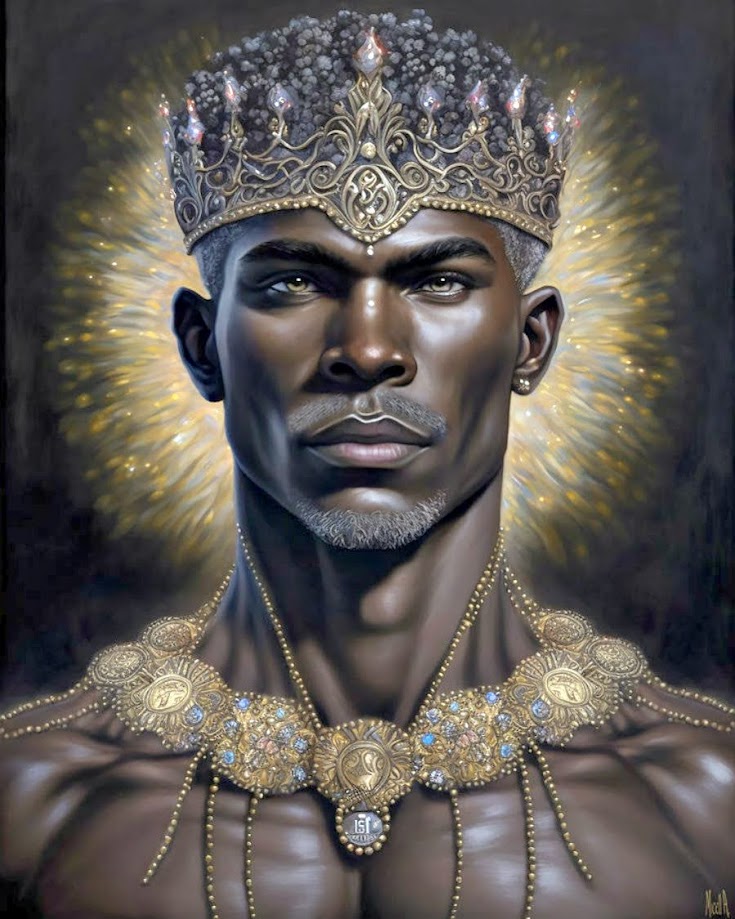
The Bible Series: The Rise and Fall of Nimrod

Nimrod is one of the most enigmatic figures in biblical history, mentioned briefly yet powerfully in the Book of Genesis. His story is veiled in mystery, layered with symbolism, and carries theological and historical weight. According to Genesis 10:8–10 (KJV), Nimrod was “a mighty one in the earth” and “a mighty hunter before the LORD.” These few words have inspired centuries of interpretation about who Nimrod was, what he represented, and how his legacy has shaped human civilization and rebellion against God.

The genealogy of Nimrod traces him to Cush, the son of Ham, who was one of Noah’s sons. Genesis 10:6 identifies Cush as Nimrod’s father, making Nimrod a great-grandson of Noah. This familial connection places him in the post-flood world—a time when humanity was beginning to rebuild, multiply, and spread across the earth. His lineage is significant because the descendants of Ham are often associated with the founding of great early civilizations, particularly in Mesopotamia and Africa.

Nimrod’s name itself carries deep meaning. Some scholars suggest it derives from the Hebrew root marad, meaning “to rebel.” Thus, Nimrod’s name can be interpreted as “The Rebel” or “We Shall Rebel.” This etymology aligns with his portrayal as a figure who defied divine authority and established his own rule. He is often regarded as the world’s first monarch, a man who sought dominion through power rather than through submission to God’s will.

The Bible records that the beginning of Nimrod’s kingdom was Babel, Erech, Accad, and Calneh in the land of Shinar (Genesis 10:10). These cities form the cradle of what would later become Babylon, one of the most infamous centers of idolatry and human pride. Nimrod is therefore credited with founding the first world empire—a symbol of human unity that turned into rebellion against the Creator. His rule marked the dawn of organized kingdoms and centralized power, which contrasted with God’s original design for human stewardship under divine authority.

Nimrod’s most notorious act is linked to the Tower of Babel, recounted in Genesis 11. Though his name is not explicitly mentioned in that passage, ancient Jewish and Christian traditions connect him to the building of the tower. Humanity, united under one language, sought to build a city and a tower “whose top may reach unto heaven” (Genesis 11:4, KJV). This act represented defiance—an attempt to achieve godlike status and independence from divine rule. Nimrod is thought to have been the mastermind or leader behind this movement, embodying the spirit of human pride and rebellion.

The fall of Nimrod’s empire came through divine intervention. God confounded the language of the people, scattering them across the earth and halting the construction of the tower. This act of confusion preserved divine order and prevented the complete corruption of humanity through unified arrogance. The fall of Babel is symbolic of the fall of all kingdoms that exalt themselves above God. In this way, Nimrod becomes a timeless archetype of human pride, representing the rise and fall of man-made empires that defy divine will.

Historically, Nimrod has been linked to several ancient rulers and deities. Some historians equate him with Sargon of Akkad, one of the earliest known empire builders. Others associate him with Gilgamesh, the legendary king of Uruk, or with the god Marduk, the chief deity of Babylon. These associations underscore his lasting influence in Mesopotamian mythology and demonstrate how his legend merged with the broader story of humanity’s attempt to rule apart from God.

In extra-biblical literature, particularly in the Book of Jasher and Josephus’s Antiquities of the Jews, Nimrod is portrayed as a tyrant who sought to rule over all men and turn them against God. Josephus writes that Nimrod “persuaded them not to ascribe [their strength] to God, as if it were through His means they were happy, but to believe that it was their own courage which procured that happiness” (Antiquities 1.4.2). This interpretation reinforces the notion that Nimrod was not merely a political leader but a spiritual rebel who introduced idolatry and the worship of self.

The spirit of Nimrod has been interpreted throughout history as symbolic of Babylonian influence—the tendency for societies to centralize power, glorify human achievement, and turn away from divine truth. Babylon itself became the prophetic symbol of rebellion and moral decay throughout Scripture. In Revelation, Babylon is portrayed as the mother of harlots and abominations, a continuation of the same defiant spirit that began with Nimrod’s empire (Revelation 17:5).

Nimrod’s fall was inevitable, as all who oppose divine authority must eventually submit to it. His story teaches that no matter how powerful human rulers or civilizations become, they cannot overthrow the sovereignty of God. The scattering at Babel serves as both judgment and mercy—it prevented humanity from destroying itself through total rebellion and preserved God’s plan for diversity among nations.

Theologically, Nimrod’s legacy can be understood as the first organized attempt to establish a kingdom independent of God’s governance. This rebellion echoes through time in every empire that exalts human glory over divine truth. From Babylon to Rome, from Egypt to modern systems of human pride, the “spirit of Nimrod” persists as a warning of what happens when humanity seeks to dethrone the Creator.

Nimrod’s family line also holds historical significance. As a descendant of Cush, he was part of the Hamitic lineage that gave rise to many ancient nations, including Ethiopia, Egypt, and parts of Canaan. The Cushite connection indicates that his empire may have extended influence into Africa as well as Mesopotamia, blending cultures and establishing the earliest forms of imperialism. His genetic and cultural legacy would thus contribute to the rise of civilizations known for their architectural and scientific achievements—but also for their spiritual corruption.

Archaeological evidence from ancient Mesopotamia reveals powerful city-states that align with the biblical description of Nimrod’s kingdom. The ziggurats, large step-pyramids used for worship, resemble the Tower of Babel in form and function. These structures were meant to connect heaven and earth, serving as symbols of human power and divine imitation. In this light, Nimrod’s influence extends beyond politics into religion—ushering in systems of false worship that mimicked but distorted divine order.

The prophetic implications of Nimrod’s story continue into modern theology. Many scholars see him as a prototype of the Antichrist—a ruler who exalts himself and unites humanity under rebellion against God. Just as Nimrod built Babel, the end-times leader will seek to establish a global system that opposes divine authority. The parallels are striking: centralized control, human pride, idolatry, and defiance of heaven.

Yet amid this darkness, the fall of Nimrod reminds believers that God’s purposes prevail. The dispersion at Babel set the stage for Abraham’s calling, through whom God would establish a covenant people. In this sense, Nimrod’s downfall opened the way for divine redemption and the unfolding of God’s plan for salvation. What man built in pride, God replaced with a promise rooted in faith.

Nimrod’s rise and fall also serve as a reflection of human psychology and leadership. He was charismatic, ambitious, and visionary—qualities often admired—but when severed from spiritual humility, such traits breed tyranny. His life warns against the dangers of unchecked power and the seduction of self-worship.

In later Jewish and Christian interpretation, Nimrod’s name became synonymous with rebellion and oppression. The “mighty hunter” became not just a hunter of animals but a hunter of men—subduing others through force. His strength, meant to serve creation, was instead used to dominate it.

Ultimately, the story of Nimrod stands as a microcosm of human history: the rise of ambition, the temptation of power, and the inevitable downfall of pride. It reminds us that all human kingdoms fade, but the kingdom of God endures forever.

In summary, Nimrod was more than a man—he was a symbol of humanity’s capacity for greatness and corruption. His rise marked the dawn of civilization, but his fall warned of the cost of rebellion. The biblical narrative closes on this truth: those who build without God build in vain.

References

Josephus, F. (1981). Antiquities of the Jews. (W. Whiston, Trans.). Hendrickson Publishers.
King James Bible. (1611). The Holy Bible. Oxford University Press.
Matthews, V. H. (2004). The Cultural World of the Bible: An Illustrated Guide to Manners and Customs. Hendrickson Publishers.
Sarna, N. M. (1989). Genesis: The Traditional Hebrew Text with the New JPS Translation. Jewish Publication Society.
Wenham, G. J. (1987). Genesis 1–15. Word Biblical Commentary. Word Books.
Tigay, J. H. (1982). The Evolution of the Gilgamesh Epic. University of Pennsylvania Press.
Heiser, M. S. (2015). The Unseen Realm: Recovering the Supernatural Worldview of the Bible. Lexham Press.

The Price of Pleasure

Pleasure, in its many forms, has long been both a gift and a snare. Humanity’s pursuit of delight — whether in wealth, lust, status, or indulgence — often reveals the tension between desire and discipline, between freedom and bondage. The price of pleasure, as Scripture and history attest, is seldom advertised at the moment of temptation. It is paid later, in the currency of consequence.

From the Garden of Eden to modern society, the story of humanity’s downfall is tied to the allure of pleasure without restraint. Eve’s bite of the forbidden fruit was not born of hunger, but of curiosity and promise — the seductive voice of the serpent whispering that fulfillment lay beyond obedience. This moment established an eternal pattern: sin disguises itself as satisfaction.

The human heart is wired to seek joy and satisfaction; however, when this longing detaches from divine purpose, it mutates into idolatry. The Apostle Paul warned that people would become “lovers of pleasures more than lovers of God” (2 Timothy 3:4, KJV). This prophecy finds its fulfillment in a world obsessed with comfort, entertainment, and sensuality — a culture that trades holiness for hedonism.

Pleasure itself is not evil; it is a creation of God meant to refresh the soul. Yet when pleasure becomes the master rather than the servant, it corrupts. What begins as harmless enjoyment can evolve into addiction, greed, and spiritual decay. The moment pleasure becomes the goal rather than the byproduct of righteousness, it demands payment — often through guilt, loss, or spiritual emptiness.

In modern times, the worship of pleasure manifests through consumerism, sexuality, and digital gratification. Social media platforms and entertainment industries exploit the human craving for validation and dopamine. We scroll endlessly, seeking stimulation, only to find ourselves more restless than before. The pleasure is temporary, but the dependence lingers.

The ancient book of Proverbs warns, “There is a way which seemeth right unto a man, but the end thereof are the ways of death” (Proverbs 14:12, KJV). This verse captures the deceptive nature of worldly pleasure. It promises satisfaction but delivers sorrow. It glitters like gold but corrodes the spirit like rust.

History, too, offers countless lessons. Entire civilizations have fallen under the weight of indulgence. Rome, once mighty, decayed from within as moral restraint gave way to luxury and lust. The same pattern repeats in every era where pleasure becomes the highest pursuit — the soul grows weak while the senses grow wild.

The psychology of temptation reveals that pleasure is not merely physical; it is deeply emotional and spiritual. Sin appeals to unmet needs — for love, security, or recognition — offering false fulfillment. The enemy does not tempt us with ugliness but with beauty misused. The serpent does not hiss; it flatters.

The price of pleasure is often hidden in the fine print. It can cost one’s integrity, peace, or purpose. A fleeting thrill may lead to years of regret, while a single compromise can birth a lifetime of bondage. Pleasure’s most dangerous lie is that there will be no consequences.

In relationships, this deception manifests as infidelity, lust, or manipulation disguised as passion. Many pursue the thrill of romance without the covenant of commitment, forgetting that true love is not a feeling but a choice rooted in sacrifice. What begins in excitement often ends in emptiness when built outside God’s order.

Financially, the same principle applies. The lust for wealth and material pleasure drives many into debt, dishonesty, or despair. Christ’s warning, “For what shall it profit a man, if he shall gain the whole world, and lose his own soul?” (Mark 8:36, KJV), reminds us that pleasure purchased at the cost of character is too expensive.

Spiritually, unchecked pleasure dulls the conscience. When the heart grows accustomed to indulgence, sin no longer feels sinful — it feels normal. This is the most dangerous stage, where conviction fades and comfort replaces repentance. The pleasure that once thrilled begins to enslave.

However, redemption is always possible. God’s grace restores even those who have squandered their peace chasing pleasure. King David, who knew both sin and sorrow, wrote, “In thy presence is fulness of joy; at thy right hand there are pleasures for evermore” (Psalm 16:11, KJV). This verse reveals that divine pleasure — not carnal indulgence — is the only satisfaction that does not destroy the soul.

To find lasting joy, one must exchange counterfeit pleasure for divine purpose. This requires discipline, discernment, and a heart anchored in truth. It means saying no to fleeting sensations in order to say yes to eternal fulfillment. Pleasure is sweetest when it flows from purity.

In the modern world, true rebellion is self-control. In a society that glorifies indulgence, restraint becomes revolutionary. Those who refuse to be mastered by their appetites rediscover freedom — not the freedom to do whatever feels good, but the freedom to choose what is right.

The price of pleasure is not always immediate; sometimes it accumulates quietly in the soul. Yet those who heed wisdom learn that God’s boundaries are not barriers but blessings — guardrails protecting us from destruction disguised as delight.

Every believer must confront this truth: what the world calls pleasure often leads to pain, but what God calls obedience leads to peace. Pleasure without purpose is poison; purpose filled with joy is divine.

Ultimately, the story of pleasure and pain teaches a timeless lesson — that everything beautiful outside of God’s timing becomes destructive. The fruit may look good to the eyes, but its sweetness can sour the soul. The truest pleasure is found not in rebellion, but in reconciliation with the One who created joy itself.

References

Foster, R. (1998). Celebration of discipline: The path to spiritual growth. HarperCollins.
Lewis, C. S. (1942). The Screwtape letters. HarperOne.
Piper, J. (1986). Desiring God: Meditations of a Christian hedonist. Multnomah.
Tozer, A. W. (1991). The pursuit of God. Christian Publications.
The Holy Bible, King James Version. (1611). London: Oxford University Press.

She Speaks: Wisdom for the Modern Queen.

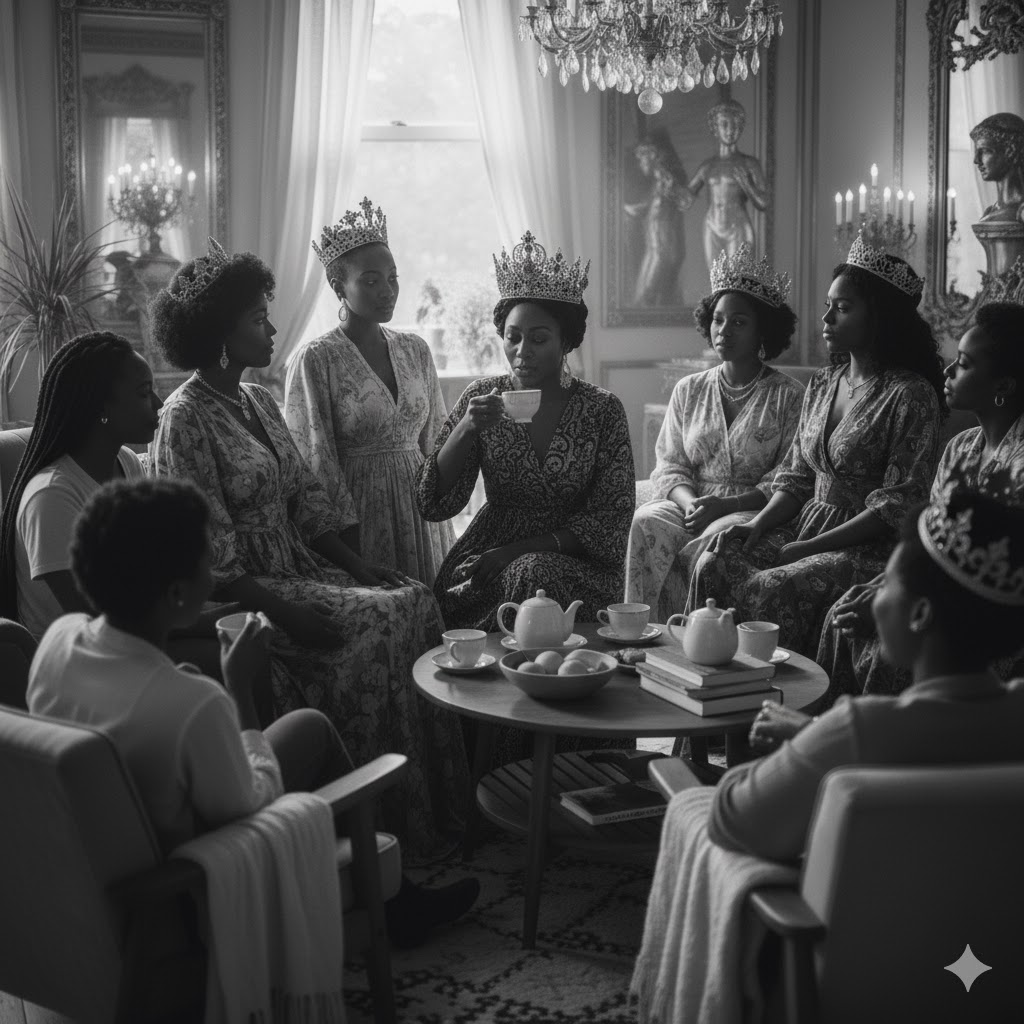
In a world where women are often pressured to conform, the voice of a modern queen is both revolutionary and restorative. She Speaks: Wisdom for the Modern Queen centers on cultivating discernment, confidence, and purpose, enabling women to navigate life with grace, authority, and spiritual alignment. A modern queen speaks with intentionality, guided by wisdom, faith, and experience.

Wisdom begins with self-awareness. A queen understands her strengths, acknowledges her weaknesses, and continually seeks growth. Proverbs 4:7 (KJV) emphasizes, “Wisdom is the principal thing; therefore get wisdom: and with all thy getting get understanding.” Knowledge paired with discernment empowers her to make decisions that reflect integrity and purpose.

Faith anchors her voice. A modern queen relies on God’s guidance in all matters, knowing that divine counsel surpasses human opinion. Isaiah 11:2 (KJV) reminds us that the Spirit of wisdom and understanding, counsel and might, knowledge and fear of the LORD, equips leaders to act decisively and justly.

Confidence is cultivated through experience, reflection, and resilience. Life’s challenges test her character, but a queen responds with poise and strength. Psalm 27:1 (KJV) affirms, “The LORD is my light and my salvation; whom shall I fear? The LORD is the strength of my life; of whom shall I be afraid?” Confidence rooted in God transcends societal pressures and fear of judgment.

Discernment allows her to recognize truth from deception. A queen evaluates situations carefully, seeks wise counsel, and avoids impulsive decisions. Proverbs 3:21-23 (KJV) teaches that discretion preserves life and protects the path of the faithful.

Leadership is a hallmark of modern queenship. She influences others not through coercion, but by example, integrity, and empowerment. Titus 2:3-5 (KJV) underscores the importance of guiding others with wisdom and nurturing mentorship, creating a legacy of impact.

Communication is central to her power. The modern queen speaks with clarity, conviction, and compassion. Her words build up, instruct, and inspire. Proverbs 16:24 (KJV) reminds us, “Pleasant words are as an honeycomb, sweet to the soul, and health to the bones.” Her voice is a tool for encouragement, advocacy, and transformation.

Emotional intelligence strengthens her reign. A queen manages her emotions, empathizes with others, and maintains grace under pressure. Proverbs 15:1 (KJV) teaches, “A soft answer turneth away wrath: but grievous words stir up anger.” Emotional mastery enables influence without domination.

Vision guides her actions. The modern queen is strategic, goal-oriented, and proactive in shaping her life and community. Habakkuk 2:2 (KJV) encourages writing the vision clearly, ensuring clarity and focus in pursuit of purpose.

Resilience is cultivated through adversity. Challenges and setbacks are inevitable, yet a queen transforms trials into growth, strength, and wisdom. James 1:2-4 (KJV) emphasizes that trials produce perseverance, which matures character and prepares one for greater responsibility.

Legacy is a measure of true queenship. A modern queen empowers others, uplifts communities, and inspires the next generation. Proverbs 31:28 (KJV) celebrates women whose children rise up and call her blessed, reflecting the enduring influence of wisdom and virtue.

Self-care and personal boundaries are essential. A queen values her mental, physical, and spiritual well-being, ensuring she can serve effectively without depletion. 1 Corinthians 6:19-20 (KJV) reminds her that her body is a temple, requiring stewardship and care.

Integrity defines her reputation. A queen’s word, actions, and character are aligned, fostering trust and respect. Proverbs 10:9 (KJV) affirms, “He that walketh uprightly walketh surely: but he that perverteth his ways shall be known.” Consistency in integrity reinforces influence.

Courage is inherent in her voice. A modern queen confronts injustice, advocates for the marginalized, and pursues truth, even when it is unpopular or risky. Joshua 1:9 (KJV) encourages strength and fearlessness, reminding her that God’s presence fortifies her steps.

Humility balances her authority. While she exudes confidence and influence, a queen remains teachable, reflective, and grounded in service. Philippians 2:3-4 (KJV) instructs valuing others above self, fostering leadership rooted in love rather than pride.

Gratitude shapes her perspective. Recognizing blessings, mentors, and divine guidance cultivates contentment, joy, and poise. 1 Thessalonians 5:18 (KJV) teaches giving thanks in all circumstances as a pathway to wisdom and serenity.

Adaptability allows her to thrive amid change. A queen navigates evolving circumstances with grace, learning from experiences and remaining steadfast in purpose. Ecclesiastes 3:1 (KJV) emphasizes that there is a season for every purpose under heaven, underscoring discernment in timing and action.

Faithful relationships enhance her kingdom. Surrounding herself with wise counsel, supportive allies, and spiritually aligned peers reinforces growth, accountability, and collective impact. Proverbs 13:20 (KJV) reminds her that association shapes destiny.

Modern Queen Wisdom: Principles & Practice

PrincipleScripture Reference (KJV)Actionable StepsReflection Prompt
Self-AwarenessProverbs 4:7Identify your strengths and weaknesses; journal personal insightsHow well do I know my strengths, and where do I need growth?
Faith & Spiritual GroundingIsaiah 11:2Daily prayer, Bible study, and meditation on God’s guidanceHow am I seeking God’s wisdom in my decisions today?
ConfidencePsalm 27:1Step into leadership roles; affirm your worth dailyWhen have I doubted myself, and how can I act with faith instead?
DiscernmentProverbs 3:21-23Pause before decisions; seek counsel from trusted mentorsAm I acting with clarity or reacting impulsively?
LeadershipTitus 2:3-5Mentor others, serve your community, lead by exampleHow am I using my influence to uplift others?
CommunicationProverbs 16:24Speak truth with kindness; actively listenAre my words building up or tearing down those around me?
Emotional IntelligenceProverbs 15:1Practice empathy, manage emotions, and resolve conflicts calmlyHow do I handle frustration or disagreement with grace?
VisionHabakkuk 2:2Set clear, measurable goals for personal and professional growthWhat steps am I taking to fulfill my long-term purpose?
ResilienceJames 1:2-4Reflect on challenges; identify lessons and growth opportunitiesHow have I grown stronger through adversity?
LegacyProverbs 31:28Contribute positively to family, community, and cultureWhat lasting impact do I want to leave?
Self-Care & Boundaries1 Corinthians 6:19-20Prioritize mental, physical, and spiritual health; set limitsWhere in my life do I need to say “no” to protect my well-being?
IntegrityProverbs 10:9Align actions with values; keep commitmentsAre my actions consistent with the woman I aspire to be?
CourageJoshua 1:9Face fears boldly; take principled standsWhat fear is holding me back from my God-given purpose?
HumilityPhilippians 2:3-4Seek counsel; acknowledge contributions of othersHow can I remain teachable while leading confidently?
Gratitude1 Thessalonians 5:18Daily reflections on blessings; express thanksWhat am I grateful for today, and how does it shape my perspective?
AdaptabilityEcclesiastes 3:1Embrace change; learn from new experiencesHow do I respond to change: with fear or with faith?
Faithful RelationshipsProverbs 13:20Surround yourself with mentors and spiritually aligned peersAre my relationships supporting my growth and purpose?

Vision, courage, integrity, and wisdom converge in her voice. The modern queen embodies the ability to inspire, empower, and lead, modeling strength for future generations. Her influence extends beyond herself, shaping families, communities, and culture.

Ultimately, She Speaks: Wisdom for the Modern Queen is both a guide and a declaration. It empowers women to embrace authority rooted in wisdom, faith, and integrity. Her voice is her crown, her discernment her scepter, and her legacy an eternal testimony to the power of godly queenship.


References

Holy Bible, King James Version. (1611). Thomas Nelson.

Guthrie, D. (1994). The NIV application commentary: Proverbs. Grand Rapids, MI: Zondervan.

Wright, C. J. H. (2002). Old Testament ethics for the people of God. Downers Grove, IL: InterVarsity Press.

Harris, T. (2019). Black girls rising: A roadmap to excellence and empowerment. Chicago, IL: University of Chicago Press.

Rooks, N. (2021). Hair politics: Beauty, culture, and Black identity. New York, NY: Beacon Press.

Beloved, Bloom

Beloved, you were never meant to wither beneath the weight of the world’s expectations. You were designed to bloom — to rise in divine timing, nourished by the light of God’s love. Too often, women hide their radiance, comparing their growth to another’s garden. But the Creator plants each of us with purpose and grace. The same God who paints sunsets and commands the ocean waves has written your name in His garden of glory. Bloom where you are, with what you have, and let your fragrance fill the earth with faith, strength, and softness. You are not behind; you are becoming. 🌿✨

Beloved, you were never meant to fade in the shadows of comparison or shrink beneath the expectations of the world. You were created in divine brilliance, hand-sculpted by the Master Gardener who saw beauty and purpose in your becoming. Every woman has a season of blooming — a sacred time when God allows her roots to deepen before her petals unfold. It is not a race of perfection but a journey of transformation, where faith waters the soul and patience strengthens the stem of character.

The Bible says, “To every thing there is a season, and a time to every purpose under the heaven” (Ecclesiastes 3:1, KJV). Your season of bloom may not look like another woman’s, and that’s by design. The Lord orchestrates the timing of your growth so that when you rise, your light cannot be dimmed. Even in your waiting season, you are growing in unseen places — the soil of prayer, humility, and surrender.

To bloom, beloved, is to trust God with your process. Flowers do not open in one day; they unfold gradually under the warmth of the sun. Likewise, God gently unfolds your purpose as you abide in Him. Jesus declared, “I am the vine, ye are the branches… without me ye can do nothing” (John 15:5, KJV). Your bloom is sustained only when your heart remains connected to the true Vine. In a world that praises independence and self-made glory, divine femininity calls you to a higher posture — dependence on God, where strength is wrapped in softness and confidence flows from spiritual intimacy.

There will be pruning seasons, times when God removes what no longer serves your growth. The pruning may hurt, but it is holy. Just as a gardener trims to promote new life, God removes relationships, habits, and mindsets that block your flourishing. “Every branch that beareth fruit, he purgeth it, that it may bring forth more fruit” (John 15:2, KJV). Don’t resist His hands — they are shaping you for greater beauty.

Blooming also means embracing your divine identity. You are not defined by what you have lost or by who walked away. You are the daughter of a King who clothes you in grace and adorns you with wisdom. The world may value outward beauty, but God treasures the inward glow — the gentle and quiet spirit that reflects His presence. “Favour is deceitful, and beauty is vain: but a woman that feareth the Lord, she shall be praised” (Proverbs 31:30, KJV).

As you bloom, remember that your petals are meant to bless others. The fragrance of your faith, the kindness in your speech, and the strength of your love can inspire those still in their seed stage. Every trial you’ve endured, every tear you’ve sown, becomes nourishment for another woman’s growth. You are both the flower and the gardener — growing while helping others rise.

Beloved, do not rush your season. The Lord is perfecting you in His timing. When you surrender your fears and doubts to Him, He makes beauty out of brokenness and turns delay into destiny. “The Lord will perfect that which concerneth me” (Psalm 138:8, KJV). Your bloom will come, radiant and purposeful, testifying to the faithfulness of the One who planted you.

So, lift your face to the Son. Stand tall in your faith. Spread your petals of purpose and let your life be the proof of God’s goodness. You were never meant to blend into the background; you were created to bloom beautifully, boldly, and belovedly — in Him. 🌷

The Mirror Between Two Worlds

Between the physical and the spiritual, between what is seen and what is felt, there exists a mirror — a reflection that reveals not merely the face, but the soul. The Mirror Between Two Worlds represents the threshold where identity, morality, and divinity converge. It is the space where humanity confronts both its beauty and its brokenness, where truth and illusion battle for dominion over the heart.

Every individual lives in two realms: the material world of flesh and ambition, and the spiritual world of conscience and eternity. The mirror between them does not merely show what we appear to be, but who we have become. In this reflection, one must ask: Am I living for this world or for the one beyond?

The physical world teaches us to chase visibility — to be admired, accepted, and envied. It prizes appearance over authenticity. The spiritual world, by contrast, measures not how we look but how we love, not how high we rise but how deeply we serve. The mirror between these two worlds exposes the tension of modern existence — the war between ego and essence.

In Scripture, mirrors often symbolize revelation and reflection. The Apostle Paul wrote, “For now we see through a glass, darkly; but then face to face” (1 Corinthians 13:12, KJV). Humanity’s understanding of truth is partial, obscured by sin and self-deception. Yet as we draw nearer to God, the reflection clarifies, revealing our true image — one made in His likeness.

This mirror is not a passive object; it is alive with moral consequence. It shows both the masks we wear and the wounds we hide. Many are afraid to look too long, for the reflection exposes compromise, vanity, and spiritual neglect. But transformation begins with honest confrontation. We cannot heal what we refuse to see.

In the age of social media and self-curation, the mirror has multiplied. We are surrounded by digital reflections — selfies, filters, and public personas — each crafted to project perfection. Yet the soul, neglected and unfiltered, remains restless. The world teaches us to polish the image but ignore the spirit, to upgrade the mirror but forget the reflection.

The “two worlds” also represent time and eternity. In this life, we chase possessions, pleasure, and recognition; in the next, only righteousness will endure. The mirror between them reminds us that what is temporary often disguises itself as eternal, and what is unseen carries the greatest value. “While we look not at the things which are seen, but at the things which are not seen…” (2 Corinthians 4:18, KJV).

Every choice we make tilts the reflection toward one world or the other. When we choose truth over convenience, compassion over cruelty, faith over fear — we align with the divine reflection. But when we yield to pride, envy, or greed, the mirror darkens. It becomes clouded by self-interest, unable to reflect the light of God’s image.

For centuries, mystics and theologians have described life as a mirror of the soul. The more one polishes it through repentance and humility, the more clearly it reflects the Creator. Sin, however, scratches the glass, distorting the divine resemblance. The process of sanctification is, in essence, the cleaning of the mirror — the restoration of spiritual clarity.

In psychological terms, the mirror represents self-awareness — the courage to observe one’s own motives, biases, and brokenness. It demands vulnerability, for the truth is rarely flattering. Yet through this inner reflection, spiritual maturity is born. The unexamined soul remains divided, trapped between the two worlds.

The mirror also symbolizes duality — light and shadow, heaven and earth, the sacred and the profane. It reminds us that humans are not merely bodies seeking pleasure, but spirits seeking purpose. When the material dominates, the reflection becomes superficial; when the spiritual leads, beauty flows from within.

The tragedy of modern humanity is that many have mistaken the reflection for the reality. They worship the image — fame, status, self — and forget the source. This idolatry of the self is the ancient sin reborn in digital form. The mirror becomes an altar where the ego reigns supreme, yet leaves the soul starving.

Yet, hope endures. The mirror between worlds is not meant to condemn but to awaken. When one gazes into it with humility, the illusion fades and truth emerges. One begins to see that divine beauty is not external adornment but internal alignment — the harmony of heart, mind, and spirit under God’s light.

In every generation, prophets, poets, and philosophers have urged humanity to look inward. “Know thyself,” inscribed on the Temple of Delphi, echoes the same wisdom Christ imparted: “The kingdom of God is within you” (Luke 17:21, KJV). The mirror between two worlds, then, is not found in glass but in the heart.

The reflection we see in others often reveals what remains unresolved within us. Judgment, envy, and resentment are projections of our own unrest. Thus, relationships become mirrors too — sacred tools of revelation meant to refine rather than condemn. Each encounter is an invitation to greater understanding.

The moment we surrender vanity and face our truest reflection, transformation begins. The mirror ceases to divide the worlds and instead unites them. Heaven and earth meet within the redeemed heart — a space where spiritual truth animates physical existence.

The goal, then, is not to shatter the mirror but to see clearly through it. To live with integrity between both worlds — fully human yet divinely guided. To reflect the Creator while walking through creation.

In the end, every soul must stand before the ultimate mirror — the presence of God — where no filters, excuses, or disguises remain. There, reflection becomes revelation. And in that sacred unveiling, we will finally see ourselves as He always saw us — not divided, but whole.

References

Foster, R. (1998). Celebration of discipline: The path to spiritual growth. HarperCollins.
Lewis, C. S. (1942). The Screwtape letters. HarperOne.
Nouwen, H. (1981). The wounded healer: Ministry in contemporary society. Doubleday.
Tozer, A. W. (1991). The pursuit of God. Christian Publications.
The Holy Bible, King James Version. (1611). London: Oxford University Press.

Dilemma: Exalted by God, Diminished by the World

The dilemma of Black people is not merely historical — it is spiritual, psychological, and prophetic. It exists in the tension between divine identity and earthly rejection. It is the paradox of being a people endowed with brilliance, purpose, and sacred legacy, yet consistently challenged by social systems designed to suppress that brilliance. As Scripture declares, “For the Lord shall judge His people, and repent Himself for His servants, when He seeth that their power is gone” (Deuteronomy 32:36, KJV). The struggle has been seen and known by God.

This dilemma begins with divine intention. Black people embody creativity, resilience, and spiritual depth reflected in ancient civilizations, rich oral traditions, and unparalleled cultural influence. From Nubia to Mali, from Cush to Kemet, from Ethiopia to Judah, the African presence stands as a foundational pillar of global civilization (Diop, 1974). Yet as greatness rose, so did opposition — echoing the biblical notion that “many are the afflictions of the righteous” (Psalm 34:19, KJV).

Despite oppression, the Black spirit remains unbroken. Enslavement sought to steal identity, but instead sharpened emotional intelligence, cultural unity, and faith. On plantations, the enslaved held secret worship, trusting the God of deliverance just as Israel trusted Him in Egypt. They sang songs of freedom, echoing Moses: “Let my people go” (Exodus 5:1, KJV). Even bondage could not silence purpose.

One layer of this dilemma is invisibility. Black contributions are foundational to music, science, agriculture, theology, and medicine, yet rarely acknowledged (Asante, 1988). The world consumes our culture but often refuses to honor us as creators. We are celebrated as aesthetic, yet ignored as intellectual. We are loved for rhythm, but resisted for righteousness. We stand out — yet are told to “fit in.”

Another dimension is psychological warfare. Colonial propaganda attempted to convince us that we were inferior. Yet, biblically, the Most High often elevates the humble and chosen through adversity. “The last shall be first, and the first last” (Matthew 20:16, KJV). The struggle is not evidence of weakness, but a spiritual signpost of destiny.

Meanwhile, colorism emerged as a tool of division — a wound born of white supremacy’s hierarchy, weaponizing complexion to fracture unity. Yet Scripture teaches, “If a house be divided against itself, that house cannot stand” (Mark 3:25, KJV). Healing begins with rejecting systems that were never meant to define us.

We carry the burden of representation — expected to succeed flawlessly while being denied equal opportunity. This emotional weight mirrors Christ, who bore rejection while carrying divine purpose. “He was despised and rejected of men” (Isaiah 53:3, KJV). Our pain parallels prophecy.

Still, the world is threatened by Black excellence. When we rise in intellect, innovation, or leadership, systems shift uneasily, exposing the foundation of racial fear (Bell, 1992). This fear is not rooted in truth, but insecurity — because when a people gifted by God awaken, worldly powers tremble.

We live in dual consciousness — as W.E.B. Du Bois described — constantly balancing self-worth with societal judgment. Yet while society may try to define us, God declares our worth: “Ye are a chosen generation, a royal priesthood” (1 Peter 2:9, KJV). Our identity comes from heaven, not history books distorted by colonial pens.

Our existence challenges the world because we symbolize survival. We rose from chains to chart-topping music, from plantations to presidencies, from illiteracy laws to Ph.D. halls. Our story is not tragedy, but testimony. Every generation rises stronger than the last.

The dilemma also lies in being seen yet unseen. Black culture is everywhere — fashion, language, sports, beauty standards — yet our humanity is still debated. We are applauded on stages, yet targeted in streets. Loved on screens, yet feared in real life. A contradiction the world refuses to reconcile.

Economically, systems were built on our labor while denying us wealth (Muhammad, 2020). Our innovation created industries — cotton, music, sports — yet generational wealth disparities remain. Still, we thrive, build, and rise — a modern Joseph story, from pit to prominence.

Spiritually, Black people possess innate faith power. We pray with depth, worship with sincerity, love with intensity, and forgive with divine strength. Yet forgiveness has often been weaponized against us, urging peace without justice. But Scripture says, “Judgment also will I lay to the line, and righteousness to the plummet” (Isaiah 28:17, KJV).

Despite trauma, we create joy. We turn pain into poetry, oppression into art, and struggle into innovation. This alchemy of resilience is divine gifting — proof of God’s breath in us. We are living Psalms.

The world expects us to forget history, yet demands we perform excellence. But remembrance is biblical: “Thou shalt remember all the way which the Lord thy God led thee” (Deuteronomy 8:2, KJV). Memory is power. Our story is sacred.

The dilemma is also internal — unlearning lies, unbinding trauma, reclaiming divinity. Healing is both spiritual and psychological. As we restore identity, we rise into purpose. As we honor ancestry, we step into prophecy.

And still, hope remains our inheritance. Through storms, we remain anchored in God’s promise. “No weapon that is formed against thee shall prosper” (Isaiah 54:17, KJV). Not then. Not now. Not ever.

Our dilemma is not defeat — it is destiny unfolding. The world struggles to categorize what God has crowned. Oppression could not erase us. Misrepresentation could not distort us. Time could not silence us. We are history’s evidence and tomorrow’s blueprint.

We are not merely survivors — we are restorers. Rebuilders. Carriers of ancient wisdom and future vision. Our existence is revolutionary, our presence prophetic, our identity divine.

So stand tall, Black soul. Your legacy did not begin in chains; it began in crowns. Your struggle is not failure; it is refinement. Your identity is not determined by man; it is sealed by God. The dilemma is real — but so is the calling.

For buried gold is not forgotten — it is waiting for appointed time. And our time is rising.


Key Scriptures (KJV)

  • Psalm 34:19
  • Exodus 5:1
  • Matthew 20:16
  • Mark 3:25
  • 1 Peter 2:9
  • Isaiah 54:17

References

Asante, M. K. (1988). Afrocentricity.
Bell, D. (1992). Faces at the Bottom of the Well.
Diop, C. A. (1974). The African Origin of Civilization: Myth or Reality.
Muhammad, K. G. (2020). The Condemnation of Blackness.
Holy Bible, King James Version.

Leaving a Bad Ungodly Relationship (Man & Woman Edition)

Photo by Diva Plavalaguna on Pexels.com

God designed relationships to reflect love, respect, and spiritual growth. When a relationship becomes unhealthy, ungodly, or destructive, staying can compromise your faith, emotional health, and future blessings. Both men and women must discern when to walk away, trusting God to guide them into peace and restoration.


Recognizing Ungodly Patterns

Ungodly relationships are characterized by manipulation, disrespect, lack of spiritual alignment, or repeated sin. These patterns harm both partners and can prevent spiritual growth.

  • 2 Corinthians 6:14 – “Be ye not unequally yoked together with unbelievers…”

Understanding Emotional Abuse

Verbal attacks, controlling behavior, or consistent criticism erode self-worth. Both men and women should recognize that God calls us to love and honor, not harm.

  • Ephesians 4:29 – “Let no corrupt communication proceed out of your mouth…”

Discernment Through Prayer

Seek God’s wisdom and clarity. The Holy Spirit reveals truth, conviction, and the need to leave situations that are spiritually or emotionally destructive.

  • James 1:5 – “If any of you lack wisdom, let him ask of God…”

Setting Boundaries

Boundaries protect your heart, mind, and body. Communicate clearly what is unacceptable and stand firm in your convictions. God honors those who guard their hearts.

  • Proverbs 4:23 – “Keep thy heart with all diligence; for out of it are the issues of life.”

Overcoming Fear of Being Alone

Fear often keeps people in toxic relationships. God promises that He is our refuge and provider, and that waiting for His best is always worth it.

  • Psalm 27:10 – “When my father and my mother forsake me, then the LORD will take me up.”

Seeking Support and Accountability

Confide in trusted spiritual mentors, friends, or counselors who uphold God’s Word. Support helps navigate emotions and prevents being pulled back into destructive patterns.

Understanding Love vs. Lust

Ungodly relationships are often fueled by physical attraction rather than covenantal love. Seek relationships that honor God and promote mutual spiritual growth.

  • 1 Corinthians 6:18 – “Flee fornication. Every sin that a man doeth is without the body; but he that committeth fornication sinneth against his own body.”

Recognizing Manipulation and Control

Emotional manipulation, jealousy, or possessiveness are signs of ungodly influence. Both men and women should recognize these behaviors as spiritually dangerous.

Practical Steps to Exit

Communicate your decision respectfully. Remove access points like social media or shared spaces to reduce temptation or manipulation. Replace unhealthy routines with prayer, worship, and God-centered activities.

Healing and Restoration

Leaving is the first step; healing requires time, prayer, and self-reflection. God restores hearts and renews peace for those who trust Him.

  • Psalm 147:3 – “He healeth the broken in heart, and bindeth up their wounds.”

Forgiveness Without Reconciliation

Forgive to release bitterness, but forgiveness does not always mean returning to the relationship. Protect your future and spiritual well-being.

  • Matthew 6:14-15 – Forgiveness is key to freedom, but God honors wisdom in relationships.

Guarding Against Rebound Relationships

Rushing into another relationship without processing emotions can replicate unhealthy patterns. Wait for God’s guidance and alignment.

Building Godly Character

Use this season to deepen your faith, integrity, and personal growth. God prepares both men and women for righteous relationships aligned with His Word.

  • Proverbs 31:30 – “Favor is deceitful, and beauty is vain: but a woman that feareth the LORD, she shall be praised.”

Trusting God’s Timing

The right partner comes according to God’s plan. Patience and faith are essential to avoid falling back into ungodly patterns.

  • Ecclesiastes 3:1 – “To everything there is a season…”

Avoiding Guilt and Shame

Leaving an ungodly relationship is obedience, not failure. Trust God to honor your decision and lead you to wholeness.

Reaffirming Your Identity in Christ

Your worth is not defined by relationship status. Both men and women are complete in Christ, and God’s love is the ultimate source of validation.

  • Galatians 2:20 – “I am crucified with Christ: nevertheless I live; yet not I, but Christ liveth in me.”

Maintaining Spiritual Vigilance

Ungodly relationships often blur spiritual priorities. Commit to daily prayer, scripture, and fellowship to strengthen resolve and avoid future compromise.

Avoiding Retaliation or Bitterness

Respond with grace, not anger. Ungodly relationships often leave wounds, but God calls for love, patience, and forgiveness.

Creating a Safe Environment

If necessary, seek safety from abusive partners. Legal protection, counseling, and supportive community may be required to ensure physical and emotional security.

Embracing God’s Plan for Love

God desires covenantal, life-giving relationships. Leaving a bad relationship opens the door to God’s blessings, peace, and divine alignment for both men and women.

  • Jeremiah 29:11 – “For I know the thoughts that I think toward you, saith the LORD, thoughts of peace, and not of evil, to give you an expected end.”

Practical Tips for Leaving a Bad Relationship

  • Pray daily for wisdom, courage, and clarity.
  • Face the truth about the relationship without denial.
  • Establish firm boundaries and communicate them clearly.
  • Seek guidance and support from trusted spiritual mentors and friends.
  • Remove access points like social media or shared spaces.
  • Communicate your decision respectfully and calmly.
  • Protect your physical and emotional safety if necessary.
  • Avoid rushing into another relationship before healing.
  • Forgive without reconciling to release bitterness.
  • Redirect energy toward prayer, personal growth, and spiritual development.

Scripture References (KJV)

  • 2 Corinthians 6:14 – “Be ye not unequally yoked together with unbelievers…”
  • Ephesians 4:29 – “Let no corrupt communication proceed out of your mouth…”
  • James 1:5 – “If any of you lack wisdom, let him ask of God…”
  • Proverbs 4:23 – “Keep thy heart with all diligence; for out of it are the issues of life.”
  • Psalm 27:10 – “When my father and my mother forsake me, then the LORD will take me up.”
  • 1 Corinthians 6:18 – “Flee fornication. Every sin that a man doeth is without the body; but he that committeth fornication sinneth against his own body.”
  • Psalm 147:3 – “He healeth the broken in heart, and bindeth up their wounds.”
  • Matthew 6:14-15 – Forgiveness is key to freedom.
  • Proverbs 31:30 – “Favor is deceitful, and beauty is vain: but a woman that feareth the LORD, she shall be praised.”
  • Ecclesiastes 3:1 – “To everything there is a season…”
  • Galatians 2:20 – “I am crucified with Christ: nevertheless I live; yet not I, but Christ liveth in me.”
  • Jeremiah 29:11 – “For I know the thoughts that I think toward you, saith the LORD, thoughts of peace, and not of evil, to give you an expected end.”

References

  • Cloud, H., & Townsend, J. (1992). Boundaries in marriage. Zondervan.
  • Cloud, H., & Townsend, J. (1992). Boundaries in dating relationships. Zondervan.
  • Chapman, G. (2015). The five love languages: How to express heartfelt commitment to your mate. Northfield Publishing.
  • Walker, L. E. (2017). The battered woman syndrome (3rd ed.). Springer Publishing.
  • Johnson, S. M. (2019). Hold me tight: Seven conversations for a lifetime of love. Little, Brown Spark.
  • Cloud, H. (2015). Boundaries: When to say yes, how to say no to take control of your life (Revised and updated edition). Zondervan.
  • American Psychological Association. (2018). Recognizing and responding to relationship abuse. https://www.apa.org/topics/violence/relationship-abuse

Beauty in the Eyes of Truth: Debunking Satoshi Kanazawa’s Racist “Study” on Black Women.

When Satoshi Kanazawa published his article, “Why Are Black Women Less Physically Attractive Than Other Women?” in 2011 on Psychology Today’s blog The Scientific Fundamentalist, he set off a firestorm of global outrage. His so-called “research” claimed that Black women were “objectively less attractive” than women of other races based on statistical data. What he called “scientific evidence” was, in reality, a misuse of data, steeped in racial bias, colonial beauty standards, and poor methodology.

Kanazawa drew from a database called the Add Health survey, which included self-reported ratings of physical attractiveness by interviewers. However, these interviewers were not trained in objective aesthetic assessment — they were individuals influenced by their own biases, cultural norms, and Eurocentric ideals of beauty. Instead of acknowledging this obvious flaw, Kanazawa treated subjective opinions as biological fact, thereby perpetuating pseudoscience.

The title alone — “Why Are Black Women Less Physically Attractive” — betrayed a racist premise. It positioned Black women as a scientific question to be explained rather than human beings deserving of dignity. This type of racial pseudoscience has roots in 19th-century eugenics, which sought to justify white supremacy through “biology.” In Kanazawa’s case, the problem wasn’t science — it was the misuse of science to validate prejudice.

The article provoked an immediate global backlash. Black women scholars, writers, and readers flooded Psychology Today with demands for its removal. Within days, the post was taken down and disavowed by the publication. The London School of Economics publicly condemned Kanazawa’s statements, suspended him from teaching duties, and launched an investigation into his conduct. Psychology Today later issued an apology for publishing the article at all, acknowledging that it failed editorial standards and promoted harmful racial stereotypes.

Satoshi Kanazawa was not a random internet blogger — he was a university lecturer and evolutionary psychologist who often courted controversy. He had previously published inflammatory posts suggesting that African nations were “less intelligent” due to genetics, and that men were “more rational” than women. His work consistently displayed a pattern of racial and gender bias disguised as evolutionary psychology, leading many experts to label his theories as “scientific racism.”

But why did he specifically target Black women? Because Black women have historically been positioned at the intersection of both racism and sexism — where both systems of oppression overlap. Kanazawa’s post reflected a broader societal narrative that devalues Black womanhood while glorifying Eurocentric beauty. From slavery-era stereotypes of the “mammy” and “jezebel” to modern media’s glorification of lighter skin and straighter hair, his article fed into a centuries-old lie: that whiteness equals beauty, and Blackness does not.

Yet the truth is exactly the opposite. The concept of beauty is not objective, and it certainly cannot be reduced to statistical averages. Beauty is in the eye of the beholder, as Proverbs 31:30 (KJV) reminds us: “Favour is deceitful, and beauty is vain: but a woman that feareth the Lord, she shall be praised.” The Most High never created one standard of beauty — He created diversity as a reflection of His glory.

The melanin-rich skin of Black women is a divine masterpiece of strength and radiance. Scientifically, melanin protects against ultraviolet radiation, delays aging, and carries powerful antioxidant properties. Spiritually, melanin symbolizes resilience and divine design — “I am black, but comely,” declares the Shulamite woman in Song of Solomon 1:5 (KJV), affirming that her dark skin is beautiful in the eyes of God.

Kanazawa’s so-called “findings” crumble under both scientific and spiritual truth. Studies since then have proven that perceptions of beauty are culturally constructed and heavily influenced by exposure, familiarity, and societal power dynamics. When media and academia have long centered white features as the norm, it’s no surprise that biases emerge in subjective surveys. The real issue is not the appearance of Black women — it’s the conditioning of the observers.

The damage from Kanazawa’s article, however, was not purely academic. It caused emotional harm to millions of Black women and girls who saw themselves being demeaned in the name of science. But out of that pain came power — Black women writers, scholars, and activists began challenging not just Kanazawa, but the entire structure of racialized beauty standards. Movements like #BlackGirlMagic and The Melanin Movement emerged to celebrate the uniqueness, intelligence, and glory of Black femininity.

The Bible teaches that every human is “fearfully and wonderfully made” (Psalm 139:14, KJV). There is no hierarchy in God’s creation, only purpose. The notion that any race of women could be “less attractive” defies both the natural order and divine truth. God does not rank beauty — He defines it by character, spirit, and righteousness.

Satoshi Kanazawa’s downfall serves as a lesson in accountability. His attempt to use science to degrade a people group backfired and exposed how racism still lurks in academic institutions. The removal of his article and suspension from LSE marked an important moment in the fight against institutional racism disguised as research.

To this day, Psychology Today has never republished the post, and Kanazawa’s reputation remains stained by his unethical approach. His legacy is a warning: intelligence without morality becomes manipulation. Data without empathy becomes oppression.

The truth is simple — Black women do not need validation from biased scientists or manipulated statistics. Their worth is intrinsic, God-given, and undeniable. Their features — full lips, textured hair, radiant skin — are not deviations from beauty but divine blueprints of creation.

In a world still influenced by Eurocentric ideals, it is critical to remember that beauty is not comparative — it is collective. Every shade and feature tells the story of a God who delights in variety.

Satoshi Kanazawa’s article was not science; it was prejudice cloaked in data. Its removal was an act of justice. And its legacy reminds us that truth and beauty cannot be measured by biased eyes — only by the Creator who made all flesh in His image.

Black Women Are Divine: The Truth About Melanin and Beauty Beyond Eurocentrism

For centuries, the beauty of the Black woman has been misunderstood, misrepresented, and mischaracterized. Western ideals — rooted in colonialism and white supremacy — have attempted to distort what God Himself called “good.” Yet, the truth remains: the Black woman is not an accident of biology, nor a deviation from beauty’s standard. She is divine design — formed with intention, wrapped in melanin, and crowned with resilience.

The Eurocentric gaze has long defined beauty through a narrow lens — lighter skin, straight hair, delicate features. But this standard was born not of truth, but of hierarchy. It emerged during colonization when European men sought to establish dominance by devaluing darker skin. To elevate whiteness, they had to diminish Blackness. And so, the war against Black womanhood became not just physical, but psychological.

But the Most High made no mistake. Genesis 2:7 (KJV) says, “And the LORD God formed man of the dust of the ground, and breathed into his nostrils the breath of life.” The dust of the ground is brown — the color of earth, rich in nutrients and minerals. In the same way, the skin of the Black woman carries the essence of creation itself. Her melanin is not a flaw; it is the fingerprint of God’s first masterpiece.

Melanin is the biological evidence of divine wisdom. It absorbs light, protects from radiation, preserves youth, and enhances the body’s connection to natural energy. Spiritually, it symbolizes endurance and divine covering. Isaiah 60:2 (KJV) proclaims, “For, behold, the darkness shall cover the earth… but the LORD shall arise upon thee, and his glory shall be seen upon thee.” The darkness that covers the Black woman is not a curse — it is glory manifested.

Every curl, every coil, every shade of brown tells a sacred story. Black hair, often stigmatized under European ideals, is in fact a marvel of design — coiled to protect the scalp, regulate heat, and retain moisture in tropical climates. It grows toward the heavens as a living symbol of strength and connection to the divine. 1 Corinthians 11:15 (KJV) declares, “If a woman have long hair, it is a glory to her.” Black hair, in all its natural forms, is an expression of that glory.

The lie of Eurocentric beauty has long told Black women they must alter themselves to be accepted — straighten their hair, lighten their skin, shrink their bodies, and quiet their voices. But these are not acts of self-love; they are symptoms of systemic programming. Romans 12:2 (KJV) warns, “And be not conformed to this world: but be ye transformed by the renewing of your mind.” To renew the mind is to remember divine truth: that you were already perfect in the eyes of your Creator.

Science, when freed from bias, testifies to the same truth. Melanin not only defines skin tone but also enhances vision, strengthens the immune system, and synchronizes the body’s natural rhythm with the sun. It is, quite literally, life-giving carbon — the same element found in stars, soil, and all living things. To possess melanin is to carry the universe within.

The Black woman’s lips, full and expressive, symbolize nourishment and truth. Her hips, wide and strong, represent creation and continuation of life. Her eyes, deep and radiant, reflect wisdom and empathy. Her skin, luminous and resilient, tells the story of survival through centuries of oppression — yet still she glows. Isaiah 61:3 (KJV) calls her a woman “to give unto them beauty for ashes.” She has walked through fire, yet she remains gold.

Historically, European colonialism labeled African features as “primitive” while simultaneously fetishizing them. This hypocrisy continues in modern media, where non-Black women are praised for features that originate in Black beauty — full lips, curvy bodies, sun-kissed skin. Yet when the Black woman bears them naturally, she is too often told she is “too much.” This contradiction exposes the world’s envy of what it cannot reproduce: divine authenticity.

To understand the sacredness of melanin is to understand covenant. Deuteronomy 7:6 (KJV) declares, “For thou art an holy people unto the LORD thy God: the LORD thy God hath chosen thee to be a special people unto himself.” The melanin in the Black woman is more than pigment — it is purpose. It connects her to the elements of the earth and the energy of creation. She embodies both survival and sanctity.

The Black woman is also the cradle of civilization. Archaeological and genetic evidence affirms that humanity’s maternal ancestry traces back to Africa — to the very women whose descendants are still walking the earth. The mitochondrial DNA of all humans today originates from an African mother scientists call “Mitochondrial Eve.” Long before Eurocentric ideals existed, the Black woman was the standard — the mother of nations.

Yet despite being the mother of humanity, she has been vilified, hypersexualized, and devalued. But God always restores what man destroys. Psalm 113:7 (KJV) reminds us, “He raiseth up the poor out of the dust, and lifteth the needy out of the dunghill.” The modern awakening of Black womanhood — in faith, culture, and scholarship — is that divine lifting in action.

To the Black woman, you are not defined by social metrics or colonial constructs. You are defined by the Word of God and the truth of creation. Your strength does not make you hard; your beauty does not make you vain; your melanin does not make you less. It makes you chosen.

Black woman, your skin is anointed with the same carbon that fuels the stars. Your heart beats with the rhythm of ancient drums. Your voice carries the tone of prophets and poets. Your presence testifies that the Creator’s design is intentional, balanced, and breathtaking.

Let no man or magazine define you. Let no algorithm rank you. Let no false science demean you. For you were not created to fit into the mold of European fantasy — you were shaped by divine reality. You are living evidence of God’s brilliance and endurance.

In a world obsessed with imitation, your authenticity is rebellion. In a society obsessed with whiteness, your blackness is truth. And in a culture obsessed with erasure, your existence is resistance. You are, and always will be, the living expression of the Most High’s creativity.

As Psalm 45:13 (KJV) says, “The king’s daughter is all glorious within: her clothing is of wrought gold.” Black woman, your skin is that gold. It shines not because others approve of it, but because Heaven does.

The world’s definition of beauty is fleeting, but yours is eternal. Your melanin, your essence, your truth — all are divine signatures. You are not less than. You are the blueprint.

KJV References:
Genesis 2:7; Isaiah 60:2; 1 Corinthians 11:15; Romans 12:2; Psalm 139:14; Song of Solomon 1:5; Deuteronomy 7:6; Psalm 113:7; Isaiah 61:3; Psalm 45:13; Proverbs 31:30; Revelation 7:9. Genesis 1:27; Psalm 139:14; Song of Solomon 1:5; Proverbs 31:30; Romans 2:11; James 2:1; 1 Samuel 16:7; Galatians 3:28; Revelation 7:9.

Colorblind: The Illusion of Equality and the Denial of Black Identity

The concept of being “colorblind” is often presented as a noble ideal, one that claims to transcend race and see all people as equal. However, beneath its surface lies a deeper issue — the erasure of identity and the dismissal of lived experiences. The term “colorblind” denies the richness, beauty, and historical significance of the skin God intentionally gave His children. The Bible makes it clear that God is a God of diversity and design, not uniformity or erasure (Genesis 1:27; Psalm 139:14).

The colorblind mentality assumes that ignoring race can lead to peace and fairness, yet it often silences the voices of the oppressed. When people say, “I don’t see color,” they often unknowingly reject the cultural and spiritual heritage of people of color. God’s creation was never meant to be overlooked but celebrated — from the hues of the sky to the shades of humanity. Revelation 7:9 (KJV) affirms this truth: “After this I beheld, and, lo, a great multitude… of all nations, and kindreds, and people, and tongues, stood before the throne.” Heaven itself will be filled with diversity, not colorblindness.

In society, the colorblind approach is often used as a defense mechanism to avoid confronting racism. By denying race, individuals avoid accountability for the systems of inequality that still exist. Instead of healing, this approach deepens the wounds of those who experience racism daily. The Scriptures call for justice and empathy, not denial. Micah 6:8 (KJV) declares, “He hath shewed thee, O man, what is good; and what doth the Lord require of thee, but to do justly, and to love mercy, and to walk humbly with thy God?”

God designed every people group with purpose. The melanin in Black skin is not an accident — it’s a divine adaptation to the Creator’s plan. It carries not only physical beauty but also symbolic depth, representing strength, endurance, and divine protection (Song of Solomon 1:5, KJV). To be colorblind to this truth is to miss part of God’s artistry.

Colorblindness also robs children of cultural pride. When Black youth are taught that color doesn’t matter, they are denied the opportunity to celebrate their heritage. Proverbs 22:6 (KJV) instructs, “Train up a child in the way he should go: and when he is old, he will not depart from it.” Teaching young people to honor their roots, rather than erase them, cultivates self-worth rooted in divine truth.

True unity in Christ does not mean sameness. Paul’s letters to the early church reveal that believers maintained their ethnic and cultural distinctions while walking together in love (1 Corinthians 12:12-14). Unity through diversity glorifies God; conformity through denial distorts His creation.

The colorblind ideology can be traced to the false belief that acknowledging race causes division. In reality, the opposite is true — division arises when differences are ignored rather than understood. James 2:9 (KJV) warns, “But if ye have respect to persons, ye commit sin, and are convinced of the law as transgressors.” Respecting persons includes respecting their culture and the journey God ordained for them.

To be color-conscious in righteousness is to see as God sees — with truth and love. The Lord does not ask us to be blind to color but to see each person through His spiritual lens. Jesus Himself was not colorblind; He recognized the Samaritan woman’s ethnicity (John 4:9), yet treated her with dignity and revelation.

The problem with colorblindness is that it denies the need for repentance from racial sin. If one claims to “not see race,” one also denies the existence of racial oppression. The Bible, however, calls for confession and restitution when injustice occurs (Proverbs 28:13; Luke 19:8). Without acknowledging racial realities, there can be no true reconciliation.

For believers, the goal is not colorblindness but Christ-centered vision — a way of seeing that honors every shade of humanity as an intentional masterpiece. Romans 12:10 (KJV) commands, “Be kindly affectioned one to another with brotherly love; in honour preferring one another.” Honoring includes valuing one’s identity, background, and history.

When someone says “I don’t see color,” they may mean well, but they inadvertently communicate that Blackness is invisible. The truth is, to see color is to see the Creator’s brilliance. The melanin in the skin is a testimony of divine craftsmanship and protection. Science affirms that melanin protects from ultraviolet radiation — a sign of God’s foresight and care for His people.

A biblical worldview calls us to awareness, not blindness. Ephesians 5:13 (KJV) declares, “But all things that are reproved are made manifest by the light.” The light of truth exposes both the beauty of diversity and the sin of racism. To walk in light means to see and address both.

Colorblindness is also spiritually dangerous because it undermines identity. God used ethnicity and lineage throughout Scripture to fulfill His covenant promises — from the tribe of Judah to the seed of David to the lineage of Christ. Race and heritage matter to God; they are part of His divine narrative.

Instead of striving for colorblindness, we must seek color-blessing — an appreciation of the unique gifts that each culture brings to the body of Christ. 1 Corinthians 12:18 (KJV) reminds us, “But now hath God set the members every one of them in the body, as it hath pleased him.” God is pleased with our differences because they complement one another.

In the modern world, the colorblind approach can perpetuate systemic injustice by ignoring racial disparities. The biblical approach is not blindness but justice with vision — to see inequity and act in love. Isaiah 1:17 (KJV) exhorts, “Learn to do well; seek judgment, relieve the oppressed, judge the fatherless, plead for the widow.”

Colorblindness fails because it focuses on comfort rather than correction. It silences the pain of the marginalized to protect the feelings of the privileged. True love, however, confronts truth. Proverbs 27:5 (KJV) declares, “Open rebuke is better than secret love.”

The beauty of the Black experience — from language to music to faith — is a living testimony of survival and grace. To erase color is to erase the evidence of God’s deliverance through trials. Psalm 66:12 (KJV) says, “Thou hast caused men to ride over our heads; we went through fire and through water: but thou broughtest us out into a wealthy place.”

To the Black believer, remember: your color is not a curse but a covenant. Your melanin is divine artistry, your culture is a heritage of resilience, and your existence is intentional. The Most High saw fit to give you skin kissed by the sun and endurance shaped by fire.

The true solution is not to stop seeing color — it is to start seeing truth. God’s Kingdom celebrates every shade, every tongue, and every story that glorifies Him. Color is not the enemy of unity; denial is. The church must walk in spiritual sight, embracing all of God’s creation with reverence and justice.

References (KJV):
Genesis 1:27; Psalm 139:14; Revelation 7:9; Micah 6:8; Song of Solomon 1:5; Proverbs 22:6; 1 Corinthians 12:12–14, 18; James 2:9; John 4:9; Proverbs 28:13; Luke 19:8; Romans 12:10; Ephesians 5:13; Isaiah 1:17; Proverbs 27:5; Psalm 66:12.

The Bible Series: The Temple of the Holy Spirit

The Temple of the Holy Spirit

(1 Corinthians 6:19–20 KJV)

“What? know ye not that your body is the temple of the Holy Ghost which is in you, which ye have of God, and ye are not your own?”

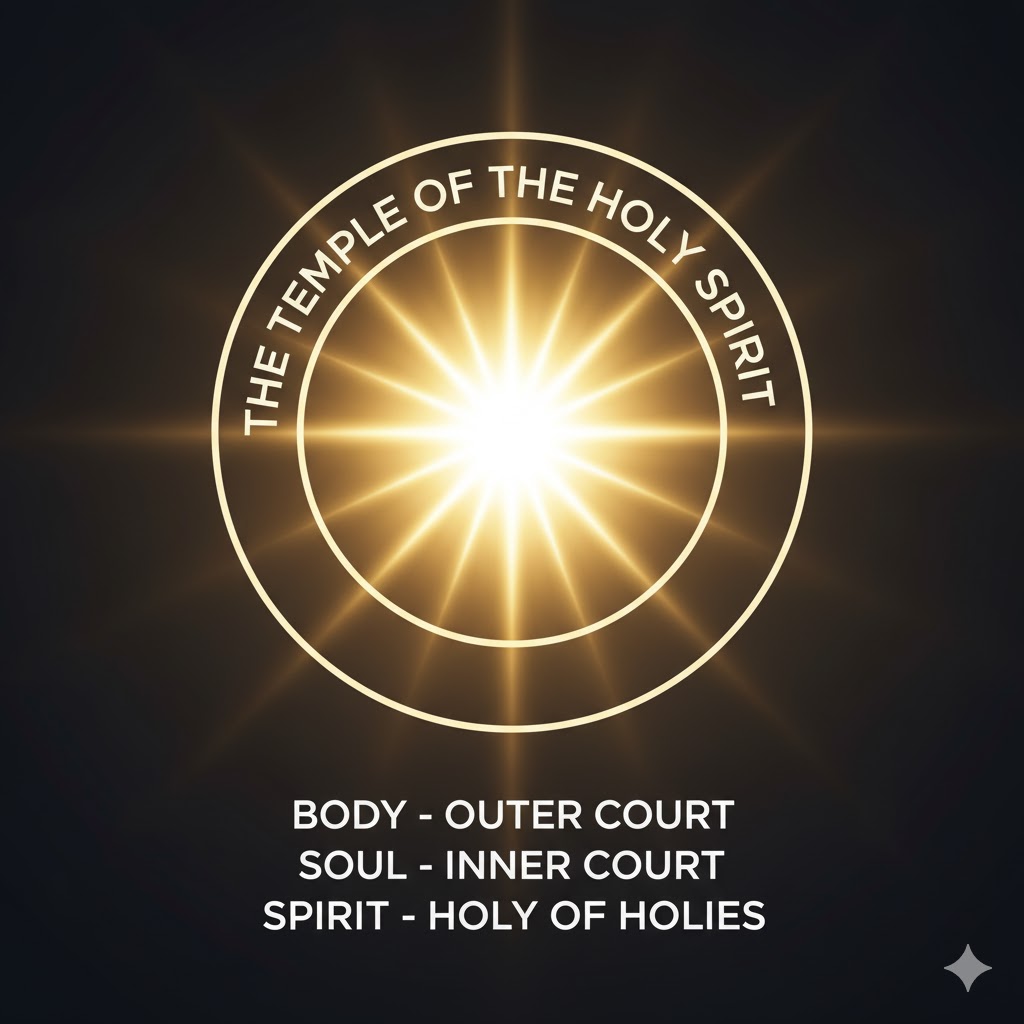
The human being is a sacred temple composed of three divine courtsthe body (outer court), the soul (inner court), and the spirit (Holy of Holies). Each has spiritual “gates” that must be guarded, purified, and dedicated to God.


🕊 Holy Spirit Gates (The Holy of Holies)

The dwelling place of the presence of God; where communion, revelation, and transformation occur.

  1. Truth Gate – The Spirit of truth guides believers into all understanding.
    • John 16:13: “When he, the Spirit of truth, is come, he will guide you into all truth.”
    • This gate opens discernment and alignment with God’s Word, rejecting deception.
  2. Revelation Gate – Unlocks divine mysteries and heavenly insight.
    • Ephesians 1:17: “That the God of our Lord Jesus Christ… may give unto you the spirit of wisdom and revelation in the knowledge of him.”
    • When open, this gate allows divine secrets to be revealed to the heart.
  3. Intuition Gate – The inner knowing that transcends logic.
    • 1 John 2:27: “Ye need not that any man teach you… the same anointing teacheth you of all things.”
    • The Spirit communicates through an inner sense or divine impression.
  4. Prayer Gate – Connects heaven and earth through constant communion.
    • 1 Thessalonians 5:17: “Pray without ceasing.”
    • This gate fuels spiritual life, keeping the fire of the altar burning within.
  5. Reverence Gate – Produces humility and awe before God’s holiness.
    • Psalm 111:10: “The fear of the LORD is the beginning of wisdom.”
    • Reverence guards against pride, keeping the temple pure and submissive.
  6. Faith Gate – The doorway to the supernatural.
    • Hebrews 11:6: “Without faith it is impossible to please him.”
    • Faith activates miracles and allows the believer to walk in divine authority.
  7. Hope Gate – Sustains endurance through trials.
    • Romans 15:13: “Now the God of hope fill you with all joy and peace in believing.”
    • Hope keeps the spirit alive and focused on God’s promises.
  8. Worship Gate – The highest expression of divine intimacy.
    • John 4:24: “God is a Spirit: and they that worship him must worship him in spirit and in truth.”
    • Worship sanctifies the atmosphere of the spirit, aligning the believer with heaven.
  9. Fear of God Gate – Protects from sin and awakens holiness.
    • Proverbs 14:27: “The fear of the LORD is a fountain of life, to depart from the snares of death.”
    • This gate anchors reverence, obedience, and purity in the believer’s spirit.

💠 Soul Gates (The Inner Court)

The seat of the mind, will, and emotions—where choices are made and spiritual warfare often occurs.

  1. Conscience Gate – The moral compass of the soul.
    • Romans 9:1: “My conscience also bearing me witness in the Holy Ghost.”
    • When pure, it warns against sin; when seared, it allows moral confusion.
  2. Reason Gate – The faculty of understanding and interpretation.
    • Proverbs 3:5–6: “Trust in the LORD… and lean not unto thine own understanding.”
    • This gate must be submitted to divine wisdom rather than worldly logic.
  3. Imagination Gate – The creative and visionary center of the soul.
    • Genesis 6:5: “Every imagination of the thoughts of his heart was only evil continually.”
    • When sanctified, imagination allows believers to visualize God’s glory and promises.
  4. Mind Gate – Governs thoughts, memory, and meditation.
    • Romans 12:2: “Be ye transformed by the renewing of your mind.”
    • A renewed mind brings the soul into harmony with the will of God.
  5. Will Gate – The power of choice and surrender.
    • Deuteronomy 30:19: “Choose life, that both thou and thy seed may live.”
    • This gate determines whether one obeys God or yields to the flesh.
  6. Emotions Gate – The realm of feelings and affections.
    • Proverbs 4:23: “Keep thy heart with all diligence; for out of it are the issues of life.”
    • Emotions must be ruled by the Spirit, not by circumstance.
  7. Choices Gate – Where decisions shape destiny.
    • Joshua 24:15: “Choose you this day whom ye will serve.”
    • Every choice opens or closes access to spiritual blessings.
  8. Will (as Dominion Gate) – Represents alignment of human will with divine purpose.
    • Luke 22:42: “Not my will, but thine, be done.”
    • This final gate in the soul ensures complete surrender to God’s plan.

🕯 Body Gates (The Outer Court)

The physical realm that interacts with the world—where obedience, discipline, and holiness must govern.

  1. Flesh Gate – Represents the fallen nature that seeks its own desires.
    • Galatians 5:17: “The flesh lusteth against the Spirit.”
    • The believer must crucify the flesh daily to keep the temple pure.
  2. Touch Gate – The sense of contact and intimacy.
    • 2 Corinthians 6:17: “Touch not the unclean thing; and I will receive you.”
    • This gate calls for purity and discernment in physical and spiritual connections.
  3. Taste Gate – Governs appetite, both physical and spiritual.
    • Psalm 34:8: “O taste and see that the LORD is good.”
    • Discipline in what one consumes symbolizes satisfaction in God, not excess.
  4. Smell Gate – Symbolic of spiritual discernment and worship.
    • Ephesians 5:2: “A sweet smelling savour.”
    • The anointing oil and incense of worship in the Old Testament mirror this gate’s holiness.
  5. Sight Gate – Controls vision and perception.
    • Job 31:1: “I made a covenant with mine eyes.”
    • What one watches or observes either sanctifies or corrupts the heart.
  6. Hearing Gate – Governs what influences faith and belief.
    • Romans 10:17: “Faith cometh by hearing, and hearing by the word of God.”
    • The ears determine what teachings, music, or words shape the soul.

When the Holy Spirit Gates are active, the believer walks in revelation and divine connection.
When the Soul Gates are renewed, the believer’s emotions, mind, and will align with truth.
When the Body Gates are disciplined, the believer’s actions reflect holiness.

Together, these gates form the Temple of the Holy Spirit—a living, breathing sanctuary through which God manifests His glory.

1 Thessalonians 5:23 (KJV): “And the very God of peace sanctify you wholly; and I pray God your whole spirit and soul and body be preserved blameless unto the coming of our Lord Jesus Christ.”

The human being is a divine masterpiece crafted in the image of God, designed to be a dwelling place for His presence. According to 1 Corinthians 6:19 (KJV), “What? know ye not that your body is the temple of the Holy Ghost which is in you, which ye have of God, and ye are not your own?” This scripture establishes a sacred truth: the human body, soul, and spirit are not merely biological or emotional structures, but holy vessels that mirror the very order of God’s tabernacle.

In the Old Testament, the temple of God had three parts: the outer court, the inner court, and the Holy of Holies. Each part symbolically represents a dimension of our being—the body, the soul, and the spirit. The outer court corresponds to the body, the inner court to the soul, and the Holy of Holies to the spirit. This divine structure reveals that true worship begins within, from the spirit, moving outward to influence the soul and body.

The body is the outer court, the physical representation of the inner life. It interacts with the world through five gates—touch, taste, smell, sight, and hearing. These gates determine what enters and exits, affecting the purity of the temple. 1 Corinthians 9:27 (KJV) says, “But I keep under my body, and bring it into subjection,” reminding believers that the flesh must be disciplined so it does not corrupt what is sacred.

The gate of sight determines vision—what one allows the eyes to behold. Job made a covenant with his eyes (Job 31:1), understanding that the eyes can either glorify God or lead one into temptation. Similarly, the gate of hearing must be guarded, for “faith cometh by hearing” (Romans 10:17), and what we listen to shapes belief and action.

The gate of taste influences appetite and desire. Proverbs 23:2 warns against overindulgence, teaching self-control in what one consumes. The touch gate represents intimacy and connection, reminding believers to “touch not the unclean thing” (2 Corinthians 6:17). Finally, the gate of smell connects to discernment—sensing what is holy versus profane, for in Exodus 30, God gave Moses instructions for the holy anointing oil, a sweet fragrance representing divine worship.

Beyond the body lies the soul, the inner court of human existence. The soul is where thoughts, emotions, and decisions are born. It is the seat of the mind, will, and emotions—the realm where spiritual battles occur. In Luke 21:19, Christ declares, “In your patience possess ye your souls.” This means the believer must govern the soul with divine wisdom and endurance.

The mind gate processes reasoning, imagination, and memory. Romans 12:2 instructs, “Be ye transformed by the renewing of your mind,” because the mind must be renewed daily through Scripture and prayer. The imagination gate, when sanctified, allows believers to envision God’s promises; but when corrupted, it becomes a tool of deception (Genesis 6:5).

The will gate represents choice—the power to obey or disobey. Deuteronomy 30:19 declares, “I have set before you life and death… therefore choose life.” The will determines which voice—God’s or the flesh’s—governs the temple. The emotion gate is deeply tied to worship, for God desires hearts that love Him sincerely. Proverbs 4:23 (KJV) says, “Keep thy heart with all diligence; for out of it are the issues of life.”

The conscience acts as a moral compass, bearing witness with the Spirit to what is right or wrong (Romans 9:1). When the conscience is purified by the blood of Christ, the soul becomes a place of peace and discernment. But if defiled, it leads to confusion and spiritual blindness (Titus 1:15).

The reason gate is where understanding is formed. Proverbs 3:5-6 (KJV) teaches, “Trust in the LORD with all thine heart; and lean not unto thine own understanding.” Reason must be submitted to revelation; for human wisdom alone cannot grasp divine truth.

The deepest part of the human temple is the spirit, the Holy of Holies. Here, communion with God occurs through the indwelling of the Holy Spirit. The spirit has its own gates—faith, reverence, prayer, revelation, intuition, worship, and the fear of God—each essential for divine connection.

The faith gate activates the believer’s trust in God. Hebrews 11:6 declares, “Without faith it is impossible to please Him.” The prayer gate keeps communication open between heaven and earth (1 Thessalonians 5:17). Prayer maintains the fire of the altar within the Holy of Holies, where God’s glory abides.

The revelation gate opens divine mysteries to those who seek truth. Ephesians 1:17 speaks of “the spirit of wisdom and revelation in the knowledge of Him.” The intuition gate allows one to perceive spiritual truths without human logic; it is the inner knowing that comes from the Spirit of God (1 John 2:27).

The reverence gate reflects holy respect and submission before the Lord. Psalm 111:10 declares, “The fear of the LORD is the beginning of wisdom.” Reverence keeps the spirit humble and the heart tender toward God.

The worship gate is the ultimate purpose of the temple—to glorify the Creator. John 4:24 reminds, “God is a Spirit: and they that worship him must worship him in spirit and in truth.” Worship purifies the temple and aligns every gate with heaven’s harmony.

Finally, the fear of God gate establishes holiness. Proverbs 14:27 declares, “The fear of the LORD is a fountain of life.” When this gate is open, sin cannot dominate, and the believer becomes a living sanctuary of divine power.

Thus, the temple of the Holy Spirit is a complete structure—body, soul, and spirit working together in divine order. When every gate is consecrated, the believer lives in alignment with heaven, walking as a vessel of light in a dark world.

The restoration of this temple begins with repentance and ends with transformation. Romans 8:11 declares that the Spirit that raised Jesus from the dead will quicken our mortal bodies. This quickening power renews the entire being, sanctifying each court and gate for God’s use.

Ultimately, the believer’s goal is not mere moral purity, but divine habitation. When the body, soul, and spirit operate in harmony under the authority of the Holy Spirit, heaven finds expression on earth. As Paul writes in 1 Thessalonians 5:23, “And the very God of peace sanctify you wholly; and I pray God your whole spirit and soul and body be preserved blameless unto the coming of our Lord Jesus Christ.”

References
1 Corinthians 6:19–20; Romans 12:1–2; Proverbs 4:23; 1 Thessalonians 5:23; John 4:24; Hebrews 11:6; Deuteronomy 30:19; Psalm 111:10; Ephesians 1:17; Romans 8:11 (KJV).