Before anything else, choose a man after God’s own heart—one who honors the Most High not only in words but in discipline, restraint, and obedience. A man who understands covenant will not rush intimacy, but will wait for marriage, valuing you beyond the flesh. A king is not defined by status, but by character, leadership, and reverence for God. Attraction must begin with alignment, not just desire.
Many women believe attraction is purely emotional or physical, but it is deeply neurological and spiritual. The men you feel drawn to are often reflections of patterns formed in your mind, shaped by experience, environment, and sometimes unresolved wounds. Attraction is not random—it is a response.
To understand this fully, we must explore the three primary parts of the brain involved in attraction and relationship decision-making: the reptilian complex, the limbic system, and the neocortex. Each plays a distinct role in how you perceive, feel, and choose a partner.
The reptilian complex, often called the “lizard brain,” is the most primitive part of the brain. It governs survival instincts—impulses like sexual desire, dominance, and immediate gratification. When you feel an intense, almost uncontrollable attraction to a man based solely on his physical presence or energy, this part of your brain is activated.
This is where many women must exercise caution. The reptilian brain does not discern character, morality, or spiritual alignment. It is concerned with chemistry, not covenant. It will pull you toward what feels good in the moment, even if it leads to long-term consequences.
Next is the limbic system, the emotional center of the brain. This is where bonding, attachment, and feelings of safety are formed. The limbic system is drawn to men who make you feel seen, heard, protected, and emotionally secure. Laughter, shared values, and emotional connection are processed here.
However, even the limbic system can be deceived. Trauma, past relationships, and childhood experiences can distort what “feels safe.” Sometimes, what feels familiar is not healthy—it is simply known. This is why some women repeatedly choose the same type of man, even when the outcome is painful.
The third and most advanced part is the neocortex—the center of reasoning, discernment, and higher thinking. This is where you evaluate a man’s purpose, mission, and spiritual alignment. The neocortex asks: Does he have vision? Does he honor God? Is he disciplined? Is he capable of leading a family?
A woman operating in her full relationship capacity does not allow the reptilian brain to lead. She acknowledges the feeling but submits it to the wisdom of the neocortex. She understands that attraction without alignment is a setup for heartbreak.
True discernment comes when all three parts of the brain are in order. The reptilian complex is controlled, the limbic system is healed, and the neocortex is engaged. This creates balance—where desire, emotion, and wisdom work together instead of against each other.
Spiritual alignment must be the foundation. A man who does not love God cannot lead you spiritually. If he lacks discipline in his own life, he cannot provide structure in a relationship. A kingdom-minded woman must seek a kingdom-minded man.
Sexual discipline is one of the clearest indicators of a man’s character. A man who pressures you for sex outside of marriage is operating from the flesh, not from spiritual maturity. Self-control is a fruit of the Spirit, and without it, a relationship will lack stability.
The flesh—often associated with the lower impulses of the reptilian brain—can cloud judgment. It convinces you that chemistry is compatibility, when in reality, compatibility is built on shared values, vision, and purpose.
Cultural influences also play a role in attraction. The Media often glorifies toxic traits—dominance without discipline, confidence without character, and desire without responsibility. These images can shape what the mind perceives as attractive.
In contrast, a godly man may not always trigger the same immediate intensity, but he provides something far greater: peace, consistency, and spiritual covering. What is calm is often overlooked in favor of what is exciting.
Healing is essential in refining attraction. A woman who has done the inner work will begin to desire differently. She will no longer be drawn to chaos but to clarity, not to confusion but to consistency.
Your standards must be intentional. Attraction should not be the only requirement; it should be one of many. Character, integrity, faith, and purpose must outweigh physical appeal.
Community and accountability also influence your choices. Surrounding yourself with wise counsel can help you see what you might overlook when emotions are involved.
It is also important to recognize that attraction can grow. What begins as respect and admiration can develop into deep love when nurtured properly. Not every meaningful connection starts with intensity.
Ultimately, understanding your brain helps you understand your choices. You are not simply “falling” for someone—you are responding to internal systems that can be trained, healed, and guided.
When you align your mind, emotions, and spirit, your attraction will reflect your growth. You will choose not from impulse, but from intention.
And in that place of clarity, you will no longer ask, “Why am I attracted to certain men?”—because your standards, your healing, and your faith will already have the answer.
References
Amen, D. G. (1998). Change Your Brain, Change Your Life. New York, NY: Times Books.
Fisher, H. (2004). Why We Love: The Nature and Chemistry of Romantic Love. New York, NY: Henry Holt.
Goleman, D. (1995). Emotional Intelligence. New York, NY: Bantam Books.
The Holy Bible, King James Version. (1611).
Siegel, D. J. (2012). The Developing Mind: How Relationships and the Brain Interact to Shape Who We Are. New York, NY: Guilford Press.
Love is one of the most misused words in modern culture. It is often confused with desire, attention, chemistry, or access to someone’s body. This confusion has caused many women to mistake emotional intensity for commitment and physical intimacy for proof of care. This conversation exists to clarify—not to shame, romanticize, or encourage—but to protect.
Before discussing what love is, it is necessary to warn women about what love is not. Love is not urgent. When a man pressures you to rush intimacy, commitment, or decisions, he is revealing impatience, not devotion. True love respects timing, boundaries, and the weight of consequences.
Sleeping with you is not love. Physical access is not a declaration of commitment, nor is it evidence of emotional investment. Desire is biological; love is intentional. Many men are willing to enjoy intimacy without responsibility, which is why actions must always outweigh words.
Love is not manipulation disguised as passion. Excessive flattery, future promises without follow-through, jealousy framed as protection, and guilt used to bypass your standards are all warning signs. Love does not coerce or corner; it invites and honors choice.
A man who truly loves you is willing to wait. Waiting for sex until marriage is not repression; it is restraint. It demonstrates discipline, foresight, and respect for the covenant. A man who can govern his desires is more likely to govern his character.
Biblically, love is patient. Patience is not passive—it is active self-control. A man waiting until marriage shows that he values your soul, your future, and the sacredness of union more than momentary pleasure. That kind of waiting is evidence of reverence, not weakness.
Love does not require you to prove yourself physically. You are not auditioning for commitment through intimacy. If access to your body becomes the price of staying, the relationship is transactional, not loving.
Love is consistent. It does not disappear when boundaries are enforced. A man who withdraws affection, attention, or kindness because you will not sleep with him has revealed his true motivation. Love does not punish purity.
Love is protective, not possessive. A man who loves you will care about your spiritual health, emotional well-being, and long-term stability. He will not place you in situations that compromise your values or peace.
Love involves responsibility. A man serious about love is also serious about provision, leadership, accountability, and legacy. Sex without covenant creates emotional and spiritual vulnerability without security. Love never asks you to accept risk alone.
Love is honest. It does not keep you confused or guessing. If a man says he loves you but avoids commitment, avoids clarity, or avoids future planning, his behavior contradicts his words. Love does not thrive in ambiguity.
Waiting until marriage is not about perfection; it is about alignment. It aligns intimacy with commitment, passion with protection, and desire with destiny. This alignment safeguards women emotionally, spiritually, and psychologically.
Psychological research supports what Scripture has long taught: delayed sexual involvement is associated with higher relationship satisfaction, stronger commitment, and lower rates of regret and emotional distress. Boundaries are not barriers to love; they are frameworks that support it.
Love does not exploit trauma. Men who rush intimacy often target emotional vulnerability, loneliness, or insecurity. Healing should precede bonding. Love contributes to healing; it does not capitalize on wounds.
Love allows room for growth without pressure. It does not rush milestones to secure control. It respects process, seasons, and readiness. What is built slowly is often built to last.
Marriage-centered love understands covenant. Sex within marriage is not merely physical—it is a spiritual union, trust, and responsibility. Love that leads toward marriage honors this reality rather than dismissing it.
A man who waits communicates long-term vision. He sees you as a wife, not an experience. He is willing to sacrifice immediate gratification for lasting union. That sacrifice is a form of love many women have been taught to undervalue.
Love does not ask women to lower their standards to be chosen. It rises to meet standards. If your boundaries repel someone, that person was not aligned with your future.
Women must be cautious not to romanticize struggle or confusion as passion. Peace, safety, and clarity are signs of healthy love. Chaos is not chemistry.
This conversation is not meant to encourage dating or desire but discernment. Love is serious. It is sacred. And it requires wisdom to recognize before intimacy clouds judgment.
Love is patient, disciplined, respectful, and accountable. Anything less—no matter how intense—falls short of what love truly is.
References
Holy Bible, King James Version. (1611/1769).
Gottman, J. M., & Silver, N. (2015). The seven principles for making marriage work. Harmony Books.
Stanley, S. M., Rhoades, G. K., & Markman, H. J. (2006). Sliding versus deciding: Inertia and the premarital cohabitation effect. Family Relations, 55(4), 499–509.
Regnerus, M. (2017). Cheap sex: The transformation of men, marriage, and monogamy. Oxford University Press.
Wilcox, W. B., & Dew, J. (2016). The social and cultural predictors of generosity in marriage. Journal of Family Issues, 37(2), 251–271.
Peplau, L. A., & Fingerhut, A. W. (2007). The close relationships of lesbians and gay men. Annual Review of Psychology, 58, 405–424.
Listen, ladies — it is not wrong for a woman to desire a man who provides for her. My late husband always reminded me that provision is a man’s duty and honor, not a burden. When a man loves a woman, he does not see caring for her needs as a chore but as a privilege that reflects his role as leader and protector.The Bible is clear about this responsibility. First Timothy 5:8 warns, “But if any provide not for his own, and especially for those of his own house, he hath denied the faith, and is worse than an infidel.” This is not a light statement — it means that failing to provide for one’s household is a spiritual and moral failure. When a man provides, he demonstrates sacrificial love, mirroring Christ’s care for the church (Ephesians 5:25–28). He creates an environment where a woman feels safe, secure, and valued, allowing her to flourish in her calling. Provision is not just financial — it is emotional, spiritual, and physical care that establishes stability for the entire family.Women should not feel guilty for expecting this. It is not greed; it is alignment with God’s design for marriage. A man’s willingness to provide reveals his maturity, character, and readiness for covenant commitment.
The modern cultural push for “50/50 relationships” promises fairness and equality between partners, yet many women discover that this model can still leave them emotionally, financially, and spiritually depleted. On the surface, splitting bills, chores, and responsibilities seems fair, but when a man avoids leadership and provision, the relationship quickly becomes unbalanced. The woman may end up carrying the weight of both provider and nurturer, which goes against the biblical design for marriage.
God’s Word establishes a clear picture of headship and provision. Ephesians 5:25–28 commands husbands to love their wives “even as Christ also loved the church, and gave himself for it.” Christ did not share the burden of salvation equally with the church—He bore it entirely. Likewise, a husband’s role is one of sacrificial leadership, taking primary responsibility for the welfare of his wife and household. When a man shirks this responsibility, the woman becomes vulnerable to exhaustion and resentment.
The 50/50 model also creates confusion in roles. When financial and emotional labor is divided down the middle, leadership often becomes negotiable, leading to power struggles or passivity. Scripture does not teach mutual passivity but calls men to lead with humility and love. A man who abdicates this role leaves a vacuum that the woman may feel forced to fill, creating a dynamic that undermines trust and respect.
Psychology sheds light on why such arrangements often fail. Research on learned helplessness shows that when one partner refuses to carry their share of responsibility, the other partner may overfunction, doing more and more to keep the relationship afloat. Over time, this can lead to emotional burnout, anxiety, and even depression. The imbalance of power can create a subtle form of exploitation, where one partner benefits at the expense of the other.
Financially, many women have found themselves paying half the bills, contributing to a man’s dreams, and even funding his education—only to have him leave once he is stable. This pattern is so common that it has been discussed in popular media and relationship studies. The emotional toll is devastating because the woman not only loses the relationship but also feels robbed of the investment she made into his life.
One well-known media example is the breakup of singer Mary J. Blige’s marriage to Kendu Isaacs. During the divorce, it became public that Blige had supported Isaacs financially for years, only for him to allegedly misuse funds and engage in infidelity. This public case highlights the painful reality many women face when they invest financially in men who do not share the same loyalty or commitment (Gonzalez, 2017).
Biblically, men are called to be providers. First Timothy 5:8 warns, “But if any provide not for his own, and specially for those of his own house, he hath denied the faith, and is worse than an infidel.” This is a serious charge: a man who refuses to take responsibility for his household is living in disobedience. A 50/50 arrangement may seem modern and progressive, but if it allows a man to neglect his God-given duty, it ultimately harms the spiritual order of the home.
Women can protect themselves from one-sided emotional labor by establishing clear boundaries early in relationships. If a man expects financial partnership, she must ask whether he is also prepared to lead spiritually, emotionally, and sacrificially. Leadership is not domination; it is service. If he only wants to split bills but not bear the weight of provision, he is asking for partnership without accountability.
Self-protection also means paying attention to patterns of behavior. A man who frequently “borrows” money, avoids discussing finances, or becomes defensive when asked about spending habits may be signaling irresponsibility. Proverbs 27:12 says, “A prudent man foreseeth the evil, and hideth himself.” Women must be vigilant and not ignore early warning signs.
Another safeguard is financial independence before marriage. Women should maintain their own savings, credit, and emergency fund until they are in a covenant where mutual provision is clear. This is not distrustful but wise stewardship. If the relationship ends, she will not be left destitute.
From a psychological perspective, women must resist the trap of overfunctioning. Doing more than your fair share may feel noble, but it fosters resentment and reinforces a man’s avoidance of growth. Boundaries are not punishment; they are invitations for the man to step up. If he does not rise to the occasion, that reveals his character.
Spiritually, women must pray for discernment. James 1:5 promises wisdom to those who ask God. Discernment helps a woman recognize whether a man’s intentions are honorable or self-serving. Godly headship is seen in consistent character, not just charm or romantic gestures.
Teaching men biblical manhood is also part of the solution. Men must understand that provision is not optional but part of reflecting Christ’s image. Churches and mentors should call men to accountability, teaching them to view marriage not as a financial arrangement but as a covenant requiring sacrifice.
For women already in 50/50 relationships, communication is key. Honest conversations about expectations, finances, and future plans can bring clarity. If the man is unwilling to discuss or adjust, she must decide whether the relationship is sustainable long-term.
Emotional labor must also be addressed. Many women carry the emotional weight of the relationship—planning dates, managing household tasks, and maintaining communication—while the man coasts. This imbalance can be corrected by delegating responsibilities or refusing to do tasks he is capable of doing.
Ultimately, the illusion of 50/50 relationships is that they are fair. True fairness is not mathematical equality but mutual giving according to each person’s capacity and role. A godly man will give more than 50% because he loves sacrificially. A godly woman will respond with respect and support, creating a dynamic of harmony rather than competition.
Relationships thrive when both partners embrace their biblical roles. The man leads, provides, and protects. The woman nurtures, supports, and helps. When these roles are honored, there is peace. When they are reversed or neglected, there is confusion and pain.
50/50 Relationship vs. Biblical Covenant Relationship
Negotiated or shared — often leaves a power vacuum or power struggle.
The man lovingly leads, sacrifices, and takes spiritual responsibility.
Provision
Split equally — may leave the woman vulnerable if he withdraws support.
The man provides for his household (1 Tim. 5:8) and prioritizes her well-being.
Emotional Labor
Often falls disproportionately on the woman (planning, nurturing, problem-solving).
Shared — the man takes initiative to care for her emotional needs.
Conflict Resolution
Can become transactional (“I did my half, you do yours”).
Built on grace, humility, and sacrificial love, not score-keeping.
Financial Security
Depends on both parties keeping their share. If one stops, the other is overburdened.
The husband bears the main responsibility so the wife feels secure.
Spiritual Direction
Usually absent or inconsistent; spiritual growth is optional.
The man leads prayer, worship, and sets a Christ-centered tone for the home.
View of Roles
Gender roles are blurred or dismissed.
Roles are distinct yet complementary — the man leads, the woman supports.
Decision-Making
Requires constant negotiation; can breed resentment.
Man leads with humility, consults his wife, and seeks God’s will.
Motivation for Giving
Conditional — “I will give my half if you give yours.”
Unconditional — he loves and gives first, as Christ gave to the church.
Long-Term Stability
Can collapse if one partner stops contributing or loses interest.
Endures through trials because it is built on covenant, not contract.
The call to women is not to settle for half-hearted leadership or a man who uses partnership as an excuse to avoid responsibility. Your worth is too great to finance your own exploitation. Trust God to send a man who reflects Christ’s love—a man who gives, leads, and sacrifices.
References
Holy Bible, King James Version (KJV).
Gonzalez, S. (2017). Mary J. Blige on Divorce: “I’m Gonna Be Just Fine.” Billboard.
Beck, J. S. (2021). Cognitive Behavior Therapy: Basics and Beyond. Guilford Press.
Cloud, H., & Townsend, J. (2017). Boundaries in Dating. Zondervan.
Smith, C. A. (2020). The Psychology of Power Imbalance in Romantic Relationships. Journal of Family Psychology, 34(4), 512–523.
This photograph is the property of its respective owner. No copyright infringement intended
Ladies – The matters of the heart are among the most sacred and sensitive aspects of a woman’s spiritual and emotional life. Many women carry wounds from abandonment, betrayal, rejection, and unmet expectations, often wondering if a man will ever truly love them in a way that heals rather than harms. Yet Scripture teaches that before any man can love us well, we must first understand the nature of God’s love, because all healthy love flows from Him. This series is an encouragement to women to seek not just romance, but restoration, wholeness, and divine alignment with a man who has a heart after God.
A woman gets over a broken heart not by erasing the pain, but by healing through it with truth, time, and transformation. Healing is not denial; it is intentional restoration of the soul, the mind, and the spirit. Biblically and psychologically, heartbreak is a form of grief—you are mourning not just a person, but a dream, an attachment, and a future you imagined. That loss must be processed, not suppressed.
First, she must allow herself to grieve honestly. Many women rush to “be strong” and pretend they are fine, but unprocessed pain becomes emotional scars. Scripture reminds us that even Jesus wept (John 11:35). Tears are not weakness; they are release. A broken heart needs permission to feel before it can heal.
Second, she must detach emotionally and spiritually from what hurt her. This includes cutting unhealthy soul ties, limiting contact, and resisting the urge to revisit memories that reopen wounds. From a psychological standpoint, attachment bonds activate the same neural pathways as addiction—so withdrawal is real. Healing requires space (Proverbs 4:23).
Third, she must rebuild her identity outside of the relationship. Many women lose themselves in love—adopting someone else’s needs, habits, and emotional rhythms. Heartbreak forces a woman to ask: Who am I without him? Healing begins when she reconnects to her own purpose, gifts, and calling (Jeremiah 29:11).
Fourth, she must release forgiveness, not for his benefit, but for her freedom. Forgiveness is not excusing behavior—it is choosing not to let pain control your future. Unforgiveness keeps emotional ties alive. Forgiveness breaks the psychological loop of replaying the trauma (Ephesians 4:31–32).
Fifth, she must renew her mind. The thoughts that follow heartbreak are often distorted: I wasn’t enough. I’ll never love again. Everyone leaves. These are trauma-based beliefs, not truth. Scripture teaches, “Be ye transformed by the renewing of your mind” (Romans 12:2). Healing requires replacing lies with reality.
Sixth, she must return to God as her emotional source. Many women unknowingly turn men into emotional idols—looking to them for validation, security, and self-worth. When the relationship ends, so does the emotional foundation. God restores the heart by becoming the primary source of love again (Psalm 62:5).
Seventh, she must set new boundaries. Heartbreak often reveals patterns—choosing unavailable men, ignoring red flags, over-giving, or tolerating disrespect. Growth comes when pain becomes wisdom. Boundaries are not walls; they are filters for future peace.
Eighth, she must move her body and environment. Trauma is stored in the nervous system, not just the mind. Exercise, sunlight, walking, cleaning, and changing surroundings help regulate emotions and reduce depressive symptoms. Healing is physiological as well as spiritual.
Ninth, she must stop romanticizing the past. The brain tends to remember the good and minimize the harm. This is called selective memory bias. Healing requires remembering the truth, not the fantasy. If it was healthy, it wouldn’t have broken her.
Tenth, she must stop seeking closure from the person who broke her. Closure comes from within, not from conversations, apologies, or explanations. A person who couldn’t love you properly cannot heal what they damaged.
Eleventh, she must invest in supportive relationships—friends, mentors, counselors, and faith communities. Isolation intensifies heartbreak. Safe people provide perspective, accountability, and emotional grounding (Proverbs 11:14).
Twelfth, she must grieve the illusion, not just the person. Many women are hurt more by losing the idea of what could have been than the actual man. Healing means accepting reality, not chasing potential.
Thirteenth, she must reclaim her self-worth. Heartbreak often damages confidence and desirability. But worth does not come from being chosen—it comes from being created by God. “I am fearfully and wonderfully made” (Psalm 139:14).
Fourteenth, she must learn to be alone without being lonely. Solitude builds emotional independence. A healed woman does not fear being alone—she fears being emotionally unsafe.
Fifteenth, she must stop numbing the pain through rebound relationships, substances, overworking, or distractions. Avoidance delays healing. Pain that is numbed returns stronger.
Sixteenth, she must develop emotional discernment. Not every man who is kind is sent by God. Not every connection is alignment. Discernment protects future peace more than attraction ever could.
Seventeenth, she must rewrite the narrative. Heartbreak is not proof she failed—it is evidence she outgrew what could not sustain her. Many relationships end not because you were unlovable, but because you were becoming someone incompatible with dysfunction.
Eighteenth, she must trust time, not urgency. Healing is not linear. Some days feel strong, others feel fragile. This is normal. The nervous system needs time to recalibrate.
Nineteenth, she must believe love is still possible without desperation. A healed woman does not chase love—she attracts it through wholeness. She no longer needs to be chosen; she chooses wisely.
Finally, she must understand this truth: A broken heart is not the end of her story—it is the beginning of her awakening. Pain reveals where she gave too much, tolerated too little, and expected God from a human. When the heart heals, it does not become harder—it becomes wiser, softer, and spiritually stronger.
A woman does not get over a broken heart—she grows through it and emerges as a version of herself who no longer abandons her own needs for someone else’s love.
A broken heart is not merely emotional pain; it is a spiritual injury that affects self-worth, identity, and trust. The Bible acknowledges this reality when it says, “The Lord is nigh unto them that are of a broken heart; and saveth such as be of a contrite spirit” (Psalm 34:18, KJV). God does not dismiss heartbreak—He draws near to it. Healing begins when a woman allows God to mend what people have damaged.
Many women ask, Will he heal my broken heart? Will he make me feel special? Will he love me endlessly? These are not shallow questions; they reflect a deep longing to be seen, cherished, and emotionally safe. However, no man can replace God as the ultimate healer. A man can support the healing process, but only God can restore the soul (Psalm 23:3). When a woman expects a man to do what only God can do, she risks entering relationships rooted in emotional dependency rather than spiritual health.
God’s love is fundamentally different from human love. Scripture defines it as agape love—a selfless, unconditional, sacrificial love that seeks the good of the other (1 Corinthians 13:4–7). God’s love is patient, kind, not abusive, not manipulative, not temporary, and not based on performance. Unlike human affection, God’s love does not fluctuate with mood, appearance, or mistakes (Romans 8:38–39).
A major question many women carry is, How will I know if he really loves me? Biblical love is not proven through words, gifts, or sexual chemistry—it is proven through consistent character, spiritual leadership, protection, and sacrifice (Ephesians 5:25). A man who truly loves you will not rush your body while neglecting your soul. He will desire your holiness more than your availability.
The Bible is clear about sexual boundaries: no fornication. “Flee fornication” (1 Corinthians 6:18) is not a suggestion; it is a command. God restricts sex to marriage not to punish women, but to protect their emotional, spiritual, and psychological well-being. Sex creates soul ties, and when formed outside of covenant, those ties often produce trauma, confusion, and delayed healing.
One of the most dangerous traps is mistaking lust for love. Lust is driven by desire for the body; love is driven by commitment to the soul. Many women are loved physically but not emotionally, desired sexually but not honored spiritually. A godly man will not reduce you to your looks—he will recognize you as a daughter of God, not an object of pleasure.
The Bible warns, “The heart is deceitful above all things, and desperately wicked: who can know it?” (Jeremiah 17:9). This verse reminds women not to rely solely on feelings when choosing a partner. Emotions can lie, attraction can blind, and chemistry can override discernment. Wisdom comes from the Spirit, not from butterflies.
A godly man is defined not by charm, income, or physical appearance, but by character and integrity. He fears God, honors women, keeps his word, practices self-control, and walks in humility (Proverbs 1:7; Galatians 5:22–23). He does not manipulate, ghost, exploit, or emotionally withhold.
Integrity means a man is the same in private as he is in public. He does not perform righteousness; he lives it. His lifestyle aligns with his language. His actions match his promises. He does not lead with ego but with accountability and spiritual discipline.
The Bible also describes a godly man as a provider, not just financially, but emotionally, spiritually, and intellectually. “If any provide not for his own… he hath denied the faith” (1 Timothy 5:8). Provision includes money, yes—but also wisdom, stability, protection, and leadership. A man who cannot manage his own life cannot lead a woman’s heart.
A man heals a broken heart not by being perfect, but by being safe. Safety means emotional consistency, respect for boundaries, honest communication, and spiritual covering. Healing happens when a woman is no longer anxious about abandonment, betrayal, or emotional games.
A healed relationship feels peaceful, not chaotic. It feels secure, not confusing. God is not the author of emotional torment. “For God is not the author of confusion, but of peace” (1 Corinthians 14:33). If a man brings anxiety, instability, and constant doubt, he is not sent by God.
True love does not rush intimacy; it cultivates trust. It allows space for healing, growth, prayer, and self-discovery. A godly man will never pressure a woman to compromise her values to keep him.
Many women secretly ask, Does he want me for my looks? Physical attraction is natural, but it must never be the foundation. Beauty fades, bodies change, but character sustains love (Proverbs 31:30). A man who only praises your appearance will leave when it no longer satisfies his ego.
God’s intention for love is not consumption but covenant. Covenant means commitment, sacrifice, responsibility, and accountability before God. Love is not about being chosen—it is about being covered.
The ultimate goal of dating is not validation, marriage, or companionship—it is alignment with God’s will. A relationship should bring you closer to God, not farther from Him. If you have to disobey God to keep a man, he is not your blessing.
Healing also requires women to stop romanticizing broken men. A woman is not called to be a therapist, savior, or rehabilitation center. You are called to be a daughter of God, not a fixer of wounded masculinity.
A man with a heart of God will pray with you, not prey on you. He will protect your purity, not exploit your vulnerability. He will value your peace more than his pleasure.
In the end, the greatest love story is not between a woman and a man—it is between a woman and God. When God heals the heart first, He attracts the right partner later. Wholeness precedes union. Healing comes before romance.
The true question is not Will he love me endlessly? but Am I rooted in the One whose love never ends? Because when God fills the heart, no man can break it again.
References
The Holy Bible, King James Version. (1769/2017). Cambridge University Press.
Cloud, H., & Townsend, J. (2002). Boundaries in dating: How healthy choices grow healthy relationships. Zondervan.
Chapman, G. (2010). The five love languages: The secret to love that lasts. Northfield Publishing.
Lewis, C. S. (1960). The four loves. Harcourt, Brace & World.
Peck, M. S. (1978). The road less traveled: A new psychology of love, traditional values, and spiritual growth. Simon & Schuster.
Piper, J. (2012). This momentary marriage: A parable of permanence. Crossway.
Stanley, A. (2011). The new rules for love, sex, and dating. Zondervan.
Worthington, E. L. (2005). Relationship repair: Healing the wounds of a troubled marriage. InterVarsity Press.
Wilkinson, B. (2000). The prayer of Jabez. Multnomah Publishers.
Smith, C. (2003). Soul searching: The religious and spiritual lives of American teenagers. Oxford University Press.
This photograph is the property of its respective owner. No copyright infringement intended.
Beware Ladies! Attraction is powerful. A handsome face, a confident walk, and a smooth voice can make a woman ignore warning signs she would never tolerate in an average-looking man. Society teaches women to trust chemistry, but Scripture teaches women to trust character. Beauty may open the door, but it cannot keep you safe once you are inside.
Many women mistake excitement for compatibility. They feel chosen because a good-looking man noticed them, not realizing that charm is not commitment. Looks can distract from laziness, emotional immaturity, hidden addictions, financial instability, and moral weakness. A man can look like a blessing and still be a lesson.
Pretty boy syndrome is real. Some men have learned that their appearance gives them access without effort. They are pursued instead of pursuing purpose. They are admired instead of held accountable. Over time, this produces men who expect to be served rather than to serve.
The danger is not that a man is attractive, but that attraction becomes the standard. When desire leads, discernment dies. You begin to justify red flags because he is “fine,” overlook disrespect because he is “popular,” and accept the bare minimum because he is “wanted by others.”
God never told women to choose based on visuals. He told them to choose based on the fruit. “Ye shall know them by their fruits” (Matthew 7:16, KJV). A man’s lifestyle reveals his true nature long before his words do.
A woman who chooses only on looks is choosing risk over wisdom. She is gambling her future on genetics instead of godliness. And when beauty fades, she is left with whatever character he actually built.
Good-looking men have always held a certain power in society. From movie stars to social media influencers, attractive men are often admired, pursued, and even excused for behavior that would not be tolerated in others. Beauty creates access, but it does not guarantee character.
In many cultures, women are subtly taught to prioritize physical attraction when choosing a partner. The man must be tall, well-built, stylish, and charming. While attraction is natural, Scripture never presents looks as a reliable foundation for love or marriage.
The Bible consistently warns against judging by outward appearance. “Man looketh on the outward appearance, but the Lord looketh on the heart” (1 Samuel 16:7, KJV). God’s evaluation system is inverted from society’s. What impresses humans rarely impresses heaven.
Pretty boy syndrome describes a man whose entire identity is built around being admired. His value comes from validation, not virtue. He invests more in his image than in his integrity, more in attention than in responsibility.
Many good-looking men are never forced to develop depth. They receive affirmation without accountability. As a result, some grow into emotionally shallow adults who rely on charm instead of communication, and flirting instead of commitment.
Fornication thrives in image-based relationships. When desire is prioritized over discipline, sex becomes entertainment instead of covenant. The body becomes a product, and intimacy is reduced to a transaction.
Sexual thoughts are not neutral. Scripture teaches that lust is not harmless fantasy but internal adultery of the heart. A relationship rooted in lust cannot produce spiritual safety, only emotional instability.
The lazy handsome man is a hidden danger. He looks impressive but lacks ambition, vision, or purpose. He may dress well, but does not work well. He may be admired publicly while privately depending on women financially.
Some attractive men become womanizers, moving from relationship to relationship, feeding off attention like currency. They confuse access with entitlement and affection with ownership.
Sugar baby culture reflects a deeper moral decay. Men using money to access women’s bodies and women using beauty to access men’s wallets both reduce relationships to exchange rates, not sacred bonds.
Using women for money is another form of spiritual poverty. A man who exploits a woman’s resources while offering no leadership, stability, or sacrifice is not a partner; he is a parasite.
A man with no substance eventually becomes exhausting. Beauty fades, but emptiness remains. When a crisis comes, charm cannot provide protection, and attraction cannot provide wisdom.
Godly character, however, produces security. A man who fears God is governed by discipline, accountability, and humility. He does not need constant validation because his identity is rooted in purpose, not popularity.
Biblical masculinity is defined by responsibility, not desirability. A godly man builds, covers, leads, protects, and serves. He does not compete with women, manipulate emotions, or avoid commitment.
The obsession with looks often leads women into relationships that feel exciting but end painfully. The dopamine of attraction wears off, and what remains is the reality of character.
Looks versus money is a false dilemma. Both fade without integrity. A handsome man without discipline becomes a liability. A wealthy man without morals becomes dangerous. Neither beauty nor wealth can replace virtue.
What truly fares better is character. A man who loves God will eventually develop wisdom, stability, and emotional maturity. These qualities age well. They compound over time.
Choosing a man based on godly character does not mean ignoring attraction, but it means refusing to let attraction lead. Desire must follow discernment, not replace it.
A man who honors God honors boundaries. He does not pressure for sex, rush intimacy, or treat purity as unrealistic. He understands that self-control is strength, not repression.
The right man is not the one who looks good on your arm, but the one who looks good in God’s eyes. He may not be the most admired, but he will be the most reliable.
What to look for according to Godly Wisdom
Fear of God Does he respect God’s authority, or only his own desires?
Character over charisma How does he treat people when he gains nothing from them?
Emotional maturity Can he communicate without manipulation, silence, or anger?
Self-control Does he control his desires, or are they controlling him?
Work ethic and responsibility Does he build, or does he depend?
Financial discipline Is he a steward or a spender?
Sexual boundaries Does he honor purity or pressure intimacy?
Leadership Does he take initiative or avoid accountability?
Consistency Is he the same in private as he is in public?
Integrity Does his word match his actions?
Vision and purpose Does he know where he is going in life?
Spiritual alignment Does he strengthen your walk with God or distract from it?
Respect for women Does he see women as partners or as resources?
Conflict resolution Can he handle disagreement without control or cruelty?
Teachability Can he receive correction or does he become defensive?
Final Warning
A good-looking man can attract you. A godly man can protect you.
Beauty can make you feel chosen. Character determines whether you are kept.
Never let desire decide what discernment should. The face may impress your eyes, but only the heart can build your future.
In the end, a woman must decide what kind of future she wants. Temporary excitement or lasting peace. Visual pleasure or spiritual safety. A good-looking man may impress the world, but only a godly man can build a home.
References
The Holy Bible, King James Version. (2017). Hendrickson Publishers.
Cloud, H., & Townsend, J. (2009). Boundaries in Dating. Zondervan.
Lewis, C. S. (2001). Mere Christianity. HarperOne.
Nouwen, H. J. M. (1992). The Return of the Prodigal Son. Doubleday.
Willard, D. (1998). The Divine Conspiracy. HarperOne.
Piper, J. (2009). This Momentary Marriage. Crossway.
As women, we often make lists of qualities we desire in a partner—handsome, successful, funny, charming. Yet beyond our lists and checkboxes, one question remains: who truly meets God’s standard for a husband? The Ephesians 5 man is loyal to God, disciplined in his faith, and committed to walking in righteousness. Before we choose with our hearts or eyes, we must first ask: What does God say about the man we should marry? True discernment begins not with desire, but with alignment to God’s Word and purpose.
In a world where character often takes a backseat to charm or appearance, the Ephesians 5 man stands apart. He is a man committed to God, walking in holiness, and striving to love as Christ loves the church. His purity, discipline, and devotion make him a partner worthy of respect and trust.
The foundation of an Ephesians 5 man is faith. He places God at the center of his life, seeking guidance through prayer, scripture, and obedience. “Husbands, love your wives, even as Christ also loved the church, and gave himself for it” (Ephesians 5:25, KJV). His love is not superficial; it is sacrificial and intentional.
Purity is non-negotiable. He keeps himself morally and spiritually clean, guarding his heart, eyes, and actions. By remaining disciplined in thought and deed, he honors God and his future wife. “Flee fornication. Every sin that a man doeth is without the body; but he that committeth fornication sinneth against his own body” (1 Corinthians 6:18, KJV).
An Ephesians 5 man understands responsibility. He is accountable for his words, actions, and decisions, recognizing that leadership in the home begins with integrity and self-control. Proverbs 20:7 teaches, “The just man walketh in his integrity: his children are blessed after him” (KJV).
Faithful men protect and provide—not merely financially, but spiritually, emotionally, and relationally. Their presence fosters security, trust, and encouragement. “But I would have you know, that the head of every man is Christ; and the head of the woman is the man; and the head of Christ is God” (1 Corinthians 11:3, KJV).
Discipline is a hallmark of godly manhood. He exercises self-control in speech, conduct, and desires. By keeping the flesh under subjection, he avoids sin and remains focused on God’s purpose. “But I keep under my body, and bring it into subjection: lest that by any means, when I have preached to others, I myself should be a castaway” (1 Corinthians 9:27, KJV).
An Ephesians 5 man values covenant relationships. He does not enter lightly into marriage or commitments but understands the sacred responsibility of leadership, loyalty, and lifelong devotion. Malachi 2:14–15 underscores the importance of honoring covenant love.
Respect is integral to his interactions. He treats women with honor, patience, and kindness, reflecting the love Christ shows the church. “Likewise, ye husbands, dwell with them according to knowledge, giving honour unto the wife” (1 Peter 3:7, KJV).
He is proactive in spiritual growth. Daily prayer, scripture study, and church participation strengthen his relationship with God, which directly impacts his ability to lead and love. “Study to shew thyself approved unto God, a workman that needeth not to be ashamed, rightly dividing the word of truth” (2 Timothy 2:15, KJV).
An Ephesians 5 man does not compromise under pressure. He resists societal temptations, peer pressure, and personal desires that would lead him away from purity or righteousness. His steadfastness demonstrates integrity and discernment.
He understands the power of accountability. Surrounding himself with godly men, mentors, or spiritual guides ensures he remains grounded in truth. Proverbs 27:17 states, “Iron sharpeneth iron; so a man sharpeneth the countenance of his friend” (KJV).
Humility marks his leadership. He does not dominate or control but serves, listens, and nurtures. Christ-like leadership is rooted in sacrifice, empathy, and servant-heartedness. Philippians 2:3–4 teaches, “Let nothing be done through strife or vainglory; but in lowliness of mind let each esteem other better than themselves” (KJV).
Patience and perseverance strengthen his character. Trials refine his faith and his capacity to love faithfully. “Knowing this, that the trying of your faith worketh patience” (James 1:3, KJV). A man who endures builds trust and security for his partner.
An Ephesians 5 man is emotionally mature. He communicates effectively, processes emotions responsibly, and nurtures relational health, rejecting toxic patterns of anger, pride, or immaturity.
He prioritizes spiritual and emotional intimacy over superficial attraction. The connection he seeks is anchored in God’s Word and shared devotion, not fleeting desire or lust. “Flee fornication…glorify God in your body” (1 Corinthians 6:18–20, KJV).
Selflessness is central. He seeks the welfare of his partner, lifting her up spiritually, emotionally, and practically. Love is demonstrated in action, not just words. “Husbands, love your wives…as Christ also loved the church” (Ephesians 5:25, KJV).
Integrity shapes his reputation. His actions align with his words, and he models accountability, honesty, and trustworthiness in all areas of life. Proverbs 10:9 teaches, “He that walketh uprightly walketh surely: but he that perverteth his ways shall be known” (KJV).
He respects boundaries—his own and others’—ensuring that relationships develop with care, patience, and holiness. Boundaries protect purity and honor God’s design for relationships.
Ultimately, the Ephesians 5 man reflects God’s love in every area of life. By remaining pure, disciplined, faithful, and servant-hearted, he models the standard for biblical manhood. Women who seek such men are encouraged to recognize, affirm, and align with God’s design for relationships.
Being in the presence of an Ephesians 5 man is transformative. Men who walk in holiness, love sacrificially, and keep themselves pure inspire respect, admiration, and partnership. This is the man who elevates, protects, and cherishes—a true reflection of God’s heart.
References
The Holy Bible, King James Version. (1769/2017). Cambridge University Press.
Cloud, H., & Townsend, J. (1992). Boundaries: When to say yes, how to say no to take control of your life. Zondervan.
Eggerichs, E. (2004). Love & respect: The love she most desires; the respect he desperately needs. Thomas Nelson.
Hunter, M. A. (2010). The masculinity of faith: Biblical principles for Black men. Journal of African American Studies, 14(3), 215–230.
A good man is often defined by what he does not do. He is not abusive, not immoral, not reckless, and not irresponsible. He may be polite, educated, emotionally pleasant, and socially admired. Yet Scripture teaches that goodness alone is not the standard for covenant. A man can be good in character and still be wrong in assignment.
God’s will for your life is not determined by appearances or resumes. It is revealed through alignment, obedience, and spiritual purpose. Proverbs reminds us that there is a way that seemeth right unto a man, but the end thereof is the way of death. What looks safe, stable, and sensible can still lead you away from God’s intention.
Many men look exceptional on paper. They have jobs, charm, manners, and ambition. They check boxes that society praises, but marriage is not a checklist—it is a calling. Scripture shows that destiny connections are not built on optics but on obedience and divine order.
A man being “good” does not mean he is God’s will for you. Saul was tall, impressive, and admired, yet David was chosen by God. The Lord looks on the heart, not outward qualifications. God’s will prioritizes spiritual compatibility over social approval.
A man who is God’s will must love God before he loves you. This love is not verbal or occasional but demonstrated through submission to God’s authority. A man who truly loves God seeks to obey Him, not negotiate with Him. Without this foundation, love becomes unstable.
Purity is not outdated; it is biblical alignment. A man who keeps himself pure before God demonstrates self-control, reverence, and fear of the Lord. Scripture teaches that the body is the temple of the Holy Ghost. A man who disregards this will often disregard covenant boundaries later.
Many women confuse intention with action. A man may promise marriage, leadership, or provision, but faith without works is dead. A man who consistently speaks without movement is revealing his true posture. Godly men act because obedience produces fruit.
A good man who delays obedience is not ready for the covenant. Marriage is a responsibility, not romance. Scripture warns against slothfulness and double-mindedness. A man who cannot steward discipline in his walk with God will struggle to steward a household.
Not all good men understand covenant. Covenant is not an emotional attachment; it is a spiritual responsibility before God. Malachi speaks of marriage as a covenant, not a contract. Without covenant understanding, commitment becomes conditional.
A man may treat you kindly but still lack spiritual leadership. Kindness without headship leads to confusion. The Bible assigns husbands the role of loving leadership under Christ. If a man resists accountability, he is not prepared to lead.
Being non-abusive does not equal being aligned. The absence of harm is not the presence of purpose. God does not call women to settle for neutrality. He calls them to alignment, peace, and growth in Him.
Some men are good companions but poor coverings. Spiritual covering requires prayer, discipline, and sacrifice. A man unwilling to intercede, correct, or protect spiritually is not operating in biblical manhood.
A man who avoids responsibility often masks it with charm. Scripture warns that smooth words can deceive the heart. Consistency, not charisma, reveals maturity. Godly men are steady, not performative.
Discerning the wrong man requires listening to the Holy Spirit, not silencing Him. Discomfort, delay, and confusion are often signals. God is not the author of confusion but of peace. Peace does not mean perfection, but it does mean alignment.
Many women stay because a man is “almost right.” Almost obedient is still disobedient. Partial surrender is not surrender at all. God does not bless compromise that delays obedience.
A good man may be meant for someone else. This truth requires humility and trust in God’s sovereignty. Not every good person is your person. Release is not rejection; it is redirection.
Waiting on God’s will protects your future. Scripture teaches that those who wait on the Lord renew their strength. Patience is not passive; it is active trust. God honors those who honor His order.
Marriage should draw you closer to God, not further from Him. If a relationship dulls your prayer life, weakens conviction, or causes you to justify sin, it is misaligned. God’s will produces fruit, not confusion.
God cares more about who a man is becoming than how he appears now. Character, obedience, and covenant understanding matter more than potential. Potential without discipline often becomes disappointment.
A good man who is the wrong man can delay your purpose. God’s will is not simply about avoiding bad men, but discerning the right one. Trusting God requires releasing what looks good to receive what is ordained.
References
Proverbs 14:12 – “There is a way which seemeth right unto a man, but the end thereof are the ways of death.”
1 Samuel 16:7 – “For the Lord seeth not as man seeth; for man looketh on the outward appearance, but the Lord looketh on the heart.”
Matthew 6:33 – “But seek ye first the kingdom of God, and his righteousness; and all these things shall be added unto you.”
1 Corinthians 6:19–20 – “What? know ye not that your body is the temple of the Holy Ghost… therefore glorify God in your body.”
James 2:17 – “Even so faith, if it hath not works, is dead, being alone.”
Malachi 2:14 – “The Lord hath been witness between thee and the wife of thy youth… yet is she thy companion, and the wife of thy covenant.”
1 Corinthians 11:3 – “The head of every man is Christ; and the head of the woman is the man.”
1 Corinthians 14:33 – “For God is not the author of confusion, but of peace.”
Isaiah 40:31 – “But they that wait upon the Lord shall renew their strength.”
Romans 8:14 – “For as many as are led by the Spirit of God, they are the sons of God.”
Understanding Male Emotions and Communication Styles
This artwork is the property of its respective owner. No copyright infringement intended.
Men often experience and express emotions differently than women, not because they feel less, but because of socialization, cultural expectations, and biological factors. From a young age, many boys are taught to “toughen up,” suppress tears, or hide vulnerability. This can lead to a gap in emotional expression that women sometimes interpret as indifference or detachment.
Psychologically, men often process feelings internally before verbalizing them. Research in gender studies shows that men may exhibit emotions through actions rather than words — fixing things, giving gifts, or providing support instead of verbal affirmation. Understanding this is key: their silence does not always mean a lack of feeling.
Communication styles also differ. Men often favor solution-focused communication, seeking to solve problems rather than share feelings in detail. Women, by contrast, often communicate to process emotions and seek empathy. Misunderstandings arise when men interpret questions as requests for advice and women interpret silence as disinterest.
Body language is a significant part of male communication. Posture, gestures, and tone often reveal more than words. A man who avoids eye contact might be struggling internally, while someone who withdraws physically may need space to process emotions. Observing actions alongside words provides a fuller picture of what he feels.
Cultural factors can compound these patterns. In many Black communities, historical and social pressures encourage men to project strength and stoicism. Scripture reminds men to lead with integrity and strength, yet also with sensitivity: “Be strong and of a good courage, fear not, nor be afraid of them: for the Lord thy God, he it is that doth go with thee” (Deuteronomy 31:6, KJV). Strength does not preclude emotional expression.
Emotional literacy is crucial for men. Teaching men to identify, name, and express their emotions can prevent destructive patterns like anger outbursts, withdrawal, or unhealthy coping mechanisms such as substance use. Proverbs 15:1 (KJV) highlights the power of gentle communication: “A soft answer turneth away wrath: but grievous words stir up anger.”
Practical Tips for Understanding Men’s Emotions:
Observe actions alongside words
Ask open-ended questions gently
Avoid judgment or criticism
Create safe spaces for vulnerability
Encourage emotional literacy and self-expression
Recognize cultural and social pressures influencing behavior
Integrate faith-based encouragement for holistic growth
Trust plays a major role in emotional openness. Many men do not share their feelings until they feel safe and respected. Women seeking emotional connection should foster environments of trust, patience, and non-judgment, encouraging honest dialogue.
Listening without immediate correction or advice is another key strategy. Men often need to articulate feelings without being problem-solved immediately. Reflective statements like “I hear you” or “I understand” validate their emotions and open deeper communication channels.
Men may also experience pressure around masculinity and societal expectations, which influences emotional expression. Addressing toxic masculinity and promoting vulnerability as a strength allows men to connect authentically. 1 Peter 3:8 (KJV) emphasizes unity and compassion: “Finally, be ye all of one mind, having compassion one of another.”
A Biblical Perspective
Men often experience and express emotions differently than women. This is not because they feel less deeply, but because God created men with unique emotional wiring and societal pressures often teach them to suppress vulnerability. From a young age, men are frequently taught to “be strong,” avoid crying, or hide sensitivity — behaviors that can hinder emotional connection.
The Bible acknowledges the emotional depth of men. King David, for example, openly expressed grief, fear, and joy. In Psalm 6:6 (KJV), he says, “I am weary with my groaning; all the night make I my bed to swim; I water my couch with my tears.” This demonstrates that men are capable of deep emotional expression, and tears are not a weakness but a form of release.
God designed men to lead their families with both strength and compassion. Ephesians 5:25 (KJV) instructs, “Husbands, love your wives, even as Christ also loved the church, and gave himself for it.” Emotional awareness is essential for this sacrificial love, because understanding feelings — their own and their spouse’s — enables men to lead with sensitivity and wisdom.
Men often communicate through actions more than words. Proverbs 20:11 (KJV) says, “Even a child is known by his doings, whether his work be pure, and whether it be right.” This principle applies to men of all ages: actions reflect emotional reality, even when verbal expression is limited. Fixing problems, providing support, or offering protection are often expressions of care.
Biblical masculinity balances strength and vulnerability. Deuteronomy 31:6 (KJV) reminds men, “Be strong and of a good courage, fear not, nor be afraid of them: for the LORD thy God, he it is that doth go with thee; he will not fail thee, nor forsake thee.” Strength is commanded, but God’s presence invites men to lean on Him — emotionally, spiritually, and relationally.
Communication differences are often shaped by culture. Men may be solution-focused, while women often process emotions verbally. Understanding this distinction prevents misinterpretation. Proverbs 15:1 (KJV) teaches, “A soft answer turneth away wrath: but grievous words stir up anger.” Gentle, patient communication helps men feel safe in expressing their hearts.
Trust is critical. Many men struggle to share emotions because of fear of judgment or appearing weak. Proverbs 3:5-6 (KJV) reminds believers, “Trust in the LORD with all thine heart; and lean not unto thine own understanding. In all thy ways acknowledge him, and he shall direct thy paths.” Men can be encouraged to trust God and, by extension, the safe spaces God places around them to express emotions.
The Bible models healthy emotional expression. Jesus wept at Lazarus’ tomb (John 11:35, KJV) and expressed anger in the temple (Matthew 21:12-13, KJV). Both demonstrate that emotional expression, even strong emotions, is appropriate when aligned with righteousness and truth.
Men’s emotional struggles may also stem from societal pressure to perform masculinity without fault. Addressing toxic expectations through mentorship and biblical teaching is key. 1 Peter 3:8 (KJV) teaches, “Finally, be ye all of one mind, having compassion one of another, love as brethren, be pitiful, be courteous.” Compassion and empathy are markers of spiritual and emotional maturity.
Encouraging men to cultivate emotional literacy — naming, expressing, and processing feelings — aligns with biblical principles of self-awareness and integrity. James 1:19 (KJV) instructs, “Wherefore, my beloved brethren, let every man be swift to hear, slow to speak, slow to wrath.” Listening and reflection are essential for healthy communication.
Practical strategies for understanding male emotions include: observing actions, creating safe spaces for dialogue, encouraging journaling, prayer, or mentorship, and modeling vulnerability. Ecclesiastes 4:9-10 (KJV) reminds us, “Two are better than one; because they have a good reward for their labour. For if they fall, the one will lift up his fellow.” Supportive relationships strengthen emotional expression.
Men’s emotional growth is not just for their own benefit — it strengthens families and communities. Proverbs 20:7 (KJV) says, “The just man walketh in his integrity: his children are blessed after him.” Emotionally aware men model integrity, teach healthy relationships, and break cycles of emotional suppression.
Healing from past emotional trauma, including generational trauma, is also essential. Counseling, prayer, and mentorship can help men process grief, shame, and suppressed emotions. Psalm 34:18 (KJV) reassures, “The LORD is nigh unto them that are of a broken heart; and saveth such as be of a contrite spirit.”
Men are capable of balancing strength with sensitivity when guided by God’s Word and empowered through faith. Colossians 3:12-13 (KJV) exhorts, “Put on therefore, as the elect of God, holy and beloved, bowels of mercies, kindness, humbleness of mind, meekness, longsuffering; Forbearing one another, and forgiving one another…” Emotional maturity reflects spiritual growth.
In romantic relationships, understanding male emotions improves intimacy and trust. Women who recognize nonverbal cues, respect need for space, and affirm men’s feelings foster healthier partnerships. Song of Solomon 2:16 (KJV) shows mutual delight and appreciation, affirming emotional connection in love.
Male mentorship programs, brotherhood groups, and faith-based counseling provide men spaces to explore vulnerability without judgment. Titus 2:2,6 (KJV) teaches older men to be sober, reverent, and mentors for younger men, modeling godly emotional behavior.
Emotional intelligence is also critical in leadership. Proverbs 16:32 (KJV) states, “He that is slow to anger is better than the mighty; and he that ruleth his spirit than he that taketh a city.” Men who master emotions lead families, communities, and workplaces with wisdom and stability.
Finally, women can play a supportive role by encouraging prayer, honest dialogue, and reflection. Galatians 6:2 (KJV) reminds us, “Bear ye one another’s burdens, and so fulfil the law of Christ.” Supporting men emotionally fulfills the biblical call to love and mutual care.
Key Takeaways
Men express emotions differently — often through actions, silence, or problem-solving.
Emotional literacy, mentorship, and faith-based guidance empower men to process feelings.
Scripture affirms that emotional depth, vulnerability, and empathy are marks of godly manhood.
Healthy communication strengthens relationships, families, and communities.
Finally, patience is essential. Changing communication patterns takes time, especially when emotions have been repressed for years. Encouraging men to journal, talk to mentors, or seek counseling can support emotional growth and healthier relationships.
References
The Holy Bible, King James Version. (1611). Thomas Nelson.
Clark, K., & Clark, M. (1947). Racial identification and preference in Negro children. Journal of Negro Education, 16(3), 169–175.
Tajfel, H., & Turner, J. C. (1979). An integrative theory of intergroup conflict. In W. G. Austin & S. Worchel (Eds.), The social psychology of intergroup relations (pp. 33–47). Brooks/Cole.
Akbar, N. (1996). Breaking the chains of psychological slavery. Mind Productions.
Welcome, ladies, to Ladies Elevate, a space dedicated to intentional growth, spiritual alignment, and holistic empowerment. Elevation is not merely about success, beauty, or status—it is about rising in every area of life while keeping God at the center. True elevation begins with seeking the Kingdom of the Most High before anything else.
Matthew 6:33 (KJV) reminds us: “But seek ye first the kingdom of God, and his righteousness; and all these things shall be added unto you.” This foundational principle guides our journey: when God is first, every aspect of life—career, relationships, finances, health, and personal purpose—falls into divine alignment.
Ladies Elevate encourages women to cultivate excellence while honoring God, to pursue their goals with faith and intentionality, and to embrace their God-given value and potential. It is a call to rise above distraction, fear, and worldly comparison, anchoring our elevation in prayer, wisdom, and obedience to God’s Word.
Here, you will explore practical strategies for spiritual growth, emotional maturity, intellectual development, physical wellness, financial stewardship, and relational empowerment—all rooted in the principle that God’s Kingdom is first. This is your space to grow, reflect, and align every area of your life with divine purpose.
As you journey through Ladies Elevate, remember: elevation is not a destination—it is a lifestyle. Seek Him first, and watch how He elevates your life beyond what you could imagine.
Elevation is more than a goal—it is a lifestyle. Girl Talk Series: Elevation Edition encourages women to rise in every area of life: spiritually, emotionally, intellectually, physically, and socially. True elevation begins with self-awareness and intentionality, understanding that growth is holistic and interwoven.
Spiritually, elevation is rooted in connection with God. A woman who elevates her spirit cultivates prayer, meditation, and study of scripture, allowing divine guidance to shape her decisions. Proverbs 3:5-6 (KJV) reminds us, “Trust in the LORD with all thine heart; and lean not unto thine own understanding. In all thy ways acknowledge him, and he shall direct thy paths.”
Emotionally, elevation means mastering your inner world. Awareness of emotions, healthy coping mechanisms, and self-reflection allow a woman to navigate life without being controlled by fear, anger, or insecurity. Journaling, counseling, and mentorship can provide tools for emotional growth.
Intellectual elevation is equally vital. A woman expands her mind by reading, engaging in critical thinking, and pursuing education or professional development. Elevation of the mind ensures informed decisions, sharper judgment, and the ability to inspire others through knowledge and creativity.
Financial elevation empowers independence. Understanding personal finance, budgeting, investing, and wealth-building creates security and freedom. Proverbs 21:20 (KJV) states, “There is treasure to be desired and oil in the dwelling of the wise; but a foolish man spendeth it up.” Wise stewardship of resources enhances long-term stability.
Physically, elevation means caring for the body as a temple. Nutrition, exercise, rest, and self-care practices honor both health and aesthetics. A strong, healthy body supports energy, confidence, and the ability to serve others.
Socially, elevation involves building intentional and empowering relationships. Surrounding oneself with supportive, like-minded women and men encourages growth, accountability, and mutual encouragement. Proverbs 27:17 (KJV) reminds us, “Iron sharpeneth iron; so a man sharpeneth the countenance of his friend.”
Culturally, a woman who elevates appreciates her heritage while engaging thoughtfully with the world. Knowledge of history, traditions, and social dynamics cultivates pride, confidence, and perspective, allowing her to influence others positively.
Mentorship and community service are pillars of elevation. Guiding others, volunteering, and teaching provide purpose beyond personal gain, fostering leadership and collective upliftment. Elevation is not self-serving—it ripples outward.
Confidence grows with experience and reflection. Elevation requires belief in one’s abilities, embracing strengths, and acknowledging accomplishments without arrogance. Confidence allows women to pursue opportunities boldly.
Resilience is cultivated through challenges. Life will present obstacles, but elevation is about perseverance, learning from failure, and maintaining faith and purpose despite difficulties. Proverbs 24:16 (KJV) encourages, “For a just man falleth seven times, and riseth up again.”
Creativity fuels elevation. Expressing ideas, art, and solutions in innovative ways enhances personal growth, problem-solving, and influence. A creative mind allows a woman to contribute uniquely to her community and profession.
Time management and organization are critical. Elevation requires discipline to prioritize goals, plan effectively, and avoid distractions that derail progress. Structured routines empower productivity and peace of mind.
Spiritual discipline intersects with emotional and mental health. Meditation, gratitude, and reflection deepen self-awareness, reduce stress, and create alignment between faith and daily action.
Authenticity is central to elevation. Living truthfully, embracing individuality, and expressing values openly fosters respect and influence. Pretending to be someone else impedes growth and connection.
Goal-setting transforms dreams into tangible results. Clear, measurable, and spiritually-aligned objectives create momentum and focus. Writing goals and reviewing progress encourages accountability.
Self-care is not indulgence—it is essential. Elevation thrives when the body, mind, and spirit are nurtured. Prioritizing rest, recreation, and mental wellness replenishes energy and sustains long-term growth.
Communication skills enhance personal and professional influence. Elevation includes the ability to articulate thoughts, listen actively, and negotiate effectively. Language shapes perception, and mastery empowers outcomes.
Faithful relationships require discernment. Elevation is not just about individual success—it involves cultivating partnerships, friendships, and alliances with integrity, mutual respect, and shared vision.
Gratitude grounds elevation. Appreciating blessings, mentors, and growth journeys keeps perspective and humility intact, ensuring ambition does not devolve into pride.
Legacy-minded thinking completes the elevation cycle. A woman who elevates leaves intentional impact—mentoring others, contributing to society, and fostering future leaders—ensuring her life resonates beyond personal achievement.
Purpose: This guide empowers women to intentionally elevate every area of life—spiritual, emotional, intellectual, financial, physical, and social—through reflection, action, and accountability.
1. Spiritual Elevation
Scripture: Proverbs 3:5-6 – “Trust in the LORD with all thine heart; and lean not unto thine own understanding. In all thy ways acknowledge him, and he shall direct thy paths.”
Reflection Prompt: How can I deepen my relationship with God this week?
Action Exercise: Schedule a daily 10–15 minute devotion or prayer session. Write down insights or guidance received.
2. Emotional Elevation
Reflection Prompt: Which emotions have I struggled with, and how can I manage them in a healthy way?
Action Exercise: Practice journaling your feelings each day. Identify triggers and coping strategies that honor your well-being.
3. Intellectual Elevation
Reflection Prompt: What knowledge or skills will help me grow this month?
Action Exercise: Choose one book, course, or project that challenges your mind and record key takeaways.
4. Financial Elevation
Scripture: Proverbs 21:20 – “There is treasure to be desired and oil in the dwelling of the wise; but a foolish man spendeth it up.”
Reflection Prompt: How can I improve my financial habits?
Action Exercise: Track expenses, set a budget, and write a plan for saving or investing this month.
5. Physical Elevation
Reflection Prompt: How am I honoring my body as a temple?
Action Exercise: Set a fitness or wellness goal (e.g., 3 workouts per week, 8 hours of sleep nightly) and log progress.
6. Social Elevation
Reflection Prompt: Which relationships lift me up, and which drain me?
Action Exercise: Make a list of supportive friends or mentors. Reach out to nurture these connections.
7. Cultural & Heritage Elevation
Reflection Prompt: How can I embrace and celebrate my cultural identity?
Action Exercise: Explore one cultural practice, history lesson, or tradition this week and reflect on how it enriches your identity.
8. Mentorship & Community Service
Reflection Prompt: Who can I mentor or serve this month?
Action Exercise: Volunteer, mentor, or support someone in your community and journal the experience.
9. Confidence Building
Reflection Prompt: In what areas do I need to step into my power?
Action Exercise: List three small risks you will take this week to build confidence and track your success.
10. Resilience
Reflection Prompt: How do I respond to challenges?
Action Exercise: Reflect on a recent challenge and write three lessons learned or actions that strengthened your resilience.
11. Creativity & Innovation
Reflection Prompt: How can I express my unique ideas this week?
Action Exercise: Dedicate time to a creative project or brainstorm solutions for a personal or professional challenge.
12. Time Management
Reflection Prompt: How can I structure my week more effectively?
Action Exercise: Plan your weekly schedule with intentional time blocks for work, rest, and growth activities.
13. Authenticity
Reflection Prompt: Where am I hiding my true self?
Action Exercise: Journal about situations where you can express your authentic voice and values more fully.
14. Goal-Setting
Reflection Prompt: What are my top three goals this month?
Action Exercise: Break each goal into weekly action steps and record progress.
15. Self-Care
Reflection Prompt: What self-care practices replenish me physically, emotionally, and spiritually?
Action Exercise: Schedule at least two self-care activities each week and reflect on the impact.
16. Communication Skills
Reflection Prompt: How can I improve how I express myself?
Action Exercise: Practice active listening in one conversation per day and reflect on what you learned.
17. Faithful Relationships
Reflection Prompt: Are my current relationships aligned with my values and goals?
Action Exercise: Identify one relationship to strengthen this week and take an intentional action (call, meet, or encourage).
18. Gratitude
Reflection Prompt: What am I grateful for today?
Action Exercise: Write down three things you are grateful for each morning or evening.
19. Legacy
Reflection Prompt: What impact do I want to leave in my family, community, and world?
Action Exercise: Identify one action this week that contributes to a meaningful legacy.
20. Reflection & Evaluation
Reflection Prompt: How did I elevate myself in all areas of life this week?
Action Exercise: Review your journal entries, celebrate victories, and plan improvements for the coming week.
Elevation is a lifelong pursuit, requiring intentionality, courage, and alignment with God’s purpose. Girl Talk Series: Elevation Edition inspires women to rise in every aspect of life, becoming empowered, influential, and purposeful individuals whose growth benefits not only themselves but the communities and generations they touch.
References
Bible, King James Version. (1611). Thomas Nelson.
Covey, S. R. (2004). The 7 habits of highly effective people: Powerful lessons in personal change. New York, NY: Free Press.
Goleman, D. (1995). Emotional intelligence: Why it can matter more than IQ. New York, NY: Bantam Books.
Maxwell, J. C. (2007). The 21 irrefutable laws of leadership: Follow them and people will follow you. Nashville, TN: Thomas Nelson.
Proctor, B. (2011). You were born rich. Atlanta, GA: Hyperion Books.
Covey, S. R. (2013). The 8th habit: From effectiveness to greatness. New York, NY: Free Press.
Collins, P. H. (2000). Black feminist thought: Knowledge, consciousness, and the politics of empowerment (2nd ed.). New York, NY: Routledge.
Brown, B. (2018). Dare to lead: Brave work. Tough conversations. Whole hearts. New York, NY: Random House.
Snyder, C. R., & Lopez, S. J. (2007). Positive psychology: The scientific and practical explorations of human strengths. Thousand Oaks, CA: Sage Publications.
Rooks, N. (2021). Hair politics: Beauty, culture, and Black identity. New York, NY: Beacon Press.
Ladies, wisdom calls for discernment, especially when it comes to the men you allow access to your heart, body, and future. The Bible repeatedly warns that relationships shape destiny, character, and spiritual health. Paying attention to the patterns, fruit, and spirit of the man around you is not judgmental—it is biblical self-preservation.
Modern dating, as practiced today, is a relatively new social construct and often lacks biblical structure or accountability. Scripture emphasizes intention, covenant, and purpose rather than emotional experimentation. Without discernment, many women find themselves emotionally depleted by men who were never meant to lead, love, or commit.
Among all the men you may encounter, the rarest is the needle in the haystack—the Godly man. He is uncommon not because God stopped making him, but because discipline, obedience, and integrity are costly. This man embodies godly wisdom not only in his speech but also in his consistent actions.
The Godly man loves as Christ loves the church, sacrificially and responsibly. He understands authority and submission in a biblical sense, meaning he leads with humility and strength, not control. “Husbands, love your wives, even as Christ also loved the church, and gave himself for it” (Ephesians 5:25, KJV).
He is understanding yet firm, compassionate yet principled. His godliness is internal before it is external; his faith is not performative but transformative. Like David, he is a man after God’s own heart, striving daily to align his will with the Most High (1 Samuel 13:14, KJV).
This man is intentional. He does not waste time, emotions, or bodies. He keeps himself for marriage, honors boundaries, and values covenant over convenience. “Marriage is honourable in all, and the bed undefiled” (Hebrews 13:4, KJV).
He is also a provider—financially, spiritually, emotionally, and mentally. Scripture states plainly, “If any provide not for his own… he hath denied the faith” (1 Timothy 5:8, KJV). However, this type of man requires something equally rare: a Godly woman prepared to recognize, respect, and walk alongside him.
The most common man encountered in dating culture today is the narcissist. He is charming, confident, and initially intoxicating. He enters your life with love-bombing, excessive compliments, and intense attention designed to create emotional dependency.
Over time, the narcissist reveals his true nature. He is unfaithful, manipulative, and emotionally abusive. He gaslights, deflects responsibility, and slowly erodes a woman’s confidence while feeding his ego. Scripture warns of men who are “lovers of their own selves” (2 Timothy 3:2, KJV).
Another man many women meet is the wanderer. He is polite, respectful, and seemingly kind, but emotionally unavailable. He enjoys your presence without offering direction, vision, or commitment. Though not overtly harmful, his indecision leads to disappointment.
The wanderer disappears when accountability or depth is required. He lacks clarity about you and about himself. “Where there is no vision, the people perish” (Proverbs 29:18, KJV). A man without vision cannot lead a relationship.
The showboat is another dangerous type. He lies about his status, character, intentions, or accomplishments. You are constantly confused because his words and actions never align. Deception is his default language.
Scripture is clear about such men: “A lying tongue hateth those that are afflicted by it” (Proverbs 26:28, KJV). With the showboat, you never truly know who you are dealing with because authenticity is absent.
The religious man presents himself as spiritually impressive. He quotes Scripture fluently, knows religious language, and appears holy on the surface. Yet his life does not reflect obedience, humility, or transformation.
He has information about God but no intimacy with Him. Christ warned of those who “say, Lord, Lord” yet do not do the will of the Father (Matthew 7:21, KJV). Appearance without fruit is spiritual deception.
The whoremonger or fornicator is openly driven by lust. His conversations are sexual, his focus is your body, and his intentions are carnal. He pressures boundaries and treats intimacy as entertainment rather than a covenant.
Scripture speaks sternly on this behavior, declaring that the fornicator sins against his own body (1 Corinthians 6:18, KJV). A man enslaved to lust cannot offer faithful love or spiritual leadership.
Closely related is the non-provider. He lacks ambition, responsibility, and accountability. He avoids work, neglects family obligations, and prioritizes pleasure over purpose. This man drains rather than builds.
The Bible does not romanticize laziness. “He that is slothful in his work is brother to him that is a great waster” (Proverbs 18:9, KJV). A man unwilling to labor cannot sustain a household or honor a woman.
Discernment requires prayer, not desperation. Women are encouraged to seek God before seeking companionship. “In all thy ways acknowledge him, and he shall direct thy paths” (Proverbs 3:6, KJV). Prayer sharpens perception.
Fasting is also a powerful tool for clarity. Biblically, fasting humbles the soul and heightens spiritual sensitivity. It helps strip away emotional attachment and reveals the truth that feelings may obscure (Isaiah 58:6, KJV).
Pay attention to patterns, not promises. Fruit reveals character over time. “Ye shall know them by their fruits” (Matthew 7:16, KJV). Consistency matters more than charm.
Guard your heart diligently, for relationships influence purpose and peace. “Keep thy heart with all diligence; for out of it are the issues of life” (Proverbs 4:23, KJV). Wisdom protects future joy.
Ultimately, the goal is not simply to avoid bad men, but to become a woman anchored in God, capable of discernment and discipline. When aligned with the Most High, confusion decreases and clarity increases.
The Godly Man (The Needle in the Haystack)
Who he is He is authentic, consistent, and intentional. His godliness is internal before it is external. His actions align with Scripture, not just his words. He honors boundaries, keeps himself for marriage, leads with humility, and loves as Christ loves the church. He provides, plans, and pursues with clarity and purpose.
How to recognize him He is patient, not rushed. He is consistent over time. He prays without performing. He shows discipline in finances, sexuality, and speech. His leadership feels safe, not forced.
How to position yourself for him Become a Godly woman yourself. Develop prayer discipline, obedience, emotional maturity, and self-respect. This man is not attracted to chaos or compromise. Two cannot walk together unless they agree.
The Narcissist (The Most Common)
Who he is He is self-centered, manipulative, and emotionally dangerous. He love-bombs early, gives excessive compliments, and moves too fast emotionally. Over time, he becomes critical, dismissive, unfaithful, and mentally draining. He gaslights, deflects blame, and lacks accountability.
How to recognize him He talks mostly about himself. He rushes intimacy. He avoids responsibility. He makes you question your reality. He has a pattern of broken relationships where everyone else is “the problem.”
How to avoid him Do not be impressed by charm. Watch how he handles correction and disappointment. Set boundaries early and observe his reaction. Narcissists reveal themselves when they cannot control you.
The Wanderer (Nice but Unavailable)
Who he is He is polite, respectful, and pleasant, but emotionally absent. He enjoys your presence without offering vision, direction, or commitment. He drifts in and out of your life and disappears when depth is required.
How to recognize him He avoids defining the relationship. He makes no future plans with you. He is inconsistent in communication. He keeps you emotionally close but relationally distant.
How to avoid him Ask direct questions early. Require clarity. If he avoids commitment, believe him. Do not invest emotionally where there is no vision.
The Showboat (The Liar and Pretender)
Who he is He exaggerates or lies about who he is, what he has, and what he intends. His words and actions never align. You feel confused more than secure because authenticity is missing.
How to recognize him His stories change. He avoids transparency. He performs rather than connects. He resists accountability and hates being questioned.
How to avoid him Slow everything down. Verify consistency over time. Ask questions and observe behavior. Truth does not fear time or scrutiny.
The Religious Man (Form Without Fruit)
Who he is He knows Scripture but does not live it. He presents as holy but lacks integrity behind closed doors. His faith is performative, not transformative.
How to recognize him He quotes Scripture but disrespects boundaries. He talks about God but lacks humility, repentance, or discipline. His private life contradicts his public image.
How to avoid him Watch his fruit, not his vocabulary. Observe how he treats people when no one is watching. True godliness produces consistent character.
The Whoremonger / Fornicator
Who he is He is ruled by lust. His conversations are sexual, his focus is your body, and his intentions are physical rather than covenantal. He has a reputation for sleeping around and cannot commit.
How to recognize him He pushes sexual boundaries early. He constantly sexualizes conversations. He pressures you to compromise. He speaks loosely about past partners.
How to avoid him Establish firm boundaries immediately. Refuse sexual conversation outside of marriage. Lust-driven men remove themselves when denied access.
The Non-Provider (The Lazy Man)
Who he is He avoids responsibility. He lacks ambition, discipline, and direction. He does not work consistently and neglects leadership in his life and household.
How to recognize him He has excuses instead of progress. He avoids work. He lacks goals. He expects others to carry his weight.
How to avoid him Pay attention to his work ethic. Do not confuse potential with effort. A man unwilling to provide cannot sustain a future.
Final Wisdom for Avoidance
Pray before you attach. Fast when emotions cloud judgment. Watch patterns, not promises. Set boundaries early and keep them. Do not ignore red flags for loneliness. Discernment is protection, not fear.
When you are anchored in God, emotionally disciplined, and clear in your standards, the wrong men lose access—and the right man recognizes you without confusion.
God is not the author of chaos or emotional torment. His design for relationships reflects order, love, and truth. Trust Him to reveal what is hidden and remove what is harmful.
The right man will not require you to abandon your convictions, compromise your body, or question your worth. He will complement your walk with God, not compete with it. When you know who you are in Christ, you recognize who does not belong.
References (KJV)
The Holy Bible, King James Version. 1 Samuel 13:14 Proverbs 3:6; Proverbs 4:23; Proverbs 18:9; Proverbs 26:28; Proverbs 29:18 Isaiah 58:6 Matthew 7:16, 21 1 Corinthians 6:18 Ephesians 5:25 1 Timothy 5:8 Hebrews 13:4
Where faith, history, and truth illuminate the Black experience.

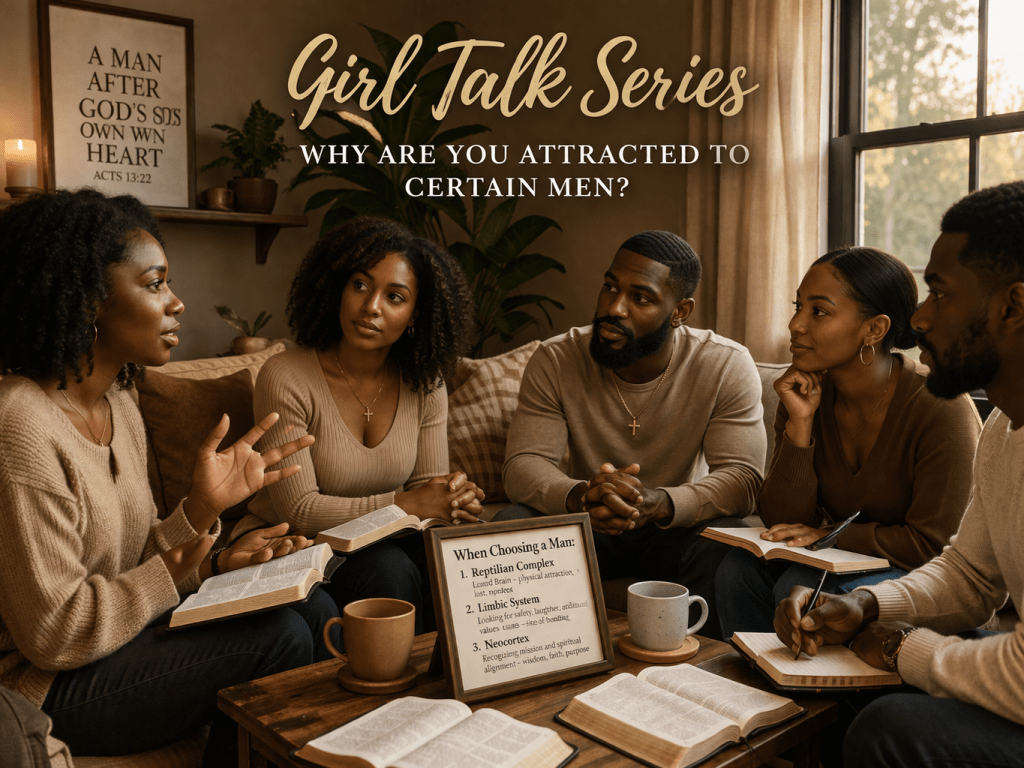



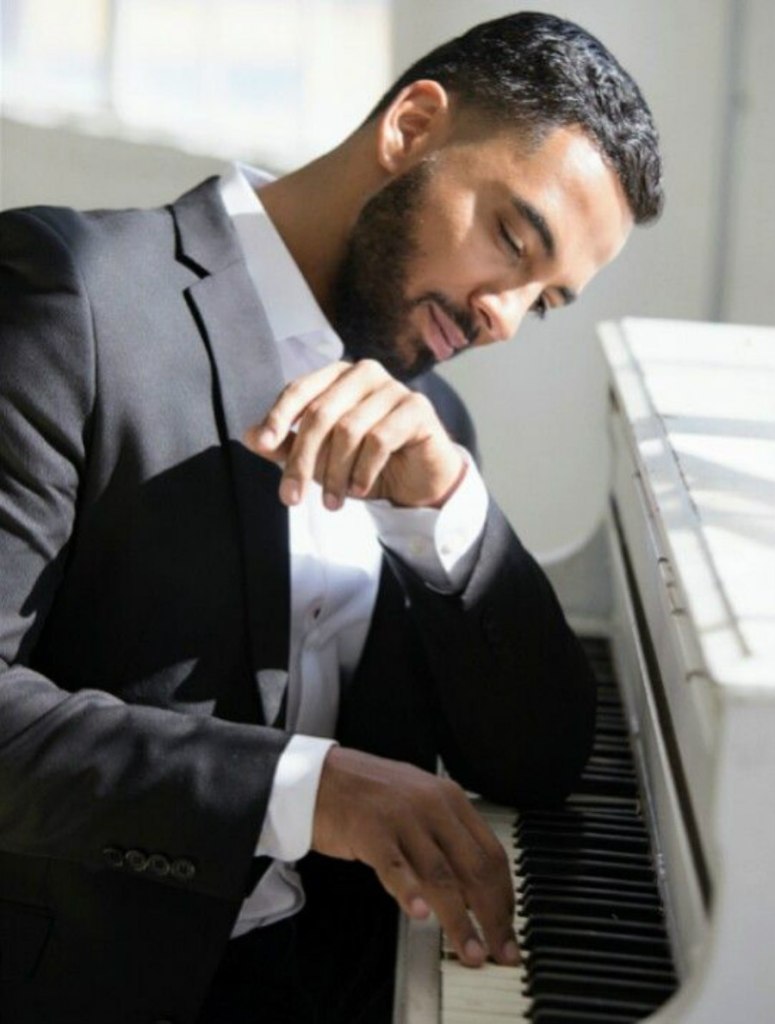





 THE BROWN GIRL DILEMMA