

Tag Archives: Flesh vs. Spirit

Stop Negotiating With Your Flesh

The greatest battles believers face are not always external; many are internal wars between the Spirit and the flesh. Scripture is clear that the flesh is not a neutral companion but an opposing force that resists obedience to God. When believers attempt to negotiate with the flesh instead of crucifying it, compromise replaces holiness, and cycles of defeat persist.

The Bible teaches that humanity possesses a sin nature, inherited through Adam. This nature inclines the flesh toward rebellion against God’s law. Paul explains that “by one man sin entered into the world, and death by sin” (Romans 5:12, KJV). The flesh is not simply physical desire—it is a mindset hostile to righteousness.

Negotiation with the flesh often sounds spiritual but results in disobedience. Statements like “just this once,” “God understands,” or “I’ll repent later” reflect a heart attempting to manage sin rather than mortify it. Scripture warns that the flesh cannot be reformed—it must be put to death.

Paul states plainly, “For the flesh lusteth against the Spirit, and the Spirit against the flesh: and these are contrary the one to each other (Galatians 5:17, KJV). There is no treaty between them. One must rule, and the other must submit.

The works—or sins—of the flesh are clearly named in Scripture. Galatians 5:19–21 lists them as adultery, fornication, uncleanness, lasciviousness, idolatry, witchcraft, hatred, variance, emulations, wrath, strife, seditions, heresies, envyings, murders, drunkenness, revellings, and such like. These are not merely behaviors but expressions of a corrupt nature.

Jesus intensified this teaching by revealing that sin begins internally. Lust, anger, and pride are not harmless thoughts but seeds of destruction (Matthew 5:21–28, KJV). Negotiating with thoughts is often where believers lose the battle before action ever occurs.

The flesh thrives on delay. When conviction arises, the flesh asks for time instead of surrender. Yet Scripture commands immediacy: “Today if ye will hear his voice, harden not your hearts” (Hebrews 3:15, KJV). Delayed obedience is disobedience in disguise.

To put the flesh under, believers must first acknowledge its deceitfulness. The flesh promises pleasure but delivers bondage. “There is a way which seemeth right unto a man, but the end thereof are the ways of death” (Proverbs 14:12, KJV).

Paul provides a clear mandate: “Mortify therefore your members which are upon the earth” (Colossians 3:5, KJV). Mortification is not negotiation; it is execution. It involves decisive rejection of sinful habits, environments, and influences.

Putting the flesh under also requires discipline of the body. Paul testified, “But I keep under my body, and bring it into subjection” (1 Corinthians 9:27, KJV). Spiritual maturity demands bodily discipline, not indulgence.

Prayer is essential in subduing the flesh. Jesus warned His disciples, “Watch and pray, that ye enter not into temptation: the spirit indeed is willing, but the flesh is weak” (Matthew 26:41, KJV). Prayer strengthens spiritual resolve and exposes fleshly motives.

Fasting is another biblical weapon. By denying the flesh lawful desires, believers learn mastery over unlawful ones. Fasting humbles the soul and amplifies dependence on God (Psalm 35:13, KJV).

Renewing the mind is critical. The flesh operates through thought patterns shaped by the world. Paul commands believers to be “transformed by the renewing of your mind” (Romans 12:2, KJV). Without mental renewal, behavioral change will not last.

Walking in the Spirit is the ultimate antidote to fleshly dominance. “Walk in the Spirit, and ye shall not fulfil the lust of the flesh” (Galatians 5:16, KJV). Victory is not achieved by willpower alone but by Spirit-led obedience.

Accountability also plays a role. Isolation strengthens the flesh, while godly counsel exposes it. Scripture affirms that “iron sharpeneth iron” (Proverbs 27:17, KJV). Mature believers help keep one another aligned with truth.

Grace must not be mistaken for permission. Paul confronted this error directly: “Shall we continue in sin, that grace may abound? God forbid” (Romans 6:1–2, KJV). Grace empowers holiness; it does not excuse compromise.

Crucifying the flesh is an ongoing process. “They that are Christ’s have crucified the flesh with the affections and lusts” (Galatians 5:24, KJV). Though the decision is decisive, the practice is daily.

Spiritual authority increases as the flesh loses control. When believers submit to God and resist the devil, the promise is clear: “he will flee from you” (James 4:7, KJV). Resistance requires submission, not negotiation.

Ultimately, negotiating with the flesh delays freedom. The flesh will never be satisfied, disciplined, or redeemed—it must be ruled. Life and peace come only through submission to the Spirit (Romans 8:6, KJV).

To stop negotiating with the flesh is to choose life, obedience, and spiritual power. When the flesh is placed under the authority of Christ, believers walk not in condemnation but in victory, bearing fruit that glorifies God and reflects true freedom.


References

The Holy Bible, King James Version. (1769/2017). Cambridge University Press.

Romans 5:12; Romans 6:1–2; Romans 8:6; Romans 12:2 (KJV).

Galatians 5:16–24 (KJV).

Colossians 3:5 (KJV).

1 Corinthians 9:27 (KJV).

Matthew 5:21–28; Matthew 26:41 (KJV).

Hebrews 3:15 (KJV).

Proverbs 14:12; Proverbs 27:17 (KJV).

James 4:7 (KJV).
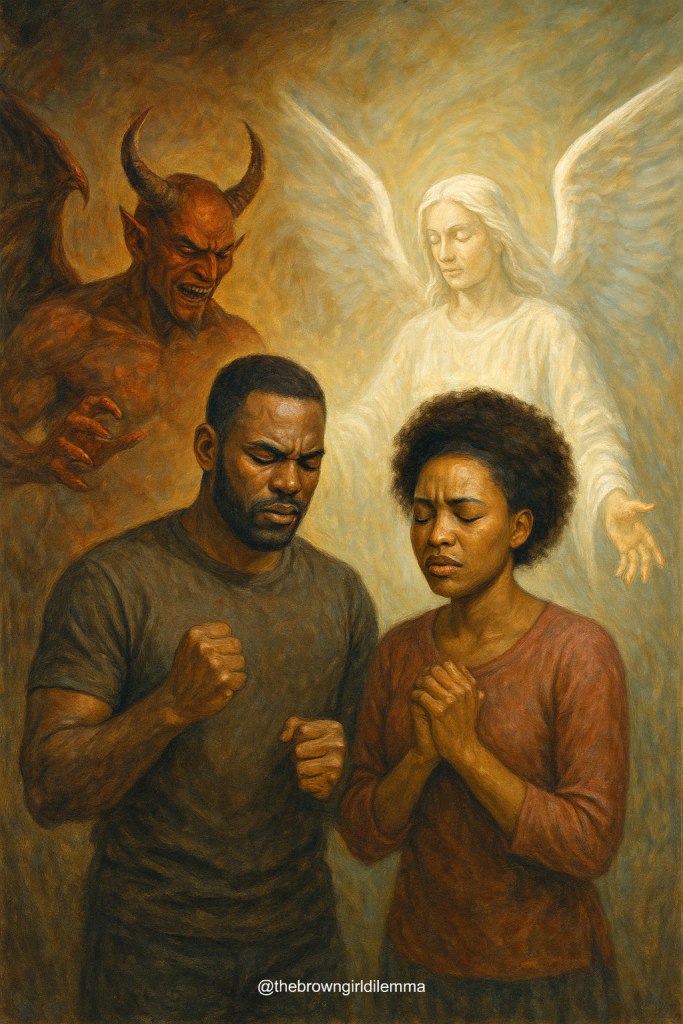
The Invisible War: The Battle of Good vs. Evil, Flesh vs. Spirit.

From the beginning of time, humanity has been caught in an invisible yet undeniable war—a conflict not fought with swords or guns, but within the soul. The Apostle Paul describes this battle vividly, saying, “For the flesh lusteth against the Spirit, and the Spirit against the flesh: and these are contrary the one to the other” (Galatians 5:17, KJV). This unseen war shapes the destiny of every believer, revealing the ongoing struggle between good and evil, righteousness and sin, obedience and rebellion.

The invisible war began in the heavens when Lucifer, once a radiant angel, allowed pride to corrupt his heart (Isaiah 14:12–15). His rebellion against God established the archetype of disobedience that would later infect humankind. When Adam and Eve succumbed to the serpent’s temptation in the Garden of Eden, the war was transferred from the celestial realm to the earthly one. Humanity became both the battleground and the prize.

The flesh represents the human inclination toward sin, self-gratification, and rebellion against divine order. It is not merely the body but the fallen nature inherited from Adam. Romans 8:7 declares, “Because the carnal mind is enmity against God: for it is not subject to the law of God.” This means the flesh naturally resists holiness, preferring what pleases the senses rather than what honors the Spirit.

In contrast, the Spirit represents the divine influence that draws believers toward righteousness. It is the breath of God that renews, convicts, and empowers the heart to overcome sin. When one is born again, the Spirit of Christ enters, creating a new nature. Yet, the old self still lingers, creating tension between who we were and who we are becoming.

The war between flesh and spirit is constant. Every thought, decision, and desire becomes a battlefield. Paul laments this struggle in Romans 7:19, “For the good that I would I do not: but the evil which I would not, that I do.” This internal war proves that spiritual warfare is not only external—against demons or dark forces—but deeply internal, waged within the human heart.

Good and evil are not equal powers; evil is parasitic, existing only by twisting what was once good. The flesh, therefore, is not evil by creation but by corruption. It has been infected by sin, making it resistant to the Spirit’s guidance. The victory over this corruption can only come through Christ, who declared, “The spirit indeed is willing, but the flesh is weak” (Matthew 26:41, KJV).

In the invisible war, Satan uses deception, distraction, and doubt as his weapons. He aims to separate man from his Creator through subtle temptations that appeal to pride and desire. Just as he tempted Eve with the fruit, he tempts believers today with the lust of the eyes, the lust of the flesh, and the pride of life (1 John 2:16).

The Spirit, however, equips believers with divine armor. Paul writes, “Put on the whole armour of God, that ye may be able to stand against the wiles of the devil” (Ephesians 6:11, KJV). This armor—truth, righteousness, faith, salvation, and the Word of God—protects the soul from spiritual defeat. Prayer is the believer’s communication line in this battle, strengthening faith and aligning the heart with the will of God.

Victory in this invisible war requires surrender. Ironically, the path to overcoming the flesh is not through human effort but divine submission. “Submit yourselves therefore to God. Resist the devil, and he will flee from you” (James 4:7, KJV). True strength lies in humility, allowing the Spirit to guide where pride once ruled.

The battleground extends beyond personal struggles; it permeates culture, society, and the world’s moral landscape. We see good and evil clash in politics, media, family structures, and education. The normalization of sin and rejection of holiness demonstrate how far humanity has drifted from spiritual sensitivity.

This conflict also manifests in relationships, where love is often replaced by lust, and commitment by convenience. The flesh seeks immediate satisfaction, while the Spirit calls for patience, purity, and self-control (Galatians 5:22–23). Each choice we make reveals which master we serve—the flesh or the Spirit.

In the life of a believer, spiritual discipline—fasting, prayer, and studying the Word—acts as training for this war. The more one feeds the Spirit, the weaker the flesh becomes. Conversely, neglecting spiritual growth allows the flesh to regain dominance, blurring moral clarity and quenching the Spirit’s voice.

The invisible war also exposes the reality that human beings cannot serve two masters (Matthew 6:24). The soul cannot walk in light and darkness simultaneously. Every day is a choice between obedience and rebellion, purity and corruption, truth and deception. The stakes are eternal, for the outcome of this war determines one’s spiritual destiny.

Christ’s sacrifice on the cross marked the decisive victory in this war. Through His death and resurrection, believers gained power over sin and death. “For sin shall not have dominion over you: for ye are not under the law, but under grace” (Romans 6:14, KJV). Yet, this victory must be continually enforced through faith and obedience.

Satan continues to wage guerrilla warfare against the redeemed, hoping to reclaim territory in the heart through guilt, fear, and temptation. But Scripture assures us, “Greater is he that is in you, than he that is in the world” (1 John 4:4, KJV). The Spirit within is stronger than the darkness without.

In the final analysis, this invisible war is not one of equal opposites but of divine sovereignty reclaiming what was lost. The Spirit’s ultimate victory will culminate when Christ returns to judge evil and establish eternal peace. Until then, believers must fight the good fight of faith (1 Timothy 6:12).

Each trial, temptation, and tear is part of this cosmic conflict, but it also becomes an opportunity for spiritual refinement. The fire of affliction burns away the impurities of the flesh, leaving the believer stronger and more radiant in spirit. The victory of good over evil begins within.

Thus, the invisible war is not hopeless—it is holy. It is the process through which God transforms weakness into strength and mortality into immortality. Though unseen, its effects are eternal. Every act of obedience, every prayer, and every moment of repentance contributes to the triumph of light over darkness.

As the Apostle Paul concludes, “Be not overcome of evil, but overcome evil with good” (Romans 12:21, KJV). The invisible war continues, but the end has already been written. Those who walk in the Spirit shall not fulfill the lust of the flesh but will rise victorious in the power of God’s love.

References

  • The Holy Bible, King James Version (KJV): Galatians 5:17; Romans 8:7; Romans 7:19; Matthew 26:41; Ephesians 6:11; James 4:7; 1 John 4:4; Romans 12:21.
  • Isaiah 14:12–15; Genesis 3; 1 John 2:16; Galatians 5:22–23; 1 Timothy 6:12; Matthew 6:24; Romans 6:14.