
Tag Archives: fiction

The Male Files: Things Men Say That Hurt Women Without Realizing.

Women carry words deeply. While men often focus on intention, women absorb tone, emotion, and delivery. The female heart is designed with sensitivity, intuition, and emotional intelligence—qualities that allow her to nurture, connect, and love with fullness. But because of that same sensitivity, certain phrases strike her spirit harder than men realize. What he thinks is small may echo in her long after the conversation ends.

1 Peter 3:7 – “Husbands, dwell with them according to knowledge, giving honour unto the wife…”
Ephesians 4:29 – “Let no corrupt communication proceed out of your mouth…”
Colossians 3:19 – “Husbands, love your wives, and be not bitter against them.”
Proverbs 15:4 – “A wholesome tongue is a tree of life…”
James 1:19 – “Let every man be swift to hear, slow to speak, slow to wrath.”


When a man says, “Calm down,” he may mean to diffuse the situation, but she hears dismissal. This phrase makes her feel dramatic, irrational, or overly emotional. Instead of feeling understood, she feels silenced. Women want their emotions seen, not minimized.

Saying “You’re overreacting” wounds her deeply. It labels her feelings as invalid or exaggerated. Even if her emotions seem strong, they are real to her. She feels alone when her emotional reality is denied.

When a man tells her, “You’re too sensitive,” she hears that her femininity is a flaw. Sensitivity is part of her design—her ability to feel, discern, and connect. Calling her “too sensitive” communicates that her heart is a burden instead of a treasure.

Statements like “You’re imagining things” or “That didn’t happen” can make her doubt her intuition, which is one of her strongest God-given gifts. Women remember tone, details, and emotional patterns. Gaslighting, even unintentionally, erodes her trust in her own perception.

Saying “I don’t have time for this” makes her feel unimportant. A woman interprets time and attention as love. When he refuses to engage, she feels like she is competing with his stress, distractions, or interests.

The phrase “Do what you want” may sound like freedom, but she hears emotional abandonment. Instead of leadership or partnership, it signals that he has stepped back from caring about the outcome.

When a man says, “You’re lucky I’m with you,” even jokingly, it leaves a deep scar. It communicates that she is not desirable, not enough, or not worthy. A woman’s confidence in the relationship begins to crumble under such words.

Telling her, “My ex never did that,” or comparing her to another woman is emotionally devastating. Comparison breaks trust and makes her feel inadequate in her own skin. A woman wants to be cherished uniquely, not measured against someone else.

Saying “You act just like your mother” cuts her deeply, especially if used negatively. Women value their identity; attacking it through family comparison feels disrespectful and demeaning.

When a man tells her, “You’re doing too much,” it diminishes her effort. Women often express love through detail, care, and thoroughness. Undermining her investment makes her feel taken for granted.

The phrase “You’re not the same anymore” frightens her emotionally. Women need reassurance that growth, aging, and change are still seen as beautiful. This statement makes her feel like she is losing value in his eyes.

Saying “I didn’t ask you to do that” invalidates her sacrifices. Women often go beyond what is asked because they love deeply. When their efforts are brushed off, they feel unseen and unappreciated.

When he says “Get over it,” she hears that her feelings are inconvenient. Healing takes time, and women need emotional presence, not impatience.

The phrase “You’re acting crazy” is especially painful. It pathologizes her emotions and attacks her dignity. Women want to feel safe expressing themselves without being labeled unstable.

Telling her, “That’s why I don’t tell you things,” shuts the door of communication. She hears that she is unworthy of honesty or vulnerability. It builds insecurity and fear in her spirit.

When a man responds with silence—stonewalling—she feels rejected. Women need connection. Silence feels like abandonment and creates emotional distance.

Saying “You’re too much” wounds her at her core because women often fear being “too emotional, too needy, or too expressive.” This reinforces the fear that she must shrink to be loved.

The phrase “I don’t care” can crush her, even if he meant it casually. Women tie care to commitment. If he doesn’t care, she feels unprotected.

And when a man weaponizes love by saying, “I don’t know if I want this anymore,” it destabilizes her entire emotional foundation. Women build relationships on security, consistency, and devotion. Empty threats cause emotional trauma and insecurity.

Ultimately, women bloom under love, tenderness, reassurance, and emotional presence. When a man speaks with gentleness, compassion, and respect, he nurtures her heart and strengthens the bond between them. Words can heal or wound. A wise man uses them to love.


References (KJV Bible)

Proverbs 18:21 – “Death and life are in the power of the tongue.”
Proverbs 31:26 – “She openeth her mouth with wisdom; and in her tongue is the law of kindness.”
1 Peter 3:7 – “Husbands, dwell with them according to knowledge, giving honour unto the wife…”
Ephesians 4:29 – “Let no corrupt communication proceed out of your mouth…”
Colossians 3:19 – “Husbands, love your wives, and be not bitter against them.”
Proverbs 15:4 – “A wholesome tongue is a tree of life…”
James 1:19 – “Let every man be swift to hear, slow to speak, slow to wrath.”
The Burden of Beauty: Brown Skin in a Colorist World. #thebrowngirldilemma

Photo by EZEKIXL AKINNEWU on Pexels.com

Beauty has always been both a blessing and a burden, especially for brown-skinned women navigating societies structured by colorism and white supremacy. The burden of beauty for the brown girl lies not only in external perceptions of her skin but also in the internalized struggles she must confront in affirming her own worth. In a world where lighter skin is often equated with superiority, desirability, and privilege, brown skin becomes a site of both fascination and rejection—desired for its exotic appeal yet devalued in the hierarchy of social status.

Historically, this burden is rooted in colonialism and slavery, where skin tone was weaponized as a measure of proximity to whiteness. Lighter-skinned women were often afforded marginal privileges, while darker-skinned women were relegated to harsher labor and harsher stereotypes (Hunter, 2007). This historical legacy continues in modern media, where Eurocentric beauty standards dominate, casting brown women as either hypersexualized or invisible. Such distortions create psychological weight, forcing many brown women to wrestle with feelings of inadequacy, envy, or invisibility.

Yet, paradoxically, the brown girl’s beauty is undeniable. Her skin is rich in melanin, biologically designed to protect and preserve, defying aging in a way the world calls “Black don’t crack.” Her hair grows in crowns of coiled resilience, testifying to strength and uniqueness. Still, the blessing of this natural beauty becomes a burden when society simultaneously covets and condemns it. For example, fashion and beauty industries often imitate brown features—full lips, curves, tanned skin—while marginalizing the very women who embody them naturally (Tate, 2016).

From a theological perspective, this burden of beauty is not merely social but spiritual. Scripture reminds us that beauty is not defined by outward appearance but by the inward spirit: “Whose adorning let it not be that outward adorning of plaiting the hair, and of wearing of gold… But let it be the hidden man of the heart, in that which is not corruptible, even the ornament of a meek and quiet spirit” (1 Peter 3:3–4, KJV). The brown girl’s true beauty rests not in meeting a colonial standard but in embracing her God-given design. Her worth is eternal, sealed by divine purpose, and not diminished by earthly bias.

Psychologically, carrying this burden often leads to both trauma and transformation. Studies on colorism reveal that women of darker complexions face greater discrimination in employment, relationships, and media representation (Keith & Herring, 1991). Yet, those who reclaim their identities often experience heightened resilience and self-definition. The process of unlearning colorist ideologies is itself an act of resistance—a reprogramming of the mind to embrace authenticity over assimilation.

Culturally, movements such as #MelaninMagic, #BlackGirlMagic, and natural hair revolutions signify collective rejection of imposed beauty hierarchies. They are testimonies that brown girls are no longer passive recipients of definition but active authors of their beauty narrative. Representation of dark-skinned actresses like Viola Davis, Danai Gurira, and Lupita Nyong’o has further chipped away at barriers, providing mirrors for young girls who previously saw none.

The burden of beauty, therefore, becomes an opportunity for liberation. Brown skin is not a curse but a crown; its richness tells the story of survival, endurance, and divine creativity. The true challenge lies not in the brown girl’s skin but in the world’s distorted lens. To confront colorism is to confront an entire system that profits from insecurity. When brown girls embrace their reflection, they transform the burden of beauty into a banner of pride, healing not only themselves but generations to come.

The brown girl dilemma, in this context, is not about being beautiful—it is about surviving the weight of being beautiful in a world that struggles to accept her as she is. Her power rests in remembering that her worth predates colonial hierarchies and transcends human judgment. Her beauty is eternal, rooted in divine creation, and no longer a burden when she learns to see it through God’s eyes.


References

  • Hunter, M. (2007). The Persistent Problem of Colorism: Skin Tone, Status, and Inequality. Sociology Compass, 1(1), 237–254.
  • Keith, V. M., & Herring, C. (1991). Skin tone and stratification in the Black community. American Journal of Sociology, 97(3), 760–778.
  • Tate, S. (2016). Skin Bleaching in Black and Brown Communities: Connected to Colorism and Colonialism. Palgrave Macmillan.
  • The Holy Bible, King James Version.

Black Women and Representation in Literature. #BlackWomenAuthors

Photo by Thought Catalog on Pexels.com

Representation matters. The stories we tell and the voices we amplify shape culture, identity, and self-worth. For centuries, literature often marginalized or misrepresented Black women, reducing them to stereotypes or erasing their experiences entirely. Yet, Black women writers and literary characters have fought to reclaim narrative space, offering authentic portrayals that celebrate resilience, intellect, and cultural identity. Their contributions illuminate the power of literature and the profound importance of representation.

During slavery and the post-emancipation era, Black women were frequently depicted through harmful stereotypes, such as the “mammy,” the “jezebel,” or the “tragic mulatto,” which reinforced social hierarchies and dehumanized Black women. Despite systemic erasure, their stories persisted through oral histories, spirituals, and later written works, preserving cultural memory and lived experience. Early literary trailblazers such as Phillis Wheatley, the first published African American poet, and Harriet E. Wilson, the first African American woman to publish a novel, broke barriers in the 18th and 19th centuries. Their works challenged prevailing racial and gender norms, providing insight into the intellect, faith, and resilience of Black women under oppression.

The Harlem Renaissance further elevated Black women’s voices in literature. Zora Neale Hurston, through works like Their Eyes Were Watching God and Mules and Men, celebrated the journey of self-discovery and the richness of Black Southern culture. Nella Larsen, author of Passing and Quicksand, explored the complexities of racial identity, colorism, and societal expectations. These writers foregrounded Black women’s experiences, challenging the silence and stereotypes imposed by mainstream literature.

Contemporary Black women writers continue this tradition with extraordinary impact. Toni Morrison, through novels like The Bluest Eye, Beloved, and Song of Solomon, explored the legacy of slavery, trauma, and cultural memory, portraying Black womanhood with depth and nuance. Alice Walker, in The Color Purple, celebrates female solidarity, spirituality, and self-realization amidst oppression. Audre Lorde and bell hooks interrogated the intersections of race, gender, and class, with works such as Sister Outsider and Ain’t I a Woman? providing insight into feminism, activism, and liberation.

Authors like Chimamanda Ngozi Adichie, with Purple Hibiscus, Americanah, and Half of a Yellow Sun, explore immigration, identity, and cultural displacement, while Roxane Gay, in Bad Feminist and Hunger, addresses trauma, body image, and social critique. Jesmyn Ward’s Salvage the Bones and Sing, Unburied, Sing depict resilience and family in the American South, and Nikki Giovanni’s poetry emphasizes love, community, and empowerment. Science fiction and Afrofuturism have also been reshaped by Black women writers like Octavia E. Butler (Kindred, Parable of the Sower) and Nnedi Okorafor (Binti, Who Fears Death), who explore race, gender, and identity within imaginative worlds. Claudia Rankine’s Citizen: An American Lyric examines contemporary racism and microaggressions, bridging literature and social consciousness. Misty Copeland, while primarily a ballet trailblazer, also contributes to cultural narratives around representation and excellence in artistic literature.

🌟 Trailblazers in Literature: Black Women Who Shaped the Narrative

Phillis Wheatley (1753–1784)Poems on Various Subjects, Religious and Moral
Themes: Faith, intellect, early African American identity, resilience.

Harriet E. Wilson (1825–1900)Our Nig
Themes: Slavery, race, gender, survival in Northern society.

Zora Neale Hurston (1891–1960)Their Eyes Were Watching God, Mules and Men
Themes: Self-discovery, folklore, Southern Black culture, female empowerment.

Nella Larsen (1891–1964)Passing, Quicksand
Themes: Racial identity, colorism, gender, societal expectations.

Toni Morrison (1931–2019)The Bluest Eye, Beloved, Song of Solomon
Themes: Slavery, trauma, Black womanhood, cultural memory.

Alice Walker (b. 1944)The Color Purple
Themes: Oppression, female solidarity, self-realization, spirituality.

Audre Lorde (1934–1992)Sister Outsider, Zami: A New Spelling of My Name
Themes: Intersectionality, feminism, sexuality, activism.

bell hooks (1952–2021)Ain’t I a Woman?, Feminist Theory: From Margin to Center
Themes: Gender, race, love, liberation, cultural critique.

Chimamanda Ngozi Adichie (b. 1977)Purple Hibiscus, Americanah, Half of a Yellow Sun
Themes: Immigration, identity, feminism, cultural displacement.

Roxane Gay (b. 1974)Bad Feminist, Hunger
Themes: Body image, trauma, race, feminism, social critique.

Jesmyn Ward (b. 1977)Salvage the Bones, Sing, Unburied, Sing
Themes: Family, poverty, grief, Southern Black life, resilience.

Nikki Giovanni (b. 1943)Black Feeling, Black Talk, Black Judgment, Love Poems
Themes: Civil rights, love, community, empowerment.

Octavia E. Butler (1947–2006)Kindred, Parable of the Sower
Themes: Science fiction, social justice, race, human morality.

Claudia Rankine (b. 1963)Citizen: An American Lyric
Themes: Racism, microaggressions, identity, social consciousness.

Nnedi Okorafor (b. 1974)Binti, Who Fears Death
Themes: Afrofuturism, African culture, female empowerment, identity.

Literary representation has profound effects on identity and self-perception. Seeing multidimensional Black women as authors and characters empowers readers to value their intellect, creativity, and beauty. Psychological research demonstrates that positive representation strengthens self-efficacy, reduces internalized bias, and fosters a sense of belonging. Literature also provides a platform for exploring the intersection of faith, resilience, and cultural pride. Biblical principles affirm dignity and divine purpose, as Psalm 139:14 reminds us: “I am fearfully and wonderfully made” (KJV), emphasizing that worth is inherent and divinely assigned rather than dictated by societal bias.

Despite the remarkable achievements of Black women writers, challenges persist. Underrepresentation in mainstream publishing, limited critical recognition, and pressures to conform to marketable stereotypes continue to restrict opportunities. Advocacy for inclusive publishing, mentorship, and the celebration of authentic Black women’s voices remains crucial. Organizations such as the National Black Writers Conference and collectives like We Need Diverse Books provide mentorship, visibility, and resources, fostering a community that values authenticity and excellence.

Black women’s representation in literature is essential for cultural understanding, personal empowerment, and social justice. From Phillis Wheatley to Roxane Gay, Zora Neale Hurston to Chimamanda Ngozi Adichie, Black women writers have resisted erasure, reclaimed narratives, and inspired generations through their artistry and insight. Their stories affirm identity, challenge oppression, and celebrate the intellectual, spiritual, and cultural richness of Black womanhood.


References

  • West, C. (1995). Mammy, Jezebel, Sapphire, and Other Stereotypes: Black Women in Literature. Journal of African American Studies, 1(1), 45–60.
  • Tajfel, H., & Turner, J. C. (1986). The social identity theory of intergroup behavior. In S. Worchel & W. G. Austin (Eds.), Psychology of intergroup relations (pp. 7–24). Nelson-Hall.
  • Morrison, T. (1970). The Bluest Eye. Holt, Rinehart & Winston.
  • Hurston, Z. N. (1937). Their Eyes Were Watching God. J. B. Lippincott.
  • Walker, A. (1982). The Color Purple. Harcourt.
  • Adichie, C. N. (2013). Americanah. Knopf.

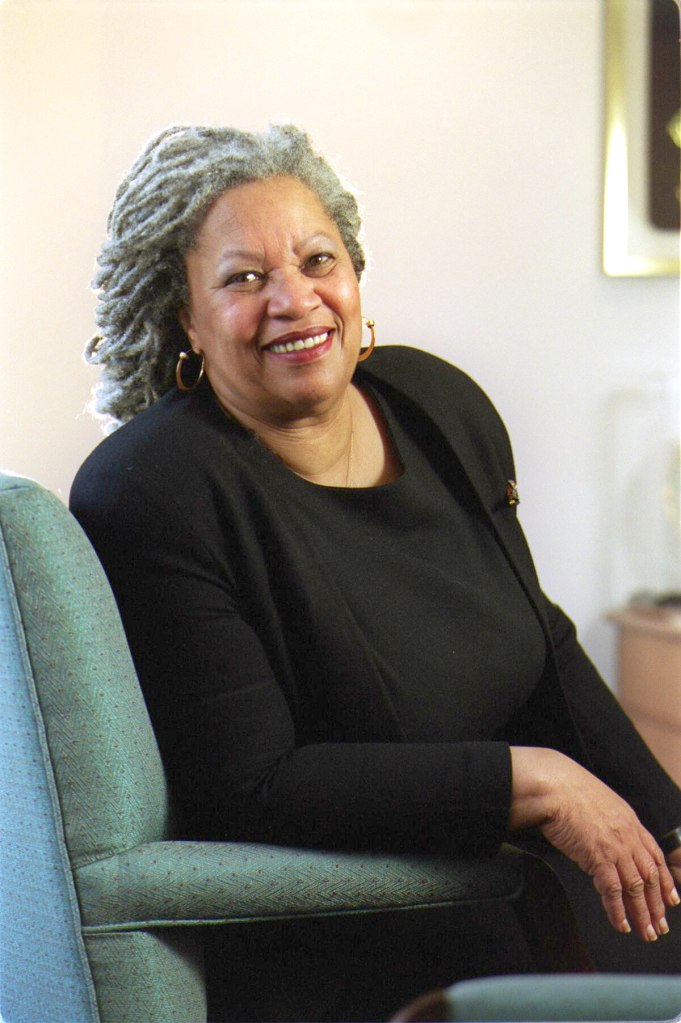
AUTHOR SPOTLIGHT: Toni Morrison

The Conjurer of Black Memory, Love, and Liberation

Photo credit: PATRICK KOVARIK/AFP/GettyImages)

Toni Morrison, born Chloe Ardelia Wofford on February 18, 1931, in Lorain, Ohio, was one of the most brilliant literary voices of the 20th century. A Nobel Laureate, Pulitzer Prize winner, editor, teacher, and cultural icon, Morrison reshaped American literature by centering the Black experience, especially the inner lives of Black women. Through lyrical prose, spiritual depth, and historical honesty, she offered the world powerful stories that honored the complexities of race, identity, trauma, and love. Her legacy continues to influence generations of readers, writers, and thinkers who see themselves reflected in the truth of her words.


Early Life and Inspiration

Morrison was raised in a working-class African American family during the Great Depression. Her parents, George and Ramah Wofford, emphasized education, oral tradition, and Black pride. From a young age, she was immersed in African American folklore, spirituals, and storytelling. Though she grew up in an integrated town, Morrison understood the weight of racism, particularly through her father’s deep mistrust of white people, which stemmed from his own experiences in the segregated South.

She attended Howard University, where she changed her name to Toni, a shortened version of her baptismal name, Anthony. She later earned a master’s degree in English from Cornell University. After marrying Harold Morrison, a Jamaican architect, she had two sons—Harold and Slade—but the marriage ended in divorce. She raised her children as a single mother while working as a senior editor at Random House, becoming the first Black woman to hold that position. It was during this time that she began writing fiction, often waking up before dawn to write while her children slept.


Becoming a Writer and Literary Vision

Toni Morrison’s decision to write stemmed from a deep desire to see Black life reflected with honesty, beauty, and dignity. She once said, “If there’s a book you really want to read, but it hasn’t been written yet, then you must write it.” Her debut novel, The Bluest Eye (1970), told the tragic story of a young Black girl who longs for blue eyes and acceptance in a world that devalues her Blackness. This set the tone for Morrison’s career—exploring themes of internalized racism, generational trauma, and spiritual survival.

Morrison’s writing style was uniquely poetic, non-linear, and rich in symbolism. She often wove together the mystical and the mundane, the historical and the personal, allowing her stories to transcend time while remaining grounded in the Black American experience. Her characters were deeply human—flawed, sacred, wounded, and strong—and she never apologized for writing to a Black audience. Morrison rejected the white gaze, choosing instead to write “without explaining to white people,” thereby creating authentic narratives that affirmed Black identity and voice.


Beloved and Tar Baby: Inspirations and Impact

Two of her most profound works, Tar Baby (1981) and Beloved (1987), exemplify Morrison’s commitment to excavating Black history and identity. Tar Baby explores the tensions between wealth and cultural memory, beauty standards, assimilation, and the spiritual consequences of disconnection from one’s roots. The novel, inspired by African American folklore, offers a complex meditation on what it means to be free—and what it costs to belong.

Beloved, widely regarded as her masterpiece, was inspired by the true story of Margaret Garner, an enslaved woman who killed her child rather than allow her to be captured and returned to slavery. Morrison transforms this historical account into a haunting ghost story that examines the psychological legacy of slavery. The novel, for which she won the Pulitzer Prize in 1988, presents memory not just as a personal experience, but as a communal reckoning. In 2006, The New York Times Book Review named Beloved the best American novel of the previous 25 years.


Challenges as a Black Woman and Author

Despite her immense talent, Morrison faced numerous challenges. As a Black woman in the predominantly white publishing world, she endured marginalization, tokenism, and skepticism. Her work was sometimes dismissed as “too Black” or “too political,” and her insistence on centering Black stories without catering to white sensibilities was considered radical. Nevertheless, she stood firm. Morrison refused to let racism and sexism shape her craft, stating, “The very serious function of racism is distraction. It keeps you from doing your work.” Her light skin may have shielded her from some overt forms of discrimination, but it did not spare her the structural barriers and cultural resistance faced by Black women in the literary world.


Awards, Recognition, and Cultural Influence

Morrison’s literary genius was eventually acknowledged with the highest honors. In 1993, she became the first African American woman to receive the Nobel Prize in Literature. She also received the Pulitzer Prize, the Presidential Medal of Freedom (2012), more than 30 honorary degrees, and a place in the canon of great American writers. Her work appeared in curricula across the world, and she was celebrated in pop culture through appearances on Oprah’s Book Club, interviews, documentaries, and film adaptations. In 2023, she was honored with a U.S. postage stamp—an enduring symbol of national recognition.

Beyond literature, Morrison became a cultural voice for justice and liberation. She used her platform to speak against racism, economic injustice, and the erasure of Black stories. She was revered for her intellect, her elegance, and her unwavering commitment to truth.


Private Life and Motherhood

Toni Morrison remained fiercely private about her personal life, though her love for her sons was evident in her interviews and dedications. Her son Slade Morrison, who predeceased her in 2010, co-wrote several children’s books with her. Her home life, though quiet, informed much of her writing. She infused her narratives with the rhythms of family life, the strength of single mothers, and the wisdom of matriarchs. Her experiences as a working mother, editor, and teacher were not separate from her art—they were its foundation.


Advice to Black Women and Lasting Legacy

Morrison’s advice to Black women was simple, bold, and liberating: “You are your best thing.” She believed in the power of Black women to define themselves, to love themselves fiercely, and to resist erasure. She encouraged them to create, to remember, and to live without apology.

Her legacy continues to thrive. Writers like Ta-Nehisi Coates, Jesmyn Ward, and Chimamanda Ngozi Adichie cite her as a major influence. Her novels are still taught in classrooms, her interviews quoted in protest signs, and her words invoked in moments of cultural reckoning. Morrison wrote not just with intellect, but with anointing.


Conclusion

Toni Morrison was not simply a writer—she was a witness, a warrior, and a woman of vision. Through her novels, she preserved the spiritual and historical truths of Black America. She showed the world that Black lives are rich with depth, pain, joy, and beauty. Her ability to transform suffering into art and memory into liberation makes her one of the most important literary voices in history. In honoring her, we honor a tradition of truth-telling and the endless power of the written word.


References

Morrison, T. (1970). The Bluest Eye. Holt, Rinehart and Winston.
Morrison, T. (1981). Tar Baby. Alfred A. Knopf.
Morrison, T. (1987). Beloved. Alfred A. Knopf.
The Nobel Foundation. (1993). Nobel Lecture: Toni Morrison.
Obama, B. (2012). Presidential Medal of Freedom Recipients. White House Archives.
New York Times Book Review. (2006). The Best Work of American Fiction of the Last 25 Years.
Winfrey, O. (1998). Oprah’s Book Club: Beloved. Harpo Productions.

Masculine Perfection Series: Introduction

The Masculine Perfection series is a curated celebration of Black male excellence — a tribute to the men whose presence, talent, and character embody strength, beauty, purpose, and divine craftsmanship. This collection goes beyond surface-level admiration. It explores the full essence of manhood: physical allure, emotional depth, artistic mastery, spiritual grounding, intellectual achievement, and the cultural impact each man leaves on the world.

At its core, the series highlights Black men who have become icons in film, music, athletics, literature, leadership, and entertainment. These men possess magnetic features, powerful physiques, regal bearing, and the kind of inner discipline that shapes greatness. Each profile honors not only their looks, but the stories, struggles, victories, and virtues that forged them.

Through richly written biographies, career retrospectives, personal-life insights, and social commentary, the Masculine Perfection series elevates these men as examples of Black masculine brilliance — men who inspire, protect, create, lead, and shine. Each installment is crafted to showcase the unique beauty of the Black man: his heritage, his endurance, his artistry, his fatherhood, his relationships, his impact, and his legacy.

Masculine Perfection is more than admiration.
It is a declaration:
Black men are powerful.
Black men are exceptional.
Black men are worthy of honor.
Black men are divine masterpieces.

Examples of some of the (Celebrities) from the series:

1. Billy Dee Williams (Actor & Cultural Icon)

  • Traits & Career: Charisma, elegance, confidence, grace, relational charm.
  • Looks & Appeal: Known as one of the most handsome men of his era, with smooth features, a commanding presence, and a style that exudes sophistication. His facial symmetry, warm smile, and refined demeanor made him instantly recognizable and admired.
  • Why masculine perfection: Blends style, poise, and gravitas with charm and professionalism.
  • Reference: IMDb, Williams, B. D. biography

2. Shemar Moore (Actor & Model)

  • Traits & Career: Charismatic, disciplined, hardworking, compassionate, philanthropic. Famous for Criminal Minds and S.W.A.T.
  • Looks & Appeal: Tall, athletic, and exceptionally handsome, with chiseled features, deep expressive eyes, and a warm, magnetic smile. His presence exudes confidence, strength, and charm, making him a modern heartthrob.
  • Why masculine perfection: Combines talent, discipline, charm, and physical appeal with a relatable, grounded personality.
  • Reference: IMDb, Biography.com

3. L.L. Cool J (Actor & Musician)

  • Traits & Career: Discipline, resilience, versatility, family devotion, mentorship.
  • Looks & Appeal: Athletic build, strong jawline, and magnetic presence. His combination of rugged masculinity and refined style—often in tailored suits or casual street-smart fashion—makes him visually striking and iconic.
  • Family: Has 4 children.
  • Why masculine perfection: Strength, charisma, and physical appeal complement his integrity and career success.
  • Reference: IMDb, Biography.com

4. Omari Hardwick (Actor & Philanthropist)

  • Traits & Career: Spiritual grounding, emotional intelligence, responsibility, leadership, mentorship.
  • Looks & Appeal: Tall, muscular, and statuesque with chiseled features and expressive eyes that convey depth and intensity. His presence is both commanding and approachable, combining strength with refinement.
  • Why masculine perfection: Physical prowess and striking appearance enhance his inner integrity and leadership qualities.
  • Reference: IMDb, Essence magazine interviews

5. Phillip Michael Thomas (Actor & Musician)

  • Traits & Career: Charisma, professionalism, cultural influence, vision.
  • Looks & Appeal: Handsome, smooth, and stylish with a classic 1980s charm. His expressive eyes, warm smile, and elegant posture made him a standout on screen and in public appearances.
  • Why masculine perfection: Blends charm, elegance, and talent with visual appeal that commands attention.
  • Reference: IMDb, Biography.com

6. Kenneth Okolie (Actor & Model)

  • Traits & Career: Discipline, elegance, resilience, cultural representation.
  • Looks & Appeal: Tall, well-built, and photogenic with strong facial symmetry and an elegant style. His modeling background amplifies his visual appeal, blending physical beauty with professionalism.
  • Why masculine perfection: Exemplifies modern African masculinity through talent, charm, and striking appearance.
  • Reference: IMDb, Nollywood archives