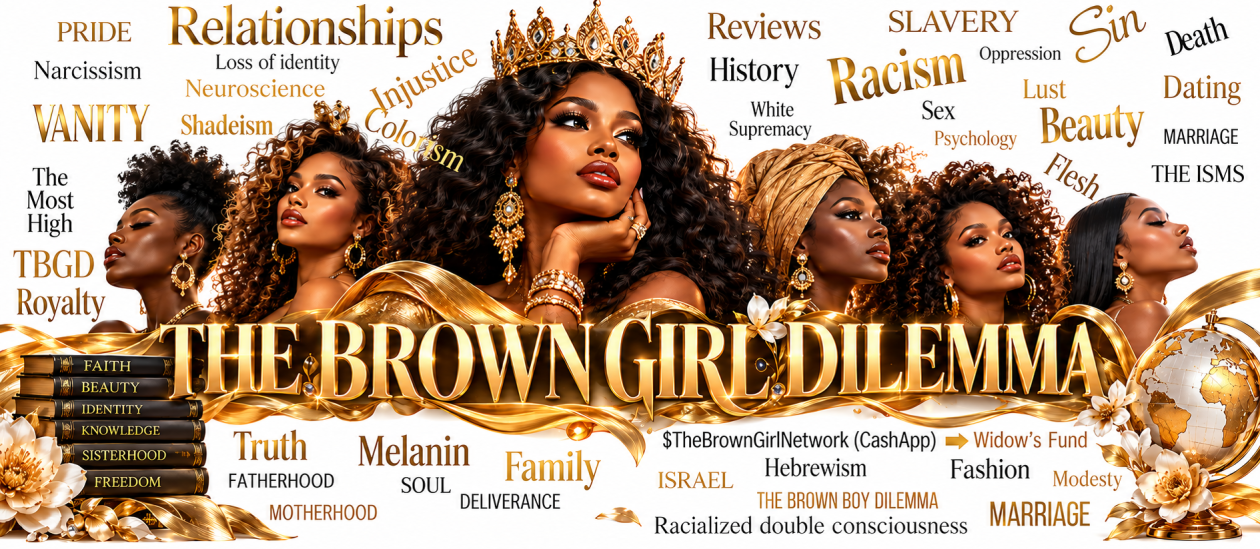

Beauty, in its truest form, is neither deficient nor deceptive; it is human perception that has been historically distorted. Across centuries, aesthetic hierarchies have been constructed through systems of power that privileged certain features while marginalizing others. These standards were not born from objective truth but from cultural dominance, colonial expansion, and economic control. As a result, what is often labeled “beauty” is less a reflection of reality and more a projection of ideology.
Distorted standards of beauty operate as social conditioning mechanisms, shaping how individuals perceive themselves and others. Through repeated exposure—via media, institutions, and interpersonal interactions—these standards become internalized, forming the basis of self-worth and desirability. This phenomenon is well-documented in social psychology, where internalized oppression and implicit bias influence identity formation and self-esteem (Elliot & Maier, 2014).
For many individuals, particularly women of African descent, these distortions manifest as a persistent sense of inadequacy. Features such as darker skin, broader noses, and tightly coiled hair have historically been devalued in Eurocentric frameworks. This devaluation is not incidental; it is systemic, rooted in a history that sought to stratify humanity along arbitrary lines of color and phenotype.
Healing begins at the point where comparison ends. Comparison thrives in environments where value is perceived as limited and hierarchical. When individuals measure themselves against externally imposed standards, they inevitably diminish their own inherent worth. Psychological research indicates that constant comparison correlates with increased anxiety, depression, and body dissatisfaction (Festinger, 1954).
To cease comparison is not to deny difference but to reject hierarchy. It is an intentional act of cognitive and spiritual resistance. By disengaging from the compulsion to measure oneself against others, individuals create space for self-acceptance and authenticity. Healing, therefore, is not passive; it is an active dismantling of false narratives.
The theological dimension of beauty offers a corrective lens. Scripture affirms that humanity was created in the image of God (Genesis 1:27, KJV), suggesting that all variations of human appearance carry divine intentionality. This includes dark skin, which has often been excluded from dominant representations of beauty and divinity.
God did not overlook dark beauty; rather, human systems obscured it. The absence of representation is not evidence of absence in creation. Historical and biblical scholarship reveals a diversity of peoples and appearances throughout sacred texts, challenging monolithic depictions of holiness and worth.
Dark beauty, therefore, is not a deviation from the divine image but an expression of it. To affirm this truth is to confront centuries of theological misinterpretation that aligned whiteness with purity and darkness with inferiority. Such associations are not scriptural; they are cultural impositions.
Emotional invisibility is a lived reality for many who exist outside dominant beauty norms. It manifests as being overlooked in social, romantic, and professional contexts. This invisibility is not merely perceptual; it has measurable psychological effects, including diminished self-esteem and social withdrawal.
Sociological studies have shown that individuals who do not conform to dominant beauty standards often receive less positive social feedback, reinforcing feelings of exclusion (Hunter, 2007). This feedback loop perpetuates invisibility, making it appear as though the individual is inherently less worthy of attention or affection.
Yet emotional invisibility is not irreversible. It can be disrupted through both internal and external interventions. Internally, individuals can cultivate self-recognition, affirming their value independent of societal validation. Externally, communities and institutions can expand representation and challenge exclusionary norms.
Visibility begins with acknowledgment. When individuals see themselves reflected in media, leadership, and cultural narratives, it affirms their existence and worth. Representation is not superficial; it is foundational to psychological well-being and identity development.
Identity, however, must be reclaimed rather than curated. In an age of social media, there is a temptation to construct identity based on external validation—likes, shares, and algorithmic approval. This curated identity often aligns with dominant standards, reinforcing rather than challenging them.
Reclamation, by contrast, is an inward process. It involves returning to one’s authentic self, disentangled from imposed narratives. This process is both psychological and spiritual, requiring introspection, unlearning, and intentional affirmation.
Reclaimed identity resists commodification. It cannot be reduced to aesthetic trends or marketable features. Instead, it is rooted in history, culture, and personal experience. For individuals of African descent, this includes reconnecting with ancestral narratives that predate colonial distortions.
Cultural memory plays a critical role in this reclamation. Pre-colonial African societies possessed diverse and rich standards of beauty that celebrated a wide range of features. These standards were not hierarchical but contextual, reflecting the values and environments of specific communities.
The disruption of these standards through colonization created a void that was filled with imported ideals. Reclaiming identity, therefore, involves both remembering and reimagining—drawing from the past while creating new, inclusive frameworks for the future.
Compassion is essential in this process. Individuals navigating distorted standards often carry deep emotional wounds. These wounds require acknowledgment, not dismissal. Healing is not linear, and it cannot be rushed or forced.
Community support enhances individual healing. When people are affirmed within their communities, it counteracts negative societal messages. Collective affirmation creates a buffer against external devaluation, reinforcing a sense of belonging and worth.
Education also serves as a tool for transformation. By teaching accurate histories and diverse representations of beauty, societies can dismantle harmful narratives at their root. Knowledge empowers individuals to question and resist imposed standards.
Media, as a powerful cultural force, must be held accountable. Inclusive representation should not be treated as a trend but as a necessity. When the media reflects the true diversity of human beauty, it reshapes public perception and expands the collective imagination.
Spiritual practices can further support healing. Prayer, meditation, and scriptural study provide a framework for understanding identity beyond physical appearance. They anchor self-worth in something eternal rather than transient.
The intersection of faith and identity offers a profound source of validation. When individuals see themselves as intentionally created, their perception of beauty shifts from external approval to internal assurance. This shift is transformative.
It is important to recognize that rejecting distorted standards does not mean rejecting beauty itself. Rather, it involves redefining beauty in an inclusive, authentic, and truthful way. Beauty becomes expansive rather than restrictive.
Language plays a role in this redefinition. Words shape perception, and the terms used to describe beauty can either reinforce or dismantle bias. Intentional language fosters a more inclusive understanding of aesthetics.
The journey toward healing and reclamation is ongoing. It requires vigilance, reflection, and community engagement. There will be moments of resistance and regression, but these do not negate progress.
Ultimately, beauty is not the problem—distorted standards are. When these standards are dismantled, what remains is a more accurate, compassionate, and inclusive vision of humanity. In this vision, every shade, feature, and form is recognized as valuable.
To heal is to see clearly. To reclaim identity is to live truthfully. And to affirm beauty in all its forms is to honor the fullness of human creation.
References
Elliot, A. J., & Maier, M. A. (2014). Color psychology: Effects of perceiving color on psychological functioning in humans. Annual Review of Psychology, 65, 95–120. https://doi.org/10.1146/annurev-psych-010213-115035
Festinger, L. (1954). A theory of social comparison processes. Human Relations, 7(2), 117–140.
Hunter, M. (2007). The persistent problem of colorism: Skin tone, status, and inequality. Sociology Compass, 1(1), 237–254. https://doi.org/10.1111/j.1751-9020.2007.00006.x
The Holy Bible, King James Version. (1611). Genesis 1:27.
