Tag Archives: Entrepreneurship

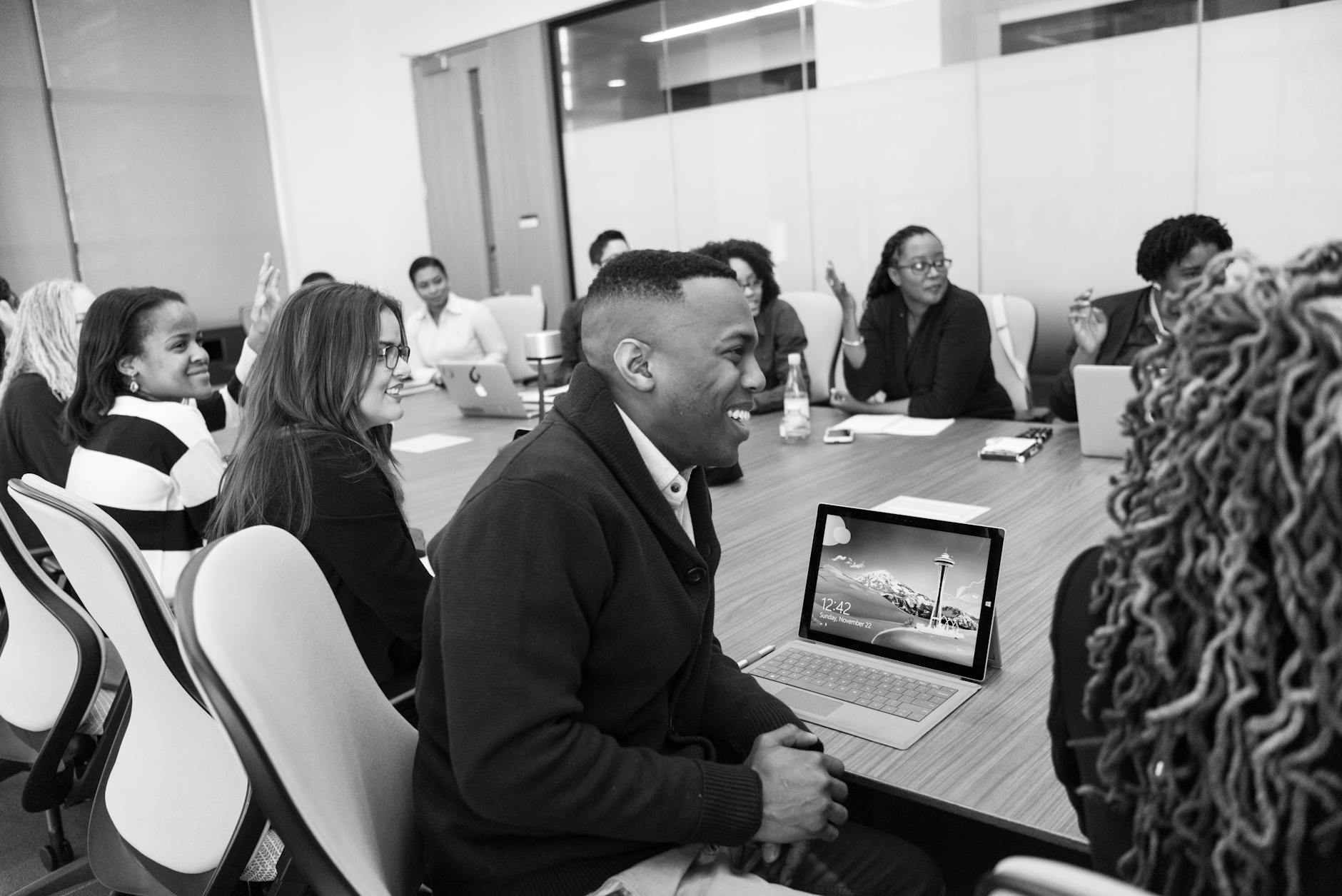
The Phenomenal Black Woman

The Black woman stands as one of the most powerful and resilient figures in modern society—an embodiment of endurance, brilliance, and sacred strength. Her story is not merely one of survival, but of transformation: turning adversity into innovation, pain into purpose, and marginalization into leadership. Across history and into the present, the Black woman continues to rise as a cultural architect, economic force, spiritual anchor, and intellectual pioneer.

Statistically and socially, Black women are among the most educated demographic groups in the United States. They consistently enroll in and complete higher education at rates surpassing many of their counterparts, often while balancing work, family, and community responsibilities. This pursuit of education is not simply for individual advancement but reflects a collective ethos—education as liberation, as legacy, as resistance against systems that once forbade their literacy.

Beyond education, Black women are also the most entrepreneurial group in America. They are starting businesses at unprecedented rates, creating brands, services, and institutions that respond directly to the needs of their communities. From beauty and wellness to finance, tech, education, and real estate, Black women are building economic ecosystems that circulate wealth and opportunity where it was historically denied.

This entrepreneurial spirit is deeply rooted in historical memory. Enslaved Black women were traders, healers, midwives, and market women long before modern capitalism recognized them as business owners. In the face of legal exclusion from wealth-building systems, they created informal economies, mutual aid societies, and cooperative networks that sustained entire communities through segregation and poverty.

The strength of the Black woman is not performative—it is structural. She is often the backbone of the family, holding emotional, financial, and spiritual labor simultaneously. She raises children, supports elders, nurtures partners, and still finds space to cultivate her own dreams. Her strength is not the absence of vulnerability, but the discipline of carrying love even while burdened.

Black women have long served as cultural carriers. Through language, food, music, fashion, and spirituality, they preserve ancestral knowledge and translate it into modern expression. From gospel hymns to hip-hop aesthetics, from soul food to wellness rituals, Black women shape culture while rarely being credited as its original architects.

Spiritually, the Black woman has been a priestess of survival. Whether through church leadership, ancestral traditions, or personal faith practices, she has held communities together through prayer, prophecy, and healing. She is often the intercessor—the one who believes when others lose faith, the one who remembers God when the world forgets her humanity.

Psychologically, Black women navigate a unique intersection of racial and gendered stress, yet they exhibit extraordinary emotional intelligence and adaptability. They master the art of code-switching, resilience, and strategic silence, often carrying invisible labor in professional and social spaces that demand excellence without offering protection.

Intellectually, Black women have been architects of major political, social, and academic movements. From abolition and civil rights to feminism, education reform, and digital activism, Black women have consistently led revolutions that they were later written out of. Their intellectual labor has reshaped law, sociology, literature, theology, and psychology.

The Black woman’s body itself has been a site of political struggle and cultural projection. Historically exoticized, commodified, hypersexualized, and criticized, her body has also been reclaimed as a symbol of beauty, fertility, creativity, and divine design. Today, Black women redefine beauty standards, celebrating melanin, natural hair, full features, and diverse body types as sacred rather than marginal.

In motherhood, Black women often mother not only their own children but entire communities. They become teachers, counselors, protectors, and advocates. Even in systems that criminalize their sons and overlook their daughters, Black women remain the primary architects of emotional and moral development.

In love and relationships, Black women are frequently expected to be endlessly loyal, patient, and forgiving, even when reciprocity is absent. Yet they continue to choose love, family, and connection, often while healing generational wounds of abandonment, instability, and emotional labor imbalance.

Economically, Black women stretch limited resources into abundance. They are financial strategists by necessity—managing households, building credit, launching side businesses, and creating generational pathways where none previously existed. They practice wealth-building not as luxury, but as survival and stewardship.

Politically, Black women are the most reliable voting bloc and one of the most influential forces in democratic movements. They organize, mobilize, educate, and protect civil rights, often without institutional power or public recognition. When social justice shifts, it is usually because Black women moved first.

Culturally, Black women shape global aesthetics. From hairstyles and slang to fashion, dance, and social media trends, Black women generate cultural capital that fuels entire industries. Yet their influence is frequently extracted, rebranded, and monetized without fair compensation or acknowledgment.

Emotionally, the Black woman is a healer. She holds space for grief, trauma, and transformation—not only her own, but others’. She listens, nurtures, advises, and absorbs emotional pain while rarely being given the same care in return.

Historically, the Black woman has been both invisible and indispensable. She built America’s domestic, agricultural, and caregiving infrastructure while being excluded from its rewards. Yet she continues to rise, not waiting for permission to thrive.

The modern Black woman is redefining femininity itself. She is soft and strong, spiritual and strategic, nurturing and ambitious. She refuses false binaries between vulnerability and power, choosing instead to embody both with grace.

An ode to the Black woman is an ode to life itself. She is the womb of culture, the memory of nations, the architect of futures not yet seen. Her existence is not an accident of history—it is a divine intervention in a world that tried to erase her.

The phenomenal Black woman is not exceptional because she overcame suffering—she is exceptional because she transformed suffering into legacy. She is the most educated, the most entrepreneurial, the most spiritually resilient, and one of the most culturally influential forces on earth. She is not just surviving history—she is writing it.

References

American Association of University Women. (2023). Fast facts: Women of color in higher education. https://www.aauw.org/resources/article/fast-facts-woc-higher-ed/

Anderson, M., & Perrin, A. (2018). Black women and technology adoption. Pew Research Center. https://www.pewresearch.org/internet/2018/01/25/blacks-and-technology-adoption/

Collins, P. H. (2000). Black feminist thought: Knowledge, consciousness, and the politics of empowerment (2nd ed.). Routledge.

Crenshaw, K. (1991). Mapping the margins: Intersectionality, identity politics, and violence against women of color. Stanford Law Review, 43(6), 1241–1299. https://doi.org/10.2307/1229039

Federal Reserve Bank of Kansas City. (2021). The state of women-owned businesses. https://www.kansascityfed.org/research/economic-review/women-owned-businesses/

Georgetown University Center on Education and the Workforce. (2020). A profile of Black women in the labor market. https://cew.georgetown.edu/cew-reports/black-women/

Giddings, P. (1984). When and where I enter: The impact of Black women on race and sex in America. HarperCollins.

McKinsey & Company. (2022). Black women are ambitious. But they’re held back at work. https://www.mckinsey.com/featured-insights/diversity-and-inclusion/black-women-are-ambitious-but-theyre-held-back-at-work

National Women’s Business Council. (2023). Black women entrepreneurs: Driving innovation and economic growth. https://nwbc.gov/

Pew Research Center. (2021). Black Americans are more likely than others to say family is central to their identity. https://www.pewresearch.org/social-trends/2021/03/25/

Smith, J. A., & Patton, L. D. (2016). Postracial rhetoric and the Black female student. Journal of College Student Development, 57(6), 645–661. https://doi.org/10.1353/csd.2016.0064

U.S. Census Bureau. (2022). Women-owned businesses by race and ethnicity. https://www.census.gov/programs-surveys/sbo.html

U.S. Department of Labor. (2023). Women in the labor force: A databook. https://www.dol.gov/agencies/wb/data

Walker, A. (1983). In search of our mothers’ gardens: Womanist prose. Harcourt Brace Jovanovich.

World Economic Forum. (2020). The power of Black women in the U.S. economy. https://www.weforum.org/reports/

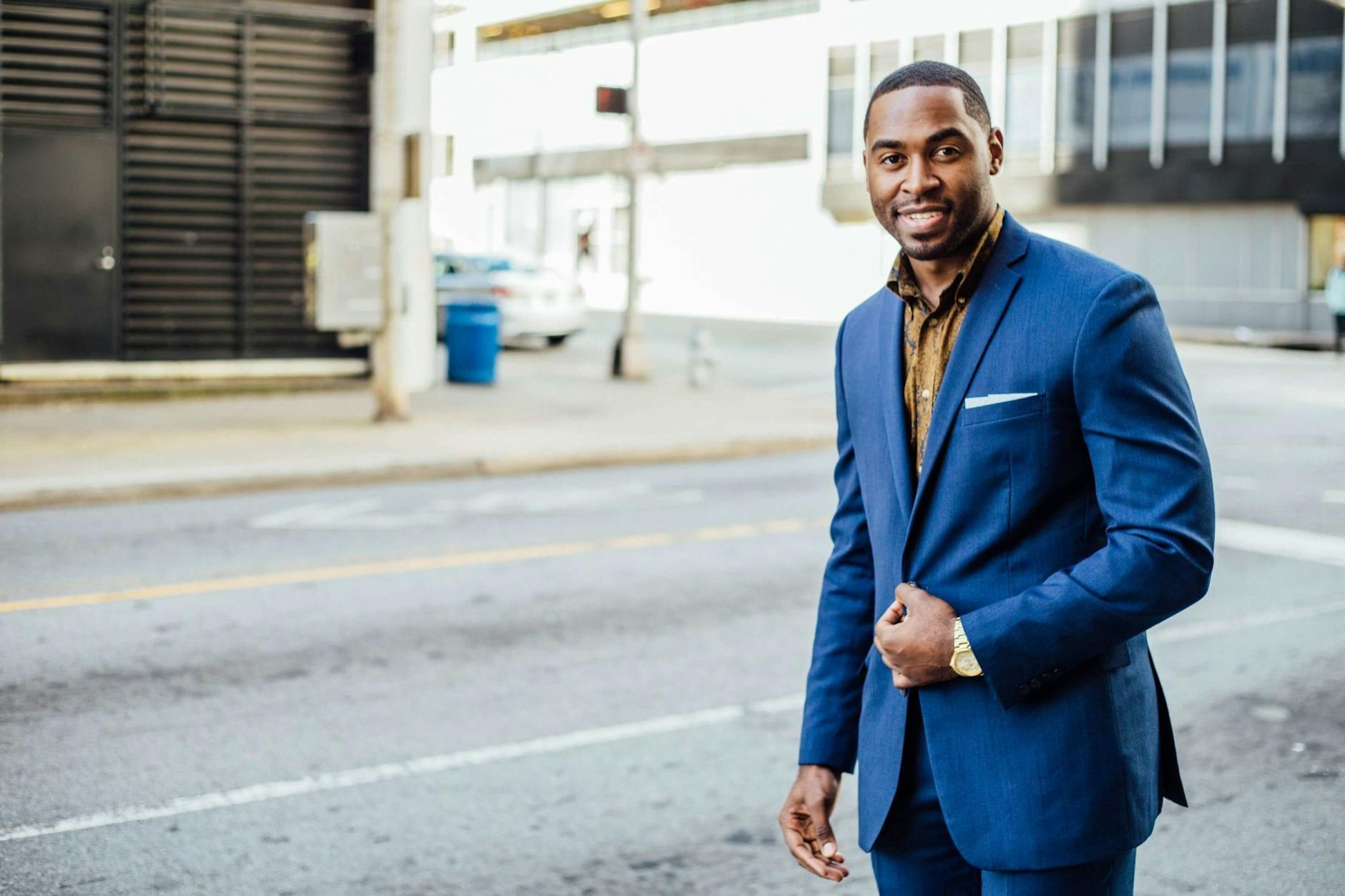
The Phenomenal Black Man

The Black man stands as one of the most complex and misunderstood figures in modern society—shaped by historical trauma, systemic barriers, and cultural misrepresentation, yet continually producing excellence, innovation, and leadership. His story is not one of deficiency, as dominant narratives often suggest, but of resilience: surviving institutions that were never designed for his success while still cultivating identity, dignity, and generational hope.

Historically, Black men were foundational to the construction of the modern world. From forced labor during enslavement to skilled craftsmanship, engineering, agriculture, and military service, Black men have contributed materially to global economies while being excluded from the political and financial rewards of their labor. This historical displacement from power did not erase their leadership capacity—it delayed its recognition.

In education, Black men face some of the most significant structural barriers of any demographic group, including school discipline disparities, underfunded institutions, and racialized tracking systems. Yet despite these obstacles, Black men continue to excel in higher education, producing scholars, scientists, theologians, engineers, physicians, and legal minds who challenge the myth of intellectual inferiority.

The intellectual legacy of Black men includes some of the most influential thinkers of modern history. Figures such as W.E.B. Du Bois, James Baldwin, Martin Luther King Jr., Malcolm X, Frantz Fanon, and Carter G. Woodson reshaped sociology, political theory, psychology, theology, and cultural studies. Their work remains foundational to understanding race, power, identity, and human liberation.

Economically, Black men are increasingly asserting entrepreneurial agency. From tech startups and financial services to fashion, real estate, sports management, and media production, Black men are building independent economic infrastructures. Entrepreneurship has become both a form of resistance to labor market discrimination and a strategy for generational wealth creation.

The Black man is also a cultural architect. Music, fashion, language, and global aesthetics have been profoundly shaped by Black male creativity—from jazz and blues to hip-hop, from streetwear to luxury fashion, from spoken word to film and digital media. Black men continuously produce cultural capital that fuels global industries.

Spiritually, the Black man has served as a prophet, preacher, teacher, and revolutionary theologian. The Black church, Islamic movements, and Afrocentric spiritual systems have provided Black men with frameworks for moral leadership, communal healing, and resistance to psychological colonization. Faith has often been a survival technology in a hostile world.

Psychologically, Black men navigate a unique terrain of racialized masculinity. They are frequently socialized to suppress vulnerability, emotional expression, and mental health needs in order to survive in environments that criminalize their bodies and silence their pain. Yet Black men are increasingly reclaiming emotional literacy, therapy, and self-awareness as tools of empowerment.

In family life, the narrative of the “absent Black father” has been one of the most damaging cultural myths. Research consistently shows that Black fathers are among the most involved fathers across racial groups when structural barriers such as incarceration and economic exclusion are accounted for. Black men actively participate in caregiving, emotional bonding, and moral instruction.

The Black man’s body has historically been framed as a site of fear and criminality. From slavery patrols to modern policing, Black male bodies have been surveilled, punished, and politicized. Yet the Black man continues to reclaim his body as sacred—through health, fitness, discipline, self-care, and spiritual grounding.

Politically, Black men have been central to liberation movements worldwide. From abolition and anti-colonial struggles to civil rights and Pan-Africanism, Black men have organized, theorized, and mobilized resistance against racial oppression. Their political consciousness has shaped democratic ideals globally.

The Black man’s relationship to labor has been one of both exploitation and mastery. Despite being overrepresented in physically demanding and dangerous occupations, Black men have also excelled in professional, technical, and intellectual fields, redefining what Black masculinity looks like beyond brute survival.

In relationships and intimacy, Black men are often burdened by stereotypes of emotional detachment, hypersexuality, or instability. Yet many Black men actively seek emotional depth, spiritual connection, and partnership grounded in respect and mutual growth. They are redefining masculinity beyond dominance toward responsibility and presence.

Culturally, Black men serve as intergenerational bridges. They carry ancestral memory, oral history, and survival strategies passed down through fathers, grandfathers, and community elders. Their identity is not isolated—it is collective, historical, and deeply rooted in lineage.

The modern Black man is increasingly invested in self-development. He studies financial literacy, mental health, spirituality, fitness, and purpose. He reads, builds, mentors, and heals. This shift represents a quiet revolution in Black male consciousness.

The Black man is also a mentor and protector. Whether through coaching, teaching, community organizing, or informal leadership, Black men invest in the next generation, offering guidance in environments where institutional support is often absent.

Despite structural violence, Black men continue to love—deeply, creatively, and spiritually. They love their families, their communities, their cultures, and their futures. Love becomes an act of resistance in a world that expects their emotional absence.

The phenomenal Black man is not defined by pathology but by possibility. He is a survivor of historical trauma and a carrier of ancestral wisdom. He is a thinker, a builder, a father, a lover, a leader, and a visionary.

An ode to the Black man is an ode to perseverance. He exists in the tension between vulnerability and strength, memory and future, pain and purpose. His presence is not accidental—it is historical, spiritual, and revolutionary.

The phenomenal Black man is not waiting to be redeemed by society—he is redeeming himself through consciousness, discipline, faith, and collective responsibility. He is not a problem to be solved, but a force to be understood, honored, and supported.


References

American Psychological Association. (2018). Boys and men of color: Implications for academic success. https://www.apa.org/monitor/2018/07/boys-men-color

Anderson, E. (1999). Code of the street: Decency, violence, and the moral life of the inner city. W. W. Norton.

Bonilla-Silva, E. (2014). Racism without racists: Color-blind racism and the persistence of racial inequality in America (4th ed.). Rowman & Littlefield.

Du Bois, W. E. B. (1903). The souls of Black folk. A.C. McClurg & Co.

Edin, K., Tach, L., & Mincy, R. (2009). Claiming fatherhood: Race and the dynamics of paternal involvement. The ANNALS of the American Academy of Political and Social Science, 621(1), 149–177. https://doi.org/10.1177/0002716208325548

Fanon, F. (1952). Black skin, white masks. Grove Press.

Harper, S. R. (2012). Black male student success in higher education. ASHE Higher Education Report, 38(3), 1–140. https://doi.org/10.1002/aehe.20002

National Center for Education Statistics. (2022). Status and trends in the education of racial and ethnic groups. https://nces.ed.gov/

Pew Research Center. (2018). Black fathers more involved than other dads. https://www.pewresearch.org/social-trends/2018/06/14/fathers-day-2018/

U.S. Department of Justice. (2021). Contacts between police and the public. https://bjs.ojp.gov/

U.S. Small Business Administration. (2023). Black-owned business statistics. https://www.sba.gov/

Woodson, C. G. (1933). The mis-education of the Negro. Associated Publishers.

World Economic Forum. (2020). The future of jobs report. https://www.weforum.org/reports/

Entrepreneurship as a Tool for Independence.

Photo by nappy on Pexels.com

Entrepreneurship is more than an economic endeavor; it is a philosophy of independence, self-determination, and empowerment. In societies where systemic oppression has historically limited access to resources and opportunities, entrepreneurship becomes a means of liberation. For the Black community in particular, entrepreneurship has served as both a survival strategy and a path to autonomy. This essay explores entrepreneurship as a tool for independence through historical, psychological, spiritual, and economic lenses.

Historical Foundations of Entrepreneurship and Independence

Historically, Black entrepreneurship has played a critical role in resisting oppression. During slavery, enslaved Africans often engaged in informal economies—trading goods, crafts, and services to supplement survival and assert a degree of autonomy (Walker, 2009). Following emancipation, many African Americans established independent businesses, ranging from barbershops and tailoring shops to banks and insurance companies. One of the most famous examples is Tulsa’s Greenwood District, commonly referred to as Black Wall Street. This thriving community symbolized financial independence and collective empowerment before its destruction during the 1921 Tulsa Race Massacre (Hill, 2021).

These examples demonstrate that entrepreneurship has historically been a means of circumventing racial barriers. In environments where mainstream systems excluded Black people from wealth accumulation, business ownership became a vital tool for independence and survival.

Psychological Empowerment through Entrepreneurship

Beyond economics, entrepreneurship fosters psychological independence. Psychologists argue that autonomy, competence, and purpose are core human needs (Deci & Ryan, 2000). By creating one’s own business, individuals are able to reclaim control over their work, exercise creativity, and establish a sense of agency. This is especially significant for those in marginalized communities, where systemic racism has historically stripped individuals of self-worth and opportunity (Franklin & Moss, 2018).

Entrepreneurship, therefore, functions as a psychological corrective—helping individuals move from a survival mindset to a growth mindset. The entrepreneur learns resilience, adaptability, and vision, qualities that counteract the generational trauma of oppression. Proverbs 22:29 (KJV) highlights the dignity of mastery and skill: “Seest thou a man diligent in his business? he shall stand before kings; he shall not stand before mean men.” Entrepreneurship thus not only provides sustenance but restores dignity and confidence.

Spiritual Dimensions of Independence

The biblical perspective frames entrepreneurship as stewardship and a means of honoring God. Scripture consistently emphasizes work, diligence, and the blessings of independence. Ecclesiastes 3:13 (KJV) declares, “Every man should eat and drink, and enjoy the good of all his labour, it is the gift of God.” Entrepreneurship allows individuals to embrace this divine gift by transforming labor into ownership rather than dependency.

Furthermore, Deuteronomy 28 outlines blessings tied to obedience, including economic prosperity and independence: “And the Lord shall make thee the head, and not the tail; and thou shalt be above only, and thou shalt not be beneath” (Deut. 28:13, KJV). Entrepreneurship, when practiced with integrity and stewardship, reflects these principles of leadership, headship, and generational blessing.

Entrepreneurship and Community Independence

While entrepreneurship fosters individual independence, its impact on communities is equally transformative. Businesses that circulate wealth within Black communities strengthen economic independence and resilience. According to research, every dollar spent in a Black-owned business circulates within the community far less than in other groups due to systemic economic exclusion (DuBois, 1903/2017; Anderson, 2017). Increasing entrepreneurship helps reverse this cycle, promoting collective empowerment and reducing dependence on external systems that often perpetuate inequality.

This community-centered entrepreneurship is in line with the biblical mandate to care for widows, orphans, and the marginalized (James 1:27, KJV). Independence through entrepreneurship is not about selfish gain but about establishing sustainable systems of empowerment that uplift entire families and neighborhoods.

Entrepreneurship in the Digital Age

In today’s economy, entrepreneurship increasingly involves technology, global networks, and digital innovation. Digital platforms lower barriers to entry, allowing entrepreneurs to bypass traditional gatekeepers such as banks and corporations. For example, Black entrepreneurs are increasingly leveraging e-commerce, social media, and digital services to reach global audiences and build scalable businesses (Gore & White, 2018).

This shift represents a new form of independence, where ownership extends beyond physical spaces into digital economies. By embracing digital entrepreneurship, individuals not only gain autonomy but also position themselves to create generational wealth.

Case Studies of Black Entrepreneurs and Independence

Oprah Winfrey: Media Ownership and Cultural Independence

Oprah Winfrey’s career demonstrates how entrepreneurship can transcend barriers of poverty, race, and gender to create unparalleled independence. Born into poverty in rural Mississippi and raised in difficult circumstances, Winfrey faced systemic racism, gender bias, and personal trauma. Yet, she leveraged her gifts in communication to build a media empire that extended far beyond her role as a talk show host. By founding Harpo Productions in 1986, Oprah took ownership of her intellectual property, gaining control over her brand, creative direction, and financial future.

Her entrepreneurial independence translated into cultural independence. Unlike many entertainers who remain dependent on networks and studios, Oprah’s ownership allowed her to tell stories that reflected authenticity, spirituality, and empowerment. This independence enabled her to create O, The Oprah Magazine, OWN: The Oprah Winfrey Network, and philanthropic initiatives such as the Oprah Winfrey Leadership Academy for Girls in South Africa. Her career exemplifies Proverbs 31:16 (KJV): “She considereth a field, and buyeth it: with the fruit of her hands she planteth a vineyard.” Oprah’s vineyard has been both financial and cultural, cultivating independence not just for herself but for others who draw strength from her example.

Daymond John: Fashion Entrepreneurship and Cultural Expression

Daymond John’s story reveals how entrepreneurship allows cultural independence and representation. In the early 1990s, growing up in Queens, New York, John observed the lack of representation in mainstream fashion for urban youth. Out of this gap, he founded FUBU (For Us, By Us), which became an international clothing brand symbolizing Black pride and cultural ownership. By sewing hats and shirts at home and selling them in his neighborhood, John turned a grassroots idea into a billion-dollar enterprise.

FUBU was not just a fashion label; it was a declaration of independence. It created a platform where Black identity and style were celebrated on global stages, shifting cultural power and financial gains toward the community that inspired it. Today, John extends this independence into mentorship, serving as an investor and advisor on Shark Tank. By investing in others, he demonstrates that entrepreneurship is cyclical—independence must be multiplied and passed forward. His career reflects Matthew 25:21 (KJV), where the faithful steward is rewarded: “Well done, thou good and faithful servant: thou hast been faithful over a few things, I will make thee ruler over many things.”

Madam C.J. Walker: Pioneering Economic Freedom for Black Women

Madam C.J. Walker, often cited as the first self-made Black woman millionaire in America, embodies how entrepreneurship historically functioned as liberation. Born Sarah Breedlove in 1867, the daughter of formerly enslaved parents, Walker faced the dual oppressions of racism and sexism. She began developing hair-care products for Black women after struggling with her own scalp disorders, eventually founding the Madam C.J. Walker Manufacturing Company.

Her company was revolutionary not just in its products but in its employment model. Walker trained thousands of Black women as sales agents, enabling them to achieve financial independence at a time when domestic service was the primary employment option available. Her wealth also translated into philanthropy, supporting educational institutions like Tuskegee Institute and movements for racial justice. Walker’s life illustrates Proverbs 14:1 (KJV): “Every wise woman buildeth her house: but the foolish plucketh it down with her hands.” By building her business, Walker built houses, schools, and legacies of independence for countless women.

Robert F. Smith: Redefining Independence through Finance and Philanthropy

Robert F. Smith, founder and CEO of Vista Equity Partners, represents entrepreneurship at the highest levels of finance and global investment. Born in Denver, Colorado, in 1962, Smith studied engineering before transitioning into finance, where he recognized the potential of investing in software companies. Today, Vista Equity Partners manages tens of billions in assets, making Smith one of the wealthiest African Americans in history.

Smith’s independence is both financial and philanthropic. In 2019, he made headlines by paying off the student loan debt of Morehouse College’s graduating class, a gesture that symbolized not only generosity but liberation from financial bondage. His actions underscore the idea that entrepreneurial independence is not meant to be hoarded but shared to empower others. In a biblical sense, his philanthropy echoes Galatians 5:13 (KJV): “For, brethren, ye have been called unto liberty; only use not liberty for an occasion to the flesh, but by love serve one another.” Smith’s example demonstrates that true independence is measured by how it uplifts the collective.

Challenges to Independence

Despite its potential, entrepreneurship is not free from challenges. Access to capital remains a significant barrier, with studies showing that Black entrepreneurs are denied loans at higher rates and face limited venture capital investment (Fairlie & Robb, 2008). Structural racism, market discrimination, and lack of mentorship further restrict opportunities. These challenges highlight that while entrepreneurship can be a tool for independence, systemic reforms are necessary to level the playing field.

Nevertheless, entrepreneurship teaches perseverance, and overcoming such obstacles strengthens resilience. As James 1:4 (KJV) reminds us, “But let patience have her perfect work, that ye may be perfect and entire, wanting nothing.”

Conclusion

Entrepreneurship serves as one of the most powerful tools for independence, both individually and collectively. Historically, it has allowed marginalized groups to carve out autonomy in hostile environments. Psychologically, it instills confidence, creativity, and resilience. Spiritually, it aligns with biblical principles of stewardship, diligence, and leadership. Economically, it circulates wealth and strengthens communities. While challenges remain, entrepreneurship continues to be a pathway toward liberation and a means of building generational prosperity. For those seeking independence, entrepreneurship is not merely a career choice but a strategy of survival, empowerment, and faith-driven advancement. The stories of Oprah Winfrey, Daymond John, Madam C.J. Walker, and Robert F. Smith illustrate how entrepreneurship functions as a tool for independence across eras and industries. Each demonstrates a unique dimension of independence—cultural, financial, communal, or philanthropic—while collectively affirming that entrepreneurship is a path of liberation. Historically, it enabled survival in hostile systems; today, it fuels innovation, generational wealth, and community empowerment. Rooted in creativity, resilience, and stewardship, entrepreneurship continues to reflect the biblical promise of being “the head and not the tail” (Deut. 28:13, KJV). As these entrepreneurs show, independence through entrepreneurship is not simply personal—it is a legacy, a testimony, and a strategy for collective freedom.


References

Anderson, C. (2017). PowerNomics: The national plan to empower Black America. PowerNomics Corporation of America.

Deci, E. L., & Ryan, R. M. (2000). The “what” and “why” of goal pursuits: Human needs and the self-determination of behavior. Psychological Inquiry, 11(4), 227–268.

DuBois, W. E. B. (2017). The souls of Black folk. Oxford University Press. (Original work published 1903)

Fairlie, R. W., & Robb, A. M. (2008). Race and entrepreneurial success: Black-, Asian-, and White-owned businesses in the United States. MIT Press.

Franklin, J. H., & Moss, A. A. (2018). From slavery to freedom: A history of African Americans (9th ed.). McGraw-Hill.

Hill, M. L. (2021). We still here: Pandemic, policing, protest, and possibility. Haymarket Books.

Walker, J. E. K. (2009). The history of Black business in America: Capitalism, race, entrepreneurship (Vol. 1 & 2). UNC Press.

Gore, D., & White, J. (2018). Black digital entrepreneurship and empowerment in the 21st century. Journal of Business and Economic Development, 3(2), 45–54.

Entrepreneurship in the Black Community.

The Hustle and the Heart: Blending definitions, data, real voices, practical insights, and broader purpose.


Photo by Christina Morillo on Pexels.com

What Is Entrepreneurship?

At its core, entrepreneurship is the act of identifying and pursuing opportunities beyond the resources currently controlled. Harvard scholar Howard Stevenson defines it as “the pursuit of opportunity beyond resources controlled,” while Stanford frames it as striking out on an original path to create a business, assuming risk, and standing to reap rewards.Investopedia.

The term itself, “entrepreneur,” comes from the French entreprendre, meaning “to undertake.” Early theorists like Jean-Baptiste Say and later scholars such as Schumpeter emphasized entrepreneurs as pivotal agents of innovation, economic dynamism, and creative disruption.Investopedia


How Does It Affect the Black Community?

Entrepreneurship within the Black community carries profound social and economic significance:

  • Economic Contribution: Black-owned businesses contribute significantly—over 5 million Black entrepreneurs represent around 14.5% of all business owners, generating $207 billion in economic impact and providing 1.3 million jobs.Association for Enterprise Opportunity
  • Recent Growth Trends: From 2017 to 2022, employer businesses owned by Black Americans grew by 56.9%, adding more than 70,000 new employer firms.Brookings
  • Ongoing Underrepresentation: Yet, the share of Black-owned employer firms remains low—just 3.3% compared to a 14.4% share of the population.BrookingsPew Research Center
  • Financial Disparities: Black women lead new ventures, but face revenue gaps—average yearly revenue for Black-owned businesses stands significantly lower than their non-minority counterparts ($58k vs. $170k).WifiTalentsMarketing Scoop
  • Barriers to Capital: Nearly half of Black entrepreneurs cite difficulty accessing funding. Only 1% of Black-owned businesses receive bank loans in their first year, compared to 7% for white-owned firms.Expert BeaconMarketing Scoop

Top Black Entrepreneurs Leading the Way

Here are several prominent names making waves:

  • Kathryn Finney – Founder of Genius Guild, a $20 million venture fund for Black entrepreneurs, and The Doonie Fund, supporting Black women founders.Wikipedia
  • Derrius Quarles – Co-founder of BREAUX Capital (fintech for Black men) and Million Dollar Scholar, helping students secure scholarships. He’s been celebrated by outlets including CNN and recognized with awards like Obama’s Points of Light.Wikipedia
  • Eric Collins – Influential UK investor, author, and host of The Money Maker, dedicated to investing in underrepresented entrepreneurs.Wikipedia

Their work underscores the intersection of entrepreneurship, empowerment, and community impact.


The Science of Money: Financial Foundations for Entrepreneurs

An entrepreneurial journey is tied deeply to financial understanding:

  • Bootstrapping & Human Capital: Entrepreneurs often rely on their own time, ideas, and minimal funds—a strategy aligned with the definition of entrepreneurship that includes starting beyond available resources.Investopedia
  • Capital Access Disparities:

These gaps reflect structural inequities that hinder access to capital and growth.


Tips on Becoming an Entrepreneur

  • Consistency & Mindset: As one aspiring Black entrepreneur shared: “Mindset and consistency. Those two dynamics have affected my trajectory… more often than not… imposter syndrome.”Reddit+1
  • Build Skills: Know your competition, audience, and practice time management and clear short-term goals.Reddit
  • Leverage Alternative Capital: Seek credit unions, community development financial institutions (CDFIs), online lenders, or funds focused on underserved entrepreneurs.BrookingsAfricans in America
  • Join Support Ecosystems: Entrepreneurship centers, community networks, and mentorship platforms provide strategic support and guidance.

How Many Black People Become Entrepreneurs Annually?

  • New Employer Firms: Between 2017 and 2022, over 70,000 new Black-owned employer businesses launched.Brookings
  • Existing Scale: In 2022, there were close to 195,000 majority Black-owned firms, a steep rise from 124,000 in 2017.Pew Research Center

These numbers highlight significant growth—though the overall representation remains comparatively modest.


What Does It Take & What Is the Success Rate?

Becoming a successful entrepreneur requires:

  • Resourcefulness in bootstrapping ventures.
  • Financial savvy with money management and capital strategies.
  • Resilience to overcome systemic hurdles and self-doubt.
  • Vision and leadership, especially when scaling to employer-level businesses.

Data on survival shows challenges:

  • Sole proprietorships, which account for 96% of Black-owned businesses, have high failure rates—22% close within a year, compared to 13% for white counterparts.Brookings

Why Is It Important?

Entrepreneurship in Black communities enriches at multiple levels:

  • Empowerment: It’s a pathway to autonomy, wealth creation, and breaking generational cycles.
  • Representation: Entrepreneurs like Finney, Quarles, and Collins serve as role models and expand perceptions of who can lead.
  • Economic Impact: If business ownership matched population share, Black-owned businesses could add $824 billion and 6.3 million jobs nationwide.Brookings
  • Social Innovation: Many Black founders address community needs—whether through financial inclusion, education access, or cultural platforms.

Voices of Experience

A real-life voice of resilience and reflection from Reddit:

“Even when I’m talking about something I know … I still feel inadequate… imposter syndrome.”
“Racism… people don’t see you as skilled enough—they dismiss you.”Reddit+1

These sentiments echo across many aspiring entrepreneurs, underscoring the emotional and systemic battles faced.


Conclusion

Entrepreneurship for Black communities is about more than business—it blends hustle, heart, vision, and transformation. While growth is undeniable, barriers persist. Success requires financial strategy, foundational resilience, access to capital and networks, and the courage to lean into identity and innovation. As more Black entrepreneurs rise, they widen the path for future generations—creating not only economic value, but lasting cultural and systemic shifts.

*********************References**********************

Entrepreneurial Definitions & Theory

  • Investopedia: Defines entrepreneurship as opportunity pursuit beyond controlled resources and traces its etymological roots to French and early theorists like Say and Schumpeter. USAFacts (embedded via related Investopedia sources)

2. Scale, Growth & Economic Impact of Black Entrepreneurship

  • U.S. Census Annual Business Survey / Pew Research Analysis (2022): About 194,585 majority Black-owned firms (≈3% of U.S. companies), marking a leap from 124,000 in 2017; gross revenues rose 66%, from $127.9 billion to $211.8 billion. These businesses employed ~1.6 million people with $61.2 billion in payroll. Pew Research Center
  • USAFacts (2021): Recorded 161,031 Black-owned businesses employing over 1.4 million, generating $206.1 billion. Growth since 2017 outpaced all U.S. businesses. USAFacts
  • Brookings Institute: From 2017–2022, Black-owned employer-businesses grew by 56.9%—adding 70,000 new firms and $212 billion in revenue; Black entrepreneurs lag behind population parity. Brookings
  • Governing.com: Employer firms owned by Black entrepreneurs rose from 2.2% (2017) to 3.3% (2022), albeit still short of the 14.4% Black population share. Governing
  • EPOP fact sheet (2024): ~5 million Black entrepreneurs in the U.S. (14.5% of all business owners); substantial economic impact including $207 billion in revenue and 1.3 million jobs. EPOP

3. Black Women & Capital Barriers

  • Business Insider & LendingTree: In 2022, Black-owned businesses made up 3.3% of all businesses—a 22% year-over-year increase; 39.1% of Black-owned businesses are women-run (well above the general average), but access to capital remains severely limited. LendingTreeInc.com
  • SBA small business data / SBA infographic (2024): 3.5 million Black-owned businesses in U.S., employing over 1.2 million—reflecting annual employment growth over 7%. Office of Advocacy
  • Wikipedia on Black Women Entrepreneurs: Highlights historical exclusion from capital; 75% of Black women founders cite funding access as a barrier, relying heavily on personal savings or credit. Wikipedia

4. Example Black Entrepreneurs

  • Kathryn Finney: Launched Genius Guild, a $20M+ venture fund targeting scalable Black-led businesses; published Build the Damn Thing (Wall Street Journal bestseller). Wikipedia
  • Derrius Quarles: Co-founder of BREAUX Capital, a fintech platform for Black men focusing on collective investing and financial wellness; recognized on Inc.’s 30 Under 30. Wikipedia

5. Broader Context & Initiatives

  • Time / Erin Horne McKinney: Leading entrepreneurship efforts via HBCUs—founding a center at Howard University to support Black founders amid persistent funding gaps. TIME

6. National Trends & Growth Drivers

  • AP News (2023): Small business applications hit record highs—5.5 million new filings, with Black entrepreneurs accounting for about 6% of new business owners, doubling from pre-pandemic rates. AP News
  • Time Magazine: Noted a 19% surge in Black-owned businesses, outpacing national averages, alongside increases in household wealth among Black Americans. TIME
  • Axios (Indianapolis Focus): Marion County (Indy) saw remarkable gains in new Black business applications and revenue—yet capital access remains a challenge. Axios

Summary Table

TopicSource & Key Insight
Scale & GrowthCensus, Pew, USAFacts, Brookings, Governing, EPOP
Women-led BusinessesLendingTree, SBA data, Wikipedia on Black women entrepreneurs
Entrepreneur ExamplesKathryn Finney, Derrius Quarles
Capital & Institutional SupportTime (HBCU initiatives)
Broader TrendsAP News, Time, Axios (local trends)

Building Economic Legacy

A Comprehensive Guide to Entrepreneurship, Business Structures, and Wealth Creation for Black Entrepreneurs.

Photo by Tom Fisk on Pexels.com

The pursuit of economic independence has long been recognized as a pathway to freedom, stability, and generational wealth. For African Americans, entrepreneurship holds the potential to counter historical economic exclusion and build lasting community assets. However, starting a business requires more than ambition—it demands strategic planning, legal knowledge, and financial literacy. This essay explores the steps to start a business, the distinctions between entrepreneurship and business ownership, the formation of legal entities such as LLCs and C-Corporations, business credit development, and the importance of structures such as trusts for long-term protection.


I. Understanding Entrepreneurship vs. Business Ownership

Although often used interchangeably, entrepreneurship and business ownership are distinct. Entrepreneurship is the process of identifying, developing, and bringing a new idea, product, or service to market—often involving innovation and risk-taking (Drucker, 1985). Business ownership, in contrast, may involve operating an established business model without necessarily creating something new (Scarborough & Cornwall, 2018). An entrepreneur may be a business owner, but not all business owners are entrepreneurs.

  • Entrepreneurship = Innovation + Risk + Vision.
  • Business Ownership = Management + Profitability + Stability.

For Black entrepreneurs, understanding this distinction is key in determining whether the goal is to disrupt industries with new ideas or to operate a sustainable, income-generating business.


II. What It Takes to Start a Business

Starting a business requires several key steps:

  1. Concept Development – Defining the value proposition and target market.
  2. Market Research – Studying competitors, industry trends, and customer needs (Kotler & Keller, 2016).
  3. Business Planning – Creating a written plan with goals, budgets, and operational strategies.
  4. Legal Structure Selection – Choosing the appropriate entity (LLC, C-Corp, S-Corp, sole proprietorship).
  5. Funding – Securing startup capital through personal savings, loans, grants, or investors.
  6. Compliance – Registering the business, obtaining licenses, and meeting regulatory requirements.
  7. Marketing and Sales – Building a brand and generating revenue streams.

III. Forming an LLC vs. C-Corporation

Limited Liability Company (LLC)

  • Flexible structure, minimal formalities, and pass-through taxation.
  • Best for small-to-medium businesses or those seeking asset protection with simplified operations (IRS, 2024).
  • Owners (members) are not personally liable for debts.
  • Can hold assets such as real estate, intellectual property, and multiple business ventures under one LLC.

C-Corporation

  • Separate legal entity with potential for unlimited shareholders.
  • Subject to corporate tax and shareholder tax (double taxation).
  • Attracts investors more easily, often used by high-growth startups seeking venture capital (Romano, 2017).
  • Greater administrative complexity but better suited for large-scale growth.

Which is Better?
For a first-time Black entrepreneur, an LLC may be more cost-effective and easier to manage. However, for scaling nationally or going public, a C-Corp provides more funding opportunities.


IV. Obtaining an Employer Identification Number (EIN)

The EIN is a unique nine-digit number issued by the IRS to identify a business for tax purposes. It is essential for:

  • Opening a business bank account.
  • Filing taxes.
  • Applying for business credit and loans.
  • Hiring employees.

V. Building Business Credit

Business credit separates personal and business finances, protecting personal assets and increasing funding options. Steps to build business credit include:

  1. Register the business with an EIN.
  2. Open a business bank account.
  3. Establish trade lines with vendors.
  4. Obtain a D-U-N-S Number from Dun & Bradstreet.
  5. Pay bills on time to build a positive payment history (Anderson, 2021).

VI. Should You Rent a Building?

Renting a commercial space can enhance credibility, provide a customer-facing location, and separate business from personal life. However, virtual offices or shared workspaces can reduce overhead costs, especially during the early stages. The decision depends on the business model, budget, and customer interaction needs.


VII. Trusts and Asset Protection

For entrepreneurs building generational wealth, forming a trust can protect business assets, reduce estate taxes, and ensure that ownership passes smoothly to heirs (Madoff, 2010). An LLC can be owned by a trust, offering maximum privacy and protection.


VIII. Supporting Black Men in Business

Black male entrepreneurs face systemic barriers such as limited access to startup capital, lower approval rates for loans, and discriminatory lending practices (Fairlie, 2020). Solutions include:

  • Accessing minority business grants.
  • Joining Black business associations.
  • Networking with other Black entrepreneurs for mentorship.
  • Leveraging government programs like the SBA 8(a) Business Development Program.

Conclusion

Starting a business is both a legal and strategic process that demands careful planning, proper entity formation, and disciplined financial management. For Black entrepreneurs, especially men navigating systemic economic disparities, choosing the right structure—whether an LLC or C-Corp—alongside building business credit and considering asset protection through trusts, is essential to creating generational wealth. As Proverbs 13:22 (KJV) states, “A good man leaveth an inheritance to his children’s children.” Strategic business building is one of the most effective ways to fulfill that biblical mandate.


References

Anderson, R. (2021). Business credit decoded. Business Credit Solutions.
Drucker, P. F. (1985). Innovation and entrepreneurship. Harper & Row.
Fairlie, R. W. (2020). Racial inequality in business ownership and performance. Small Business Economics, 55(3), 611–631.
IRS. (2024). Limited liability company (LLC). Internal Revenue Service.
Kotler, P., & Keller, K. L. (2016). Marketing management (15th ed.). Pearson.
Madoff, R. D. (2010). Immortality and the law: The rising power of the American dead. Yale University Press.
Romano, R. (2017). The advantages and disadvantages of incorporating. Journal of Corporation Law, 42(3), 423–450.
Scarborough, N. M., & Cornwall, J. R. (2018). Essentials of entrepreneurship and small business management. Pearson.