Tag Archives: england

Black History: Queen Charlotte of Mecklenburg-Strelitz – The First Black Queen of England.

Queen Charlotte of Mecklenburg-Strelitz remains one of the most fascinating and contested figures in European royal history, particularly within discussions of Black presence in premodern Europe. While often portrayed in traditional British narratives as a conventional white European queen, growing historical scholarship and portrait analysis suggest that Charlotte may have been Britain’s first biracial monarch, with documented African ancestry embedded within her royal lineage.

Queen Charlotte of Mecklenburg-Strelitz was born in 1744 in the German duchy of Mecklenburg-Strelitz, a small but politically significant principality within the Holy Roman Empire. She married King George III of Great Britain in 1761 at the age of seventeen and immediately became Queen Consort of Great Britain and Ireland, later also Queen of Hanover.

Charlotte was the daughter of Duke Charles Louis Frederick of Mecklenburg-Strelitz and Princess Elisabeth Albertine of Saxe-Hildburghausen. Her family belonged to the minor German nobility, but through intermarriage with Iberian royal houses, her bloodline extended into Portuguese and Moorish ancestry. It is this lineage that forms the basis of arguments for her African heritage.

The strongest historical claim regarding Charlotte’s African ancestry comes from her descent from Margarita de Castro y Sousa, a noblewoman of the Portuguese royal court. Margarita herself was a descendant of King Afonso III of Portugal and Madragana, a Moorish woman described in historical documents as having African features and Muslim heritage. Through this line, Queen Charlotte inherited traceable African ancestry approximately fifteen generations back.

Portuguese royal records and genealogical studies show that Madragana was referred to as a “Moor” — a term used in medieval Europe for North African and sub-Saharan Africans, especially Muslims of African descent. This makes Charlotte genetically biracial by historical definition, even if diluted through centuries of intermarriage.

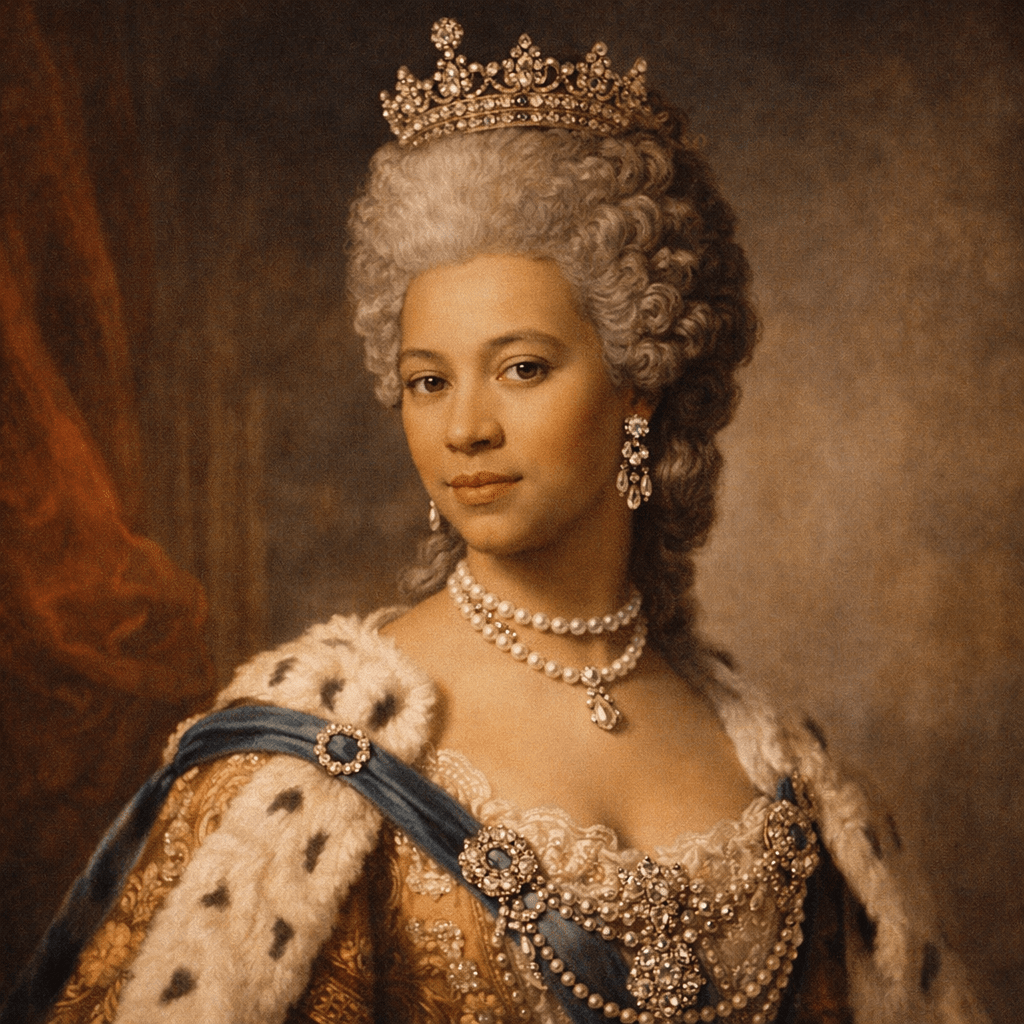
What makes Queen Charlotte particularly unique is not only her lineage, but how she was visually represented. Several contemporary portraits painted during her lifetime depict her with visibly African facial features: a broad nose, full lips, darker complexion, and tightly curled hair. Artists such as Allan Ramsay and Sir Thomas Lawrence painted Charlotte in ways that differed significantly from the idealized European beauty standards of the time.

Allan Ramsay, a known abolitionist, intentionally emphasized Charlotte’s African traits in his royal portraits. This was a political act, as Ramsay believed art could challenge white supremacist ideologies by showing Black presence in elite European spaces. His portraits stand in contrast to later revisions that whitened her appearance.

British society during the 18th century was deeply racialized, yet paradoxically fascinated by Blackness. While enslaved Africans existed in England, the presence of a biracial queen was never publicly acknowledged or celebrated. Instead, her African ancestry was quietly ignored, softened, or erased in official royal discourse.

Queen Charlotte herself never publicly claimed African identity, which would have been politically impossible in a monarchy built on white European supremacy. Her legitimacy depended on assimilation, not racial visibility. Thus, her Black ancestry existed as an unspoken truth hidden within aristocratic genealogy.

Despite this silence, many contemporaries commented on her appearance. Some British courtiers privately referred to her as having a “mulatto face,” while foreign diplomats described her features as “unusual for a German princess.” These coded racial descriptions reveal that her difference was noticed, even if never openly discussed.

Charlotte gave birth to fifteen children, making her the matriarch of modern European royal bloodlines. Through her descendants, African ancestry entered nearly every royal house in Europe, including the current British monarchy. This fact alone radically challenges the myth of racial purity in European royalty.

Her influence extended beyond race into culture, education, and abolitionist politics. She was a patron of Black composers, supported the education of poor children, and advocated for anti-slavery reforms through private influence on King George III.

Queen Charlotte’s story disrupts the dominant narrative that Black history exists only in Africa or the Americas. Her existence proves that Africans and their descendants have always been embedded in European power structures, even at the highest levels of monarchy.

Modern historians increasingly recognize Charlotte as a symbol of erased Black presence in European history. Her whitening in textbooks and portraits reflects a broader pattern of historical revisionism designed to maintain white exclusivity in narratives of power.

The popular television series Bridgerton did not invent the idea of a Black Queen Charlotte — it revived a truth long buried by racial politics. While dramatized, the concept is grounded in legitimate historical research.

Queen Charlotte stands today as a powerful reminder that Black history is not marginal, peripheral, or modern. It is ancient, royal, and deeply woven into the foundations of Western civilization itself.


References

Adams, G. (2019). The Queen’s Hidden Heritage: African Ancestry in the British Royal Family. Journal of Black Studies, 50(3), 234–251.

Ramsay, A. (1762–1780). Royal Portraits of Queen Charlotte. Royal Collection Trust.

Oliveira, M. (2008). Moorish Lineages in the Portuguese Royal House. Lisbon Historical Review.

Fryer, P. (1984). Staying Power: The History of Black People in Britain. Pluto Press.

Jeffries, S. (2018). “Was Queen Charlotte Black? The Real History Behind Bridgerton.” The Guardian.

BBC History. (2020). Queen Charlotte: Britain’s First Black Queen? British Broadcasting Corporation.

Royal Collection Trust. (2021). Queen Charlotte of Mecklenburg-Strelitz: Portraits and Legacy.
Celebrity Spotlight: Sade

This photograph is the property of its respective owner. No copyright infringement intended.

Sade Adu, born Helen Folasade Adu on January 16, 1959, stands as one of the most enigmatic, adored, and musically influential women of the modern era. Her artistic identity blends sensual minimalism, rich emotional depth, and an unmistakable sonic signature that has carried her across generations. She is a woman whose voice alone can halt time—evoking longing, healing, and intimacy.

Born in Ibadan, Nigeria, Sade came into the world as a child of blended heritage: her father, Adebisi Adu, was Nigerian; her mother, Anne Cook, was an English nurse. This biracial identity shaped her life aesthetically and socially, giving her both a multicultural foundation and a dual sense of belonging. When her parents separated, Sade moved with her mother to Essex, England, where she grew up with an awareness of her African roots and British upbringing.

Her early life was marked by modesty and artistic curiosity. Sade originally studied fashion design at Saint Martin’s School of Art, believing her future lay in visual creativity rather than music. Music was not yet a career plan—it was simply part of her environment. Yet destiny has a way of tapping gifted people on the shoulder, even when they walk another path.

During her time in London, Sade began to sing background vocals for a Latin-soul group called Pride. Her voice—warm, cool, smoky, and profoundly emotional—caught immediate attention. The crowd response made it clear: she was not meant to remain in the background. Her presence commanded the spotlight.

This photograph is the property of its respective owner. No copyright infringement intended.

As she performed with Pride, Sade began writing songs with members of the band. Her writing style, poetic and minimalist, reflected both vulnerability and confidence. After receiving overwhelming praise during Pride performances, a smaller formation of members broke away to create the group known today as Sade. With this new ensemble, her career trajectory shifted from underground singer to rising global star.

Sade’s breakthrough came with the 1984 release of “Diamond Life”, an album that introduced the world to hits such as “Smooth Operator”, “Your Love Is King”, and “Hang On to Your Love.” Her voice was unlike anything in the pop landscape—soft yet powerful, elegant yet raw, glamorous yet grounded. The album became one of the best-selling debut albums by a British female vocalist.

Her follow-up albums—“Promise” (1985), “Stronger Than Pride” (1988), “Love Deluxe” (1992), and “Lovers Rock” (2000)—continue to define entire eras of music. Sade is known for slow-burn records that age like fine wine, album cycles that are intentionally spaced out, and a perfectionist’s approach to her craft.

Over the course of her career, Sade has earned several major awards, including Grammy Awards for Best New Artist, Best R&B Performance, and Best Pop Vocal Album. She remains one of the few artists who can disappear for a decade and return to immediate worldwide acclaim. Her aura of mystery only amplifies her influence.

Beyond her music, Sade’s personal life is intentionally shielded from mainstream scrutiny. She married Spanish film director Carlos Scola in the late 1980s, though the marriage ended shortly afterward. She later entered a long-term partnership with Ian Watts, with whom she has one child—Mickailia “Ila” Adu, born in 1996. In recent years, Sade has been deeply supportive of Ila, who transitioned and publicly shared their journey, reflecting Sade’s nurturing and fiercely protective maternal spirit.

Sade’s family life is grounded in privacy, warmth, and a devotion to simplicity. Unlike many celebrities, she prefers countryside living over Hollywood glamour, giving interviews sparingly and valuing her peace above all. Her hobbies include quiet, earthy pleasures—gardening, cooking, horseback riding, and interior design. She is a woman who enjoys the feel of soil, the calm of nature, and the comfort of a peaceful home.

Her biracial identity shaped much of her early experience, especially growing up as a light-skinned Black girl in Britain. She has spoken about the complexities of being visibly different—too light for one group, too African for another—and how she carved her identity independently of other people’s expectations. Her presence helped broaden visual representations of Black womanhood at a time when few mixed-heritage Black women had global platforms.

As a light-skinned Black woman with a Nigerian father, Sade carried both privilege and pressure. She navigated colorism, exoticization, and constant commentary on her appearance. Yet she faced it with quiet dignity, using neither her lighter complexion nor her beauty as shields or shortcuts. Instead, she let her art speak.

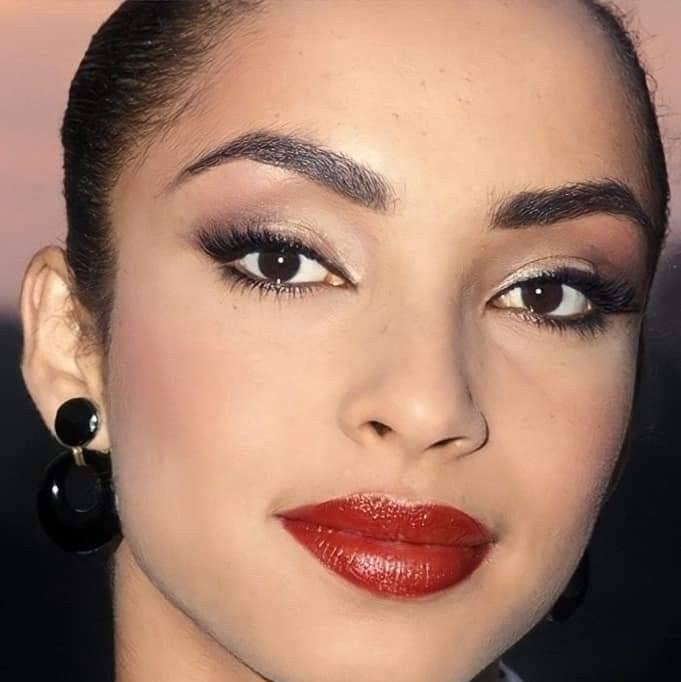
This photograph is the property of its respective owner. No copyright infringement intended.

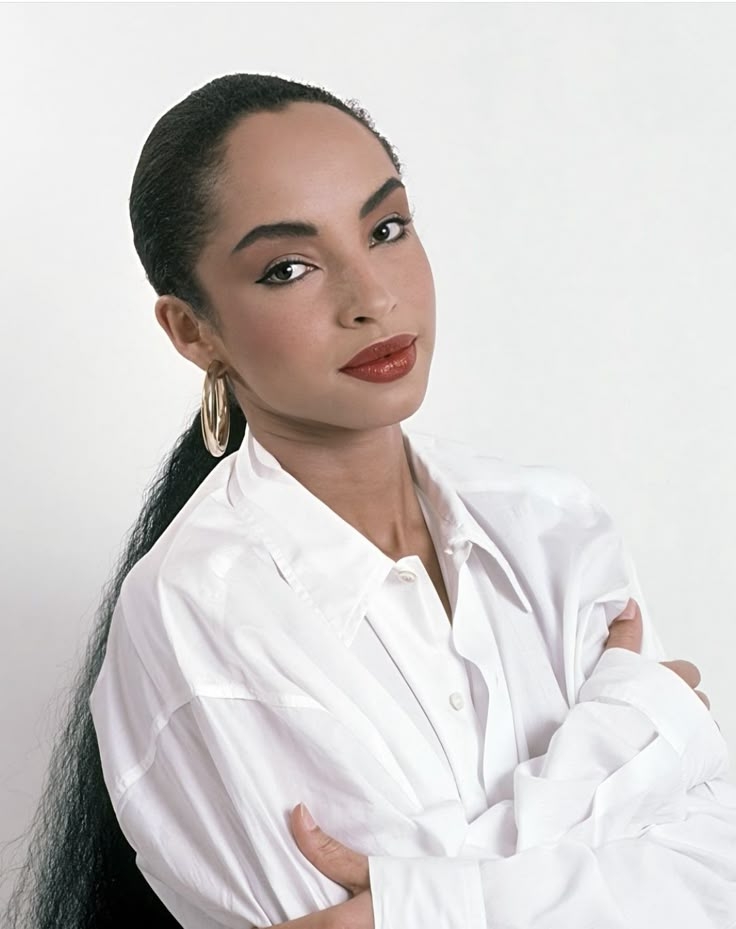
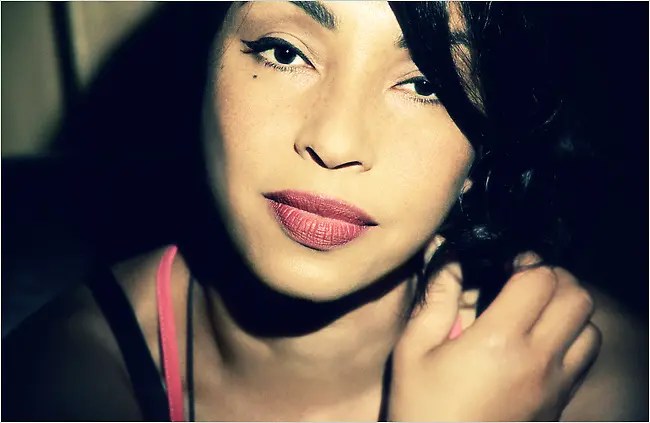
Sade’s beauty is legendary. She is known for her glowing skin, sculpted cheekbones, expressive eyes, and minimalist style that centers simplicity over spectacle. Her signature ponytail, red lip, and understated glamour have become visual emblems of femininity and quiet power. Men adore her, women are inspired by her, and the world respects her.

Her expressive face carries centuries of story—African ancestry, British poise, feminine softness, and artistic soulfulness. She embodies an effortless type of beauty that does not compete, does not overstate, and does not perform. Instead, she exists with self-possession and grace.

Despite global fame, Sade remains notoriously humble. She has repeatedly turned down industry pressure to release faster, perform larger, or commercialize more aggressively. Her silence is intentional. Her scarcity is strategic. Her voice, when released, comes like rain after drought—rare, cleansing, and deeply treasured.

She represents a generation of artists who prioritize emotional truth over fame, musical integrity over charts, and soulfulness over spectacle. While others chase trends, Sade creates worlds. While others release singles, she releases experiences.

Even today, new generations discover her music as if stumbling upon a rare, precious jewel. Her songs underscore weddings, heartbreaks, romantic dinners, moments of grief, and moments of deep spiritual healing. She is a universal voice of love.

Sade is not just a singer; she is an aesthetic. A feeling. A timeless feminine archetype. Her music remains evergreen, her influence remains vast, and her presence remains untouched by time. Her legacy stands on the pillars of elegance, artistic purity, emotional honesty, and cultural depth. She is truly one of the most beloved women in the world.


References

Balfour, I. (2016). The Sade influence: Minimalism, soul, and global style. Routledge.
Gates, H. L. (2020). Cultural icons of the African diaspora. Oxford University Press.
Guerrero, E. (2012). Women of soul: The evolution of Black female artistry. Columbia University Press.
Harris, D. (2018). Music, identity, and biracial representation in modern Britain. Cambridge University Press.
Rolling Stone. (2021). Sade: A timeless musical mystique.
Smith, S. (2021). Sonic intimacy: Black women musicians and emotional expression. University of California Press.

Masculine Perfection Series: The British Invasion – Idris Elba, Aaron Pierre, and Regé‑Jean Page.

The British Invasion of Male Aesthetics, Talent, and Global Impact

In recent years, British actors of African and Afro-diasporic descent have taken the world stage with unprecedented impact, redefining standards of beauty, charisma, and screen presence. Leading this movement are Idris Elba, Aaron Pierre, and Regé‑Jean Page—each possessing a striking combination of physical allure, magnetic charm, and extraordinary talent. Elba’s commanding height, chiseled features, and deep expressive eyes have made him an icon of rugged sophistication; Pierre’s athletic build, symmetrical face, and intense gaze convey both vulnerability and heroism; while Page’s near-perfect facial symmetry, photogenic features, and refined presence have cemented him as a global standard of romantic lead. Together, they represent a new era in which Black British actors are celebrated not only for their artistic skill but also for the distinct aesthetic and cultural richness they bring to international film and television. Their rise signals a powerful shift in representation, challenging stereotypes, and opening doors for future generations of Black talent in the entertainment industry.

1. Idris Elba

This photograph is the property of its respective owner. No copyright infringement intended.

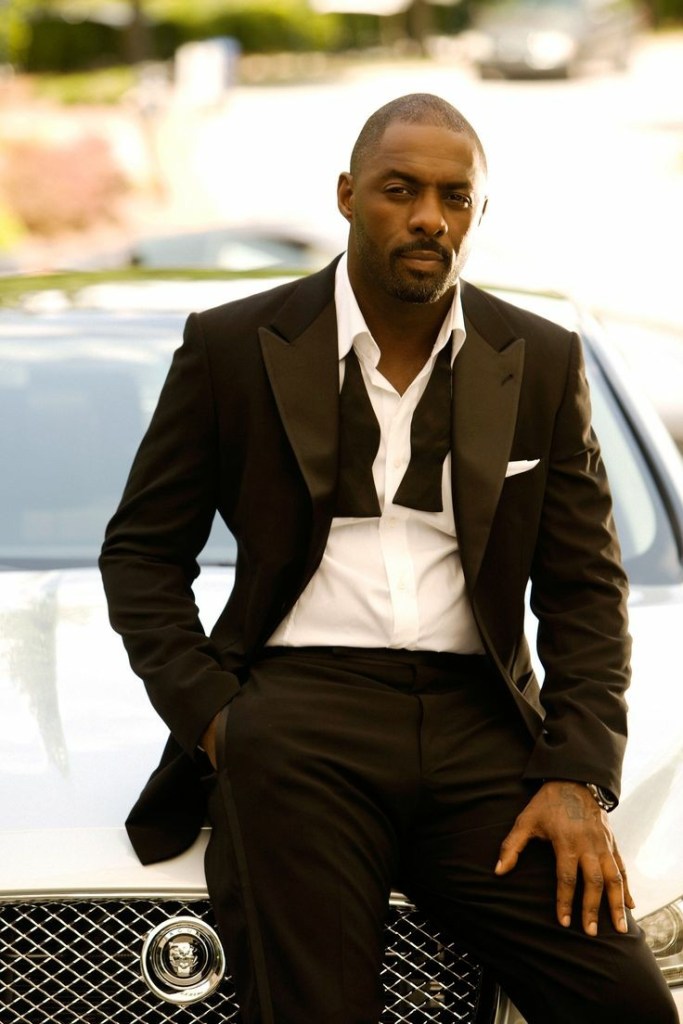
Idris Elba is widely regarded as one of the most handsome and charismatic actors of his generation, combining rugged masculinity with refined elegance. Standing around 6’2” with a strong, athletic build, he possesses chiseled facial features, deep brown expressive eyes, and a warm, engaging smile. His smooth dark skin, combined with his salt‑and‑pepper beard and commanding posture, exudes both authority and charm. Elba’s presence is magnetic, making him naturally captivating on screen, whether portraying intense drama or heroic roles. His physicality and aesthetic appeal have contributed significantly to his image as a quintessential leading man.

Early Life & Background

Idrissa Akuna Elba OBE was born on 6 September 1972 in Hackney, London, England, to a father from Sierra Leone and a mother from Ghana (Biography.com). He grew up in East London (Canning Town area) and left school around age sixteen to pursue acting, winning a place in the National Youth Music Theatre via a Prince’s Trust grant (IMDb).

Career Start

Elba began with small UK television roles and DJ work before his major breakthrough portraying Russell “Stringer” Bell in HBO’s The Wire (2002‑2004) (Wikipedia). His portrayal of DCI John Luther in the BBC series Luther (2010‑2019) further cemented his international star status (Britannica). He has also starred in films such as Mandela: Long Walk to Freedom (2013) and Marvel/Thor installments.

Key Roles & Achievements

  • Stringer Bell in The Wire – breakout role.
  • DCI John Luther in Luther – Golden Globe Award for Best Actor (Miniseries/TV).
  • Mandela: Long Walk to Freedom – major biopic role.
  • Beasts of No Nation (2015) – Screen Actors Guild Award, BAFTA & Golden Globe nominations.

Awards & Recognition

Elba has received a Golden Globe, multiple Primetime Emmy nominations, and BAFTA nominations. Named to Time 100 Most Influential People in the World in 2016.

Personal Life & Marriage

Elba married Sabrina Dhowre in April 2019 in Marrakech, Morocco. He has two children from prior relationships: daughter Isan and son Winston (People.com).

Significance

Elba’s combination of physical presence, aesthetic appeal, and talent has made him a global symbol of Black British excellence, bridging UK and American television and film with remarkable ease.


2. Aaron Pierre

This photograph is the property of its respective owner. No copyright infringement intended.

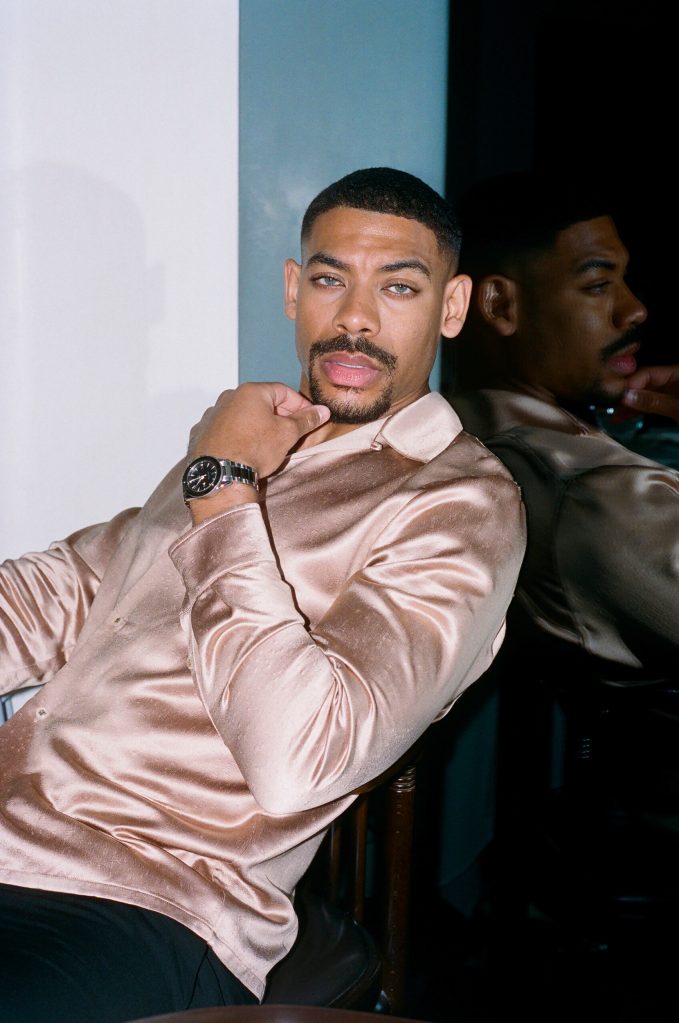
Aaron Pierre is a strikingly attractive actor, known for his tall, athletic build, smooth dark skin, and commanding presence. His symmetrical facial features, strong jawline, and expressive light eyes convey intensity, sensitivity, and screen charisma. His natural elegance, combined with a confident posture and versatile features, allows him to portray both heroic and vulnerable characters convincingly. Pierre’s physicality and photogenic appeal make him stand out as a rising figure in film and television.

Early Life & Background

Aaron Stone Pierre was born on 7 June 1994 in London, England, of Jamaican, Curaçaoan, and Sierra‑Leonean descent (Wikipedia). He participated in athletics in his youth and later developed an interest in acting, training at the London Academy of Music and Dramatic Art (LAMDA), graduating around 2016 (Wikipedia).

Career Start

Pierre’s early stage work included Cassio in Shakespeare’s Othello at the Globe Theatre, earning commendation in the Ian Charleson Awards (IMDb). Screen recognition followed with his role as Dev‑Em in the sci‑fi series Krypton (2018‑2019), and he later starred in Amazon’s The Underground Railroad (2021) and the thriller film Old (2021).

Key Roles & Achievements

  • Dev‑Em in Krypton – early screen role.
  • Caesar in The Underground Railroad – critically acclaimed period drama role.
  • Lead in Rebel Ridge (2024).
  • Voicing Mufasa in Mufasa: The Lion King.

Awards & Recognition

Pierre received an Ian Charleson Award nomination (2018) and won the Canadian Screen Award for Best Supporting Performance (Brother) and an NAACP Image Award for Outstanding Actor (Rebel Ridge).

Personal Life & Marriage

Aaron Pierre is currently not publicly married; as of mid‑2025, actor Aaron Pierre is publicly dating singer‑actress Teyana Taylor.

Significance

Pierre represents the new wave of Black British talent blending rigorous stage training with screen charisma. His aesthetic appeal, athletic build, and symmetrical features make him a striking presence on screen, enhancing his versatile acting repertoire.


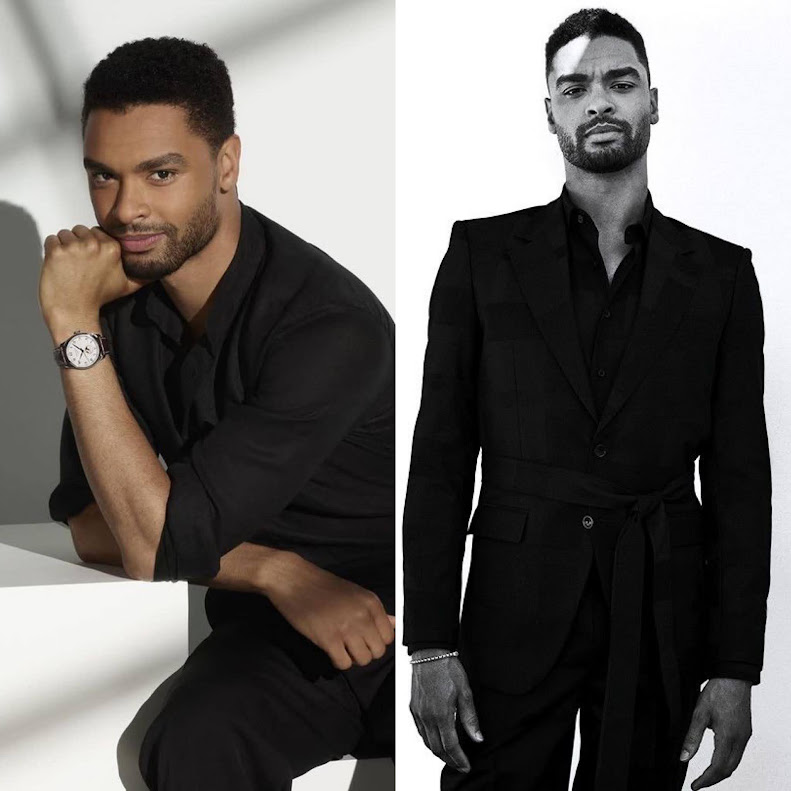
3. Regé‑Jean Page

These photographs are the property of their respective owners. No copyright infringement intended.

Regé‑Jean Page possesses a striking combination of classical good looks, symmetry, and magnetic charm. Often cited in studies and media analyses as having one of the most perfectly symmetrical faces among contemporary actors, his features are exceptionally balanced and proportionate. Standing around 6’1” with a tall, lean, athletic build, he has smooth dark skin, deep-set brown eyes, and a captivating smile. His presence exudes both refinement and sensuality, making him an ideal romantic lead. His mixed British-Zimbabwean heritage further enhances his distinctive and photogenic features, giving him a unique screen presence that is both compelling and timeless.

Early Life & Background

Born in London to an English father (a preacher) and a Zimbabwean mother (a nurse), Page spent part of his childhood in Harare, Zimbabwe, before returning to London (Wikipedia). He studied sound engineering before entering Drama Centre London, graduating in 2013 (Fandango.com).

Career Start

Page’s early roles included a short film (Troublemaker, 2004) and guest appearances on BBC’s Casualty (2005) and Waterloo Road (2015). He gained global recognition as Simon Basset, the Duke of Hastings, in Netflix’s Bridgerton (2020).

Key Roles & Achievements

  • Simon Basset in Bridgerton – worldwide breakout role.
  • Films: The Gray Man (2022), Dungeons & Dragons: Honor Among Thieves (2023).
  • NAACP Image Award winner for Outstanding Actor in a Drama Series.
  • Screen Actors Guild Award nomination.

Personal Life & Relationship

Page is not married publicly but has been in a relationship with Emily Brown since around 2019 (People.com).

Significance

Page exemplifies modern standards of facial beauty and symmetry, combined with talent and charisma. His aesthetic perfection, along with acting skill, redefines the Black British male romantic lead for global audiences and makes him a symbol of representation in period dramas and blockbuster cinema.


References