Tag Archives: economics

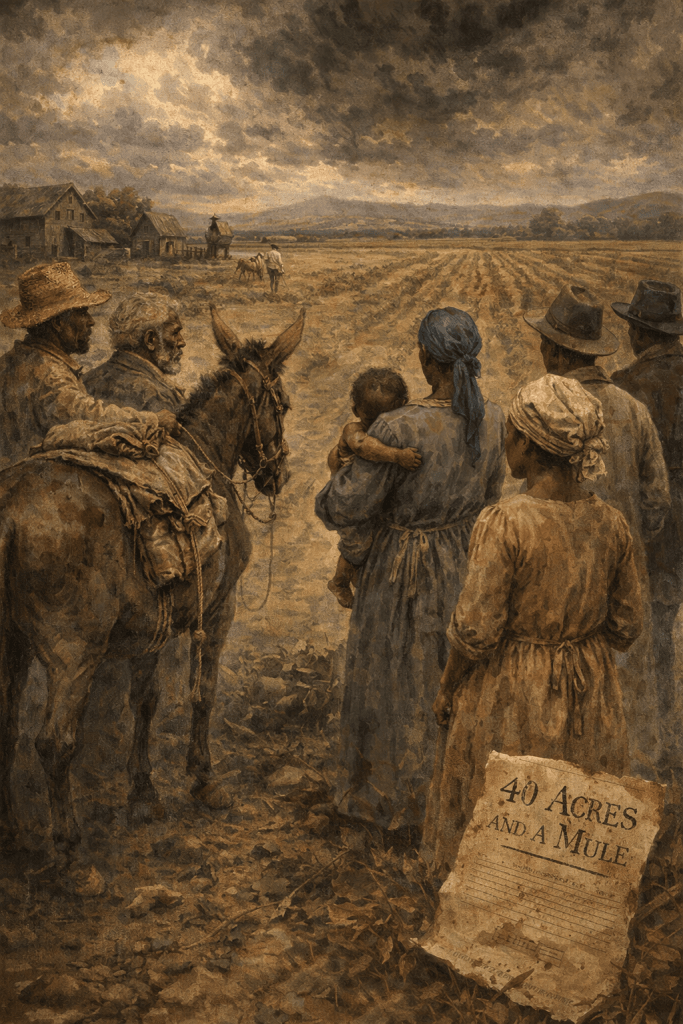
40 Acres and a Mule: The Promise That Was Never Kept.

The phrase “40 acres and a mule” has become one of the most powerful symbols of broken promises in American history, rooted in the aftermath of the American Civil War. It represents an unfulfilled commitment to provide formerly enslaved Black Americans with land and the means to sustain themselves economically.

The origin of this promise can be traced to January 1865, when Union General William Tecumseh Sherman issued Special Field Orders No. 15. This order set aside approximately 400,000 acres of confiscated Confederate land along the southeastern coast for settlement by freed Black families.

Under Sherman’s directive, each family was to receive up to 40 acres of land. Later, some were also given access to surplus army mules, leading to the enduring phrase “40 acres and a mule.” This initiative was seen as a foundational step toward economic independence.

The policy was implemented in areas of South Carolina, Georgia, and Florida, where thousands of formerly enslaved people began to establish communities. For many, this land represented not just property, but dignity, autonomy, and the fruit of generations of unpaid labor.

The idea of land redistribution was supported by leaders such as Thaddeus Stevens, who argued that true freedom required economic justice. Without land, formerly enslaved people would remain dependent on their former oppressors.

However, this promise was short-lived. Following the assassination of Abraham Lincoln in April 1865, his successor, Andrew Johnson, reversed many Reconstruction policies.

President Johnson issued proclamations that returned confiscated land to former Confederate landowners. As a result, thousands of Black families who had begun to build lives on this land were forcibly removed.

This reversal effectively nullified the promise of “40 acres and a mule.” Land that had been distributed to freedmen was taken back, often violently, leaving families dispossessed and vulnerable.

The failure to provide land had profound consequences. Without access to property, many Black Americans were pushed into sharecropping—a system that closely resembled slavery in its economic exploitation.

Sharecropping trapped families in cycles of debt and poverty. Landowners controlled the terms, often charging exorbitant fees for tools, seeds, and housing, ensuring that laborers remained financially dependent.

The denial of land ownership also prevented the accumulation of generational wealth. While white Americans were able to pass down land and assets, Black families were systematically excluded from these opportunities.

The concept of reparations is deeply tied to this history. Advocates argue that the promise of land was a form of restitution for centuries of slavery, and its revocation constitutes a debt still owed.

The economic disparity created by this broken promise is evident today. Scholars frequently link the racial wealth gap to the lack of land redistribution during Reconstruction.

The federal government’s failure to uphold its commitment undermined trust and reinforced systemic inequality. It demonstrated that legal freedom without economic support was insufficient.

In the 20th and 21st centuries, the call for reparations has gained renewed attention. Proposals include financial compensation, land grants, and institutional investments in Black communities.

Legislative efforts such as H.R. 40—named in reference to the original promise—seek to study and develop reparations proposals. The bill symbolizes a continued demand for accountability and justice.

Critics of reparations often argue against revisiting the past, but proponents emphasize that the effects of slavery and Reconstruction policies are still present in modern society.

The story of “40 acres and a mule” is not just historical—it is a living legacy that shapes economic realities today. It highlights the intersection of race, policy, and wealth in America.

Understanding this history is essential for addressing contemporary inequalities. It reveals how systemic decisions made over a century ago continue to impact generations.

The promise of land represented more than compensation—it was an opportunity for true independence. Its denial ensured that freedom would remain incomplete for millions.

Ultimately, “40 acres and a mule” stands as a reminder that justice delayed is justice denied. It calls for a reckoning with the past and a commitment to building a more equitable future.

References

Foner, E. (1988). Reconstruction: America’s Unfinished Revolution, 1863–1877. Harper & Row.

Gates, H. L. (2013). Life Upon These Shores: Looking at African American History, 1513–2008. Knopf.

Oubre, C. (1978). Forty Acres and a Mule: The Freedmen’s Bureau and Black Land Ownership. Louisiana State University Press.

Painter, N. I. (2007). Creating Black Americans: African-American History and Its Meanings, 1619 to the Present. Oxford University Press.

Williamson, J. (1995). After Slavery: The Negro in South Carolina During Reconstruction, 1861–1877. University of North Carolina Press.
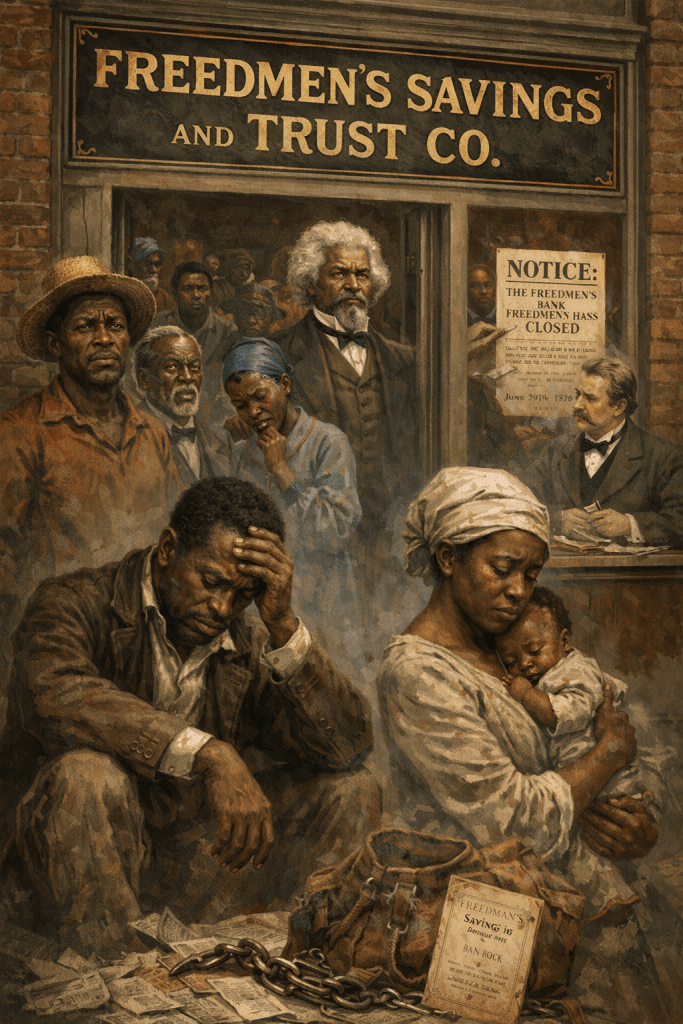
The Freedman’s Bank: A Broken Promise of Freedom.

The story of the Freedman’s Savings Bank is one of hope, betrayal, and systemic injustice. Established in the aftermath of the American Civil War, the bank was intended to provide newly freed Black Americans with a secure place to deposit their earnings and begin building generational wealth.

Founded in 1865, the Freedman’s Bank emerged during the Reconstruction Era, a time when millions of formerly enslaved people were navigating freedom for the first time. With little to no access to financial institutions, the bank appeared as a beacon of opportunity.

The bank was backed by the U.S. Congress, which gave it a sense of legitimacy and trustworthiness. Many Black Americans believed their money was protected by the federal government, though in reality, the institution operated privately without direct federal guarantees.

For formerly enslaved individuals who had labored for generations without wages, the ability to save money represented dignity, autonomy, and hope. Depositors included soldiers, laborers, domestic workers, and families striving for economic independence.

At its peak, the Freedman’s Bank had over 60,000 depositors and held millions of dollars in assets. Branches were established in major cities across the South, reflecting widespread trust among Black communities.

However, this trust would soon be shattered. The bank’s leadership—primarily white trustees—engaged in reckless and speculative investments, including risky railroad ventures and real estate schemes.

Instead of safeguarding deposits, bank officials used funds to finance high-risk projects, many of which failed. This mismanagement reflected not only poor financial judgment but also a disregard for the livelihoods of Black depositors.

One of the most notable figures associated with the bank was Frederick Douglass, who became its president in 1874. Douglass hoped to restore confidence and stabilize the institution, but by then, the damage was already irreversible.

Douglass himself later expressed regret, acknowledging that he had underestimated the extent of the corruption and mismanagement within the bank. His involvement, though well-intentioned, could not save it from collapse.

In 1874, less than a decade after its founding, the Freedman’s Bank failed. The collapse resulted in the loss of approximately $3 million—equivalent to tens of millions today—wiping out the savings of thousands of Black families.

For many depositors, this loss was devastating. These were not excess funds but life savings—money earned through hard labor in the fragile early years of freedom.

The failure of the bank exposed a harsh reality: Black Americans were systematically excluded from secure financial systems and left vulnerable to exploitation. The promise of economic empowerment had been betrayed.

The collapse also reinforced cycles of poverty within Black communities. Without access to capital, many families were unable to invest in land, education, or businesses—opportunities that could have altered generational trajectories.

The Freedman’s Bank is often cited as one of the earliest examples of institutional financial exploitation of Black Americans. It set a precedent for future injustices, including discriminatory lending practices and redlining.

The psychological impact of this betrayal cannot be overstated. Trust in financial institutions was deeply eroded, a sentiment that has echoed across generations.

This event also highlights the broader failures of Reconstruction. While legal freedom was granted, economic justice was largely denied, leaving Black Americans to navigate a system still rooted in inequality.

The Freedman’s Bank did not fail in isolation—it was part of a larger pattern of systemic neglect and exploitation. Its downfall symbolized the fragility of Black progress in a nation unwilling to fully honor its promises.

Despite this history, Black communities have continued to demonstrate resilience, creating alternative systems of support such as mutual aid societies, churches, and Black-owned banks.

Modern discussions about reparations and economic justice often reference the Freedman’s Bank as a foundational injustice. The loss of wealth during this period has had long-term implications for the racial wealth gap in America.

Understanding the history of the Freedman’s Bank is essential for recognizing how systemic inequities were built and maintained. It serves as both a warning and a call to address historical wrongs.

Ultimately, the “Free” Man’s Bank was free in name but costly in consequence. Its legacy reminds us that true freedom must include economic security, accountability, and justice.

References

Baradaran, M. (2017). The Color of Money: Black Banks and the Racial Wealth Gap. Harvard University Press.

Du Bois, W. E. B. (1907). Economic Co-operation Among Negro Americans. Atlanta University Press.

Osthaus, C. (1976). Freedmen, philanthropy, and fraud: A history of the Freedman’s Savings Bank. Journal of Southern History, 42(1), 1–26.

Savage, B. (1999). Standing Soldiers, Kneeling Slaves: Race, War, and Monument in Nineteenth-Century America. Princeton University Press.

Sherraden, M. (1991). Assets and the Poor: A New American Welfare Policy. M.E. Sharpe.

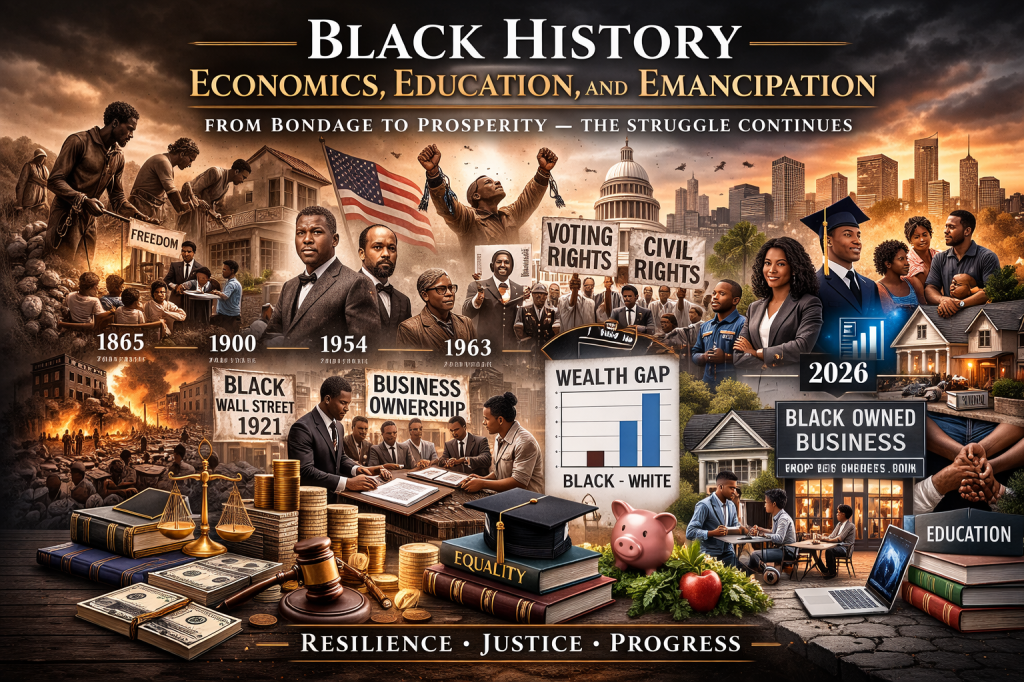
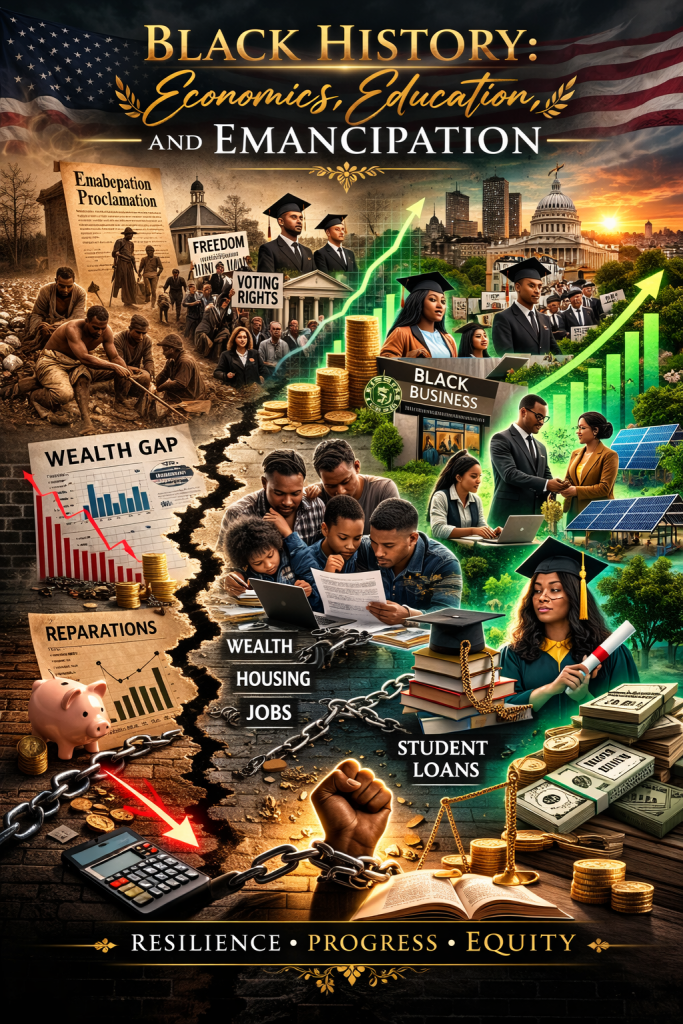
Black History: Economics, Education, and Emancipation.

Black history in the United States is not merely a litany of events; it is the story of a people’s persistent struggle for dignity, self-determination, and economic justice. From the systemic deprivations of slavery to the present day, the economic condition of Black Americans has been profoundly shaped by centuries of exclusion, exploitation, and resistance (McKinsey & Company, 2025). The interplay of economic opportunity, access to education, and emancipation has defined both individual lives and collective possibilities.

The legacy of slavery and Reconstruction laid the groundwork for persistent racial inequalities. Even at the formal end of slavery in 1865, Black Americans held virtually no wealth; over a century and a half later, that gap persists. Black households possess only a small fraction of national wealth compared with White households, illustrating how historical racial injustice still translates into economic precarity (LendingTree, 2026; Brookings Institution, 2024).

Structural discrimination continues to influence economic outcomes through labor markets that systematically disadvantage Black workers. Black Americans are overrepresented in lower-wage occupations and underrepresented in higher-paying managerial and professional roles, reinforcing income inequality (McKinsey & Company, 2019). This occupational segregation, rooted in historical discrimination, limits economic mobility and widens the wealth gap across generations.

Education has long been touted as a pathway to economic advancement, yet disparities in educational access and outcomes persist. Predominantly Black school districts receive significantly less funding than predominantly White districts, perpetuating cycles of unequal opportunity and limiting access to high-quality schooling (Black Wall Street Organization, 2025). In this context, education becomes not simply a means of individual uplift but a battleground for equity.

Higher education, while expanding enrollment for Black students over recent decades, also exposes students to disproportionate levels of debt. Black college graduates carry higher student loan burdens than their White counterparts, constraining their capacity to accumulate wealth through homeownership, savings, and investments (Black Wall Street Organization, 2025). Thus, the very institution that promises empowerment can become another vector of economic strain.

Despite the barriers, African Americans have demonstrated remarkable resilience. Historic models of Black economic self-help—mutual aid societies, Black-owned banks, business collectives, and cooperative enterprises—reflect a long tradition of economic self-determination. Yet these efforts have often faced hostile responses, from discriminatory lending practices to overt violence, as in the destruction of Black Wall Street in 1921 (Black Wall Street Organization, 2025).

Homeownership remains a key indicator of wealth building in America, yet the Black homeownership rate lags significantly behind that of White Americans, reflecting a century of housing discrimination and unequal access to mortgage capital (Washington Post, 2026). Even when Black families do own homes, properties often appraise for lower values due to enduring patterns of segregation and appraisal bias, further limiting generational wealth accumulation.

As of recent data, Black homeownership stands well below the rate for White families, and median wages for Black workers are substantially lower across industries. Black workers commonly earn about 70 percent of what White workers earn in comparable sectors, underscoring persistent wage disparities (LendingTree, 2026). These gaps are not accidental; they reflect longstanding structural inequities embedded in the economy.

Economic Data Tables: Black–White Disparities (2025–2026)

Median Household Income & Wealth

IndicatorBlack HouseholdsWhite HouseholdsSource
Median Household Income (2024)~$56,020~$88,010LendingTree (2026)
Median Household Wealth (% of U.S. total)~3.4%~83.5%LendingTree (2026)
Racial Wealth Ratio (White : Black)~8:1ZipDo (2026)
Median Wealth (Black vs White)~$24,100 vs $188,200ZipDo (2026)

Employment & Labor Market Disparities

IndicatorBlack WorkersWhite WorkersSource
Unemployment Rate (Q3, 2025)~7.8%~3.8%LendingTree (2026)
Black Unemployment (Nov 2025 spike)8.3%Reuters (2025)
Earnings Gap (Median wages)~70–75% of White wages100%WorldMetrics (2026)

Homeownership & Wealth Building

IndicatorBlack HouseholdsWhite HouseholdsSource
Homeownership Rate (2026)~43.6%~70.3%Washington Post (2026)
Homeownership Gap (Historical Persistence)Negligible improvement over decadesWashington Post (2026)
Access to Favorable Mortgage TermsHigher denial & biasLower denialLendingTree (2026)

These data illustrate several core structural truths:

  • Persistent Racial Wealth Gap: Black households hold a disproportionately small share of U.S. total wealth (about 3.4%), even though Black Americans represent ~13–14% of the population. Meanwhile, White households control over 80% of the national wealth. Economic inequality is thus not only about income but also about historical asset accumulation and generational transfer of wealth.
  • Income Inequality Across Sectors: Black workers earn approximately 70–75 cents for every dollar earned by White workers across major sectors, with the gap widening in higher‑paying occupations.
  • Employment Barriers: The unemployment rate for Black Americans in late 2025 and early 2026 was more than double the national rate, a persistent pattern indicating structural labor market discrimination and vulnerability during economic contractions.
  • Homeownership & Wealth Building: Black homeownership remains far below White rates, with only about 44% of Black households owning homes — a primary vehicle for middle‑class wealth — compared with around 70% of White households. Appraisal bias, mortgage denial disparities, and historical segregation play significant roles in this enduring gap

The wealth gap also manifests in broader national terms: White Americans hold the vast majority of U.S. wealth, while Black Americans hold only a small sliver despite representing a significant portion of the population (LendingTree, 2026). This imbalance illustrates how historical exclusion has compounded over time, making wealth accumulation a generational challenge.

In the labor market of 2025–2026, the unemployment rate for Black Americans has risen disproportionately higher than the national average, signaling troubling economic trends that scholars and civil rights analysts describe as a “Black recession.” Black unemployment climbed to levels nearly double those of White workers amid broader economic slowdown and policy reversals that eroded programs designed to address racial inequality (State of the Dream Report, 2026).

Economic policy and labor market shifts have gutted diversity and inclusion initiatives in federal agencies, removing support mechanisms that previously helped mitigate racial disparities in employment. As a result, Black workers have borne the brunt of federal job cuts, particularly Black women, who historically are overrepresented in public sector employment (State of the Dream Report, 2026).

The racial wealth gap is not simply an issue of income but of cumulative assets: investments, property equity, business ownership, and inheritance. White families disproportionately benefit from stock market gains and home equity appreciation, while Black families have historically had limited access to these primary vehicles of wealth growth (Investopedia, 2025). This structural imbalance inhibits intergenerational economic security.

The persistence of these disparities challenges the myth that formal emancipation was sufficient to equalize economic outcomes. Rather, emancipation began a long struggle against structural barriers that have constrained Black economic agency. This ongoing reality reveals that legal freedom without equitable economic opportunity remains incomplete.

Economic suffering among Black Americans in 2026 highlights the continuing legacy of these structural inequalities. Rising unemployment, growing wealth concentration among white households, and barriers to capital for Black entrepreneurs all point to an economy in which racial disparities remain entrenched. Scholars argue that the effects of these disparities are so profound that closing the racial wealth gap could significantly benefit the U.S. economy as a whole (McKinsey & Company, 2019).

Educational disparities remain deeply intertwined with economic outcomes. Black students often attend schools with fewer resources, lower teacher salaries, and less access to advanced coursework, hindering academic achievement and future earnings potential. These inequities underscore how education and economic status are mutually reinforcing.

At the same time, economic inequality among Black communities intersects with health, housing, and social stability. The lack of access to quality healthcare increases medical expenses and economic vulnerability, and housing instability remains a persistent threat for families with limited economic resources (Black Wall Street Organization, 2025).

Yet, in spite of systemic barriers, Black economic empowerment initiatives continue to evolve. Black-owned businesses, though smaller and less capitalized than their White counterparts, represent a significant force for community development. Support for entrepreneurship and access to capital remain key strategies for building Black economic resilience (Black Wall Street Organization, 2025).

Historically and in the present day, education has served as both a means of empowerment and a site of struggle. The promise of education as a path to economic freedom remains contested, as disparities in funding, access, and outcomes continue to shape life chances for Black Americans.

To confront the entrenched economic disparities of 2026 and beyond, scholars and policy advocates emphasize the need for structural reforms that address labor market discrimination, broaden access to capital, and ensure equitable educational opportunity. Without such reforms, the legacy of racial economic inequality will persist, limiting the full realization of emancipation.

In sum, Black history—rooted in economics, education, and emancipation—is a testament to both the enduring injustice of systemic exclusion and the persistent struggle for full economic citizenship. The story of Black America’s economic journey reveals deep structural challenges but also the resilience and ingenuity that have propelled this nation toward a more inclusive future.


References

Brookings Institution. (2024). Black wealth is increasing, but so is the racial wealth gap. Retrieved from https://www.brookings.edu/articles/black-wealth-is-increasing-but-so-is-the-racial-wealth-gap/

LendingTree. (2026). Snapshots of Black and White disparities in income, wealth, and employment. Retrieved from https://www.lendingtree.com/debt-consolidation/black-and-white-disparities-study/

McKinsey & Company. (2019). The economic state of Black America: What is and what could be. Retrieved from https://www.mckinsey.com/featured-insights/diversity-and-inclusion/the-economic-state-of-black-america-what-is-and-what-could-be

State of the Dream Report. (2026). From regression to signs of a Black recession. The EDU Ledger. Retrieved from https://www.theeduledger.com/demographics/african-american/article/15815124/state-of-the-dream-2026-from-regression-to-signs-of-a-black-recession

The Washington Post. (2026). Why does Black homeownership lag White ownership in every major city? Retrieved from https://www.washingtonpost.com/business/2026/02/21/black-homeownership-singletary/

The Economics of Beauty Bias

Physical appearance has long influenced social and economic outcomes, but the intersection of beauty and economics extends beyond superficial preference. Scholars have demonstrated that “beauty bias” affects employment, wages, promotions, and even perceptions of competence. Those who conform more closely to socially sanctioned standards of attractiveness often receive tangible economic advantages, while those who do not face systemic disadvantages. Thus, beauty is not merely aesthetic — it functions as a form of social capital with measurable economic consequences.

Studies in labor economics have consistently identified a “beauty premium,” wherein attractive individuals earn higher wages and experience faster career advancement than their less conventionally attractive peers. This phenomenon transcends gender, though its magnitude is often greater for women due to historical gendered expectations and the commodification of female appearance. Employers’ implicit biases reinforce these disparities, translating societal beauty norms into financial outcomes.

The mechanisms behind beauty bias are multifaceted. Cognitive psychology suggests that physical attractiveness triggers a “halo effect,” where positive traits are inferred from appearance. Attractive individuals are often perceived as more competent, trustworthy, and socially adept. These perceptions influence hiring decisions, client relations, and peer evaluations, creating a feedback loop in which beauty becomes both a signal and a form of economic leverage.

Beauty bias is also intertwined with race and ethnicity. Historical and contemporary standards have privileged Eurocentric features, marginalizing people of color and reinforcing structural inequalities. For Black women, this manifests as compounded discrimination: societal devaluation of darker skin, hair texture, or features intersects with gendered expectations, limiting access to economic opportunities while amplifying pressure to conform to dominant ideals.

The media and advertising industries exacerbate economic disparities tied to appearance. Representation in fashion, television, and corporate imagery often favors specific beauty standards, signaling which appearances are socially desirable and economically valuable. This systemic visibility shapes consumer behavior, career aspirations, and self-perception, further reinforcing the economic advantages of beauty.

In addition to income effects, beauty bias influences access to professional networks, mentorship, and career capital. Attractive individuals are more likely to receive invitations to key social and professional spaces, creating opportunities for skill development, sponsorship, and advancement. Conversely, those who diverge from conventional standards may face subtle exclusion, limiting both tangible and intangible resources that drive career success.

The consequences of beauty bias extend beyond the individual, affecting societal efficiency and equity. Organizations that reward appearance over merit risk underutilize talent, reducing productivity and innovation. Furthermore, beauty-based economic stratification perpetuates social hierarchies, reinforcing inequality across race, class, and gender lines. Addressing this bias is therefore not only a moral imperative but also an economic one.

Policy interventions and organizational strategies can mitigate beauty bias. Blind hiring processes, diversity training, and structured evaluation criteria reduce the influence of appearance in decision-making. Similarly, promoting diverse representations of beauty challenges cultural norms and expands the range of socially and economically valued appearances, reducing systemic inequities.

From a theoretical standpoint, beauty bias illustrates the intersection of sociology, economics, and psychology. It demonstrates how social constructs translate into material outcomes and highlights the embeddedness of cultural values within economic systems. Appearance, in this framework, is both symbolic and instrumental: a social signal with quantifiable consequences.

Ultimately, the economics of beauty bias reveals the pervasive power of appearance in shaping opportunity, wealth, and social mobility. Recognizing and addressing these dynamics is critical for creating equitable systems in which merit, skill, and character — rather than conformity to aesthetic ideals — determine success. Beauty, as a form of economic capital, must be understood not as personal preference but as a structural force with measurable consequences.


References

Hamermesh, D. S., & Biddle, J. E. (1994). Beauty and the labor market. American Economic Review, 84(5), 1174–1194.

Kelley, H. H. (1973). The processes of causal attribution. American Psychological Association.

Langlois, J. H., Kalakanis, L., Rubenstein, A. J., Larson, A., Hallam, M., & Smoot, M. (2000). Maxims or myths of beauty? A meta-analytic and theoretical review. Psychological Bulletin, 126(3), 390–423.

Moss, P., & Tilly, C. (2001). Stories employers tell: Race, skill, and hiring in America. Russell Sage Foundation.

Stavins, R., & Hamermesh, D. (2017). Gender, attractiveness, and labor market outcomes: Cross-country evidence. Journal of Economic Behavior & Organization, 140, 232–252.

Wolf, N. (1991). The beauty myth: How images of beauty are used against women. HarperCollins.

Fiske, S. T., Cuddy, A. J. C., & Glick, P. (2007). Universal dimensions of social cognition: Warmth and competence. Trends in Cognitive Sciences, 11(2), 77–83.

Is There Wealth in the Black Community?

The question of whether there is wealth in the Black community requires both historical and contemporary analysis. On one hand, there are visible examples of affluent Black individuals—entrepreneurs, entertainers, athletes, professionals, and political leaders—who have accumulated substantial financial resources. On the other hand, aggregate data consistently show that Black Americans, as a group, possess significantly less wealth than their White counterparts. This gap is not merely about income, but about intergenerational wealth, assets, ownership, and long-term financial security.

Wealth is fundamentally different from income. Income refers to money earned through wages or salaries, while wealth includes accumulated assets such as property, investments, businesses, savings, and inheritances. A household may earn a decent income yet remain wealth-poor if it lacks assets and savings. Studies show that even middle-class Black families often have far less wealth than White families with similar incomes, indicating structural rather than individual causes (Oliver & Shapiro, 2006).

Statistically, the racial wealth gap in the United States is stark. According to the Federal Reserve’s Survey of Consumer Finances, the median White household holds nearly ten times the wealth of the median Black household. In 2022, the median net worth of White households was approximately $285,000, compared to about $44,900 for Black households (Federal Reserve, 2023). This means that at the midpoint, a typical Black family has access to less than one-sixth of the financial resources of a typical White family.

Only a small percentage of Black Americans fall into the top wealth brackets. Roughly 10% of Black households hold the majority of Black wealth, mirroring the general pattern of wealth concentration in America, but starting from a far lower baseline (Pew Research Center, 2020). This creates the perception that “some” Black people are doing extremely well while the majority remain economically vulnerable.

Historically, the lack of wealth in the Black community is rooted in slavery and its aftermath. For over 250 years, enslaved Africans were denied wages, property, and legal personhood. After emancipation, formerly enslaved people were promised “40 acres and a mule,” but this never materialized. Instead, land and capital were redistributed back to former slaveholders, not the enslaved (Darity & Mullen, 2020).

The Jim Crow era further prevented Black wealth accumulation through legal segregation, exclusion from labor unions, and denial of access to quality education and housing. One of the most damaging policies was redlining, in which Black neighborhoods were systematically denied mortgages and investment. This meant Black families were locked out of the primary wealth-building tool in America: homeownership (Rothstein, 2017).

Homeownership remains one of the strongest predictors of wealth. Yet Black homeownership rates are still significantly lower than White rates. As of 2023, about 44% of Black households owned homes compared to over 73% of White households (U.S. Census Bureau, 2023). Since homes appreciate over time and can be passed down, this gap compounds across generations.

Education is often promoted as the great equalizer, but even here disparities remain. Black Americans are more likely to carry student loan debt and less likely to receive financial assistance from family. This means that Black graduates often begin their professional lives in debt, while White graduates are more likely to begin with inherited financial support (Hamilton et al., 2015).

Racism in the labor market also plays a role. Numerous studies show that Black job applicants are less likely to receive callbacks than equally qualified White applicants with identical resumes (Bertrand & Mullainathan, 2004). Wage gaps persist even when controlling for education and experience, limiting long-term earning and saving potential.

Additionally, Black entrepreneurs face greater barriers to capital. Black-owned businesses are more likely to be denied loans and receive smaller amounts at higher interest rates. Without access to startup capital, business growth is constrained, reducing one of the key pathways to wealth creation (Fairlie & Robb, 2008).

The idea that “a Black person can only get so far in America” reflects not a lack of talent or effort, but systemic ceilings embedded in institutions. Structural racism functions through policies, markets, and norms that disproportionately advantage White Americans while disadvantaging Black Americans, even without overt racial intent (Bonilla-Silva, 2018).

Another major issue is intergenerational wealth transfer. White families are far more likely to inherit money, property, or businesses. Inheritance accounts for a large portion of wealth inequality. Black families, having been historically excluded from asset ownership, simply have less to pass down (Piketty, 2014).

The lack of institutional “help” for Black people is also tied to political economy. Social programs that once benefited working-class Americans—such as the New Deal and GI Bill—were either explicitly or implicitly designed to exclude Black Americans. This produced a racialized welfare state that subsidized White mobility while limiting Black advancement (Katznelson, 2005).

Despite these realities, there is wealth within the Black community, but it is fragile, concentrated, and constantly threatened by systemic forces. Black wealth exists in professional classes, faith institutions, Black-owned media, real estate investors, and growing entrepreneurial networks. However, it lacks the generational depth and institutional protection found in White wealth.

To change this, structural solutions are required. Individual financial literacy is helpful but insufficient on its own. Policy interventions such as baby bonds, student debt cancellation, housing reparations, fair lending enforcement, and reparations for slavery are increasingly discussed as necessary to close the wealth gap (Darity et al., 2018).

At the individual level, strategies for Black wealth-building include prioritizing asset ownership, investing early, reducing consumer debt, building businesses, purchasing property in appreciating areas, and collective economics through cooperatives and community investment models. While these cannot fix systemic inequality, they can mitigate vulnerability.

Cultural shifts are also important. Consumerism, status spending, and symbolic wealth often replace long-term asset accumulation in marginalized communities. Reorienting values toward ownership, savings, and investment is crucial for sustainable economic empowerment (Hamilton & Darity, 2017).

Ultimately, the racial wealth gap is not a personal failure of Black Americans, but a predictable outcome of historical and institutional exclusion. Wealth in America has always been racialized. The question is not whether Black people work hard enough, but whether the economic system was ever designed to allow them to accumulate and retain wealth at scale.

In conclusion, there is wealth in the Black community, but it is limited, unequal, and structurally constrained. The idea that only 10% “make it” reflects a system that concentrates opportunity at the top while leaving the majority economically precarious. Without structural reform, the racial wealth gap will persist for generations.

True Black economic liberation requires both personal financial strategies and collective political action. Until racism in housing, education, finance, and labor is dismantled, wealth in the Black community will remain the exception rather than the norm.


References

Bertrand, M., & Mullainathan, S. (2004). Are Emily and Greg more employable than Lakisha and Jamal? American Economic Review, 94(4), 991–1013.
https://doi.org/10.1257/0002828042002561

Bonilla-Silva, E. (2018). Racism without racists: Color-blind racism and the persistence of racial inequality in America (5th ed.). Rowman & Littlefield.

Darity, W., Hamilton, D., Paul, M., Aja, A., Price, A., Moore, A., & Chiopris, C. (2018). What we get wrong about closing the racial wealth gap. Samuel DuBois Cook Center on Social Equity.

Darity, W., & Mullen, A. (2020). From here to equality: Reparations for Black Americans in the twenty-first century. University of North Carolina Press.
Fairlie, R. W., & Robb, A. (2008). Race and entrepreneurial success: Black-, Asian-, and White-owned businesses in the United States. MIT Press.

Federal Reserve. (2023). Survey of Consumer Finances. Board of Governors of the Federal Reserve System.

Hamilton, D., & Darity, W. (2017). The political economy of education, financial literacy, and the racial wealth gap. Federal Reserve Bank of St. Louis Review, 99(1), 59–76.

Hamilton, D., Darity, W., Price, A., Sridharan, V., & Tippett, R. (2015). Umbrellas don’t make it rain: Why studying and working hard isn’t enough for Black Americans. New School, Duke University.

Katznelson, I. (2005). When affirmative action was White: An untold history of racial inequality in twentieth-century America. W.W. Norton.

Oliver, M. L., & Shapiro, T. M. (2006). Black wealth/White wealth: A new perspective on racial inequality (2nd ed.). Routledge.

Pew Research Center. (2020). Trends in income and wealth inequality.

Piketty, T. (2014). Capital in the twenty-first century. Harvard University Press.

Rothstein, R. (2017). The color of law: A forgotten history of how our government segregated America. Liveright.

U.S. Census Bureau. (2023). Housing Vacancies and Homeownership (CPS/HVS).

The Cost of Being Black: How Systemic Racism Drains Wealth, Health, and Hope.

Photo by Zack Jarosz on Pexels.com

“Priced in Shadows”

Black skin, a crown the world can’t see,
Yet measured in chains of false decree.
We pay in blood for each small breath,
Our wealth denied, our dreams met death.
Health stolen by the weight of stress,
Hope rationed in the wilderness.
Still we rise, though markets cheat,
And march with fire in tired feet.
The cost is high, but worth it

For the seeds we plant will one day grow.


The Hidden Ledger of Oppression

The cost of being Black is not solely an economic figure—it is a compounded debt extracted from the soul, body, and spirit across generations. Systemic racism functions as both an economic apparatus and a psychological weapon, strategically designed to maintain social stratification (Feagin, 2013). From slavery to Jim Crow, and from redlining to mass incarceration, the financial, health, and emotional toll has been incalculable. The King James Bible acknowledges the burden of oppression, stating, “Woe unto them that decree unrighteous decrees, and that write grievousness which they have prescribed” (Isaiah 10:1, KJV). This divine warning frames systemic racism not as an accidental byproduct, but as an intentional social construct that exacts a tangible cost for simply existing while Black.


Wealth: Economic Theft as a System of Control

The economic cost of being Black is rooted in the generational theft of wealth. Slavery extracted centuries of unpaid labor, creating an economic deficit that remains largely unrepaired (Coates, 2014). Post-emancipation, policies such as sharecropping, discriminatory banking practices, and exclusion from the GI Bill perpetuated disparities. Today, the median wealth of Black families is roughly one-tenth that of white families in the United States (Federal Reserve, 2019). Wealth, in this context, is not merely financial but encompasses access to quality education, home ownership, and intergenerational security. Systemic racism has ensured that economic upward mobility for Black communities is statistically hindered, keeping many in a cycle of debt and economic vulnerability.


Health: The Biological Toll of Racial Inequity

The physical cost of being Black manifests in disproportionately high rates of hypertension, diabetes, maternal mortality, and chronic illness. Research in health psychology identifies “weathering”—the cumulative effect of chronic racial stress on the body—as a primary cause for the accelerated aging and higher disease burden among Black populations (Geronimus, 1992). Environmental racism compounds these effects through disproportionate exposure to pollutants and lack of access to quality healthcare. The Bible affirms that the body is sacred, “Know ye not that ye are the temple of God, and that the Spirit of God dwelleth in you?” (1 Corinthians 3:16, KJV). Yet, systemic racism desecrates this temple by denying Black communities the resources needed to thrive physically.


Hope: Psychological Warfare and Emotional Fatigue

Hope is one of the most fragile yet essential currencies for survival. Systemic racism drains hope through persistent discrimination, underrepresentation in leadership, and the erasure of Black narratives from history. The psychological toll includes racial battle fatigue, depression, and diminished self-worth, often reinforced by mass media portrayals that devalue Black life. Cornel West notes, “Never forget that justice is what love looks like in public.” Without justice, the capacity to hope is eroded, leading to cycles of despair. Psychology identifies hope as a critical factor in resilience, yet systemic oppression targets this very resource to ensure compliance and subjugation.


The Ringleaders: Power, Privilege, and Profit

Systemic racism is upheld by entrenched power structures composed of political elites, corporate monopolies, and institutional gatekeepers who profit from racial inequity. These ringleaders operate through legislation, economic policies, and cultural propaganda to maintain dominance. The Bible warns, “For the love of money is the root of all evil” (1 Timothy 6:10, KJV), highlighting the profit motive behind oppression. White supremacy functions not only as a racial ideology but as an economic strategy, ensuring that wealth and resources remain concentrated in the hands of a few while extracting value from the marginalized.


Breaking the Cost: Restitution, Resistance, and Renewal

Addressing the cost of being Black requires multi-layered solutions: reparations to address the economic gap, healthcare reforms to reduce racial disparities, and educational overhauls to restore accurate Black history. Culturally, restoring dignity and self-love through affirmations of Black beauty, excellence, and achievement is vital. Faith and scripture remain powerful tools of survival, as reflected in Psalm 68:31 (KJV), “Princes shall come out of Egypt; Ethiopia shall soon stretch out her hands unto God.” The chains of systemic racism can only be broken when economic justice, health equity, and psychological restoration are pursued simultaneously, creating a future where Blackness is no longer a liability but a celebrated inheritance.


References

  • Coates, T. (2014). The Case for Reparations. The Atlantic.
  • Feagin, J. R. (2013). Systemic Racism: A Theory of Oppression. Routledge.
  • Federal Reserve. (2019). Survey of Consumer Finances.
  • Geronimus, A. T. (1992). The weathering hypothesis and the health of African-American women and infants: Evidence and speculations. Ethnicity & Disease, 2(3), 207–221.
  • Holy Bible, King James Version.

From Sharecropping to Stock Markets: Redefining Black Economic Power Through Land Ownership, Financial Literacy, and Housing Justice.

Photo by Anna Nekrashevich on Pexels.com

The trajectory of Black economic empowerment in America has been profoundly shaped by historical and contemporary policies that have systematically marginalized African American communities. From the exploitative practices of sharecropping to the discriminatory housing policies of redlining, these structural inequities have hindered wealth accumulation and economic mobility for Black families. This essay explores the evolution of Black economic experiences, emphasizing the pivotal roles of land ownership, financial literacy, and equitable housing policies in dismantling the persistent chains of poverty.


The Legacy of Sharecropping

Following the Civil War, many formerly enslaved African Americans entered into sharecropping agreements, a system that ostensibly offered economic independence but often resulted in perpetual indebtedness. Sharecroppers typically lacked access to credit and were forced to purchase supplies from landowners at inflated prices, trapping them in cycles of debt and poverty. This system effectively replaced slavery with a form of economic exploitation that deprived Black families of the opportunity to accumulate wealth and assets.


Redlining and Housing Discrimination

In the 1930s, the federal government, through the Home Owners’ Loan Corporation (HOLC), implemented redlining practices that systematically denied mortgage loans to residents of predominantly Black neighborhoods. These areas were deemed “hazardous” due to racial composition, leading to disinvestment and the stifling of economic growth. Despite the Fair Housing Act of 1968, the legacy of redlining persists, with many formerly redlined neighborhoods continuing to experience lower property values and limited access to financial resources.


The Importance of Land Ownership

Land ownership has historically been a cornerstone of wealth accumulation in America. For Black families, acquiring land has been both a symbol of freedom and a means of economic stability. However, discriminatory practices such as land theft, legal barriers, and lack of access to capital have impeded Black ownership. Efforts to reclaim and preserve Black-owned land are crucial in reversing historical injustices and fostering economic independence within the community.


Financial Literacy as Liberation

Financial literacy is an essential tool for economic empowerment. Understanding financial principles, such as budgeting, investing, and credit management, equips individuals to make informed decisions that can lead to wealth accumulation. Initiatives aimed at enhancing financial literacy within Black communities are vital in breaking the cycles of poverty and fostering long-term economic stability.


The Role of Black-Owned Banks

Black-owned banks have played a significant role in providing financial services to underserved communities. By offering loans, credit, and financial education, these institutions have been instrumental in supporting Black entrepreneurship and homeownership. Strengthening and expanding Black-owned banks can enhance economic opportunities and contribute to the dismantling of systemic financial inequities.


Healthcare Inequities and Economic Impact

Access to quality healthcare is a fundamental aspect of economic well-being. However, Black communities often face disparities in healthcare access and outcomes, stemming from factors such as economic instability, discrimination, and lack of insurance. Addressing these healthcare inequities is essential for improving the overall economic health of Black families and communities.


Educational Disparities and Economic Mobility

Education serves as a pathway to economic mobility. Yet, Black students frequently encounter disparities in educational resources, quality, and outcomes. These educational inequities limit career opportunities and perpetuate cycles of poverty. Reforming educational systems to ensure equitable access and quality education is critical for fostering economic advancement in Black communities.


The Interconnection of Housing, Wealth, and Health

The intersections of housing, wealth, and health are profound. Stable and affordable housing contributes to better health outcomes and economic stability. Conversely, housing instability can lead to poor health and economic insecurity. Policies that promote affordable housing and address housing discrimination are vital in improving the economic and health prospects of Black families.


Policy Recommendations for Economic Equity

To address the systemic barriers hindering Black economic empowerment, comprehensive policy reforms are necessary. These should include:

  • Implementing reparations programs to compensate for historical injustices.
  • Enforcing fair housing laws to eliminate discriminatory practices.
  • Investing in education and workforce development to enhance economic opportunities.
  • Supporting Black-owned businesses and financial institutions to foster community wealth.

Conclusion

The journey from sharecropping to stock markets reflects the resilience and determination of Black Americans in the face of systemic oppression. By prioritizing land ownership, financial literacy, and equitable housing policies, society can work towards dismantling the enduring legacies of economic injustice. Empowering Black communities economically is not only a matter of rectifying historical wrongs but also of building a more equitable and prosperous future for all.


References

  • “Homeownership, Racial Segregation, and Policies for Racial Wealth Equity.” Brookings Institution. [link]
  • “Systemic Inequality: Displacement, Exclusion, and Segregation.” Center for American Progress. [link]
  • “How Sharecropping Robbed Black Americans of Generational Wealth.” Medium. [link]
  • “Racism, Inequality, and Health Care for African Americans.” The Century Foundation. [link]
  • “The Widening Racial Wealth Divide.” The New Yorker. [link]

Black Dollars, White Walls: The Fight for Economic Independence.

Photo by Tima Miroshnichenko on Pexels.com

The question of where Black dollars go has long troubled scholars, activists, and community leaders. Despite the vast buying power of African Americans, much of this wealth leaves Black communities almost as soon as it arrives. This leakage of economic resources reflects a cycle of dependency and disinvestment, where Black neighborhoods fail to benefit from the very money generated by their own residents. The fight for economic independence is, therefore, not merely financial but deeply tied to cultural survival, social justice, and community sustainability.

Black buying power in the United States has been steadily growing. According to Nielsen (2019), African Americans represent over $1.4 trillion in annual consumer spending—a figure that rivals the GDP of entire nations. Yet, this immense purchasing capacity has not translated into generational wealth or flourishing Black-owned economies. Instead, dollars are disproportionately spent in industries and corporations owned by non-Black entities, creating what scholars call an “economic drain.” Money circulates in Black neighborhoods for less than 6 hours, compared to 20 days in Jewish communities and nearly a month in Asian communities (Anderson, 2017).

The historical roots of this phenomenon lie in systemic exclusion. For decades, redlining, discriminatory lending, and racial zoning laws prevented Black entrepreneurs from establishing businesses in their own neighborhoods. Meanwhile, white-owned corporations and retailers infiltrated Black communities, extracting profits without reinvesting in local infrastructure. This pattern continues today: major grocery chains, clothing brands, and fast-food corporations dominate in urban areas, yet the profits return to suburban headquarters, leaving Black neighborhoods underdeveloped.

Spending patterns also reflect cultural and social dynamics. Studies indicate that African Americans allocate significant portions of their income to consumer goods such as apparel, footwear, entertainment, and fast food (Nielsen, 2019). For example, Black consumers spend $1.2 billion annually on soft drinks, $1.1 billion on beauty products, and billions more on luxury fashion brands that do little to support Black communities. These spending patterns often reflect aspirational consumption shaped by systemic deprivation and media representations of success, rather than long-term investment strategies.

Psychologically, this aligns with theories of conspicuous consumption and compensatory behavior. When systemic racism limits access to wealth and status, individuals may turn to visible markers of success—designer clothes, expensive cars, and branded goods—to assert dignity and identity (Veblen, 1899/2009). Amos Wilson (1998) argued that consumerism among Black people is not simply personal choice but the result of psychological conditioning designed to keep wealth flowing outward from Black neighborhoods. This cycle perpetuates dependence on external economies rather than fostering internal growth.

The Bible offers wisdom on this matter. Proverbs 21:20 (KJV) declares, “There is treasure to be desired and oil in the dwelling of the wise; but a foolish man spendeth it up.” Scripture warns against reckless consumption and advocates for stewardship, saving, and community provision. Black neighborhoods, continually drained of wealth, exemplify what occurs when consumption outpaces investment. The failure to build collective economic foundations has left generations vulnerable to exploitation and economic instability.

Solutions to this crisis must prioritize intentional economic strategies. First, supporting Black-owned businesses ensures that money circulates within the community, creating jobs and building local wealth. Initiatives such as cooperative economics, inspired by the Kwanzaa principle of Ujamaa, promote collective financial growth. Second, financial literacy education can equip individuals with tools for saving, investing, and building generational wealth. Finally, institutional reform in banking and lending must dismantle barriers that restrict Black entrepreneurs from accessing capital.

Examples of success illustrate what is possible. The Greenwood District of Tulsa, Oklahoma—famously known as “Black Wall Street”—demonstrated the power of circulating Black dollars locally. Before its destruction in 1921, dollars in Greenwood circulated for months, building banks, theaters, hospitals, and schools owned by African Americans (Franklin, 1997). Contemporary movements such as “Buy Black” campaigns and the development of digital Black-owned marketplaces signal a revival of these strategies for the 21st century.

Ultimately, the fight for economic independence requires more than individual choices; it demands collective discipline and structural transformation. Black dollars must be redirected from white walls—corporate headquarters and multinational brands—toward the rebuilding of Black neighborhoods. Economic sovereignty cannot be separated from political power, cultural preservation, and community uplift. Only when Black money circulates where it is most needed will the community break free from cycles of dependency and step fully into the vision of self-determination and prosperity.


References

Anderson, C. (2017). PowerNomics: The national plan to empower Black America. PowerNomics Corporation of America.

Franklin, J. H. (1997). From slavery to freedom: A history of African Americans (7th ed.). Knopf.

King James Bible. (1769/2017). The Holy Bible, King James Version. Cambridge University Press. (Original work published 1611).

Nielsen. (2019). It’s in the bag: Black consumers’ path to purchase. Nielsen Company.

Veblen, T. (2009). The theory of the leisure class. Oxford University Press. (Original work published 1899).

Wilson, A. (1998). Blueprint for Black power: A moral, political, and economic imperative for the twenty-first century. Afrikan World InfoSystems.

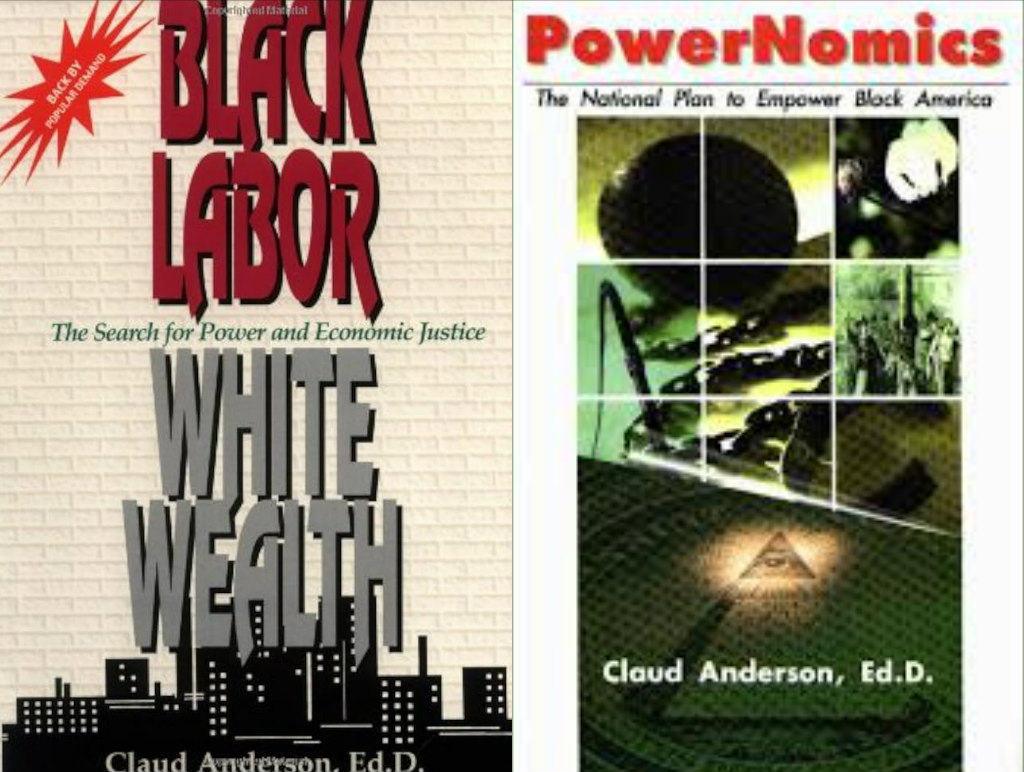
DOUBLE BOOK REVIEW: Black Labor, White Wealth and PowerNomics by Dr. Claud Anderson

5-Star Review of Black Labor, White Wealth and PowerNomics by Dr. Claud Anderson


📚 About the Books

1. Black Labor, White Wealth (1994)
Dr. Claud Anderson’s Black Labor, White Wealth is a masterfully researched chronicle that traces the historical exploitation of Black labor in America. It unearths the foundational truth that the economic engine of the United States was built largely on the backs of enslaved Africans—whose forced labor produced immense wealth for white elites. Anderson outlines how systemic racism, codified in law and reinforced by social customs, created a permanent underclass of African Americans. The book details how wealth was redistributed from Black to white hands through legalized oppression, disenfranchisement, Jim Crow laws, and economic exclusion.

2. PowerNomics: The National Plan to Empower Black America (2001)
As a follow-up, PowerNomics is not merely a critique of the status quo but a blueprint for economic self-empowerment. This work lays out a five-part strategy for Black Americans to become competitive in the 21st-century global economy. Anderson emphasizes building group economics, owning media outlets, creating independent education systems, and establishing a political infrastructure that serves Black interests. This book is revolutionary in that it pushes beyond protest—it advocates for practical solutions rooted in group solidarity and economic literacy.


🧠 Central Themes and Insights

💰 Finance and Black Empowerment
Both books place economic power at the center of liberation. Anderson argues that wealth—not mere income—is what sustains families, communities, and influence. Black Americans, though a trillion-dollar consumer market, own less than 2% of the nation’s wealth. He promotes asset accumulation, business development, and cooperative economics as tools to repair the generational damage of slavery and economic marginalization.

“If you don’t have money, you don’t have power. If you don’t have power, you don’t have justice.”Dr. Claud Anderson

💡 Making Things Better
Anderson’s solution-oriented approach is rooted in practical realism:

  • Pool resources to support Black-owned businesses.
  • Develop industries that circulate the Black dollar within the community.
  • Teach financial literacy from a young age.
  • Lobby for policies that directly benefit Black economic interests.
  • Control the institutions (schools, media, banks) that shape thought and opportunity.

🔍 The Truth About White Exploitation of Black Labor

Dr. Anderson meticulously documents how white elites created and maintained systems designed to exploit Black labor without reward:

  • Slavery (1619–1865) provided free labor that built white wealth.
  • The Homestead Act gave white settlers millions of acres of land—none to freed slaves.
  • Jim Crow laws ensured that Black people were second-class citizens economically and socially.
  • After the Civil Rights era, economic gains were stifled by mass incarceration, redlining, and predatory capitalism.

These acts were not random; they were strategic, multigenerational, and deeply embedded in American law and culture.


⚖️ Similarities and Differences Between the Two Books

AspectBlack Labor, White WealthPowerNomics
ToneHistorical, analytical, foundationalStrategic, solution-focused, motivational
FocusPast injustices and economic theftFuture action plans and systemic empowerment
PurposeTo expose the mechanisms of Black economic suppressionTo provide a plan for Black economic and political power
AudienceScholars, historians, activistsEntrepreneurs, educators, policy makers, community leaders
Key MessageAmerica owes a historical debt to Black peopleBlack America must build parallel economic infrastructure

👤 Who Is Dr. Claud Anderson?

Dr. Claud Anderson is a respected author, economist, political strategist, and entrepreneur. He holds several advanced degrees including a doctorate in education and is a former assistant secretary in the U.S. Department of Commerce under President Jimmy Carter. He also served as State Coordinator of Education under Governor Reubin Askew of Florida.

Dr. Anderson founded the Harvest Institute, a think tank dedicated to research, policy development, and advocacy for Black economic empowerment. His mission has been to awaken Black America to the necessity of controlling its own economy and institutions, rather than relying on integration alone.

He is married to Joan Anderson, and though his family life remains mostly private, his legacy as a thought leader and economic pioneer is cemented in his tireless advocacy for systemic Black advancement.


🌍 His Global and Community Impact

Dr. Anderson’s works are used in classrooms, community centers, and business forums across the United States. He is widely regarded as a pioneer of Black economic nationalism and a bold voice in a field too often marked by assimilationist strategies. His ideas have influenced a generation of Black entrepreneurs, educators, and activists.


🖋️ Final Thoughts – 5-Star Rating

⭐⭐⭐⭐⭐

Both Black Labor, White Wealth and PowerNomics are indispensable for anyone serious about understanding the economic roots of systemic racism and how to uproot them. Dr. Anderson gives Black America not just a mirror to reflect on the past, but a map to navigate the future. His scholarship is unflinching, his voice prophetic, and his vision urgent.

To read these books is to be informed, convicted, and empowered. They are not just books—they are weapons of liberation.


📚 References

Anderson, C. (1994). Black labor, white wealth: The search for power and economic justice. PowerNomics Corporation of America.
Anderson, C. (2001). PowerNomics: The national plan to empower Black America. PowerNomics Corporation of America.

Building Economic Legacy

A Comprehensive Guide to Entrepreneurship, Business Structures, and Wealth Creation for Black Entrepreneurs.

Photo by Tom Fisk on Pexels.com

The pursuit of economic independence has long been recognized as a pathway to freedom, stability, and generational wealth. For African Americans, entrepreneurship holds the potential to counter historical economic exclusion and build lasting community assets. However, starting a business requires more than ambition—it demands strategic planning, legal knowledge, and financial literacy. This essay explores the steps to start a business, the distinctions between entrepreneurship and business ownership, the formation of legal entities such as LLCs and C-Corporations, business credit development, and the importance of structures such as trusts for long-term protection.


I. Understanding Entrepreneurship vs. Business Ownership

Although often used interchangeably, entrepreneurship and business ownership are distinct. Entrepreneurship is the process of identifying, developing, and bringing a new idea, product, or service to market—often involving innovation and risk-taking (Drucker, 1985). Business ownership, in contrast, may involve operating an established business model without necessarily creating something new (Scarborough & Cornwall, 2018). An entrepreneur may be a business owner, but not all business owners are entrepreneurs.

  • Entrepreneurship = Innovation + Risk + Vision.
  • Business Ownership = Management + Profitability + Stability.

For Black entrepreneurs, understanding this distinction is key in determining whether the goal is to disrupt industries with new ideas or to operate a sustainable, income-generating business.


II. What It Takes to Start a Business

Starting a business requires several key steps:

  1. Concept Development – Defining the value proposition and target market.
  2. Market Research – Studying competitors, industry trends, and customer needs (Kotler & Keller, 2016).
  3. Business Planning – Creating a written plan with goals, budgets, and operational strategies.
  4. Legal Structure Selection – Choosing the appropriate entity (LLC, C-Corp, S-Corp, sole proprietorship).
  5. Funding – Securing startup capital through personal savings, loans, grants, or investors.
  6. Compliance – Registering the business, obtaining licenses, and meeting regulatory requirements.
  7. Marketing and Sales – Building a brand and generating revenue streams.

III. Forming an LLC vs. C-Corporation

Limited Liability Company (LLC)

  • Flexible structure, minimal formalities, and pass-through taxation.
  • Best for small-to-medium businesses or those seeking asset protection with simplified operations (IRS, 2024).
  • Owners (members) are not personally liable for debts.
  • Can hold assets such as real estate, intellectual property, and multiple business ventures under one LLC.

C-Corporation

  • Separate legal entity with potential for unlimited shareholders.
  • Subject to corporate tax and shareholder tax (double taxation).
  • Attracts investors more easily, often used by high-growth startups seeking venture capital (Romano, 2017).
  • Greater administrative complexity but better suited for large-scale growth.

Which is Better?
For a first-time Black entrepreneur, an LLC may be more cost-effective and easier to manage. However, for scaling nationally or going public, a C-Corp provides more funding opportunities.


IV. Obtaining an Employer Identification Number (EIN)

The EIN is a unique nine-digit number issued by the IRS to identify a business for tax purposes. It is essential for:

  • Opening a business bank account.
  • Filing taxes.
  • Applying for business credit and loans.
  • Hiring employees.

V. Building Business Credit

Business credit separates personal and business finances, protecting personal assets and increasing funding options. Steps to build business credit include:

  1. Register the business with an EIN.
  2. Open a business bank account.
  3. Establish trade lines with vendors.
  4. Obtain a D-U-N-S Number from Dun & Bradstreet.
  5. Pay bills on time to build a positive payment history (Anderson, 2021).

VI. Should You Rent a Building?

Renting a commercial space can enhance credibility, provide a customer-facing location, and separate business from personal life. However, virtual offices or shared workspaces can reduce overhead costs, especially during the early stages. The decision depends on the business model, budget, and customer interaction needs.


VII. Trusts and Asset Protection

For entrepreneurs building generational wealth, forming a trust can protect business assets, reduce estate taxes, and ensure that ownership passes smoothly to heirs (Madoff, 2010). An LLC can be owned by a trust, offering maximum privacy and protection.


VIII. Supporting Black Men in Business

Black male entrepreneurs face systemic barriers such as limited access to startup capital, lower approval rates for loans, and discriminatory lending practices (Fairlie, 2020). Solutions include:

  • Accessing minority business grants.
  • Joining Black business associations.
  • Networking with other Black entrepreneurs for mentorship.
  • Leveraging government programs like the SBA 8(a) Business Development Program.

Conclusion

Starting a business is both a legal and strategic process that demands careful planning, proper entity formation, and disciplined financial management. For Black entrepreneurs, especially men navigating systemic economic disparities, choosing the right structure—whether an LLC or C-Corp—alongside building business credit and considering asset protection through trusts, is essential to creating generational wealth. As Proverbs 13:22 (KJV) states, “A good man leaveth an inheritance to his children’s children.” Strategic business building is one of the most effective ways to fulfill that biblical mandate.


References

Anderson, R. (2021). Business credit decoded. Business Credit Solutions.
Drucker, P. F. (1985). Innovation and entrepreneurship. Harper & Row.
Fairlie, R. W. (2020). Racial inequality in business ownership and performance. Small Business Economics, 55(3), 611–631.
IRS. (2024). Limited liability company (LLC). Internal Revenue Service.
Kotler, P., & Keller, K. L. (2016). Marketing management (15th ed.). Pearson.
Madoff, R. D. (2010). Immortality and the law: The rising power of the American dead. Yale University Press.
Romano, R. (2017). The advantages and disadvantages of incorporating. Journal of Corporation Law, 42(3), 423–450.
Scarborough, N. M., & Cornwall, J. R. (2018). Essentials of entrepreneurship and small business management. Pearson.