Tag Archives: dilemmas

Dilemma: Racialized Double Consciousness

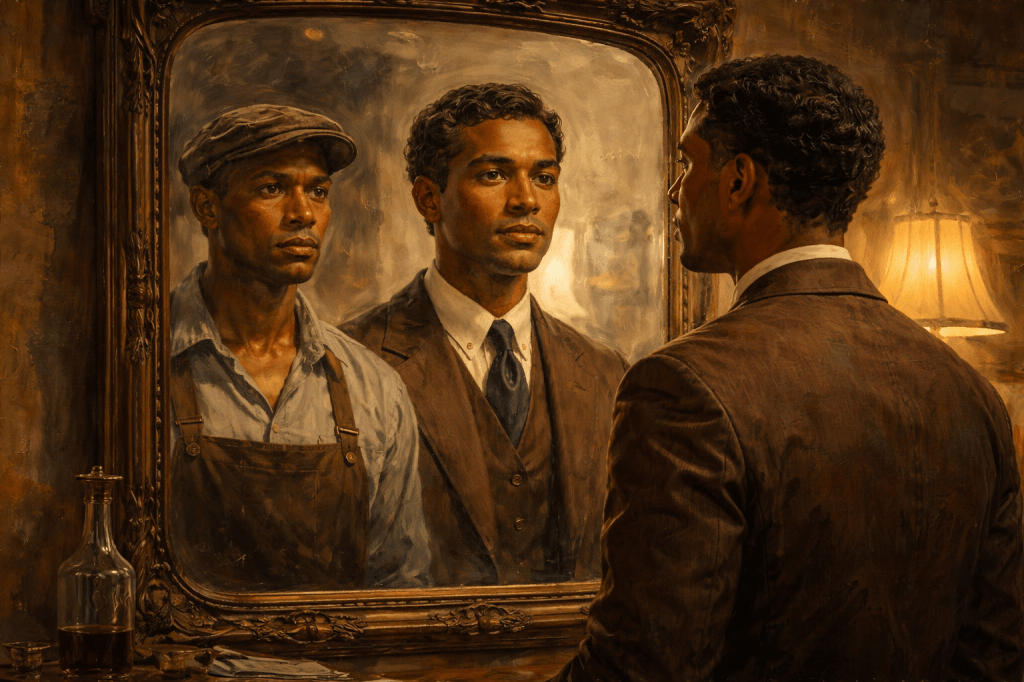
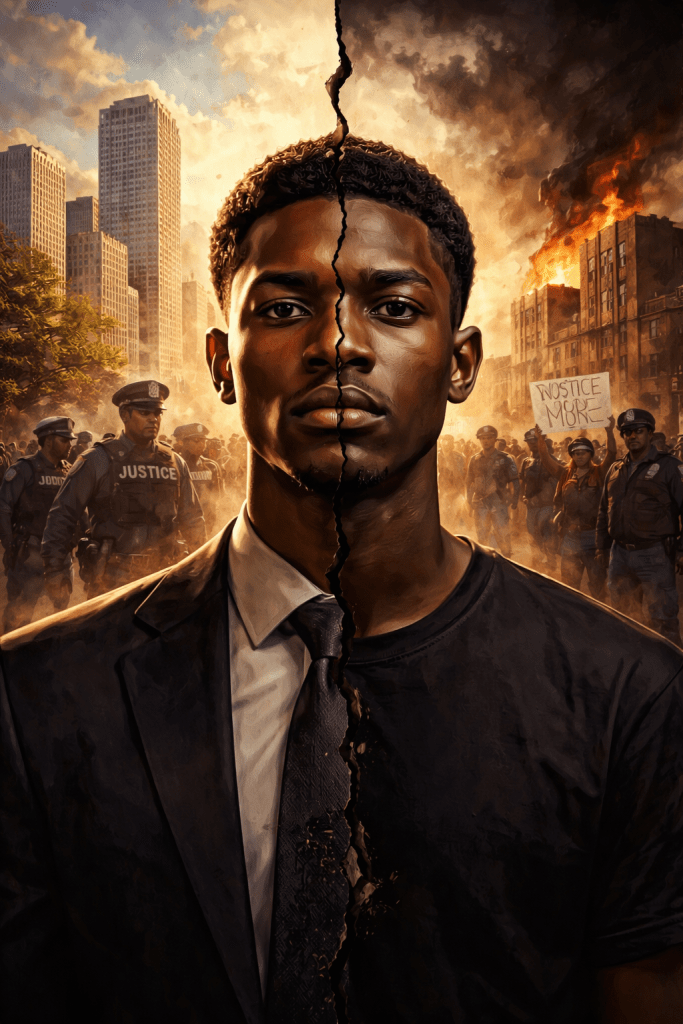
The concept of racialized double consciousness, first articulated by W. E. B. Du Bois remains one of the most enduring frameworks for understanding the psychological and social realities of Black life in America. It describes the internal conflict experienced by Black individuals who must navigate their own cultural identity while simultaneously viewing themselves through the lens of a dominant society that has historically marginalized them. This dual awareness is not merely theoretical; it is lived, embodied, and passed down through generations.

At its core, racialized double consciousness reflects a fractured sense of self. Black individuals are often compelled to reconcile who they are with how they are perceived. This tension produces a heightened awareness of identity, one that requires constant adjustment depending on the social environment. It is both a survival mechanism and a psychological burden, shaping how one speaks, behaves, and even thinks.

The historical roots of this phenomenon are deeply embedded in the legacy of slavery and segregation in the United States. From the era of bondage to the aftermath of the American Civil War, Black identity was constructed in opposition to a dominant white framework that denied full humanity. Even after emancipation, systems of exclusion such as Jim Crow laws reinforced a dual existence—one public and constrained, the other private and authentic.

During the early twentieth century, Du Bois argued that Black Americans were “gifted with second sight,” a profound awareness that allowed them to see both their own world and the world of the dominant culture. While this duality could foster resilience and insight, it also created a persistent sense of internal division. This division continues to shape contemporary experiences of race and identity.

In modern society, racialized double consciousness manifests in professional spaces, where Black individuals often feel pressure to code-switch to conform to dominant cultural norms. This adaptation can involve altering speech, appearance, or behavior to be perceived as acceptable or non-threatening. While effective in navigating systemic barriers, it can also lead to emotional exhaustion and a diminished sense of authenticity.

Education systems also play a significant role in reinforcing this dual awareness. Curricula that center Eurocentric perspectives can marginalize Black history and contributions, forcing Black students to engage with knowledge that does not fully reflect their lived experiences. This dissonance contributes to a fragmented educational identity and underscores the broader societal imbalance.

The media further amplifies racialized double consciousness by perpetuating stereotypes that distort Black identity. From film to news coverage, representations often oscillate between hypervisibility and invisibility. Influential figures such as Lupita Nyong’o have spoken openly about the psychological impact of colorism and representation, highlighting how external perceptions shape internal self-worth.

In addition to media, economic structures reinforce this duality. Wealth disparities, employment discrimination, and limited access to resources create an environment where Black individuals must constantly navigate structural inequities. The tension between aspiration and systemic limitation deepens the conundrum of identity and opportunity.

Racialized double consciousness is also evident in interactions with law enforcement and the criminal justice system. The need to be hyper-aware of one’s behavior in order to avoid suspicion or harm reflects a lived reality rooted in historical and contemporary injustice. This awareness is not abstract; it is often a matter of survival.

Within interpersonal relationships, this duality can influence how Black individuals relate to others, both within and outside their communities. The pressure to conform to external expectations can create internal conflict, particularly when those expectations conflict with cultural values or personal authenticity.

Despite its challenges, racialized double consciousness can also be a source of strength. The ability to navigate multiple cultural frameworks fosters adaptability, resilience, and a nuanced understanding of the world. This “double vision” can empower individuals to challenge dominant narratives and advocate for change.

The Black intellectual tradition has long engaged with this concept, expanding upon Du Bois’s original framework. Scholars have examined how gender, class, and other intersecting identities complicate the experience of double consciousness. Black women, for instance, often navigate multiple layers of marginalization, resulting in a more complex form of dual awareness.

Spirituality and faith traditions also provide a lens through which to understand and cope with this duality. For many, biblical narratives of exile, struggle, and redemption resonate deeply with the Black experience. These frameworks offer both comfort and a means of interpreting historical and contemporary realities.

Artistic expression has become a powerful outlet for articulating the tensions of double consciousness. Through music, literature, and visual art, Black creators explore themes of identity, belonging, and resistance. These expressions not only reflect individual experiences but also contribute to a collective cultural narrative.

The civil rights movement brought national attention to the realities of racial injustice and the internal conflicts it produces. Leaders and activists sought to dismantle the structures that necessitated double consciousness, advocating for a society in which Black identity could exist without compromise.

In contemporary discourse, the concept remains highly relevant. Movements for racial justice continue to highlight the psychological and structural dimensions of inequality. The persistence of systemic racism ensures that double consciousness is not a relic of the past but an ongoing reality.

Global perspectives further enrich the understanding of racialized double consciousness. Black individuals in different parts of the world experience similar tensions, though shaped by distinct cultural and historical contexts. This global dimension underscores the व्यापक impact of racial hierarchies.

The digital age has introduced new dimensions to this experience. Social media platforms allow for both self-expression and surveillance, creating spaces where identity can be affirmed or contested. The visibility afforded by these platforms can amplify both empowerment and scrutiny.

Ultimately, racialized double consciousness speaks to the enduring complexity of Black identity in a world structured by racial inequality. It is a testament to both the resilience and the vulnerability of those who navigate its demands daily.

As society continues to grapple with issues of race and justice, the insights offered by Du Bois remain profoundly relevant. Understanding and addressing the conditions that produce double consciousness is essential to creating a more equitable and inclusive world.

References

Du Bois, W. E. B. (1903). The Souls of Black Folk. Chicago, IL: A. C. McClurg & Co.

Lupita Nyong’o. (2014). Speech on beauty and colorism at Essence Black Women in Hollywood.

Alexander, M. (2010). The New Jim Crow: Mass Incarceration in the Age of Colorblindness. New York, NY: The New Press.

Coates, T.-N. (2015). Between the World and Me. New York, NY: Spiegel & Grau.

Fanon, F. (1952). Black Skin, White Masks. Paris, France: Éditions du Seuil.
Dilemmas

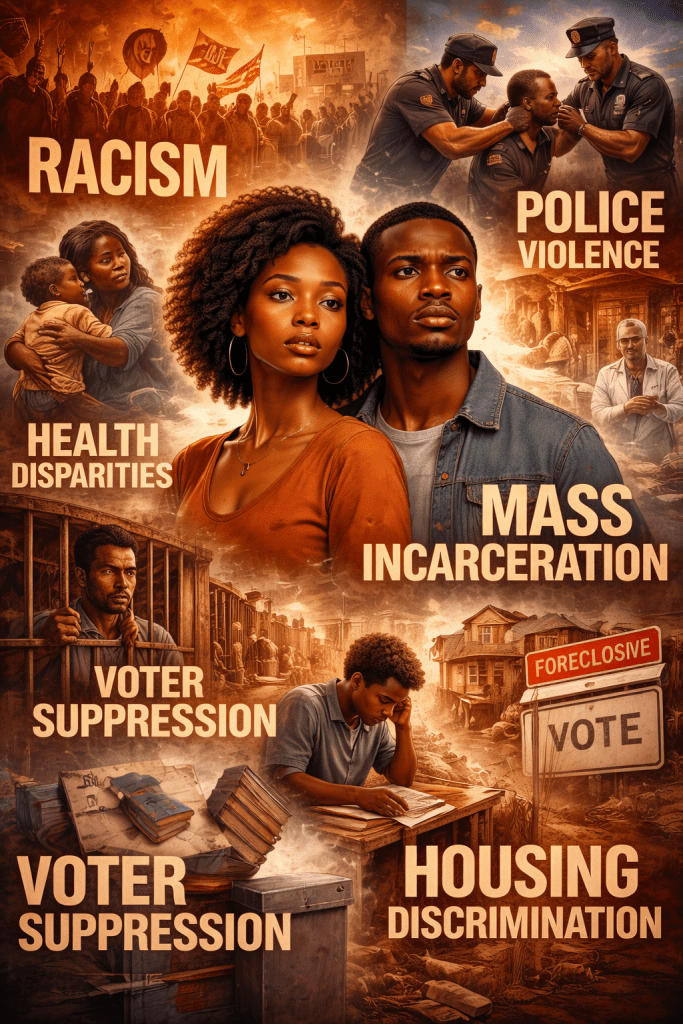
The biggest dilemma Black people face in the United States and globally is not a single issue—it is a complex intersection of systemic racism, historical oppression, and structural inequality. Scholars, historians, and social scientists generally agree that these challenges are interconnected, affecting economic opportunity, health, education, justice, and political representation simultaneously. Here’s a breakdown of the major dimensions of this dilemma:

The Weight of Structural Oppression: The Biggest Dilemma Black People Face

Black people in the United States face a complex web of challenges shaped by centuries of systemic racism, economic inequality, and social marginalization. These intersecting factors have created structural barriers that affect nearly every aspect of life, from housing and education to healthcare and political participation. Understanding the depth of this dilemma requires an examination of historical patterns and contemporary consequences.

Systemic Racism

Systemic or structural racism refers to the ways in which laws, policies, and social institutions create and perpetuate inequality based on race. This includes discriminatory practices in housing, education, employment, and criminal justice. Examples include:

  • Redlining and housing discrimination – Black families were historically denied access to mortgages and homeownership, creating generational wealth gaps.
  • Urban renewal and “Negro removal” – Black neighborhoods were destroyed for highways and development, displacing communities.

2. Economic Inequality

Black people consistently face disparities in income, wealth, and access to employment opportunities. According to Federal Reserve data:

  • The median wealth of Black families is significantly lower than that of white families.
  • Access to high-paying jobs is restricted by both educational and systemic barriers, including bias in hiring and promotion.

Economic inequality compounds other challenges, like housing, healthcare, and education.


3. Criminal Justice and Mass Incarceration

The U.S. criminal justice system disproportionately targets Black individuals:

  • Black Americans are more likely to be stopped, arrested, convicted, and given longer sentences than white Americans for similar offenses.
  • Systems like convict leasing historically re-enslaved Black men after emancipation, while modern mass incarceration continues this legacy in a more subtle form.

This creates cycles of poverty, family disruption, and social stigma.


4. Health Disparities

Black people experience disproportionate health challenges, both from systemic barriers and social determinants:

  • Higher rates of chronic disease, infant mortality, and maternal mortality.
  • Less access to quality healthcare and insurance.
  • The legacy of medical exploitation, such as the Tuskegee Syphilis Study, contributes to mistrust of medical institutions.

5. Educational Inequality

Education is a key pathway to social mobility, yet Black students often face:

  • Segregated schools due to district zoning and residential patterns.
  • Underfunded schools with fewer resources, larger class sizes, and limited access to advanced programs.
  • Bias in curriculum and disciplinary practices that disproportionately penalize Black students.

6. Cultural Stereotypes and Social Perceptions

Black people are frequently subjected to harmful stereotypes:

  • Men: “threatening,” “criminal,” or “hyper-masculine” tropes.
  • Women: “angry,” “jezebel,” or “mammy” archetypes.
  • These stereotypes affect employment, policing, mental health, and social interactions.

7. Political Disenfranchisement

Efforts to suppress Black votes through gerrymandering, voter ID laws, and intimidation continue to limit political influence. Without political power, communities struggle to advocate for systemic change in housing, education, and law enforcement.


8. Intergenerational Trauma

The cumulative effect of slavery, segregation, discrimination, and systemic oppression has created intergenerational trauma. This affects:

  • Mental health outcomes
  • Economic behaviors and financial stability
  • Family structures and community cohesion

One of the most pervasive forces shaping Black life is systemic racism. This form of oppression is embedded within institutions, laws, and social practices that disadvantage Black individuals collectively. Systemic racism manifests in policies that limit access to economic resources, enforce segregation, and perpetuate disparities across generations.

Housing discrimination has historically reinforced racial inequality. Practices such as redlining, blockbusting, and contract selling restricted Black families’ access to safe neighborhoods and homeownership. Redlining, for example, denied mortgages to residents in predominantly Black neighborhoods, preventing them from accumulating wealth through property ownership.

Urban renewal projects in the mid-twentieth century, often referred to as “Negro removal,” further disrupted Black communities. Entire neighborhoods were demolished for highways, commercial developments, and government buildings, displacing families and erasing community networks. These policies reinforced segregation while simultaneously enriching developers and local governments.

Economic inequality remains a central challenge. Black Americans experience higher unemployment rates and lower wages compared with white counterparts. This disparity is compounded by limited intergenerational wealth, which restricts opportunities for education, homeownership, and investment. As a result, economic mobility is often constrained by systemic barriers beyond individual control.

Education is similarly affected by structural inequities. School district zoning often ties educational resources to property taxes, leaving Black students in underfunded schools with fewer academic opportunities. Segregated schools continue to produce gaps in achievement and limit access to higher education and professional careers.

Healthcare disparities also exemplify systemic inequities. Black individuals experience higher rates of chronic illnesses, maternal mortality, and limited access to quality care. Historical exploitation, such as the Tuskegee Syphilis Study, has fostered mistrust toward medical institutions, further complicating healthcare outcomes for Black communities.

Criminal justice disparities are another critical component of structural oppression. Black Americans are disproportionately targeted for policing, incarceration, and harsher sentencing. Practices such as convict leasing in the post-Civil War South and contemporary mass incarceration policies have created cycles of poverty and social instability, particularly affecting Black men.

The labor market has not been immune to racial inequities. Occupational segregation, hiring discrimination, and wage gaps limit economic opportunities for Black workers. Even with equal qualifications, Black individuals frequently face systemic barriers that affect promotions, career progression, and job security.

Political disenfranchisement continues to hinder Black communities. Gerrymandering, voter suppression laws, and historical exclusion from voting limit the ability to influence policies that affect housing, education, healthcare, and criminal justice. This reduces accountability and reinforces systemic inequities.

Cultural and media representation also shapes social experiences. Black people are often portrayed through stereotypes that influence perceptions in employment, law enforcement, and interpersonal interactions. These portrayals contribute to bias, discrimination, and the psychological burden of navigating misrepresentation.

Intergenerational trauma compounds these structural challenges. The cumulative effects of slavery, segregation, and systemic discrimination influence mental health, economic behavior, family dynamics, and community cohesion. This trauma persists across generations, creating challenges that extend beyond immediate social conditions.

Health outcomes are further affected by social determinants such as neighborhood safety, food access, and environmental hazards. Many Black communities live in areas with limited resources, higher exposure to pollution, and reduced access to recreational spaces, exacerbating health disparities.

Despite these challenges, Black communities have demonstrated resilience and agency. Historically, Black churches, civic organizations, and grassroots movements have provided support networks, leadership opportunities, and platforms for advocacy. These institutions have played a critical role in fostering community cohesion and social advancement.

Cultural contributions by Black Americans, from music and literature to art and entrepreneurship, have not only enriched society but also served as forms of resistance and empowerment. Cultural production has allowed Black communities to assert identity, challenge oppression, and build intergenerational pride.

Family and community structures within Black communities have historically been sites of strength. Extended kin networks, cooperative child-rearing, and communal support have mitigated the effects of systemic oppression while fostering resilience.

Economic strategies, including mutual aid, cooperative business ventures, and community investment, have also served as tools to counter structural inequality. These efforts, while often limited by systemic barriers, demonstrate agency and resourcefulness in the face of adversity.

Policy interventions are essential to addressing the multifaceted challenges facing Black Americans. Measures to reduce income inequality, expand access to quality education and healthcare, reform the criminal justice system, and combat discriminatory housing practices are critical to creating equitable opportunities.

Understanding the Black experience requires recognizing both systemic barriers and the resilience of the community. Black Americans navigate a society that historically and continuously marginalizes them, yet they maintain cultural, economic, and social strength that contributes to societal advancement.

The overarching dilemma is that Black people are forced to navigate systems designed historically to exclude them. Every aspect of life—education, work, healthcare, criminal justice, housing—is influenced by these systemic barriers. While resilience, cultural strength, and community networks have enabled survival and progress, the structural challenges continue to create cycles of inequality that affect generations.

In short, the biggest dilemma Black people face is systemic oppression combined with persistent structural inequities, which compound across generations to limit access to opportunity, safety, and wealth.

Ultimately, the biggest dilemma facing Black people is not a matter of individual shortcomings but of persistent systemic inequality and structural oppression. Addressing these interrelated challenges requires comprehensive policy reforms, societal commitment to racial equity, and recognition of the historical context that created these disparities.


References

Alexander, M. (2012). The new Jim Crow: Mass incarceration in the age of colorblindness. The New Press.

Blackmon, D. A. (2008). Slavery by another name: The re-enslavement of Black Americans from the Civil War to World War II. Anchor Books.

Collins, P. H. (2000). Black feminist thought: Knowledge, consciousness, and the politics of empowerment. Routledge.

Crenshaw, K. (1989). Demarginalizing the intersection of race and sex. University of Chicago Legal Forum.

Foner, E. (1988). Reconstruction: America’s unfinished revolution, 1863–1877. Harper & Row.

Hirsch, A. R. (1983). Making the second ghetto: Race and housing in Chicago 1940–1960. University of Chicago Press.

Rothstein, R. (2017). The color of law: A forgotten history of how our government segregated America. Liveright Publishing.

Sugrue, T. J. (2014). The origins of the urban crisis: Race and inequality in postwar Detroit. Princeton University Press.

U.S. Department of Housing and Urban Development. (2023). History of housing discrimination and segregation in the United States.

Wingfield, A. H. (2013). No more invisible man: Race and gender in men’s work. Temple University Press.

Dilemma: Redlining

The Architecture of Racial Segregation in American Housing

Redlining refers to a discriminatory practice in which financial institutions, lenders, insurers, and government agencies systematically denied or limited access to loans, mortgages, and other financial services to residents of certain neighborhoods based on race or ethnicity. The practice disproportionately targeted Black communities and other minority populations, reinforcing residential segregation and economic inequality across the United States. Redlining became one of the most enduring structural mechanisms used to maintain racial hierarchy in housing, wealth accumulation, and urban development.

The term “redlining” originated from the literal red lines drawn on government-sponsored maps to designate neighborhoods considered risky for mortgage lending. These maps were produced by the Home Owners’ Loan Corporation during the 1930s as part of federal housing initiatives implemented during the Great Depression. Neighborhoods with large Black populations were almost automatically labeled hazardous for investment, regardless of the income or stability of the residents who lived there.

Redlining emerged during the era of sweeping federal housing reform under the Franklin D. Roosevelt administration. In 1933, the U.S. government created the Home Owners’ Loan Corporation to refinance mortgages and prevent mass foreclosures. However, the agency developed color-coded maps to guide lending decisions. Areas marked in green were considered the best investments, while areas marked in red—often where Black Americans lived—were deemed undesirable.

These classifications were further reinforced by policies associated with the Federal Housing Administration (FHA), which was established in 1934. The FHA promoted homeownership through federally insured mortgages but refused to insure loans in neighborhoods with Black residents. This meant that white families could more easily obtain mortgages and build wealth through homeownership, while Black families were largely excluded from these opportunities.

Redlining was not merely an economic practice but a social system that institutionalized racial segregation. Mortgage lenders, real estate brokers, and city planners used these maps to guide investment decisions. Even middle-class Black neighborhoods with stable property values were marked as hazardous. As a result, banks refused to provide loans to Black homeowners seeking to buy, repair, or refinance their properties.

White homeowners and real estate developers frequently benefited from redlining policies. Suburban developments constructed after World War II often included racially restrictive covenants that explicitly prohibited the sale of homes to Black buyers. Developments such as Levittown became symbols of postwar suburban prosperity for white families while simultaneously excluding Black Americans from homeownership opportunities.

Because Black families were prevented from accessing traditional mortgage financing, many were forced into exploitative housing arrangements such as contract buying. Under these arrangements, buyers paid inflated prices for homes but did not gain ownership until the entire payment was completed. Missing even a single payment could result in eviction and loss of all previously paid funds, leaving many Black families financially devastated.

Redlining also restricted Black access to suburban neighborhoods, forcing many African Americans to remain concentrated in urban centers. Cities like Chicago, Detroit, and Baltimore became emblematic of racially segregated housing patterns produced by redlining policies. These patterns shaped the demographic landscape of American cities for generations.

One of the most devastating effects of redlining was its impact on generational wealth. Homeownership is one of the primary mechanisms through which American families accumulate wealth. By denying Black families access to mortgage credit, redlining prevented them from building home equity that could be passed down to future generations.

Redlining also affected neighborhood infrastructure and public services. Communities labeled as hazardous received fewer public investments, including reduced funding for schools, parks, and transportation. Businesses were less likely to open in these areas because banks refused to provide commercial loans, leading to economic stagnation in many Black neighborhoods.

Educational inequality also emerged as a secondary consequence of redlining. Because public school funding in the United States is often tied to local property taxes, neighborhoods with declining property values—often those affected by redlining—experienced underfunded schools. This created a cycle of disadvantage that affected educational attainment among Black children.

Health disparities also correlate with historically redlined neighborhoods. Researchers have found that communities once marked as hazardous often experience higher rates of environmental pollution, limited access to healthcare facilities, and increased prevalence of chronic illnesses such as asthma and hypertension.

Although redlining was formally outlawed with the passage of the Fair Housing Act of 1968, its legacy remains deeply embedded in the American housing system. The law prohibited discrimination in housing based on race, color, religion, or national origin, yet the structural inequalities created by decades of redlining have proven difficult to dismantle.

Modern forms of housing discrimination continue to resemble redlining practices. Some lenders engage in “reverse redlining,” targeting minority communities with predatory loans and subprime mortgages. These financial products often carry higher interest rates and fees, increasing the risk of foreclosure.

Urban scholars have noted that historically redlined neighborhoods still exhibit lower property values compared to areas that were graded favorably in the 1930s. This demonstrates how past policies continue to influence contemporary economic outcomes and spatial inequality.

Redlining also shaped patterns of urban disinvestment that contributed to the decline of many American inner cities during the mid-twentieth century. As white families moved to suburbs with government-backed mortgages, tax bases in urban Black communities declined, limiting municipal resources for infrastructure and public services.

Many historians and sociologists argue that redlining represents one of the clearest examples of structural racism in American policy. Unlike individual acts of prejudice, redlining was embedded within federal institutions, banking systems, and real estate practices, making it a systemic barrier to economic equality.

In recent years, scholars and policymakers have called for reparative housing policies to address the enduring legacy of redlining. Proposals include expanded access to homeownership programs, targeted investments in historically marginalized neighborhoods, and reforms to lending practices to promote equitable access to credit.

Understanding redlining is essential for comprehending the racial wealth gap in the United States. While individual success stories exist, structural barriers created by discriminatory policies significantly shaped economic outcomes for generations of Black Americans.

Ultimately, redlining reveals how government policy, financial institutions, and social attitudes combined to produce lasting racial inequality. Its legacy continues to influence patterns of housing segregation, economic mobility, and urban development in modern American society.


References

Aaronson, D., Hartley, D., & Mazumder, B. (2017). The effects of the 1930s HOLC “redlining” maps. Federal Reserve Bank of Chicago.

Jackson, K. T. (1985). Crabgrass frontier: The suburbanization of the United States. Oxford University Press.

Massey, D. S., & Denton, N. A. (1993). American apartheid: Segregation and the making of the underclass. Harvard University Press.

Rothstein, R. (2017). The color of law: A forgotten history of how our government segregated America. Liveright Publishing.

Satter, B. (2009). Family properties: Race, real estate, and the exploitation of Black urban America. Metropolitan Books.

U.S. Department of Housing and Urban Development. (2023). History of housing discrimination and redlining in America. HUD Archives.

Dilemma: Double Consciousness

The Psychological Struggle of Identity in Black America

Double consciousness is a sociological and psychological concept describing the internal conflict experienced by African Americans who must navigate their identity within a society shaped by racial inequality. The term was first introduced by W. E. B. Du Bois in his groundbreaking book The Souls of Black Folk. Du Bois used the concept to explain how Black Americans often feel divided between their own sense of self and the identity imposed upon them by a racially prejudiced society.

Du Bois famously described double consciousness as a feeling of “two-ness.” According to his explanation, African Americans exist as both Black and American simultaneously, yet these identities are often placed in conflict by social structures that marginalize Blackness. This duality creates a constant awareness of how one is perceived by the dominant culture.

The origins of double consciousness can be traced to the historical conditions created by slavery and racial hierarchy in the United States. From the seventeenth century onward, Black people were legally and socially defined as inferior within a system designed to maintain white supremacy. These conditions forced African Americans to constantly interpret their lives through the lens of both their own experiences and the expectations of a racially stratified society.

During the era of slavery, African Americans were denied basic human rights and subjected to brutal labor systems that treated them as property. Although enslaved people maintained rich cultural traditions and strong communal bonds, they were forced to exist within a social order that rejected their humanity. This contradiction laid the foundation for the psychological tension that Du Bois later described as double consciousness.

Following the American Civil War and the abolition of slavery, African Americans entered a new phase of struggle during Reconstruction. Although freedom brought hope for equality, the reality of discrimination, violence, and political backlash quickly became evident. Black Americans were technically citizens but continued to face widespread exclusion from economic and political power.

The development of Jim Crow laws further intensified the experience of double consciousness. These laws enforced racial segregation and reinforced the idea that Black Americans were second-class citizens. In everyday life, African Americans had to constantly navigate spaces where their presence was restricted or stigmatized.

Double consciousness affected nearly every aspect of social life. Black individuals often felt compelled to monitor their speech, behavior, and appearance in order to avoid reinforcing negative stereotypes. This heightened awareness created a psychological burden that required constant self-regulation.

Education was one area where the tension of double consciousness became particularly visible. African Americans pursued education as a pathway to advancement and empowerment, yet many educational institutions were structured around Eurocentric values that marginalized Black history and culture. Students often learned to succeed within systems that did not fully acknowledge their identity.

The workplace also reflected the pressures of double consciousness. Many Black professionals found themselves navigating predominantly white environments where they felt compelled to prove their competence repeatedly. This experience sometimes required balancing cultural authenticity with professional expectations shaped by white norms.

Cultural expression became one way that African Americans resisted the limitations imposed by double consciousness. Literature, music, art, and religion provided spaces where Black identity could be affirmed and celebrated. Movements such as the Harlem Renaissance allowed Black artists and intellectuals to explore and redefine cultural identity.

The concept of double consciousness also influenced political activism. African American leaders recognized that achieving equality required challenging both external discrimination and internalized perceptions shaped by racism. Activists worked to redefine Black identity in ways that emphasized dignity, strength, and intellectual achievement.

The civil rights movement of the twentieth century further highlighted the tensions of double consciousness. Leaders such as Martin Luther King Jr. encouraged African Americans to demand full citizenship and equality while maintaining moral and cultural integrity. Their efforts helped dismantle many legal forms of segregation.

Despite these advancements, the psychological impact of double consciousness did not disappear. Many African Americans continued to experience subtle forms of discrimination, social bias, and unequal opportunities. As a result, the awareness of being viewed through the lens of race remained a persistent reality.

In modern society, double consciousness often appears in conversations about representation and identity. African Americans frequently navigate expectations from both their own communities and broader society. Balancing these expectations can create complex questions about authenticity and belonging.

Media representation has also influenced the experience of double consciousness. For many years, portrayals of Black people in film, television, and literature were shaped by stereotypes that reinforced negative perceptions. These images contributed to the external gaze that Du Bois described.

Social mobility sometimes intensifies the experience of double consciousness. As African Americans enter professional fields historically dominated by whites, they may find themselves negotiating cultural differences between their personal backgrounds and workplace environments.

At the same time, double consciousness has also fostered resilience and creativity within the Black community. The ability to understand multiple perspectives has contributed to rich intellectual traditions, artistic innovation, and social leadership.

Many scholars argue that the concept remains relevant for understanding race relations today. Issues such as systemic inequality, representation, and cultural identity continue to shape how African Americans navigate society.

Importantly, Du Bois did not view double consciousness solely as a burden. He believed that the ability to see the world from multiple perspectives could also offer unique insight and moral clarity. This dual awareness could empower African Americans to challenge injustice and imagine new possibilities for society.

Ultimately, double consciousness reflects the broader struggle for dignity and equality in a nation built on racial divisions. It captures the psychological complexity of living within a society that simultaneously claims ideals of freedom while historically denying them to many of its citizens.

Understanding double consciousness helps illuminate the historical and contemporary experiences of African Americans. By examining the origins and impact of this concept, scholars and citizens alike can better appreciate the resilience, creativity, and determination that have shaped the Black American journey.


References

Du Bois, W. E. B. (1903). The Souls of Black Folk. A.C. McClurg & Co.

Franklin, J. H., & Moss, A. A. (2000). From Slavery to Freedom: A History of African Americans. McGraw-Hill.

Hine, D. C., Hine, W. C., & Harrold, S. (2014). The African American Odyssey. Pearson.

Gates, H. L., & McKay, N. Y. (2004). The Norton Anthology of African American Literature. W.W. Norton.

Appiah, K. A. (1992). In My Father’s House: Africa in the Philosophy of Culture. Oxford University Press.

Library of Congress. African American history and culture collections.

Smithsonian National Museum of African American History and Culture. Historical resources on race and identity in the United States.

Dilemma: External Righteousness VS Internal Righteousness

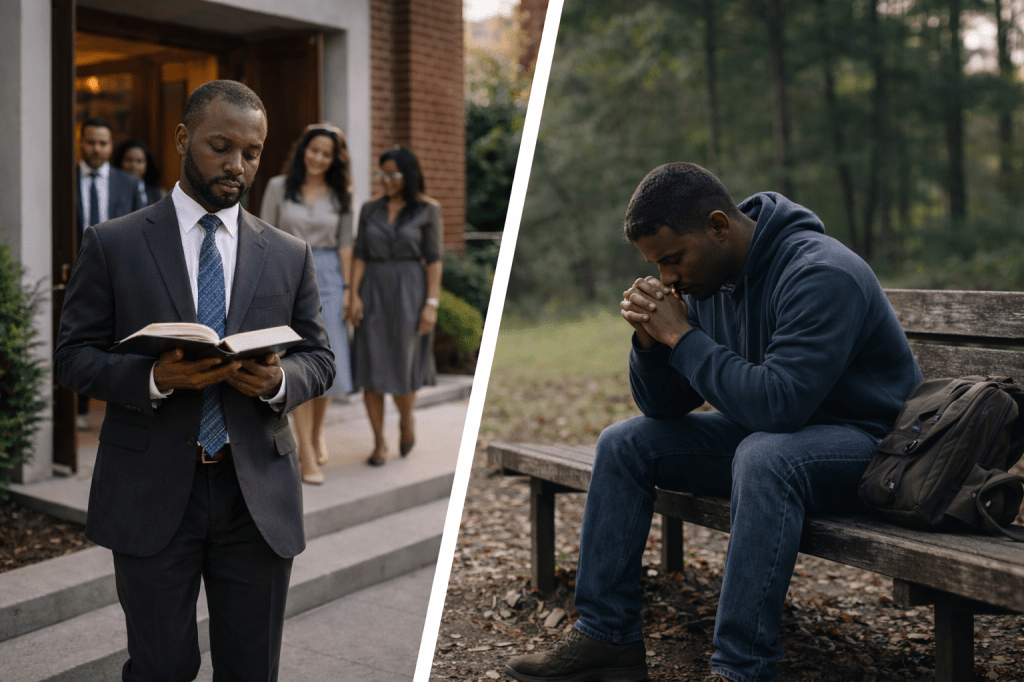
External righteousness refers to visible religious behavior—what people can see, measure, and often praise. It includes practices such as church attendance, public prayer, fasting, modest dress, and moral language. These actions are not inherently wrong; in fact, Scripture encourages godly behavior. However, the dilemma arises when righteousness becomes performative rather than transformative, focused more on appearance than on authentic spiritual change.

Internal righteousness, by contrast, speaks to the condition of the heart. It concerns motives, intentions, desires, and the inner posture of the soul toward God. This form of righteousness is invisible to human eyes but fully known to God. Internal righteousness is not about impressing others but about genuine repentance, humility, and obedience that flows from love rather than fear or social pressure.

Jesus directly addressed this tension in His rebukes of the Pharisees. They were meticulous in observing religious laws, yet their hearts were far from God. In Matthew 23:27 (KJV), Jesus compared them to “whited sepulchres,” beautiful on the outside but full of corruption within. This metaphor captures the essence of external righteousness: polished behavior masking internal decay.

The danger of external righteousness lies in self-deception. When individuals equate holiness with religious performance, they may believe they are spiritually healthy while remaining inwardly unchanged. This creates a false sense of security, where salvation is assumed based on actions rather than genuine faith and transformation.

Internal righteousness begins with repentance. Repentance is not merely apologizing for sin but a deep turning of the heart toward God. Psalm 51:10 (KJV) reflects this internal posture: “Create in me a clean heart, O God; and renew a right spirit within me.” The focus is not on outward correction alone, but on inner renewal.

One of the central theological tensions in Christianity is between justification and sanctification. Justification is the act of being declared righteous before God through faith, while sanctification is the ongoing process of being made righteous in character. External righteousness often skips sanctification and imitates holiness without spiritual substance.

The prophet Samuel articulated this principle when he told Saul, “The Lord looketh on the heart” (1 Samuel 16:7, KJV). God does not evaluate righteousness by surface behavior, status, or reputation. Divine judgment is rooted in the inner life, not public image.

External righteousness is also closely linked to religious pride. When righteousness is visible, it becomes comparable. People begin to measure themselves against others, producing spiritual arrogance. Luke 18:11–12 (KJV) shows the Pharisee boasting in prayer about his fasting and tithing, while the tax collector humbly sought mercy. Jesus affirmed the one with internal righteousness, not the one with external performance.

Internal righteousness produces fruit rather than performance. According to Galatians 5:22–23 (KJV), the fruit of the Spirit includes love, patience, gentleness, and self-control. These are not behaviors that can be easily staged; they emerge from a transformed heart and sustained relationship with God.

A major issue with external righteousness is that it often relies on fear—fear of judgment, fear of rejection, fear of hell. Internal righteousness, however, flows from love. As 1 John 4:18 (KJV) teaches, “Perfect love casteth out fear.” Obedience becomes relational rather than transactional.

Jesus emphasized internal righteousness in the Sermon on the Mount. He redefined sin not only as outward acts but as inward thoughts and intentions. Lust was equated with adultery, and hatred with murder (Matthew 5, KJV). This teaching dismantled the idea that righteousness is merely behavioral compliance.

External righteousness can exist without faith, but internal righteousness cannot. People may follow moral codes for social approval, cultural identity, or personal discipline. Yet without faith, these acts lack spiritual power. Hebrews 11:6 (KJV) states plainly that without faith it is impossible to please God.

Theologically, internal righteousness is rooted in regeneration—the spiritual rebirth described in John 3:3 (KJV). Jesus told Nicodemus that one must be “born again” to see the kingdom of God. This new birth is not behavioral reform but spiritual transformation from within.

Paul’s writings consistently emphasize internal righteousness. In Romans 7, he describes the struggle between outward law and inward sin, concluding that true deliverance comes through Christ, not through the law. The law can expose sin, but only the Spirit can change the heart.

External righteousness often leads to spiritual exhaustion. Maintaining a religious image requires constant effort, control, and self-monitoring. Internal righteousness, however, produces rest. Matthew 11:28 (KJV) invites believers to find rest in Christ, not in religious striving.

Another danger of external righteousness is hypocrisy. When inner desires contradict outer behavior, individuals live double lives. This creates cognitive dissonance and emotional fragmentation. Jesus condemned hypocrisy more than any other sin because it distorts truth and misrepresents God.

Internal righteousness produces integrity, meaning alignment between belief, desire, and action. Integrity does not mean perfection but sincerity. It reflects a heart that genuinely seeks God even while struggling with weakness. Proverbs 4:23 (KJV) affirms this by urging believers to guard the heart, for it shapes all of life.

Spiritually, external righteousness aligns with legalism, while internal righteousness aligns with grace. Legalism focuses on rule-keeping as a means of acceptance. Grace focuses on transformation as a response to acceptance. Ephesians 2:8–9 (KJV) makes clear that salvation is by grace, not by works.

Internal righteousness also reshapes identity. Instead of seeing oneself as “a good person trying to behave,” the believer becomes “a new creation in Christ” (2 Corinthians 5:17, KJV). Righteousness becomes a state of being, not a checklist of actions.

Psychologically, external righteousness is often driven by social validation, while internal righteousness is driven by spiritual conviction. One seeks applause; the other seeks alignment with God. This distinction explains why some people abandon faith when no one is watching—they were living for observers, not for God.

Ultimately, the dilemma between external and internal righteousness is the difference between religion and relationship. Religion emphasizes systems, rituals, and appearances. Relationship emphasizes intimacy, surrender, and transformation. God desires obedience, but He desires the heart first.

True righteousness is not what people see, but what God sees. External righteousness may impress crowds, but internal righteousness transforms lives. According to Jeremiah 17:10 (KJV), God searches the heart and tests the mind, rendering judgment not by performance but by truth within. The real question, therefore, is not how righteous we look—but how righteous we are when no one is watching.


References

Holy Bible (King James Version). (2017). Thomas Nelson.

Bonhoeffer, D. (1995). The cost of discipleship. Touchstone.

Grudem, W. (1994). Systematic theology: An introduction to biblical doctrine. Zondervan.

Piper, J. (2007). What Jesus demands from the world. Crossway.

Tozer, A. W. (1961). The knowledge of the holy. HarperCollins.

Wright, N. T. (2010). After you believe: Why Christian character matters. HarperOne.

Dilemma: The Modern & Slave Plantations

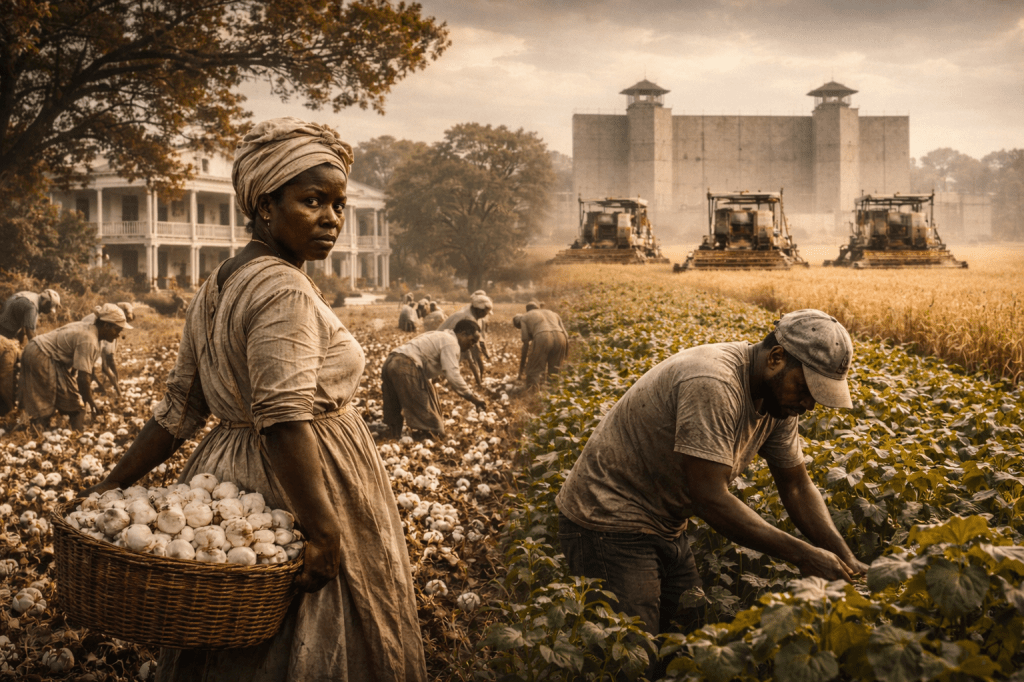
The legacy of slavery continues to shape the modern world in ways that are often overlooked. While chattel slavery in the United States officially ended in 1865, its economic, social, and psychological structures persist in subtle yet profound forms. Modern “plantations” manifest not only as historical sites but also as systemic systems of exploitation that disproportionately impact Black communities.

During the antebellum period, plantations were economic engines built on the labor of enslaved Africans. They relied on dehumanization, control, and violence to maintain productivity, wealth, and social hierarchy. The plantation system created lasting inequities in land ownership, education, and wealth accumulation.

Enslaved individuals were subjected to grueling labor from dawn to dusk, often under extreme conditions in the fields or as domestic workers. Families were torn apart, and basic human rights were denied. The psychological and cultural impact of this trauma has resonated across generations, creating long-lasting challenges in Black communities.

Plantations were also centers of cultural erasure. Enslaved Africans were forbidden from speaking their native languages, practicing their religions, or maintaining cultural traditions. This forced assimilation sought to strip individuals of identity while normalizing the supremacy of white culture.

The “modern plantation” can be understood metaphorically in terms of systemic oppression. Mass incarceration, exploitative labor practices, and economic marginalization of Black Americans are frequently described as contemporary forms of plantation-like control. While the methods differ, the underlying structures of surveillance, discipline, and economic extraction remain.

Historically, plantations relied on racialized hierarchies to maintain control. White supremacy dictated who could own property, access education, or participate in governance. These hierarchies have influenced social and institutional structures into the 21st century, contributing to persistent racial disparities in wealth, health, and political representation.

The psychological effects of plantation life continue to manifest in generational trauma. Studies on epigenetics suggest that stress and trauma experienced by enslaved ancestors may impact the mental and physical health of descendants, contributing to disparities in mental health, chronic illness, and resilience.

Education on plantation history often sanitizes the brutality experienced by enslaved individuals. Museums and historical sites sometimes focus on the architecture, wealth, or “heritage” of plantation owners while minimizing the suffering, resistance, and humanity of the enslaved population. This selective narrative reinforces systemic racism by erasing the lived experiences of Black Americans.

Labor exploitation continues in modern industries. Many low-wage sectors disproportionately employ Black workers under precarious conditions, echoing the economic dependency that existed on plantations. Farm labor, domestic work, and service industries reveal structural patterns reminiscent of historical exploitation.

Slavery and modern oppression are also interconnected through wealth disparities. The descendants of enslaved individuals were denied the ability to accumulate land, start businesses, or inherit wealth for generations. In contrast, many modern corporations and institutions trace their wealth back to slavery, creating intergenerational inequities that persist today.

Plantations were not only economic sites but also spaces of resistance and culture. Enslaved Africans preserved languages, songs, spiritual practices, and social networks, which formed the foundation of Black American culture. This resilience contrasts sharply with the narrative of passive subjugation often presented in history.

Modern parallels are visible in prison labor systems, where predominantly Black populations are employed for minimal wages. Scholars argue that this represents a continuation of the plantation logic: controlled labor extracted under constrained autonomy, producing profit for others while restricting freedom.

Cultural representations of plantations also shape perceptions. Films, literature, and tourism often romanticize plantation life, masking the violence and oppression that defined the institution. This misrepresentation perpetuates myths about the benevolence of slavery and undermines the acknowledgment of Black suffering and agency.

Plantations in the modern imagination can also refer to economic environments where Black workers are overexploited, surveilled, and restricted in mobility. Corporations, supply chains, and gig economies sometimes mirror the control mechanisms of historical plantations through low wages, lack of benefits, and limited upward mobility.

Land ownership remains a critical issue. After emancipation, Black farmers and landowners faced systemic barriers through discriminatory lending practices, violence, and legal maneuvers, preventing them from achieving economic independence. This mirrors the historical denial of land and wealth that characterized the plantation economy.

The plantation metaphor extends to education. Schools in under-resourced Black communities often suffer from overcrowding, poor facilities, and limited access to quality instruction. These conditions reflect structural neglect that echoes the constraints placed on enslaved individuals, shaping long-term outcomes.

Healthcare disparities also reflect plantation legacies. Limited access to medical services, environmental injustices, and systemic bias within healthcare institutions continue to disproportionately affect Black communities, echoing the neglect and exploitation of enslaved populations.

Understanding the link between historical plantations and modern inequalities is critical for policy and social justice. Recognizing systemic patterns enables more effective interventions, targeted support, and reparative measures that address the roots of inequity rather than treating symptoms superficially.

Resistance has always been part of the story. Enslaved Africans organized revolts, preserved cultural practices, and forged communities of resilience. Today, activism, scholarship, and advocacy continue this legacy, challenging modern forms of oppression and advocating for racial equity.

Ultimately, the dilemma of modern plantations reminds society that the end of slavery did not end its effects. The structures, ideologies, and systems established during slavery continue to shape economic, social, and cultural realities for Black Americans. Addressing this requires critical awareness, structural reform, and historical reckoning.


References

Berlin, I. (2003). Generations of Captivity: A History of African-American Slaves. Belknap Press.

Davis, A. Y. (2003). Are Prisons Obsolete? Seven Stories Press.

Kolchin, P. (2003). American Slavery, 1619–1877. Hill and Wang.

Wood, P. H. (1999). Black Majority: Negroes in Colonial South Carolina from 1670 through the Stono Rebellion. W. W. Norton & Company.

Alexander, M. (2010). The New Jim Crow: Mass Incarceration in the Age of Colorblindness. The New Press.

White, D. G. (1999). Ar’n’t I a Woman? Female Slaves in the Plantation South. W. W. Norton & Company.

Finkelman, P. (2009). Slavery and the Founders: Race and Liberty in the Age of Jefferson. M.E. Sharpe.

Gates, H. L., Jr., & Higginbotham, E. B. (2010). African American Lives. Oxford University Press.

Dilemma: Blackness

Photo by Wavy_ revolution on Pexels.com

The concept of Blackness embodies both divine purpose and societal marginalization. This paper explores the paradoxical experience of Black people: exalted by God yet diminished by the world. Drawing from Scripture, African historical scholarship, and sociocultural studies, the paper examines how Black identity has been misrepresented, appropriated, and simultaneously celebrated. The discussion addresses historical, psychological, and spiritual dimensions of Blackness, highlighting resilience, chosenness, and divine destiny.


Blackness represents more than a physical characteristic; it is a spiritual, cultural, and historical identity that has shaped civilizations, contributed to global progress, and faced systemic oppression. Historically, African civilizations such as Kemet, Mali, and Ethiopia exemplified innovation, scholarship, and governance, demonstrating Black excellence prior to European colonial interventions (Diop, 1974). Yet, contemporary social structures often fail to acknowledge this legacy, producing tension between inherent value and societal perception. This tension can be conceptualized as the “dilemma of Blackness”: exalted by God, yet diminished by human systems.


Divine Identity and Chosenness

Scripture affirms the divine purpose inherent in Black identity. “Ye are a chosen generation, a royal priesthood” (1 Peter 2:9, KJV). The Bible situates African peoples as integral to God’s plan, as evidenced in references to Cush, Ethiopia, and Egypt (Psalm 68:31, KJV; Acts 8:27, KJV). This divine chosenness establishes a spiritual framework for resilience, dignity, and legacy.


Historical Context of Oppression

Despite divine design, Black people have endured centuries of systemic oppression. Enslavement, colonialism, and institutionalized racism sought to erase cultural memory, distort identity, and suppress potential (Muhammad, 2010; Du Bois, 1903). Enslaved Africans were denied literacy, property, and familial autonomy, yet preserved spiritual practices and communal solidarity, demonstrating both resistance and divine fidelity (Fanon, 1967).


Cultural Appropriation and Misrepresentation

A critical facet of the dilemma is the simultaneous appropriation and marginalization of Black culture. Music, fashion, language, and spirituality have been widely adopted by global societies while the creators remain undervalued (Asante, 1988; hooks, 1995). This contradiction reinforces the paradoxical experience of Black identity: celebrated superficially but denied authentic acknowledgment.


Psychological Dimensions

The internalization of societal bias has produced psychological tension, as theorized by Du Bois (1903) in the concept of double consciousness. Black individuals navigate dual realities: embracing inherent worth while confronting misperceptions and prejudice. Psychological resilience emerges through community, faith, and cultural continuity, facilitating coping mechanisms in the face of persistent marginalization.


The Role of Faith

Faith has historically anchored Black identity. Spirituality and religion provided a lens for understanding suffering and endurance. The enslaved relied on faith-based songs, prayers, and scripture to sustain hope (“Let my people go”, Exodus 5:1, KJV). Contemporary Black communities continue to rely on biblical principles to navigate systemic inequities, affirming God as the ultimate arbiter of worth (Isaiah 54:17, KJV).


Resistance and Resilience

Blackness embodies resilience. Resistance has manifested through education, civil rights activism, entrepreneurship, and cultural preservation (Bell, 1992; Woodson, 1933). This resilience aligns with prophetic scripture: “No weapon that is formed against thee shall prosper” (Isaiah 54:17, KJV). Through trials, Black communities have transformed oppression into cultural, intellectual, and spiritual advancement.


Identity and Modern Society

In contemporary contexts, Black identity is often commodified. Social media, entertainment, and consumer culture showcase Black excellence aesthetically while minimizing structural support or historical context (Karenga, 2002). This commodification reflects a persistent societal discomfort with authentic Black power, echoing historical patterns of marginalization.


The Dilemma of Recognition

The tension between visibility and invisibility characterizes the dilemma. Black contributions are integral to global progress, yet Black people remain underrepresented in leadership, academia, and economic control (Muhammad, 2010; Asante, 1988). Recognition is partial, conditional, and often superficial, reinforcing the ongoing paradox.


The Spiritual Imperative

Spirituality provides a counter-narrative to worldly diminishment. By centering God as the source of identity, Black people navigate societal misunderstanding with divine perspective. “The steps of a good man are ordered by the Lord” (Psalm 37:23, KJV). Blackness is reframed not as a social liability but as a divine blessing and instrument of purpose.


Conclusion

Blackness represents both a historical challenge and a divine calling. The dilemma lies not in identity but in the world’s inability to reconcile with it. Black people embody resilience, creativity, and divinely ordained worth. The reconciliation of societal misperception with spiritual truth is ongoing. As the world struggles to comprehend Black excellence, faith and historical awareness provide the foundation for self-definition, legacy, and empowerment.


References

Asante, M. K. (1988). Afrocentricity: The theory of social change. African American Images.

Bell, D. (1992). Faces at the bottom of the well: The permanence of racism. Basic Books.

Diop, C. A. (1974). The African origin of civilization: Myth or reality. Lawrence Hill Books.

Du Bois, W. E. B. (1903). The souls of Black folk. A. C. McClurg & Co.

Fanon, F. (1967). Black skin, white masks. Grove Press.

hooks, b. (1995). Killing rage: Ending racism. Henry Holt and Co.

Karenga, M. (2002). Introduction to Black studies (3rd ed.). University of Sankore Press.

Muhammad, K. G. (2010). The condemnation of Blackness: Race, crime, and the making of modern urban America. Harvard University Press.

Woodson, C. G. (1933). The mis-education of the Negro. Associated Publishers.

Holy Bible, King James Version (KJV).

Dilemma: Black Hair Discrimination

The Politics of Policing Black Identity

Angela Davis

“I had been looking at pictures of women who were free, and they were wearing their hair the way it grows out of their heads.”
(Davis, A. Y., Women, Race & Class, 1981)

Chimamanda Ngozi Adichie

“Hair is political. Hair is personal. Hair is identity.”
(Adichie, C. N., Americanah, 2013)

Bell Hooks

“Straightening our hair is one of the many ways we try to erase the reality of our Blackness.”
(Hooks, b., Black Looks: Race and Representation, 1992)

Lupita Nyong’o

“What I learned is that when the world tells you you’re not enough, you don’t have to believe it.”
(Nyong’o, L., Sulwe, 2019)

“Black hair is not a trend, a problem, or a phase—it is a living archive of survival, resistance, and ancestral memory.”

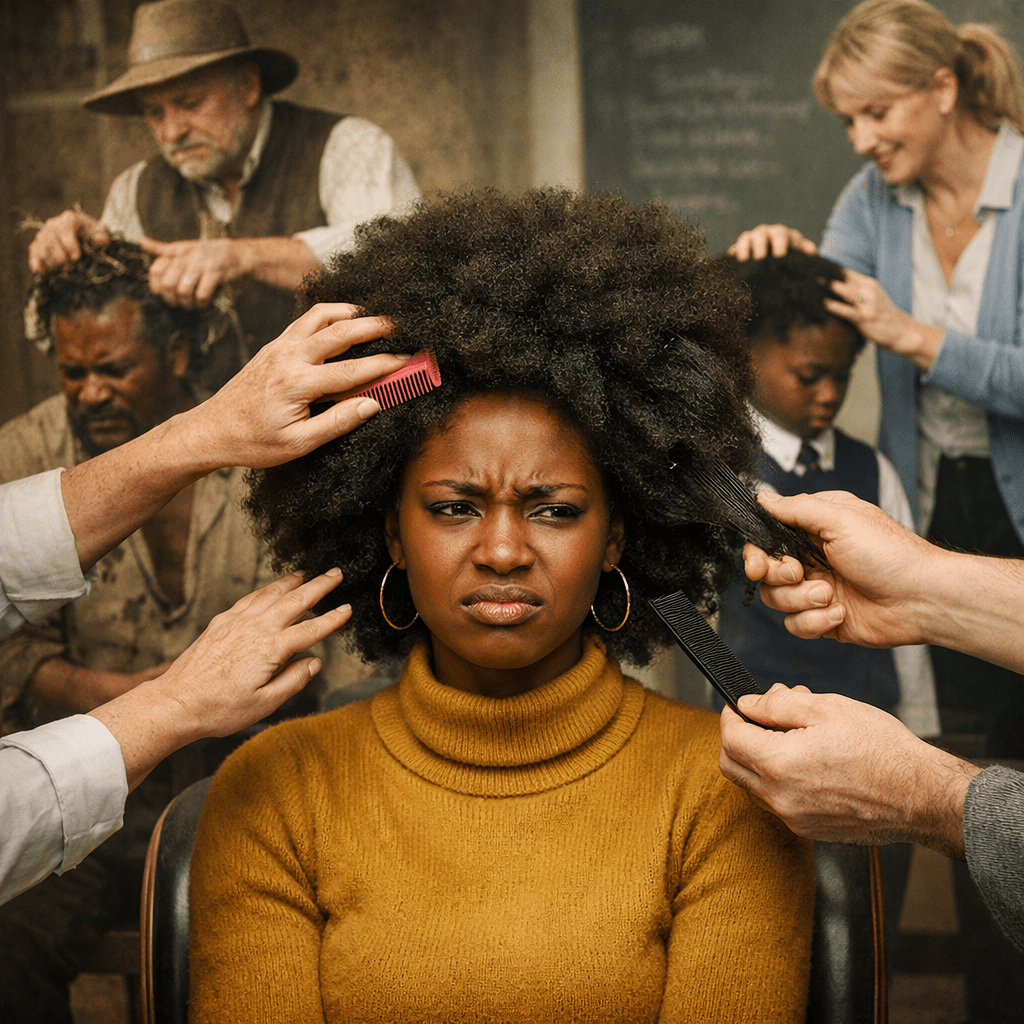
Black hair discrimination remains one of the most visible and normalized forms of racial bias in modern society. From classrooms to corporate offices, Black hair is disproportionately scrutinized, regulated, and punished under the guise of “professionalism,” “neatness,” or “dress code policies.” These standards are not neutral; they are rooted in Eurocentric ideals that define straight, loose, and non-textured hair as the default measure of beauty and respectability. As a result, Black people are often forced to alter their natural hair to gain acceptance, employment, or basic dignity.

In schools, Black children are suspended, sent home, or humiliated for wearing braids, locs, Afros, twists, or even natural curls. These disciplinary practices communicate a dangerous message: that Black identity itself is disruptive and unacceptable. When a child’s natural hair becomes grounds for punishment, the educational system participates in psychological harm that can shape self-esteem and identity formation for life. The classroom becomes not a place of learning, but a site of racial conditioning.

In the workplace, similar patterns persist. Black professionals are routinely told their hair is “unprofessional,” “distracting,” or “unkept,” even when it is clean, styled, and culturally appropriate. This forces many to chemically straighten their hair, wear wigs, or suppress their natural texture in order to be perceived as competent. Such pressures reveal how deeply white norms are embedded in institutional culture, where assimilation is often required for survival.

The hatred toward Black hair did not originate in modern offices or schools—it was cultivated during slavery. Enslaved Africans were stripped of their cultural grooming practices and taught to associate straight hair with proximity to whiteness and social advantage. Field laborers, who often had tightly coiled hair, were deemed inferior, while those with looser textures were privileged within the plantation hierarchy. Hair became a racial marker used to rank human worth.

This legacy did not disappear after emancipation. It evolved into colorism and texture discrimination, where straighter hair is still associated with beauty, intelligence, and professionalism, while kinky or coiled hair is labeled “nappy,” “bad,” or “ugly.” These terms, passed down through generations, reflect internalized racism—a psychological inheritance from white supremacy that continues to shape how Black people see themselves.

One of the most painful aspects of Black hair discrimination is that it is often reinforced within Black families themselves. Many Black parents, conditioned by their own experiences of rejection and survival, teach their children that their natural hair is something to be fixed, relaxed, or hidden. Phrases like “your hair is too nappy” or “you need a perm” are not harmless—they transmit shame and self-rejection at the most formative stages of identity.

This internalization is not accidental; it is a direct result of systemic oppression. When society consistently rewards whiteness and penalizes Blackness, marginalized communities may adopt those standards as coping mechanisms. However, survival strategies should not become permanent ideologies. Black parents must wake up to the reality that teaching children to hate their natural features only perpetuates the same system that devalues them.

White supremacy plays a central role in Black hair discrimination because it establishes whiteness as the universal standard of normality. Under this system, anything outside of European phenotypes is constructed as deviant, exotic, or inferior. Hair texture becomes political, not because Black people made it so, but because racism made Black bodies sites of control.

The concept of “professionalism” itself is racially coded. There is no scientific or moral basis for associating straight hair with competence or intelligence. These associations are cultural myths that developed within colonial and capitalist systems that centered white identity as the model citizen. Black hair challenges these myths simply by existing in its natural state.

Black hair has also been criminalized. From police stops to courtroom bias, Afro-textured hair has been associated with deviance and threat. Studies show that Black people with natural hairstyles are more likely to be perceived as aggressive, untrustworthy, or less intelligent, even when all other factors are controlled. This demonstrates how aesthetic bias becomes a mechanism of social exclusion.

The rise of movements like the Natural Hair Movement and the passing of the CROWN Act represent resistance against these injustices. These efforts aim to legally protect individuals from discrimination based on hair texture and style. However, legal reform alone cannot dismantle deeply ingrained psychological and cultural beliefs. Laws can change policies, but they cannot instantly heal internalized self-hatred.

True liberation requires a cultural shift in how Black beauty is defined and taught. Black hair must be reframed not as a problem to manage, but as a sacred inheritance—genetically rich, biologically diverse, and historically powerful. The same coils once mocked were used to map escape routes during slavery, braid seeds for survival, and encode communal identity.

Education plays a crucial role in this transformation. Schools must incorporate Black history and African aesthetics into curricula, not as side notes, but as central narratives. When children learn that their features have historical meaning and cultural value, they are less likely to internalize racist hierarchies imposed by society.

Media representation is equally important. For decades, Black beauty was only celebrated when it approximated whiteness—light skin, straight hair, narrow features. Today, although representation has expanded, Eurocentric beauty standards still dominate advertising, film, and fashion industries. The normalization of natural Black hair must move beyond trends and become structural.

The policing of Black hair is ultimately about control. It is about who gets to define beauty, respectability, and humanity. When institutions regulate how Black people wear their hair, they are not managing aesthetics—they are managing identity. Hair becomes a battlefield where cultural memory confronts colonial ideology.

Psychologically, hair discrimination contributes to identity fragmentation. Black individuals are often forced to perform different versions of themselves depending on context—natural at home, altered at work, cautious in public. This constant self-monitoring produces emotional fatigue and reinforces the idea that authenticity is unsafe.

Black parents, educators, and leaders have a responsibility to disrupt this cycle. Teaching children that their hair is “good” exactly as it grows is not a trivial affirmation—it is a radical act of resistance. It challenges centuries of propaganda designed to disconnect Black people from their bodies and ancestry.

Healing from hair discrimination requires both structural and spiritual work. Structurally, institutions must dismantle biased policies. Spiritually and psychologically, Black communities must unlearn the lie that proximity to whiteness equals worth. The reclamation of Black hair is inseparable from the reclamation of Black identity.

Black hair is not unprofessional, unclean, or undesirable. It is African. It is genetic. It is historical. It is political because oppression made it so. And until society confronts the racial logic behind its beauty standards, Black hair will continue to be policed—not because it is wrong, but because it refuses to conform to a system built on white supremacy.

Ultimately, the hatred of Black hair reflects a deeper hatred of Black existence. To love Black hair fully is to reject the entire hierarchy that ranks human value by proximity to Europe. In that sense, every Afro worn freely, every loc grown proudly, and every child taught to love their coils is an act of cultural revolution.


References

Banks, I. (2000). Hair matters: Beauty, power, and Black women’s consciousness. New York, NY: New York University Press.

Byrd, A. D., & Tharps, L. L. (2014). Hair story: Untangling the roots of Black hair in America. New York, NY: St. Martin’s Press.

Collins, P. H. (2004). Black sexual politics: African Americans, gender, and the new racism. New York, NY: Routledge.

Crenshaw, K. (1991). Mapping the margins: Intersectionality, identity politics, and violence against women of color. Stanford Law Review, 43(6), 1241–1299.

Johnson, T. R., & Bankhead, T. (2014). Hair it is: Examining the experiences of Black women with natural hair. Open Journal of Social Sciences, 2(1), 86–100.

Rooks, N. (1996). Hair raising: Beauty, culture, and African American women. New Brunswick, NJ: Rutgers University Press.

Rosette, A. S., & Dumas, T. L. (2007). The hair dilemma: Conformity versus authenticity. Journal of Applied Psychology, 92(6), 1601–1616.

Tate, S. A. (2009). Black beauty: Aesthetics, stylization, politics. Farnham, UK: Ashgate.

The CROWN Act. (2019). Creating a Respectful and Open World for Natural Hair. U.S. legislation on hair discrimination.

Dilemma: Bid ’Em Up

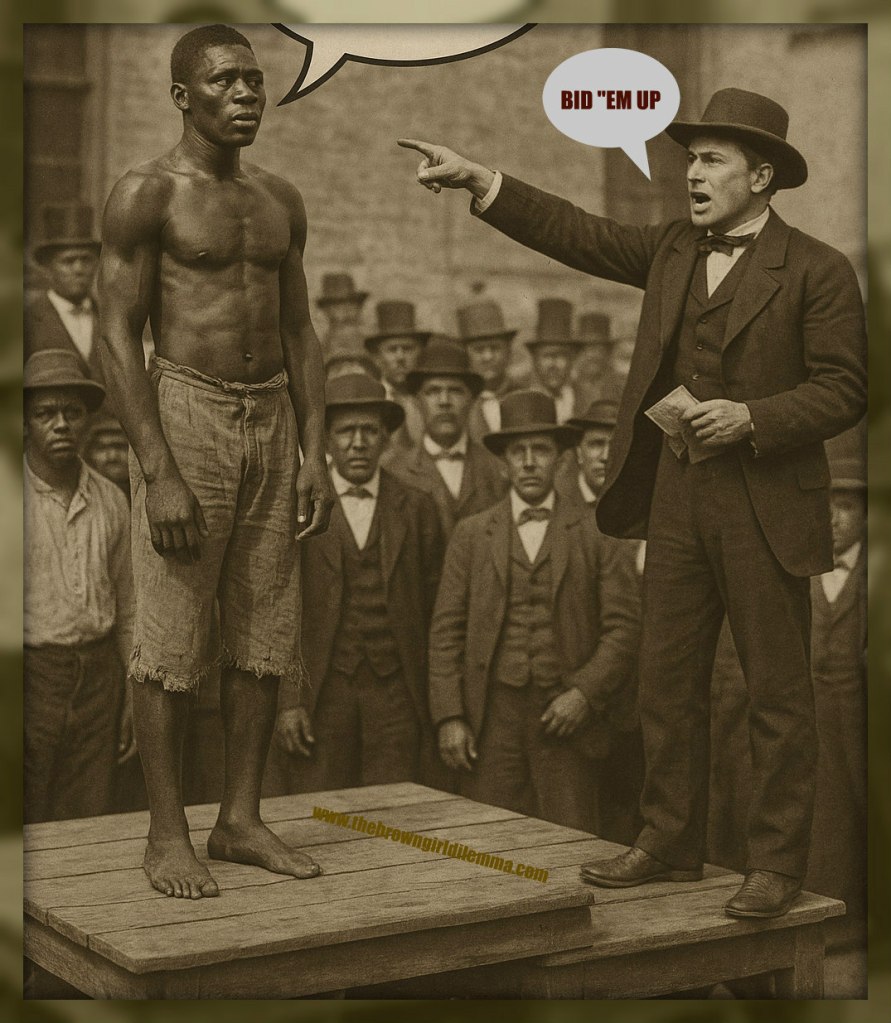
The phrase “Bid ’em up” refers to one of the most dehumanizing practices of the transatlantic slave trade: the process of auctioning African men, women, and children to the highest bidder. It was a command shouted at buyers during slave auctions, urging them to increase their bids as if the people on the block were livestock rather than human beings. This phrase captures the brutality, humiliation, and commercial greed embedded in American slavery.

Slave auctions operated as public markets where enslaved Africans were bought and sold, primarily in the 1700s–1800s, with the largest waves occurring from the early 18th century up to the Civil War in 1861. These auctions were often loud, crowded, and emotionally devastating events. Families were torn apart as husbands, wives, and children were separated, sold to different plantations, and sent to different states based solely on profit margins. “Bid ’em up” was not merely a business tactic—it was a reflection of how deeply racism shaped the economic and social system of the United States.

The auctions often took place in major Southern cities such as New Orleans, Charleston, Richmond, and Savannah. These markets drew slave traders, planters, wealthy merchants, and speculators eager to expand their labor force. In these spaces, the racial hierarchy of America was not hidden or subtle—it was on full display. Black people were forced onto platforms, examined, touched, and evaluated like property. Their bodies were scrutinized for strength, fertility, and obedience.

The enslaved were stripped of humanity through language. Terms like “bucks,” “breeders,” and “hands” reduced people to economic tools. The phrase “Bid ’em up” reveals the cold transactional nature of slavery, where human lives became items in an economic system built entirely on violence and racial domination.

Racism played a central role in justifying these practices. Europeans and white Americans constructed ideologies claiming Black people were inferior, subhuman, or naturally suited for enslavement. These racist beliefs formed the moral foundation for buying and selling millions of Africans. Without racism, the brutality of the slave market could not have been rationalized or sustained.

Slave auctions were not isolated events—they were central to the expansion of American agriculture. The rise of cotton, sugar, and rice industries increased demand for enslaved labor. The years following the 1808 ban on international slave importation saw the rise of the domestic slave trade, where enslaved people were sold from the Upper South to the Deep South in massive numbers.

These auctions were emotional battlegrounds. Many enslaved people prayed, cried, or resisted in small ways as they were forced onto the blocks. Mothers clung to their children, couples begged to stay together, and countless individuals were separated forever. The psychological trauma of these auctions rippled across generations.

The sight of chains, ropes, and shackles haunted the enslaved. Their names were replaced with auction numbers. Their futures were determined not by God or family but by the greed of bidders. The auction block became a symbol of absolute powerlessness.

Even children were not spared. Boys and girls as young as five or six were sold for their future labor value. Infants were sold with their mothers or separated from them, depending on what yielded higher profits. Slave traders calculated the price of innocence.

The practice reached its most infamous moment in 1859 during the largest recorded slave auction in U.S. history: The Weeping Time in Georgia, where over 400 enslaved people were sold over two days. The rain that fell during the event was described as the tears of heaven, mourning the suffering.

The economic impact of these auctions built generational wealth for white families while simultaneously creating generational poverty for Black Americans. Plantations, banks, and insurance companies all profited from human sale and exploitation.

The culture around slave auctions normalized cruelty. Newspapers advertised upcoming sales, listing children alongside horses. Hotels hosted bidders. Judges and sheriffs enforced fugitive slave laws to protect the system. Churches often remained silent, and in some cases participated.

After the Civil War and emancipation, the memory of the auction block became a permanent wound in African American history. It shaped family structures, migration patterns, and the cultural resilience of Black communities. Many African Americans today trace their lineage to ancestors sold on those blocks.

The legacy of “Bid ’em up” exposes how slavery was not just a labor system—it was an industry, a psychology, and a national economic engine grounded in racial violence. Understanding this context helps illuminate the roots of systemic racism in modern America.

The phrase also reminds us of the strength of the ancestors who survived unimaginable pain. Their endurance, faith, and determination laid the foundation for Black progress in the centuries that followed. They were bought and sold, yet they remained unbroken.

Remembering these auctions is not simply an act of historical reflection. It is a testimony to the resilience of a people who were denied humanity but ultimately reclaimed their identity, dignity, and voice. The auction block is a scar, but it is also a monument to survival.

In studying this painful history, we confront the truth of America’s origins. Slavery was not a footnote—it was central. And phrases like “Bid ’em up” force us to acknowledge the systems of racism that endured long after the auctions ended.

This history calls us to honor the ancestors by telling their stories truthfully, challenging systemic injustice, and ensuring that the trauma of the auction block is never forgotten.

References
Berlin, I. (2003). Generations of captivity: A history of African-American slaves. Harvard University Press.
Fett, S. (2002). Working cures: Healing, health, and power on Southern slave plantations. University of North Carolina Press.
Johnson, W. (1999). Soul by soul: Life inside the antebellum slave market. Harvard University Press.
Smallwood, S. (2007). Saltwater slavery: A Middle Passage from Africa to American diaspora. Harvard University Press.
Smith, C. (2012). The Weeping Time: Slave auctions and the economy of the South. Yale University Press.

Dilemma : The Beast Nation

The term Beast Nation is not merely rhetorical; it is biblical, symbolic, and historical. In Scripture, beasts represent empires built on domination, violence, deception, and exploitation (Daniel 7; Revelation 13). America, when examined through its treatment of Black and Indigenous peoples, mirrors the characteristics of a prophetic beast—powerful, wealthy, religious in language, yet ruthless in practice.

Colonialism marks the first stage of the Beast Nation. European powers arrived under the banner of “discovery,” yet what followed was invasion, land theft, and cultural annihilation. Indigenous nations were displaced, murdered, and erased to establish settler dominance, fulfilling the biblical pattern of conquest through bloodshed (Habakkuk 2:12, KJV).

Colonial theology weaponized Christianity to justify conquest. Scripture was distorted to portray Europeans as divinely ordained rulers while Africans and Indigenous peoples were cast as subhuman. This manipulation of God’s Word mirrors the beast that speaks “great things and blasphemies” (Revelation 13:5, KJV).

Chattel slavery institutionalized this evil into law. Unlike other forms of servitude, chattel slavery reduced Africans to lifelong, inheritable property. Black bodies became commodities—bought, sold, bred, insured, and punished—stripped of humanity and covenantal identity.

The Bible condemns manstealing explicitly: “He that stealeth a man, and selleth him…shall surely be put to death” (Exodus 21:16, KJV). Yet America built its wealth in direct violation of this command, revealing the moral contradiction at its core.

Reconstruction briefly exposed the Beast Nation’s fear of Black autonomy. Promises of “40 acres and a mule” symbolized restitution and independence, yet these promises were rescinded. Land was returned to former enslavers, while Black families were thrust into sharecropping and debt peonage.

This betrayal echoed Proverbs 20:10: “Divers weights, and divers measures, both of them are alike abomination to the LORD” (KJV). America promised justice publicly while practicing theft privately.

Jim Crow followed as a system of racial terror disguised as law. Segregation, lynching, and voter suppression enforced white supremacy through fear. Black progress was criminalized, and racial hierarchy was violently preserved.

Lynching functioned as public ritual—Black bodies displayed as warnings. Crosses burned beside corpses while churches remained silent or complicit. This hypocrisy fulfilled Isaiah 1:15: “Your hands are full of blood” (KJV).

Surveillance evolved as a modern method of control. Slave patrols became police departments; plantation ledgers became data systems. Black neighborhoods were watched, tracked, and criminalized long before digital technology made surveillance ubiquitous.

The civil rights movement revealed the Beast Nation’s resistance to righteousness. Peaceful protestors were beaten, jailed, assassinated, and vilified. America condemned foreign tyranny while unleashing state violence on its own citizens.

Dr. King’s assassination symbolized the cost of prophetic truth. Like the prophets before him, he confronted power—and paid with his life (Matthew 23:37, KJV).

The War on Drugs marked a new era of legalized oppression. Though drug use was statistically similar across races, Black communities were targeted disproportionately. Mandatory minimums, three-strikes laws, and police militarization fueled mass incarceration.

Scripture warns of unjust laws: “Woe unto them that decree unrighteous decrees” (Isaiah 10:1, KJV). The prison system became a modern plantation, extracting labor and removing generations of Black men and women from their communities.

America proclaims itself the “Land of the Free,” yet millions of Black people lived and died in bondage on that very soil. Freedom was declared selectively, revealing liberty as conditional rather than universal.

It calls itself the “Home of the Brave,” while Indigenous nations were slaughtered, displaced, and confined to reservations. Courage was claimed by conquerors, while resistance was labeled savagery.

“In God We Trust” is stamped on currency that once financed human trafficking, slave ships, and plantations. Mammon was worshiped while God’s commandments were violated (Matthew 6:24, KJV).

“One Nation Under God” rang hollow as Black bodies swung from trees and crosses burned in terror campaigns. God’s name was invoked while His image-bearers were desecrated.

“Liberty and justice for all” existed only for white citizens. Black Americans were excluded from the social contract, taxed without representation, and punished without protection.

Education systems sanitized this history, presenting America as a flawed but noble experiment rather than a predatory empire. Truth was buried beneath patriotism.

Media reinforced the beast’s image, portraying Black resistance as threat and Black suffering as deserved. Narrative control became psychological warfare.

Churches often chose comfort over conviction. Many preached obedience to the state while ignoring God’s demand for justice (Micah 6:8, KJV).

The Beast Nation thrives on amnesia. Forgetting allows repetition; silence permits continuation.

Biblically, beasts fall when truth is revealed and judgment arrives (Daniel 7:26). Empires collapse not from external enemies alone, but from internal corruption.

For Black America, survival has always required spiritual discernment—recognizing systems not merely as flawed, but as adversarial.

The Exodus narrative reminds us that God hears the cries of the oppressed (Exodus 3:7, KJV). Liberation is divine, not granted by empires.

The Beast Nation fears awakening. Knowledge of history, identity, and covenant threatens its legitimacy.

Judgment begins with truth. Repentance demands restitution, not rhetoric.

Until justice flows “like waters, and righteousness like a mighty stream” (Amos 5:24, KJV), America remains a beast clothed in religious language and democratic symbols.


References

Alexander, M. (2012). The new Jim Crow: Mass incarceration in the age of colorblindness. The New Press.

Baptist, E. E. (2014). The half has never been told: Slavery and the making of American capitalism. Basic Books.

Du Bois, W. E. B. (1935). Black reconstruction in America. Free Press.

Horsman, R. (1981). Race and manifest destiny. Harvard University Press.

KJV Bible. (1769/2017). Authorized King James Version.

Wilkerson, I. (2020). Caste: The origins of our discontents. Random House.