

Tag Archives: Digital Age

Lost Sons, Loud Voices: Masculinity Without Covenant in the Digital Age

Lost sons grow up in a world more connected than ever, yet relationally barren. Platforms provide community templates, while life often fails to provide community itself. Scripture speaks to men without a rooted vision: “My people are destroyed for lack of knowledge” (Hos. 4:6, KJV).

The digital age did not create male disorientation, but it amplified it. Grievance found microphones, immaturity found markets, and wound-identity found a home page. “The simple believeth every word” (Prov. 14:15, KJV), and the internet has mastered the discipling of simplicity.

Masculinity without covenant becomes performance without purpose. It boasts of control but lacks calling, command but not mission, influence but not inheritance. “A bastard shall dwell in Ashdod” (Zech. 9:6, KJV), a prophetic metaphor echoed by many scholars referencing fatherless identities displaced from spiritual lineage.

Many lost boys are algorithm-raised, not father-raised. Their rites of passage are viral, not sacred, horizontal, not prophetic; social, not spiritual. God offers the contrast: “I will be a father unto you” (2 Cor. 6:18, KJV).

Digital male movements frequently frame women as rivals, not recipients, obstacles, not co-heirs. Yet scripture orders unity, not hierarchy: “That they all may be one” (John 17:21, KJV).

Covenantal masculinity defined strength through obedience. But modern masculinity defines strength through ego-visibility. God rebukes this posture: “Pride goeth before destruction” (Prov. 16:18, KJV).

The loud male voices online echo confidence without conviction. Their identities are outspoken but not examined. But scripture demands the introspection they avoid: “Examine yourselves, whether ye be in the faith” (2 Cor. 13:5, KJV).

Many boys build masculinity on grievance because grievance feels powerful. Pain becomes political, loneliness becomes polemical, rejection becomes rhetoric. Yet scripture prescribes healing, not amplification: “He healeth the broken in heart, and bindeth up their wounds” (Psa. 147:3, KJV).

Love is dandified as weakness in digital male spaces. Yet biblical masculinity is not fragile toward softness, it fathers through it. “Fathers, provoke not your children to wrath: but bring them up” (Eph. 6:4, KJV).

The manosphere provides discipleship without doctrine, obedience without God, brotherhood without rebuke, and masculinity without cross. But scripture anchors manhood in Christ’s model: “Not as lords over God’s heritage” (1 Pet. 5:3, KJV).

Masculinity without covenant elevates voice and buries responsibility. But scripture centers provision as evidence of faith: “If any provide not for his own… he hath denied the faith” (1 Tim. 5:8, KJV).

Without a covenant, men build kingdoms that collapse under ego rather than a covenant that endures under God. Scripture calls for divine architecture over human ambition: “Except the Lord build the house, they labour in vain that build it” (Psa. 127:1, KJV).

Many men seek validation from followers rather than formation from fathers. They desire influence without instruction. But scripture re-anchors formation: “As iron sharpeneth iron, so a man sharpeneth the countenance of his friend” (Prov. 27:17, KJV).

Yet without older iron, younger iron dulls itself. Peer-sharpening-peer without covenant leads to abrasion, not formation. “They have rejected knowledge, I also will reject thee” (Hos. 4:6, KJV). The rejection is of direction, not of men, but the consequence still settles in identity.

Digital male communities promise masculine resurgence through dominance psychology, economic status, or adversarial identity politics. But scripture places rulership inward first: “He that ruleth his spirit is better than he that taketh a city” (Prov. 16:32, KJV).

The lost sons of the digital age create identity nationalism without covenantal citizenship. Their belonging is ideological, not covenantal, vocal, not obedient, outspoken, not submitted. But the biblical masculine model is radical submission to God. “Submit yourselves therefore unto God” (James 4:7, KJV).

The emotional dilemma of lost sons becomes spiritual dilemma when unresolved boys adopt identities that rival holiness itself. Pain becomes worldview before scripture becomes worldview.

Masculinity that grows without covenant eventually fathers loud movements but not healthy lineage. Its fruit is rhetoric, not restoration. But scripture promises regeneration: “A tree is known by his fruit” (Matt. 12:33, KJV). The internet bears fruit, but not every orchard is holy.

Many boys desire brotherhood but find battalion. They desire identity but find ideology. They desire purpose but find a platform. God offers the inversion: covenant before crowd, spirit before stage, rebuke before rebuild, fathering before fame.

Masculinity without covenant becomes an echo, not a root. It reverberates but does not anchor. Yet God anchors manhood firmly in divine identity formation. “The Lord hath made all things for himself” (Prov. 16:4, KJV).

The greatest dilemma is that men want transformation into unbreakable instead of transformation into new. But scripture centers re-creation, not hardness: “If any man be in Christ, he is a new creature” (2 Cor. 5:17, KJV).

Real manhood is not the absence of wound but the presence of covenant. Healing does not erase masculinity; it legitimizes it through spiritual lineage rather than digital doctrine.

The digital age gives men unlimited microphones, but the covenant gives men unlimited inheritance. True restoration is not a rise in voice but a rise in obedience, nurture, alignment, covenant, and soul shepherding through scripture.


References

American Psychological Association. (2017). Guidelines for Psychological Practice With Boys and Men. APA.

Baumeister, R. F. (1991). Meanings of Life. Guilford Press.

Berger, J. M. (2018). Extremism and grievance communities online: Group identity and psychological belonging. International Centre for Counter-Terrorism, 9(2), 1–25.

Ging, D. (2019). Online masculine communities and the discipling of male grievance ideology. Social Media + Society, 5(2), 1–14.

hooks, b. (2004). The Will to Change: Men, Masculinity, and Love. Washington Square Press.

Kimmel, M. (2013). Angry White Men: American Masculinity at the End of an Era. Nation Books.

Ribeiro, M., Ottoni, R., West, R., Almeida, V., & Meira Jr., W. (2020). The evolution of the manosphere across digital platforms. Proceedings of the International AAAI Conference on Web and Social Media, 14, 196–207.

Van Valkenburgh, S. P. (2021). Neoliberal masculinity and anti-feminist identity movements in the digital era. Men and Masculinities, 24(1), 84–103.

The Holy Bible, King James Version. (1611). Cambridge University Press.
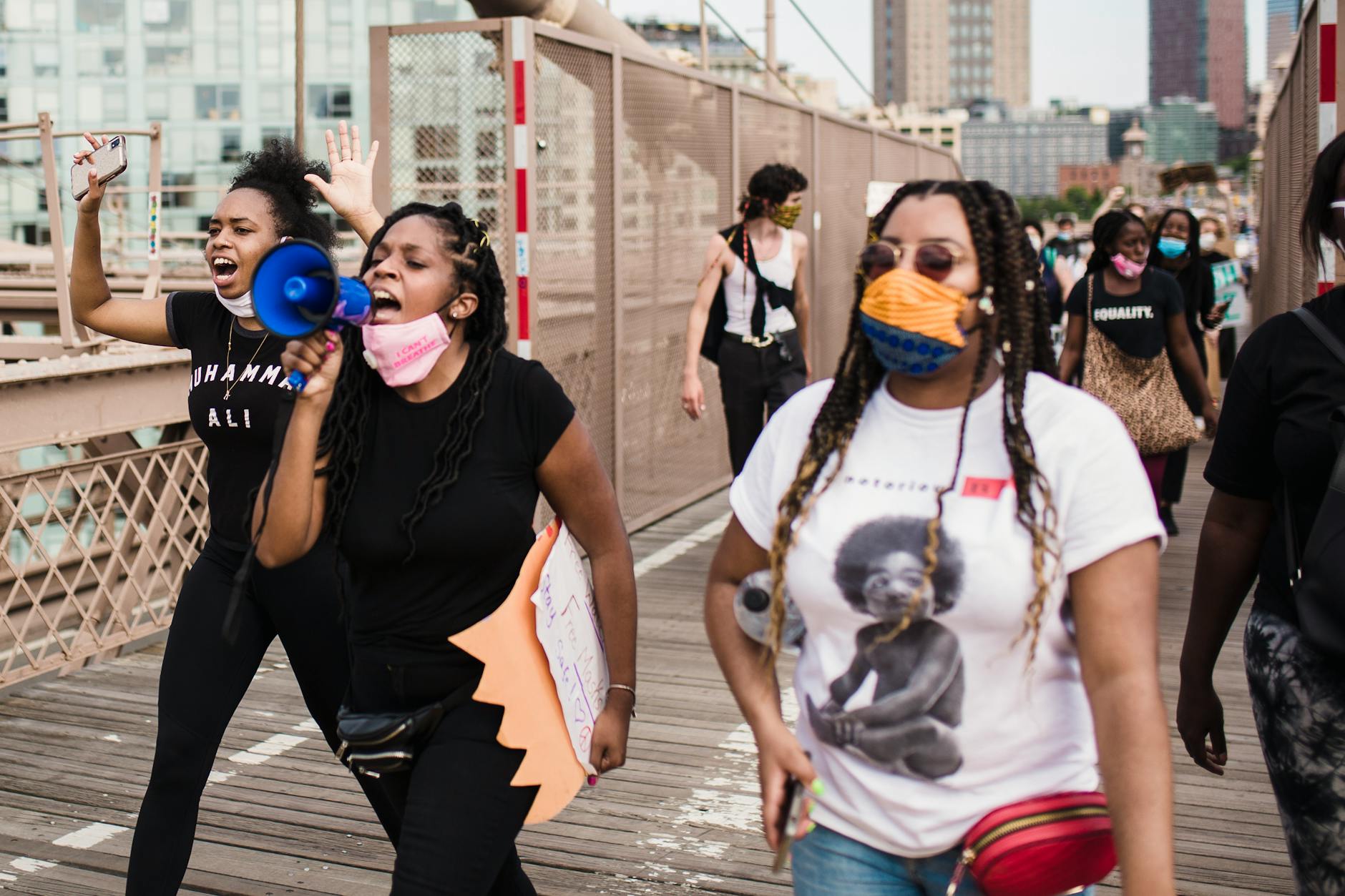
Online Activism: Using Your Platform for Change.

Photo by Life Matters on Pexels.com

In the digital age, activism has undergone a significant transformation. What once depended heavily on physical protests, printed pamphlets, and community gatherings has now expanded into the realm of social media and online platforms. The rise of online activism has democratized visibility, amplified marginalized voices, and mobilized global movements at unprecedented speeds. For Black communities in particular, online spaces have become vital arenas of resistance, empowerment, and change. Using one’s platform for advocacy now transcends mere personal expression; it represents a powerful form of digital citizenship where identity, culture, and faith intersect with collective struggles for justice.

One of the most striking contributions of online activism is its capacity to democratize visibility. In earlier eras, access to mainstream media was tightly restricted, and marginalized groups were often excluded or misrepresented. Today, with nothing more than a smartphone and an internet connection, ordinary people can share stories and images that command worldwide attention. The viral circulation of videos documenting police brutality—such as the deaths of George Floyd and Eric Garner—illustrates how online activism has forced issues of racial injustice into the global spotlight. These digital narratives bypass traditional gatekeepers, empowering citizens to shape the narrative of their own struggles (Garza, 2014).

This democratization also aligns with social identity theory, which emphasizes that individuals derive confidence and meaning from belonging to groups that affirm their experiences (Tajfel & Turner, 1979). Hashtags like #BlackLivesMatter, #SayHerName, and #BlackGirlMagic not only raise awareness but also create communities of solidarity. By affirming Black identity and resilience, these movements strengthen confidence in populations historically told they were invisible or inferior. The simple act of seeing oneself reflected in digital activism becomes a psychological source of empowerment, reinforcing dignity and self-worth.

Online activism also functions as a powerful mobilization tool. Digital petitions, crowdfunding campaigns, and viral hashtags often lead to tangible, real-world outcomes. GoFundMe campaigns supporting families of victims of injustice have raised millions of dollars, while online petitions have pressured legislators to reopen investigations or pass new laws. Internationally, movements like #EndSARS in Nigeria gained traction through Twitter, where global audiences amplified the voices of Nigerian youth protesting police brutality. In these cases, digital platforms not only spread awareness but also served as organizational infrastructures for collective action.

Yet, online activism is not without its challenges. Critics often dismiss it as “slacktivism”—a shallow form of participation limited to liking, sharing, or posting without real commitment to systemic change. While performative actions can dilute movements, they also raise awareness, which remains a necessary first step in mobilization. The tension lies in distinguishing between empty gestures and authentic advocacy. Furthermore, algorithms often suppress activist content, while digital harassment disproportionately targets Black activists and women of color (Brock, 2020). These realities complicate the promise of online activism, reminding us that digital spaces mirror the inequalities of the offline world.

The commodification of activism further complicates matters. Brands often co-opt activist hashtags for marketing, reducing serious issues to slogans designed to sell products. Similarly, Black creativity and cultural production frequently go viral without crediting their originators, perpetuating exploitation. These practices risk trivializing activism, undermining confidence in the authenticity of digital solidarity. For true change to occur, online activism must be tied to accountability, ensuring that visibility translates into structural transformation rather than consumer trends.

Despite these challenges, online activism has reshaped leadership dynamics. Movements no longer rely solely on charismatic figures at the top; instead, they thrive on decentralized, grassroots participation. This shift has opened doors for women, young people, and LGBTQ+ voices to assume leadership in ways previously denied in hierarchical structures. For example, Tarana Burke’s #MeToo movement, originally rooted in local advocacy for Black girls and women, gained global traction through social media, reshaping discourse on gender and power. This demonstrates how platforms can magnify marginalized leaders, transforming personal advocacy into systemic change.

Psychologically, online activism plays a dual role in shaping confidence. On one hand, it validates identity by affirming that one’s struggles and voice matter. On the other, it can foster pressure and burnout among activists constantly expected to engage online. The visibility of digital activism can be both empowering and exhausting, as individuals navigate the emotional labor of educating, explaining, and defending their cause in public forums. Balancing advocacy with self-care becomes essential for sustaining confidence and preventing disillusionment.

Faith traditions also inform online activism, grounding it in spiritual frameworks of justice and resilience. The Bible speaks clearly about advocacy for the oppressed. Proverbs 31:8–9 (KJV) exhorts, “Open thy mouth for the dumb in the cause of all such as are appointed to destruction. Open thy mouth, judge righteously, and plead the cause of the poor and needy.” Online activism embodies this biblical mandate, offering a digital pulpit where believers can amplify justice. For many Black activists, merging faith with digital advocacy provides both purpose and endurance, ensuring that activism is not only reactive but rooted in timeless moral obligation.

Historically, Black churches and community organizations served as the backbone of social justice movements. Today, digital platforms extend this tradition into virtual spaces, allowing activism to reach global audiences instantly. The digital continuation of this legacy reinforces confidence in younger generations, showing them that activism is both a historical inheritance and a contemporary responsibility. Movements such as #ChurchToo and #FaithInAction exemplify how online platforms are used to address not only racial injustice but also gender-based violence and institutional accountability within faith communities.

Moreover, online activism has created opportunities for intersectionality—acknowledging that race, gender, class, and sexuality intersect in shaping experiences of oppression. Hashtags like #SayHerName highlight how Black women victims of police violence are often overlooked in mainstream narratives, demanding visibility within broader movements. This intersectional activism reinforces confidence by ensuring that no group is erased, and identity is affirmed in its full complexity.

Nevertheless, the ephemerality of viral culture poses challenges to online activism. Hashtags may trend for a few days or weeks, only to be replaced by the next viral moment. Sustaining momentum requires intentional organizing that bridges digital engagement with offline strategies. Without this connection, confidence gained through visibility risks fading, leaving communities disillusioned. True transformation requires both online amplification and real-world implementation.

In conclusion, online activism represents one of the most transformative tools of the 21st century. By democratizing visibility, mobilizing action, and affirming marginalized identities, it has reshaped how individuals and communities pursue justice. While challenges such as slacktivism, commodification, and burnout persist, the potential for authentic change remains vast. For Black communities, online platforms have become extensions of historical struggles for freedom, amplifying resilience and creativity while challenging systems of oppression. Ultimately, using one’s platform for change requires authenticity, commitment, and grounding—whether in culture, psychology, or faith. When rooted in truth and guided by justice, online activism becomes more than a digital trend; it becomes a living testimony of resistance, hope, and transformation.


References

  • Brock, A. (2020). Distributed Blackness: African American cybercultures. NYU Press.
  • Garza, A. (2014). A herstory of the #BlackLivesMatter movement. Feminist Wire.
  • Tajfel, H., & Turner, J. C. (1979). An integrative theory of intergroup conflict. In The Social Psychology of Intergroup Relations (pp. 33–47). Brooks/Cole.