Tag Archives: death

Realms of the Afterlife: A Biblical Exploration of Sheol, the Abyss, Tartarus, Gehenna, and the Lake of Fire.

The concept of the afterlife stands as one of the most profound and layered themes within biblical theology, revealing a structured spiritual reality beyond physical death. Scripture does not present a singular destination for the dead, but rather multiple realms, each with distinct purposes, meanings, and theological implications rooted in both Hebrew and Greek traditions.

Within the Old Testament, the earliest and most foundational understanding of the afterlife is expressed through the term Sheol. Derived from Hebrew, Sheol refers broadly to the grave or the realm of the dead, encompassing all who have departed from the land of the living.

Sheol is best understood as the first level or realm of the afterlife, a neutral domain where both the righteous and the wicked reside after death. It is not portrayed as a place of torment, but rather as a shadowy existence removed from the activities of the living world.

Ecclesiastes 9:10 (KJV) affirms this understanding, stating that there is no work, knowledge, or wisdom in Sheol. This suggests a state of stillness and inactivity rather than conscious suffering or reward.

Similarly, Psalm 6:5 (KJV) declares that in death there is no remembrance of God, reinforcing the idea that Sheol is a place devoid of active worship or awareness.

The patriarch Jacob references Sheol in Genesis 37:35 (KJV), expressing his expectation to descend there in mourning. This passage further confirms that Sheol was not viewed as a place of punishment, but as the inevitable destination of all humanity.

As biblical revelation progresses, particularly into the New Testament, a more detailed and differentiated understanding of the afterlife begins to emerge, introducing additional realms beyond Sheol.

One such realm is the Abyss, often translated as the “bottomless pit.” Unlike Sheol, the Abyss is not associated with human souls, but with spiritual confinement and judgment.

In Luke 8:31 (KJV), demons plead with Christ not to be cast into the Abyss, revealing their fear of this place as one of imprisonment and restriction.

Revelation 20:1–3 (KJV) describes Satan being bound and cast into the Abyss for a thousand years, indicating that this realm serves as a temporary prison for rebellious spiritual beings.

This distinction highlights an important theological principle: different realms exist for different types of beings, reflecting divine order and justice within the unseen world.

Another significant term found in the New Testament is Tartarus, which appears in 2 Peter 2:4 (KJV). This passage explains that God cast certain fallen angels into chains of darkness, delivering them into a place of judgment.

Tartarus is understood as a deeper and more severe realm of confinement than the Abyss, specifically reserved for angels who committed grave transgressions, often associated with the events described in Genesis 6.

This realm is characterised by darkness and restraint, emphasising the seriousness of rebellion against divine authority and the certainty of judgment.

The use of the term Tartarus, though rooted in the Greek language, is adapted within Scripture to communicate a distinctly biblical concept of divine punishment for fallen angels.

Moving further into the teachings of Christ, the term Gehenna emerges as a central concept related to judgment and destruction. Unlike Sheol, Gehenna is not neutral, but is explicitly associated with punishment.

Gehenna derives from the Valley of Hinnom, a location historically linked to idolatry and child sacrifice, as recorded in Jeremiah 7:31 (KJV). Over time, it became a symbol of divine wrath.

In Matthew 10:28 (KJV), Christ warns that God has the authority to destroy both soul and body in Gehenna, underscoring its role as a place of judgment.

Mark 9:43 (KJV) further describes Gehenna as a place of unquenchable fire, reinforcing its association with destruction and irreversible consequence.

Gehenna represents a transition in biblical theology from the neutral concept of Sheol to a more defined understanding of moral accountability and divine justice.

The final and most ultimate realm described in Scripture is the Lake of Fire, which represents the culmination of divine judgment.

Revelation 20:14–15 (KJV) declares that death and hell are cast into the Lake of Fire, identifying it as the “second death.” This signifies the complete and final end of all that opposes God.

Unlike Sheol, the Abyss, or Tartarus, which function as temporary or intermediate states, the Lake of Fire is eternal and irreversible.

Matthew 25:41 (KJV) reveals that this place was prepared for the devil and his angels, yet it also becomes the final destination for those not found written in the Book of Life.

This ultimate realm reflects the full expression of divine justice, where all rebellion is permanently judged and removed.

When examined together, these realms reveal a structured progression within biblical eschatology. Sheol serves as the initial realm of the dead, followed by places of confinement such as the Abyss and Tartarus, leading to judgment in Gehenna, and culminating in the eternal reality of the Lake of Fire.

This layered understanding challenges simplified interpretations of the afterlife and calls for a deeper engagement with Scripture in its original linguistic and cultural context.

It also reflects the nature of God as both just and orderly, assigning different realms according to the nature and actions of both human beings and spiritual entities.

The distinctions between these realms emphasise the seriousness of moral accountability and the reality of divine judgment throughout the biblical narrative.

At the same time, the New Testament message offers hope through redemption, emphasising that deliverance from judgment is made possible through faith and obedience.

Ultimately, the study of these realms is not merely an exploration of death, but a theological reflection on justice, mercy, and the eternal destiny of creation.


References

The Holy Bible, King James Version. (1611).

Bauckham, R. (1993). The Theology of the Book of Revelation. Cambridge University Press.

Brueggemann, W. (2002). Theology of the Old Testament. Fortress Press.

Charles, R. H. (1913). A Critical and Exegetical Commentary on the Revelation of St. John. T&T Clark.

France, R. T. (2007). The Gospel of Matthew. Eerdmans.

Green, J. B. (2008). Body, Soul, and Human Life: The Nature of Humanity in the Bible. Baker Academic.

Heiser, M. S. (2015). The Unseen Realm. Lexham Press.

Wright, N. T. (2008). Surprised by Hope. HarperOne.

Girl Talk Series: The Temporary Shell

Ladies, I want you to hear this truth deep in your hearts: your looks don’t define you, and the things you own will not follow you when your time on this earth ends. All the attention, admiration, or envy that surrounds beauty and wealth is temporary—fading like mist in the morning sun. What truly matters, what truly lasts, is what you do for Christ. Every act of love, every sacrifice made in His name, every life you touch for His glory carries eternal weight. The mirror can show a face, and the world can praise possessions, but only the life surrendered to God leaves a mark that will never fade. “For we brought nothing into this world, and it is certain we can carry nothing out” (1 Timothy 6:7). Let us fix our eyes on what endures, not the temporary shell that surrounds us.

Beauty, though celebrated and sought after in every age, is fleeting. The mirror may flatter, and society may applaud, but these external adornments are temporary. In the eyes of God, what endures is not the curve of a cheekbone, the glow of skin, or the shine of hair, but the state of the heart and the soul. “For what is a man profited, if he shall gain the whole world, and lose his own soul?” (Matthew 16:26). True worth lies beyond appearances.

From the earliest moments of life, girls are taught to chase looks, to measure themselves by a superficial standard. Magazines, screens, and social media reinforce the notion that beauty is paramount. Yet, every wrinkle, every gray hair, and every mark that time leaves is a reminder that the shell we live in is temporary. “They that be wise shall shine as the brightness of the firmament; and they that turn many to righteousness as the stars for ever and ever” (Daniel 12:3). Wisdom and righteousness outshine the fleeting glow of youth.

It is natural to desire admiration, to want to feel beautiful and valued. But vanity is hollow when it dominates the spirit. “Favor is deceitful, and beauty is vain: but a woman that feareth the LORD, she shall be praised” (Proverbs 31:30). The praise of men fades like mist, but reverence for God creates an eternal honor that cannot be taken away. A woman’s truest beauty is expressed through her faith, kindness, and courage.

Society often tells women that their value is in their skin tone, body shape, or facial symmetry. Yet, the Apostle Peter reminds us: “Whose adorning let it not be that outward adorning of plaiting the hair, and of wearing of gold, or of putting on of apparel; But let it be the hidden man of the heart, in that which is not corruptible, even the ornament of a meek and quiet spirit, which is in the sight of God of great price” (1 Peter 3:3-4). The heart, not the flesh, carries eternal significance.

Every trend fades. The lipstick, the high heels, the designer bag—all are temporary. Death comes for all, and no earthly beauty can accompany the soul into eternity. “Then shall the dust return to the earth as it was: and the spirit shall return unto God who gave it” (Ecclesiastes 12:7). The body, as wondrous as it may be, is merely a vessel for the spirit.

Many women struggle with insecurity, measuring their worth against others. Yet, God’s word calls us to a higher standard, one not rooted in comparison but in divine purpose. “For ye see your calling, brethren, how that not many wise men after the flesh, not many mighty, not many noble, are called” (1 Corinthians 1:26). True significance is found in living a life of faith, not in being the most admired or envied.

The temptation to overvalue appearances is ancient. Even King Solomon warned that worldly pursuits and pleasures ultimately leave the soul unsatisfied. “Vanity of vanities, saith the Preacher, vanity of vanities; all is vanity” (Ecclesiastes 1:2). Physical beauty, unchecked by spiritual depth, is an empty treasure.

Self-love in the form of prideful vanity is dangerous because it obscures the eternal. It convinces the soul that the body is the measure of success. But Scripture declares: “Man that is in honour, and understandeth not, is like the beasts that perish” (Psalm 49:20). Honor without wisdom and reverence for God is transient, no better than the beauty of a flower that fades by evening.

True beauty is cultivated inwardly. A gentle spirit, a compassionate heart, and a life devoted to righteousness carry eternal significance. The soul, not the skin, is what God treasures. “Charm is deceitful, and beauty is vain: but a woman that feareth the LORD, she shall be praised” (Proverbs 31:30). These words echo across generations, reminding women that the inner life is far more important than outward adornment.

Society often rewards looks, but it cannot confer eternal value. The admiration one receives for physical appearance is fleeting; it vanishes with the passing seasons. “The fashion of this world passeth away” (1 Corinthians 7:31). What is temporary cannot compete with the eternal promises of God.

The fear of God, however, secures a legacy beyond the flesh. When a woman cultivates humility, integrity, and love, her influence lasts. She leaves a mark not measured by likes or comments, but by the lives she touches and the faith she nurtures. “A good woman is the crown of her husband: but she that maketh ashamed is as rottenness in his bones” (Proverbs 12:4). Her worth is eternal, not temporary.

Physical beauty often invites envy, judgment, and competition. But the spirit of a woman anchored in God is unshakable. She knows her worth is not contingent on the eyes of men but on the heart of the Creator. “Whosoever therefore shall humble himself as this little child, the same is greatest in the kingdom of heaven” (Matthew 18:4). Humility elevates the soul above superficial measures of beauty.

Many women feel pressure to maintain youth, to resist aging, and to preserve their attractiveness. Yet, the natural progression of life is a divine design. “Thou turnest man to destruction; and sayest, Return, ye children of men” (Psalm 90:3). Aging is inevitable, and true beauty evolves when it rests in God rather than worldly standards.

The vanity of beauty is also a distraction. It can pull women away from cultivating spiritual fruit, from seeking a life aligned with God’s will. “Lay not up for yourselves treasures upon earth, where moth and rust doth corrupt, and where thieves break through and steal” (Matthew 6:19). Investing in God is the only pursuit that yields eternal dividends.

Women must understand that looks are temporary, but influence and character endure. The woman who nurtures wisdom, faith, and virtue leaves a lasting legacy, far beyond what mirrors can reflect. “A virtuous woman is a crown to her husband: but she that maketh ashamed is as rottenness in his bones” (Proverbs 12:4). Her light shines long after her physical beauty fades.

Even the most celebrated beauty fades over time. Cleopatra, Helen of Troy, and countless others admired for their physical allure eventually returned to dust. “For we brought nothing into this world, and it is certain we can carry nothing out” (1 Timothy 6:7). The soul alone is prepared for eternity.

Society may pressure women to pursue the temporary shell, but faith offers an alternative. The eternal value of a life rooted in God surpasses all fleeting admiration. “Set your affection on things above, not on things on the earth” (Colossians 3:2). Heaven’s approval outweighs worldly praise.

A woman who understands this truth walks with freedom. She is no longer bound by comparisons or insecurities because her confidence rests in the eternal. “Be ye therefore perfect, even as your Father which is in heaven is perfect” (Matthew 5:48). Perfection is measured by God, not by the shallow judgments of the world.

In every season of life, beauty transforms. It is not diminished by wrinkles, gray hair, or scars. The soul, cultivated in virtue and love, radiates a lasting beauty. “The beauty of a woman is not in the clothes she wears, the figure that she carries, or the way she combs her hair. The beauty of a woman is seen in her eyes, because that is the doorway to her heart, the place where love resides” (adapted from 1 Samuel 16:7). God sees beyond the temporary shell to the eternal heart.

Ultimately, women are called to prioritize the eternal over the temporal. Beauty is a fleeting reflection of the Creator, a temporary shell that cannot follow us beyond death. “For what shall it profit a man, if he shall gain the whole world, and lose his own soul?” (Mark 8:36). What matters is the cultivation of a heart that fears God, loves others, and embraces righteousness.

The temporary shell is a reminder, not a curse. It teaches humility, dependence on God, and the pursuit of eternal virtues. When women embrace this truth, they are liberated from the chains of vanity and societal expectation. “But seek ye first the kingdom of God, and his righteousness; and all these things shall be added unto you” (Matthew 6:33). True beauty, eternal beauty, begins in God.

testimony.

© thebrowngirldilemma.com

“He Carried Me Through”
—A Widow’s Testimony

The day my husband died, the sky did not change—but everything in my world collapsed. His absence was louder than any noise, and the silence between breaths became unbearable. I felt as if my soul had been torn from my chest, left bleeding in the arms of memory. No one truly prepares you for the weight of grief, for the ache of an empty side of the bed, for the clothes left hanging in closets that no longer carry a future. I stared at the walls that once echoed laughter and wondered how I would face this life—this cruel and sudden emptiness—alone. I whispered into pillows and prayed through tears, trying to understand how the love of my life could be here one moment and gone the next.

The nights were the hardest. In the dark, the pain became alive. I asked the Most High why. I asked Him how. How do I live without the one who knew my heart better than anyone? How do I smile when the one I laughed with is no longer here? I carried a heaviness that made even breathing feel like a burden. Yet somewhere between my anguish and my pleading, He met me. The Most High didn’t scold me for my sorrow; He held me through it. He reminded me through Scripture that I was not abandoned. “A father to the fatherless and a defender of widows is God in his holy dwelling” (Psalm 68:5). When I thought I would fall apart, He became my strength. When the world grew silent, His Word became louder.

Over time, He began to gently mend what was broken. I saw signs of my husband’s love in little things—a favorite song, a sunset, the kindness of strangers, and in the face of our son. But I saw the hand of the Most High in everything. He reminded me of His promises, that death is not the end for the righteous, and that I would see my beloved again. He showed me purpose in my pain and gave me new breath when mine had run out. I came to know Him not just as God of the heavens, but as a very present help in trouble. He surrounded me with people who prayed when I could not, who stood when I couldn’t rise, and He gave me the courage to walk again—even if slowly, even if with tears.

Today, I live not without grief, but with grace. My sorrow has become a psalm, my mourning a ministry. I am a widow, yes—but I am also a witness. The Most High carried me through the fire, and I came out refined, not consumed. My husband’s memory lives in my spirit, and the love we shared is eternal, written in the scrolls of heaven. Though I faced the valley of the shadow of death, I feared no evil—for He was with me. His rod and staff comforted me. And I will dwell in His presence all the days of my life.

Your story has power. What you’ve been through, how you’ve overcome, and the lessons you’ve learned can be a light to someone walking through a similar struggle. By sharing your testimony, you give hope, inspire faith, and show that victory is possible. Don’t underestimate the impact your journey can have—what was once a trial for you can become a testimony for others. Speak your truth, share your experiences, and let your life be a beacon of encouragement.

thebrowngirlnetwork@gmail.com

CashApp: $thebrowngirlnetwork

Thank you for your support! ❤️ Tasha

Suicide: Understanding, Prevention, and Hope.

Psychology, Biblical Perspective, and Practical Guidance

Photo by Thought Catalog on Pexels.com

Suicide is the act of intentionally ending one’s own life, often resulting from overwhelming emotional pain, hopelessness, or mental illness. Psychology identifies suicide as a complex phenomenon influenced by depression, anxiety, trauma, and feelings of isolation (Joiner, 2005). Biblically, life is sacred: “Thou shalt not kill” (Exodus 20:13, KJV), which includes oneself. Understanding the root causes of suicidal thoughts and offering support can save lives.

Those considering suicide often feel hopeless and trapped. They may perceive their problems as insurmountable and believe that death is the only escape. Psychologists emphasize that suicidal ideation is frequently a sign of treatable mental health conditions, including depression, bipolar disorder, or severe anxiety (American Psychiatric Association, 2013). Scripture provides hope and encouragement: “Why art thou cast down, O my soul? and why art thou disquieted within me? hope thou in God” (Psalm 42:11, KJV). Loss of hope can be addressed through counseling, spiritual guidance, and community support.

If someone expresses suicidal thoughts, it is critical to act immediately. Encourage them to speak openly, listen without judgment, and validate their feelings. Professional help should be sought urgently. In the United States, individuals can call or text 988, the Suicide and Crisis Lifeline, available 24/7. Internationally, hotlines vary, but local mental health services or hospitals can provide immediate support.

Talking someone out of suicide involves empathy, presence, and reassurance. Avoid minimizing their feelings or giving simplistic solutions. Ask questions like, “Would you tell me what’s causing you to feel this way?” or “Can we find help together?” Show them that they are valued and not alone. Psychological research demonstrates that active listening, emotional validation, and connecting individuals to professional care significantly reduce risk (Gould et al., 2012).

Suicide carries severe emotional, social, and spiritual consequences for the individual and those left behind. Survivors often experience guilt, grief, and trauma. Even temporary thoughts of suicide are dangerous and require immediate attention. Biblical encouragement reminds us: “The LORD is nigh unto them that are of a broken heart; and saveth such as be of a contrite spirit” (Psalm 34:18, KJV). Life is precious, and hope can be restored.

Tragically, suicide affects people across all walks of life, including celebrities. Examples include Robin Williams, an acclaimed actor and comedian, who died by suicide in 2014, reportedly after battling depression and Lewy body dementia. Their deaths highlight that fame and success do not prevent despair and underline the urgency of awareness, intervention, and mental health care. Their stories can serve as a reminder to watch for warning signs in ourselves and others.

The solution to preventing suicide involves support, counseling, medical care, and spiritual encouragement. Encourage therapy, psychiatric evaluation, or support groups. Cognitive-behavioral therapy (CBT) and dialectical behavioral therapy (DBT) are evidence-based approaches that reduce suicidal ideation (Linehan, 1993). Spiritual guidance through prayer, mentorship, and faith communities can also restore hope. Scriptures such as Jeremiah 29:11 (KJV): “For I know the thoughts that I think toward you, saith the LORD, thoughts of peace, and not of evil, to give you an expected end” affirm that life has purpose and hope.

How to Help Someone Considering Suicide

1. Recognize the Warning Signs

  • Talking about wanting to die or kill oneself.
  • Expressing hopelessness or feeling trapped.
  • Withdrawing from friends, family, or activities.
  • Extreme mood swings or reckless behavior.
  • Psalm 34:18 (KJV): “The LORD is nigh unto them that are of a broken heart; and saveth such as be of a contrite spirit.”

2. Take It Seriously

  • Never dismiss their feelings or assume they’re seeking attention.
  • Acknowledge their pain and validate their emotions.
  • James 1:19 (KJV): “Let every man be swift to hear, slow to speak, slow to wrath.”

3. Ask Directly

  • Questions like: “Are you thinking about killing yourself?” or “Do you have a plan?”
  • Research shows asking about suicide does not increase risk and opens dialogue (Gould et al., 2012).

4. Listen Without Judgment

  • Offer empathy, patience, and understanding.
  • Avoid criticism or offering simplistic solutions.
  • Romans 12:15 (KJV): “Rejoice with them that do rejoice, and weep with them that weep.”

5. Encourage Professional Help

  • Connect them with trained counselors, therapists, or psychiatrists.
  • Evidence-based therapies like CBT and DBT reduce suicidal ideation (Linehan, 1993).

6. Provide Crisis Resources

  • U.S. National Suicide & Crisis Lifeline: Call or text 988 (24/7).
  • Encourage immediate help if danger is imminent.
  • For international numbers, consult local mental health services or hotlines.

7. Remove Immediate Means of Harm

  • Safely secure medications, firearms, or sharp objects.
  • Reducing access can prevent impulsive attempts and save lives.

8. Offer Hope and Spiritual Encouragement

  • Remind them that life has purpose and that help exists.
  • Jeremiah 29:11 (KJV): “For I know the thoughts that I think toward you, saith the LORD, thoughts of peace, and not of evil, to give you an expected end.”
  • Prayer, fellowship, and consistent support reinforce hope.

9. Follow Up and Stay Connected

  • Check in regularly, maintain contact, and continue support.
  • Consistent presence reduces isolation and strengthens coping.

10. Take Care of Yourself

  • Supporting someone in crisis can be emotionally challenging.
  • Seek guidance from professionals, mentors, or faith leaders to maintain your own well-being.

In conclusion, suicide is preventable. Awareness of the signs, compassionate intervention, professional support, and faith-based encouragement are crucial. If you or someone you know is considering suicide, call 988 in the U.S. or reach out to local mental health services immediately. Life is sacred, hope is real, and help is available. Encouraging words, listening ears, and professional care can save lives and restore purpose even in the darkest moments.


References

  • American Psychiatric Association. (2013). Diagnostic and statistical manual of mental disorders (5th ed.). Arlington, VA: APA.
  • Gould, M. S., Greenberg, T., Velting, D. M., & Shaffer, D. (2012). Youth suicide risk and preventive interventions: A review of the past 10 years. Journal of the American Academy of Child & Adolescent Psychiatry, 51(1), 11–31.
  • Joiner, T. (2005). Why people die by suicide. Harvard University Press.
  • Linehan, M. M. (1993). Cognitive-behavioral treatment of borderline personality disorder. Guilford Press.
  • The Holy Bible, King James Version.
  • Suicide & Crisis Lifeline. (n.d.). Call or text 988 (U.S.) for immediate assistance.

“Rosewood: A Massacre Fueled by Lies and White Supremacy in 1923 Florida”


Photo by Alexander Zvir on Pexels.com

Introduction

The story of Rosewood, Florida is one of prosperity, racial pride, and horrifying destruction. Once a thriving Black town in Levy County, Rosewood was obliterated in January 1923 due to a racially charged lie that incited white mob violence. Like the tragedies of Tulsa’s Black Wall Street and the Devil’s Punchbowl, Rosewood exemplifies how Black success in early 20th-century America was often met with white rage, systemic racism, and historical erasure.


The Founding and Prosperity of Rosewood

Founded in the late 1800s, Rosewood was a small, self-sufficient, predominantly African American town. Located near the Gulf Coast of Florida, the town was originally established as a timber and turpentine community. Over time, the Black residents of Rosewood built homes, churches, a school, and several successful businesses. By the early 1920s, Rosewood had become a symbol of Black independence.

The town was made up of about 25 Black families, most of whom were landowners—a rarity in the Jim Crow South. Occupations included blacksmiths, carpenters, midwives, and educators. One notable figure was Sarah Carrier, a well-known midwife and one of the community’s matriarchs.

Rosewood residents lived peacefully—until a white woman in a nearby town falsely accused a Black man of assault, setting off a chain of racial terror.


The Incident: Lies and Racial Violence

On January 1, 1923, Fannie Taylor, a white woman from the neighboring town of Sumner, claimed she had been beaten and assaulted by a Black man while her husband was at work. In truth, she had been injured by her white lover, but to hide her infidelity, she blamed an anonymous Black man. This lie sparked a mob of angry white residents, who began scouring the area for any Black man they could find.

The first victim was Sam Carter, a Black craftsman tortured and lynched when he refused to divulge the whereabouts of the alleged assailant. Soon after, white mobs, some from as far as Gainesville and Jacksonville, stormed Rosewood with rifles, torches, and a thirst for vengeance.


The Massacre and Destruction

Between January 1 and January 7, 1923, the town of Rosewood was burned to the ground. Homes, churches, and schools were set ablaze. Eyewitnesses described the scene as a hellish blaze with smoke rising above the pine trees. At least six Black residents were killed, including Sarah Carrier, who died protecting children hiding in her home. Others were shot as they fled or tortured for information.

The number of deaths is still debated. While official records confirm around six to eight, survivors and descendants estimate that dozens were killed, with bodies either burned in the fires or dumped in mass graves.

Most of the survivors hid in the swamps for days without food, before being evacuated by a few courageous white allies, including John and William Bryce, local train conductors who secretly transported Black families to safety.


Why Did It Happen?

The massacre was rooted in racism, economic envy, and the fear of Black advancement. Rosewood’s prosperity challenged the status quo of white supremacy. Many white residents were resentful that Black citizens owned land, ran businesses, and lived independently.

The lie told by Fannie Taylor was simply a spark that ignited deep-seated hatred. As journalist Gary Moore, who helped revive the story in the 1980s, said:

“It was not just a lynching. It was ethnic cleansing.”


The Aftermath and Silence

After the massacre, Rosewood ceased to exist. Survivors never returned, and many were too traumatized or afraid to speak about what happened. For decades, the story of Rosewood remained buried.

Law enforcement never prosecuted any of the perpetrators, and state officials did nothing to investigate or compensate the victims. The fear of retribution or being labeled a “troublemaker” kept survivors silent.

It wasn’t until the 1990s that survivors came forward with their stories. In 1994, the state of Florida passed the Rosewood Compensation Bill, awarding $2.1 million in reparations to nine survivors and establishing scholarships for descendants. This was one of the first instances of reparations in U.S. history for racial violence (D’Orso, 1996).


Personal Testimonies and Survivors

One of the most vocal survivors was Minnie Lee Langley, who was 7 years old at the time of the massacre. In later interviews, she recalled:

“They burned everything. Everything. We hid in the woods. My mama told me to keep quiet so the white folks wouldn’t hear us.”

Another survivor, Arnett Doctor, helped spearhead the movement for recognition and reparations. He later became known as the “father of the Rosewood legislation.”


Economic Impact and Racial Injustice

The destruction of Rosewood devastated families economically and emotionally. Land that once belonged to Black residents was never returned. This contributed to the racial wealth gap that persists today.

The massacre also underscored the legal impunity enjoyed by white mobs. Local sheriffs did nothing to intervene. White silence and complicity made justice impossible.


Legacy and Rebuilding

Though Rosewood was never rebuilt, its legacy lives on in books, documentaries, and even film. The 1997 movie Rosewood, directed by John Singleton and starring Ving Rhames and Don Cheadle, brought national attention to the tragedy.

In recent years, efforts have been made to preserve the memory of Rosewood:

  • A historical marker was erected in 2004
  • Descendants meet annually to commemorate the lost town
  • Florida’s education system has slowly integrated the story into its curriculum

Still, many argue that true justice has not been served.


Conclusion

The Rosewood Massacre was a deliberate act of racial terrorism, rooted in lies, jealousy, and the desire to uphold white supremacy at the cost of Black lives. It represents more than just a violent episode—it exemplifies how racism, unchecked by law or conscience, destroyed Black progress and stole generational wealth.

The tragedy of Rosewood must be remembered, not only to honor the victims and survivors, but to understand how systemic racism shaped American history and continues to shape the Black experience today.


References

  • D’Orso, M. (1996). Like Judgment Day: The Ruin and Redemption of a Town Called Rosewood. Putnam Publishing Group.
  • Moore, G. (1982, July). “Rosewood Massacre.” St. Petersburg Times.
  • U.S. House of Representatives. (1994). Rosewood Compensation Act. Florida State Archives.
  • Singleton, J. (Director). (1997). Rosewood [Film]. Warner Bros.

Dilemma: DEATH

Appointed unto Man Once to Die.

Photo by Mike Bird on Pexels.com

The Divine Mystery of Death and the Afterlife According to Scripture.

I stood at the edge of the world that day,
When his breath left, and time slipped away.
The sun dimmed low, though it still burned bright,
And morning felt swallowed by endless night.

I held his hand, though it no longer held me,
Whispered my love into eternity.
A silence fell louder than thunder’s cry—
I was not ready to say goodbye.

Devastated, I wept through the hollowed air,
Grief wrapped its fingers in my unkempt hair.
Our bed grew cold, the house was bare,
The echo of his voice was everywhere.

I faced the tombs of my yesterdays,
With trembling hands and tear-streaked praise.
Alone, yet not alone, I kneeled—
My broken heart unmasked, unsealed.

Oh Most High, You heard the widow’s groan,
You saw me shattered, facing it alone.
You caught each tear that lined my face,
And wrapped me in Your endless grace.


Death is a universal certainty that touches every living soul. It is at once feared, misunderstood, and deeply mourned, yet within Scripture, it is presented not as an end, but a transition. The Bible speaks of death as an appointment (Hebrews 9:27), a natural and divine boundary within human existence. Through the lens of both biblical revelation and psychological insight, we can begin to understand the meaning of death, the process of grieving, and how communities—especially the righteous—are called to respond to it.


1. The Biblical Definition of Death

According to the Bible, death is the separation of the spirit from the body. Ecclesiastes 12:7 declares, “Then shall the dust return to the earth as it was: and the spirit shall return unto God who gave it.” This reflects the Hebrew understanding that man is made from the dust of the earth (Genesis 2:7), and life itself is the breath of God. Death, therefore, is not annihilation but a return—of the body to the ground and the soul to the Creator.

In Hebrews 9:27, it is written, “And as it is appointed unto men once to die, but after this the judgment.” This passage underlines the certainty and inevitability of death; it is a divine appointment. The book of Job echoes this theme: “Man’s days are determined; you have decreed the number of his months and have set limits he cannot exceed” (Job 14:5, NIV). Likewise, Psalm 90:12 urges, “Teach us to number our days, that we may apply our hearts unto wisdom.”

Death is a fixed moment in time, known to God alone. In Ecclesiastes 3:2, King Solomon poetically writes, “A time to be born, and a time to die…” indicating that death is part of the divine rhythm of life.


2. Death in the Apocrypha

The apocryphal books, especially 2 Esdras and Wisdom of Solomon, provide rich insights into death and the afterlife. Wisdom of Solomon 3:1-4 (KJV) proclaims:
“But the souls of the righteous are in the hand of God, and there shall no torment touch them. In the sight of the unwise they seemed to die: and their departure is taken for misery… but they are in peace.”

This apocryphal text aligns with the biblical theology that physical death is not the final state, particularly for the righteous. These writings affirm that death is not a punishment for the faithful, but a transition into divine rest and reward.


3. The Psychology of Death and Grief

Psychologically, death triggers the grieving process—a deeply personal, emotional, and spiritual experience. Elisabeth Kübler-Ross famously outlined the five stages of grief: denial, anger, bargaining, depression, and acceptance. These stages are not linear, and people may cycle through them multiple times.

From a biblical standpoint, grieving is not sinful—it is human. Even Jesus wept at the tomb of Lazarus (John 11:35), showing divine empathy and legitimizing mourning. Ecclesiastes 7:2 states: “It is better to go to a house of mourning than to go to a house of feasting, for death is the destiny of everyone; the living should take this to heart.” In this view, grief is both a process of healing and a source of wisdom.

The Apostle Paul instructed believers to “mourn, but not as those without hope” (1 Thessalonians 4:13). Hope in the resurrection tempers sorrow with faith.


4. Scriptural References on Death

Below is a brief overview of key scriptures on death:

  • Genesis 3:19“For dust you are and to dust you shall return.”
  • Ecclesiastes 12:7“The spirit returns to God.”
  • Hebrews 9:27“It is appointed unto man once to die.”
  • Psalm 116:15“Precious in the sight of the Lord is the death of His saints.”
  • Isaiah 57:1-2“The righteous perish, and no one takes it to heart… they enter into peace.”
  • John 11:25-26“I am the resurrection and the life…”
  • Revelation 21:4“There will be no more death or mourning…”

Each verse reflects the mystery and majesty of death, showing that for the believer, death is both solemn and sacred.


5. How to Comfort the Grieving

The Bible calls on believers to comfort the grieving with compassion, presence, and hope. Romans 12:15 teaches, “Rejoice with those who rejoice; mourn with those who mourn.”

Practical biblical ways to help include:

  • Listening without judgment (James 1:19)
  • Bearing one another’s burdens (Galatians 6:2)
  • Praying for and with the bereaved (James 5:16)
  • Reminding them of resurrection hope (1 Thessalonians 4:14)

6. The Biblical Mandate to Care for Widows

Widows hold a special place in Scripture. The death of a husband in ancient Israelite society could leave a woman vulnerable. Thus, God commands special care and justice for them:

  • Exodus 22:22-24“You shall not afflict any widow… If you do, I will hear their cry.”
  • Deuteronomy 14:29 – instructs that part of the tithe should support widows.
  • Isaiah 1:17“Defend the cause of the fatherless, plead the case of the widow.”
  • 1 Timothy 5:3-10 – offers qualifications for the church’s support of widows and emphasizes honoring them.

Widows are not to be forgotten but to be sustained, visited, defended, and honored by the community of believers.


7. Hope Beyond the Grave

Ultimately, Jesus Christ’s resurrection broke the power of death:

“O death, where is thy sting? O grave, where is thy victory?” (1 Corinthians 15:55)

Revelation 14:13 offers comfort:

“Blessed are the dead who die in the Lord… for they will rest from their labor.”

This hope is the cornerstone of Christian consolation in the face of death: that death is not the end, but the doorway to eternal life.

According to the sacred instruction preserved in the apocryphal book of 2 Esdras, death is not the end but a transition—an unveiling of the eternal order decreed by the Most High. When the irrevocable decree is issued from heaven that a soul must depart its mortal habitation, the spirit returns to its Creator, the One who breathed it into man (Ecclesiastes 12:7). Upon its release, the spirit is first compelled to behold and reverence the glory of the Most High, whose majesty it can no longer deny.

The passage below is from the annotated Apocryphal book of 2 Esdras (also known as 4 Ezra), specifically 2 Esdras 7:79–87 (depending on the version and translation).

This section outlines the seven “ways” or stages of punishment for the souls of the wicked after death, contrasting with the earlier verses that describe the peace and joy of the righteous souls. It is one of the most profound and sobering depictions of the afterlife in apocalyptic Jewish literature.


Source:

2 Esdras 7:79–87 (also labeled sometimes as 2 Esdras 7:80–98 in expanded versions, depending on the Bible edition, especially in Orthodox or Catholic apocryphal collections).


Context of the Passage:

This text is part of a larger apocalyptic vision given to the prophet Ezra (Esdras) during his dialogue with the angel Uriel, where he seeks to understand the fate of souls after death. It serves as a theological exploration of divine justice and the fate of both the righteous and the wicked.

For the ungodly—those who lived in rebellion, despising the Law of the Most High and scorning the fear of God—their spirits are denied entry into peaceful dwellings. Instead, they are cast into restless torment, burdened with sorrow and shame as they wander in judgment. The scriptures outline seven grievous sorrows that accompany their condemnation:

  1. First, they are tormented by the knowledge that they have despised the Law of the Most High.
  2. Second, they are afflicted with despair, realizing they can no longer repent unto life.
  3. Third, they behold the reward of the righteous, the inheritance they forfeited by their rebellion.
  4. Fourth, they become aware of the judgment and torment reserved for them in the last days.
  5. Fifth, they witness how the dwelling places of the righteous are safeguarded in heavenly tranquility.
  6. Sixth, they perceive that some among them have already entered into the beginnings of their torment.
  7. Seventh, the most dreadful sorrow of all: they are consumed by shame and terror in the presence of the glory of God, whom they offended in life, and before whom they will stand in final judgment.

In contrast, the righteous—those who have kept the commandments of the Lawgiver and endured the trials of life with steadfast devotion—shall enter their rest in seven distinct orders of peace and glory:

  1. First, they rejoice that they overcame the evil inclinations that sought to lead them from life into death.
  2. Second, they behold the agonies of the ungodly and understand the judgment they have escaped.
  3. Third, they are honored by the testimony of their Creator, who affirms their faithful obedience to His law.
  4. Fourth, they enter into quiet rest, kept in spiritual chambers, guarded by angels, and comforted by the promise of glory.
  5. Fifth, they rejoice in the knowledge that they have been freed from corruption and are heirs of incorruption.
  6. Sixth, they are shown that their countenance will shine like the sun and the stars, clothed in eternal light and incorruptibility.
  7. Seventh, the highest joy: they hasten to behold the face of the One they served in life, and in His presence, they rejoice boldly, without fear, awaiting the eternal reward from His hands.

This sacred teaching affirms that the human soul is not extinguished by death but judged by its alignment with divine law. The righteous shall shine forever, while the wicked shall perish in confusion and sorrow (Daniel 12:2–3; 2 Esdras 7:78–99 KJV with Apocrypha).


Supporting Scripture (KJV & Apocrypha)

  • “Then shall the dust return to the earth as it was: and the spirit shall return unto God who gave it.” — Ecclesiastes 12:7
  • “And many of them that sleep in the dust of the earth shall awake, some to everlasting life, and some to shame and everlasting contempt. And they that be wise shall shine as the brightness of the firmament.” — Daniel 12:2–3
  • “The souls of the righteous are in the hand of God, and there shall no torment touch them.” — Wisdom of Solomon 3:1 (Apocrypha)
  • 2 Esdras 7:78–99 (Apocrypha) – Full passage from which this doctrine is derived.

Conclusion

Death, though inevitable, is not hopeless. The Bible teaches us that our days are numbered (Job 14:5), our deaths are appointed (Hebrews 9:27), and our souls are known to God. The apocryphal writings echo these truths with deep reverence for the fate of the righteous. Psychology helps us process the emotional impact of death and grief, while Scripture calls us to mourn with empathy, to support widows with action, and to remember that in Christ, death has lost its sting. For the believer, death is not the final word—resurrection is.


References

  • The Holy Bible, King James Version. (1611/2017). Thomas Nelson.
  • The Apocrypha. (2009). Oxford University Press.
  • Kübler-Ross, E. (1969). On Death and Dying. Scribner.
  • Wright, N. T. (2008). Surprised by Hope: Rethinking Heaven, the Resurrection, and the Mission of the Church. HarperOne.
  • Lewis, C. S. (1961). A Grief Observed. Faber & Faber.

The Biblical Composition of Man: The Spirit, The Soul, and The Body.

Photo by Elu012bna Aru0101ja on Pexels.com

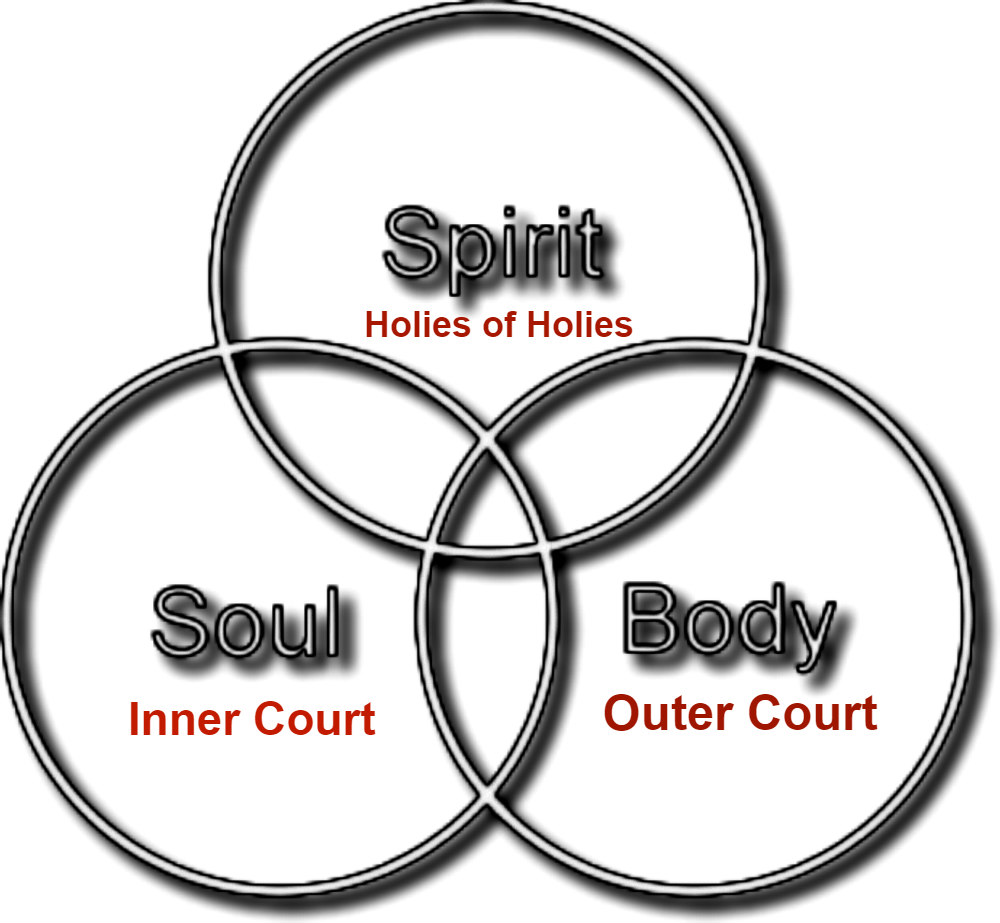
The human constitution, as divinely designed, consists of three distinct yet interwoven components: the spirit, the soul, and the body. The body is the earthly vessel, formed from dust, which enables our engagement with the physical world. The soul is the seat of our intellect, will, and emotions—our personal essence and moral identity. The spirit, breathed into man by God Himself (Genesis 2:7), is the eternal faculty by which we commune with the Divine. Together, these elements form the totality of our being, intricately woven to reflect the image of God (1 Thessalonians 5:23; Hebrews 4:12). To understand this triune nature is to begin grasping the sacred mystery of human life and destiny.”


The Biblical Composition of Man: Spirit, Soul, and Body

The Bible presents man as a triune being made in the image of God (Genesis 1:26). According to 1 Thessalonians 5:23 (KJV), the Apostle Paul wrote:

“And the very God of peace sanctify you wholly; and I pray God your whole spirit and soul and body be preserved blameless unto the coming of our Lord Jesus Christ.”

This verse affirms that the human person consists of three distinct elements:

  1. The Body – the physical, visible aspect.

  2. The Soul – the seat of emotions, will, and personality.

  3. The Spirit – the eternal, God-conscious part that allows communication with God.

Hebrews 4:12 also distinguishes between soul and spirit:

“For the word of God is quick, and powerful… piercing even to the dividing asunder of soul and spirit, and of the joints and marrow, and is a discerner of the thoughts and intents of the heart.”
(Hebrews 4:12, KJV)

This clearly shows that soul and spirit are not the same. While often used interchangeably in modern speech, biblically they refer to different aspects of the human essence.


II. What Is the Spirit According to the KJV Bible?

The spirit (Hebrew: ruach; Greek: pneuma) is the life-giving breath from God.

“The spirit of man is the candle of the Lord, searching all the inward parts of the belly.”
(Proverbs 20:27, KJV)

“Then shall the dust return to the earth as it was: and the spirit shall return unto God who gave it.”
(Ecclesiastes 12:7, KJV)

Here, Scripture teaches that the spirit is what gives life and returns to God upon death. It is not the soul—it is the divine spark, the animating force from God.


III. What Is the Soul According to the KJV Bible?

The soul (Hebrew: nephesh; Greek: psuchē) is the seat of emotions, reasoning, and identity. It represents the “personhood” of a human.

“And the LORD God formed man of the dust of the ground, and breathed into his nostrils the breath of life; and man became a living soul.”
(Genesis 2:7, KJV)

The soul is conscious, moral, and eternal. It experiences joy, sorrow, fear, and decision-making. After death, the soul continues to exist.

“Fear not them which kill the body, but are not able to kill the soul: but rather fear him which is able to destroy both soul and body in hell.”
(Matthew 10:28, KJV)

This verse clearly distinguishes between body and soul, with the soul being capable of eternal destination—either heaven or hell.


IV. What Happens at Death?

The Bible teaches that death is the separation of the spirit from the body.

“For as the body without the spirit is dead, so faith without works is dead also.”
(James 2:26, KJV)

At death:

  • The body returns to dust (Genesis 3:19).

  • The spirit returns to God (Ecclesiastes 12:7).

  • The soul enters a place of waiting, either comfort or torment.


V. Afterlife in the Apocrypha

The Apocryphal books, while not part of the canon for all denominations, offer deep insights into Jewish beliefs about the soul after death.

2 Esdras 7:78-88 (Apocrypha) outlines what happens to the soul:

“Now, concerning death, the teaching is: When the decisive decree has gone out from the Most High that a person shall die, as the spirit leaves the body… it returns to him who gave it, first adoring the glory of the Most High… the souls of the righteous are in the hand of God, and no torment shall touch them…”

In contrast:

“But the way of sinners is hard… they shall wander in torments and be in anguish seven ways…”

This aligns with Luke 16:19–31, the parable of the rich man and Lazarus, where Jesus describes two destinations after death: Abraham’s bosom (comfort) or Hades (torment).


VI. The Purpose of the Soul and Spirit

The soul is judged for moral and spiritual decisions, while the spirit connects with God.

“The soul that sinneth, it shall die.”
(Ezekiel 18:20, KJV)

The spirit returns to God, but if the soul is unredeemed by Christ, it is condemned (John 3:18).


VII. Summary: Key Differences

Element Nature Function Destination After Death
Body Physical World interaction Returns to dust (Genesis 3:19)
Soul Emotional / Personal Identity, Emotion, Will Judgment: Heaven or Hell (Matthew 10:28)
Spirit Spiritual Life-giving force; connection with God Returns to God (Ecclesiastes 12:7)

VIII. Conclusion

The KJV Bible and Apocryphal writings clearly present a tripartite view of humanity. The body decays, the spirit returns to God, and the soul awaits judgment. The spirit is not the same as the soul, although deeply connected. Understanding this distinction helps us grasp the eternal nature of our being and the urgency of repentance and spiritual transformation in this life. Ultimately, the destiny of the soul is determined not by status or knowledge, but by one’s relationship with God through Christ.


Key Scriptures to Meditate On (KJV)

  • Genesis 2:7

  • 1 Thessalonians 5:23

  • Ecclesiastes 12:7

  • Matthew 10:28

  • Luke 16:19–31

  • 2 Esdras 7:78–88 (Apocrypha)