
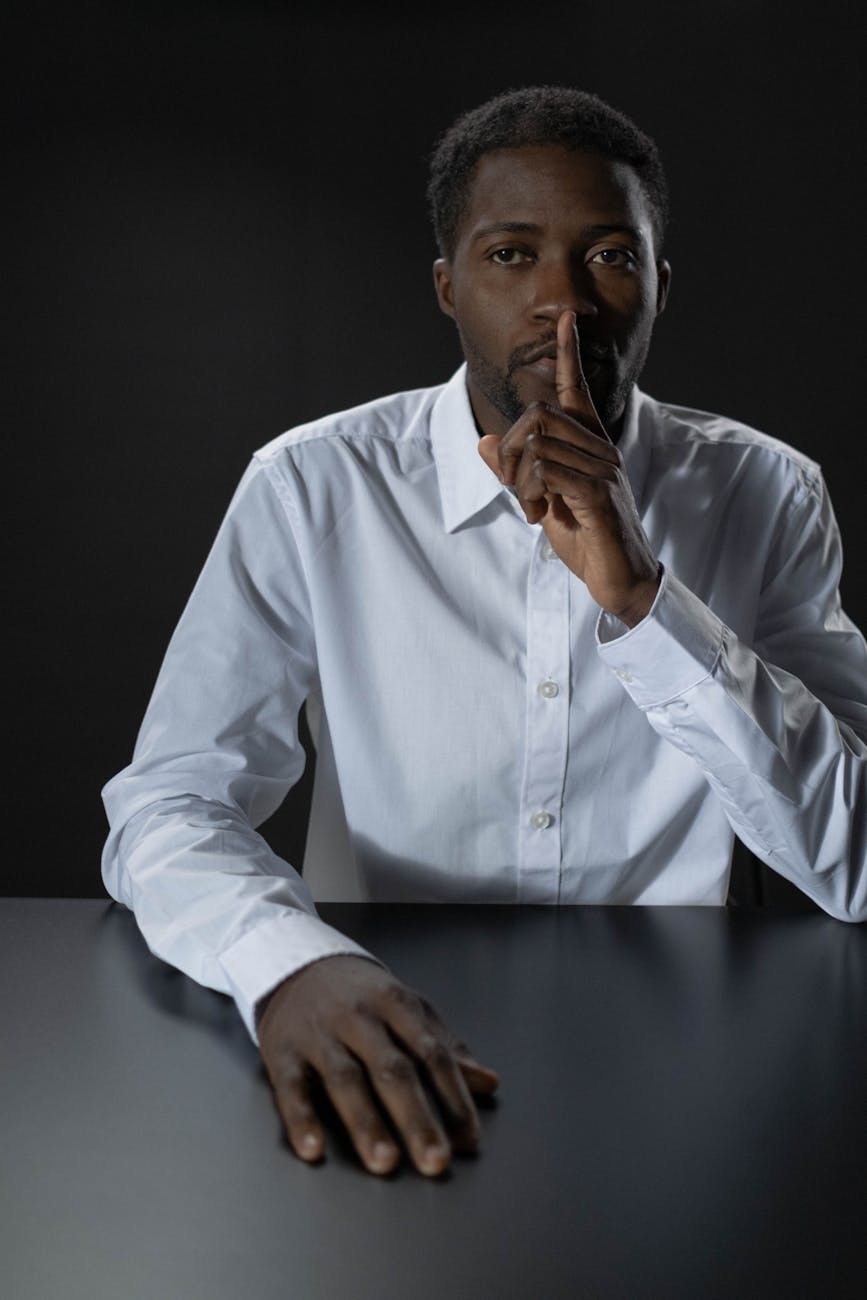
When Adam fell, it was not with a shout—but with silence. The first man’s downfall was not an act of overt rebellion, but a quiet surrender of responsibility. In that single moment in Eden, silence became sin, passivity became peril, and the echoes of Adam’s inaction still reverberate through generations of men today. His fall was not merely the loss of paradise; it was the loss of purpose, voice, and divine order.
Adam’s silence in the Garden of Eden remains one of the most profound moments in Scripture. When the serpent deceived Eve, Adam stood beside her (Genesis 3:6, KJV). He heard the lie, watched the deception unfold, and said nothing. This was not ignorance—it was abdication. The one called to lead, to guard, and to name creation chose comfort over confrontation. His failure was not in speaking wrongly, but in failing to speak at all.
The silence of Adam reveals a universal truth about manhood: when men fail to lead with courage and conviction, chaos fills the void. The serpent speaks whenever the man refuses to. In families, communities, and nations, this spiritual law repeats itself. Broken homes, abandoned children, and moral confusion often trace their lineage back to the same origin—men who knew truth but withheld it.
In that sense, Adam’s fall is not just historical; it is hereditary. Each generation inherits not only the sin but the silence of the first man. The world continues to suffer from men who are physically present but spiritually absent. They work, provide, and exist—but do not speak, guide, or protect. Their silence, like Adam’s, invites deception into the lives of those they were meant to guard.
In theological context, Adam was not deceived—Eve was (1 Timothy 2:14). That distinction is critical. It means Adam knew the truth but lacked the courage to act on it. He chose relational peace over divine obedience. He feared losing Eve more than losing Eden. Many men today repeat this pattern, trading truth for approval and conviction for convenience. This is not love—it is cowardice disguised as harmony.
When Adam fell, leadership collapsed. Dominion turned into domination, and partnership turned into power struggle. The man who once walked with God began to hide from Him, covering himself with fig leaves of pride and excuses. “The woman whom Thou gavest to be with me, she gave me of the tree, and I did eat” (Genesis 3:12, KJV). Even in confession, Adam shifted blame instead of bearing it. Silence had become self-defense.
Modern men still wear fig leaves—titles, careers, and material success—to cover inner emptiness. Yet beneath the masks lie generations of unspoken pain, unmet expectations, and unresolved guilt. The silence of fathers becomes the confusion of sons. The emotional distance of husbands becomes the loneliness of wives. The unspoken becomes the inherited. The fall of Adam thus repeats in homes, not as rebellion, but as neglect.
The silence of men is costly. It leaves women unprotected, children unguided, and communities leaderless. It births generations that do not know how to hear the voice of righteousness because the men who should have spoken it chose instead to be silent. The serpent still whispers in every home where men do not guard the gates.
Yet redemption begins when men reclaim their voices. Christ, often called the “second Adam” (1 Corinthians 15:45), came to restore what the first Adam lost. Unlike Adam, Jesus spoke with authority. He confronted lies, resisted temptation, and accepted responsibility even unto death. Where Adam hid, Christ revealed. Where Adam fell silent, Christ proclaimed, “It is finished” (John 19:30, KJV). Redemption for men, therefore, begins not in strength, but in speech—truth spoken in love and obedience.
The consequences of silent men extend beyond households—they shape nations. Corruption thrives where moral men refuse to speak. Injustice grows where righteous men remain quiet. Oppression endures not because evil is strong, but because good men are still silent. History’s greatest atrocities were not committed by monsters alone, but permitted by men who looked away.
Silence is seductive because it feels safe. It avoids conflict, preserves relationships, and hides fear behind politeness. But silence in the face of sin is complicity. When men do not use their God-given authority to confront evil, they become participants in it. Adam’s sin teaches us that neutrality is not innocence—it is surrender.
To break this cycle, men must redefine strength. True strength is not measured by domination, but by devotion. It is not in silence, but in stewardship. It is the courage to say, “As for me and my house, we will serve the Lord” (Joshua 24:15, KJV). It is the willingness to be unpopular for truth’s sake, to lead with integrity even when it costs comfort.
Fathers must teach sons that voice is power, not violence. Husbands must speak life into wives, not retreat into silence. Leaders must model moral courage, not passive compliance. The restoration of manhood begins with the return of voice—a voice rooted in truth, humility, and accountability before God.
When Adam fell, the serpent gained influence. When Christ rose, the serpent’s power was broken. Every man who chooses to speak truth today continues that victory. Each confession, each prayer, each stand for righteousness reclaims territory once lost in Eden. The garden can grow again—but only when men return to their original design as guardians and givers of life.
Silence, then, is not neutral—it is spiritual warfare. It is the battleground between fear and faith, between apathy and accountability. To speak truth in a world of lies is not rebellion; it is redemption. When men open their mouths in prayer, protest, and purpose, heaven responds.
The call today is not for louder men, but for truthful ones. The world does not need more noise—it needs moral clarity. It needs men who, like Christ, will confront the serpent with Scripture, lead with compassion, and love with conviction. It needs men who will no longer hide behind excuses but stand before God unashamed.
Adam’s fall began with silence, but his restoration begins with confession. Every man must ask himself: Where was I silent when I should have spoken? Where was I passive when I should have protected? The answers to those questions hold the keys to personal and generational healing.
When men reclaim their voices, families heal, communities strengthen, and societies reform. The silence that once caused the fall becomes the sound of redemption. When Adam speaks again—truthfully, tenderly, and boldly—Eden is no longer lost. It is reborn.
References
Eldredge, J. (2001). Wild at heart: Discovering the secret of a man’s soul. Thomas Nelson.
Lewis, C. S. (1952). Mere Christianity. HarperOne.
Lewis, R. (2019). The return of manhood: Restoring male voice and vision. Lionheart Press.
Moore, R. (2018). The storm-tossed family: How the cross reshapes the home. B&H Publishing Group.
Ortberg, J. (2010). The me I want to be: Becoming God’s best version of you. Zondervan.
Piper, J., & Grudem, W. (Eds.). (1991). Recovering biblical manhood and womanhood. Crossway.
Tchividjian, T. (2012). Glorious ruin: How suffering sets you free. David C. Cook.
The Holy Bible, King James Version. (1611). Thomas Nelson.
Voddie Baucham Jr. (2009). What he must be: If he wants to marry my daughter. Crossway.
Wright, N. T. (2012). After you believe: Why Christian character matters. HarperOne.
 THE BROWN GIRL DILEMMA