Tag Archives: cotton fields

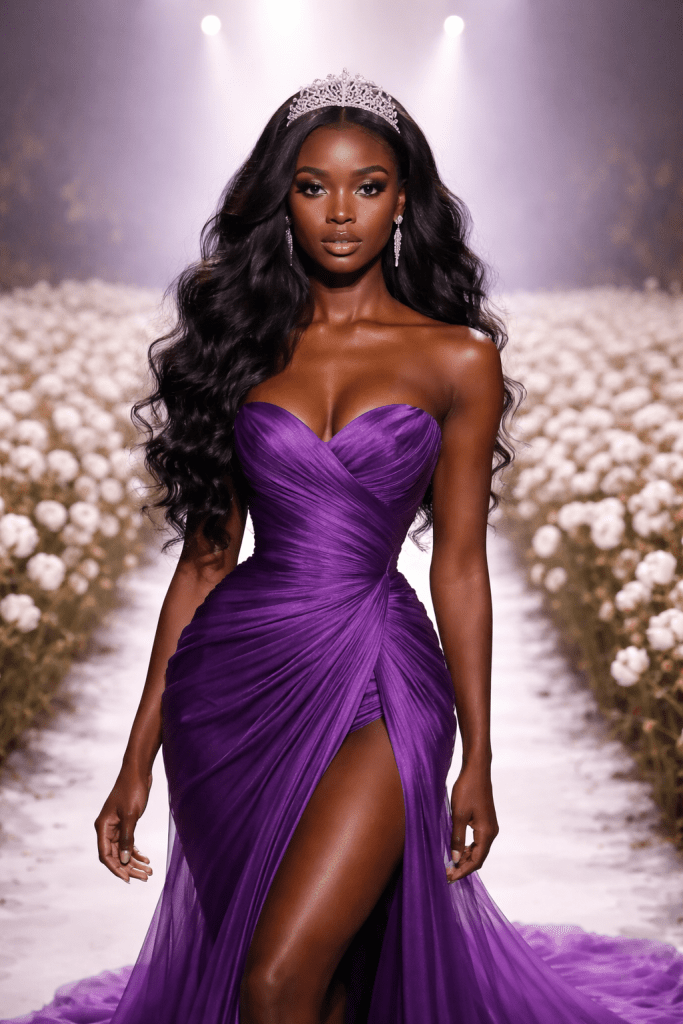
From Cotton Fields to Catwalks: The Brown Woman’s Journey to Self-Love.

The story of the Brown woman is one of resilience, rebirth, and reclamation. Her journey from servitude to sovereignty—both internal and external—has been marked by centuries of struggle and transcendence. From the brutal realities of plantation life to the glittering lights of fashion runways, the evolution of her image mirrors a greater spiritual awakening: the rediscovery of her worth, beauty, and divine identity. Her path is not just a chronicle of survival but a testament to the enduring radiance that oppression could never extinguish.

In the cotton fields of America’s South, the Brown woman was both the backbone and the burden of a system designed to exploit her body and silence her voice. Her skin, kissed by the sun, became a symbol of labor and loss. Yet, even as she toiled under inhumane conditions, her strength radiated an unspoken grace. Enslaved women bore the brunt of physical, sexual, and emotional exploitation, yet within them lay the seeds of future generations who would redefine Black and Brown womanhood (Collins, 2000).

Her labor was not only agricultural but existential. Every day, she cultivated survival strategies—songs, prayers, and quiet defiance—that preserved her humanity. Spirituals sung in the fields were coded messages of freedom and hope, expressing an inner beauty that no master could steal. The Brown woman’s endurance was divine resistance, an echo of the Hebrew women in Exodus who “feared God, and did not as the king of Egypt commanded them” (Exodus 1:17, KJV).

As centuries turned, the Brown woman carried her ancestral pain into new forms of identity. The Reconstruction era offered minimal reprieve, yet the cultural memory of servitude continued to shape her self-image. Society imposed new shackles—colorism, Eurocentric beauty standards, and class-based discrimination. Lightness became currency, while darker tones were dismissed as undesirable. The trauma of the cotton fields mutated into the social hierarchies of complexion (Hunter, 2007).

In the early 20th century, Black and Brown women began to redefine beauty on their own terms. The Harlem Renaissance gave birth to a cultural revolution where art, literature, and music celebrated melanin and femininity. Icons like Josephine Baker and Zora Neale Hurston embodied a new consciousness of self-love. They challenged the world’s gaze, asserting that beauty was not confined to whiteness but could emerge proudly from the soil of struggle.

Still, the world continued to commodify the Brown woman’s image. In the age of advertising and media, she was alternately hypersexualized or erased altogether. The Brown woman became both muse and martyr, desired yet devalued. Her body was used to sell products, her curves celebrated only when worn by non-Black bodies. The struggle for representation became an extension of the plantation’s legacy—her labor admired but her personhood denied.

Yet, from this erasure rose a fierce reclamation. The Brown woman began to take control of her narrative, reshaping the lens through which she was seen. The natural hair movement, melanin-positive campaigns, and digital activism became modern-day revolutions. Social media platforms became her new battleground, where she could proclaim unapologetically, “I am my ancestors’ wildest dream.”

Fashion, once an industry of exclusion, began to shift under the pressure of her presence. The catwalk, a space that once rejected her, now bore witness to her glory. Models like Naomi Campbell, Alek Wek, and Duckie Thot redefined what global beauty could look like. Each stride on the runway became an act of defiance—a declaration that the daughter of the field worker had ascended to the stage of the world.

The symbolism of this transformation is profound. The same hands that once picked cotton now shape couture. The same skin once mocked for its depth of hue now commands admiration under golden lights. It is not simply a story of economic mobility or fashion inclusion, but of spiritual elevation. The Brown woman’s body, once a site of oppression, has become a canvas of divine artistry.

Still, her journey to self-love remains layered and complex. Generational trauma and systemic inequities continue to haunt her psyche. Colorism persists within her own community, and media still struggles to portray her diversity. Yet, the Brown woman’s resilience endures. Her love for herself is not a trend but a spiritual revolution—a return to the truth that she was always enough.

This self-love is radical because it challenges centuries of indoctrination. To love oneself in a world that profits from one’s insecurity is a political act. When the Brown woman looks into the mirror and sees beauty, she dismantles the psychological residue of colonialism. Her reflection becomes a form of resistance—a reminder that her worth was never for sale.

Spiritually, her journey mirrors the biblical narrative of restoration. Like Ruth gleaning in the fields before being elevated to royalty, the Brown woman’s life is marked by divine orchestration. Her pain prepared her for purpose. Her ancestors’ prayers planted the seeds of the empowerment she now harvests. “He hath made every thing beautiful in his time” (Ecclesiastes 3:11, KJV) captures the essence of her evolution.

In embracing her melanin, her curls, her history, and her imperfections, she reclaims her crown. This reclamation is not only external but deeply internal. She no longer measures herself by European standards, but by divine ones. Her beauty, like her spirit, is infinite—rooted in the soil of her ancestors and watered by the tears of generations who refused to disappear.

Education, art, and faith have become her tools of restoration. Through poetry, scholarship, and entrepreneurship, she is rewriting her narrative. From Maya Angelou’s “Phenomenal Woman” to Beyoncé’s Brown Skin Girl, every creative expression becomes a hymn of affirmation. These cultural works reaffirm that self-love is not vanity but healing—an act of remembrance and liberation.

The Brown woman’s presence on catwalks across Paris, New York, and Lagos is more than fashion; it is prophecy fulfilled. The world now watches what God already ordained: that the first shall be last and the last shall be first (Matthew 19:30, KJV). The once-overlooked is now celebrated, yet her power lies not in external validation but in self-realization.

Her journey continues, for the fight for equitable representation, safety, and dignity is ongoing. But each generation rises taller, walking with greater confidence and consciousness. She carries the voices of her foremothers in every graceful step. From the cotton fields to catwalks, her story is a sacred dance between pain and glory, oppression and freedom, despair and divine deliverance.

To love herself fully is to love the God who made her. Her journey is not merely about beauty but about identity—about returning to the sacred truth that she is fearfully and wonderfully made (Psalm 139:14, KJV). The Brown woman’s journey to self-love is, therefore, not an ending but a resurrection—a radiant testimony that from suffering can come splendor, and from bondage can bloom brilliance.

Her crown, once tarnished by history, now gleams with wisdom, faith, and grace. She stands on the shoulders of queens who came before her, not just as a model or icon, but as a miracle. The Brown woman is the living embodiment of triumph, the divine muse of history’s redemption song. Her journey is every woman’s reminder that no matter where the story begins, it can end in glory.


References

Collins, P. H. (2000). Black feminist thought: Knowledge, consciousness, and the politics of empowerment (2nd ed.). Routledge.

Hunter, M. (2007). The persistent problem of colorism: Skin tone, status, and inequality. Sociology Compass, 1(1), 237–254.

Holy Bible, King James Version. (2017). Cambridge University Press.

Hooks, B. (1992). Black looks: Race and representation. South End Press.

Walker, A. (1983). In search of our mothers’ gardens: Womanist prose. Harcourt Brace Jovanovich.

West, C. (1993). Race matters. Beacon Press.
The Genesis of Colorism

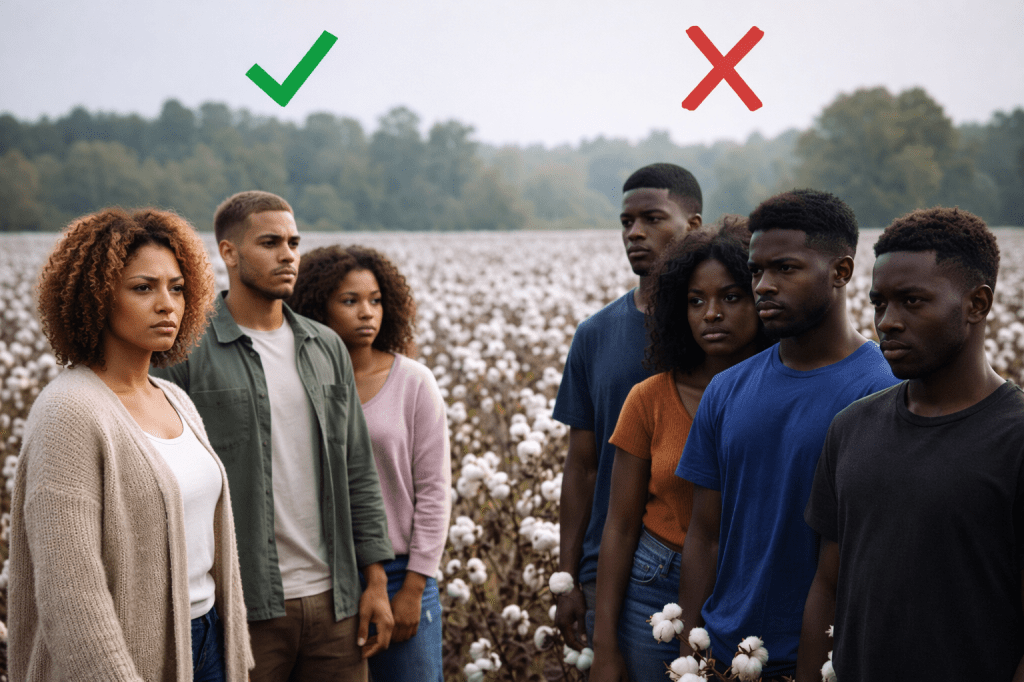
Colorism is a deeply rooted social phenomenon that continues to shape perceptions of beauty, worth, and opportunity within racial and ethnic communities. Unlike racism, which primarily operates across racial lines, colorism is the preferential treatment of lighter-skinned individuals over darker-skinned individuals within the same racial or ethnic group. It is a subtle yet pervasive force that influences personal identity, social mobility, and cultural norms.

The term “colorism” was popularized by Alice Walker in the 1980s, though the phenomenon existed long before it had a name. Walker defined it as a form of prejudice or discrimination in which people are treated differently based on the social meanings attached to skin color. Her work drew attention to the complex ways in which intra-racial discrimination intersects with historical oppression.

Colorism is sometimes referred to by other names, including “shadeism,” “toneism,” and “skin tone bias.” Each term highlights the focus on skin color rather than racial categorization, emphasizing the internalized hierarchies that exist within communities. These labels help distinguish colorism from broader racial prejudice.

While racism involves power dynamics between different racial groups, colorism operates primarily within racial communities, privileging lighter skin over darker skin. It often aligns with Eurocentric standards of beauty and social value, elevating those whose appearance more closely resembles the historically dominant group. This intra-racial discrimination can lead to unequal treatment in employment, relationships, and media representation.

The origins of colorism are deeply intertwined with colonialism, slavery, and the historical imposition of European standards. In the Americas, enslaved Africans were often subjected to differential treatment based on skin tone, with lighter-skinned individuals sometimes receiving preferential roles or treatment due to mixed ancestry with white enslavers. This historical precedent laid the groundwork for modern color hierarchies.

Colorism is reinforced by media and cultural representation. Television, film, advertising, and beauty industries often prioritize lighter-skinned models and actors, equating light skin with beauty, success, and desirability. This reinforces the perception that darker skin is less valuable, perpetuating social and psychological inequality.

Within families, colorism can manifest in preferential treatment of lighter-skinned children. Praise, attention, and expectations may be skewed toward those with lighter complexions, while darker-skinned siblings are subtly or overtly marginalized. These patterns of bias create internalized hierarchies from an early age.

Economic and professional opportunities are also affected by colorism. Studies show that lighter-skinned individuals often earn higher wages, experience fewer workplace biases, and receive more favorable treatment in professional settings than darker-skinned peers. This economic disparity illustrates how colorism extends beyond aesthetics to tangible social consequences.

Colorism intersects with gender, often compounding disadvantage for darker-skinned women. Historically, European beauty ideals equated lighter skin with femininity and desirability, marginalizing women whose appearance did not align with these norms. The pressure to conform to Eurocentric beauty standards has long-lasting social and psychological implications.

Educational opportunities have historically been influenced by colorism. In some communities, lighter-skinned individuals were prioritized for schooling or professional training, reflecting entrenched societal hierarchies that valorized proximity to whiteness. These disparities contributed to cycles of privilege and marginalization.

The perpetuation of colorism is often subtle and implicit, making it difficult to challenge. Compliments, social preferences, and assumptions about intelligence or behavior can all be influenced by skin tone. While often framed as benign or accidental, these biases accumulate over a lifetime to reinforce social inequality.

Colorism also shapes interpersonal relationships, influencing dating and marriage preferences. Lighter-skinned individuals are often deemed more desirable partners, while darker-skinned individuals may face stigma or reduced romantic opportunities. These biases reinforce the notion that worth and attractiveness are correlated with skin tone.

Global perspectives reveal that colorism is not confined to the United States or the African diaspora. Across Asia, Latin America, and the Caribbean, lighter skin is often associated with higher social status, wealth, and beauty. The global nature of colorism underscores its roots in historical power dynamics and colonization.

Education and awareness are critical in addressing colorism. Scholars, activists, and cultural commentators work to expose the ways color hierarchies are maintained and internalized. By naming and examining the phenomenon, communities can begin to challenge ingrained biases and foster more equitable social norms.

Toni Morrison, the acclaimed novelist, addressed colorism in her works, particularly in The Bluest Eye. Morrison explored how internalized racism and the valorization of Eurocentric beauty standards inflicted emotional and psychological harm on dark-skinned children. Her writings continue to illuminate the personal and societal consequences of colorism.

Media representation plays a dual role, both reinforcing and challenging colorism. While mainstream media often privileges lighter skin, contemporary Black media and cultural productions increasingly celebrate diverse shades of beauty. These shifts help challenge long-standing biases and expand cultural narratives around beauty and worth.

Colorism often affects self-esteem and identity formation. Darker-skinned individuals may internalize negative perceptions, experiencing shame or diminished confidence. Conversely, lighter-skinned individuals may experience privilege but also pressure to conform to external expectations, creating complex psychological dynamics.

The beauty industry has historically capitalized on colorism. Skin-lightening products, hair straightening, and other treatments marketed toward darker-skinned individuals reinforce the notion that lighter skin is superior. This commercialization both exploits and perpetuates color-based hierarchies.

Colorism can influence social mobility. Lighter-skinned individuals may gain access to elite social networks or higher-status opportunities more readily than darker-skinned peers. These advantages often accumulate across generations, reinforcing systemic disparities within communities.

Educational curricula and historical narratives can obscure the origins of colorism, leaving many unaware of its systemic roots. Understanding colorism as part of a larger history of colonialism, slavery, and European cultural dominance is crucial to dismantling it. Awareness fosters empathy and challenges internalized biases.

Colorism also affects leadership and representation. Lighter-skinned individuals are often more visible in political, cultural, and business leadership positions, creating role models who may not fully reflect the diversity of their communities. This disparity reinforces societal hierarchies and perpetuates bias.

Colorism influences fashion, music, and art, shaping aesthetic norms and cultural production. Historically, lighter-skinned performers were favored for commercial exposure, while darker-skinned artists faced barriers to mainstream acceptance. This dynamic both reflects and perpetuates cultural hierarchies based on skin tone.

Addressing colorism requires both individual and collective action. Self-awareness, open dialogue, and community initiatives can challenge bias. Encouraging inclusive representation and celebrating all shades fosters equity and cultural pride. Confronting colorism is an act of both social justice and personal liberation.

Ultimately, colorism reflects society’s struggle with internalized hierarchies, historical oppression, and beauty standards rooted in power. Recognizing the origins and effects of colorism is the first step toward equity, healing, and cultural transformation. By examining privilege, dismantling bias, and celebrating diversity, communities can move toward a future where skin tone does not dictate worth or opportunity.


References

Walker, A. (1983). In Search of Our Mothers’ Gardens: Womanist Prose. Harcourt Brace Jovanovich.

Morrison, T. (1970). The Bluest Eye. Holt, Rinehart & Winston.

Hunter, M. L. (2007). The Persistent Problem of Colorism: Skin Tone, Status, and Inequality. Sociology Compass, 1(1), 237–254.

Russell-Cole, K., Wilson, M., & Hall, R. E. (2013). The Color Complex: The Politics of Skin Color in a New Millennium. Anchor Books.

Bennett, L. (2020). Shadeism and Colorism: Historical Origins and Contemporary Effects. Journal of African American Studies, 24(2), 145–163.

Behind the Cotton Fields: Hidden Lives of Slavery.

Photo by Karen Lau00e5rk Boshoff on Pexels.com

Behind the romanticized myths of southern plantations lay a hidden reality—a world of suffering, endurance, and humanity often obscured by the economic narrative of cotton. Slavery in the American South was not a static institution; it was a geographical and cultural system that shaped landscapes, identities, and lives. From the rich deltas of Mississippi to the rice swamps of South Carolina and the sugarcane fields of Louisiana, the geography of slavery dictated not only labor but the very rhythm of existence for millions of enslaved Africans.

Cotton was king, but it ruled through chains. The geography of the Deep South—its humid climate and fertile soil—made it ideal for cotton cultivation, turning human lives into instruments of production. Enslaved laborers worked from dawn to dusk, their hands blistered by the very fiber that fueled global capitalism. Every cotton boll carried both economic profit and human pain (Baptist, 2014).

In coastal regions, such as the Sea Islands of Georgia and South Carolina, the Gullah-Geechee people developed unique cultural patterns. Because of their isolation and African majority, they preserved much of their ancestral heritage—language, cuisine, and spirituality. This community represented a living bridge between Africa and America, maintaining traditions that defied cultural erasure (Joyner, 1984).

The plantation system was a complete world unto itself, governed by rigid hierarchies and surveillance. Overseers, driven by quotas and cruelty, maintained order through fear. The daily routine began before sunrise and often ended only when the last light faded. Enslaved people labored under the watchful eye of white dominance, yet within these confines, they built an internal world of faith, kinship, and quiet resistance.

Housing reflected the social order. While the master’s mansion stood as a symbol of wealth and power, the slave quarters told another story. Built of wood or mud, with dirt floors and minimal furnishing, these cabins were cramped but alive with community. Within their walls, families prayed, sang, and strategized survival. It was here, behind the cotton fields, that the enslaved recreated a sense of belonging in a world that sought to strip it away.

Foodways also reveal the ingenuity of enslaved Africans. Given meager rations—cornmeal, lard, and scraps—they transformed survival into art, creating culinary traditions that remain central to African American identity. Dishes such as gumbo, hoppin’ john, and rice stews were cultural testaments to memory and adaptation. Through food, they maintained ancestral ties and expressed creative resilience (Opie, 2008).

Religion was the spiritual heart of plantation life. The “invisible church” thrived in secrecy, where enslaved men and women gathered in hush harbors to worship under moonlight. These gatherings were both spiritual and political acts—spaces of liberation where they reinterpreted Christianity through an African lens. The God of the enslaved was not the master’s God of submission, but the deliverer who freed the oppressed (Raboteau, 2004).

Music was omnipresent. The fields echoed with spirituals and work songs that expressed pain, coded hope, and communal strength. The rhythm of hoe and song was a form of communication that transcended language barriers. “Steal Away,” “Go Down, Moses,” and “Swing Low, Sweet Chariot” were not merely songs but sacred messages of endurance and escape.

Gender dynamics shaped experiences differently. Enslaved women carried the dual burden of labor and sexual exploitation. Their bodies became sites of violence and survival. Yet, they also held the community together through care, storytelling, and midwifery. Enslaved mothers resisted psychological destruction by nurturing identity and strength in their children (White, 1999).

Children, born into bondage, learned early the rules of survival. Play was limited; innocence was fleeting. Many were separated from their parents, sold to other plantations before adolescence. Yet, even in these fragmented spaces, children were taught songs, proverbs, and prayers—spiritual inheritances that preserved humanity across generations.

The hidden economy of slavery extended beyond the fields. Skilled artisans—blacksmiths, carpenters, seamstresses—labored in silence, often earning small wages or privileges. Their expertise built the infrastructure of the South, though their names remain lost to history. Labor, in every form, was both a curse and a source of dignity for the enslaved (Berlin, 2003).

Cultural expression flourished in the margins. Folktales, particularly the Br’er Rabbit stories, functioned as allegories of resistance. The cunning trickster who outwitted stronger adversaries symbolized the enslaved spirit—resourceful, patient, and subversive. Oral tradition became a psychological refuge, turning oppression into wisdom (Levine, 1977).

Geography also shaped rebellion. In the swamps of Florida and Louisiana, maroon communities—runaway slaves who formed free settlements—thrived beyond the reach of slave catchers. These hidden enclaves were testaments to defiance, combining African survival skills with the American wilderness. The landscape itself became a partner in resistance (Weaver, 2006).

Daily life was marked by constant negotiation between subservience and selfhood. The enslaved learned to navigate the master’s world with coded behavior—outward compliance masking inner freedom. They practiced what scholar James C. Scott (1990) called “the hidden transcript,” a secret resistance carried in whispers, gestures, and double meanings.

Festivals and dances provided rare spaces of release. On Sundays and holidays, enslaved people gathered to dance the juba, stomp rhythms, and share stories. These cultural gatherings were acts of joy and identity reclamation, affirming their collective humanity despite systematic dehumanization.

The physical geography of slavery also dictated mortality. The rice plantations of the Carolinas were death traps, breeding malaria and disease. The Louisiana sugar fields were even harsher—workers were literally worked to death during harvest. Geography was not just landscape; it was a silent accomplice to suffering (Morgan, 1998).

Despite unimaginable conditions, enslaved people forged emotional worlds of love and loyalty. Marriages, though unrecognized by law, were sacred vows in the eyes of God. Couples risked punishment to see one another across plantations. Love itself became an act of rebellion—a declaration that they were still human, still capable of tenderness.

The hidden lives behind the cotton fields were not defined by despair but by determination. Within every prayer, song, and whispered story was a prophecy of freedom. The enslaved refused to be reduced to property; they were people of vision, artistry, and faith, whose daily resistance laid the foundation for future generations.

When emancipation finally came, it was not granted—it was earned through centuries of survival. The legacy of those hidden lives continues to shape the cultural, spiritual, and moral identity of African Americans today. Behind the cotton fields, there existed a civilization of strength—a people unbroken, unseen, yet unforgettable.


References

Baptist, E. E. (2014). The half has never been told: Slavery and the making of American capitalism. Basic Books.

Berlin, I. (2003). Generations of captivity: A history of African-American slaves. Harvard University Press.

Joyner, C. (1984). Down by the riverside: A South Carolina slave community. University of Illinois Press.

Levine, L. W. (1977). Black culture and Black consciousness: Afro-American folk thought from slavery to freedom. Oxford University Press.

Morgan, P. D. (1998). Slave counterpoint: Black culture in the eighteenth-century Chesapeake and Lowcountry. University of North Carolina Press.

Opie, F. D. (2008). Hog and hominy: Soul food from Africa to America. Columbia University Press.

Raboteau, A. J. (2004). Slave religion: The “invisible institution” in the antebellum South. Oxford University Press.

Scott, J. C. (1990). Domination and the arts of resistance: Hidden transcripts. Yale University Press.

Weaver, J. C. (2006). The red Atlantic: American indigenes and the making of the modern world, 1000–1927. Cambridge University Press.

White, D. G. (1999). Ar’n’t I a woman? Female slaves in the plantation South. W. W. Norton.