
Tag Archives: christianity

A Biblical View: Come Out and Be Separate.

The Bible repeatedly calls God’s people to a standard of holiness that distinguishes them from the world. In an age where conformity is celebrated, this command remains both radical and relevant. “Wherefore come out from among them, and be ye separate, saith the Lord, and touch not the unclean thing; and I will receive you” (2 Corinthians 6:17, KJV). This verse encapsulates a divine principle: separation is not about superiority, but sanctification. It is about being set apart for the purposes of God.

The Most High never intended His chosen people to blend into systems of corruption, compromise, or sin. From the days of Abraham, God has called His elect to walk a different path. Abraham was commanded to leave his country, his kin, and his father’s house to follow divine instruction (Genesis 12:1). That call was not just geographical—it was spiritual. It represented a break from idolatry, a renunciation of worldly ties that hinder divine purpose.

Throughout Scripture, holiness and separation are inseparable concepts. “Be ye holy; for I am holy” (1 Peter 1:16, KJV). Holiness literally means to be “set apart.” It is a call to moral, spiritual, and cultural distinction from the patterns of this world (Romans 12:2). When believers conform to worldly standards—whether through lust, greed, or pride—they lose their spiritual fragrance and identity. God’s people must therefore maintain purity in both conduct and conviction.

Separation is not isolation. It does not mean withdrawing from the world entirely, but rather refusing to adopt its corrupted values. Christ Himself prayed, “I pray not that thou shouldest take them out of the world, but that thou shouldest keep them from the evil” (John 17:15, KJV). The believer lives in the world, but must not become of it. Like salt in food, or light in darkness, the presence of the righteous should transform, not conform.

In every generation, the people of God have faced the temptation to compromise for acceptance. In ancient Israel, this took the form of idol worship and political alliances with pagan nations. Today, compromise appears as moral relativism, materialism, and cultural assimilation. Yet the Word of God stands unchanging: “Ye cannot drink the cup of the Lord, and the cup of devils” (1 Corinthians 10:21, KJV). The call to come out and be separate remains an act of obedience and courage.

The prophetic voice of Scripture warns against spiritual adultery—the blending of holiness with worldliness. In Revelation 18:4 (KJV), God declares concerning Babylon, “Come out of her, my people, that ye be not partakers of her sins.” Babylon symbolizes the world’s seductive systems of greed, immorality, and false religion. To remain entangled with it is to risk sharing in its judgment. Separation, therefore, is not merely preference; it is protection.

For the descendants of Israel, separation was more than a theological concept—it was a covenant identity. God chose Israel to be “a peculiar treasure unto me above all people” (Exodus 19:5, KJV). That “peculiar” status meant they were to live, worship, and govern differently. Dietary laws, festivals, and moral codes all served as visible reminders of divine distinction. In the same way, today’s believers are called to live visibly different lives marked by righteousness, humility, and truth.

Coming out and being separate also means breaking free from mental and emotional strongholds that bind the soul. Many live in spiritual Babylon—conformed to systems that enslave their minds. True liberation begins when the believer renews the mind with the Word of God (Romans 12:2). Separation begins internally before it manifests externally. A renewed mind leads to a renewed walk.

Too many have mistaken separation for arrogance. But true separation flows from love—love for God, love for truth, and love for purity. When a believer chooses holiness, it is not an act of judgment toward others, but an act of worship toward God. Holiness is the fragrance of a surrendered life. It says, “Lord, I belong to You, not to this world.”

The world often pressures believers to compromise moral standards in the name of progress or acceptance. But Scripture warns that friendship with the world is enmity with God (James 4:4). The believer cannot serve two masters. Just as light and darkness cannot coexist, neither can righteousness and wickedness share the same temple. To “come out” is to take a bold stand for truth, even when it is unpopular.

Separation often requires sacrifice. Those who walk with God must sometimes walk alone. Noah stood apart from his generation when he built the ark. Daniel refused to bow to Babylon’s idols. The three Hebrew boys chose the fiery furnace over compromise. Each act of separation brought divine favor and vindication. God always honors those who honor Him (1 Samuel 2:30).

In modern times, separation also means discerning what we consume—media, music, relationships, and ideologies. The enemy often disguises deception as entertainment or empowerment. But Scripture reminds us, “Abstain from all appearance of evil” (1 Thessalonians 5:22, KJV). Spiritual separation requires discernment, discipline, and devotion to truth.

The principle of separation even extends to the church. The body of Christ must remain distinct from the spirit of the age. When churches begin to mirror worldly culture rather than kingdom culture, they lose spiritual authority. The Church was never meant to entertain—it was meant to enlighten. It is the salt of the earth, not the sugar of society.

Separation also includes a moral refusal to participate in injustice and sin. To “come out” means to reject systems that exploit, oppress, or defile humanity. In Isaiah 52:11 (KJV), the prophet declares, “Depart ye, depart ye, go ye out from thence, touch no unclean thing.” This is both a spiritual and social command—God’s people must not join in the moral decay of the nations.

To be separate is to walk in covenant fidelity. It means guarding the temple of one’s body, mind, and soul. “Know ye not that your body is the temple of the Holy Ghost?” (1 Corinthians 6:19, KJV). A temple cannot be defiled with unholy alliances or habits. Purity attracts the presence of God, while compromise invites chaos.

This call to separation is not only individual—it is communal. The entire nation of Israel was called to be an example to the world, a “light to the Gentiles” (Isaiah 49:6, KJV). Likewise, the modern assembly of believers is called to reflect divine order, love, and integrity in a morally bankrupt world. The higher the calling, the greater the separation required.

Separation is also preparation. Before God can elevate, He must consecrate. When He separated Israel from Egypt, He was not only freeing them from bondage but preparing them for promise. Every separation from sin or ungodly influence is an invitation into greater spiritual power and clarity. God cannot bless what He has not purified.

The ultimate goal of separation is intimacy with God. “I will dwell in them, and walk in them; and I will be their God” (2 Corinthians 6:16, KJV). When we come out from the world’s corruption, we enter into divine communion. The closer we draw to Him, the more distinct we become. Separation is not about exclusion—it’s about elevation into divine presence.

Finally, “coming out and being separate” is not a one-time act, but a lifelong journey. Every day presents choices that either align us with God or pull us toward the world. The believer’s life is a continual exodus from sin toward sanctification. To walk with God requires courage, conviction, and continual cleansing through His Word.

In the end, those who separate themselves unto God will be received as His sons and daughters. “And I will be a Father unto you, and ye shall be my sons and daughters, saith the Lord Almighty” (2 Corinthians 6:18, KJV). This is the divine reward of holiness—fellowship with the Father, protection from the world, and eternal glory with Christ.


References

  • The Holy Bible, King James Version (KJV)
  • Henry, M. (1710). Commentary on the Whole Bible.
  • Tozer, A. W. (1948). The Pursuit of God.
  • Wesley, J. (1765). Sermons on Several Occasions.
  • Moody, D. L. (1899). Secret Power.
Girl Talk Series: Things We Say That Hurt Men Without Realizing.

Ladies – many women truly desire to love their men well, yet certain phrases—often spoken in moments of frustration—can wound a man’s heart more deeply than intended. Men may appear strong, composed, or emotionally guarded, but their spirits respond intensely to a woman’s tone, her words, and her level of respect. What is said in seconds can echo in his soul for years. Understanding the weight of specific statements helps women build men rather than break them, heal them rather than harden them.

Proverbs 15:1 – “A soft answer turneth away wrath: but grievous words stir up anger.”
Proverbs 12:18 – “There is that speaketh like the piercings of a sword: but the tongue of the wise is health.”
Proverbs 31:26 – “She openeth her mouth with wisdom; and in her tongue is the law of kindness.”
Ephesians 4:29 – “Let no corrupt communication proceed out of your mouth, but that which is good to the use of edifying…”
Proverbs 14:1 – “Every wise woman buildeth her house: but the foolish plucketh it down with her hands.”

When a woman says “You always…” or “You never…” she may simply be venting, but a man hears something absolute and condemning. These phrases tell him he is permanently failing and incapable of improvement. Constant absolutes drain his motivation to try and make him feel defeated before he even begins. Over time, he may withdraw, not because he doesn’t care, but because he feels he cannot win.

Statements like “What’s wrong with you?” attack not his behavior but his character. Men often interpret criticism as an indictment of their entire identity. When a woman questions his internal worth, he feels judged, broken, and unsafe. Instead of drawing him closer, such comments push him further away emotionally.

Few things cut more deeply than comparison. Saying “Why can’t you be more like him?” or “So-and-so wouldn’t do that” tells a man that he is not enough and that another man holds greater value in your eyes. Comparing him to exes, fathers, friends, celebrities, or even fictional standards bruises his masculine identity. Men want to be the chosen one, the admired one—not the runner-up in their own relationship.

Another painful phrase is “Why can’t you do the things a man is supposed to do for a woman?” Even when meant to motivate, it often shames him, suggesting he is failing at manhood itself. Instead of hearing a desire for partnership, he hears inadequacy, disappointment, and disrespect.

Saying “Be a real man” is equally destructive. It tells him he is not masculine enough according to your standards. Manhood is already a heavy burden shaped by cultural, familial, and personal expectations. When the woman he loves questions his masculinity, he feels stripped of dignity and value. Such words can break a man’s confidence in ways he rarely communicates.

The phrase “You are weak” slices straight into the male heart. Strength is deeply tied to identity for many men—strength of character, strength of provision, strength of protection. When a woman calls him weak, she wounds his spirit. Even if spoken in anger, it lingers, replaying in his mind long after the argument ends.

Telling him “You don’t love me” may express a moment of emotional pain, but to him it feels like a rejection of his entire effort. Men express love differently—not always through words, but through actions, protection, providing, presence, and sacrifice. When a woman claims he does not love her, it invalidates all he has tried to give, often leaving him discouraged, unseen, and misunderstood.

A subtle but painful attack happens when a woman says “I’m fine” while sending clear signals that she is not fine. Emotional ambiguity leaves men confused and anxious. Many men are not taught to interpret emotional nuance and feel responsible for fixing what they cannot understand. The deeper meaning behind “I’m fine” can feel like a trap, making him feel helpless and inadequate.

When a woman says, “I don’t need you, he hears, “You bring nothing of value.” Men desire to be needed—not in a controlling way but in a purposeful, relational way. A man thrives when he feels he contributes meaningfully to a woman’s life. Rejecting his help, presence, or abilities diminishes his masculine identity and makes him feel unnecessary.

Not being his rest—responding with hostility, tension, or constant criticism—creates a home that feels like a battlefield rather than a refuge. A man battles the world all day; he longs for peace, softness, and gentleness from the woman he loves. When his home becomes another place of conflict, he retreats into silence, avoidance, or emotional shutdown.

The phrase “You should already know” leaves him feeling like he is being penalized for not reading your mind. Many men need clear communication, not indirect hints. Expecting him to intuit what was never spoken sets him up for failure and frustration.

Saying “Whatever” or using a dismissive tone communicates that his thoughts and feelings have no value. Dismissal is emotional rejection. Even small moments of contempt erode connection, as contempt is one of the strongest predictors of relational breakdown.

Public embarrassment, sarcastic jokes, or comments that belittle him—especially in front of others—damage him deeply. Men internalize humiliation intensely, and when the source of that humiliation is the woman he loves, the wound becomes spiritual, not merely emotional.

Statements like “I guess I’m the only one who cares” weaponize guilt and place him in a position where he feels inadequate, no matter his effort. Guilt does not motivate men; respect and appreciation do.

When a woman invalidates his dreams with “That’ll never work” or “Be realistic,” she unintentionally sabotages his purpose. Purpose is tied to identity for many men. Belief fuels him; doubt cripples him. A man becomes stronger when his woman believes in his calling.

Things Women Say That Hurt Men Without Realizing — Quick Reference List

• “You always…” / “You never…”
Absolute statements make him feel permanently flawed and incapable of improvement.

• “What’s wrong with you?”
Feels like an attack on his character, not his behavior.

• “Why can’t you be more like him?”
Comparison wounds his identity and makes him feel second place.

• “Why can’t you do the things a man is supposed to do for a woman?”
He hears, “You’re failing at manhood.” Deeply emasculating.

• “Be a real man.”
Cuts into his masculinity and dignity.

• “You are weak.”
Attacks his core identity and destroys confidence.

• “You don’t love me.”
Invalidates his efforts and sacrifices.

• “Whatever.”
Dismisses him emotionally and shuts communication down.

• “I don’t need you.”
Makes him feel unnecessary, unwanted, and without purpose.

• “You should already know.”
Feels like punishment for not reading your mind.

• “I guess I’m the only one who cares.”
Weaponizes guilt and makes cooperation impossible.

• Sarcastic jokes about him (especially in public)
Humiliates him and weakens emotional trust.

• “It’s not a big deal.”
Minimizes his efforts and makes him feel unappreciated.

• “I’m fine.” (when she’s not fine)
Creates confusion, anxiety, and helplessness.

• “You act just like your father.”
Painful if his father represents trauma, pressure, or failure.

• “You never listen.”
Most men try hard; hearing this feels like failure.

• “Anyone could do what you do.”
Invalidates his value and what he provides.

• “Stop being soft.”
Teaches him to hide emotions instead of sharing them.

• “You don’t do anything around here.”
Makes him feel invisible even when he’s contributing.

• Lack of gratitude/lack of encouragement
Without affirmation, men quietly wither in relationships.

Finally, withholding encouragement can hurt him more than outright disrespect. Men thrive on admiration, appreciation, and recognition. A simple word of praise can fortify him for weeks, while constant critique can wear him down inwardly, even if he hides it outwardly.

In truth, words have creative power. They can shape a man into the best version of himself or break him into silence, insecurity, or resentment. A wise woman chooses words that heal, uplift, and build. When she speaks life, a man becomes the protector, lover, and leader he was designed to be.

References
Floyd, K. (2022). Interpersonal communication. McGraw-Hill.
Gottman, J., & Silver, N. (2015). The seven principles for making marriage work. Harmony Books.
McGraw, P. (2014). Relationship rescue: A seven-step strategy for reconnecting with your partner. Hyperion.
Tannen, D. (2001). You just don’t understand: Women and men in conversation. William Morrow.
Wilcox, W. B., & Dew, J. (2012). The date night opportunity: What does couple time tell us about the potential value of date nights? National Marriage Project.

Proverbs 15:1 – “A soft answer turneth away wrath: but grievous words stir up anger.”
Proverbs 12:18 – “There is that speaketh like the piercings of a sword: but the tongue of the wise is health.”
Proverbs 31:26 – “She openeth her mouth with wisdom; and in her tongue is the law of kindness.”
Ephesians 4:29 – “Let no corrupt communication proceed out of your mouth, but that which is good to the use of edifying…”
Proverbs 14:1 – “Every wise woman buildeth her house: but the foolish plucketh it down with her hands.”
Colossians 3:19 – “Husbands, love your wives, and be not bitter against them.”
James 1:19 – “Let every man be swift to hear, slow to speak, slow to wrath.”
1 Thessalonians 5:11 – “Wherefore comfort yourselves together, and edify one another…”

The Flesh wars after the Spirit

In every believer’s journey, there lies a hidden battlefield—the war between the flesh and the spirit. It is a conflict as old as humanity itself, one that Paul described vividly when he declared, “For the flesh lusteth against the Spirit, and the Spirit against the flesh” (Galatians 5:17, KJV). This war is not fought with swords or spears but within the chambers of the soul, where desires, thoughts, and willpower contend for dominance. The flesh seeks comfort and indulgence, while the spirit seeks holiness and eternal purpose.

When Adam and Eve fell in the Garden, the harmony between flesh and spirit was broken. The flesh became a vessel of weakness, bound to sin’s cravings, while the spirit longed to reconnect with its divine Source. This separation made mankind susceptible to every temptation that appealed to the senses—the lust of the eyes, the lust of the flesh, and the pride of life (1 John 2:16). The war began there and continues within every son and daughter of Adam.

To walk in the Spirit means to live according to God’s truth, resisting the impulses that draw us away from righteousness. Yet, this is easier said than done. The Apostle Paul confessed his struggle, saying, “For I know that in me (that is, in my flesh,) dwelleth no good thing” (Romans 7:18, KJV). Even the most faithful among us feel the tug-of-war between doing what is right and yielding to weakness.

The flesh wars by deception, whispering lies of pleasure, ease, and satisfaction. It convinces the heart that temporary gratification outweighs eternal gain. However, the spirit discerns the cost, reminding the believer that “to be carnally minded is death; but to be spiritually minded is life and peace” (Romans 8:6, KJV).

Each day presents a new skirmish. The mind becomes the battleground, and thoughts are the weapons. The flesh plants seeds of doubt, jealousy, and lust, while the spirit counters with truth, patience, and love. Victory belongs to the one who surrenders—not to the flesh, but to the will of God.

Fasting and prayer strengthen the spirit’s voice. When the body is denied indulgence, the spirit grows louder. Christ Himself modeled this discipline, fasting forty days in the wilderness while resisting the devil’s temptations (Matthew 4:1–11, KJV). He proved that obedience to God conquers every carnal desire.

But modern believers face new forms of fleshly warfare—materialism, vanity, lust, and the idolization of pleasure. The flesh now disguises itself in convenience, social media validation, and the pursuit of worldly success. Yet the spiritual principles remain unchanged: “They that are Christ’s have crucified the flesh with the affections and lusts” (Galatians 5:24, KJV).

To crucify the flesh is not a one-time act; it is a lifelong discipline. Every temptation is a nail, every denial a hammer. The believer must daily take up their cross, just as Christ commanded (Luke 9:23). Through this continual surrender, the spirit gains ascendancy.

The flesh seeks to enslave, but the spirit seeks to liberate. When we yield to the flesh, sin becomes our master. When we walk in the spirit, we are empowered by grace. This is the divine paradox: surrender brings freedom, and death to self brings life eternal.

Satan, the great manipulator, knows how to exploit the flesh. He tempted Eve through the senses, tempted David through lust, and tempted Christ through hunger and pride. His strategies never change because they still work. That is why the armor of God (Ephesians 6:11–18) is vital—to guard the spirit from the assaults of the flesh and the lies of the enemy.

Yet victory is not by human effort alone. The Spirit of God enables us to overcome. “Walk in the Spirit, and ye shall not fulfil the lust of the flesh” (Galatians 5:16, KJV). This means total dependence on divine strength rather than human willpower.

The fruit of the Spirit—love, joy, peace, longsuffering, gentleness, goodness, faith, meekness, and temperance—are not merely virtues but weapons of war (Galatians 5:22–23). Each one defeats a corresponding sin of the flesh. Love overcomes hatred, peace disarms anxiety, and temperance conquers gluttony.

The flesh wars through impatience and pride, but the spirit waits on the Lord. The mature believer learns to discern these internal battles, recognizing when the flesh is loud and when the spirit is whispering. Spiritual maturity comes when the spirit’s whisper becomes the soul’s command.

The war of flesh versus spirit also manifests in relationships. The flesh seeks dominance, control, and validation, while the spirit seeks humility, forgiveness, and truth. This is why marriages, friendships, and ministries fail—because one or both parties allow the flesh to lead.

Black believers, in particular, face a layered warfare: not only spiritual but social. The systems of racism, colorism, and materialism exploit fleshly divisions, weakening unity and peace. Yet, when the spirit governs, a people once broken can rise in righteousness, dignity, and divine strength.

Victory in the flesh wars demands awareness. The believer must daily examine motives, desires, and actions through the Word of God. Scripture is the mirror that reveals whether the spirit or flesh is winning. As James wrote, “Be ye doers of the word, and not hearers only” (James 1:22, KJV).

Even in moments of failure, grace remains. The blood of Christ cleanses, renews, and restores. God’s Spirit never abandons the repentant heart, for “a broken and a contrite heart, O God, thou wilt not despise” (Psalm 51:17, KJV). The war may continue, but victory is assured through Christ.

Ultimately, the flesh will perish, but the spirit endures forever. What we feed today—flesh or spirit—determines our eternal destiny. To invest in the spirit is to build treasure in heaven (Matthew 6:19–21).

The war may rage, but the outcome is already written. “Nay, in all these things we are more than conquerors through him that loved us” (Romans 8:37, KJV). The believer who walks by faith and not by sight will emerge victorious, clothed in righteousness, crowned with glory, and freed from the bondage of the flesh forevermore.

References

  • The Holy Bible, King James Version (Galatians 5:16–24; Romans 7:18–25; Romans 8:6–13; Matthew 4:1–11; Luke 9:23; Ephesians 6:11–18; James 1:22; Psalm 51:17).
  • Augustine, St. (398). Confessions. Oxford University Press.
  • Lewis, C. S. (1942). The Screwtape Letters. HarperCollins.
  • Tozer, A. W. (1948). The Pursuit of God. Christian Publications.
  • Wright, N. T. (2010). After You Believe: Why Christian Character Matters. HarperOne.

The Bible Series: The Rise and Fall of Nimrod

Nimrod is one of the most enigmatic figures in biblical history, mentioned briefly yet powerfully in the Book of Genesis. His story is veiled in mystery, layered with symbolism, and carries theological and historical weight. According to Genesis 10:8–10 (KJV), Nimrod was “a mighty one in the earth” and “a mighty hunter before the LORD.” These few words have inspired centuries of interpretation about who Nimrod was, what he represented, and how his legacy has shaped human civilization and rebellion against God.

The genealogy of Nimrod traces him to Cush, the son of Ham, who was one of Noah’s sons. Genesis 10:6 identifies Cush as Nimrod’s father, making Nimrod a great-grandson of Noah. This familial connection places him in the post-flood world—a time when humanity was beginning to rebuild, multiply, and spread across the earth. His lineage is significant because the descendants of Ham are often associated with the founding of great early civilizations, particularly in Mesopotamia and Africa.

Nimrod’s name itself carries deep meaning. Some scholars suggest it derives from the Hebrew root marad, meaning “to rebel.” Thus, Nimrod’s name can be interpreted as “The Rebel” or “We Shall Rebel.” This etymology aligns with his portrayal as a figure who defied divine authority and established his own rule. He is often regarded as the world’s first monarch, a man who sought dominion through power rather than through submission to God’s will.

The Bible records that the beginning of Nimrod’s kingdom was Babel, Erech, Accad, and Calneh in the land of Shinar (Genesis 10:10). These cities form the cradle of what would later become Babylon, one of the most infamous centers of idolatry and human pride. Nimrod is therefore credited with founding the first world empire—a symbol of human unity that turned into rebellion against the Creator. His rule marked the dawn of organized kingdoms and centralized power, which contrasted with God’s original design for human stewardship under divine authority.

Nimrod’s most notorious act is linked to the Tower of Babel, recounted in Genesis 11. Though his name is not explicitly mentioned in that passage, ancient Jewish and Christian traditions connect him to the building of the tower. Humanity, united under one language, sought to build a city and a tower “whose top may reach unto heaven” (Genesis 11:4, KJV). This act represented defiance—an attempt to achieve godlike status and independence from divine rule. Nimrod is thought to have been the mastermind or leader behind this movement, embodying the spirit of human pride and rebellion.

The fall of Nimrod’s empire came through divine intervention. God confounded the language of the people, scattering them across the earth and halting the construction of the tower. This act of confusion preserved divine order and prevented the complete corruption of humanity through unified arrogance. The fall of Babel is symbolic of the fall of all kingdoms that exalt themselves above God. In this way, Nimrod becomes a timeless archetype of human pride, representing the rise and fall of man-made empires that defy divine will.

Historically, Nimrod has been linked to several ancient rulers and deities. Some historians equate him with Sargon of Akkad, one of the earliest known empire builders. Others associate him with Gilgamesh, the legendary king of Uruk, or with the god Marduk, the chief deity of Babylon. These associations underscore his lasting influence in Mesopotamian mythology and demonstrate how his legend merged with the broader story of humanity’s attempt to rule apart from God.

In extra-biblical literature, particularly in the Book of Jasher and Josephus’s Antiquities of the Jews, Nimrod is portrayed as a tyrant who sought to rule over all men and turn them against God. Josephus writes that Nimrod “persuaded them not to ascribe [their strength] to God, as if it were through His means they were happy, but to believe that it was their own courage which procured that happiness” (Antiquities 1.4.2). This interpretation reinforces the notion that Nimrod was not merely a political leader but a spiritual rebel who introduced idolatry and the worship of self.

The spirit of Nimrod has been interpreted throughout history as symbolic of Babylonian influence—the tendency for societies to centralize power, glorify human achievement, and turn away from divine truth. Babylon itself became the prophetic symbol of rebellion and moral decay throughout Scripture. In Revelation, Babylon is portrayed as the mother of harlots and abominations, a continuation of the same defiant spirit that began with Nimrod’s empire (Revelation 17:5).

Nimrod’s fall was inevitable, as all who oppose divine authority must eventually submit to it. His story teaches that no matter how powerful human rulers or civilizations become, they cannot overthrow the sovereignty of God. The scattering at Babel serves as both judgment and mercy—it prevented humanity from destroying itself through total rebellion and preserved God’s plan for diversity among nations.

Theologically, Nimrod’s legacy can be understood as the first organized attempt to establish a kingdom independent of God’s governance. This rebellion echoes through time in every empire that exalts human glory over divine truth. From Babylon to Rome, from Egypt to modern systems of human pride, the “spirit of Nimrod” persists as a warning of what happens when humanity seeks to dethrone the Creator.

Nimrod’s family line also holds historical significance. As a descendant of Cush, he was part of the Hamitic lineage that gave rise to many ancient nations, including Ethiopia, Egypt, and parts of Canaan. The Cushite connection indicates that his empire may have extended influence into Africa as well as Mesopotamia, blending cultures and establishing the earliest forms of imperialism. His genetic and cultural legacy would thus contribute to the rise of civilizations known for their architectural and scientific achievements—but also for their spiritual corruption.

Archaeological evidence from ancient Mesopotamia reveals powerful city-states that align with the biblical description of Nimrod’s kingdom. The ziggurats, large step-pyramids used for worship, resemble the Tower of Babel in form and function. These structures were meant to connect heaven and earth, serving as symbols of human power and divine imitation. In this light, Nimrod’s influence extends beyond politics into religion—ushering in systems of false worship that mimicked but distorted divine order.

The prophetic implications of Nimrod’s story continue into modern theology. Many scholars see him as a prototype of the Antichrist—a ruler who exalts himself and unites humanity under rebellion against God. Just as Nimrod built Babel, the end-times leader will seek to establish a global system that opposes divine authority. The parallels are striking: centralized control, human pride, idolatry, and defiance of heaven.

Yet amid this darkness, the fall of Nimrod reminds believers that God’s purposes prevail. The dispersion at Babel set the stage for Abraham’s calling, through whom God would establish a covenant people. In this sense, Nimrod’s downfall opened the way for divine redemption and the unfolding of God’s plan for salvation. What man built in pride, God replaced with a promise rooted in faith.

Nimrod’s rise and fall also serve as a reflection of human psychology and leadership. He was charismatic, ambitious, and visionary—qualities often admired—but when severed from spiritual humility, such traits breed tyranny. His life warns against the dangers of unchecked power and the seduction of self-worship.

In later Jewish and Christian interpretation, Nimrod’s name became synonymous with rebellion and oppression. The “mighty hunter” became not just a hunter of animals but a hunter of men—subduing others through force. His strength, meant to serve creation, was instead used to dominate it.

Ultimately, the story of Nimrod stands as a microcosm of human history: the rise of ambition, the temptation of power, and the inevitable downfall of pride. It reminds us that all human kingdoms fade, but the kingdom of God endures forever.

In summary, Nimrod was more than a man—he was a symbol of humanity’s capacity for greatness and corruption. His rise marked the dawn of civilization, but his fall warned of the cost of rebellion. The biblical narrative closes on this truth: those who build without God build in vain.

References

Josephus, F. (1981). Antiquities of the Jews. (W. Whiston, Trans.). Hendrickson Publishers.
King James Bible. (1611). The Holy Bible. Oxford University Press.
Matthews, V. H. (2004). The Cultural World of the Bible: An Illustrated Guide to Manners and Customs. Hendrickson Publishers.
Sarna, N. M. (1989). Genesis: The Traditional Hebrew Text with the New JPS Translation. Jewish Publication Society.
Wenham, G. J. (1987). Genesis 1–15. Word Biblical Commentary. Word Books.
Tigay, J. H. (1982). The Evolution of the Gilgamesh Epic. University of Pennsylvania Press.
Heiser, M. S. (2015). The Unseen Realm: Recovering the Supernatural Worldview of the Bible. Lexham Press.

Beloved, Bloom

Beloved, you were never meant to wither beneath the weight of the world’s expectations. You were designed to bloom — to rise in divine timing, nourished by the light of God’s love. Too often, women hide their radiance, comparing their growth to another’s garden. But the Creator plants each of us with purpose and grace. The same God who paints sunsets and commands the ocean waves has written your name in His garden of glory. Bloom where you are, with what you have, and let your fragrance fill the earth with faith, strength, and softness. You are not behind; you are becoming. 🌿✨

Beloved, you were never meant to fade in the shadows of comparison or shrink beneath the expectations of the world. You were created in divine brilliance, hand-sculpted by the Master Gardener who saw beauty and purpose in your becoming. Every woman has a season of blooming — a sacred time when God allows her roots to deepen before her petals unfold. It is not a race of perfection but a journey of transformation, where faith waters the soul and patience strengthens the stem of character.

The Bible says, “To every thing there is a season, and a time to every purpose under the heaven” (Ecclesiastes 3:1, KJV). Your season of bloom may not look like another woman’s, and that’s by design. The Lord orchestrates the timing of your growth so that when you rise, your light cannot be dimmed. Even in your waiting season, you are growing in unseen places — the soil of prayer, humility, and surrender.

To bloom, beloved, is to trust God with your process. Flowers do not open in one day; they unfold gradually under the warmth of the sun. Likewise, God gently unfolds your purpose as you abide in Him. Jesus declared, “I am the vine, ye are the branches… without me ye can do nothing” (John 15:5, KJV). Your bloom is sustained only when your heart remains connected to the true Vine. In a world that praises independence and self-made glory, divine femininity calls you to a higher posture — dependence on God, where strength is wrapped in softness and confidence flows from spiritual intimacy.

There will be pruning seasons, times when God removes what no longer serves your growth. The pruning may hurt, but it is holy. Just as a gardener trims to promote new life, God removes relationships, habits, and mindsets that block your flourishing. “Every branch that beareth fruit, he purgeth it, that it may bring forth more fruit” (John 15:2, KJV). Don’t resist His hands — they are shaping you for greater beauty.

Blooming also means embracing your divine identity. You are not defined by what you have lost or by who walked away. You are the daughter of a King who clothes you in grace and adorns you with wisdom. The world may value outward beauty, but God treasures the inward glow — the gentle and quiet spirit that reflects His presence. “Favour is deceitful, and beauty is vain: but a woman that feareth the Lord, she shall be praised” (Proverbs 31:30, KJV).

As you bloom, remember that your petals are meant to bless others. The fragrance of your faith, the kindness in your speech, and the strength of your love can inspire those still in their seed stage. Every trial you’ve endured, every tear you’ve sown, becomes nourishment for another woman’s growth. You are both the flower and the gardener — growing while helping others rise.

Beloved, do not rush your season. The Lord is perfecting you in His timing. When you surrender your fears and doubts to Him, He makes beauty out of brokenness and turns delay into destiny. “The Lord will perfect that which concerneth me” (Psalm 138:8, KJV). Your bloom will come, radiant and purposeful, testifying to the faithfulness of the One who planted you.

So, lift your face to the Son. Stand tall in your faith. Spread your petals of purpose and let your life be the proof of God’s goodness. You were never meant to blend into the background; you were created to bloom beautifully, boldly, and belovedly — in Him. 🌷

The Bible Series: The Temple of the Holy Spirit

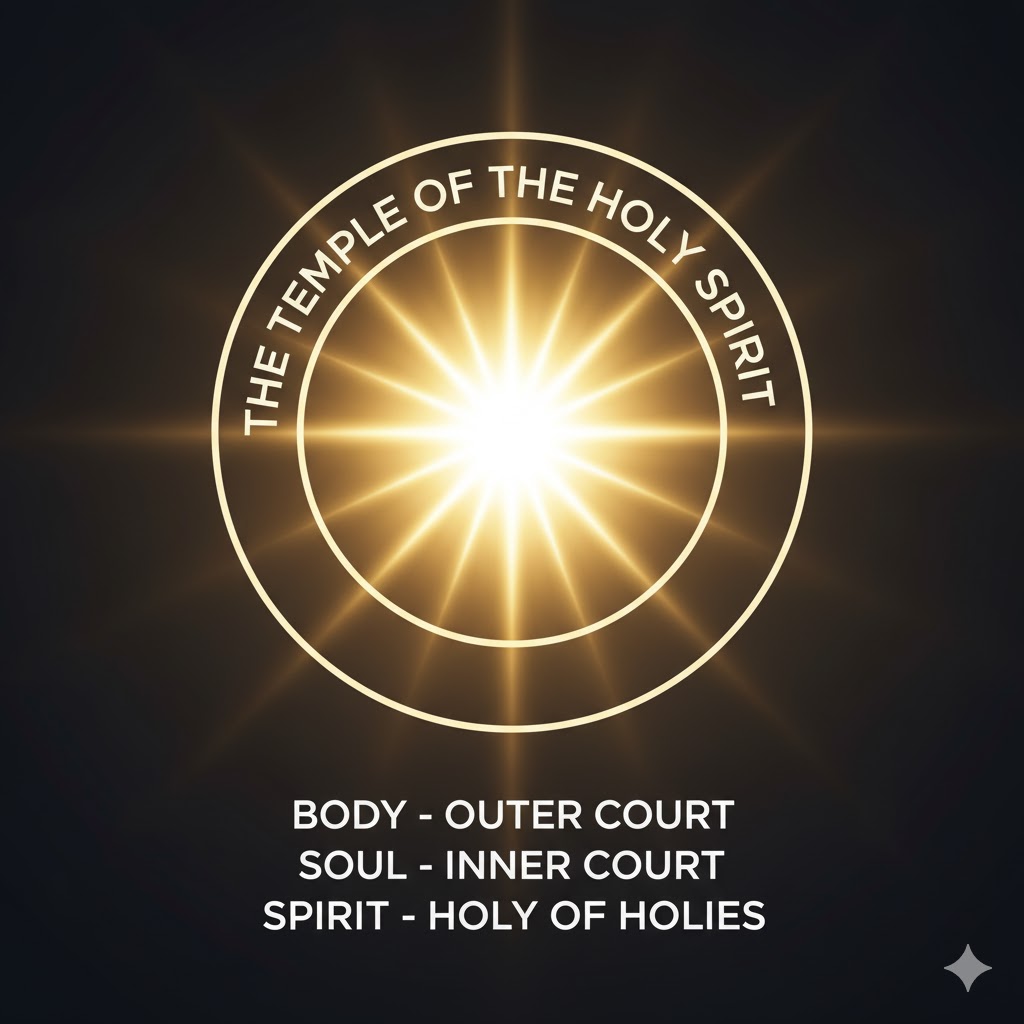
The Temple of the Holy Spirit

(1 Corinthians 6:19–20 KJV)

“What? know ye not that your body is the temple of the Holy Ghost which is in you, which ye have of God, and ye are not your own?”

The human being is a sacred temple composed of three divine courtsthe body (outer court), the soul (inner court), and the spirit (Holy of Holies). Each has spiritual “gates” that must be guarded, purified, and dedicated to God.


🕊 Holy Spirit Gates (The Holy of Holies)

The dwelling place of the presence of God; where communion, revelation, and transformation occur.

  1. Truth Gate – The Spirit of truth guides believers into all understanding.
    • John 16:13: “When he, the Spirit of truth, is come, he will guide you into all truth.”
    • This gate opens discernment and alignment with God’s Word, rejecting deception.
  2. Revelation Gate – Unlocks divine mysteries and heavenly insight.
    • Ephesians 1:17: “That the God of our Lord Jesus Christ… may give unto you the spirit of wisdom and revelation in the knowledge of him.”
    • When open, this gate allows divine secrets to be revealed to the heart.
  3. Intuition Gate – The inner knowing that transcends logic.
    • 1 John 2:27: “Ye need not that any man teach you… the same anointing teacheth you of all things.”
    • The Spirit communicates through an inner sense or divine impression.
  4. Prayer Gate – Connects heaven and earth through constant communion.
    • 1 Thessalonians 5:17: “Pray without ceasing.”
    • This gate fuels spiritual life, keeping the fire of the altar burning within.
  5. Reverence Gate – Produces humility and awe before God’s holiness.
    • Psalm 111:10: “The fear of the LORD is the beginning of wisdom.”
    • Reverence guards against pride, keeping the temple pure and submissive.
  6. Faith Gate – The doorway to the supernatural.
    • Hebrews 11:6: “Without faith it is impossible to please him.”
    • Faith activates miracles and allows the believer to walk in divine authority.
  7. Hope Gate – Sustains endurance through trials.
    • Romans 15:13: “Now the God of hope fill you with all joy and peace in believing.”
    • Hope keeps the spirit alive and focused on God’s promises.
  8. Worship Gate – The highest expression of divine intimacy.
    • John 4:24: “God is a Spirit: and they that worship him must worship him in spirit and in truth.”
    • Worship sanctifies the atmosphere of the spirit, aligning the believer with heaven.
  9. Fear of God Gate – Protects from sin and awakens holiness.
    • Proverbs 14:27: “The fear of the LORD is a fountain of life, to depart from the snares of death.”
    • This gate anchors reverence, obedience, and purity in the believer’s spirit.

💠 Soul Gates (The Inner Court)

The seat of the mind, will, and emotions—where choices are made and spiritual warfare often occurs.

  1. Conscience Gate – The moral compass of the soul.
    • Romans 9:1: “My conscience also bearing me witness in the Holy Ghost.”
    • When pure, it warns against sin; when seared, it allows moral confusion.
  2. Reason Gate – The faculty of understanding and interpretation.
    • Proverbs 3:5–6: “Trust in the LORD… and lean not unto thine own understanding.”
    • This gate must be submitted to divine wisdom rather than worldly logic.
  3. Imagination Gate – The creative and visionary center of the soul.
    • Genesis 6:5: “Every imagination of the thoughts of his heart was only evil continually.”
    • When sanctified, imagination allows believers to visualize God’s glory and promises.
  4. Mind Gate – Governs thoughts, memory, and meditation.
    • Romans 12:2: “Be ye transformed by the renewing of your mind.”
    • A renewed mind brings the soul into harmony with the will of God.
  5. Will Gate – The power of choice and surrender.
    • Deuteronomy 30:19: “Choose life, that both thou and thy seed may live.”
    • This gate determines whether one obeys God or yields to the flesh.
  6. Emotions Gate – The realm of feelings and affections.
    • Proverbs 4:23: “Keep thy heart with all diligence; for out of it are the issues of life.”
    • Emotions must be ruled by the Spirit, not by circumstance.
  7. Choices Gate – Where decisions shape destiny.
    • Joshua 24:15: “Choose you this day whom ye will serve.”
    • Every choice opens or closes access to spiritual blessings.
  8. Will (as Dominion Gate) – Represents alignment of human will with divine purpose.
    • Luke 22:42: “Not my will, but thine, be done.”
    • This final gate in the soul ensures complete surrender to God’s plan.

🕯 Body Gates (The Outer Court)

The physical realm that interacts with the world—where obedience, discipline, and holiness must govern.

  1. Flesh Gate – Represents the fallen nature that seeks its own desires.
    • Galatians 5:17: “The flesh lusteth against the Spirit.”
    • The believer must crucify the flesh daily to keep the temple pure.
  2. Touch Gate – The sense of contact and intimacy.
    • 2 Corinthians 6:17: “Touch not the unclean thing; and I will receive you.”
    • This gate calls for purity and discernment in physical and spiritual connections.
  3. Taste Gate – Governs appetite, both physical and spiritual.
    • Psalm 34:8: “O taste and see that the LORD is good.”
    • Discipline in what one consumes symbolizes satisfaction in God, not excess.
  4. Smell Gate – Symbolic of spiritual discernment and worship.
    • Ephesians 5:2: “A sweet smelling savour.”
    • The anointing oil and incense of worship in the Old Testament mirror this gate’s holiness.
  5. Sight Gate – Controls vision and perception.
    • Job 31:1: “I made a covenant with mine eyes.”
    • What one watches or observes either sanctifies or corrupts the heart.
  6. Hearing Gate – Governs what influences faith and belief.
    • Romans 10:17: “Faith cometh by hearing, and hearing by the word of God.”
    • The ears determine what teachings, music, or words shape the soul.

When the Holy Spirit Gates are active, the believer walks in revelation and divine connection.
When the Soul Gates are renewed, the believer’s emotions, mind, and will align with truth.
When the Body Gates are disciplined, the believer’s actions reflect holiness.

Together, these gates form the Temple of the Holy Spirit—a living, breathing sanctuary through which God manifests His glory.

1 Thessalonians 5:23 (KJV): “And the very God of peace sanctify you wholly; and I pray God your whole spirit and soul and body be preserved blameless unto the coming of our Lord Jesus Christ.”

The human being is a divine masterpiece crafted in the image of God, designed to be a dwelling place for His presence. According to 1 Corinthians 6:19 (KJV), “What? know ye not that your body is the temple of the Holy Ghost which is in you, which ye have of God, and ye are not your own?” This scripture establishes a sacred truth: the human body, soul, and spirit are not merely biological or emotional structures, but holy vessels that mirror the very order of God’s tabernacle.

In the Old Testament, the temple of God had three parts: the outer court, the inner court, and the Holy of Holies. Each part symbolically represents a dimension of our being—the body, the soul, and the spirit. The outer court corresponds to the body, the inner court to the soul, and the Holy of Holies to the spirit. This divine structure reveals that true worship begins within, from the spirit, moving outward to influence the soul and body.

The body is the outer court, the physical representation of the inner life. It interacts with the world through five gates—touch, taste, smell, sight, and hearing. These gates determine what enters and exits, affecting the purity of the temple. 1 Corinthians 9:27 (KJV) says, “But I keep under my body, and bring it into subjection,” reminding believers that the flesh must be disciplined so it does not corrupt what is sacred.

The gate of sight determines vision—what one allows the eyes to behold. Job made a covenant with his eyes (Job 31:1), understanding that the eyes can either glorify God or lead one into temptation. Similarly, the gate of hearing must be guarded, for “faith cometh by hearing” (Romans 10:17), and what we listen to shapes belief and action.

The gate of taste influences appetite and desire. Proverbs 23:2 warns against overindulgence, teaching self-control in what one consumes. The touch gate represents intimacy and connection, reminding believers to “touch not the unclean thing” (2 Corinthians 6:17). Finally, the gate of smell connects to discernment—sensing what is holy versus profane, for in Exodus 30, God gave Moses instructions for the holy anointing oil, a sweet fragrance representing divine worship.

Beyond the body lies the soul, the inner court of human existence. The soul is where thoughts, emotions, and decisions are born. It is the seat of the mind, will, and emotions—the realm where spiritual battles occur. In Luke 21:19, Christ declares, “In your patience possess ye your souls.” This means the believer must govern the soul with divine wisdom and endurance.

The mind gate processes reasoning, imagination, and memory. Romans 12:2 instructs, “Be ye transformed by the renewing of your mind,” because the mind must be renewed daily through Scripture and prayer. The imagination gate, when sanctified, allows believers to envision God’s promises; but when corrupted, it becomes a tool of deception (Genesis 6:5).

The will gate represents choice—the power to obey or disobey. Deuteronomy 30:19 declares, “I have set before you life and death… therefore choose life.” The will determines which voice—God’s or the flesh’s—governs the temple. The emotion gate is deeply tied to worship, for God desires hearts that love Him sincerely. Proverbs 4:23 (KJV) says, “Keep thy heart with all diligence; for out of it are the issues of life.”

The conscience acts as a moral compass, bearing witness with the Spirit to what is right or wrong (Romans 9:1). When the conscience is purified by the blood of Christ, the soul becomes a place of peace and discernment. But if defiled, it leads to confusion and spiritual blindness (Titus 1:15).

The reason gate is where understanding is formed. Proverbs 3:5-6 (KJV) teaches, “Trust in the LORD with all thine heart; and lean not unto thine own understanding.” Reason must be submitted to revelation; for human wisdom alone cannot grasp divine truth.

The deepest part of the human temple is the spirit, the Holy of Holies. Here, communion with God occurs through the indwelling of the Holy Spirit. The spirit has its own gates—faith, reverence, prayer, revelation, intuition, worship, and the fear of God—each essential for divine connection.

The faith gate activates the believer’s trust in God. Hebrews 11:6 declares, “Without faith it is impossible to please Him.” The prayer gate keeps communication open between heaven and earth (1 Thessalonians 5:17). Prayer maintains the fire of the altar within the Holy of Holies, where God’s glory abides.

The revelation gate opens divine mysteries to those who seek truth. Ephesians 1:17 speaks of “the spirit of wisdom and revelation in the knowledge of Him.” The intuition gate allows one to perceive spiritual truths without human logic; it is the inner knowing that comes from the Spirit of God (1 John 2:27).

The reverence gate reflects holy respect and submission before the Lord. Psalm 111:10 declares, “The fear of the LORD is the beginning of wisdom.” Reverence keeps the spirit humble and the heart tender toward God.

The worship gate is the ultimate purpose of the temple—to glorify the Creator. John 4:24 reminds, “God is a Spirit: and they that worship him must worship him in spirit and in truth.” Worship purifies the temple and aligns every gate with heaven’s harmony.

Finally, the fear of God gate establishes holiness. Proverbs 14:27 declares, “The fear of the LORD is a fountain of life.” When this gate is open, sin cannot dominate, and the believer becomes a living sanctuary of divine power.

Thus, the temple of the Holy Spirit is a complete structure—body, soul, and spirit working together in divine order. When every gate is consecrated, the believer lives in alignment with heaven, walking as a vessel of light in a dark world.

The restoration of this temple begins with repentance and ends with transformation. Romans 8:11 declares that the Spirit that raised Jesus from the dead will quicken our mortal bodies. This quickening power renews the entire being, sanctifying each court and gate for God’s use.

Ultimately, the believer’s goal is not mere moral purity, but divine habitation. When the body, soul, and spirit operate in harmony under the authority of the Holy Spirit, heaven finds expression on earth. As Paul writes in 1 Thessalonians 5:23, “And the very God of peace sanctify you wholly; and I pray God your whole spirit and soul and body be preserved blameless unto the coming of our Lord Jesus Christ.”

References
1 Corinthians 6:19–20; Romans 12:1–2; Proverbs 4:23; 1 Thessalonians 5:23; John 4:24; Hebrews 11:6; Deuteronomy 30:19; Psalm 111:10; Ephesians 1:17; Romans 8:11 (KJV).

❤️ When a Man Loves a Woman❤️

Understanding a man’s love can be complex, but the Bible gives timeless wisdom about godly love and how it manifests in action and character. True love is patient, selfless, protective, and rooted in faith (1 Corinthians 13:4-7). A man who loves a woman in a godly way will reflect these principles in his words, actions, and priorities.


1. He Protects and Provides

A man who loves a woman will seek to protect her physically, emotionally, and spiritually, and take responsibility for providing support.
KJV Reference: Ephesians 5:25 – “Husbands, love your wives, even as Christ also loved the church, and gave himself for it.”

  • Love involves sacrifice and stewardship.
  • Providing isn’t always material; it includes guidance, encouragement, and spiritual leadership.

2. He Shows Respect and Honor

A loving man honors a woman’s dignity and treats her with respect.
KJV Reference: 1 Peter 3:7 – “Likewise, ye husbands, dwell with them according to knowledge, giving honour unto the wife, as unto the weaker vessel, and as being heirs together of the grace of life; that your prayers be not hindered.”

  • He listens, values her opinions, and does not belittle her.

3. He Communicates Honestly

A man in love will be transparent and open with his feelings, struggles, and intentions.
KJV Reference: Proverbs 24:26 – “Every man shall kiss his lips that giveth answer wisely.”

  • He speaks truthfully and avoids deception.
  • Communication fosters trust and intimacy.

4. He Seeks Her Best Interests

Love is selfless. A man who loves a woman seeks her spiritual, emotional, and personal growth.
KJV Reference: Philippians 2:3-4 – “Let nothing be done through strife or vainglory; but in lowliness of mind let each esteem other better than themselves. Look not every man on his own things, but every man also on the things of others.”

  • He encourages her dreams, supports her goals, and prays for her.

5. He Is Faithful and Loyal

Commitment is a hallmark of biblical love. A man in love remains loyal in heart, mind, and action.
KJV Reference: Proverbs 20:6 – “Most men will proclaim every one his own goodness: but a faithful man who can find?”

  • Love is shown by consistent faithfulness, not just words.

6. He Shows Patience and Understanding

True love exercises patience, especially during disagreements or challenges.
KJV Reference: 1 Corinthians 13:4-5 – “Charity suffereth long, and is kind; charity envieth not; charity vaunteth not itself, is not puffed up… thinketh no evil.”

  • He listens, forgives, and gives her grace.

7. He Acts with Gentleness and Tenderness

A loving man treats a woman with care and tenderness, honoring her heart and emotions.
KJV Reference: Colossians 3:19 – “Husbands, love your wives, and be not bitter against them.”

  • Love is soft, not harsh; it nurtures rather than criticizes.

8. He Prays for Her and Encourages Spiritual Growth

A man who loves a woman desires her closeness to God and prays on her behalf.
KJV Reference: 1 Thessalonians 5:17-18 – “Pray without ceasing. In every thing give thanks: for this is the will of God in Christ Jesus concerning you.”

  • His love is intertwined with faith and spiritual encouragement.

9. He Invests Time and Attention

Actions speak louder than words. A man in love prioritizes time with a woman, showing that she matters.
KJV Reference: Ecclesiastes 3:1 – “To every thing there is a season, and a time to every purpose under the heaven.”

  • Time spent together builds emotional intimacy and shared life experiences.

10. He Sacrifices Personal Desires

A man who truly loves a woman will sometimes set aside his own preferences to uplift, support, or bless her.
KJV Reference: John 15:13 – “Greater love hath no man than this, that a man lay down his life for his friends.”

  • Sacrifice in love mirrors Christ’s example of selflessness.

Signs a Man Loves You – The Male Files (KJV-Based)

Sign of LoveWhat It Looks LikeScripture Reference (KJV)
Protects and ProvidesSacrifices for your well-being, offers guidance and supportEphesians 5:25 – “Husbands, love your wives, even as Christ also loved the church, and gave himself for it.”
Honors and Respects YouTreats you with dignity, values your opinions1 Peter 3:7 – “…giving honour unto the wife, as unto the weaker vessel…”
Communicates HonestlyShares feelings, intentions, and struggles openlyProverbs 24:26 – “Every man shall kiss his lips that giveth answer wisely.”
Seeks Your Best InterestsEncourages your growth, prays for you, supports your goalsPhilippians 2:3-4 – “Look not every man on his own things, but every man also on the things of others.”
Faithful and LoyalRemains committed in heart and actionProverbs 20:6 – “Most men will proclaim every one his own goodness: but a faithful man who can find?”
Patient and UnderstandingListens, forgives, shows grace1 Corinthians 13:4-5 – “Charity suffereth long, and is kind… thinketh no evil.”
Gentle and TenderTreats you with care, avoids harshnessColossians 3:19 – “Husbands, love your wives, and be not bitter against them.”
Prays for You & Encourages Spiritual GrowthDesires your closeness to God1 Thessalonians 5:17-18 – “Pray without ceasing… for this is the will of God…”
Invests Time and AttentionPrioritizes meaningful moments togetherEcclesiastes 3:1 – “To every thing there is a season, and a time to every purpose under the heaven.”
Sacrifices Personal DesiresPuts your needs above his own when necessaryJohn 15:13 – “Greater love hath no man than this, that a man lay down his life for his friends.”

Conclusion

A man’s love is not measured by fleeting words or material gifts but by consistent, godly actions. He seeks her welfare, honors her as a co-heir of grace, and leads with humility, patience, and faith. Observing these signs, rooted in Scripture, provides clarity for discerning genuine love in a relationship.

The Dating Series: ✨ Signs of a God-Sent Partner vs. a Counterfeit ✨

A God-sent partner is a divine assignment, not merely an emotional experience. In contrast, a counterfeit is a distraction sent to derail destiny. Scripture warns that “Satan himself is transformed into an angel of light” (2 Corinthians 11:14, KJV), meaning not every love interest comes from Heaven. Spiritual discernment is essential in choosing a mate.

A God-sent partner cultivates peace, not confusion. The Word teaches that “God is not the author of confusion, but of peace” (1 Corinthians 14:33, KJV). If a relationship brings emotional chaos, anxiety, or constant instability, it is likely not divinely ordained.

A counterfeit mimics godly traits until tested. Like wolves in sheep’s clothing (Matthew 7:15, KJV), counterfeit partners initially appear caring, spiritual, or “perfect.” But when trials arise, their true nature becomes visible—they manipulate, blame-shift, and abandon responsibility.

A God-sent partner encourages your spiritual growth. They sharpen your faith, like iron sharpening iron (Proverbs 27:17, KJV). You find yourself praying more, sinning less, and pursuing righteousness with greater zeal because iron meets iron—not flesh meets flesh.

A counterfeit feeds fleshly desires rather than spiritual maturity. They pressure you toward lust, compromise, or ungodly behavior. Scripture warns, “Make not provision for the flesh” (Romans 13:14, KJV); counterfeit love leads you away from holiness, not deeper into it.

A God-sent partner honors boundaries. They respect your walk, purity, time, and calling. They guard you, not use you. True love is patient (1 Corinthians 13:4, KJV), and patience reflects divine intention.

A counterfeit violates boundaries and emotions. They guilt-trip, love-bomb, or manipulate to gain control. This behavior aligns with the seducer spirit in Proverbs 7, where false affection leads to destruction.

A God-sent partner carries humility and accountability. They admit wrongs, repent quickly, and seek reconciliation. “God resisteth the proud, but giveth grace unto the humble” (James 4:6, KJV). Humility is divine evidence.

A counterfeit is prideful and blame-shifting. They refuse counsel, correction, or spiritual authority. Proverbs warns that pride goes before destruction (Proverbs 16:18, KJV).

A God-sent partner aligns with God’s timing and order. They pursue properly, seek wise counsel, and build slowly and intentionally. “In all thy ways acknowledge Him, and He shall direct thy paths” (Proverbs 3:6, KJV). They move with prayer, not pressure.

A counterfeit pushes urgency, impulsivity, or secrecy. They rush intimacy or commitment, hoping to bypass discernment. True love is patient; manipulation is hurried.

A God-sent partner demonstrates consistent fruit. Jesus said, “Ye shall know them by their fruits” (Matthew 7:16, KJV). Their actions, not just words, reveal godly character—faithfulness, gentleness, patience, self-control.

A counterfeit shows temporary charm but rotten fruit over time. Arrogance, selfishness, lust, jealousy, and deception emerge. Satan seduces by imitation—never by true transformation.

A God-sent partner brings emotional safety. You feel protected, supported, and valued. “Perfect love casteth out fear” (1 John 4:18, KJV). God’s love does not traumatize.

A counterfeit breeds insecurity and fear. You feel anxious, unstable, or never “good enough.” Where fear dwells without peace, God is not the author.

A God-sent partner has a servant heart. They emulate Christ: “For even the Son of man came not to be ministered unto, but to minister” (Mark 10:45, KJV). Servant leadership is a mark of godliness.

A counterfeit seeks to be served. They demand, drain, and dominate. The spirit of entitlement is not Christlike; it is antichrist in nature.

A God-sent partner aligns with your purpose. Amos 3:3 asks, “Can two walk together, except they be agreed?” They support vision, calling, and destiny—fighting with you, not against you.

A counterfeit distracts you from purpose. They waste time, derail focus, and pull you from God’s assignment. Their presence delays destiny rather than accelerates it.

Before God releases a covenant blessing—especially in relationships—He often allows a counterfeit to appear first. This principle echoes a spiritual testing pattern seen throughout Scripture: the false comes before the true, the imitation before the authentic, the distraction before the destiny. As Paul wrote, “first that which is natural; and afterward that which is spiritual” (1 Corinthians 15:46, KJV). God uses this pattern to refine discernment, purify motives, and mature faith.

A counterfeit relationship often arrives during seasons of emotional hunger. When loneliness, impatience, or disappointment rise, the enemy exploits vulnerability. Like Satan tempting Christ after forty days of fasting (Matthew 4:1–11, KJV), counterfeits appear when the flesh is tired and the spirit is being tested. The temptation is not merely lust—it is settling for less than God’s promise.

God allows counterfeits to expose the motives of the heart. Scripture warns, “The heart is deceitful above all things” (Jeremiah 17:9, KJV). Sometimes we desire companionship more than obedience, romance more than righteousness, marriage more than purpose alignment. The counterfeit reveals whether we seek God or merely God’s gifts.

Counterfeit relationships sharpen spiritual discernment. Hebrews teaches that mature believers “have their senses exercised to discern both good and evil” (Hebrews 5:14, KJV). Discernment grows not by theory but by experience—by learning to recognize what peace feels like and what confusion smells like.

Counterfeits test patience and trust in God’s timing. Scripture promises, “They that wait upon the Lord shall renew their strength” (Isaiah 40:31, KJV). Impatience is one of the enemy’s favorite open doors. A counterfeit pressures urgency; a God-ordained covenant unfolds in divine timing.

A counterfeit often mirrors some qualities of your future spouse. Satan studies desires and weaknesses, offering a near match—just misaligned enough to derail destiny. “There is a way which seemeth right unto a man, but the end thereof are the ways of death” (Proverbs 14:12, KJV). This near-perfection forces you to define what truly matters.

Counterfeits reveal emotional wounds. Trauma bonding, abandonment fears, and unhealed childhood scars often surface in wrong relationships. God allows the wrong person to expose the wrong places in your soul so He can heal you before the right one comes. Psalm 147:3 declares, “He healeth the broken in heart, and bindeth up their wounds.”

A counterfeit teaches boundaries. Samson loved Delilah before recognizing she was sent to destroy, not to build (Judges 16, KJV). Samson’s story illustrates that spiritual gifting without emotional maturity leads to downfall. Boundaries are protection, not punishment.

Counterfeits separate true believers from superficial ones. Like wheat and tares growing together (Matthew 13:24–30, KJV), real hearts and false intentions may look the same at first. Time reveals truth.

A counterfeit relationship builds spiritual muscles. Just as David fought lions and bears before facing Goliath (1 Samuel 17:34–36, KJV), wrong relationships prepare believers for covenant by cultivating strength, humility, prayer life, and emotional intelligence.

Counterfeits expose idols. If a romantic desire becomes an idol, God will strip it away. “Thou shalt have no other gods before me” (Exodus 20:3, KJV). Some lose a counterfeit only to discover God was never first in their heart during that relationship.

A counterfeit humbles. Pride makes us believe we can discern without God. Yet even Samuel nearly anointed the wrong king based on appearance (1 Samuel 16:7, KJV). If a prophet struggled, we also must depend on God’s wisdom, not human judgment.

Counterfeits protect us from future regret. After a wrong relationship, believers become intentional. They pray differently, date differently, see differently. What once attracted now alarms. Wisdom replaces naivety.

Counterfeits test obedience. Will you cling to what feels good or what God said? Abraham had to release Ishmael before receiving Isaac fully. One was birthed by flesh; the other by promise (Genesis 21, KJV). Many cling to emotional Ishmaels while praying for covenant Isaacs.

Counterfeits distinguish spiritual partnership from emotional attachment. Lust, trauma bonding, and ego mimic love but lack covenant foundation. True love is patient, kind, selfless, and rooted in righteousness (1 Corinthians 13:4–7, KJV).

Counterfeits cleanse desperation. When you survive heartbreak, you no longer chase validation. You learn contentment in God alone. “In thy presence is fulness of joy” (Psalm 16:11, KJV). Covenant demands wholeness, not dependency.

Counterfeits teach spiritual warfare. A wrong relationship can spiritually drain, emotionally confuse, and mentally destabilize. Yet “no weapon that is formed against thee shall prosper” (Isaiah 54:17, KJV). Victory comes through awareness and prayer.

Counterfeits build testimony. You become able to help others avoid deception. Trials become ministry.

Counterfeits prepare you to steward covenant. Marriage is not fantasy—it is spiritual warfare, purpose, discipline, and sacrifice. God will not give what you are not yet ready to steward (Luke 16:10, KJV).

Finally, counterfeits remind us that the blessing is real. Satan does not counterfeit what God never intended to give.

Those who endure counterfeit seasons with faith emerge purified, wiser, and positioned for covenant blessing. When God finally reveals your ordained partner, you will recognize them—not by adrenaline, lust, or fantasy, but by peace, alignment, purpose, and the voice of the Holy Spirit.

For whom the Lord loves, He prepares. For whom destiny calls, He refines.

Ultimately, a God-sent partner brings clarity, confirmation, and covenant; a counterfeit brings confusion, temptation, and destruction. For discernment, pray as David did:
“Search me, O God… and lead me in the way everlasting.” (Psalm 139:23-24, KJV).
The Lord reveals truth to those willing to obey His voice—and wait on His timing.

The Beauty and Lust Trap

Beauty captivates the human eye and fascinates the imagination. The allure of physical attractiveness, when unchecked, can lead even the most disciplined person into temptation, distraction, and moral compromise. “But I say unto you, That whosoever looketh on a woman to lust after her hath committed adultery with her already in his heart” (Matthew 5:28, KJV). The Scripture warns that lust is not merely an external act but an internal corruption that begins in the mind and heart.

In contemporary society, media and social platforms glorify beauty and glamour, often inflating the power of physical appearance over virtue, wisdom, or character. Men and women alike are influenced by curated images, seductive advertising, and celebrity culture, creating a fertile ground for desire that can lead to spiritual and personal downfall.

A cautionary example from recent news is the scandal involving a prominent businessman who lost his career, family, and public respect due to an affair with a woman widely celebrated for her beauty. The media coverage highlighted how initial admiration turned into obsession, blinding him to consequences and morality. His story echoes the biblical principle that beauty alone can be dangerous when lust overtakes reason.

King Solomon, renowned for his wisdom, also warned of the dangers of unchecked desire. “Go not after her beauty in thine heart, neither let her take thee with her eyelids” (Proverbs 6:25, KJV). Even the wisest are susceptible to temptation when captivated by outward charm. The heart can be ensnared before the mind discerns danger, illustrating the subtlety of the beauty and lust trap.

Physical attraction is not inherently sinful. God created beauty for delight and admiration. “And God saw every thing that he had made, and, behold, it was very good” (Genesis 1:31, KJV). The problem arises when beauty is elevated above righteousness, drawing individuals into covetousness, disobedience, or moral compromise.

Lust often masquerades as love or infatuation. Many confuse desire for meaningful connection, leading to choices that harm themselves and others. “Be not deceived: evil communications corrupt good manners” (1 Corinthians 15:33, KJV). Obsession with beauty can blind one to character, integrity, and spiritual consequences.

The allure of beauty also exploits vanity and pride. A man enthralled by a woman’s appearance may seek affirmation, status, or conquest, prioritizing self-gratification over godly wisdom. “Pride goeth before destruction, and an haughty spirit before a fall” (Proverbs 16:18, KJV). Many personal and public failures stem from this misalignment of desire and discernment.

In relationships, beauty can become a tool for manipulation, whether intentional or not. Seductive charm can sway hearts, particularly when combined with secrecy or isolation. “Flee fornication. Every sin that a man doeth is without the body; but he that committeth fornication sinneth against his own body” (1 Corinthians 6:18, KJV). Discipline and vigilance are necessary to protect the mind, body, and soul.

Society often normalizes indulgence in lustful thought through entertainment, advertising, and peer reinforcement. Music videos, films, and social media portrayals glamorize infidelity, superficiality, and desire, subtly conditioning viewers to equate beauty with entitlement or obsession. Scripture instructs the believer to resist this temptation. “Set your affection on things above, not on things on the earth” (Colossians 3:2, KJV).

Historical examples in Scripture further illustrate this danger. King David’s lust for Bathsheba led to adultery, murder, and familial strife. “And it came to pass in an eveningtide, that David arose from his bed, and walked upon the roof of the king’s house: and from the roof he saw a woman washing herself; and the woman was very beautiful to look upon” (2 Samuel 11:2, KJV). David’s desire, unchecked by self-discipline, caused devastating consequences.

Even Solomon, despite his wisdom, recognized the peril of yielding to lust. “Go not after her beauty in thine heart, neither let her take thee with her eyelids” (Proverbs 6:25, KJV). This warning underscores the enduring nature of the trap: physical beauty, when idealized or lusted after, can dominate judgment.

The psychology of attraction reveals why beauty has such a strong pull. Visual stimuli can trigger hormones, excitement, and emotional fixation, overriding rational thought. The Bible addresses this human tendency, urging discipline and self-control. “He that is slow to anger is better than the mighty; and he that ruleth his spirit than he that taketh a city” (Proverbs 16:32, KJV). Controlling impulses safeguards the soul and relationships.

Lust also erodes spiritual intimacy with God. When attention is focused on human beauty, devotion may be diverted from prayer, Scripture, and righteous action. “Ye adulterers and adulteresses, know ye not that the friendship of the world is enmity with God?” (James 4:4, KJV). Desire for temporal pleasure competes with eternal priorities.

Physical beauty can create dependency or obsession. The news example illustrates how an initial attraction can spiral into irrational decisions, financial loss, and social disgrace. “Keep thy heart with all diligence; for out of it are the issues of life” (Proverbs 4:23, KJV). Guarding one’s heart protects against the destructive consequences of lust.

Faithfulness to God and spouse provides a safeguard against temptation. “Marriage is honourable in all, and the bed undefiled” (Hebrews 13:4, KJV). Committing to purity, both mentally and physically, strengthens moral resolve and spiritual alignment.

Accountability, prayer, and godly counsel are critical in resisting the beauty and lust trap. Confiding in mentors or spiritual leaders provides perspective and reinforcement of values. “Iron sharpeneth iron; so a man sharpeneth the countenance of his friend” (Proverbs 27:17, KJV). Community supports discipline and vigilance.

Fleeing situations that may incite lust is practical and scriptural. “Flee fornication” (1 Corinthians 6:18, KJV) is not merely a command but a protective principle. Avoiding provocative environments, excessive media exposure, and private temptation reduces the risk of moral failure.

Spiritual discernment enhances protection. Recognizing the difference between appreciation of beauty and lustful obsession allows one to honor God while navigating human relationships. “Be ye not unequally yoked together with unbelievers” (2 Corinthians 6:14, KJV) reminds believers to align with righteousness in all engagements.

Scripture emphasizes that beauty without virtue is fleeting. “Favor is deceitful, and beauty is vain: but a woman that feareth the Lord, she shall be praised” (Proverbs 31:30, KJV). Lasting value resides in godliness, character, and faithfulness rather than mere appearance.

Downfalls of Beauty and Lust

  1. Spiritual Corruption
    • Lust diverts focus from God and righteousness.
    • “Ye adulterers and adulteresses, know ye not that the friendship of the world is enmity with God?” (James 4:4, KJV).
  2. Loss of Self-Control
    • Obsessing over beauty can override reason and discipline.
    • “He that is slow to anger is better than the mighty; and he that ruleth his spirit than he that taketh a city” (Proverbs 16:32, KJV).
  3. Adultery and Infidelity
    • Lust in the heart often leads to physical sin.
    • “But I say unto you, That whosoever looketh on a woman to lust after her hath committed adultery with her already in his heart” (Matthew 5:28, KJV).
  4. Destruction of Relationships
    • Marriage, friendships, and family bonds can be damaged.
    • “Marriage is honourable in all, and the bed undefiled: but whoremongers and adulterers God will judge” (Hebrews 13:4, KJV).
  5. Obsession and Infatuation
    • Beauty can create unhealthy fixation, clouding judgment and leading to irrational decisions.
  6. Jealousy and Envy
    • Comparing oneself or others fuels resentment and discontent.
    • “Envy thou not the oppressor, and choose none of his ways” (Proverbs 3:31, KJV).
  7. Pride and Vanity
    • Admiring beauty may inflate ego or lead to narcissism.
    • “Pride goeth before destruction, and an haughty spirit before a fall” (Proverbs 16:18, KJV).
  8. Scandals and Public Shame
    • Infatuation with beauty can cause public disgrace or legal issues.
    • Modern examples: public figures losing careers or reputation due to affairs.
  9. Emotional Turmoil
    • Lust generates guilt, anxiety, and inner conflict.
    • “Keep thy heart with all diligence; for out of it are the issues of life” (Proverbs 4:23, KJV).
  10. Material and Financial Loss
    • Pursuit of beauty-driven desire can result in reckless spending, bribery, or exploitation.
  11. Addiction to Sensory Pleasure
    • Obsessing over appearance, sexual desire, or validation can become habitual and controlling.
  12. Divine Displeasure
    • Lust and obsession with beauty offend God and risk judgment.
    • “Go not after her beauty in thine heart, neither let her take thee with her eyelids” (Proverbs 6:25, KJV).
  13. Short-lived Gratification
    • Physical beauty fades; lust offers temporary pleasure with long-term consequences.
  14. Manipulation and Exploitation
    • Beauty can be used to seduce, deceive, or manipulate, leading to moral compromise.
  15. Loss of Purpose
    • Excessive focus on desire can distract from career, ministry, family, or spiritual growth.

In conclusion, beauty can be both a blessing and a snare. Lust, when unchecked, can derail careers, marriages, and spiritual integrity. The example of the businessman demonstrates the destructive consequences of yielding to physical attraction. By guarding the heart, fleeing temptation, seeking counsel, and prioritizing God, one can navigate admiration for beauty without succumbing to lust. “Keep thy heart with all diligence; for out of it are the issues of life” (Proverbs 4:23, KJV) remains the ultimate counsel for avoiding the trap.

When the World Clouds Your Vision.

Photo by Pixabay on Pexels.com

Life is a journey filled with both clarity and confusion, faith and fear. Yet many people lose sight of their God-given purpose when the noise of the world clouds their spiritual vision. The distractions of society—materialism, social approval, and comparison—can blur the path that God has designed. Proverbs 29:18 (KJV) declares, “Where there is no vision, the people perish.” Vision, in this sense, is not just sight—it is divine direction, a sense of purpose anchored in God’s truth.

When one’s spiritual vision becomes cloudy, it often begins subtly. A person starts to compare their progress to others, questioning their worth and timing. They may once have walked confidently in their purpose, but the opinions of others and the pressures of life cause hesitation. Galatians 6:9 (KJV) encourages, “And let us not be weary in well doing: for in due season we shall reap, if we faint not.” The key is persistence, not perfection.

In the biblical sense, vision represents revelation—God’s guidance and insight for life. Proverbs 3:5–6 (KJV) reminds believers to “Trust in the Lord with all thine heart; and lean not unto thine own understanding. In all thy ways acknowledge him, and he shall direct thy paths.” When we trust our own sight, we may be deceived, but when we trust God’s leading, He brings clarity to confusion.

The world clouds vision through distraction. Technology, social media, and the constant pursuit of validation can blind individuals from the purpose within. The enemy uses distraction as a weapon, knowing that a believer who cannot focus cannot fulfill their calling. 1 Peter 5:8 (KJV) warns, “Be sober, be vigilant; because your adversary the devil, as a roaring lion, walketh about, seeking whom he may devour.” A clouded mind leaves room for spiritual attack.

When life becomes overwhelming, many seek advice from everyone except God. Yet, not every voice deserves access to your vision. Joseph in Genesis 37 shared his God-given dream with his brothers, and jealousy turned into betrayal. This teaches that discernment is crucial—sometimes, silence protects the promise. Matthew 7:6 (KJV) says, “Give not that which is holy unto the dogs, neither cast ye your pearls before swine.” Your vision is a pearl—keep it guarded.

One of the greatest lessons in maintaining clarity is learning the art of separation. Abraham was instructed to leave his country and kindred before God could fulfill His promise (Genesis 12:1 KJV). Likewise, sometimes we must detach from environments or people that dim our spiritual focus. Not every companion can go where God is leading you.

When the world clouds your vision, it often fills your heart with fear and doubt. The mind begins to question God’s plan, and faith weakens. But 2 Corinthians 5:7 (KJV) reminds us, “For we walk by faith, not by sight.” Walking by faith requires trusting God even when the road ahead looks foggy. Faith is spiritual vision—seeing the invisible and believing the impossible.

The enemy thrives in confusion. When your vision is unclear, he whispers lies to steer you off course. Yet God is not the author of confusion (1 Corinthians 14:33 KJV). His Spirit brings peace and order, even when life feels chaotic. Clarity comes from spending time in prayer, fasting, and meditating on the Word.

Many lose their vision because they focus more on their problems than on the promise. Peter began to sink when he took his eyes off Jesus and looked at the storm (Matthew 14:30 KJV). Likewise, focusing on life’s distractions causes spiritual sinking. To regain clarity, one must fix their gaze back on Christ, the author and finisher of our faith (Hebrews 12:2 KJV).

A clouded vision also distorts identity. When people forget who they are in Christ, they begin to define themselves by worldly standards—status, wealth, or appearance. Romans 12:2 (KJV) commands, “And be not conformed to this world: but be ye transformed by the renewing of your mind.” Renewing the mind clears the fog that the world creates.

Sometimes, God allows a season of blindness to strengthen faith. Saul’s temporary blindness in Acts 9 humbled him and led to transformation into Paul, the great apostle. In moments where you cannot see the way, trust that God is refining your spiritual sight. Temporary blindness may precede permanent clarity.

Overcoming a clouded vision requires intentionality. Set boundaries with people, habits, and distractions that pull you away from your divine purpose. Philippians 4:8 (KJV) gives a clear filter: think on things that are true, honest, just, pure, lovely, and of good report. Mental discipline cultivates spiritual clarity.

Prayer is the lens cleaner for the soul. When confusion sets in, seek God in stillness. Psalm 46:10 (KJV) declares, “Be still, and know that I am God.” Silence allows spiritual realignment. The more you quiet the world’s noise, the clearer God’s voice becomes.

Don’t share your every move with others, even well-meaning friends. People can unintentionally discourage your faith through doubt or jealousy. Nehemiah rebuilt Jerusalem’s wall while keeping his strategy private until the time was right (Nehemiah 2:12 KJV). Likewise, protect your plans until they manifest.

A clouded vision can lead to emotional exhaustion and spiritual burnout. When constantly seeking validation or comparing yourself to others, peace becomes elusive. Isaiah 26:3 (KJV) promises, “Thou wilt keep him in perfect peace, whose mind is stayed on thee: because he trusteth in thee.” Fix your focus on God, not worldly noise.

Worldly success often tempts believers to compromise vision for comfort. Yet Jesus said in Matthew 6:24 (KJV), “No man can serve two masters.” Divided vision leads to spiritual instability. To overcome this, one must choose eternal purpose over temporary pleasure.

The light of God cuts through worldly fog. Psalm 119:105 (KJV) proclaims, “Thy word is a lamp unto my feet, and a light unto my path.” The Bible acts as a spiritual compass, guiding through confusion and restoring direction. Daily devotion builds vision through divine perspective.

To overcome the world’s clouding influence, believers must learn to walk in obedience even when clarity feels distant. Faith grows in uncertainty. The more one trusts God through dark seasons, the sharper their spiritual sight becomes when the light returns.

In conclusion, when the world clouds your vision, return to the source of all clarity—God’s Word. Seek Him in prayer, guard your vision from the opinions of others, and trust the process of divine timing. Proverbs 16:9 (KJV) assures, “A man’s heart deviseth his way: but the Lord directeth his steps.” True clarity is not about seeing everything ahead—it’s about trusting the One who sees it all.

References

  • The Holy Bible, King James Version (KJV)
  • Proverbs 29:18; Proverbs 3:5–6; Galatians 6:9; 1 Peter 5:8; Genesis 37; Matthew 7:6; Genesis 12:1; 2 Corinthians 5:7; 1 Corinthians 14:33; Matthew 14:30; Hebrews 12:2; Romans 12:2; Acts 9; Philippians 4:8; Psalm 46:10; Nehemiah 2:12; Isaiah 26:3; Matthew 6:24; Psalm 119:105; Proverbs 16:9.