Tag Archives: christianity

The Baby Mama Culture

Baby-mama culture refers to a normalized social framework where motherhood and fatherhood occur outside of marriage, often detached from covenantal stability, economic cooperation, and spiritual accountability (Reid-Merritt, 2016). In many communities, particularly those shaped by historical ruptures in family structure, children are born into relational instability rather than covenantal unity.

The phenomenon begins at its root—sexual relations without marital commitment. Scripture frames sex as sacred and covenant-bound: “Marriage is honourable in all, and the bed undefiled: but whoremongers and adulterers God will judge” (Hebrews 13:4, KJV). The biblical worldview denies neutrality—sexual union creates consequence, whether lifelong or burdensome.

Rather than husband and wife, the terms baby-mama and baby-father replace covenant language with consumer-relationship labels, stripping parental identity from spiritual foundation. Proverbs warns that this erosion begins in the mouth and heart: “Keep thy heart with all diligence; for out of it are the issues of life” (Proverbs 4:23, KJV).

Without marriage, co-parenting often shifts into legal co-management rather than spiritual stewardship, introducing child-support systems as substitutes for shared responsibility. “The borrower is servant to the lender” (Proverbs 22:7, KJV) applies symbolically—dependency on state-enforced support turns family matters into institutional debt.

In many cases, fathers become associated more with financial obligation than household presence. While child support can enforce provision, it cannot enforce fatherhood. The Bible asserts a father is more than a provider—he is a guide: “And ye fathers, provoke not your children to wrath: but bring them up in the nurture and admonition of the Lord” (Ephesians 6:4, KJV).

For many Black fathers today, systemic barriers compound cultural misalignment. The family dislocation introduced through slavery makes this conversation generational—Black fathers historically were denied legal marriage and paternal rights, creating historical precedent for fractured kinship models (Franklin, 2010).

Thus, baby-mama culture is not only moral—it is structural and historical. “The fathers have eaten sour grapes, and the children’s teeth are set on edge” (Jeremiah 31:29, KJV) symbolizes generational consequence, though scripture later clarifies personal accountability is required moving forward.

Child-support culture often traps fathers in economic survival mode, where wages are garnished, employment is limited, and housing or credit is compromised. Deuteronomy prophetically warns what disobedience to the covenant brings: “He shall lend to thee, and thou shalt not lend to him: he shall be the head, and thou shalt be the tail” (Deuteronomy 28:44, KJV).

Many fathers still fight to make it. Some hold multiple jobs, trades, delivery routes, construction shifts, night work, entrepreneurial side hustles, hustling not from irresponsibility but from necessity. Paul affirms provision is required, even without cultural praise: “But if any provide not for his own…he hath denied the faith” (1 Timothy 5:8, KJV).

The pressure on these fathers is immense. They serve as financial pillars but emotional ghosts, absent from many narratives, holidays, school mornings, and prayers at night. This imbalance creates psychological distance even when provision is technically met (Payne, 2023).

Mothers also carry burdens. Raising children without marital structure often forces women into masculine economic roles without masculine protection, reversing divine design. Peter outlines the feminine posture that cultivates peace: “Let it not be that outward adorning only…but a meek and quiet spirit” (1 Peter 3:3-4, KJV).

Many relationships collapse into resentment because they begin without covenant alignment. Jesus clarifies what foundationless unions lack: “For out of the abundance of the heart the mouth speaketh” (Matthew 12:34, KJV). When love is thin, words grow sharp, accusations louder than agreements.

Children become unintended theologians of family dysfunction, internalizing instability as normal. Solomon says training begins early: “Train up a child in the way he should go…” (Proverbs 22:6, KJV). A child trained without a model may grow mastered by the culture that raised him.

Community implications extend beyond the household. When men are isolated from fatherhood identity, they often seek validation in alpha culture, street brotherhood, clubs, charisma, cars, and currency, rather than wives and wisdom (Dyson, 2004).

Paul teaches the danger of ungoverned desire: “Flee also youthful lusts…” (2 Timothy 2:22, KJV). Lust builds children but does not build kingdoms, legacies, or homes. Desire without discipleship produces responsibility without reverence.

Many fathers spiritually collapse not because they reject God but because they reject God’s order first, then wonder why life rejects them back. James warns that disordered living destabilizes every direction: “A double-minded man is unstable in all his ways” (James 1:8, KJV).

Healing begins when men reclaim identity beyond economy and court systems. David prayed for restoration not externally but inwardly: “Create in me a clean heart, O God…” (Psalm 51:10, KJV). Restoration requires spiritual re-centring, not just relationship repair.

Fatherhood also demands discipline over the tongue, accountability in + out of conflict. Solomon says: “Death and life are in the power of the tongue” (Proverbs 18:21, KJV). Fathers must speak identity into children, not hostility into mothers.

Likewise, women must discern love from loneliness to prevent repeating cycles. Ruth found covering before the creation of the legacy. Boaz represented the covenant before the seed (Ruth 4, KJV). Biblical design demands “wife first, then womb”, not womb then warfare.

Child support may ensure bread, but Bible culture ensures blessing. Isaac and Rebekah built a legacy through a covenant, not courts (Genesis 25:20-21, KJV). When covenant governs creation, provision flows naturally, not forcefully.

Many fathers survive—but survival is not scripture’s endgame. God calls men into government, legacy, and lineage: “The glory of children is their fathers” (Proverbs 17:6, KJV). God never said the glory of checks is their fathers ‘ presence, name, guidance, or covering.

To dismantle baby-mama culture, the counterculture must be covenant revival, identity restoration, sexual discipline, shared spiritual stewardship, and fathers elevated beyond economic footnotes into apostolic heads of household again (Malachi 4:6, KJV): “And he shall turn the heart of the fathers to the children, and the heart of the children to their fathers…”


References

Dyson, M. (2004). The Michael Eric Dyson Reader. Basic Civitas.
Franklin, J. H. (2010). From Slavery to Freedom. McGraw-Hill.
Reid-Merritt, P. (2016). Fallen Daughters of Eve. Kensington.
Reid, M., & Cazenave, N. (2023). Black family cultural analysis. Journal of Black Family Studies.
Payne, R. (2023). Economic strain on non-custodial fathers. Urban Social Economics Review.


Realms of the Afterlife: A Biblical Exploration of Sheol, the Abyss, Tartarus, Gehenna, and the Lake of Fire.

The concept of the afterlife stands as one of the most profound and layered themes within biblical theology, revealing a structured spiritual reality beyond physical death. Scripture does not present a singular destination for the dead, but rather multiple realms, each with distinct purposes, meanings, and theological implications rooted in both Hebrew and Greek traditions.

Within the Old Testament, the earliest and most foundational understanding of the afterlife is expressed through the term Sheol. Derived from Hebrew, Sheol refers broadly to the grave or the realm of the dead, encompassing all who have departed from the land of the living.

Sheol is best understood as the first level or realm of the afterlife, a neutral domain where both the righteous and the wicked reside after death. It is not portrayed as a place of torment, but rather as a shadowy existence removed from the activities of the living world.

Ecclesiastes 9:10 (KJV) affirms this understanding, stating that there is no work, knowledge, or wisdom in Sheol. This suggests a state of stillness and inactivity rather than conscious suffering or reward.

Similarly, Psalm 6:5 (KJV) declares that in death there is no remembrance of God, reinforcing the idea that Sheol is a place devoid of active worship or awareness.

The patriarch Jacob references Sheol in Genesis 37:35 (KJV), expressing his expectation to descend there in mourning. This passage further confirms that Sheol was not viewed as a place of punishment, but as the inevitable destination of all humanity.

As biblical revelation progresses, particularly into the New Testament, a more detailed and differentiated understanding of the afterlife begins to emerge, introducing additional realms beyond Sheol.

One such realm is the Abyss, often translated as the “bottomless pit.” Unlike Sheol, the Abyss is not associated with human souls, but with spiritual confinement and judgment.

In Luke 8:31 (KJV), demons plead with Christ not to be cast into the Abyss, revealing their fear of this place as one of imprisonment and restriction.

Revelation 20:1–3 (KJV) describes Satan being bound and cast into the Abyss for a thousand years, indicating that this realm serves as a temporary prison for rebellious spiritual beings.

This distinction highlights an important theological principle: different realms exist for different types of beings, reflecting divine order and justice within the unseen world.

Another significant term found in the New Testament is Tartarus, which appears in 2 Peter 2:4 (KJV). This passage explains that God cast certain fallen angels into chains of darkness, delivering them into a place of judgment.

Tartarus is understood as a deeper and more severe realm of confinement than the Abyss, specifically reserved for angels who committed grave transgressions, often associated with the events described in Genesis 6.

This realm is characterised by darkness and restraint, emphasising the seriousness of rebellion against divine authority and the certainty of judgment.

The use of the term Tartarus, though rooted in the Greek language, is adapted within Scripture to communicate a distinctly biblical concept of divine punishment for fallen angels.

Moving further into the teachings of Christ, the term Gehenna emerges as a central concept related to judgment and destruction. Unlike Sheol, Gehenna is not neutral, but is explicitly associated with punishment.

Gehenna derives from the Valley of Hinnom, a location historically linked to idolatry and child sacrifice, as recorded in Jeremiah 7:31 (KJV). Over time, it became a symbol of divine wrath.

In Matthew 10:28 (KJV), Christ warns that God has the authority to destroy both soul and body in Gehenna, underscoring its role as a place of judgment.

Mark 9:43 (KJV) further describes Gehenna as a place of unquenchable fire, reinforcing its association with destruction and irreversible consequence.

Gehenna represents a transition in biblical theology from the neutral concept of Sheol to a more defined understanding of moral accountability and divine justice.

The final and most ultimate realm described in Scripture is the Lake of Fire, which represents the culmination of divine judgment.

Revelation 20:14–15 (KJV) declares that death and hell are cast into the Lake of Fire, identifying it as the “second death.” This signifies the complete and final end of all that opposes God.

Unlike Sheol, the Abyss, or Tartarus, which function as temporary or intermediate states, the Lake of Fire is eternal and irreversible.

Matthew 25:41 (KJV) reveals that this place was prepared for the devil and his angels, yet it also becomes the final destination for those not found written in the Book of Life.

This ultimate realm reflects the full expression of divine justice, where all rebellion is permanently judged and removed.

When examined together, these realms reveal a structured progression within biblical eschatology. Sheol serves as the initial realm of the dead, followed by places of confinement such as the Abyss and Tartarus, leading to judgment in Gehenna, and culminating in the eternal reality of the Lake of Fire.

This layered understanding challenges simplified interpretations of the afterlife and calls for a deeper engagement with Scripture in its original linguistic and cultural context.

It also reflects the nature of God as both just and orderly, assigning different realms according to the nature and actions of both human beings and spiritual entities.

The distinctions between these realms emphasise the seriousness of moral accountability and the reality of divine judgment throughout the biblical narrative.

At the same time, the New Testament message offers hope through redemption, emphasising that deliverance from judgment is made possible through faith and obedience.

Ultimately, the study of these realms is not merely an exploration of death, but a theological reflection on justice, mercy, and the eternal destiny of creation.


References

The Holy Bible, King James Version. (1611).

Bauckham, R. (1993). The Theology of the Book of Revelation. Cambridge University Press.

Brueggemann, W. (2002). Theology of the Old Testament. Fortress Press.

Charles, R. H. (1913). A Critical and Exegetical Commentary on the Revelation of St. John. T&T Clark.

France, R. T. (2007). The Gospel of Matthew. Eerdmans.

Green, J. B. (2008). Body, Soul, and Human Life: The Nature of Humanity in the Bible. Baker Academic.

Heiser, M. S. (2015). The Unseen Realm. Lexham Press.

Wright, N. T. (2008). Surprised by Hope. HarperOne.

Right Calling, Wrong Posture

Many people are blessed with a divine calling, a purpose, or a gift from God. Yet, possessing a calling is not enough; the posture with which we approach it determines whether we fulfill our destiny or miss it entirely. A right calling in the wrong posture can lead to frustration, stagnation, and spiritual misalignment.

1. God Honors Posture, Not Just Talent

1 Samuel 16:7 (KJV) teaches: “But the Lord said unto Samuel, Look not on his countenance, or on the height of his stature; because I have refused him: for the Lord seeth not as man seeth; for man looketh on the outward appearance, but the Lord looketh on the heart.”
God values heart posture—humility, obedience, and faith—more than natural talent or outward appearance. You may be gifted, but without the right heart posture, your calling can be misused or ignored.

2. Pride Misaligns the Call

Proverbs 16:18 (KJV) warns: “Pride goeth before destruction, and an haughty spirit before a fall.”
Many individuals pursue their calling with arrogance, entitlement, or impatience. A posture of pride can blind a person to divine guidance, causing missteps even in areas where they are skilled. True readiness requires humility and teachability.

3. Impatience Can Distort the Mission

Ecclesiastes 3:1 (KJV) reminds us: “To everything there is a season, and a time to every purpose under the heaven.”
Rushing ahead of God’s timing, seeking recognition too early, or forcing results creates friction. The right calling requires patience; the wrong posture invites burnout and frustration.

4. Lack of Faith Weakens Impact

Hebrews 11:6 (KJV) teaches: “But without faith it is impossible to please him: for he that cometh to God must believe that he is, and that he is a rewarder of them that diligently seek him.”
Even with a correct calling, if faith is absent, one will fail to execute it effectively. Fear, doubt, or inaction undermine potential. Posture of trust and obedience strengthens calling.

5. Disobedience Nullifies Blessing

Joshua 1:7–8 (KJV) instructs: “Only be thou strong and very courageous, that thou mayest observe to do according to all the law…that thou mayest prosper whithersoever thou goest. This book of the law shall not depart out of thy mouth…that thou mayest make thy way prosperous, and that thou mayest have good success.”
Divine calling must align with God’s instructions. Talent without obedience is like a river without water—it looks promising but fails to nourish. Wrong posture in disobedience prevents true success.

6. Humility and Servanthood Elevate the Calling

Matthew 23:11 (KJV) declares: “But he that is greatest among you shall be your servant.”
God’s kingdom prioritizes servant leadership. Even when called to greatness, the posture of humility, service, and love ensures that the calling fulfills its divine purpose.

7. Listening and Aligning Your Spirit

Proverbs 3:5–6 (KJV) states: “Trust in the Lord with all thine heart; and lean not unto thine own understanding. In all thy ways acknowledge him, and he shall direct thy paths.”
Right posture involves continual spiritual alignment—prayer, discernment, and submission. A misaligned heart or ego can distort God’s calling into personal ambition.


Conclusion

A divine calling is a gift, but posture determines impact. Right calling, wrong posture, leads to wasted potential, frustration, and misalignment with God’s will. The correct posture—humility, obedience, patience, faith, and servanthood—ensures that the calling becomes a blessing, both spiritually and practically. Aligning posture with purpose allows God’s promises to manifest fully in one’s life.


References

Grudem, W. (2004). Systematic theology: An introduction to biblical doctrine. Inter-Varsity Press.

Stanley, A. (2012). The principle of posture in purpose: Aligning heart and calling. Thomas Nelson.

The Holy Bible, King James Version. (1769/2017). Cambridge University Press.

Oswald, R. (2015). Living in your calling: Posture, obedience, and impact. Moody Publishers.

The Brown Girl Playbook: “Study to Shew Thyself Approved” — A KJV Blueprint for Faith, Discipline, and Divine Purpose

The Brown Girl Playbook is more than a devotional reflection; it is a disciplined manifesto rooted in sacred text and lived experience. Anchored in 2 Timothy 2:15 (KJV), this blueprint calls the brown-skinned daughter of the diaspora to intellectual rigor, spiritual maturity, and divine alignment. In a world that often measures her worth by aesthetics, performance, or proximity to power, scripture redirects her gaze upward—toward God’s approval rather than human applause.

The apostle Paul’s exhortation to Timothy, preserved in the Bible, declares: “Study to shew thyself approved unto God, a workman that needeth not to be ashamed, rightly dividing the word of truth.” This passage is not passive encouragement; it is an imperative. The Greek term spoudazo implies diligence, zeal, and intentional effort. For the brown girl navigating intersecting systems of race, gender, and class, diligence becomes both spiritual obedience and social resistance.

To “study” in this context transcends academic accumulation. It is the cultivation of discernment. It is the refusal to internalize narratives shaped by colonialism, patriarchy, and colorism. Study becomes liberation. As Black feminist scholars have long argued, knowledge production is power, particularly for marginalized women (Collins, 2000). Thus, to study is to reclaim agency over theology, identity, and destiny.

The phrase “shew thyself approved” suggests presentation. Approval is not granted by trend cycles or social media validation but by divine scrutiny. The Brown Girl Playbook challenges its reader to consider: Who is the ultimate audience of your life? In an era of curated identities, the scripture centers authenticity before God rather than performance before society.

“A workman that needeth not to be ashamed” evokes labor. Faith is work. Character is work. Healing generational trauma is work. The brown girl is often expected to labor silently—emotionally, professionally, spiritually—without acknowledgment. Yet Paul reframes labor as sacred craftsmanship. Her work, when grounded in truth, becomes an offering rather than exploitation.

The instruction to “rightly divide the word of truth” speaks to hermeneutics. Historically, biblical texts have been weaponized against Black bodies and women’s autonomy. To rightly divide is to interpret responsibly. It demands historical context, linguistic precision, and spiritual humility. It rejects both blind literalism and reckless distortion. The Brown Girl Playbook insists that theological literacy is a form of self-defense.

Faith without discipline dissolves into sentimentality. Discipline without faith becomes legalism. This blueprint holds both in tension. Spiritual practices—prayer, fasting, study, reflection—are not rituals of restriction but rhythms of alignment. They train the mind and subdue the ego, fostering resilience amid societal pressures.

For the brown girl in academic spaces, professional arenas, or creative industries, excellence becomes witness. Not perfectionism born of trauma, but excellence born of devotion. When she studies, prepares, and refines her craft, she reflects divine order. Discipline becomes a spiritual aesthetic—structured, intentional, luminous.

The Playbook also confronts internalized shame. Many brown girls inherit narratives of inadequacy tied to skin tone, hair texture, or socioeconomic origin. Yet scripture dismantles shame through divine approval. If God approves the diligent seeker, then inferiority loses authority. Spiritual identity reorients psychological self-concept.

Divine purpose is not discovered through comparison but consecration. The Brown Girl Playbook invites solitude for clarity. Study produces revelation; revelation produces direction. In silence, she hears vocation more clearly than in the noise of competition. Purpose unfolds not as spectacle but as stewardship.

Moreover, this blueprint affirms community. While study is personal, approval is not isolation. Brown girls thrive in networks of mentorship, sisterhood, and intergenerational wisdom. The disciplined woman does not hoard knowledge; she multiplies it. She becomes both student and teacher, embodying legacy.

In confronting systemic injustice, disciplined faith becomes prophetic. To study scripture deeply is to encounter themes of liberation, justice, and covenant. The same text that calls for diligence also calls for righteousness. Therefore, the Brown Girl Playbook integrates spirituality with social consciousness, refusing to divorce devotion from justice.

This blueprint also reclaims femininity as intellectual. The stereotype that beauty and brilliance cannot coexist collapses under disciplined study. The brown girl may adorn herself, excel academically, and cultivate spiritual authority simultaneously. Faith refines identity rather than restricting it.

Ultimately, “Study to shew thyself approved” is an invitation to sacred ambition. It does not encourage striving for worldly dominance but for eternal alignment. Approval before God reorders priorities, tempers ego, and stabilizes identity. It offers peace that applause cannot sustain.

The Brown Girl Playbook, then, is a covenantal commitment—to study with zeal, to live without shame, and to pursue divine purpose with disciplined faith. In doing so, the brown girl does not merely survive cultural currents; she transcends them. She becomes a workman approved, rightly dividing truth, and walking boldly in destiny.


References

Collins, P. H. (2000). Black feminist thought: Knowledge, consciousness, and the politics of empowerment (2nd ed.). Routledge.

Bible. (1769/2017). King James Version. (Original work published 1611).

Dilemma: External Righteousness VS Internal Righteousness

External righteousness refers to visible religious behavior—what people can see, measure, and often praise. It includes practices such as church attendance, public prayer, fasting, modest dress, and moral language. These actions are not inherently wrong; in fact, Scripture encourages godly behavior. However, the dilemma arises when righteousness becomes performative rather than transformative, focused more on appearance than on authentic spiritual change.

Internal righteousness, by contrast, speaks to the condition of the heart. It concerns motives, intentions, desires, and the inner posture of the soul toward God. This form of righteousness is invisible to human eyes but fully known to God. Internal righteousness is not about impressing others but about genuine repentance, humility, and obedience that flows from love rather than fear or social pressure.

Jesus directly addressed this tension in His rebukes of the Pharisees. They were meticulous in observing religious laws, yet their hearts were far from God. In Matthew 23:27 (KJV), Jesus compared them to “whited sepulchres,” beautiful on the outside but full of corruption within. This metaphor captures the essence of external righteousness: polished behavior masking internal decay.

The danger of external righteousness lies in self-deception. When individuals equate holiness with religious performance, they may believe they are spiritually healthy while remaining inwardly unchanged. This creates a false sense of security, where salvation is assumed based on actions rather than genuine faith and transformation.

Internal righteousness begins with repentance. Repentance is not merely apologizing for sin but a deep turning of the heart toward God. Psalm 51:10 (KJV) reflects this internal posture: “Create in me a clean heart, O God; and renew a right spirit within me.” The focus is not on outward correction alone, but on inner renewal.

One of the central theological tensions in Christianity is between justification and sanctification. Justification is the act of being declared righteous before God through faith, while sanctification is the ongoing process of being made righteous in character. External righteousness often skips sanctification and imitates holiness without spiritual substance.

The prophet Samuel articulated this principle when he told Saul, “The Lord looketh on the heart” (1 Samuel 16:7, KJV). God does not evaluate righteousness by surface behavior, status, or reputation. Divine judgment is rooted in the inner life, not public image.

External righteousness is also closely linked to religious pride. When righteousness is visible, it becomes comparable. People begin to measure themselves against others, producing spiritual arrogance. Luke 18:11–12 (KJV) shows the Pharisee boasting in prayer about his fasting and tithing, while the tax collector humbly sought mercy. Jesus affirmed the one with internal righteousness, not the one with external performance.

Internal righteousness produces fruit rather than performance. According to Galatians 5:22–23 (KJV), the fruit of the Spirit includes love, patience, gentleness, and self-control. These are not behaviors that can be easily staged; they emerge from a transformed heart and sustained relationship with God.

A major issue with external righteousness is that it often relies on fear—fear of judgment, fear of rejection, fear of hell. Internal righteousness, however, flows from love. As 1 John 4:18 (KJV) teaches, “Perfect love casteth out fear.” Obedience becomes relational rather than transactional.

Jesus emphasized internal righteousness in the Sermon on the Mount. He redefined sin not only as outward acts but as inward thoughts and intentions. Lust was equated with adultery, and hatred with murder (Matthew 5, KJV). This teaching dismantled the idea that righteousness is merely behavioral compliance.

External righteousness can exist without faith, but internal righteousness cannot. People may follow moral codes for social approval, cultural identity, or personal discipline. Yet without faith, these acts lack spiritual power. Hebrews 11:6 (KJV) states plainly that without faith it is impossible to please God.

Theologically, internal righteousness is rooted in regeneration—the spiritual rebirth described in John 3:3 (KJV). Jesus told Nicodemus that one must be “born again” to see the kingdom of God. This new birth is not behavioral reform but spiritual transformation from within.

Paul’s writings consistently emphasize internal righteousness. In Romans 7, he describes the struggle between outward law and inward sin, concluding that true deliverance comes through Christ, not through the law. The law can expose sin, but only the Spirit can change the heart.

External righteousness often leads to spiritual exhaustion. Maintaining a religious image requires constant effort, control, and self-monitoring. Internal righteousness, however, produces rest. Matthew 11:28 (KJV) invites believers to find rest in Christ, not in religious striving.

Another danger of external righteousness is hypocrisy. When inner desires contradict outer behavior, individuals live double lives. This creates cognitive dissonance and emotional fragmentation. Jesus condemned hypocrisy more than any other sin because it distorts truth and misrepresents God.

Internal righteousness produces integrity, meaning alignment between belief, desire, and action. Integrity does not mean perfection but sincerity. It reflects a heart that genuinely seeks God even while struggling with weakness. Proverbs 4:23 (KJV) affirms this by urging believers to guard the heart, for it shapes all of life.

Spiritually, external righteousness aligns with legalism, while internal righteousness aligns with grace. Legalism focuses on rule-keeping as a means of acceptance. Grace focuses on transformation as a response to acceptance. Ephesians 2:8–9 (KJV) makes clear that salvation is by grace, not by works.

Internal righteousness also reshapes identity. Instead of seeing oneself as “a good person trying to behave,” the believer becomes “a new creation in Christ” (2 Corinthians 5:17, KJV). Righteousness becomes a state of being, not a checklist of actions.

Psychologically, external righteousness is often driven by social validation, while internal righteousness is driven by spiritual conviction. One seeks applause; the other seeks alignment with God. This distinction explains why some people abandon faith when no one is watching—they were living for observers, not for God.

Ultimately, the dilemma between external and internal righteousness is the difference between religion and relationship. Religion emphasizes systems, rituals, and appearances. Relationship emphasizes intimacy, surrender, and transformation. God desires obedience, but He desires the heart first.

True righteousness is not what people see, but what God sees. External righteousness may impress crowds, but internal righteousness transforms lives. According to Jeremiah 17:10 (KJV), God searches the heart and tests the mind, rendering judgment not by performance but by truth within. The real question, therefore, is not how righteous we look—but how righteous we are when no one is watching.


References

Holy Bible (King James Version). (2017). Thomas Nelson.

Bonhoeffer, D. (1995). The cost of discipleship. Touchstone.

Grudem, W. (1994). Systematic theology: An introduction to biblical doctrine. Zondervan.

Piper, J. (2007). What Jesus demands from the world. Crossway.

Tozer, A. W. (1961). The knowledge of the holy. HarperCollins.

Wright, N. T. (2010). After you believe: Why Christian character matters. HarperOne.

An Introduction to Biblical Doctrine

Biblical doctrine refers to the organized teaching of the essential truths found in Scripture. The word doctrine simply means “teaching,” and in a biblical sense, it represents what God has revealed about Himself, humanity, sin, salvation, and righteous living. Doctrine is not meant to be abstract theology for scholars only, but practical truth meant to shape belief, character, and daily life.

At the center of biblical doctrine is the authority of Scripture. The Bible presents itself as divinely inspired and profitable for teaching, correction, and instruction in righteousness (2 Timothy 3:16, KJV). This establishes doctrine not as human opinion, but as divine revelation. Without Scripture as the foundation, doctrine becomes subjective and disconnected from God’s will.

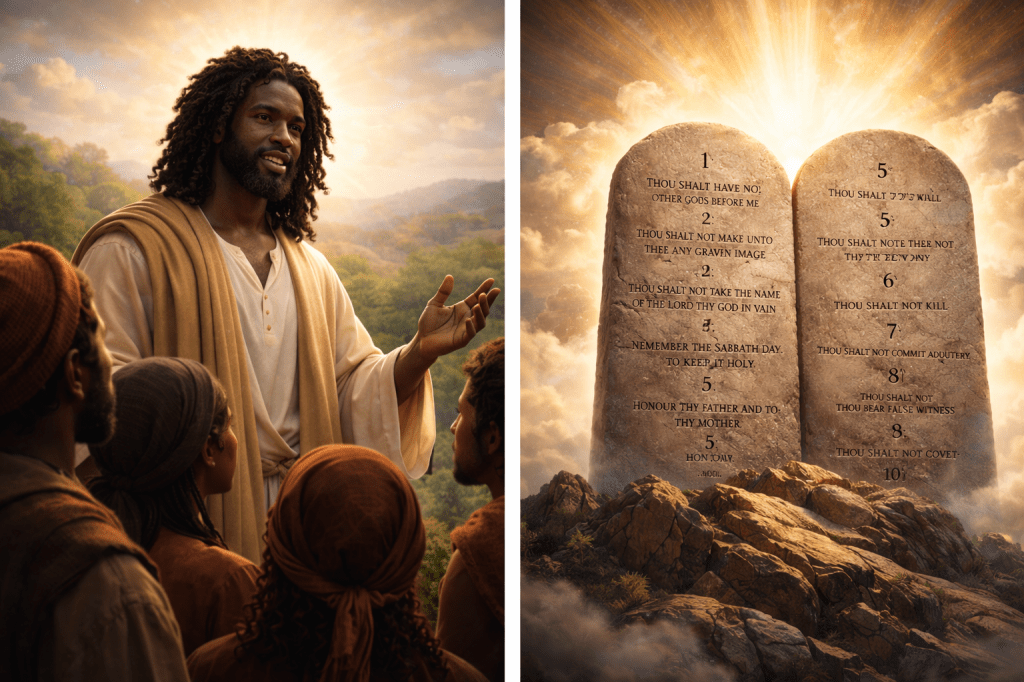
One of the most foundational elements of biblical doctrine is the Law, particularly the Ten Commandments given to Moses. These commandments reveal God’s moral standard and define righteousness in practical terms. They address humanity’s relationship with God (the first four commandments) and humanity’s relationship with others (the remaining six), forming the ethical backbone of biblical faith (Exodus 20, KJV).

However, the commandments were never meant to function as a means of salvation. Rather, they expose sin and reveal humanity’s need for grace. Paul explains in Romans 3:20 (KJV) that by the law comes the knowledge of sin. The law diagnoses the condition, but it cannot cure it. This prepares the theological stage for the role of Jesus Christ.

Jesus did not abolish the commandments but fulfilled them. In Matthew 5:17 (KJV), He states clearly that He came not to destroy the law, but to fulfill it. This fulfillment was not merely legal but spiritual. Jesus internalized the law, moving righteousness from external obedience to internal transformation of the heart.

This internalization is most clearly seen in Jesus’ teachings known as the Beatitudes. Found in Matthew 5:3–12 (KJV), the Beatitudes describe the spiritual attitudes that characterize true followers of Christ: humility, meekness, mercy, purity of heart, hunger for righteousness, and peacemaking. Unlike the commandments, which are framed as prohibitions, the Beatitudes are framed as blessings.

The commandments define what righteousness looks like in action, while the Beatitudes define what righteousness looks like in spirit. The law says, “Do not murder,” but Jesus says anger in the heart is also sin. The law says, “Do not commit adultery,” but Jesus says lustful thoughts are equally condemnable (Matthew 5, KJV). This demonstrates that biblical doctrine is not about behavior management but heart transformation.

In biblical theology, Jesus is the embodiment of doctrine. He is not only the teacher of truth but the truth itself (John 14:6, KJV). Doctrine is therefore not merely a system of beliefs but a person-centered reality. To know doctrine is to know Christ, and to follow doctrine is to imitate His character.

The commandments reveal God’s holiness, while the Beatitudes reveal God’s nature. Together, they form a complete picture of biblical righteousness: external obedience grounded in internal humility. The law governs actions, while the Beatitudes govern attitudes. One addresses what we do; the other addresses who we are.

Biblical doctrine ultimately leads to transformation, not information. James warns that hearing the word without doing it produces self-deception (James 1:22, KJV). True doctrine produces repentance, obedience, love, and spiritual maturity. It is not designed to inflate knowledge, but to conform believers into the image of Christ.

In conclusion, biblical doctrine is the theological framework through which God reveals truth, defines righteousness, and restores humanity. The commandments establish moral law, while the Beatitudes establish spiritual character. Together, they show that God desires not only righteous behavior, but righteous hearts. Doctrine, therefore, is not about religion—it is about transformation into divine likeness.


References

Holy Bible (King James Version). (2017). Thomas Nelson.

Grudem, W. (1994). Systematic theology: An introduction to biblical doctrine. Zondervan.

Erickson, M. J. (2013). Christian theology (3rd ed.). Baker Academic.

Stott, J. (2012). The message of the Sermon on the Mount. InterVarsity Press.

Wright, N. T. (2010). After you believe: Why Christian character matters. HarperOne.

The Male Files: Rebuilding the Foundation/Blueprint of Manhood.

Photo by Barbara Olsen on Pexels.com

Manhood, in its truest sense, is more than physical maturity—it is the cultivation of character, purpose, and ethical responsibility. Modern societal pressures, cultural shifts, and historical misrepresentations have fragmented traditional concepts of manhood, necessitating a conscious effort to rebuild its foundation. The Male Files examines how men can reconstruct a blueprint for responsible, empowered, and principled masculinity.

Historically, rites of passage marked the transition from boyhood to manhood. In many cultures, these ceremonies emphasized accountability, community contribution, and personal integrity. They served as a framework for teaching values, skills, and ethical responsibility, creating a clear blueprint for adulthood (Imam, 2015).

Spiritual grounding is central to the foundation of manhood. Faith or a principled moral compass provides men with guidance, resilience, and ethical clarity. Biblical examples such as King David illustrate the importance of aligning leadership, decision-making, and personal conduct with spiritual convictions (1 Samuel 16:7, KJV).

Education and knowledge are integral to rebuilding manhood. Intellectual development equips men to navigate life with discernment, problem-solving abilities, and critical thinking. Learning also empowers men to mentor others, contribute meaningfully to society, and resist destructive cultural narratives.

Emotional intelligence is essential in constructing a new blueprint. Men must cultivate self-awareness, empathy, and relational skills. Developing the ability to manage emotions, communicate effectively, and form healthy relationships differentiates responsible manhood from mere physical maturity.

Economic responsibility forms a critical component of the foundation. Financial literacy, resource management, and intergenerational planning reflect a man’s commitment to sustaining himself, his family, and his community. A rebuilt blueprint emphasizes strategic stewardship over impulsive or self-centered behavior (Graves, 2013).

Accountability is non-negotiable in ethical manhood. Owning decisions, accepting consequences, and learning from mistakes are hallmarks of integrity. Men who practice accountability cultivate trust, respect, and leadership credibility in both personal and professional spheres.

Mentorship is a cornerstone of the blueprint. Experienced men passing on wisdom, ethical standards, and practical skills foster continuity and resilience within communities. Mentorship transforms individual development into a generational legacy of responsible manhood.

Physical health and well-being support the reconstruction of manhood. Strength, endurance, and vitality allow men to fulfill roles as protectors, providers, and leaders. However, true health encompasses mental, emotional, and spiritual dimensions, creating holistic capacity for action.

Resilience in adversity shapes the character of modern manhood. Life inevitably presents challenges—economic hardship, societal marginalization, or personal loss. Men who cultivate resilience respond with perseverance, courage, and strategic problem-solving rather than impulsive reactions or avoidance.

Leadership within family structures is foundational. Fathers and elder men establish environments of guidance, protection, and ethical modeling. Their influence ensures that children develop a clear understanding of responsibility, integrity, and relational dynamics within a stable family framework.

Cultural narratives influence the reconstruction of manhood. Media, literature, and societal discourse often portray men narrowly, emphasizing aggression, dominance, or material success. Rebuilding the blueprint involves redefining masculinity to prioritize emotional literacy, ethical leadership, and service.

Faithful engagement in community work reinforces the new model. Acts of service, mentorship programs, and civic participation demonstrate that manhood extends beyond self-interest. Community-oriented behavior underscores accountability, empathy, and social responsibility.

Spiritual resilience undergirds ethical decision-making. Men anchored in principles or faith are better equipped to navigate societal pressures that encourage dishonesty, exploitation, or moral compromise. Integrity becomes both a compass and a foundation for enduring manhood.

Self-reflection is essential in maintaining and improving the blueprint. Regular evaluation of character, behavior, and goals allows men to identify areas for growth, correct misalignments, and strengthen ethical and emotional capacities.

Interpersonal relationships are a reflection of rebuilt manhood. Respectful engagement, honest communication, and empathetic support enhance friendships, romantic partnerships, and professional connections, demonstrating consistency in principle and action.

Economic empowerment complements the broader blueprint. Financial literacy, entrepreneurship, and ethical wealth-building create independence and reinforce personal and familial stability, demonstrating responsible stewardship and foresight.

Education on historical and social influences equips men to resist destructive patterns. Awareness of systemic oppression, cultural expectations, and inherited biases allows men to make informed choices, breaking cycles of neglect, aggression, or underachievement.

Artistic and cultural expression can reinforce identity, purpose, and self-respect. Engaging with music, literature, or visual arts enables men to process experiences, express values, and cultivate pride in heritage while affirming individuality within societal structures.

Ultimately, rebuilding the foundation of manhood requires holistic integration of faith, intellect, emotional intelligence, accountability, and service. Men who consciously reconstruct their blueprint embody leadership, responsibility, and ethical purpose, setting a model for future generations.

In conclusion, The Male Files presents manhood as a deliberate, ongoing project. By embracing responsibility, cultivating resilience, and modeling principled behavior, men can redefine masculinity in a modern context, fostering communities, families, and societies grounded in integrity, strength, and purposeful action.


References

Graves, J. (2013). Black men in America: Health, family, and social policy. Routledge.

Hunter, M. (2005). Race, gender, and the development of African American masculinity. In M. Hunter & J. Davis (Eds.), African American family life: Ecological and cultural diversity (pp. 45–62). Sage Publications.

Imam, A. (2015). African rites of passage: Cultural significance and social impact. African Studies Review, 58(2), 89–107. https://doi.org/10.1017/asr.2015.21

1 Samuel 16:7 (King James Bible). (n.d.). King James Bible Online. https://www.kingjamesbibleonline.org

Connell, R. W. (2005). Masculinities (2nd ed.). University of California Press.

Zimbardo, P. G., & Coulombe, N. D. (2015). Man interrupted: Why young men are struggling and what we can do about it. Conari Press.

The Perfect Man: Does He Really Exist?

The idea of the “perfect man” has occupied human imagination for centuries, appearing in philosophy, religion, psychology, and popular culture. In modern society, the perfect man is often portrayed as wealthy, emotionally intelligent, physically attractive, faithful, ambitious, spiritually grounded, and socially powerful. Yet this idealized image raises an important question: does such a man truly exist, or is perfection merely a social and theological construct shaped by unrealistic expectations?

From a biblical perspective, the concept of perfection is complex. The King James Bible uses the word “perfect” not to imply flawlessness in the modern sense, but spiritual maturity, completeness, or alignment with God’s will. Jesus himself states, “Be ye therefore perfect, even as your Father which is in heaven is perfect” (Matthew 5:48, KJV). This verse sets an impossibly high standard if interpreted literally, suggesting that human perfection is aspirational rather than fully attainable.

Scripture consistently affirms that no human being is without sin. Romans 3:23 declares, “For all have sinned, and come short of the glory of God” (KJV). This includes even the most righteous men in the Bible—Abraham lied, Moses disobeyed, David committed adultery, Solomon fell into idolatry, and Peter denied Christ. These figures were called by God, yet deeply imperfect.

The only truly perfect man in biblical theology is Jesus Christ. Hebrews 4:15 states that Christ “was in all points tempted like as we are, yet without sin” (KJV). Unlike all other men, Jesus is presented as morally, spiritually, and ontologically perfect. In Christian doctrine, perfection is not embodied in human men, but in the divine-man Christ.

Psychologically, the idea of the perfect man reflects projection and idealization. Carl Jung described ideals as archetypes—symbolic representations of inner desires and collective myths. The perfect man often functions as an unconscious projection of safety, validation, authority, and emotional fulfillment rather than a real, embodied human being (Jung, 1969).

Modern dating culture intensifies this illusion. Social media presents curated images of men who appear successful, disciplined, loving, wealthy, and spiritually grounded. Yet these representations hide flaws, struggles, insecurities, and moral failures. What is marketed as “high-value men” often reflects capitalist performance rather than character formation.

From a sociological standpoint, perfection is also shaped by gender expectations. Men are expected to be providers, protectors, leaders, emotionally strong yet emotionally available, dominant yet gentle, ambitious yet present. These contradictory demands make the ideal of the perfect man structurally impossible (Connell, 2005).

Biblically, manhood is not defined by perfection but by obedience, repentance, and growth. Proverbs 24:16 states, “For a just man falleth seven times, and riseth up again” (KJV). The righteous man is not the one who never falls, but the one who returns to God after failure.

The apostle Paul openly rejected the idea of personal perfection. In Philippians 3:12 he writes, “Not as though I had already attained, either were already perfect: but I follow after” (KJV). Paul acknowledges that spiritual maturity is a process, not a destination. Even apostles were in development.

The desire for a perfect man often masks deeper fears—fear of abandonment, fear of instability, fear of emotional harm. Perfection becomes a psychological defense mechanism: if a man is perfect, he cannot disappoint, betray, or fail. But this belief denies the reality of human vulnerability.

In theology, this longing is ultimately misplaced. Augustine argued that human beings are restless until they find rest in God, not in other humans. Expecting perfection from a man places divine expectations on a finite being, which inevitably leads to disillusionment (Augustine, Confessions).

Relationally, the myth of the perfect man can damage intimacy. When one partner is idealized, the other becomes pressured to perform rather than be authentic. This creates emotional distance, resentment, and identity strain. Love becomes conditional on maintaining an image.

From a Black theological perspective, the perfect man narrative is further complicated by systemic racism. Black men are often denied full humanity in social institutions and portrayed through stereotypes—either hypermasculine or socially deficient. The demand to be “perfect” becomes an added psychological burden in an already unequal society (hooks, 2004).

Scripture instead offers a different model: the “whole man,” not the perfect man. Micah 6:8 states, “What doth the Lord require of thee, but to do justly, and to love mercy, and to walk humbly with thy God?” (KJV). Wholeness is ethical, spiritual, and relational—not flawless.

The biblical ideal of manhood centers on character rather than perfection: humility, accountability, faithfulness, self-control, leadership through service, and submission to God. These are cultivated, not inherent. They are fruits of discipline, not genetic traits (Galatians 5:22–23, KJV).

Even marriage in Scripture assumes imperfection. Ephesians 5 calls husbands to love their wives as Christ loved the church, yet the church itself is described as flawed, rebellious, and in constant need of correction. Love, therefore, operates in imperfection, not beyond it.

The fantasy of the perfect man is ultimately a modern form of idolatry. It elevates human relationships to a salvific role, expecting men to provide emotional, spiritual, and existential fulfillment that only God can sustain. This mirrors what theologians call “relational substitution for God.”

Theologically speaking, perfection belongs to the eschaton—the future restored world, not the present fallen one. Ecclesiastes 7:20 states, “For there is not a just man upon earth, that doeth good, and sinneth not” (KJV). Human perfection is postponed until divine restoration.

What does exist, however, is the growing man: imperfect, reflective, accountable, spiritually seeking, emotionally developing, and ethically grounded. This man does not claim perfection but pursues wisdom, repentance, and responsibility.

Thus, the perfect man does not exist in human form. He exists only in Christ. What exists among men are degrees of maturity, integrity, discipline, and faith. The real question is not whether the perfect man exists, but whether we are willing to love imperfect people without turning them into gods.

In conclusion, the perfect man is a theological impossibility and a psychological projection. Scripture, psychology, and sociology all agree: human beings are inherently flawed. The biblical call is not to find perfection in men, but to pursue wholeness in God and growth in character.

The perfect man does not exist—but the faithful, growing, accountable man does. And that man, though imperfect, is the only real man available in this world.


References

Augustine. (2001). Confessions (H. Chadwick, Trans.). Oxford University Press. (Original work published c. 397)

Connell, R. W. (2005). Masculinities (2nd ed.). University of California Press.

hooks, b. (2004). The will to change: Men, masculinity, and love. Atria Books.

Jung, C. G. (1969). The archetypes and the collective unconscious (2nd ed.). Princeton University Press.

The Holy Bible, King James Version. (1611/1769). Cambridge Edition.

Phillips, J. B. (1953). Your God is too small. Touchstone.

Tillich, P. (1957). Dynamics of faith. Harper & Row.

We are Dust with his Breath

In the beginning of creation, humanity is introduced not as an accident of nature but as a deliberate act of divine intention. Scripture teaches that God formed man from the dust of the ground and breathed into his nostrils the breath of life, and man became a living soul (Genesis 2:7, KJV). This verse establishes a foundational theological truth: without the breath of God, humanity remains lifeless matter, no different from the soil beneath our feet.

The imagery of dust is deeply symbolic. Dust represents human fragility, limitation, and mortality. It reminds us that no matter how advanced civilization becomes, humanity remains dependent on divine power for existence. The breath of God transforms dust into life, meaning that human dignity does not originate from intellect, wealth, or status, but from divine impartation (Psalm 103:14).

The breath of life is not merely biological respiration; it is spiritual animation. In Hebrew, the word for breath, ruach, also means spirit or wind, indicating that life itself is sustained by the Spirit of God. This suggests that humanity is not self-sustaining but continuously upheld by divine presence (Ezekiel 37:5).

Without God’s breath, human existence loses its sacred meaning. Modern society often elevates human autonomy and self-sufficiency, yet scripture consistently reminds us that life is borrowed, not owned. Every heartbeat and breath testifies to divine mercy rather than human control (Acts 17:25).

The Most High God of Israel is portrayed throughout scripture as the giver and sustainer of life. He is not distant from creation but intimately involved in its continuation. Job acknowledges this truth when he declares that the Spirit of God has made him and the breath of the Almighty gives him life (Job 33:4).

To cherish the Creator is to recognize the source of one’s existence. Gratitude becomes a spiritual posture when one understands that life is a divine gift rather than a human achievement. Worship, therefore, is not ritualistic obligation but an acknowledgment of existential dependence (Psalm 150:6).

Human pride often blinds people to this reality. Scientific advancement has led many to believe that life can be explained without God, yet even science cannot produce consciousness from nothing. The mystery of life still points back to divine origin rather than mechanical causation (Collins, 2006).

In biblical theology, breath is also associated with renewal and restoration. In the valley of dry bones, God commands breath to enter lifeless bodies, and they rise again, symbolizing spiritual revival and national restoration (Ezekiel 37:9–10). This narrative reinforces that without divine breath, there is no resurrection, no hope, and no future.

The breath of God also signifies moral responsibility. If life comes from God, then life belongs to God. Humanity is therefore accountable to divine standards, not self-created ethics. This challenges modern individualism, which promotes self-definition without divine authority (Romans 14:7–8).

To say “we are dust without His breath” is to affirm human humility. It dismantles the illusion of self-made identity and replaces it with sacred dependency. Even kings and empires return to dust, but God’s breath remains eternal (Ecclesiastes 12:7).

The Most High is not merely a creator but a sustainer. He does not abandon what He forms. Scripture portrays God as continually involved in the world, sustaining all things by His word and power (Hebrews 1:3). Life is not a past miracle but an ongoing one.

Cherishing the Creator involves living in awareness of divine presence. It transforms daily life into a sacred experience. Eating, breathing, thinking, and loving become acts of worship when viewed through the lens of divine origin (Colossians 3:17).

The concept of breath also connects to divine communication. God’s breath produces His word, and His word produces life. The same God who breathed into Adam later breathed scripture into prophets and apostles, making His word living and powerful (2 Timothy 3:16).

From a theological perspective, denying God as the source of life leads to spiritual alienation. When humanity forgets its Creator, it begins to worship creation, self, and materialism. This reversal of order results in moral decay and existential emptiness (Romans 1:21–25).

The breath of God also represents divine intimacy. Unlike other creatures, humanity receives life through direct divine interaction. God does not speak humans into existence; He breathes into them, suggesting relational closeness rather than distant creation (Brueggemann, 2010).

Life therefore carries sacred responsibility. If God’s breath animates humanity, then every human life possesses inherent worth, regardless of race, class, or ability. This foundation supports biblical human dignity and justice (Genesis 1:27).

The Most High God of Israel reveals Himself not only as powerful but as compassionate. He breathes life into fragile dust and remains patient with human failure. His mercy sustains those who constantly fall short of divine perfection (Lamentations 3:22–23).

Even death in scripture does not represent divine abandonment. The return of breath to God signifies transition, not annihilation. The soul returns to its source, awaiting divine judgment and restoration (Ecclesiastes 12:7).

In this sense, breath becomes eschatological. It points beyond physical life to eternal reality. God’s breath does not merely create time-bound existence but prepares humanity for everlasting communion (John 20:22).

Ultimately, the statement “we are dust without His breath” is not a message of despair but of sacred truth. It reminds humanity that life is not meaningless, accidental, or random. Life is divine, purposeful, and sustained by the Most High God of Israel.

To cherish the Creator is to live in reverence, humility, and gratitude. Every breath becomes a testimony of divine mercy, and every moment becomes an opportunity to acknowledge the One who turns dust into living souls.


References

Brueggemann, W. (2010). Genesis: Interpretation: A Bible commentary for teaching and preaching. Westminster John Knox Press.

Collins, F. S. (2006). The language of God: A scientist presents evidence for belief. Free Press.

The Holy Bible, King James Version. (1611/2017). Cambridge University Press.

Wright, N. T. (2012). How God became king: The forgotten story of the Gospels. HarperOne.

Walton, J. H. (2009). The lost world of Genesis one: Ancient cosmology and the origins debate. InterVarsity Press.

Dilemma: Porneia

Photo by RDNE Stock project on Pexels.com

In the modern age, sexual immorality has become pervasive, often normalized in media, relationships, and culture. The Greek term porneia, translated as fornication or sexual immorality in the KJV Bible, encompasses all acts outside the bounds of God’s covenant of marriage. Understanding the spiritual, emotional, and societal consequences of porneia is essential for living a life that honors God.

Porneia is not merely a physical act but a sin of the heart. Jesus taught that lustful thoughts carry the weight of sin: “Ye have heard that it was said by them of old time, Thou shalt not commit adultery: But I say unto you, That whosoever looketh on a woman to lust after her hath committed adultery with her already in his heart” (Matthew 5:27–28, KJV).

Fornication defiles the body, which is the temple of the Holy Spirit. “Flee fornication. Every sin that a man doeth is without the body; but he that committeth fornication sinneth against his own body” (1 Corinthians 6:18, KJV). Sexual sin damages not only spiritual health but also emotional and relational well-being.

The allure of porneia is often subtle. Culture glorifies lust, convenience, and gratification, making temptation pervasive. However, the Word of God provides clarity and instruction: “Abstain from all appearance of evil” (1 Thessalonians 5:22, KJV). Avoiding tempting situations is essential for holiness.

Fornication breaks covenant trust. Sexual activity outside marriage undermines intimacy, creates guilt, and damages relationships. God designed sex to unify husband and wife in a sacred bond, as emphasized in Hebrews 13:4: “Marriage is honourable in all, and the bed undefiled: but whoremongers and adulterers God will judge” (KJV).

Self-control is vital in combating porneia. The fruit of the Spirit includes temperance, which empowers believers to resist sexual temptation. “But the fruit of the Spirit is love, joy, peace, longsuffering, gentleness, goodness, faith, Meekness, temperance: against such there is no law” (Galatians 5:22–23, KJV).

Awareness and acknowledgment are the first steps toward overcoming sexual immorality. Denial or rationalization only strengthens the sin. Confession to God and accountability to trustworthy mentors is crucial: “If we confess our sins, he is faithful and just to forgive us our sins, and to cleanse us from all unrighteousness” (1 John 1:9, KJV).

Guarding the eyes and mind protects against lust. Television, the internet, social media, and entertainment are powerful tools that can either corrupt or preserve purity. Proverbs 4:23 advises, “Keep thy heart with all diligence; for out of it are the issues of life” (KJV).

Marriage is the divinely ordained context for sexual expression. God designed intimacy to be enjoyed within commitment, love, and covenant faithfulness. Ephesians 5:3 reminds, “But fornication, and all uncleanness, or covetousness, let it not be once named among you, as becometh saints” (KJV).

The consequences of porneia extend beyond the spiritual realm. Emotional damage, broken trust, and relational instability often follow sexual immorality. Wise counsel and accountability can prevent further harm.

Prayer is a critical weapon in resisting temptation. Turning to God for strength, wisdom, and protection is essential in the fight against lust. “Watch and pray, that ye enter not into temptation: the spirit indeed is willing, but the flesh is weak” (Matthew 26:41, KJV).

Community and fellowship strengthen resistance. Engaging with believers who uphold biblical standards provides encouragement, mentorship, and accountability in pursuing purity. Hebrews 10:24–25 emphasizes the importance of mutual encouragement.

Spiritual disciplines such as fasting, meditation, and scripture study empower believers to renew the mind and strengthen resolve against porneia. Romans 12:2 teaches, “And be not conformed to this world: but be ye transformed by the renewing of your mind, that ye may prove what is that good, and acceptable, and perfect, will of God” (KJV).

Boundaries are essential. Avoiding compromising situations, unhealthy relationships, and negative influences reduces opportunities for temptation and sin. Discipline and wisdom guide conduct in alignment with God’s will.

Understanding desire through a biblical lens fosters proper stewardship of sexuality. Sexual energy is not sinful but is to be expressed within God’s design for intimacy and covenantal love.

Repentance and restoration are always available. No matter the depth of past sin, God’s mercy is accessible to those who sincerely turn from immorality. Hosea 14:1–2 urges, “Return, O Israel, unto the Lord thy God; for thou hast fallen by thine iniquity…Take with you words, and turn to the Lord” (KJV).

Education and awareness protect younger generations. Teaching biblical standards of purity, respect, and self-control equips children and youth to navigate sexual temptation with integrity.

Encouraging accountability partnerships is effective. Trusted friends, mentors, or spiritual guides help maintain commitment to purity and resist relapse into immorality.

The struggle against porneia is ongoing. It requires vigilance, prayer, discipline, and faithfulness. “Watch ye, stand fast in the faith, quit you like men, be strong” (1 Corinthians 16:13, KJV).

Ultimately, victory over sexual immorality reflects alignment with God’s Word. By fleeing temptation, embracing accountability, and seeking holiness, believers honor God, strengthen relationships, and live lives of integrity.


References

The Holy Bible, King James Version. (1769/2017). Cambridge University Press.

Grudem, W. (2004). Systematic theology: An introduction to biblical doctrine. Inter-Varsity Press.

Yarhouse, M. A., & Tan, E. S. (2010). Sexuality and the Christian: Contemporary issues and pastoral practice. IVP Academic.

Fee, G. D. (2011). Paul’s letter to the Corinthians: New International Commentary on the New Testament. Eerdmans.