
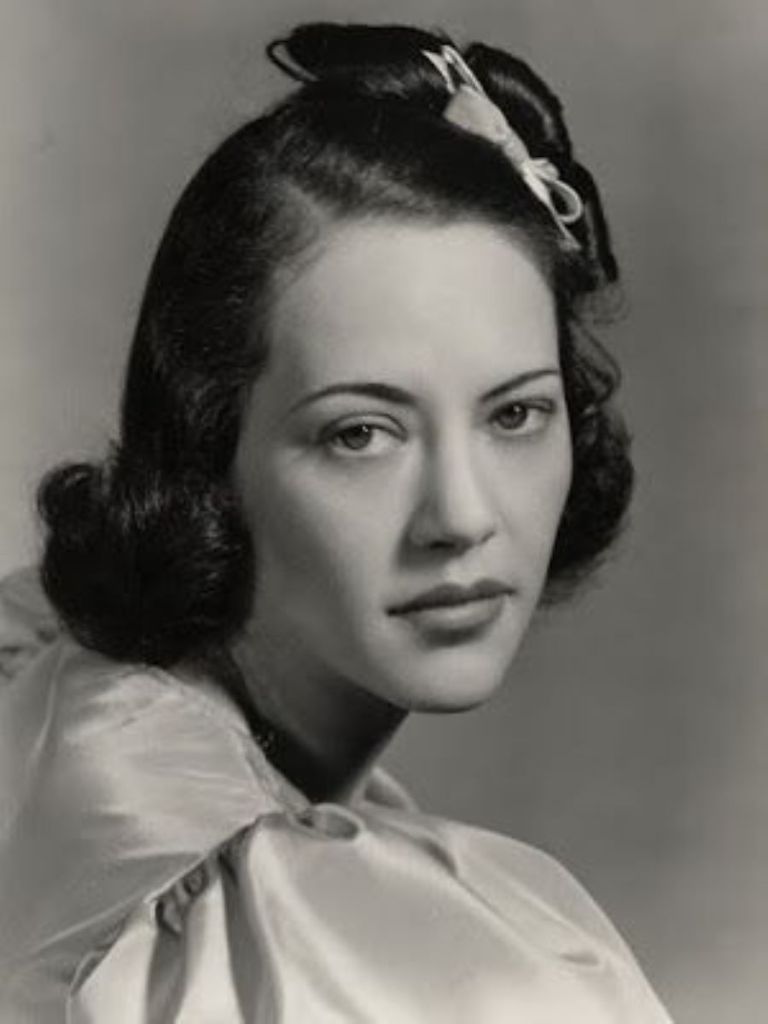
Fredi Washington stands as one of the most powerful and tragic figures in early Hollywood history, not because she passed as white, but because she refused to. In an industry that rewarded racial ambiguity and punished Black identity, Washington embodied the moral and psychological conflict of being light-skinned in a violently racist society. Her career reveals how passing was not merely a personal choice, but a structural demand imposed by white supremacy and enforced through economic survival.
Born Fredericka Carolyn Washington in 1903, Washington was an African American woman of mixed ancestry whose appearance allowed her to easily pass as white. However, unlike many of her contemporaries, she openly identified as Black throughout her life. This decision came at a tremendous cost, as Hollywood consistently denied the leading roles that she would have easily secured had she chosen to conceal her racial identity.
Washington rose to prominence through her iconic role as Peola Johnson in Imitation of Life (1934), a film that centered directly on the psychological trauma of racial passing. Ironically, the very role that made her famous also trapped her, as she was forever associated with a character who rejected Blackness to survive. The role mirrored the real-life dilemma Washington faced in her own career.
The studio system strongly pressured Washington to pass. Executives encouraged her to claim Spanish, Hawaiian, or “exotic” heritage, similar to what they had done with other racially ambiguous actresses. She was told explicitly that identifying as Black would make her “unmarketable,” especially for romantic roles opposite white male leads.
Washington refused. She rejected studio attempts to rebrand her and insisted on racial honesty, even as she watched opportunities disappear. In doing so, she became one of the earliest examples of conscious racial resistance in Hollywood, choosing integrity over access, and truth over fame.
Her refusal to pass effectively ended her film career. While she possessed the beauty, talent, and screen presence of a major star, she was relegated to theater, modeling, and race films. Hollywood’s message was clear: Black identity, even when invisible, was still unacceptable.
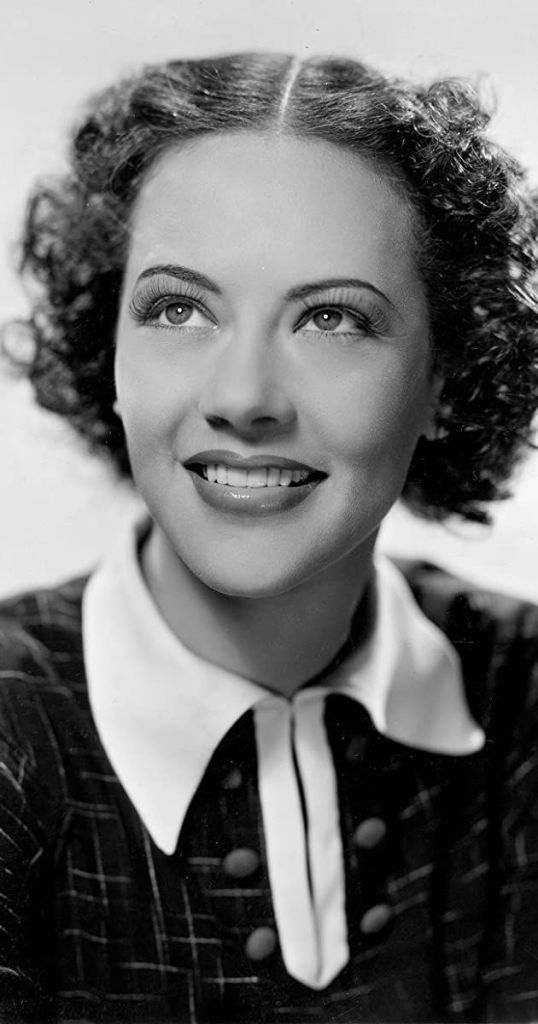
Unlike many performers who internalized white standards, Washington developed a strong racial consciousness. She openly criticized Hollywood’s racism and later became a co-founder of the Negro Actors Guild, an organization created to fight discriminatory casting practices and protect Black performers from exploitation.
Washington’s story highlights the psychological violence of racial capitalism. Passing offered financial security, safety, and visibility, while racial honesty meant poverty, exclusion, and marginalization. The system rewarded proximity to whiteness and punished Black authenticity.
Her experience also exposes a deeper contradiction: Hollywood wanted Black bodies but not Black identity. Washington’s face was desirable, but her race was not. This split reveals how racism operates not only through exclusion, but through selective consumption and erasure.
Washington’s life demonstrates what W.E.B. Du Bois described as double consciousness, the internal struggle of existing in a world that constantly demands you deny yourself to be accepted. For Washington, the conflict was not internal, but external—she knew who she was, and society rejected her for it.
While many light-skinned performers passed in silence, Washington turned her suffering into activism. She used her voice to advocate for dignity, representation, and systemic change, long before civil rights became mainstream discourse in American culture.
Her later years were marked by relative obscurity, not because of lack of talent, but because she refused to participate in racial deception. In a different industry, she would have been one of the greatest leading ladies of her generation.
Washington’s legacy forces us to reconsider the narrative of passing. While many were forced into it, she revealed the alternative path: racial truth, even when it costs everything. Her life becomes a moral counterpoint to Hollywood’s culture of assimilation.
She represents the unseen casualties of racism—those whose careers never happened, whose talents were buried, and whose dreams were denied because they refused to lie about their existence.
Ultimately, Fredi Washington did not pass as white, but she exposed the system that demanded it. Her story is not one of failure, but of resistance, a reminder that sometimes the most radical act in a racist world is simply telling the truth about who you are.
References
Bogle, D. (2016). Toms, coons, mulattoes, mammies, and bucks: An interpretive history of Blacks in American films (5th ed.). Bloomsbury.
Du Bois, W. E. B. (2007). The souls of Black folk. Oxford University Press. (Original work published 1903)
Gaines, J. M. (2017). Fire and desire: Mixed-race movies in the silent era. University of Chicago Press.
Hoberman, J. (2018). Hollywood and the color line. Film Quarterly, 71(3), 12–19.
Smith, S. (2019). Passing and performance: Racial ambiguity in classical Hollywood. Journal of American Culture, 42(2), 145–158.







 THE BROWN GIRL DILEMMA