Tag Archives: calling

Right Calling, Wrong Posture

Many people are blessed with a divine calling, a purpose, or a gift from God. Yet, possessing a calling is not enough; the posture with which we approach it determines whether we fulfill our destiny or miss it entirely. A right calling in the wrong posture can lead to frustration, stagnation, and spiritual misalignment.

1. God Honors Posture, Not Just Talent

1 Samuel 16:7 (KJV) teaches: “But the Lord said unto Samuel, Look not on his countenance, or on the height of his stature; because I have refused him: for the Lord seeth not as man seeth; for man looketh on the outward appearance, but the Lord looketh on the heart.”
God values heart posture—humility, obedience, and faith—more than natural talent or outward appearance. You may be gifted, but without the right heart posture, your calling can be misused or ignored.

2. Pride Misaligns the Call

Proverbs 16:18 (KJV) warns: “Pride goeth before destruction, and an haughty spirit before a fall.”
Many individuals pursue their calling with arrogance, entitlement, or impatience. A posture of pride can blind a person to divine guidance, causing missteps even in areas where they are skilled. True readiness requires humility and teachability.

3. Impatience Can Distort the Mission

Ecclesiastes 3:1 (KJV) reminds us: “To everything there is a season, and a time to every purpose under the heaven.”
Rushing ahead of God’s timing, seeking recognition too early, or forcing results creates friction. The right calling requires patience; the wrong posture invites burnout and frustration.

4. Lack of Faith Weakens Impact

Hebrews 11:6 (KJV) teaches: “But without faith it is impossible to please him: for he that cometh to God must believe that he is, and that he is a rewarder of them that diligently seek him.”
Even with a correct calling, if faith is absent, one will fail to execute it effectively. Fear, doubt, or inaction undermine potential. Posture of trust and obedience strengthens calling.

5. Disobedience Nullifies Blessing

Joshua 1:7–8 (KJV) instructs: “Only be thou strong and very courageous, that thou mayest observe to do according to all the law…that thou mayest prosper whithersoever thou goest. This book of the law shall not depart out of thy mouth…that thou mayest make thy way prosperous, and that thou mayest have good success.”
Divine calling must align with God’s instructions. Talent without obedience is like a river without water—it looks promising but fails to nourish. Wrong posture in disobedience prevents true success.

6. Humility and Servanthood Elevate the Calling

Matthew 23:11 (KJV) declares: “But he that is greatest among you shall be your servant.”
God’s kingdom prioritizes servant leadership. Even when called to greatness, the posture of humility, service, and love ensures that the calling fulfills its divine purpose.

7. Listening and Aligning Your Spirit

Proverbs 3:5–6 (KJV) states: “Trust in the Lord with all thine heart; and lean not unto thine own understanding. In all thy ways acknowledge him, and he shall direct thy paths.”
Right posture involves continual spiritual alignment—prayer, discernment, and submission. A misaligned heart or ego can distort God’s calling into personal ambition.


Conclusion

A divine calling is a gift, but posture determines impact. Right calling, wrong posture, leads to wasted potential, frustration, and misalignment with God’s will. The correct posture—humility, obedience, patience, faith, and servanthood—ensures that the calling becomes a blessing, both spiritually and practically. Aligning posture with purpose allows God’s promises to manifest fully in one’s life.


References

Grudem, W. (2004). Systematic theology: An introduction to biblical doctrine. Inter-Varsity Press.

Stanley, A. (2012). The principle of posture in purpose: Aligning heart and calling. Thomas Nelson.

The Holy Bible, King James Version. (1769/2017). Cambridge University Press.

Oswald, R. (2015). Living in your calling: Posture, obedience, and impact. Moody Publishers.

👑 Girl Talk Series: Crowns, Confidence & Calling

Hello Ladies – a crown is more than decoration—it is a declaration. When a woman places a crown on her head, even symbolically, she asserts royalty, identity, and worth. Scripture affirms a woman crowned in dignity: “Strength and honour are her clothing; and she shall rejoice in time to come” (Prov. 31:25, KJV). Ladies, before the world ever defined beauty or worth, God already crowned you in His purpose.

Many women admire crowns without recognizing that they already wear one inwardly. A woman aligned with God carries a spiritual diadem, not a borrowed vanity. “Thou shalt also be a crown of glory in the hand of the Lord” (Isa. 62:3, KJV). The crown is His, but the purpose is yours.

Confidence today is often manufactured through trends, influencers, or aesthetics, yet biblical confidence is nurtured through God’s voice, not echo chambers. “The Lord is my light and my salvation; whom shall I fear?” (Psa. 27:1, KJV). Real confidence begins without fear, not without opposition.

Many women struggle with insecurity because their identity was placed in mirrors instead of meaning. But scripture secures femininity deeper than reflection: “For we are his workmanship, created in Christ Jesus unto good works” (Eph. 2:10, KJV). A woman is crafted, not accidental.

Covenantal confidence does not walk loudly—it walks anchored. Social confidence boasts, but spiritual confidence bows. “Humble yourselves in the sight of the Lord, and he shall lift you up” (James 4:10, KJV). Lift comes after posture, not performance.

Calling is not something chased, but something uncovered through obedience. Many women run after purpose while running from submission. Yet scripture explains alignment brings assignment: “Commit thy works unto the Lord, and thy thoughts shall be established” (Prov. 16:3, KJV).

God’s calling for women includes mentorship, nurture, emotional articulation, and spiritual inheritance transmission. But not every voice online stewards identity correctly. “Take heed what ye hear” (Mark 4:24, KJV). Listening determines shaping.

A woman who walks without calling will eventually walk toward validation markets—likes, praise, trends, competition. But calling frees a woman from comparison prison. “The Lord is the portion of mine inheritance” (Psa. 16:5, KJV). Purpose comes pre-inherited under God.

Many ladies were taught to seek crowns socially—beauty crowns, success crowns, marriage crowns—but not to seek the God who crowns covenantally. Yet scripture promises the most important crowning: “He crowneth thee with lovingkindness and tender mercies” (Psa. 103:4, KJV). Mercy is the first crown, not reward.

The world celebrates outspoken women, but often mocks obedient women. Yet scripture centers quiet strength as divine feminine power: “A meek and quiet spirit… is in the sight of God of great price” (1 Pet. 3:4, KJV).

Many ladies seek confidence through economic or romantic elevation, not realizing divine positioning precedes earthly inheritance. God uplifts womanhood through righteousness, not rivalry. Christ uplifts through covenant, not conquest.

A crowned woman must still carry accountability. Crowns do not remove correction. “Whom the Lord loveth he correcteth” (Prov. 3:12, KJV). If He corrects you, you are not lost, you are loved.

Confidence without covenant becomes vanity, but confidence under covenant becomes testimony. God makes women glorious by spiritual alignment, not social applause. “The Lord shall establish thee an holy people unto himself” (Deut. 28:9, KJV). Purpose stays holy when covenant stays intact.

Many ladies carry a diagnosis of insecurity, father-wounds, fractured religious history, and relational trust ruptures, and bring those unmet needs online to influencers who monetize what God should have fathered. Scripture warns against replacing the shepherd with sectors. “Woe unto the shepherds that destroy and scatter the sheep” (Ezek. 34:2, KJV).

A woman healed under God does not deny femininity; she redefines it through scripture, not trends. She carries faith’s original blueprint, not digital doctrine. Identity was God-instated before platform-marketed.

Girls must stop believing that confidence is the absence of tears, softness, or uncertainty. Strength is not emotional burial; it is emotional clarity surrendered to God. God welcomes the tears that influencers shame. “The Lord is nigh unto them that are of a broken heart” (Psa. 34:18, KJV).

The voices online divide men into alpha/beta ranks, yet scripture reverses the ranking system entirely. “The Lord looketh on the heart” (1 Sam. 16:7, KJV). Purpose is internal rulership, not external hierarchy.

The crisis in modern feminine purpose is that many want crowns without process, confidence without covenant, influence without instruction. Yet scripture confirms true feminine inheritance flows only through divine ordering.

A crowned woman must eventually step into a calling that endures longer than applause. Influence is seasonal, calling is eternal. God began a purpose in you intentionally, and scripture promises the follow-through: “He which hath begun a good work in you will perform it” (Phil. 1:6, KJV).

Covenantal womanhood disciples nurture, guidance, humility, covenant, assignment, and inheritance—not opinion gladiatorship or grievance markets. The internet has microphones; God has mantles.

The real power of a crowned woman is not dominating rooms—but discerning them. “Give not that which is holy unto the dogs” (Matt. 7:6, KJV). Discernment is feminine spiritual rulership.

Purpose-seeking ends only when noise bows to knowledge, grievances bow to God, insecurity bows to identity, trends bow to scripture, and womanhood bows to a covenant that does not scatter under social duress. Godliness is not a trend; it is an eternal feminine inheritance installed by the spirit over the stage.

Therefore, ladies, wear your crowns spiritually first. Walk in God’s confidence before social confidence. Uncover calling through obedience rather than ideological markets. Your crown is not your burden—lack of covenant is. But once covenant returns, crowns become testimonies, confidence becomes inheritance, and calling becomes performed destiny.


📚 References

The Holy Bible, King James Version. (1611). Cambridge University Press.

hooks, b. (2004). The Will to Change: Men, Masculinity, and Love. Washington Square Press.

Tatum, B. D. (1997). Why Are All the Black Kids Sitting Together in the Cafeteria? Basic Books.

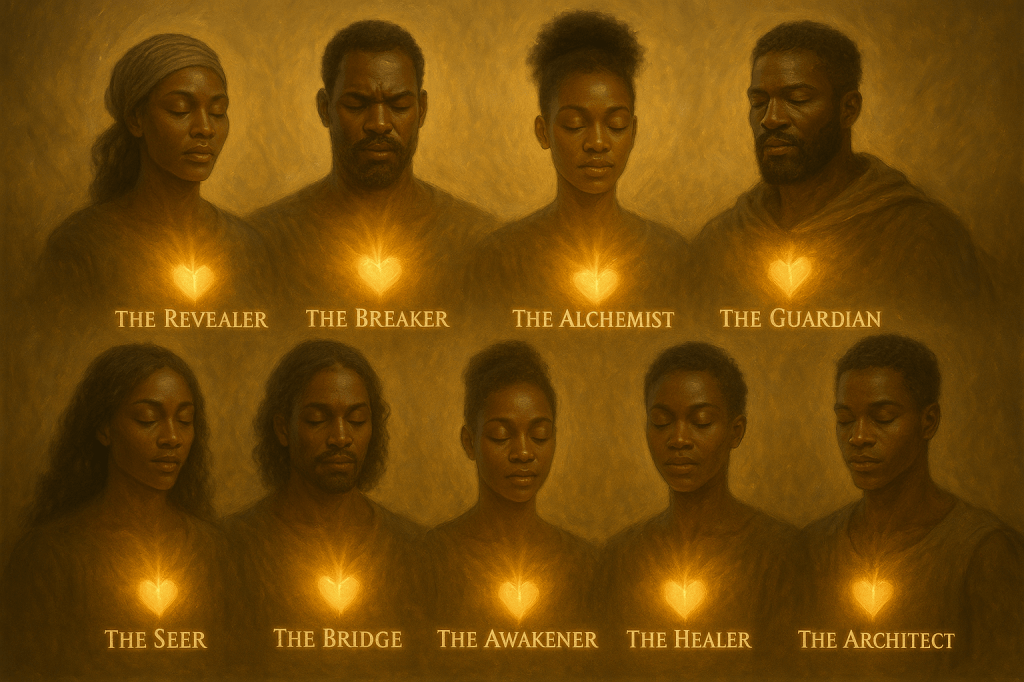
The Callings of the Chosen

In every generation, the Most High appoints vessels for divine purpose, shaping them for assignments that transcend time, culture, and earthly understanding. Scripture affirms that purpose precedes existence, declaring, “Before I formed thee in the belly I knew thee” (Jeremiah 1:5, KJV). This sacred foreknowledge reveals that spiritual callings are not random; they are crafted by the sovereignty of God for the restoration of His people and the advancement of His Kingdom.

The Revealer is appointed to unveil truth hidden beneath deception, spiritual blindness, and worldly confusion. Like Daniel, who interpreted dreams and decoded mysteries, revealers operate under heavenly wisdom and divine insight. Through revelation, they expose the schemes of darkness and illuminate the path of righteousness. “He revealeth the deep and secret things” (Daniel 2:22, KJV). Their purpose is to pull back the veil so that truth can lead souls to freedom.

The Breaker is forged for warfare, designed to dismantle generational curses, demonic cycles, and systemic oppression. The Breaker moves with authority, echoing the Messiah who “break in pieces the oppressor” (Psalm 72:4, KJV). This calling requires courage and spiritual resilience, as these individuals confront strongholds and stand boldly against principalities. They are destined to set captives free and disrupt the plans of the enemy.

The Alchemist represents transformation — the divine ability to turn suffering into strength, rejection into refinement, and trials into spiritual treasure. This calling mirrors Joseph’s journey, where tests became testimony, and hardship became preparation for destiny. The Most High turns “beauty for ashes” (Isaiah 61:3, KJV), and through the Alchemist, pain becomes purpose sanctified by heaven’s hand.

The Guardian is called to protect, intercede, and defend. Much like Nehemiah who rebuilt the walls and guarded the city, Guardians stand watch in prayer, vigilance, and faithfulness. Their spiritual armor is essential, fulfilling the mandate to “be sober, be vigilant” (1 Peter 5:8, KJV). They guard families, communities, truth, and righteousness, standing as pillars of divine protection.

The Seer walks in heightened spiritual sight, perceiving beyond the natural realm. Like Ezekiel and Elisha, Seers discern angels, divine messages, and spiritual warfare unseen by ordinary eyes. “Where there is no vision, the people perish” (Proverbs 29:18, KJV). Their prophetic sight guides nations, warns the righteous, and brings clarity where confusion seeks dominion.

The Bridge is chosen to unify — connecting generations, cultures, and spiritual realities. This calling resembles Moses, who bridged the gap between God and Israel. They reconcile and restore, standing between broken hearts and divine healing. “Blessed are the peacemakers” (Matthew 5:9, KJV). Bridges repair breaches and unite the flock for kingdom advancement.

The Awakener stirs souls from spiritual slumber, calling dry bones to rise. Like John the Baptist, they cry aloud to awaken repentance, righteousness, and identity. “Awake thou that sleepest” (Ephesians 5:14, KJV). Their voice shakes complacency and ignites revival in those chosen to walk in truth.

The Healer carries divine compassion and restorative power. Whether through laying on of hands, wise counsel, or comforting presence, they exemplify the heart of Christ who came to “heal the brokenhearted” (Luke 4:18, KJV). Healers minister to spiritual wounds, emotional scars, and physical afflictions through faith and obedience.

The Architect builds systems, structures, and visions aligned with divine order. Like Bezalel, who was filled with the Spirit to construct the tabernacle (Exodus 31:3–5, KJV), these chosen ones design strategies, ministries, and movements grounded in heavenly wisdom. Their work creates environments where God’s glory can dwell.

Each calling requires humility, obedience, and submission to the Most High. Talents and gifts are not merely abilities, but sacred tools for spiritual growth and edification. “A man’s gift maketh room for him” (Proverbs 18:16, KJV). Spiritual gifts, such as prophecy, teaching, healing, wisdom, and discernment, are manifestations of the Spirit for divine purposes (1 Corinthians 12:4–11, KJV).

Chosen vessels may experience solitude, spiritual attack, and misunderstanding because sanctification often precedes manifestation. Like David, who trained in obscurity, they learn private obedience before public anointing. Destiny requires pruning, testing, and stretching to prepare a vessel worthy of kingdom work.

Many are called, but few answer. The chosen walk a narrow path that rejects worldly applause for heavenly assignment. Their identity is anchored in God’s Word and divine purpose, not earthly titles or acclaim. To carry a spiritual calling is to live in surrender, knowing that “the gifts and calling of God are without repentance” (Romans 11:29, KJV).

When the Most High calls, He equips. Moses received Aaron, Jeremiah received divine reassurance, and the apostles received the Holy Spirit. The chosen are never left powerless; they operate in the authority bestowed by the Father. “Not by might, nor by power, but by my spirit” (Zechariah 4:6, KJV).

Divine callings manifest uniquely, yet they share core attributes — faith, perseverance, righteousness, and love. Without love, even the greatest gifts are empty (1 Corinthians 13:2, KJV). The chosen serve not for glory, but for the advancement of God’s Kingdom and the restoration of His people.

Each calling complements the others, forming a divine ecosystem within the body of believers. The Revealer needs the Guardian; the Seer needs the Architect; the Breaker needs the Healer. “For the body is not one member, but many” (1 Corinthians 12:14, KJV). Unity strengthens purpose, and collaboration magnifies impact.

Those called must cultivate spiritual discipline — prayer, fasting, study, and holy living. “Study to shew thyself approved unto God” (2 Timothy 2:15, KJV). Gifting without character leads to destruction, but gifting combined with holiness leads to divine excellence.

Chosen ones carry spiritual authority, yet remain servants first. They model Christ, who washed feet and bore the cross before wearing the crown. The journey demands humility, compassion, and unwavering trust in the Most High’s timing.

Opposition is guaranteed; purpose attracts resistance. Yet the chosen stand firm, knowing that “no weapon that is formed against thee shall prosper” (Isaiah 54:17, KJV). Trials refine the calling, sharpening discernment and deepening faith.

The Most High ordains seasons of elevation and hiddenness. Waiting is not punishment but preparation. Like Esther, Joseph, and David, the chosen discover that divine timing is perfect and purposeful.

Many experience spiritual isolation, not as abandonment, but consecration. Solitude trains the ear to hear God’s voice and the heart to rely on His strength. “Be still, and know that I am God” (Psalm 46:10, KJV).

True calling cannot be imitated or inherited; it is divinely imparted. It is recognized not by noise or titles but by fruit, obedience, and spiritual authority. “Ye shall know them by their fruits” (Matthew 7:16, KJV).

The chosen often feel unqualified, yet this humility positions them to be vessels of glory. God delights in using the unlikely, proving His power through surrendered lives. “God hath chosen the weak things of the world to confound the things which are mighty” (1 Corinthians 1:27, KJV).

As destinies unfold, chosen vessels must remember their source. They are instruments, not originators. The power, wisdom, and revelation they carry come from the Most High, not themselves. “He that glorieth, let him glory in the Lord” (1 Corinthians 1:31, KJV).

Every calling is sacred, and every chosen soul is appointed for impact. Whether seen or unseen, public or private, each assignment advances the Kingdom and restores righteousness. The chosen move is not by coincidence, but by divine design.

The Revealer, the Breaker, the Alchemist, the Guardian, the Seer, the Bridge, the Awakener, the Healer, and the Architect.

Ultimately, the callings of the chosen align with the mission to bring light, truth, justice, and healing in a world darkened by deception and sin. Their lives testify that God is still raising vessels, still speaking, and still performing wonders among His people.

And in the final measure, the chosen long to hear only one affirmation — “Well done, thou good and faithful servant” (Matthew 25:21, KJV). For that reward outweighs every sacrifice, every battle, and every tear. Their calling is eternal, and their purpose is holy.

References
Holy Bible, King James Version.
Jeremiah 1:5; Daniel 2:22; Psalm 72:4; Isaiah 61:3; 1 Peter 5:8; Proverbs 29:18; Matthew 5:9; Ephesians 5:14; Luke 4:18; Exodus 31:3–5; Proverbs 18:16; Romans 11:29; Zechariah 4:6; 1 Corinthians 12; 1 Corinthians 13:2; 1 Corinthians 12:14; 2 Timothy 2:15; Isaiah 54:17; Psalm 46:10; Matthew 7:16; 1 Corinthians 1:27; 1 Corinthians 1:31; Matthew 25:21 (KJV).