Tag Archives: books

Melanin Memoirs: Confessions and Revelations.

Photo by RDNE Stock project on Pexels.com

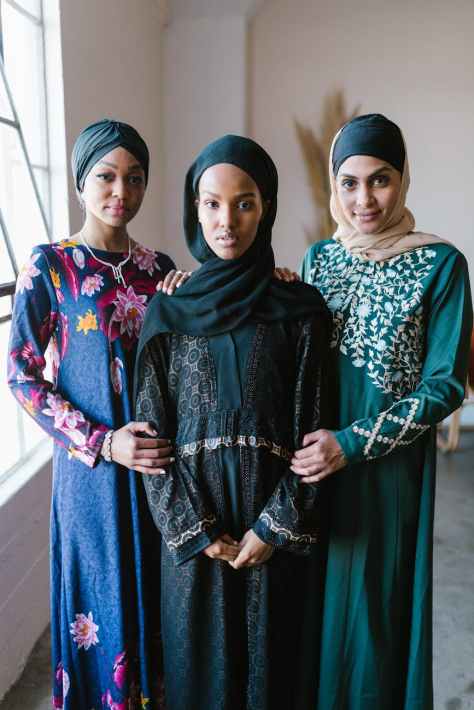
Judy, Sadia, and Shelia—three women whose stories weave together like strands of the same braid, bound by shared ancestry yet separated by shade. Each carries a different hue of experience, shaped by the silent social hierarchies that color their worlds. In their melanin lies both blessing and burden, truth and tension, confession and revelation.

Judy, the light-skinned woman, grew up praised for her complexion. Family and strangers alike told her she was “lucky,” as if her proximity to whiteness were an achievement. Yet beneath the compliments lived guilt and confusion. She felt both adored and resented, accepted yet alienated. Men desired her, women envied her, and she struggled to understand why her beauty caused division. In church, she prayed for humility, whispering the words of 1 Samuel 16:7—“for man looketh on the outward appearance, but the Lord looketh on the heart.” Her revelation came when she realized that lightness without love was still darkness.

Sadia’s story rests on the other side of the same mirror. Her dark skin was her inheritance—deep, rich, and radiant—but the world called it “too much.” She remembers being teased as a child, overlooked as a woman, and underestimated as a professional. Her reflection became a battlefield, and every insult left a scar. Yet God met her in the valley of rejection. Song of Solomon 1:5 echoed through her spirit: “I am black, but comely.” What once felt like a curse became her crown. Her revelation was that divine beauty is not subject to human approval—it is anchored in divine design.

Shelia, another light-skinned woman, experienced colorism differently. While her complexion opened doors, it also invited suspicion. She was often told she “wasn’t Black enough,” accused of privilege she didn’t seek and exclusion she didn’t deserve. She spent years trying to prove her authenticity, overcompensating in her speech, dress, and demeanor. The weight of identity politics exhausted her spirit. One night, she opened her Bible to Galatians 3:28—“There is neither Jew nor Greek… for ye are all one in Christ Jesus.” Her revelation was that belonging was never about performance; it was about purpose.

The confessions of these women expose the emotional complexity of color within the Black community. Their pain is not born from nature but from the historical distortion of beauty and worth. Colonialism planted the seed of colorism, teaching generations to measure themselves by how close they stood to whiteness. Yet in their honesty, Judy, Sadia, and Shelia began to uproot the lies that once divided them.

They met one evening for tea—three shades of sisterhood in a single circle. Judy confessed how she used to avoid dark-skinned friends out of fear of losing attention. Sadia admitted how bitterness had crept into her prayers. Shelia broke down, admitting she often felt invisible in her own family. The air grew heavy, yet healing hovered in their midst. Sadia reached out her hand, and the simple act of touch became sacred. “We are all His,” she whispered. It was no longer confession—it was communion.

The revelation that followed was collective: their differences were divine, not divisive. Each shade reflected a different aspect of God’s creativity. Genesis 1:27 came alive in them: “So God created man in His own image.” Their melanin was not a measure of value but a manifestation of His artistry. Together, they began to dismantle the emotional walls colorism had built.

Judy’s journey became one of advocacy. She started mentoring young girls, teaching them that beauty has no hierarchy. “True beauty begins where comparison ends,” she would say, quoting Proverbs 31:30: “Favour is deceitful, and beauty is vain: but a woman that feareth the Lord, she shall be praised.” She found purpose in using her influence to uplift, not outshine.

Sadia began journaling her experiences, turning pain into poetry. Her words spoke of triumph over trauma, and soon, women who once hid in shame found themselves reflected in her verses. Each stanza became a revelation of divine confidence. Her solution was not to retaliate against colorism but to rise above it through education, affirmation, and spiritual restoration.

Shelia dedicated herself to bridging the gap between light and dark women in her church. She organized “Sister Circles” where women shared testimonies, cried, and prayed together. There, unity was reborn—not through sameness, but through shared healing. Her work echoed Romans 12:5: “So we, being many, are one body in Christ, and every one members one of another.”

Together, the three women began leading workshops for young girls. Their message was clear—your worth is not in your tone but in your testimony. They taught that healing colorism requires confession, compassion, and Christ. The movement spread, reminding women everywhere that they were fearfully and wonderfully made (Psalm 139:14).

Through their journeys, the women learned that colorism could not survive in the presence of truth. When confronted by love, it withers. They realized that Satan thrives on division, but unity is the weapon that disarms him. Their revelations became their resistance.

Their community began to change. Mothers stopped comparing their daughters’ shades, and men learned to love without bias. The light-skinned woman no longer felt superior; the dark-skinned woman no longer felt unseen. Together, they reflected the full image of God—an infinite spectrum of grace and glory.

The confessions of Judy, Sadia, and Shelia are more than stories; they are scriptures in motion—modern parables of redemption. Each woman found her revelation in surrender, realizing that melanin was never meant to divide but to testify of divine diversity.

In the end, they stood side by side, no longer light or dark—just daughters. They looked in the mirror and finally saw what God always saw: beauty beyond measure, unity beyond color, and faith beyond fear. Their melanin was not just a pigment but a promise—a reminder that every shade of Blackness carries the fingerprint of Heaven.

References

  • The Holy Bible, King James Version. (1611).
  • Banks, T. A. (2019). Colorism and the politics of beauty. Journal of Black Studies, 50(3), 243–261.
  • Hunter, M. (2007). The persistent problem of colorism: Skin tone, status, and inequality. Sociology Compass, 1(1), 237–254.
  • Walker-Barnes, C. (2020). Too heavy a yoke: Black women and the burden of strength. Cascade Books.
  • West, C. (1993). Race matters. Beacon Press.
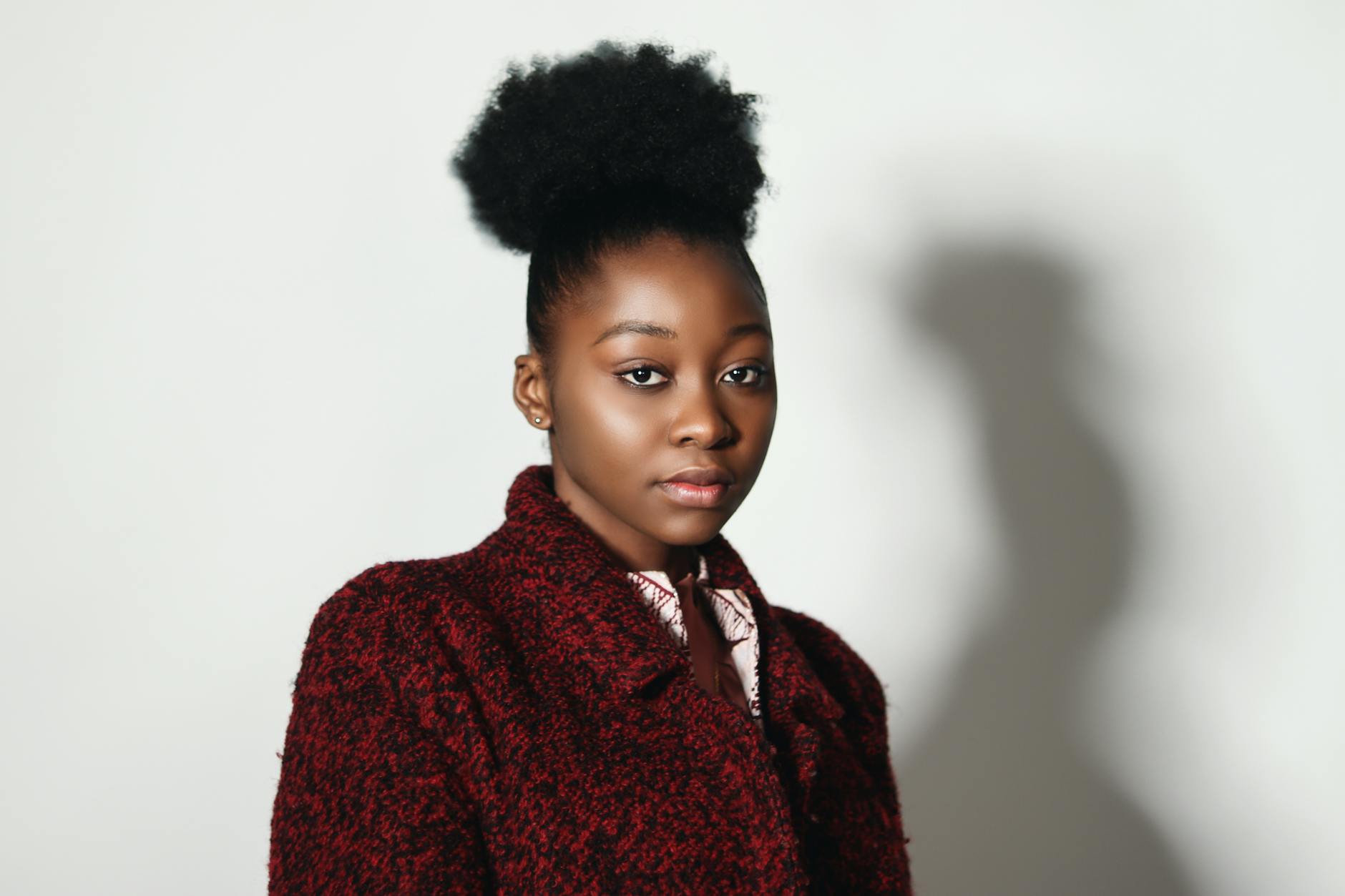
Reclaiming the Mirror: Beauty, Identity, and Resistance in the African Diaspora.

Photo by Godisable Jacob on Pexels.com

The concept of beauty has long been weaponized as a tool of domination and exclusion. For people of African descent, beauty has been historically defined through Eurocentric lenses that sought to invalidate African features, skin tones, and hair textures. This distortion of aesthetics served colonial and psychological purposes—reinforcing systems of white supremacy and dehumanization. Yet, amid this oppression, the African diaspora has continuously resisted, reclaimed, and redefined beauty through self-love, creativity, and cultural expression.

From the transatlantic slave trade to modern globalization, the manipulation of Black beauty has been integral to controlling identity. European colonizers constructed racial hierarchies that associated whiteness with purity and civilization, while blackness was linked to savagery and inferiority. These narratives became embedded in social, political, and religious ideologies, influencing how the world viewed—and how Black people came to view—themselves. This internalized oppression still manifests today in colorism, hair discrimination, and beauty bias within and outside the Black community.

Resistance to these narratives began as early as slavery itself. Enslaved Africans braided maps into their hair, wore headwraps as acts of pride, and sang spirituals affirming divine identity. These practices were not mere survival mechanisms but subtle assertions of self-worth. By reclaiming control over their bodies and appearances, Africans in the diaspora asserted, “We are still human.” This quiet defiance evolved into a cultural aesthetic that would later inspire entire movements of liberation.

The Harlem Renaissance marked a turning point in redefining Black beauty and identity. Figures like Zora Neale Hurston, Langston Hughes, and Josephine Baker challenged the notion that Black culture needed white validation. Their art celebrated dark skin, natural hair, and sensual expression, reclaiming the very traits society had demeaned. The phrase “Black is Beautiful,” born from this era and later popularized in the 1960s, became both a political slogan and a spiritual affirmation.

The Black Power movement of the 1960s and 1970s elevated aesthetics into activism. The afro became a crown of resistance, symbolizing freedom from assimilation. Black models like Beverly Johnson and Naomi Sims graced magazine covers once closed to women of their complexion, forcing the fashion world to confront its biases. Through photography, music, and protest, Black people around the world began to reassert the value of their image.

In the African diaspora, beauty and identity are deeply intertwined with spirituality. Ancient African civilizations revered the human form as divine art—sculptures from Nok, Benin, and Kemet celebrated symmetry, strength, and melanin as reflections of the Creator. This spiritual understanding of beauty counters the Western tendency to commodify and sexualize. The African aesthetic is holistic, connecting inner virtue with outer form—a principle still visible in African diasporic faiths like Yoruba and Rastafari.

Media representation remains one of the battlegrounds for beauty reclamation. For decades, film and advertising industries portrayed Eurocentric features as universal ideals. However, with the rise of digital media, Black creators began shaping new narratives. Platforms like YouTube and Instagram became spaces for natural hair tutorials, melanin-positive campaigns, and discussions about shadeism. This digital renaissance democratized visibility and dismantled the monopoly of Western beauty standards.

In contemporary times, artists like Lupita Nyong’o, Viola Davis, and Michaela Coel have redefined what global beauty looks like. They embody confidence rooted in authenticity rather than conformity. Their visibility challenges centuries of erasure, reminding the world that African beauty is not a trend—it is foundational. Each image, each role, becomes a mirror through which the diaspora can see itself with dignity and love.

Colorism, however, continues to plague the diaspora, a lingering scar of colonialism and slavery. Light skin often remains associated with privilege, while darker complexions are marginalized. This phenomenon fractures communities and perpetuates hierarchies of desirability. Yet, new generations are confronting these wounds head-on through documentaries, essays, and online activism—demanding that every shade of melanin be honored equally.

The reclamation of African aesthetics extends beyond physical features—it encompasses fashion, language, and ritual. African print clothing, protective hairstyles, and ancestral jewelry have become emblems of identity. What was once mocked or banned in workplaces is now worn proudly on global runways. The diaspora’s embrace of traditional aesthetics is not merely nostalgic—it is revolutionary, asserting that African heritage is modern, relevant, and eternal.

Psychologically, reclaiming beauty is an act of healing. Centuries of racial trauma have distorted self-perception, leading to generational insecurities. Scholars like bell hooks and Frantz Fanon have discussed the colonization of the mind and the struggle to love oneself under oppressive gaze. To look in the mirror and find beauty in one’s reflection is therefore a radical act of resistance, one that dismantles the psychological remnants of enslavement.

Black beauty movements have also intersected with gender liberation. Black women, historically hypersexualized or desexualized, have reclaimed agency over their image. Movements like #MelaninMagic and #BlackGirlMagic celebrate diverse forms of femininity—powerful, intellectual, sensual, and sacred. Similarly, Black men are confronting toxic stereotypes that equate masculinity with aggression, finding beauty in vulnerability and self-expression.

The global spread of African aesthetics—from music videos to fashion weeks—illustrates how the diaspora has transformed pain into power. Afrobeats, hip-hop, and soul music have carried messages of pride, resilience, and beauty to every corner of the world. The rhythm of resistance lives in every hairstyle, every dance, every melody that celebrates Blackness unapologetically.

Educational institutions and media organizations are beginning to recognize the importance of diverse representation. Curriculums now explore African art history, and museums exhibit African beauty traditions once labeled “primitive.” This reclamation of space in academia and culture is crucial—it ensures that future generations inherit a fuller, truer reflection of themselves.

In theology, the reclamation of beauty challenges centuries of Eurocentric religious imagery. Depictions of a white Messiah and angels have been replaced in many circles with images that reflect the original people of the Bible. The rise of Afrocentric theology reaffirms that divinity does not belong to one race or culture. The beauty of the Creator is reflected in the diversity of creation itself.

Art remains one of the most powerful vehicles for this transformation. Painters, photographers, and filmmakers across the diaspora are crafting new visual languages that honor melanin, texture, and form. Fine art portraiture—like the works of Kehinde Wiley or Awol Erizku—reimagines classical European iconography through an African lens, restoring Black presence to the historical canvas.

Beauty, in its truest sense, is more than aesthetics—it is liberation. When Black people embrace their natural selves, they reject the lie that they must change to be worthy. This acceptance becomes an act of spiritual sovereignty, echoing the biblical declaration that we are “fearfully and wonderfully made” (Psalm 139:14, KJV).

The mirror, once a symbol of distortion, now becomes a site of truth. It reflects not the colonizer’s image, but the Creator’s craftsmanship. To reclaim the mirror is to reclaim narrative power—to define beauty not by borrowed standards, but by ancestral wisdom. Every curl, curve, and hue tells a story of endurance, divinity, and rebirth.

Ultimately, the reclamation of beauty in the African diaspora is about freedom—the freedom to exist without apology, to see oneself as whole and holy. It is about transforming generations of shame into songs of pride and turning reflection into revolution. Through art, faith, and community, the descendants of Africa continue to rise, reminding the world that the most powerful form of beauty is self-acceptance rooted in truth.


References

Baker, J. (2017). The politics of Black beauty. Oxford University Press.
Davis, A. Y. (1981). Women, race, & class. Random House.
Fanon, F. (1952). Black skin, white masks. Grove Press.
hooks, b. (1992). Black looks: Race and representation. South End Press.
Hunter, M. (2007). The persistent problem of colorism: Skin tone, status, and inequality. Sociology Compass, 1(1), 237–254.
Mercer, K. (1994). Welcome to the jungle: New positions in Black cultural studies. Routledge.
Mills, C. W. (1997). The racial contract. Cornell University Press.
Nyong’o, L. (2014). Lupita Nyong’o’s speech on beauty and self-love [Video]. Essence Black Women in Hollywood.
Walker, A. (1983). In search of our mothers’ gardens: Womanist prose. Harcourt Brace Jovanovich.
Wiley, K. (2018). Reclaiming beauty: African aesthetics in modern art. Yale University Press.
Wilkerson, I. (2020). Caste: The origins of our discontents. Random House.
Wynter, S. (2003). Unsettling the coloniality of being/power/truth/freedom. The New Centennial Review, 3(3), 257–337.
Yaba Blay, Y. (2017). Pretty. Period.: The politics of being Black and beautiful. Blackprint Press.
Bryant-Davis, T. (2007). Healing requires recognition: The case for race-based traumatic stress. The Counseling Psychologist, 35(1), 135–143.
Johnson, K. (2021). Beauty in resistance: Black aesthetics and cultural power. Duke University Press.
Lewis, R. (2011). Afrocentric identity and the politics of beauty. Routledge.
Morrison, T. (1992). Playing in the dark: Whiteness and the literary imagination. Vintage Books.
Nash, J. C. (2019). Black feminism reimagined: After intersectionality. Duke University Press.
Tate, S. (2016). Black beauty: Aesthetics, stylization, politics. Routledge.
Thompson, C. (2009). Black women, beauty, and hair as resistance. Journal of Pan African Studies, 3(2), 97–108.

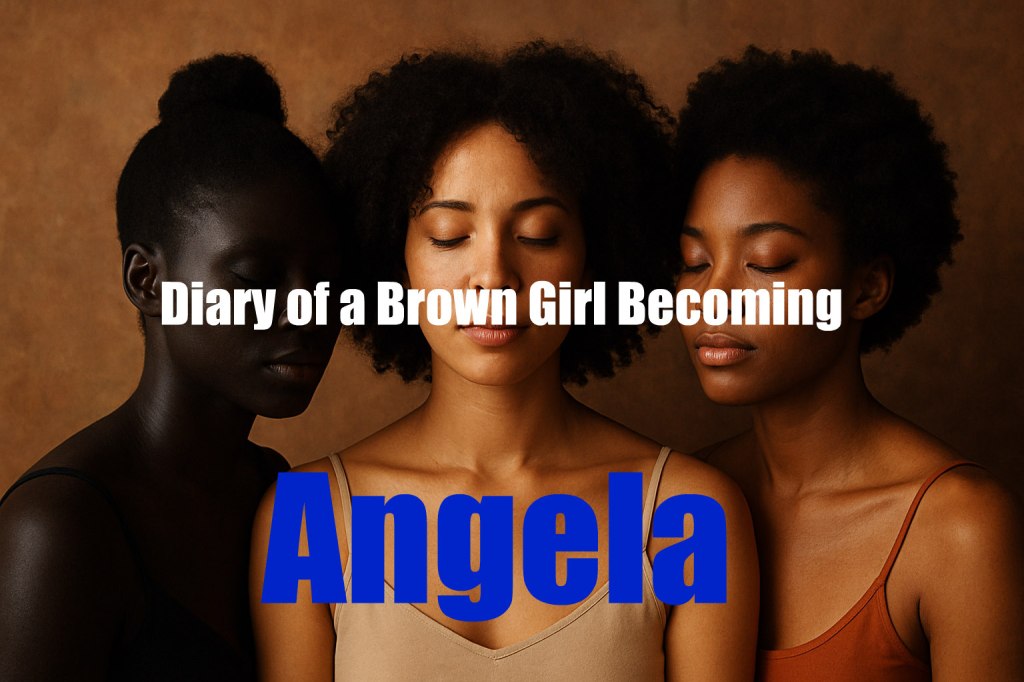
Diary of a Brown Girl Becoming: Angela’s Story.

Angela grew up in a world that measured beauty with a narrow ruler, one that often excluded the richness of her brown skin. From an early age, she noticed how lighter faces were praised while hers seemed to absorb shadows in spaces that celebrated whiteness. The mirror became both friend and foe, reflecting the contradictions of pride and self-doubt.

Her childhood was filled with stories of her ancestors, tales of resilience whispered between the cracks of slavery and colonization. They were strong, courageous, and unapologetically beautiful in ways society often refused to acknowledge. Angela clung to these narratives, even when the world outside questioned the worth of her hue.

School became a battleground for identity. Angela learned to navigate the subtle hierarchy of complexion and the unspoken preference for European features. Teachers, peers, and media reinforced these ideals. The pain of comparison gnawed at her, but it also planted seeds of resistance.

She remembers the first time someone called her “exotic.” Though meant as a compliment, it made her feel like a specimen rather than a person. She began to dissect her features, questioning which were assets and which were liabilities. Angela started a silent dialogue with herself, seeking the beauty that history seemed intent on denying her.

Television screens and magazine covers rarely reflected faces like hers. She noticed the patterns: brownness was either fetishized, caricatured, or erased altogether. Yet in her family, brown skin was celebrated for its depth, its connection to roots, and its story of survival. These dual narratives shaped Angela’s understanding of the world.

Adolescence brought a heightened awareness of colorism within her community. The unspoken hierarchy of light versus dark created tensions and insecurities among peers. Angela observed how her lighter-skinned friends often received attention and opportunities more easily, while girls with darker skin had to fight harder for recognition.

Despite these challenges, she cultivated a sense of pride. Angela immersed herself in literature, history, and art that celebrated brownness. From Toni Morrison to Zora Neale Hurston, from the Harlem Renaissance to contemporary Black artists, she discovered that her skin tone carried a lineage of creativity, power, and beauty.

Her relationship with hair mirrored her journey with skin. Angela learned to appreciate the versatility of her texture, experimenting with styles that honored her heritage rather than conforming to Eurocentric standards. Every braid, twist, and coil became an assertion of identity, a declaration of belonging to a legacy that endured despite oppression.

She began keeping a diary, writing candidly about her experiences, fears, and triumphs. It became a space to explore the contradictions of desire and self-acceptance. In its pages, Angela could reconcile the tension between wanting to fit in and yearning to stand out authentically.

Love and relationships complicated her understanding of self. Angela noticed how society and culture influenced attraction, favoring lighter complexions and certain features. These patterns were not universal, but they shaped how she viewed herself in the mirror and how others perceived her.

Social media became a double-edged sword. On one hand, it allowed Angela to see faces like hers celebrated globally. On the other, it highlighted the persistent bias toward light skin and European features. She learned to curate her feed, choosing inspiration over comparison, empowerment over envy.

College opened new horizons. Angela met brown girls from diverse backgrounds who embraced their skin with courage. Their shared experiences created bonds rooted in understanding and affirmation. They spoke openly about colorism, representation, and the politics of identity, reinforcing the notion that brownness was a spectrum, each shade deserving celebration.

Professional life brought its own set of challenges. Bias and microaggressions tested Angela’s confidence. At times, her capabilities were underestimated or overlooked because of the color of her skin. Yet she discovered that excellence could be a form of resistance, a way to redefine the narrative about brown girls in historically unwelcoming spaces.

She embraced spirituality as a grounding force. Scripture, meditation, and ancestral wisdom reminded Angela that her worth was not dictated by societal standards but by a divine design. Her skin became a canvas of history, a symbol of endurance and hope that transcended mere appearance.

Travel allowed Angela to witness the global diaspora of brownness. From African cities to Caribbean islands, she saw beauty celebrated in its natural state. These encounters expanded her vision, teaching her that brown skin carries stories of migration, adaptation, and resilience that are both universal and profoundly personal.

Motherhood—real or symbolic in her nurturing of community—taught Angela the importance of modeling self-love. She wanted the next generation of brown girls to see themselves reflected not as anomalies but as embodiments of strength, intelligence, and grace. This responsibility shaped her daily choices and interactions.

Art and creative expression became sanctuaries. Painting, photography, and poetry allowed Angela to externalize her journey, to give form to the invisible struggles of growing up brown in a world obsessed with lighter shades. Each creation was a testament to survival, pride, and the beauty of becoming.

Friendship revealed mirrors of self-acceptance. Surrounding herself with brown girls who celebrated authenticity helped Angela dismantle lingering insecurities. Their laughter, shared stories, and communal validation created a counter-narrative to societal rejection, affirming that beauty and value are inherent, not granted.

As she reflects on this journey, Angela recognizes the power of narrative. Writing her diary has been an act of reclamation—transforming shame into pride, doubt into confidence, and invisibility into presence. Each entry affirms that becoming is not linear but a layered, ongoing process.

Now, as a brown woman fully embracing her skin, features, and heritage, Angela understands that her story is both personal and collective. It is the story of countless girls who came before her and those who will follow. Her skin, her features, her history are not deficits to overcome but treasures to honor.

In becoming, Angela has learned that brownness is not a limitation but a lens—a way to see the world, understand its complexities, and assert a presence that is unapologetic, radiant, and transformative. Her diary will continue as long as there is growth, reflection, and the beauty of embracing the journey.

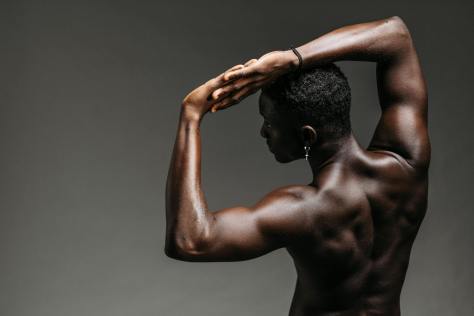
The Art of the Male Form: Power, Presence, and Perception.

Photo by ROCKETMANN TEAM on Pexels.com

The human male form has long been a subject of fascination in art, science, and culture, reflecting not only physicality but also social hierarchies, cultural ideals, and psychological projections. Across centuries, the representation of the male body has evolved, embodying changing conceptions of masculinity, strength, and beauty. From classical sculptures of Greece and Rome to contemporary photography and film, the male form has been interpreted as a canvas of power and presence.

Historically, the Greek ideal celebrated the male body as a perfect balance of symmetry, proportion, and athleticism. Sculptures such as Polykleitos’ Doryphoros exemplified mathematical precision, with the canon of proportions establishing standards for physical perfection that would influence Western art for millennia. This idealized vision of masculinity combined both aesthetic beauty and moral virtue, suggesting that bodily perfection mirrored inner excellence.

The Renaissance reintroduced classical principles while emphasizing dynamic motion and individual expression. Artists such as Michelangelo in David portrayed not only physical strength but also psychological tension and heroic presence. The male form became an emblem of intellectual and spiritual power, reflecting a holistic understanding of human potential. Renaissance art thus bridged the external and internal, situating the male body as both a physical marvel and a symbolic vessel of identity.

In non-Western contexts, the male form has been depicted through varied cultural lenses. In African art, the male figure often embodies communal roles, leadership, and spiritual vitality rather than purely aesthetic ideals. Carvings, masks, and statues depict muscularity and posture as markers of social and ceremonial significance. Similarly, in East Asian traditions, male figures have symbolized wisdom, martial skill, and filial duty, emphasizing presence over purely sculptural beauty.

Contemporary representations of the male body have expanded to encompass a spectrum of forms, challenging classical notions of beauty and strength. Media, fashion, and advertising frequently spotlight muscular, lean physiques, reinforcing cultural ideals tied to health, athleticism, and desirability. These portrayals, however, often obscure the diversity of natural male forms, creating pressures that intersect with gender norms and body image concerns.

The perception of male strength and virility is deeply intertwined with visual cues. Broad shoulders, defined musculature, and upright posture convey dominance and confidence, signaling both physical capability and social authority. Yet these traits are culturally mediated; in some societies, intellectual presence, sartorial elegance, or artistic skill may supersede raw physicality as markers of masculine power.

Psychologically, the male form operates as a site of projection for both men and women. Men may internalize societal ideals as standards for self-worth, while women may perceive these traits through lenses of attraction, protection, or social status. The interaction of biology, culture, and psychology produces a complex matrix in which physicality, behavior, and charisma intersect.

Artistic depiction often emphasizes narrative alongside form. Paintings, photographs, and sculptures do not merely replicate anatomy but evoke story, emotion, and character. The male form thus becomes a storytelling tool, capable of conveying vulnerability, aggression, heroism, or intimacy depending on context. Such portrayals can redefine social perceptions of masculinity beyond mere physical prowess.

The study of anatomy underpins much of the artistic representation of the male body. Knowledge of skeletal structure, muscle distribution, and movement enables artists to render the body convincingly and expressively. Anatomical studies by Leonardo da Vinci and modern biomechanics research illustrate how understanding physiology enhances both aesthetic and functional interpretation of form.

In cinema and performance, the male body functions as a medium of narrative embodiment. Action films, dance, and theater utilize posture, gesture, and musculature to communicate character, intent, and emotion. Actors’ physical training is integral to credibility, reinforcing cultural associations between physical form and personal agency.

Clothing and adornment further influence perception. Tailored suits, armor, traditional garments, or casual attire interact with the body’s contours to project authority, elegance, or approachability. Fashion, therefore, becomes a form of embodied rhetoric, shaping how presence is interpreted socially and aesthetically.

The intersection of race and the male form reveals additional layers of perception. Societal biases often exaggerate or stereotype certain physiques, influencing both admiration and marginalization. Scholarly research highlights how media representation of Black, Asian, and Indigenous men can reinforce prejudicial narratives while simultaneously offering opportunities for celebration and redefinition of power.

Athleticism, historically celebrated in art and society, continues to reinforce ideals of the male form. Sports icons, Olympians, and bodybuilders exemplify disciplined cultivation of the body, symbolizing perseverance, control, and societal admiration. These figures operate at the nexus of corporeal excellence and symbolic authority.

The sexualization of the male form has also evolved, reflecting shifting cultural mores. Where once nudity implied heroism, divinity, or philosophical ideal, contemporary eroticized representations carry complex implications regarding consent, objectification, and agency. The male body thus navigates multiple discourses simultaneously: aesthetic, athletic, sexual, and symbolic.

Media proliferation intensifies scrutiny of the male form. Social platforms, advertising, and global cinema perpetuate standards of muscularity, height, and symmetry, creating feedback loops that influence self-perception and social judgment. These pressures can foster both aspiration and anxiety, highlighting the psychosocial dimensions of bodily representation.

Philosophically, the male form invites reflection on mortality, temporality, and embodiment. Aging, injury, and transformation challenge ideals of constancy and perfection, offering opportunities for more nuanced understandings of masculinity. Imperfection, once marginalized in classical aesthetics, now contributes to narratives of resilience, authenticity, and wisdom.

Cross-disciplinary studies, incorporating anthropology, psychology, and art history, illuminate the interplay between biology and culture in shaping perceptions of the male form. Evolutionary theory, for example, considers sexual selection, strength signaling, and social hierarchy as factors influencing both appearance and societal valuation. Cultural studies, in turn, examine media representation, ritual, and mythology as determinants of perception.

Digital technology and virtual spaces are redefining the male form in contemporary imagination. CGI, motion capture, and social media avatars allow manipulation of physique, posture, and expression beyond natural limits, raising questions about authenticity, aspiration, and identity. Such developments extend the discourse of perception into immersive and interactive arenas.

Ultimately, the art of the male form transcends mere anatomy. It is a dialogue among power, presence, and perception, reflecting the interdependence of physicality, culture, and cognition. The male body is both observed and experienced, a site of aesthetic contemplation, social negotiation, and personal embodiment.

Contemporary discourse urges inclusivity, diversity, and critical reflection, challenging narrow definitions of strength and beauty. Recognizing variation, vulnerability, and agency broadens appreciation of the male form beyond traditional paradigms. In this light, art, science, and lived experience converge to create a dynamic understanding of masculinity as both human and culturally mediated.

In conclusion, the male form remains a compelling locus of study and representation. Its power lies not solely in muscle or height but in the interplay of physicality, presence, and perception, shaped by history, culture, and psychology. From the classical canon to modern media, the male body continues to articulate ideals, challenge assumptions, and inspire contemplation, affirming its enduring significance in human imagination and social life.

References

Frontiers in Psychology. (2023). Body image dissatisfaction in men: Causes and consequences. https://www.frontiersin.org/journals/psychology/articles/10.3389/fpsyg.2023.1116686/full

Metropolitan Museum of Art. (n.d.). Anatomy in the Renaissance. https://www.metmuseum.org/essays/anatomy-in-the-renaissance

PubMed. (2002). Impact of media images on male body image. https://pubmed.ncbi.nlm.nih.gov/11920996/

Smarthistory. (n.d.). Polykleitos, Doryphoros (Spear Bearer). https://smarthistory.org/polykleitos-doryphoros-spear-bearer/

Smarthistory. (n.d.). Depictions of the human figure and animals in African art. https://smarthistory.org/depictions-of-the-human-figure-and-animals/

Italian Renaissance. (n.d.). Michelangelo’s David: Analysis and history. https://www.italianrenaissance.org/michelangelos-david/

Science Museum, UK. (n.d.). Anatomy, art, and science. https://www.sciencemuseum.org.uk/objects-and-stories/medicine/anatomy-art-and-science

The Boar. (2020, June). Male bodies in film: Representations of masculinity. https://theboar.org/2020/06/male-bodies-film/

Vogue Business. (2021). Sizing is stopping consumers from shopping: Here’s what brands need to know. https://www.voguebusiness.com/story/fashion/sizing-is-stopping-consumers-from-shopping-heres-what-brands-need-to-know

The Times. (n.d.). Unhealthy skinny models: Fashion week report. https://www.thetimes.co.uk/article/vogue-report-unhealthy-skinny-models-fashion-week-jj3qwhf9w

Smithsonian Asian Art Museum. (n.d.). Facing East: Portraits from Asia. https://asia.si.edu/whats-on/exhibitions/facing-east-portraits-from-asia/

Masculine Perfection Series: LaKeith Stanfield, Ali Amin Carter & Louis Allen III

From the moment they enter a room, these three men command attention—LaKeith Stanfield with his piercing, soul-searching eyes that seem to look straight through you; Ali Amin Carter with his refined, boyish good looks that blend innocence and masculine poise; and Louis Allen III with his breathtaking green orbs and sculpted physique that define him as a genetic marvel. Their appearances alone make them unforgettable, but their talent, charisma, and artistic versatility elevate them into the realm of cinematic and modeling excellence.

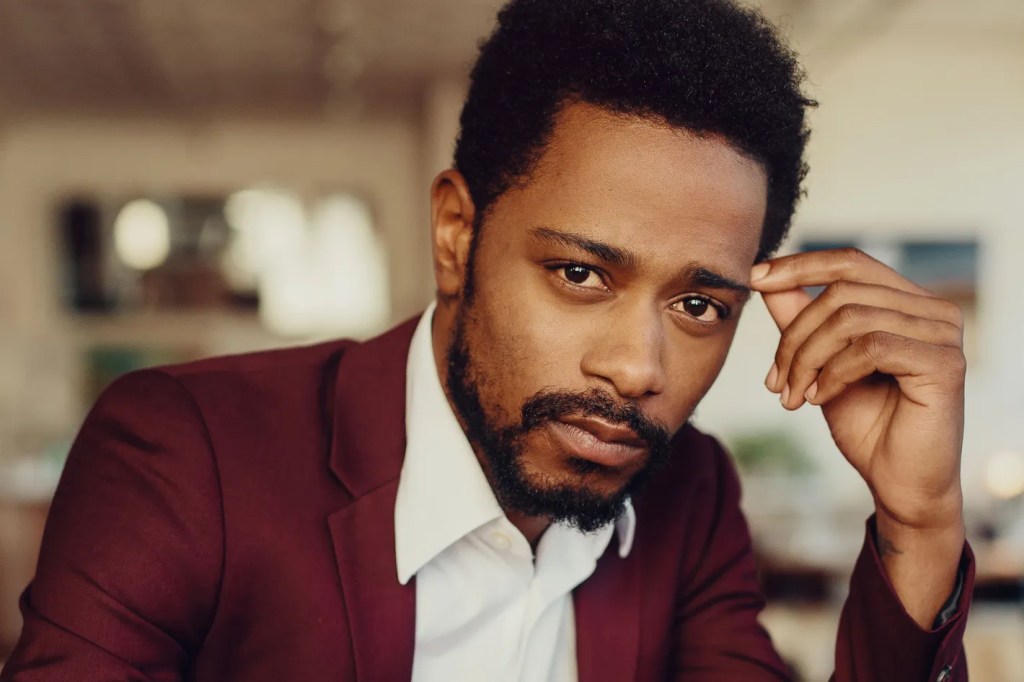
LaKeith Stanfield

“The Enigmatic Soul: A gaze that speaks, a talent that transforms.”

LaKeith Stanfield stands as one of the most intriguing and enigmatic actors of his generation. Born in California, he began acting in high school before training at the John Casablancas Modeling & Career Center, where he developed the poise and facial precision that now define his screen presence. His breakout came with Short Term 12, which earned him an Independent Spirit Award nomination, and he continued rising with roles in Selma, Get Out, Sorry to Bother You, Knives Out, and Judas and the Black Messiah, for which he received an Academy Award nomination. Among his most captivating roles is his leading performance in The Photograph (2020), where his deep, expressive eyes created a magnetic intensity—particularly in the scene where he gazes at Issa Rae’s character with a mix of longing, vulnerability, and desire. The moment became iconic because Stanfield’s eyes communicate an entire emotional universe, piercing straight into the viewer’s heart just as they pierce Issa Rae’s.

On the personal front, Stanfield married model Kasmere Trice and together they welcomed a baby in 2023. He is also father to two daughters from previous relationships and describes fatherhood as “something that completely changes” you. His commitment to protecting the privacy of his family and framing the narrative of his own story underscores a grounded side to the actor’s life amid public visibility.

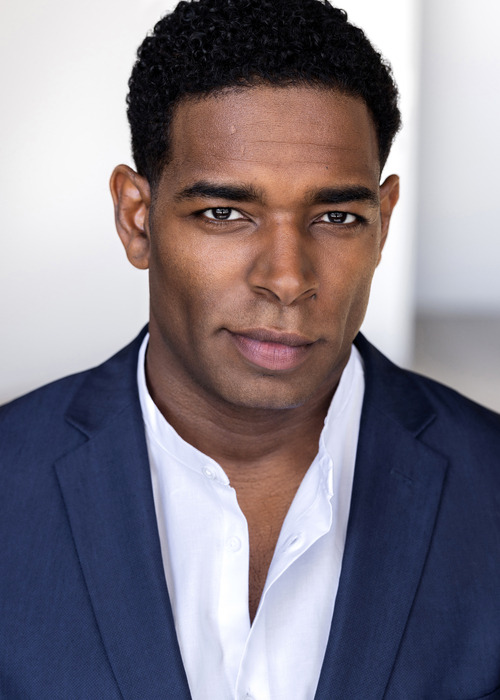
Ali Amin Carter

“Attractiveness in Motion: Where quiet masculinity meets undeniable screen presence.”

This photograph is the property of its respective owner. No copyright infringement intended.

Ali Amin Carter is a striking talent whose tall, elegant frame and natural good looks positioned him for success in both modeling and acting. Beginning his career on the runway, he eventually transitioned into theatre, earning recognition through the acclaimed stage production Ruined. His screen roles include appearances in Lovecraft Country and The Good Lord Bird, each showcasing his ability to blend emotional depth with quiet masculinity. More recently, Carter starred in the feature film Love Unexpected (2023/24), portraying Chase, a college-playboy figure whose world is challenged by love and transformation. His modeling roots gave him the visual confidence and stature that translate naturally to the screen, and he extended his reach further by starring in a music-video production by the singer Joe, demonstrating a versatility that spans modeling, film, and music.

Louis Allen III (LA3)

“The Green-Eyed Hunk: Athletic strength, masculine beauty, and unforgettable allure.”

Photo Credit: Tibo Norman

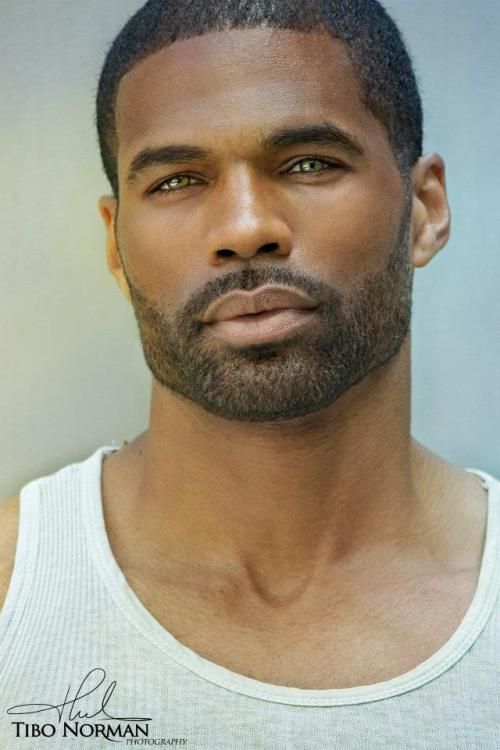
Louis Allen III, known professionally as LA3, emerged from New Jersey as a modeling force defined by his remarkable green eyes, warm brown complexion, and athletic physique honed from his earlier years in minor-league football. His modeling journey began in high school, and he quickly became known for his commanding appearance in editorial spreads and grooming campaigns. Allen’s features made him a favorite for “Eye Candy” showcases and brand ambassador roles, where he represents the fusion of masculine beauty, athletic power, and classic photogenic appeal. Although his acting portfolio is smaller, he continues to expand his influence in fashion, fitness, and men’s grooming culture.

Together, these three men represent different dimensions of modern Black male beauty—intense, elegant, and powerfully photogenic. Their stories show how physical presence, combined with talent and ambition, opens doors across film, modeling, and public life. Each of them brings a unique energy to the screen or lens: Stanfield with soulful complexity, Carter with polished charm, and Allen with athletic grandeur. They reflect a new era in representation where Black men can embody sensitivity, strength, mystery, and beauty simultaneously. Their careers not only highlight their personal evolution but also expand the cultural imagination of what masculine perfection looks like in the twenty-first century.


References
“Ali Amin Carter – Biography,” IMDb.
“Love Unexpected,” IMDb.
“LaKeith Stanfield – Personal Life,” Essential Magazine.
“LaKeith Stanfield – Biography,” Wikipedia.

IMDb. LaKeith Stanfield – Biography.
Time Magazine. LaKeith Stanfield: Contemporary Chameleon.
Empire Magazine. LaKeith Stanfield Profile.
IMDb. Ali Amin Carter – Biography.
Essence Magazine. Eye Candy: Louis Allen III.
Blinging Beauty. The Face of Blinging Beauty’s Manly Man is LA

The Brown Boy Dilemma: Identity, Masculinity, and the Burden of Perception.

This photograph is the property of its respective owner. No copyright infringement intended.

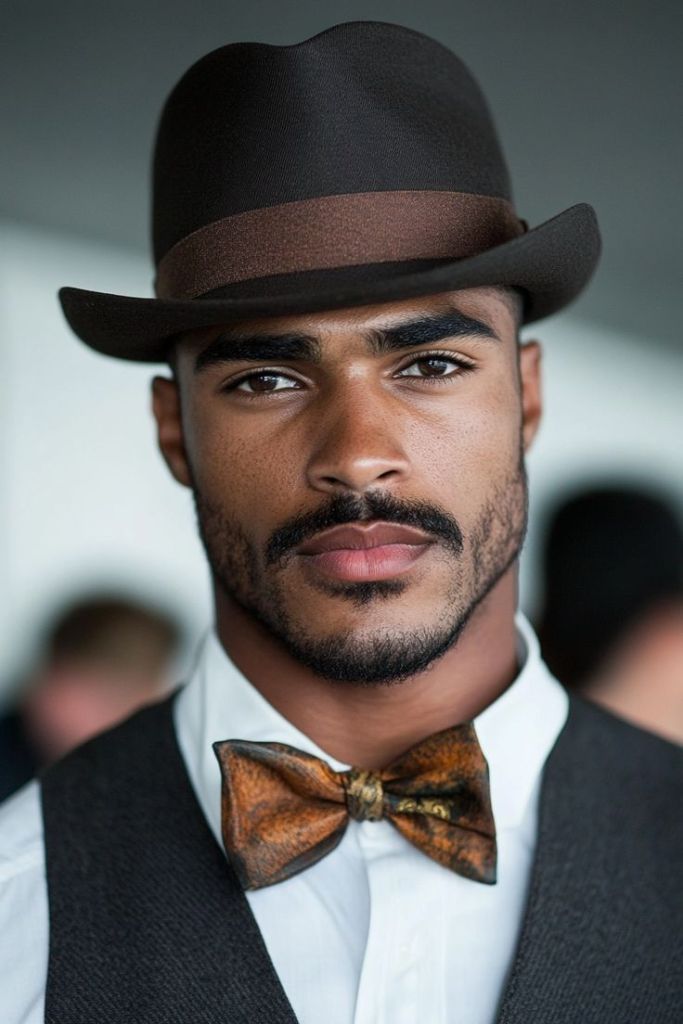
The struggle of the “Brown Boy” in contemporary society represents a complex intersection of race, colorism, masculinity, and identity. It is not merely a question of visibility but of valuation—how the world perceives darker-skinned men of African descent, and how they, in turn, perceive themselves. In a world that constantly dictates beauty, strength, and worth through Eurocentric ideals, the brown-skinned boy grows up negotiating his humanity in spaces that either fear or fetishize him. His story is both sociological and spiritual, a narrative woven through generations of marginalization and resilience.

From childhood, many brown boys encounter subtle yet persistent forms of rejection. Whether through teasing, biased praise toward lighter peers, or the absence of representation in media, they learn early that their skin tone shapes how others respond to them. Studies on colorism confirm that lighter skin is often associated with higher social status, attractiveness, and opportunity, while darker skin triggers stereotypes of aggression or inferiority (Hunter, 2007). These biases distort self-esteem, forcing brown boys to internalize shame before they even understand its source.

The media perpetuates these disparities through selective glorification. In film and advertising, lighter-skinned men are more likely to be portrayed as romantic leads, while darker men are typecast as villains or hypermasculine figures (Russell, Wilson, & Hall, 1992). This limited representation teaches brown boys that their value lies not in emotional intelligence or creativity, but in physical dominance or stoicism. Such portrayals strip away the complexity of Black and brown male identity, reducing humanity to stereotype.

Masculinity becomes a double-edged sword for the brown boy. On one hand, he is expected to embody strength, resilience, and control; on the other, these same traits are used to justify fear and criminalization. Society tells him to “man up” while simultaneously punishing him for appearing “too masculine.” This contradiction leaves little room for vulnerability—a key ingredient of emotional health. As bell hooks (2004) notes, patriarchal masculinity denies men access to their full humanity, trapping them behind masks of silence and anger.

The burden of perception extends beyond media and social norms into institutional life. In schools, brown boys are disproportionately disciplined compared to their lighter or white peers for the same behaviors (Ferguson, 2001). They are labeled “troublemakers” or “disruptive” rather than “leaders” or “gifted.” This early criminalization creates a psychological prison that follows them into adulthood, shaping their self-concept and limiting future possibilities. The result is an invisible cage built from others’ expectations.

Colorism also manifests within the Black community itself, where colonial hierarchies of complexion persist. Brown boys often find themselves “too dark” to be considered desirable in mainstream spaces yet “not dark enough” to be validated as authentically Black in others. This in-between identity can create deep internal conflict. It is a wound inherited from slavery, when lighter-skinned slaves were given preferential treatment as house servants while darker-skinned individuals labored in the fields (Hall, 1992). These divisions fractured unity and continue to echo through generations.

In romantic relationships, the brown boy’s dilemma is intensified. Studies have shown that women across many racial groups often rate lighter-skinned men as more attractive or “safe” partners (Harrison & Thomas, 2009). Meanwhile, darker men are either stigmatized as threatening or exotified as hypersexual. Both extremes deny them full personhood. Such experiences can breed insecurity and mistrust, complicating intimacy and self-acceptance.

Spiritually, the brown boy wrestles with a deeper question: “Who am I beyond what the world sees?” In a biblical sense, he is a reflection of divine creation, made in the image of God (Genesis 1:27). Yet societal conditioning distorts this truth, teaching him to equate his reflection with rejection. The book of Psalms reminds him that he is “fearfully and wonderfully made” (Psalm 139:14, KJV), but without affirmation, he struggles to believe it. His dilemma becomes not only social but spiritual—a battle for his soul’s self-worth.

The psychological toll of colorism on men is often overlooked. While much of the discourse on colorism focuses on women, men also endure its scars in silence. They are taught that emotions are weakness, so they suppress their pain. Over time, this repression manifests as anger, isolation, or detachment. As psychologists have found, unresolved racial trauma can lead to chronic stress and depressive symptoms among men of color (Williams & Mohammed, 2009). Healing thus requires both communal empathy and individual vulnerability.

In the realm of economics, the brown boy’s complexion can even influence professional advancement. Research indicates that darker-skinned men earn less on average than their lighter-skinned peers, even within the same racial group (Hersch, 2006). These disparities reveal that colorism is not just emotional but structural—a system that rewards proximity to whiteness. For many brown men, every professional achievement comes with the burden of overperformance to prove worthiness.

Culturally, however, the brown boy carries within him the strength of his ancestors. His melanin is a testament to resilience, survival, and divine design. African traditions often viewed dark skin as a sign of strength and connection to the earth—a physical manifestation of spiritual power. To reclaim that heritage is to undo centuries of colonial indoctrination. The brown boy must rediscover that his identity is sacred, not shameful.

The brown boy dilemma also reveals the fragility of Western beauty standards. Society’s preference for fair skin stems from colonialism, slavery, and white supremacy—systems designed to devalue darker bodies while exploiting their labor and culture. Undoing this mindset requires conscious re-education. Schools, churches, and families must affirm that beauty, intelligence, and virtue are not determined by shade but by spirit.

In art and literature, the reclamation of the brown male image has begun. Figures like Chadwick Boseman, Daniel Kaluuya, and John Boyega have challenged color hierarchies by embodying grace, intellect, and humanity in their performances. Their visibility offers young brown boys a mirror of possibility. Representation matters—not as tokenism, but as liberation from erasure.

Despite the obstacles, many brown men rise as leaders, scholars, and visionaries. They transform pain into purpose, channeling rejection into creativity and service. Their triumph is quiet yet profound: to love themselves in a world that taught them not to. This act of self-love is revolutionary. As Frantz Fanon (1952) wrote in Black Skin, White Masks, the oppressed must reclaim their identity through self-definition rather than external validation.

The journey of the brown boy is ultimately one toward wholeness. Healing begins when he confronts the lies that equate his worth with whiteness. It continues when he embraces his complexity—strong yet sensitive, dark yet luminous, masculine yet nurturing. His liberation is not the denial of his pain but the transformation of it.

Faith plays a central role in this restoration. In God’s eyes, there is no hierarchy of hue; the soul’s radiance transcends skin. The brown boy must learn to see himself through divine rather than colonial eyes. When he does, he becomes a vessel of light, a living rebuke to the systems that tried to dim him.

In conclusion, The Brown Boy Dilemma is not simply a racial or aesthetic issue—it is a moral one. It challenges humanity to dismantle the illusions of color-based worth and to restore dignity to all shades of creation. The brown boy’s struggle mirrors the world’s sickness, but his healing reflects its hope. His existence testifies that beauty, power, and divinity cannot be measured by tone—they are written in the soul, where no shadow can reach.


References

Fanon, F. (1952). Black Skin, White Masks. Grove Press.
Ferguson, A. A. (2001). Bad Boys: Public Schools in the Making of Black Masculinity. University of Michigan Press.
Hall, R. E. (1992). Bias among African Americans regarding skin color: Implications for social work practice. Research on Social Work Practice, 2(4), 479–486.
Harrison, M. S., & Thomas, K. M. (2009). The hidden prejudice in selection: A research agenda to examine color bias in organizations. Journal of Organizational Behavior, 30(8), 1031–1046.
Hersch, J. (2006). Skin tone effects among African Americans: Perceptions and reality. American Economic Review, 96(2), 251–255.
hooks, b. (2004). The Will to Change: Men, Masculinity, and Love. Atria Books.
Hunter, M. (2007). The persistent problem of colorism: Skin tone, status, and inequality. Sociology Compass, 1(1), 237–254.
Russell, K., Wilson, M., & Hall, R. (1992). The Color Complex: The Politics of Skin Color among African Americans. Harcourt Brace Jovanovich.
Williams, D. R., & Mohammed, S. A. (2009). Discrimination and racial disparities in health: Evidence and needed research. Journal of Behavioral Medicine, 32(1), 20–47.

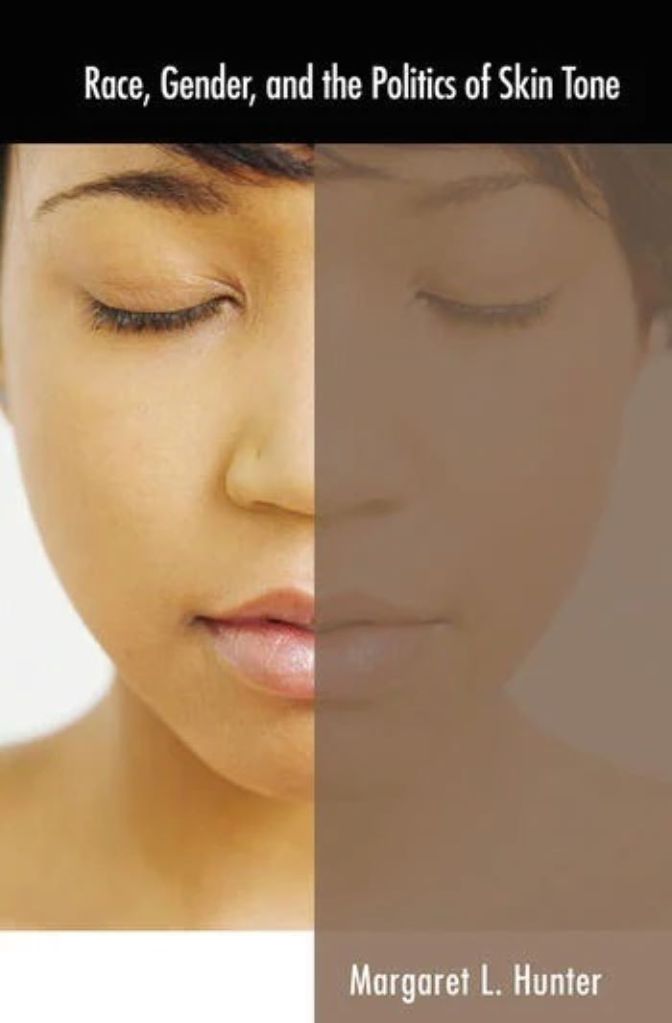
📖Book Review: Race, Gender, and the Politics of Skin Tone by Margaret L. Hunter.

⭐⭐⭐⭐⭐ 5/5 Stars

Race, Gender, and the Politics of Skin Tone

Published in 2005, this book examines how skin tone operates as a system of privilege and discrimination within African American and Mexican American communities. Drawing from in-depth interviews, historical records, and social analysis, Hunter demonstrates how lighter-skinned women often experience greater access to education, employment, and marriage opportunities, while darker-skinned women endure bias, invisibility, and stigmatization. The book situates colorism as both a legacy of colonialism and a persistent barrier to equality in modern society.

Key Points
Hunter highlights several key insights:

  • Historical Foundations: She situates colorism within slavery and colonization, exposing how whiteness and lightness were tied to power.
  • Socioeconomic Disparities: Lighter-skinned women are statistically more likely to access higher-paying jobs, higher levels of education, and “marry up.”
  • Beauty and Body Politics: The text addresses cosmetic pressures, including skin-lightening and surgery to alter facial features, showing how systemic bias reshapes physical identity.
  • Community Paradoxes: Dark-skinned women are often seen as “authentic,” while lighter-skinned women are more widely valued in mainstream society—a painful double standard.

Awards and Reception
Although not listed among mainstream literary award winners, Race, Gender, and the Politics of Skin Tone is regarded as a groundbreaking scholarly text and is widely adopted in college courses on race, gender, sociology, and African American studies. Scholars have praised it for being the first major sociological study to center on colorism across both African American and Mexican American contexts. Its academic influence is measured not in trophies but in citations, class adoptions, and the shaping of future research.

Groundbreaking and Life-Changing Appeal
The book is groundbreaking because it shifts the conversation from race alone to skin tone as an independent and powerful axis of inequality. For readers, it is often life-changing: it validates the lived experiences of women who have faced color-based bias, offering language and evidence where silence once reigned. By connecting personal testimony to systemic inequality, Hunter’s work affirms that the struggles surrounding beauty, identity, and skin tone are not individual failings but social constructions that must be dismantled.

Comparison with Other Works on Colorism
Hunter’s work stands alongside other landmark texts in the study of colorism. For example, Russell, Wilson, and Hall’s The Color Complex (1992, revised 2013) offered one of the earliest explorations of colorism in Black communities, focusing on the psychological effects of shade hierarchies. While The Color Complex is accessible and widely read, Hunter builds on this foundation with a more rigorous sociological methodology and a comparative lens that includes Mexican American experiences. Similarly, Melissa V. Harris-Perry’s Sister Citizen (2011) examines stereotypes and identity struggles of Black women in politics and culture; however, Hunter’s work is narrower in scope, diving deeply into skin tone stratification. Together, these books complement each other—The Color Complex exposing cultural wounds, Race, Gender, and the Politics of Skin Tone providing sociological depth, and Sister Citizen situating those struggles in broader systems of power.

Cultural and Media References
Though exact counts of media and blog citations are difficult to track, Hunter’s book is heavily referenced in academic articles, blogs on colorism, and grassroots discussions about skin tone politics. It frequently appears in bibliographies of colorism studies and has influenced cultural commentary from scholarly circles to online forums. Its resonance lies not only in academia but also in popular conversations about beauty, identity, and racial equity.

Author Bio
Margaret L. Hunter, a distinguished sociologist and professor, is widely recognized for her pioneering scholarship on race, gender, and inequality. Her academic career and cultural analyses have cemented her reputation as one of the leading voices on the study of colorism. As a faculty member at Loyola Marymount University and later at Mills College, Hunter has built her career on amplifying the voices of marginalized communities, specifically African American and Mexican American women.

Conclusion
Hunter’s Race, Gender, and the Politics of Skin Tone stands as one of the most significant works on colorism to date. Compared to The Color Complex and Sister Citizen, it represents the sociological anchor of colorism studies: data-driven, intersectional, and cross-cultural. It offers both a mirror—revealing the painful realities of shade bias—and a compass, pointing toward new ways of affirming beauty and worth beyond oppressive hierarchies. For scholars, activists, and readers seeking understanding, it remains a 5-star, essential text that is as relevant today as when it was first published.


References

Craig, M. L. (2002). Ain’t I a Beauty Queen?: Black Women, Beauty, and the Politics of Race. Oxford University Press.

Glenn, E. N. (2008). Yearning for lightness: Transnational circuits in the marketing and consumption of skin lighteners. Gender & Society, 22(3), 281–302.

Hunter, M. (2005). Race, Gender, and the Politics of Skin Tone. Routledge.

Keith, V. M., & Herring, C. (1991). Skin tone and stratification in the Black community. American Journal of Sociology, 97(3), 760–778.

Russell, K., Wilson, M., & Hall, R. (2013). The Color Complex: The Politics of Skin Color in a New Millennium. Anchor Books.

Harris-Perry, M. V. (2011). Sister Citizen: Shame, Stereotypes, and Black Women in America. Yale University Press.

Curves, Coils, and Culture: Redefining Black Female Aesthetics.

Photo by RDNE Stock project on Pexels.com

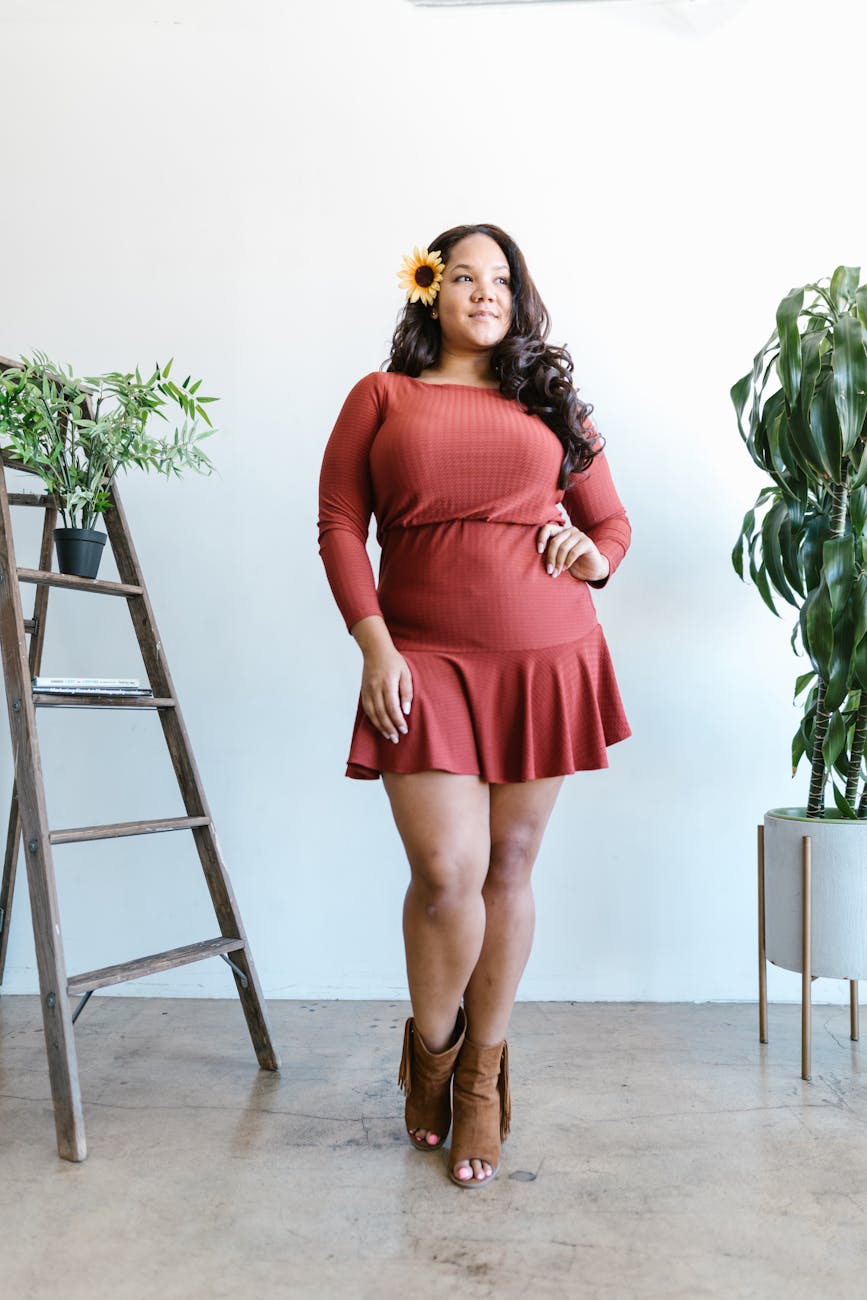
The beauty of Black women has historically been contested, critiqued, and commodified through the lens of Eurocentric standards. Features such as full lips, natural hair textures, and curvaceous bodies have often been marginalized, while lighter skin, straighter hair, and slender bodies were celebrated. This has created a complex cultural tension where Black women must navigate self-perception, societal validation, and internalized bias. Redefining Black female aesthetics involves reclaiming cultural pride, challenging narrow standards, and celebrating the diversity inherent in African-descended bodies.

Curves and body shape have long been markers of both cultural identity and contested beauty ideals. Anthropological research shows that in many African societies, curvaceous bodies were historically associated with fertility, strength, and social desirability (Gravlee, 2009). In contrast, Westernized media often valorized thinness, creating a dissonance for Black women who were expected to conform to ideals that excluded natural forms. Recognizing the cultural significance of curves restores aesthetic legitimacy to bodies that have been devalued by colonial and media narratives.

Hair texture, or “coils,” has similarly been politicized. Natural Black hair—whether tightly coiled, kinky, or wavy—has historically been stigmatized in professional, educational, and social contexts (Byrd & Tharps, 2014). Recent movements such as #NaturalHair and #BlackGirlMagic have reframed natural hair as a symbol of cultural pride, personal identity, and resilience. Embracing natural textures not only challenges Eurocentric beauty standards but also asserts agency over self-expression and self-acceptance.

Facial features also play a significant role in redefining aesthetics. Full lips, broad noses, and high cheekbones are often celebrated within African-descended communities for their unique beauty, yet historically devalued by mainstream culture. By centering these features in media representation, campaigns, and artistic expression, Black women reclaim visual narratives that affirm their inherent beauty (Hunter, 2007). These traits, coupled with the natural diversity of eye shapes and skin tones, create a holistic framework for appreciating Black female aesthetics beyond reductive stereotypes.

Psychologically, embracing curves, coils, and distinct features strengthens self-esteem and identity formation. Social comparison theory explains that repeated exposure to media portraying a narrow standard of beauty can lower self-worth (Festinger, 1954). Conversely, visibility of diverse Black beauty—through celebrities, social media influencers, and community representation—promotes positive self-concept, resilience, and empowerment. Testimonials from public figures like Lupita Nyong’o, Tracee Ellis Ross, and Janelle Monáe highlight the transformative power of celebrating authentic features in shaping confidence and cultural pride.

Spiritual insight further enriches this conversation. Proverbs 31:30 (KJV) emphasizes, “Favour is deceitful, and beauty is vain: but a woman that feareth the LORD, she shall be praised.” While aesthetics hold social and psychological significance, ultimate value is anchored in character, faith, and virtue. Redefining Black female beauty involves harmonizing cultural pride with spiritual grounding, recognizing that divine design surpasses societal metrics of attractiveness.

In conclusion, the aesthetics of Black women—curves, coils, and unique facial features—represent both cultural heritage and individual empowerment. Challenging Eurocentric norms, reclaiming natural textures and body forms, and celebrating authentic features allow Black women to define beauty on their own terms. This redefinition intersects psychology, culture, and spirituality, providing a holistic framework that affirms identity, fosters confidence, and celebrates the divine artistry inherent in every woman of African descent.


References

Byrd, A. D., & Tharps, L. L. (2014). Hair Story: Untangling the Roots of Black Hair in America. New York, NY: St. Martin’s Press.

Festinger, L. (1954). A theory of social comparison processes. Human Relations, 7(2), 117–140.

Gravlee, C. C. (2009). How race becomes biology: Embodiment of social inequality. American Journal of Physical Anthropology, 139(1), 47–57.

Hunter, M. (2007). The persistent problem of colorism: Skin tone, status, and inequality. Sociology Compass, 1(1), 237–254.

The Ebony Dolls: Kenya Moore

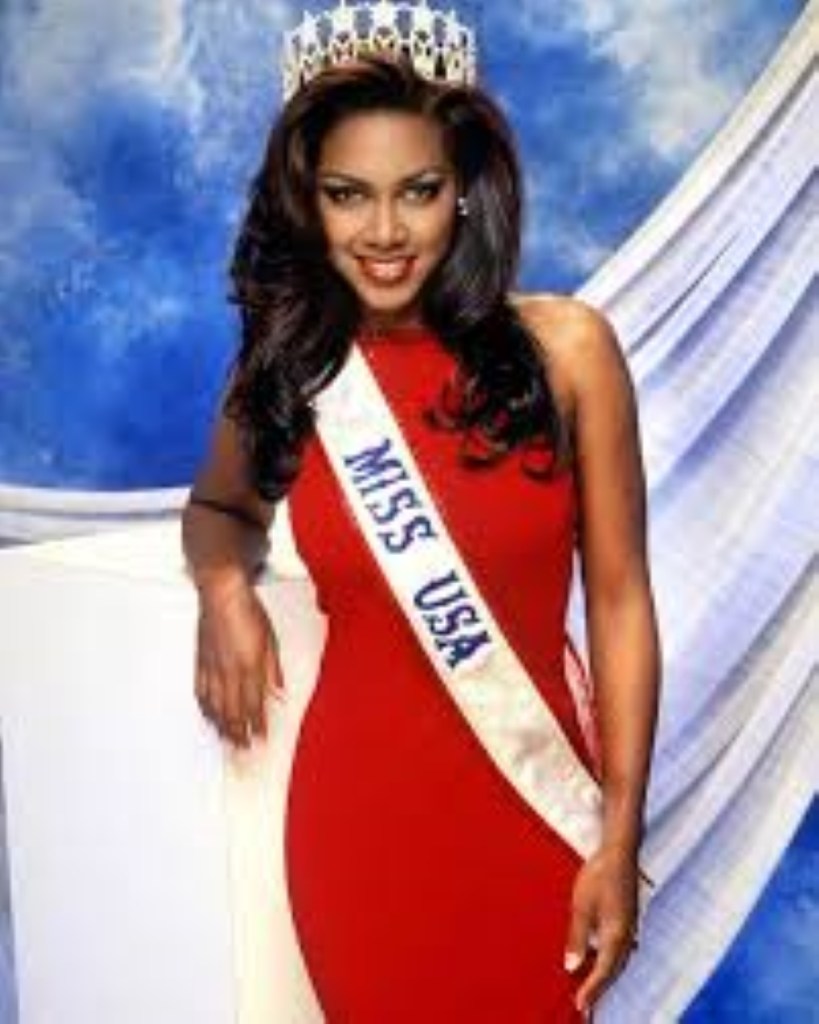
Here she is, Miss USA…

This photograph is the property of its respective owner.

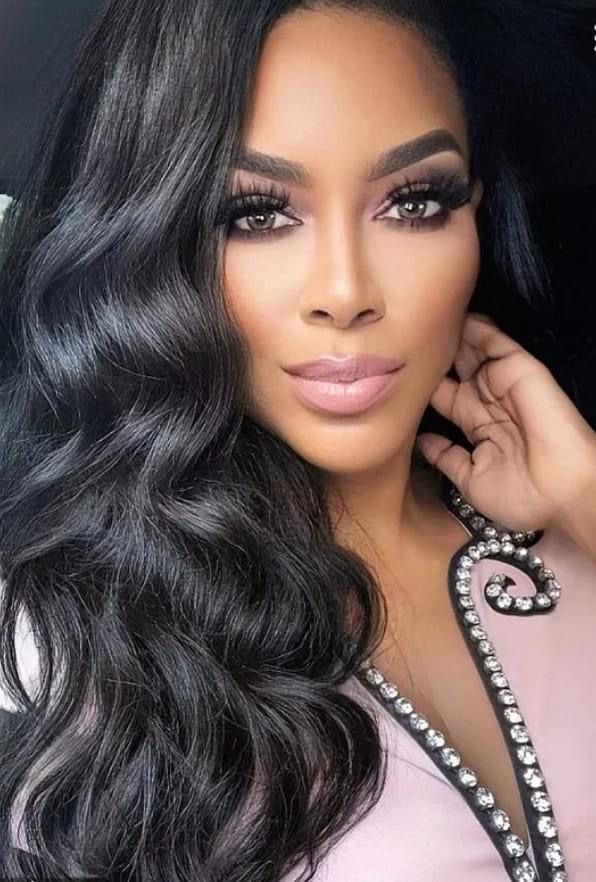
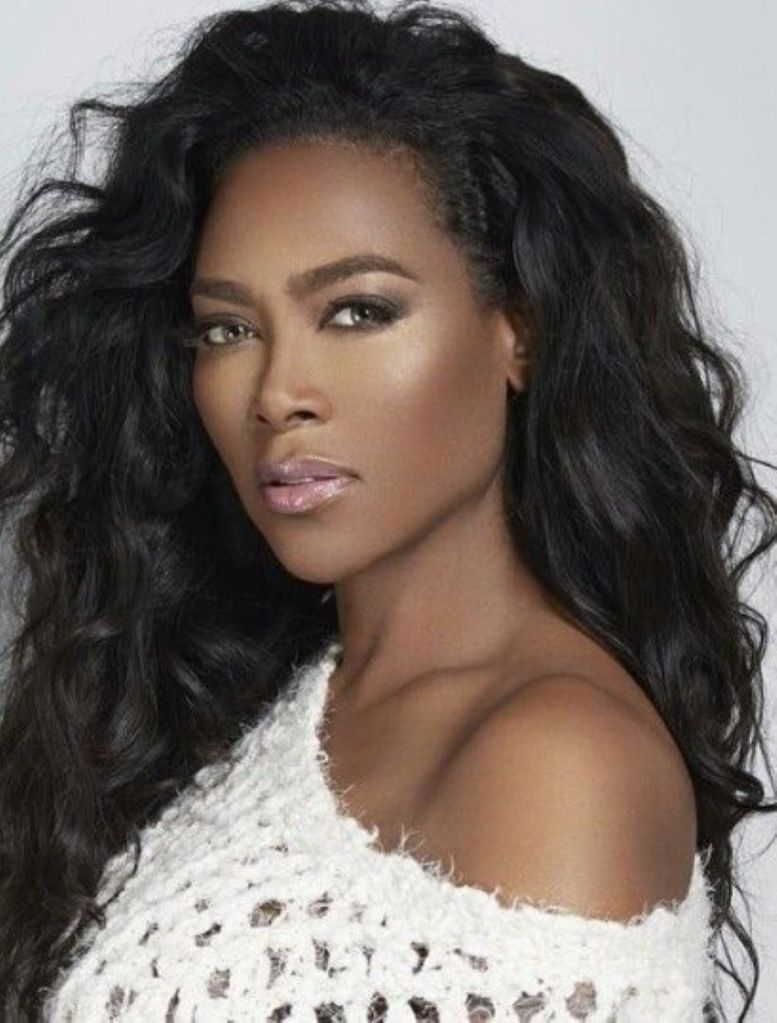
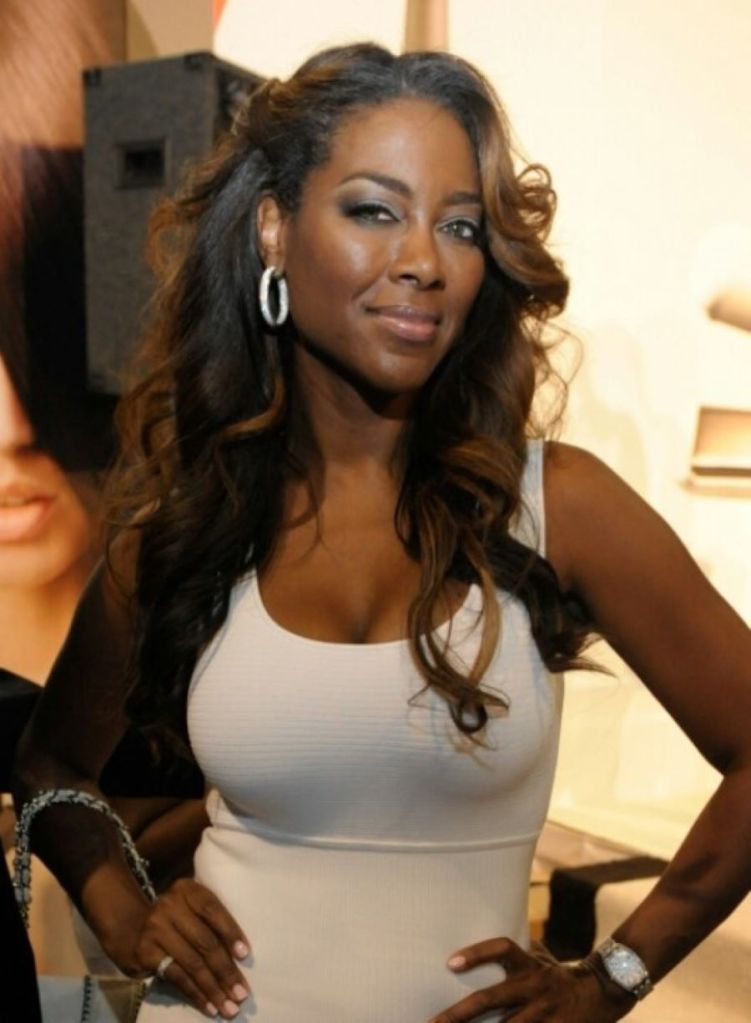
Kenya Moore is a striking vision of beauty whose deep chocolate skin and stunning facial features have captivated audiences for decades. Her almond-shaped hazel eyes, radiant smile, and elegant poise give her a commanding presence—the “wow factor” that makes her one of the most beautiful, recognizable, and celebrated Black celebrities in modern entertainment. Beyond her physical allure, Kenya combines intelligence, talent, and charisma, establishing herself as a multifaceted figure in television, film, and entrepreneurship. She uses her platform to elevate standards of excellence while embracing her African American heritage (Moore, 2010).

This photograph is the property of its respective owner.

Kenya Moore was born on January 24, 1971, in Detroit, Michigan. She is African American and has consistently celebrated her Black identity, often speaking about pride in her heritage and the beauty of her chocolate skin in an industry that has historically marginalized darker-skinned women. Her commitment to representing Black excellence has made her a role model for many young women navigating similar cultural and societal challenges.

This photograph is the property of its respective owner. No copyright infringement intended.

Her rise to prominence began in beauty pageants. In 1993, Kenya Moore won the Miss USA title, a historic achievement that showcased not only her beauty but also her poise, intelligence, and advocacy. This win opened doors in Hollywood and the entertainment industry, allowing her to transition into acting, modeling, and television hosting. She became a prominent figure, blending glamour with business acumen and cultural influence.

Kenya’s acting career includes appearances in films such as Waiting to Exhale (1995), Deliver Us from Eva (2003), and Johnson Family Vacation (2004). She has also appeared in numerous television shows, including recurring roles on series like Girlfriends and guest appearances on The Fresh Prince of Bel-Air. Kenya’s versatility as an actress, combined with her commanding presence, has allowed her to cross genres and media successfully.

In addition to acting, Kenya Moore is widely known for her reality television work. She has been a prominent cast member on The Real Housewives of Atlanta, where her wit, style, and personality have made her a fan favorite. Beyond reality TV, she has ventured into entrepreneurship, founding her own haircare line and engaging in philanthropic initiatives that empower women and young Black girls.

This photograph is the property of its respective owner.

Kenya Moore was married to Marc Daly, and the couple welcomed their first child in 2020. She frequently emphasizes the importance of family, balance, and resilience, sharing her journey as a mother and wife while continuing her career and advocacy work. Her personal life, while celebrated in public, also reflects her commitment to nurturing a grounded, loving family.

Throughout her career, Kenya Moore has received multiple accolades and recognition for her contributions to beauty, fashion, television, and entertainment. Her Miss USA title remains iconic, and she has leveraged her visibility to influence perceptions of Black beauty positively. Kenya’s career exemplifies how talent, perseverance, and authenticity can converge to create a lasting impact in Hollywood and beyond.

This photograph is the property of its respective owner.

Kenya Moore’s legacy is defined by more than her physical beauty. She represents Black excellence, resilience, and empowerment, demonstrating that one can achieve professional success while embracing and celebrating racial identity. Her influence as an actress, television personality, entrepreneur, and mother continues to inspire generations of Black women to pursue their ambitions unapologetically while maintaining dignity, poise, and self-love. All this makes her a true ebony doll.


References

  • Moore, K. (2010). Interviews and public statements on beauty, heritage, and career. Various media outlets.
  • IMDb. (n.d.). Kenya Moore Filmography. Retrieved from https://www.imdb.com/name/nm0600310/
  • Miss USA Organization. (n.d.). Kenya Moore – Miss USA 1993. Retrieved from https://www.missusa.com/history/1993
  • Erenberg, L. A. (2008). Black Women in Media: Representation, Influence, and Cultural Impact. University of Chicago Press.

The Ebony Dolls: Yvonne Okoro

This photograph is the property of its respective owners. No copyright infringement intended.

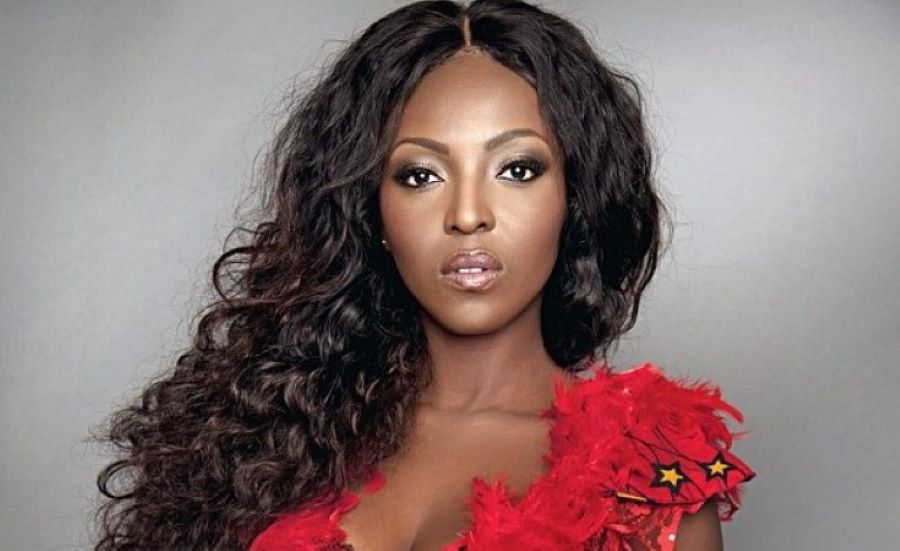
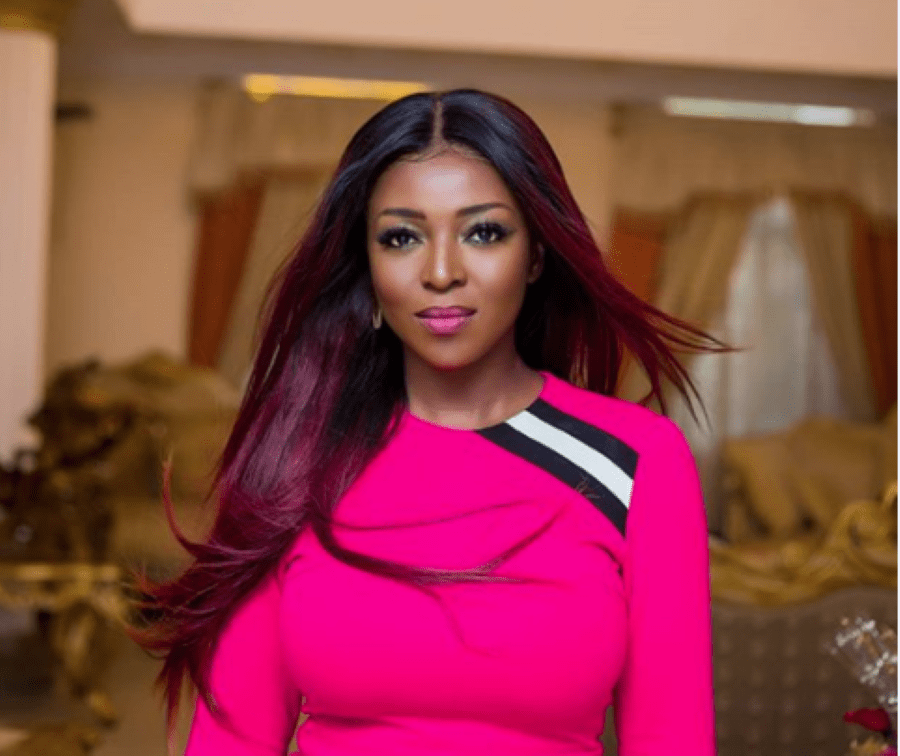
In the constellation of African cinema, Yvonne Okoro shines with a rare brilliance that fuses sophistication, intelligence, and undeniable beauty. With her flawless bronze-ebony complexion, luminous almond-shaped eyes, and refined features framed by a radiant smile, she is often admired for her doll-like allure—a blend of African richness and European elegance. Beyond her physical charm, Okoro’s poise, confidence, and versatility have positioned her among the most respected actresses in both Ghana’s Ghallywood and Nigeria’s Nollywood film industries. She is a modern African woman who balances glamour with grit, embodying excellence both on and off the screen.

Born Chinyere Yvonne Okoro on November 25, 1984, in Tamale, Ghana, she comes from a mixed heritage that beautifully reflects the unity of West Africa—her father is Nigerian (from Abia State, Igbo), and her mother is Ghanaian. This cultural blend enriched her worldview and artistic expression, allowing her to connect with audiences across two major entertainment industries. From a young age, Yvonne demonstrated a passion for performance, often participating in school plays and local talent showcases that revealed her natural charisma and expressiveness.

Yvonne Okoro’s educational journey is as impressive as her acting career. She attended Achimota Preparatory School and Lincoln Community School before earning her Bachelor of Arts in English and Linguistics from the University of Ghana, Legon. She later pursued further studies in France at the Université de Nantes, where she deepened her understanding of communication and modern languages—skills that would later enhance her presence in international cinema.

This photograph is the property of its respective owners. No copyright infringement intended.

Her acting debut came with a supporting role in the Ghanaian film Sticking to the Promise (2002). However, her major breakthrough came when she transitioned into Nollywood, starring in Beyoncé: The President’s Daughter (2006) alongside Nadia Buari and Van Vicker. Her beauty, eloquence, and natural on-screen chemistry with her co-stars captured the attention of filmmakers and audiences alike. Soon, she became a fixture in both Ghanaian and Nigerian film productions, a rare feat achieved by only a handful of actresses.

Over the years, Yvonne Okoro has built an impressive filmography, with notable works including The Game (2010), Contract (2012), Single Six (2011), Rebecca (2016), and Ghana Must Go (2016)—a romantic comedy she also produced. Her role in Contract, opposite Hlomla Dandala, earned her the Best Actress Award at the Ghana Movie Awards and an Africa Magic Viewers’ Choice Award (AMVCA) nomination. The film’s critical success established her as one of the leading ladies of African cinema, capable of blending humor, depth, and authenticity with magnetic beauty.

Yvonne Okoro’s contributions extend beyond acting; she is also a film producer and entrepreneur, using her platform to promote quality storytelling in Africa. Her production company, Desamour Company Limited, has produced several films that highlight African culture, love, and social issues. Through this, she has provided opportunities for emerging talents, especially women in film, fostering growth and creativity in the industry.

This photograph is the property of its respective owners. No copyright infringement intended.

Her grace and intelligence have also made her a favorite for brand endorsements, having represented beauty and fashion brands that mirror her elegance. She is frequently listed among the most beautiful and influential actresses in Africa, celebrated for her radiant skin, well-defined features, and polished style that bridges modern glamour and cultural authenticity.

In addition to her professional achievements, Yvonne Okoro’s personal life reflects humility and purpose. Despite her fame, she remains grounded and family-oriented, often crediting her parents for instilling discipline and confidence. Her close relationship with her siblings—particularly her sister, Roseline Okoro, who also ventured into acting—highlights her belief in family unity and shared success.

Throughout her career, Yvonne has earned numerous accolades, including the Best Actress of the Year (2010) at the Ghana Movie Awards, the Achievement Award at the City People Entertainment Awards in Nigeria, and recognition at the Africa International Film Festival (AFRIFF). Her dedication to excellence has made her one of the highest-paid actresses in Ghana and Nollywood, respected for both her beauty and her business acumen.

Ultimately, Yvonne Okoro represents the epitome of modern African femininity—educated, talented, and unapologetically elegant. Her soft-spoken confidence, luminous ebony glow, and striking intellect set her apart as not merely a star, but a symbol of pan-African pride and excellence. As one of the Ebony Dolls of African cinema, she continues to inspire young women to dream beyond boundaries while embracing their heritage and divine beauty.


References

  • Africa Magic. (2023). Yvonne Okoro: The Actress Who Bridges Ghana and Nollywood. MultiChoice Africa.
  • Ghana Web. (2022). Profile of Yvonne Okoro: From Beauty to Brilliance.
  • Pulse Ghana. (2023). Top 10 Highest-Paid Actresses in Ghana and Nigeria.
  • The Guardian Nigeria. (2021). Yvonne Okoro: The Pan-African Face of Modern Cinema.
  • IMDb. (2024). Yvonne Okoro Biography and Filmography.
  • Modern Ghana. (2022). Yvonne Okoro: The Glamorous Ghanaian-Nigerian Star Redefining African Film.