
Tag Archives: bible

Healthy Relationships

Healthy relationships are foundational to emotional stability, spiritual well-being, and societal strength. Whether romantic, familial, or platonic, relationships thrive when rooted in mutual respect, honesty, trust, and shared values. In a culture that often promotes temporary pleasure over lasting commitment, rediscovering the principles of covenant, self-control, and moral responsibility is essential for building relationships that endure.

From a psychological standpoint, research consistently shows that secure attachment, clear communication, and emotional regulation are central components of relationship health. The American Psychological Association emphasizes that strong relationships are associated with lower stress levels, improved mental health, and greater life satisfaction. Emotional safety allows individuals to express vulnerability without fear of rejection or manipulation.

Spiritually grounded relationships add another dimension of stability. Biblical teaching presents love not merely as emotion, but as discipline and action. In 1 Corinthians 13, love is described as patient, kind, not self-seeking, and not easily angered. These virtues align closely with modern therapeutic principles that encourage empathy, accountability, and restraint. Love that is governed by principle rather than impulse fosters long-term harmony.

A critical but often overlooked component of healthy romantic relationships is sexual discipline. Scripture consistently teaches that sexual intimacy is designed for marriage. The Bible states in Hebrews 13:4 that marriage is honorable and the marriage bed undefiled, while warning against sexual immorality. The Greek term often translated as fornication (porneia) refers broadly to sexual relations outside the covenant of marriage. Biblical wisdom frames sexual restraint not as repression, but as protection—guarding emotional, spiritual, and even physical health.

Empirical research supports the benefits of delayed sexual involvement within committed partnerships. Studies suggest that couples who delay sexual intimacy until deeper levels of commitment report higher relationship satisfaction, improved communication, and lower divorce rates. While correlation does not imply causation, the pattern indicates that intentional boundaries can strengthen emotional bonding before physical attachment complicates decision-making.

Fornication often introduces emotional complexity that can destabilize relationships. Oxytocin and vasopressin—hormones released during sexual activity—promote bonding. When sexual relationships occur outside commitment, individuals may form attachments that are not supported by shared values or long-term compatibility. This biological bonding mechanism can cloud judgment and prolong unhealthy relationships.

Healthy relationships also require shared moral frameworks. When both partners agree on expectations regarding faithfulness, boundaries, and long-term goals, conflict decreases. The prophet Amos asked, “Can two walk together, except they be agreed?” Agreement on spiritual and ethical standards strengthens unity and reduces confusion.

Communication is another cornerstone. Open dialogue about expectations, boundaries, and beliefs—including convictions about abstinence—builds trust. Avoiding fornication requires proactive conversation, mutual accountability, and practical safeguards. Boundaries are not signs of distrust; they are expressions of wisdom and intentionality.

Respect for one’s body and spirit is deeply connected to relationship health. In 1 Corinthians 6:18–20, believers are urged to flee sexual immorality, recognizing the body as a temple. This metaphor underscores dignity and stewardship. Viewing intimacy as sacred rather than casual reshapes behavior and elevates the seriousness of commitment.

Cultural messaging frequently contradicts these values. The media often portrays premarital sex as normal, consequence-free, and essential for compatibility. However, rising rates of relational dissatisfaction, sexually transmitted infections, and unplanned pregnancies reveal that cultural norms do not always produce stable outcomes. Countercultural commitment to chastity requires courage but can yield long-term stability.

Beyond sexual ethics, healthy relationships demand emotional maturity. This includes conflict resolution skills, active listening, and personal accountability. Blame-shifting and pride erode trust, while humility strengthens it. The ability to apologize sincerely and forgive generously reflects both psychological insight and spiritual depth.

Trust is cultivated through consistency. Words and actions must align. Faithfulness in small commitments builds confidence for larger ones. Betrayal, whether emotional or physical, fractures the foundation of intimacy and requires significant effort to repair.

Community support also enhances relationship health. Couples surrounded by mentors, faith communities, or supportive families often experience greater resilience. Shared worship, prayer, and spiritual disciplines reinforce unity and provide accountability structures that discourage destructive behaviors.

Self-control is frequently misunderstood as deprivation. In reality, discipline is empowerment. The fruit of the Spirit listed in Galatians 5 includes temperance, or self-control. Mastery over impulses fosters clarity, dignity, and strength. Abstaining from fornication before marriage can be viewed as an act of reverence—honoring both God and one’s future spouse.

Emotional intimacy should precede physical intimacy. Deep conversations, shared goals, spiritual study, and collaborative problem-solving establish relational infrastructure. When intimacy unfolds within a covenant rather than an impulse, it carries greater security and less fear of abandonment.

Healthy relationships also recognize individuality. Two whole individuals, each grounded in purpose and identity, come together not out of desperation but alignment. Codependency weakens relationships, while interdependence strengthens them.

Forgiveness is essential. Even within committed unions, mistakes occur. The willingness to extend grace mirrors divine mercy and supports healing. However, forgiveness does not eliminate the need for boundaries or accountability.

Ultimately, healthy relationships reflect covenant rather than convenience. They are built intentionally, protected through discipline, and sustained by love defined through action. Choosing to abstain from fornication is not merely a rule; it is a commitment to emotional clarity, spiritual alignment, and long-term stability.

In a society that often prioritizes instant gratification, cultivating restraint, mutual respect, and covenant faithfulness sets a different standard—one that aligns psychological wisdom with spiritual truth and promotes enduring relational health.


References

American Psychological Association. (2022). Close relationships and health.
Stanley, S. M., Rhoades, G. K., & Markman, H. J. (2010). Sliding versus deciding: Inertia and the premarital cohabitation effect. Family Relations, 59(3), 315–328.
World Health Organization. (2023). Sexual health and well-being overview.
The Holy Bible, King James Version. Hebrews 13:4; 1 Corinthians 6:18–20; Galatians 5:22–23.

Dilemma: External Righteousness VS Internal Righteousness

External righteousness refers to visible religious behavior—what people can see, measure, and often praise. It includes practices such as church attendance, public prayer, fasting, modest dress, and moral language. These actions are not inherently wrong; in fact, Scripture encourages godly behavior. However, the dilemma arises when righteousness becomes performative rather than transformative, focused more on appearance than on authentic spiritual change.

Internal righteousness, by contrast, speaks to the condition of the heart. It concerns motives, intentions, desires, and the inner posture of the soul toward God. This form of righteousness is invisible to human eyes but fully known to God. Internal righteousness is not about impressing others but about genuine repentance, humility, and obedience that flows from love rather than fear or social pressure.

Jesus directly addressed this tension in His rebukes of the Pharisees. They were meticulous in observing religious laws, yet their hearts were far from God. In Matthew 23:27 (KJV), Jesus compared them to “whited sepulchres,” beautiful on the outside but full of corruption within. This metaphor captures the essence of external righteousness: polished behavior masking internal decay.

The danger of external righteousness lies in self-deception. When individuals equate holiness with religious performance, they may believe they are spiritually healthy while remaining inwardly unchanged. This creates a false sense of security, where salvation is assumed based on actions rather than genuine faith and transformation.

Internal righteousness begins with repentance. Repentance is not merely apologizing for sin but a deep turning of the heart toward God. Psalm 51:10 (KJV) reflects this internal posture: “Create in me a clean heart, O God; and renew a right spirit within me.” The focus is not on outward correction alone, but on inner renewal.

One of the central theological tensions in Christianity is between justification and sanctification. Justification is the act of being declared righteous before God through faith, while sanctification is the ongoing process of being made righteous in character. External righteousness often skips sanctification and imitates holiness without spiritual substance.

The prophet Samuel articulated this principle when he told Saul, “The Lord looketh on the heart” (1 Samuel 16:7, KJV). God does not evaluate righteousness by surface behavior, status, or reputation. Divine judgment is rooted in the inner life, not public image.

External righteousness is also closely linked to religious pride. When righteousness is visible, it becomes comparable. People begin to measure themselves against others, producing spiritual arrogance. Luke 18:11–12 (KJV) shows the Pharisee boasting in prayer about his fasting and tithing, while the tax collector humbly sought mercy. Jesus affirmed the one with internal righteousness, not the one with external performance.

Internal righteousness produces fruit rather than performance. According to Galatians 5:22–23 (KJV), the fruit of the Spirit includes love, patience, gentleness, and self-control. These are not behaviors that can be easily staged; they emerge from a transformed heart and sustained relationship with God.

A major issue with external righteousness is that it often relies on fear—fear of judgment, fear of rejection, fear of hell. Internal righteousness, however, flows from love. As 1 John 4:18 (KJV) teaches, “Perfect love casteth out fear.” Obedience becomes relational rather than transactional.

Jesus emphasized internal righteousness in the Sermon on the Mount. He redefined sin not only as outward acts but as inward thoughts and intentions. Lust was equated with adultery, and hatred with murder (Matthew 5, KJV). This teaching dismantled the idea that righteousness is merely behavioral compliance.

External righteousness can exist without faith, but internal righteousness cannot. People may follow moral codes for social approval, cultural identity, or personal discipline. Yet without faith, these acts lack spiritual power. Hebrews 11:6 (KJV) states plainly that without faith it is impossible to please God.

Theologically, internal righteousness is rooted in regeneration—the spiritual rebirth described in John 3:3 (KJV). Jesus told Nicodemus that one must be “born again” to see the kingdom of God. This new birth is not behavioral reform but spiritual transformation from within.

Paul’s writings consistently emphasize internal righteousness. In Romans 7, he describes the struggle between outward law and inward sin, concluding that true deliverance comes through Christ, not through the law. The law can expose sin, but only the Spirit can change the heart.

External righteousness often leads to spiritual exhaustion. Maintaining a religious image requires constant effort, control, and self-monitoring. Internal righteousness, however, produces rest. Matthew 11:28 (KJV) invites believers to find rest in Christ, not in religious striving.

Another danger of external righteousness is hypocrisy. When inner desires contradict outer behavior, individuals live double lives. This creates cognitive dissonance and emotional fragmentation. Jesus condemned hypocrisy more than any other sin because it distorts truth and misrepresents God.

Internal righteousness produces integrity, meaning alignment between belief, desire, and action. Integrity does not mean perfection but sincerity. It reflects a heart that genuinely seeks God even while struggling with weakness. Proverbs 4:23 (KJV) affirms this by urging believers to guard the heart, for it shapes all of life.

Spiritually, external righteousness aligns with legalism, while internal righteousness aligns with grace. Legalism focuses on rule-keeping as a means of acceptance. Grace focuses on transformation as a response to acceptance. Ephesians 2:8–9 (KJV) makes clear that salvation is by grace, not by works.

Internal righteousness also reshapes identity. Instead of seeing oneself as “a good person trying to behave,” the believer becomes “a new creation in Christ” (2 Corinthians 5:17, KJV). Righteousness becomes a state of being, not a checklist of actions.

Psychologically, external righteousness is often driven by social validation, while internal righteousness is driven by spiritual conviction. One seeks applause; the other seeks alignment with God. This distinction explains why some people abandon faith when no one is watching—they were living for observers, not for God.

Ultimately, the dilemma between external and internal righteousness is the difference between religion and relationship. Religion emphasizes systems, rituals, and appearances. Relationship emphasizes intimacy, surrender, and transformation. God desires obedience, but He desires the heart first.

True righteousness is not what people see, but what God sees. External righteousness may impress crowds, but internal righteousness transforms lives. According to Jeremiah 17:10 (KJV), God searches the heart and tests the mind, rendering judgment not by performance but by truth within. The real question, therefore, is not how righteous we look—but how righteous we are when no one is watching.


References

Holy Bible (King James Version). (2017). Thomas Nelson.

Bonhoeffer, D. (1995). The cost of discipleship. Touchstone.

Grudem, W. (1994). Systematic theology: An introduction to biblical doctrine. Zondervan.

Piper, J. (2007). What Jesus demands from the world. Crossway.

Tozer, A. W. (1961). The knowledge of the holy. HarperCollins.

Wright, N. T. (2010). After you believe: Why Christian character matters. HarperOne.

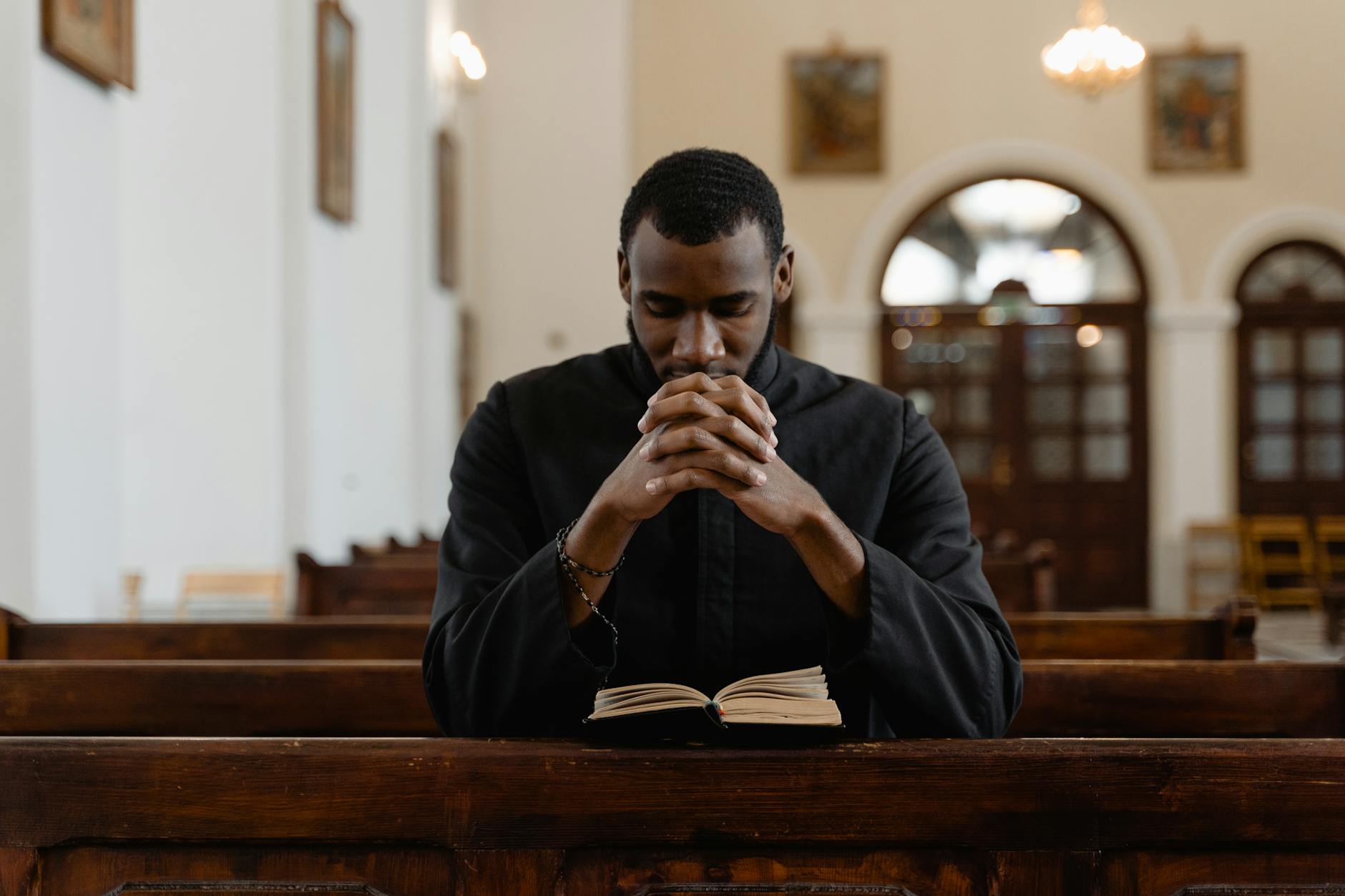
Men Who Pray: Reclaiming Spiritual Authority Through Faith.

Photo by MART PRODUCTION on Pexels.com

Prayer is a defining act that connects men to divine guidance, moral clarity, and spiritual authority. In a world where traditional masculine power is often measured by wealth, status, or physical prowess, prayer offers a transformative avenue for men to reclaim authentic authority rooted in humility, obedience, and purpose. Men Who Pray explores how spiritual disciplines restore leadership, integrity, and influence.

Historically, men in scripture exemplified spiritual authority through prayer. Figures such as Moses, David, and Solomon demonstrated that true leadership depends on communion with God rather than solely on human wisdom or strength (1 Samuel 12:23; 2 Chronicles 1:7–12, KJV). Prayer was both a tool and a testimony of divine empowerment.

Modern society often marginalizes men’s spiritual development. Cultural narratives emphasize independence and emotional stoicism, discouraging men from seeking divine counsel. This neglect undermines their ability to lead ethically in family, community, and professional spheres. Prayer serves as a corrective to these distortions, restoring alignment with God’s will.

Prayer cultivates humility, a hallmark of spiritual authority. Recognizing dependence on God fosters self-awareness and accountability. Men who pray acknowledge that ultimate power is God-given, not self-invented, allowing them to exercise influence responsibly and justly (Proverbs 3:5–6, KJV).

Intercessory prayer is a mechanism for communal leadership. Men who pray on behalf of families, communities, and nations demonstrate stewardship, empathy, and moral courage. Their spiritual advocacy nurtures social cohesion and inspires trust, reflecting the biblical mandate to shepherd and protect (James 5:16).

Consistent prayer shapes character and integrity. Daily spiritual discipline reinforces patience, self-control, and discernment. Men who commit to regular prayer internalize values that guide decisions, manage conflict, and uphold justice, strengthening both personal and societal moral frameworks.

Spiritual authority through prayer transcends hierarchical power. Unlike worldly dominance, divine authority is relational, ethical, and enduring. Men who cultivate this authority gain influence through respect, wisdom, and service, echoing the biblical principle that “the greatest among you shall be your servant” (Matthew 23:11, KJV).

Prayer combats moral and emotional vulnerability. Life’s pressures—temptation, stress, and adversity—challenge men’s integrity. Prayer provides guidance, fortification, and clarity, enabling men to navigate these trials without succumbing to destructive behaviors or compromised ethics (Psalm 5:11–12, KJV).

Mentorship and modeling are amplified through prayer. Men who prioritize spiritual practice serve as role models for younger generations, demonstrating that true strength emerges from faithfulness and obedience rather than aggression or coercion. This transmission of spiritual discipline preserves cultural and moral continuity.

Faith-driven leadership strengthens families. Fathers who pray cultivate homes grounded in moral clarity, spiritual resilience, and mutual respect. Children witness that authority is inseparable from accountability, compassion, and devotion, fostering well-rounded spiritual development (Ephesians 6:4, KJV).

Prayer also reinforces community engagement. Men who pray for societal welfare demonstrate active stewardship and ethical responsibility. This outward focus bridges personal spirituality with social action, reinforcing the biblical principle of love for neighbor and advocacy for justice (Micah 6:8, KJV).

The discipline of prayer enhances discernment. Through reflection and spiritual attunement, men learn to identify truth, avoid deception, and make decisions aligned with divine wisdom. This discernment underpins ethical leadership and strengthens relational trust.

Spiritual authority challenges destructive cultural norms of masculinity. Men who embrace prayer redefine strength, modeling courage, vulnerability, and ethical stewardship as complementary rather than opposing forces. This redefinition fosters healthier communities and family structures.

Prayer provides resilience against societal oppression. For men facing systemic injustice or marginalization, spiritual practice serves as a source of inner strength and hope. Biblical examples, such as Daniel and Joseph, demonstrate how prayer sustains moral integrity amidst adversity (Daniel 6:10, KJV).

Education on the power of prayer is essential. Teaching young men to integrate spiritual practice with daily life equips them to navigate modern challenges with integrity, purpose, and leadership grounded in faith rather than social approval or material gain.

Mental and emotional health benefit from prayer. Regular spiritual reflection fosters peace, emotional regulation, and clarity, countering stress, anger, or despair. Men who pray cultivate resilience, enabling them to lead without succumbing to personal turmoil (Philippians 4:6–7, KJV).

Corporate prayer—engaging with others in faith communities—strengthens relational bonds and collective purpose. Men who participate model collaboration, humility, and mutual support, reinforcing the social dimensions of spiritual authority.

Prayer aligns men with God’s covenant promises. Acknowledging divine guidance affirms identity, purpose, and destiny, anchoring men in a moral and spiritual framework that transcends temporal challenges (Jeremiah 29:11, KJV).

Consistency in prayer transforms character over time. Spiritual authority is not instantaneous but cultivated through persistent devotion, reflection, and obedience. Men who commit to this discipline demonstrate reliability, ethical fortitude, and lasting influence.

In conclusion, Men Who Pray illustrates that spiritual authority is reclaimed not through dominance, aggression, or societal expectation, but through prayer, humility, and faithful alignment with God. Men who embrace this path become builders of ethical families, communities, and legacies, embodying strength intertwined with spiritual wisdom and divine purpose.


References

The Holy Bible, King James Version. (n.d.). 1 Samuel 12:23; 2 Chronicles 1:7–12; Proverbs 3:5–6; James 5:16; Matthew 23:11; Psalm 5:11–12; Ephesians 6:4; Micah 6:8; Daniel 6:10; Philippians 4:6–7; Jeremiah 29:11. King James Bible Online. https://www.kingjamesbibleonline.org

Ferguson, R. A. (2019). The spiritual lives of African American men: Faith, family, and resilience. Routledge.

Pruett, K. (2017). Faithful fathers: The role of prayer and spirituality in fatherhood. Journal of Men’s Studies, 25(3), 310–326. https://doi.org/10.1177/1060826517720998

Watson, N. (2015). Masculinity and spirituality: Redefining strength through faith. Palgrave Macmillan.

An Introduction to Biblical Doctrine

Biblical doctrine refers to the organized teaching of the essential truths found in Scripture. The word doctrine simply means “teaching,” and in a biblical sense, it represents what God has revealed about Himself, humanity, sin, salvation, and righteous living. Doctrine is not meant to be abstract theology for scholars only, but practical truth meant to shape belief, character, and daily life.

At the center of biblical doctrine is the authority of Scripture. The Bible presents itself as divinely inspired and profitable for teaching, correction, and instruction in righteousness (2 Timothy 3:16, KJV). This establishes doctrine not as human opinion, but as divine revelation. Without Scripture as the foundation, doctrine becomes subjective and disconnected from God’s will.

One of the most foundational elements of biblical doctrine is the Law, particularly the Ten Commandments given to Moses. These commandments reveal God’s moral standard and define righteousness in practical terms. They address humanity’s relationship with God (the first four commandments) and humanity’s relationship with others (the remaining six), forming the ethical backbone of biblical faith (Exodus 20, KJV).

However, the commandments were never meant to function as a means of salvation. Rather, they expose sin and reveal humanity’s need for grace. Paul explains in Romans 3:20 (KJV) that by the law comes the knowledge of sin. The law diagnoses the condition, but it cannot cure it. This prepares the theological stage for the role of Jesus Christ.

Jesus did not abolish the commandments but fulfilled them. In Matthew 5:17 (KJV), He states clearly that He came not to destroy the law, but to fulfill it. This fulfillment was not merely legal but spiritual. Jesus internalized the law, moving righteousness from external obedience to internal transformation of the heart.

This internalization is most clearly seen in Jesus’ teachings known as the Beatitudes. Found in Matthew 5:3–12 (KJV), the Beatitudes describe the spiritual attitudes that characterize true followers of Christ: humility, meekness, mercy, purity of heart, hunger for righteousness, and peacemaking. Unlike the commandments, which are framed as prohibitions, the Beatitudes are framed as blessings.

The commandments define what righteousness looks like in action, while the Beatitudes define what righteousness looks like in spirit. The law says, “Do not murder,” but Jesus says anger in the heart is also sin. The law says, “Do not commit adultery,” but Jesus says lustful thoughts are equally condemnable (Matthew 5, KJV). This demonstrates that biblical doctrine is not about behavior management but heart transformation.

In biblical theology, Jesus is the embodiment of doctrine. He is not only the teacher of truth but the truth itself (John 14:6, KJV). Doctrine is therefore not merely a system of beliefs but a person-centered reality. To know doctrine is to know Christ, and to follow doctrine is to imitate His character.

The commandments reveal God’s holiness, while the Beatitudes reveal God’s nature. Together, they form a complete picture of biblical righteousness: external obedience grounded in internal humility. The law governs actions, while the Beatitudes govern attitudes. One addresses what we do; the other addresses who we are.

Biblical doctrine ultimately leads to transformation, not information. James warns that hearing the word without doing it produces self-deception (James 1:22, KJV). True doctrine produces repentance, obedience, love, and spiritual maturity. It is not designed to inflate knowledge, but to conform believers into the image of Christ.

In conclusion, biblical doctrine is the theological framework through which God reveals truth, defines righteousness, and restores humanity. The commandments establish moral law, while the Beatitudes establish spiritual character. Together, they show that God desires not only righteous behavior, but righteous hearts. Doctrine, therefore, is not about religion—it is about transformation into divine likeness.


References

Holy Bible (King James Version). (2017). Thomas Nelson.

Grudem, W. (1994). Systematic theology: An introduction to biblical doctrine. Zondervan.

Erickson, M. J. (2013). Christian theology (3rd ed.). Baker Academic.

Stott, J. (2012). The message of the Sermon on the Mount. InterVarsity Press.

Wright, N. T. (2010). After you believe: Why Christian character matters. HarperOne.

The Male Files: THE WORLD MUST KNOW YOU CHOSE HER.

Adore Her Publicly…

In a culture that increasingly normalizes ambiguity, emotional distance, and casual relationships, the idea that a man should publicly and boldly choose one woman stands as a countercultural principle. Yet biblically, masculinity is not defined by detachment or options, but by commitment, responsibility, and visible covenant. The world must know you chose her because love in Scripture is never meant to be hidden, half-hearted, or ambiguous.

From the beginning, God established that relationships were meant to be public and purposeful. In Genesis, when Adam received Eve, he did not treat her as a secret or an experiment but as his partner, declaring, “This is now bone of my bones, and flesh of my flesh” (Genesis 2:23, KJV). His declaration was vocal, visible, and definitive. Biblical love begins with recognition and ends with responsibility.

One of the most powerful aspects of masculinity in Scripture is covering. A man who chooses a woman is called to cover her emotionally, spiritually, socially, and physically. This covering is not silent. Ruth did not guess whether Boaz valued her—his actions were public, legal, and honorable. He redeemed her openly at the city gate, before witnesses, so there would be no confusion about his intentions (Ruth 4, KJV).

Modern masculinity often fears visibility. Men are taught to keep women in private spaces—hidden relationships, undefined situationships, and emotional secrecy. But biblical masculinity does the opposite. It declares, it protects, and it stands. Proverbs 18:22 (KJV) states, “Whoso findeth a wife findeth a good thing.” A man who finds something valuable does not conceal it—he secures it.

Jesus Himself modeled public choosing. He never loved in secret. He called His disciples by name, defended women publicly, and even allowed His relationship with the Church to be described as a marriage. In Ephesians 5:25 (KJV), men are commanded to love their wives “even as Christ also loved the church, and gave himself for it.” Christ’s love was visible, sacrificial, and undeniable.

When a man truly chooses a woman, he does not leave her guessing about her place. Emotional ambiguity is not romance—it is insecurity disguised as freedom. Biblically, love produces clarity. Song of Solomon 2:16 (KJV) declares, “My beloved is mine, and I am his.” Mutual belonging requires mutual visibility.

Psychologically, public commitment provides emotional safety. A woman who is openly chosen does not have to compete, perform, or question her worth. She knows where she stands. Secrecy breeds anxiety; visibility breeds security. God is not the author of confusion, especially in relationships (1 Corinthians 14:33, KJV).

Socially, the public admiration establishes boundaries. When a man clearly identifies his woman, it signals to other men, other women, and society that she is protected, valued, and not emotionally available. This is not ownership—it is honor. It is saying, “I stand with her, and I am accountable for how I treat her.”

Spiritually, choosing a woman reflects covenant, not convenience. Covenant is always public in Scripture. God’s covenants with Israel were witnessed, declared, and recorded. Marriage is not a private feeling—it is a spiritual contract. Malachi 2:14 (KJV) calls marriage a covenant before God, not merely a personal preference.

The man who hides a woman usually wants access without responsibility. But biblical manhood demands the opposite: responsibility before access. A man proves his intentions not through words in private, but through actions in public. If he truly values her, he is not ashamed to be seen with her, associated with her, and committed to her.

The public also shapes identity. A woman who is openly chosen is affirmed not only by her partner but by her environment. Community acknowledgment reinforces dignity. This is why weddings are public ceremonies, not secret agreements. Love is meant to be witnessed.

Ultimately, “the world must know you chose her” because love is not real until it is accountable. Hidden love is convenient. Public love is costly. But only costly love reflects biblical masculinity. A man does not become weaker by choosing one woman—he becomes anchored, focused, and aligned with divine order.

True masculinity is not about how many women desire you. It is about how well you protect, honor, and commit to the one you choose. And when a man chooses rightly, he does not whisper it—he lives it.


References

Holy Bible (King James Version). (2017). Thomas Nelson.

Cloud, H., & Townsend, J. (2009). Boundaries in marriage. Zondervan.

Eldredge, J. (2001). Wild at heart: Discovering the secret of a man’s soul. Thomas Nelson.

Keller, T. (2011). The meaning of marriage: Facing the complexities of commitment with the wisdom of God. Dutton.

Lewis, C. S. (1960). The four loves. Harcourt, Brace & World.

How to Meet a Prince: The Modern Woman’s Guide to Love, Position, and Purpose.

In a world shaped by fairytales, romance films, and social media fantasies, many women quietly ask the same timeless question: How can I meet a prince? The image of a crown, a palace, and a grand love story still captures the imagination. Yet beneath the fantasy lies a deeper truth — meeting a “prince” in the real world is less about chance encounters and more about position, proximity, and preparation.

The modern prince does not always wear a crown. More often, he wears responsibility, discipline, leadership, and purpose. He is a man of character, emotional intelligence, spiritual grounding, and vision. Royalty today is defined not by bloodline, but by how a man builds his life and treats others.

Before searching outward, a woman must first redefine what she is truly seeking. A prince is not simply a wealthy man or a handsome man. He is a man who leads with integrity, protects with strength, provides with wisdom, and loves with intention. Such men are rare, not because they do not exist, but because they are usually focused on building, not browsing.

This brings us to the first practical reality: you meet high-caliber men in high-caliber environments. Exceptional men are rarely found in random spaces or casual settings. They are most often encountered in intentional environments — professional conferences, academic circles, entrepreneurial networks, cultural events, wellness spaces, and purpose-driven communities. For women rooted in faith, strong churches, leadership ministries, and spiritual retreats remain some of the most powerful places to encounter men of depth and moral clarity.

Where you go determines who you meet.
Environment shapes destiny.

However, location alone is not enough. The more important question is not where the prince is? But rather, who is the woman he would choose?

High-level men are drawn to women who carry peace, emotional maturity, discipline, and grace. They seek beautiful women, yes — but also grounded, self-aware, and purposeful. They are attracted to femininity that is soft yet strong, nurturing yet discerning. Not women who chase attention, but women who know how to receive love without begging for it.

This is where fantasy often collapses. Many women are taught to seek a prince, but few are taught how to become a queen.

Esther: The Blueprint for Preparation

The story of Esther gives one of the most powerful spiritual metaphors for this principle. Before Esther ever stood before King Ahasuerus, she underwent twelve months of preparation — six months with oil of myrrh and six months with sweet fragrances and purification (Esther 2:12, KJV).

She did not rush into the king’s presence.
She did not demand access.
She did not rely on beauty alone.

She was refined. Processed. Anointed. Prepared.

And it was only after preparation that she was granted favor.

This is not just a romantic lesson — it is a spiritual one.

In the same way, Esther could not approach an earthly king without purification, we cannot casually approach the Most High without preparation of the heart, mind, and spirit. Scripture repeatedly teaches that God is holy, and those who seek Him must come with reverence, humility, and a transformed heart.

Just as Esther prepared her body and character before meeting the king, believers are called to prepare their souls before approaching God through repentance, prayer, fasting, discipline, and the renewing of the mind.

Esther’s preparation mirrors spiritual preparation:
She purified herself → We cleanse our hearts.
She was anointed → We seek the anointing of the Spirit.
She was instructed → We seek wisdom through Scripture.
She waited → We learn patience and submission to divine timing.

Esther teaches us that access requires alignment.

You do not rush into royalty.
You prepare for it.

And this applies not only to love — but to destiny, purpose, and divine intimacy.

Ruth and Boaz: The Blueprint for Divine Positioning

The story of Ruth and Boaz offers another profound blueprint for divine alignment in love. Ruth did not pursue Boaz with desperation or seduction; she pursued purpose, loyalty, and obedience to God. As a widowed foreign woman, she committed herself to Naomi, worked diligently in the fields, and remained humble in her circumstances.

It was through her labor and faithfulness that Boaz noticed her character before her beauty. Scripture describes Boaz as a “mighty man of wealth” (Ruth 2:1, KJV), yet what drew him to Ruth was her virtue, not her availability.

Their union teaches that kingdom relationships are not formed through chasing, but through faithfulness, service, and divine positioning. Ruth met Boaz not while searching for a husband, but while building a life of purpose — and God aligned her with a man who covered, honored, and redeemed her.

Social Positioning and Divine Alignment

High-level relationships are rarely built through pursuit. They are built through alignment. Socially, most meaningful connections happen through networks — mutual friends, professional circles, mentors, community leaders, and trusted introductions. Royal love stories are not usually random. They are relational, strategic, and organic.

Your circle determines your options.
Your standards determine your outcomes.

From a biblical perspective, this pattern is consistent. Rebekah was found while serving. Ruth was found while working on purpose. Esther was found after preparation and refinement. The Proverbs 31 woman was already established in character, wisdom, and discipline. None of these women was chasing men. They were positioned by God while becoming.

“He that findeth a wife findeth a good thing…” — Proverbs 18:22 (KJV)

The man finds.
The woman prepares.

This principle shifts everything. A woman does not hunt a prince. She cultivates herself into a queen — spiritually, emotionally, intellectually, and physically. She refines her boundaries, her environment, her habits, and her inner world. She becomes selective, not desperate. Peaceful, not performative. Grounded, not anxious.

And something remarkable happens when this shift occurs: royal men begin to recognize royal women.

Not because of crowns.
But because of the presence.
Energy.
Standards.
Self-respect.
And spiritual alignment.

The Real Secret Behind Meeting a Prince

The true secret behind meeting a prince is not luck, beauty, or manifestation rituals. It is positioning, preparation, and proximity. It is upgrading your environment, elevating your standards, nurturing your purpose, and aligning your life with peace and intention.

Here are 10 steps to preparing for a king — emotionally, spiritually, mentally, and practically ( real-life “king energy” meaning a high-value, God-centered man):

  1. Strengthen your relationship with God first
    A true king is led by God, not ego. If you want a Godly man, you must be a Godly woman. Develop prayer, fasting, scripture reading, and spiritual discipline (Matthew 6:33).
  2. Heal your past wounds
    Kings don’t want to compete with your trauma. Heal from heartbreak, abandonment, or daddy issues so you don’t project pain onto a healthy man.
  3. Cultivate inner beauty and character
    A king looks for peace, not chaos. Work on patience, kindness, humility, emotional intelligence, and self-control (Proverbs 31:30).
  4. Refine your femininity
    Femininity is not weakness—it’s grace, softness, wisdom, and emotional strength. Learn how to communicate gently, receive love, and inspire rather than dominate.
  5. Develop self-respect and boundaries
    No fornication, no entertaining bare minimum men, no accepting inconsistency. A queen does not beg—she discerns.
  6. Educate yourself and grow intellectually
    Kings enjoy stimulating conversations. Read, study, build skills, understand finances, culture, and the world.
  7. Become physically healthy and well-groomed
    Not perfection—discipline. Take care of your body, style yourself with elegance, hygiene, fitness, and confidence.
  8. Learn how to be a peaceful partner
    Not argumentative, not combative. Learn conflict resolution, emotional regulation, and how to be a safe place.
  9. Develop your purpose and calling
    A king wants a woman with vision, not dependency. Have goals, a mission, and a life before him.
  10. Prepare to serve, not just be served
    Royal relationships are about partnership. Learn nurturing, hospitality, loyalty, and how to pour into a man who pours into you.

“She openeth her mouth with wisdom; and in her tongue is the law of kindness.” — Proverbs 31:26 (KJV)

In short:
You don’t attract a prince by chasing one — you attract him by becoming a queen. 👑

Fairytales are not built on magic.
They are built on becoming.

And the moment a woman truly becomes a queen in mindset, lifestyle, and spirit, she no longer needs to search for a prince.

Just like Esther, she is prepared for favor.
Just like Ruth, she is positioned for redemption.

And favor always finds the prepared. 👑

.
He will recognize her. 👑

The Marriage Series: Being Faithful

Marriage is a sacred covenant ordained by God, uniting a man and a woman in spiritual, emotional, and physical harmony. Faithfulness is the cornerstone of this covenant. “Marriage is honourable in all, and the bed undefiled: but whoremongers and adulterers God will judge” (Hebrews 13:4, KJV). To honor God, spouses must cultivate loyalty, trust, and commitment, guarding their hearts and actions against betrayal.

1. Understand God’s Design for Marriage

Marriage reflects God’s covenant with His people. “Wherefore they are no more twain, but one flesh. What therefore God hath joined together, let not man put asunder” (Matthew 19:6, KJV). Faithfulness respects the divine design, keeping the union intact.

2. Emotional Loyalty

Faithfulness begins in the heart. Coveting or longing for others undermines marital trust. “Thou shalt not commit adultery” (Exodus 20:14, KJV) is as much about inner thoughts as physical acts. Emotional fidelity nurtures intimacy.

3. Physical Fidelity

Sexual faithfulness honors God and strengthens marital bonds. “Let marriage be held in honour among all, and let the bed be undefiled” (Hebrews 13:4, KJV). Temptation may arise, but discipline and accountability protect the covenant.

4. Guard Your Eyes

What one sees affects desire and loyalty. “I made a covenant with mine eyes; why then should I think upon a maid?” (Job 31:1, KJV). Avoid pornography, lustful imagery, and scenarios that can corrupt faithfulness.

5. Speak Honestly

Truthfulness fosters trust. “Wherefore putting away lying, speak every man truth with his neighbour” (Ephesians 4:25, KJV). Open communication about feelings, boundaries, and struggles prevents misunderstandings that could threaten loyalty.

6. Prioritize Your Spouse

Faithfulness requires prioritizing the marital relationship over external temptations or distractions. “Husbands, love your wives, even as Christ also loved the church, and gave himself for it” (Ephesians 5:25, KJV). Emotional and spiritual investment strengthens bonds.

7. Avoid Idleness and Temptation

Idle time can lead to compromise. “Watch and pray, that ye enter not into temptation” (Matthew 26:41, KJV). Staying engaged in shared activities and personal spiritual disciplines safeguards loyalty.

8. Accountability in Marriage

Confiding in spiritual mentors or prayer partners can protect faithfulness. “Iron sharpeneth iron; so a man sharpeneth the countenance of his friend” (Proverbs 27:17, KJV). External guidance reinforces commitment and perspective.

9. Forgive and Seek Forgiveness

Past mistakes, if unaddressed, can erode trust. “And be ye kind one to another, tenderhearted, forgiving one another, even as God for Christ’s sake hath forgiven you” (Ephesians 4:32, KJV). Healing strengthens faithfulness.

10. Resist Comparison

Do not envy other relationships or external attention. “Envy thou not the oppressor, and choose none of his ways” (Proverbs 3:31, KJV). Contentment in one’s spouse protects loyalty.

11. Invest in Intimacy

Faithfulness thrives in emotional, physical, and spiritual intimacy. “Let him kiss me with the kisses of his mouth: for thy love is better than wine” (Song of Solomon 1:2, KJV). Nurturing closeness reduces temptation for outside connection.

12. Honor Boundaries

Set clear boundaries with friends, coworkers, and acquaintances. “Abstain from all appearance of evil” (1 Thessalonians 5:22, KJV). Physical and social limits reinforce trust.

13. Be Spiritually Aligned

Shared devotion to God strengthens marital unity. “Two are better than one; because they have a good reward for their labour” (Ecclesiastes 4:9, KJV). Faithfulness grows in spiritually-centered partnerships.

14. Guard Against Pride

Pride can justify selfish behavior that harms trust. “Pride goeth before destruction, and an haughty spirit before a fall” (Proverbs 16:18, KJV). Humility encourages loyalty and accountability.

15. Celebrate Your Spouse

Acknowledging achievements and showing appreciation nurtures commitment. “Rejoice with them that do rejoice, and weep with them that weep” (Romans 12:15, KJV). Recognition fosters emotional closeness.

16. Protect Your Words

Words can build or destroy trust. “Death and life are in the power of the tongue: and they that love it shall eat the fruit thereof” (Proverbs 18:21, KJV). Avoid gossip, flirting, or inappropriate communication that compromises faithfulness.

17. Cultivate Patience

All relationships face challenges. “With all longsuffering and meekness, with patience, forbearing one another in love” (Ephesians 4:2, KJV). Faithfulness endures difficulties with grace.

18. Avoid Tempting Situations

Don’t place yourself in circumstances that compromise loyalty. “Flee fornication. Every sin that a man doeth is without the body; but he that committeth fornication sinneth against his own body” (1 Corinthians 6:18, KJV). Prudence protects covenant integrity.

19. Trust God’s Timing

Faithfulness requires patience and reliance on God’s plan. “Trust in the Lord with all thine heart; and lean not unto thine own understanding” (Proverbs 3:5, KJV). Godly patience sustains marital loyalty.

20. Lead and Follow in Love

Marriage is a partnership of mutual respect and submission. “Submitting yourselves one to another in the fear of God” (Ephesians 5:21, KJV). Faithfulness honors God, supports the covenant, and models enduring love.

Dilemma: Sanctification — The Forgotten Journey of Holiness.

“Be ye holy; for I am holy.” (1 Peter 1:16, KJV)

Sanctification is one of the most misunderstood and neglected doctrines in modern Christianity. While many believers are comfortable speaking about being “saved,” far fewer understand what it truly means to live a sanctified life. Sanctification is not a one-time event, nor is it merely a religious label. It is a continuous spiritual process through which a believer is separated from sin and progressively shaped into the likeness of Christ.

In biblical theology, sanctification refers to the act of being set apart for God’s purpose. The word itself comes from the Greek hagiasmos, meaning “to make holy” or “to consecrate.” This process begins at conversion but continues throughout the believer’s life as the Holy Spirit works internally to transform thoughts, desires, and behaviors.

Holiness and sanctification are inseparable. Holiness describes God’s nature—He is morally pure, completely righteous, and utterly separate from sin. Sanctification describes the believer’s journey toward reflecting that divine nature. God does not merely call His people to believe in Him; He calls them to become like Him in character, conduct, and devotion.

The dilemma is that many Christians profess salvation without practicing sanctification. There is a widespread belief that faith alone excuses moral discipline, repentance, or spiritual accountability. Yet Scripture makes it clear that salvation without transformation is a contradiction. Hebrews 12:14 declares, “Follow peace with all men, and holiness, without which no man shall see the Lord” (KJV).

Justification and sanctification are distinct but connected. Justification is a legal declaration—God declares the sinner righteous through faith in Christ. It happens instantly. Sanctification, however, is experiential—it is the daily process of becoming righteous in how one lives. Justification changes one’s status before God; sanctification changes one’s state of being.

Many believers remain spiritually stagnant because they confuse justification with sanctification. They assume that because they are forgiven, they no longer need to confront sin. However, Paul warns in Romans 6:1–2, “Shall we continue in sin, that grace may abound? God forbid” (KJV). Grace is not a license to remain unchanged; it is empowerment to live differently.

Real holiness is not performative religion. It is not about church attendance, religious vocabulary, or outward appearance. True holiness is internal alignment with God’s will. It is the quiet death of ego, pride, lust, bitterness, and rebellion. It is the crucifixion of self, as described in Galatians 2:20, “I am crucified with Christ: nevertheless I live; yet not I, but Christ liveth in me” (KJV).

Sanctification requires surrender, not just belief. It demands that the believer submit every area of life—relationships, finances, sexuality, ambition, and identity—to the authority of God. Jesus did not call people to admire Him; He called them to follow Him. Luke 9:23 states, “If any man will come after me, let him deny himself, and take up his cross daily, and follow me” (KJV).

The reason sanctification is feared is because it requires confrontation. It forces believers to face uncomfortable truths about their habits, attachments, and spiritual inconsistencies. To be sanctified is to allow God to disrupt comfort, expose hypocrisy, and dismantle false versions of faith.

This is why Scripture often associates sanctification with reverent fear. Fear of God is not terror, but holy awareness of His authority and judgment. “Work out your own salvation with fear and trembling” (Philippians 2:12, KJV) does not mean doubt salvation—it means treat your spiritual life with seriousness, humility, and urgency.

Many people claim holiness while living unrepentant lifestyles. This creates what could be called “cultural Christianity,” where faith is reduced to identity rather than obedience. Jesus warned about this in Matthew 7:21, “Not every one that saith unto me, Lord, Lord, shall enter into the kingdom of heaven; but he that doeth the will of my Father” (KJV).

Sanctification is the will of God. First Thessalonians 4:3 states plainly, “For this is the will of God, even your sanctification, that ye should abstain from fornication” (KJV). This verse alone dismantles the idea that holiness is optional. God’s desire is not merely to save people from hell, but to restore them into righteousness.

There is a difference between physical holiness and spiritual sanctification. Physical holiness refers to external conduct—how one dresses, speaks, eats, or behaves. These outward expressions matter, but they are incomplete without inward transformation. Spiritual sanctification deals with motives, thoughts, intentions, and desires.

A person can appear holy externally while remaining spiritually corrupt internally. Jesus rebuked this in Matthew 23:27, comparing religious leaders to “whited sepulchres,” clean on the outside but full of decay within. Sanctification must begin in the heart, or it becomes religious performance.

True sanctification produces spiritual fruit. Galatians 5:22–23 lists love, joy, peace, patience, kindness, goodness, faith, meekness, and self-control as evidence of the Spirit’s work. These are not learned behaviors; they are transformed dispositions.

Sanctification is not about perfection, but direction. It does not mean the believer never struggles, but that they no longer justify sin. The sanctified heart hates what God hates and desires what God desires. Repentance becomes a lifestyle, not an emergency response.

To be sanctified is to fall on one’s knees—not in shame, but in surrender. It is the recognition that human strength is insufficient and that divine transformation is necessary. Psalm 51:17 declares, “A broken and a contrite heart, O God, thou wilt not despise” (KJV).

Many ask, “Am I saved?” but a more revealing question is, “Am I being transformed?” Salvation that produces no spiritual hunger, no moral struggle, and no desire for righteousness is questionable at best. Second Corinthians 13:5 urges believers to “examine yourselves, whether ye be in the faith” (KJV).

Sanctification is the deeper journey after the altar call. It is what happens after the tears dry and the worship ends. It is the daily discipline of prayer, fasting, repentance, obedience, and spiritual warfare. It is the unseen labor of becoming holy in a world that rewards compromise.

The tragedy of modern Christianity is not lack of faith—it is lack of sanctification. Many want heaven without holiness, blessings without obedience, and identity without accountability. Yet Scripture makes it clear that the narrow path is not popular, comfortable, or culturally approved.

Sanctification is not about earning God’s love; it is about responding to it. Grace saves, but sanctification proves. Holiness is not the root of salvation—it is the fruit. And without that fruit, faith becomes a theological concept rather than a lived reality.

In the end, sanctification is the return to God’s original intention for humanity: to reflect His image, walk in His ways, and live in His presence. It is not about religious superiority—it is about spiritual surrender. To be sanctified is to say, with trembling and trust, “Not my will, but thine, be done” (Luke 22:42, KJV).


References

The Holy Bible, King James Version. (1769/2017). Cambridge Edition.

Grudem, W. (1994). Systematic Theology: An Introduction to Biblical Doctrine. Grand Rapids, MI: Zondervan.

Packer, J. I. (1990). Rediscovering Holiness. Wheaton, IL: Tyndale House.

Tozer, A. W. (1967). The Pursuit of God. Camp Hill, PA: Christian Publications.

Wesley, J. (1766/2010). A Plain Account of Christian Perfection. London: Epworth Press.

Bonhoeffer, D. (1937/1995). The Cost of Discipleship. New York, NY: Touchstone.

The Journey to God: Spiritual Habits that Transform Your Life.

Developing a deep and meaningful relationship with God requires intentionality, discipline, and spiritual focus. The Christian life is often described as a journey—a process of growth, transformation, and alignment with divine purpose (Philippians 3:12–14, KJV). Spiritual habits, when practiced consistently, form the foundation of this journey, shaping character, strengthening faith, and fostering intimacy with the Lord.

Prayer is one of the most fundamental habits for spiritual transformation. Through prayer, believers communicate with God, express gratitude, seek guidance, and intercede for others (1 Thessalonians 5:16–18). Consistent prayer cultivates dependence on God and trains the heart to align with His will. The practice of private, uninterrupted prayer develops patience, self-discipline, and sensitivity to the Holy Spirit (Matthew 6:6).

Scripture study is another essential habit. The Bible is described as “the sword of the Spirit” and a lamp to guide the believer’s path (Ephesians 6:17; Psalm 119:105). Daily engagement with Scripture allows the mind to be renewed (Romans 12:2), equips believers for spiritual battles, and teaches wisdom, discernment, and godly living. Meditating on God’s Word fosters internal transformation by embedding divine truth in thought patterns and behavior.

Worship and praise—both private and corporate—help believers experience God’s presence and cultivate gratitude. Worship is not limited to music but includes acts of obedience, service, and thanksgiving (Psalm 100:2; Colossians 3:16). Regular praise reorients the heart away from self-reliance and toward recognition of God’s sovereignty. It strengthens faith, increases joy, and fosters a sense of spiritual community.

Fasting and self-discipline play a critical role in focusing the believer’s spiritual energy. Fasting is a biblical practice for humbling oneself, seeking clarity, and deepening reliance on God (Matthew 4:1–2; Isaiah 58:6). By denying the flesh, believers cultivate spiritual sensitivity, patience, and resilience. Self-discipline in other areas, such as controlling speech, thoughts, and desires, reinforces obedience to God and encourages a Christ-centered life (1 Corinthians 9:27).

Service and acts of love are practical habits that transform the believer’s heart while honoring God. Serving others reflects Christ’s love and fulfills the command to love one’s neighbor (Matthew 22:37–39; James 1:27). Regular acts of service cultivate humility, empathy, and a broader perspective that transcends self-interest. Spiritual growth is inseparable from outward expressions of God’s love in action.

Fellowship and accountability with other believers are also crucial. The Bible emphasizes the importance of mutual encouragement and correction in spiritual communities (Hebrews 10:24–25; Proverbs 27:17). Consistent fellowship helps believers stay steadfast, gain wisdom, and receive guidance from mature Christians. Accountability encourages integrity, reduces spiritual drift, and reinforces the application of spiritual habits in daily life.

Finally, gratitude and reflection are habits that nurture a continuous awareness of God’s presence. Reflecting on His faithfulness and recording answered prayers or spiritual lessons can strengthen faith during trials and maintain perspective in success (1 Thessalonians 5:18; Psalm 77:11–12). Gratitude reorients the heart toward God and fosters joy, peace, and contentment.

In essence, the journey to God is not a single event but a lifelong process of intentional spiritual practice. By cultivating prayer, Scripture study, worship, fasting, service, fellowship, and gratitude, believers align their hearts and minds with God’s will. These spiritual habits transform character, deepen intimacy with the Lord, and empower the believer to navigate life’s challenges with wisdom, faith, and perseverance. The Christian journey is a sacred rhythm of learning, growing, and reflecting God’s love in every aspect of life.


References

Alexander, T. D. (2001). 1 & 2 Timothy and Titus: An exegetical and theological exposition of Holy Scripture. B&H Publishing.

Dever, M. (2012). A display of God’s glory: The beauty of living the gospel. Crossway.

Foster, R. (1998). Celebration of discipline: The path to spiritual growth. HarperCollins.

Keller, T. (2012). Every good endeavor: Connecting your work to God’s work. Dutton.

Willard, D. (2002). Renovation of the heart: Putting on the character of Christ. NavPress.

The Holy Bible, King James Version. (1611/2017). Cambridge University Press.

Dilemma: Blackness

Photo by Wavy_ revolution on Pexels.com

The concept of Blackness embodies both divine purpose and societal marginalization. This paper explores the paradoxical experience of Black people: exalted by God yet diminished by the world. Drawing from Scripture, African historical scholarship, and sociocultural studies, the paper examines how Black identity has been misrepresented, appropriated, and simultaneously celebrated. The discussion addresses historical, psychological, and spiritual dimensions of Blackness, highlighting resilience, chosenness, and divine destiny.


Blackness represents more than a physical characteristic; it is a spiritual, cultural, and historical identity that has shaped civilizations, contributed to global progress, and faced systemic oppression. Historically, African civilizations such as Kemet, Mali, and Ethiopia exemplified innovation, scholarship, and governance, demonstrating Black excellence prior to European colonial interventions (Diop, 1974). Yet, contemporary social structures often fail to acknowledge this legacy, producing tension between inherent value and societal perception. This tension can be conceptualized as the “dilemma of Blackness”: exalted by God, yet diminished by human systems.


Divine Identity and Chosenness

Scripture affirms the divine purpose inherent in Black identity. “Ye are a chosen generation, a royal priesthood” (1 Peter 2:9, KJV). The Bible situates African peoples as integral to God’s plan, as evidenced in references to Cush, Ethiopia, and Egypt (Psalm 68:31, KJV; Acts 8:27, KJV). This divine chosenness establishes a spiritual framework for resilience, dignity, and legacy.


Historical Context of Oppression

Despite divine design, Black people have endured centuries of systemic oppression. Enslavement, colonialism, and institutionalized racism sought to erase cultural memory, distort identity, and suppress potential (Muhammad, 2010; Du Bois, 1903). Enslaved Africans were denied literacy, property, and familial autonomy, yet preserved spiritual practices and communal solidarity, demonstrating both resistance and divine fidelity (Fanon, 1967).


Cultural Appropriation and Misrepresentation

A critical facet of the dilemma is the simultaneous appropriation and marginalization of Black culture. Music, fashion, language, and spirituality have been widely adopted by global societies while the creators remain undervalued (Asante, 1988; hooks, 1995). This contradiction reinforces the paradoxical experience of Black identity: celebrated superficially but denied authentic acknowledgment.


Psychological Dimensions

The internalization of societal bias has produced psychological tension, as theorized by Du Bois (1903) in the concept of double consciousness. Black individuals navigate dual realities: embracing inherent worth while confronting misperceptions and prejudice. Psychological resilience emerges through community, faith, and cultural continuity, facilitating coping mechanisms in the face of persistent marginalization.


The Role of Faith

Faith has historically anchored Black identity. Spirituality and religion provided a lens for understanding suffering and endurance. The enslaved relied on faith-based songs, prayers, and scripture to sustain hope (“Let my people go”, Exodus 5:1, KJV). Contemporary Black communities continue to rely on biblical principles to navigate systemic inequities, affirming God as the ultimate arbiter of worth (Isaiah 54:17, KJV).


Resistance and Resilience

Blackness embodies resilience. Resistance has manifested through education, civil rights activism, entrepreneurship, and cultural preservation (Bell, 1992; Woodson, 1933). This resilience aligns with prophetic scripture: “No weapon that is formed against thee shall prosper” (Isaiah 54:17, KJV). Through trials, Black communities have transformed oppression into cultural, intellectual, and spiritual advancement.


Identity and Modern Society

In contemporary contexts, Black identity is often commodified. Social media, entertainment, and consumer culture showcase Black excellence aesthetically while minimizing structural support or historical context (Karenga, 2002). This commodification reflects a persistent societal discomfort with authentic Black power, echoing historical patterns of marginalization.


The Dilemma of Recognition

The tension between visibility and invisibility characterizes the dilemma. Black contributions are integral to global progress, yet Black people remain underrepresented in leadership, academia, and economic control (Muhammad, 2010; Asante, 1988). Recognition is partial, conditional, and often superficial, reinforcing the ongoing paradox.


The Spiritual Imperative

Spirituality provides a counter-narrative to worldly diminishment. By centering God as the source of identity, Black people navigate societal misunderstanding with divine perspective. “The steps of a good man are ordered by the Lord” (Psalm 37:23, KJV). Blackness is reframed not as a social liability but as a divine blessing and instrument of purpose.


Conclusion

Blackness represents both a historical challenge and a divine calling. The dilemma lies not in identity but in the world’s inability to reconcile with it. Black people embody resilience, creativity, and divinely ordained worth. The reconciliation of societal misperception with spiritual truth is ongoing. As the world struggles to comprehend Black excellence, faith and historical awareness provide the foundation for self-definition, legacy, and empowerment.


References

Asante, M. K. (1988). Afrocentricity: The theory of social change. African American Images.

Bell, D. (1992). Faces at the bottom of the well: The permanence of racism. Basic Books.

Diop, C. A. (1974). The African origin of civilization: Myth or reality. Lawrence Hill Books.

Du Bois, W. E. B. (1903). The souls of Black folk. A. C. McClurg & Co.

Fanon, F. (1967). Black skin, white masks. Grove Press.

hooks, b. (1995). Killing rage: Ending racism. Henry Holt and Co.

Karenga, M. (2002). Introduction to Black studies (3rd ed.). University of Sankore Press.

Muhammad, K. G. (2010). The condemnation of Blackness: Race, crime, and the making of modern urban America. Harvard University Press.

Woodson, C. G. (1933). The mis-education of the Negro. Associated Publishers.

Holy Bible, King James Version (KJV).