
Tag Archives: bible

Girl Talk Series: The True Beauty of a Man

This photograph is the property of its respective owner. No copyright infringement intended.

The true beauty of a man is not found in the symmetry of his face, the cut of his jawline, the strength of his biceps, or the smoothness of his skin. While society may magnify physical attraction, Scripture and wisdom teach us that a man’s deepest beauty rests in his character, integrity, and the condition of his heart. What shines the most is not what can be seen in the mirror, but what is revealed through how he lives, speaks, leads, and loves.

Sisters, we live in a culture where masculinity is often reduced to appearance and bravado—or the ability to attract attention, wealth, or admiration. Yet outward beauty is fleeting and shallow when not supported by righteousness. True beauty is internal; it is spiritual; it is rooted in godly discipline and a submitted heart (1 Samuel 16:7, KJV).

A beautiful man is one who walks in humility, not arrogance. He does not need to boast of his accomplishments nor flex his strength to feel valued. Instead, he leans on the Most High, understanding that real power comes from wisdom, not ego (Proverbs 22:4, KJV). His humility allows him to serve, not demand; to uplift, not dominate.

Beauty in a man is found in his faithfulness—both to the Most High and to the people entrusted to him. His loyalty is not situational, nor does he waver when convenience calls. Faithfulness is a fruit of the Spirit and a mark of genuine righteousness (Galatians 5:22-23, KJV).

The beauty of a man is revealed in his self-control. A man who can rule his spirit is more powerful than one who conquers a city (Proverbs 16:32, KJV). His temper is governed, his mouth is disciplined, and his impulses are mastered. He knows how to pause before reacting; peace is his pursuit.

A beautiful man protects, not from a place of pride, but from a posture of love. He defends without aggression and shelters without suffocating. He understands that leadership is not tyranny, but stewardship; not privilege, but accountability (Ephesians 5:25, KJV).

A truly beautiful man carries wisdom. His decisions are not reckless or emotionally driven; they are thoughtful, prayerful, and guided by discernment. His counsel brings clarity, peace, and direction. Wisdom is his adornment, and it causes him to stand apart (Proverbs 4:5-8, KJV).

A beautiful man builds, not destroys. His words edify; his actions strengthen. He encourages growth in those around him and seeks to uplift others, knowing that insecurity tears down while confidence builds up (1 Thessalonians 5:11, KJV).

A man’s beauty is seen in his work ethic. He does not pursue laziness or shortcuts; he pursues excellence. Whether in his career, ministry, or family responsibilities, he commits himself wholeheartedly, honoring the Most High through his diligence (Colossians 3:23, KJV).

A beautiful man takes accountability. He does not shift blame or justify wrongdoing. Instead, he owns his mistakes, repents, and grows. Accountability is maturity, and maturity is attractive to the spirit and soul (Proverbs 28:13, KJV).

Compassion is a mark of a truly beautiful man. His heart is tender toward the suffering, the weak, and the overlooked. He does not harden himself to protect his ego; he remains gentle in strength, showing mercy and grace (Colossians 3:12, KJV).

A beautiful man is emotionally stable. He is not tossed by mood swings or consumed by prideful silence. Instead, he understands his emotions, processes them with wisdom, and communicates with patience and clarity (James 1:19, KJV).

Honesty clothes a beautiful man like fine linen. His words are true, and his intentions are pure. He does not deceive to gain advantage nor manipulate to preserve image. Truth is his foundation (Proverbs 12:22, KJV).

A beautiful man honors women—not for their beauty alone but for their spirit, purpose, and divine worth. He respects boundaries, protects purity, and recognizes that a woman is a precious daughter of the Most High (1 Peter 3:7, KJV).

His beauty is evident in his leadership. He leads with vision and purpose, not domination. He guides with love and example, not intimidation or fear (Joshua 1:9, KJV). Leadership to him means sacrifice, courage, and service.

A beautiful man knows how to love. His love is patient, gentle, and sacrificial. He mirrors Christ’s love—long-suffering, pure, and enduring (1 Corinthians 13:4-7, KJV). His love is not lust-driven or emotionally conditional; it is anchored in truth.

Prayer and relationship with God beautify a man beyond physical measure. A man who seeks the face of the Most High, who bows his head in humility and lifts his heart in worship, radiates a glory that surpasses physical attraction (Psalm 1:1-3, KJV).

The beauty of a man is shown in his purpose. He lives intentionally, understands his calling, and walks in divine direction. He is not swayed by trends or applause; his assignment is sacred, and he honors it (Proverbs 19:21, KJV).

A beautiful man is consistent. His loyalty does not shift with emotion or convenience. He remains steady—spiritually, emotionally, and morally. This steadiness provides safety and peace.

Finally, a beautiful man fears God. This holy reverence guides his decisions, shapes his values, and forms his identity (Proverbs 9:10, KJV). His fear of God is not bondage—it is wisdom, protection, and purity.

Dear sisters, the world may praise handsome faces, sculpted bodies, and charm, but heaven values purity, humility, discipline, and righteousness. When seeking connection, partnership, or admiration, do not settle for the superficial. Seek the beauty that lasts, that blesses, that leads to peace and purpose—a man whose heart is shaped by the Most High.


References

Holy Bible, King James Version.
Colossians 3:12; Colossians 3:23; Ephesians 5:25; Galatians 5:22-23; James 1:19; Joshua 1:9; 1 Peter 3:7; 1 Samuel 16:7; 1 Thessalonians 5:11; Proverbs 4:5-8; Proverbs 9:10; Proverbs 12:22; Proverbs 16:32; Proverbs 19:21; Proverbs 22:4; Proverbs 28:13; Psalm 1:1-3; 1 Corinthians 13:4-7.
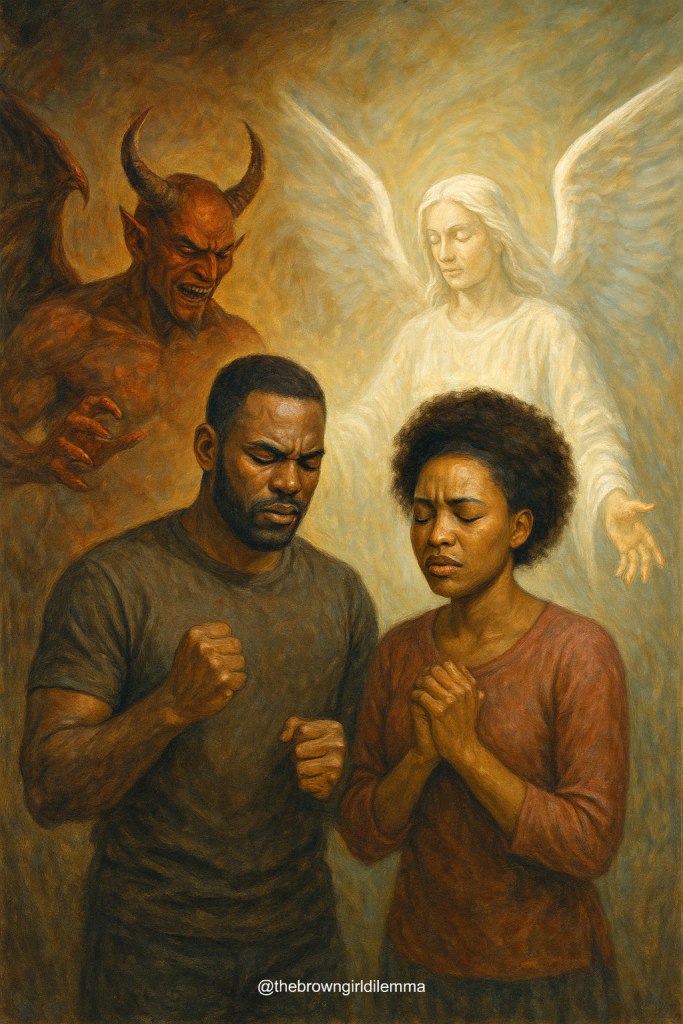

The Invisible War: The Battle of Good vs. Evil, Flesh vs. Spirit.

From the beginning of time, humanity has been caught in an invisible yet undeniable war—a conflict not fought with swords or guns, but within the soul. The Apostle Paul describes this battle vividly, saying, “For the flesh lusteth against the Spirit, and the Spirit against the flesh: and these are contrary the one to the other” (Galatians 5:17, KJV). This unseen war shapes the destiny of every believer, revealing the ongoing struggle between good and evil, righteousness and sin, obedience and rebellion.

The invisible war began in the heavens when Lucifer, once a radiant angel, allowed pride to corrupt his heart (Isaiah 14:12–15). His rebellion against God established the archetype of disobedience that would later infect humankind. When Adam and Eve succumbed to the serpent’s temptation in the Garden of Eden, the war was transferred from the celestial realm to the earthly one. Humanity became both the battleground and the prize.

The flesh represents the human inclination toward sin, self-gratification, and rebellion against divine order. It is not merely the body but the fallen nature inherited from Adam. Romans 8:7 declares, “Because the carnal mind is enmity against God: for it is not subject to the law of God.” This means the flesh naturally resists holiness, preferring what pleases the senses rather than what honors the Spirit.

In contrast, the Spirit represents the divine influence that draws believers toward righteousness. It is the breath of God that renews, convicts, and empowers the heart to overcome sin. When one is born again, the Spirit of Christ enters, creating a new nature. Yet, the old self still lingers, creating tension between who we were and who we are becoming.

The war between flesh and spirit is constant. Every thought, decision, and desire becomes a battlefield. Paul laments this struggle in Romans 7:19, “For the good that I would I do not: but the evil which I would not, that I do.” This internal war proves that spiritual warfare is not only external—against demons or dark forces—but deeply internal, waged within the human heart.

Good and evil are not equal powers; evil is parasitic, existing only by twisting what was once good. The flesh, therefore, is not evil by creation but by corruption. It has been infected by sin, making it resistant to the Spirit’s guidance. The victory over this corruption can only come through Christ, who declared, “The spirit indeed is willing, but the flesh is weak” (Matthew 26:41, KJV).

In the invisible war, Satan uses deception, distraction, and doubt as his weapons. He aims to separate man from his Creator through subtle temptations that appeal to pride and desire. Just as he tempted Eve with the fruit, he tempts believers today with the lust of the eyes, the lust of the flesh, and the pride of life (1 John 2:16).

The Spirit, however, equips believers with divine armor. Paul writes, “Put on the whole armour of God, that ye may be able to stand against the wiles of the devil” (Ephesians 6:11, KJV). This armor—truth, righteousness, faith, salvation, and the Word of God—protects the soul from spiritual defeat. Prayer is the believer’s communication line in this battle, strengthening faith and aligning the heart with the will of God.

Victory in this invisible war requires surrender. Ironically, the path to overcoming the flesh is not through human effort but divine submission. “Submit yourselves therefore to God. Resist the devil, and he will flee from you” (James 4:7, KJV). True strength lies in humility, allowing the Spirit to guide where pride once ruled.

The battleground extends beyond personal struggles; it permeates culture, society, and the world’s moral landscape. We see good and evil clash in politics, media, family structures, and education. The normalization of sin and rejection of holiness demonstrate how far humanity has drifted from spiritual sensitivity.

This conflict also manifests in relationships, where love is often replaced by lust, and commitment by convenience. The flesh seeks immediate satisfaction, while the Spirit calls for patience, purity, and self-control (Galatians 5:22–23). Each choice we make reveals which master we serve—the flesh or the Spirit.

In the life of a believer, spiritual discipline—fasting, prayer, and studying the Word—acts as training for this war. The more one feeds the Spirit, the weaker the flesh becomes. Conversely, neglecting spiritual growth allows the flesh to regain dominance, blurring moral clarity and quenching the Spirit’s voice.

The invisible war also exposes the reality that human beings cannot serve two masters (Matthew 6:24). The soul cannot walk in light and darkness simultaneously. Every day is a choice between obedience and rebellion, purity and corruption, truth and deception. The stakes are eternal, for the outcome of this war determines one’s spiritual destiny.

Christ’s sacrifice on the cross marked the decisive victory in this war. Through His death and resurrection, believers gained power over sin and death. “For sin shall not have dominion over you: for ye are not under the law, but under grace” (Romans 6:14, KJV). Yet, this victory must be continually enforced through faith and obedience.

Satan continues to wage guerrilla warfare against the redeemed, hoping to reclaim territory in the heart through guilt, fear, and temptation. But Scripture assures us, “Greater is he that is in you, than he that is in the world” (1 John 4:4, KJV). The Spirit within is stronger than the darkness without.

In the final analysis, this invisible war is not one of equal opposites but of divine sovereignty reclaiming what was lost. The Spirit’s ultimate victory will culminate when Christ returns to judge evil and establish eternal peace. Until then, believers must fight the good fight of faith (1 Timothy 6:12).

Each trial, temptation, and tear is part of this cosmic conflict, but it also becomes an opportunity for spiritual refinement. The fire of affliction burns away the impurities of the flesh, leaving the believer stronger and more radiant in spirit. The victory of good over evil begins within.

Thus, the invisible war is not hopeless—it is holy. It is the process through which God transforms weakness into strength and mortality into immortality. Though unseen, its effects are eternal. Every act of obedience, every prayer, and every moment of repentance contributes to the triumph of light over darkness.

As the Apostle Paul concludes, “Be not overcome of evil, but overcome evil with good” (Romans 12:21, KJV). The invisible war continues, but the end has already been written. Those who walk in the Spirit shall not fulfill the lust of the flesh but will rise victorious in the power of God’s love.

References

  • The Holy Bible, King James Version (KJV): Galatians 5:17; Romans 8:7; Romans 7:19; Matthew 26:41; Ephesians 6:11; James 4:7; 1 John 4:4; Romans 12:21.
  • Isaiah 14:12–15; Genesis 3; 1 John 2:16; Galatians 5:22–23; 1 Timothy 6:12; Matthew 6:24; Romans 6:14.

The Bible Series: Adam & Eve

In the beginning, the Most High created the heavens and the earth, forming man from the dust and breathing into him the breath of life. Adam was created in the image of God, molded from the rich soil of the earth (Genesis 2:7, KJV). The Hebrew word for “Adam” means ruddy or of the ground, symbolizing the deep brown hue of the fertile soil. This suggests that Adam and Eve were people of color, their skin reflecting the richness of the earth from which they were formed. Their beauty was natural and divine, representing the perfection of humanity before sin entered the world.

Eve, the first woman, was taken from Adam’s rib—a profound act showing unity, love, and equality. She was not made from his head to rule over him, nor from his feet to be trampled by him, but from his side to walk with him (Genesis 2:21–22, KJV). Together, they embodied harmony, holiness, and purity in the Garden of Eden, a place untouched by corruption. The Most High gave them dominion over creation and one simple command—to abstain from eating from the Tree of the Knowledge of Good and Evil (Genesis 2:16–17, KJV).

The serpent, more subtle than any beast of the field, entered the garden with deception in his heart. This serpent, influenced by Satan, twisted the Most High’s words, planting doubt and rebellion in Eve’s mind. He said, “Ye shall not surely die: For God doth know that in the day ye eat thereof, then your eyes shall be opened” (Genesis 3:4–5, KJV). This manipulation was the seed of sin—the desire to know more than what God allowed, the craving for power and independence from divine authority.

Eve, captivated by what she saw, took the fruit and ate it, then gave it to Adam. The sin was not merely eating forbidden fruit but disobedience—the rejection of divine wisdom for self-gratification. Their eyes were opened, but instead of enlightenment, they found shame. They realized their nakedness and tried to cover themselves with fig leaves, symbolizing the birth of human guilt and fear.

Sin entered the world that day, not through the act itself, but through the spirit of rebellion against the Most High. Humanity was no longer innocent. What was once pure became tainted by pride, lust, and self-will. Their decision shifted the course of history, separating humanity from God and introducing death, pain, and corruption into the world.

The trees in the garden carried deep symbolism. In ancient Hebraic understanding, trees often represented elders or sources of knowledge. To eat from a tree was to partake in wisdom or counsel. Adam and Eve’s choice to eat from the forbidden tree meant seeking counsel apart from the Most High. They exchanged divine guidance for worldly wisdom—a mistake humanity continues to repeat.

The serpent’s deception exposed his true nature as the accuser and destroyer. His goal was to corrupt the image of God within man by appealing to desire and pride. He presented sin as enlightenment and rebellion as freedom. But true freedom comes only through obedience to the Creator, not rebellion against Him.

Adam and Eve’s fall did not only affect them but all of creation. Romans 5:12 (KJV) explains, “Wherefore, as by one man sin entered into the world, and death by sin; and so death passed upon all men.” This marked the beginning of a fallen world where toil, sorrow, and mortality replaced peace and eternal life.

Before the fall, Adam and Eve enjoyed direct fellowship with the Most High. Afterward, they hid among the trees, afraid to face Him. This separation reflected the spiritual death that accompanied their physical existence. Humanity’s bond with God was broken, requiring redemption that would only be fulfilled through Yahusha HaMashiach (Jesus Christ).

Even in judgment, the Most High showed mercy. He clothed them with coats of skins (Genesis 3:21, KJV), foreshadowing the sacrificial system and the ultimate covering through the Messiah’s blood. Though they were cast out of Eden, His love and plan for restoration never ceased.

The color of Adam and Eve, formed from the dust, connects deeply to Africa—the cradle of civilization. The fertile brown and red soils of the East are a reflection of the divine artistry that shaped the first humans. Science and scripture align in this, confirming that humanity’s origins are rooted in a melanated people from the rich lands of the East.

The sin of Adam and Eve also represents the human struggle between spirit and flesh. Their story is not simply about fruit but about the nature of temptation—how desire can cloud obedience, and how curiosity can lead to destruction. The devil still whispers the same lie today: that fulfillment can be found apart from the Most High.

Eve’s vulnerability was not weakness; it was human emotion exploited by deception. Adam’s failure was not ignorance; it was willful disobedience. Together, they symbolize the dual nature of humanity—the intellect and the emotion—both capable of leading astray without divine order.

The Most High’s question, “Where art thou?” (Genesis 3:9, KJV), was not one of location but relationship. Humanity had drifted from its Creator. That question still echoes through time, calling each generation back to repentance and restoration.

From their disobedience came pain in childbirth, toil in labor, and conflict between good and evil. Yet from their lineage came redemption. Eve was called the mother of all living, and through her seed came the promise of salvation. The Most High declared that the seed of the woman would bruise the serpent’s head (Genesis 3:15, KJV), a prophecy fulfilled in Yahusha’s victory over sin and death.

The devil’s act in Eden was the beginning of his war against mankind, but the Most High’s love has always been greater than the serpent’s lies. Though humanity fell, grace arose. The story of Adam and Eve is a mirror to our own lives—every choice we make is a step toward obedience or rebellion.

Their sin introduced death, but it also introduced grace. Through their fall, the Most High revealed His mercy, teaching that even when we fail, He provides a way back. The curse became a path to redemption, and the garden became a memory of what will one day be restored.

Adam and Eve’s story teaches that sin always promises elevation but delivers shame. The devil’s lies have not changed—they simply wear modern faces. But the same God who clothed Adam and Eve still covers us today with His righteousness.

In the end, Adam and Eve’s journey is humanity’s story: created in divine image, tested by temptation, fallen by choice, yet redeemed by grace. The Most High looked beyond their sin and saw their potential for repentance. Through their story, we learn that though sin changed humanity, God’s love never changed. He still calls us to return, to walk in righteousness, and to live by the Spirit rather than the flesh. For in Him alone is true life restored.

Unseen Battles of the Heart

Photo by Designecologist on Pexels.com

There are wars we fight that no one can see—battles that rage within the quiet chambers of our hearts. Behind smiles and kind words, many carry invisible wounds, unspoken fears, and hidden struggles. The Most High sees beyond the outward appearance, peering into the soul where the true warfare lies. As 1 Samuel 16:7 (KJV) declares, “For the Lord seeth not as man seeth; for man looketh on the outward appearance, but the Lord looketh on the heart.” These unseen battles determine the direction of our lives and the condition of our faith.

When your spirit is aligned with the Most High, your life radiates peace, humility, and strength. A clean heart refuses to harbor bitterness, envy, or pride—it seeks forgiveness, purity, and love. A right spirit chooses to trust God even when life feels heavy, to walk in obedience even when it’s uncomfortable, and to extend kindness when it’s least deserved.

Every heart wrestles with its own demons—doubt, jealousy, pride, lust, bitterness, fear, or unforgiveness. These enemies cannot be fought with weapons of the flesh. They require spiritual discernment and the power of the Word. The Apostle Paul reminds us in 2 Corinthians 10:4 (KJV), “For the weapons of our warfare are not carnal, but mighty through God to the pulling down of strongholds.” The fight for purity, peace, and righteousness begins within.

Sometimes the hardest battle is between who we are and who we are called to be. The spirit desires to please the Most High, yet the flesh craves comfort and control. Romans 7:19 (KJV) captures this struggle: “For the good that I would I do not: but the evil which I would not, that I do.” The heart is the battlefield where obedience and rebellion constantly collide.

The unseen battles of the heart often reveal themselves through our attitudes and actions. A smile can hide resentment, generosity can mask guilt, and worship can coexist with worry. But the Most High desires truth in the inward parts (Psalm 51:6 KJV). He calls His children to surrender, not just their hands and lips, but their hearts.

These battles are exhausting because they are fought in silence. No one sees the tears shed in prayer, the sleepless nights of conviction, or the weight of spiritual warfare. Yet God sees. Psalm 34:18 (KJV) comforts us: “The Lord is nigh unto them that are of a broken heart; and saveth such as be of a contrite spirit.” He draws near to those who are fighting unseen wars with faith and humility.

There is power in acknowledging the battle. Many live in denial, wearing masks to hide their struggles. But healing begins with honesty. When David confessed his sin and pain to God, he found restoration. Psalm 51:10 (KJV) pleads, “Create in me a clean heart, O God; and renew a right spirit within me.” The battle becomes winnable when you stop hiding and start surrendering.

A heart unchecked can easily drift into darkness. Envy turns to hatred, pain turns to pride, and desire turns to idolatry. That is why Proverbs 4:23 (KJV) warns, “Keep thy heart with all diligence; for out of it are the issues of life.” The heart determines your destiny, and whoever or whatever controls it controls you.

Many of us battle between faith and fear. We trust God with our words but doubt Him in our thoughts. Fear whispers lies that contradict His promises. The remedy is faith rooted in the Word. Isaiah 26:3 (KJV) assures us, “Thou wilt keep him in perfect peace, whose mind is stayed on thee: because he trusteth in thee.” Peace is the victory prize of the heart that trusts fully in the Most High.

Some unseen battles come from wounds of the past. Old betrayals, family pain, or childhood trauma can shape our thoughts and emotions. The enemy uses these scars to create strongholds of shame. But the blood of Yahshua (Christ) heals and restores. Psalm 147:3 (KJV) declares, “He healeth the broken in heart, and bindeth up their wounds.” No pain is beyond the reach of divine healing.

The heart also battles against pride—a silent destroyer that blinds us to our need for God. Pride disguises itself as confidence but produces separation from the Spirit. Proverbs 16:18 (KJV) warns, “Pride goeth before destruction, and a haughty spirit before a fall.” A humble heart, on the other hand, invites divine favor and grace.

Temptation begins in the heart long before it manifests in action. James 1:14 (KJV) explains, “But every man is tempted, when he is drawn away of his own lust, and enticed.” The battle is won when we resist temptation at its root—when we choose holiness over impulse and prayer over pleasure.

Forgiveness is another unseen battle. Many hearts are heavy because of resentment. Unforgiveness becomes a prison that holds both the offender and the offended captive. Matthew 6:14 (KJV) teaches, “For if ye forgive men their trespasses, your heavenly Father will also forgive you.” To release others is to release yourself.

Loneliness and rejection are spiritual battles too. The heart aches for love, understanding, and acceptance. But God’s love is enough to fill every void. Romans 8:38–39 (KJV) assures us that nothing can separate us from His love. The woman or man who rests in that truth will never again be defined by abandonment.

There are also battles of identity—the war between who society says you are and who God says you are. The enemy tries to distort your purpose through confusion and comparison. But 1 Peter 2:9 (KJV) reminds you that you are “a chosen generation, a royal priesthood, an holy nation, a peculiar people.” Victory comes when you embrace your divine identity.

Bitterness, if left unchecked, poisons the heart. It begins as pain and evolves into spiritual decay. Hebrews 12:15 (KJV) warns, “Lest any root of bitterness springing up trouble you, and thereby many be defiled.” To win this battle, you must allow God to uproot what’s toxic and plant what’s pure.

Even believers who seem strong outwardly can be weary inwardly. The weight of spiritual responsibility, emotional pain, or unanswered prayers can create inner turmoil. But Galatians 6:9 (KJV) encourages, “And let us not be weary in well doing: for in due season we shall reap, if we faint not.” The Most High rewards the heart that keeps fighting.

Sometimes, the unseen battle is not about sin but about faithfulness. It’s the struggle to remain hopeful when the promise seems delayed, to keep loving when love is not returned, to keep praying when heaven feels silent. Yet faith grows stronger in these hidden wars. The Most High refines His soldiers in secret before revealing them in glory.

Victory begins when you let God take control of your heart. Psalm 139:23–24 (KJV) says, “Search me, O God, and know my heart: try me, and know my thoughts: And see if there be any wicked way in me, and lead me in the way everlasting.” The surrendered heart is the victorious heart.

The unseen battles of the heart are not fought alone. The Holy Spirit is your strength, your counselor, and your comforter. Through prayer, fasting, and faith, you gain divine power to overcome what flesh cannot. Philippians 4:7 (KJV) promises, “And the peace of God, which passeth all understanding, shall keep your hearts and minds through Christ Jesus.”

So, beloved, guard your heart. Lay your burdens before the Most High and allow Him to wage war on your behalf. Every battle you fight in secret, He sees. Every tear you shed in silence, He counts. The heart that belongs to God may be wounded, but it will never be defeated.

References
Holy Bible, King James Version. (1611). 1 Samuel 16:7; 2 Corinthians 10:4; Romans 7:19; Psalm 51:6, 10; Psalm 34:18; Proverbs 4:23; Isaiah 26:3; Psalm 147:3; Proverbs 16:18; James 1:14; Matthew 6:14; Romans 8:38–39; 1 Peter 2:9; Hebrews 12:15; Galatians 6:9; Psalm 139:23–24; Philippians 4:7.

Girl Talk Series: Inner Beauty

Ladies, let’s talk heart to heart. In a world that constantly tells us our worth depends on how we look—our makeup, our clothes, our shape—the Most High reminds us of a deeper truth. Real beauty isn’t about the eyelashes, the designer labels, or the perfect selfie. It’s about the heart. Don’t let your beauty be defined by your outer appearance, because the Most High doesn’t look at what man sees; He looks upon the heart (1 Samuel 16:7, KJV). What truly captivates Him is a spirit of humility, kindness, and faith. When your heart is pure, gentle, and anchored in love for the Most High, that’s when your beauty shines the brightest. True beauty is not in your reflection—it’s in your righteousness.

In a world saturated with vanity and self-promotion, many young women are taught that their worth lies in their appearance. The length of their hair, the contour of their face, or the brand of their clothing often becomes a measure of self-esteem. Yet, the Word of God teaches a higher standard of beauty—one not defined by outer adornment, but by a gentle and meek spirit that pleases the Most High. As 1 Peter 3:3–4 (KJV) reminds us, “Whose adorning let it not be that outward adorning of plaiting the hair, and of wearing of gold, or of putting on of apparel; but let it be the hidden man of the heart.”

True beauty radiates from within, and it cannot be purchased, enhanced, or filtered. It is the quiet confidence that comes from knowing who you are in the Most High. A godly woman understands that charm is deceitful and beauty is vain, but a woman who fears the Lord shall be praised (Proverbs 31:30 KJV). Her glow comes not from highlighter or foundation, but from the light of righteousness that rests upon her countenance.

Modesty in clothing reflects humility in spirit. It does not mean neglecting self-care or beauty—it means dressing in a way that honors God and commands respect. 1 Timothy 2:9–10 (KJV) advises, “In like manner also, that women adorn themselves in modest apparel, with shamefacedness and sobriety… but (which becometh women professing godliness) with good works.” The modest woman knows her worth and does not need to reveal her body to be validated.

When a woman uses her appearance or body to manipulate others, she forfeits her dignity and power. The world may applaud seduction, but the Most High values purity and wisdom. A godly woman walks with grace, not for attention but to glorify her Creator. She understands that her body is a temple of the Holy Spirit, not a billboard for lust (1 Corinthians 6:19–20 KJV).

Kindness is one of the rarest and most captivating forms of beauty. A gentle word, a forgiving heart, and a compassionate touch leave an impression that no physical trait can surpass. The woman who treats others with respect, who uplifts instead of tearing down, embodies the love of Christ. As Proverbs 31:26 (KJV) says, “She openeth her mouth with wisdom; and in her tongue is the law of kindness.”

Meekness, often misunderstood as weakness, is in fact a strength of divine proportion. It takes tremendous power to remain humble, patient, and composed in a world that glorifies arrogance and pride. The Most High delights in the meek, for “the meek shall inherit the earth” (Matthew 5:5 KJV). A woman of meekness carries herself with quiet authority, never needing to shout her worth.

A godly personality reflects the fruit of the Spirit. She is loving, joyful, peaceful, patient, gentle, good, faithful, and self-controlled (Galatians 5:22–23 KJV). These virtues do not come from external grooming but from a heart transformed by obedience and prayer. Her presence brings calm where there is chaos and light where there is darkness.

Being “beautiful” means more than having flawless skin or a perfect smile. It means having a soul that shines with gratitude and love for the Most High. The woman who seeks His face daily finds her reflection in His Word. Her beauty deepens as her relationship with Him grows, and her heart becomes a vessel of His glory.

Many in today’s culture confuse confidence with narcissism. But confidence rooted in vanity is hollow and fragile. A narcissistic spirit thrives on admiration and dominance, while a godly spirit thrives on service and humility. True confidence flows from knowing that one is fearfully and wonderfully made (Psalm 139:14 KJV) and that her identity is secure in God’s love.

Outer beauty fades with time, but character endures forever. The woman who cultivates righteousness and integrity will still shine when her youthful glow is gone. Her laughter, wisdom, and inner peace will make her radiant even in old age. She becomes a living testimony of Proverbs 16:31 (KJV): “The hoary head is a crown of glory, if it be found in the way of righteousness.”

It is not a sin to desire beauty or to take care of one’s appearance, but it becomes dangerous when vanity consumes the soul. The woman who obsesses over perfection forgets that she was already made in divine image. She must learn to look in the mirror and see herself as the Most High does—complete, valuable, and chosen.

When you love God with all your heart, your spirit reflects His presence. That love purifies your motives, softens your speech, and strengthens your actions. Even your eyes will reveal His peace, for “the light of the body is the eye” (Matthew 6:22 KJV). The love of the Most High is the truest beauty any woman can possess.

A beautiful heart forgives, prays, and uplifts others. It does not envy another woman’s looks or achievements. It celebrates sisterhood, recognizing that all women are created uniquely for a divine purpose. A woman of inner beauty knows her value without comparing herself to anyone else.

When a woman carries herself with dignity, she teaches others how to treat her. She does not compromise her morals for attention or approval. Her quiet strength earns respect because it is rooted in righteousness, not rebellion. She knows that the Most High crowns her with honor when she walks in truth.

Inner beauty blossoms in those who spend time in God’s Word. Meditation on Scripture nurtures peace, and prayer cultivates spiritual confidence. Over time, that spiritual discipline transforms the heart, radiating outward through posture, smile, and speech. Her beauty is no longer external—it becomes divine.

A loving personality can disarm even the hardest hearts. When you are gentle and patient with others, you become a reflection of Christ’s love. A woman with inner beauty knows that every word carries power; therefore, she speaks life, not gossip or cruelty. Her words bring healing where others bring harm.

The true mark of beauty is found in how you make others feel. If people leave your presence feeling valued and uplifted, then your beauty has fulfilled its divine purpose. The godly woman uses her influence to inspire, not to intimidate; to comfort, not to compete.

In a society obsessed with appearances, the woman of God stands out because her light comes from within. Her modesty is not repression—it is revelation of her worth. Her faith is her fragrance, her kindness her adornment, and her humility her crown.

True beauty is eternal because it reflects the eternal God. A woman who lives to please Him becomes more beautiful with every act of obedience and love. Her reflection in the mirror becomes less about her features and more about His glory shining through her.

Let every daughter of Zion remember: your worth is not in your clothing, body, or popularity, but in your relationship with the Most High. Walk in modesty, speak with kindness, love without condition, and let your inner light testify of His power. For when you love God first, everything about you—inside and out—becomes beautifully divine.

References
Holy Bible, King James Version. (1611). 1 Peter 3:3–4; Proverbs 31:26, 30; 1 Timothy 2:9–10; Matthew 5:5; Galatians 5:22–23; 1 Corinthians 6:19–20; Psalm 139:14; Proverbs 16:31; Matthew 6:22.

Esoteric Rituals: The Hidden Dangers of Demonic Energy.

Photo by Anete Lusina on Pexels.com

Esoteric rituals have long been shrouded in mystery, often cloaked in the language of “spiritual enlightenment” and “hidden knowledge.” Yet beneath this mystical façade lies a darker truth—one rooted in rebellion against the Most High. Throughout Scripture, God consistently warns His people against seeking knowledge and power from sources outside of His divine will (Deuteronomy 18:10–12, KJV). These secret practices, often disguised as paths to wisdom or spiritual elevation, lead instead to deception and destruction.

The word esoteric refers to knowledge intended for a select few, supposedly capable of understanding deeper truths. This notion reflects the very temptation presented to Eve in the Garden of Eden. The serpent promised secret wisdom apart from God, declaring, “Ye shall be as gods, knowing good and evil” (Genesis 3:5, KJV). Humanity has since been seduced by that same desire—to attain hidden power without submission to divine authority.

Modern esoteric rituals often involve symbols, chants, sigils, or invocations that claim to manipulate spiritual energies. Though practitioners describe these forces as “cosmic” or “universal,” the Bible reveals that such powers originate not from heaven but from the kingdom of darkness. The apostle Paul teaches that believers wrestle “not against flesh and blood, but against principalities, against powers, against the rulers of the darkness of this world” (Ephesians 6:12, KJV). To engage with these unseen energies is to open the door to demonic influence.

Many people mistakenly assume that occult or esoteric practices are harmless forms of self-discovery or artistic expression. Yet Paul warned that pagan sacrifices and rituals were offerings “to devils, and not to God” (1 Corinthians 10:20, KJV). Whether through astrology, numerology, divination, or modern “energy healing,” these acts represent attempts to access spiritual authority outside of the Creator’s ordained structure.

One of the greatest dangers of esoteric rituals is the deception of light. The enemy rarely appears as darkness; instead, he disguises himself “as an angel of light” (2 Corinthians 11:14, KJV). Satan’s strategy is to present evil as enlightenment, convincing seekers that they are gaining divine insight when they are, in truth, drifting further from God’s presence. This illusion is powerful, for it appeals to pride, curiosity, and the desire for control.

Some esoteric rituals even involve symbolic or literal blood sacrifices. Whether ancient or modern, the misuse of blood in any spiritual practice is forbidden by God, who declared, “For the life of the flesh is in the blood” (Leviticus 17:11, KJV). Such practices echo the detestable offerings made to false gods in the Old Testament, which provoked God’s wrath. Even rituals masked as “art” or “tradition” can carry the same demonic undertones if they mimic idolatrous customs.

Practices like astral projection, chanting, or invoking “spirit guides” may seem meditative or harmless but can lead to spiritual bondage. Biblical meditation focuses on the Word of God—“Thou shalt meditate therein day and night” (Joshua 1:8, KJV)—not on empty mantras or mystical journeys. When one’s mind becomes open to the spirit realm without divine covering, it becomes vulnerable to demonic intrusion.

The infiltration of esoteric philosophy into modern culture is subtle yet pervasive. Terms like “manifestation,” “vibrational energy,” and “universal consciousness” echo ancient pagan mysticism. These concepts promise empowerment but deny the sovereignty of the Almighty. Scripture states that “the wisdom of this world is foolishness with God” (1 Corinthians 3:19, KJV), reminding believers that true enlightenment comes only through His Spirit, not through mystical manipulation.

Symbols of the occult—such as pentagrams, all-seeing eyes, and serpentine imagery—are now glorified in music, fashion, and media. These symbols desensitize the public to demonic realities, normalizing rebellion under the guise of art. The prophet Isaiah warned, “Woe unto them that call evil good, and good evil” (Isaiah 5:20, KJV). What society celebrates as creativity often conceals spiritual corruption.

Astrological charts, moon rituals, and numerological predictions also constitute modern forms of divination. Such acts attempt to interpret or influence destiny without consulting God. Yet the Lord alone determines times and seasons (Acts 1:7, KJV). Every attempt to seize control of the future through mystical means mirrors Lucifer’s rebellion—the desire to exalt one’s will above God’s.

The heart of all esoteric practice is self-worship. Lucifer’s fall was driven by his ambition to be like the Most High (Isaiah 14:12–14, KJV). Similarly, modern esoteric movements promote the idea of becoming one’s own god, awakening “divine potential,” or mastering personal reality. This ideology directly opposes the humility and surrender that define biblical faith.

True illumination is not found through secret rites or hidden wisdom but through Christ, “the mystery which hath been hid from ages… which is Christ in you, the hope of glory” (Colossians 1:26–27, KJV). The believer’s access to divine truth does not require rituals, symbols, or incantations; it flows freely through the Holy Spirit and the Word of God.

While esoteric rituals may produce sensations, visions, or feelings of empowerment, these experiences are deceptive imitations. Just as Pharaoh’s magicians mimicked Moses’ miracles (Exodus 7:11–12, KJV), the devil can produce counterfeit spiritual manifestations. What feels like revelation may, in reality, be seduction.

Those who engage in occult or esoteric practices often suffer spiritual consequences—nightmares, anxiety, confusion, and depression. These are signs of spiritual bondage, not enlightenment. Deliverance comes only through repentance, prayer, and faith in Jesus Christ. The Lord promised that in His name, believers “shall cast out devils” (Mark 16:17, KJV).

Scripture commands believers to “abstain from all appearance of evil” (1 Thessalonians 5:22, KJV). Even indirect participation—through entertainment, fashion, or curiosity—can give the enemy a foothold. Spiritual warfare requires vigilance and discernment, for the enemy’s influence often hides beneath appealing aesthetics.

Paul urges believers to “put on the whole armour of God” (Ephesians 6:11, KJV). This includes the helmet of salvation, the sword of the Spirit, and the shield of faith—spiritual defenses against demonic deception. Esoteric ideologies may seem intellectual or empowering, but they are crafted to draw humanity away from divine truth.

True freedom cannot be found in rituals or symbols but only in Christ, who declared, “Ye shall know the truth, and the truth shall make you free” (John 8:32, KJV). Freedom in Christ liberates the soul from the need for hidden knowledge, revealing that all power and wisdom belong to God alone.

Those who have participated in esoteric rituals can find forgiveness and restoration through repentance. The blood of Jesus is sufficient to cleanse every sin and break every spiritual chain. “Submit yourselves therefore to God. Resist the devil, and he will flee from you” (James 4:7, KJV).

The Word of God warns that in the last days, many will turn to “seducing spirits, and doctrines of devils” (1 Timothy 4:1, KJV). The growing fascination with esoteric practices is a sign of this prophecy unfolding. Believers must therefore stand firm in truth, discerning light from darkness through the lens of Scripture.

Ultimately, esoteric rituals are not gateways to enlightenment but pathways to spiritual destruction. What the world calls “illumination” is, in reality, a counterfeit light that leads to darkness. The believer’s calling is to expose these works and walk in the true light of Christ, as the Scripture commands: “Have no fellowship with the unfruitful works of darkness, but rather reprove them” (Ephesians 5:11, KJV).


References
The Holy Bible, King James Version (KJV)
Deuteronomy 18:10–12
Genesis 3:5
Ephesians 6:12
1 Corinthians 10:20
2 Corinthians 11:14
Leviticus 17:11
Joshua 1:8
1 Corinthians 3:19
Isaiah 5:20; 14:12–14
Acts 1:7
Colossians 1:26–27
Exodus 7:11–12
Mark 16:17
1 Thessalonians 5:22
Ephesians 6:11
John 8:32
James 4:7
1 Timothy 4:1
Ephesians 5:11

Darkness Disguised as Light

Photo by Irina Iriser on Pexels.com

In the modern world, truth and deception often walk hand in hand, blurring the line between what is righteous and what is corrupt. The Bible forewarns of this spiritual camouflage in 2 Corinthians 11:14 (KJV): “And no marvel; for Satan himself is transformed into an angel of light.” This verse reveals that evil does not always appear as dark, sinister, or wicked—it often comes cloaked in beauty, charm, and enlightenment. Humanity’s greatest challenge is not always recognizing darkness, but discerning it when it presents itself as good.

The phrase “darkness disguised as light” describes the subtle, insidious nature of deception in today’s moral and spiritual landscape. False prophets, misleading ideologies, and distorted doctrines appeal to the senses, promising freedom, success, and self-love while leading souls away from God. Isaiah 5:20 (KJV) warns, “Woe unto them that call evil good, and good evil; that put darkness for light, and light for darkness.” This prophetic statement resonates profoundly in a culture that celebrates sin under the guise of empowerment and tolerance.

In psychology, this phenomenon aligns with cognitive dissonance—the mental conflict that occurs when one’s actions contradict moral beliefs. People convince themselves that wrong is right to maintain emotional comfort. Spiritually, this rationalization becomes dangerous, for it dulls the conscience and invites darkness to reign in the heart. Ephesians 5:11 (KJV) commands, “And have no fellowship with the unfruitful works of darkness, but rather reprove them.” Yet many would rather blend in with the world than stand apart in righteousness.

Sociologically, modern culture rewards appearance over authenticity. Platforms, fame, and influence often take precedence over truth. Individuals are encouraged to “follow their truth,” ignoring the reality that there is only one truth—God’s Word. John 17:17 (KJV) states, “Sanctify them through thy truth: thy word is truth.” When truth becomes subjective, light becomes whatever one desires it to be, and darkness hides behind the mask of personal liberty.

Darkness has become fashionable in entertainment, relationships, and spirituality. Many are drawn to occult symbols, self-idolatry, and moral relativism disguised as empowerment. The enemy has repackaged sin to appear harmless—astrology, crystals, or “energy cleansing” are presented as enlightenment rather than rebellion against God. Galatians 1:8 (KJV) cautions, “But though we, or an angel from heaven, preach any other gospel… let him be accursed.”

The deception of light without God’s source leads to false illumination. Just as artificial light cannot replace the sun, false doctrines cannot replace divine truth. Jesus declared in John 8:12 (KJV), “I am the light of the world: he that followeth me shall not walk in darkness.” Those who forsake this true light wander aimlessly through moral confusion, convinced they are awake while spiritually asleep.

Even within religious communities, false light thrives. Prosperity preaching and watered-down doctrine often emphasize material gain over spiritual growth. The gospel of self-promotion replaces the gospel of repentance. 2 Timothy 4:3–4 (KJV) says, “For the time will come when they will not endure sound doctrine… and they shall turn away their ears from the truth, and shall be turned unto fables.”

The danger of such deception lies in its appeal. Darkness doesn’t force itself upon humanity; it entices. It flatters the ego, promises freedom from judgment, and masks rebellion as progress. It whispers to the flesh, “You deserve happiness at any cost.” But Proverbs 14:12 (KJV) reminds us, “There is a way which seemeth right unto a man, but the end thereof are the ways of death.”

Spiritually, this deception creates counterfeit joy—pleasure without peace, success without salvation, and knowledge without wisdom. The serpent in Eden used the same tactic, offering Eve a form of enlightenment that ultimately led to death. The world’s false light follows this pattern, offering temporary satisfaction that ends in emptiness.

In psychology, individuals deceived by false light often experience moral numbness. This desensitization occurs when sin becomes normalized through repetition and cultural approval. When lust, pride, and greed are celebrated, the conscience becomes seared, as 1 Timothy 4:2 (KJV) describes: “Having their conscience seared with a hot iron.” The inability to distinguish right from wrong becomes a spiritual sickness.

Sociologically, entire generations are being shaped by media that glorifies rebellion and mocks holiness. The more “woke” society becomes, the further it drifts from biblical truth. What once was shameful is now celebrated. The light of moral conviction is dimmed by the fog of popular opinion. Romans 1:22 (KJV) declares, “Professing themselves to be wise, they became fools.”

Even humanitarian movements can become cloaked in false light when detached from God’s Word. Without divine truth, good intentions often morph into self-righteousness or chaos. Compassion without Christ can enable sin instead of healing it. Love without truth becomes permissiveness; truth without love becomes cruelty. The balance of both exists only in Christ.

Darkness also hides in personal sin disguised as justification. Lust is called passion; pride is renamed self-confidence; rebellion is labeled self-expression. This moral rebranding is how darkness disguises itself in the human heart. Jeremiah 17:9 (KJV) warns, “The heart is deceitful above all things, and desperately wicked: who can know it?” Only through spiritual discernment can one expose such deceit.

Discernment, therefore, is a gift and a defense. Hebrews 5:14 (KJV) teaches that mature believers “have their senses exercised to discern both good and evil.” In an age where everything is relative, discernment acts as a divine compass, guiding the believer through confusion. Without it, one becomes prey to deception.

Light without God is an illusion—glitter without gold, knowledge without wisdom, success without salvation. True light reveals, heals, and transforms. Darkness masquerading as light only blinds and corrupts. The believer must seek light that aligns with God’s Word, not merely what feels inspiring or progressive.

The church must reclaim its role as a beacon of truth. Too often, fear of offending culture leads to silence, compromise, or distortion of the gospel. But Matthew 5:14 (KJV) reminds believers, “Ye are the light of the world. A city that is set on a hill cannot be hid.” The church’s responsibility is to expose darkness, not coexist with it.

The battle between light and darkness is ancient, stretching from heaven’s rebellion to humanity’s fall. Yet Christ’s victory on the cross remains the eternal light that darkness cannot overcome. John 1:5 (KJV) proclaims, “And the light shineth in darkness; and the darkness comprehended it not.” The key is not to create light, but to reflect the true Light—Christ Himself.

The allure of false light will always exist until Christ’s return. Its influence will continue to manifest in ideologies, entertainment, and philosophies that promise progress but produce decay. The believer must remain vigilant, testing every spirit and holding fast to sound doctrine.

In conclusion, darkness disguised as light is the enemy’s most effective weapon—subtle, seductive, and spiritually deadly. It appeals to the senses while starving the soul. The only antidote is the Word of God, which serves as a lamp unto our feet and a light unto our path (Psalm 119:105 KJV).

True light never contradicts Scripture, glorifies sin, or replaces Christ. It reveals truth, convicts the heart, and draws us closer to holiness. In a world saturated with artificial illumination, believers must cling to the eternal light of Christ, for in Him alone there is no darkness at all (1 John 1:5 KJV).

References

  • The Holy Bible, King James Version (KJV)
  • 2 Corinthians 11:14; Isaiah 5:20; Ephesians 5:11; John 8:12; John 17:17; 2 Timothy 4:3–4; Proverbs 14:12; 1 Timothy 4:2; Romans 1:22; Jeremiah 17:9; Psalm 119:105; 1 John 1:5

ChatGPT can make mistakes. Check important info.

Girl Talk Series: Confidence in God — Seeking His Kingdom First.

Ladies, take a deep breath and be encouraged. I know life can test your strength, shake your faith, and make you question your worth. But I came to remind you today — you are not forgotten, you are not overlooked, and you are not unloved. God sees you exactly where you are, even in the moments when you feel unseen or unheard.

Sometimes we put so much energy into being strong for everyone else that we forget where our true strength comes from. But beloved, your confidence does not have to come from what you wear, who approves of you, or what you’ve accomplished. Your confidence comes from knowing who your Father is and trusting that He is in full control of your story.

When you seek God first, everything else begins to fall into divine order. When you trust Him through fasting, praying, and staying steadfast in His Word, your heart will find peace even in uncertainty. Remember the words of Matthew 6:33 (KJV):

“But seek ye first the kingdom of God, and his righteousness; and all these things shall be added unto you.”

Sis, you don’t have to chase what God has already prepared for you. The key is to keep your eyes on Him — not on fear, not on doubt, not on people. Be encouraged and walk in confidence knowing that your identity is rooted in Christ. He has chosen you, equipped you, and called you to rise above every storm with grace and faith.

So fix your crown, hold your head high, and trust that God’s plan for your life is still unfolding beautifully — even when you can’t see it yet. Stay strong, stay prayerful, and stay confident in God.

In a world that constantly tells women to find confidence in outer beauty, career success, or romantic validation, the Word of God calls us to anchor our confidence in something far greater — in Him. True confidence is not found in mirrors, money, or men; it is found in the quiet assurance that God’s promises never fail. When a woman places her identity and strength in God, she becomes unshakable — not because of her own power, but because she stands firmly on His.


Confidence Rooted in Faith, Not Feelings

Feelings shift with seasons, but faith stands when emotions falter. The world teaches self-confidence, but the Spirit teaches God-confidence. The difference is profound: self-confidence depends on human ability, while God-confidence depends on divine faithfulness.

Philippians 1:6 (KJV) reminds us:

“Being confident of this very thing, that he which hath begun a good work in you will perform it until the day of Jesus Christ.”

Confidence in God means trusting that He is not finished with you yet. Every trial, delay, and disappointment is shaping you for purpose. When your strength runs out, His grace steps in.


Seek His Kingdom First

The foundation of spiritual confidence begins with Matthew 6:33 (KJV):

“But seek ye first the kingdom of God, and his righteousness; and all these things shall be added unto you.”

Too often, we seek love, validation, or success before we seek God. But the order matters. When we prioritize His Kingdom — prayer, righteousness, service, and obedience — He aligns our desires with His divine timing. Seeking God first doesn’t mean ignoring your goals; it means allowing Him to guide your steps toward them.

Confidence comes from knowing that you don’t have to chase blessings — blessings will follow those who chase God.


Be Encouraged: God is Your Strength

When storms arise, remember that confidence in God is not denial of weakness but acknowledgment of His strength. Isaiah 40:31 (KJV) declares:

“But they that wait upon the Lord shall renew their strength; they shall mount up with wings as eagles; they shall run, and not be weary; and they shall walk, and not faint.”

Waiting is not weakness — it’s worship. The woman who waits on God is never stagnant; she’s being renewed. Every prayer whispered through tears, every moment spent in faith instead of fear, builds endurance and spiritual muscle.


Stay Strong in the Lord

Spiritual confidence is not arrogance; it is quiet resilience rooted in trust. The Apostle Paul reminds us in Ephesians 6:10 (KJV):

“Finally, my brethren, be strong in the Lord, and in the power of his might.”

To stay strong in the Lord means clothing yourself in His armor daily — truth, righteousness, faith, and prayer. The world may strip you of titles, relationships, or comfort, but nothing can remove what God placed within you. When your heart wavers, His Word stabilizes your soul.


Fast, Pray, and Stay Grounded in His Word

Confidence grows in consecration. Fasting and prayer disconnect you from worldly noise and reconnect you to divine clarity. Mark 9:29 (KJV) reminds us:

“This kind can come forth by nothing, but by prayer and fasting.”

When you fast, you feed your spirit and starve your doubt. When you pray, you strengthen your relationship with the One who holds your destiny. Through these disciplines, your confidence becomes unshakable — not because circumstances are perfect, but because your faith is anchored in the eternal.


Encouragement for the Waiting Season

Sometimes confidence in God means believing even when you don’t see results. Waiting is not punishment; it’s preparation. Habakkuk 2:3 (KJV) assures:

“For the vision is yet for an appointed time… though it tarry, wait for it; because it will surely come, it will not tarry.”

God’s delays are divine strategies. Your answered prayer may not come on your timeline, but it will come on His — and it will be worth every tear, every prayer, every test.


Confidence Through Trials

Trials do not destroy confidence; they reveal it. When your faith is tested, it proves your endurance. James 1:2-4 (KJV) encourages:

“My brethren, count it all joy when ye fall into divers temptations; knowing this, that the trying of your faith worketh patience.”

Confidence in God allows you to face the fire without fear. Like the three Hebrew boys in Daniel 3, your confidence must say, “Even if He doesn’t deliver me, I still won’t bow.” That is unbreakable trust.


Let Your Confidence Reflect His Glory

The confident woman of God walks with quiet authority. She doesn’t boast in herself but in the One who saved her. Her confidence is humility in motion — knowing her worth without pride, walking in faith without fear.

Jeremiah 17:7 (KJV) says:

“Blessed is the man that trusteth in the Lord, and whose hope the Lord is.”

Your confidence is not in how the world sees you but in how God designed you. You are fearfully and wonderfully made (Psalm 139:14), chosen (1 Peter 2:9), and loved with everlasting love (Jeremiah 31:3).


Encouraged to Persevere

Confidence in God means pressing forward when others would quit. The journey of faith is not always easy, but it is always worth it. Galatians 6:9 (KJV) reminds us:

“And let us not be weary in well doing: for in due season we shall reap, if we faint not.”

Be encouraged, woman of God. Stay consistent in prayer, steadfast in fasting, and strong in faith. You may be waiting, but you are not forgotten. You may be tested, but you are not defeated. Your confidence is your crown — and your faith is the key that unlocks divine reward.


Conclusion: Walk Boldly in Divine Confidence

Confidence in God is not a one-time decision; it’s a daily walk of faith. Every morning you rise, declare His promises over your life. Every challenge you face, remember who fights for you. When you seek His kingdom first, you’ll find that confidence isn’t something you must build — it’s something God plants within you.

Walk boldly, daughter of the King. Fast and pray. Stay strong and encouraged. Your confidence is not in what you can do, but in what God is already doing through you.


References

  • The Holy Bible, King James Version
  • Habakkuk 2:3; Matthew 6:33; Philippians 1:6; Isaiah 40:31; Ephesians 6:10; Mark 9:29; Jeremiah 17:7; Psalm 139:14; Galatians 6:9; 1 Corinthians 13:4–5; Proverbs 18:19; 1 Peter 2:9; Jeremiah 31:3

When the World Clouds Your Vision.

Photo by Pixabay on Pexels.com

Life is a journey filled with both clarity and confusion, faith and fear. Yet many people lose sight of their God-given purpose when the noise of the world clouds their spiritual vision. The distractions of society—materialism, social approval, and comparison—can blur the path that God has designed. Proverbs 29:18 (KJV) declares, “Where there is no vision, the people perish.” Vision, in this sense, is not just sight—it is divine direction, a sense of purpose anchored in God’s truth.

When one’s spiritual vision becomes cloudy, it often begins subtly. A person starts to compare their progress to others, questioning their worth and timing. They may once have walked confidently in their purpose, but the opinions of others and the pressures of life cause hesitation. Galatians 6:9 (KJV) encourages, “And let us not be weary in well doing: for in due season we shall reap, if we faint not.” The key is persistence, not perfection.

In the biblical sense, vision represents revelation—God’s guidance and insight for life. Proverbs 3:5–6 (KJV) reminds believers to “Trust in the Lord with all thine heart; and lean not unto thine own understanding. In all thy ways acknowledge him, and he shall direct thy paths.” When we trust our own sight, we may be deceived, but when we trust God’s leading, He brings clarity to confusion.

The world clouds vision through distraction. Technology, social media, and the constant pursuit of validation can blind individuals from the purpose within. The enemy uses distraction as a weapon, knowing that a believer who cannot focus cannot fulfill their calling. 1 Peter 5:8 (KJV) warns, “Be sober, be vigilant; because your adversary the devil, as a roaring lion, walketh about, seeking whom he may devour.” A clouded mind leaves room for spiritual attack.

When life becomes overwhelming, many seek advice from everyone except God. Yet, not every voice deserves access to your vision. Joseph in Genesis 37 shared his God-given dream with his brothers, and jealousy turned into betrayal. This teaches that discernment is crucial—sometimes, silence protects the promise. Matthew 7:6 (KJV) says, “Give not that which is holy unto the dogs, neither cast ye your pearls before swine.” Your vision is a pearl—keep it guarded.

One of the greatest lessons in maintaining clarity is learning the art of separation. Abraham was instructed to leave his country and kindred before God could fulfill His promise (Genesis 12:1 KJV). Likewise, sometimes we must detach from environments or people that dim our spiritual focus. Not every companion can go where God is leading you.

When the world clouds your vision, it often fills your heart with fear and doubt. The mind begins to question God’s plan, and faith weakens. But 2 Corinthians 5:7 (KJV) reminds us, “For we walk by faith, not by sight.” Walking by faith requires trusting God even when the road ahead looks foggy. Faith is spiritual vision—seeing the invisible and believing the impossible.

The enemy thrives in confusion. When your vision is unclear, he whispers lies to steer you off course. Yet God is not the author of confusion (1 Corinthians 14:33 KJV). His Spirit brings peace and order, even when life feels chaotic. Clarity comes from spending time in prayer, fasting, and meditating on the Word.

Many lose their vision because they focus more on their problems than on the promise. Peter began to sink when he took his eyes off Jesus and looked at the storm (Matthew 14:30 KJV). Likewise, focusing on life’s distractions causes spiritual sinking. To regain clarity, one must fix their gaze back on Christ, the author and finisher of our faith (Hebrews 12:2 KJV).

A clouded vision also distorts identity. When people forget who they are in Christ, they begin to define themselves by worldly standards—status, wealth, or appearance. Romans 12:2 (KJV) commands, “And be not conformed to this world: but be ye transformed by the renewing of your mind.” Renewing the mind clears the fog that the world creates.

Sometimes, God allows a season of blindness to strengthen faith. Saul’s temporary blindness in Acts 9 humbled him and led to transformation into Paul, the great apostle. In moments where you cannot see the way, trust that God is refining your spiritual sight. Temporary blindness may precede permanent clarity.

Overcoming a clouded vision requires intentionality. Set boundaries with people, habits, and distractions that pull you away from your divine purpose. Philippians 4:8 (KJV) gives a clear filter: think on things that are true, honest, just, pure, lovely, and of good report. Mental discipline cultivates spiritual clarity.

Prayer is the lens cleaner for the soul. When confusion sets in, seek God in stillness. Psalm 46:10 (KJV) declares, “Be still, and know that I am God.” Silence allows spiritual realignment. The more you quiet the world’s noise, the clearer God’s voice becomes.

Don’t share your every move with others, even well-meaning friends. People can unintentionally discourage your faith through doubt or jealousy. Nehemiah rebuilt Jerusalem’s wall while keeping his strategy private until the time was right (Nehemiah 2:12 KJV). Likewise, protect your plans until they manifest.

A clouded vision can lead to emotional exhaustion and spiritual burnout. When constantly seeking validation or comparing yourself to others, peace becomes elusive. Isaiah 26:3 (KJV) promises, “Thou wilt keep him in perfect peace, whose mind is stayed on thee: because he trusteth in thee.” Fix your focus on God, not worldly noise.

Worldly success often tempts believers to compromise vision for comfort. Yet Jesus said in Matthew 6:24 (KJV), “No man can serve two masters.” Divided vision leads to spiritual instability. To overcome this, one must choose eternal purpose over temporary pleasure.

The light of God cuts through worldly fog. Psalm 119:105 (KJV) proclaims, “Thy word is a lamp unto my feet, and a light unto my path.” The Bible acts as a spiritual compass, guiding through confusion and restoring direction. Daily devotion builds vision through divine perspective.

To overcome the world’s clouding influence, believers must learn to walk in obedience even when clarity feels distant. Faith grows in uncertainty. The more one trusts God through dark seasons, the sharper their spiritual sight becomes when the light returns.

In conclusion, when the world clouds your vision, return to the source of all clarity—God’s Word. Seek Him in prayer, guard your vision from the opinions of others, and trust the process of divine timing. Proverbs 16:9 (KJV) assures, “A man’s heart deviseth his way: but the Lord directeth his steps.” True clarity is not about seeing everything ahead—it’s about trusting the One who sees it all.

References

  • The Holy Bible, King James Version (KJV)
  • Proverbs 29:18; Proverbs 3:5–6; Galatians 6:9; 1 Peter 5:8; Genesis 37; Matthew 7:6; Genesis 12:1; 2 Corinthians 5:7; 1 Corinthians 14:33; Matthew 14:30; Hebrews 12:2; Romans 12:2; Acts 9; Philippians 4:8; Psalm 46:10; Nehemiah 2:12; Isaiah 26:3; Matthew 6:24; Psalm 119:105; Proverbs 16:9.

The Dating Series: Situationship – What Is It?

Photo by Viktoria Slowikowska on Pexels.com

The Rise of the Situationship
In the age of blurred lines and emotional ambiguity, the term situationship has emerged to describe relationships that exist somewhere between friendship and romance—often without commitment, covenant, or clarity. This modern phenomenon is rooted in confusion, convenience, and lust, reflecting a society increasingly detached from biblical values. A situationship allows emotional and physical access without the accountability of love or marriage. The Bible warns of such instability, declaring, “A double minded man is unstable in all his ways” (James 1:8, KJV). In essence, a situationship is a counterfeit form of intimacy that denies the order and holiness God designed for relationships.


The Definition and Nature of a Situationship
A situationship is an undefined, non-committed romantic connection where both individuals share emotional and often sexual intimacy, yet avoid labeling their bond. Unlike courtship or even dating, it lacks direction and purpose. The participants may act like a couple—spending time together, sharing affection, or even engaging in sexual activity—but without any long-term promise or responsibility. It thrives in emotional limbo, providing temporary satisfaction at the expense of spiritual and psychological health.


Historical Context: From Courtship to Confusion
Historically, relationships were centered around family, faith, and future. Courtship served as the means by which two people discerned compatibility under God’s guidance. However, as society secularized through the 20th century, the rise of casual dating and the sexual revolution of the 1960s eroded the sanctity of marriage. By the 21st century, with the growth of hookup culture and online dating, the situationship became normalized—a reflection of a generation that wants intimacy without covenant. What was once sacred has now become superficial.


Psychological Foundations of Situationships
Psychologically, situationships appeal to those struggling with emotional insecurity, fear of rejection, or avoidance of commitment. According to attachment theory, individuals with avoidant attachment styles prefer control and independence, often resisting deep emotional bonds. On the other hand, anxiously attached individuals may cling to these undefined connections, hoping they evolve into something meaningful. This dynamic fosters anxiety, confusion, and dependency—mirroring the instability that arises when love is pursued without spiritual foundation.


Sociological Perspective: The Culture of Casualness
Sociologically, the situationship is a product of postmodern individualism and digital culture. Society now values autonomy and instant gratification over loyalty and responsibility. Social media, dating apps, and entertainment glamorize “freedom” in love, encouraging people to sample relationships rather than commit. This trend aligns with what sociologists call liquid love—a term coined by Zygmunt Bauman to describe modern relationships that are fluid, temporary, and easily disposable. The result is emotional fragmentation and moral decay.


What Situationships Are Founded On
At their core, situationships are founded on selfish desire and fear. The fear of loneliness keeps people tied to unstable connections, while selfishness drives them to take without giving. It’s not about covenant but convenience; not about love, but lust. The Bible describes this human tendency in 2 Timothy 3:2–4 (KJV): “For men shall be lovers of their own selves, covetous, boasters… lovers of pleasures more than lovers of God.” A situationship, therefore, is not built on love—it’s built on lust, insecurity, and rebellion against divine order.


The Role of Sexual Lust in Situationships
Lust is the fuel that sustains most situationships. It provides the illusion of closeness without emotional or spiritual depth. Sexual lust is a powerful deceiver, clouding judgment and binding individuals to relationships God never ordained. James 1:14–15 (KJV) explains, “But every man is tempted, when he is drawn away of his own lust, and enticed. Then when lust hath conceived, it bringeth forth sin.” What begins as attraction often evolves into bondage, producing guilt, confusion, and emotional exhaustion.


How Men Take Advantage in Situationships
Many men exploit situationships to access the benefits of a relationship—companionship, emotional support, and sexual intimacy—without the responsibilities of commitment. This behavior reflects a lack of godly leadership and self-control. In biblical terms, such men resemble Samson, who allowed lust to govern his destiny rather than obedience to God. Proverbs 6:26 (KJV) warns, “For by means of a whorish woman a man is brought to a piece of bread.” The reverse is also true: a lust-driven man can destroy a woman’s peace and purity.


How Women Take Advantage in Situationships
Some women, too, manipulate situationships for emotional validation, financial benefit, or control. In such cases, the woman may use affection or seduction to maintain influence without offering true respect or submission. Proverbs 7:21–23 (KJV) describes the seductive spirit that leads men astray, showing how manipulation rooted in lust leads to destruction. Whether male or female, those who exploit others emotionally or sexually participate in a cycle of sin and deception.


The Emotional Toll of Situationships
The emotional consequences of these pseudo-relationships are severe. They leave individuals feeling used, confused, and spiritually empty. Constantly being “almost loved” or “half-chosen” creates deep emotional scars. Proverbs 13:12 (KJV) says, “Hope deferred maketh the heart sick.” A situationship offers false hope that one day it will evolve into something real—but it rarely does. Instead, it drains the heart and spirit.


The Spiritual Consequences
Spiritually, a situationship is a counterfeit covenant. It mimics intimacy without the sanctity of marriage, and therefore invites spiritual warfare. Every act of fornication creates a soul tie (1 Corinthians 6:16, KJV): “Know ye not that he which is joined to an harlot is one body? for two, saith he, shall be one flesh.” Such ties entangle individuals emotionally and spiritually, making it harder to break free or hear God clearly.


The Biblical View of True Relationship
The Bible teaches that relationships must be founded on love, covenant, and holiness. Ephesians 5:25 (KJV) commands, “Husbands, love your wives, even as Christ also loved the church.” Love, in this sense, is sacrificial, patient, and pure. True relationships glorify God and serve a divine purpose—partnership, growth, and the fulfillment of destiny. Anything outside this design, such as a situationship, is counterfeit intimacy that defiles the temple of God (1 Corinthians 6:19).


Situationships vs. Covenant Relationships
A covenant relationship, such as marriage, is sealed with vows and guided by divine principles. A situationship, on the other hand, thrives on emotion and impulse. It offers physical proximity without spiritual unity, and pleasure without purpose. Covenant requires discipline, prayer, and mutual respect—while situationships are sustained by convenience and compromise.


Why People Settle for Situationships
Many settle for these arrangements out of fear—fear of rejection, fear of loneliness, or fear of vulnerability. Some would rather have a “piece of love” than risk losing it altogether. However, this mindset reveals a lack of faith in God’s provision. Philippians 4:19 (KJV) assures us, “But my God shall supply all your need according to his riches in glory by Christ Jesus.” This includes emotional and relational needs when we trust Him fully.


The Psychology of Lust and Control
From a psychological standpoint, lust releases dopamine—the brain’s pleasure chemical—which can mimic the feeling of love. This creates an addictive cycle, making individuals dependent on the thrill of sexual or emotional stimulation rather than godly connection. Spiritually, this is a form of bondage. Romans 7:23 (KJV) describes this inner battle: “But I see another law in my members, warring against the law of my mind.”


The Sociological Cost: Broken Families and Faith
Sociologically, the rise of situationships contributes to declining marriage rates, single parenthood, and emotional instability within communities. As the sanctity of covenant weakens, so does the family structure. The enemy understands that destroying family begins with distorting relationships. A nation that loses respect for marriage loses moral direction.


The Biblical Solution: Repentance and Restoration
The first step to healing from a situationship is repentance. Psalm 51:10 (KJV) pleads, “Create in me a clean heart, O God; and renew a right spirit within me.” True restoration begins when one acknowledges the sin of fornication and seeks God’s mercy. Purity, prayer, and separation from ungodly soul ties are essential for deliverance.


Choosing Purity Over Passion
The call to purity is a call to power. God blesses those who wait on Him. 1 Thessalonians 4:3 (KJV) declares, “For this is the will of God, even your sanctification, that ye should abstain from fornication.” Purity allows the believer to see clearly, love deeply, and discern God’s will concerning relationships.


The Role of Accountability and Community
Believers must surround themselves with godly mentors, church leaders, and spiritual friends who encourage holiness. Ecclesiastes 4:9–10 (KJV) reminds us, “Two are better than one… For if they fall, the one will lift up his fellow.” Accountability keeps one from slipping into compromise or temptation.


Restoring God’s Design for Love
God’s design for love is clear—one man and one woman united in covenant, guided by faith and fidelity. Anything outside this divine order results in spiritual confusion. Returning to biblical courtship restores dignity, direction, and divine purpose to relationships.


Conclusion: Escaping the Cycle of Situationships
A situationship may feel thrilling for a season, but it ultimately leads to emptiness. It is love without law, passion without purity, and intimacy without integrity. The Word of God calls believers to something higher—to covenant love that mirrors Christ’s relationship with His Church. As Romans 12:2 (KJV) exhorts, “Be not conformed to this world: but be ye transformed by the renewing of your mind.” Only through surrender to God can one escape the trap of lust and embrace the beauty of true, biblical love.


References (KJV Bible)
James 1:8; 1:14–15
2 Timothy 3:2–4
1 Corinthians 6:16, 19
Ephesians 5:25
Philippians 4:19
Romans 7:23; 12:2
Proverbs 6:26; 7:21–23; 13:12
Psalm 51:10
1 Thessalonians 4:3
Ecclesiastes 4:9–10