
Tag Archives: bible

She Is Shulamite in Brown: Loved, Not Compared.

The Shulamite is a central figure in the Song of Solomon (Song of Songs) in the King James Version of the Bible, celebrated for her beauty, sensuality, and beloved status. She represents the ideal of feminine virtue, desire, and intimacy, yet her character is often misunderstood or misappropriated. She is a Black or brown-skinned woman in the biblical narrative, often interpreted as a representation of a woman fully embraced in her own skin, proud of her heritage, and cherished for her intrinsic worth (Song of Solomon 1:5–6, KJV).

The Shulamite’s brownness is highlighted in the text: “I am black, but comely, O ye daughters of Jerusalem” (Song of Solomon 1:5, KJV). This acknowledgment of her dark skin is not a limitation but a declaration of beauty and dignity. She stands as a model for self-acceptance, unapologetic in her appearance, and fully loved for who she is. Her character challenges societies that equate fairness with favor, asserting that worth is inherent, not comparative.

The Shulamite lived in Shulam (or Shunem), a region in ancient Israel, giving her the name “Shulamite.” She embodies the ideal beloved woman, both physically appealing and morally grounded, whose beauty is holistic—spiritual, emotional, and physical. Her brownness, celebrated in scripture, is integral to her identity and her desirability.

Biblically, the Shulamite’s love story is with King Solomon, the wisest man of Israel, though she is not defined solely by this relationship. The text emphasizes mutual love, respect, and admiration. Unlike many narratives where women are objects of comparison, the Shulamite is loved uniquely, for herself, not measured against other women (Song of Solomon 2:16, KJV).

Her narrative teaches that beauty is multifaceted. While society often emphasizes physical appearance alone, the Shulamite’s appeal encompasses confidence, poise, character, and spirituality. Her brown skin is a source of pride, not shame, highlighting a biblical affirmation of melanin-rich beauty.

The Shulamite is also a symbol of agency and voice. She speaks openly about desire, fear, and longing. She is not passive but actively expresses love and commands attention through both words and presence. This autonomy challenges the reduction of women to mere physicality or comparison.

In Black and brown communities today, the Shulamite serves as a powerful archetype. She represents self-love, resisting societal hierarchies that favor lighter skin. Her example validates darker skin tones, encouraging pride, confidence, and recognition of divine favor despite external prejudice.

The Shulamite’s brownness is frequently misinterpreted by Eurocentric translations or artwork, which often depict her with lighter skin. Recognizing her true skin tone restores cultural and spiritual integrity, affirming that God delights in her appearance as He created it.

Her story also emphasizes relational equality. Solomon’s love for her is personal, tender, and unwavering. He values her character alongside her appearance, demonstrating that true affection is holistic and not conditional upon conformity to societal beauty standards.

In the Song of Solomon, she is contrasted with others only to highlight her uniqueness, not to diminish her worth. The text teaches that comparison is unnecessary when one is fully embraced and valued by God and by those who truly love them (Song of Solomon 1:8–10, KJV).

The Shulamite’s wisdom extends beyond romance. She navigates societal pressures and male attention with discernment. She balances desire with dignity, modeling how women can assert themselves in relationships while maintaining self-respect.

Her narrative also underscores the divine intention behind diverse beauty. Scripture repeatedly affirms that God is no respecter of persons (Acts 10:34, KJV). The Shulamite’s brown skin and unique traits are celebrated, not subordinated, demonstrating that true beauty is in God’s creation, not human comparison.

The Shulamite inspires contemporary discussions around colorism. She embodies resistance to the idea that darker-skinned women must conform to Eurocentric ideals to be desirable, proving that divine approval and human admiration are independent of societal bias.

Spiritually, the Shulamite reflects the intimacy between God and His people. Her self-assuredness and acceptance mirror the believer’s call to embrace God’s design fully, including one’s physical attributes. Her narrative is an invitation to celebrate God’s image in diverse forms.

Her brown skin is a source of identity, pride, and relational power. By acknowledging her melanin, she asserts that value is intrinsic, not assigned by external standards. This principle challenges centuries of social prejudice favoring lighter tones.

The Shulamite’s love is mutual and affirming. She is not defined by comparison to other women but by the depth of connection with her beloved, exemplifying the principle that worth is relationally and spiritually grounded rather than competitively measured.

Her voice, confidence, and presence teach that women should speak, act, and love without seeking validation through societal benchmarks. Her beauty is self-contained and self-affirmed, a model for self-love and divine recognition.

In literary and theological studies, the Shulamite is increasingly understood as a symbol of marginalized beauty and voice. Scholars highlight her role in demonstrating that God honors diversity, contrasts human standards, and delights in those whom society may overlook.

The Shulamite remains a powerful icon for women of color, especially Black and brown women. She affirms that their beauty, dignity, and worth are not contingent upon comparison, but are fully loved by God and those who embrace true affection.

Her legacy is timeless: to be Shulamite in brown is to embody confidence, dignity, and divine love. She teaches that self-worth is intrinsic, beauty is multifaceted, and comparison is unnecessary when one is fully embraced and valued.


References

The Holy Bible, King James Version. (1611). Song of Solomon 1:5–6, 2:16, 1:8–10.

West, M. L. (2007). The Songs of Solomon: A study of poetic love and symbolism. Oxford University Press.

Alter, R. (2010). The Art of Biblical Poetry. Basic Books.

Knight, F. (1995). Song of Songs: A Black woman’s reflection. Journal of Biblical Literature, 114(2), 215–230.

Hobbs, J. (2018). Melanin and the Bible: Reclaiming brown and Black beauty in scripture. Faith & Culture Review, 12(1), 45–62.

Hunter, M. (2007). The persistent problem of colorism: Skin tone, status, and inequality. Sociology Compass, 1(1), 237–254.
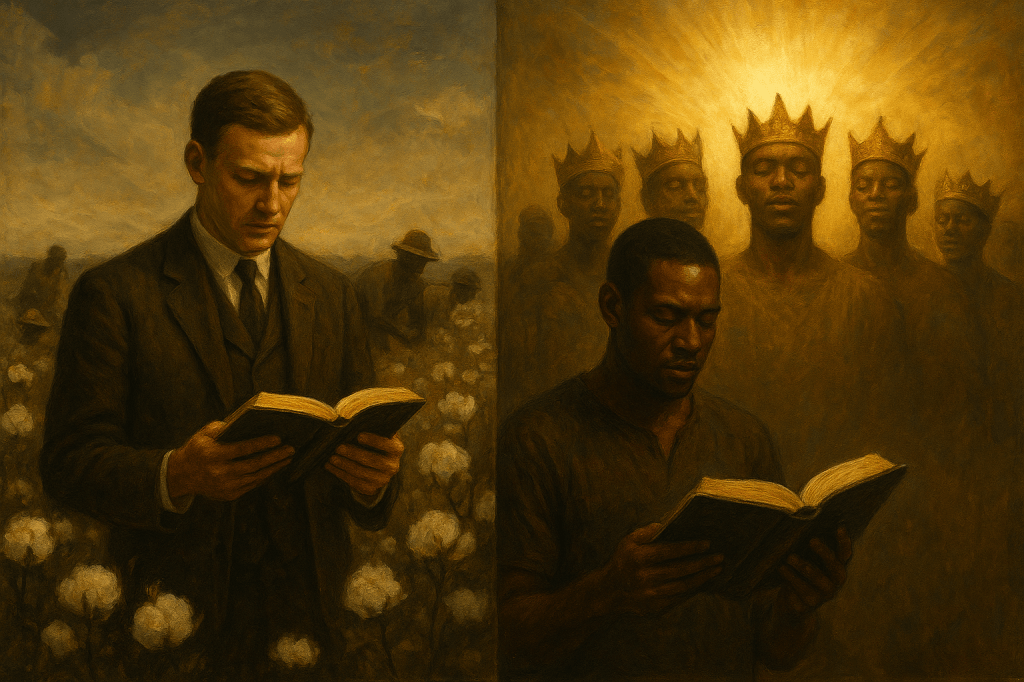

How European/White Views of the Bible Differ from African/Black Views

Worldview Shapes Interpretation

European biblical interpretation largely developed within imperial, Greco-Roman, and later Enlightenment frameworks, emphasizing hierarchy, legalism, and institutional authority. African and Black biblical interpretation, by contrast, has historically been experiential, communal, oral, and survival-centered, reading Scripture through lived oppression rather than abstract theology.

The Bible as Empire vs. the Bible as Survival

For Europe, the Bible often functioned as a tool of empire—used to justify monarchy, colonialism, and racial hierarchy. For African and African-descended peoples, the Bible became a text of endurance, liberation, and divine justice amid enslavement, exile, and sufferingEuropean Emphasis on Control and Order

European theology prioritized:

  • Church authority
  • Doctrinal uniformity
  • Obedience to rulers (Romans 13 emphasized)
  • Salvation abstracted from material conditions

This lens often muted or reinterpreted passages about oppression, captivity, and divine judgment against empires.

African/Black Emphasis on Exodus and Justice

African and Black readers gravitated toward:

  • Exodus
  • Deuteronomy 28
  • The prophets
  • Psalms of lament
  • Revelation’s overthrow of empire

Scripture was read as God siding with the oppressed, not legitimizing oppression.

Historical Memory vs. Abstract Theology

African biblical interpretation preserved historical consciousness—genealogy, land, lineage, and curses/blessings—while European theology increasingly spiritualized Scripture, detaching it from concrete history.

Deuteronomy 28 as a Point of Divergence

Europe largely framed Deuteronomy 28 as ancient Israelite history only. Many African-descended interpreters see it as a prophetic template, mapping captivity, forced labor, ships, loss of identity, and global dispersion onto the transatlantic slave trade.

The Role of the Enlightenment

The European Enlightenment desacralized Scripture, elevating reason over revelation, which later influenced canon criticism, textual skepticism, and selective theology that privileged Western norms.


What Books Were Removed from the Bible?

The Apocrypha / Deuterocanonical Books

Several books were removed or relegated to “non-canonical” status, particularly in Protestant Bibles after the 16th century.

Removed or excluded books include:

  • 1 Esdras
  • 2 Esdras (4 Ezra)
  • Tobit
  • Judith
  • Wisdom of Solomon
  • Sirach (Ecclesiasticus)
  • Baruch
  • Letter of Jeremiah
  • Additions to Esther
  • Prayer of Azariah
  • Susanna
  • Bel and the Dragon
  • 1 Maccabees
  • 2 Maccabees

These books were never “lost” to Africa—only excluded by Europe.

Why Were These Books Removed?

Key reasons include:

  • They challenged centralized church power
  • They emphasized divine justice against oppressors
  • They reinforced covenantal law and judgment
  • They complicated European theological control

Martin Luther and later Protestant reformers removed them from standard Bibles, labeling them “useful but not inspired.”

Political Theology at Work

Books like the Wisdom of Solomon condemn unjust rulers. Maccabees celebrate resistance to the empire. Baruch emphasizes exile and repentance. These themes conflicted with colonial and imperial agendas.

Suppression of Apocalyptic Knowledge

Books like Enoch and 2 Esdras contain cosmology, angelology, and judgment narratives that undermine human supremacy and racial hierarchy.

Race and Canon Formation

Europeans controlling the canon during colonial expansion ensured Scripture could be used to:

  • Enforce obedience
  • Justify slavery
  • Silence rebellion
  • Promote passive salvation

African-descended readers later reclaimed Scripture against these distortions.


African Christianity Predates Europe

Africa Is Not a Late Convert

Christianity flourished in Ethiopia, Egypt, Nubia, and North Africa centuries before Europe institutionalized the Church.

Biblical Geography Is African-Centered

Scripture references:

  • Cush
  • Mizraim (Egypt)
  • Ethiopia
  • Libya

African peoples are not marginal to the Bible—they are foundational.

Oral Tradition vs. Written Control

African biblical engagement preserved oral memory, song, lament, and testimony, while Europe emphasized written codices controlled by elite institutions.


Theological Consequences of Removal

Loss of Justice-Centered Theology

Removing books narrowed theology away from historical accountability, exile, and covenant justice.

Spiritualization of Suffering

European theology often reframed suffering as divinely ordained rather than divinely condemned—an interpretation enslaved people instinctively rejected.

Black Biblical Hermeneutics

Black theology reads Scripture from the bottom up, centering God’s response to suffering bodies, not abstract doctrine.

Scripture as Resistance

For African-descended peoples, the Bible became a counter-text, exposing the hypocrisy of Christian slaveholders and affirming divine judgment.


Conclusion: Two Bibles, Two Lenses

European Christianity often used the Bible to rule.
African and Black Christianity used the Bible to survive.

The difference is not the text itself, but who controls interpretation, which books are included, and whose suffering is acknowledged. Reclaiming the removed books and reading Scripture through historical truth restores the Bible’s original moral power.


References

The Holy Bible, King James Version. (1611/1769).

The Ethiopian Orthodox Tewahedo Church Canon.

Cone, J. H. (1997). God of the oppressed. Orbis Books.

Heschel, A. J. (2001). The prophets. Harper Perennial.

Pagels, E. (1979). The gnostic gospels. Random House.

Charlesworth, J. H. (Ed.). (1983). The Old Testament pseudepigrapha. Yale University Press.

The Marriage Series: What God Joined Together – Marriage Beyond Romance

Marriage, according to Scripture, is not a human invention rooted in emotion but a divine institution established by God Himself. Romance may initiate attraction, but covenant sustains union. Jesus made this distinction clear when He declared, “What therefore God hath joined together, let not man put asunder” (Matthew 19:6, KJV). Marriage, in its biblical form, transcends feeling and rests on divine order, responsibility, and purpose.

From the beginning, marriage was designed as a structural foundation for humanity. In Genesis, God did not merely introduce companionship; He established alignment, function, and continuity. “It is not good that the man should be alone; I will make him an help meet for him” (Genesis 2:18, KJV). This union was purposeful, not performative—created to steward creation, produce legacy, and reflect divine harmony.

Modern culture often reduces marriage to romance, compatibility, and personal fulfillment. While affection is a gift, Scripture never presents emotion as the glue of marriage. Feelings fluctuate, but covenant endures. Biblical marriage is rooted in vow, sacrifice, and obedience to God rather than constant emotional satisfaction.

The Hebrew concept of covenant (berith) implies permanence sealed by accountability to God. Unlike contracts, which can be broken when terms are unmet, covenants bind participants even when circumstances change. Malachi emphasizes this sacred responsibility, stating that God is a witness to the marriage covenant (Malachi 2:14, KJV). This divine witnessing elevates marriage beyond private agreement into a sacred obligation.

Marriage also functions as a spiritual discipline. It exposes selfishness, refines character, and demands humility. Ephesians instructs husbands to love their wives “even as Christ also loved the church, and gave himself for it” (Ephesians 5:25, KJV). This model frames love not as consumption, but as sacrifice—a call largely absent from modern romantic narratives.

For wives, Scripture speaks not of inferiority but of order and wisdom within unity. Submission in the biblical sense is not subjugation, but alignment under God’s structure (Ephesians 5:22–24, KJV). When removed from its theological context, submission is often mischaracterized, yet biblically it reflects trust in divine design, not human dominance.

Marriage is also generational in purpose. It is the primary environment in which children are formed, values are transmitted, and identity is nurtured. Scripture repeatedly links covenant faithfulness in marriage to the stability of future generations (Deuteronomy 6:6–7, KJV). When marriage collapses, societies fracture.

Romance-centered marriages often fail under pressure because emotion was never meant to carry covenant weight. Proverbs warns against building life on unstable foundations, reminding that wisdom—not passion—establishes a house (Proverbs 24:3, KJV). Emotional attraction may ignite love, but wisdom sustains it.

God’s joining in marriage also implies divine authority over the union. When marriage is redefined apart from God, it loses its spiritual covering. Jesus’ words in Matthew 19 were a rebuke to a culture that treated marriage as disposable. The same rebuke applies today, where convenience often overrides commitment.

Marriage reflects Christ and the Church, making it theological as well as relational. Paul calls this union a “great mystery” (Ephesians 5:32, KJV), indicating that marriage is a living metaphor of redemption, forgiveness, and perseverance. To trivialize marriage is to distort this spiritual image.

Historically, the disruption of marriage—especially in Black communities—has been both intentional and traumatic. Enslavement, economic marginalization, and mass incarceration undermined covenant stability. Understanding marriage beyond romance is essential for restoration, as healing requires reclaiming covenant consciousness rather than romantic idealism (Wilkerson, 2020).

Psychologically, covenant-based marriages demonstrate greater resilience. Research shows that commitment rooted in shared values and spiritual meaning predicts longevity more than emotional intensity alone (Gottman & Silver, 2015). Scripture anticipated this truth long before modern psychology named it.

Marriage also demands repentance and forgiveness. No union survives without grace. Colossians commands believers to forgive as Christ forgave, directly applying spiritual discipline to relational endurance (Colossians 3:13, KJV). Romance avoids conflict; covenant confronts it with humility.

When God joins a marriage, He joins purpose, not just people. Two individuals become stewards of a shared calling. Amos asks, “Can two walk together, except they be agreed?” (Amos 3:3, KJV). Agreement here refers not to sameness, but to unified direction under God.

To reclaim marriage beyond romance is to return it to its rightful place—as sacred, demanding, refining, and life-giving. It is not sustained by constant happiness, but by faithfulness. In a culture intoxicated by feeling, biblical marriage stands as a countercultural witness to endurance, order, and divine intention.

Ultimately, marriage joined by God is not preserved by human strength alone. It requires submission to God, reverence for the covenant, and obedience beyond emotion. Where romance fades, covenant speaks. And where God joins, no cultural trend has authority to separate.


References

The Holy Bible, King James Version. (1611). Various passages.

Gottman, J. M., & Silver, N. (2015). The seven principles for making marriage work. Harmony Books.

Wilkerson, I. (2020). Caste: The origins of our discontents. Random House.

Keller, T., & Keller, K. (2011). The meaning of marriage: Facing the complexities of commitment with the wisdom of God. Dutton.

Wright, N. T. (2004). After you believe: Why Christian character matters. HarperOne.

Plagues of a Sinful Heart

The concept of the sinful heart is central to biblical theology, describing the internal condition from which destructive behaviors, systems of oppression, and moral decay emerge. Scripture consistently teaches that sin is not merely an external action but an inward plague that shapes thoughts, desires, and intentions. The heart, in biblical language, represents the core of human will and consciousness, making it the primary battleground between righteousness and corruption.

The Bible declares that “the heart is deceitful above all things, and desperately wicked: who can know it?” (Jeremiah 17:9, KJV). This verse frames sin as a condition rather than a momentary failure. A sinful heart distorts perception, justifies wrongdoing, and resists accountability. Like a disease left untreated, it spreads silently until its effects become visible in individual lives and entire societies.

One plague of a sinful heart is pride. Pride elevates the self above God and others, fostering arrogance, entitlement, and domination. Scripture warns, “Pride goeth before destruction, and a haughty spirit before a fall” (Proverbs 16:18, KJV). Pride blinds individuals to their own faults and fuels systems that exploit the vulnerable while excusing injustice as superiority or destiny.

Another manifestation is greed, an insatiable desire for accumulation without regard for moral consequence. The Bible states plainly, “For the love of money is the root of all evil” (1 Timothy 6:10, KJV). Greed transforms human beings into commodities and reduces life to profit margins, giving rise to exploitation, economic oppression, and spiritual emptiness.

Hatred is another plague rooted in the sinful heart. Jesus taught that hatred is morally equivalent to murder in the heart (Matthew 5:21–22, KJV). When hatred is normalized, it dehumanizes others and justifies violence, discrimination, and exclusion. Entire nations have been shaped by this inward corruption, producing laws and cultures that reward cruelty.

Deceit also flows naturally from a sinful heart. Scripture declares, “Out of the heart proceed evil thoughts…false witness, blasphemies” (Matthew 15:19, KJV). Deceit corrodes trust and destabilizes relationships, institutions, and truth itself. When lies become habitual, truth is perceived as a threat rather than a virtue.

The plague of lust represents disordered desire, where pleasure is pursued without restraint or responsibility. Lust reduces people to objects and distorts the sacredness of intimacy. Jesus’ warning that lustful thoughts constitute adultery of the heart (Matthew 5:28, KJV) reveals how deeply sin operates beneath outward behavior.

A sinful heart also produces injustice. When compassion is absent, power is abused. The prophets repeatedly condemned Israel not for ritual failure alone but for hardened hearts that oppressed the poor and ignored the afflicted. “They have hearts like stone,” Ezekiel wrote, describing a people unmoved by suffering (Ezekiel 36:26, KJV).

Racism and tribalism are societal plagues born from sinful hearts that exalt one group over another. Though Scripture affirms that God “hath made of one blood all nations of men” (Acts 17:26, KJV), sinful hearts reject this truth in favor of hierarchy and domination. Such beliefs reflect rebellion against divine order rather than cultural difference.

Fear is another inward plague that fuels sin. Fear of loss, fear of others, and fear of truth lead people to cling to control rather than trust God. Scripture teaches that “the fear of man bringeth a snare” (Proverbs 29:25, KJV). When fear governs the heart, obedience to God becomes secondary to self-preservation.

Hardness of heart is a recurring biblical warning. Pharaoh’s refusal to repent during the Egyptian plagues illustrates how repeated resistance to truth strengthens inner corruption (Exodus 7–11, KJV). A hardened heart becomes incapable of repentance, even in the face of suffering.

The sinful heart also manifests as spiritual blindness. Paul writes that the minds of unbelievers are darkened because of the blindness of their heart (Ephesians 4:18, KJV). This blindness prevents discernment, allowing evil to be rationalized and righteousness to be dismissed as foolishness.

Hypocrisy thrives in sinful hearts that prioritize appearance over transformation. Jesus rebuked religious leaders who honored God outwardly while their hearts remained far from Him (Matthew 15:8, KJV). Such hypocrisy damages faith communities and drives people away from truth.

Unchecked anger is another plague that takes root internally. While righteous anger exists, sinful anger seeks vengeance rather than justice. Scripture warns that “the wrath of man worketh not the righteousness of God” (James 1:20, KJV). Anger lodged in the heart becomes bitterness over time.

The sinful heart resists correction. Proverbs teaches that a fool despises instruction, while wisdom begins with humility (Proverbs 1:7, KJV). Resistance to correction ensures that destructive patterns continue unchecked, reinforcing cycles of harm.

Biblically, the ultimate consequence of a sinful heart is separation from God. Isaiah declares that sin creates a divide between humanity and the Creator (Isaiah 59:2, KJV). This separation is both spiritual and psychological, resulting in alienation, guilt, and restlessness.

Despite its severity, Scripture does not present the sinful heart as beyond repair. God promises, “A new heart also will I give you, and a new spirit will I put within you” (Ezekiel 36:26, KJV). This transformation is not cosmetic but regenerative, replacing corruption with obedience.

Christ’s ministry directly addressed the condition of the heart. Through repentance, faith, and submission to God’s will, individuals are invited into inward renewal. Jesus emphasized that purity begins internally, not through ritual but through surrender (Luke 11:39–40, KJV).

The healing of the sinful heart requires accountability, truth, and divine intervention. Psychological insight confirms that unexamined beliefs and unresolved trauma shape behavior, aligning with biblical teaching that inward change precedes outward reform (Beck, 1976).

Ultimately, the plagues of a sinful heart reveal humanity’s need for redemption rather than self-sufficiency. Scripture concludes that God alone can search and restore the heart (Psalm 51:10, KJV). Where sin once ruled internally, righteousness can reign—if the heart is willingly yielded.


References

The Holy Bible, King James Version. (1611). Various passages.

Beck, A. T. (1976). Cognitive therapy and the emotional disorders. International Universities Press.

Augustine of Hippo. (397). Confessions. Translated editions.

Fanon, F. (1952). Black skin, white masks. Grove Press.

Wilkerson, I. (2020). Caste: The origins of our discontents. Random House.

Lewis, C. S. (1952). Mere Christianity. HarperOne.

Du Bois, W. E. B. (1903). The souls of Black folk. A. C. McClurg & Co.

Shades of Power: How Colorism Functions as a Hidden Caste System

Colorism operates as an unspoken caste system within racialized communities, privileging proximity to whiteness while punishing darker skin. Unlike racism, which is imposed externally, colorism thrives internally, making it both more difficult to confront and more psychologically destructive. It functions quietly, shaping social outcomes while masquerading as “preference” or “aesthetic.”

Historically, colorism was engineered during slavery, where lighter-skinned enslaved people were granted marginal advantages such as indoor labor or literacy access. These privileges were not benevolence but strategy—designed to fracture solidarity and create internal hierarchies that mirrored white supremacy. Over generations, these imposed distinctions calcified into social norms.

The Bible warns against such partiality, stating, “But if ye have respect to persons, ye commit sin” (James 2:9, KJV). Colorism is precisely this sin—assigning value based on appearance rather than character or righteousness. When communities internalize this hierarchy, they replicate the logic of their oppressors.

Psychologically, colorism distorts self-concept. Darker-skinned individuals often internalize shame, while lighter-skinned individuals may experience conditional acceptance tied to appearance rather than identity. This dynamic reinforces anxiety, comparison, and alienation, aligning with Fanon’s analysis of racialized inferiority complexes (Fanon, 1952).

Sociologically, colorism influences hiring, sentencing, marriage markets, and media representation. Studies consistently show that lighter skin correlates with higher income and social mobility within Black populations (Hunter, 2007). These outcomes expose colorism as structural, not merely personal bias.

Spiritually, colorism contradicts the doctrine of creation. Scripture affirms that humanity is made in God’s image, not graded by shade (Genesis 1:27, KJV). Any hierarchy of skin tone is therefore a theological error, not a cultural quirk.

Until colorism is named as a system—rather than an attitude—it will continue to operate invisibly. Liberation requires dismantling not only white supremacy, but its internalized offspring.

References

The Holy Bible, King James Version.
Fanon, F. (1952). Black skin, white masks.
Hunter, M. (2007). “The persistent problem of colorism.” Sociology Compass.

The Soul Journal of a Black Man and Woman Around the World.

The soul journal of a Black man and woman around the world is not written with ink alone, but with memory, blood, prayer, and survival. It is a living record of a people who have traversed continents, oceans, and empires while carrying culture, faith, and identity within their bodies. Across Africa, the Americas, Europe, the Caribbean, and the Middle East, Black existence has been shaped by displacement and resilience, loss and continuity.

At the center of this journal is the soul—what Scripture calls the inner being. The Bible teaches that the soul bears witness to suffering and joy alike: “All my bones shall say, Lord, who is like unto thee” (Psalm 35:10, KJV). For Black men and women, the soul has often been the final refuge when the body was owned, policed, or violated by systems of domination.

The Black man’s global journey has been marked by labor without rest and strength without recognition. From plantations to ports, from mines to factories, his physicality was exploited while his humanity was denied. Yet Scripture affirms that manhood is not defined by chains or caricatures but by divine purpose: “Be watchful, stand firm in the faith, act like men, be strong” (1 Corinthians 16:13, KJV).

The Black woman’s soul journal bears a distinct weight. She has carried nations in her womb while being denied protection for her own body. Her labor—both visible and invisible—built households, economies, and cultures across the world. Proverbs declares, “Strength and honour are her clothing; and she shall rejoice in time to come” (Proverbs 31:25, KJV), a truth often delayed but never erased.

Across the African continent, the soul journal begins with memory—languages, names, spiritual systems, and kinship structures that predate colonization. These roots testify that Black identity did not begin in slavery but in civilization. Archaeology and history confirm advanced African societies long before European contact (Diop, 1974).

The transatlantic slave trade violently interrupted this continuity, scattering Black men and women across the globe. Families were torn apart, yet culture survived in fragments—songs, rhythms, proverbs, and prayers. The Bible’s lament echoes this experience: “By the rivers of Babylon, there we sat down, yea, we wept, when we remembered Zion” (Psalm 137:1, KJV).

In the Americas, the soul journal records a theology forged under oppression. Enslaved Africans encountered Christianity through the lens of white supremacy, yet reinterpreted Scripture through lived suffering. The Exodus story became a mirror, and the God who heard Israel’s cry was recognized as the same God who heard theirs (Cone, 1975).

In the Caribbean and Latin America, Black men and women blended African spirituality with imposed European religion, creating syncretic expressions that preserved ancestral memory. These practices were often demonized, reflecting fear of Black autonomy rather than theological concern. The soul journal notes resistance disguised as worship.

In Europe, Black existence has often been rendered invisible, yet the soul journal persists through migration, art, and intellectual contribution. From Moorish Spain to modern Britain and France, Black men and women have shaped culture while being excluded from national narratives (Olusoga, 2016).

The psychological dimension of the soul journal reveals trauma carried across generations. Studies on intergenerational trauma align with biblical understanding that wounds can echo beyond one lifetime (Yehuda et al., 2016; Exodus 20:5). Yet the same Scripture affirms that healing can also be inherited through righteousness.

For Black men, the soul journal often records the struggle between vulnerability and survival. Societies that criminalize Black masculinity discourage emotional expression, yet Scripture calls men to wisdom, gentleness, and discipline of the heart (Micah 6:8, KJV).

For Black women, the journal documents a tension between strength and exhaustion. The “strong Black woman” trope conceals pain while demanding endless resilience. Christ’s invitation—“Come unto me, all ye that labour and are heavy laden, and I will give you rest” (Matthew 11:28, KJV)—speaks directly to this burden.

Love and partnership appear throughout the journal as acts of defiance. Black love has survived forced breeding, family separation, and economic sabotage. Song of Solomon’s celebration of Blackness—“I am black, but comely” (Song of Solomon 1:5, KJV)—stands as a biblical affirmation of beauty long denied.

Faith remains a central entry in the soul journal. Prayer circles, hush harbors, mosques, churches, and ancestral rituals all reflect a longing for divine justice. Hebrews affirms that faith is evidence of things unseen, a truth embraced by people forced to hope beyond visible circumstances (Hebrews 11:1, KJV).

The journal also records anger—righteous anger born of injustice. Scripture does not silence this emotion but warns against its corruption into bitterness (Ephesians 4:26–27, KJV). Protest, art, and scholarship have become vessels through which anger is refined into purpose.

Across the diaspora, creativity serves as both memory and medicine. Music, literature, dance, and visual art document experiences history often omits. Du Bois described this as “double consciousness,” a constant negotiation between self-perception and imposed identity (Du Bois, 1903).

Healing emerges in the journal as a collective task. Community, storytelling, and truth-telling become sacred acts. Psychology affirms what Scripture already taught—that confession, lament, and restoration are essential to wholeness (Psalm 34:18, KJV).

The soul journal ultimately resists erasure. Despite colonization, racism, and global displacement, Black men and women continue to name themselves, love one another, and seek God. Revelation’s vision of every nation and people before the throne affirms that Black souls were never peripheral to divine history (Revelation 7:9, KJV).

This journal is unfinished. Each generation adds pages through endurance and hope. What binds its entries together is not merely suffering, but a sacred insistence on life. As Scripture declares, “We are troubled on every side, yet not distressed… cast down, but not destroyed” (2 Corinthians 4:8–9, KJV).


References

The Holy Bible, King James Version. (1611). Various passages.

Cone, J. H. (1975). God of the oppressed. Orbis Books.

Diop, C. A. (1974). The African origin of civilization: Myth or reality. Lawrence Hill Books.

Du Bois, W. E. B. (1903). The souls of Black folk. A. C. McClurg & Co.

Fanon, F. (1952). Black skin, white masks. Grove Press.

Olusoga, D. (2016). Black and British: A forgotten history. Pan Macmillan.

Wilkerson, I. (2020). Caste: The origins of our discontents. Random House.

Yehuda, R., et al. (2016). “Holocaust exposure induced intergenerational effects on FKBP5 methylation.” Biological Psychiatry, 80(5), 372–380.

The Friendship Files: A Friend That Sticks Closer Than a Brother.

Friendship is one of the most powerful bonds God allows humans to experience. Scripture describes the beauty and complexity of companionship with a profound truth: “A man that hath friends must shew himself friendly: and there is a friend that sticketh closer than a brother” (Proverbs 18:24, KJV). This verse reveals that true friendship is not accidental; it is cultivated, tested, and proven over time. The deepest friendships rise above convenience—they become covenant connections rooted in loyalty, love, and righteousness.

A true friend is someone who walks with you through seasons of joy and seasons of trial. The biblical friendship between David and Jonathan exemplifies this. Jonathan risked his own legacy and safety to protect David because their souls were “knit” together (1 Samuel 18:1, KJV). Their story teaches that genuine friendship is selfless, faithful, and sacrificial. It stands strong even when circumstances shift. A good friend celebrates your victories and stands guard in your valleys.

Conversely, Scripture also warns us about the danger of bad friends. Amnon, influenced by his cousin Jonadab, made destructive decisions that led to tragedy (2 Samuel 13). Jonadab is a picture of a bad friend: cunning, manipulative, and willing to push others toward sin. A bad friend encourages rebellion, stirs confusion, and speaks death into your destiny. Their presence drains your spirit rather than strengthening it.

The Bible is clear that your friendships shape your future. “Be not deceived: evil communications corrupt good manners” (1 Corinthians 15:33, KJV). A good friend brings out the best in you, but a bad friend diminishes your character and disrupts your peace. Many people discover too late that some friendships are seasonal, superficial, or self-serving. Discernment is essential.

One truth about life is this: you will not truly know who your friends are until you are broken, broke, or burdened. Wealth, status, and success often attract counterfeit connections. Yet adversity becomes the great revealer. When the prodigal son ran out of money, scripture says, “no man gave unto him” (Luke 15:16, KJV). The friends who surrounded him during abundance were nowhere to be found during his famine. Real friends don’t disappear when the blessings pause; they remain when the storms arrive.

A good friend uplifts you spiritually. Proverbs 27:17 teaches, “Iron sharpeneth iron; so a man sharpeneth the countenance of his friend.” A friend who loves God pushes you to grow, to pray, to forgive, and to rise higher. They support your calling rather than competing with it. They guard your secrets instead of gossiping about your weaknesses. They heal rather than harm.

Twelve signs of a good friend include loyalty, honesty, consistency, empathy, accountability, humility, prayerfulness, discretion, a supportive spirit, shared values, encouragement, and the ability to challenge you lovingly. Such a friend strengthens your walk with God and respects your boundaries. They help anchor your life with stability and truth.

Twelve signs of a bad friend include jealousy, manipulation, selfishness, inconsistency, gossip, emotional instability, competitiveness, hidden agendas, draining behavior, lack of accountability, disrespect, and unreliability. Such friendships produce confusion and emotional exhaustion, pulling you away from your purpose and peace.

Healthy friendships require wisdom, patience, and communication. Just as marriages need nurturing, friendships need intentionality. The Bible encourages believers to “admonish one another,” “comfort one another,” and “edify one another” (Romans 15:14; 1 Thessalonians 5:11, KJV). Friendship is ministry—an ongoing exchange of love, correction, and support.

A good friend will tell you the truth even when it hurts. “Faithful are the wounds of a friend” (Proverbs 27:6, KJV). They speak truth in love, not in cruelty. They pull you back from danger, encourage you to heal, and keep your secrets safe. A bad friend tells you only what you want to hear, even if it leads you toward destruction.

Jonathan is a biblical example of a righteous friend. Jonadab is the example of a destructive friend. Jesus Himself is the perfect friend. He said, “I have called you friends” (John 15:15, KJV). His friendship is marked by sacrifice, truth, and eternal commitment. Through His example, we learn that friendship is not merely emotional—it is covenantal.

Friendship also requires boundaries. Not every acquaintance is meant to be a confidant. Jesus had the multitudes, the seventy, the twelve, the three, and then His intimate friendship with John. This shows that levels of access must be based on trust, consistency, and character. Allowing the wrong people too close can create spiritual and emotional chaos.

The Bible teaches that friends should comfort one another in sorrow. Job’s friends initially sat with him in his grief for seven days without speaking (Job 2:13). Their presence became a comfort before their words became a problem. Sometimes the greatest gift a friend offers is simply being there—silent, prayerful, and steady.

Friendships must also survive change. People grow, mature, and transition. Some friendships adjust gracefully; others wither under the pressure of life. But a friend connected through God’s purpose remains steadfast even when seasons shift. Ruth’s loyalty to Naomi—“Where thou goest, I will go” (Ruth 1:16)—reveals how sacred true friendship can be.

Good friends protect your character, reputation, and peace. They cover you rather than expose you. They pray for you rather than slander you. They advocate for you rather than undermine you. Their presence adds value to your spiritual and emotional life.

A friend who sticks closer than a brother is rare but priceless. This type of friend becomes part of your legacy. Their impact shapes your faith, your strength, and your resilience. They show up not only in your celebration but also in your battle. Their love is tested, proven, and unwavering.

Bad friendships must be released for growth to happen. God often removes wrong friends to make space for healthy ones. When Abraham separated from Lot, God spoke promises to him more clearly (Genesis 13). Sometimes clarity comes after separation. Protection sometimes looks like disconnection.

Friendship is one of God’s greatest gifts. To steward it well, we must choose wisely, communicate honestly, love consistently, and forgive frequently. When friendships reflect Christ, they become sanctuaries of safety and sources of joy.

The greatest friend you will ever have is Christ Himself. But in His love, He often sends earthly friends who mirror His character. These are the friends who lift you, sharpen you, and stay by your side—closer than a brother.

References
Holy Bible, King James Version: Proverbs 18:24; 1 Samuel 18–20; 2 Samuel 13; 1 Corinthians 15:33; Luke 15:16; Proverbs 27:6, 17; John 15:15; Romans 15:14; 1 Thessalonians 5:11; Job 2:13; Ruth 1:16; Genesis 13.
Lewis, C. S. (1960). The Four Loves.
Cloud, H., & Townsend, J. (1992). Boundaries.
Lewis, C. S. (1958). Friendship and Spiritual Growth.

Girl Power Reconsidered: Strength and Authority of the Biblical Woman

“Girl power,” as popularly defined, often centers on autonomy, rebellion, and self-exaltation. In contrast, the Bible presents a vision of female power rooted not in dominance or imitation of men, but in divine alignment, moral authority, wisdom, endurance, and covenantal purpose. Biblical womanhood does not diminish power; it redefines it.

Biblical power begins with creation. Woman was not an afterthought but a deliberate act of God, formed as ezer kenegdo—a helper corresponding to man, not inferior but essential. This Hebrew phrase conveys strength, aid, and strategic support, often used of God Himself.

The biblical woman’s power is relational, not competitive. She builds rather than destabilizes, strengthens rather than rivals. Her authority flows from her position in God’s order, not from rejection of it.

Proverbs 31 offers one of Scripture’s clearest portraits of female power. The virtuous woman is industrious, economically astute, physically strong, and respected in the gates. Her power is quiet yet undeniable, woven into every sphere of life.

Biblical girl power includes wisdom. Proverbs repeatedly personifies wisdom as a woman, calling humanity to life, discernment, and righteousness. This imagery is intentional: the woman embodies moral insight and spiritual instruction.

Scripture affirms women as leaders and agents of deliverance. Deborah served as judge and prophetess, exercising authority over Israel without sacrificing femininity or faith. Her leadership flowed from obedience to God, not ambition.

Esther’s power lay not in force but in courage, timing, and restraint. She risked her life to save her people, demonstrating that biblical power often operates through sacrifice rather than spectacle.

Ruth’s strength appeared through loyalty, humility, and perseverance. Her obedience positioned her within the Messianic lineage, showing that faithfulness can reshape history.

The biblical woman’s body is not her primary currency. Scripture consistently values her character, discretion, and fear of the Lord over physical allure. This stands in sharp contrast to modern definitions of empowerment.

Biblical girl power includes self-governance. A woman who controls her spirit is portrayed as stronger than one who conquers a city. Discipline, restraint, and emotional wisdom are marks of true strength.

Motherhood, when present, is elevated rather than minimized. Women like Hannah and Jochebed shaped prophetic destinies through prayer and moral courage, influencing nations through nurture.

Singleness is also honored. Miriam, Anna the prophetess, and others demonstrate that a woman’s worth is not contingent on marital status but on spiritual calling.

The New Testament continues this framework. Women were the first witnesses of the resurrection, entrusted with the most consequential truth in Christian faith. This divine choice affirms women as reliable bearers of revelation.

Biblical girl power does not erase male leadership but complements it. Power is not sameness; it is harmony within divine order. Scripture values interdependence over rivalry.

The fear of the Lord is the foundation of biblical empowerment. A woman aligned with God’s will carries spiritual authority that transcends social rank or circumstance.

Modern culture often equates empowerment with sexual freedom and defiance of tradition. Scripture, however, portrays freedom as obedience that leads to peace, dignity, and legacy.

The biblical woman understands legacy. Her decisions are generational, oriented toward inheritance, lineage, and moral continuity rather than momentary validation.

Biblical girl power is resilient. Women endured exile, persecution, barrenness, and loss without surrendering faith. Their endurance is a testimony of strength forged in suffering.

This model challenges both misogyny and distorted feminism. It rejects the devaluation of women while refusing ideologies that detach power from responsibility.

True empowerment in Scripture is not loud but enduring, not rebellious but righteous, not self-centered but God-centered.

The biblical woman stands as a steward of life, wisdom, and faith. Her power is sacred, purposeful, and transformative.

In reclaiming biblical girl power, women rediscover strength that does not fade with age, beauty, or social trends—because it is anchored in God.


References

The Holy Bible, King James Version. (1611/1769).

Trible, P. (1978). God and the rhetoric of sexuality. Fortress Press.

Frymer-Kensky, T. (2002). Reading the women of the Bible. Schocken Books.

Brenner, A. (1993). The feminist companion to the Bible. Sheffield Academic Press.

Clines, D. J. A. (1995). What does Eve do to help? JSOT Press.

The Dating Series: The Best Dates for the followers of Christ.

Dating as a follower of Christ is not simply about fun or romance—it is an opportunity to grow spiritually, honor God, and cultivate a meaningful relationship rooted in faith. While popular culture emphasizes casual outings, believers are called to prioritize activities that glorify God, strengthen bonds, and reflect biblical values.

A foundational principle in holy dating is keeping the Sabbath together. Exodus 20:8 commands, “Remember the sabbath day, to keep it holy.” Spending this sacred day with your partner fosters spiritual connection and mutual worship, setting a God-centered tone for your relationship. Attending church services, prayer meetings, or Sabbath school together strengthens faith and accountability.

One of the most enriching holy date ideas is attending an opera or ballet. These cultural experiences inspire awe, creativity, and emotional reflection. While enjoying the arts, couples can discuss moral themes, human nature, and God’s design in creativity. Appreciating beauty in art reminds believers of the Creator’s glory.

Bible study dates are among the most spiritually rewarding. Studying scripture together allows couples to grow in knowledge, understanding, and spiritual intimacy. Proverbs 27:17 says, “Iron sharpeneth iron; so a man sharpeneth the countenance of his friend.” Engaging in dialogue about God’s Word strengthens faith and encourages accountability.

Attending holy music concerts or worship events makes for uplifting dates. Music has a powerful way of uniting hearts and lifting spirits. Singing praises together cultivates shared joy, reinforces spiritual priorities, and creates lasting memories rooted in faith.

Volunteering together provides a practical way to serve God and others. Acts of kindness, such as feeding the homeless or mentoring youth, allow couples to witness Christ’s love in action. These experiences reveal character, encourage teamwork, and deepen relational bonds.

Nature walks or hikes offer another godly dating option. Observing God’s creation together fosters gratitude and awe for His handiwork. Psalm 19:1 reminds us, “The heavens declare the glory of God; and the firmament sheweth his handywork.” Walking and reflecting together promotes conversation and intimacy without distraction.

Attending lectures, conferences, or seminars with spiritual or educational themes can be intellectually stimulating and spiritually enriching. Learning together encourages critical thinking, spiritual growth, and shared reflection on ethical and moral topics.

Art galleries, museums, or historical sites that highlight God’s creation or moral lessons are excellent for holy dates. Discussing symbolism, history, and biblical connections allows couples to grow intellectually and spiritually while enjoying cultural enrichment.

Cooking or baking together at home can be a wholesome, God-honoring activity. Preparing meals allows for conversation, cooperation, and nurturing of one another in practical ways. Sharing home-cooked meals promotes gratitude and fellowship, echoing biblical hospitality.

Attending faith-based film screenings or theater performances with wholesome, biblical themes encourages reflection and conversation about morality, relationships, and life choices. Couples can use these experiences to discuss God’s perspective and biblical wisdom.

Prayer walks or joint devotional times outside the home allow couples to commune with God in nature. Sharing prayer requests, praying for each other, and meditating on scripture fosters spiritual intimacy and dependence on God in the relationship.

Gardening or tending to a community project together is both productive and spiritually instructive. Caring for plants reflects God’s nurturing design and promotes teamwork, patience, and mutual responsibility.

Participating in small group fellowship or Bible discussion nights provides social and spiritual engagement. Couples can connect with other believers, encourage one another, and model godly relationships for peers.

Attending art workshops, music lessons, or dance classes within a faith-based context encourages creativity and shared learning. These activities foster skill development while honoring God and maintaining wholesome interaction.

Visiting religious landmarks, pilgrimage sites, or local churches of historical significance allows couples to reflect on faith, devotion, and God’s providence throughout history. Discussing these visits deepens understanding of God’s work in the world.

Writing or journaling together about spiritual experiences, reflections, or prayers strengthens emotional and spiritual bonds. Sharing personal insights and growth fosters transparency and encourages accountability in the relationship.

Picnics in nature while reading scripture or meditating on God’s Word combine leisure with spiritual reflection. These simple, peaceful outings provide opportunities for conversation, prayer, and gratitude.

Attending a Biblical retreat, camp, or spiritual workshop allows couples to focus on God, each other, and personal growth. Retreats provide immersive environments to pray, learn, and bond without everyday distractions.

Finally, celebrating holy seasons, biblical festivals, or church events together deepens spiritual awareness and communal connection. Observing God’s appointed times teaches reverence, joy, and unity in faith.

Holy dating is about intentionality. By choosing activities that honor God—whether cultural, educational, or spiritual—believers cultivate meaningful, lasting relationships rooted in faith. Following these principles ensures that dating is not only enjoyable but transformative, reflecting God’s design for love, companionship, and spiritual growth.

Dilemma: Forced Diaspora

The dilemma of forced diaspora stands as one of the most defining and devastating realities in human history, particularly for African-descended peoples whose displacement reshaped the modern world. This rupture was not merely geographic but spiritual, psychological, and generational, severing people from land, language, kinship systems, and sacred memory.

Diaspora, in its truest sense, implies scattering. Forced diaspora, however, denotes violent expulsion—movement without consent, carried out through domination, coercion, and terror. The transatlantic slave trade exemplifies this condition, transforming human beings into cargo and redefining captivity as commerce.

Within the Hebrew Bible, displacement functions as both a consequence and a warning. Deuteronomy 28 in the King James Version presents blessings for obedience and curses for disobedience, culminating in exile, captivity, and foreign domination. The chapter is not abstract theology; it is historically grounded prophecy rooted in covenantal law.

Deuteronomy 28 begins with prosperity and national elevation, but the latter portion details systematic collapse. Hunger, poverty, loss of sovereignty, and enslavement emerge as consequences when a people fall under divine judgment. These themes recur throughout biblical history, particularly in the experiences of Israel.

Verse 48 declares that the people would serve enemies “in hunger, and in thirst, and in nakedness, and in want of all things,” while verse 68 foretells transportation into bondage by ships. This specific imagery has drawn sustained attention in diasporic biblical interpretation.

The reference to ships in Deuteronomy 28:68 is striking, as captivity in the ancient Near East was typically overland. The verse’s maritime language suggests a future mode of enslavement distinct from earlier Assyrian or Babylonian exiles, intensifying its interpretive gravity.

The Middle Passage, spanning the fifteenth through nineteenth centuries, involved the forced shipment of millions of Africans across the Atlantic Ocean. Conditions aboard slave ships included extreme overcrowding, disease, starvation, and death, reflecting the dehumanization described in Deuteronomy’s curses.

Men, women, and children were chained in holds, stripped of identity, and reduced to inventory. The loss of names, languages, and familial ties parallels the biblical language of becoming “a byword and a proverb” among nations, as stated in Deuteronomy 28:37.

The Middle Passage was not an isolated event but the center of a global economic system dependent upon forced labor. European empires extracted wealth through plantations, mines, and infrastructure built upon the backs of enslaved Africans.

Forced labor in the Americas mirrored the biblical description of unrelenting servitude. Enslaved people labored without rest, legal protection, or compensation, echoing Deuteronomy 28:65, which describes no ease, trembling hearts, and failing eyes.

The plantation system institutionalized violence, sexual exploitation, and family separation. Children were sold away from parents, marriages were unrecognized, and kinship networks were deliberately destroyed to prevent resistance.

This systematic breaking of family structures resonates with Deuteronomy 28:32, which warns that sons and daughters would be given to another people, with no power to rescue them. The verse reflects a loss of agency that defined chattel slavery.

Forced diaspora also produced cultural amnesia. African cosmologies, languages, and governance systems were suppressed, replaced by imposed identities rooted in racial hierarchy. Yet fragments survived through music, oral tradition, and spiritual practice.

The introduction of Christianity to enslaved Africans occurred within contradiction. While Scripture was used to justify bondage, enslaved people discerned liberation themes within the text, identifying with Israel’s suffering and hope for deliverance.

Biblical narratives of exile—from Egypt to Babylon—offered frameworks for understanding suffering without surrendering dignity. The God who judged also promised restoration, a tension deeply embedded in Deuteronomy 30’s assurance of return.

Forced diaspora produced a transnational Black identity forged through shared trauma. Though stripped of homeland, African-descended peoples formed new cultures across the Caribbean, South America, and North America.

Resistance took many forms, including revolts, maroon societies, work slowdowns, and spiritual endurance. These acts challenged the totalizing power of forced labor systems and affirmed retained humanity.

Economic exploitation under slavery laid the foundation for modern global capitalism. Wealth extracted from forced labor financed industrialization, universities, banks, and nation-states, while the enslaved inherited poverty.

The end of legal slavery did not end the conditions described in Deuteronomy 28. Sharecropping, convict leasing, segregation, and mass incarceration functioned as continuations of forced labor under new legal frameworks.

Psychological captivity followed physical captivity. Generations internalized narratives of inferiority imposed to rationalize enslavement, fulfilling Deuteronomy 28:34, which speaks of madness for the sight of one’s eyes.

The forced diaspora fractured identity, producing questions of origin, belonging, and purpose. Many descendants of the enslaved continue to search archives, DNA, and Scripture for an ancestral connection.

Theological interpretations linking Deuteronomy 28 to the African diaspora remain contested, yet their persistence reflects an attempt to reconcile history with sacred text. For many, Scripture becomes a map through trauma.

The curse language of Deuteronomy is inseparable from covenant responsibility. In biblical theology, judgment is never arbitrary; it functions as correction rather than annihilation.

Importantly, Deuteronomy 28 does not conclude Israel’s story. Later prophets promise regathering, healing, and restoration, emphasizing divine faithfulness beyond punishment.

Forced diaspora, while devastating, did not erase African-descended peoples. Survival itself stands as testimony to resilience under conditions designed to destroy.

Cultural contributions born from displacement—music, language, theology, and political thought—have reshaped global civilization, often without acknowledgment of their origins.

Memory remains central to healing. To remember the Middle Passage is to resist erasure and affirm the humanity of those who endured it.

Scripture, when read with historical awareness, becomes a site of reckoning rather than oppression. Deuteronomy 28 challenges readers to confront how power, obedience, and justice intersect.

The dilemma of forced diaspora persists in contemporary inequalities, reminding the world that history is not past. The echoes of ships, chains, and fields remain embedded in modern systems.

Yet the biblical narrative insists that captivity is not the final word. Justice, restoration, and truth remain integral to divine order.

Forced diaspora stands as both a warning and a witness—a warning against unchecked power and a witness to the enduring strength of a people who survived the unthinkable.


References

The Holy Bible, King James Version. (1611/1769). Deuteronomy 28–30.

Curtin, P. D. (1969). The Atlantic slave trade: A census. University of Wisconsin Press.

Gomez, M. A. (2005). Reversing sail: A history of the African diaspora. Cambridge University Press.

Smallwood, S. E. (2007). Saltwater slavery: A middle passage from Africa to American diaspora. Harvard University Press.

Williams, E. (1944). Capitalism and slavery. University of North Carolina Press.