Tag Archives: art

The Vanity Trap: When Outer Beauty Hides Inner Emptiness.

Photo by Gustavo Almeida on Pexels.com

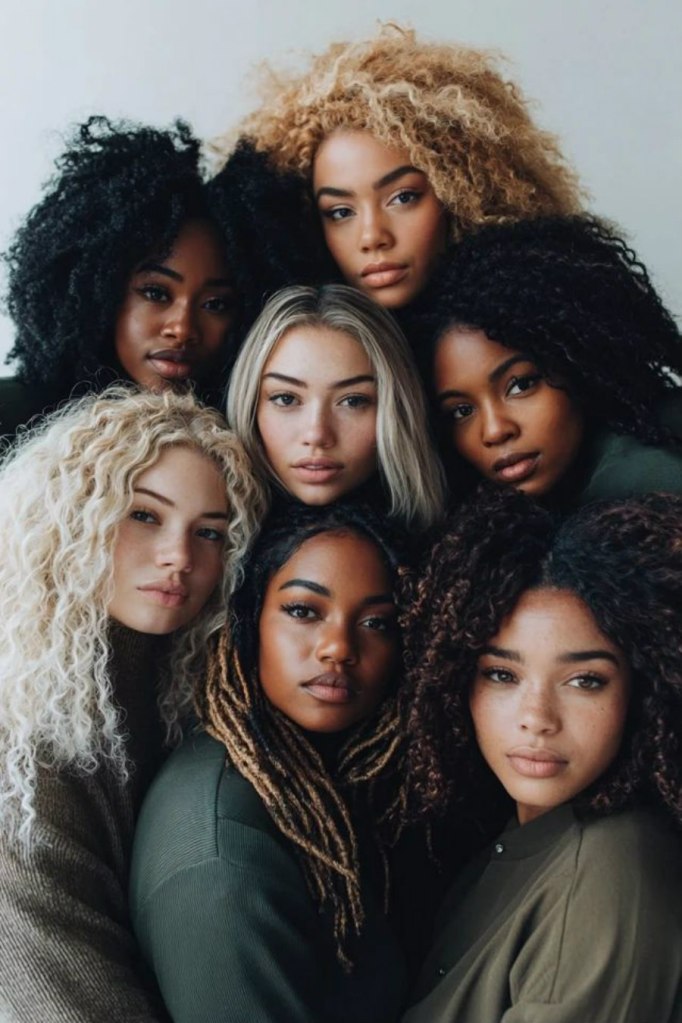
In contemporary society, the pursuit of physical beauty has become a dominant cultural preoccupation. Yet, behind the allure of aesthetic perfection lies a pervasive emptiness, as individuals often equate outward appearance with personal worth, neglecting the cultivation of inner life.

Vanity, defined as excessive pride in or concern with one’s appearance, can function as both a protective and performative mechanism. Individuals may invest in beauty to gain social approval, masking insecurity, trauma, or unmet emotional needs (Cash & Pruzinsky, 2002).

Media perpetuates the myth that beauty equals success, happiness, and moral virtue. From advertising to social media, the constant display of idealized bodies encourages the internalization of unrealistic standards, fostering dissatisfaction and superficial self-evaluation (Tiggemann & Slater, 2014).

Psychologically, this focus on appearance can contribute to body dysmorphic disorders, low self-esteem, and anxiety. When self-worth is tethered to external validation, individuals may experience perpetual inadequacy, regardless of how closely they meet cultural beauty norms (Grogan, 2016).

The vanity trap is particularly pronounced in cultures that equate youthfulness and symmetry with moral or social value. Such frameworks obscure the importance of character, wisdom, and relational depth, leading to a distorted sense of identity (Etcoff, 1999).

Historically, beauty has been leveraged as a form of social capital. Women and men with “desirable” features were often granted privileges, while those who diverged from these norms faced marginalization. This reinforces the notion that beauty is not only aesthetic but also transactional (Wolf, 1991).

Social comparison intensifies the vanity trap. In environments saturated with images of curated perfection, individuals measure themselves against often unattainable ideals, reinforcing feelings of inadequacy and fostering envy (Fardouly et al., 2015).

The psychological effects of vanity extend to relationships. When outward appearance becomes the primary measure of worth, individuals may struggle with intimacy, emotional vulnerability, and authentic connection, as relational bonds are predicated on superficial criteria (Fredrickson & Roberts, 1997).

Beauty obsession can also distract from personal growth. Time, energy, and resources invested in achieving aesthetic ideals may eclipse pursuits of intellectual, spiritual, and emotional development, leaving a hollow sense of accomplishment (Cash & Pruzinsky, 2002).

The cultural reinforcement of vanity intersects with gendered expectations. Women historically bear disproportionate pressure to maintain appearance, while men increasingly face expectations to cultivate physical fitness and style. Both groups risk internalizing external validation as self-definition (Grogan, 2016).

Social media magnifies these pressures. Platforms that prioritize visual content encourage performative beauty, where likes, comments, and followers become proxies for self-worth, often obscuring authentic personal identity (Fardouly et al., 2015).

Vanity can serve as a coping mechanism for deeper emotional wounds. Individuals may pursue perfection in appearance to compensate for rejection, neglect, or trauma, using beauty as a shield to avoid confronting inner pain (Cash & Pruzinsky, 2002).

Religious and spiritual traditions emphasize the primacy of inner virtue over external appearance. Scriptures, such as 1 Samuel 16:7, highlight that God values the condition of the heart, not outward appearances, challenging societal obsessions with beauty. This perspective offers a pathway to reconcile identity with moral and spiritual integrity.

Therapeutic interventions can address the inner emptiness associated with vanity. Cognitive-behavioral therapy, mindfulness, and narrative therapy help individuals disentangle self-worth from appearance, fostering internal validation and emotional resilience (Cash & Pruzinsky, 2002).

Community and relational contexts are crucial. Mentorship, authentic friendships, and supportive family structures provide mirrors for self-worth based on character and action, rather than appearance, reducing the compulsion toward superficial validation (Ward & Brown, 2015).

Art and creative expression can redirect focus from appearance to inner life. Through writing, painting, music, and performance, individuals can explore identity, emotions, and purpose, cultivating fulfillment that transcends external aesthetics (Etcoff, 1999).

The vanity trap is cyclical, often reinforced across generations. Children observing parental preoccupation with appearance may internalize similar values, perpetuating an endless pursuit of external approval at the expense of emotional and spiritual depth (Danieli, 1998).

Cultural critique highlights the intersection of consumerism and vanity. Beauty industries capitalize on insecurities, creating demand for products and services that promise perfection but rarely deliver lasting satisfaction, commodifying self-esteem (Wolf, 1991).

Reclaiming self-worth requires deliberate introspection. Recognizing the limits of beauty, embracing imperfection, and investing in internal growth can counter the emptiness produced by vanity. True confidence stems from alignment of values, purpose, and character with lived experience.

Ultimately, confronting the vanity trap entails a paradigm shift: valuing inner beauty, moral integrity, emotional depth, and relational authenticity over transient physical ideals. This reorientation fosters holistic well-being, resilient self-esteem, and meaningful human connection.


References

  • Cash, T. F., & Pruzinsky, T. (2002). Body image: A handbook of theory, research, and clinical practice. Guilford Press.
  • Danieli, Y. (1998). International handbook of multigenerational legacies of trauma. Plenum Press.
  • Etcoff, N. (1999). Survival of the prettiest: The science of beauty. Doubleday.
  • Fardouly, J., Diedrichs, P. C., Vartanian, L. R., & Halliwell, E. (2015). Social comparisons on social media: The impact of Facebook on young women’s body image concerns and mood. Body Image, 13, 38–45.
  • Fredrickson, B. L., & Roberts, T.-A. (1997). Objectification theory: Toward understanding women’s lived experiences and mental health risks. Psychology of Women Quarterly, 21(2), 173–206.
  • Grogan, S. (2016). Body image: Understanding body dissatisfaction in men, women, and children. Routledge.
  • Tiggemann, M., & Slater, A. (2014). NetGirls: The Internet, Facebook, and body image concern in adolescent girls. International Journal of Eating Disorders, 47(6), 630–643.
  • Ward, E., & Brown, R. L. (2015). Mental health stigma and African Americans. Journal of African American Studies, 19(2), 137–152.
  • Wolf, N. (1991). The beauty myth: How images of beauty are used against women. HarperCollins.
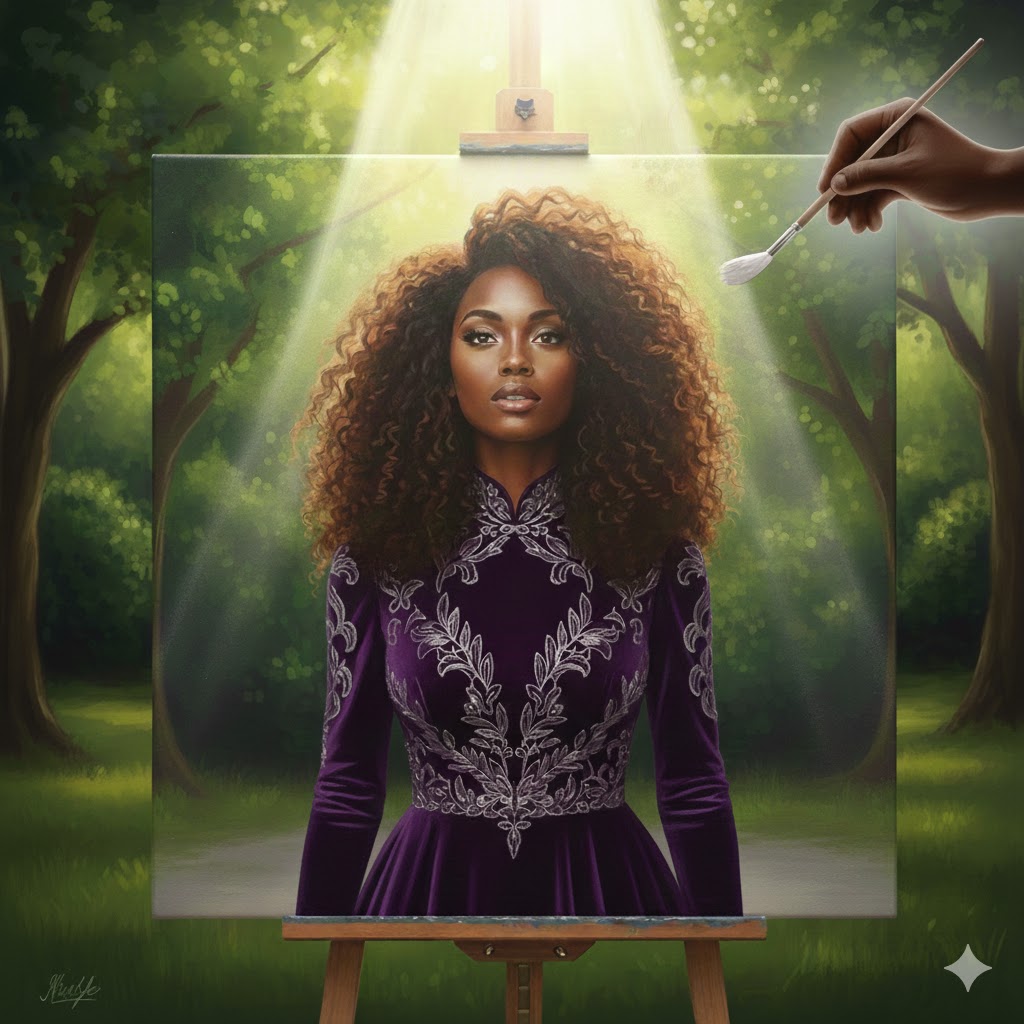
Dermal Divinity: When God Painted Her Brown.

Dermal divinity is the sacred truth that her skin is not an accident, not a mistake, and not a burden—but a masterpiece crafted with intentionality. When God painted her brown, He dipped His brush into centuries of resilience, wisdom, and ancestral strength. Her melanin is theology written in pigment, a divine proclamation that she is fearfully, wonderfully, and beautifully made (Psalm 139:14, KJV).

When God painted her brown, He thought of sunlight and soil, of beginnings and blessings. Brown is the color of the earth that nourishes life, the foundation beneath nations, the cradle of humanity itself. Science confirms Africa as the birthplace of mankind (Stringer, 2016), and scripture affirms God formed humanity from the dust of the ground (Genesis 2:7, KJV). Her shade is not merely melanin—it is memory, origin, and divine intention.

Her brown skin carries history that cannot be erased. Within its tones lie stories of queens, warriors, mothers, and visionaries. From Kush to Nubia, from the banks of the Nile to the diasporic world, her ancestors walked with a dignity that no empire could destroy. The strength in her skin is not just biological but spiritual, encoded through generations.

Dermal divinity is the understanding that her complexion exists beyond beauty—it is inheritance. Her skin is a living testament to survival through systems that sought to devalue it. Yet no chain, law, or ideology could diminish what God declared good from the beginning. Her brownness has outlived every attempt to shame it.

When God painted her brown, He adorned her with richness that absorbs light and reflects radiance. Melanin is a biological miracle—protective, powerful, and purposeful. It shields, strengthens, and sustains. Studies show melanin plays a crucial role in biological protection and adaptive evolution (Jablonski, 2021). God wove science into her skin before science learned to name it.

Her brownness is also emotional terrain. It holds the complexities of joy and trauma, of cultural pride and societal misunderstanding. She learns, sometimes slowly, that the world’s discomfort with her hue is not her burden to carry. Colorism, racism, and misogynoir may attempt to dim her, but they cannot undo divine craftsmanship.

The sacredness of her skin becomes clearer as she grows. She learns to see her body not through colonized lenses but through the eyes of the One who created her. The Bible teaches that all creation reflects God’s glory (Isaiah 60:1, KJV). Her brownness, therefore, shines with holy intention, a reminder that beauty is not Eurocentric—it is God-designed.

When God painted her brown, He gifted her a crown of textured glory. Coils, curls, and kinks spiral like galaxies, echoing divine creativity. Her hair is not a rebellion; it is a revelation. It testifies to her lineage, to the creative diversity of a God who delights in variety, complexity, and bold expression.

Dermal divinity also acknowledges that her body is not merely aesthetic—it is prophetic. Her skin tells a story before she speaks, declaring the triumphs and trials of people who refused to break. Layers of pigment hold generations of laughter, tears, labor, and liberation. She carries her people with her, even when she walks alone.

When God painted her brown, He placed her in communities of richness and cultural brilliance. She belongs to a tapestry of traditions, languages, rhythms, and spiritualities that stretch across continents. Her identity is not isolated; it is collective, woven into global Blackness.

Her brownness holds a beauty that is both inward and outward. It reflects confidence that has been hard-earned, reclaimed from the distortions of media, history, and hierarchy. She realizes beauty is not a comparison but an awakening—a recognition that her reflection has always been worthy.

Dermal divinity means embracing herself without apology. She does not shrink to make others comfortable or dilute her light to fit into narrow expectations. Her brownness is not negotiable; it is divine signature. To dim it would be to distort God’s artistry.

When God painted her brown, He knew the battles she would face. He equipped her with resilience stitched into her spiritual DNA. Biblical narratives show God’s favor upon those who endure hardship with faith (James 1:12, KJV). Her strength is not accidental—it is appointed.

Her skin becomes sacred armor, not because it is impenetrable, but because it is intentional. She learns that the beauty of being brown is not in perfection but in perseverance. Each shade of melanin carries sacred meaning, a reminder that she survives because she was designed to.

Her brownness makes her a living reflection of divine diversity. God did not create a monochrome world; He created a spectrum of human beauty. To love her skin is to honor the Creator who crafted it. To reject it would be to reject His vision.

As she matures, she learns to love the parts of herself she once questioned. Healing becomes part of blooming, and self-love becomes part of worship. Affirming her beauty aligns her with God’s truth, not the world’s distortions.

When God painted her brown, He planted within her the power to heal others. Her testimony strengthens, inspires, and liberates. She becomes a voice for girls still learning to see themselves through divine eyes. Her presence shifts atmospheres; her story births courage.

Dermal divinity is a calling to walk boldly in identity. It is the understanding that her skin is not a barrier but a blessing. She rises knowing she is seen, chosen, valued, and intentionally crafted. Her brownness is a reflection of glory, not deficit.

And finally, when God painted her brown, He made her a masterpiece—timeless, necessary, and unrepeatable. Her melanin is ministry. Her skin is scripture in color. She is the evidence of holy creativity. She is divine art in human form.


References

Jablonski, N. G. (2021). Living color: The biological and social meaning of skin color. University of California Press.

King James Bible. (1611). Authorized Version.

Stringer, C. (2016). The origin and evolution of Homo sapiens. Philosophical Transactions of the Royal Society B: Biological Sciences, 371(1698), 20150237.

Wells, I. B. (2020). Crusade for justice: The autobiography of Ida B. Wells. University of Chicago Press. (Original work published 1928)

Truth, S. (1995). Narrative of Sojourner Truth. Penguin Books. (Original work published 1850)

Fearfully and Wonderfully Made: The Brown Girl’s Psalm.

This photograph is the property of its respective owner. No copyright infringement intended.

The story of the Brown girl is a sacred hymn written not in ink, but in the richness of melanin and the quiet endurance of her soul. She walks through the world as a living psalm — a testimony of divine craftsmanship and unbroken lineage. In her reflection, we see God’s artistry, not merely in the hue of her skin but in the rhythm of her spirit. “I will praise thee; for I am fearfully and wonderfully made” (Psalm 139:14, KJV) is not just a verse—it is her anthem, one that echoes against centuries of rejection and redefinition.

For generations, the Brown girl has been taught to question her worth, to compare her glow against a false light. But the Creator never designed her to mimic another’s reflection. Her shade, like the soil of Eden, carries the very breath of life. From her crown of coiled glory to the curve of her hips, every part of her was formed with intention and reverence. Her beauty does not seek validation—it speaks of divine origin.

History tried to dim her brilliance through the politics of color and the hierarchy of skin. Yet, even in bondage, she remained radiant. The same sun that darkened her skin also kissed her strength. From the plantations to the pulpits, from the cotton fields to classrooms, she became a bearer of wisdom, resistance, and grace. She survived, not by accident, but by divine decree.

Her skin tells the story of her ancestors’ resilience—those who toiled in chains but dreamed of freedom. Each melanin cell is a monument to survival, each curl a scripture of identity. The Brown girl’s body is not a battleground of beauty standards; it is sacred architecture built by the hands of a Holy God. Her existence itself refutes every lie told by colonial mirrors.

In a world where Eurocentric beauty was exalted, the Brown girl was forced to unlearn self-hate disguised as admiration. She was told that to be lighter was to be lovelier, that proximity to whiteness meant worthiness. Yet the Spirit whispered truth: you were never meant to blend in with those who were never meant to define you. Her beauty, like a psalm, was meant to stand apart and lift the hearts of those who forgot that the Creator does not make mistakes.

The Brown girl’s psalm is also a declaration of liberation. It reminds her that she does not have to bleach her blessings, straighten her identity, or silence her power to be accepted. She can rest in the truth that her image was shaped in the likeness of divinity. When she walks, heaven recognizes her gait, for she carries the DNA of queens, prophets, and poets who have spoken life over deserts of despair.

In her eyes shines the reflection of generations—of Sarah’s faith, Hagar’s endurance, Esther’s courage, and Mary’s devotion. Her story, though rewritten by men, is restored by God. The Brown girl’s psalm teaches her that her scars are not shame but sacred ink—proof that she has survived what was meant to erase her.

This psalm also calls her to rise in purpose. Her voice was not meant to be background harmony but a solo of strength. She must reclaim the narrative that her foremothers were forced to whisper. Each time she affirms, I am fearfully and wonderfully made, she restores what history tried to erase—her identity as both divine creation and divine reflection.

The Brown girl’s confidence does not rest in external admiration but in internal revelation. She understands that self-love is not vanity but victory. When she adores her reflection, she honors the God who shaped her. When she embraces her hair, her nose, her skin, she offers praise not to herself but to the One who called her good from the beginning.

Psalm 139 becomes her mirror, not as a verse recited but as a truth embodied. It reminds her that she was known before she was born, loved before she was named, and chosen before she was celebrated. The Brown girl is not an afterthought—she is the first light after a long night of erasure.

The Brown girl’s psalm is also a lament. It grieves for the little girls who once hated their skin, who longed for lighter shades and looser curls, who never saw themselves in dolls or dreams. But the lament transforms into healing as she learns to sing again, her melody now one of restoration and self-acceptance.

Through time, her presence has always symbolized the sacred balance between beauty and strength. She can nurture nations and lead revolutions, pray with power and walk in poise. Her softness is not weakness—it is divine wisdom wrapped in compassion. Her resilience is not hardness—it is the evidence of God’s sustaining hand.

Her psalm also speaks to men, children, and generations yet unborn. It calls the world to see her not as an object of desire or envy but as an image of God’s glory. The world must unlearn its gaze and see her not as a symbol of struggle but of sacredness. She is the divine feminine in her purest form, clothed in majesty, kissed by creation.

The Brown girl’s existence is a prayer fulfilled. Her laughter is a hymn, her tears are baptisms, her dreams are prophecies. When she walks in truth, she resurrects the legacy of those who died never knowing they were beautiful. She becomes both the psalmist and the psalm.

In this psalm, love becomes her language. She learns to love the reflection that was once foreign to her. Her body becomes a temple of gratitude, her mind a sanctuary of peace. The beauty she carries is not confined to appearance—it is a moral, spiritual, and ancestral inheritance.

Every Brown girl who reads this psalm is invited to rewrite her story with grace. To forgive herself for believing lies. To anoint herself with truth. To declare, “I am my ancestors’ answered prayer.” For in her smile is the dawn, and in her voice, the echo of freedom.

She is not defined by society’s metrics but by heaven’s masterpiece. When she embraces her reflection, she sees more than beauty—she sees purpose. The Brown girl’s psalm teaches her to stand unapologetically in the fullness of her creation, unbothered by comparison, anchored in divine affirmation.

Her life is an offering. Each day she awakens, she adds another verse to the sacred song of womanhood. And as she learns to walk in love, justice, and truth, she becomes the melody of hope for those still finding their way to the mirror.

The Brown girl is fearfully and wonderfully made—an everlasting psalm written by the hand of God and sung through the ages. Her beauty is not a trend but a testimony. Her existence is not accidental—it is divine poetry in motion.

References

  • The Holy Bible, King James Version. (Psalm 139:14).
  • hooks, b. (1992). Black Looks: Race and Representation. South End Press.
  • Morrison, T. (1970). The Bluest Eye. Holt, Rinehart and Winston.
  • Lorde, A. (1984). Sister Outsider: Essays and Speeches. Crossing Press.
  • Davis, A. (1981). Women, Race, & Class. Random House.
  • Hill Collins, P. (2000). Black Feminist Thought: Knowledge, Consciousness, and the Politics of Empowerment. Routledge.
  • Cooper, B. (2018). Eloquent Rage: A Black Feminist Discovers Her Superpower. St. Martin’s Press.

Masculine Perfection Series: Broderick Hunter, Christopher Williams, and Blair Underwood.

Broderick Hunter — “Mesmerizing eyes, boyish charm, modern Black beauty.”

Broderick Hunter Jr., born January 3, 1991, in Fontana, California, is an American model and actor. Originally a basketball player with over fifteen years of experience, an injury shifted his path toward modeling in 2011. Hunter has appeared in editorials and covers for major publications, including Vogue Paris, Italian GQ, Cosmopolitan, Maxim, and Essence. He has also modeled for top brands such as Ralph Lauren. On screen, he has acted in television series, including Insecure, showcasing versatility that combines athleticism, aesthetic polish, and charisma.

Hunter’s allure lies in his “piercing” eyes and boyish charm — a blend of youthful energy and contemporary Black male beauty. His presence conveys both confidence and approachability, making him a standout figure in fashion and media.


Christopher Williams — “Soulful crooner, gorgeous face, velvet voice.”

Christopher Williams, born August 22, 1967, in the Bronx, New York, emerged as a professional recording artist in the late 1980s. His debut album, Adventures in Paradise (1989) introduced his smooth R&B style, and his 1991 single I’m Dreamin’ topped Billboard’s Hot R&B/Hip-Hop Singles chart. Williams continued to produce hits such as Every Little Thing U Do and All I See, solidifying his reputation as a romantic and soulful performer. He has also acted in films, most notably New Jack City, and participated in theatre and smaller screen roles.

Williams embodies a classic form of Black masculinity: his gorgeous face and rich, emotional voice convey vulnerability and romantic depth. His combination of musicality and visual appeal positioned him as a beloved figure in R&B and Black culture.


Blair Underwood — “Demure sophistication, classically handsome, acting excellence.”

Blair Underwood, born August 25, 1964, in Tacoma, Washington, is a classically trained actor with a BFA from Carnegie Mellon School of Drama. He gained prominence with the role of attorney Jonathan Rollins on NBC’s L.A. Law (1987–1994) and has sustained a prolific career in film and television, displaying versatility across genres. Underwood has received two Golden Globe nominations, multiple NAACP Image Awards, and a Grammy Award, underscoring his talent and impact.

Underwood represents a timeless, understated elegance, combining classical good looks with gravitas and sophistication. His refined style and acting skill embody a mature, dignified form of Black masculine beauty, emphasizing poise, intellect, and artistic excellence.


Why these three matter

Together, Broderick Hunter, Christopher Williams, and Blair Underwood illustrate a spectrum of Black male beauty and excellence:

  • Hunter reflects contemporary youth, athleticism, and media-ready aesthetic.
  • Williams represents soulful, romantic, and emotionally resonant masculinity.
  • Underwood embodies classical sophistication, gravitas, and unforgettable actor.

Their collective presence challenges narrow standards of Black male beauty, offering multiple models of excellence in fashion, music, and acting.


References

  • Broderick Hunter — Wikipedia, IMDb, Teen Vogue, Vogue Paris.
  • Christopher Williams — Wikipedia, IMDb, Billboard, UrbanBridgez.
  • Blair Underwood — Wikipedia, TV Guide, BET, Encyclopedia.com.

The Effect of Colorism in Latin America & the Caribbean.

Photo by Keira Burton on Pexels.com

Colorism, the preferential treatment of lighter-skinned individuals over darker-skinned individuals within the same racial or ethnic group, is a pervasive social issue in Latin America and the Caribbean. Unlike racism, which typically operates between racial groups, colorism functions within communities, shaping beauty standards, social mobility, and economic opportunities. The colonial history of the region, combined with complex racial hierarchies, has deeply entrenched the preference for lighter skin.

In Brazil, colorism is heavily influenced by the legacy of Portuguese colonization and the transatlantic slave trade. Lighter-skinned Brazilians often enjoy greater social acceptance, higher economic opportunities, and more visibility in media and politics. Darker-skinned individuals, including Afro-Brazilians, frequently face systemic disadvantages in employment, education, and social interactions.

Colombia presents a similar pattern. The country’s stratified society historically valued European ancestry and lighter skin, relegating Afro-Colombians and Indigenous populations to lower socioeconomic positions. Studies reveal that lighter-skinned Colombians are more likely to secure professional jobs and attain higher wages, while darker-skinned individuals face barriers to upward mobility.

In the Dominican Republic, colorism intersects with national identity and postcolonial ideals of beauty. Lighter-skinned Dominicans are often celebrated in media, popular culture, and advertising, reinforcing the association between fair skin and social prestige. Conversely, darker-skinned Dominicans experience marginalization and negative stereotyping.

Puerto Rico’s complex racial and cultural landscape similarly reflects colorist biases. Fair-skinned Puerto Ricans, often of European descent, are frequently afforded higher social status, while Afro-Puerto Ricans may encounter limited opportunities and social discrimination. These disparities extend to politics, media, and employment sectors.

Cuba’s history of colonialism and slavery has contributed to persistent colorist attitudes. Afro-Cubans, particularly those with darker skin, are disproportionately represented in lower-paying jobs and are underrepresented in government and media. Skin color continues to influence social hierarchy, marriage prospects, and access to resources.

Haiti, despite its predominantly Black population, exhibits colorism rooted in French colonial legacy. Lighter-skinned Haitians historically held more economic power and social influence, a dynamic that persists in contemporary society. Colorism affects access to education, professional advancement, and social acceptance.

Mexico demonstrates the entrenchment of colorist ideals in beauty standards, media representation, and social mobility. Lighter-skinned Mexicans, often perceived as more European, are preferred in modeling, television, and advertising. Darker-skinned individuals face subtle and overt discrimination in professional, educational, and social contexts.

In Panama, lighter-skinned citizens are often associated with higher social and economic status. The Afro-Panamanian population, particularly those with darker skin, experiences limited access to professional opportunities, societal marginalization, and biased treatment in various institutions.

Costa Rica and Nicaragua also reflect similar dynamics. European features and lighter skin are socially valued, while Indigenous and Afro-descendant populations with darker skin are disproportionately underrepresented in media, education, and government.

Peru’s complex racial hierarchy demonstrates how colorism intersects with Indigenous and mestizo identities. Lighter-skinned individuals often achieve greater social mobility, while darker-skinned populations face marginalization, limited economic opportunities, and underrepresentation in leadership roles.

Venezuela has historically celebrated lighter skin in media and social elites. Fair-skinned Venezuelans dominate beauty pageants, television, and political representation, whereas Afro-Venezuelans and darker-skinned individuals remain socially and economically disadvantaged.

In Ecuador, lighter skin continues to confer social advantage. Indigenous and Afro-Ecuadorian populations are frequently subject to prejudice, unequal treatment, and limited access to quality education and professional careers.

In Trinidad and Tobago, colorism affects social stratification, particularly among Afro-Caribbean and Indo-Caribbean communities. Lighter-skinned individuals often receive more social recognition, while darker-skinned individuals face systemic barriers in employment, education, and media representation.

Jamaica exhibits similar patterns, with lighter-skinned Jamaicans often celebrated in popular culture and the entertainment industry. Darker-skinned individuals may encounter prejudice, reduced opportunities, and negative stereotyping in society.

In Belize, lighter skin is frequently associated with European ancestry and social privilege. Afro-Belizeans and Indigenous populations with darker skin experience economic and social marginalization, reflecting the colonial influence on racial hierarchy.

In Guyana, colorism affects both Afro-Guyanese and Indo-Guyanese populations. Lighter skin is socially desirable, influencing marriage patterns, professional opportunities, and media representation. Darker-skinned individuals often face systemic bias.

Barbados and other smaller Caribbean nations similarly reflect entrenched colorist attitudes. Lighter-skinned citizens are often privileged in professional advancement, social acceptance, and media visibility, while darker-skinned individuals face systemic discrimination.

Across Latin America and the Caribbean, the media plays a critical role in perpetuating colorism. Television, film, and advertising frequently feature lighter-skinned individuals as idealized beauty standards, reinforcing societal biases and influencing self-perception among darker-skinned populations.

Table: The Impact of Colorism Across Latin America & the Caribbean

Country/RegionCommunities Most AffectedForms of Colorism & Social Impact
BrazilAfro-Brazilians, Indigenous peoplesLighter skin linked to higher income, visibility in media, and political representation; darker-skinned Brazilians experience systemic racism and underrepresentation.
ColombiaAfro-Colombians, Indigenous groupsLighter-skinned Colombians receive better employment and education opportunities; darker skin associated with lower social class.
Dominican RepublicAfro-Dominicans, Haitian descendantsNational identity tied to whiteness; darker-skinned Dominicans often face denial of citizenship and discrimination.
Puerto RicoAfro-Puerto Ricans, mixed-race populationsLighter skin associated with beauty and privilege; darker-skinned individuals face workplace and media bias.
CubaAfro-Cubans, mixed-race citizensLighter skin favored in tourism and professional sectors; Afro-Cubans underrepresented in media and politics.
HaitiDarker-skinned Haitians (majority), mulatto elitesHistorical “mulatto elite” dominance; darker-skinned citizens face limited economic opportunities.
MexicoIndigenous and Afro-Mexican communitiesTelevision and politics dominated by light-skinned Mexicans; darker-skinned citizens face classism and racial stereotyping.
PanamaAfro-Panamanians, Indigenous groupsColorism intersects with class; lighter-skinned individuals hold most elite and visible positions.
Costa RicaAfro-Costa Ricans, Indigenous peoplesDarker-skinned individuals experience employment discrimination and limited media presence.
NicaraguaAfro-Nicaraguans, Indigenous populationsSkin color determines access to education, tourism jobs, and social status.
PeruIndigenous Andeans, Afro-PeruviansLighter-skinned mestizos have better mobility; darker-skinned citizens face political and social exclusion.
VenezuelaAfro-Venezuelans, Indigenous groupsMedia and beauty industries glorify light skin; darker-skinned Venezuelans face discrimination and poverty.
EcuadorIndigenous, Afro-EcuadoriansLighter skin equated with modernity and wealth; darker skin seen as backward or poor.
Trinidad & TobagoAfro-Trinidadians, Indo-TrinidadiansFair skin often linked to higher desirability and media preference; darker tones marginalized socially.
JamaicaAfro-JamaicansSkin-lightening products normalized; lighter skin considered more beautiful and commercially valuable.
BelizeAfro-Belizeans, Garifuna, MayaLighter skin associated with colonial-era privilege; darker-skinned citizens face social bias.
GuyanaAfro-Guyanese, Indo-GuyaneseColorism influences dating, employment, and social class distinctions.
BarbadosAfro-BarbadiansLighter skin preferred in entertainment and business leadership; darker skin linked to lower income.
Dominica & St. LuciaAfro-Caribbean populationsColorism manifests in beauty pageants and tourism; lighter skin favored for visibility and employment.
BahamasAfro-BahamiansLight-skinned elite families hold social influence; darker-skinned individuals experience class-based prejudice.

Observations

  • Common Thread: In every country, lighter skin is associated with higher socioeconomic status, beauty, and modernity, while darker skin is often linked to poverty, backwardness, or undesirability — a colonial legacy that still shapes identity and opportunity.
  • Media’s Role: Regional television, advertisements, and pageantry largely portray fair skin as ideal, reinforcing intergenerational color biases.
  • Globalization Influence: Western beauty standards continue to affect local perceptions, fueling a growing skin-lightening industry across Latin America and the Caribbean.
  • Resistance Movements: Recent years have seen Afro-Latino and Indigenous activists push for representation through art, education, and social media — reclaiming pride in darker complexions and African ancestry.

Efforts to address colorism in Latin America and the Caribbean require multifaceted approaches. Education, media representation reform, and public awareness campaigns are essential to challenge entrenched biases, promote inclusivity, and foster a society where individuals are valued regardless of skin tone.


References

Rohinianand.com. (n.d.). Colorism’s global manifestations. https://www.rohinianand.com/post/colorism-s-global-manifestations?utm_source=chatgpt.com

News.uga.edu. (n.d.). History of colorism sheds light on discrimination. University of Georgia. https://news.uga.edu/history-of-colorism-sheds-light-on-discrimination/?utm_source=chatgpt.com

PMC. (n.d.). Psychological effects of colorism and internalized bias. https://pmc.ncbi.nlm.nih.gov/articles/PMC11696280/?utm_source=chatgpt.com

PubMed. (2023). Health consequences of skin-lightening practices and biases in medical care. National Library of Medicine. https://pubmed.ncbi.nlm.nih.gov/40063294/?utm_source=chatgpt.com

Teen Vogue. (n.d.). Celebrating Black and brown beauty on social media. https://www.teenvogue.com/story/black-and-brown-beauty-celebration-instagram-accounts-impact?utm_source=chatgpt.com

Axios. (2020, September 8). Hollywood casting and colorism in global media. https://www.axios.com/2020/09/08/hollywood-casting-china-colorism-light-skinned?utm_source=chatgpt.com

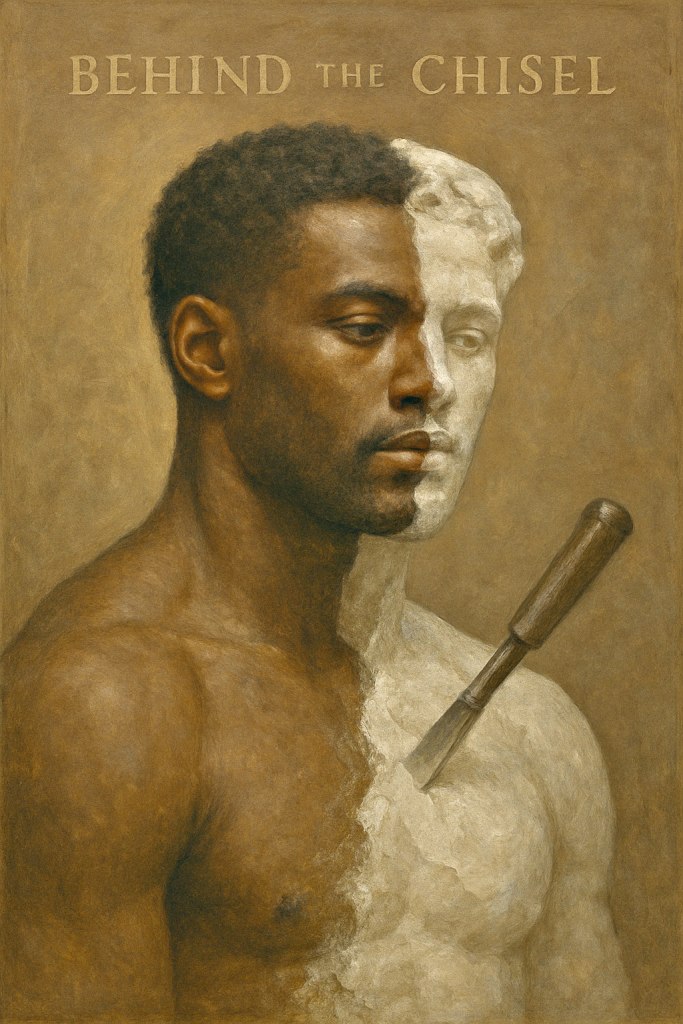
Behind the Chisel: The Vulnerability of the Beautiful Man.

Beauty, when embodied by a man, is both a gift and a burden. It grants social privilege, admiration, and power, yet it also confines him within the rigid expectations of visual perfection. The beautiful man becomes both subject and object, celebrated for his form but often alienated from his soul. In a society that prizes physical allure, his beauty becomes a mask—a chiseled shield hiding the delicate reality of human vulnerability beneath.

Historically, the male form was idealized not merely for attraction but as a symbol of strength, divinity, and order. In classical Greece and Rome, sculptors such as Polykleitos and Praxiteles established proportions that became the gold standard of masculine beauty, where symmetry reflected moral and cosmic harmony. The male nude in marble was not erotic but sacred, representing the balance between spirit and flesh. Yet even in this idealization, beauty was a double-edged sword. The hero’s perfect form was both admired and envied, his body a site of reverence and scrutiny alike.

The Renaissance revived this fascination with masculine perfection. Michelangelo’s David stands as the archetype—a beautiful man poised between youth and destiny. His body radiates strength, but his eyes betray contemplation, even fear. The chisel that shaped his muscles also exposed his soul. David’s tension between beauty and purpose mirrors the existential weight of the beautiful man throughout time: the pressure to embody power while concealing fragility.

In modernity, beauty became democratized yet commodified. With the advent of photography, cinema, and advertising, male beauty entered the realm of mass consumption. Icons like Paul Newman, Sidney Poitier, and Denzel Washington were admired not only for their talent but for their faces—faces that carried racial, social, and moral narratives. The beautiful man became a product of gaze and market, sculpted by expectation rather than stone.

The rise of digital media has intensified this commodification. Social media, with its relentless curation of images, has made beauty a measurable currency. Men are now expected to maintain a “natural perfection,” performing effortless attractiveness through fitness regimens, fashion, and self-branding. Yet behind the filtered glow and crafted angles lies the silent weight of performance anxiety—the fear of losing the audience’s gaze.

Psychologically, this creates a tension between identity and image. As Susan Bordo (1999) notes, men have increasingly internalized the gaze once reserved for women, becoming self-conscious objects of visual consumption. The male body is now a spectacle, and its owner becomes a curator of his own desirability. Beauty thus shifts from being a trait to being a task, an endless project of maintenance and validation.

The burden of male beauty also manifests in emotional suppression. Society rarely permits beautiful men to express vulnerability without undermining their masculine image. Strength, stoicism, and confidence are the expected traits—yet beneath them often lies loneliness. The beautiful man may find himself admired but not known, desired but not loved for his depth. His beauty becomes a barrier to intimacy, a mirror reflecting only surface light.

This paradox is magnified for Black men in particular, whose beauty often carries both hypervisibility and erasure. As scholars like bell hooks (2004) observe, the Black male body is simultaneously fetishized and feared, admired for its physicality yet denied full humanity. When beauty is filtered through racialized lenses, it becomes both a resistance and a burden. The Black beautiful man, then, is not only contending with aesthetics but with history—with centuries of objectification and survival inscribed into his skin.

The entertainment industry further distills this complexity. The camera loves the handsome man, yet it traps him in archetypes—the hero, the lover, the rebel. Hollywood celebrates his face while scripting his silence. Even within this admiration lies exploitation: beauty is marketable only when it conforms to prevailing ideals. As Laura Mulvey (1975) articulated in her theory of the “male gaze,” visual culture conditions viewers to consume bodies, not comprehend souls.

Behind this consumption lies a subtle cruelty: beauty fades. Time, the ultimate sculptor, erodes even the most flawless face. The beautiful man thus lives with an awareness of impermanence, of the day when admiration turns to nostalgia. His identity, if built on physical perfection, risks collapsing when youth departs. To age beautifully, therefore, becomes an act of rebellion—of reclaiming substance over surface.

Yet the vulnerability of beauty is not purely tragic. It invites empathy, forcing us to confront the shared fragility of all human ideals. The beautiful man who acknowledges his imperfections dismantles the myth of invincibility and reveals a more sacred kind of strength—the courage to be seen fully. His cracks become the proof of life, the evidence that marble can breathe.

Cultural critic Alexander Nehamas (2007) argues that beauty is “a promise of happiness,” not its guarantee. For the beautiful man, this promise often proves deceptive. The attention beauty attracts can isolate rather than fulfill, reducing complexity to aesthetics. Yet in that tension lies an opportunity: the chance to transform admiration into introspection, and image into meaning.

Spiritual traditions echo this truth. The Bible reminds humanity that “man looketh on the outward appearance, but the Lord looketh on the heart” (1 Samuel 16:7, KJV). True beauty, then, is not carved into flesh but cultivated in character. When a man understands that his worth transcends his reflection, he begins to live from the inside out—reclaiming the divine balance once symbolized in stone.

In art and life alike, the chisel’s purpose is revelation, not concealment. Every strike that shapes the figure also exposes the form beneath. Likewise, every trial that humbles the beautiful man reveals his essence. Vulnerability becomes the ultimate aesthetic—the invisible beauty of the soul.

This reclamation is vital in a world obsessed with surfaces. To be beautiful and human is to accept both admiration and misunderstanding, to find freedom not in perfection but in authenticity. Beauty ceases to be performance when it becomes truth. The man who dares to be imperfect redefines strength itself.

The modern beautiful man stands, like David, at the threshold between image and destiny. He learns that behind the chisel—the cuts of scrutiny, aging, and expectation—lies the deeper sculpture of spirit. His vulnerability is not his downfall but his masterpiece.

References

Bordo, S. (1999). The male body: A new look at men in public and in private. Farrar, Straus and Giroux.

Gilmore, D. D. (1990). Manhood in the making: Cultural concepts of masculinity. Yale University Press.

hooks, b. (2004). We real cool: Black men and masculinity. Routledge.

Kimmel, M. (2017). Angry white men: American masculinity at the end of an era. Nation Books.

Mulvey, L. (1975). Visual pleasure and narrative cinema. Screen, 16(3), 6–18.

Nehamas, A. (2007). Only a promise of happiness: The place of beauty in a world of art. Princeton University Press.

The Ebony Dolls: Eva Marcille

This photograph is the property of its respective owner. No copyright infringement intended.

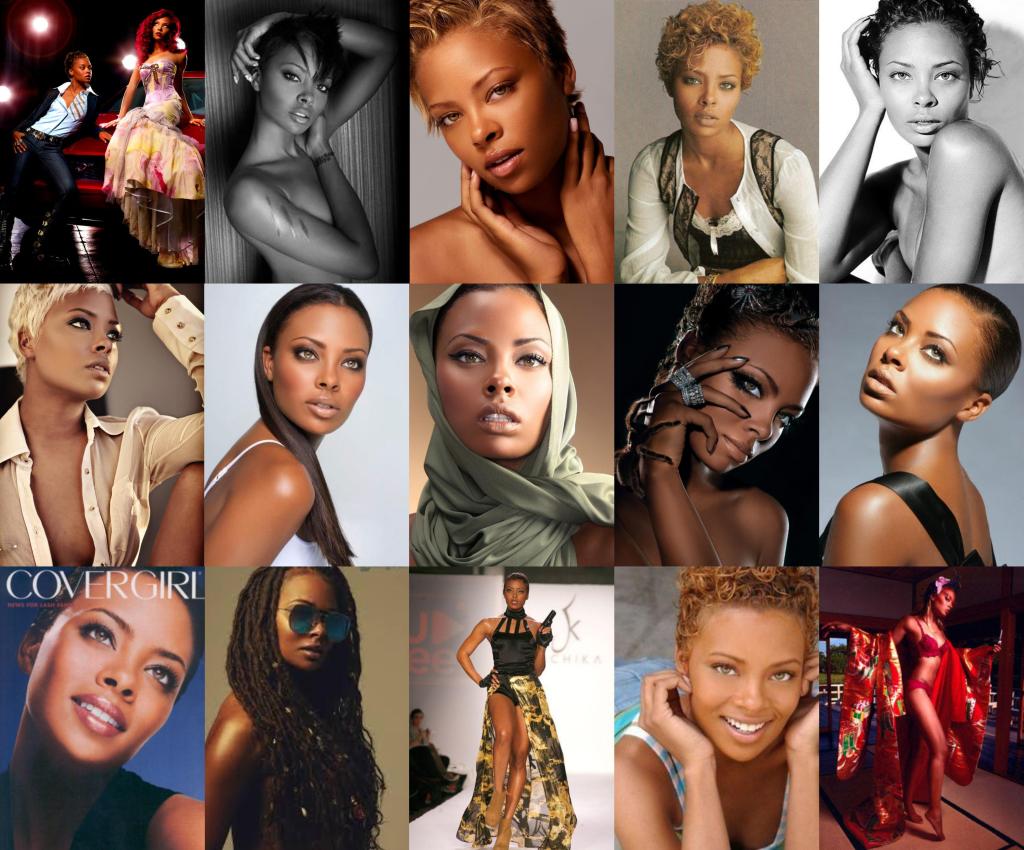
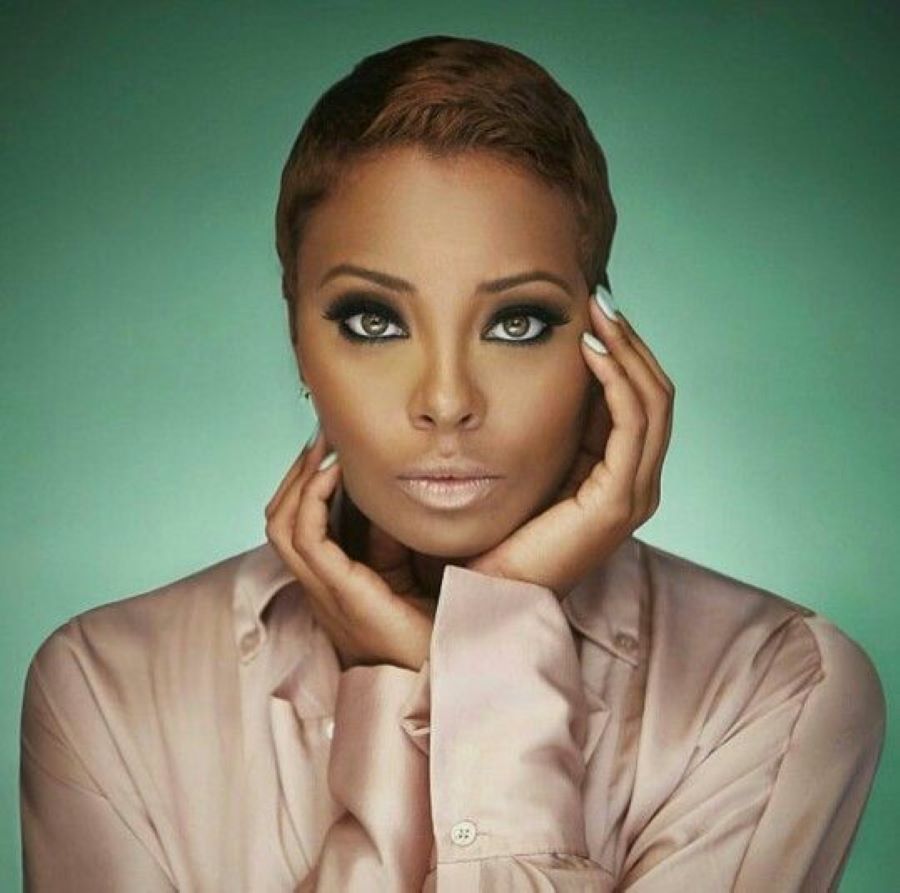
She entered the world like a masterpiece brushed in melanin—a canvas of luminous light ebony-toned skin, warmed with golden undertones that seemed to glow without permission. Her eyes, a mesmerizing hazel-green ocean rimmed with amber, framed by elongated lashes, and her face sculpted in elegant symmetry, carried a porcelain-like softness yet striking angularity that photographers would later call exotic, rare, unforgettable. She was not just beautiful, but possessed an aesthetic harmony where Africa, Europe, and possibility met in one gaze.

Eva Marcille Pigford was born on October 30, 1984, in Los Angeles, California, to Evan Pigford and Michelle Pigford (IMDB, 2024). She identifies as African American and Puerto Rican, with additional European ancestry, making her widely recognized as multiracial/biracial or “mixed, though she embraces her Black identity as dominant in representation and cultural affiliation (Marcille in BET, 2022). She grew up in South Central Los Angeles, later attending Clark Atlanta University, where she studied broadcast journalism before entering the modeling world (Essence, 2020).

Her journey into Hollywood began on one of the most-watched runways on television—America’s Next Top Model (ANTM). In 2004, Eva auditioned for the third cycle of ANTM, impressing judges with her high-fashion potential, bone structure, presence, and magnetic eyes. She won the competition at age 19, securing a CoverGirl cosmetics contract and becoming the first winner with significantly darker skin and exotic features to take the mainstream commercial modeling crown (Banks et al., 2004; Tyra Show Archives).

This photograph is the property of its respective owner. No copyright infringement intended.

Following ANTM, she quickly transitioned into major print and commercial modeling campaigns. She signed with Ford Models, one of the most prestigious agencies globally (Models.com, 2010). Her early post-show momentum included high-profile spreads in Elle, Essence, King Magazine, GQ, and Cosmopolitan, elevating her beyond reality TV into fashion-editorial legitimacy (IMDB, 2024; Elle Archives, 2005).

Marcille became a campaign face for major brands. Her CoverGirl contract was followed by modeling partnerships and appearances in ad work for Samsung, Apple Bottoms, DKNY, Avon, and Macy’s commercials (Advertising Archives via Commercial Database; IMDB, 2024). She also became the face of shea-butter beauty and urban fashion aesthetics through co-signs with Apple Bottoms and beauty editorials celebrating deeper melanin-VS-Eurocentric glam balance (Essence, 2020).

She accumulated numerous accolades during her modeling years. In 2006, she received the Young Hollywood Award for Female Superstar of Tomorrow, marking her crossover potential beyond modeling into scripted media (Young Hollywood Awards, 2006). Her career trajectory would later include multiple NAACP media appearances and beauty acknowledgments for diversifying beauty representation for young Black and multiracial women (NAACP Image Awards Nominations Database).

Eva soon pursued acting, initially through guest television roles before securing recurring characters. Early appearances included roles on Smallville (2005), Everybody Hates Chris (2007), and House of Payne (2008), which helped transition her from model to actress in the early 2000s Hollywood pipeline (IMDB, 2024).

This photograph is the property of its respective owner. No copyright infringement intended.

She later earned significant screen attention in film, appearing in Crossover (2006), followed by roles in I Think I Love My Wife (2007) alongside comedian Chris Rock, and other Black-ensemble screen projects that positioned her as a staple face of the modern ebony Hollywood class (IMDB, 2024).

Her most culturally impactful work in scripted television came decades later. In 2021, she joined the cast of Tyler Perry’s drama-soap powerhouse All the Queen’s Men, portraying Madam’s rival, Marilyn “Ms. Noelle” Deville, a glamorous yet cunning boss-woman role that aligned her beauty with narrative authority, seduction, and psychological complexity (Perry, 2021). This role cemented her presence in the urban neo-noir glam queen archetype (IMDB, 2024).

Her career also expands into hosting, reality television, and brand ambassadorship. In 2018, she joined The Real Housewives of Atlanta (RHOA), increasing her cultural relevance in Black pop-culture media. She leveraged that visibility into business, advocacy, and television commentary (Bravo, 2018).

Her personal life became part of her public narrative. Eva is a mother to three children:

  • Marley Rae McCall (born 2014) with singer Kevin McCall,
  • Michael Todd Sterling Jr. (born 2018),
  • and Maverick Leonard Sterling (born 2019) with her ex-husband, attorney Michael Sterling (Sterling & Marcille in People, 2023).

She married Michael Sterling in 2018 in a star-studded Atlanta ceremony, widely praised for elegance, intimacy, and cultural grandeur (People, 2023). In 2023, she filed for divorce, citing irreconcilable differences, but has publicly maintained a co-parenting-forward family focus (People, 2023).

So what makes her an Ebony Doll archetype? The phrase “Ebony Doll” symbolizes more than skin tone—it represents exotic facial symmetry, soft-spoken glam power, and editorial beauty rooted in Black aesthetics but universal in appeal (Hunter, 2005; Hall, 1997). Eva embodies this through her deep-melanin foundation, mixed-heritage features, commercial runway legitimacy, and Hollywood endurance. But deeper still, an ideal Ebony Doll must influence beauty psychology—she did. Eva helped normalize hazel-green eyes on dark melanin, short-hairstyle femininity in Black fashion media, and soft yet dominant screen presence (Hooks, 1992; Hunter, 2005).

This photograph is the property of its respective owner. No copyright infringement intended.

Her features align with cross-cultural beauty science. Studies on beauty perception highlight the high impact of eye color contrast against deep skin, facial symmetry, upper-cheekbone prominence, oval face sculpting, and universal aesthetic ambiguity (“ethnically mixed facial harmonics”) being perceived as exotically attractive (Rhodes, 2006; Little, Jones, & DeBruine, 2011). This matches Eva’s visual profile and explains her path to fashion-campaign success and sustained camera appeal.

Thus, she is an Ebony Doll ideal not simply because she is beautiful, but because she is representative, aspirational, adaptable, culturally resonant, fashion-validated, screen-anchored, and psychologically unforgettable.


References

Bravo. (2018). The Real Housewives of Atlanta cast archives.

Banks, T., et al. (2004). America’s Next Top Model, Cycle 3 production and judging transcripts. UPN Archives.

Bet. (2022). Interview commentary on multiracial identity, ethnicity, and cultural affiliation archives.

Essence. (2020). Eva Marcille career editorial and modeling retrospective.

Hall, S. (1997). Representation: Cultural representations and signifying practices. Sage.

Hooks, B. (1992). Black looks: Race and representation. South End Press.

Hunter, M. (2005). Race, gender, and the politics of skin tone. Routledge.

IMDB. (2024). Eva Marcille professional filmography and career database archives.

Jones, B. C., DeBruine, L. M., & Little, A. C. (2011). Facial contrast and attractiveness. Psychological Science, 22(1), 57–62.

Marcille, E., Sterling, M. (2023). Marriage and co-parenting public statements. People Magazine Archives.

Perry, T. (2021). All the Queen’s Men production and casting archives.

Rhodes, G. (2006). The evolutionary psychology of facial beauty. Annual Review of Psychology, 57, 199–226.

Beauty Is in the Eyes of the Beholder

Beauty has fascinated philosophers, scientists, and artists for centuries, yet it remains one of the most complex and debated concepts in human experience. When someone says, “Beauty is in the eyes of the beholder,” they acknowledge that what we find attractive is not universal. Two people can look at the same face—Brad Pitt, Denzel Washington, Aishwarya Rai Bachchan, or Kim Kardashian—and have completely different reactions. Some may see perfection, while others feel no attraction at all. This divergence raises a profound question: how can one object or person produce such opposite interpretations?

Human perception of beauty emerges from the interplay between biology, culture, psychology, and personal experience. While some elements of attractiveness are rooted in genetic preferences for health, symmetry, or fertility, these biological cues do not act alone. They are filtered through upbringing, environment, history, and learned values. Thus, beauty can be both subjective and objective at the same time—anchored in natural instincts yet shaped by social forces.

Beauty becomes subjective because each person’s mind interprets stimuli differently. The brain does not merely record what the eyes see; it interprets, edits, analyzes, and assigns meaning. Experiences from childhood, cultural exposure, family influences, societal ideals, and even personal insecurities shape how we judge attractiveness. Two people standing side-by-side may share the same visual input but generate entirely different emotional responses.

Opposing views arise because people possess individual histories that influence how they categorize beauty. Someone raised in a family that praises lighter skin may grow up prioritizing those features, while another who grows up surrounded by deep-toned beauty may find richness in melanin to be the ultimate ideal. In this sense, environment acts like a lens that shapes the raw genetic instincts built into us.

While some individuals find global icons like Brad Pitt or Aishwarya Rai incredibly attractive, others may not respond emotionally to their features. This does not diminish the beauty of the individual; it highlights the complexity of perception. Attraction depends not only on the features themselves but also on how a person’s brain interprets those features in relation to memories, associations, and internal biases.

Childhood plays a powerful role in shaping what we find attractive. Children absorb subtle messages from parents, television, social media, and peers. They observe which faces receive praise, who is considered desirable, and how beauty is talked about. These early impressions become mental templates—what psychologists call “imprinting”—that influence adult preferences. A child repeatedly exposed to a certain beauty ideal is more likely to absorb that ideal subconsciously.

Genetics contributes to attraction by shaping innate preferences. Humans across cultures tend to favor certain biological cues such as facial symmetry, clear skin, proportional features, and expressions of health. These cues signal good genes, fertility, and survival advantages. For example, symmetry suggests developmental stability, while clear skin signals health. However, genetics does not dictate which specific faces each person finds beautiful; it merely provides a blueprint for general tendencies.

Beauty is subjective because perception relies on neural pathways formed over time. The brain creates shortcuts known as heuristics to interpret attractiveness quickly. These heuristics depend heavily on exposure, conditioning, and familiarity. What one person recognizes as beautiful, another may interpret differently based on the mental filters they’ve developed. In other words, beauty is partly a reflection of the beholder’s inner world.

It is true that everyone who looks at you views you differently. Each observer applies their own criteria, experiences, social conditioning, and emotional states to the image before them. You do not appear the same to all people because people do not possess identical mental frameworks. Every face becomes a personal puzzle that each mind solves in its own way.

Opinions of beauty are formed through a mixture of biological impulses and cognitive associations. The brain’s reward pathway, especially the release of dopamine, influences how strongly we react to certain features. If a particular face or feature activates positive associations—perhaps it resembles a loved one or cultural icon—the viewer experiences attraction. If it triggers negative or unfamiliar associations, attraction diminishes.

Many of our thoughts about beauty originate from early exposure. Family shapes our initial ideals when we are young. Culture adds another layer by reinforcing images, standards, and expectations through media and tradition. Religion and community can shift perceptions by emphasizing modesty, purity, strength, or specific gender roles. These influences blend into a personal algorithm that defines what each person considers beautiful.

The subjectivity of beauty is amplified by social comparison. People learn to categorize faces through repeated exposure, and these categories evolve with societal values. When society celebrates a certain celebrity, body type, hairstyle, or skin tone, our understanding of beauty shifts along with it. Over time, these societal shifts influence how individuals form preferences.

In addition, personal experiences shape perception. A person who associates a specific facial type with a negative memory may feel aversion, even if that facial type is widely considered attractive. Conversely, someone who has positive emotional experiences associated with certain features may find those features beautiful regardless of societal standards.

Cultural diversity plays a tremendous role in shaping beauty standards. What is ideal in one society may be average or even unappealing in another. For example, some cultures prize fuller figures, while others emphasize slimness. Some value high cheekbones, while others prioritize softer features. Beauty does not exist in a vacuum—it is embedded in cultural narratives.

Genetics also influences how we perceive beauty through evolutionary psychology. Humans are drawn to cues that historically increased the likelihood of survival and reproduction. For example, certain facial ratios—like the distance between the eyes and mouth—are universally preferred because they signal youthfulness and health. Yet these universal preferences do not override cultural and personal variation.

Beauty appears subjective because the brain reacts not only to physical features but also to emotional meaning. A face can become more attractive to someone they love, admire, or trust, while it can become less attractive if associated with negative experiences. Attraction is not static; it evolves depending on emotional context.

Our reactions to beauty also stem from cognitive biases. Familiarity bias makes us favor what we already know. Similarity bias makes us find people more attractive if they resemble us or our loved ones. Novelty bias can make unfamiliar beauty thrilling or intimidating, depending on a person’s personality and past experiences.

Beauty can shift over time because the mind is adaptable. As people experience different cultures, travel, relationships, and life changes, their perceptions of beauty expand. What one considered unattractive years earlier may become appealing as they mature or as societal standards evolve.

Psychology suggests that beauty perception is linked to identity. People often gravitate toward beauty that validates their sense of self—culturally, racially, spiritually, or emotionally. Thus, beauty becomes a mirror reflecting not only the object being viewed but also the inner state of the viewer.

Opposing views on beauty are also influenced by environment and exposure. Someone raised in an environment where natural hair, melanated skin, or certain facial features were celebrated will grow up with different ideals than someone surrounded by Eurocentric standards. Beauty is a reflection of cultural conditioning.

Subjectivity in beauty is further shaped by emotional connection. A person may find someone more attractive after learning about their personality, kindness, or intelligence. Conversely, someone physically beautiful may become unattractive if their behavior is cruel. The emotional dimension modifies the visual perception.

Another contributor to beauty’s subjectivity is personal insecurity. People often project their desires, fears, or self-judgments onto their perception of others. A person insecure about their own appearance may judge beauty more harshly, while someone confident or emotionally balanced may find beauty in a wider range of faces.

Opinions about beauty also depend on social trends. Celebrities, influencers, and media continually reshape what is considered desirable. As trends evolve—from voluptuous bodies to slim waists, from tanned skin to porcelain tones—public preferences shift with them. Beauty becomes a moving target.

The neurological basis of attraction reveals that the brain rewards patterns it finds aesthetically pleasing. These patterns may include facial symmetry, proportionality, and the golden ratio. Yet the brain’s reward center can be trained to find new patterns beautiful with enough exposure.

Beauty remains subjective because no two people share identical life experiences. The emotional, genetic, cultural, and psychological ingredients that form a person’s preferences are unique. Thus, beauty varies as widely as personalities, languages, and worldviews.

The idea that everyone sees you differently is grounded in neuroscience. Each person’s brain processes visual stimuli through unique connections formed over the years. Thus, you exist in many forms—thirty people see thirty different versions of you, shaped by their internal narratives.

Ultimately, the subjectivity of beauty emphasizes the diversity of human experience. What one person finds breathtaking, another may overlook. This diversity enriches the human story, preventing beauty from becoming a rigid or uniform standard.

Beauty is both personal and universal. It is rooted in biology but refined by culture, shaped by childhood, altered by experience, and influenced by personality. This interplay ensures that no definition of beauty is final or absolute.

Our thoughts about beauty arise from a combination of instinct and experience. While evolutionary biology gives us a framework, the mind colors perception through memory, emotion, and environment. Therefore, beauty remains one of the most personal judgments a human can make.

In the end, beauty’s subjectivity is what makes it powerful. It reminds us that attraction is not a science to be perfected but a reflection of the beholder’s inner world. Beauty lives in perception, memory, culture, genetics, and soul. It is as varied and precious as the people who define it.

References

Bzdok, D., Langner, R., Schilbach, L., Jakobs, O., Roski, C., Caspers, S., … Eickhoff, S. B. (2011). Neural correlates of emotional valence judgments: A functional MRI meta-analysis. NeuroImage, 54(3), 2233–2244.

Darwin, C. (1871). The descent of man, and selection in relation to sex. London: John Murray.

DeBruine, L. M., & Jones, B. C. (2017). Face preferences. In Encyclopedia of evolutionary psychological science (pp. 1–12). Springer.

Etcoff, N. (1999). Survival of the prettiest: The science of beauty. Anchor Books.

Grammer, K., Fink, B, Møller, A. P., & Thornhill, R. (2003). Darwinian aesthetics: Sexual selection and the biology of beauty. Biological Reviews, 78(3), 385–407.

Jones, B. C., DeBruine, L. M., Little, A. C., & Feinberg, D. R. (2007). Social transmission of face preferences among humans. Proceedings of the Royal Society B, 274(1611), 899–903.

Langlois, J. H., Kalakanis, L., Rubenstein, A. J., Larson, A., Hallam, M., & Smoot, M. (2000). Maxims or myths of beauty? A meta-analytic and theoretical review. Psychological Bulletin, 126(3), 390–423.

Little, A. C., Jones, B. C., & DeBruine, L. M. (2011). Facial attractiveness: evolutionary based research. Philosophical Transactions of the Royal Society B, 366(1571), 1638–1659.

Rhodes, G. (2006). The evolutionary psychology of facial beauty. Annual Review of Psychology, 57, 199–226.

Said, C. P., & Todorov, A. (2011). A statistical model of facial attractiveness. Psychological Science, 22(9), 1183–1190.

Thornhill, R., & Gangestad, S. W. (1999). Facial attractiveness. Trends in Cognitive Sciences, 3(12), 452–460.

Zebrowitz, L. A. (1997). Reading faces: Window to the soul? Westview Press.

Melanin Manuscript: The Story Written in Brown Skin

The construct of “self” is multidimensional, but within melanated populations, selfhood is often somatically indexed—experienced and interpreted through embodied markers such as skin pigmentation, hair texture, and phenotypic inheritance. These markers operate both as identity anchors and sociopolitical targets within racialized hierarchies (Cross, 1991).

Human pigmentation is a product of evolutionary epigenetics, wherein melanin concentration reflects adaptive responses to ultraviolet radiation exposure across geographic lineages. The result is not a genetic defect or deviation from beauty, but a biological brilliance that protects DNA integrity and resists photodamage (Jablonski & Chaplin, 2010).

Despite its biological advantages, brownness has historically endured semiotic distortion, recoded within colonial discourse as inferior, primitive, or occupationally servant-bound. This manufactured semiology exemplifies the psychology of domination, where identity scriptwriting becomes an instrument of societal control (DiAngelo, 2018; Fanon, 1952/2008).

In developmental psychology, the internalization of color narratives begins early. The Clarks’ doll studies revealed that children within oppressed groups are psychologically conditioned to prefer dominant-group aesthetics, demonstrating the emotional and cognitive consequences of white supremacist value systems on self-image formation (Clark & Clark, 1947).

The psychological burden of being “othered” is especially pronounced for brown-skinned women, who frequently navigate contradictions between heritage-based belonging and global media infrastructures that elevate whiteness as normative femininity. This is not a deficit in brown women, but an indictment on systems that reward proximity to whiteness and punish distance from it (Hunter, 2007).

From a theological standpoint, Scripture presents a counter-archive to colonial identity distortion. Genesis records humanity being formed from the dust, rooting creation in the brownness of origin. Thus, melanated skin aligns ontologically with the earth-tone prototype of the first human form (Genesis 2:7, KJV).

Further, Psalmic anthropology affirms that God views His craftsmanship not through societal metrics but divine intentionality; melanation is not incidental but God-coded precision (Psalm 139:14, KJV).

Song of Solomon introduces a pivotal exegetical disruption to colorist beauty politics. The Bride self-identifies as “black, but comely,” confronting complexion prejudice with confidence, divine desirability, and aesthetic dignity long before modern identity theory conceptualized affirmation frameworks (Song of Solomon 1:5, KJV).

Melanin also operates symbolically as an ancestral quill, recording collective survival strategies, familial memory, spiritual inheritance, and psychological resistance. It is both ink and armor—a text written on and a shield defending the carriers of the narrative (DeGruy, 2005).

Psychological resilience literature contends that adversity generates identity expansion through adaptive compensation, emotional complexity, spiritual dependency, and cognitive reorganization. In this way, hardship becomes psychological weight-training for destiny (Masten, 2014; Duckworth, 2016).

Scripturally, identity outgrowth follows a death-to-self pattern. Paul’s theology of self-graduation instructs believers to put off the “old man,” implying transformation as identity departure, not identity addition (Ephesians 4:22-24, KJV; Colossians 3:9-10, KJV).

This reflects a divine psychology of change: growth is not the improvement of the old self but burial of it, so God-authentication can govern new existence (Galatians 2:20, KJV).

Cognitive psychology reveals that belief systems operate as identity scaffolding; replacing former mental strongholds reconstructs future self-behavior. Scripture preempts this through meditation and spoken-word cognition, showing that cognitive reframing is not new science but old Scripture (Joshua 1:8, KJV; Proverbs 23:7, KJV).

The racialization of skin tone also created intragroup class stratifications where enslaved Africans were divided by labor assignment and social access. Those in the field received the sun’s unfiltered glare, while those in the house received comparative visual proximity to whiteness, birthing the psychological pathology now called colorism (Byrd & Tharps, 2014).

Modern psychological literature affirms that colorism operates differently than racism, functioning intragroup and extracting value based on gradation rather than race membership itself, producing unique intimacy-based identity harm (Hunter, 2007).

Brown-skinned identity outgrowth constitutes psychological rebellion against narrated misreadings, external hierarchies, aesthetic excommunication, and internalized doubt.

Faith-based identity reclamation exemplifies the psychology of self-authorship; what is spoken over the self repeatedly becomes believed by the self eventually (Romans 10:17, KJV; Beck, 1976).

Suffering, identity contamination, and hiddenness often precede purpose unveiling in Scripture—Joseph was pit-pressed before palace-positioned, Job was stripped before doubled, Christ was crucified before coronated (Genesis 41, KJV; Job 42:10, KJV; Philippians 2:8-11, KJV).

Thus, brownness is both testimony and teleology. The biological ink is ancient, but the story is ongoing, edited by God, interrupted by glory, fortified by hardship, and reclaimed through divine language (Romans 8:28-18, KJV).

The manuscript of melanin cannot be erased—it can only be read, misread, or reclaimed. But the Author Himself is God, and He calls His work “very good” (Genesis 1:31, KJV).


References

Beck, A. T. (1976). Cognitive Therapy and Emotional Disorders. International Universities Press.

Byrd, A. D., & Tharps, L. L. (2014). Hair Story: Untangling the Roots of Black Hair in America. St. Martin’s Press.

Clark, K. B., & Clark, M. P. (1947). Racial identification and preference in Negro children. In T. M. Newcomb & E. L. Hartley (Eds.), Readings in Social Psychology (pp. 169–178). Holt.

Cross, W. E. (1991). Shades of Black: Diversity in African-American Identity. Temple University Press.

DeGruy, J. (2005). Post-Traumatic Slave Syndrome. Uptone Press.

Duckworth, A. L. (2016). Grit: The Power of Passion and Perseverance. Scribner.

Fanon, F. (2008). Black Skin, White Masks. Grove Press. (Original work published 1952)

Hunter, M. (2007). The persistent problem of colorism: Skin tone, status, and inequality. Sociology Compass, 1(1), 237–254.

Jablonski, N. G., & Chaplin, G. (2010). Human skin pigmentation as an adaptation to UV radiation. Journal of Human Evolution, 58(5), 390–397.

The Holy Bible: King James Version (Authorized 1611/1769).

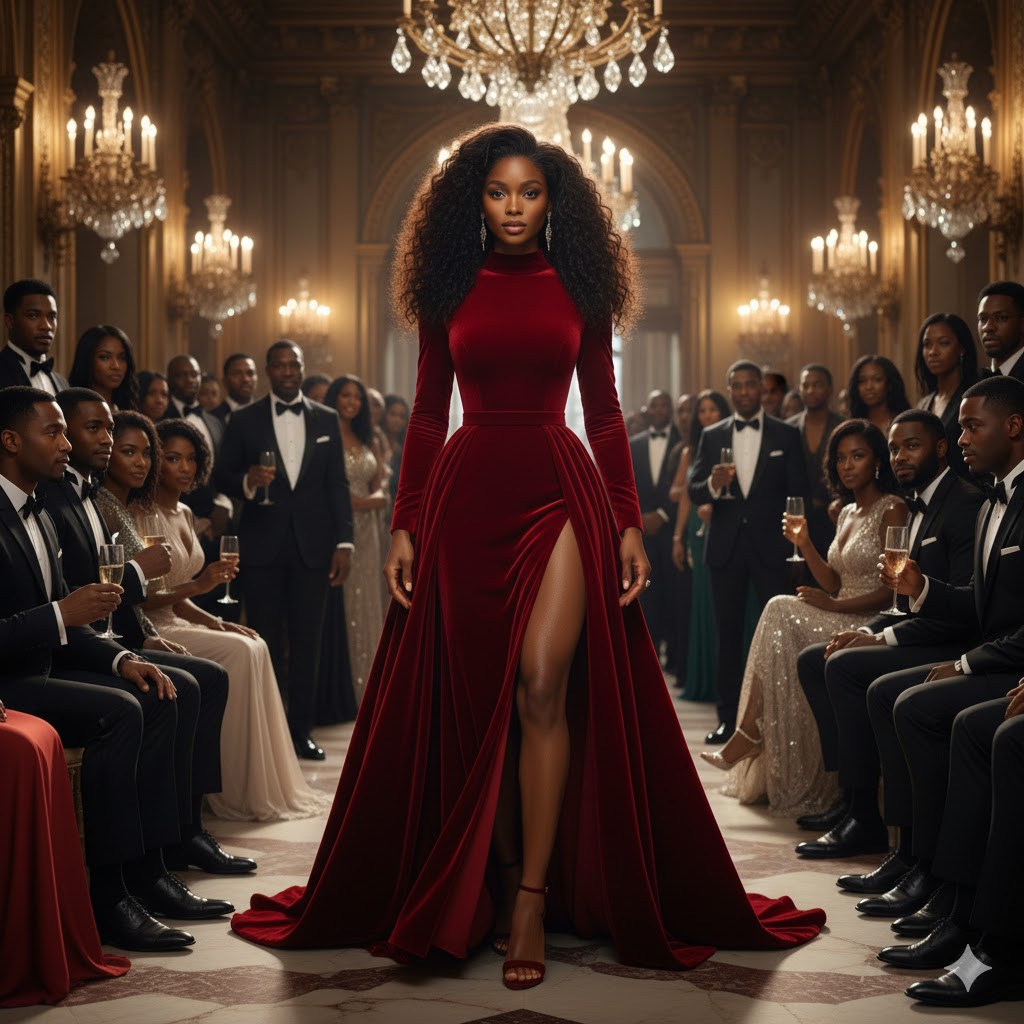
The Room Fell Silent When Brown Walked In.

The room fell silent when Brown walked in—not because of fear, but because presence demanded recognition. Her brown skin radiated warmth and authority, a visual testament to a heritage that refused to be diminished. Scripture reminds us, “She is clothed with strength and dignity; and she laugheth without fear of the future” (Proverbs 31:25, KJV). In that instant, silence became respect.

Brown skin has always been more than pigment; it is history written on living canvas. Each shade carries stories of triumph, survival, and resilience. The African diaspora’s journey, marred by slavery and oppression, made beauty in brown skin revolutionary (Gates, 2011). When Brown entered, that history accompanied her quietly, demanding acknowledgment.

Her entrance defied societal norms. In a world obsessed with Eurocentric ideals of beauty, her presence challenged perceptions and reframed standards. Hunter (2007) notes that colorism often distorts self-worth, yet those who embody and embrace their melanin disrupt oppressive narratives. Brown walked in, a living refutation of shallow judgments.

Eyes turned not out of envy, but fascination. Her gaze carried a quiet authority, a recognition that she understood her worth. “For the LORD seeth not as man seeth; for man looketh on the outward appearance, but the LORD looketh on the heart” (1 Samuel 16:7, KJV). Her heart, confident and unshaken, was the source of her silent power.

Her hair crowned her with history. Coils, curls, and braids spoke to generations that survived through creativity and culture, transforming even adversity into beauty. Biblical accounts often describe hair as a symbol of strength and identity (1 Corinthians 11:15, KJV). Her hair proclaimed her ancestry without uttering a word.

Brown skin shone with subtle luminosity, reflecting both light and resilience. Social psychology suggests that self-confidence amplified by embracing one’s natural features affects perception in interpersonal dynamics (Ashikali & Dittmar, 2010). People instinctively recognized her value because she claimed it fully.

The room was not silent out of awe alone—it was humility. To see a woman wholly comfortable in her skin is rare in a society that constantly devalues her. The girl in brown skin reminds the world that authenticity is revolutionary. Her dignity demanded attention without demanding it.

In her walk, grace became power. Movement was measured, yet fluid; commanding, yet gentle. Scripture often equates poise with righteousness and moral strength (Proverbs 31:26, KJV). Brown’s entrance was a living sermon of dignity and self-possession.

Her presence transcended physicality; it was intellectual and spiritual. The room was silent because her mind radiated clarity, wisdom, and insight. In studies of leadership perception, presence and confidence are key determinants of influence (Goleman, 1998). Brown’s silence spoke louder than words.

The room’s stillness mirrored the reverence her ancestors deserved. Each step she took was imbued with lineage, a continuum from queens and scholars whose contributions were often erased (Davis, 1983). Her brown skin carried legacy with elegance.

Even the light seemed to honor her. Sunlight against her skin revealed depth and richness, symbolic of inner strength. In biblical terms, light often represents truth, divine favor, and revelation (John 8:12, KJV). Brown walked in like sunlight made flesh.

Her laughter, when it came, was deliberate and musical, breaking the silence gently. It reminded all present that while her presence commanded respect, it also invited connection. Joy radiates in those confident in their God-given beauty and purpose.

The room fell silent because the world often misunderstands such women. Strength paired with grace can intimidate, yet this is not vanity—it is an acknowledgment of God’s work in creation. “Thou art all fair, my love; there is no spot in thee” (Song of Solomon 4:7, KJV). Her beauty was complete and undeniable.

Brown’s fashion was not just adornment but declaration. Every color, pattern, and texture harmonized with her skin, asserting cultural pride and personal taste. Melanin-rich skin transforms aesthetics into statements of identity and visibility (Hunter, 2007).

In conversation, her voice commanded attention effortlessly. Eloquence, confidence, and knowledge made silence turn into listening. She embodied Proverbs 31:26: “She openeth her mouth with wisdom; and in her tongue is the law of kindness.” Words flowed, yet the room remembered the silence that preceded them.

Her impact was not temporary. Silence lingered even after she left, a testament to the lingering effect of authenticity. Leadership, presence, and identity have echoes; the room carried hers long after she passed.

Brown skin has historically been politicized, yet her presence reclaimed it as sacred and regal. The room’s silence became a microcosm of society finally seeing Black beauty as deserving of respect and admiration (Gates, 2011).

Even subtle gestures—the tilt of her head, a nod, a smile—spoke volumes. Nonverbal cues in psychology show that confidence without aggression often establishes authority (Goleman, 1998). Brown communicated power without confrontation.

The silence of the room was not emptiness; it was recognition, reflection, and reverence. It was a pause to acknowledge history, culture, and divine creation embodied in one person.

Finally, Brown’s presence affirmed a universal truth: to be wholly oneself is to command space. Her brown skin, intellect, grace, and poise reminded all that true beauty, strength, and legacy are inseparable. The room fell silent, but her story spoke loudly.


References

  • Ashikali, E., & Dittmar, H. (2010). Clothes, sex, and self-esteem: The impact of appearance-related social comparison on self-evaluation. Psychology of Women Quarterly, 34(2), 179–191.
  • Davis, A. Y. (1983). Women, race, & class. Random House.
  • Gates, H. L. Jr. (2011). Life upon these shores: Looking at African American history, 1513–2008. Knopf.
  • Goleman, D. (1998). Working with emotional intelligence. Bantam Books.
  • Hunter, M. L. (2007). The persistent problem of colorism: Skin tone, status, and inequality. Sociology Compass, 1(1), 237–254.
  • King James Bible. (1611). Proverbs 31:25-26; 1 Samuel 16:7; Song of Solomon 4:7; John 8:12; 1 Corinthians 11:15.