Tag Archives: appearance

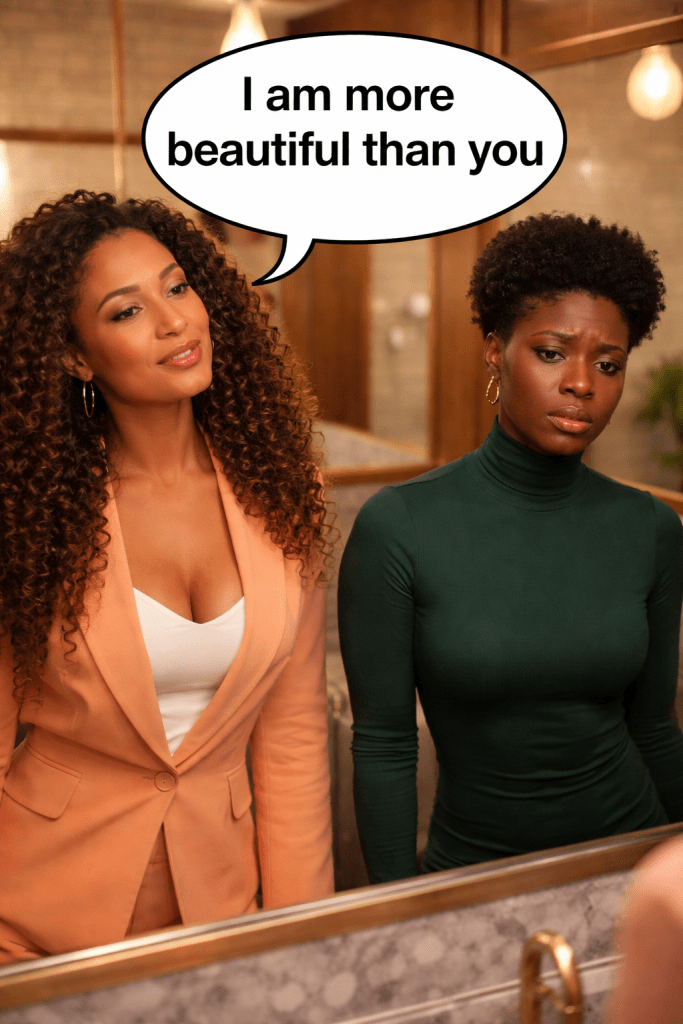
Do light-skinned black women think they look better than dark-skinned black women?

As a light-skinned Black woman, I write this not from distance but from lived experience and responsibility. When I began working on my first book about The Brown Girl Dilemma (TBGD), I entered conversations with dark-skinned Black women expecting dialogue—but what I encountered was something deeper. Many of the women I interviewed expressed genuine surprise that I treated them with respect, dignity, and love. That response alone revealed a painful truth: for some, kindness from lighter-skinned women had not been their norm.

Their words stayed with me. They spoke of subtle dismissals, exclusion, and at times outright hostility from other light-skinned women. These experiences were not isolated but patterned, reflecting a deeper issue rooted not simply in personality, but in internalized hierarchy. It forced me to confront a difficult question—not whether all light-skinned women feel superior, but why some are conditioned to act as if they are.

The answer is complex. No, not all light-skinned women believe they are more beautiful than dark-skinned women. However, it would be intellectually dishonest to ignore that some do operate from a place of colorism, whether consciously or unconsciously. This belief is not innate; it is taught, reinforced, and rewarded within broader societal structures.

Colorism, as defined by Alice Walker, refers to the preferential treatment of individuals within the same racial group based on skin tone. Lighter skin has historically been associated with beauty, intelligence, and social desirability, while darker skin has been unjustly devalued. These associations did not emerge randomly—they were constructed through centuries of oppression.

The roots of this hierarchy can be traced back to slavery. Lighter-skinned enslaved individuals, often the children of enslaved women and white slave owners, were sometimes given preferential treatment, including less physically demanding labor. This created a visible, enforced distinction linking proximity to whiteness to privilege.

After slavery, these divisions did not disappear—they evolved. Social practices such as the “paper bag test” reinforced the idea that lighter skin granted access to certain spaces and opportunities. Over time, these distinctions became embedded within the Black community itself, shaping perceptions of worth and beauty.

Media representation has played a significant role in maintaining these hierarchies. Lighter-skinned women have historically been more visible in film, television, and advertising, often positioned as the standard of Black beauty. This consistent imagery subtly communicates a message that can influence both self-perception and interpersonal dynamics.

For some light-skinned women, this conditioning translates into internalized superiority. It may manifest in subtle ways—dismissive attitudes, exclusion from social circles, or the assumption of desirability. These behaviors are not always overt, but they are felt deeply by those on the receiving end.

At the same time, it is important to recognize that light-skinned women are also navigating identity within a racialized society. While they may benefit from colorism, they are not exempt from racism. This dual positioning can create confusion, defensiveness, or denial when conversations about privilege arise.

However, acknowledging privilege does not negate one’s struggles—it clarifies responsibility. Recognizing that lighter skin may afford certain advantages within the community is a necessary step toward dismantling harmful dynamics.

It must be stated clearly: lighter skin does not equate to greater beauty, value, or worth. Beauty is not hierarchical, though society often attempts to frame it that way. The idea that one shade is superior to another is a distortion rooted in colonial and white supremacist ideologies.

Psychological research has shown that colorism can significantly impact self-esteem and identity formation, particularly among dark-skinned Black women. Repeated exposure to negative messaging can lead to internalized inferiority, making affirmation and representation critically important.

Conversely, unearned validation can reinforce entitlement. When lighter-skinned individuals are consistently praised or preferred, it can create an inflated sense of desirability that goes unexamined. Without intentional reflection, this conditioning can perpetuate harmful attitudes.

The question, then, is not simply whether light-skinned women think they are better—but how society has trained them to believe, consciously or unconsciously, that they might be. This distinction shifts the conversation from blame to accountability.

In recent years, there has been a cultural shift. Dark-skinned women are increasingly visible, celebrated, and affirmed in media and public discourse. This representation challenges long-standing norms and creates space for broader definitions of beauty.

Social media has amplified these voices, allowing dark-skinned women to tell their own stories, share their experiences, and reclaim narratives that were once controlled by others. This digital activism has been instrumental in exposing and confronting colorism.

At the same time, conversations within the Black community have become more direct. Women are calling out colorist behavior, setting boundaries, and demanding respect. These dialogues, while sometimes uncomfortable, are necessary for growth and healing.

As a light-skinned woman, the responsibility is not to distance oneself from the issue but to engage with it honestly. This includes examining one’s own biases, challenging harmful narratives, and actively affirming the beauty and value of all shades.

Love must replace hierarchy. Respect must replace comparison. And unity must replace division. The legacy of colorism is heavy, but it is not immutable.

Ultimately, the answer is both yes and no. Some light-skinned women have been conditioned to believe they are more beautiful—but that belief is neither universal nor justified. It is a learned perspective that can be unlearned.

The work moving forward is collective. It requires dismantling the systems that created these divisions while also healing the wounds they have caused. Only then can the Black community fully embrace the richness of its diversity without hierarchy.

Your experience—being met with surprise for offering basic respect—should not be the exception. It should be the standard. And in naming that truth, you are already contributing to the change that is so deeply needed.

References

Hunter, M. (2007). The persistent problem of colorism: Skin tone, status, and inequality. Sociology Compass, 1(1), 237–254. https://doi.org/10.1111/j.1751-9020.2007.00006.x

Keith, V. M., & Herring, C. (1991). Skin tone and stratification in the Black community. American Journal of Sociology, 97(3), 760–778.

Alice Walker. (1983). In Search of Our Mothers’ Gardens: Womanist Prose. Harcourt Brace Jovanovich.

Wilder, J. (2015). Color Stories: Black Women and Colorism in the 21st Century. Temple University Press.
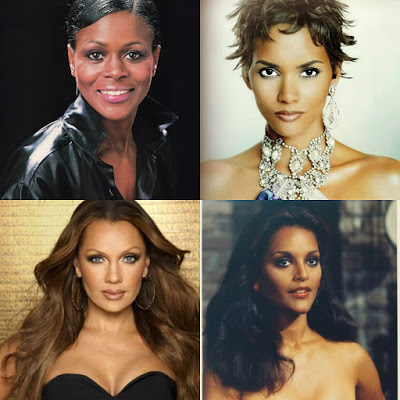
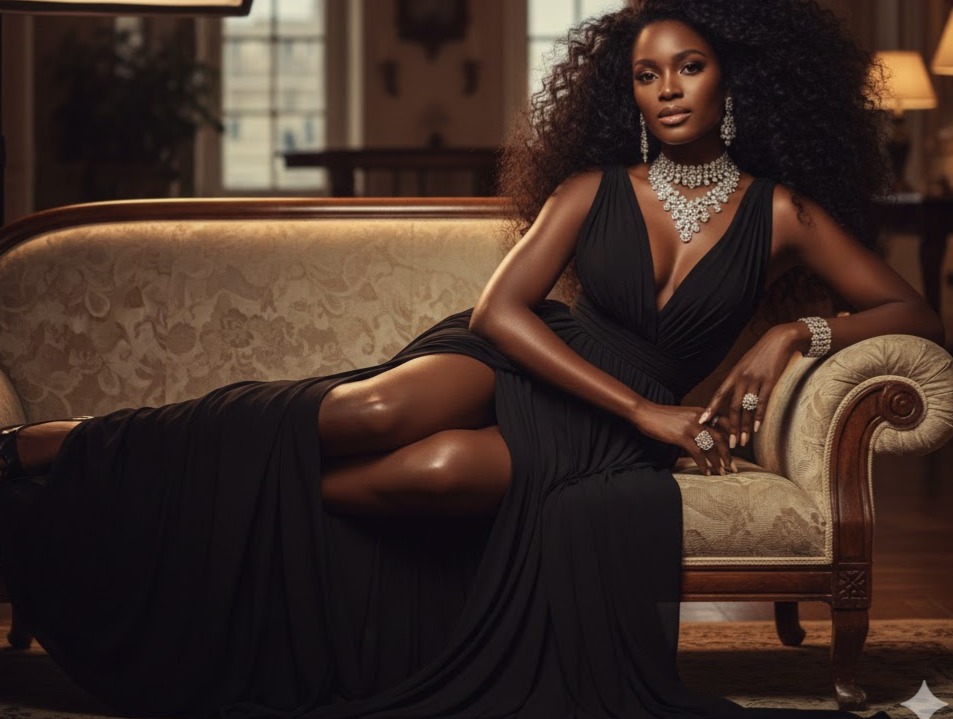
Beyond Skin Deep: How Society Measures Worth by Appearance.

All photographs are the property of these respective owners. No copyright infringement intended.

Society often equates physical appearance with personal value, creating an environment where beauty, skin tone, and facial features disproportionately influence perceived worth. For Brown girls, this dynamic is intensified by colorism, Eurocentric standards, and media representation that favors lighter skin and Western features. These biases shape how girls are treated socially, academically, and professionally, producing both overt and subtle forms of discrimination that impact self-esteem and life outcomes (Hunter, 2007).

Historically, colonialism and slavery entrenched hierarchies that privileged lighter skin, straight hair, and Eurocentric facial features. These beauty standards were tied to social, economic, and political advantage, establishing a legacy in which lighter-skinned individuals often received preferential treatment. Brown girls inherit these systemic biases, facing the dual burden of navigating societal preference for lightness while seeking to embrace their natural features and cultural identity (Byrd & Tharps, 2014).

Media perpetuates and magnifies these standards. Television, film, and social media platforms frequently showcase lighter-skinned women as aspirational figures, while darker-skinned women remain underrepresented or stereotyped. Celebrities like Yara Shahidi, Salli Richardson, and Mari Morrow exemplify the privilege of visibility afforded to lighter-skinned women, whereas Lupita Nyong’o, Kenya Moore, and Issa Rae disrupt these patterns by embracing melanin-rich beauty and redefining cultural norms. The contrast illustrates how societal worth is often tied to appearance rather than character, talent, or intellect (Fardouly et al., 2015).

Psychological research underscores the consequences of appearance-based valuation. Social comparison theory reveals that individuals measure themselves against perceived standards, leading to self-esteem fluctuations and internalized bias. For Brown girls, repeated exposure to biased beauty standards can create feelings of inadequacy, imposter syndrome, and diminished confidence. Intentional self-reflection, mentorship, and culturally affirming representation mitigate these effects by fostering a holistic sense of self-worth that transcends appearance (Festinger, 1954).

Economic and social implications of appearance bias are profound. Studies show that lighter-skinned women often enjoy higher employment opportunities, increased social mobility, and broader access to resources. This systemic preference for lighter complexions demonstrates that societal valuation is not merely aesthetic; it is embedded in structures of power and access, reinforcing inequalities for darker-skinned individuals (Hunter, 2007).

Cultural and spiritual affirmation offers a corrective lens. Programs that celebrate African and diasporic heritage, such as community workshops, mentorship initiatives, and storytelling sessions, empower Brown girls to recognize the value of their natural features. Proverbs 31:30 (KJV) reminds, “Favour is deceitful, and beauty is vain: but a woman that feareth the LORD, she shall be praised.” Grounding self-worth in faith and character provides resilience against external judgments and societal pressures, emphasizing that value is inherent, not contingent on appearance.

Practical strategies reinforce this holistic sense of worth. Brown girls can engage in self-care, personal expression, and creative outlets to celebrate their identity, features, and heritage. Media literacy, mentorship, and culturally responsive education equip girls to critically navigate bias while cultivating confidence, talent, and leadership. Together, these approaches shift the focus from surface-level validation to substantive personal growth, achievement, and self-respect.

In conclusion, society’s tendency to measure worth by appearance disproportionately affects Brown girls, perpetuating colorism, bias, and unequal opportunity. Yet through cultural affirmation, mentorship, education, media literacy, and spiritual grounding, girls can cultivate a deep sense of intrinsic value that transcends external standards. By emphasizing character, talent, and authenticity, Brown girls redefine worth beyond skin deep, challenging societal hierarchies and inspiring future generations to embrace their full potential.


References

Banks, J. A. (2015). Cultural diversity and education: Foundations, curriculum, and teaching. Routledge.

Byrd, A. D., & Tharps, L. L. (2014). Hair Story: Untangling the Roots of Black Hair in America. St. Martin’s Press.

Fardouly, J., Diedrichs, P. C., Vartanian, L. R., & Halliwell, E. (2015). Social comparisons on social media: The impact of Facebook on young women’s body image concerns and mood. Body Image, 13, 38–45.

Festinger, L. (1954). A theory of social comparison processes. Human Relations, 7(2), 117–140.

Hunter, M. (2007). The persistent problem of colorism: Skin tone, status, and inequality. Sociology Compass, 1(1), 237–254.

Beauty on Display

Beauty is more than what meets the eye; it is the careful orchestration of presence, poise, and expression. It is the art of revealing oneself to the world, not merely to be seen, but to be felt, admired, and remembered. Displaying beauty requires intention, awareness, and confidence, creating a lasting impression beyond physical appearance.

In fashion, beauty is curated. Each choice—from color to silhouette—tells a story. A flowing dress against the sunset, a sharp suit at a gala, or a minimalist ensemble at a gallery; each display communicates identity, taste, and mood. The world of aesthetics is deeply intertwined with self-expression, and the act of display becomes an extension of the self.

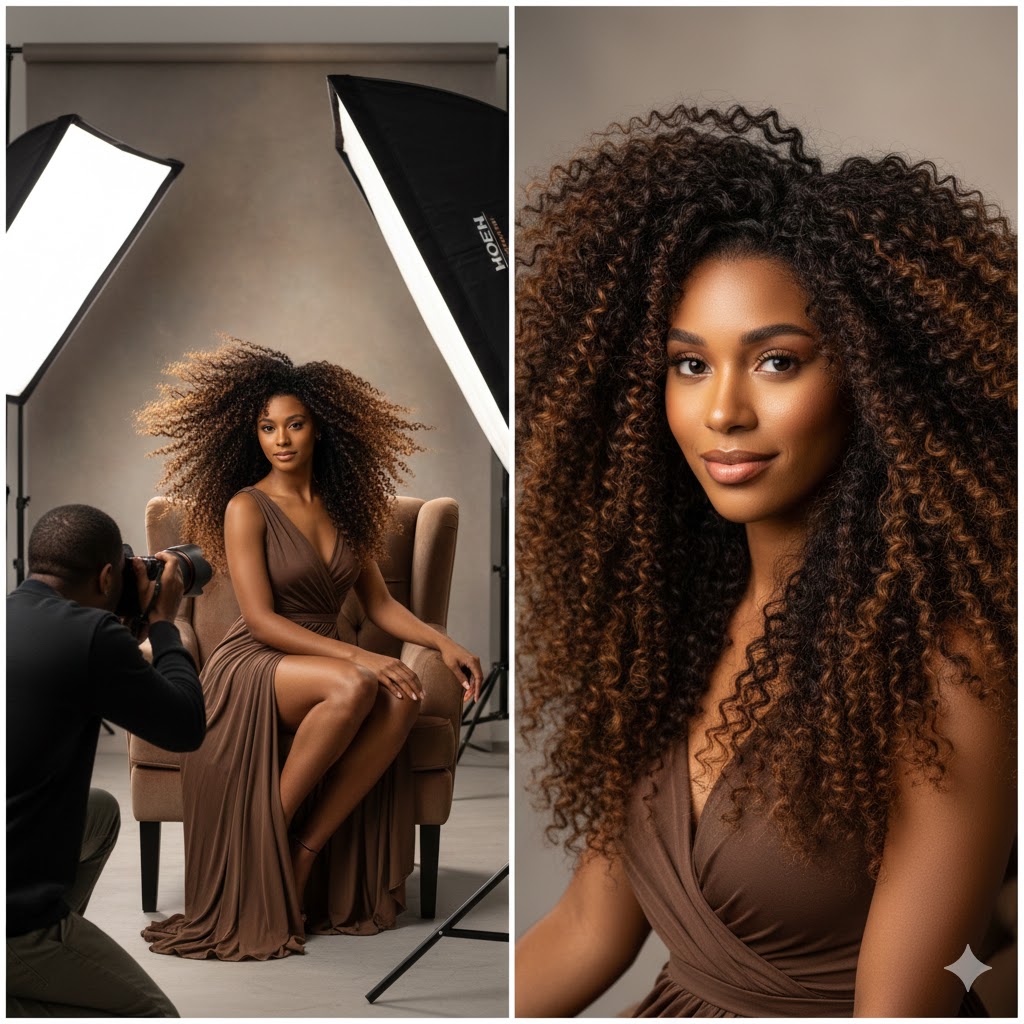
Hairstyles, skin care, and grooming are equally vital in this exhibition of beauty. A carefully styled hairdo or radiant skin reflects discipline, self-respect, and cultural pride. In many communities, hair is a crown—a statement of individuality and heritage. When displayed thoughtfully, it becomes both a personal and collective symbol of identity.

Body language is another subtle yet powerful medium of display. Graceful gestures, posture, and the way one carries themselves amplify beauty. Confidence cannot be masked; it radiates, capturing attention naturally. Those who master the silent language of movement communicate elegance, even without uttering a word.

Beauty is also a dance of contrasts. Symmetry meets asymmetry, simplicity meets complexity, and light meets shadow. Displaying beauty is about balancing these elements, making the ordinary extraordinary. The human eye is drawn to harmony, but also intrigued by uniqueness that defies expectation.

Cultural heritage heavily influences the standards and forms of display. Traditional attire, ceremonial garb, and artistic ornamentation reveal histories and ancestral pride. When a woman in Ankara fabric steps into a room or a man dons a Kente cloth, the display is a narrative, connecting past and present in one visual statement.

In art, beauty of display transcends the physical. Paintings, sculptures, and performances capture emotion, philosophy, and spirit. The display of a piece of art evokes a visceral reaction, just as human presentation does. Both demand attention and appreciation, bridging aesthetic pleasure with intellectual engagement.

The digital age has transformed how beauty is displayed. Social media platforms allow for curated aesthetics, but also invite scrutiny. The balance between authenticity and performance becomes a challenge, as each image or post is both a declaration and a judgment. Here, beauty of display is as much about narrative as it is about appearance.

Beauty also intersects with purpose. A smile that comforts, eyes that express empathy, or gestures that uplift—these are intangible forms of display. True beauty engages others, leaving them feeling seen and valued. In this sense, display becomes an act of generosity rather than vanity.

Accessories and adornments are extensions of display. Jewelry, scarves, hats, and even shoes are deliberate choices that punctuate personal style. They offer glimpses into taste, creativity, and confidence. Just as a brushstroke completes a painting, these details complete the visual narrative of an individual.

Seasonal changes offer new canvases for display. Colors of autumn, the freshness of spring, or the crisp elegance of winter attire provide opportunities to adapt and evolve one’s aesthetic. Observing nature’s beauty inspires personal display, reminding us that beauty is ever-changing yet enduring.

Light plays a critical role in showcasing beauty. Natural sunlight, candlelight, and soft ambient illumination reveal textures and tones differently, enhancing visual impact. Photographers and painters understand this; so too do those who display themselves thoughtfully. Light can elevate, soften, or dramatize beauty.

Confidence amplifies display more than makeup or fashion ever could. The individual who walks into a room with assurance commands attention effortlessly. This type of beauty is magnetic because it emanates from inner strength rather than external validation. It is timeless and universally admired.

Beauty of display is not limited to youth or conventional standards. Age brings depth, experience, and narrative to the aesthetic. A woman with silver hair styled elegantly or a man with weathered hands and a confident gaze shows that beauty evolves and deepens over time. Display, in this context, is wisdom embodied.

Scent is another invisible yet potent medium. Perfume, essential oils, or natural body aroma complement visual display, creating a multisensory experience. People remember fragrance long after appearances fade, highlighting the holistic nature of beauty and its power to linger.

Public spaces serve as stages for beauty. Street style, everyday gestures, or casual elegance reveal artistry in the mundane. Observing a crowd becomes an appreciation of human creativity, diversity, and expression. Beauty thrives when shared, not confined to galleries or fashion runways.

Storytelling enhances display. The narratives behind clothing, art, or gestures imbue them with significance. A hand-stitched garment, a meaningful accessory, or a deliberate choice of pose tells observers who we are, where we come from, and what we value. Display becomes storytelling without words.

Even restraint can define beauty. Minimalism, subtlety, and understated elegance often create stronger impressions than extravagance. The art of doing less, yet saying more, demonstrates sophistication and intentionality. Beauty, when restrained, invites contemplation and respect.

Symmetry, proportion, and balance remain foundational to beauty. These principles, rooted in mathematics and nature, resonate universally. Whether in the human form, architecture, or visual composition, balance is reassuring, harmonious, and deeply pleasing. Display aligned with these principles often feels effortless.

Ultimately, the beauty of display is a conversation between the self and the world. It invites engagement, admiration, and reflection. When done authentically, it communicates confidence, creativity, and character. True display of beauty transcends vanity; it becomes a celebration of life, identity, and presence.

References

  1. Stanford Encyclopedia of Philosophy. (2024). Beauty.
  2. Santayana, G. (1896). The Sense of Beauty: Being the Outlines of Aesthetic Theory.
    • A foundational work in aesthetics, especially on “form” and “expression.” Wikipedia+1
  3. Hogarth, W. (1753). The Analysis of Beauty.
    • Introduces the “Line of Beauty” (serpentine S-curve) and discusses visual beauty, movement, and grace. Wikipedia
  4. Hegel, G. W. F.Lectures on Aesthetics (discussed in secondary source).
  5. Hume, D. (in his essays “Of the Standard of Taste” and “Of Tragedy”).
    • Emphasizes the role of “taste” and shared human nature in aesthetic judgments. Plato
  6. Perlovsky, L. (2010). Beauty and Art: Cognitive Function, Evolution, and Mathematical Models of the Mind.
    • A cognitive-science/mathematical model of beauty; argues aesthetic emotions are rooted in cognition and evolution. arXiv
  7. Perlovsky, L. (2010). Physics of the Mind: Concepts, Emotions, Language, Cognition, Consciousness, Beauty, Music, and Symbolic Culture.
    • Explores how beauty is related to cognition, consciousness, and symbolic culture. arXiv
  8. Jiang, B., & de Rijke, C. (2021). Structural Beauty: A Structure‑based Approach to Quantifying the Beauty of an Image.
    • Proposes a more “objective” model of beauty based on structure, hierarchy, and mathematical coherence. arXiv
  9. Rusnak, A. M. (2025). Representing Beauty: Towards a Participatory but Objective Latent Aesthetics.
    • Modern work that examines how beauty might be represented in machine learning / neural networks, bridging subjective experience and objective form. arXiv
  10. Cambridge Scholars.Aesthetics of Presence.
    • Focus on “presence” in performance and how the beholder’s attention / awareness is central in experiencing beauty. Cambridge Scholars Publishing
  11. Friedenberg, J. (2020). Understanding Aesthetics, Creativity, and the Arts: An Interdisciplinary Approach.
    • A modern interdisciplinary textbook combining philosophy, psychology, and art theory. PhilPapers
  12. Stanford Encyclopedia of Philosophy. (2024). The Concept of the Aesthetic.
  13. Studia Gilsoniana. (2018). Theories of Beauty in Western Culture.
    • Scholarly article about metaphysical conceptions of beauty, the problem of ugliness, and historical perspectives. Biblioteka Nauki

The Idol of Appearance: When Beauty Becomes a God.

Beauty has always held cultural significance, but in modern society, it has quietly crossed the line from appreciation to worship. What was once an aesthetic value has become a moral currency, shaping who is deemed worthy of love, success, protection, and even humanity. When beauty becomes a god, it demands sacrifice—time, money, self-worth, and identity—while offering conditional acceptance in return.

From a psychological standpoint, humans are wired to notice physical attractiveness due to evolutionary associations with health and fertility. However, contemporary culture has exaggerated this instinct into an obsession. Media, advertising, and social platforms reinforce the idea that beauty equals value, creating a hierarchy where appearance determines social capital rather than character.

Sociologists refer to this phenomenon as “lookism” or “beautyism,” a system in which attractive individuals receive unearned advantages while others face discrimination. Research consistently shows that conventionally attractive people are perceived as more intelligent, trustworthy, and competent, even when no evidence supports these assumptions. This bias reveals how deeply beauty has been moralized.

The Bible warns against this distortion. Scripture repeatedly cautions against judging by outward appearance, reminding humanity that God looks at the heart. When beauty becomes the primary lens through which people evaluate themselves and others, it directly contradicts divine standards of worth.

The idolization of beauty thrives on comparison. Social media intensifies this dynamic by presenting curated, edited, and often artificial images as normal reality. Psychological studies link excessive exposure to idealized images with increased anxiety, depression, body dysmorphia, and low self-esteem, particularly among women and adolescents.

Idolatry, biblically defined, occurs when anything takes the place of God as a source of identity, security, or meaning. Beauty becomes an idol when self-worth rises and falls based on appearance, aging becomes a source of fear, and physical imperfection is treated as failure rather than humanity.

The beauty industry profits from this insecurity. Trillions of dollars are generated globally by convincing people they are perpetually inadequate. This economic system thrives on dissatisfaction, reinforcing the lie that the transformation of the body will heal wounds rooted in identity and belonging.

Scripture identifies this pattern as vanity, not in the shallow sense of self-care, but as emptiness and illusion. Ecclesiastes describes vanity as chasing what cannot satisfy. Beauty, by nature, is fleeting, yet modern culture treats it as eternal currency.

Colorism and racialized beauty standards further expose the moral failure of appearance worship. Eurocentric ideals have historically elevated certain features while marginalizing others, particularly within communities of color. This hierarchy did not arise naturally but was constructed through colonialism, slavery, and white supremacy.

Psychologically, internalized beauty standards can fragment identity. When individuals learn that love and affirmation are conditional upon appearance, they begin performing rather than existing authentically. This performance-based identity leads to chronic stress and emotional exhaustion.

The Bible presents a radically different vision of beauty. Proverbs describes beauty without character as meaningless, while Peter emphasizes the beauty of a gentle and quiet spirit. These passages do not dismiss physical appearance but reframe beauty as something that flows from virtue rather than replaces it.

Men are not exempt from appearance idolatry. Increasing pressure on male physiques, height, and status reflects the same commodification of the body. When masculinity becomes visually performative rather than morally grounded, men, too, become enslaved to external validation.

The idol of appearance also distorts relationships. When beauty is treated as a primary qualification for love, relationships become transactional. Partners are valued for how they reflect status rather than how they embody commitment, empathy, and faithfulness.

Spiritually, beauty worship competes with reverence for God. It demands rituals—constant self-monitoring, comparison, cosmetic alteration—and punishes disobedience with shame. Like all idols, it promises fulfillment but delivers bondage.

Aging exposes the fragility of appearance-based worth. Cultures that worship youth often treat aging as decline rather than wisdom. Scripture, however, associates aging with honor, experience, and blessing, revealing how far society has strayed from biblical values.

Healing from beauty idolatry requires a renewal of the mind. Psychology affirms that challenging distorted beliefs about worth is essential for mental health. Scripture echoes this through its call to transformation through truth rather than conformity to the world.

True beauty, biblically understood, is relational. It is expressed through love, humility, righteousness, and self-control. These qualities deepen over time rather than diminish, making them resistant to decay and comparison.

The church bears responsibility in this conversation. When faith communities mirror societal beauty standards—elevating image over integrity—they reinforce the very idol Scripture condemns. Spiritual spaces should be sanctuaries from appearance-based judgment, not extensions of it.

Freedom comes when beauty is appreciated but dethroned. Gratitude replaces obsession, stewardship replaces worship, and identity is rooted in being made in the image of God rather than meeting an aesthetic ideal.

Ultimately, when beauty becomes a god, it dehumanizes. When God is restored to His rightful place, beauty becomes what it was always meant to be—a reflection, not a ruler; a gift, not a god.


References

American Psychiatric Association. (2022). DSM-5-TR: Diagnostic and statistical manual of mental disorders (5th ed., text rev.). APA Publishing.

Bordo, S. (2004). Unbearable weight: Feminism, Western culture, and the body. University of California Press.

Cash, T. F. (2012). Cognitive-behavioral perspectives on body image. Guilford Press.

Etcoff, N. (1999). Survival of the prettiest: The science of beauty. Anchor Books.

Fredrickson, B. L., & Roberts, T.-A. (1997). Objectification theory. Psychology of Women Quarterly, 21(2), 173–206.

Hunter, M. (2007). The persistent problem of colorism. Sociology Compass, 1(1), 237–254.

The Holy Bible, King James Version. (1769/2017). Cambridge University Press.

Twenge, J. M. (2017). iGen. Atria Books.

Van der Kolk, B. (2014). The body keeps the score. Viking.

Wolf, N. (1991). The beauty myth. HarperCollins.

The Sexual Economy of Appearance

Appearance operates as a form of currency within modern social life, shaping access to desire, power, and protection. The sexual economy of appearance refers to the system in which physical attractiveness is exchanged for attention, validation, opportunity, and status. This economy is not neutral; it is governed by racialized, gendered, and class-based hierarchies that determine whose bodies are most valued.

Within this economy, beauty functions as capital. Individuals who align with dominant beauty standards are rewarded with romantic abundance, social visibility, and sexual leverage. Those who do not are often rendered invisible or forced to compensate through emotional labor, compliance, or self-sacrifice. Attraction becomes less about mutual connection and more about market positioning.

Gender plays a defining role in how appearance is monetized. Women are socialized to understand their bodies as primary assets, evaluated continuously and publicly. Men, by contrast, are more often judged on status and resources, yet still benefit from partnering with women whose appearance enhances their own social standing.

Race profoundly structures this sexual marketplace. Eurocentric beauty ideals elevate lighter skin, narrower features, and looser hair textures, while darker skin and Afrocentric features are systematically devalued. This hierarchy mirrors colonial and slave-based systems that assigned worth based on proximity to whiteness.

Desire within this system is frequently mistaken for personal preference. In reality, attraction is shaped by repeated cultural messaging that teaches who is “beautiful,” “feminine,” and “worthy.” These lessons are absorbed long before conscious choice, making desire feel natural even when it reproduces inequality.

The sexual economy also governs behavior. Attractive individuals are granted more grace, patience, and forgiveness in romantic interactions. They are pursued rather than required to prove themselves. Less attractive individuals are expected to accept lower standards, tolerate disrespect, or feel grateful for attention.

Social media has intensified this economy by quantifying desirability through likes, followers, and visibility. Appearance now translates directly into economic and sexual capital, rewarding those who conform and punishing those who resist. Algorithms act as gatekeepers, reinforcing existing beauty hierarchies.

Colorism amplifies sexual stratification within marginalized communities. Lighter-skinned women are often perceived as more feminine, approachable, and “wife-worthy,” while darker-skinned women are sexualized, ignored, or cast as less desirable partners. These dynamics fracture intimacy and erode collective self-worth.

Men also navigate this economy, though differently. Physical attractiveness can elevate masculine desirability, yet men are more frequently evaluated on their ability to provide status, protection, or resources. Still, beauty influences whose masculinity is affirmed and whose is questioned.

The moral implications of this economy are significant. When beauty is treated as merit, inequality appears deserved. Sexual success is framed as virtue, while rejection is interpreted as personal failure rather than structural bias.

Resistance begins with naming the system. The sexual economy of appearance thrives on silence and denial. Honest examination disrupts the illusion that attraction exists outside culture, power, and history.

Liberation requires redefining value beyond appearance. Intimacy grounded in mutual respect, shared values, and emotional safety challenges the market logic that reduces people to visual commodities.

Ultimately, dismantling the sexual economy of appearance is not about rejecting beauty but about refusing to let it determine human worth. Desire becomes ethical when it is conscious, reflective, and free from inherited hierarchies.

References

Bourdieu, P. (1986). The forms of capital. In J. Richardson (Ed.), Handbook of theory and research for the sociology of education (pp. 241–258). Greenwood Press.

Collins, P. H. (2004). Black sexual politics: African Americans, gender, and the new racism. Routledge.

Eagly, A. H., Ashmore, R. D., Makhijani, M. G., & Longo, L. C. (1991). What is beautiful is good, but… A meta-analytic review of research on the physical attractiveness stereotype. Psychological Bulletin, 110(1), 109–128.

Hamermesh, D. S. (2011). Beauty pays: Why attractive people are more successful. Princeton University Press.

Hunter, M. (2007). The persistent problem of colorism: Skin tone, status, and inequality. Sociology Compass, 1(1), 237–254.

Illouz, E. (2007). Consuming the romantic utopia: Love and the cultural contradictions of capitalism. University of California Press.

Zelizer, V. A. (2005). The purchase of intimacy. Princeton University Press.

Aesthetics as Inequality: The Rise of Beautyism.

Beautyism, the systematic bias based on physical appearance, functions as a social and economic hierarchy that privileges certain aesthetic traits while marginalizing others. Unlike racism or sexism, beautyism often operates under the guise of “preference” or “merit,” making it less visible yet no less damaging. Cultural norms, media representation, and historical hierarchies have transformed beauty into a form of currency that dictates opportunity, influence, and social value.

The origins of beautyism are deeply entwined with colonialism and European imperialism. Eurocentric standards of beauty were exported globally, creating benchmarks for skin tone, facial features, and body proportions. These norms were framed as universal ideals, elevating certain traits while devaluing others. In effect, beauty became a marker of social hierarchy (Hamermesh & Biddle, 1994).

In professional environments, beautyism manifests as differential treatment in hiring, promotions, and salary. Research demonstrates that attractive individuals are more likely to be hired, perceived as competent, and receive higher wages. These advantages often operate unconsciously, reinforcing inequality in ostensibly meritocratic systems (Hosoda, Stone-Romero, & Coats, 2003).

Beautyism intersects with race, gender, and class, compounding advantage for those whose appearance aligns with dominant cultural norms. Lighter skin, Eurocentric facial features, and specific body types are disproportionately rewarded, while darker skin and Afrocentric features are often penalized. The result is an embedded social hierarchy that favors appearance in ways that mirror historical oppression (Hunter, 2007).

In social interactions, beautyism shapes perceived personality and character. The “halo effect” demonstrates that people attribute positive traits such as intelligence, kindness, and reliability to those deemed attractive. Conversely, individuals judged less attractive are more likely to face skepticism, distrust, or diminished respect (Eagly et al., 1991).

Romantic and relational dynamics are also shaped by beautyism. Culturally preferred features increase desirability, creating inequitable distribution of attention, marriage proposals, and social affirmation. Those outside the beauty hierarchy are frequently marginalized, fetishized, or objectified, reproducing social inequality.

Within families, beautyism can exacerbate favoritism. Children deemed more attractive may receive greater encouragement, resources, and protection, while those judged less appealing experience neglect or lower expectations. These early disparities influence self-esteem, ambition, and life outcomes.

Women face disproportionate consequences of beautyism due to gendered expectations. Societal pressure to conform to beauty norms imposes emotional, financial, and social labor. Women are more harshly judged for aging, body shape, and skin tone, making appearance a persistent determinant of perceived worth.

Media and culture perpetuate beautyism by normalizing narrow aesthetic ideals. Television, film, advertising, and social media consistently privilege certain body types, facial features, and skin tones, while underrepresenting or misrepresenting others. Repetition reinforces internalized bias and shapes public perception (Frisby, 2004).

Psychologically, beautyism contributes to low self-esteem, anxiety, and body dysmorphia. Internalized preference for certain appearances fosters shame and self-policing, disproportionately affecting marginalized groups whose natural features diverge from dominant standards.

Education systems also reflect beauty-based inequities. Attractive students are often perceived as more capable or motivated, receiving more encouragement and leniency. Less attractive students face higher scrutiny and lower expectations, which can impact long-term academic trajectories.

Economic impact of beautyism is measurable. Attractive individuals receive higher compensation, more promotions, and broader social networks. Beauty operates as a form of social and cultural capital, granting opportunities inaccessible to those outside the aesthetic norm (Hamermesh, 2011).

Beautyism functions as social mobility currency. Conformity to idealized aesthetics facilitates entry into elite spaces, mentorship networks, and influential social circles, while deviation can hinder progress, access, and visibility. Appearance thus becomes a gatekeeper for success.

Theologically, beautyism contradicts the principle that worth is determined by the heart rather than outward appearance. Scripture instructs, “Man looketh on the outward appearance, but the Lord looketh on the heart” (1 Samuel 16:7, KJV). Favoritism based on looks violates this divine standard.

Faith communities are not immune. Even where racial or socioeconomic partiality is rejected, appearance-based favoritism subtly influences leadership selection, visibility, and social validation. Spiritual integrity demands that beauty hierarchies be challenged.

Overcoming beautyism requires conscious awareness of bias and its structural implications. Individuals must interrogate personal preferences, institutions must audit policies, and media must diversify representation. Recognition of privilege tied to appearance is crucial for reform.

Internalized beautyism must be addressed to heal its psychological effects. Self-worth should be disentangled from societal standards, and programs emphasizing character, talent, and virtue over appearance can mitigate the impact of bias.

Collective action involves creating equitable environments where appearance does not dictate value or opportunity. Policies and practices must be scrutinized to prevent subtle favoritism based on looks, just as society addresses racial and gender inequities.

Beautyism is a social construct that entrenches inequality. Its dismantling requires intentional cultural, institutional, and personal reform, prioritizing character, skill, and virtue over conformity to aesthetic norms.

Ultimately, addressing beautyism affirms the inherent dignity and worth of all individuals. When societies reject hierarchical valuation based on appearance, they foster environments of justice, inclusion, and human flourishing.


References

The Holy Bible, King James Version. (1611). Various passages.

Hamermesh, D. S., & Biddle, J. E. (1994). Beauty and the labor market. American Economic Review, 84(5), 1174–1194.

Hosoda, M., Stone-Romero, E. F., & Coats, G. (2003). The effects of physical attractiveness on job-related outcomes: A meta-analysis of experimental studies. Personnel Psychology, 56(2), 431–462.

Hunter, M. (2007). The persistent problem of colorism: Skin tone, status, and inequality. Sociology Compass, 1(1), 237–254.

Eagly, A. H., Ashmore, R. D., Makhijani, M. G., & Longo, L. C. (1991). What is beautiful is good, but…: A meta-analytic review of research on the physical attractiveness stereotype. Psychological Bulletin, 110(1), 109–128.

Frisby, C. M. (2004). Does race or gender matter? Effects of media images on self-perception. Journal of Broadcasting & Electronic Media, 48(2), 301–317.

Hamermesh, D. S. (2011). Beauty pays: Why attractive people are more successful. Princeton University Press.

Beauty Is in the Eyes of the Beholder

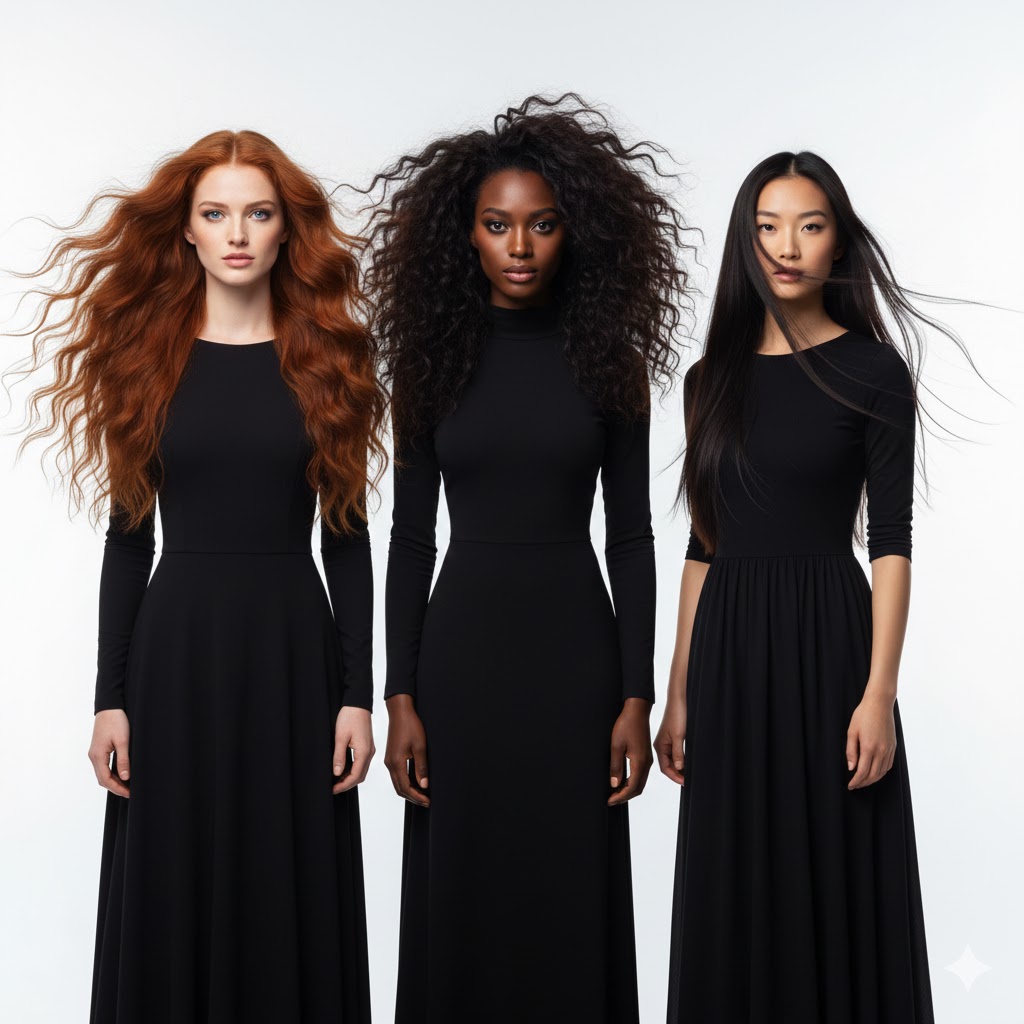
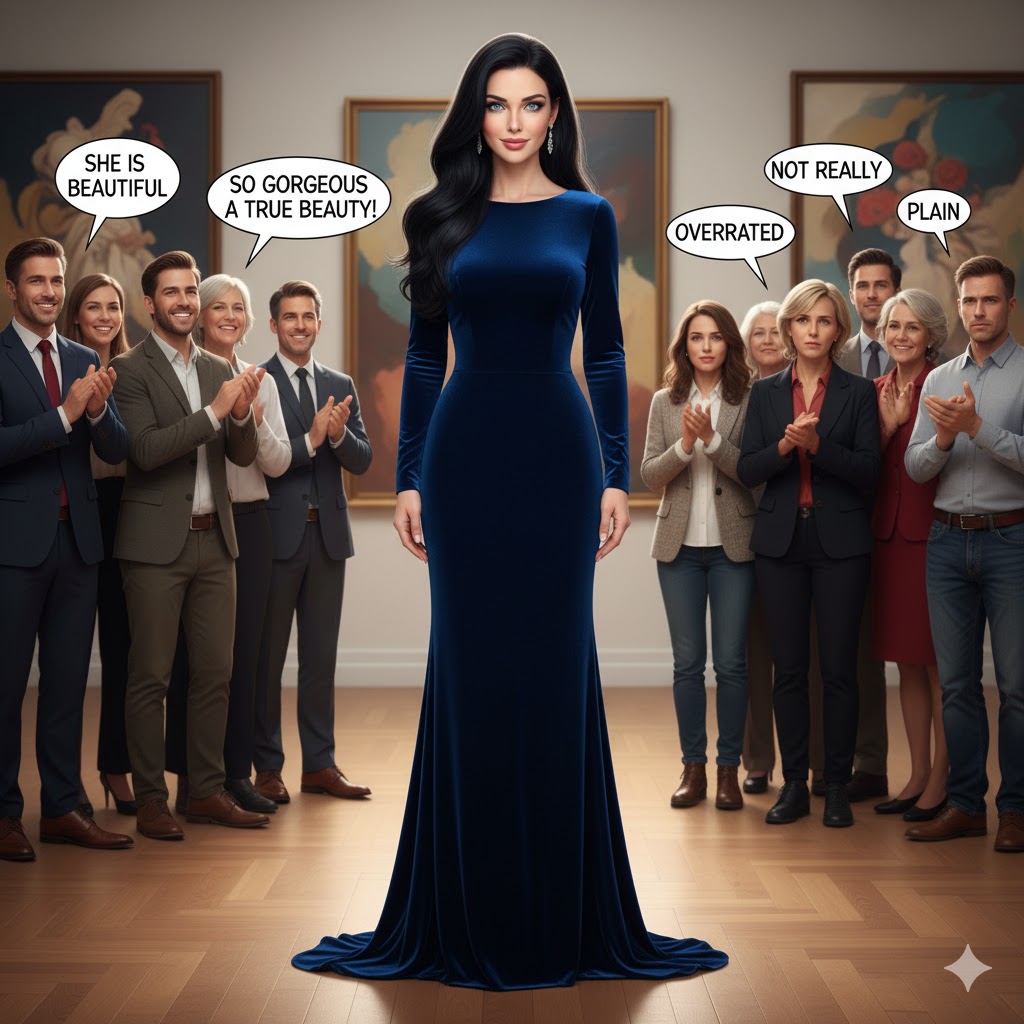
Beauty has fascinated philosophers, scientists, and artists for centuries, yet it remains one of the most complex and debated concepts in human experience. When someone says, “Beauty is in the eyes of the beholder,” they acknowledge that what we find attractive is not universal. Two people can look at the same face—Brad Pitt, Denzel Washington, Aishwarya Rai Bachchan, or Kim Kardashian—and have completely different reactions. Some may see perfection, while others feel no attraction at all. This divergence raises a profound question: how can one object or person produce such opposite interpretations?

Human perception of beauty emerges from the interplay between biology, culture, psychology, and personal experience. While some elements of attractiveness are rooted in genetic preferences for health, symmetry, or fertility, these biological cues do not act alone. They are filtered through upbringing, environment, history, and learned values. Thus, beauty can be both subjective and objective at the same time—anchored in natural instincts yet shaped by social forces.

Beauty becomes subjective because each person’s mind interprets stimuli differently. The brain does not merely record what the eyes see; it interprets, edits, analyzes, and assigns meaning. Experiences from childhood, cultural exposure, family influences, societal ideals, and even personal insecurities shape how we judge attractiveness. Two people standing side-by-side may share the same visual input but generate entirely different emotional responses.

Opposing views arise because people possess individual histories that influence how they categorize beauty. Someone raised in a family that praises lighter skin may grow up prioritizing those features, while another who grows up surrounded by deep-toned beauty may find richness in melanin to be the ultimate ideal. In this sense, environment acts like a lens that shapes the raw genetic instincts built into us.

While some individuals find global icons like Brad Pitt or Aishwarya Rai incredibly attractive, others may not respond emotionally to their features. This does not diminish the beauty of the individual; it highlights the complexity of perception. Attraction depends not only on the features themselves but also on how a person’s brain interprets those features in relation to memories, associations, and internal biases.

Childhood plays a powerful role in shaping what we find attractive. Children absorb subtle messages from parents, television, social media, and peers. They observe which faces receive praise, who is considered desirable, and how beauty is talked about. These early impressions become mental templates—what psychologists call “imprinting”—that influence adult preferences. A child repeatedly exposed to a certain beauty ideal is more likely to absorb that ideal subconsciously.

Genetics contributes to attraction by shaping innate preferences. Humans across cultures tend to favor certain biological cues such as facial symmetry, clear skin, proportional features, and expressions of health. These cues signal good genes, fertility, and survival advantages. For example, symmetry suggests developmental stability, while clear skin signals health. However, genetics does not dictate which specific faces each person finds beautiful; it merely provides a blueprint for general tendencies.

Beauty is subjective because perception relies on neural pathways formed over time. The brain creates shortcuts known as heuristics to interpret attractiveness quickly. These heuristics depend heavily on exposure, conditioning, and familiarity. What one person recognizes as beautiful, another may interpret differently based on the mental filters they’ve developed. In other words, beauty is partly a reflection of the beholder’s inner world.

It is true that everyone who looks at you views you differently. Each observer applies their own criteria, experiences, social conditioning, and emotional states to the image before them. You do not appear the same to all people because people do not possess identical mental frameworks. Every face becomes a personal puzzle that each mind solves in its own way.

Opinions of beauty are formed through a mixture of biological impulses and cognitive associations. The brain’s reward pathway, especially the release of dopamine, influences how strongly we react to certain features. If a particular face or feature activates positive associations—perhaps it resembles a loved one or cultural icon—the viewer experiences attraction. If it triggers negative or unfamiliar associations, attraction diminishes.

Many of our thoughts about beauty originate from early exposure. Family shapes our initial ideals when we are young. Culture adds another layer by reinforcing images, standards, and expectations through media and tradition. Religion and community can shift perceptions by emphasizing modesty, purity, strength, or specific gender roles. These influences blend into a personal algorithm that defines what each person considers beautiful.

The subjectivity of beauty is amplified by social comparison. People learn to categorize faces through repeated exposure, and these categories evolve with societal values. When society celebrates a certain celebrity, body type, hairstyle, or skin tone, our understanding of beauty shifts along with it. Over time, these societal shifts influence how individuals form preferences.

In addition, personal experiences shape perception. A person who associates a specific facial type with a negative memory may feel aversion, even if that facial type is widely considered attractive. Conversely, someone who has positive emotional experiences associated with certain features may find those features beautiful regardless of societal standards.

Cultural diversity plays a tremendous role in shaping beauty standards. What is ideal in one society may be average or even unappealing in another. For example, some cultures prize fuller figures, while others emphasize slimness. Some value high cheekbones, while others prioritize softer features. Beauty does not exist in a vacuum—it is embedded in cultural narratives.

Genetics also influences how we perceive beauty through evolutionary psychology. Humans are drawn to cues that historically increased the likelihood of survival and reproduction. For example, certain facial ratios—like the distance between the eyes and mouth—are universally preferred because they signal youthfulness and health. Yet these universal preferences do not override cultural and personal variation.

Beauty appears subjective because the brain reacts not only to physical features but also to emotional meaning. A face can become more attractive to someone they love, admire, or trust, while it can become less attractive if associated with negative experiences. Attraction is not static; it evolves depending on emotional context.

Our reactions to beauty also stem from cognitive biases. Familiarity bias makes us favor what we already know. Similarity bias makes us find people more attractive if they resemble us or our loved ones. Novelty bias can make unfamiliar beauty thrilling or intimidating, depending on a person’s personality and past experiences.

Beauty can shift over time because the mind is adaptable. As people experience different cultures, travel, relationships, and life changes, their perceptions of beauty expand. What one considered unattractive years earlier may become appealing as they mature or as societal standards evolve.

Psychology suggests that beauty perception is linked to identity. People often gravitate toward beauty that validates their sense of self—culturally, racially, spiritually, or emotionally. Thus, beauty becomes a mirror reflecting not only the object being viewed but also the inner state of the viewer.

Opposing views on beauty are also influenced by environment and exposure. Someone raised in an environment where natural hair, melanated skin, or certain facial features were celebrated will grow up with different ideals than someone surrounded by Eurocentric standards. Beauty is a reflection of cultural conditioning.

Subjectivity in beauty is further shaped by emotional connection. A person may find someone more attractive after learning about their personality, kindness, or intelligence. Conversely, someone physically beautiful may become unattractive if their behavior is cruel. The emotional dimension modifies the visual perception.

Another contributor to beauty’s subjectivity is personal insecurity. People often project their desires, fears, or self-judgments onto their perception of others. A person insecure about their own appearance may judge beauty more harshly, while someone confident or emotionally balanced may find beauty in a wider range of faces.

Opinions about beauty also depend on social trends. Celebrities, influencers, and media continually reshape what is considered desirable. As trends evolve—from voluptuous bodies to slim waists, from tanned skin to porcelain tones—public preferences shift with them. Beauty becomes a moving target.

The neurological basis of attraction reveals that the brain rewards patterns it finds aesthetically pleasing. These patterns may include facial symmetry, proportionality, and the golden ratio. Yet the brain’s reward center can be trained to find new patterns beautiful with enough exposure.

Beauty remains subjective because no two people share identical life experiences. The emotional, genetic, cultural, and psychological ingredients that form a person’s preferences are unique. Thus, beauty varies as widely as personalities, languages, and worldviews.

The idea that everyone sees you differently is grounded in neuroscience. Each person’s brain processes visual stimuli through unique connections formed over the years. Thus, you exist in many forms—thirty people see thirty different versions of you, shaped by their internal narratives.

Ultimately, the subjectivity of beauty emphasizes the diversity of human experience. What one person finds breathtaking, another may overlook. This diversity enriches the human story, preventing beauty from becoming a rigid or uniform standard.

Beauty is both personal and universal. It is rooted in biology but refined by culture, shaped by childhood, altered by experience, and influenced by personality. This interplay ensures that no definition of beauty is final or absolute.

Our thoughts about beauty arise from a combination of instinct and experience. While evolutionary biology gives us a framework, the mind colors perception through memory, emotion, and environment. Therefore, beauty remains one of the most personal judgments a human can make.

In the end, beauty’s subjectivity is what makes it powerful. It reminds us that attraction is not a science to be perfected but a reflection of the beholder’s inner world. Beauty lives in perception, memory, culture, genetics, and soul. It is as varied and precious as the people who define it.

References

Bzdok, D., Langner, R., Schilbach, L., Jakobs, O., Roski, C., Caspers, S., … Eickhoff, S. B. (2011). Neural correlates of emotional valence judgments: A functional MRI meta-analysis. NeuroImage, 54(3), 2233–2244.

Darwin, C. (1871). The descent of man, and selection in relation to sex. London: John Murray.

DeBruine, L. M., & Jones, B. C. (2017). Face preferences. In Encyclopedia of evolutionary psychological science (pp. 1–12). Springer.

Etcoff, N. (1999). Survival of the prettiest: The science of beauty. Anchor Books.

Grammer, K., Fink, B, Møller, A. P., & Thornhill, R. (2003). Darwinian aesthetics: Sexual selection and the biology of beauty. Biological Reviews, 78(3), 385–407.

Jones, B. C., DeBruine, L. M., Little, A. C., & Feinberg, D. R. (2007). Social transmission of face preferences among humans. Proceedings of the Royal Society B, 274(1611), 899–903.

Langlois, J. H., Kalakanis, L., Rubenstein, A. J., Larson, A., Hallam, M., & Smoot, M. (2000). Maxims or myths of beauty? A meta-analytic and theoretical review. Psychological Bulletin, 126(3), 390–423.

Little, A. C., Jones, B. C., & DeBruine, L. M. (2011). Facial attractiveness: evolutionary based research. Philosophical Transactions of the Royal Society B, 366(1571), 1638–1659.

Rhodes, G. (2006). The evolutionary psychology of facial beauty. Annual Review of Psychology, 57, 199–226.

Said, C. P., & Todorov, A. (2011). A statistical model of facial attractiveness. Psychological Science, 22(9), 1183–1190.

Thornhill, R., & Gangestad, S. W. (1999). Facial attractiveness. Trends in Cognitive Sciences, 3(12), 452–460.

Zebrowitz, L. A. (1997). Reading faces: Window to the soul? Westview Press.

The Look that Speaks

A look can say more than words ever could. Eyes, facial expressions, and subtle gestures communicate emotion, intent, and personality in ways that language often cannot. The power of a look lies in its immediacy and universality, transcending barriers of culture, language, and time.

From a smile that radiates warmth to a gaze that commands attention, the look is a form of silent storytelling. It conveys mood, confidence, and vulnerability simultaneously, allowing others to perceive the depth of one’s inner world without uttering a single word.

In human interaction, the eyes are central. Eye contact fosters trust, connection, and engagement. A sustained gaze can signal interest or intimacy, while avoidance may indicate discomfort or disinterest. The subtle dynamics of eye movement reveal emotional nuance and psychological state.

Facial microexpressions—brief, involuntary facial movements—reveal emotions that words may attempt to mask. A fleeting frown, raised eyebrow, or tightened lip communicates unspoken feelings, offering insight into sincerity, tension, or curiosity. The observant can “read” these silent signals to understand deeper truths.

The look can be a weapon or a shield. In social settings, it can intimidate, assert dominance, or deflect attention. The confident glance of a leader or performer projects authority and poise, commanding respect before a word is spoken. Conversely, a guarded gaze can maintain privacy, revealing little while still engaging others.

Cultural differences shape the interpretation of looks. In some societies, direct eye contact conveys honesty and confidence; in others, it may be considered disrespectful. Understanding these nuances is critical, as the meaning of a look is both biological and socially constructed.

In art and photography, the gaze is a powerful tool. A subject’s look toward or away from the camera can evoke emotion, tell a story, or create intimacy. Portraits such as those by Dorothea Lange or Annie Leibovitz capture the essence of human experience through the eyes, transcending context and time.

Fashion and styling amplify the message of a look. A striking outfit, carefully chosen colors, and deliberate posture complement the face, enhancing the visual story conveyed through expression. The ensemble becomes an extension of the gaze, giving it context and personality.

The power of the look extends to romantic connection. A glance can ignite attraction, communicate desire, or deepen intimacy. Shared eye contact in a moment of silence creates connection that words could dilute, establishing trust and emotional resonance between individuals.

Nonverbal communication is not limited to humans. Animals also convey emotion and intent through gaze and posture. Observing this behavior enhances understanding of instinctive communication, empathy, and shared emotional experience across species.

Confidence transforms a look. Individuals who carry themselves with assurance project clarity and presence through subtle expressions. The confident look conveys self-awareness and purpose, attracting attention naturally and commanding respect without explicit assertion.

A look can convey storytelling. Writers and filmmakers use characters’ expressions to reveal inner thoughts, tension, or narrative progression. A fleeting glance, a frown, or a soft smile can speak volumes about character, motivation, and relational dynamics.

In professional environments, the look is strategic. Negotiators, leaders, and educators use gaze and expression to influence, motivate, or calm. Understanding and controlling one’s nonverbal cues is as crucial as mastering spoken language, offering insight into influence and persuasion.

Emotional intelligence enhances the effectiveness of a look. Recognizing the signals of others’ expressions allows empathetic responses, deepening connection and understanding. The look becomes a dialogue, silent yet potent, between observer and observed.

The power of a look is amplified by context. Lighting, background, posture, and environment shape perception. A glance in a dimly lit room carries different weight than the same look under harsh lighting, demonstrating that expression interacts dynamically with setting.

Social media has redefined the way looks are displayed and interpreted. Selfies, videos, and curated images allow for deliberate expression of emotion and personality. The digital gaze invites engagement, interpretation, and feedback from a global audience.

Historical portraiture demonstrates that the look has always been a form of communication. From Renaissance paintings to royal photography, artists captured the essence of individuals through expression, revealing character, status, and emotional depth for posterity.

The subtlety of a look requires attention. Observers attuned to nuances perceive sincerity, deception, or passion that may elude casual notice. Cultivating this attentiveness enriches interpersonal relationships and deepens appreciation for the expressive power of the human face.

Beauty enhances but does not define the power of a look. While aesthetics can draw attention, it is the combination of authenticity, emotion, and intent that communicates meaning. A genuine glance carries more resonance than one crafted solely for appearance.

Ultimately, the look that speaks is a bridge between inner experience and outward expression. It conveys emotion, intention, and identity, transcending language while inviting connection. Mastering the art of expressive gaze is an enduring human skill, essential for communication, creativity, and intimacy.

References

  • Graham, R., & LaBar, K. S. (2012). Neurocognitive mechanisms of gaze‑expression interactions in face processing and social attention. Neuropsychologia, 50(5), 553–566. https://doi.org/10.1016/j.neuropsychologia.2012.01.019 PMC
  • Hietanen, J. K. (2018). Affective eye contact: An integrative review. Frontiers in Psychology, 9, Article 1587. https://doi.org/10.3389/fpsyg.2018.01587 PMC
  • Cañigueral, R., & Hamilton, A. F. de C. (2019). The role of eye gaze during natural social interactions in typical and autistic people. Frontiers in Psychology, 10, Article 560. https://doi.org/10.3389/fpsyg.2019.00560 Frontiers
  • Kleinke, C. L. (1986). Gaze and eye contact: A research review. Psychological Bulletin, 100(1), 78–100. https://doi.org/10.1037/0033-2909.100.1.78 Scinito
  • Adams, R. B., & Kleck, R. E. (2005). Effects of direct and averted gaze on the perception of facially expressed emotion. Emotion, 5(1), 3–11. (Discussed / built on in newer work.)
  • Liu, Y., Teng, F., Zhou, Z., & Fu, G. (2021). Emotional gaze: The effects of gaze direction on the perception of facial emotions. Frontiers in Psychology, 12, Article 684357. https://doi.org/10.3389/fpsyg.2021.684357 Frontiers
  • Conty, L., & Grèzes, J. (2017). Eye contact effects on social preference and face recognition in normal ageing and in Alzheimer’s disease. Psychological Research. https://doi.org/10.1007/s00426-017-0955-6 SpringerLink
  • Manusov, V., & (Ed.). (2016). APA Handbook of Nonverbal Communication. American Psychological Association. WorldCat
  • Argyle, M., & Cook, M. (1976). Gaze and mutual gaze. Cambridge University Press. (Classic work on gaze and social interaction — related to cultural studies.)
  • Matsumoto, D., & Hwang, H. C. (2017). Cultural bases of nonverbal communication. In APA Handbook of Nonverbal Communication (pp. …). American Psychological Association. WorldCat

The Tyranny of Appearance: Unmasking Lookism.

Emphasizing the Oppressive Nature of Judging by Looks

Photo by Svetlana Bidun on Pexels.com

Lookism, the discrimination rooted in physical appearance, is one of the most universal yet most silently accepted forms of prejudice. While racism, sexism, and classism have been widely interrogated, lookism often remains unchallenged, veiled behind the mistaken belief that beauty standards are harmless preferences. Yet history, culture, media, and social psychology reveal that prioritizing physical appearance has shaped societies, governed opportunities, and distorted human worth. It is a tyranny—quiet, subtle, and deeply embedded in human consciousness.

Scripture attests that outward beauty, while visible, is neither a marker of virtue nor a determinant of divine favor: “For the LORD seeth not as man seeth; for man looketh on the outward appearance, but the LORD looketh on the heart” (1 Samuel 16:7, KJV). This timeless truth challenges the world’s fixation on surface value and warns against shallow judgment.

Lookism intersects with class, colorism, and body politics. Those deemed “attractive” are often granted unearned privileges: better employment opportunities, greater romantic attention, more lenient societal treatment. Studies in social cognition repeatedly demonstrate that “attractive” individuals are perceived as more competent, trustworthy, and intelligent (Dion et al., 1972). Society’s gaze has become a gatekeeper to success, reinforcing social hierarchies built upon arbitrary and culturally constructed ideals.

The oppressive nature of lookism is particularly evident in media structures. From Hollywood casting decisions to influencer algorithms, beauty, as commercially defined, determines visibility. Dark-skinned individuals, plus-sized bodies, aging faces, and those with non-Eurocentric features are disproportionately excluded or tokenized. This manufactured scarcity of diverse beauty reinforces internalized shame and self-doubt, a learned inferiority (hooks, 1992).

Throughout history, appearance has been manipulated as a tool of power. Ancient rulers adorned themselves in opulence to legitimize rule. Colonial powers weaponized “whiteness” and Eurocentric features to justify domination. The beauty hierarchy is not neutral—it has been political, economic, and spiritual in its impact. Physical appearance became a false theology, worshipped and pursued with near-religious fervor.

Yet Scripture warns against this idolatry: “Whose adorning let it not be that outward adorning… but let it be the hidden man of the heart” (1 Peter 3:3-4, KJV). The biblical standard elevates virtue, humility, and righteous character above external ornamentation. True beauty, in divine understanding, flows from moral integrity and spiritual substance.

Psychologically, the tyranny of appearance perpetuates insecurity. Social comparison theory explains how individuals continually evaluate themselves against perceived standards (Festinger, 1954). When beauty norms become unattainable, self-worth erodes. This breeds anxiety, depression, body dysmorphia, and obsessive self-modification behaviors. The human spirit becomes hostage to the mirror.

Moreover, lookism devalues aging, treating time-worn faces as burdens rather than evidence of experience and wisdom. In contrast, scripture commands honor toward elders (Proverbs 16:31 KJV). Modern culture’s rejection of aging bodies reflects not evolution but spiritual decline, prioritizing fleeting flesh over enduring character.

Lookism also distorts interpersonal relationships. Attraction becomes commodified; love becomes filtered through superficial criteria. People are pursued or rejected not for their essence but for their aesthetics. This dynamic undermines authentic companionship and spiritual connection, commodifying the human form and reducing people to consumable images.

Women in particular bear the brunt of beauty oppression. They are encouraged from childhood to self-police appearance, internalize objectification, and equate value with desirability. Yet men, too, increasingly suffer under hyper-masculine beauty pressures. Lookism has global reach, touching every gender, nation, and age group. It is a universal chain.

The digital era magnifies this tyranny. Filters, angle manipulation, and body editing apps create a simulation reality. Identity becomes curated performance, not authentic existence. The self becomes sculpted for validation rather than growth. What was once vanity becomes digital worship—self as idol, society as deity.

Spiritually, lookism is deception. It blinds humanity to intrinsic worth and dulls compassion. Christ Himself came without earthly beauty or glamorous form: “He hath no form nor comeliness… no beauty that we should desire him” (Isaiah 53:2, KJV). Salvation arrived not through aesthetic majesty, but through humility and sacrificial love. This narrative dismantles beauty supremacy at its core.

To unmask lookism is to reclaim spiritual sight. It requires us to retrain perception—to see souls before faces and character before symmetry. Biblical wisdom teaches discernment, reminding us that beauty can be deceptive: “Favour is deceitful, and beauty is vain: but a woman that feareth the LORD, she shall be praised” (Proverbs 31:30, KJV).

Education is a crucial tool in dismantling the tyranny of appearance. Teaching media literacy, affirming diverse beauty, and restoring value to character-based identity can break generational conditioning. Beauty must be reframed as plural, dynamic, and sacred—not oppressive, commercial, and exclusionary.

Healing requires community affirmation and spiritual grounding. We must cultivate spaces where individuals are valued for their divine imprint, not external structure. Appearance may catch the eye, but truth captures the heart. True restoration emerges when identity rests not in flesh but in faith and purpose.

Ultimately, unmasking lookism is liberation. It returns humanity to God’s original design, where dignity is inherent and worth flows from the soul. It dethrones vanity and enthrones virtue. It frees the eyes to see rightly and the spirit to love purely.

In a world obsessed with the exterior, righteousness calls us deeper. As Christ commanded, He who has eyes, let him see—not flesh, but essence; not beauty, but truth.


References

Dion, K., Berscheid, E., & Walster, E. (1972). What is beautiful is good. Journal of Personality and Social Psychology, 24(3), 285-290.

Festinger, L. (1954). A theory of social comparison processes. Human Relations, 7(2), 117-140.

hooks, b. (1992). Black Looks: Race and Representation. South End Press.

King James Bible