Category Archives: Transatlantic slave trade

History in Black: The Slave Trade

The history of the transatlantic slave trade is one of the most defining and devastating chapters in Black history, shaping the modern world through violence, exploitation, and racial hierarchy. It represents not merely a period of forced labor, but the systematic dehumanization of African peoples and the construction of a global economy built on Black suffering. Slavery was not accidental or natural; it was a deliberate system engineered for profit, power, and domination.

The slave trade began in the late 15th century with European expansion into Africa and the Americas. Portuguese and Spanish traders were among the first to establish routes, followed by the British, French, Dutch, and later Americans. Africa became a central source of labor for European colonies in the so-called “New World,” especially in plantations producing sugar, cotton, tobacco, and coffee.

The primary reason behind the slave trade was economic. European empires needed a massive labor force to exploit land stolen from Indigenous peoples. Africans were targeted because they were already skilled agricultural workers, could survive tropical climates, and were geographically accessible through coastal trading ports. Race was later used to morally justify what was, at its core, an economic crime.

African people were captured through warfare, raids, kidnappings, and betrayal by local intermediaries pressured or coerced into participating. Millions were marched to coastal forts, imprisoned in dungeons, and branded as property. Families were torn apart permanently, with no regard for kinship, language, or humanity.

The Middle Passage was one of the most horrific experiences in human history. Enslaved Africans were packed into ships like cargo, chained, starved, raped, beaten, and thrown overboard. Many died from disease, suicide, or suffocation before ever reaching land. Those who survived arrived psychologically traumatized and physically broken.

Upon arrival in the Americas, Black people were sold at auction and legally reduced to chattel. They were stripped of names, cultures, religions, and identities. Enslaved Africans were treated not as human beings, but as livestock—bred, whipped, mutilated, and worked to death.

Slavery was enforced through extreme violence. Enslaved people were beaten, lynched, raped, and tortured for disobedience. Laws known as slave codes made it illegal for Black people to read, write, gather, or defend themselves. Resistance was punished with death.

Yet, despite unimaginable brutality, enslaved Africans resisted constantly. They escaped, revolted, preserved culture, practiced spiritual traditions, and passed down ancestral knowledge. Revolts such as the Haitian Revolution proved that enslaved people never accepted their condition as legitimate.

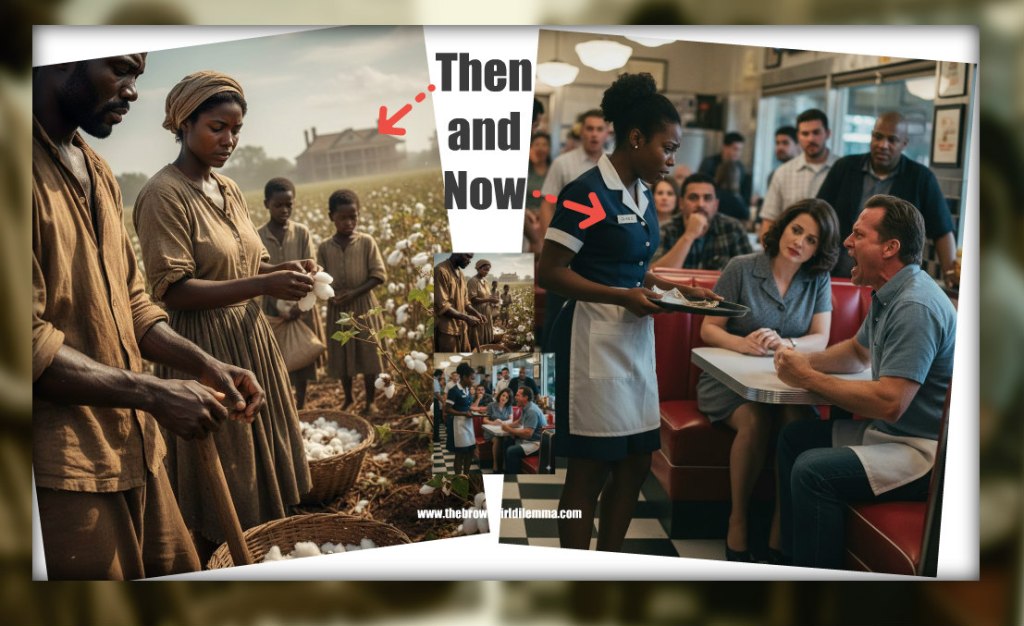
In the United States, slavery became the foundation of the national economy. Cotton was king, and enslaved labor made America one of the richest nations on earth. Banks, insurance companies, universities, and governments were directly funded by slave profits.

The Civil War (1861–1865) led to the formal abolition of slavery in the U.S. through the 13th Amendment. However, freedom was largely symbolic. Formerly enslaved people were released into poverty with no land, no resources, and no protection.

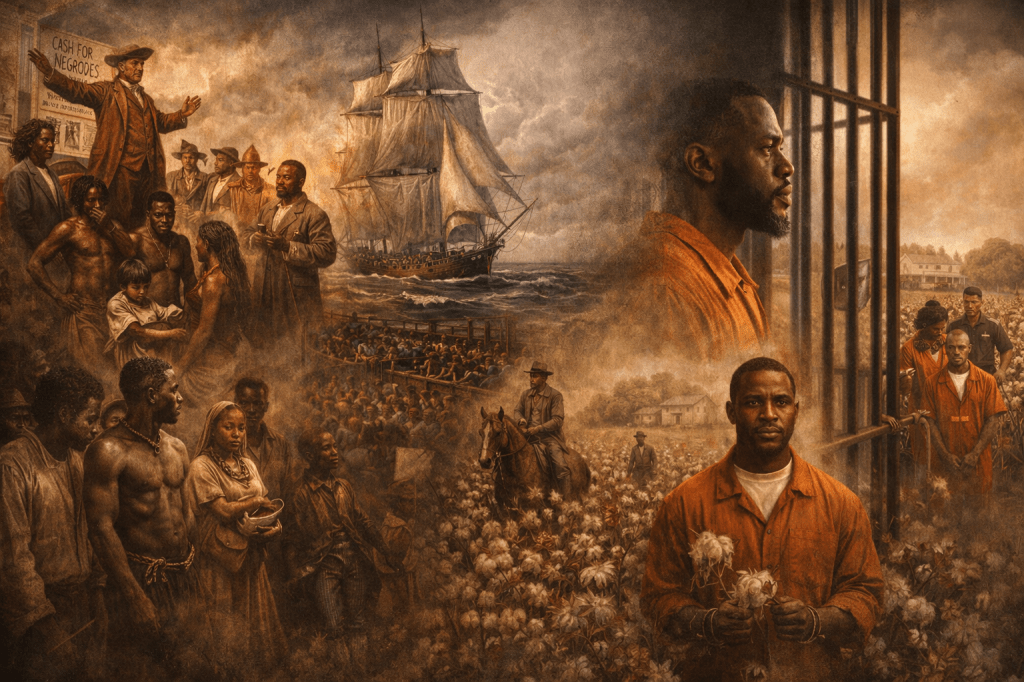
Immediately after slavery, Black Americans faced Black Codes, sharecropping, and convict leasing—systems that recreated slavery under new names. Prisons replaced plantations. Chain gangs replaced whips. Black labor remained controlled.

The Jim Crow era legalized racial segregation and terror. Lynchings, racial pogroms, and voter suppression were used to maintain white supremacy. Black people were excluded from housing, education, healthcare, and political power.

The Civil Rights Movement of the 1950s and 60s challenged legal segregation. Figures like Martin Luther King Jr., Malcolm X, and Fannie Lou Hamer fought for basic human rights. Laws changed, but systems did not.

Mass incarceration emerged as the new form of social control. The “War on Drugs” targeted Black communities, filling prisons with nonviolent offenders. Black men became statistically more likely to be incarcerated than to attend college.

Police violence replaced slave patrols. The same logic of control persisted: Black bodies were still viewed as dangerous, disposable, and criminal. Surveillance, brutality, and profiling became modern tools of oppression.

Economic inequality remains rooted in slavery. The racial wealth gap, housing discrimination, school segregation, and healthcare disparities all trace back to stolen labor and denied opportunity.

Globally, the legacy of slavery continues through neocolonialism, resource extraction, and economic dependency across Africa and the Caribbean. Western wealth still rests on historical exploitation.

Culturally, Black identity has been shaped by trauma and resilience. Music, religion, language, and art emerged as tools of survival. Black culture became both a source of global influence and commodification.

Psychologically, slavery created intergenerational trauma. Internalized racism, colorism, and identity fragmentation are modern expressions of historical violence. The mind became another site of colonization.

Legally, slavery was never repaired. There were no reparations, no land restitution, no national healing process. Former enslavers were compensated—former slaves were not.

From slavery to Jim Crow, from segregation to mass incarceration, the system changed in form but not in function. Black people remain disproportionately policed, imprisoned, impoverished, and surveilled.

History in Black reveals a painful truth: slavery did not end—it evolved. The chains became invisible, the plantations became prisons, and the auction blocks became algorithms. What changed were the laws. What did not change was the structure of power.


References

Alexander, M. (2012). The New Jim Crow: Mass incarceration in the age of colorblindness. The New Press.

Baptist, E. E. (2014). The half has never been told: Slavery and the making of American capitalism. Basic Books.

Berlin, I. (2003). Generations of captivity: A history of African-American slaves. Harvard University Press.

Du Bois, W. E. B. (1935). Black reconstruction in America. Free Press.

Equiano, O. (1789). The interesting narrative of the life of Olaudah Equiano. Author.

Equal Justice Initiative. (2017). Lynching in America: Confronting the legacy of racial terror. https://eji.org

Gates, H. L. (2014). The African Americans: Many rivers to cross. PBS.

Hochschild, A. (1998). King Leopold’s ghost. Houghton Mifflin.

Kendi, I. X. (2016). Stamped from the beginning: The definitive history of racist ideas in America. Nation Books.

UNESCO. (2010). The transatlantic slave trade database. https://www.slavevoyages.org

U.S. National Archives. (n.d.). 13th Amendment to the U.S. Constitution. https://www.archives.gov

Washington Post. (2020). Fatal Force: Police shootings database. https://www.washingtonpost.com/graphics/investigations/police-shootings-database/

Williams, E. (1944). Capitalism and slavery. University of North Carolina Press.
Dilemma: Bid ’Em Up

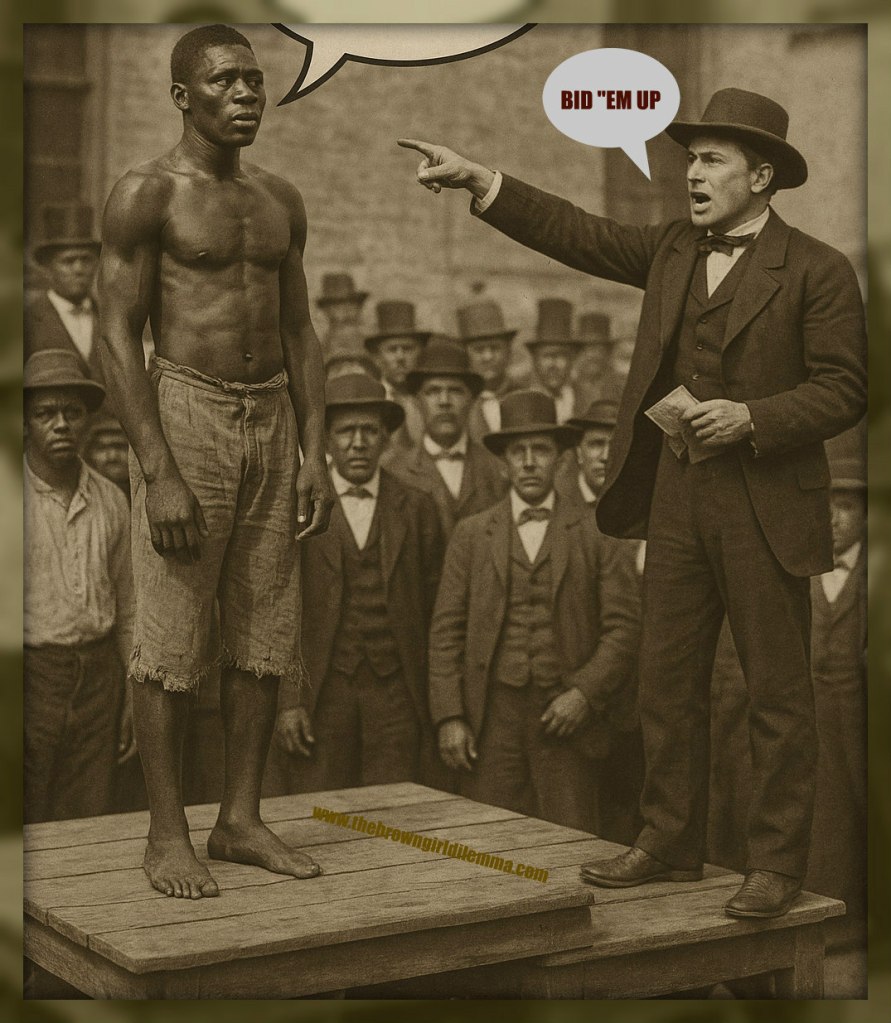
The phrase “Bid ’em up” refers to one of the most dehumanizing practices of the transatlantic slave trade: the process of auctioning African men, women, and children to the highest bidder. It was a command shouted at buyers during slave auctions, urging them to increase their bids as if the people on the block were livestock rather than human beings. This phrase captures the brutality, humiliation, and commercial greed embedded in American slavery.

Slave auctions operated as public markets where enslaved Africans were bought and sold, primarily in the 1700s–1800s, with the largest waves occurring from the early 18th century up to the Civil War in 1861. These auctions were often loud, crowded, and emotionally devastating events. Families were torn apart as husbands, wives, and children were separated, sold to different plantations, and sent to different states based solely on profit margins. “Bid ’em up” was not merely a business tactic—it was a reflection of how deeply racism shaped the economic and social system of the United States.

The auctions often took place in major Southern cities such as New Orleans, Charleston, Richmond, and Savannah. These markets drew slave traders, planters, wealthy merchants, and speculators eager to expand their labor force. In these spaces, the racial hierarchy of America was not hidden or subtle—it was on full display. Black people were forced onto platforms, examined, touched, and evaluated like property. Their bodies were scrutinized for strength, fertility, and obedience.

The enslaved were stripped of humanity through language. Terms like “bucks,” “breeders,” and “hands” reduced people to economic tools. The phrase “Bid ’em up” reveals the cold transactional nature of slavery, where human lives became items in an economic system built entirely on violence and racial domination.

Racism played a central role in justifying these practices. Europeans and white Americans constructed ideologies claiming Black people were inferior, subhuman, or naturally suited for enslavement. These racist beliefs formed the moral foundation for buying and selling millions of Africans. Without racism, the brutality of the slave market could not have been rationalized or sustained.

Slave auctions were not isolated events—they were central to the expansion of American agriculture. The rise of cotton, sugar, and rice industries increased demand for enslaved labor. The years following the 1808 ban on international slave importation saw the rise of the domestic slave trade, where enslaved people were sold from the Upper South to the Deep South in massive numbers.

These auctions were emotional battlegrounds. Many enslaved people prayed, cried, or resisted in small ways as they were forced onto the blocks. Mothers clung to their children, couples begged to stay together, and countless individuals were separated forever. The psychological trauma of these auctions rippled across generations.

The sight of chains, ropes, and shackles haunted the enslaved. Their names were replaced with auction numbers. Their futures were determined not by God or family but by the greed of bidders. The auction block became a symbol of absolute powerlessness.

Even children were not spared. Boys and girls as young as five or six were sold for their future labor value. Infants were sold with their mothers or separated from them, depending on what yielded higher profits. Slave traders calculated the price of innocence.

The practice reached its most infamous moment in 1859 during the largest recorded slave auction in U.S. history: The Weeping Time in Georgia, where over 400 enslaved people were sold over two days. The rain that fell during the event was described as the tears of heaven, mourning the suffering.

The economic impact of these auctions built generational wealth for white families while simultaneously creating generational poverty for Black Americans. Plantations, banks, and insurance companies all profited from human sale and exploitation.

The culture around slave auctions normalized cruelty. Newspapers advertised upcoming sales, listing children alongside horses. Hotels hosted bidders. Judges and sheriffs enforced fugitive slave laws to protect the system. Churches often remained silent, and in some cases participated.

After the Civil War and emancipation, the memory of the auction block became a permanent wound in African American history. It shaped family structures, migration patterns, and the cultural resilience of Black communities. Many African Americans today trace their lineage to ancestors sold on those blocks.

The legacy of “Bid ’em up” exposes how slavery was not just a labor system—it was an industry, a psychology, and a national economic engine grounded in racial violence. Understanding this context helps illuminate the roots of systemic racism in modern America.

The phrase also reminds us of the strength of the ancestors who survived unimaginable pain. Their endurance, faith, and determination laid the foundation for Black progress in the centuries that followed. They were bought and sold, yet they remained unbroken.

Remembering these auctions is not simply an act of historical reflection. It is a testimony to the resilience of a people who were denied humanity but ultimately reclaimed their identity, dignity, and voice. The auction block is a scar, but it is also a monument to survival.

In studying this painful history, we confront the truth of America’s origins. Slavery was not a footnote—it was central. And phrases like “Bid ’em up” force us to acknowledge the systems of racism that endured long after the auctions ended.

This history calls us to honor the ancestors by telling their stories truthfully, challenging systemic injustice, and ensuring that the trauma of the auction block is never forgotten.

References
Berlin, I. (2003). Generations of captivity: A history of African-American slaves. Harvard University Press.
Fett, S. (2002). Working cures: Healing, health, and power on Southern slave plantations. University of North Carolina Press.
Johnson, W. (1999). Soul by soul: Life inside the antebellum slave market. Harvard University Press.
Smallwood, S. (2007). Saltwater slavery: A Middle Passage from Africa to American diaspora. Harvard University Press.
Smith, C. (2012). The Weeping Time: Slave auctions and the economy of the South. Yale University Press.

Black History Month Exclusive: From the Transatlantic Slave Trade to Modern-Day Slavery.

The history of Black people is deeply intertwined with the global forces of oppression, beginning with the transatlantic slave trade. This system not only uprooted millions from Africa but laid the foundations for systemic racism, economic disparity, and social exclusion that persist to this day (Eltis & Richardson, 2015). Understanding this continuum is critical for confronting modern forms of slavery and exploitation.

Historical Context of the Transatlantic Slave Trade
The transatlantic slave trade, beginning in the 16th century, forcibly transported over 12 million Africans to the Americas (Lovejoy, 2012). African kingdoms were disrupted, familial structures destroyed, and cultural practices suppressed as enslaved people were commodified and dehumanized (Smallwood, 2007).

Black History Timeline: Transatlantic Slave Trade to Modern-Day Slavery

16th–19th Century – Transatlantic Slave Trade

  • Over 12 million Africans were forcibly transported to the Americas.
  • African societies were disrupted; enslaved people were commodified for labor in plantations.

17th–19th Century – Enslavement on Plantations

  • Brutal labor in sugar, cotton, and tobacco fields.
  • Resistance through rebellions, escapes, and spiritual preservation.

Late 18th–Early 19th Century – Abolition Movements

  • Activists like Frederick Douglass, Olaudah Equiano, and William Wilberforce fought to end slavery.
  • Slavery challenged morally, economically, and politically.

1865 – Emancipation (U.S.)

  • Slavery was legally abolished with the 13th Amendment.
  • The Reconstruction era begins; systemic oppression continues through Black Codes.

Late 19th–Early 20th Century – Jim Crow and Lynching

  • Segregation laws institutionalized racial inequality.
  • Ida B. Wells documents lynching and campaigns for justice.

1916–1970s – The Great Migration

  • Millions of Black Americans move from the rural South to northern urban centers.
  • Encounter economic opportunities, yet face housing discrimination and segregation.

1950s–1960s – Civil Rights Movement

  • Landmark legal victories: Brown v. Board of Education, Civil Rights Act.
  • Leaders like Martin Luther King Jr., Rosa Parks, and Medgar Evers advance equality.

Post-1960s – Structural Inequalities

  • Economic disparities persist: redlining, wage gaps, and limited access to quality education.
  • Mass incarceration disproportionately impacts Black communities.

21st Century – Modern-Day Slavery

  • Exploitation continues through human trafficking, forced labor, and systemic oppression.
  • Vulnerable populations, especially women and children, are disproportionately affected.

Contemporary Resistance and Advocacy

  • Organizations combat slavery and exploitation: Polaris Project, Anti-Slavery International, UN initiatives.
  • Education, activism, and policy reform empower communities and promote justice.

Economic Motivations and Colonial Powers
European colonial powers profited immensely from enslaved labor, fueling the growth of plantation economies in the Americas (Inikori, 2002). Sugar, cotton, and tobacco industries relied heavily on Black labor, creating wealth for Europe while entrenching racial hierarchies and economic inequalities.

Resistance and Revolts During Slavery
Despite brutal conditions, enslaved Africans resisted through rebellion, escape, and cultural preservation. Notable revolts such as the Haitian Revolution (1791–1804) demonstrated resilience and challenged notions of racial inferiority (Geggus, 2001).

The Role of Religion and Spirituality
Religion, particularly Christianity, adapted within African traditions, became a tool for both control and resistance. Spirituals, coded messages, and the church provided emotional sustenance and a framework for community solidarity (Raboteau, 2004).

Abolition Movements
Abolitionists, both Black and White, fought to end the transatlantic slave trade. Figures such as Frederick Douglass, Olaudah Equiano, and William Wilberforce highlighted the moral and economic arguments against slavery (Drescher, 2009).

Emancipation and Its Limitations
Even after emancipation in the 19th century, former enslaved people faced systemic discrimination through Black Codes, Jim Crow laws, and sharecropping systems, which perpetuated economic and social marginalization (Litwack, 2009).

The Great Migration and Urban Struggles
The Great Migration of the early 20th century reshaped Black America as millions moved from the rural South to urban centers, seeking opportunity yet encountering new forms of racial segregation and economic exploitation (Wilkerson, 2010).

Racial Violence and Lynching
Lynching and racial terror were pervasive tools of oppression. Ida B. Wells’ investigative journalism exposed the scale of violence, advocating for legal reform and civil rights (Wells-Barnett, 1895/1999).

Civil Rights and Legal Progress
The mid-20th century Civil Rights Movement achieved landmark legal victories, including Brown v. Board of Education and the Civil Rights Act, challenging systemic barriers and inspiring global movements for racial justice (Branch, 1988).

Economic Inequalities Post-Civil Rights
Despite legal progress, Black communities continue to face structural economic disparities. Redlining, discriminatory lending, and wage gaps reflect persistent inequality rooted in historical oppression (Rothstein, 2017).

Modern-Day Slavery Defined
Contemporary slavery includes human trafficking, forced labor, and exploitation in both domestic and global contexts. The International Labour Organization estimates over 40 million people are affected worldwide, with women and children disproportionately impacted (ILO, 2017).

Human Trafficking and Exploitation
Human trafficking networks prey on vulnerability. Migrants, impoverished communities, and marginalized groups are often coerced into labor or sexual exploitation (Bales, 2012). Black communities remain disproportionately affected due to historical legacies of marginalization.

Systemic Racism and Modern Oppression
Modern slavery is intertwined with systemic racism. Structural inequalities, over-policing, and mass incarceration continue patterns reminiscent of historical exploitation (Alexander, 2010).

Global Supply Chains and Labor Exploitation
Modern industries, including agriculture, textiles, and technology, often rely on exploitative labor practices. Ethical consumerism and corporate accountability are critical for addressing contemporary forms of slavery (Crane, 2013).

Intersection of Gender and Race
Black women face compounded vulnerabilities in modern slavery contexts. Gender-based violence, limited access to education, and economic precarity exacerbate exploitation (Amnesty International, 2017).

Education and Empowerment as Resistance
Education remains a crucial tool against exploitation. Historical and contemporary movements emphasize literacy, advocacy, and economic empowerment as pathways to resilience (Gates, 2019).

Global Movements Against Modern Slavery
Organizations like Anti-Slavery International, Polaris Project, and UN initiatives mobilize resources and awareness to combat trafficking and forced labor worldwide (Bales & Soodalter, 2009).

Continuity of Historical Struggles
The legacy of the transatlantic slave trade is not confined to the past. Modern slavery and systemic oppression reflect a continuum of exploitation, demanding sustained advocacy, education, and structural change (Smallwood, 2007).

Conclusion
Black history is a testament to resilience and resistance. From the horrors of the transatlantic slave trade to the challenges of modern-day slavery, understanding this history is essential for dismantling systemic oppression and fostering justice for future generations.


References

Alexander, M. (2010). The new Jim Crow: Mass incarceration in the age of colorblindness. New Press.
Amnesty International. (2017). Women and modern slavery: Understanding vulnerability. Amnesty International Publications.
Bales, K. (2012). Disposable people: New slavery in the global economy (3rd ed.). University of California Press.
Bales, K., & Soodalter, R. (2009). The slave next door: Human trafficking and slavery in America today. University of California Press.
Branch, T. (1988). Parting the waters: America in the King years 1954-63. Simon & Schuster.
Crane, A. (2013). Modern slavery as a management practice: Exploring the conditions and strategies. Journal of Business Ethics, 114(3), 505–518.
Drescher, S. (2009). Abolition: A history of slavery and antislavery. Cambridge University Press.
Eltis, D., & Richardson, D. (2015). Atlas of the transatlantic slave trade. Yale University Press.
Gates, H. L. (2019). Stony the road: Reconstruction, white supremacy, and the rise of Jim Crow. Penguin Press.
Geggus, D. P. (2001). Haitian revolutionary studies. Indiana University Press.
Inikori, J. E. (2002). Africans and the industrial revolution in England: A study in international trade and economic development. Cambridge University Press.
International Labour Organization (ILO). (2017). Global estimates of modern slavery: Forced labour and forced marriage. ILO Publications.
Litwack, L. F. (2009). Trouble in mind: Black southerners in the age of Jim Crow. Knopf.
Lovejoy, P. E. (2012). Transformations in slavery: A history of slavery in Africa (2nd ed.). Cambridge University Press.
Raboteau, A. J. (2004). Slave religion: The “invisible institution” in the antebellum South (20th anniversary ed.). Oxford University Press.
Rothstein, R. (2017). The color of law: A forgotten history of how our government segregated America. Liveright.
Smallwood, S. E. (2007). Saltwater slavery: A middle passage from Africa to American diaspora. Harvard University Press.
Wells-Barnett, I. B. (1999). The Red Record: Tabulated statistics and case histories of lynching in the United States. Dover Publications. (Original work published 1895)
Wilkerson, I. (2010). The warmth of other suns: The epic story of America’s Great Migration. Random House.

The Mulatto: The Complex Legacy of Mixed-Race Identity in Slavery.

During the transatlantic slave trade and the centuries of chattel slavery that followed in the Americas, a tragic and complex racial hierarchy emerged. At its center was the “Mulatto”—a person of mixed African and European ancestry. The term itself, derived from the Spanish and Portuguese mulato, meaning “young mule,” was intended to signify something unnatural—a mix between species. This offensive origin reveals the dehumanizing way in which enslaved people were viewed, even those who bore the blood of their enslavers.

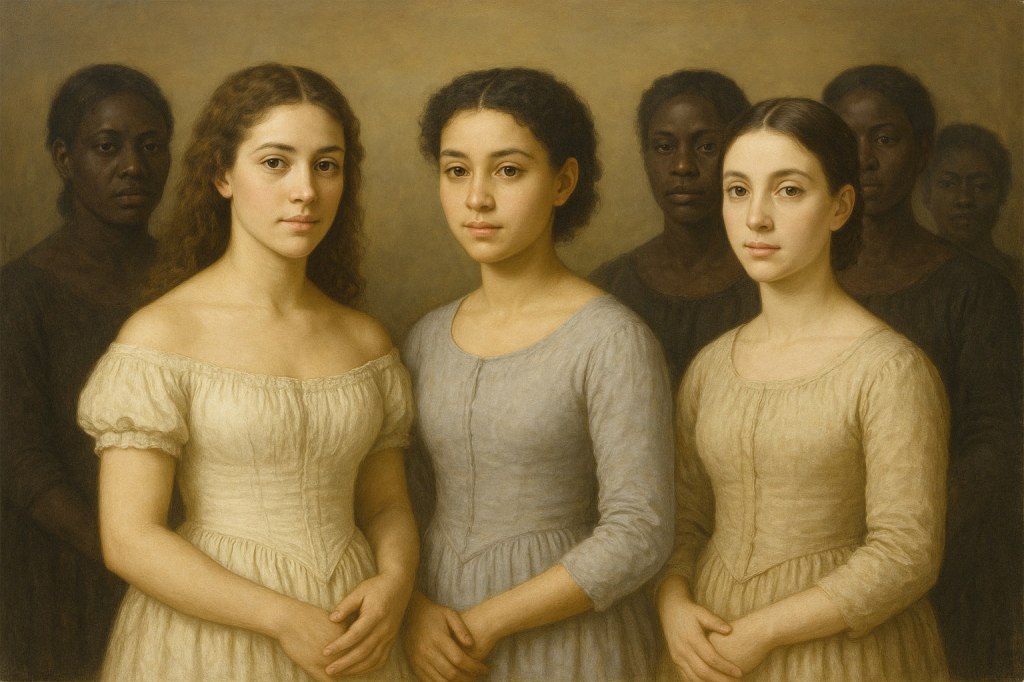
Mulattoes often came into existence through non-consensual sexual relationships between white male slave owners and enslaved African women. These unions were rarely romantic or voluntary; they were products of exploitation, coercion, and the unchecked power of white patriarchy. The children of these unions occupied an ambiguous social status. They were visibly lighter and sometimes given privileges over darker-skinned Africans, yet they were still enslaved and denied full humanity.

Economically, lighter-skinned slaves were often valued more highly in the slave markets. Auction records from New Orleans, Charleston, and the Caribbean show that Mulattoes, Quadroons, and Octoroons—terms denoting fractions of African ancestry—were sold for higher prices due to their perceived proximity to whiteness. In some cases, a beautiful light-skinned woman could fetch thousands of dollars—sometimes twice the price of a strong field laborer (Berry, 2007).

The hierarchy extended as follows: a Mulatto was half African, half European; a Quadroon was one-quarter African; and an Octoroon was one-eighth African. Each degree of whiteness supposedly brought refinement, beauty, and docility, qualities European buyers associated with superiority. This false racial science was a cornerstone of both slavery and early American eugenics.

Quadroon and Octoroon women, especially in New Orleans and parts of Louisiana, were sometimes groomed for what was known as the “plaçage” system. Under this arrangement, wealthy white men entered into unofficial unions with mixed-race women who were often educated, well-dressed, and trained in European manners. These relationships were not legal marriages but resembled concubinage. In exchange for companionship, these women received homes, money, and privileges denied to field slaves (Clark, 2013).

Plantation wives often felt deep resentment and humiliation over their husbands’ relationships with these women. The presence of mixed-race children—who sometimes lived in close proximity to the white household—served as constant reminders of betrayal. Historical letters and diaries reveal the rage, jealousy, and psychological torment many white women endured as they silently tolerated this hypocrisy (White, 1999).

Mulattoes, Quadroons, and Octoroons often worked inside the master’s home as cooks, maids, and nurses rather than in the fields. Their lighter complexion was falsely associated with higher intelligence and beauty. They became symbols of white men’s domination over both Black bodies and the institution of the family. This system reinforced colorism—a social order that persists even today.

Despite their elevated positions, these individuals lived under the same oppressive laws as all enslaved Africans. The “one-drop rule” in America classified anyone with African ancestry as Black, ensuring that even the lightest Octoroon remained enslaved if born to an enslaved mother. This legal principle ensured that slavery perpetuated itself across generations, regardless of physical appearance.

Mulattoes also faced rejection from both sides of society. They were often too “Black” to be accepted by whites, and too “white” to be fully trusted by darker-skinned slaves. This liminal identity created a painful dual consciousness—one that mirrored W.E.B. Du Bois’s later description of the “two-ness” of being both Black and American.

The valuation of mixed-race people as commodities is evident in slave ledgers and advertisements. For example, in the 1850s, a young Octoroon woman could sell for up to $3,000—a staggering sum when a skilled field hand might sell for $1,000 (Johnson, 1999). The intersection of race, beauty, and sex created a disturbing marketplace of human trafficking.

In urban centers like New Orleans, Charleston, and Havana, mixed-race women became central to elite social scenes. Some even gained temporary freedoms or wealth, though their status was always precarious. Freedom papers could be revoked, and any sign of rebellion risked severe punishment.

The plantation economy used these women as both workers and instruments of control. Their presence created divisions among enslaved people—divisions based on skin tone that mirrored European racial ideologies. This psychological warfare weakened unity among the enslaved, reinforcing white supremacy.

Christianity was also manipulated to justify this system. Slaveholders preached obedience while violating every moral tenet of the Bible. Yet enslaved people, including Mulattoes, found in Scripture the promise of deliverance. The story of Moses, the Exodus, and Deuteronomy 28 became powerful symbols of hope and identity.

After emancipation, colorism continued to shape Black communities. Some mixed-race families gained social advantages through education, passing, or wealth. Others were caught between worlds—accepted by neither the white elite nor the broader Black population.

The legacy of the Mulatto is thus deeply ambivalent. It reveals both the violence of racial oppression and the resilience of identity. The beauty, intelligence, and strength of mixed-race descendants are testimonies not to European “refinement” but to African endurance and divine grace.

The language of “Quadroon” and “Octoroon” has since been rejected as racist pseudoscience. Yet the scars of this history remain visible in modern discussions of beauty standards, social hierarchy, and representation in media.

For plantation wives, the mixed-race presence was a symbol of both moral failure and racial anxiety. For white men, it represented unchecked power. For the enslaved, it was a daily reminder of a world built on sexual exploitation and systemic cruelty.

Ultimately, the story of the Mulatto is not about privilege but pain—a reflection of how slavery corrupted family, faith, and love. It reveals the perverse intersection of race and desire that shaped America’s social fabric.

Today, scholars revisit these histories not merely to recount suffering, but to reclaim truth. The bloodlines of the enslaved, the Mulatto, the Quadroon, and the Octoroon tell a story of survival—one written not by choice, but by resilience and faith in freedom’s promise.

References

Berry, D. R. (2007). The Price for Their Pound of Flesh: The Value of the Enslaved from Womb to Grave, in the Building of a Nation. Beacon Press.

Clark, E. (2013). The Strange History of the American Quadroon: Free Women of Color in the Revolutionary Atlantic World. University of North Carolina Press.

Johnson, W. (1999). Soul by Soul: Life Inside the Antebellum Slave Market. Harvard University Press.

White, D. G. (1999). Ar’n’t I a Woman?: Female Slaves in the Plantation South. W.W. Norton & Company.