Category Archives: The Male Form

The Male Files: Melanin, Muscle & Meaning.

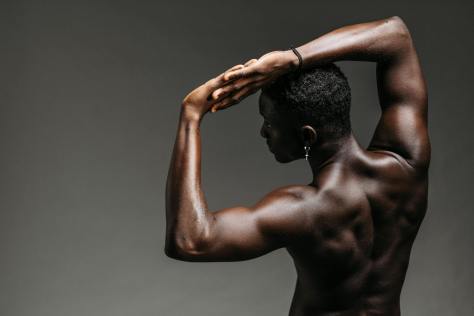
Black male bodies tell stories long before words are spoken. Melanin, muscle, and meaning converge as visual language—each layer communicating history, resilience, and divine intention. To observe Black men fully is to witness biology, theology, and culture moving together in embodied form.

Melanin is not simply pigment; it is protection, adaptation, and ancestral memory encoded in the skin. Scientific research confirms that higher melanin concentration evolved as a biological response to intense ultraviolet radiation, preserving folate and protecting cellular integrity (Jablonski, 2012). What has been racialized as inferior is, in truth, a marker of intelligent design.

Muscle, often emphasized in depictions of Black men, has been misunderstood and weaponized. While physical strength is a visible attribute, it is only one dimension of embodied intelligence. In Scripture, strength is consistently paired with discipline and restraint, suggesting that true power lies in control, not excess (Proverbs 16:32, KJV).

The Black male form has historically been reduced to labor and spectacle. During slavery and colonial expansion, Black men were framed as bodies without minds, tools without souls—a distortion necessary to justify exploitation (Fanon, 1952). This legacy still shapes contemporary perceptions, making reclamation essential.

Meaning restores what distortion removed. Black men exist not as reactions to trauma but as original carriers of purpose. Genesis affirms that humanity was created intentionally, endowed with dominion, stewardship, and moral responsibility (Genesis 1:26–27, KJV). Black manhood is included fully within this divine mandate.

Genetically, Black men represent humanity’s deepest roots. Africa holds the greatest genetic diversity on Earth, meaning Black bodies contain the widest range of human variation (Tishkoff et al., 2009). This reality reframes Blackness as foundational rather than peripheral to human identity.

Hair—whether cropped, coiled, locked, or curled—functions as both biology and symbol. Coiled hair protects the scalp and regulates heat, while culturally it communicates identity, resistance, and continuity (Jablonski & Chaplin, 2010). Grooming becomes an act of self-definition.

Muscle also reflects survival. Generations of forced labor, physical endurance, and resilience shaped not just bodies but collective memory. Yet Scripture reminds us that the body is a temple, worthy of care and honor, not exploitation (1 Corinthians 6:19–20, KJV).

Black male beauty has often been policed, feared, or eroticized rather than honored. Psychological research shows that racialized surveillance of Black men’s bodies contributes to chronic stress and identity fragmentation (Williams & Mohammed, 2009). Visibility without humanity becomes a burden.

Meaning, therefore, must be reclaimed internally as well as externally. When Black men define themselves rather than accepting imposed narratives, healing begins. Proverbs teaches that wisdom guards the heart and mind, offering stability amid distortion (Proverbs 4:23, KJV).

In art and photography, intentional representation challenges inherited myths. To depict Black men with dignity, softness, confidence, and complexity is to correct historical imbalance. Visual culture shapes belief as powerfully as written text.

The biblical image of manhood emphasizes leadership through service. Christ-centered masculinity models sacrifice, accountability, and love rather than domination (Mark 10:42–45, KJV). Muscle without meaning becomes threat; meaning without embodiment becomes abstraction.

Black men’s voices—deep, varied, rhythmic—carry authority shaped by experience. Whether speaking truth in intimate spaces or public arenas, their voices echo the breath of life God placed within humanity (Genesis 2:7, KJV).

Fatherhood reveals another dimension of meaning. Black men who nurture, protect, and instruct restore what systemic disruption sought to erase. Scripture links generational healing to the restoration of fathers’ hearts (Malachi 4:6, KJV).

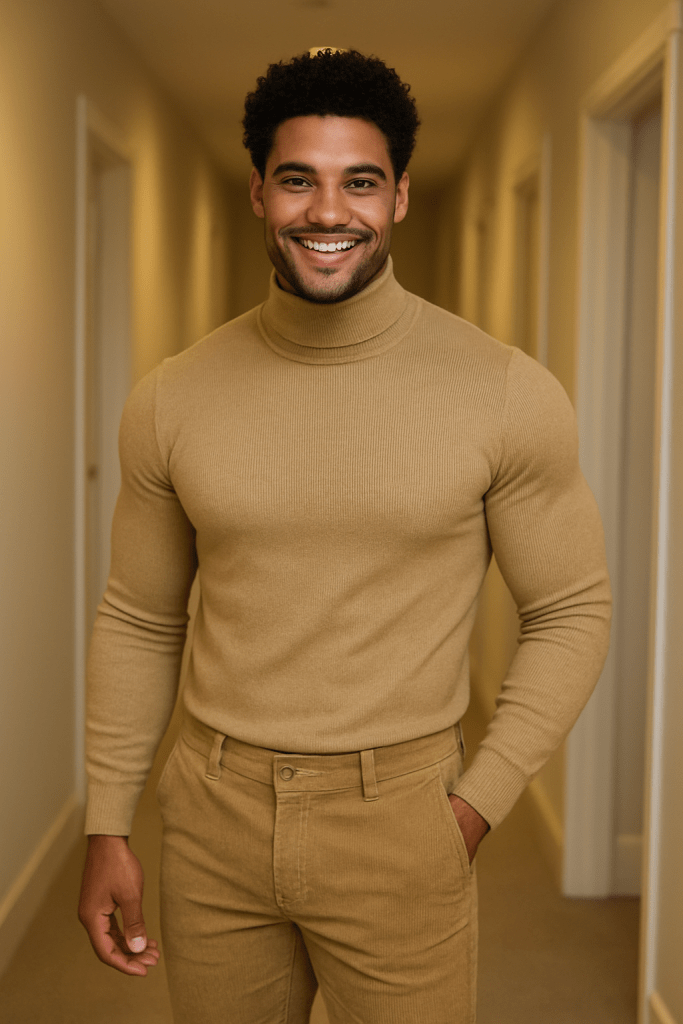
Fashion and presentation also carry meaning. Tailored suits, casual wear, cultural garments—all communicate self-respect and intentionality. Scripture recognizes clothing as symbolic of position and honor, not vanity (Genesis 41:42, KJV).

Melanin, muscle, and meaning together form a complete narrative. Remove any element, and the picture distorts. Black men are not only seen—they are interpreted, and interpretation must be rooted in truth.

Psychologically, affirming Black male wholeness strengthens identity and resilience. Research in racial identity development demonstrates that positive self-concept buffers against systemic stressors (Helms, 1990).

Spiritually, Black men are not accidents of history. Jeremiah’s call narrative reminds us that God’s knowledge and purpose precede birth itself (Jeremiah 1:5, KJV). Purpose is embedded, not assigned later.

The Male Files seeks not to idolize bodies but to restore balance—to see Black men as whole beings: physical, intellectual, emotional, and spiritual. This wholeness resists reduction.

When melanin is honored, muscle disciplined, and meaning embraced, Black men stand not as symbols but as sons, leaders, creators, and stewards. This is not reclamation alone—it is alignment with divine truth.

To affirm Black men fully is to affirm God’s design. What has been fragmented by history can be made whole through truth, intention, and reverence. Melanin, muscle, and meaning were never meant to be separated.


References

Fanon, F. (1952). Black skin, white masks. Grove Press.

Helms, J. E. (1990). Black and White racial identity: Theory, research, and practice. Greenwood Press.

Jablonski, N. G. (2012). Living color: The biological and social meaning of skin color. University of California Press.

Jablonski, N. G., & Chaplin, G. (2010). Human skin pigmentation as an adaptation to UV radiation. Proceedings of the National Academy of Sciences, 107(Supplement 2), 8962–8968.

Tishkoff, S. A., et al. (2009). The genetic structure and history of Africans and African Americans. Science, 324(5930), 1035–1044.

Williams, D. R., & Mohammed, S. A. (2009). Discrimination and racial disparities in health. Journal of Behavioral Medicine, 32(1), 20–47.

The Holy Bible, King James Version. (1611/2017). Cambridge University Press.
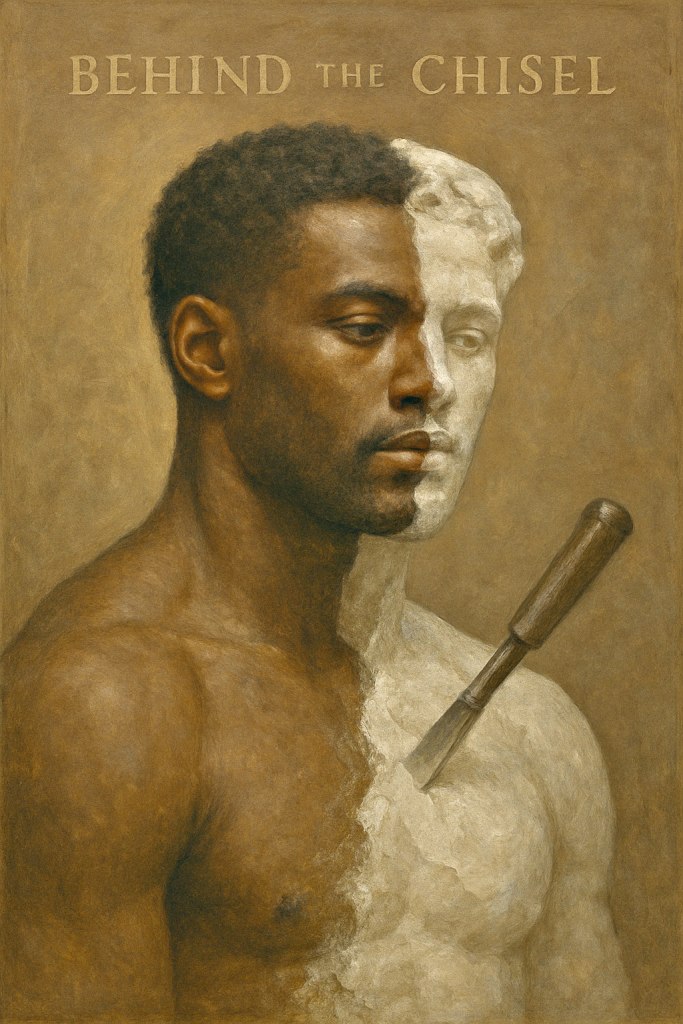
Behind the Chisel: The Vulnerability of the Beautiful Man.

Beauty, when embodied by a man, is both a gift and a burden. It grants social privilege, admiration, and power, yet it also confines him within the rigid expectations of visual perfection. The beautiful man becomes both subject and object, celebrated for his form but often alienated from his soul. In a society that prizes physical allure, his beauty becomes a mask—a chiseled shield hiding the delicate reality of human vulnerability beneath.

Historically, the male form was idealized not merely for attraction but as a symbol of strength, divinity, and order. In classical Greece and Rome, sculptors such as Polykleitos and Praxiteles established proportions that became the gold standard of masculine beauty, where symmetry reflected moral and cosmic harmony. The male nude in marble was not erotic but sacred, representing the balance between spirit and flesh. Yet even in this idealization, beauty was a double-edged sword. The hero’s perfect form was both admired and envied, his body a site of reverence and scrutiny alike.

The Renaissance revived this fascination with masculine perfection. Michelangelo’s David stands as the archetype—a beautiful man poised between youth and destiny. His body radiates strength, but his eyes betray contemplation, even fear. The chisel that shaped his muscles also exposed his soul. David’s tension between beauty and purpose mirrors the existential weight of the beautiful man throughout time: the pressure to embody power while concealing fragility.

In modernity, beauty became democratized yet commodified. With the advent of photography, cinema, and advertising, male beauty entered the realm of mass consumption. Icons like Paul Newman, Sidney Poitier, and Denzel Washington were admired not only for their talent but for their faces—faces that carried racial, social, and moral narratives. The beautiful man became a product of gaze and market, sculpted by expectation rather than stone.

The rise of digital media has intensified this commodification. Social media, with its relentless curation of images, has made beauty a measurable currency. Men are now expected to maintain a “natural perfection,” performing effortless attractiveness through fitness regimens, fashion, and self-branding. Yet behind the filtered glow and crafted angles lies the silent weight of performance anxiety—the fear of losing the audience’s gaze.

Psychologically, this creates a tension between identity and image. As Susan Bordo (1999) notes, men have increasingly internalized the gaze once reserved for women, becoming self-conscious objects of visual consumption. The male body is now a spectacle, and its owner becomes a curator of his own desirability. Beauty thus shifts from being a trait to being a task, an endless project of maintenance and validation.

The burden of male beauty also manifests in emotional suppression. Society rarely permits beautiful men to express vulnerability without undermining their masculine image. Strength, stoicism, and confidence are the expected traits—yet beneath them often lies loneliness. The beautiful man may find himself admired but not known, desired but not loved for his depth. His beauty becomes a barrier to intimacy, a mirror reflecting only surface light.

This paradox is magnified for Black men in particular, whose beauty often carries both hypervisibility and erasure. As scholars like bell hooks (2004) observe, the Black male body is simultaneously fetishized and feared, admired for its physicality yet denied full humanity. When beauty is filtered through racialized lenses, it becomes both a resistance and a burden. The Black beautiful man, then, is not only contending with aesthetics but with history—with centuries of objectification and survival inscribed into his skin.

The entertainment industry further distills this complexity. The camera loves the handsome man, yet it traps him in archetypes—the hero, the lover, the rebel. Hollywood celebrates his face while scripting his silence. Even within this admiration lies exploitation: beauty is marketable only when it conforms to prevailing ideals. As Laura Mulvey (1975) articulated in her theory of the “male gaze,” visual culture conditions viewers to consume bodies, not comprehend souls.

Behind this consumption lies a subtle cruelty: beauty fades. Time, the ultimate sculptor, erodes even the most flawless face. The beautiful man thus lives with an awareness of impermanence, of the day when admiration turns to nostalgia. His identity, if built on physical perfection, risks collapsing when youth departs. To age beautifully, therefore, becomes an act of rebellion—of reclaiming substance over surface.

Yet the vulnerability of beauty is not purely tragic. It invites empathy, forcing us to confront the shared fragility of all human ideals. The beautiful man who acknowledges his imperfections dismantles the myth of invincibility and reveals a more sacred kind of strength—the courage to be seen fully. His cracks become the proof of life, the evidence that marble can breathe.

Cultural critic Alexander Nehamas (2007) argues that beauty is “a promise of happiness,” not its guarantee. For the beautiful man, this promise often proves deceptive. The attention beauty attracts can isolate rather than fulfill, reducing complexity to aesthetics. Yet in that tension lies an opportunity: the chance to transform admiration into introspection, and image into meaning.

Spiritual traditions echo this truth. The Bible reminds humanity that “man looketh on the outward appearance, but the Lord looketh on the heart” (1 Samuel 16:7, KJV). True beauty, then, is not carved into flesh but cultivated in character. When a man understands that his worth transcends his reflection, he begins to live from the inside out—reclaiming the divine balance once symbolized in stone.

In art and life alike, the chisel’s purpose is revelation, not concealment. Every strike that shapes the figure also exposes the form beneath. Likewise, every trial that humbles the beautiful man reveals his essence. Vulnerability becomes the ultimate aesthetic—the invisible beauty of the soul.

This reclamation is vital in a world obsessed with surfaces. To be beautiful and human is to accept both admiration and misunderstanding, to find freedom not in perfection but in authenticity. Beauty ceases to be performance when it becomes truth. The man who dares to be imperfect redefines strength itself.

The modern beautiful man stands, like David, at the threshold between image and destiny. He learns that behind the chisel—the cuts of scrutiny, aging, and expectation—lies the deeper sculpture of spirit. His vulnerability is not his downfall but his masterpiece.

References

Bordo, S. (1999). The male body: A new look at men in public and in private. Farrar, Straus and Giroux.

Gilmore, D. D. (1990). Manhood in the making: Cultural concepts of masculinity. Yale University Press.

hooks, b. (2004). We real cool: Black men and masculinity. Routledge.

Kimmel, M. (2017). Angry white men: American masculinity at the end of an era. Nation Books.

Mulvey, L. (1975). Visual pleasure and narrative cinema. Screen, 16(3), 6–18.

Nehamas, A. (2007). Only a promise of happiness: The place of beauty in a world of art. Princeton University Press.

The Art of the Male Form: Power, Presence, and Perception.

Photo by ROCKETMANN TEAM on Pexels.com

The human male form has long been a subject of fascination in art, science, and culture, reflecting not only physicality but also social hierarchies, cultural ideals, and psychological projections. Across centuries, the representation of the male body has evolved, embodying changing conceptions of masculinity, strength, and beauty. From classical sculptures of Greece and Rome to contemporary photography and film, the male form has been interpreted as a canvas of power and presence.

Historically, the Greek ideal celebrated the male body as a perfect balance of symmetry, proportion, and athleticism. Sculptures such as Polykleitos’ Doryphoros exemplified mathematical precision, with the canon of proportions establishing standards for physical perfection that would influence Western art for millennia. This idealized vision of masculinity combined both aesthetic beauty and moral virtue, suggesting that bodily perfection mirrored inner excellence.

The Renaissance reintroduced classical principles while emphasizing dynamic motion and individual expression. Artists such as Michelangelo in David portrayed not only physical strength but also psychological tension and heroic presence. The male form became an emblem of intellectual and spiritual power, reflecting a holistic understanding of human potential. Renaissance art thus bridged the external and internal, situating the male body as both a physical marvel and a symbolic vessel of identity.

In non-Western contexts, the male form has been depicted through varied cultural lenses. In African art, the male figure often embodies communal roles, leadership, and spiritual vitality rather than purely aesthetic ideals. Carvings, masks, and statues depict muscularity and posture as markers of social and ceremonial significance. Similarly, in East Asian traditions, male figures have symbolized wisdom, martial skill, and filial duty, emphasizing presence over purely sculptural beauty.

Contemporary representations of the male body have expanded to encompass a spectrum of forms, challenging classical notions of beauty and strength. Media, fashion, and advertising frequently spotlight muscular, lean physiques, reinforcing cultural ideals tied to health, athleticism, and desirability. These portrayals, however, often obscure the diversity of natural male forms, creating pressures that intersect with gender norms and body image concerns.

The perception of male strength and virility is deeply intertwined with visual cues. Broad shoulders, defined musculature, and upright posture convey dominance and confidence, signaling both physical capability and social authority. Yet these traits are culturally mediated; in some societies, intellectual presence, sartorial elegance, or artistic skill may supersede raw physicality as markers of masculine power.

Psychologically, the male form operates as a site of projection for both men and women. Men may internalize societal ideals as standards for self-worth, while women may perceive these traits through lenses of attraction, protection, or social status. The interaction of biology, culture, and psychology produces a complex matrix in which physicality, behavior, and charisma intersect.

Artistic depiction often emphasizes narrative alongside form. Paintings, photographs, and sculptures do not merely replicate anatomy but evoke story, emotion, and character. The male form thus becomes a storytelling tool, capable of conveying vulnerability, aggression, heroism, or intimacy depending on context. Such portrayals can redefine social perceptions of masculinity beyond mere physical prowess.

The study of anatomy underpins much of the artistic representation of the male body. Knowledge of skeletal structure, muscle distribution, and movement enables artists to render the body convincingly and expressively. Anatomical studies by Leonardo da Vinci and modern biomechanics research illustrate how understanding physiology enhances both aesthetic and functional interpretation of form.

In cinema and performance, the male body functions as a medium of narrative embodiment. Action films, dance, and theater utilize posture, gesture, and musculature to communicate character, intent, and emotion. Actors’ physical training is integral to credibility, reinforcing cultural associations between physical form and personal agency.

Clothing and adornment further influence perception. Tailored suits, armor, traditional garments, or casual attire interact with the body’s contours to project authority, elegance, or approachability. Fashion, therefore, becomes a form of embodied rhetoric, shaping how presence is interpreted socially and aesthetically.

The intersection of race and the male form reveals additional layers of perception. Societal biases often exaggerate or stereotype certain physiques, influencing both admiration and marginalization. Scholarly research highlights how media representation of Black, Asian, and Indigenous men can reinforce prejudicial narratives while simultaneously offering opportunities for celebration and redefinition of power.

Athleticism, historically celebrated in art and society, continues to reinforce ideals of the male form. Sports icons, Olympians, and bodybuilders exemplify disciplined cultivation of the body, symbolizing perseverance, control, and societal admiration. These figures operate at the nexus of corporeal excellence and symbolic authority.

The sexualization of the male form has also evolved, reflecting shifting cultural mores. Where once nudity implied heroism, divinity, or philosophical ideal, contemporary eroticized representations carry complex implications regarding consent, objectification, and agency. The male body thus navigates multiple discourses simultaneously: aesthetic, athletic, sexual, and symbolic.

Media proliferation intensifies scrutiny of the male form. Social platforms, advertising, and global cinema perpetuate standards of muscularity, height, and symmetry, creating feedback loops that influence self-perception and social judgment. These pressures can foster both aspiration and anxiety, highlighting the psychosocial dimensions of bodily representation.

Philosophically, the male form invites reflection on mortality, temporality, and embodiment. Aging, injury, and transformation challenge ideals of constancy and perfection, offering opportunities for more nuanced understandings of masculinity. Imperfection, once marginalized in classical aesthetics, now contributes to narratives of resilience, authenticity, and wisdom.

Cross-disciplinary studies, incorporating anthropology, psychology, and art history, illuminate the interplay between biology and culture in shaping perceptions of the male form. Evolutionary theory, for example, considers sexual selection, strength signaling, and social hierarchy as factors influencing both appearance and societal valuation. Cultural studies, in turn, examine media representation, ritual, and mythology as determinants of perception.

Digital technology and virtual spaces are redefining the male form in contemporary imagination. CGI, motion capture, and social media avatars allow manipulation of physique, posture, and expression beyond natural limits, raising questions about authenticity, aspiration, and identity. Such developments extend the discourse of perception into immersive and interactive arenas.

Ultimately, the art of the male form transcends mere anatomy. It is a dialogue among power, presence, and perception, reflecting the interdependence of physicality, culture, and cognition. The male body is both observed and experienced, a site of aesthetic contemplation, social negotiation, and personal embodiment.

Contemporary discourse urges inclusivity, diversity, and critical reflection, challenging narrow definitions of strength and beauty. Recognizing variation, vulnerability, and agency broadens appreciation of the male form beyond traditional paradigms. In this light, art, science, and lived experience converge to create a dynamic understanding of masculinity as both human and culturally mediated.

In conclusion, the male form remains a compelling locus of study and representation. Its power lies not solely in muscle or height but in the interplay of physicality, presence, and perception, shaped by history, culture, and psychology. From the classical canon to modern media, the male body continues to articulate ideals, challenge assumptions, and inspire contemplation, affirming its enduring significance in human imagination and social life.

References

Frontiers in Psychology. (2023). Body image dissatisfaction in men: Causes and consequences. https://www.frontiersin.org/journals/psychology/articles/10.3389/fpsyg.2023.1116686/full

Metropolitan Museum of Art. (n.d.). Anatomy in the Renaissance. https://www.metmuseum.org/essays/anatomy-in-the-renaissance

PubMed. (2002). Impact of media images on male body image. https://pubmed.ncbi.nlm.nih.gov/11920996/

Smarthistory. (n.d.). Polykleitos, Doryphoros (Spear Bearer). https://smarthistory.org/polykleitos-doryphoros-spear-bearer/

Smarthistory. (n.d.). Depictions of the human figure and animals in African art. https://smarthistory.org/depictions-of-the-human-figure-and-animals/

Italian Renaissance. (n.d.). Michelangelo’s David: Analysis and history. https://www.italianrenaissance.org/michelangelos-david/

Science Museum, UK. (n.d.). Anatomy, art, and science. https://www.sciencemuseum.org.uk/objects-and-stories/medicine/anatomy-art-and-science

The Boar. (2020, June). Male bodies in film: Representations of masculinity. https://theboar.org/2020/06/male-bodies-film/

Vogue Business. (2021). Sizing is stopping consumers from shopping: Here’s what brands need to know. https://www.voguebusiness.com/story/fashion/sizing-is-stopping-consumers-from-shopping-heres-what-brands-need-to-know

The Times. (n.d.). Unhealthy skinny models: Fashion week report. https://www.thetimes.co.uk/article/vogue-report-unhealthy-skinny-models-fashion-week-jj3qwhf9w

Smithsonian Asian Art Museum. (n.d.). Facing East: Portraits from Asia. https://asia.si.edu/whats-on/exhibitions/facing-east-portraits-from-asia/

Masculine Perfection Series: Introduction

The Masculine Perfection series is a curated celebration of Black male excellence — a tribute to the men whose presence, talent, and character embody strength, beauty, purpose, and divine craftsmanship. This collection goes beyond surface-level admiration. It explores the full essence of manhood: physical allure, emotional depth, artistic mastery, spiritual grounding, intellectual achievement, and the cultural impact each man leaves on the world.

At its core, the series highlights Black men who have become icons in film, music, athletics, literature, leadership, and entertainment. These men possess magnetic features, powerful physiques, regal bearing, and the kind of inner discipline that shapes greatness. Each profile honors not only their looks, but the stories, struggles, victories, and virtues that forged them.

Through richly written biographies, career retrospectives, personal-life insights, and social commentary, the Masculine Perfection series elevates these men as examples of Black masculine brilliance — men who inspire, protect, create, lead, and shine. Each installment is crafted to showcase the unique beauty of the Black man: his heritage, his endurance, his artistry, his fatherhood, his relationships, his impact, and his legacy.

Masculine Perfection is more than admiration.
It is a declaration:
Black men are powerful.
Black men are exceptional.
Black men are worthy of honor.
Black men are divine masterpieces.

Examples of some of the (Celebrities) from the series:

1. Billy Dee Williams (Actor & Cultural Icon)

  • Traits & Career: Charisma, elegance, confidence, grace, relational charm.
  • Looks & Appeal: Known as one of the most handsome men of his era, with smooth features, a commanding presence, and a style that exudes sophistication. His facial symmetry, warm smile, and refined demeanor made him instantly recognizable and admired.
  • Why masculine perfection: Blends style, poise, and gravitas with charm and professionalism.
  • Reference: IMDb, Williams, B. D. biography

2. Shemar Moore (Actor & Model)

  • Traits & Career: Charismatic, disciplined, hardworking, compassionate, philanthropic. Famous for Criminal Minds and S.W.A.T.
  • Looks & Appeal: Tall, athletic, and exceptionally handsome, with chiseled features, deep expressive eyes, and a warm, magnetic smile. His presence exudes confidence, strength, and charm, making him a modern heartthrob.
  • Why masculine perfection: Combines talent, discipline, charm, and physical appeal with a relatable, grounded personality.
  • Reference: IMDb, Biography.com

3. L.L. Cool J (Actor & Musician)

  • Traits & Career: Discipline, resilience, versatility, family devotion, mentorship.
  • Looks & Appeal: Athletic build, strong jawline, and magnetic presence. His combination of rugged masculinity and refined style—often in tailored suits or casual street-smart fashion—makes him visually striking and iconic.
  • Family: Has 4 children.
  • Why masculine perfection: Strength, charisma, and physical appeal complement his integrity and career success.
  • Reference: IMDb, Biography.com

4. Omari Hardwick (Actor & Philanthropist)

  • Traits & Career: Spiritual grounding, emotional intelligence, responsibility, leadership, mentorship.
  • Looks & Appeal: Tall, muscular, and statuesque with chiseled features and expressive eyes that convey depth and intensity. His presence is both commanding and approachable, combining strength with refinement.
  • Why masculine perfection: Physical prowess and striking appearance enhance his inner integrity and leadership qualities.
  • Reference: IMDb, Essence magazine interviews

5. Phillip Michael Thomas (Actor & Musician)

  • Traits & Career: Charisma, professionalism, cultural influence, vision.
  • Looks & Appeal: Handsome, smooth, and stylish with a classic 1980s charm. His expressive eyes, warm smile, and elegant posture made him a standout on screen and in public appearances.
  • Why masculine perfection: Blends charm, elegance, and talent with visual appeal that commands attention.
  • Reference: IMDb, Biography.com

6. Kenneth Okolie (Actor & Model)

  • Traits & Career: Discipline, elegance, resilience, cultural representation.
  • Looks & Appeal: Tall, well-built, and photogenic with strong facial symmetry and an elegant style. His modeling background amplifies his visual appeal, blending physical beauty with professionalism.
  • Why masculine perfection: Exemplifies modern African masculinity through talent, charm, and striking appearance.
  • Reference: IMDb, Nollywood archives