Category Archives: The Male Files Series

The Male Files: A Black Man’s Kryptonite – A Black Woman’s Beauty

Beauty has long been recognized as a potent force in human interaction. For many men, especially in the Black community, a woman’s beauty can act almost like kryptonite, eliciting admiration, attention, and sometimes compromised judgment. Understanding this dynamic is crucial for both men and women in navigating relationships with clarity and purpose.

When a woman is exceptionally beautiful, men often go out of their way to please her. Gifts, attention, and favors can flow more readily, as men feel compelled to demonstrate worthiness in the presence of physical attraction. In some cases, a man may prioritize her desires, sometimes even bending his principles to earn approval or affection.

It is common for beauty to create disproportionate influence. The “whole paycheck” metaphor illustrates that men may invest significant resources—time, energy, money—into a woman whose appeal commands their attention. While generosity is virtuous, disproportionate devotion driven by superficial attraction can misalign priorities and expose vulnerabilities.

Men respond differently depending on their values and spiritual grounding. A man guided by God seeks to honor the woman while maintaining integrity, balance, and personal accountability. He recognizes beauty, yet does not allow physical appearance to overshadow spiritual, emotional, or intellectual compatibility.

Attraction is indeed important. Physical appeal often initiates interest, fosters desire, and creates intimacy. However, attraction alone is insufficient for long-term relational stability. Godly men look beyond mere beauty, seeking qualities like character, wisdom, faith, and compatibility. Proverbs 31 describes the virtuous woman as more valuable than rubies, emphasizing substance over superficiality.

Beautiful women often receive heightened attention, yet a godly man is careful to navigate admiration without succumbing to lustful intent. 1 Corinthians 6:18–20 reminds men to flee fornication and honor God with their bodies, highlighting that desire must be tempered by discipline and reverence.

The influence of beauty can sometimes obscure true intentions. Men may act charitably, make promises, or overextend themselves to impress a woman, revealing that unchecked attraction can be both a motivator and a vulnerability. Awareness of this dynamic is essential for both sexes.

While beauty can captivate, godly men prioritize alignment with God’s will. A woman’s faith, humility, wisdom, and moral character weigh more than her looks. Spiritual and emotional depth sustains relationships in ways that physical attraction alone cannot.

Men often measure potential long-term compatibility by observing how a woman treats others, her approach to life, and her capacity for self-discipline. Beauty may open the door, but character sustains the connection. A woman who exercises grace, patience, and integrity appeals more profoundly than appearance alone.

A beautiful woman can influence decisions subtly or overtly. Men may defer to her preferences, indulge her desires, or even compromise their principles to maintain favor. This dynamic illustrates the power of beauty but also serves as a cautionary tale: influence must be mutual and grounded in respect.

Attraction motivates men to provide and protect. Financial support, acts of service, and demonstrations of care are often heightened in the presence of beauty. While provision is virtuous, the underlying intent must align with integrity, not obsession or coercion.

Godly men seek partnership, not possession. True desire is to cultivate mutual growth, foster respect, and build a life aligned with spiritual principles. They understand that beauty is fleeting, yet faithfulness, wisdom, and godly character endure.

Beauty can amplify a woman’s voice, making her opinions more persuasive or influential. Men often respond to this heightened presence by listening attentively, adjusting behaviors, or seeking approval. This dynamic requires both awareness and accountability, ensuring that attraction does not compromise discernment.

In intimate contexts, godly men exercise self-control. They recognize the temptation that beauty presents but act with restraint, valuing purity, commitment, and spiritual alignment. Waiting for marriage to consummate a relationship exemplifies this principle, safeguarding emotional and spiritual integrity.

Men also observe whether beauty is accompanied by humility. Confidence is attractive, but arrogance can be a deterrent. A godly man values a woman who is aware of her beauty but remains grounded, kind, and considerate toward others.

Physical attractiveness can open doors to opportunities and attention, yet a discerning man seeks to understand the heart. Proverbs 31:30 emphasizes that charm is fleeting, but a woman who fears the Lord is to be praised. True admiration involves respect for both outer and inner qualities.

Men sometimes overestimate the power of beauty, believing it can solve relational or emotional challenges. A godly man recognizes that beauty is a blessing, but relational health is sustained through communication, shared values, and spiritual alignment.

The influence of beauty extends to social perception. Men may elevate a beautiful woman in their minds, attributing qualities or assuming compatibility based on appearance. Godly discernment, prayer, and reflection help ensure that attraction does not cloud judgment.

Ultimately, a black man’s kryptonite—beauty—must be navigated with wisdom. Godly men admire, respect, and honor beauty without surrendering integrity. They provide, encourage, and protect, but never at the expense of principle or spiritual alignment.

Beauty is powerful, yet it is not the ultimate measure of a woman’s worth. A godly man seeks alignment with God’s will, values virtue above physical appearance, and understands that lasting partnership is built on faith, trust, and shared purpose. True love embraces both admiration for the external and reverence for the soul.

References

The Holy Bible, King James Version.

Proverbs 31:10–31
1 Corinthians 6:18–20
1 Timothy 5:8
Proverbs 3:5–6
Ephesians 5:25–33
Galatians 5:22–23

Psychology Today. (2016). Why physical attractiveness influences behavior.

Twenge, J. M., & Campbell, W. K. (2009). The Narcissism Epidemic: Living in the Age of Entitlement. Free Press.

Anderson, E. (2012). The Social Dynamics of Black Male Attraction. Oxford University Press.

The Male Files: Rebuilding the Foundation/Blueprint of Manhood.

Photo by Barbara Olsen on Pexels.com

Manhood, in its truest sense, is more than physical maturity—it is the cultivation of character, purpose, and ethical responsibility. Modern societal pressures, cultural shifts, and historical misrepresentations have fragmented traditional concepts of manhood, necessitating a conscious effort to rebuild its foundation. The Male Files examines how men can reconstruct a blueprint for responsible, empowered, and principled masculinity.

Historically, rites of passage marked the transition from boyhood to manhood. In many cultures, these ceremonies emphasized accountability, community contribution, and personal integrity. They served as a framework for teaching values, skills, and ethical responsibility, creating a clear blueprint for adulthood (Imam, 2015).

Spiritual grounding is central to the foundation of manhood. Faith or a principled moral compass provides men with guidance, resilience, and ethical clarity. Biblical examples such as King David illustrate the importance of aligning leadership, decision-making, and personal conduct with spiritual convictions (1 Samuel 16:7, KJV).

Education and knowledge are integral to rebuilding manhood. Intellectual development equips men to navigate life with discernment, problem-solving abilities, and critical thinking. Learning also empowers men to mentor others, contribute meaningfully to society, and resist destructive cultural narratives.

Emotional intelligence is essential in constructing a new blueprint. Men must cultivate self-awareness, empathy, and relational skills. Developing the ability to manage emotions, communicate effectively, and form healthy relationships differentiates responsible manhood from mere physical maturity.

Economic responsibility forms a critical component of the foundation. Financial literacy, resource management, and intergenerational planning reflect a man’s commitment to sustaining himself, his family, and his community. A rebuilt blueprint emphasizes strategic stewardship over impulsive or self-centered behavior (Graves, 2013).

Accountability is non-negotiable in ethical manhood. Owning decisions, accepting consequences, and learning from mistakes are hallmarks of integrity. Men who practice accountability cultivate trust, respect, and leadership credibility in both personal and professional spheres.

Mentorship is a cornerstone of the blueprint. Experienced men passing on wisdom, ethical standards, and practical skills foster continuity and resilience within communities. Mentorship transforms individual development into a generational legacy of responsible manhood.

Physical health and well-being support the reconstruction of manhood. Strength, endurance, and vitality allow men to fulfill roles as protectors, providers, and leaders. However, true health encompasses mental, emotional, and spiritual dimensions, creating holistic capacity for action.

Resilience in adversity shapes the character of modern manhood. Life inevitably presents challenges—economic hardship, societal marginalization, or personal loss. Men who cultivate resilience respond with perseverance, courage, and strategic problem-solving rather than impulsive reactions or avoidance.

Leadership within family structures is foundational. Fathers and elder men establish environments of guidance, protection, and ethical modeling. Their influence ensures that children develop a clear understanding of responsibility, integrity, and relational dynamics within a stable family framework.

Cultural narratives influence the reconstruction of manhood. Media, literature, and societal discourse often portray men narrowly, emphasizing aggression, dominance, or material success. Rebuilding the blueprint involves redefining masculinity to prioritize emotional literacy, ethical leadership, and service.

Faithful engagement in community work reinforces the new model. Acts of service, mentorship programs, and civic participation demonstrate that manhood extends beyond self-interest. Community-oriented behavior underscores accountability, empathy, and social responsibility.

Spiritual resilience undergirds ethical decision-making. Men anchored in principles or faith are better equipped to navigate societal pressures that encourage dishonesty, exploitation, or moral compromise. Integrity becomes both a compass and a foundation for enduring manhood.

Self-reflection is essential in maintaining and improving the blueprint. Regular evaluation of character, behavior, and goals allows men to identify areas for growth, correct misalignments, and strengthen ethical and emotional capacities.

Interpersonal relationships are a reflection of rebuilt manhood. Respectful engagement, honest communication, and empathetic support enhance friendships, romantic partnerships, and professional connections, demonstrating consistency in principle and action.

Economic empowerment complements the broader blueprint. Financial literacy, entrepreneurship, and ethical wealth-building create independence and reinforce personal and familial stability, demonstrating responsible stewardship and foresight.

Education on historical and social influences equips men to resist destructive patterns. Awareness of systemic oppression, cultural expectations, and inherited biases allows men to make informed choices, breaking cycles of neglect, aggression, or underachievement.

Artistic and cultural expression can reinforce identity, purpose, and self-respect. Engaging with music, literature, or visual arts enables men to process experiences, express values, and cultivate pride in heritage while affirming individuality within societal structures.

Ultimately, rebuilding the foundation of manhood requires holistic integration of faith, intellect, emotional intelligence, accountability, and service. Men who consciously reconstruct their blueprint embody leadership, responsibility, and ethical purpose, setting a model for future generations.

In conclusion, The Male Files presents manhood as a deliberate, ongoing project. By embracing responsibility, cultivating resilience, and modeling principled behavior, men can redefine masculinity in a modern context, fostering communities, families, and societies grounded in integrity, strength, and purposeful action.


References

Graves, J. (2013). Black men in America: Health, family, and social policy. Routledge.

Hunter, M. (2005). Race, gender, and the development of African American masculinity. In M. Hunter & J. Davis (Eds.), African American family life: Ecological and cultural diversity (pp. 45–62). Sage Publications.

Imam, A. (2015). African rites of passage: Cultural significance and social impact. African Studies Review, 58(2), 89–107. https://doi.org/10.1017/asr.2015.21

1 Samuel 16:7 (King James Bible). (n.d.). King James Bible Online. https://www.kingjamesbibleonline.org

Connell, R. W. (2005). Masculinities (2nd ed.). University of California Press.

Zimbardo, P. G., & Coulombe, N. D. (2015). Man interrupted: Why young men are struggling and what we can do about it. Conari Press.

The Male Files: A Study of Black Masculinity.

Black masculinity has long existed at the intersection of history, theology, psychology, and sociopolitical reality. From a biblical standpoint, masculinity is not primarily defined by dominance, wealth, or physical strength, but by spiritual authority, moral responsibility, and covenantal leadership. Scripture presents man as created in the image of God (imago Dei), entrusted with stewardship, protection, and purpose (Genesis 1:26–28). In this framework, masculinity is inherently relational—man is called to lead through service, to love through sacrifice, and to govern through righteousness (Ephesians 5:25; Micah 6:8).

The biblical archetype of manhood is embodied in figures such as Adam, Abraham, Moses, David, and ultimately Christ, whose life redefines power as humility and leadership as servanthood (Mark 10:42–45). Christological masculinity subverts worldly conceptions of patriarchy by centering emotional discipline, spiritual submission, and moral accountability. In this sense, true masculinity is not measured by domination over others but by mastery of self (Proverbs 16:32). For Black men, whose bodies and identities have historically been politicized and criminalized, the biblical model offers a counter-narrative rooted in dignity, divine purpose, and sacred identity.

From a worldly and sociological perspective, Black masculinity has been profoundly shaped by the historical forces of enslavement, colonialism, Jim Crow, mass incarceration, and media stereotyping. Scholars such as W.E.B. Du Bois (1903) and Frantz Fanon (1952) argue that Black male identity in Western societies has been constructed through a lens of hypervisibility and dehumanization, where the Black male body becomes both feared and fetishized. This has produced what Du Bois famously termed “double consciousness”—the psychological conflict of seeing oneself through the eyes of a society that simultaneously denies one’s humanity.

Contemporary studies further reveal that dominant models of masculinity in Western culture—often termed hegemonic masculinity—emphasize emotional suppression, sexual conquest, economic dominance, and physical aggression (Connell, 2005). For many Black men, these norms intersect with systemic barriers such as racial profiling, educational inequality, labor market discrimination, and disproportionate policing. As a result, masculinity becomes a site of psychological tension, where survival often demands performative toughness rather than emotional vulnerability or spiritual development (hooks, 2004).

Media representations exacerbate this crisis by narrowing Black masculinity into a limited set of archetypes: the athlete, the entertainer, the criminal, or the hypersexual figure. These images, while profitable within capitalist frameworks, distort the multidimensional realities of Black male identity and constrain the imagination of what Black men can be and become (Gray, 1995). This cultural scripting has tangible consequences, influencing self-perception, interpersonal relationships, and even mental health outcomes among Black men (APA, 2018).

The tension between the biblical and worldly constructions of masculinity reveals a fundamental philosophical divide. While the world defines masculinity through power, performance, and possession, the biblical worldview defines it through purpose, character, and spiritual alignment. The Black man, situated within both paradigms, often navigates a fractured identity—caught between social expectations and divine calling. Yet within this tension lies the potential for transformation. As theology and critical race scholarship converge, a liberatory vision of Black masculinity emerges—one that is intellectually grounded, spiritually anchored, emotionally whole, and historically conscious.

Ultimately, The Male Files argues that the restoration of Black masculinity requires both spiritual reorientation and structural reform. Biblically, this entails returning to a model of manhood rooted in covenant, accountability, and moral leadership. Sociologically, it requires dismantling the systems that continue to pathologize Black male existence. Black masculinity, when reclaimed through both sacred and scholarly lenses, becomes not a crisis to be managed, but a legacy to be redeemed—an identity not defined by trauma, but by transcendence.


References

American Psychological Association. (2018). Guidelines for psychological practice with boys and men. APA.

Connell, R. W. (2005). Masculinities (2nd ed.). University of California Press.

Du Bois, W. E. B. (1903). The souls of Black folk. A.C. McClurg & Co.

Fanon, F. (1952). Black skin, white masks. Grove Press.

Gray, H. (1995). Watching race: Television and the struggle for Blackness. University of Minnesota Press.

hooks, b. (2004). We real cool: Black men and masculinity. Routledge.

The Holy Bible, King James Version. (1611/2017). Cambridge University Press.

The Male Files: THE WORLD MUST KNOW YOU CHOSE HER.

Adore Her Publicly…

In a culture that increasingly normalizes ambiguity, emotional distance, and casual relationships, the idea that a man should publicly and boldly choose one woman stands as a countercultural principle. Yet biblically, masculinity is not defined by detachment or options, but by commitment, responsibility, and visible covenant. The world must know you chose her because love in Scripture is never meant to be hidden, half-hearted, or ambiguous.

From the beginning, God established that relationships were meant to be public and purposeful. In Genesis, when Adam received Eve, he did not treat her as a secret or an experiment but as his partner, declaring, “This is now bone of my bones, and flesh of my flesh” (Genesis 2:23, KJV). His declaration was vocal, visible, and definitive. Biblical love begins with recognition and ends with responsibility.

One of the most powerful aspects of masculinity in Scripture is covering. A man who chooses a woman is called to cover her emotionally, spiritually, socially, and physically. This covering is not silent. Ruth did not guess whether Boaz valued her—his actions were public, legal, and honorable. He redeemed her openly at the city gate, before witnesses, so there would be no confusion about his intentions (Ruth 4, KJV).

Modern masculinity often fears visibility. Men are taught to keep women in private spaces—hidden relationships, undefined situationships, and emotional secrecy. But biblical masculinity does the opposite. It declares, it protects, and it stands. Proverbs 18:22 (KJV) states, “Whoso findeth a wife findeth a good thing.” A man who finds something valuable does not conceal it—he secures it.

Jesus Himself modeled public choosing. He never loved in secret. He called His disciples by name, defended women publicly, and even allowed His relationship with the Church to be described as a marriage. In Ephesians 5:25 (KJV), men are commanded to love their wives “even as Christ also loved the church, and gave himself for it.” Christ’s love was visible, sacrificial, and undeniable.

When a man truly chooses a woman, he does not leave her guessing about her place. Emotional ambiguity is not romance—it is insecurity disguised as freedom. Biblically, love produces clarity. Song of Solomon 2:16 (KJV) declares, “My beloved is mine, and I am his.” Mutual belonging requires mutual visibility.

Psychologically, public commitment provides emotional safety. A woman who is openly chosen does not have to compete, perform, or question her worth. She knows where she stands. Secrecy breeds anxiety; visibility breeds security. God is not the author of confusion, especially in relationships (1 Corinthians 14:33, KJV).

Socially, the public admiration establishes boundaries. When a man clearly identifies his woman, it signals to other men, other women, and society that she is protected, valued, and not emotionally available. This is not ownership—it is honor. It is saying, “I stand with her, and I am accountable for how I treat her.”

Spiritually, choosing a woman reflects covenant, not convenience. Covenant is always public in Scripture. God’s covenants with Israel were witnessed, declared, and recorded. Marriage is not a private feeling—it is a spiritual contract. Malachi 2:14 (KJV) calls marriage a covenant before God, not merely a personal preference.

The man who hides a woman usually wants access without responsibility. But biblical manhood demands the opposite: responsibility before access. A man proves his intentions not through words in private, but through actions in public. If he truly values her, he is not ashamed to be seen with her, associated with her, and committed to her.

The public also shapes identity. A woman who is openly chosen is affirmed not only by her partner but by her environment. Community acknowledgment reinforces dignity. This is why weddings are public ceremonies, not secret agreements. Love is meant to be witnessed.

Ultimately, “the world must know you chose her” because love is not real until it is accountable. Hidden love is convenient. Public love is costly. But only costly love reflects biblical masculinity. A man does not become weaker by choosing one woman—he becomes anchored, focused, and aligned with divine order.

True masculinity is not about how many women desire you. It is about how well you protect, honor, and commit to the one you choose. And when a man chooses rightly, he does not whisper it—he lives it.


References

Holy Bible (King James Version). (2017). Thomas Nelson.

Cloud, H., & Townsend, J. (2009). Boundaries in marriage. Zondervan.

Eldredge, J. (2001). Wild at heart: Discovering the secret of a man’s soul. Thomas Nelson.

Keller, T. (2011). The meaning of marriage: Facing the complexities of commitment with the wisdom of God. Dutton.

Lewis, C. S. (1960). The four loves. Harcourt, Brace & World.

The Male Files: The Mind of Modern Man

The modern man exists within a complex psychological landscape shaped by rapid technological change, economic uncertainty, shifting gender norms, and persistent cultural expectations. From a psychological perspective, masculinity is no longer anchored solely in traditional roles such as provider, protector, and patriarch, but is increasingly negotiated through identity performance, emotional labor, and social perception. The mind of modern man is therefore characterized by tension between inherited masculine ideals and emerging models of selfhood that emphasize vulnerability, emotional intelligence, and relational competence (Levant & Pollack, 1995).

Historically, Western masculinity has been constructed through what psychologists term normative male alexithymia—the social conditioning of men to suppress emotional expression and equate vulnerability with weakness (Levant, 2001). This emotional restriction has produced long-term psychological consequences, including elevated rates of depression, anxiety, substance abuse, and suicide among men, particularly within marginalized communities (APA, 2018). For Black men, this psychological burden is compounded by racialized stressors such as discrimination, surveillance, and economic precarity, resulting in what scholars describe as racial battle fatigue (Smith et al., 2007).

Cognitively, modern men are increasingly shaped by digital environments. Social media, pornography, gaming culture, and algorithmic content have restructured male desire, attention, and self-concept. The constant exposure to hyper-idealized bodies, wealth displays, and sexualized imagery fosters comparative identity formation, often leading to body dysmorphia, performance anxiety, and distorted relational expectations (Twenge, 2017). The male psyche becomes fragmented between the authentic self and the curated digital persona—a phenomenon aligned with Goffman’s (1959) theory of social performance.

From a sociological standpoint, masculinity operates as a social script rather than a biological destiny. Connell’s (2005) theory of hegemonic masculinity explains how dominant cultural ideals of manhood—strength, stoicism, dominance, and sexual success—are maintained through institutions such as media, education, and the labor market. Men who fail to meet these ideals often experience identity dissonance, shame, and internalized inadequacy. This psychological strain is intensified in a late-capitalist society where worth is measured by productivity, status, and economic power.

Biblically, however, the mind of man is framed through a radically different epistemology. Scripture teaches that the human mind is shaped not merely by culture, but by spiritual orientation: “Be not conformed to this world: but be ye transformed by the renewing of your mind” (Romans 12:2, KJV). In this view, modern male anxiety is not only psychological but spiritual—rooted in disconnection from divine purpose and moral identity. The biblical man is called to cultivate wisdom, self-control, humility, and emotional discipline rather than ego, domination, or performance (Proverbs 4:23; Galatians 5:22–23).

Christ represents the ultimate cognitive and moral model of masculinity. Unlike the world’s archetype of man as conqueror, Christ embodies man as servant, healer, and sacrificial leader (Mark 10:45). His emotional expressiveness—grief, compassion, vulnerability—challenges modern masculinity’s emotional repression and offers a therapeutic vision of male psychology grounded in spiritual wholeness rather than social performance. Biblically, the healed male mind is not one that dominates others, but one that governs the self (Proverbs 16:32).

In synthesis, The Mind of Modern Man reveals that contemporary masculinity is in a state of psychological and spiritual transition. While the world conditions men to pursue power, validation, and status, both psychology and theology converge in affirming that true mental health arises from identity coherence, emotional integration, moral grounding, and purposeful living. The modern man’s greatest crisis is not the loss of authority, but the loss of meaning. His greatest restoration lies not in external success, but in internal alignment—between mind, soul, and divine intention.


References

American Psychological Association. (2018). Guidelines for psychological practice with boys and men. APA.

Connell, R. W. (2005). Masculinities (2nd ed.). University of California Press.

Goffman, E. (1959). The presentation of self in everyday life. Anchor Books.

Levant, R. F. (2001). Desperately seeking language: Understanding, assessing, and treating normative male alexithymia. Professional Psychology: Research and Practice, 32(2), 190–195. https://doi.org/10.1037/0735-7028.32.2.190

Levant, R. F., & Pollack, W. S. (1995). A new psychology of men. Basic Books.

Smith, W. A., Hung, M., & Franklin, J. D. (2007). Racial battle fatigue and the miseducation of Black men. Journal of Black Studies, 37(4), 551–578. https://doi.org/10.1177/0021934705281811

Twenge, J. M. (2017). iGen: Why today’s super-connected kids are growing up less rebellious, more tolerant, less happy—and completely unprepared for adulthood. Atria Books.

The Holy Bible, King James Version. (1611/2017). Cambridge University Press.

The Male Files: A Needle in A Haystack.

In loving memory of my late husband, who was indeed – a needle in a haystack.

In today’s world, finding a good man/Godly man — a man of character, integrity, and divine order — can feel like searching for a needle in a haystack. The term “good man” has become blurred by societal confusion, shifting gender norms, and the rise of self-centered ideologies. Yet, biblically and psychologically, the essence of a good man remains anchored in his role as a protector, provider, and priest of his household. He is not perfect, but principled; not flawless, but faithful. His strength lies not in domination but in devotion — to God, to purpose, and to those he loves.

The foundation of a Godly man begins with his relationship with God. Before Adam was given Eve, he was given responsibility — to work, to guard, and to obey (Genesis 2:15, KJV). This divine order reveals that a true man is defined not by what he possesses, but by what he stewards. His identity is grounded in purpose, not pleasure. The psychology of a good man, therefore, flows from internal alignment — he knows who he is because he knows Who created him.

In psychological terms, the good man exhibits high emotional intelligence and self-regulation. He is not ruled by impulse or ego but guided by wisdom and empathy. The apostle Paul describes such a man in Galatians 5:22–23 (KJV): “But the fruit of the Spirit is love, joy, peace, longsuffering, gentleness, goodness, faith, meekness, temperance.” These traits are not signs of weakness; they are evidence of divine strength under control — the hallmark of godly masculinity.

A good man is rare because his value is not measured by superficial metrics. Society often glorifies wealth, status, and charisma, but Scripture exalts virtue, diligence, and faithfulness. Proverbs 20:6 (KJV) observes, “Most men will proclaim every one his own goodness: but a faithful man who can find?” The good man does not seek applause; he seeks purpose. He is consistent even when unseen, honorable even when unpraised.

The psychology of a provider extends beyond financial security. A good man provides emotionally, spiritually, and mentally. He builds an atmosphere of peace within his home, offering stability in chaos and clarity in confusion. He listens before he reacts, prays before he speaks, and leads by example. His provision is holistic — he feeds the soul as much as the body, recognizing that leadership without love is tyranny.

Scripture commands men to provide because provision is a form of love. 1 Timothy 5:8 (KJV) declares, “But if any provide not for his own, and specially for those of his own house, he hath denied the faith.” Provision, therefore, is not optional — it is a divine duty. The good man understands that to provide is to mirror the heart of God, who daily supplies the needs of His people (Philippians 4:19, KJV).

Psychologically, providing gives a man purpose and identity. Men who are unable to fulfill this role often experience anxiety, shame, or feelings of inadequacy. Yet, true provision is not limited to financial ability — it extends to presence, protection, and prayer. The good man knows that his presence itself is a covering. His voice calms, his actions secure, and his prayers preserve.

In relationships, the good man operates with integrity and transparency. He does not manipulate affection or exploit emotions. Instead, he nurtures love through honor and commitment. Ephesians 5:25 (KJV) instructs, “Husbands, love your wives, even as Christ also loved the church, and gave himself for it.” His love is sacrificial — not possessive. He does not seek to control but to cultivate.

The psychology of a good man is marked by humility and growth. He is teachable, accountable, and self-aware. He acknowledges his flaws without being defined by them. Such humility reflects Proverbs 27:17 (KJV): “Iron sharpeneth iron; so a man sharpeneth the countenance of his friend.” The good man surrounds himself with wise counsel, understanding that maturity is not a destination but a journey.

One of the greatest attributes of a good man is emotional strength — not stoicism, but steadiness. He feels deeply yet manages wisely. He is the calm in the storm, a grounding presence that anchors those around him. Psychologically, this emotional balance stems from secure attachment and spiritual discipline. His peace flows from his connection to the Prince of Peace.

The scarcity of good men in modern times is not due to divine absence but to societal misalignment. Men are often taught to chase success over substance, validation over virtue. Yet, the Word of God offers an antidote: “Seek ye first the kingdom of God, and his righteousness; and all these things shall be added unto you” (Matthew 6:33, KJV). The good man understands that success without spiritual grounding is emptiness disguised as achievement.

A good man’s character is revealed in adversity. Pressure exposes the foundation upon which a man is built. While others crumble under trials, he stands firm, echoing the psalmist’s declaration, “He shall be like a tree planted by the rivers of water” (Psalm 1:3, KJV). His roots go deep, nourished by faith and endurance. He is stable because his source is divine, not circumstantial.

Psychologically, this resilience is linked to purpose and self-discipline. The good man sees challenges not as threats but as opportunities for growth. He processes pain through prayer and transforms disappointment into determination. His mindset reflects Romans 5:3–4 (KJV): “We glory in tribulations also: knowing that tribulation worketh patience; and patience, experience; and experience, hope.”

In his role as a husband and father, the good man reflects the heart of the Heavenly Father. He disciplines with love, leads with fairness, and covers his family with prayer. His presence brings peace; his consistency builds trust. He understands that his role is not to dominate but to demonstrate — to model godliness in action. His family finds safety in his strength because his strength comes from God.

The psychology of a good man also includes stewardship over his emotions, resources, and relationships. He practices restraint and discernment, refusing to squander what God has entrusted to him. This self-control, as described in Proverbs 16:32 (KJV), is a mark of true power: “He that is slow to anger is better than the mighty; and he that ruleth his spirit than he that taketh a city.”

A good man’s vision is generational. He thinks beyond the moment, planting seeds for the future. He leaves a legacy not of possessions but of principles. His life becomes a testimony of faithfulness that his children can follow. Proverbs 13:22 (KJV) affirms this, saying, “A good man leaveth an inheritance to his children’s children.” His impact transcends time because it is rooted in righteousness.

Spiritually, the good man walks in alignment with divine authority. He understands headship not as superiority but as service. Christ modeled leadership through humility, and the good man mirrors that same posture. He bends his knee before God so he can stand upright before men. His authority is effective because it is submitted.

In today’s culture, where broken masculinity is often celebrated, the good man stands out. He does not conform to chaos but embodies order. His silence carries wisdom, and his decisions reflect discernment. He is firm yet gentle, powerful yet peaceful. The world may not easily recognize him, but heaven does. He is the “needle in the haystack” — the remnant of righteous men who walk uprightly before the Lord.

Ultimately, the psychology of a good man is a blend of divine design and disciplined development. He is who he is because of grace, growth, and godly guidance. He is not self-made but Spirit-shaped. His life, though imperfect, points to perfection found only in Christ. He lives not for applause but for purpose, embodying Micah 6:8 (KJV): “He hath shewed thee, O man, what is good; and what doth the LORD require of thee, but to do justly, and to love mercy, and to walk humbly with thy God?”

A needle in the haystack — that’s what he is. Rare, refined, and righteous. The good man is not extinct; he is simply hidden — often overlooked by a world too distracted to value depth. But to the woman of wisdom, the family of faith, and the kingdom of God, he is priceless. For when you find a good man, you have found not luck, but divine favor.

References (KJV):

  • Genesis 2:15
  • Proverbs 20:6
  • Galatians 5:22–23
  • 1 Timothy 5:8
  • Philippians 4:19
  • Ephesians 5:25
  • Proverbs 27:17
  • Psalm 1:3
  • Romans 5:3–4
  • Micah 6:8
  • Proverbs 13:22
  • Matthew 6:33
  • Proverbs 16:32
  • Psalm 37:23
  • 1 Corinthians 16:13
  • Joshua 24:15
  • 1 Peter 3:7
  • Proverbs 12:4
  • Colossians 3:19
  • Psalm 112:1–2

The Male Files: The Truth About Men — No Filter.

Photo by Ali Drabo on Pexels.com

The truth about men is not always easy to say, but it is necessary. Men are often painted in extremes—either as stoic protectors who never feel or as reckless pursuers of sex and power. But in reality, men live in a space where strength collides with vulnerability, and where desires often wrestle against fears. No filter means speaking plainly about what men deal with, even if it’s uncomfortable.

Sex is one of the biggest areas where men are misunderstood. For many, sex is not just about physical pleasure—it is deeply tied to identity, validation, and self-worth. Men often measure their value by their ability to attract women, perform sexually, and maintain dominance. This pressure distorts healthy intimacy into performance, creating cycles of insecurity when men fall short.

At the root of this is fear. Many men fear rejection more than they fear failure. Rejection strikes at a man’s sense of masculinity, raising questions about whether he is desirable or enough. Psychology explains this through self-determination theory: humans crave competence, relatedness, and autonomy (Ryan & Deci, 2000). When men feel rejected, competence and relatedness are shattered, leaving insecurity behind.

Men also fear vulnerability. Society trains boys to suppress emotions, equating tears with weakness. As Proverbs 29:25 (KJV) warns, “The fear of man bringeth a snare.” This cultural snare traps men in silence, unable to express pain. In relationships, this silence becomes misinterpreted as indifference, when in reality it is fear of exposure.

Insecurity about provision is another deep truth. Many men are raised to believe their worth rests in financial success. If they cannot provide, they often feel emasculated. Studies show that unemployment or underemployment strongly correlates with depression in men, not just because of economic loss but because of an identity crisis (Wilkinson, 2001).

Sexual performance anxiety also weighs heavily. Men fear being inadequate in bed, as performance has been culturally tied to masculinity. Failure in this area can cause shame, silence, and avoidance. This creates a paradox: men crave sexual intimacy but fear it because it risks exposing their insecurities.

Pornography intensifies these struggles. Men are conditioned to view sex as conquest, comparing themselves to exaggerated performances on screen. This distorts expectations, leaving many dissatisfied with reality and unprepared for real intimacy. Proverbs 6:25 (KJV) warns against lustful illusions: “Lust not after her beauty in thine heart; neither let her take thee with her eyelids.”

Commitment is another area clouded by fear. Many men desire stability but fear losing freedom. This creates tension between wanting a lifelong partner and clinging to independence. Psychology calls this avoidant attachment, where closeness feels threatening because it means potential loss (Mikulincer & Shaver, 2007).

For others, commitment is frightening because it exposes the possibility of failure. Divorce, heartbreak, and betrayal leave scars, teaching men that intimacy is dangerous. Instead of healing, many retreat into casual sex or emotional withdrawal. It feels safer, but it leaves them lonely.

Trust is a battlefield for men. Some carry deep wounds from betrayal—whether from mothers, past lovers, or absent fathers. These betrayals create a reluctance to fully invest in women, out of fear of being hurt again. As a result, many men love halfway, holding back pieces of themselves.

Ego is another powerful force. Men often protect their egos with silence, pride, or anger. To admit fear feels like weakness, so many hide behind bravado. But as the Bible reminds us in 2 Corinthians 12:9 (KJV), “My strength is made perfect in weakness.” True strength for men lies not in hiding fears but in owning them.

Friendship is another misunderstood need. Men crave brotherhood, but modern masculinity often isolates them. Without trusted male friends, they place all emotional needs on women, which strains relationships. Research confirms that men with strong male friendships experience greater mental health and marital satisfaction (Mahalik et al., 2003).

Fatherhood also reveals deep insecurities. Many men wrestle with the fear of becoming the same fathers who wounded them—or of failing their children altogether. This fear pushes some into abandonment, while others overcompensate through over-discipline. The balance is difficult, especially when men themselves were never nurtured.

Spiritually, men wrestle with temptation. The struggle against lust, pride, and greed is ongoing. Paul describes this inner battle in Romans 7:19 (KJV): “For the good that I would I do not: but the evil which I would not, that I do.” Men know right from wrong but often find themselves doing the very things they despise.

Communication is another truth. Men are often labeled as emotionally unavailable, but many simply lack the vocabulary for vulnerability. They were never taught to name feelings beyond anger, so frustration becomes the default. This miscommunication fuels conflict in relationships, leaving women feeling unloved while men feel misunderstood.

Financial insecurity intersects with relational fear. Men fear being loved only for what they provide. This suspicion creates defensiveness, leading them to test women’s loyalty. Unfortunately, this defensive posture can drive away genuine partners, reinforcing their fears.

Another truth is men’s longing for respect. Ephesians 5:33 (KJV) highlights this dynamic: “Let the wife see that she reverence her husband.” Men crave respect as deeply as women crave love. When men feel disrespected, they withdraw, often silently, creating distance in relationships.

Men also struggle with aging. Gray hair, slowing bodies, and decreased strength remind men of mortality. Fear of losing virility leads some to chase younger women or cling to shallow displays of masculinity. Others grow resentful, fearing they are no longer attractive or useful.

Another hidden truth is men’s battle with mental health. Depression in men often manifests as anger, workaholism, or substance abuse. Yet men are less likely to seek help, fearing stigma. This silent suffering devastates relationships, as unaddressed pain spills over into destructive behavior.

Yet, despite these fears and insecurities, men deeply desire love. They may not always show it in words, but most crave companionship, partnership, and legacy. This truth cuts through the myths: men want intimacy, not just sex, but fear often distorts how they pursue it.

The key to healing lies in honesty. Men must learn to admit their weaknesses without shame. Vulnerability opens the door to authentic connection. When men speak plainly about their struggles, they discover they are not alone.

Women, too, play a role in this process. Patience, respect, and encouragement help men lower their defenses. But men must also take responsibility—learning to communicate, seeking therapy when needed, and grounding their worth not in sex or money but in God’s design.

Spiritually, men find strength when they root their identity in Christ. 1 Corinthians 16:13 (KJV) says, “Watch ye, stand fast in the faith, quit you like men, be strong.” This strength is not bravado but courage rooted in faith. True manhood is not about hiding fear but walking through it with integrity.

The truth about men, no filter, is that they are human. They fear, they fail, they hurt, and they love. Behind the masks of pride and performance lies a deep longing to be seen, respected, and loved for who they are. The more men embrace this truth, the more honest and whole their relationships become.


References

  • Mahalik, J. R., Burns, S. M., & Syzdek, M. (2003). Masculinity and perceived normative health behaviors as predictors of men’s health behaviors. Social Science & Medicine, 57(8), 1559–1569.
  • Mikulincer, M., & Shaver, P. R. (2007). Attachment in adulthood: Structure, dynamics, and change. Guilford Press.
  • Ryan, R. M., & Deci, E. L. (2000). Self-determination theory and the facilitation of intrinsic motivation, social development, and well-being. American Psychologist, 55(1), 68–78.
  • Wilkinson, R. (2001). Unemployment and health: A review. Public Health, 115(3), 153–160.
  • The Holy Bible, King James Version.

The Male Files: Melanin, Muscle & Meaning.

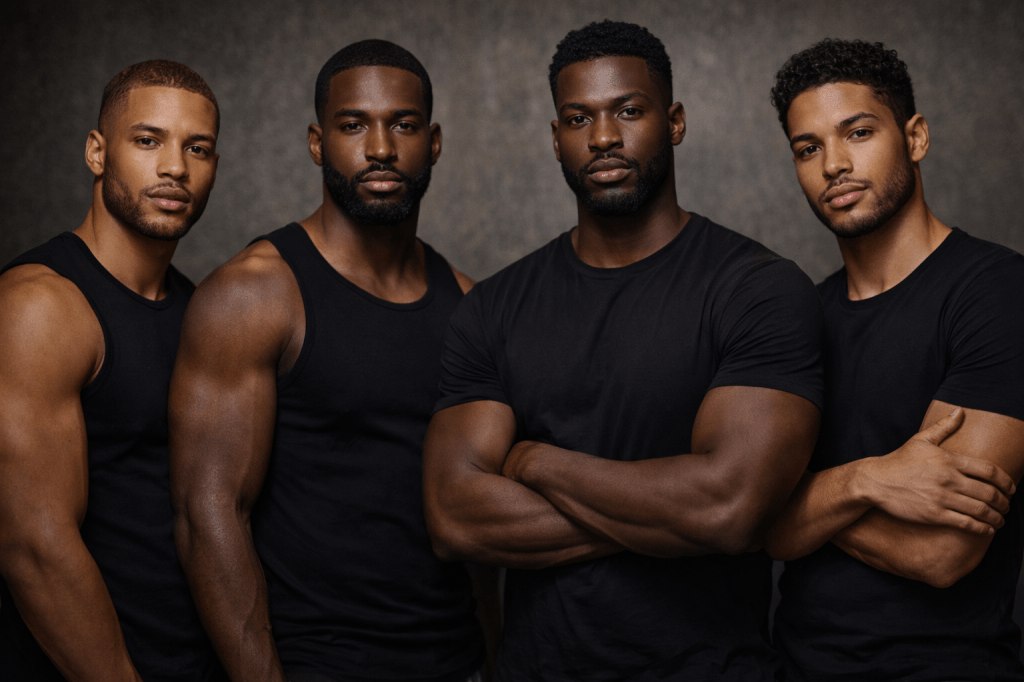
Black male bodies tell stories long before words are spoken. Melanin, muscle, and meaning converge as visual language—each layer communicating history, resilience, and divine intention. To observe Black men fully is to witness biology, theology, and culture moving together in embodied form.

Melanin is not simply pigment; it is protection, adaptation, and ancestral memory encoded in the skin. Scientific research confirms that higher melanin concentration evolved as a biological response to intense ultraviolet radiation, preserving folate and protecting cellular integrity (Jablonski, 2012). What has been racialized as inferior is, in truth, a marker of intelligent design.

Muscle, often emphasized in depictions of Black men, has been misunderstood and weaponized. While physical strength is a visible attribute, it is only one dimension of embodied intelligence. In Scripture, strength is consistently paired with discipline and restraint, suggesting that true power lies in control, not excess (Proverbs 16:32, KJV).

The Black male form has historically been reduced to labor and spectacle. During slavery and colonial expansion, Black men were framed as bodies without minds, tools without souls—a distortion necessary to justify exploitation (Fanon, 1952). This legacy still shapes contemporary perceptions, making reclamation essential.

Meaning restores what distortion removed. Black men exist not as reactions to trauma but as original carriers of purpose. Genesis affirms that humanity was created intentionally, endowed with dominion, stewardship, and moral responsibility (Genesis 1:26–27, KJV). Black manhood is included fully within this divine mandate.

Genetically, Black men represent humanity’s deepest roots. Africa holds the greatest genetic diversity on Earth, meaning Black bodies contain the widest range of human variation (Tishkoff et al., 2009). This reality reframes Blackness as foundational rather than peripheral to human identity.

Hair—whether cropped, coiled, locked, or curled—functions as both biology and symbol. Coiled hair protects the scalp and regulates heat, while culturally it communicates identity, resistance, and continuity (Jablonski & Chaplin, 2010). Grooming becomes an act of self-definition.

Muscle also reflects survival. Generations of forced labor, physical endurance, and resilience shaped not just bodies but collective memory. Yet Scripture reminds us that the body is a temple, worthy of care and honor, not exploitation (1 Corinthians 6:19–20, KJV).

Black male beauty has often been policed, feared, or eroticized rather than honored. Psychological research shows that racialized surveillance of Black men’s bodies contributes to chronic stress and identity fragmentation (Williams & Mohammed, 2009). Visibility without humanity becomes a burden.

Meaning, therefore, must be reclaimed internally as well as externally. When Black men define themselves rather than accepting imposed narratives, healing begins. Proverbs teaches that wisdom guards the heart and mind, offering stability amid distortion (Proverbs 4:23, KJV).

In art and photography, intentional representation challenges inherited myths. To depict Black men with dignity, softness, confidence, and complexity is to correct historical imbalance. Visual culture shapes belief as powerfully as written text.

The biblical image of manhood emphasizes leadership through service. Christ-centered masculinity models sacrifice, accountability, and love rather than domination (Mark 10:42–45, KJV). Muscle without meaning becomes threat; meaning without embodiment becomes abstraction.

Black men’s voices—deep, varied, rhythmic—carry authority shaped by experience. Whether speaking truth in intimate spaces or public arenas, their voices echo the breath of life God placed within humanity (Genesis 2:7, KJV).

Fatherhood reveals another dimension of meaning. Black men who nurture, protect, and instruct restore what systemic disruption sought to erase. Scripture links generational healing to the restoration of fathers’ hearts (Malachi 4:6, KJV).

Fashion and presentation also carry meaning. Tailored suits, casual wear, cultural garments—all communicate self-respect and intentionality. Scripture recognizes clothing as symbolic of position and honor, not vanity (Genesis 41:42, KJV).

Melanin, muscle, and meaning together form a complete narrative. Remove any element, and the picture distorts. Black men are not only seen—they are interpreted, and interpretation must be rooted in truth.

Psychologically, affirming Black male wholeness strengthens identity and resilience. Research in racial identity development demonstrates that positive self-concept buffers against systemic stressors (Helms, 1990).

Spiritually, Black men are not accidents of history. Jeremiah’s call narrative reminds us that God’s knowledge and purpose precede birth itself (Jeremiah 1:5, KJV). Purpose is embedded, not assigned later.

The Male Files seeks not to idolize bodies but to restore balance—to see Black men as whole beings: physical, intellectual, emotional, and spiritual. This wholeness resists reduction.

When melanin is honored, muscle disciplined, and meaning embraced, Black men stand not as symbols but as sons, leaders, creators, and stewards. This is not reclamation alone—it is alignment with divine truth.

To affirm Black men fully is to affirm God’s design. What has been fragmented by history can be made whole through truth, intention, and reverence. Melanin, muscle, and meaning were never meant to be separated.


References

Fanon, F. (1952). Black skin, white masks. Grove Press.

Helms, J. E. (1990). Black and White racial identity: Theory, research, and practice. Greenwood Press.

Jablonski, N. G. (2012). Living color: The biological and social meaning of skin color. University of California Press.

Jablonski, N. G., & Chaplin, G. (2010). Human skin pigmentation as an adaptation to UV radiation. Proceedings of the National Academy of Sciences, 107(Supplement 2), 8962–8968.

Tishkoff, S. A., et al. (2009). The genetic structure and history of Africans and African Americans. Science, 324(5930), 1035–1044.

Williams, D. R., & Mohammed, S. A. (2009). Discrimination and racial disparities in health. Journal of Behavioral Medicine, 32(1), 20–47.

The Holy Bible, King James Version. (1611/2017). Cambridge University Press.

The Male Files: What Black Men Want Black Women to Know.

Black men are often spoken about but rarely spoken with. Narratives about Black masculinity tend to oscillate between extremes—either demonized or romanticized—leaving little room for truth, vulnerability, or complexity. This article seeks to articulate what many Black men desire Black women to understand, not from a place of superiority, but from a longing for peace, partnership, and mutual respect.

At the core, many Black men want to be seen as human before they are judged as providers, protectors, or problems. Scripture affirms that God looks on the heart rather than outward performance (1 Samuel 16:7, KJV). Yet culturally, Black men are often valued only for what they can produce, not who they are becoming. This pressure can lead to emotional withdrawal rather than emotional absence.

Respect matters deeply. While love is often emphasized in conversations about relationships, respect is frequently the language through which men experience love. Ephesians 5:33 instructs wives to respect their husbands, not as subjugation, but as acknowledgment of dignity and role. Many Black men desire to feel trusted, honored, and not constantly corrected or compared.

Black men also want Black women to understand that silence does not always mean indifference. For many, silence is a learned survival strategy. Historical trauma, racial profiling, and cultural expectations have taught Black men that emotional exposure can be dangerous (Majors & Billson, 1992). What appears as emotional unavailability is often emotional self-protection.

Partnership, not competition, is another recurring desire. Genesis 2:18 frames woman as a helper suitable—not inferior, but complementary. Many Black men long for relationships where strengths are shared rather than weaponized, where differences are balanced rather than exploited. Constant power struggles erode intimacy.

Black men also want it understood that provision is more than money. While financial stability matters, men also desire to provide leadership, spiritual covering, presence, and consistency. Ecclesiastes 4:9–12 emphasizes unity and cooperation as strength. When provision is reduced solely to income, men who are growing—but not yet established—may feel disqualified from love.

Healing is an unspoken need. Many Black men carry unresolved wounds from absent fathers, broken homes, systemic racism, and public humiliation. bell hooks (2004) notes that patriarchy teaches men to suppress pain rather than process it. Black men want space to heal without being shamed for needing it.

Faith plays a critical role in how many Black men understand manhood. Colossians 3:19 warns men not to be harsh, revealing that God expects emotional discipline, not domination. At the same time, men desire spiritual alignment—a partner who respects their walk with God and does not undermine their authority or growth.

Black men also want Black women to know that affirmation matters. In a world where they are often criminalized, overlooked, or disrespected, words of encouragement can restore strength. Proverbs 18:21 reminds us that life and death are in the power of the tongue. Many men remember words spoken over them—both harmful and healing.

Trust is another fragile area. Past betrayals, public criticism, and lack of discretion can make men guarded. 1 Peter 3:7 instructs men to dwell with women with understanding, implying that understanding must be mutual. Men desire emotional safety as much as women do.

Importantly, this is not a call to excuse wrongdoing. Accountability, growth, and maturity are essential. Black men want to be challenged—but not belittled; corrected—but not disrespected; supported—but not enabled. Love that builds is firm yet fair.

Ultimately, Black men want Black women to know that they desire peace. Not passivity, but peace. A home that feels like refuge rather than a battleground. Amos 3:3 asks, “Can two walk together, except they be agreed?” Agreement begins with listening.

Black love has always existed under pressure. Yet it has also endured through faith, forgiveness, and intentional communication. When Black men and Black women commit to understanding rather than assuming, healing becomes possible.

The Male Files is not a final word—it is an opening conversation. One rooted in truth, humility, and the hope that Black relationships can be places of rest, growth, and divine alignment.


References

Franklin, A. J. (2004). From brotherhood to manhood: How Black men rescue their relationships and dreams from the invisibility syndrome. Wiley.

hooks, b. (2004). We real cool: Black men and masculinity. Routledge.

Majors, R., & Billson, J. M. (1992). Cool pose: The dilemmas of Black manhood in America. Lexington Books.

Gottman, J. M., & Silver, N. (2015). The seven principles for making marriage work. Harmony Books.

Edin, K., & Nelson, T. J. (2013). Doing the best I can: Fatherhood in the inner city. University of California Press.

The Holy Bible, King James Version. (1769/2017). Cambridge University Press.

The Male Files: The Soul of a King

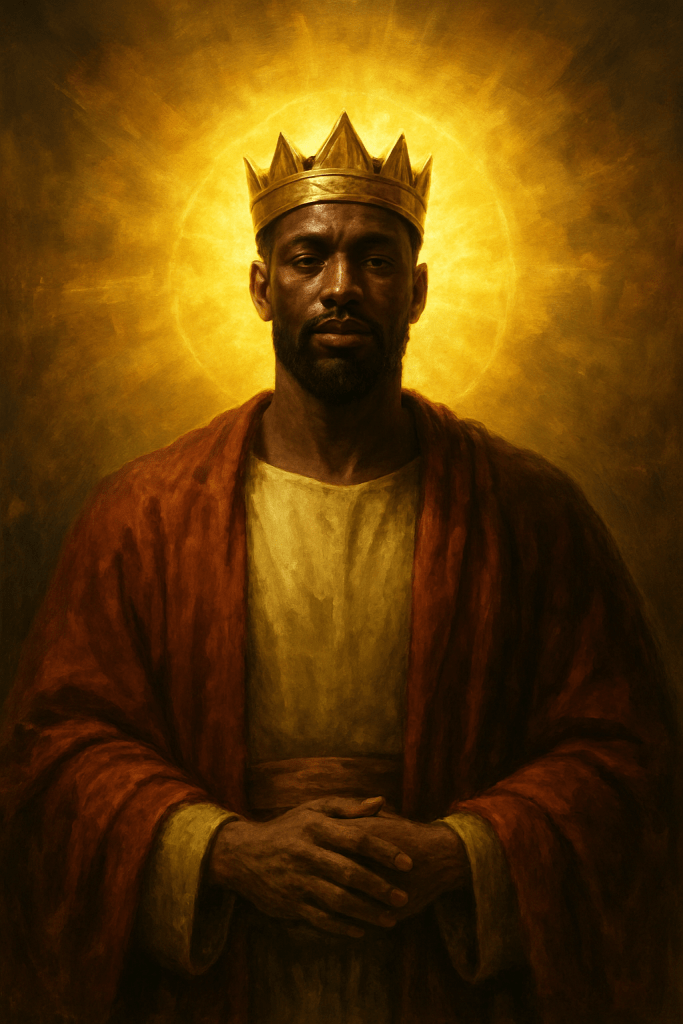
In a world that often diminishes the spiritual authority and divine design of manhood, the soul of a king stands as both a mystery and a mandate. The King, in biblical and spiritual context, represents more than status—he embodies stewardship, wisdom, and submission to the will of God. To understand the soul of a king is to look beyond the crown and into the inner workings of purpose, identity, and divine responsibility. Scripture reminds us that true kingship is not measured by dominance or wealth, but by righteousness and humility. As Proverbs 16:12 declares, “It is an abomination to kings to commit wickedness: for the throne is established by righteousness” (KJV).

A king’s soul must be anchored in divine order. He is not self-appointed but chosen by God for leadership, both in his home and his community. David, the shepherd who became Israel’s greatest king, was anointed long before he ascended the throne. His kingship began in obscurity, formed through worship and warfare in the fields (1 Samuel 16:13). This reveals a spiritual truth: kings are forged in secret before they are revealed in public. The soul of a king must first learn servanthood before exercising dominion.

The greatest danger to any man’s kingship is pride. When the soul exalts itself above God, authority becomes corrupted. King Saul’s fall serves as a solemn warning that disobedience and ego can strip a man of divine favor. As 1 Samuel 15:23 states, “For rebellion is as the sin of witchcraft, and stubbornness is as iniquity and idolatry” (KJV). The soul of a king must therefore remain teachable, repentant, and obedient to the voice of God, lest his throne become his prison.

A true king governs not only others but himself. He rules over his emotions, his impulses, and his tongue. Proverbs 25:28 warns, “He that hath no rule over his own spirit is like a city that is broken down, and without walls” (KJV). The disciplined soul becomes a fortress of stability in a chaotic world. Kingship without self-control leads to ruin, but kingship with restraint establishes peace within and around.

The soul of a king is also a soul of service. Christ, the King of Kings, modeled leadership through humility and sacrifice. In Matthew 20:28, He declared, “The Son of man came not to be ministered unto, but to minister, and to give his life a ransom for many” (KJV). The essence of spiritual royalty lies in serving others with love, compassion, and justice. A king who refuses to serve cannot sustain his rule, for service is the foundation of divine leadership.

A king’s wisdom is his crown. Solomon prayed not for riches or victory, but for understanding. His request pleased the Lord, who granted him both wisdom and prosperity (1 Kings 3:9–13). This teaches that a king’s greatness flows from his ability to discern the will of God. The soul of a king listens more than it speaks, meditates before it acts, and seeks counsel before making decisions.

The heart of a king must also be tender toward the people. David’s compassion for his soldiers and his grief over Absalom’s rebellion show that true kingship carries emotional weight. The soul of a king is not hardened by power but softened by empathy. He feels deeply, yet governs wisely. His strength lies in his balance—firm in justice, but rich in mercy, reflecting God’s own heart.

Righteous kingship demands spiritual warfare. Every true king faces opposition, not only from the external world but from the unseen realm. The adversary seeks to dethrone men from their spiritual position through temptation, lust, and pride. Yet the armor of God remains his defense. As Ephesians 6:11 instructs, “Put on the whole armour of God, that ye may be able to stand against the wiles of the devil” (KJV). The soul of a king must be battle-ready, clothed in faith and truth.

The anointed man’s path is often lonely. Isolation refines the king’s character and tests his endurance. In moments of solitude, he learns to hear the whisper of the Spirit, as Elijah did in the wilderness (1 Kings 19:12). The king’s solitude is not abandonment but preparation. God hides His chosen ones before revealing their destiny.

Kingship is not inherited by blood alone but by covenant. Every man who walks in faith becomes part of a royal priesthood (1 Peter 2:9). This means that kingship is not about title or throne, but about alignment with God’s will. The modern man, therefore, is called to rule with integrity in his sphere—whether as father, husband, leader, or mentor. His throne is wherever his obedience to God establishes dominion.

The soul of a king must be anchored in humility. The world teaches men to boast, but Scripture reminds them to kneel. In Micah 6:8, the prophet writes, “What doth the Lord require of thee, but to do justly, and to love mercy, and to walk humbly with thy God?” (KJV). The posture of humility attracts divine favor and guards the king from self-destruction.

Every king must also confront his inner wounds. Generational trauma, fatherlessness, and societal rejection often leave men broken beneath their crowns. Yet healing is the key to righteous rule. Psalm 34:18 declares, “The Lord is nigh unto them that are of a broken heart; and saveth such as be of a contrite spirit” (KJV). A healed soul becomes a vessel of restoration for others.

A true king leads his family with love and spiritual vision. His leadership begins in the home, where his example shapes generations. Ephesians 5:23 affirms, “For the husband is the head of the wife, even as Christ is the head of the church” (KJV). Yet this headship is not tyranny; it is sacrificial love, mirroring Christ’s devotion to the Church.

The king’s relationship with God defines his reign. His prayer life is his strategy, his worship is his weapon, and his faith is his fortress. Without intimacy with God, his crown becomes heavy and his vision fades. Psalm 27:4 captures the king’s longing: “One thing have I desired of the Lord… that I may dwell in the house of the Lord all the days of my life” (KJV).

The soul of a king must also learn forgiveness. Unforgiveness poisons authority and corrupts purpose. Joseph, though betrayed by his brothers, forgave and ruled with compassion (Genesis 50:20). Forgiveness is the hallmark of a matured king—it signifies mastery over bitterness and alignment with divine mercy.

A righteous king uplifts the poor and defends the oppressed. His rule extends justice, not exploitation. Proverbs 29:14 teaches, “The king that faithfully judgeth the poor, his throne shall be established forever” (KJV). The true measure of a man’s kingship lies not in his wealth but in his compassion.

The soul of a king must remain teachable under divine authority. Even King David, though anointed, sought the counsel of prophets and priests. This humility preserved his throne and renewed his heart. Every king who submits to God’s Word ensures that his rule endures beyond his lifetime.

Kingship also demands accountability. A man’s power must be checked by moral principle and spiritual discipline. Without accountability, authority becomes abuse. Nathan’s rebuke of David (2 Samuel 12:7) illustrates that even kings must be corrected. True strength lies not in being above reproach, but in receiving it with wisdom.

The soul of a king is eternal. Earthly crowns tarnish, but spiritual legacy endures. When a man governs with love, integrity, and truth, he becomes a reflection of the eternal King, Christ Himself. His rule transcends generations, shaping destinies long after his physical reign has ended.

Ultimately, the soul of a king is a heart surrendered to God. His purpose is not to be worshipped, but to worship; not to rule alone, but to reflect divine rulership on earth. The world needs such kings—men of valor, humility, and faith—who will rise in righteousness and restore the moral order of nations. For as Revelation 19:16 declares, “He hath on his vesture and on his thigh a name written, KING OF KINGS, AND LORD OF LORDS” (KJV).


References (KJV Bible)
1 Samuel 15:23; 1 Samuel 16:13; 1 Kings 3:9–13; 1 Kings 19:12; 2 Samuel 12:7; Ephesians 5:23; Ephesians 6:11; Genesis 50:20; Micah 6:8; Matthew 20:28; Psalm 27:4; Psalm 34:18; Proverbs 16:12; Proverbs 25:28; Proverbs 29:14; Revelation 19:16; 1 Peter 2:9.