Category Archives: the brown girl dilemma

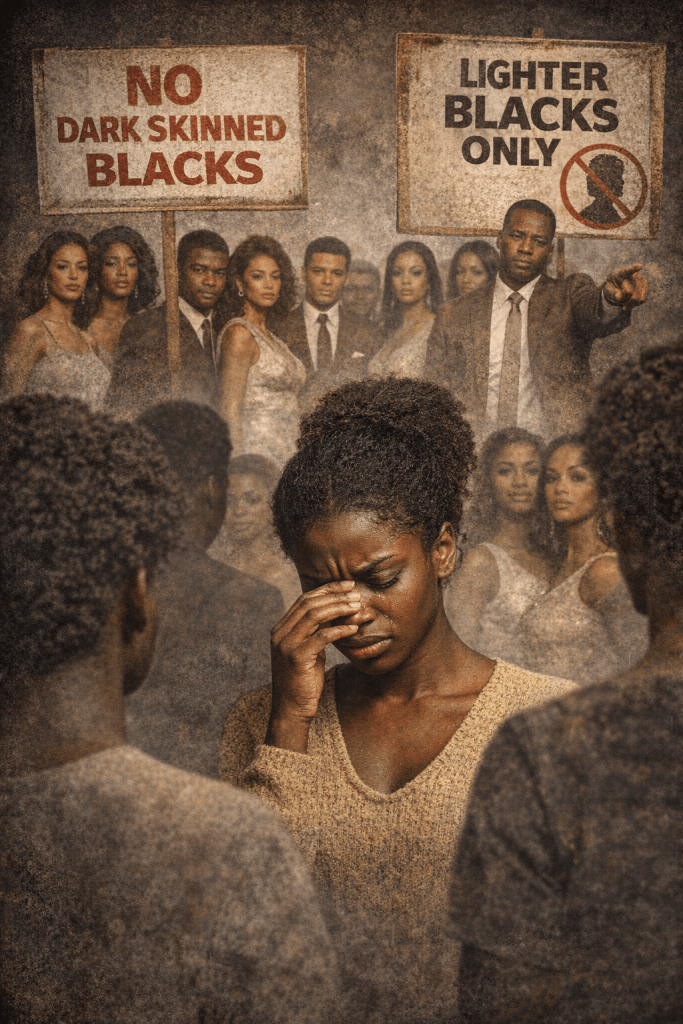
Self-Hating Blacks Banned Darker Blacks

Self-hatred within the Black community is one of the most tragic psychological legacies of slavery, colonialism, and white supremacy. It is a condition where Black people unconsciously absorb anti-Black ideologies and then reproduce those same systems of hierarchy and exclusion among themselves. One of the clearest manifestations of this internalized racism is colorism, where darker-skinned Black people are marginalized, excluded, or deemed inferior by lighter-skinned Black people who have been socially conditioned to associate proximity to whiteness with value, intelligence, beauty, and success.

Colorism did not originate within the Black community. It was engineered through slavery, where lighter-skinned enslaved people, often the offspring of enslaved women and white slave masters, were granted closer proximity to the house, while darker-skinned Africans were relegated to the fields. This created a racial caste system within Blackness itself, embedding the idea that lighter skin meant higher status, better treatment, and greater access to resources.

Over time, this system evolved beyond physical labor into a psychological hierarchy. Lighter-skinned Blacks were often given better education, more opportunities, and greater representation in media, while darker-skinned Blacks were systematically portrayed as aggressive, undesirable, unintelligent, or hypersexual. These narratives were not accidental; they were tools of social control designed to fracture Black unity and create internal competition instead of collective resistance.

Self-hating Blacks did not create these structures, but many unconsciously enforced them. By adopting Eurocentric beauty standards and internalizing anti-Black imagery, some Black people became gatekeepers of whiteness within Black spaces. This is why darker Blacks were often excluded from leadership roles, romantic desirability, media representation, and even religious platforms, despite being the most genetically and historically African.

In many Black communities, darker-skinned children grow up receiving different treatment than their lighter-skinned peers. They are disciplined more harshly, praised less frequently, and rarely affirmed as beautiful. Meanwhile, lighter-skinned children are often subconsciously favored, described as “pretty,” “articulate,” or “well-behaved,” reinforcing a psychological message that darkness is a deficit.

This internal hierarchy becomes even more visible in dating and marriage patterns. Numerous sociological studies show that lighter-skinned Black women are more likely to be perceived as attractive and marriageable, while darker-skinned women are more likely to be stereotyped as aggressive or undesirable. This has nothing to do with biology and everything to do with centuries of racial conditioning.

Dark-skinned Black men are similarly affected, often being hypersexualized, criminalized, or depicted as dangerous. Yet lighter-skinned Black men are more likely to be portrayed as romantic leads, intellectuals, or socially acceptable partners. The result is a racial double consciousness where Blackness is tolerated only when diluted.

Media has played a major role in this psychological warfare. For decades, Black magazines, music videos, television shows, and advertisements overwhelmingly featured light-skinned models and actors, reinforcing the idea that success and beauty required proximity to whiteness. Darker Blacks were either erased or reduced to background characters, comic relief, or symbols of dysfunction.

This phenomenon produced what Frantz Fanon described as the “colonized mind,” where the oppressed adopt the values and worldview of the oppressor. In this condition, Black people begin to see themselves through white eyes and judge their own people according to white standards. The darkest among them become the most dehumanized.

Self-hatred becomes structural when Black institutions themselves participate in this exclusion. Churches, schools, social clubs, sororities, fraternities, and professional networks have historically favored lighter-skinned Blacks, creating social filters that replicate colonial hierarchies even in supposedly Black-controlled spaces.

This is why darker Blacks were often banned from certain social circles, beauty contests, modeling agencies, and elite organizations. Not officially, but psychologically and culturally. They were “too dark,” “not the right look,” or “not marketable,” which are simply coded ways of saying not close enough to whiteness.

The tragedy is that darker-skinned Blacks are the closest living descendants to the original African populations from which all humans originate. Genetically, melanated skin is the ancestral human phenotype. Yet through racial conditioning, this biological truth was inverted into a social lie where darkness became associated with inferiority.

This internal division weakened Black collective power. Instead of uniting against systemic racism, Black communities were fractured into internal hierarchies of worth. Lighter Blacks were taught to distance themselves from darker Blacks, while darker Blacks were taught to aspire toward lighter identity, leading to generational psychological trauma.

Colorism also created economic consequences. Darker Blacks face higher rates of unemployment, lower wages, harsher sentencing in the criminal justice system, and reduced access to healthcare and housing. These outcomes are not random; they reflect how deeply skin tone influences institutional decision-making.

The most devastating effect of this system is spiritual. When Black people internalize self-hatred, they disconnect from their ancestral identity, cultural memory, and collective purpose. They begin to measure their worth by standards that were never designed for their liberation, only their management.

This is why self-hating Blacks often police darker Blacks more harshly than white people do. They become enforcers of respectability politics, assimilation, and aesthetic conformity. In psychological terms, this is called identification with the oppressor.

Dark-skinned Blacks, in turn, are forced to develop double resilience: resisting external racism while also surviving internal rejection. Many grow up with deep wounds around self-worth, desirability, and visibility, despite being the very foundation of Black history and genetic continuity.

The modern movement of Black consciousness seeks to reverse this damage. It rejects Eurocentric beauty standards and re-centers African aesthetics, melanin, natural hair, and cultural authenticity as sources of pride rather than shame. It exposes colorism as a colonial weapon, not a natural preference.

Healing requires collective psychological decolonization. Black people must unlearn the lies embedded in their subconscious and recognize that all shades of Blackness are sacred, powerful, and historically significant. Darkness is not a defect; it is the original human design.

Until Black communities dismantle internalized racism, they will continue reproducing the same systems that were designed to destroy them. Self-hating Blacks banning darker Blacks is not just a social issue; it is a spiritual crisis rooted in colonial trauma.

True Black liberation begins when Black people stop measuring themselves against whiteness and start honoring the full spectrum of their own identity. Only then can the community heal the internal fractures created by slavery, colonialism, and psychological warfare.

Colorism is not about preference. It is about power, history, and psychological conditioning. And the first step toward freedom is telling the truth about how deeply it has shaped Black self-perception.

The ultimate irony is that the darkest Blacks, once marginalized and excluded, are now leading the global reawakening of Black identity, pride, and ancestral remembrance. What was once rejected is now being reclaimed as divine.

This is not a coincidence. It is historical correction.


References

Fanon, F. (1967). Black skin, white masks. Grove Press.

Harrison, M. S., & Thomas, K. M. (2009). The hidden prejudice in selection: A research investigation on skin color bias. Journal of Applied Social Psychology, 39(6), 1346–1364.

Hunter, M. (2007). The persistent problem of colorism: Skin tone, status, and inequality. Sociology Compass, 1(1), 237–254.

Hunter, M. (2011). Buying racial capital: Skin-bleaching and cosmetic surgery in a globalized world. The Journal of Pan African Studies, 4(4), 142–164.

Keith, V. M., & Herring, C. (1991). Skin tone and stratification in the Black community. American Journal of Sociology, 97(3), 760–778.

Russell, K., Wilson, M., & Hall, R. (2013). The color complex: The politics of skin color among African Americans. Anchor Books.

Tummala-Narra, P. (2007). Conceptualizing colorism and its implications for mental health. American Psychologist, 62(4), 352–360.

Walker, S. (2002). Style and status: Selling beauty to African American women, 1920–1975. University Press of Kentucky.

Wilkerson, I. (2020). Caste: The origins of our discontents. Random House.

Byrd, R. P., & Gates, H. L. Jr. (2009). The Black intellectual tradition. Harvard University Press.
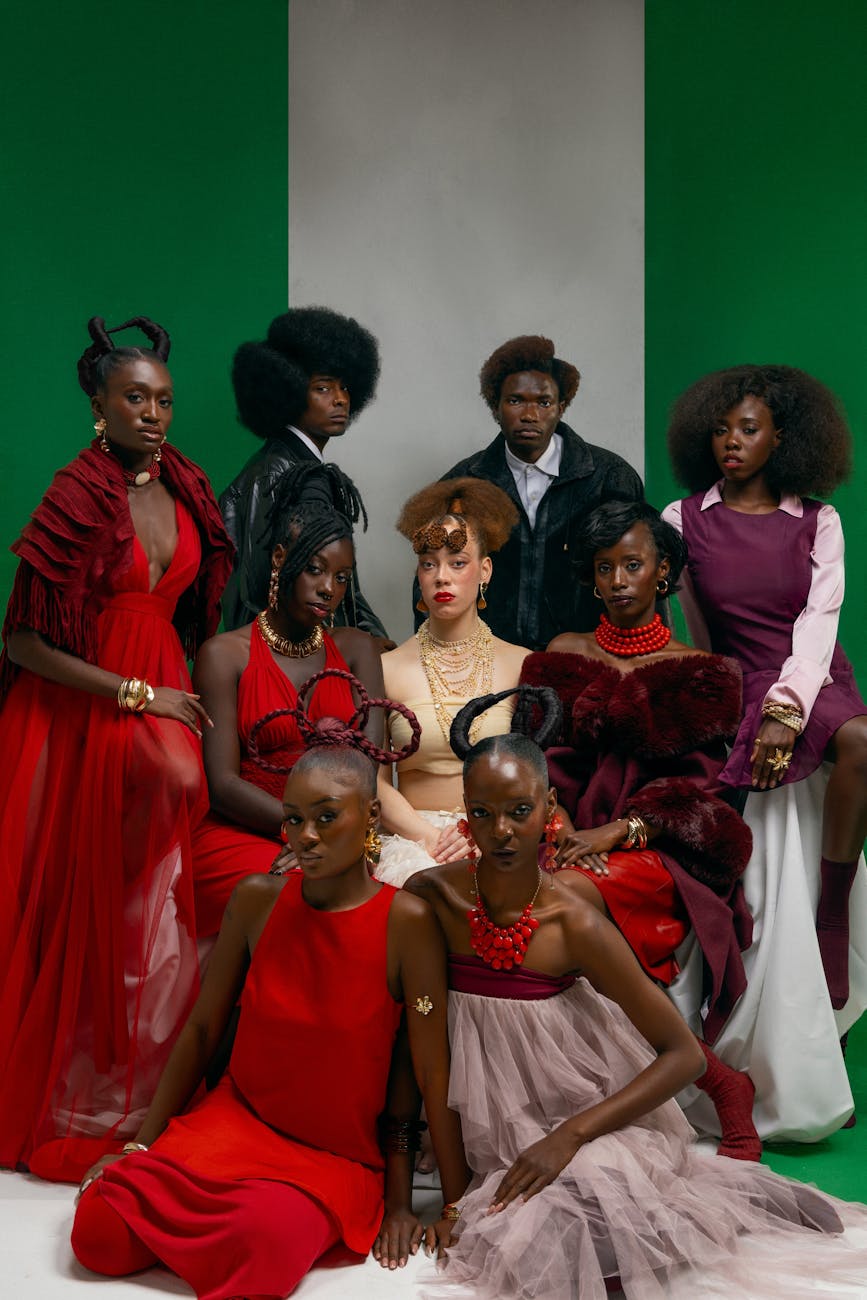

Pretty Privilege Series: Melanin Wars — Fighting for Equality Within Our Own Community.

Photo by Omotayo Samuel on Pexels.com

The history of colorism and shade hierarchies within the Black community reveals deep wounds that continue to shape identity, beauty standards, and opportunities. What some scholars call “melanin wars” are battles fought not against external forces of white supremacy alone, but within our own communities. These struggles reflect centuries of colonialism and slavery, where proximity to whiteness translated into privilege, and darker skin became stigmatized (Hunter, 2007).

Pretty privilege operates along this color spectrum, granting advantages to those with lighter skin tones while imposing disadvantages on those with darker complexions. This privilege manifests in dating, marriage prospects, media representation, and professional advancement. The cost is not just individual insecurity, but a collective fracture that keeps us divided rather than united.

During slavery, lighter-skinned Black people, often the children of enslaved women and white slaveholders, were sometimes afforded “house” roles rather than field labor. Though still enslaved, their perceived closeness to whiteness created hierarchies within Black life itself (Russell, Wilson, & Hall, 1992). These divisions laid the foundation for intra-racial tensions that persist centuries later.

The term “melanin wars” is symbolic of the psychological battles that occur when skin shade becomes the basis for worth. Dark-skinned individuals often report being seen as less attractive, less employable, and less trustworthy compared to lighter-skinned counterparts. Research by Keith and Herring (1991) confirms that skin tone has a measurable impact on socioeconomic outcomes, showing lighter-skinned African Americans tend to have higher incomes and educational attainment.

In the realm of beauty, these wars play out with devastating consequences. Lighter-skinned women are often upheld as the ideal, while darker-skinned women are objectified or marginalized. The phrase “pretty for a dark-skinned girl” encapsulates this bias. Such language reinforces the belief that beauty and melanin are at odds, perpetuating harm that seeps into self-esteem and soul.

For Black men, the melanin wars also hold weight. Darker-skinned men are more likely to be perceived as dangerous or aggressive, while lighter-skinned men may be considered less threatening. These stereotypes shape encounters with law enforcement, workplace dynamics, and even interpersonal relationships (Maddox & Gray, 2002).

These internal battles are not only social but spiritual. Genesis 1:31 (KJV) declares, “And God saw everything that he had made, and, behold, it was very good.” Yet, when communities internalize shade hierarchies, they deny the goodness of God’s creation. Melanin wars, at their root, represent a spiritual attack on identity and unity.

One of the greatest costs of this battle is disunity. Instead of standing together against systemic racism, communities fracture over internal shade differences. Galatians 5:15 (KJV) warns, “But if ye bite and devour one another, take heed that ye be not consumed one of another.” The melanin wars are a distraction that consumes energy which could be used to fight real systems of oppression.

Media representation intensifies the wars. Television, film, and music industries disproportionately cast lighter-skinned individuals in leading or romantic roles, while darker-skinned individuals are often relegated to side characters or villains. This symbolic violence reinforces the idea that worth and desirability are tied to complexion.

Families are not immune to the effects of shade hierarchies. Parents may, knowingly or unknowingly, favor lighter-skinned children, praising them more openly or assuming they will have an easier life. Such favoritism breeds resentment and insecurity, creating trauma that carries into adulthood.

Economically, the melanin wars are exploited by billion-dollar industries such as skin bleaching. In nations across Africa, the Caribbean, and Asia, skin-lightening creams promise social mobility and desirability, at the cost of physical and psychological health (Charles, 2003). The demand for these products reflects the global reach of colorism.

Theologically, the melanin wars are contrary to the vision of the kingdom of God. Revelation 7:9 (KJV) envisions a redeemed community of “all nations, and kindreds, and people, and tongues” united before God’s throne. Shade distinctions hold no eternal relevance in God’s presence, reminding us that human hierarchies are temporary and unjust.

Fighting for equality within our community requires first acknowledging the wounds. Denial only deepens harm, but truth opens the door to healing. John 8:32 (KJV) proclaims, “And ye shall know the truth, and the truth shall make you free.” Recognizing the structures of colorism is the first step toward freedom.

Education is critical in dismantling these hierarchies. By teaching children about the history of colorism, the beauty of all skin tones, and their identity as image-bearers of God, we equip future generations to resist these lies. Proverbs 22:6 (KJV) reminds us, “Train up a child in the way he should go: and when he is old, he will not depart from it.”

Healing also requires media accountability. By demanding diverse representation across shades, communities can push industries to portray the full spectrum of Black beauty. This shift is not just cosmetic but cultural, shaping how young people see themselves and others.

Unity is perhaps the most powerful weapon against melanin wars. When communities intentionally uplift one another, celebrate all shades, and refuse to participate in divisive practices, the chains of colorism weaken. As Ecclesiastes 4:12 (KJV) declares, “And if one prevail against him, two shall withstand him; and a threefold cord is not quickly broken.”

Mentorship also plays a role in healing. When darker-skinned individuals see role models who are thriving in faith, leadership, and influence, it counters narratives of inferiority. Representation in leadership, academia, ministry, and business reshapes expectations of worth and potential.

Spiritually, prayer and the renewing of the mind are essential. Romans 12:2 (KJV) commands, “Be ye transformed by the renewing of your mind.” Breaking free from melanin wars requires deliverance from toxic thought patterns and the embrace of biblical truths about identity.

The fight for equality within our community is ultimately a fight for the soul. Melanin wars wound the heart, divide the body, and distort the image of God. But healing is possible through truth, unity, and love. By confronting the cost of shade and dismantling its privileges, the community can move toward wholeness.

In the end, melanin is not a curse but a crown. The wars we fight against each other can be transformed into victories of solidarity if we choose love over envy, affirmation over insecurity, and unity over division. Equality within the community begins when we refuse to let shade determine worth, and instead, embrace the divine truth that every complexion is a reflection of God’s beauty.


References

  • Charles, C. A. D. (2003). Skin bleachers’ representations of skin color in Jamaica. Journal of Black Studies, 33(6), 711–728.
  • Hunter, M. (2007). The persistent problem of colorism: Skin tone, status, and inequality. Sociology Compass, 1(1), 237–254.
  • Keith, V. M., & Herring, C. (1991). Skin tone and stratification in the Black community. American Journal of Sociology, 97(3), 760–778.
  • Maddox, K. B., & Gray, S. A. (2002). Cognitive representations of Black Americans: Reexploring the role of skin tone. Personality and Social Psychology Bulletin, 28(2), 250–259.
  • Russell, K., Wilson, M., & Hall, R. (1992). The Color Complex: The Politics of Skin Color Among African Americans. Anchor Books.
  • The Holy Bible, King James Version.

The Brown Girl Chronicle: Truth, Trials, and Triumphs.

Photo by Marcelo Chagas on Pexels.com

The story of the Brown girl is one of layered resilience—a quiet strength forged in centuries of misunderstanding, marginalization, and misrepresentation. She stands as a symbol of continuity, bearing the weight of her foremothers’ prayers and the echoes of a culture often silenced. Her truth is not simply personal; it is collective, a reflection of generations who fought to be seen in full color in a world that blurred their brilliance into shadows.

For the Brown girl, beauty has always been both a gift and a battlefield. She was told she was too dark to be delicate, too bold to be beautiful, too strong to be loved. Her complexion became an unspoken social script, assigning her a role that rarely mirrored her reality. From childhood, she learned to navigate the politics of shade—how a few tones lighter could mean acceptance, opportunity, or desirability. This unrelenting calculus of complexion carved scars invisible to the eye but deeply etched in her psyche.

Colorism became a cruel whisper passed down through family lines, often masked as advice or preference. “Stay out of the sun,” some would say, or “you’re pretty for a dark girl.” These words, though softly spoken, carried centuries of colonial distortion that equated light with purity and darkness with inferiority. Yet, beneath this imposed hierarchy, the Brown girl began to unlearn. Her awakening was gradual but powerful—she came to realize that her melanin was not a mark of shame but of divine craftsmanship.

Historically, the Brown girl has been the cornerstone of her community yet seldom its celebrated image. In the fields, in the factories, in the fight for civil rights, her labor built nations while her name remained unsung. Her trials were both economic and emotional, shaped by a system that exploited her body, dismissed her intellect, and commodified her image. Despite these wounds, she rose with the quiet defiance of survival—a survival that redefined what it means to be beautiful and whole.

In modern society, the Brown girl’s narrative continues to evolve amid shifting ideals of representation. The rise of social media has given her a stage, yet also a mirror that reflects society’s unfinished biases. The filters and edits of digital beauty reinforce old hierarchies under new guises. But she is fighting back—with every unfiltered photo, every natural curl, every unapologetic post declaring, “I am enough.” Her voice, once dismissed, now echoes across screens and spaces, demanding to be heard on her own terms.

The trials of the Brown girl are deeply intertwined with the psychological legacies of slavery and colonialism. These systems not only exploited her ancestors’ labor but sought to fracture their sense of self. Through generations, trauma was internalized, manifesting as self-doubt and color bias. Yet, within this pain lies the possibility of transformation—a re-rooting of identity grounded in historical truth and ancestral pride. Healing, for her, is not forgetting but remembering differently.

To speak of her truth is to acknowledge the contradictions she lives with: praised for her strength yet denied tenderness, admired for her resilience yet rarely protected. The world expects her to be unbreakable, but inside, she yearns for softness—the kind that affirms she doesn’t have to always be the strong one. Her triumphs are not always loud; sometimes, they are found in the quiet decision to love herself in a world that profits from her insecurities.

In her career, the Brown girl must work twice as hard for half the recognition. Her tone and texture often determine how she is perceived before her talent is even seen. This intersection of racism, colorism, and lookism shapes not just her professional journey but her emotional health. Yet she persists, embodying excellence in spaces not built for her. Each promotion, each degree, each creative expression is an act of reclamation—a rewriting of history in her favor.

Her trials also find expression in love. Romantic rejection often carries the residue of societal bias, where lighter skin is still coded as more desirable. She learns early that beauty is political, and affection is filtered through centuries of conditioning. Still, she does not surrender to bitterness. Her love becomes revolutionary—rooted in self-acceptance, radiating confidence, and defying the colonial gaze that once defined her worth.

Spiritually, the Brown girl’s journey mirrors the biblical archetypes of endurance and faith. Like Hagar in the wilderness, she has been cast aside yet still seen by God. Her melanin is not merely biological—it is theological. It connects her to the dust from which humanity was formed, to the warmth of the African sun, to the divine imprint of creation itself. In embracing her hue, she honors the Creator who called all things “good.”

Culturally, she represents the heart of the diaspora. Her music, her dance, her language, and her laughter carry fragments of Africa’s rhythm and the Americas’ resilience. Every hairstyle, every garment, every prayer whispered in pain or joy becomes a piece of resistance art. Through her cultural expression, she not only survives but teaches the world what beauty born of struggle looks like.

Her triumphs are not defined by fame or validation but by freedom—the freedom to exist without apology. To wear her natural hair at work without judgment. To be chosen in films, books, and art not as the sidekick or the suffering figure, but as the centerpiece. To see little girls who look like her represented on screens and in classrooms, learning early that brown is not a burden but a blessing.

The Brown girl’s chronicle is one of duality: both fragile and formidable, silenced and outspoken, ordinary and extraordinary. She embodies the tension between societal perception and self-realization. Her story disrupts stereotypes and reclaims narratives long distorted by white supremacy and patriarchy. In her voice lies the testimony of countless others who refused to fade.

Her truth is not a monolith. Brown girls come in a spectrum of shades, shapes, and stories. Some grew up in privilege, others in poverty. Some found affirmation early; others are still searching. Yet all share an unspoken understanding—that their color carries history, pain, and possibility. Together, they form a living archive of endurance and evolution.

Her trials have taught her empathy. She sees through the illusions of beauty standards and the fragility of external validation. Her compassion extends even to those who once looked down upon her, for she understands that their prejudice is learned, not innate. In this way, she rises above bitterness, embodying grace even when the world offers none.

Each triumph, no matter how small, is monumental. The Brown girl who walks into a boardroom wearing her afro is reclaiming space. The one who publishes her poetry, paints her truth, or raises her children with love untouched by shame—each is a monument of healing. Her triumphs are living testimonies of survival transfigured into power.

Psychologically, her evolution represents a return to wholeness. She learns to detach her worth from European beauty ideals and anchor it in self-knowledge. She redefines beauty as authenticity, not conformity. Her confidence becomes contagious, inspiring others to do the same. The mirror, once her enemy, becomes her altar of affirmation.

The Brown girl’s chronicle is also a historical record. It speaks to how media, colonialism, and capitalism have commodified color. From bleaching creams to casting biases, her image has been shaped by profit rather than truth. But as she tells her story, she dismantles those systems one confession at a time.

Her truth is sacred. It reminds us that melanin is not a curse to overcome but a covenant to honor. Her existence itself challenges the lie that whiteness is the measure of beauty or worth. By simply being, she redefines the human aesthetic and restores balance to a world distorted by artificial hierarchies.

Her trials teach endurance, but her triumphs teach transcendence. The Brown girl does not just survive oppression—she transforms it into art, advocacy, and an anthem of hope. Her laughter in the face of pain becomes prophecy. Her joy is resistance. Her beauty, reclaimed and radiant, is her final rebellion.

And so, the chronicle continues—written in her own words, in her own time, in her own tone. She speaks not just for herself but for generations of women who bore silence like armor. Her truth, once hidden, now burns with the brilliance of her skin under the sun. Her trials shaped her, but her triumphs define her. She is the Brown girl, and she is finally free.

References

Banks, T. A. (2019). Colorism and the politics of beauty. Journal of Black Studies, 50(3), 243–261.
Hill, M. (2021). The psychology of colorism: Identity, bias, and belonging. American Journal of Cultural Psychology, 12(4), 411–430.
Hunter, M. (2007). The persistent problem of colorism: Skin tone, status, and inequality. Sociology Compass, 1(1), 237–254.
Russell, K., Wilson, M., & Hall, R. (2013). The color complex: The politics of skin color in a new millennium. Anchor Books.
Walker-Barnes, C. (2020). Too heavy a yoke: Black women and the burden of strength. Cascade Books.
West, C. (1993). Race matters. Beacon Press.

The Brown Girl Dating Diaries: Gifts that Speak.

In the journey of dating as a brown girl, gifts are more than objects—they are symbols, messages, and mirrors reflecting intentions. From the very beginning, it is crucial to recognize that gifts carry meaning beyond their material value. They speak of thoughtfulness, attention to detail, and, most importantly, respect. Understanding this allows one to navigate the dating world with discernment, recognizing which gestures are genuine and which may be performative.

Gifts from men in dating can serve as expressions of care, interest, and investment in a relationship. A simple bouquet, a thoughtful note, or even a small token can communicate attentiveness and a desire to connect. However, the essence of these gifts must be weighed against the character of the giver. The act of giving should not become transactional, and the recipient must remain discerning, recognizing the alignment of actions with values.

Yet, gifts are not limited to men. Gifts from God are the most profound, offering guidance, patience, and discernment in choosing the right partner. Spiritual gifts manifest as wisdom, emotional maturity, and the ability to love rightly. Recognizing divine gifts in oneself allows for a grounded sense of self-worth that is not reliant solely on the approval or offerings of a partner.

The humility to accept gifts graciously is often overlooked. In dating, a brown girl may struggle with pride or skepticism, questioning whether she deserves the gestures she receives. Accepting gifts with gratitude demonstrates an understanding that love and attention are not entitlements but blessings, whether they come from God or a thoughtful partner. Gratitude transforms even a simple gesture into a moment of connection and reflection.

Material gifts from men must always be balanced with observation of their actions. Consistency, respect, and integrity cannot be replaced by lavish items or grand gestures. A true gift in dating is not measured solely in dollars but in sincerity. The quality of character and the intention behind the gesture speak louder than any wrapped box or handwritten card.

Gifts from God, however, are invisible yet deeply tangible in their effects. Spiritual insight, timing, and divine protection guide the dating journey. Praying for discernment before accepting gifts, both tangible and intangible, ensures that one is not misled by appearances. Divine gifts often come through patience, clarity, and the soft inner voice that cautions against haste or compromise.

In receiving gifts from men, the principle of humility remains vital. Pride or entitlement can distort perception, leading to the misinterpretation of intentions. A humble heart allows one to see the true message behind a gesture, whether it is a loving act, a test of commitment, or a reflection of deeper character. Humility aligns the heart with God’s perspective, ensuring that gratitude, not arrogance, defines the response.

Dating as a brown girl also involves understanding boundaries. Gifts are never a tool to manipulate, coerce, or demand reciprocity. Recognizing the difference between generosity and obligation is key. A gift should invite appreciation, not create indebtedness, and a wise recipient evaluates the heart of the giver rather than the size or cost of the present.

The lessons of gifts extend beyond romantic relationships. They teach about self-worth, discernment, and emotional intelligence. Every thoughtful gesture becomes a learning moment: how to receive, how to respond, and how to assess the intentions behind actions. These lessons cultivate maturity, which is essential in choosing a partner aligned with both personal values and spiritual calling.

In navigating dating, one must also acknowledge that not all gifts are meant to be kept. Some come with lessons, guiding decisions about compatibility and long-term alignment. Letting go of gifts that mask deeper incompatibilities or unhealthy patterns demonstrates wisdom and reverence for the higher purpose of love.

Gratitude transforms the reception of gifts into a spiritual exercise. Whether a small token from a man or a subtle sign from God, embracing gifts with thankfulness cultivates a heart attuned to love, patience, and discernment. Recognizing the divine orchestration behind timing and provision brings clarity, reducing the temptation to rely solely on human gestures for affirmation.

Understanding gifts also intersects with self-awareness. A brown girl must recognize her own value, gifts, and boundaries before fully appreciating the offerings of others. Confidence rooted in God’s love allows one to receive thoughtfully without compromising standards or integrity. Self-awareness creates a framework where gifts enhance, rather than define, a relationship.

Communication is another essential dimension of gifts. Discussing intentions, expectations, and feelings ensures that both giver and recipient are aligned. Misunderstandings about gestures can cause unnecessary tension or misinterpretation, and clear communication nurtures a culture of transparency, honesty, and mutual respect.

Ultimately, gifts in dating are more than tangible items—they are reflections of intent, character, and spiritual alignment. When approached with discernment, humility, and gratitude, they become tools for connection, insight, and growth. They remind the brown girl that love, whether human or divine, is both an act and a lesson, a dialogue between hearts.

The Brown Girl Dating Diaries remind us that gifts speak when we listen carefully. They carry meaning beyond their surface, teaching patience, humility, and discernment. Whether a token from a man or a divine provision, every gift shapes the narrative of love, guiding the heart toward the right partner while nurturing a life anchored in gratitude and grace.


References

Carter, R. T. (2013). Race and racial identity in psychology: Emerging perspectives. Wiley.

Garza, A. (2014). A herstory of the #BlackLivesMatter movement. The Feminist Wire.

Maxwell, J. C. (2018). The 5 levels of leadership: Proven steps to maximize your potential. Center Street.

Tannen, D. (1990). You just don’t understand: Women and men in conversation. William Morrow.

Warren, R. (2014). The purpose-driven life: What on earth am I here for? Zondervan.

Dilemma: Sanctification — The Forgotten Journey of Holiness.

“Be ye holy; for I am holy.” (1 Peter 1:16, KJV)

Sanctification is one of the most misunderstood and neglected doctrines in modern Christianity. While many believers are comfortable speaking about being “saved,” far fewer understand what it truly means to live a sanctified life. Sanctification is not a one-time event, nor is it merely a religious label. It is a continuous spiritual process through which a believer is separated from sin and progressively shaped into the likeness of Christ.

In biblical theology, sanctification refers to the act of being set apart for God’s purpose. The word itself comes from the Greek hagiasmos, meaning “to make holy” or “to consecrate.” This process begins at conversion but continues throughout the believer’s life as the Holy Spirit works internally to transform thoughts, desires, and behaviors.

Holiness and sanctification are inseparable. Holiness describes God’s nature—He is morally pure, completely righteous, and utterly separate from sin. Sanctification describes the believer’s journey toward reflecting that divine nature. God does not merely call His people to believe in Him; He calls them to become like Him in character, conduct, and devotion.

The dilemma is that many Christians profess salvation without practicing sanctification. There is a widespread belief that faith alone excuses moral discipline, repentance, or spiritual accountability. Yet Scripture makes it clear that salvation without transformation is a contradiction. Hebrews 12:14 declares, “Follow peace with all men, and holiness, without which no man shall see the Lord” (KJV).

Justification and sanctification are distinct but connected. Justification is a legal declaration—God declares the sinner righteous through faith in Christ. It happens instantly. Sanctification, however, is experiential—it is the daily process of becoming righteous in how one lives. Justification changes one’s status before God; sanctification changes one’s state of being.

Many believers remain spiritually stagnant because they confuse justification with sanctification. They assume that because they are forgiven, they no longer need to confront sin. However, Paul warns in Romans 6:1–2, “Shall we continue in sin, that grace may abound? God forbid” (KJV). Grace is not a license to remain unchanged; it is empowerment to live differently.

Real holiness is not performative religion. It is not about church attendance, religious vocabulary, or outward appearance. True holiness is internal alignment with God’s will. It is the quiet death of ego, pride, lust, bitterness, and rebellion. It is the crucifixion of self, as described in Galatians 2:20, “I am crucified with Christ: nevertheless I live; yet not I, but Christ liveth in me” (KJV).

Sanctification requires surrender, not just belief. It demands that the believer submit every area of life—relationships, finances, sexuality, ambition, and identity—to the authority of God. Jesus did not call people to admire Him; He called them to follow Him. Luke 9:23 states, “If any man will come after me, let him deny himself, and take up his cross daily, and follow me” (KJV).

The reason sanctification is feared is because it requires confrontation. It forces believers to face uncomfortable truths about their habits, attachments, and spiritual inconsistencies. To be sanctified is to allow God to disrupt comfort, expose hypocrisy, and dismantle false versions of faith.

This is why Scripture often associates sanctification with reverent fear. Fear of God is not terror, but holy awareness of His authority and judgment. “Work out your own salvation with fear and trembling” (Philippians 2:12, KJV) does not mean doubt salvation—it means treat your spiritual life with seriousness, humility, and urgency.

Many people claim holiness while living unrepentant lifestyles. This creates what could be called “cultural Christianity,” where faith is reduced to identity rather than obedience. Jesus warned about this in Matthew 7:21, “Not every one that saith unto me, Lord, Lord, shall enter into the kingdom of heaven; but he that doeth the will of my Father” (KJV).

Sanctification is the will of God. First Thessalonians 4:3 states plainly, “For this is the will of God, even your sanctification, that ye should abstain from fornication” (KJV). This verse alone dismantles the idea that holiness is optional. God’s desire is not merely to save people from hell, but to restore them into righteousness.

There is a difference between physical holiness and spiritual sanctification. Physical holiness refers to external conduct—how one dresses, speaks, eats, or behaves. These outward expressions matter, but they are incomplete without inward transformation. Spiritual sanctification deals with motives, thoughts, intentions, and desires.

A person can appear holy externally while remaining spiritually corrupt internally. Jesus rebuked this in Matthew 23:27, comparing religious leaders to “whited sepulchres,” clean on the outside but full of decay within. Sanctification must begin in the heart, or it becomes religious performance.

True sanctification produces spiritual fruit. Galatians 5:22–23 lists love, joy, peace, patience, kindness, goodness, faith, meekness, and self-control as evidence of the Spirit’s work. These are not learned behaviors; they are transformed dispositions.

Sanctification is not about perfection, but direction. It does not mean the believer never struggles, but that they no longer justify sin. The sanctified heart hates what God hates and desires what God desires. Repentance becomes a lifestyle, not an emergency response.

To be sanctified is to fall on one’s knees—not in shame, but in surrender. It is the recognition that human strength is insufficient and that divine transformation is necessary. Psalm 51:17 declares, “A broken and a contrite heart, O God, thou wilt not despise” (KJV).

Many ask, “Am I saved?” but a more revealing question is, “Am I being transformed?” Salvation that produces no spiritual hunger, no moral struggle, and no desire for righteousness is questionable at best. Second Corinthians 13:5 urges believers to “examine yourselves, whether ye be in the faith” (KJV).

Sanctification is the deeper journey after the altar call. It is what happens after the tears dry and the worship ends. It is the daily discipline of prayer, fasting, repentance, obedience, and spiritual warfare. It is the unseen labor of becoming holy in a world that rewards compromise.

The tragedy of modern Christianity is not lack of faith—it is lack of sanctification. Many want heaven without holiness, blessings without obedience, and identity without accountability. Yet Scripture makes it clear that the narrow path is not popular, comfortable, or culturally approved.

Sanctification is not about earning God’s love; it is about responding to it. Grace saves, but sanctification proves. Holiness is not the root of salvation—it is the fruit. And without that fruit, faith becomes a theological concept rather than a lived reality.

In the end, sanctification is the return to God’s original intention for humanity: to reflect His image, walk in His ways, and live in His presence. It is not about religious superiority—it is about spiritual surrender. To be sanctified is to say, with trembling and trust, “Not my will, but thine, be done” (Luke 22:42, KJV).


References

The Holy Bible, King James Version. (1769/2017). Cambridge Edition.

Grudem, W. (1994). Systematic Theology: An Introduction to Biblical Doctrine. Grand Rapids, MI: Zondervan.

Packer, J. I. (1990). Rediscovering Holiness. Wheaton, IL: Tyndale House.

Tozer, A. W. (1967). The Pursuit of God. Camp Hill, PA: Christian Publications.

Wesley, J. (1766/2010). A Plain Account of Christian Perfection. London: Epworth Press.

Bonhoeffer, D. (1937/1995). The Cost of Discipleship. New York, NY: Touchstone.

The Disturbing Truth Behind the Blue Vein Society and Gilded Age Colorism.

This photograph is the property of its respective owner. No copyright infringement intended.

During the late 19th and early 20th centuries, a shadow of division quietly crept into the African American community. While the chains of slavery had been legally broken, psychological and social hierarchies still persisted. One of the most insidious manifestations of this post-slavery prejudice was the emergence of the “Blue Vein Society”—a secretive social circle that privileged lighter-skinned African Americans whose veins were visible through their pale complexion (Williamson, 1980). This phenomenon mirrored the racial stratification of white America and revealed the deep scars of internalized racism within Black society.

The Blue Vein Societies were born during the Gilded Age—a period characterized by industrial growth, wealth disparity, and rampant racial segregation (Painter, 2010). African Americans who had achieved education and modest prosperity sought to establish social institutions mirroring those of the white elite. Yet, these institutions often excluded darker-skinned Blacks, reinforcing a caste system based not on merit or morality, but on melanin. The societies became symbols of self-preservation and self-hatred, embodying the psychological damage of colonial color hierarchies.

Membership in the Blue Vein Society was said to require that one’s veins be visible through the skin—a euphemism for having very light or near-white skin (Gatewood, 1990). In an era when proximity to whiteness determined access to privilege, these societies became a means for some African Americans to distance themselves from the stigma of “blackness.” This reflected how deeply colonial standards of beauty and worth had been internalized, even among the descendants of the enslaved.

The root of such divisions can be traced back to plantation hierarchies. During slavery, lighter-skinned individuals—often the mixed-race children of white masters and enslaved women—were given preferential treatment, often working indoors or receiving limited education (Hunter, 2005). This created a generational mindset that associated lightness with refinement and darkness with inferiority. After Emancipation, this mentality did not vanish; it evolved into social clubs, fraternities, sororities, and churches that subtly practiced “paper bag tests.”

The Blue Vein Societies were not unique but were part of a broader pattern of colorist exclusion. These groups, primarily found in northern cities like Philadelphia, Boston, and Chicago, sought to maintain a certain “respectability” that aligned with white middle-class norms (Higginbotham, 1993). Members prided themselves on “proper” speech, education, and decorum, but often at the expense of racial solidarity.

This internalized hierarchy represented what Frantz Fanon (1952) later described as “epidermalization”—the process by which colonized people internalize the oppressor’s value system, judging themselves and others through the lens of white supremacy. The Blue Vein Society was, in essence, a tragic manifestation of Fanon’s theory—a social structure that perpetuated colonial poison under the guise of Black advancement.

The Gilded Age, with its illusions of progress, masked deep racial inequities. While white elites flaunted wealth and luxury, Black Americans continued to battle economic and social exclusion. Within this struggle, colorism became both a weapon and a wound. For lighter-skinned African Americans, aligning with whiteness offered a semblance of protection, while for darker-skinned individuals, it deepened a sense of marginalization.

The existence of such societies also reveals how European standards of beauty became entrenched across the African diaspora. Straight hair, narrow noses, and fair skin were viewed as desirable attributes. These features were valorized not because they had intrinsic worth, but because they signified proximity to whiteness (Russell, Wilson, & Hall, 1992).

As a result, these beauty ideals infiltrated every sphere of life—from marriage prospects to employment opportunities. The Blue Vein Society not only dictated social status but also influenced the reproduction of colorism across generations. Parents encouraged their children to “marry light,” believing that each union could “improve the race.”

Such ideologies were devastating to racial unity. They fractured communities, creating an invisible caste system among a people already suffering under white supremacy. The irony was cruel: African Americans, who should have been bound by shared struggle and history, found themselves divided by shades of brown.

The Black elite of the Gilded Age—doctors, teachers, preachers, and business owners—often viewed lighter skin as a sign of civilization and intelligence. This belief was not simply vanity; it was a survival mechanism in a society that systematically devalued Blackness (Du Bois, 1903). However, this “double consciousness” produced a spiritual conflict—a yearning for white acceptance while simultaneously grappling with Black identity.

The Blue Vein Society became a metaphor for the fractured soul of post-slavery America. It represented the desperate attempt of a traumatized people to navigate a racist society while unknowingly perpetuating its ideologies. In this sense, colorism was both a symptom and a strategy—a misguided attempt to survive within a system designed to dehumanize.

By the early 20th century, these societies began to wane as new waves of Black consciousness arose. The Harlem Renaissance (1920s) celebrated Black beauty, art, and intellect in all shades. Writers like Langston Hughes and Zora Neale Hurston rejected colorist standards and affirmed the richness of dark skin as a symbol of resilience and creativity.

However, the legacy of the Blue Vein Society lingers. Even today, lighter-skinned privilege continues to shape opportunities in media, beauty, and relationships (Hall, 2010). The colonial poison that once divided plantation slaves now manifests in modern colorist bias within global Black communities.

Understanding the Blue Vein Society requires confronting the painful reality that oppression often breeds mimicry. In the words of Paulo Freire (1970), “The oppressed, instead of striving for liberation, tend to become oppressors of the oppressed.” Within this tragic paradox, we see how systemic racism reproduces itself internally.

It also reveals the long-term psychological toll of slavery and colonization. Generations of African Americans inherited a fractured sense of self—torn between pride in their Blackness and shame imposed by Eurocentric norms.

The Gilded Age’s obsession with refinement and class offered no true liberation. It merely repackaged racism within a Black context. The Blue Vein Society, with all its exclusivity, was not progress—it was assimilation.

Today, scholars and activists call for a reclaiming of identity that honors all shades of African heritage. True empowerment lies not in conforming to colonial aesthetics, but in dismantling them.

In reclaiming “Mama Africa’s legacy,” we must reject the toxic residues of colorism and remember that the measure of worth is not skin tone but spirit, integrity, and faith. The disturbing truth of the Blue Vein Society serves as both a warning and a lesson: healing begins when we confront the mirror of our history without denial.

Ultimately, the story of the Blue Vein Society is a cautionary tale—a reminder that colonialism’s greatest victory was not physical enslavement, but mental division. Only through truth, unity, and cultural reclamation can that legacy finally be undone.


References

Du Bois, W. E. B. (1903). The Souls of Black Folk. Chicago: A.C. McClurg.
Fanon, F. (1952). Black Skin, White Masks. Grove Press.
Freire, P. (1970). Pedagogy of the Oppressed. Herder and Herder.
Gatewood, W. B. (1990). Aristocrats of Color: The Black Elite, 1880–1920. University of Arkansas Press.
Hall, R. E. (2010). The Melanin Millennium: Skin Color as 21st Century International Discourse. Springer.
Higginbotham, E. B. (1993). Righteous Discontent: The Women’s Movement in the Black Baptist Church, 1880–1920. Harvard University Press.
Hunter, M. (2005). Race, Gender, and the Politics of Skin Tone. Routledge.
Painter, N. I. (2010). The History of White People. W. W. Norton.
Russell, K., Wilson, M., & Hall, R. (1992). The Color Complex: The Politics of Skin Color among African Americans. Harcourt Brace.
Williamson, J. (1980). New People: Miscegenation and Mulattoes in the United States. Louisiana State University Press.

A Love Letter to the Girl in Brown Skin

The girl in brown skin is a testament to beauty that transcends superficial standards. In a world that often elevates fairness as the ideal, her richness in hue becomes a symbol of resilience, heritage, and divine creation. Scripture reminds us, “Thou art all fair, my love; there is no spot in thee” (Song of Solomon 4:7, KJV), affirming that beauty is inherent, complete, and divinely ordained. Her brown skin is not a flaw to be corrected but a canvas upon which the Creator’s artistry is evident.

Her skin carries the warmth of the sun, a reflection of ancestry rooted in kingdoms and empires that shaped civilizations. It tells the story of generations who survived slavery, colonization, and systemic oppression. As historian Henry Louis Gates Jr. (2011) emphasizes, Black identity is inextricably tied to resilience and history. Brown skin is not merely a pigment but a living archive of endurance and triumph.

To the girl with brown skin, know that your beauty is multifaceted. It is found in the curve of your cheekbones, the depth of your eyes, and the grace in your posture. Psychologically, colorism can distort self-perception, but embracing the fullness of your melanin affirms self-love and mental wellness (Hunter, 2007). Each shade of brown is unique, a celebration of diversity within unity.

Your hair, whether braided, curled, or coiled, crowns you with a heritage rich in symbolism. In biblical times, hair often signified strength and sanctity (1 Samuel 16:7, KJV). Your texture is a living reminder of cultural continuity and spiritual dignity. Embracing your natural hair is a declaration that you honor the temple God has given you.

Brown skin, in its luminous tones, is a mirror to your spirit. It radiates warmth and invites connection. Studies in social psychology indicate that people often respond positively to those who exude confidence in their natural selves (Ashikali & Dittmar, 2010). Your self-assurance becomes magnetic, and your presence leaves an imprint on the world around you.

The girl with brown skin walks with a quiet power. Her strength is subtle, often overlooked by those who equate loudness with authority. Yet the Scriptures teach that “she is clothed with strength and dignity; and she laugheth without fear of the future” (Proverbs 31:25, KJV). Your poise is revolutionary in a society that has historically sought to diminish your worth.

Every mark, every freckle, and every nuance of your skin tells a story of survival and grace. They are reminders of battles fought, victories won, and lessons learned. In embracing them, you resist narratives that seek to erase your identity and affirm the beauty of authenticity.

Brown skin shines in the sun not just physically, but symbolically. It represents light overcoming shadow, hope enduring hardship, and life flourishing against odds. Just as the Bible celebrates God’s creation in its diversity (Psalm 139:13-14, KJV), your existence is a living hymn to divine artistry.

In the mirror, you may sometimes see flaws magnified by societal critique. Yet these are illusions born of prejudice, not truth. Biblical truth reminds us that we are “fearfully and wonderfully made” (Psalm 139:14, KJV), and no external judgment can diminish the intrinsic beauty given by the Creator.

Your eyes hold the depth of history, reflecting the resilience of your ancestors. They are windows to wisdom forged through struggle, compassion learned through pain, and vision sharpened by hope. Just as light passes through amber, illuminating what is within, your gaze reveals the richness of your inner world.

To the girl in brown skin, your love story is sacred. It begins with the self—learning to see your own value and claim your rightful place in a world that often undervalues you. Self-love is radical, revolutionary, and necessary for the flourishing of your soul (Hooks, 2000).

The media may attempt to define beauty narrowly, but your essence defies reduction. From the glow of your skin to the rhythm of your walk, your presence commands a narrative that is unapologetically yours. Brown skin is not just beautiful; it is a statement of history, culture, and divine intention.

In relationships, your worth is immeasurable. The boy who truly sees you understands that your value is not contingent on comparison but rooted in the depth of your character. Love that honors your brown skin reflects the biblical principle that beauty without virtue is fleeting (Proverbs 31:30, KJV).

Every compliment you receive is deserved, yet it is your self-recognition that sustains you. The world can applaud, but true affirmation arises from within. By acknowledging your brilliance, you nurture resilience against societal pressures that seek to demean or undervalue you.

Your laughter is a melody that carries across spaces, a testament to joy that persists even in trials. Brown skin does not dull this joy; it amplifies it, like sunlight refracted through amber glass, warming everything it touches.

The girl in brown skin is also a scholar, an innovator, a leader. Her mind is a treasure, her intellect sharp, and her creativity boundless. Brown skin is not a barrier but a beacon, signaling wisdom, capability, and vision. History is replete with examples of brilliant Black women whose contributions were inseparable from their identity (Davis, 1983).

Spirituality intertwines with your physical beauty. The glow of your skin mirrors the light within, cultivated through prayer, faith, and purpose. Scripture affirms that true beauty emanates from the heart, “a meek and quiet spirit” being precious in the sight of God (1 Peter 3:4, KJV).

To the girl in brown skin, your voice matters. Speak, sing, and proclaim, for your words carry weight. Your stories, when shared, empower others and dismantle misconceptions. You are not invisible; you are luminous, and your testimony shapes collective consciousness.

In fashion, art, and self-expression, your brown skin is a palette upon which endless creativity is possible. Colors, textures, and patterns respond differently on melanin-rich skin, offering an aesthetic richness unmatched in its vibrancy and versatility.

Finally, know that the girl with brown skin is loved beyond measure. By God, by ancestors, by those who recognize true beauty and worth. You are a living poem, a masterpiece of creation, a reflection of divine intention. Embrace yourself fully, unapologetically, and with pride, for your brown skin is a love letter written by God Himself.


References

  • Ashikali, E., & Dittmar, H. (2010). Clothes, sex, and self-esteem: The impact of appearance-related social comparison on self-evaluation. Psychology of Women Quarterly, 34(2), 179–191.
  • Davis, A. Y. (1983). Women, race, & class. Random House.
  • Gates, H. L. Jr. (2011). Life upon these shores: Looking at African American history, 1513–2008. Knopf.
  • Hooks, B. (2000). All about love: New visions. William Morrow & Company.
  • Hunter, M. L. (2007). The persistent problem of colorism: Skin tone, status, and inequality. Sociology Compass, 1(1), 237–254.
  • King James Bible. (1611). Song of Solomon 4:7; 1 Samuel 16:7; Proverbs 31:25; Psalm 139:13-14; 1 Peter 3:4.

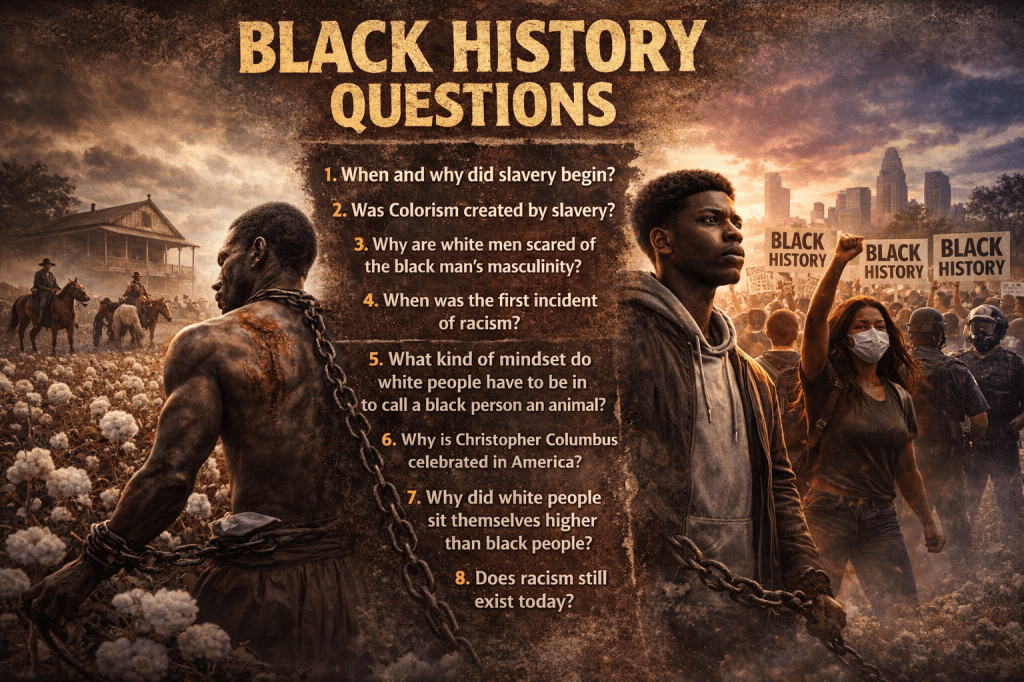
Black History Questions

Black history is the story of a people who were enslaved, resisted, survived, built civilizations, transformed nations, preserved faith, and continue to struggle for full human dignity in a world shaped by their forced labor and spiritual resilience.

Black history is not merely a record of past suffering, but a critical lens through which modern systems of power, identity, race, and inequality can be understood. To ask questions about Black history is to interrogate the foundations of Western civilization, colonial expansion, capitalism, and the psychological construction of race. These questions do not only concern Black people; they expose how the modern world was built and at whose expense.

One of the most fundamental questions is: When and why did slavery begin? While systems of servitude existed in ancient societies, racialized chattel slavery as practiced in the Americas began in the 15th century with European colonial expansion. This form of slavery was unique because it permanently dehumanized Africans based on race and transformed human beings into inheritable property for economic profit (Williams, 1944).

Slavery expanded primarily to meet the labor demands of European empires. The rise of sugar, cotton, and tobacco plantations required massive labor forces, and Africans were targeted because they were perceived as physically resilient, culturally unfamiliar, and politically vulnerable due to Africa’s lack of unified global military power at the time (Rodney, 1972).

Another important question is: Was colorism created by slavery? While color hierarchies existed in some societies before European contact, modern global colorism was systematized through slavery. Lighter-skinned enslaved people were often favored, given domestic roles, and granted marginal privileges, creating internal racial stratification that persists today (Hunter, 2007).

Colorism functioned as a psychological extension of white supremacy. It trained Black people to associate proximity to whiteness with value, safety, and humanity, while equating darker skin with inferiority and criminality. This internalized hierarchy continues to shape beauty standards, dating preferences, employment outcomes, and media representation.

A more controversial but critical question is: Why are white men historically threatened by Black male masculinity? Sociologically, Black masculinity has been framed as dangerous because it challenges white male dominance in systems built on racial and patriarchal hierarchy (hooks, 2004). The myth of the hypersexual, aggressive Black man was constructed to justify control, surveillance, and violence.

This fear was not biological but political. The Black male body symbolized physical strength, reproductive power, and resistance to domination. During slavery, lynching, and segregation, Black men were portrayed as sexual predators to justify their castration, imprisonment, and execution (Alexander, 2010).

Another core question is: When was the first incident of racism? Racism as a structured ideology emerged during European colonialism in the 15th and 16th centuries. Before this, societies practiced tribalism and ethnocentrism, but not race-based biological hierarchy (Smedley & Smedley, 2005).

Modern racism required pseudoscience. European thinkers classified humans into racial categories and assigned moral and intellectual traits to physical features. This gave slavery a “scientific” justification and made inequality appear natural rather than political.

This leads to the disturbing question: What kind of mindset allows someone to call a Black person an animal? Psychologically, this requires dehumanization. Dehumanization occurs when one group denies the full humanity of another, allowing cruelty without guilt (Fanon, 1967).

Colonial ideology trained Europeans to see Africans as subhuman, primitive, and savage. This worldview was necessary to resolve the moral contradiction of Christian societies committing mass enslavement, rape, and murder while claiming moral superiority.

Another major question is: Why is Christopher Columbus celebrated in America? Columbus represents the myth of “discovery,” which erases Indigenous genocide and African enslavement. He is celebrated not because of moral achievement, but because he symbolizes European expansion and empire (Zinn, 2003).

Columbus initiated systems of conquest, forced labor, sexual violence, and mass death across the Americas. His celebration reflects how dominant societies preserve heroic narratives while suppressing historical trauma.

This raises another question: Why did white people place themselves above Black people? The answer lies in power. Whiteness was invented as a social category to unify Europeans across class lines and justify colonial domination (Allen, 1994).

Race became a political tool. By creating a racial hierarchy, elites ensured that poor whites identified with their race rather than their economic exploitation, preserving systems of inequality through psychological allegiance.

A central modern question is: Does racism still exist today? Racism absolutely exists, but it has evolved. Instead of explicit segregation, it now operates through institutions such as housing, education, policing, healthcare, and the criminal justice system (Bonilla-Silva, 2018).

Racism is now coded into algorithms, zoning laws, school funding, and media narratives. It functions less through open hatred and more through structural inequality and systemic bias.

Another question is: Is racism individual or systemic? While individuals can be racist, racism is primarily systemic. It is embedded in laws, policies, and historical patterns that continue to produce unequal outcomes regardless of personal intent (Feagin, 2013).

Systemic racism means one does not need to “hate” Black people to benefit from racial privilege. The system itself distributes resources and opportunities unevenly.

A related question is: How did slavery shape capitalism? Capitalism was built on enslaved labor. The wealth of Europe and America emerged directly from plantation economies and global trade networks fueled by African exploitation (Beckert, 2014).

Banks, insurance companies, universities, and corporations all profited from slavery. Modern wealth inequality cannot be understood without this historical foundation.

Another question is: What role did religion play in slavery? Christianity was used to justify enslavement through distorted interpretations of scripture. Enslavers taught obedience, submission, and divine hierarchy to maintain control.

However, Black people reinterpreted Christianity as liberation theology. Biblical stories like Exodus became metaphors for escape, resistance, and divine justice (Cone, 1997).

This leads to: Why is Black faith so central to survival? The Black church provided psychological refuge, political organization, cultural continuity, and communal identity during centuries of oppression.

Faith became a tool not of submission, but of resistance. It allowed Black people to envision dignity beyond the material conditions imposed upon them.

Another key question is: How did Jim Crow replace slavery? After emancipation, systems like sharecropping, convict leasing, and segregation maintained economic control over Black labor (Blackmon, 2008).

Slavery did not end; it transformed. Control shifted from plantations to prisons, courts, and labor markets.

This raises: How does mass incarceration relate to slavery? The U.S. prison system disproportionately targets Black men, continuing patterns of forced labor and social control through criminalization (Alexander, 2010).

The 13th Amendment abolished slavery “except as punishment for a crime,” legally preserving coerced labor under incarceration.

Another question is: What is historical trauma? Historical trauma refers to psychological wounds passed across generations through collective memory, stress, and social conditions (Brave Heart, 2003).

Trauma is transmitted not only culturally, but biologically through epigenetics, shaping stress responses and health outcomes.

This leads to: Why do disparities persist in education and health? Black communities face underfunded schools, medical neglect, environmental racism, and economic exclusion rooted in historical policy decisions.

These disparities are not accidental; they are the predictable outcomes of centuries of structural inequality.

Another question is: What is the racial wealth gap? The average white family holds nearly ten times more wealth than the average Black family, primarily due to inheritance, home ownership, and historical exclusion from economic opportunity (Oliver & Shapiro, 2006).

Wealth is intergenerational. Slavery prevented Black people from accumulating capital for over 250 years.

This brings up: Are reparations justified? Reparations are not charity but restitution. They address stolen labor, land, and life through economic, educational, and institutional repair (Coates, 2014).

Reparations acknowledge that historical injustice created present inequality.

Another question is: How has the media shaped Black identity? The media often portrays Black people as criminals, athletes, entertainers, or victims, limiting the public imagination of Black humanity.

Representation affects self-esteem, opportunity, and public policy.

This leads to: What is internalized racism? Internalized racism occurs when marginalized people absorb negative stereotypes about themselves and their group.

It manifests through self-hatred, colorism, assimilation, and cultural erasure.

Another question is: What is Black excellence? Black excellence is not wealth or celebrity alone; it is resilience, creativity, spiritual depth, community building, and survival against impossible odds.

Black excellence exists in families, churches, classrooms, and neighborhoods, not just in elite spaces.

What is Black History Month, and why was it created?
Black History Month was created to recognize the historical contributions of Black people who were excluded from mainstream history. It began as “Negro History Week” in 1926 and became a month in 1976.

Who was Carter G. Woodson?
Carter G. Woodson was a historian who founded Black History Month. He believed Black people must know their history to understand their identity, power, and humanity.

What were the goals of the Civil Rights Movement?
To end legal segregation, secure voting rights, dismantle racial discrimination, and achieve full citizenship and equality under the law.

What was the Emancipation Proclamation?
An 1863 executive order by Abraham Lincoln declared enslaved people free in Confederate states. It weakened slavery but did not fully end it.

How did the transatlantic slave trade shape the modern world?
It built Western wealth, capitalism, and global racial hierarchies through forced African labor.


Major African empires?
Ghana, Mali, Songhai, Egypt, Kush, Axum—highly advanced in trade, education, architecture, and governance.

Who was Mansa Musa?The
Emperor of Mali, the wealthiest person in recorded history, whose empire controlled the global gold trade.

How did Africans govern themselves?
Through complex political systems: kingdoms, councils of elders, city-states, and federations.

African contributions to science?
Mathematics, astronomy, medicine, metallurgy, architecture, and writing systems.

African spirituality’s influence?
It shaped diasporic religions like Vodun, Santería, Candomblé, and Black Christianity.


Conditions of slavery?
Forced labor, family separation, sexual violence, no legal rights, and psychological terror.

Forms of resistance?
Revolts, escapes, sabotage, spirituals, maroon communities, and education.

Who were Turner, Tubman, and Vesey?
Leaders of armed rebellion, underground resistance, and liberation.

Religion’s role?
Provided hope, coded messages, and survival theology.

Impact on families?
Destroyed kinship structures but created resilient communal bonds.


What was Reconstruction?
Post-slavery rebuilding period, where Black people gained rights briefly.

Why did it fail?
White supremacist violence, political betrayal, economic sabotage.

Jim Crow laws?
Legal racial segregation and disenfranchisement.

Plessy v. Ferguson?
Legalized segregation under “separate but equal.”

Great Migration?
Mass Black movement from South to North for safety and jobs.

Lynching?
Racial terror to enforce white dominance.


MLK vs Malcolm X?
MLK: nonviolence and integration.
Malcolm: self-defense and Black nationalism.

Role of women?
Core organizers, strategists, fundraisers, and leaders.

Black Panther Party?
Revolutionary group focused on self-defense, food programs, and education.

COINTELPRO?
FBI program to destroy Black leadership.

Voting Rights Act?
Outlawed voter suppression.


Colorism?
Preference for lighter skin due to colonial beauty standards.

Double consciousness?
Living with both Black identity and white societal gaze.

Media representation?
Shapes self-worth and public perception.

Internalized racism?
Absorbing negative beliefs about one’s own race.

Hip-hop?
Political voice of marginalized youth.


Racial wealth gap?
Result of slavery, segregation, and housing discrimination.

Redlining?
Banks denied loans to Black neighborhoods.

Black Wall Street?
Prosperous Black business district destroyed by racial massacre.

Mass incarceration?
Modern extension of racial control.

School-to-prison pipeline?
Criminalization of Black youth through education system.


Black women’s role?
Foundational leaders in all justice movements.

Key figures?
Sojourner Truth, Ida B. Wells, Angela Davis, Fannie Lou Hamer.

Intersectionality?
Overlapping racism and sexism.

Black motherhood?
Historically exploited, now culturally politicized.

Church role?
Spiritual backbone and organizers.


U.S. vs global?
Different histories, same racial hierarchy.

Pan-Africanism?
Global Black unity.

Garvey and Nkrumah?
Leaders of Black nationalism and African independence.

Colonialism’s impact?
Economic extraction, political instability.

Haitian Revolution?
First successful slave revolution in history.


Christianity as oppression and liberation?
Used to justify slavery but also inspire resistance.

Black church’s role?
Political center and liberation hub.

Deuteronomy 28?
Parallels of exile, curses, and survival.

Spirituals?
Encoded escape routes and hope.

Liberation theology?
God sides with the oppressed.


Is racism individual or systemic?
Systemic—embedded in laws and institutions.

Reparations?
Moral and economic response to historical theft.

National identity?
America cannot face the truth without rewriting itself.

Historical trauma?
Passed through culture, biology, and psychology.

Post-Civil Rights freedom?
Legal rights without economic justice.


What would enslaved Africans say?
Remember us. Finish the fight.

Black excellence beyond wealth?
Spiritual integrity, family, and knowledge.

True liberation?
Mental, economic, and spiritual freedom.

Silenced history?
African civilizations, resistance leaders, and global revolutions.

Future generations?
Must know history to avoid repeating bondage.

Finally, the most profound question is: What does true liberation mean? Liberation is not simply legal equality, but psychological freedom, economic justice, spiritual healing, and cultural self-definition.

True freedom requires dismantling the systems that created racial hierarchy, not merely integrating into them.

Black history, therefore, is not a side narrative. It is the central story of modern civilization. To study Black history is to confront the moral foundations of the world itself.


References

Alexander, M. (2010). The New Jim Crow: Mass Incarceration in the Age of Colorblindness. New Press.

Allen, T. W. (1994). The Invention of the White Race. Verso.

Beckert, S. (2014). Empire of Cotton: A Global History. Knopf.

Blackmon, D. A. (2008). Slavery by Another Name. Anchor.

Bonilla-Silva, E. (2018). Racism Without Racists. Rowman & Littlefield.

Brave Heart, M. Y. H. (2003). The historical trauma response. Journal of Psychoactive Drugs, 35(1), 7–13.

Coates, T. (2014). The case for reparations. The Atlantic.

Cone, J. H. (1997). God of the Oppressed. Orbis Books.

Fanon, F. (1967). Black Skin, White Masks. Grove Press.

Feagin, J. (2013). Systemic Racism. Routledge.

hooks, b. (2004). We Real Cool: Black Men and Masculinity. Routledge.

Hunter, M. (2007). The persistent problem of colorism. Sociology Compass, 1(1), 237–254.

Oliver, M. L., & Shapiro, T. M. (2006). Black Wealth/White Wealth. Routledge.

Rodney, W. (1972). How Europe Underdeveloped Africa. Bogle-L’Ouverture.

Smedley, A., & Smedley, B. D. (2005). Race as biology is fiction. American Psychologist, 60(1), 16–26.

Williams, E. (1944). Capitalism and Slavery. University of North Carolina Press.

Zinn, H. (2003). A People’s History of the United States. HarperCollins.

The Journey to God: Spiritual Habits that Transform Your Life.

Developing a deep and meaningful relationship with God requires intentionality, discipline, and spiritual focus. The Christian life is often described as a journey—a process of growth, transformation, and alignment with divine purpose (Philippians 3:12–14, KJV). Spiritual habits, when practiced consistently, form the foundation of this journey, shaping character, strengthening faith, and fostering intimacy with the Lord.

Prayer is one of the most fundamental habits for spiritual transformation. Through prayer, believers communicate with God, express gratitude, seek guidance, and intercede for others (1 Thessalonians 5:16–18). Consistent prayer cultivates dependence on God and trains the heart to align with His will. The practice of private, uninterrupted prayer develops patience, self-discipline, and sensitivity to the Holy Spirit (Matthew 6:6).

Scripture study is another essential habit. The Bible is described as “the sword of the Spirit” and a lamp to guide the believer’s path (Ephesians 6:17; Psalm 119:105). Daily engagement with Scripture allows the mind to be renewed (Romans 12:2), equips believers for spiritual battles, and teaches wisdom, discernment, and godly living. Meditating on God’s Word fosters internal transformation by embedding divine truth in thought patterns and behavior.

Worship and praise—both private and corporate—help believers experience God’s presence and cultivate gratitude. Worship is not limited to music but includes acts of obedience, service, and thanksgiving (Psalm 100:2; Colossians 3:16). Regular praise reorients the heart away from self-reliance and toward recognition of God’s sovereignty. It strengthens faith, increases joy, and fosters a sense of spiritual community.

Fasting and self-discipline play a critical role in focusing the believer’s spiritual energy. Fasting is a biblical practice for humbling oneself, seeking clarity, and deepening reliance on God (Matthew 4:1–2; Isaiah 58:6). By denying the flesh, believers cultivate spiritual sensitivity, patience, and resilience. Self-discipline in other areas, such as controlling speech, thoughts, and desires, reinforces obedience to God and encourages a Christ-centered life (1 Corinthians 9:27).

Service and acts of love are practical habits that transform the believer’s heart while honoring God. Serving others reflects Christ’s love and fulfills the command to love one’s neighbor (Matthew 22:37–39; James 1:27). Regular acts of service cultivate humility, empathy, and a broader perspective that transcends self-interest. Spiritual growth is inseparable from outward expressions of God’s love in action.

Fellowship and accountability with other believers are also crucial. The Bible emphasizes the importance of mutual encouragement and correction in spiritual communities (Hebrews 10:24–25; Proverbs 27:17). Consistent fellowship helps believers stay steadfast, gain wisdom, and receive guidance from mature Christians. Accountability encourages integrity, reduces spiritual drift, and reinforces the application of spiritual habits in daily life.

Finally, gratitude and reflection are habits that nurture a continuous awareness of God’s presence. Reflecting on His faithfulness and recording answered prayers or spiritual lessons can strengthen faith during trials and maintain perspective in success (1 Thessalonians 5:18; Psalm 77:11–12). Gratitude reorients the heart toward God and fosters joy, peace, and contentment.

In essence, the journey to God is not a single event but a lifelong process of intentional spiritual practice. By cultivating prayer, Scripture study, worship, fasting, service, fellowship, and gratitude, believers align their hearts and minds with God’s will. These spiritual habits transform character, deepen intimacy with the Lord, and empower the believer to navigate life’s challenges with wisdom, faith, and perseverance. The Christian journey is a sacred rhythm of learning, growing, and reflecting God’s love in every aspect of life.


References

Alexander, T. D. (2001). 1 & 2 Timothy and Titus: An exegetical and theological exposition of Holy Scripture. B&H Publishing.

Dever, M. (2012). A display of God’s glory: The beauty of living the gospel. Crossway.

Foster, R. (1998). Celebration of discipline: The path to spiritual growth. HarperCollins.

Keller, T. (2012). Every good endeavor: Connecting your work to God’s work. Dutton.

Willard, D. (2002). Renovation of the heart: Putting on the character of Christ. NavPress.

The Holy Bible, King James Version. (1611/2017). Cambridge University Press.

Dilemma: Blackness

Photo by Wavy_ revolution on Pexels.com

The concept of Blackness embodies both divine purpose and societal marginalization. This paper explores the paradoxical experience of Black people: exalted by God yet diminished by the world. Drawing from Scripture, African historical scholarship, and sociocultural studies, the paper examines how Black identity has been misrepresented, appropriated, and simultaneously celebrated. The discussion addresses historical, psychological, and spiritual dimensions of Blackness, highlighting resilience, chosenness, and divine destiny.


Blackness represents more than a physical characteristic; it is a spiritual, cultural, and historical identity that has shaped civilizations, contributed to global progress, and faced systemic oppression. Historically, African civilizations such as Kemet, Mali, and Ethiopia exemplified innovation, scholarship, and governance, demonstrating Black excellence prior to European colonial interventions (Diop, 1974). Yet, contemporary social structures often fail to acknowledge this legacy, producing tension between inherent value and societal perception. This tension can be conceptualized as the “dilemma of Blackness”: exalted by God, yet diminished by human systems.


Divine Identity and Chosenness

Scripture affirms the divine purpose inherent in Black identity. “Ye are a chosen generation, a royal priesthood” (1 Peter 2:9, KJV). The Bible situates African peoples as integral to God’s plan, as evidenced in references to Cush, Ethiopia, and Egypt (Psalm 68:31, KJV; Acts 8:27, KJV). This divine chosenness establishes a spiritual framework for resilience, dignity, and legacy.


Historical Context of Oppression

Despite divine design, Black people have endured centuries of systemic oppression. Enslavement, colonialism, and institutionalized racism sought to erase cultural memory, distort identity, and suppress potential (Muhammad, 2010; Du Bois, 1903). Enslaved Africans were denied literacy, property, and familial autonomy, yet preserved spiritual practices and communal solidarity, demonstrating both resistance and divine fidelity (Fanon, 1967).


Cultural Appropriation and Misrepresentation

A critical facet of the dilemma is the simultaneous appropriation and marginalization of Black culture. Music, fashion, language, and spirituality have been widely adopted by global societies while the creators remain undervalued (Asante, 1988; hooks, 1995). This contradiction reinforces the paradoxical experience of Black identity: celebrated superficially but denied authentic acknowledgment.


Psychological Dimensions

The internalization of societal bias has produced psychological tension, as theorized by Du Bois (1903) in the concept of double consciousness. Black individuals navigate dual realities: embracing inherent worth while confronting misperceptions and prejudice. Psychological resilience emerges through community, faith, and cultural continuity, facilitating coping mechanisms in the face of persistent marginalization.


The Role of Faith

Faith has historically anchored Black identity. Spirituality and religion provided a lens for understanding suffering and endurance. The enslaved relied on faith-based songs, prayers, and scripture to sustain hope (“Let my people go”, Exodus 5:1, KJV). Contemporary Black communities continue to rely on biblical principles to navigate systemic inequities, affirming God as the ultimate arbiter of worth (Isaiah 54:17, KJV).


Resistance and Resilience

Blackness embodies resilience. Resistance has manifested through education, civil rights activism, entrepreneurship, and cultural preservation (Bell, 1992; Woodson, 1933). This resilience aligns with prophetic scripture: “No weapon that is formed against thee shall prosper” (Isaiah 54:17, KJV). Through trials, Black communities have transformed oppression into cultural, intellectual, and spiritual advancement.


Identity and Modern Society

In contemporary contexts, Black identity is often commodified. Social media, entertainment, and consumer culture showcase Black excellence aesthetically while minimizing structural support or historical context (Karenga, 2002). This commodification reflects a persistent societal discomfort with authentic Black power, echoing historical patterns of marginalization.


The Dilemma of Recognition

The tension between visibility and invisibility characterizes the dilemma. Black contributions are integral to global progress, yet Black people remain underrepresented in leadership, academia, and economic control (Muhammad, 2010; Asante, 1988). Recognition is partial, conditional, and often superficial, reinforcing the ongoing paradox.


The Spiritual Imperative

Spirituality provides a counter-narrative to worldly diminishment. By centering God as the source of identity, Black people navigate societal misunderstanding with divine perspective. “The steps of a good man are ordered by the Lord” (Psalm 37:23, KJV). Blackness is reframed not as a social liability but as a divine blessing and instrument of purpose.


Conclusion

Blackness represents both a historical challenge and a divine calling. The dilemma lies not in identity but in the world’s inability to reconcile with it. Black people embody resilience, creativity, and divinely ordained worth. The reconciliation of societal misperception with spiritual truth is ongoing. As the world struggles to comprehend Black excellence, faith and historical awareness provide the foundation for self-definition, legacy, and empowerment.


References

Asante, M. K. (1988). Afrocentricity: The theory of social change. African American Images.

Bell, D. (1992). Faces at the bottom of the well: The permanence of racism. Basic Books.

Diop, C. A. (1974). The African origin of civilization: Myth or reality. Lawrence Hill Books.

Du Bois, W. E. B. (1903). The souls of Black folk. A. C. McClurg & Co.

Fanon, F. (1967). Black skin, white masks. Grove Press.

hooks, b. (1995). Killing rage: Ending racism. Henry Holt and Co.

Karenga, M. (2002). Introduction to Black studies (3rd ed.). University of Sankore Press.

Muhammad, K. G. (2010). The condemnation of Blackness: Race, crime, and the making of modern urban America. Harvard University Press.

Woodson, C. G. (1933). The mis-education of the Negro. Associated Publishers.

Holy Bible, King James Version (KJV).