Category Archives: the brown girl dilemma

Girl Talk Series: The Temporary Shell

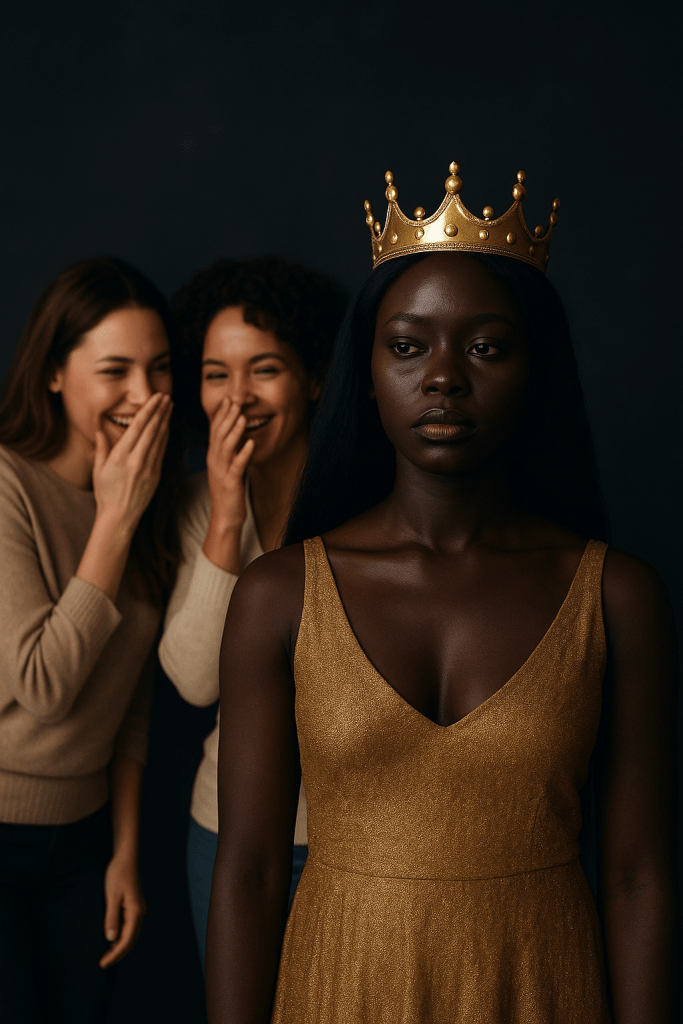
Ladies, I want you to hear this truth deep in your hearts: your looks don’t define you, and the things you own will not follow you when your time on this earth ends. All the attention, admiration, or envy that surrounds beauty and wealth is temporary—fading like mist in the morning sun. What truly matters, what truly lasts, is what you do for Christ. Every act of love, every sacrifice made in His name, every life you touch for His glory carries eternal weight. The mirror can show a face, and the world can praise possessions, but only the life surrendered to God leaves a mark that will never fade. “For we brought nothing into this world, and it is certain we can carry nothing out” (1 Timothy 6:7). Let us fix our eyes on what endures, not the temporary shell that surrounds us.

Beauty, though celebrated and sought after in every age, is fleeting. The mirror may flatter, and society may applaud, but these external adornments are temporary. In the eyes of God, what endures is not the curve of a cheekbone, the glow of skin, or the shine of hair, but the state of the heart and the soul. “For what is a man profited, if he shall gain the whole world, and lose his own soul?” (Matthew 16:26). True worth lies beyond appearances.

From the earliest moments of life, girls are taught to chase looks, to measure themselves by a superficial standard. Magazines, screens, and social media reinforce the notion that beauty is paramount. Yet, every wrinkle, every gray hair, and every mark that time leaves is a reminder that the shell we live in is temporary. “They that be wise shall shine as the brightness of the firmament; and they that turn many to righteousness as the stars for ever and ever” (Daniel 12:3). Wisdom and righteousness outshine the fleeting glow of youth.

It is natural to desire admiration, to want to feel beautiful and valued. But vanity is hollow when it dominates the spirit. “Favor is deceitful, and beauty is vain: but a woman that feareth the LORD, she shall be praised” (Proverbs 31:30). The praise of men fades like mist, but reverence for God creates an eternal honor that cannot be taken away. A woman’s truest beauty is expressed through her faith, kindness, and courage.

Society often tells women that their value is in their skin tone, body shape, or facial symmetry. Yet, the Apostle Peter reminds us: “Whose adorning let it not be that outward adorning of plaiting the hair, and of wearing of gold, or of putting on of apparel; But let it be the hidden man of the heart, in that which is not corruptible, even the ornament of a meek and quiet spirit, which is in the sight of God of great price” (1 Peter 3:3-4). The heart, not the flesh, carries eternal significance.

Every trend fades. The lipstick, the high heels, the designer bag—all are temporary. Death comes for all, and no earthly beauty can accompany the soul into eternity. “Then shall the dust return to the earth as it was: and the spirit shall return unto God who gave it” (Ecclesiastes 12:7). The body, as wondrous as it may be, is merely a vessel for the spirit.

Many women struggle with insecurity, measuring their worth against others. Yet, God’s word calls us to a higher standard, one not rooted in comparison but in divine purpose. “For ye see your calling, brethren, how that not many wise men after the flesh, not many mighty, not many noble, are called” (1 Corinthians 1:26). True significance is found in living a life of faith, not in being the most admired or envied.

The temptation to overvalue appearances is ancient. Even King Solomon warned that worldly pursuits and pleasures ultimately leave the soul unsatisfied. “Vanity of vanities, saith the Preacher, vanity of vanities; all is vanity” (Ecclesiastes 1:2). Physical beauty, unchecked by spiritual depth, is an empty treasure.

Self-love in the form of prideful vanity is dangerous because it obscures the eternal. It convinces the soul that the body is the measure of success. But Scripture declares: “Man that is in honour, and understandeth not, is like the beasts that perish” (Psalm 49:20). Honor without wisdom and reverence for God is transient, no better than the beauty of a flower that fades by evening.

True beauty is cultivated inwardly. A gentle spirit, a compassionate heart, and a life devoted to righteousness carry eternal significance. The soul, not the skin, is what God treasures. “Charm is deceitful, and beauty is vain: but a woman that feareth the LORD, she shall be praised” (Proverbs 31:30). These words echo across generations, reminding women that the inner life is far more important than outward adornment.

Society often rewards looks, but it cannot confer eternal value. The admiration one receives for physical appearance is fleeting; it vanishes with the passing seasons. “The fashion of this world passeth away” (1 Corinthians 7:31). What is temporary cannot compete with the eternal promises of God.

The fear of God, however, secures a legacy beyond the flesh. When a woman cultivates humility, integrity, and love, her influence lasts. She leaves a mark not measured by likes or comments, but by the lives she touches and the faith she nurtures. “A good woman is the crown of her husband: but she that maketh ashamed is as rottenness in his bones” (Proverbs 12:4). Her worth is eternal, not temporary.

Physical beauty often invites envy, judgment, and competition. But the spirit of a woman anchored in God is unshakable. She knows her worth is not contingent on the eyes of men but on the heart of the Creator. “Whosoever therefore shall humble himself as this little child, the same is greatest in the kingdom of heaven” (Matthew 18:4). Humility elevates the soul above superficial measures of beauty.

Many women feel pressure to maintain youth, to resist aging, and to preserve their attractiveness. Yet, the natural progression of life is a divine design. “Thou turnest man to destruction; and sayest, Return, ye children of men” (Psalm 90:3). Aging is inevitable, and true beauty evolves when it rests in God rather than worldly standards.

The vanity of beauty is also a distraction. It can pull women away from cultivating spiritual fruit, from seeking a life aligned with God’s will. “Lay not up for yourselves treasures upon earth, where moth and rust doth corrupt, and where thieves break through and steal” (Matthew 6:19). Investing in God is the only pursuit that yields eternal dividends.

Women must understand that looks are temporary, but influence and character endure. The woman who nurtures wisdom, faith, and virtue leaves a lasting legacy, far beyond what mirrors can reflect. “A virtuous woman is a crown to her husband: but she that maketh ashamed is as rottenness in his bones” (Proverbs 12:4). Her light shines long after her physical beauty fades.

Even the most celebrated beauty fades over time. Cleopatra, Helen of Troy, and countless others admired for their physical allure eventually returned to dust. “For we brought nothing into this world, and it is certain we can carry nothing out” (1 Timothy 6:7). The soul alone is prepared for eternity.

Society may pressure women to pursue the temporary shell, but faith offers an alternative. The eternal value of a life rooted in God surpasses all fleeting admiration. “Set your affection on things above, not on things on the earth” (Colossians 3:2). Heaven’s approval outweighs worldly praise.

A woman who understands this truth walks with freedom. She is no longer bound by comparisons or insecurities because her confidence rests in the eternal. “Be ye therefore perfect, even as your Father which is in heaven is perfect” (Matthew 5:48). Perfection is measured by God, not by the shallow judgments of the world.

In every season of life, beauty transforms. It is not diminished by wrinkles, gray hair, or scars. The soul, cultivated in virtue and love, radiates a lasting beauty. “The beauty of a woman is not in the clothes she wears, the figure that she carries, or the way she combs her hair. The beauty of a woman is seen in her eyes, because that is the doorway to her heart, the place where love resides” (adapted from 1 Samuel 16:7). God sees beyond the temporary shell to the eternal heart.

Ultimately, women are called to prioritize the eternal over the temporal. Beauty is a fleeting reflection of the Creator, a temporary shell that cannot follow us beyond death. “For what shall it profit a man, if he shall gain the whole world, and lose his own soul?” (Mark 8:36). What matters is the cultivation of a heart that fears God, loves others, and embraces righteousness.

The temporary shell is a reminder, not a curse. It teaches humility, dependence on God, and the pursuit of eternal virtues. When women embrace this truth, they are liberated from the chains of vanity and societal expectation. “But seek ye first the kingdom of God, and his righteousness; and all these things shall be added unto you” (Matthew 6:33). True beauty, eternal beauty, begins in God.
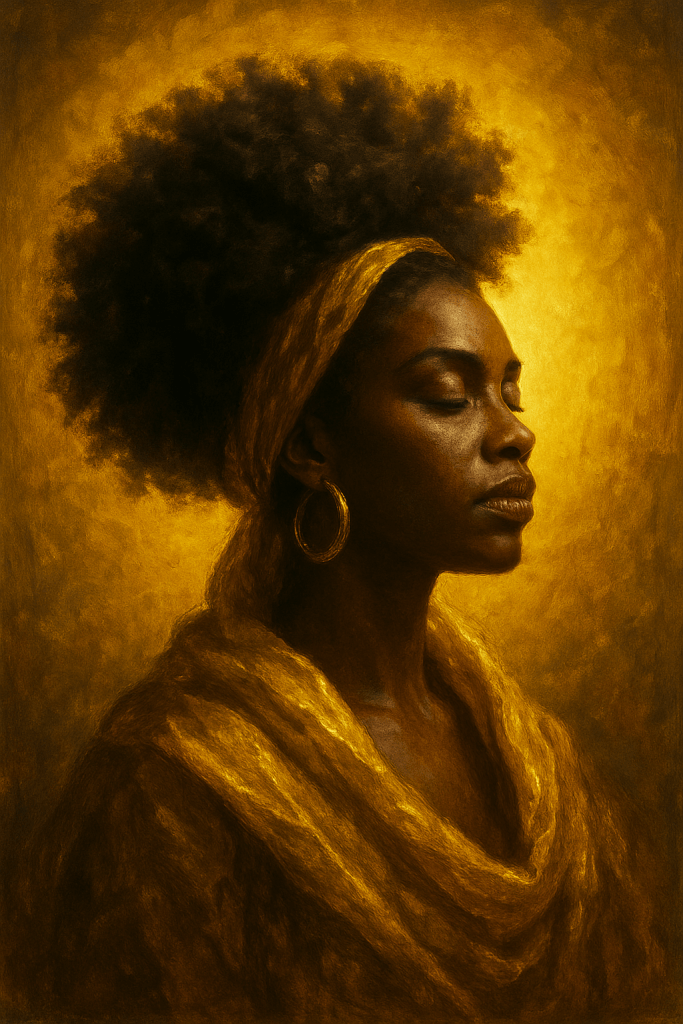

From Glow to Glory

The journey from glow to glory is the woman’s sacred ascent — a passage from surface to substance, from beauty admired to beauty anointed. The glow represents her outer light, the radiance of her youth, charisma, and presence. The glory represents her divine purpose, her sanctified power, and her spiritual inheritance. Between the two lies her becoming.

Every woman begins with a glow. It is the shimmer of innocence, confidence, and self-discovery. It may be physical, like the sheen of skin kissed by sun, or emotional, like the joy that cannot be faked. Yet this glow, while captivating, is only the first flicker of divine fire — a light meant to lead her into deeper illumination.

The world celebrates the glow but often neglects the glory. Society teaches women to maintain appearance rather than character, to chase attention rather than anointing. But the woman of God learns that beauty without purpose fades like dew at dawn. Glory, however, endures because it is anchored in eternity.

For the Black woman, this transition carries ancestral weight. Her glow has often been misread, her beauty either fetishized or feared. Yet within her melanin lies a mystery — a sacred reflection of divine craftsmanship. She is not the world’s aesthetic; she is heaven’s revelation. Her glow is her visibility, but her glory is her victory.

Glory cannot be purchased; it must be purified. Before a woman ascends to glory, she must pass through her wilderness — seasons of pain, pruning, and preparation. Like gold refined by fire, she emerges radiant not from cosmetics but from consecration. Her glow is natural light; her glory is supernatural fire.

The Scriptures remind us, “Arise, shine; for thy light is come, and the glory of the Lord is risen upon thee” (Isaiah 60:1, KJV). This verse is not a call to vanity but to vocation — to rise in divine identity and reflect the light of God within. Glory is not about self-promotion; it is about self-possession in Him.

In this transformation, the woman must confront false reflections. The mirrors of social media distort the truth, turning glow into performance. Sacred womanhood calls her to return to a higher mirror — the Word of God — where she sees not the filtered self, but the favored one. Glory begins where comparison ends.

From glow to glory also marks the passage from temporal love to eternal love. The glow attracts attention, but glory attracts alignment. When a woman’s heart is aligned with heaven, she draws not what flatters her, but what fulfills her. She no longer settles for affection; she walks in divine assignment.

In the realm of glory, femininity is no longer defensive; it is declarative. The sacred woman doesn’t dim her light to make others comfortable. She learns that humility is not hiding—it is harnessing her light for a higher purpose. Her aura becomes authority, her softness becomes strength.

The glow of youth fades, but the glory of wisdom multiplies. Time becomes her ally, not her enemy. Each wrinkle becomes a verse in her living scripture, each scar a psalm of survival. She wears experience as an invisible crown, for she has been through the fire and learned to shine without burning out.

In a world obsessed with “glow-ups,” sacred womanhood reminds her that the ultimate glow-up is spiritual. It is when her spirit shines brighter than her skin, when her peace becomes more visible than her polish. Glory is what happens when she glows from within.

From glow to glory is not just personal; it is generational. Every healed woman becomes a seed of restoration for her lineage. The prayers of grandmothers, the tears of mothers, and the hope of daughters intertwine in her becoming. She carries the DNA of deliverance.

The glow is the introduction; the glory is the revelation. The woman in glory no longer seeks validation — she walks in vocation. She no longer performs for approval — she embodies divine purpose. Her confidence no longer comes from applause but from abiding in the presence of the Most High.

For the daughters of Zion, glory means returning to the image of God that was stolen through oppression and redefined through colonization. Her beauty, her rhythm, her resilience — all are divine, not derivative. Glory restores what history tried to erase.

The world may not understand her transition. Those accustomed to her glow may fall away when she begins to walk in glory. Glory requires solitude, sanctification, and spiritual maturity. It is the space where God’s presence outweighs people’s praise.

Her journey mirrors Christ’s own transfiguration — where human form gives way to divine light (Matthew 17:2, KJV). In the same way, her becoming reveals a luminous holiness that no makeup can mimic and no camera can capture. She becomes living light.

When she reaches glory, she realizes that glow was only the invitation. Glory is the covenant — the intimate union between her spirit and her Creator. It is not about fame but faith, not about looks but legacy. Her life becomes her ministry.

In this sacred metamorphosis, she no longer measures beauty by symmetry but by spirit. She embodies the truth that favor is greater than fashion, and character is greater than contour. Her reflection becomes her testimony — a story of grace turned into glory.

And in the end, when she looks in the mirror, she sees not what the world calls beautiful, but what heaven calls beloved. For she has ascended — from glow to glory — from mere light to divine luminescence, from woman to worship.


References

  • The Holy Bible, King James Version. (n.d.).
  • hooks, b. (2000). All About Love: New Visions. William Morrow.
  • Walker, A. (1983). In Search of Our Mothers’ Gardens: Womanist Prose. Harcourt.
  • Lorde, A. (1984). Sister Outsider: Essays and Speeches. Crossing Press.
  • Cooper, B. C. (2018). Eloquent Rage: A Black Feminist Discovers Her Superpower. St. Martin’s Press.
  • Wilkerson, I. (2020). Caste: The Origins of Our Discontents. Random House.
  • Collins, P. H. (2000). Black Feminist Thought: Knowledge, Consciousness, and the Politics of Empowerment. Routledge.

Dilemma: Exalted by Heaven, Dismissed by Earth.

To be chosen by Heaven yet questioned by humanity is a paradox the righteous have known since ancient days. There is a sacred ache carried by those whose souls are stamped with divine appointment, yet whose footsteps walk through a world that refuses to recognize their worth. It is the internal tug-of-war between divine identity and earthly invisibility—where God calls you “beloved,” but society calls you “less.”

This dilemma is not imagined; it is lived in the marrow of Black existence. From prophets overlooked by their own brethren to kings treated as commoners in foreign lands, history echoes with the cry: How does one carry majesty in a world that denies your crown?

It is a spiritual condition wrapped in sociological reality. Blackness—rich in heritage, woven with divine pigment and ancestral royalty—has been treated as a burden instead of a blessing. The ones Heaven elevated have been made to crawl through earthly systems built to shrink them. Yet their essence refuses diminishment; greatness leaks through every attempt to confine it.

This world will often pretend not to see the brilliance it fears. When melanin glows like bronze tempered by sacred fire, when identity is rooted not in ego but calling, the earth responds with discomfort. To be divinely marked means to be misunderstood by those who measure worth through carnal lenses.

Scripture shows this pattern repeatedly. Joseph was favored by Heaven but thrown into pits by men. David was anointed yet ignored in his father’s house. Christ Himself—Sinless, Sovereign, Salvation incarnate—was despised and rejected before exaltation. Their identity was never defined by human acceptance; Heaven had already spoken.

So too with the Black soul molded in dignity yet raised in a world programmed to pretend it sees nothing worthy. It is not a flaw of the divine—it is the blindness of a fallen age. A world corrupted by hierarchy sees threat in what God sees as treasure.

This dismissal is both systemic and spiritual. Colonial theology, media manipulation, and economic suppression attempted to erase divinely appointed glory. But Heaven’s decree cannot be undone by human distortion. The oppressed do not lose their anointing simply because oppressors fail to recognize it.

The heartache arises not from pride but purpose. Deep inside is the yearning to be known as God intended—to be seen not for flesh alone, but for spirit, mind, lineage, and destiny. When the earth rejects what God has ordained, it carves silent wounds in the soul.

Yet rejection often functions as refinement. The dismissed learn stillness, depth, and resilience. Their prayer life sharpens. Their vision deepens. They walk through fire and emerge as vessels that do not crumble under praise nor break under pressure. Heaven hides what Hell would try to kill.

To be unseen is sometimes preparation. Hiddenness is not punishment—it is consecration. When God sets you apart, the world may mistake you for forgotten, but Heaven is shaping something sacred out of sight. The overlooked learn to stand without applause, believe without validation, and rise without permission.

And there is a particular weight for Black men and women whose bodies carry the language of divinity—skin kissed by creation’s first dawn, features carved from ancient kings, hair spiraling like galaxies. The world’s refusal to honor what God honored only confirms spiritual inversion: light is feared when it is not pale.

But destiny does not negotiate with human insecurity. The same ones dismissed by earth will one day stand in positions prepared for them before time. Those once ignored become the standard. The rejected stone becomes the cornerstone. The first shall be last and the last first.

This tension—exalted above yet reduced below—produces a depth of character unrivaled by ease. To endure rejection while wearing unseen royalty requires humility, steadfastness, and a spirit anchored in truth rather than opinion.

In the quiet of prayer, the overlooked hear their true name. In the scriptures, they find reflection. In ancestry, they find proof. In oppression, they find prophecy. And in endurance, they discover their crown was never given by the world, so it can never be taken by it.

For when Heaven exalts you, earth’s dismissal becomes irrelevant. The world does not validate calling—it merely reacts to it. And reaction is evidence of reality. God’s chosen often walk through seasons where applause is muted, doors are slow to open, and honor feels distant. But what is delayed by man is never denied by God.

To be dismissed is not to be devalued. To be unseen is not to be ordinary. To be rejected is not to be unworthy. When God has spoken, human silence cannot negate divine proclamation.

How White Supremacy Affected Black People — and the Theology of Being “Chosen”

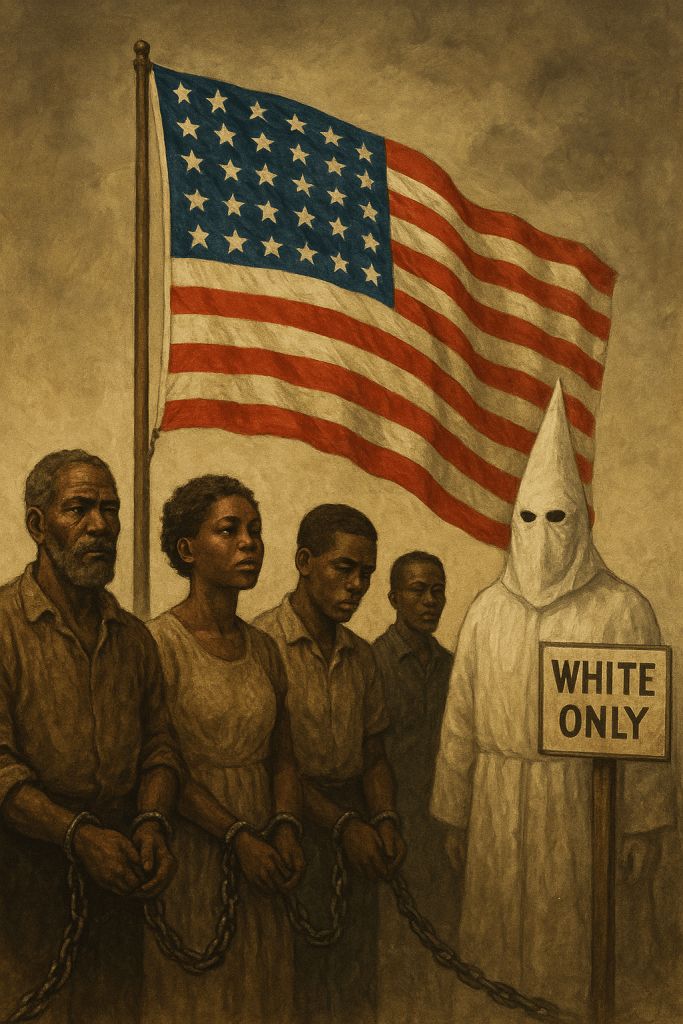
White supremacy was not merely an attitude; it was a global power system constructed to elevate whiteness as superior and to suppress African and Afro-diasporic people socially, spiritually, psychologically, and economically. It operated through:

  • Colonization
  • Enslavement and racial caste systems
  • Cultural erasure and forced assimilation
  • Colorism and beauty hierarchy
  • Misinterpretation of scripture to justify oppression
  • Educational, legal, and religious denial of African dignity and history

Its purpose was to break identity so the oppressed would forget who they were.

Psychological and Spiritual Strategy

White supremacy was not only physical — it was mental and spiritual. It sought to:

  • Strip African people of language, lineage, and legacy
  • Replace self-knowledge with inferiority narratives
  • Destroy family and masculine leadership structure
  • Shame dark skin, African features, and indigenous faith practice
  • Remove memory of royalty, priesthood, and ancient civilizations
  • Disconnect Black people from scripture and covenant identity

To dominate a people, you first must make them forget themselves.


Biblical Framework: The Chosen Motif

The idea of Black people being “chosen” is not about supremacy—but identity, survival, and covenant continuity through suffering.

In scripture, the chosen:

  • Suffered captivity (Deut. 28)
  • Were scattered among nations
  • Were despised and rejected
  • Lost language and heritage
  • Were restored and remembered by God in due time

This echoes the journey of African descendants, especially in the Americas.

Scriptural Parallels (KJV)

“And ye shall be plucked from off the land… and the LORD shall scatter thee among all people.”
— Deuteronomy 28:63–64

“They shall be for a reproach and a proverb and a byword.”
— Deuteronomy 28:37

“Princes shall come out of Egypt; Ethiopia shall soon stretch out her hands unto God.”
— Psalm 68:31

“Ye are a chosen generation, a royal priesthood.”
— 1 Peter 2:9

The suffering of African people aligns historically and spiritually with the pattern of God’s chosen in scripture — not because they sought dominance, but because they carried a divine assignment.


Being Chosen Does Not Mean Superior — It Means Set Apart

To be chosen in scripture means:

  • Chosen for responsibility
  • Chosen for the covenant
  • Chosen to endure trial and exile
  • Chosen to return to truth and faith
  • Chosen to shine God’s glory in humility, not pride

It is a burden before it is a blessing.

Just as Israel suffered before restoration, Black struggle reflects refining, not rejection.


Reclamation After Oppression

White supremacy attempted to erase identity.

But the very survival, resilience, creativity, spiritual power, and rising global awakening of Black people proves a divine seal that oppression could not break.

Reclaiming identity means:

  • Loving one’s God-given skin and features
  • Re-educating after historical distortion
  • Reconnecting to scripture with open eyes
  • Honoring African legacy and dignity
  • Walking in humility, faith, and purpose

Chosen identity produces service, not arrogance; spiritual authority, not domination.


The Pain and the Crown

White supremacy tried to bury the truth:

  • That dark skin is not curse but divine design
  • That African civilizations birthed mathematics, science, philosophy, and monarchy
  • That African presence in scripture is undeniable
  • That God uses the oppressed as vessels of His glory

The world rejected what Heaven sealed.

Like Joseph, like David, like Christ — dismissal precedes elevation.


Conclusion

Black suffering was not proof of inferiority —
it was the mark of a people whose identity threatened the world’s illusions.

Oppression did not erase destiny;
it revealed it.

Not chosen to rule over others —
but chosen to remind humanity who God is.

Chosen for endurance, for faith, for testimony,
and for the rising that the world cannot stop.


“The stone which the builders refused is become the head stone of the corner.”

— Psalm 118:22 (KJV)

So walk upright, bronze soul. Heaven sees you. Heaven backs you. Heaven named you before the world tried to rename you. And one day, what was whispered in spiritual realms will be undeniable in earthly ones.

Earth may overlook you, but Heaven never will.
And Heaven’s validation is the only crown that endures.


Scriptural References (KJV)
Psalm 118:22
Isaiah 53:3
1 Samuel 16:7
Romans 8:30
Matthew 20:16
Genesis 37–50 (Joseph narrative)

Dilemma: Police Harassment

Police harassment of Black Americans remains a pressing moral, social, and structural crisis in the United States. It is not limited to isolated incidents, but reflects recurring patterns of enforcement, disrespect, and disproportionate force, tied intimately to racialised histories and institutional practices. Understanding why this occurs demands engagement with racism, power, training, neighbourhood conditions, and the embedded culture of policing.

One reason police harassment happens with such frequency and racial skew is the legacy of racialised policing practices—rooted in slave patrols, segregation era policing, and the enforcement of racial hierarchy. These historical antecedents help explain why Black people are often treated as suspects, targets, or threats rather than equal citizens. The institutional memory of policing still carries layers of the “othering” of Black bodies.

Data show the disparity clearly. According to the Prison Policy Initiative, in 2022, Black people were over three times as likely as white people to experience the threat or use of force in their most recent police encounter. Prison Policy Initiative. The same dataset found that Black people reported higher rates of being handcuffed, searched, or having weapons used against them, even when controlling for initiation.

Another survey revealed that 42 % of African Americans said they personally experienced unfair treatment by police—being stopped, searched, questioned, physically threatened, or abused. Among those, 22 % reported such mistreatment in the past year. Equity in America. A separate poll found that 24 % of young Black adults reported being harassed by police, compared to significantly lower rates among whites. PBS

More dramatically, research from the Harvard T.H. Chan School of Public Health shows that Black Americans are approximately 3.23 times more likely than white Americans to be killed during a police encounter. Harvard Public Health. Meanwhile, a database from Statista indicates that in 2024 to November, there were 277 Black people killed by police in the U.S., at a rate of 6.2 per million, compared to 2.4 per million for white Americans. Statista

Why do so many officers harass Black people or treat them more harshly? There are several interacting factors: implicit and explicit racial bias, discretionary power in stops/searches/enforcement, law enforcement cultures that valorise control and suspicion, and the spatial realities of policing in predominantly Black communities. Research using smartphone data showed police presence is higher in Black neighbourhoods after controlling for density and crime—thus exposure alone increases the chance of harassment. arXiv

Police discretion plays a major role: when an officer stops an individual, the decision to search, question, or use force is shaped by perceptions of threat, compliance, demeanour—and research suggests that for Black individuals, this threshold is lower. A large‑scale study of state patrol stops found that Black drivers were stopped, searched, and arrested at higher rates than white drivers, controlling for many variables. arXiv

The institutional placement of many police forces in neighbourhoods with concentrated disadvantage and racial segregation exacerbates the dynamic. Black communities have historically been over‑policed, under‑resourced, and subject to environmental stressors—thus law enforcement becomes a vector of control rather than a partner of community safety. The deployment patterns, stop frequencies and local enforcement priorities all contribute to disparate harassment outcomes.

The role of racism is foundational. Racism doesn’t mean every officer consciously hates Black people, but it means the system of policing—and the broader criminal‐legal system—is structured in ways that devalue Black lives, normalise suspicion of Black persons, and grant officers broad latitude to treat Black bodies as less deserving of dignity. The repeated pattern of harassment, stops, searches, and use of force underscores this structural dimension.

Harassment is not just about physical force—it includes psychological stress, demeaning interaction, being treated like a criminal before any crime is committed, being over‐policed for minor infractions, and being more likely to have force used or threatened. The cumulative effect of multiple daily exposures to disrespect and coercion produces what some scholars call “racialised trauma”.

Consider the case of George Floyd. On May 25, 2020, George Floyd, a 46‑year‑old Black man, was arrested by the Minneapolis Police Department after being accused of using a counterfeit $20 bill. Officer Derek Chauvin, who is white, pressed his knee into Floyd’s neck for over nine minutes while Floyd was handcuffed and lying face down. Floyd repeatedly said he could not breathe. Al Jazeera+2PBS+2

Chauvin was found guilty on all charges—second‑degree unintentional murder, third‐degree murder, and second‐degree manslaughter—on April 20, 2021. PBS+1 He was later sentenced to 22.5 years in prison. Al Jazeera The case became a global symbol of police violence against Black people and sparked huge protests through the Black Lives Matter movement and beyond.

The Floyd case illustrates many of the themes of harassment: an officer treating a Black man as a threat, using excessive force, ignoring pleas of distress, and being held accountable only after overwhelming public outrage and video evidence. It reminds us that even when overt hatred may not be the driver, the system allows and legitimates harassment.

In analysing harassment, one must note that harassment in policing doesn’t just occur in fatal encounters. The bulk of harassment consists of non‑fatal stops, handcuffing, searches, threats of force, shouting and demeaning conduct. The 2022 Survey by the Bureau of Justice Statistics (via Prison Policy Initiative summary) found that Black people experienced enforcement actions in 18 % of street stops (versus 15 % for whites) and 8 % were searched or arrested (versus 6 % for whites). Prison Policy Initiative

Educationally and economically, the toll of police harassment is severe. Black individuals facing repeated policing are more likely to experience stress, distrust of legal institutions, disruption in job search or mobility, and negative health outcomes—including heightened risk of hypertension, mental‑health disorders and premature mortality. The linkage from harassment to broader life outcomes is increasingly recognised in social science.

From a theological perspective, the dignity of Black persons is undermined when harassment becomes routine. The imago Dei (Genesis 1:27) is ignored when state agents treat Black bodies as disposable or suspect. The prophetic tradition calling for justice (Isaiah 1, Amos 5) demands that the church and polity recognise and resist the systemic dehumanisation of Black people through police harassment.

In practical terms, addressing police harassment requires multi‑layered reform: changing officer training and culture; limiting discretionary stops, searches and use of force; increasing accountability and transparency; reducing over‑policing of Black neighbourhoods; empowering community oversight; and de‑racialising perceptions of threat. Structural changes must accompany individual reform.

The dilemma remains deeply stubborn because the system of policing is woven into larger economic, social, and racial structures: poverty, residential segregation, educational inequality and criminal‐legal system entanglement. Reform of policing alone, without addressing these root conditions will not fully dismantle the pattern of harassment.

In sum, police harassment of Black Americans is not an occasional anomaly but a predictable outcome of racialised policing, discretion, structural inequality, and institutional culture. The data confirm what lived experience tells us: Black people are more likely to be stopped, searched, threatened, handcuffed, and killed by police than white people—simply because they are Black. The case of George Floyd underscores the severity of the consequences when the system fails utterly. Recognition, repentance, systemic reform, and reparative action are necessary if we are to move toward justice.

References

Pretty Privilege Series: The Cost of Shade — How Colorism Shapes Our Souls.

Photo by Stan Photography on Pexels.com

Colorism, though often overshadowed by the broader category of racism, remains one of the most insidious realities within the Black community and beyond. It is the practice of favoring lighter skin over darker skin, a hierarchy that has its roots in slavery, colonialism, and Eurocentric beauty standards. The cost of shade is not merely social; it is psychological, emotional, spiritual, and generational. It shapes not just how others see us, but also how we see ourselves.

At the root of colorism lies the ideology of white supremacy. During slavery, lighter-skinned enslaved people were often given preferential treatment, sometimes allowed into the house while darker-skinned individuals were forced to toil in the fields. This early division planted seeds of mistrust, competition, and insecurity that still bear bitter fruit today (Hunter, 2007). These historical scars are carried forward, morphing into modern struggles with beauty standards, relationships, and self-worth.

Pretty privilege is not neutral; it operates within the politics of shade. Those with lighter skin tones are often perceived as more desirable, more approachable, and even more intelligent, while darker-skinned individuals frequently face rejection, stereotypes, and invisibility. The cost of this dynamic is that entire generations internalize harmful lies about their own God-given beauty.

The soul suffers under these dynamics because they fracture identity. When young Black children grow up hearing insults about dark skin or praises for lighter complexions, their spirit is silently bruised. Proverbs 18:21 (KJV) reminds us that, “Death and life are in the power of the tongue.” Words about shade, whether degrading or elevating, carry life-altering weight.

In relationships, colorism often dictates who is considered “dateable” or “marriage material.” Studies show that lighter-skinned women are more likely to be married than their darker-skinned counterparts, even when controlling for education and income (Hamilton et al., 2009). This creates not only personal pain but also division within the community, reducing love to a hierarchy of hue rather than a covenant of hearts.

Men, too, suffer under the burden of shade. Dark-skinned men are often stereotyped as aggressive or threatening, while lighter-skinned men may be seen as more approachable or refined. These biased perceptions impact everything from employment opportunities to social mobility. The cost of shade is not limited to romance—it seeps into economics, justice, and everyday life.

Spiritually, colorism is a distortion of God’s design. Scripture declares in Genesis 1:27 (KJV), “So God created man in his own image, in the image of God created he him.” When one shade of skin is elevated above another, it denies the truth that every complexion reflects the Creator’s artistry. The soul is damaged when beauty is measured by proximity to whiteness rather than proximity to holiness.

The cost of shade is also evident in media and representation. Films, music videos, and advertisements often prioritize lighter-skinned Black women, perpetuating a narrow definition of beauty. This “paper bag test” mentality, once literal in Black social organizations, has been rebranded for a global stage, infiltrating screens and shaping the subconscious of millions.

Colorism also creates fractures between women themselves. Instead of building solidarity, competition emerges. Lighter-skinned women may feel objectified while darker-skinned women may feel overlooked, creating a cycle of envy, bitterness, and mistrust. Galatians 5:26 (KJV) warns us, “Let us not be desirous of vain glory, provoking one another, envying one another.” The cost of shade is the erosion of sisterhood.

Within families, colorism can be especially painful. Parents, knowingly or unknowingly, may praise the lighter-skinned child more, while overlooking the darker-skinned sibling. These internalized preferences perpetuate generational trauma, leading children to equate their worth with the shade of their skin rather than the substance of their character.

The church, too, has not been exempt. Though the gospel declares freedom and equality, biases regarding skin tone often infiltrate congregations, from leadership selection to who is deemed “presentable.” This contradiction grieves the Spirit, for Acts 10:34 (KJV) proclaims, “Of a truth I perceive that God is no respecter of persons.”

One of the greatest costs of shade is the distortion of love. When people pursue relationships based on complexion rather than compatibility in Christ, marriages falter, and families suffer. The cost of shade here is not just cosmetic—it is covenantal.

For many, overcoming colorism requires intentional healing. This healing begins with recognizing its roots, naming its effects, and choosing to reject its lies. John 8:32 (KJV) promises, “And ye shall know the truth, and the truth shall make you free.” Freedom from shade-based hierarchies requires embracing God’s truth about beauty.

Healing also comes through representation. When darker-skinned individuals are celebrated in media, art, and leadership, stereotypes are dismantled. Every image of beauty that embraces the full spectrum of melanin is an act of resistance against the cost of shade.

Education is also essential. Teaching children the truth about their heritage, beauty, and biblical identity equips them to resist the lies of colorism. Proverbs 22:6 (KJV) commands, “Train up a child in the way he should go: and when he is old, he will not depart from it.”

The cost of shade must also be addressed collectively. As a community, we must reject divisive practices and affirm all shades as reflections of God’s handiwork. Unity dismantles privilege, and love uproots prejudice.

Globally, the issue of skin-lightening industries reveals the financial cost of shade. Billions are spent annually on bleaching creams, a testament to the deep insecurity colorism breeds (Charles, 2003). These products not only damage skin but also reinforce self-hatred.

But the greatest hope lies in God’s promise of restoration. Revelation 7:9 (KJV) describes a vision of heaven where “a great multitude, which no man could number, of all nations, and kindreds, and people, and tongues, stood before the throne.” In that eternal gathering, shade holds no cost—only souls covered in the glory of God.

Ultimately, the cost of shade is too high to continue paying. It robs us of peace, divides families, distorts love, and warps identity. But the gospel calls us to something greater: freedom, equality, and wholeness in Christ. In Him, every shade is sacred.


References

  • Charles, C. A. D. (2003). Skin bleachers’ representations of skin color in Jamaica. Journal of Black Studies, 33(6), 711–728.
  • Hamilton, D., Goldsmith, A., & Darity, W. (2009). Shedding “light” on marriage: The influence of skin shade on marriage for Black females. Journal of Economic Behavior & Organization, 72(1), 30–50.
  • Hunter, M. (2007). The persistent problem of colorism: Skin tone, status, and inequality. Sociology Compass, 1(1), 237–254.
  • The Holy Bible, King James Version.

Kingdom Economics: Practical Stewardship and Generosity.

Kingdom economics, as taught in Scripture, transcends worldly financial systems. It integrates stewardship, generosity, and justice, reflecting God’s heart for the vulnerable. Believers are called to manage resources responsibly, prioritize the needs of widows, orphans, and the poor, and align financial decisions with divine purpose. Proverbs 3:9–10 (KJV) states, “Honour the LORD with thy substance, and with the firstfruits of all thine increase: So shall thy barns be filled with plenty…” This principle illustrates that honoring God with resources results in both spiritual and material blessings.

https://cash.app/$thebrowngirlnetwork

1. The Foundation of Kingdom Economics
Unlike secular capitalism, which prioritizes profit and personal gain, Kingdom economics emphasizes stewardship, accountability, and relational responsibility. All wealth belongs to God (Psalm 24:1, KJV), and believers are entrusted as stewards, not owners.

2. God’s Heart for the Vulnerable
The Bible repeatedly highlights God’s care for widows and orphans. Deuteronomy 10:18 (KJV) reminds us, “He doth execute the judgment of the fatherless and widow, and loveth the stranger…” Generosity toward the vulnerable is therefore a direct reflection of divine character.

3. Historical Models of Provision
In ancient Israel, gleaning, tithing, and communal sharing provided sustenance to those without means (Leviticus 19:9–10, KJV). These practices institutionalized support for widows, orphans, and the poor, showing that generosity is both personal and systemic.

4. Stewardship as a Responsibility
Stewardship requires intentionality. Believers are accountable for how they allocate resources, ensuring they benefit others, particularly those in need. Luke 12:48 (KJV) affirms that “to whom much is given, of him shall be much required.”

5. Giving to Widows and Orphans
1 Timothy 5:3–4 (KJV) emphasizes supporting widows who are truly alone, while Deuteronomy 14:29 (KJV) integrates orphans into community provision. Practical giving must be intentional, equitable, and empowering.

6. Generosity as Spiritual Investment
Proverbs 19:17 (KJV) teaches, “He that hath pity upon the poor lendeth unto the LORD; and that which he hath given will he pay him again.” Giving becomes a spiritual transaction that blesses both giver and receiver.

7. Psychological Impact of Giving
Generosity reduces stress, enhances empathy, and fosters emotional well-being (Lyubomirsky et al., 2005). Kingdom giving aligns psychological health with spiritual obedience.

8. Avoiding Exploitation
Support must respect dignity. 1 Timothy 5:5 (KJV) emphasizes that aid should empower rather than create dependency. Ethical giving nurtures responsibility and preserves self-worth.

9. The Role of the Church
The early church established systems to ensure fair support for vulnerable populations (Acts 6:1–6, KJV). Church-led stewardship guarantees that giving is organized, equitable, and sustainable.

10. Practical Financial Stewardship
Believers can structure giving through tithes, offerings, and charitable programs. Malachi 3:10 (KJV) highlights the blessings of honoring God through firstfruits, demonstrating the link between obedience and provision.

11. Empowering the Vulnerable
Kingdom economics includes empowerment strategies: education, mentorship, vocational training, and micro-loans. Ruth 2:2–3 (KJV) illustrates how providing access to resources enables self-sufficiency.

12. Social Justice as Kingdom Responsibility
Caring for widows and orphans reflects social justice principles embedded in Scripture (Isaiah 1:17, KJV). Kingdom economics is inseparable from ethical engagement and systemic equity.

13. Wealth as a Tool, Not a Trophy
Material resources are instruments for blessing others, not symbols of status. Luke 12:15 (KJV) warns that life does not consist in abundance of possessions. True prosperity is relational and purposeful.

14. Generosity as Legacy
Supporting the vulnerable establishes enduring spiritual and social legacies. Proverbs 22:6 (KJV) and Matthew 6:20 (KJV) encourage investment in eternal outcomes through compassionate stewardship.

15. Balancing Personal Needs and Kingdom Giving
Kingdom economics does not require self-neglect. Believers are encouraged to manage personal resources wisely while allocating surplus to those in need, balancing prudence with generosity.

16. Psychological Resilience of Recipients
Consistent support enhances the emotional and social resilience of widows, orphans, and the poor (Shonkoff et al., 2012). Kingdom generosity produces holistic well-being.

17. Advocacy and Policy
Kingdom economics includes advocacy for systemic change to protect the vulnerable. Scripture encourages intervention for justice (Proverbs 31:8–9, KJV), demonstrating that giving is both individual and societal.

18. Cultural Stewardship
Resources should be used to influence culture positively, supporting education, media, and community initiatives that uplift rather than exploit. Believers are called to be light and salt in social systems.

19. Long-Term Perspective
Kingdom economics prioritizes sustainability over immediate gratification. Investments in education, spiritual mentorship, and community development ensure lasting impact, reflecting Galatians 6:9 (KJV): “And let us not be weary in well doing: for in due season we shall reap, if we faint not.”

20. Avoiding Partiality
James 2:1–4 (KJV) warns against favoritism. Kingdom giving transcends social, racial, or economic bias, emphasizing equitable care for all vulnerable groups.

21. Integration of Faith and Action
Generosity is an expression of authentic faith. James 2:14–17 (KJV) teaches that faith without works is dead. Kingdom economics operationalizes faith through tangible support.

22. Spiritual Rewards of Stewardship
Proverbs 11:25 (KJV) affirms, “The liberal soul shall be made fat: and he that watereth shall be watered also himself.” Spiritual and material blessings flow to those who prioritize Kingdom stewardship.

23. Psychological Benefits for Givers
Altruistic giving enhances happiness, reduces narcissism, and strengthens social bonds (Lyubomirsky et al., 2005). Kingdom economics fosters holistic well-being for both giver and recipient.

24. Empowering Future Generations
Providing for orphans and vulnerable children creates generational impact. Proverbs 22:6 (KJV) and Deuteronomy 24:19–21 (KJV) emphasize education, mentorship, and skill development, ensuring sustainable outcomes.

25. Conclusion
Kingdom economics redefines wealth and prosperity through stewardship, generosity, and justice. Giving to widows, orphans, and the vulnerable aligns with God’s heart, produces psychological and spiritual benefits, and transforms communities. True Kingdom prosperity integrates financial wisdom, compassion, and divine purpose, demonstrating that resources are tools for blessing, not mere instruments of personal gain.


References (KJV & Academic):

  • The Holy Bible, King James Version.
  • Lyubomirsky, S., Sheldon, K. M., & Schkade, D. (2005). Pursuing happiness: The architecture of sustainable change. Review of General Psychology, 9(2), 111–131.
  • Taylor, S. E. (2011). Social support: A review. In H. S. Friedman (Ed.), The Oxford handbook of health psychology (pp. 189–214). Oxford University Press.
  • Shonkoff, J. P., et al. (2012). The lifelong effects of early childhood adversity and toxic stress. Pediatrics, 129(1), e232–e246.

The Light-Skinned Illusion

The conversation around beauty in the Black community is incomplete without examining the “light-skinned illusion”—the socially constructed belief that lighter skin inherently equals greater beauty, value, and opportunity. This illusion was not born organically; it was engineered by systems of racial domination, refined through centuries of media messaging, and internalized in ways that continue to shape identity, desirability, and self-worth. To understand its power is to confront both history and the psychological imprint of colonial beauty standards.

Light skin in the African diaspora carries a unique duality. On one hand, it is placed on a pedestal in many societal contexts. On the other, it often carries the burden of resentment, suspicion, and stereotype within the community. This paradox sits at the intersection of privilege and pain, advantage and alienation. The illusion promises elevation, yet it often delivers conflict and confusion.

The roots of the light-skinned illusion trace back to slavery, where proximity to whiteness became synonymous with proximity to power. Lighter-skinned enslaved people—often born of violence and exploitation—were sometimes afforded different labor roles, better clothing, or limited education. These differences were not gifts; they were control mechanisms designed to divide Black unity and reinforce white supremacy. Beauty became racial hierarchy in physical form.

Colonialism extended these ideologies globally. Across Africa, the Caribbean, and the Americas, skin bleaching industries flourished because European aesthetics were marketed as the pinnacle of desirability and modernity. Lighter skin was framed not only as beautiful, but as aspirational—a passport to social mobility. It became beauty not by nature, but by propaganda.

Modern media continued the cycle. For decades, lighter-skinned actresses, models, and entertainers were promoted as the preferred face of Black beauty. Hollywood offered glamour to the light-skinned woman while offering caricature or invisibility to her darker-skinned sister. Magazine covers, music videos, and advertising reinforced the notion: lighter was safer, marketable, and more palatable to mainstream audiences.

Yet the illusion has a cost. The light-skinned woman is often reduced to symbol rather than self. Society expects her to embody a fantasy of softness, delicate femininity, and non-threatening Blackness. When she asserts identity beyond these constraints, she is judged more harshly, as though she is breaking a contract she never signed. The pedestal becomes a cage.

Within the Black community, she may find her beauty questioned as unearned, her achievements dismissed as byproducts of complexion privilege. Genuine talent or character may be overshadowed by assumptions that she “has it easier.” The illusion creates resentment—not because of who she is, but because of what history made her skin represent. She often stands at the crossroad of envy, desire, and historical trauma.

Relationships add another layer. Some men idolize light skin not out of love, but out of internalized hierarchy. Others avoid dating light-skinned women out of fear of stereotype or backlash. In both extremes, she becomes object rather than individual. True intimacy requires seeing her beyond complexion—but the illusion blinds many.

Psychologically, the light-skinned woman may battle identity confusion—simultaneously envied and distrusted, desired yet doubted. She may feel pressure to prove her Blackness, perform humility, or apologize for advantages she did not ask for. Beauty becomes labor, not liberation. And while she benefits from the illusion, she also suffers from it.

Spiritually, this tension reflects humanity’s broken vision. Scripture warns against judging by appearance: “For man looketh on the outward appearance, but the Lord looketh on the heart” (1 Samuel 16:7, KJV). God does not elevate one shade of melanin over another. It is mankind that builds hierarchies where Heaven has none. The illusion is not divine design; it is human distortion.

In truth, the light-skinned woman’s beauty is real—but it is not a superior category. Her radiance is simply one expression of a wide and wondrous Black spectrum. When culture elevates her above others, it dishonors not only dark-skinned women, but the fullness of God’s creation. Beauty, in its truest form, is variety without hierarchy.

The light-skinned illusion harms dark-skinned women through exclusion, but it also harms light-skinned women through expectation. It demands that she embody perfection, gentleness, and gratitude for privileges she may not feel she possesses. It robs her of complexity, humanity, and sometimes community.

Breaking this illusion does not require diminishing light-skinned beauty—it requires dethroning it. The goal is not reverse hierarchy but liberation from hierarchy altogether. To recognize all beauty as valid without ranking it is to heal the wound left by oppression.

Healing begins with truth-telling. It means acknowledging colorism without hostility, privilege without guilt, and pain without blame. It asks the light-skinned woman to stand in sisterhood—not defensively, but consciously. And it asks the community to see her not as symbol, but as soul.

Culturally, we are witnessing a shift. Dark-skinned beauty is receiving overdue celebration. Afrocentric features are embraced. Natural hair crowns run proudly and unapologetically. This evolution does not erase the illusion yet, but it destabilizes it. New generations breathe freer.

Still, true liberation requires vigilance. Systems do not dissolve without intention. We must continually interrogate our language, attraction patterns, media consumption, and subconscious biases. Beauty must become communal dignity, not competitive economy.

The light-skinned woman, when rooted in self-awareness and humility, becomes part of the solution. She models grace by affirming others’ beauty without feeling diminished. She rejects pedestal identity and embraces purpose identity. Her beauty becomes a bridge, not a barrier.

Ultimately, the illusion crumbles when we embrace divine truth: that melanin is miracle in every shade. No hue of brown is accidental. Each tone reflects a facet of sacred design. When the community remembers this, beauty ceases to divide and begins to restore.

For the light-skinned woman, freedom comes not in denying privilege, nor in carrying shame, but in embracing identity that transcends complexion. She is not illusion; she is creation. And her power lies not in being preferred, but in choosing to stand with, not above, her sisters.


References

Hunter, M. (2002). “If you’re light you’re alright”: Light skin color as social capital for women of color. Gender & Society, 16(2), 175–193.

Russell, K., Wilson, M., & Hall, R. (2013). The color complex: The politics of skin color in a new millennium. Anchor Books.

Wilder, C. S. (2015). Ebony and ivy: Race, slavery, and the troubled history of America’s universities. Bloomsbury.

1 Samuel 16:7 (KJV).

Hair Is the Crowning Glory

This photograph is the property of its respective owner. No copyright infringement intended.

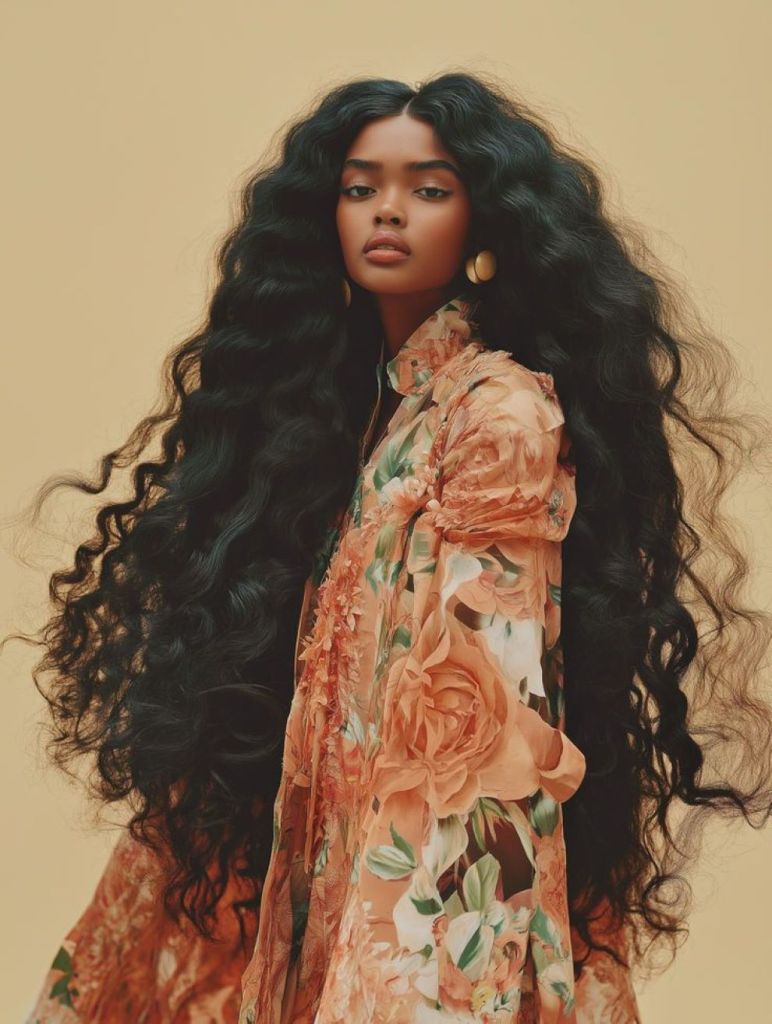
Hair is more than adornment — it is an anointing. In every strand lies a story, in every curl, a code of creation. Scripture declares, “If a woman have long hair, it is a glory to her: for her hair is given her for a covering” (1 Corinthians 11:15, KJV). To understand the sacredness of hair is to recognize it as both physical beauty and spiritual symbolism — a divine marker of identity and inheritance.

For the Black woman, hair is history. It has been braided in kingdoms, cut in captivity, covered in faith, and celebrated in freedom. Each texture — from the tightest coil to the softest wave — bears the fingerprint of God’s artistry. It connects her not only to her ancestors but to the Creator who crowned her with distinction.

In ancient Africa, hair was language. Styles conveyed tribe, status, age, and even spiritual calling. The Yoruba, Himba, and Fulani women wore their stories on their scalps, transforming their heads into living manuscripts of identity. To touch a woman’s hair was to read her soul. In this way, hair became both heritage and halo.

The transatlantic slave trade attempted to sever that connection. Enslaved women were often forced to shave their heads, a violent act of dehumanization meant to erase tribal lineage and pride. Yet, even in bondage, hair remained a silent act of resistance — braided maps, hidden seeds, and whispered prayers wove freedom into every plait.

When Paul wrote of hair as a woman’s glory, he spoke of divine order — not vanity, but sacred symbolism. Hair represents covering, covenant, and consecration. In the Bible, Nazarites like Samson carried divine strength in their locks (Judges 16:17). The cutting of his hair symbolized the breaking of a spiritual vow. Likewise, a woman’s hair remains a visible emblem of her spiritual integrity.

The Black woman’s hair has always carried more than aesthetic meaning — it bears cultural warfare. From workplace discrimination to school dress codes, society has repeatedly tried to regulate her crown. But the CROWN Act and a rising chorus of self-love movements declare a new era: her hair is no longer a battleground but a banner of liberation.

Natural hair is not rebellion; it is revelation. It reveals the divine geometry of God’s creation — coiled like galaxies, spiraled like fingerprints, and strong enough to defy gravity. Each strand stands as a metaphor for resilience: stretched, twisted, and yet unbroken. To wear one’s natural hair is to testify, “I am fearfully and wonderfully made” (Psalm 139:14, KJV).

From wigs and weaves to locs and fros, Black hair expresses multiplicity — not confusion, but creativity. It evolves, transforms, and reinvents itself just as the woman does. Her hair is her canvas; her crown is her story. To style her hair is not vanity but ritual — a daily affirmation of worth and womanhood.

The sacred ritual of haircare connects generations. Mothers oil their daughters’ scalps with tenderness, whispering lessons of patience and pride. Grandmothers pass down recipes of shea, coconut, and castor — ancient anointing oils for modern queens. In those intimate moments, hair becomes ministry.

Hair is also prophetic. It carries spiritual resonance — the way it grows, sheds, and renews mirrors the seasons of a woman’s life. It teaches her detachment when it breaks, humility when it thins, and gratitude when it flourishes. Her crown becomes a compass of divine timing.

To cover the head, as practiced in many biblical and Hebraic traditions, is an act of reverence, not repression. It symbolizes spiritual submission, protection, and modesty. But whether covered or uncovered, sacred femininity reminds her that the glory lies not in the style, but in the spirit beneath it.

Colorism and Eurocentric beauty ideals once tried to shame the kink and celebrate the curl that conformed. Yet today, locs, afros, and braids have returned to their throne. Each twist and cornrow becomes a crown of resilience — a statement that she no longer seeks to assimilate but to ascend.

In the diaspora, hair has been both burden and beacon. It has endured burning combs, toxic relaxers, and societal rejection. Yet, like the phoenix, it rises again — embracing its natural rhythm, its divine pattern. What was once mocked is now magnified.

The theology of hair is the theology of glory. Just as Christ’s transfiguration revealed His divine nature, a woman walking in her authenticity reveals God’s creative intention. Her crown is not for decoration but for declaration: that she is chosen, set apart, and sovereign.

When she adorns her hair with beads, scarves, or oils, she is not performing — she is prophesying. Each adornment is symbolic: beads of remembrance, scarves of sanctity, oils of anointing. Her head becomes holy ground, her hair a visible altar of gratitude.

Hair connects heaven and heritage. In African cosmology, the head — ori — is the seat of destiny, the place where divine purpose dwells. To honor the hair is to honor the spiritual headship God placed upon woman — a reminder that she walks with divine covering and creative authority.

Her hair carries memory — of pain, of pride, of prayer. Each style tells of seasons survived: the big chop of new beginnings, the protective style of rest, the natural growth of self-acceptance. Through each transition, she learns that her beauty is not borrowed; it is born of God.

To despise her natural hair is to reject her divine design. But to embrace it is to walk in resurrection — a restoration of what colonialism tried to cut away. In loving her hair, she reclaims her history, her holiness, and her harmony with heaven.

Thus, hair becomes more than a crown; it becomes a covenant. It binds the woman to her lineage and to her Lord. In the sacred rhythm of braiding, washing, and wrapping, she remembers that she is a daughter of Zion — crowned with compassion, wrapped in wisdom, and radiant in glory.

For indeed, hair is not just her glory — it is her testimony. It tells the world that she has survived every storm and still stands crowned. Her head lifted, her crown intact, she becomes the living fulfillment of Scripture: “She shall give to thine head an ornament of grace: a crown of glory shall she deliver to thee” (Proverbs 4:9, KJV).


References

  • The Holy Bible, King James Version. (n.d.).
  • Byrd, A., & Tharps, L. L. (2014). Hair Story: Untangling the Roots of Black Hair in America. St. Martin’s Press.
  • hooks, b. (2000). Feminism Is for Everybody: Passionate Politics. South End Press.
  • Collins, P. H. (2000). Black Feminist Thought: Knowledge, Consciousness, and the Politics of Empowerment. Routledge.
  • Walker, A. (1983). In Search of Our Mothers’ Gardens: Womanist Prose. Harcourt.
  • Tate, S. A. (2009). Black Beauty: Aesthetics, Stylization, Politics. Ashgate.
  • Banks, I. (2000). Hair Matters: Beauty, Power, and Black Women’s Consciousness. New York University Press.

The Altar of American Exceptionalism: Promise, Peril, and Consequence.

American exceptionalism is the belief that the United States occupies a unique moral, political, and historical position among nations. Rooted in Puritan theology, Enlightenment ideals, and revolutionary mythology, it has long framed the nation as chosen, exemplary, and destined for leadership. This belief has functioned as both a guiding philosophy and a civic religion, shaping national identity and public policy across generations.

At its best, American exceptionalism has inspired aspirational ideals. The language of liberty, equality, and self-governance provided a moral vocabulary that fueled abolitionism, civil rights movements, and democratic reforms. By holding itself to a proclaimed higher standard, the nation created a framework through which citizens could critique injustice and demand alignment between principle and practice.

The Declaration of Independence stands as a canonical text of exceptionalist thought, asserting universal rights while situating the American experiment as historically unprecedented. This rhetoric energized oppressed groups who invoked its promises to expose hypocrisy. Frederick Douglass’s famous question—what to the slave is the Fourth of July—demonstrates how exceptionalist ideals could be turned inward as a moral indictment rather than an excuse for complacency.

Yet American exceptionalism has also functioned as an altar upon which truth is sacrificed. When national myth hardens into unquestionable dogma, it suppresses historical accountability. Slavery, Indigenous dispossession, segregation, and imperial expansion were often justified or minimized under the assumption that America’s intentions were inherently benevolent, regardless of outcomes.

The doctrine has repeatedly blurred the line between patriotism and moral exemption. Foreign interventions, from Manifest Destiny to twentieth-century wars, were frequently framed as civilizing missions rather than power pursuits. Exceptionalism provided the moral cover for empire, allowing violence to be narrated as virtue and domination as destiny.

Domestically, exceptionalism has obscured structural inequality. The insistence that America is uniquely free and just has been used to delegitimize claims of systemic racism, economic exploitation, and gender inequality. If the nation is already exceptional, then disparities are framed as personal failures rather than institutional designs.

This mindset has been particularly damaging to Black Americans. The contradiction between exceptionalist rhetoric and lived reality produced what W.E.B. Du Bois called “double consciousness,” a constant negotiation between national belonging and exclusion. Black resistance movements have historically navigated the tension between appealing to American ideals and rejecting America’s false innocence.

American exceptionalism also reshaped capitalism into a moral narrative. Wealth accumulation became equated with virtue, and poverty with moral deficiency. The “American Dream” promised upward mobility while masking the racialized and class-based barriers that structured opportunity. Exceptionalism thus sanctified inequality under the guise of meritocracy.

In education, exceptionalist narratives often sanitize history. Textbooks emphasize triumph while minimizing atrocity, creating citizens who inherit pride without responsibility. This selective memory weakens democratic capacity, as honest self-critique is replaced with defensive nationalism.

Religiously, exceptionalism has fused with Christian nationalism, transforming the state into a quasi-divine instrument. Biblical language of chosenness has been selectively applied to America, displacing its original covenantal context. This theological distortion elevates the nation above moral law rather than subjecting it to prophetic judgment.

The psychological effects of exceptionalism are equally profound. It fosters cognitive dissonance when reality contradicts belief, leading to denial rather than reform. Citizens may experience identity threat when confronted with injustice, responding with hostility instead of empathy.

Globally, exceptionalism damages credibility. When the United States preaches democracy while tolerating human rights abuses at home and abroad, its moral authority erodes. Allies perceive hypocrisy, while adversaries exploit inconsistency, weakening international trust.

However, rejecting blind exceptionalism does not require abandoning national aspiration. A critical patriotism can preserve ethical commitment without mythological arrogance. Nations, like individuals, mature through accountability rather than denial.

Some scholars argue for a post-exceptionalist identity grounded in democratic humility. This approach views the United States not as above history but within it—capable of learning from other nations and from its own marginalized voices. Such humility strengthens rather than weakens democratic life.

The civil rights movement offers a model of reformed exceptionalism. Leaders like Martin Luther King Jr. appealed to America’s professed ideals while exposing its moral bankruptcy. Their vision did not worship the nation; it called it to repentance.

In this sense, American exceptionalism becomes most ethical when desacralized. When stripped of infallibility, it can function as an aspirational ethic rather than a shield against critique. The danger lies not in national ideals, but in their absolutization.

The future of American democracy depends on whether exceptionalism remains an altar or becomes a mirror. A mirror reflects both beauty and blemish, demanding growth. An altar demands worship and excuses failure.

Ultimately, the question is not whether America is exceptional, but how it understands exceptionality. If exceptionalism justifies power without justice, it corrodes the nation’s soul. If it compels responsibility proportional to power, it may yet serve a moral purpose.

The effects of American exceptionalism are therefore paradoxical. It has empowered liberation and legitimated oppression, inspired reform and excused violence. Its legacy demands discernment rather than devotion.

A transformed national consciousness would replace myth with memory, arrogance with accountability, and supremacy with service. Only then can the United States pursue greatness without sacrificing truth upon the altar of its own exceptionalism.


References

Appleby, J. (2018). The virtues of liberalism. Oxford University Press.

Bellah, R. N. (1967). Civil religion in America. Daedalus, 96(1), 1–21.

Du Bois, W. E. B. (1903). The souls of Black folk. A.C. McClurg & Co.

King, M. L., Jr. (1963). Why we can’t wait. Harper & Row.

Lipset, S. M. (1996). American exceptionalism: A double-edged sword. W.W. Norton.

Mills, C. W. (1997). The racial contract. Cornell University Press.

Zinn, H. (2003). A people’s history of the United States. HarperCollins.

The Beautiful Brown That Changed the Room.

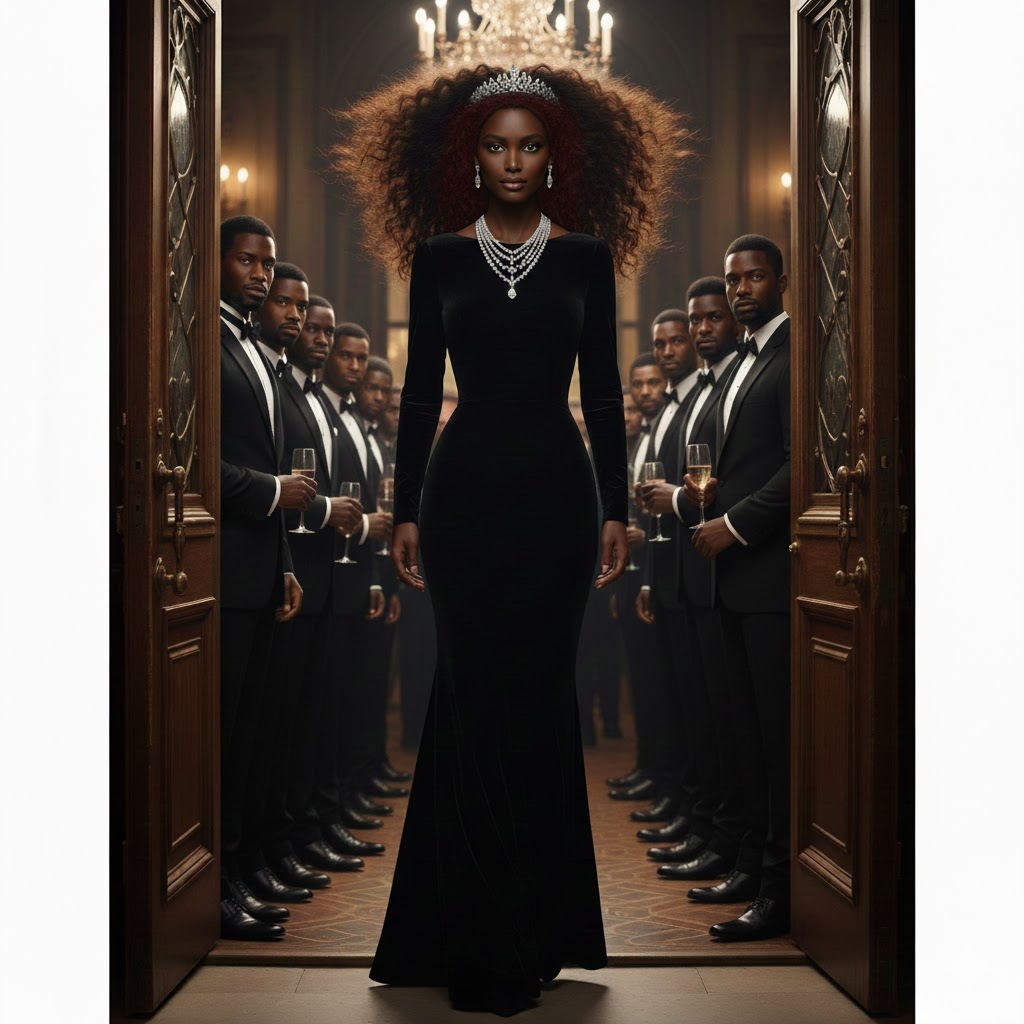
When she enters, the air seems to shift. There is a gravity to her presence, an energy that demands attention without demanding it. Her brown skin, rich and radiant, tells a story of ancestry, resilience, and divine design. She does not need adornment to shine; her essence alone commands the room.

Society has long tried to dictate standards of beauty that favor lighter skin, a legacy of colorism rooted in slavery, colonialism, and media representation. Yet, the beautiful brown woman challenges these narratives simply by existing unapologetically. Her presence is a rebellion, a reclamation of self-worth, and a demonstration of ancestral pride (Hunter, 2007).

Her beauty is holistic—her brownness is inseparable from her poise, intellect, and confidence. It is in her posture, the deliberate cadence of her speech, and the self-assuredness in her eyes. This combination disrupts preconceived notions and reshapes perceptions of what it means to be beautiful (Bradshaw, 2012).

In professional settings, social gatherings, or casual encounters, her brown skin communicates a quiet authority. People instinctively take notice, not because she demands it, but because she emanates authenticity and power. She is a walking testament to the majesty of her people.

Her presence is also culturally symbolic. Dark skin, often stigmatized in media and society, becomes a banner of resilience. She carries the legacy of queens, activists, artists, and pioneers who navigated systemic oppression with grace, leaving imprints that continue to inspire.

The room changes not only because of her external beauty but because of her mindset. She radiates intelligence, creativity, and spiritual depth. These qualities amplify the effect of her appearance, showing that beauty is not skin-deep but soul-deep (Strober, 2017).

Fashion, style, and personal expression become tools to complement her brownness rather than define it. She chooses garments that honor her body, colors that celebrate her tone, and accessories that accentuate her essence without overshadowing it. Every choice is intentional, reflecting self-awareness and artistry.

Her influence extends beyond aesthetics. She inspires other Black women to embrace their own shades of brown, fostering communities of affirmation and empowerment. Through mentorship, social media, and everyday interactions, she reshapes cultural definitions of attractiveness and success (Russell-Cole et al., 2013).

Even in spaces where colorism persists, she refuses to diminish herself. She walks boldly, speaks clearly, and exists fully. Her refusal to conform challenges societal norms and encourages others to do the same, cultivating a ripple effect of confidence and liberation.

The beautiful brown woman also embodies spiritual and emotional depth. Her faith, compassion, and resilience enhance her presence, allowing her to engage the world with a blend of humility and authority. Her brownness becomes not just a visual marker but a symbol of wisdom and inner strength.

Her laughter fills the room, warm and inviting, softening tension and inviting camaraderie. Her smile is a reminder that joy, confidence, and self-acceptance are revolutionary acts for women whose beauty has historically been undervalued.

Even the way she moves—her gestures, her posture, the rhythm of her speech—changes the atmosphere. People are drawn to her authenticity, her refusal to imitate, and her natural elegance. Presence, in her case, becomes a form of empowerment.

In social and professional circles alike, she commands respect through competence, insight, and composure. Her brownness is intertwined with her achievements, a visual testament to capability and excellence (Patton, 2006).

Her beauty is not static; it evolves with experience, reflection, and growth. Each challenge she overcomes and every skill she masters adds depth to her presence, demonstrating that the most impactful beauty is dynamic and multifaceted.

Her brownness is also political. In a world that often undervalues dark skin, she asserts her value daily, challenging ingrained hierarchies and shifting collective consciousness. Her existence questions assumptions and redefines societal standards of desirability and authority.

She carries herself with dignity in all situations, transforming spaces with grace and assurance. People notice not because she seeks approval, but because her essence radiates self-possession and excellence.

Her influence extends to younger generations, who see in her a reflection of possibility and potential. She becomes a visual and moral guidepost, illustrating that beauty, intellect, and strength are not mutually exclusive but complementary.

Her presence challenges stereotypes, proving that the dark-skinned woman is multifaceted—intelligent, creative, resilient, and aesthetically striking. She disrupts monolithic narratives and invites a richer, more inclusive understanding of beauty (Banks, 2000).

Even in fleeting interactions, her impact lingers. People remember her warmth, her confidence, and the way her brownness seemed to illuminate the space. She leaves an imprint that goes beyond sight, touching hearts and minds.

Ultimately, the beautiful brown woman changes the room because she is unapologetically herself. She embodies the intersection of heritage, talent, faith, and self-acceptance. Her presence is a celebration of what it means to thrive as a Black woman, and a reminder that true beauty—grounded in authenticity and pride—is transformative.


References

  • Banks, I. (2000). Hair matters: Beauty, power, and Black women’s consciousness. NYU Press.
  • Bradshaw, K. (2012). Skin deep: Exploring colorism in Black communities. Journal of Black Studies, 43(1), 21–39.
  • Hunter, M. (2007). The persistent problem of colorism: Skin tone, status, and inequality. Sociology Compass, 1(1), 237–254.
  • Patton, T. O. (2006). Hey girl, am I more than my hair? African American women and their struggles with beauty, body image, and hair. NWSA Journal, 18(2), 24–51.
  • Russell-Cole, K., Wilson, M., & Hall, R. E. (2013). The color complex: The politics of skin color among African Americans. HarperCollins.
  • Strober, R. (2017). Dark girls: Embracing beauty and identity. Psychology of Women Quarterly, 41(4), 487–500.